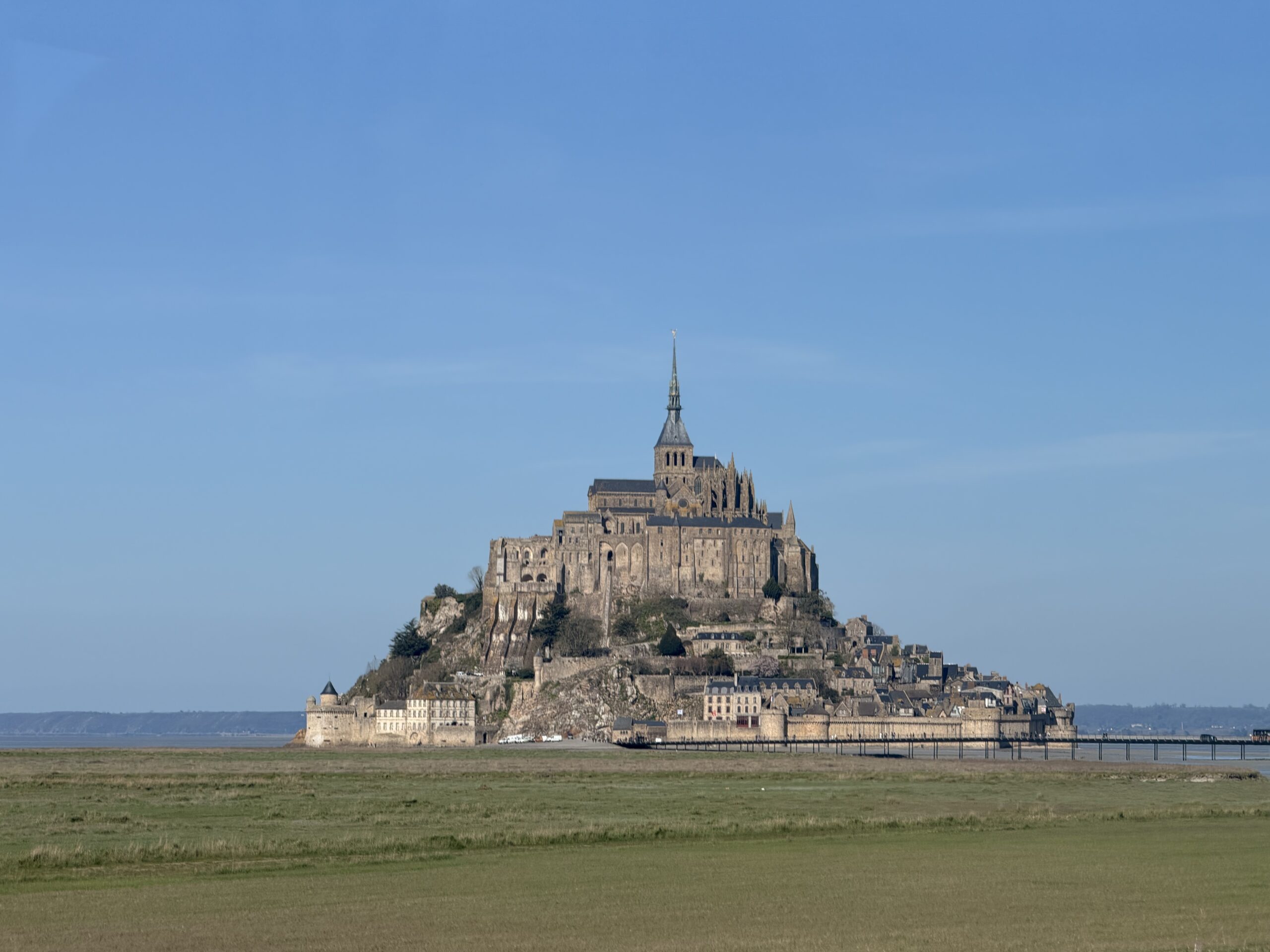
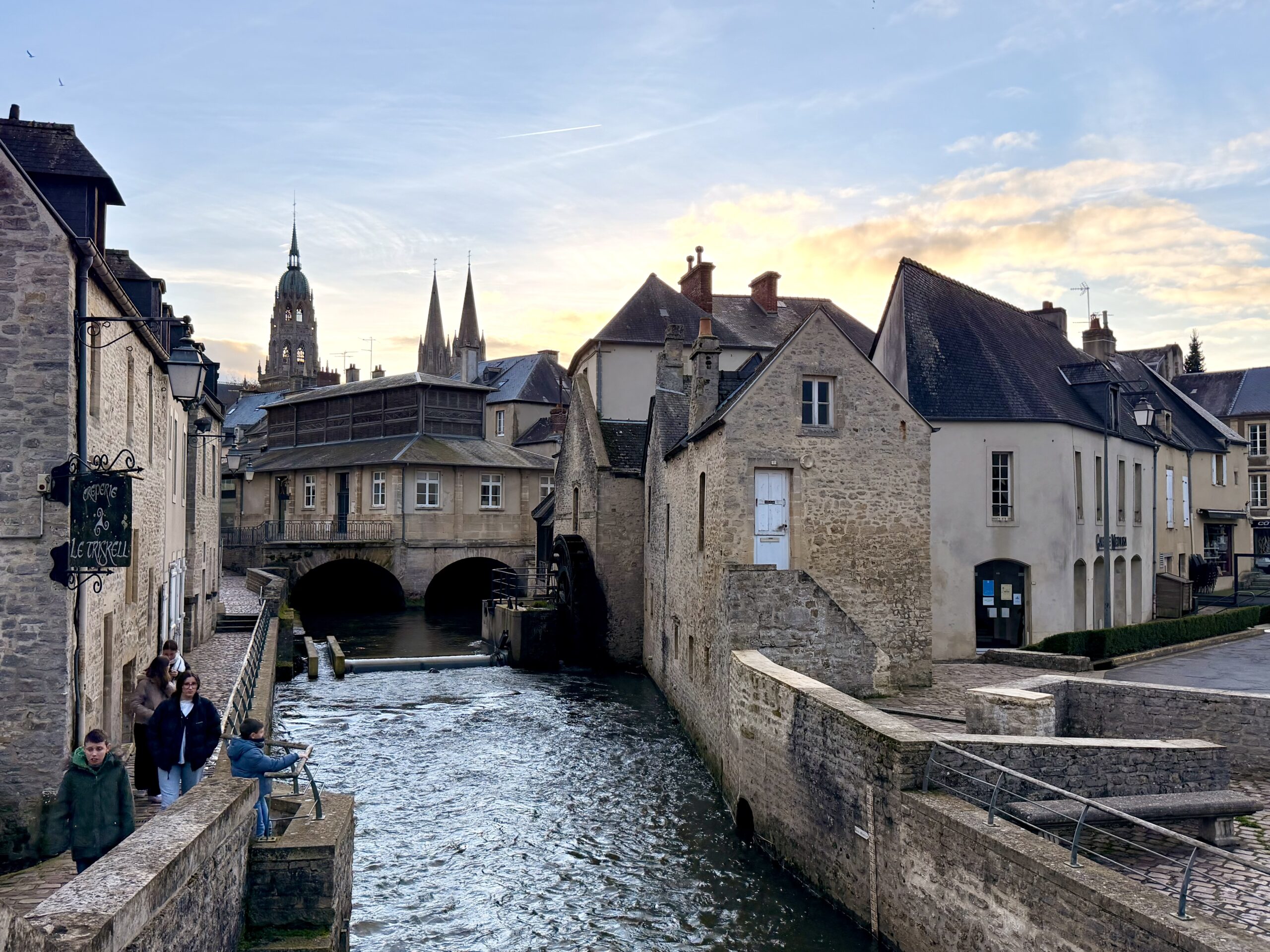
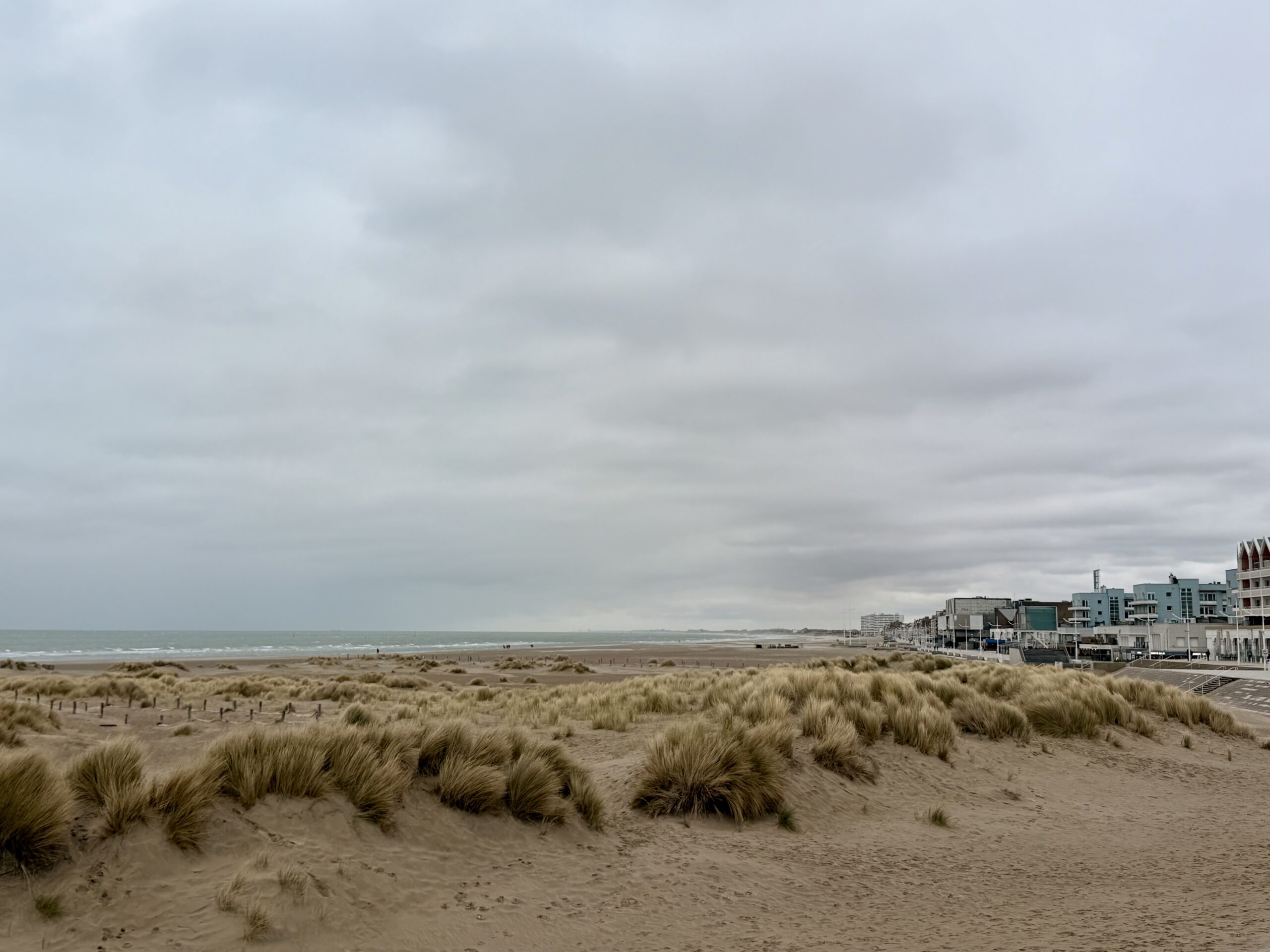
After several short (1-3 night) stops in Bruges, Brussels, Lille, Bayeux, and Mont-Saint-Michel, we were looking forward to spending an entire week in 1 place. We have been on several trips to France – both together and each of us on our own before we met. We even honeymooned here. But we decided to spend some time in a region neither of us had been to – Brittany (Bretagne). It’s a beautiful region in the northwest part of France that has changed hands a few times …. it has a beautiful rugged coastline and you could easily spend several weeks here and not see it all. We spent 1 week and based ourselves in Dinan.
While Brittany is a region in France and of course French is spoken, the Breton language is also spoken. It’s an endangered Celtic language brought down by migrants from southwest Britain and is related to Welsh and Cornish. (https://www.languagecafe.world/post/a-quick-introduction-to-breton). Brittany is one of 6 Celtic nations (Brittany, Cornwall, Ireland, Isle of Man, Scotland, and Wales). The name “Brittany” means “Little Britain” (as opposed to Great Britain). This website had a good brief overview of Brittany history: https://www.spectacle1488.bzh/en/a-brief-summary-of-brittanys-history/; and this 5 minutes video does a great job of explaining it as well: https://youtu.be/Wt3XZllOxAQ.
We had rented a car in Lille for about 10 days. While it did cost quite a bit in tolls – about $85 total – in the end the car (rental cost, tolls, fuel, and parking) was not any more expensive than doing the trip by public transit for 2 people and it gave us a lot of freedom to stop at places along the way. From Lille we drove to Bayeux then to Mont-Saint-Michel then onto Dinan.
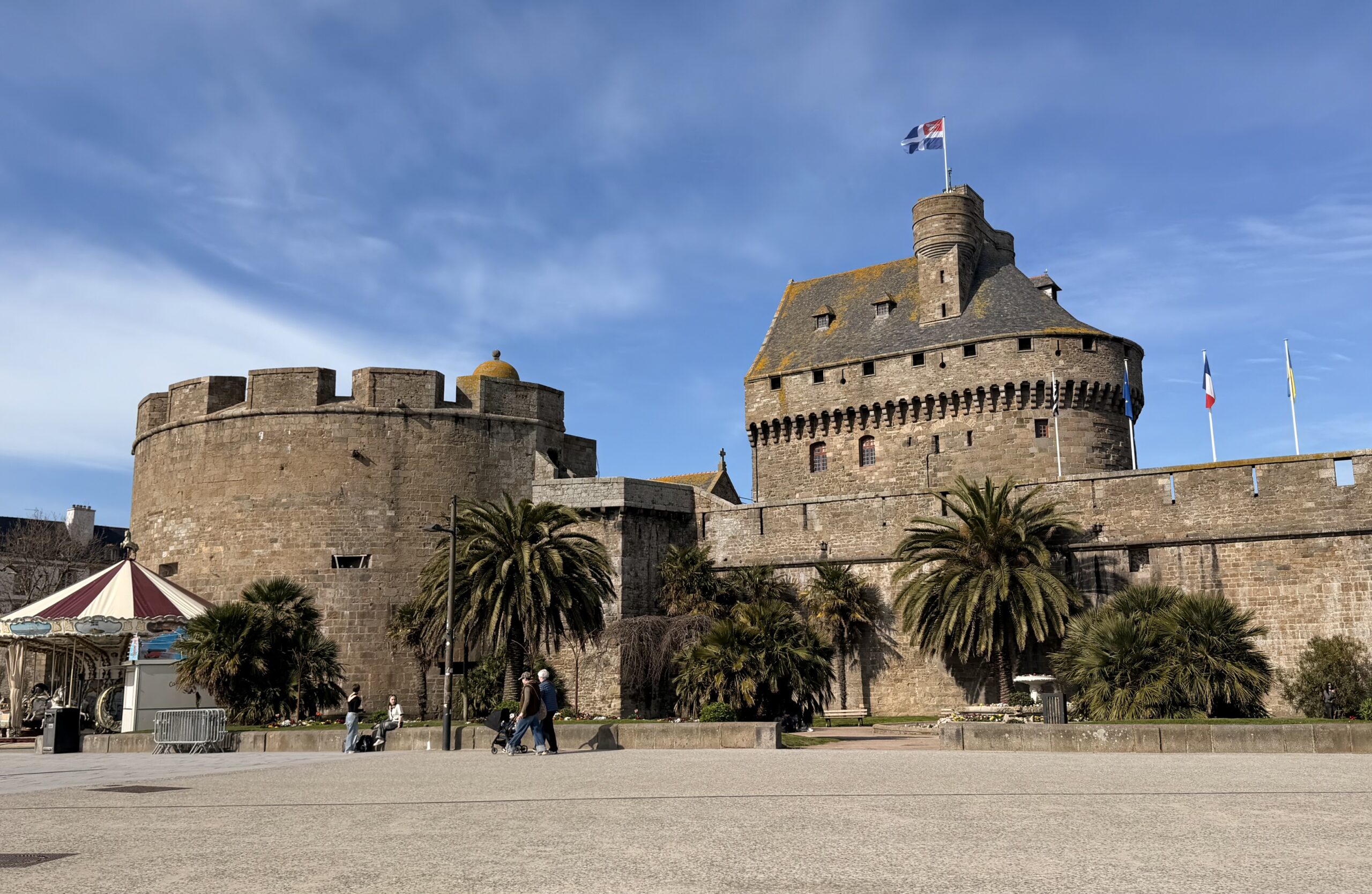
After leaving Mont-Saint-Michel, we stopped in Saint Malo on the way to Dinan. St-Malo is a popular beach resort in Brittany and is a historic old walled city. It’s also a busy port with ferry lines (Brittany Ferries) and other ships using it as a base. From the 16th century, it was a base for pirates – and later in the 18th century the town was a base for corsairs (semi-legit pirates sanctioned by the King of France). St-Malo was occupied by the Germans in WWII and then nearly leveled by American bombs in 1944; so much of what you see has been carefully rebuilt, preserving the old appearance.
We arrived in St-Malo and parked in Port Saint-Vincent (there’s an inexpensive underground parking garage under the tourist information center just outside the city walls) then set out to explore the town.
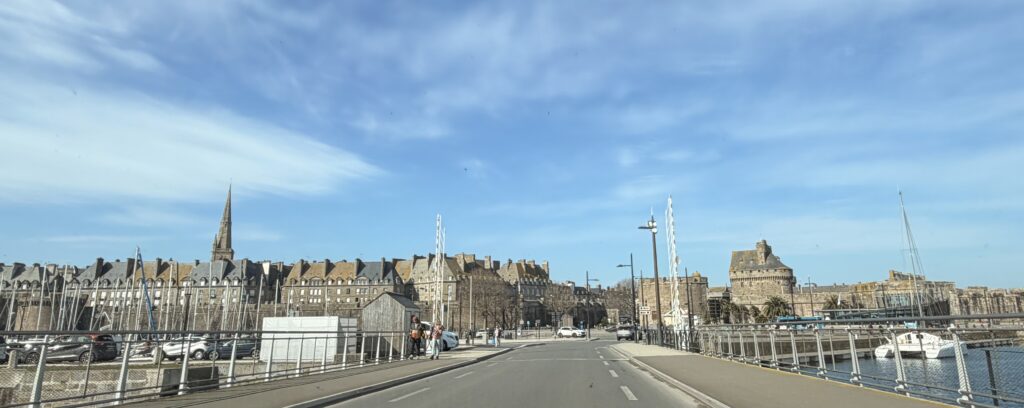
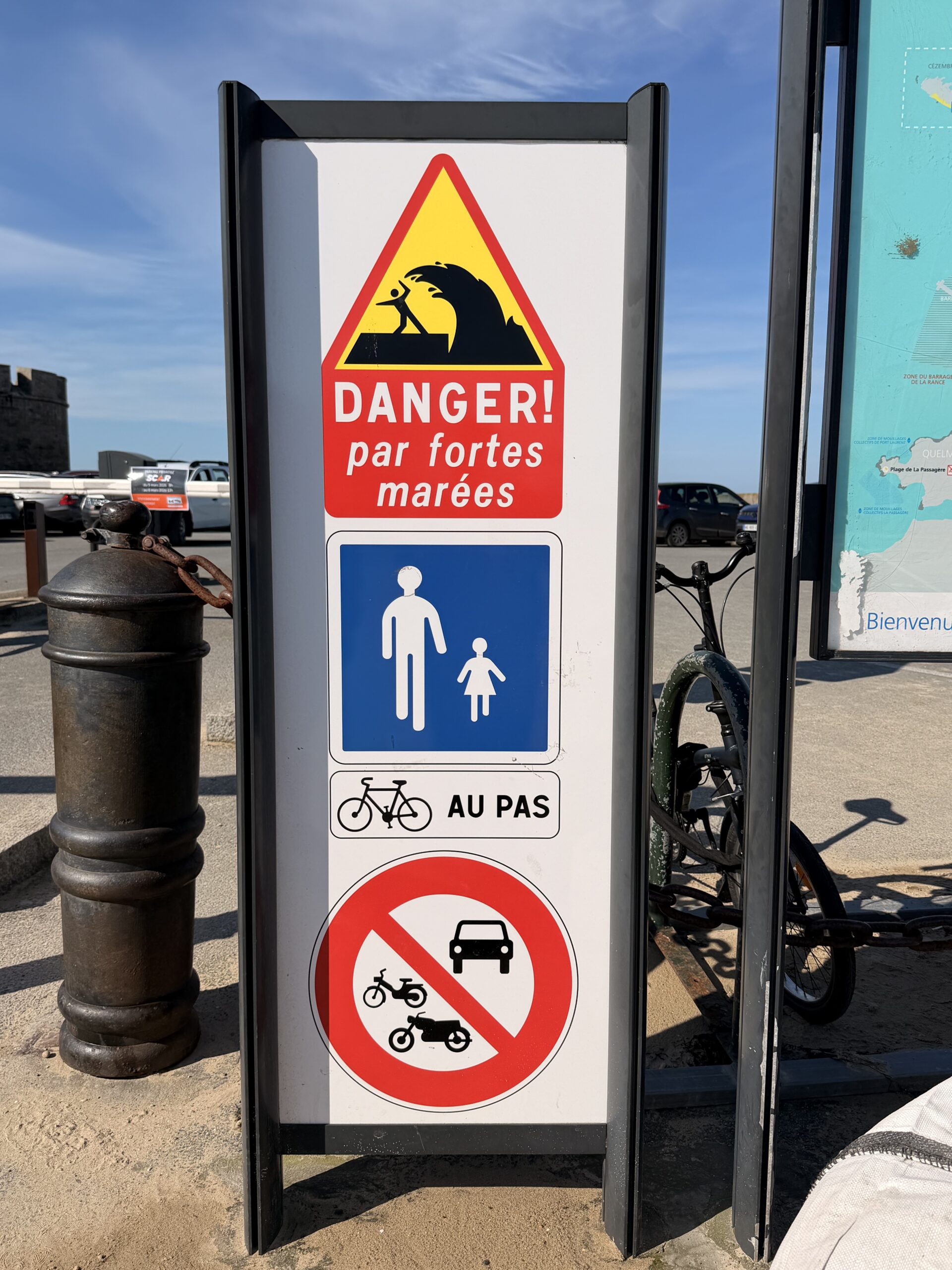
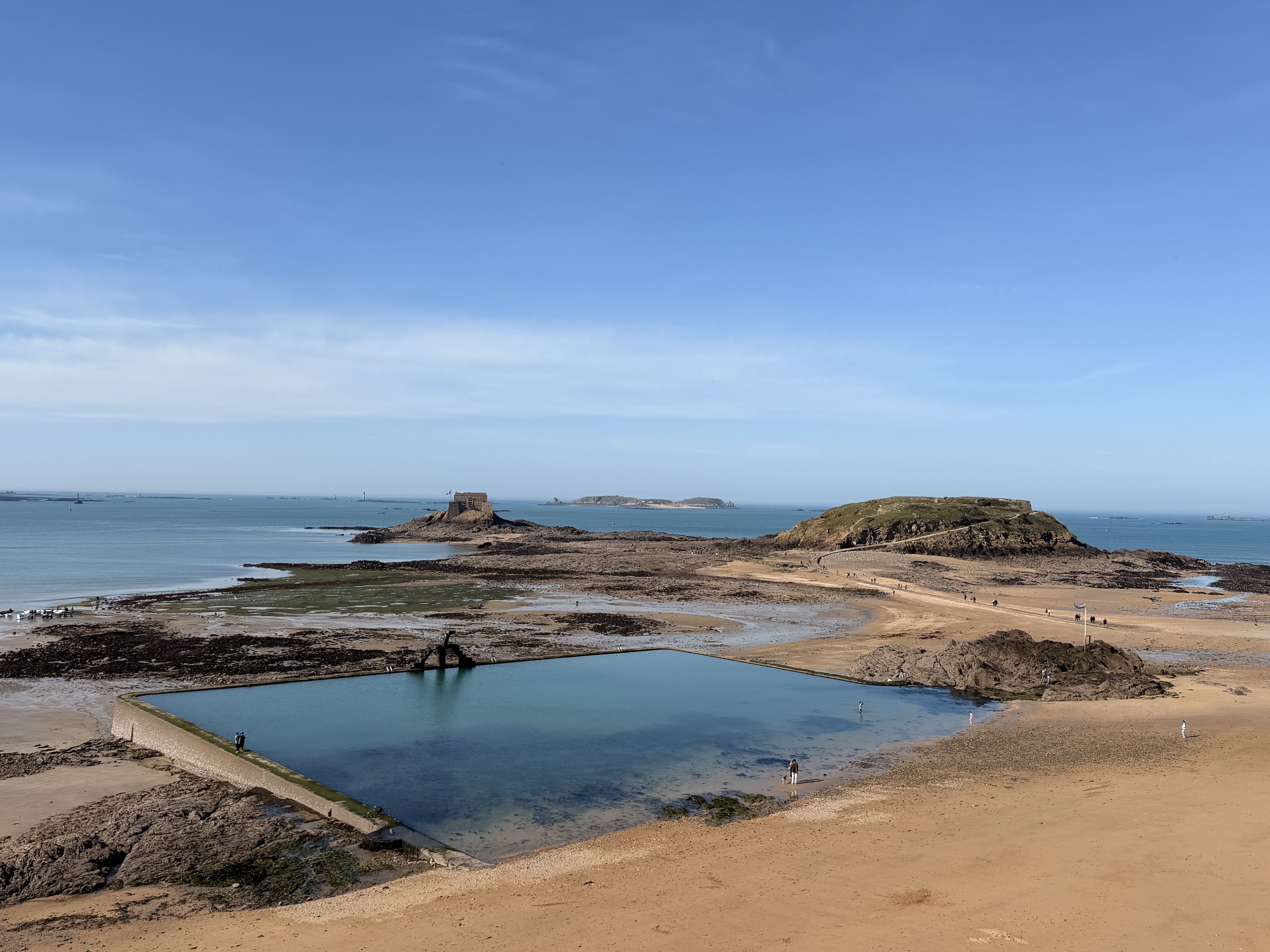
Like Mont-Saint-Michel, St-Malo has some of the highest tides in continental Europe. We were there at low tide but there are signs warning of the danger when the waves come in fast at high tide and the beach disappears.
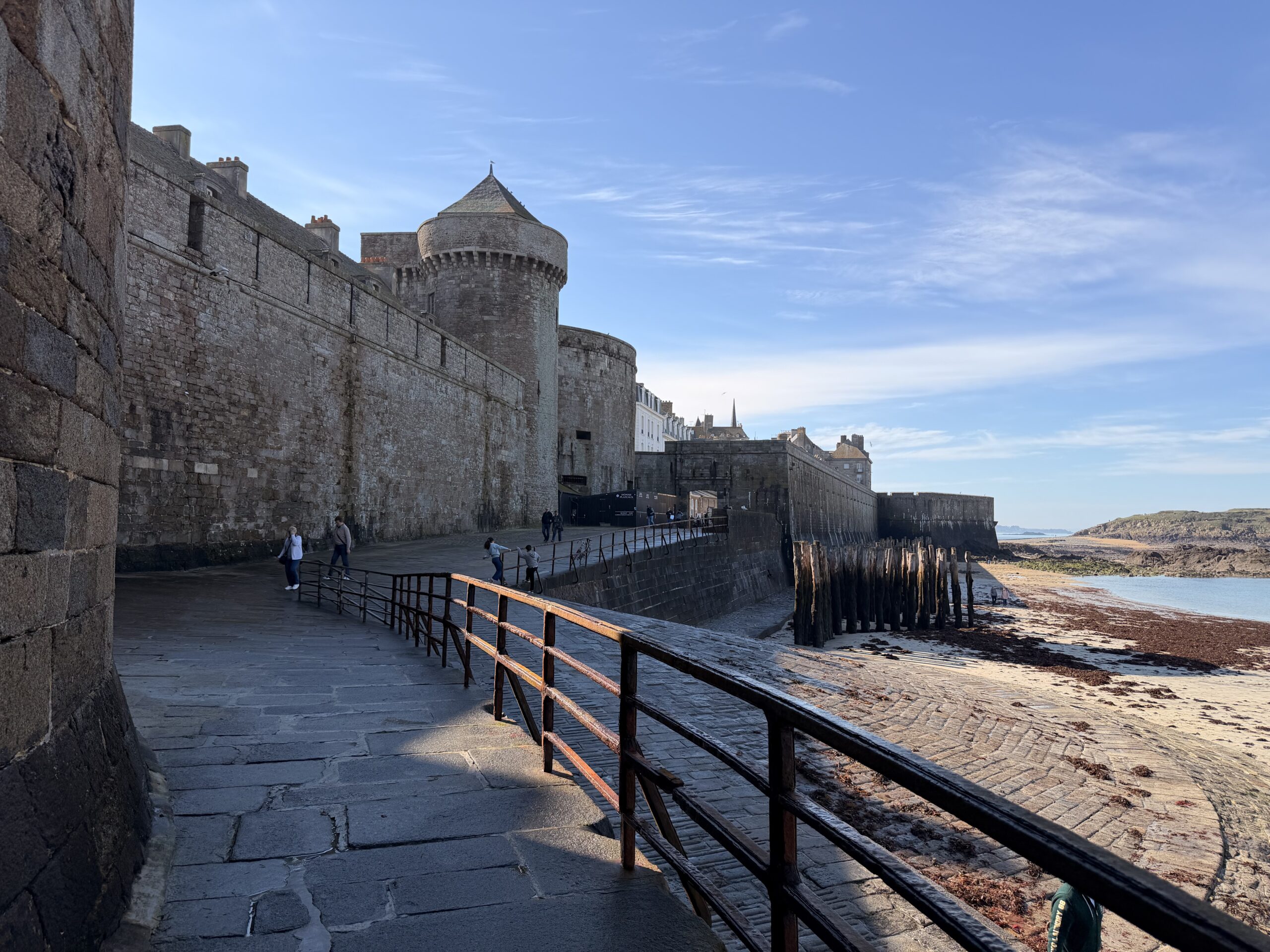
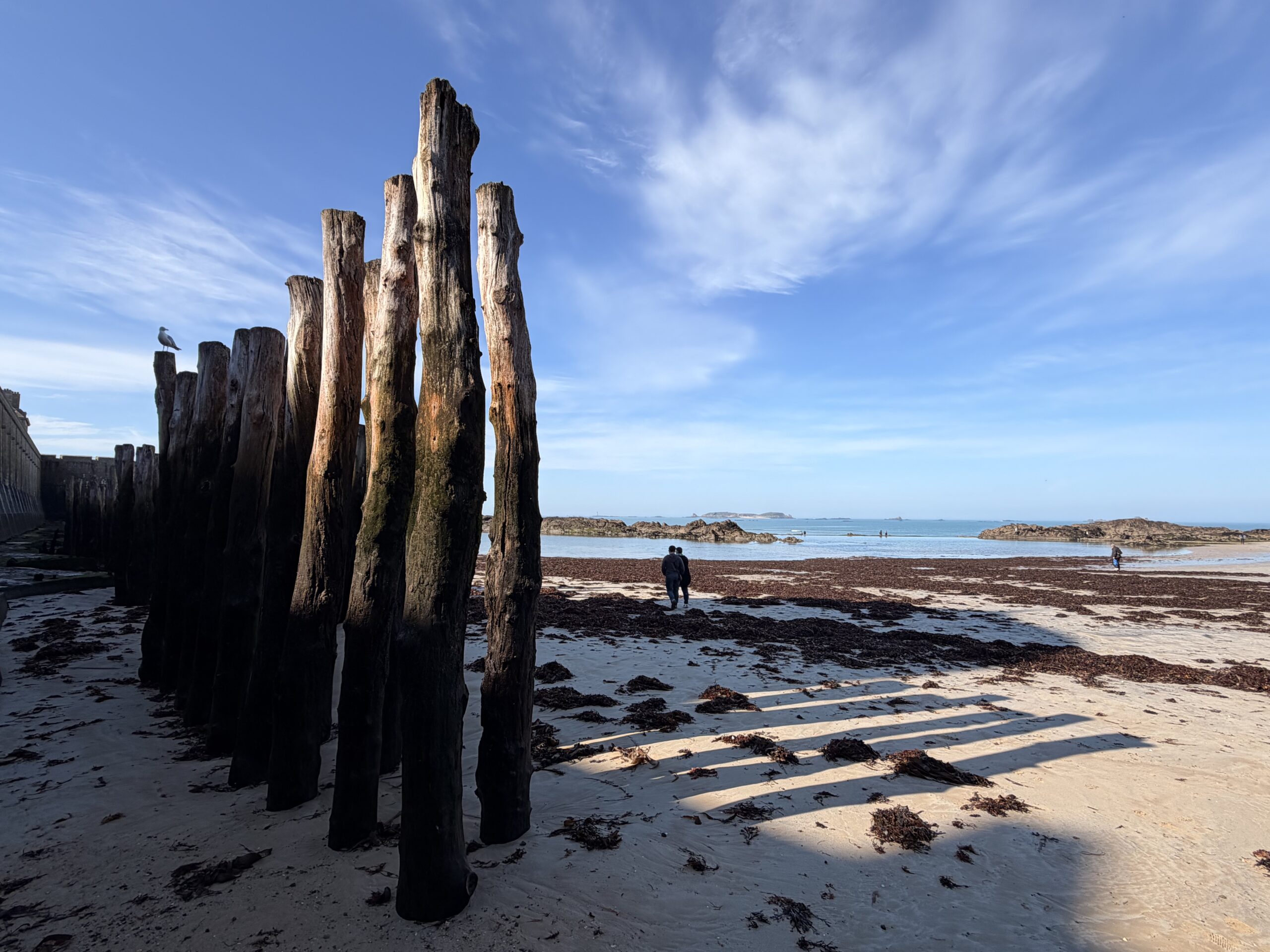
The water will actually come all the way up to this sidewalk along the wall. These tall wooden poles are placed along the seawall to protect it from the high pressure waves. You can read more about this phenomenon here: https://www.bbc.com/travel/article/20141210-danger-saint-malo-and-the-highest-tides-in-europe and here: https://www.hotel-chateaubriand-st-malo.com/en/tout-comprendre-sur-le-phenomene-des-marees-et-comment-les-apprecier-a-saint-malo/.
This video also shows some great images and videos of the area at both low and high tide: https://youtu.be/eLGJAfd4_q0.
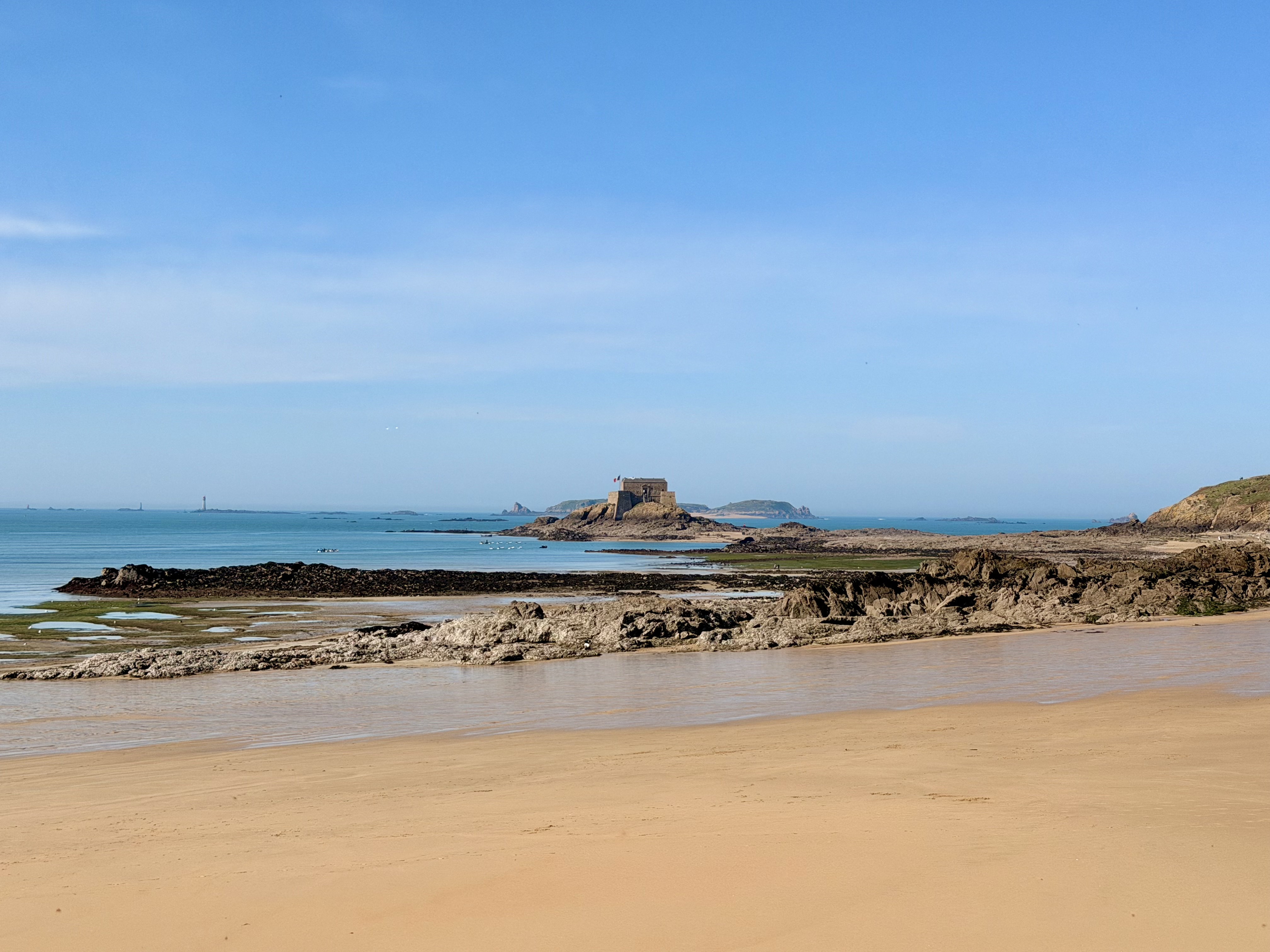
There are a couple of forts that you can visit at low tide but they become islands at high tide – then you’re stuck on that island for several hours until you can walk back. Even the large ferries we saw can only go out at certain times – at low tide it’s too shallow.
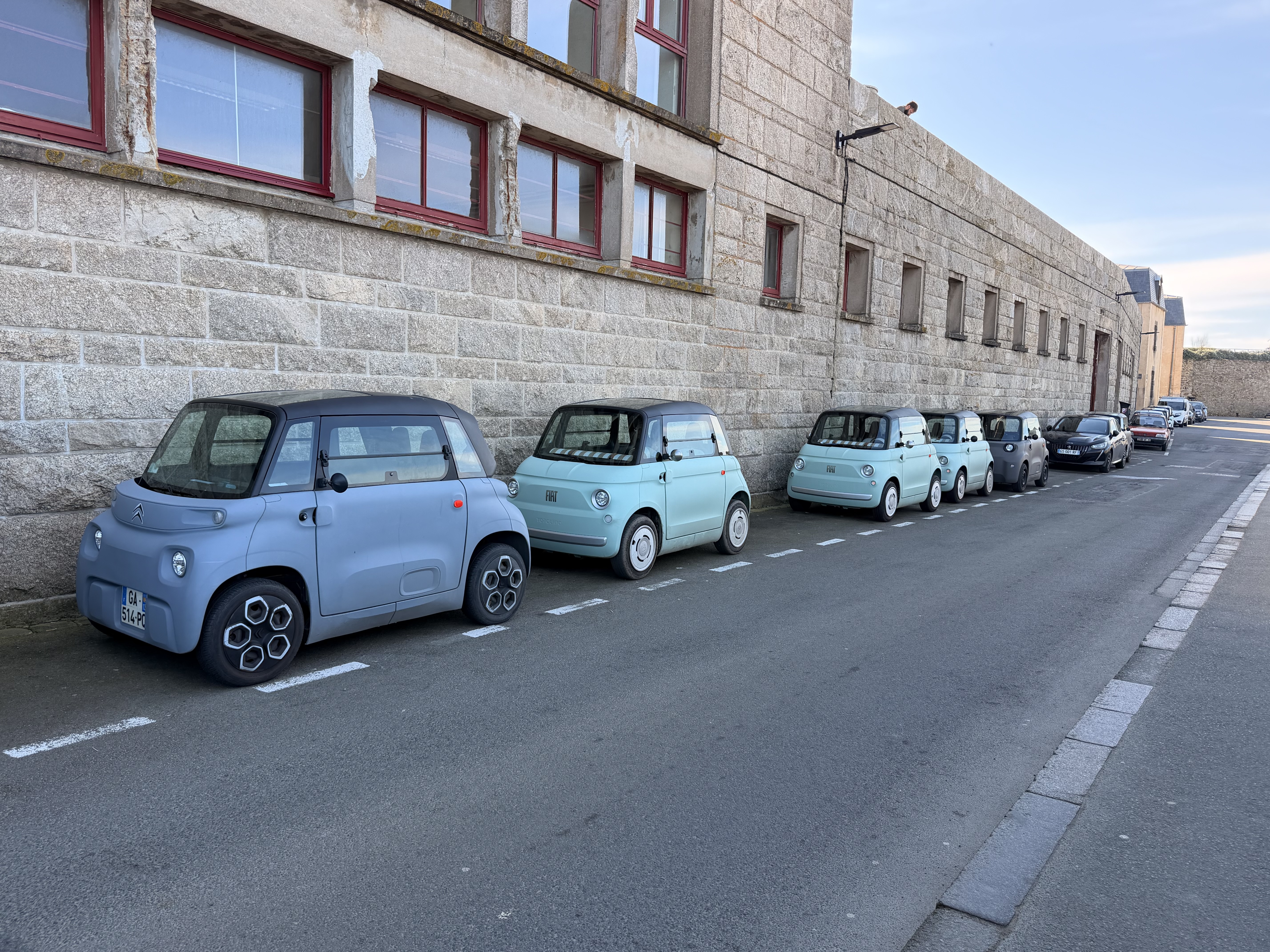
We saw tiny cars all over the place in Europe but this was the highest concentration we saw anywhere – 5 of them all lined up! (these are the Citroen Ami in blue and the Fiat Topplino in the teal color)
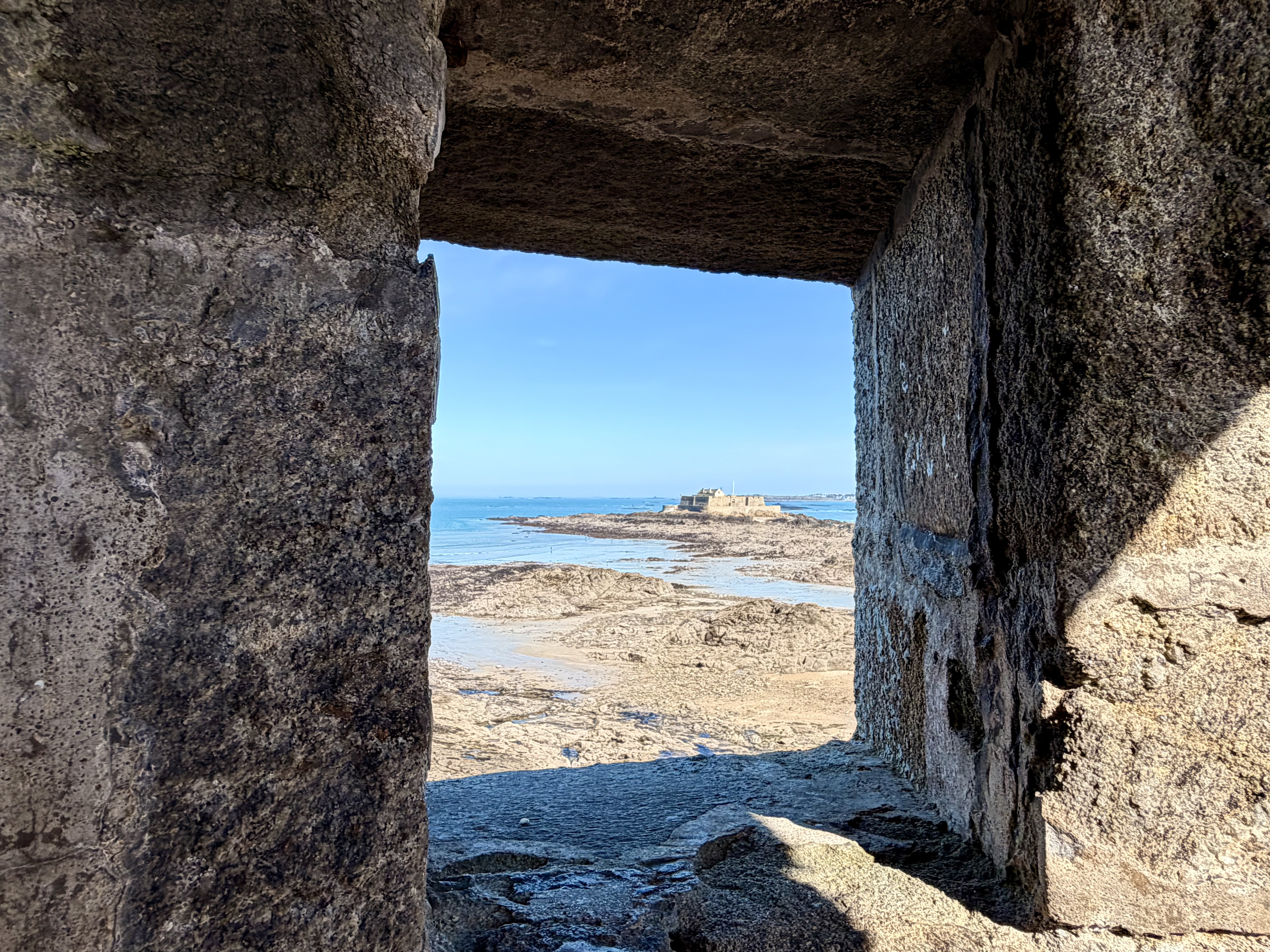
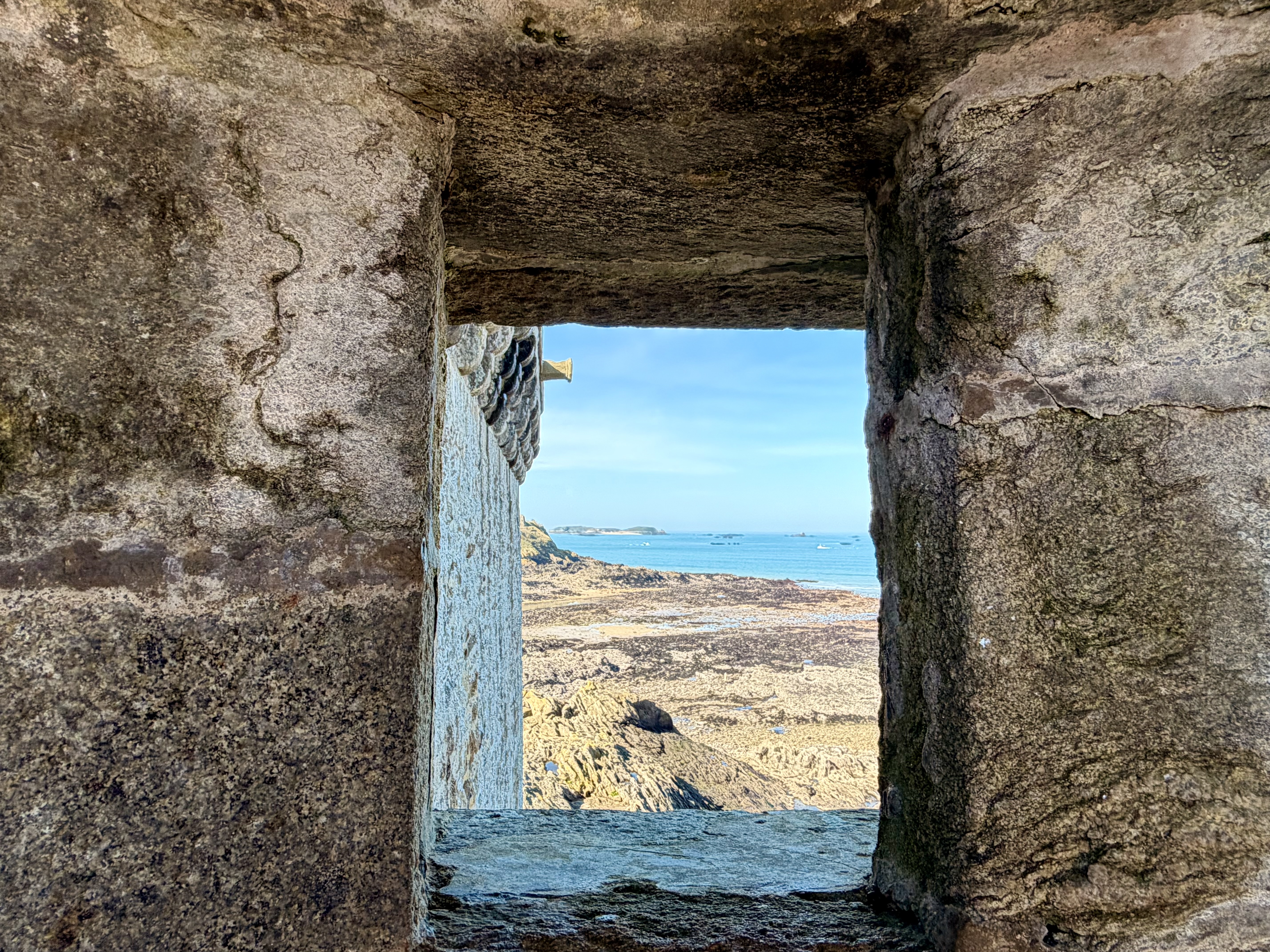
We walked along the ramparts of the town and explored the streets within the town before heading on to Dinan.
This seawater swimming pool also gets buried at high tide!
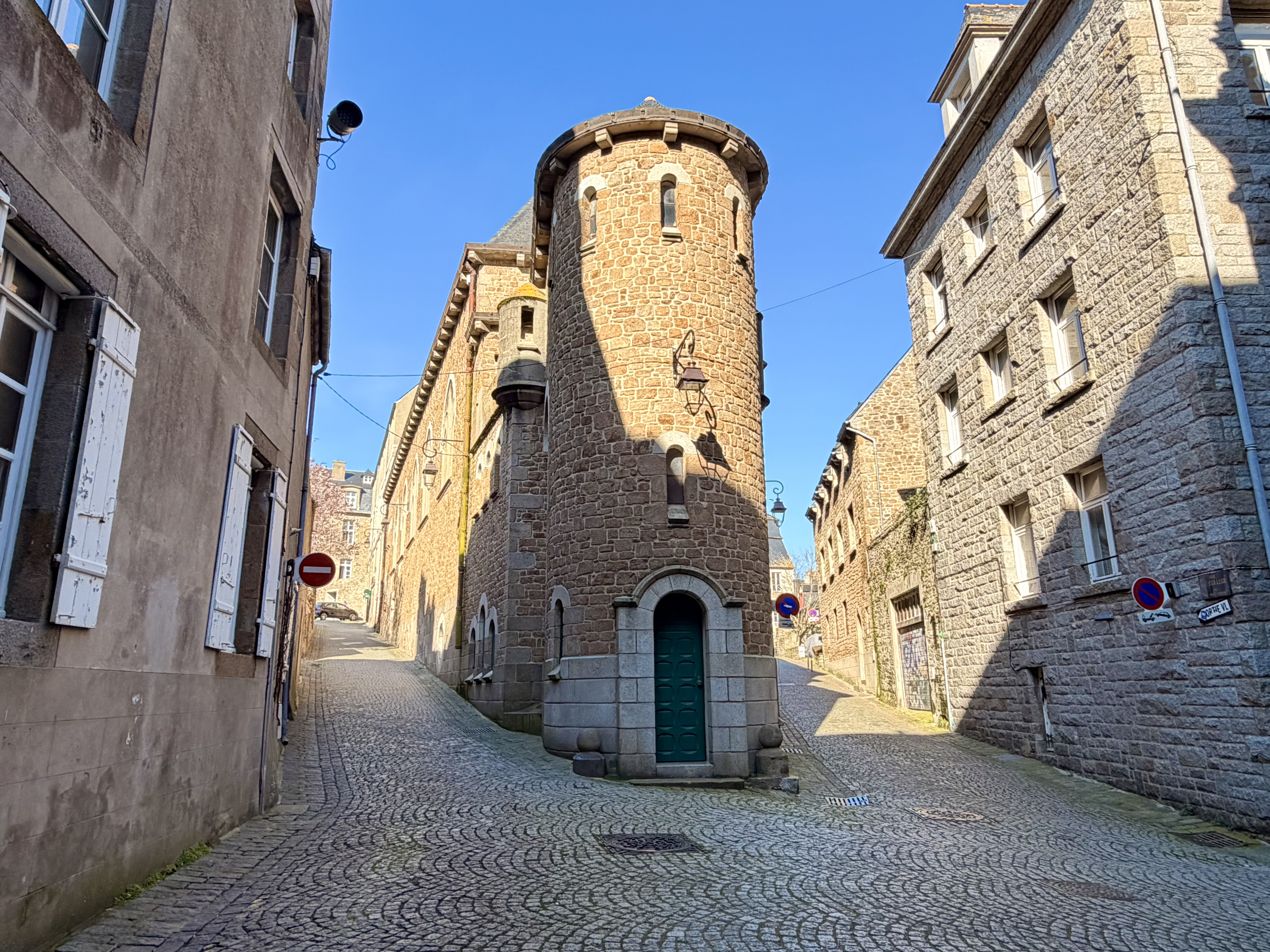
After a couple of hours walking around St-Malo, we got back in the car and continued on to Dinan. We used Dinan as a base to explore Brittany for the week and our VRBO just outside of the center of town was a castle! We didn’t have the whole castle to ourselves – it’s broken down into several apartments – but it was a really cool place to stay!
(https://vrbo.onelink.me/ItNz/e9indfpt)
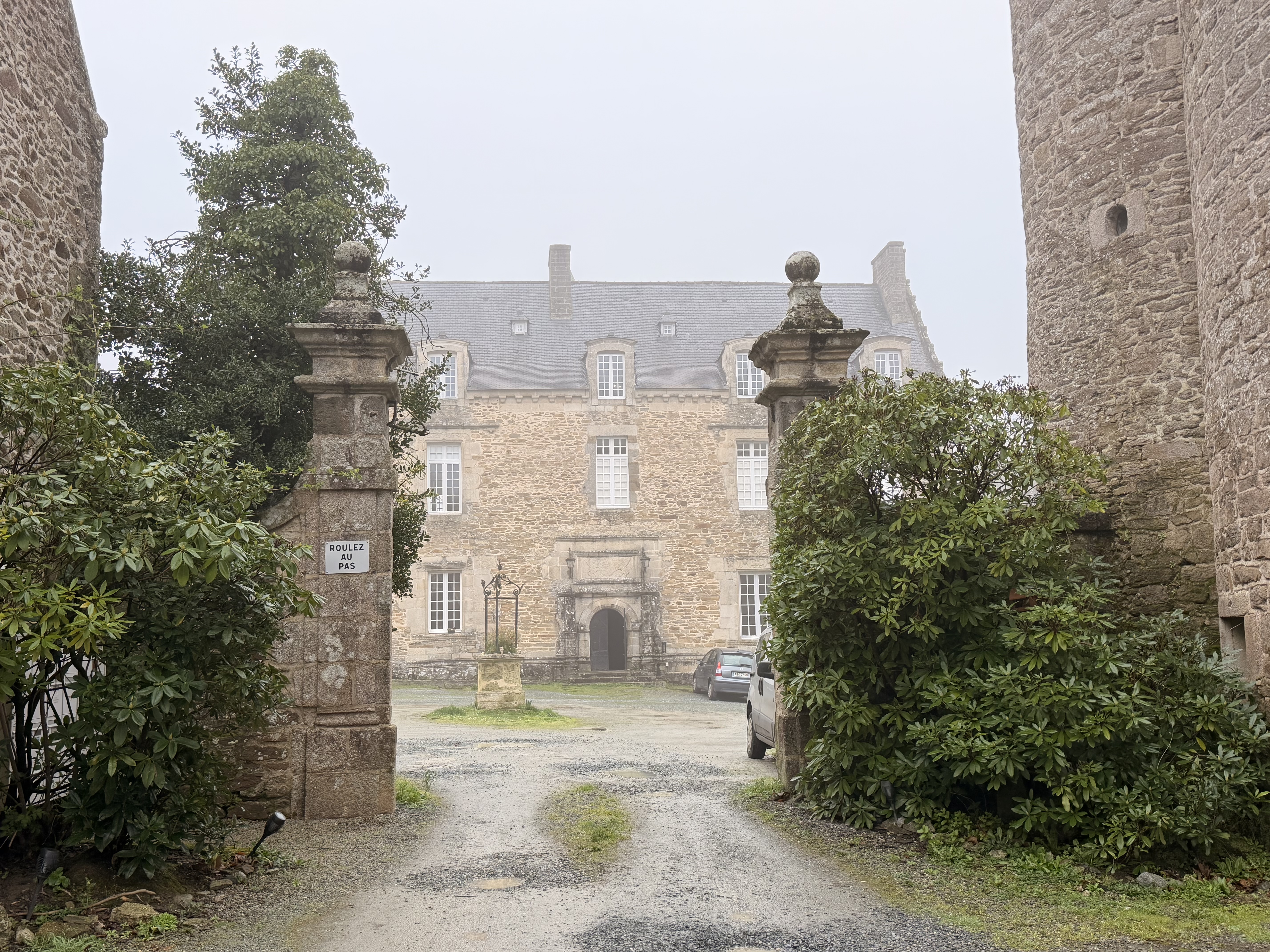
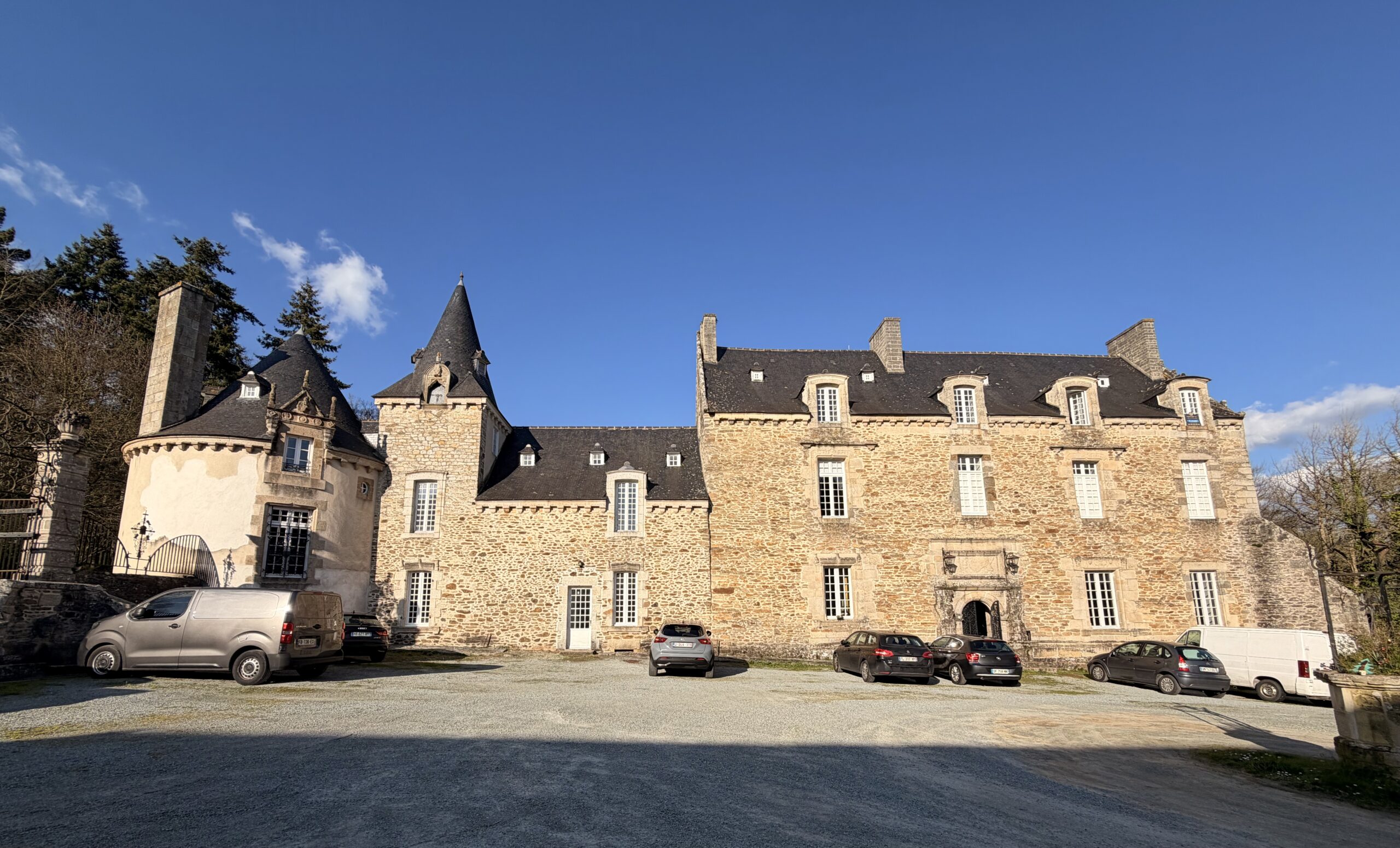
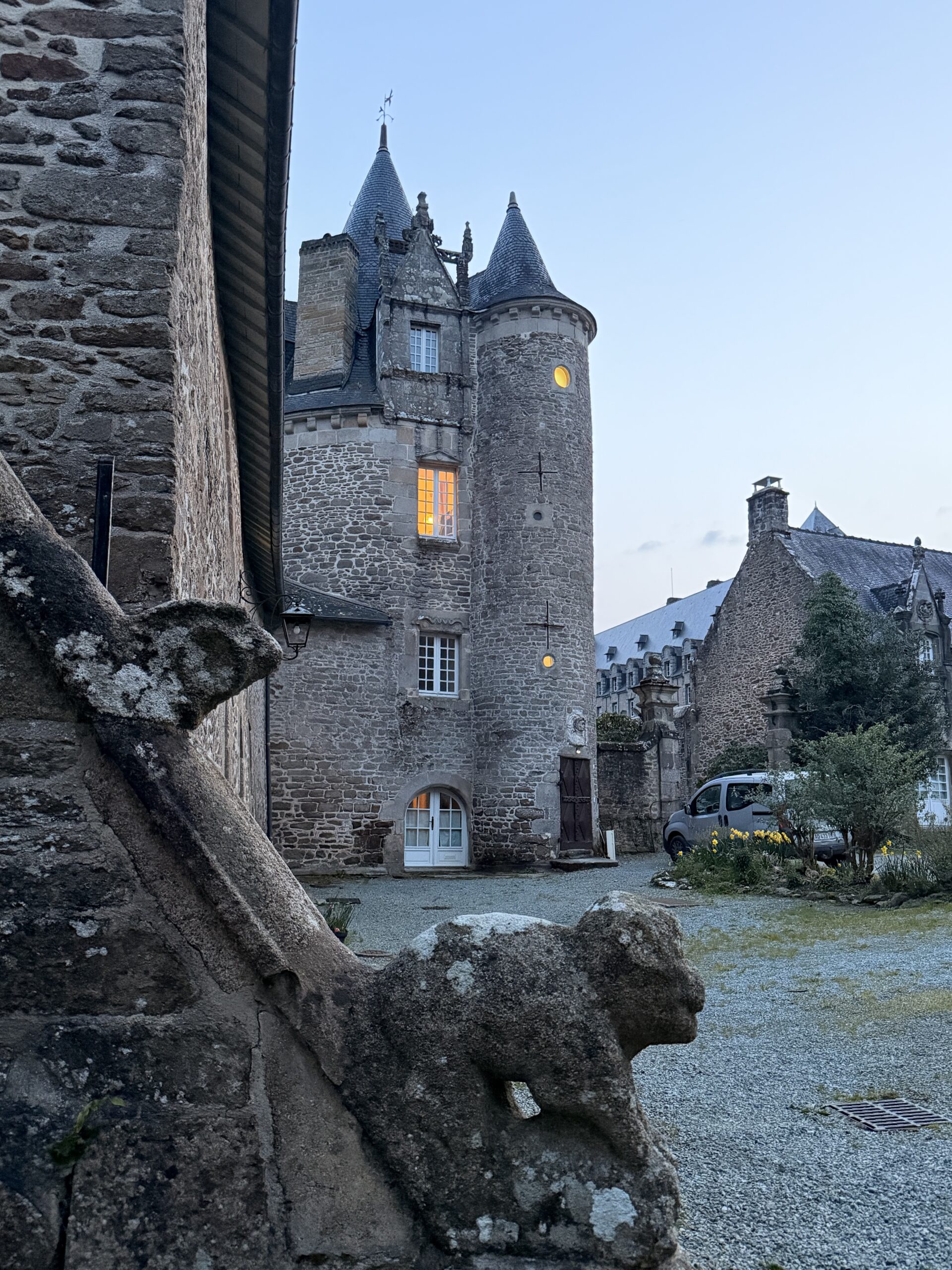
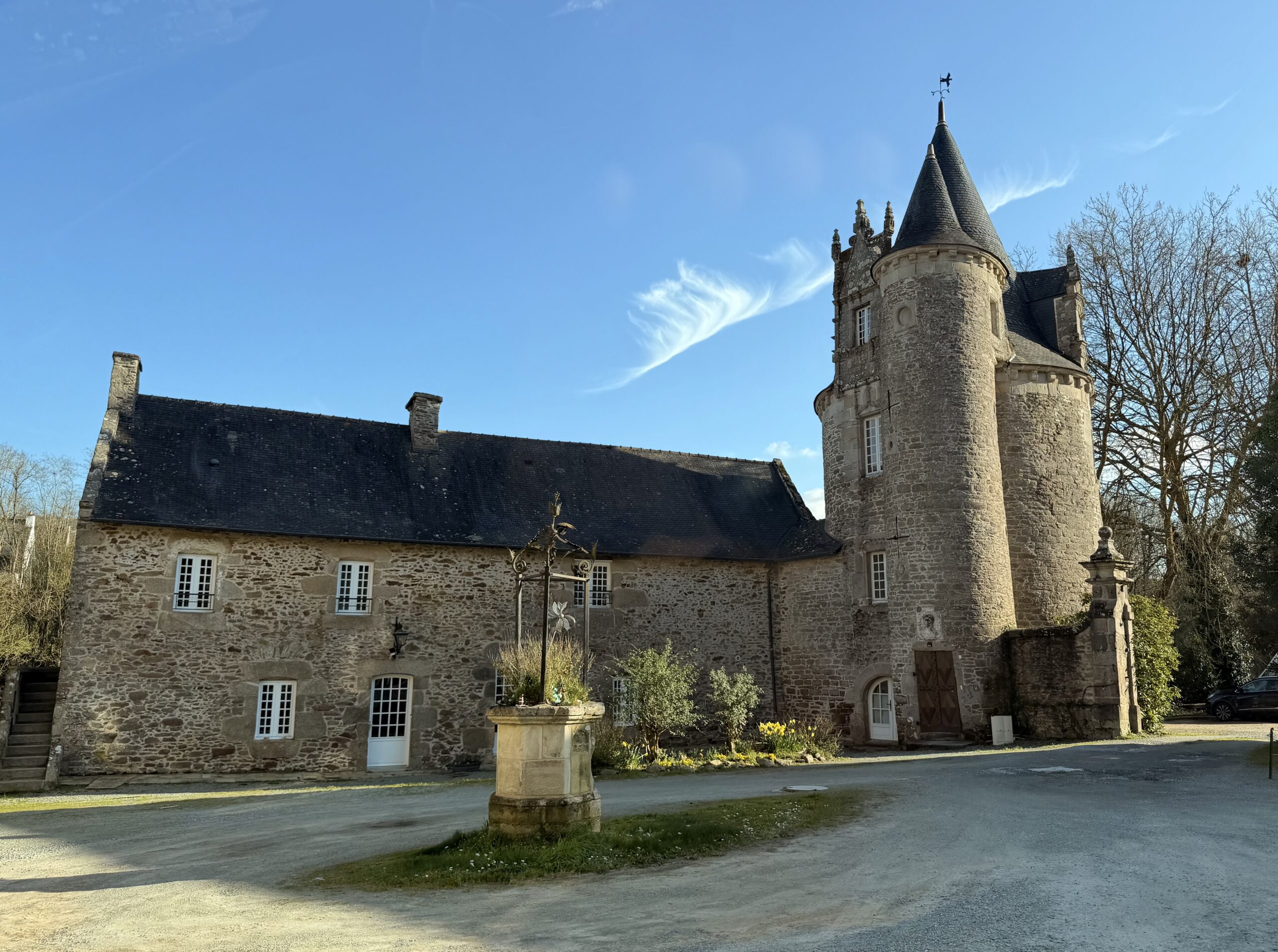
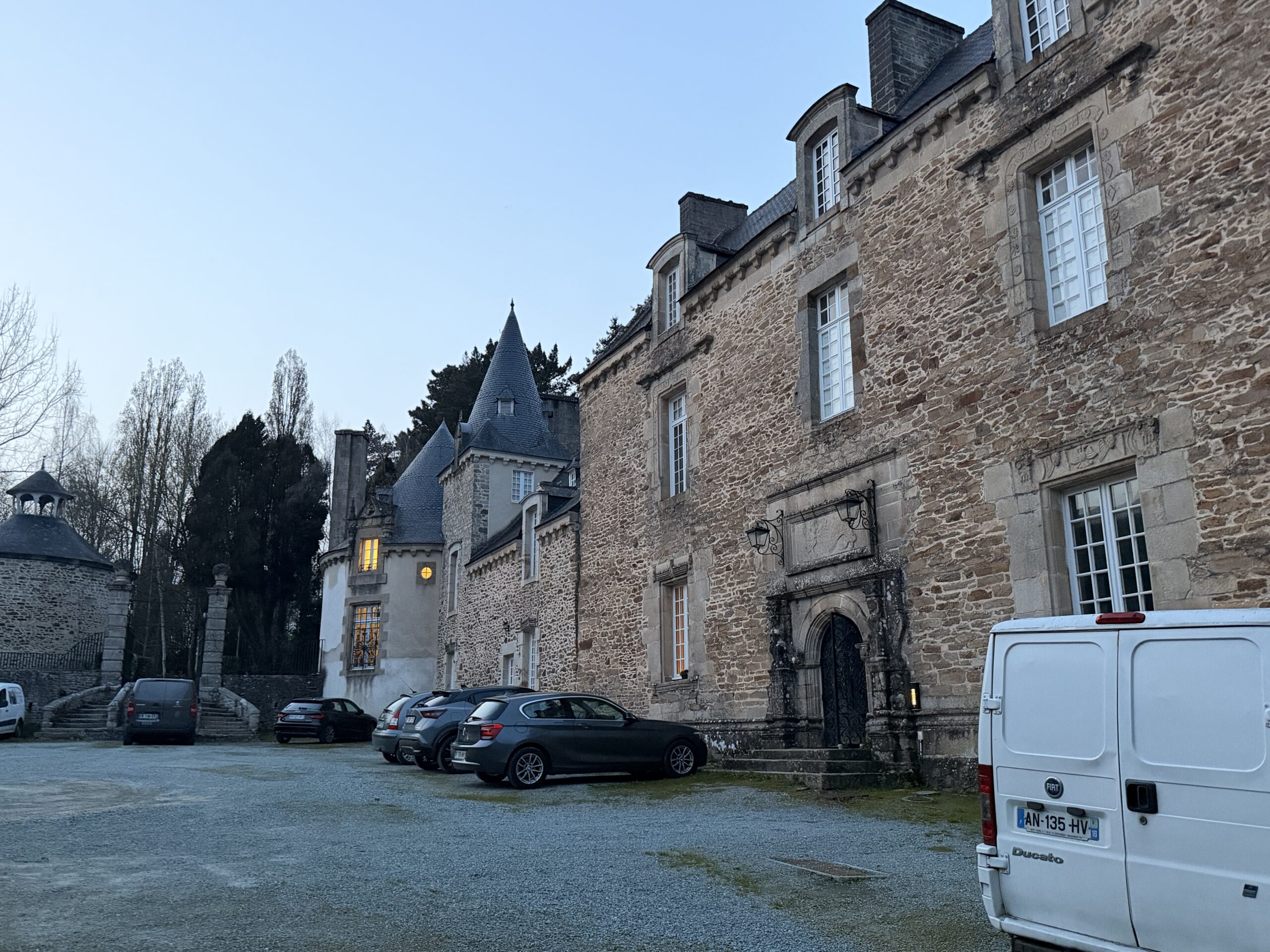
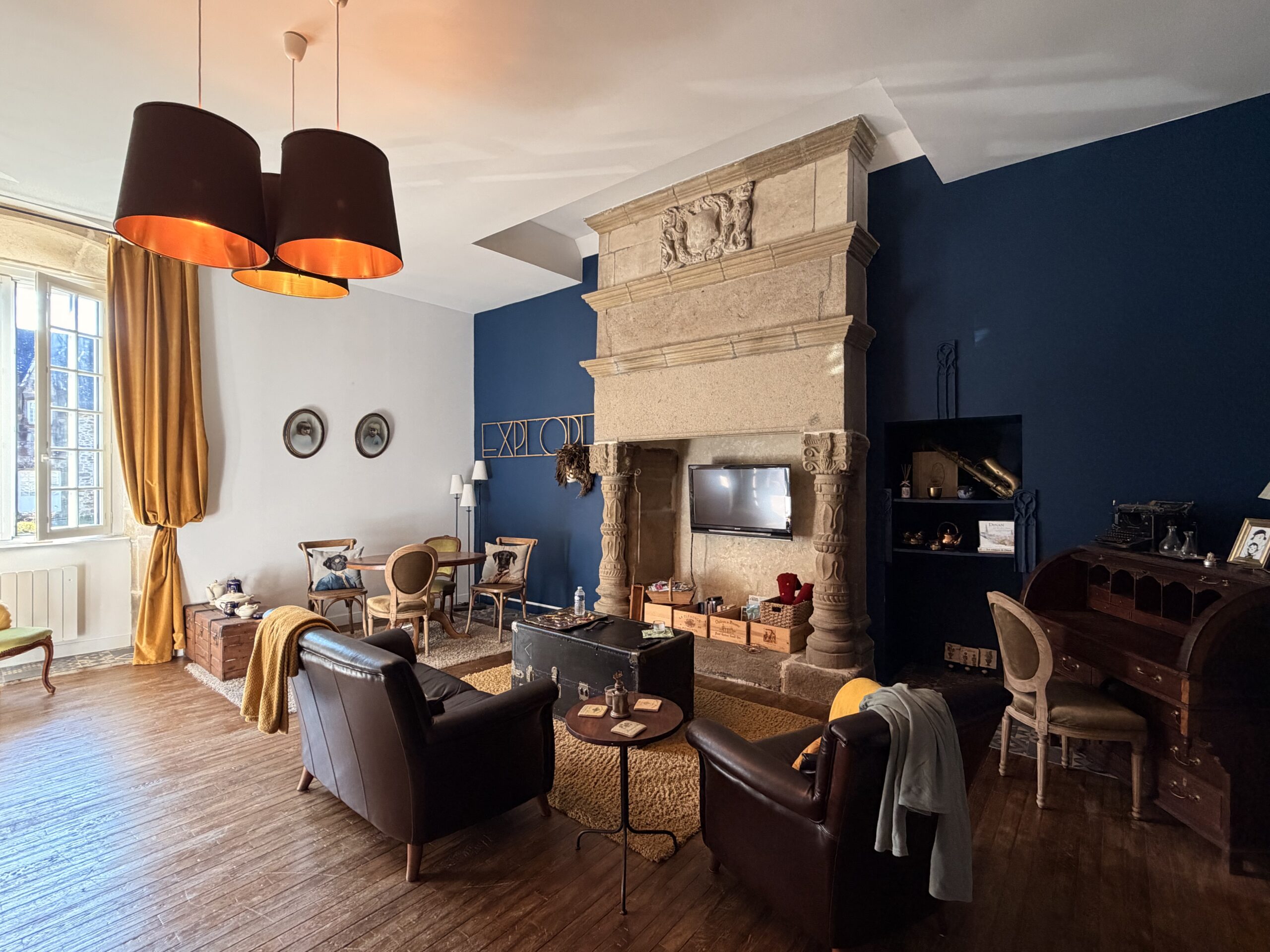
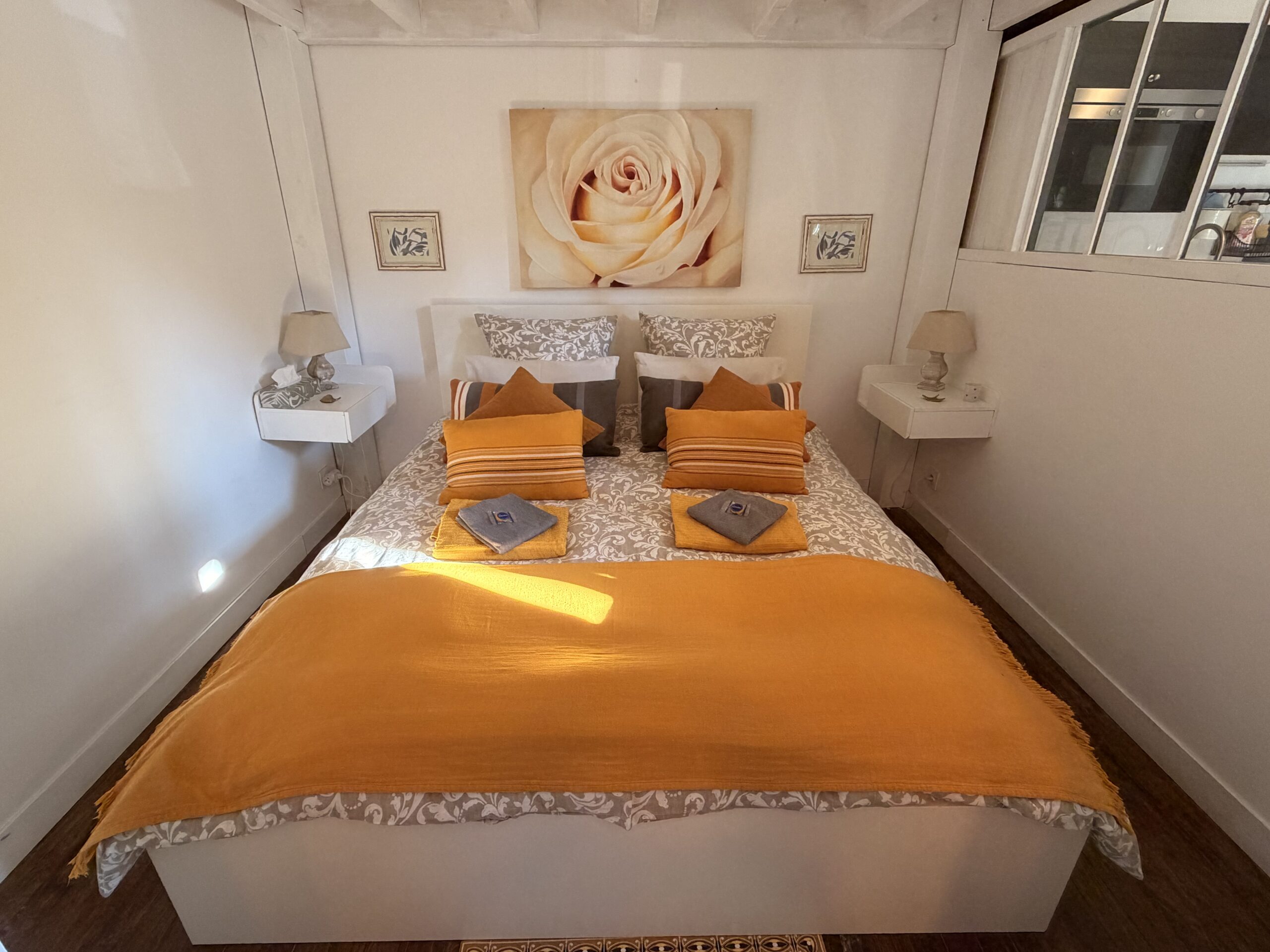
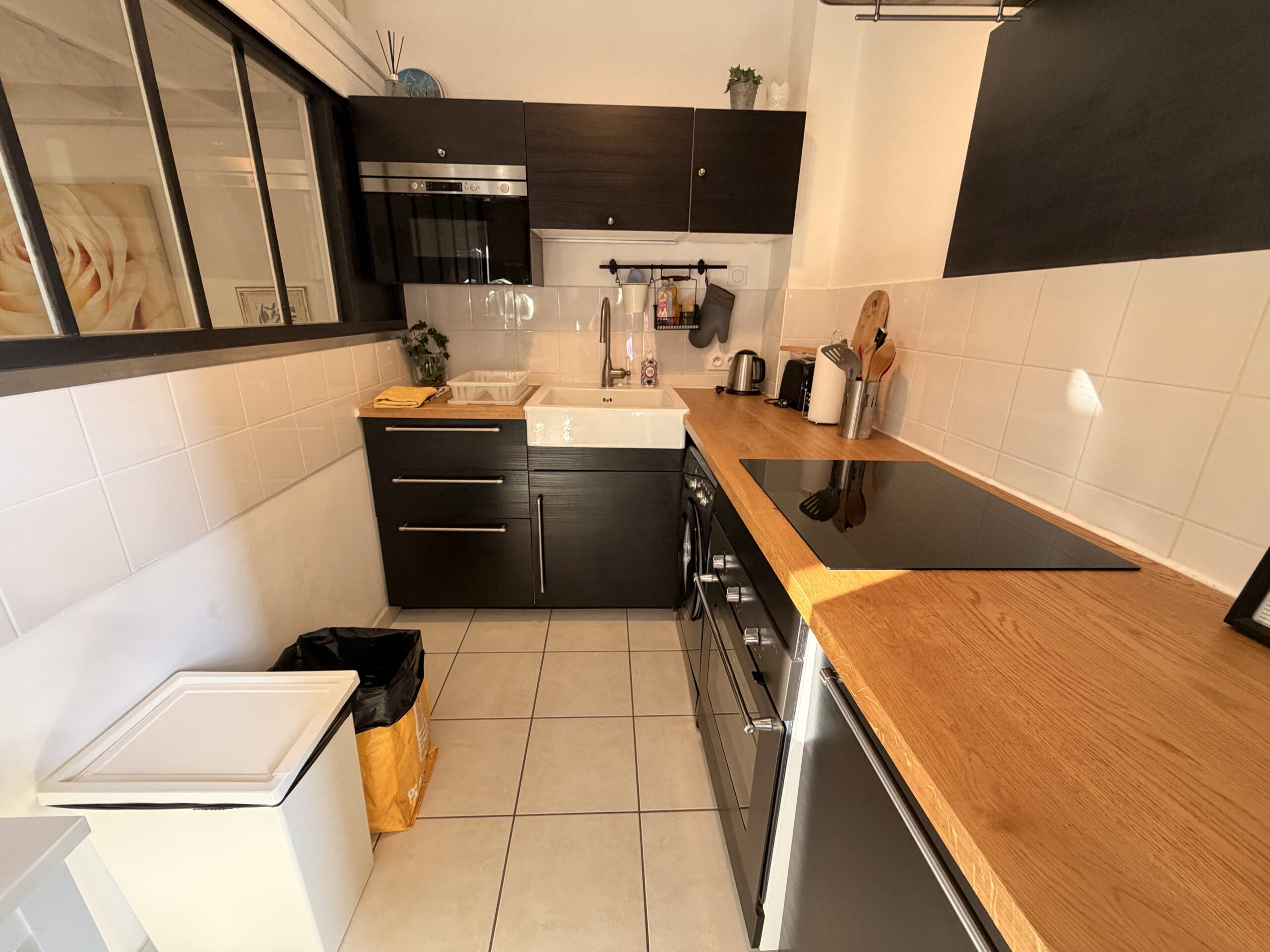
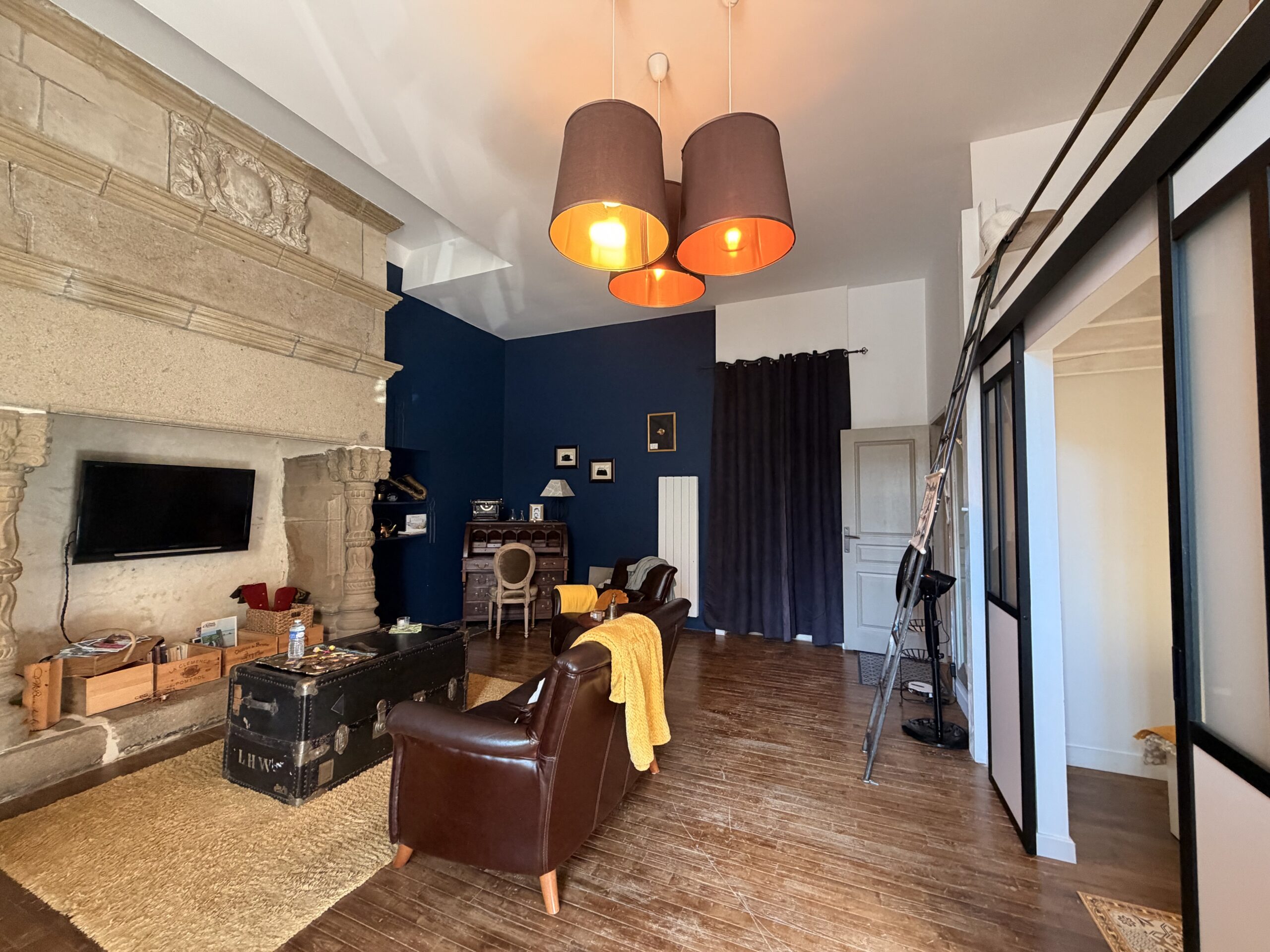
The weather was pretty decent while we were in Dinan – we definitely had some rainy days but the nice thing about staying somewhere for a week was that we could be a little lazy about exploring the area. The beauty of slow travel is being able to spend a rainy morning lounging around our cozy castle a bit before heading out when it cleared up.
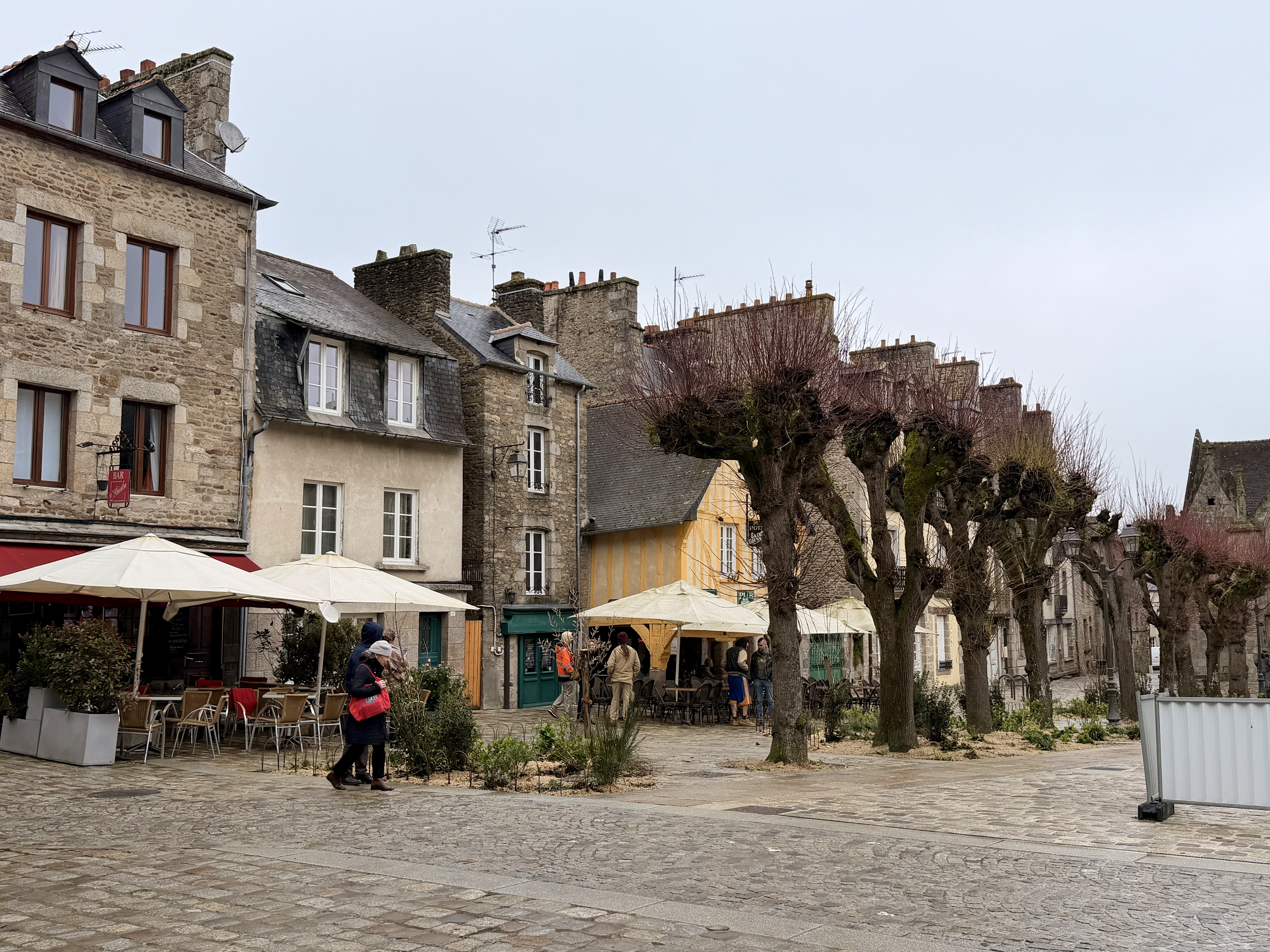
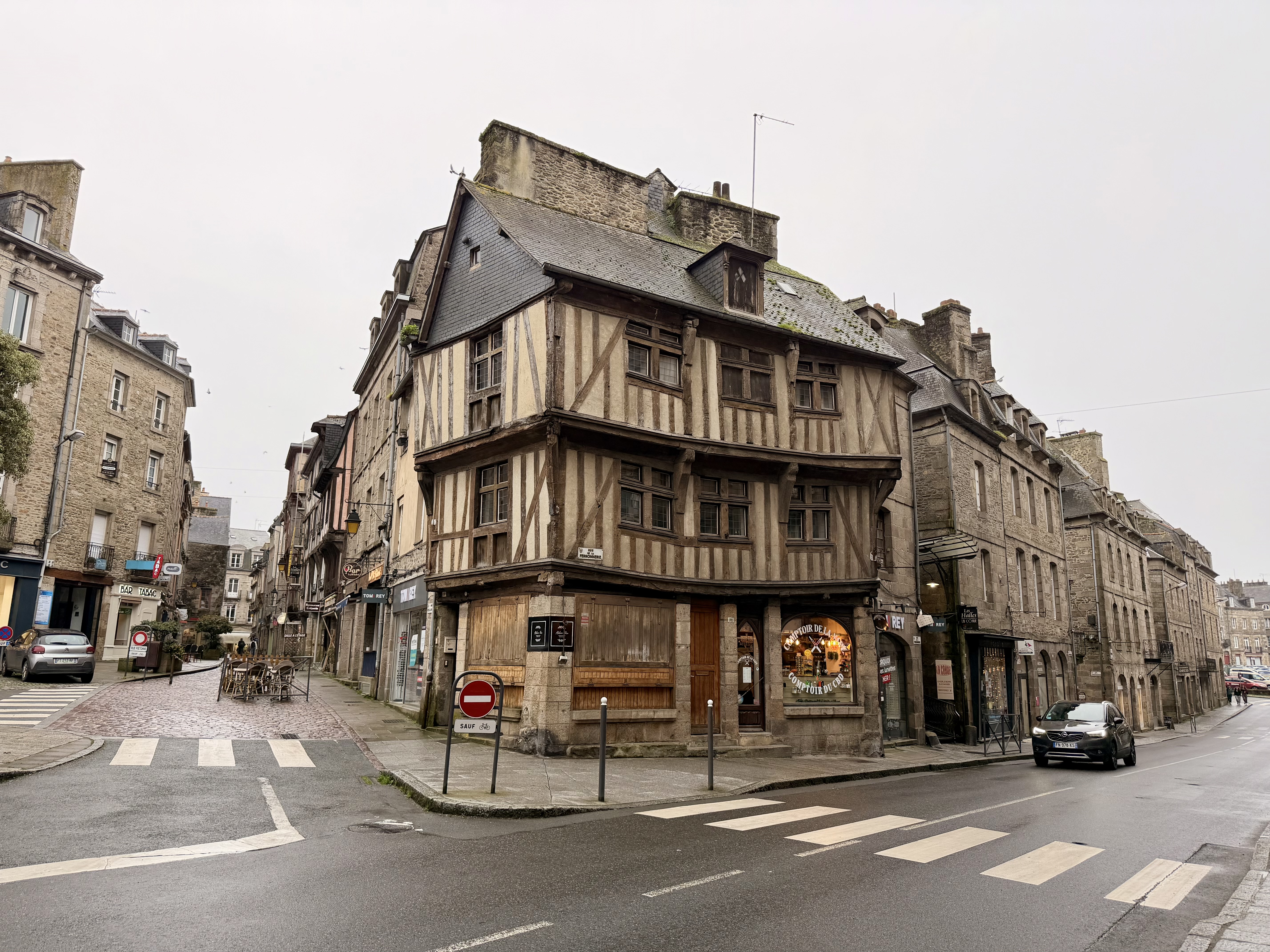
Our VRBO was about a 20 minute walk into town so we didn’t have to worry about driving into the town center. Dinan is a well-preserved walled medieval town – it managed to escape Allied bombing in WW2 because it did not have a strategic commercial or military importance to the Germans (unlike St-Malo with its port). The 2.7 km of walls (ramparts) that surround the historic center were built in the 13th century and include 10 of the original 14 towers. The historic center also has over 100 original half-timbered houses. (https://www.eupedia.com/france/dinan.shtml#google_vignette). We used the Rick Steves France guidebook (which is conveniently available electronically in the Books app on iPhone) to guide us around town (and the region), so a lot of the information below comes from that book. There’s a good self-guided walking tour of the town in the Brittany chapter.
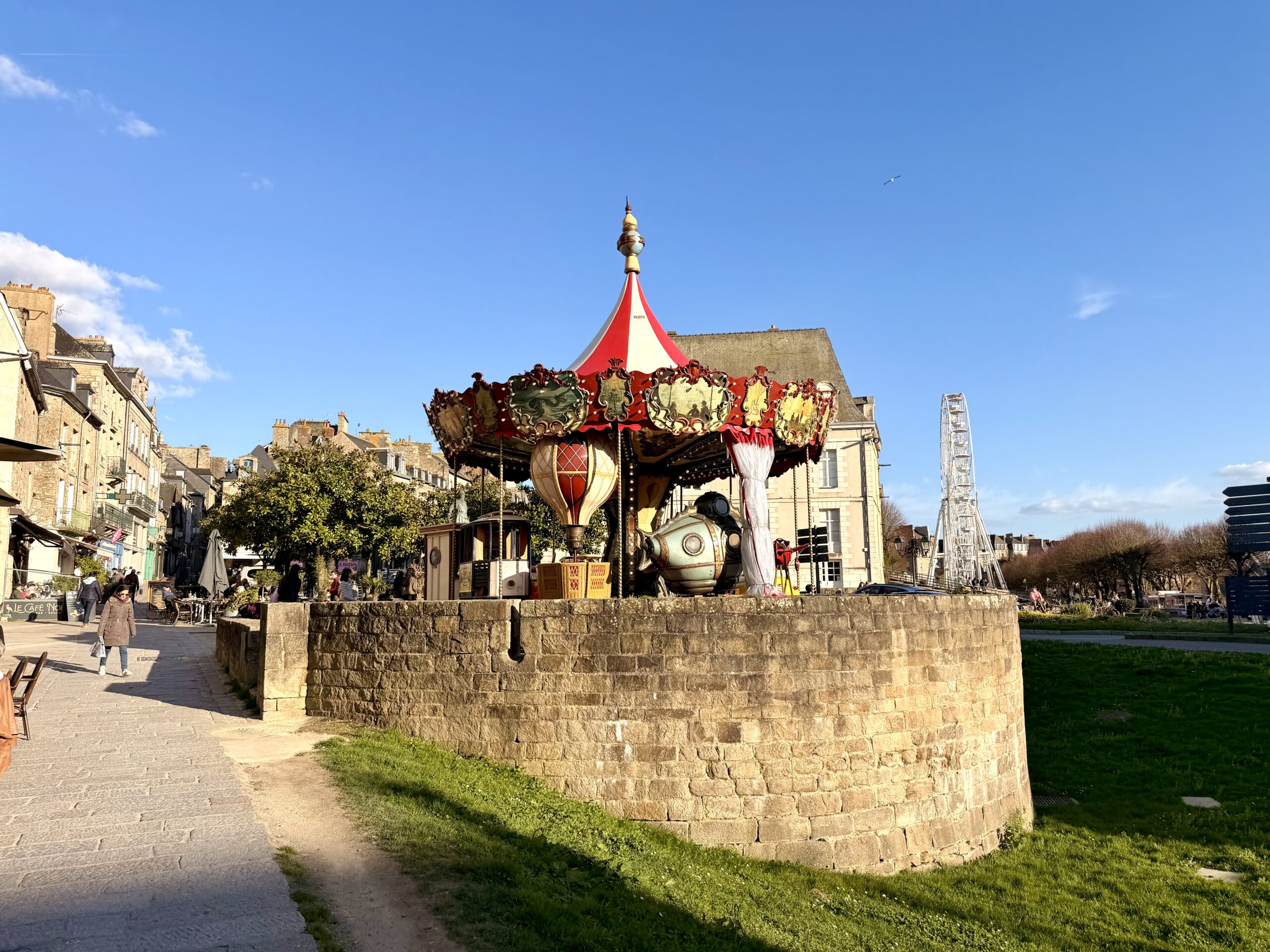
As we got into the historic area from our VRBO, we came across this carousel on Place Duclos. Then right around the corner is L’Église St-Malo de Dinan is a 15th century Catholic Church.
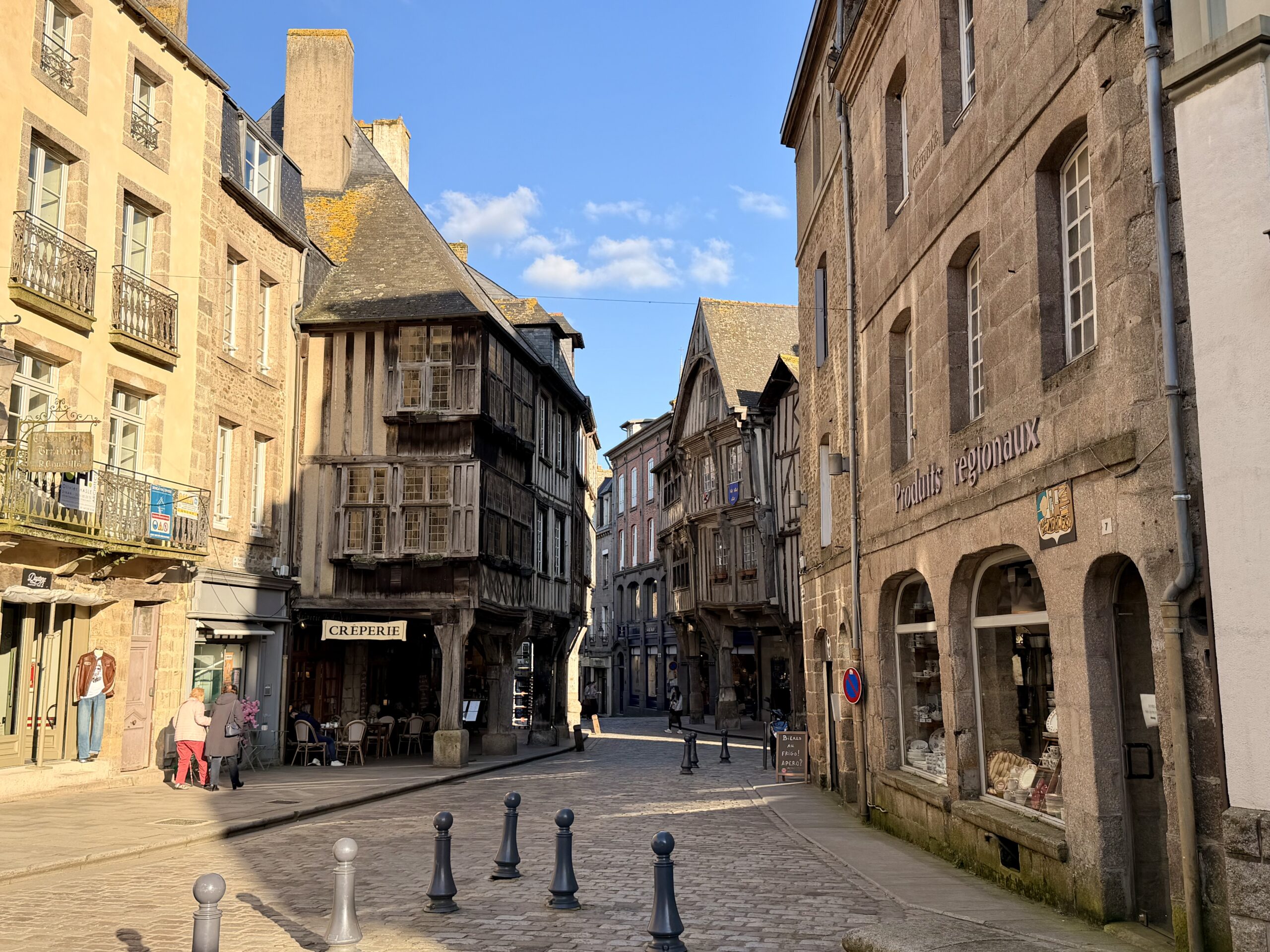
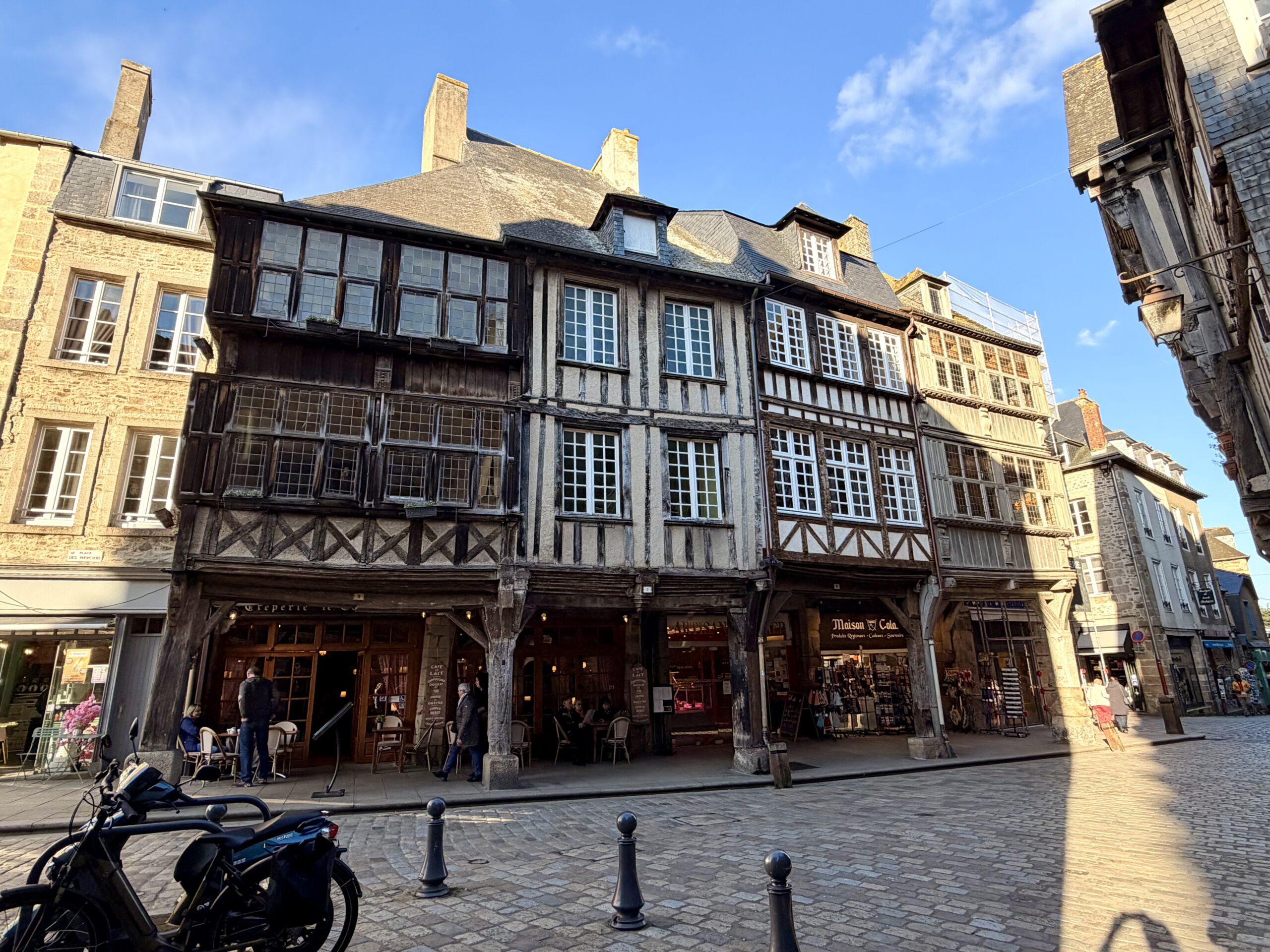
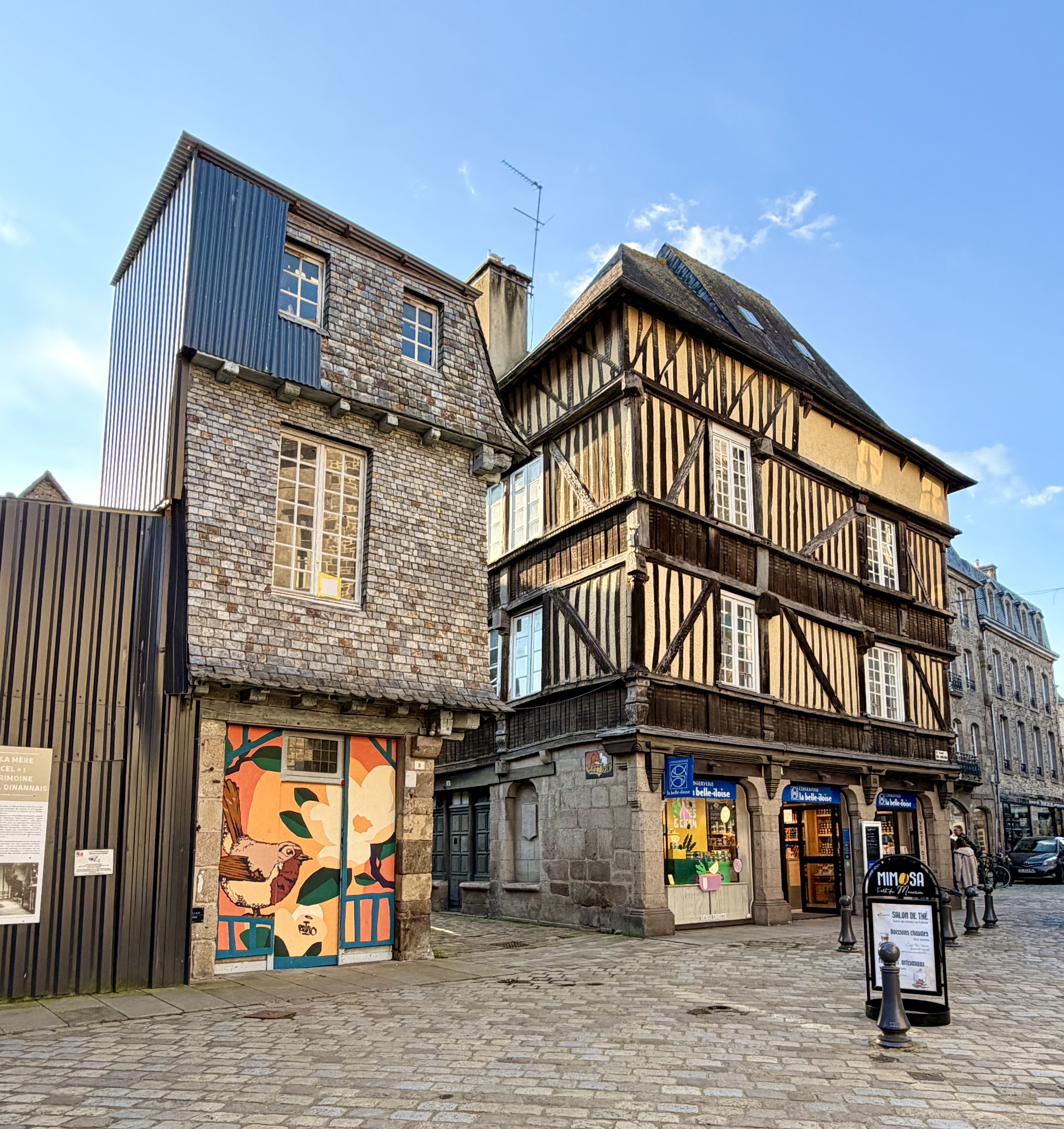
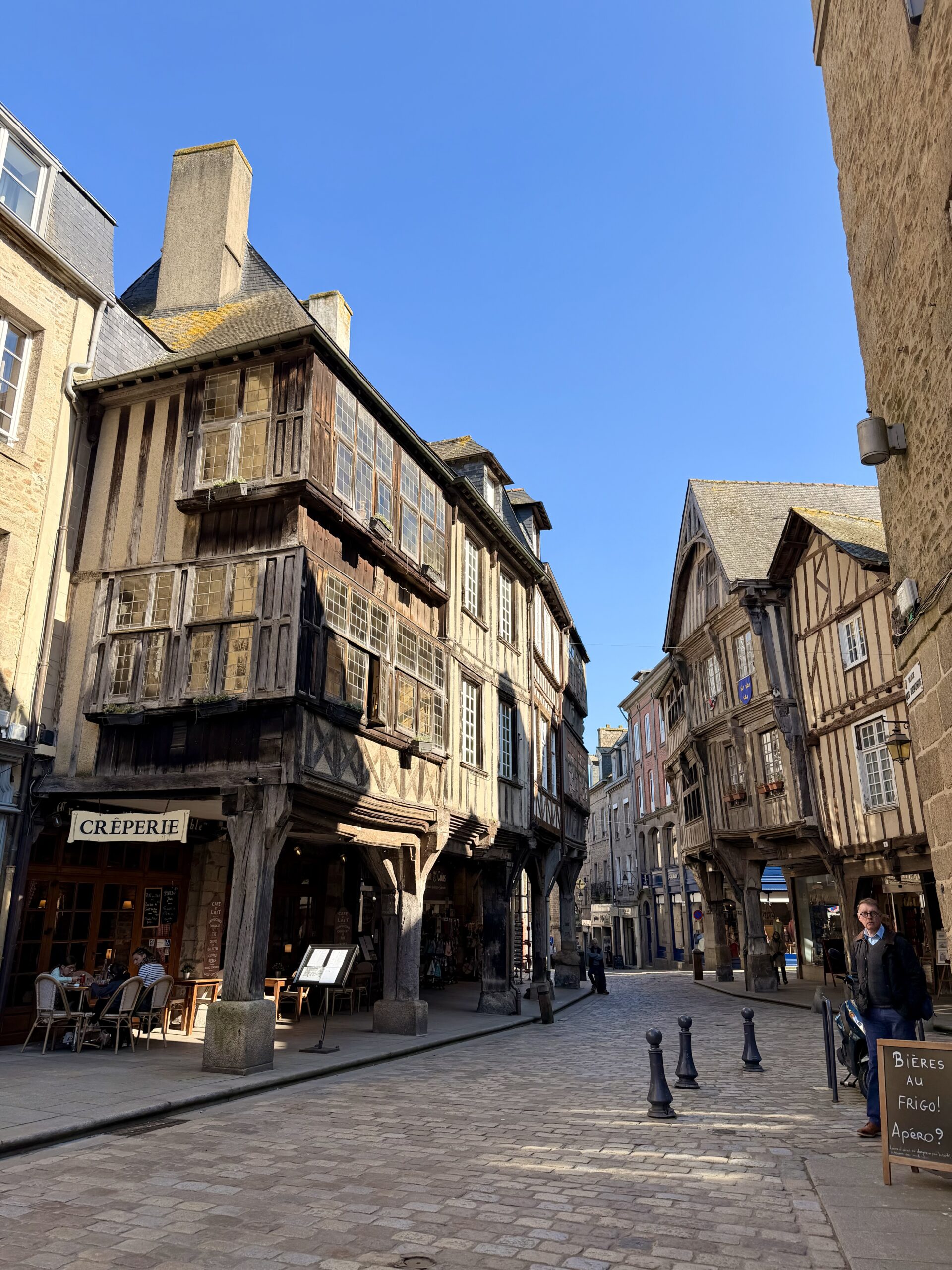
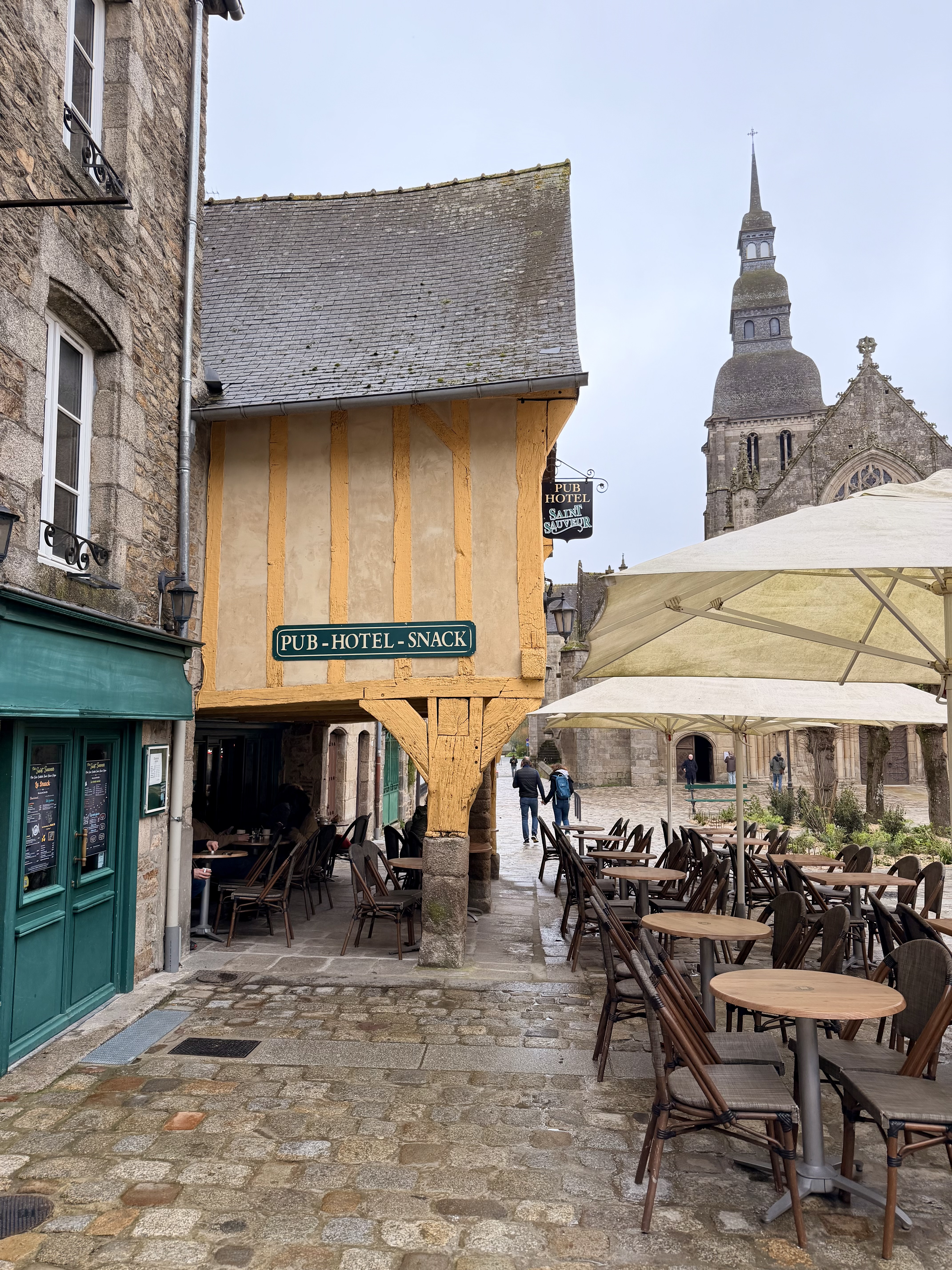
The main square, Place des Merciers, has several shops and multiple half-timbered buildings.
If the building in this picture below looks like half a building, that’s because a fire destroyed the other half in 2019 (it was home to the restaurant Chez la Mère Pourcel right on the main square, Place des Merciers). There’s a metal barrier closing off the site and apparently some plans to rebuild (there were informational signs in French on the fence but I can’t find too much information in English)
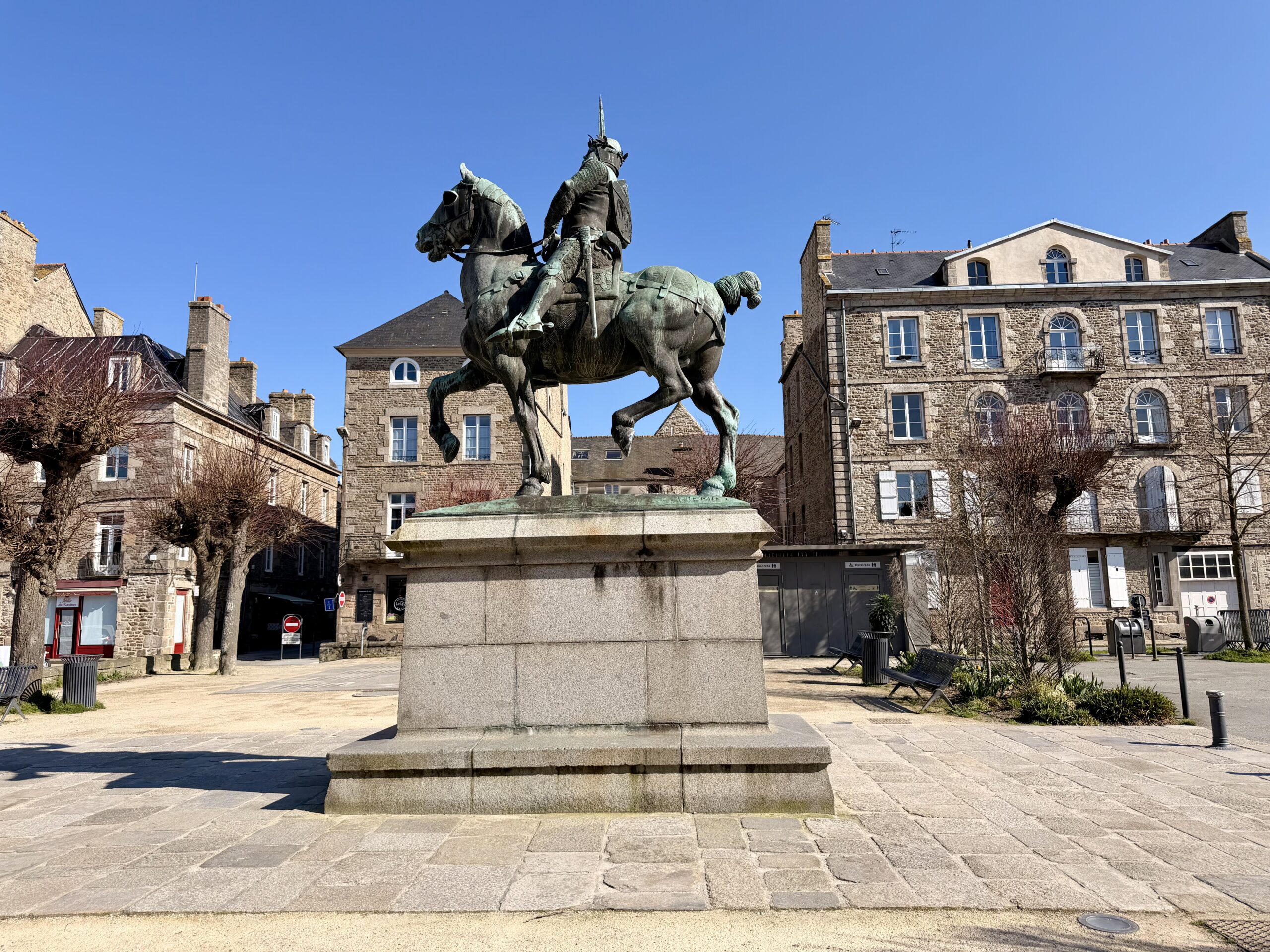
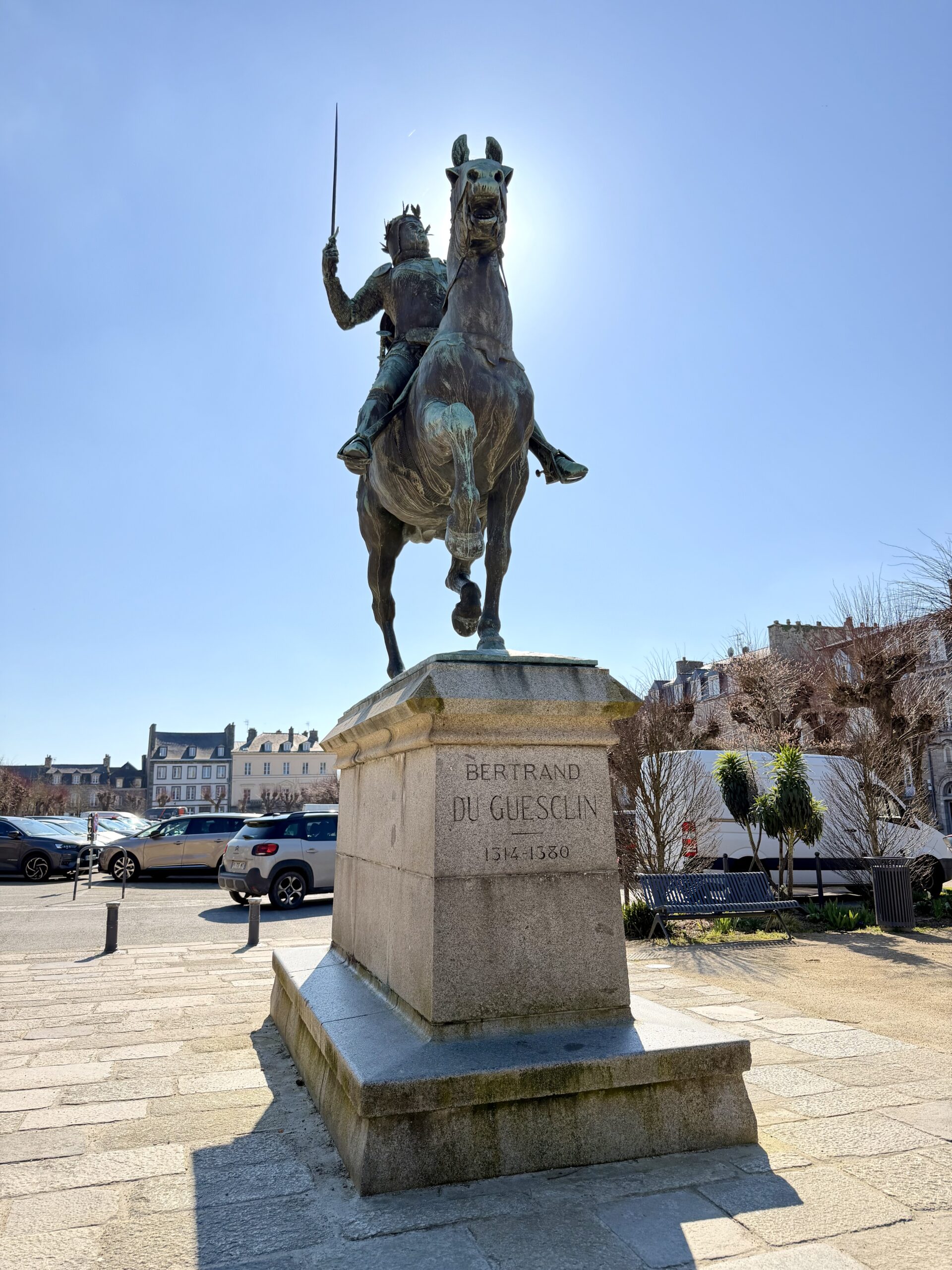
Place du Guesclin has a long parking lot on either side with this small square in the middle – there is a market here every Thursday morning. It’s named after Bertrand du Guesclin – a local 14th century knight/military commander who fought for the French during the Hundred Years’ War.
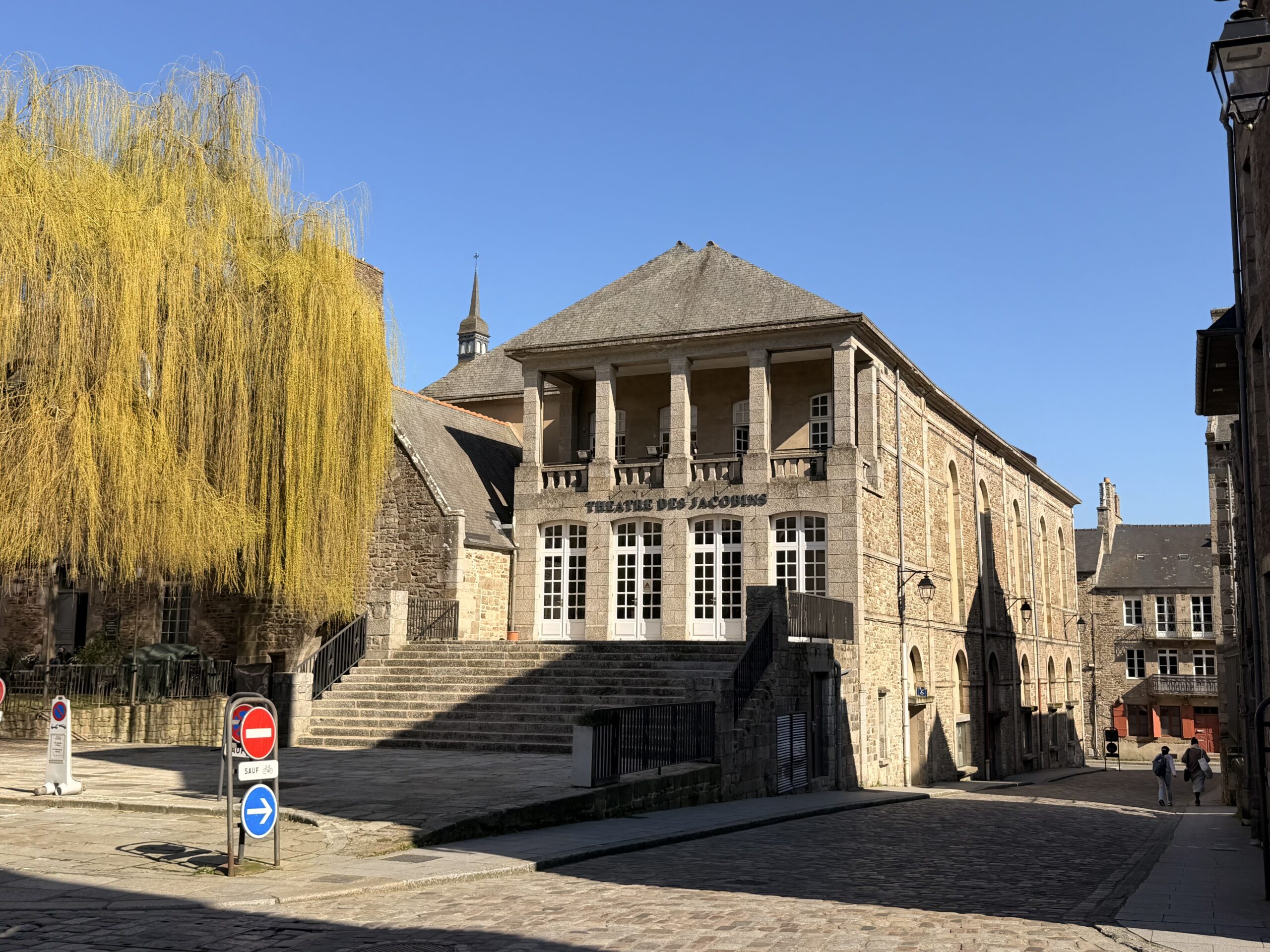
The Theatre des Jacobins – originally a convent – dates back to the 13th century.
Tour de l’Horloge (Clock Tower) is a 15th century clock tower built at a time when most towns only had church bell towers. It sits on a street in the historic center called Rue de l’Horologe (horologe means clock in French). You can climb it for views of the area but we were there in early March and it hadn’t yet opened for the season (it opened on April 4 this year and will close 01 Nov for the 2026 season; it costs 4€ for an adult ticket to climb the 150 or so steps; (https://www.dinan.fr/mes-loisirs/culture-et-patrimoine/le-patrimoine/les-sites-historiques/la-tour-de-lhorloge/)
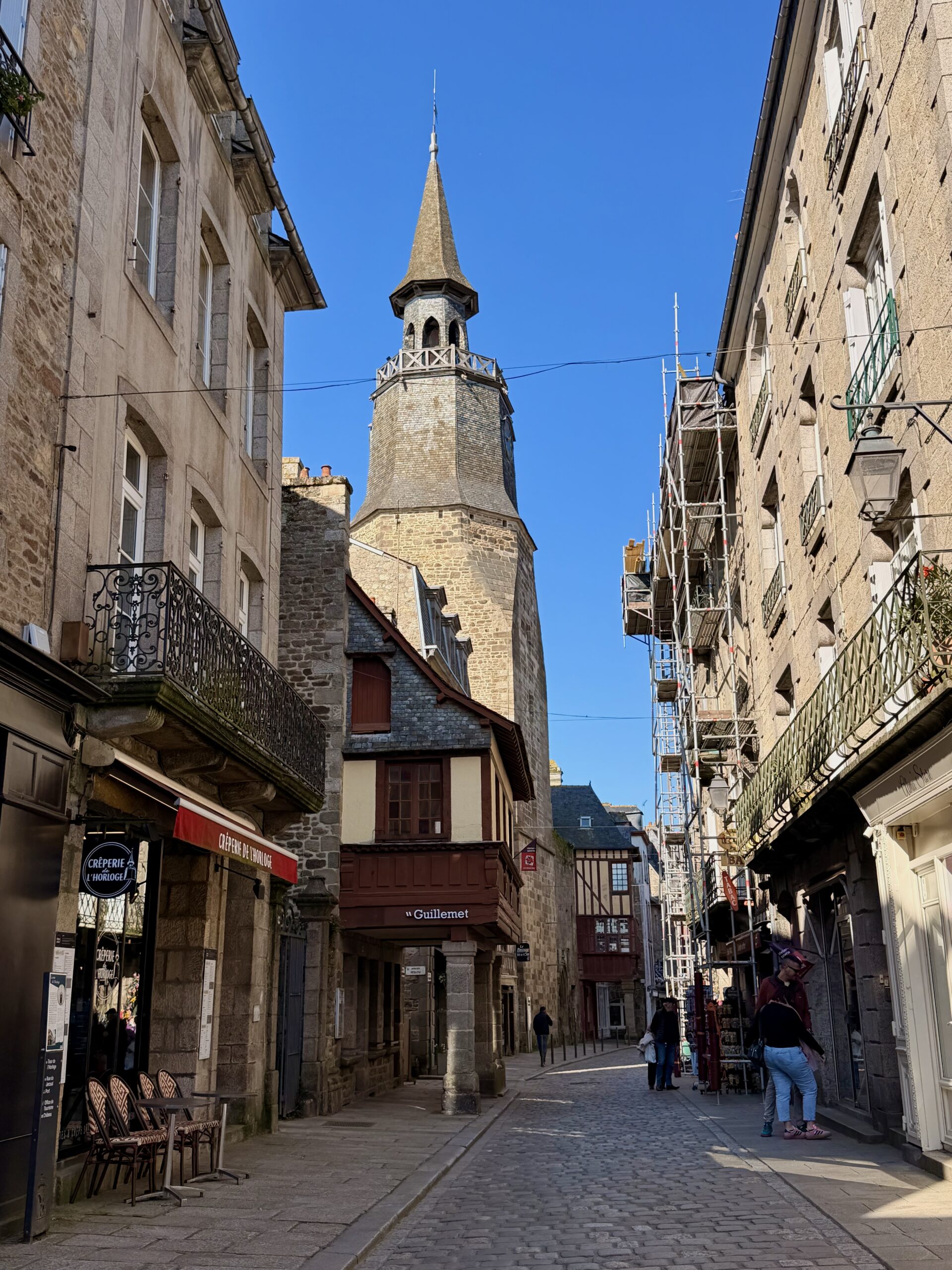
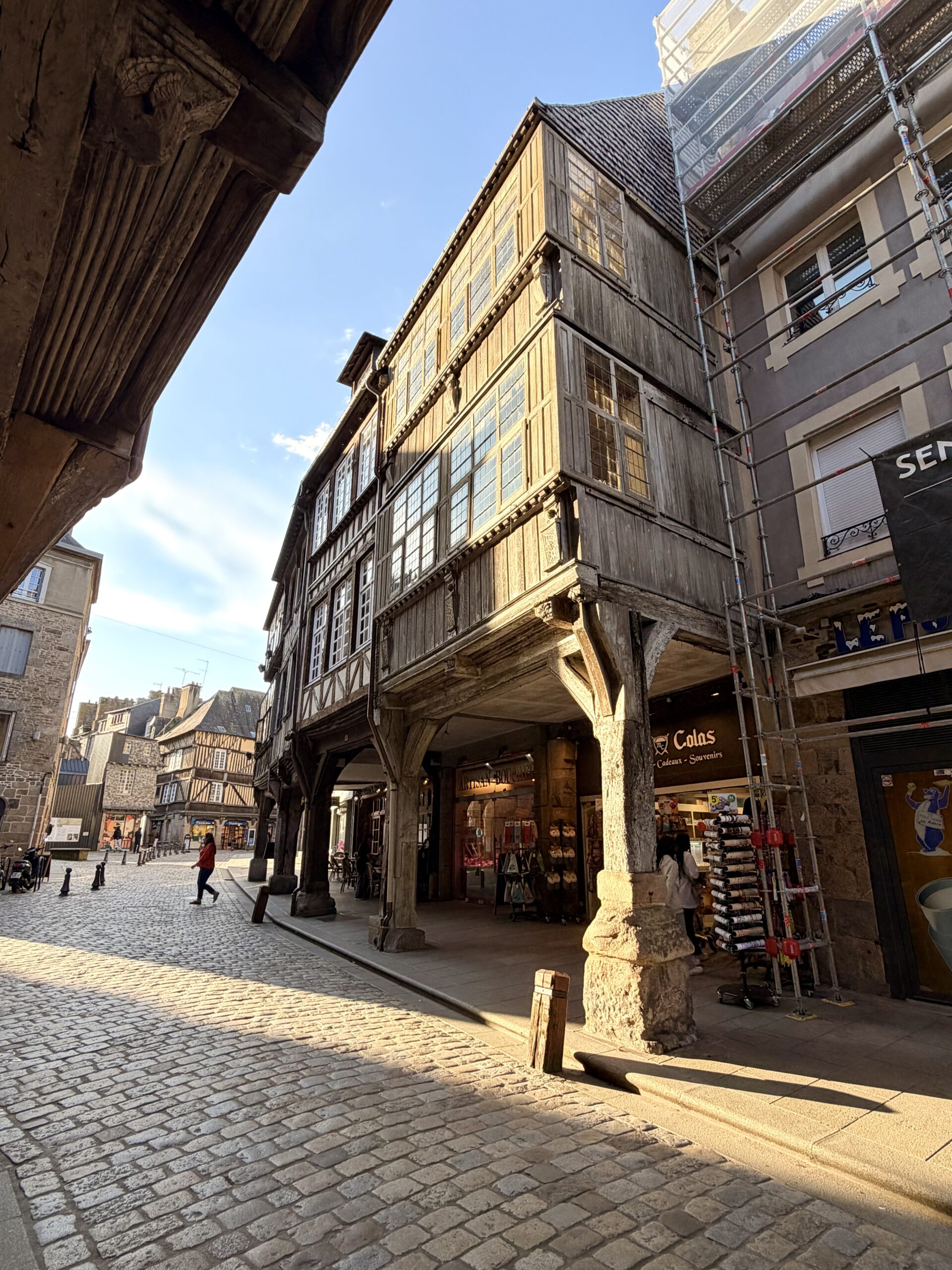
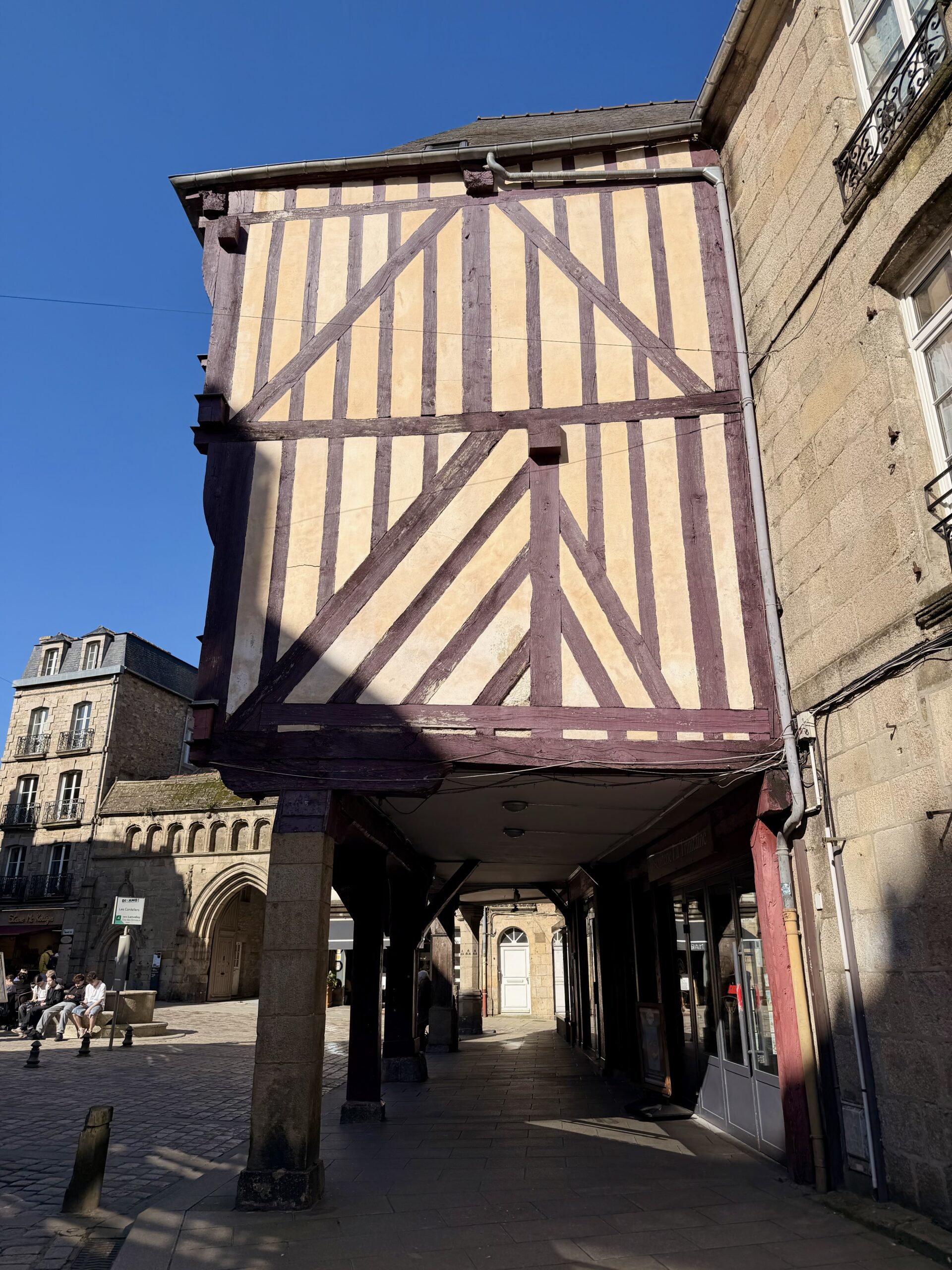
A couple of interesting tidbits I read in the Rick Steves guide: the buildings hang out over the sidewalk like this because at the time they were built, properties were taxed based on their ground floor square footage. Also in the picture on the left you’ll notice the stone support at the bottom of each column are not all equal height. That’s because trees are not standard lengths (unlike cut timber you’d get today) so the builders just adjusted the height of the stone pedestals to accommodate for that variation in timber length.
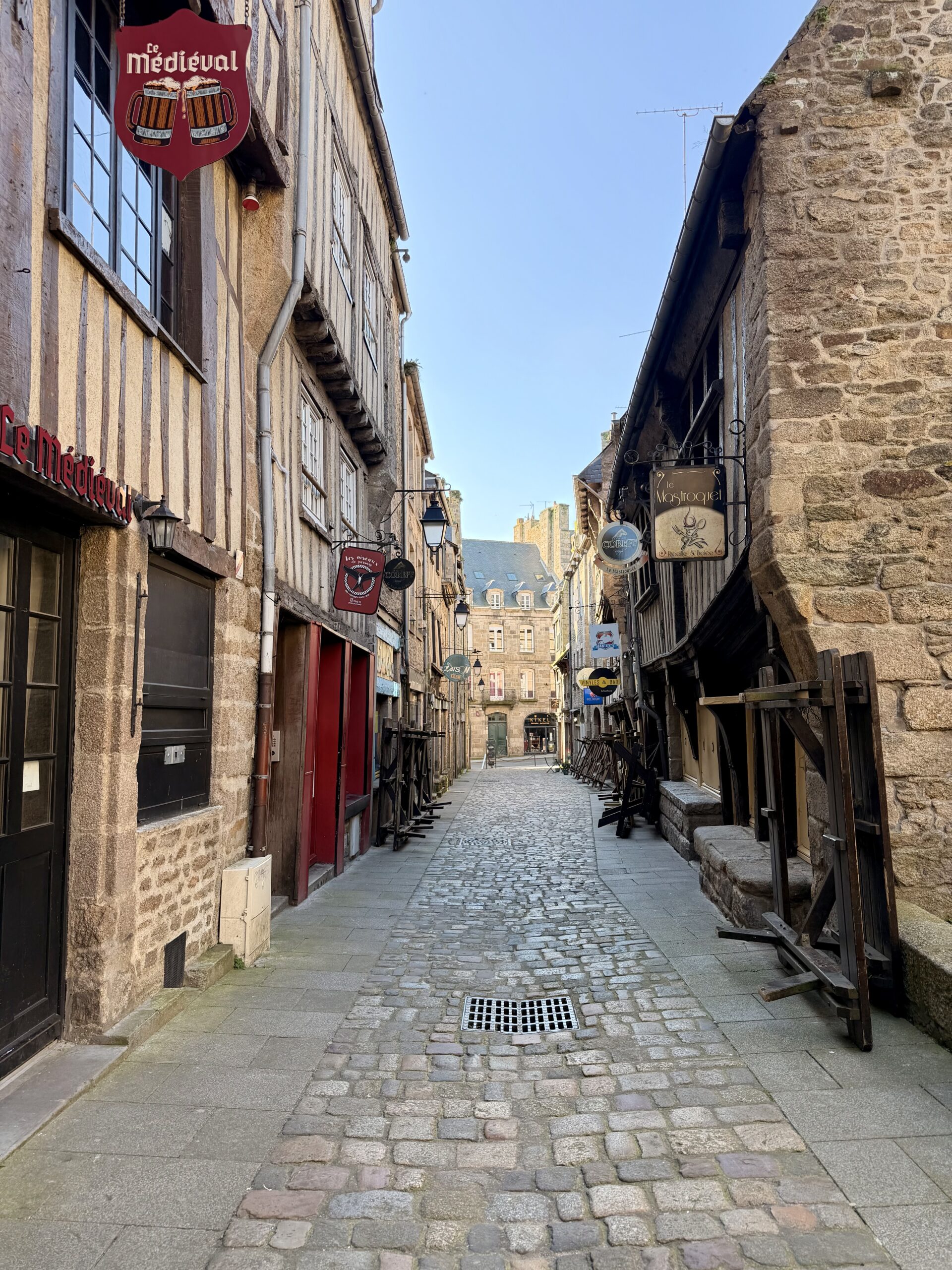
Down this street (picture on the left), there is a pub called the Sherlock Holmes Pub. Then right across the street is the Dr. Watson Club.
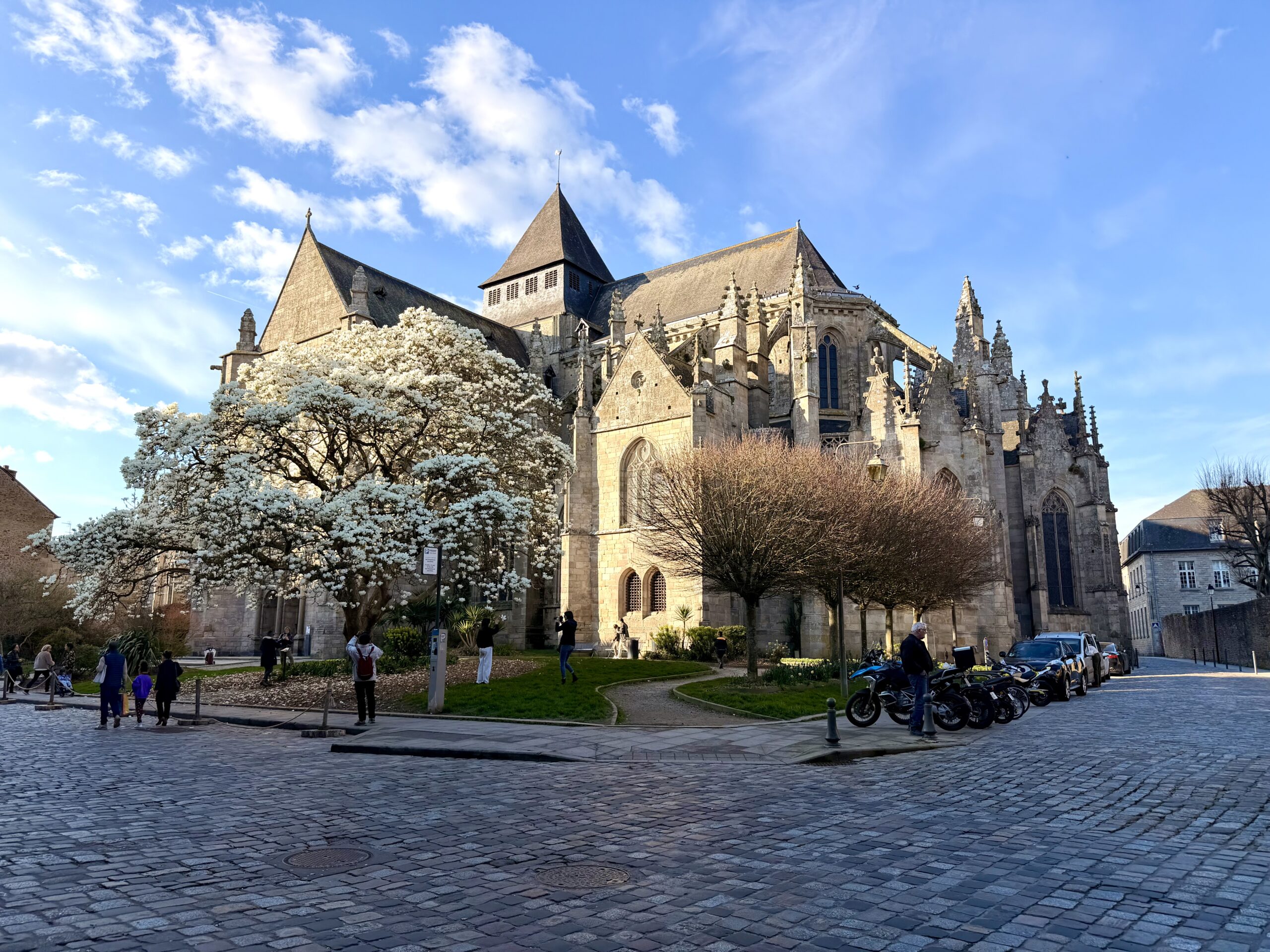
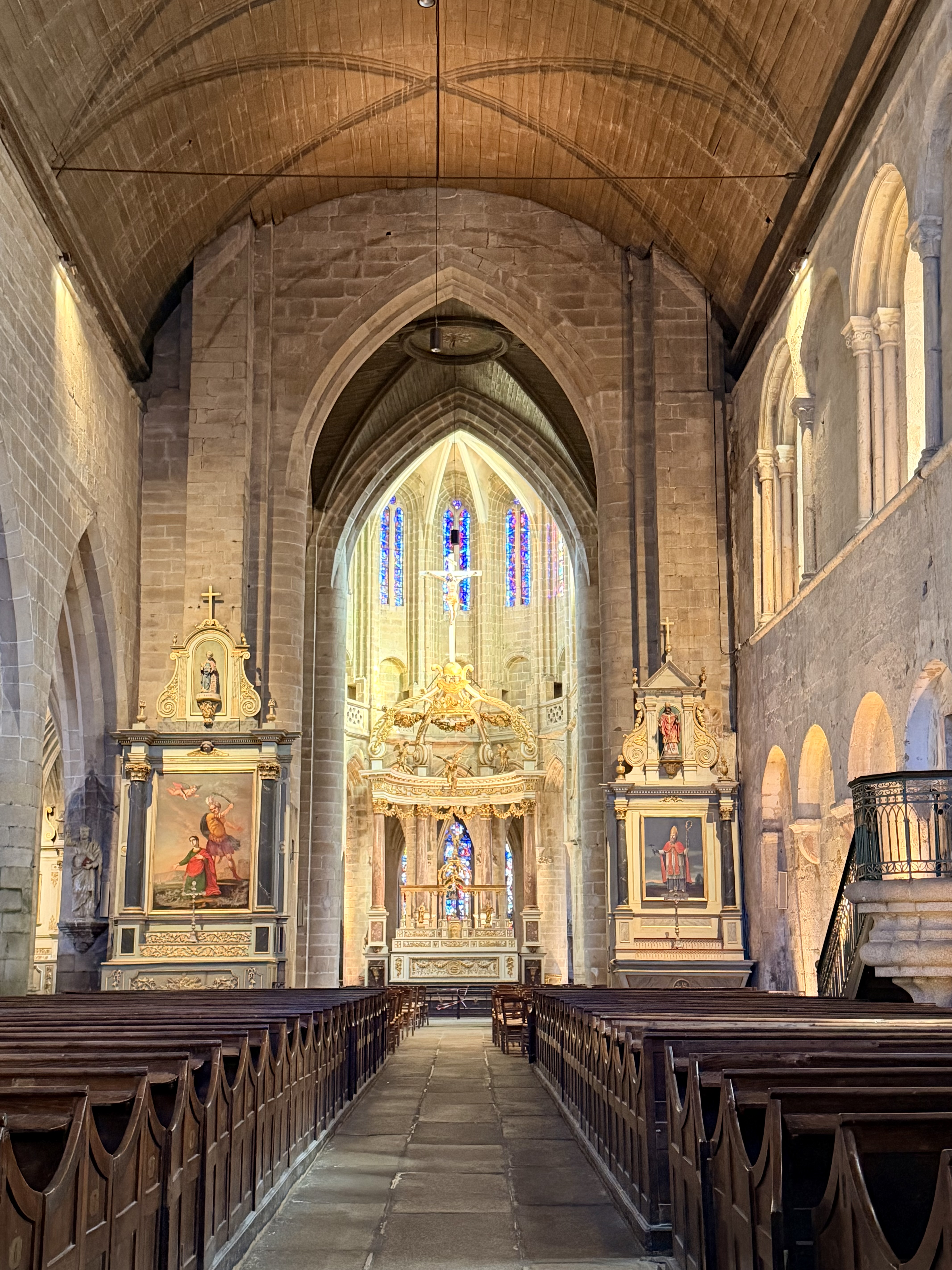
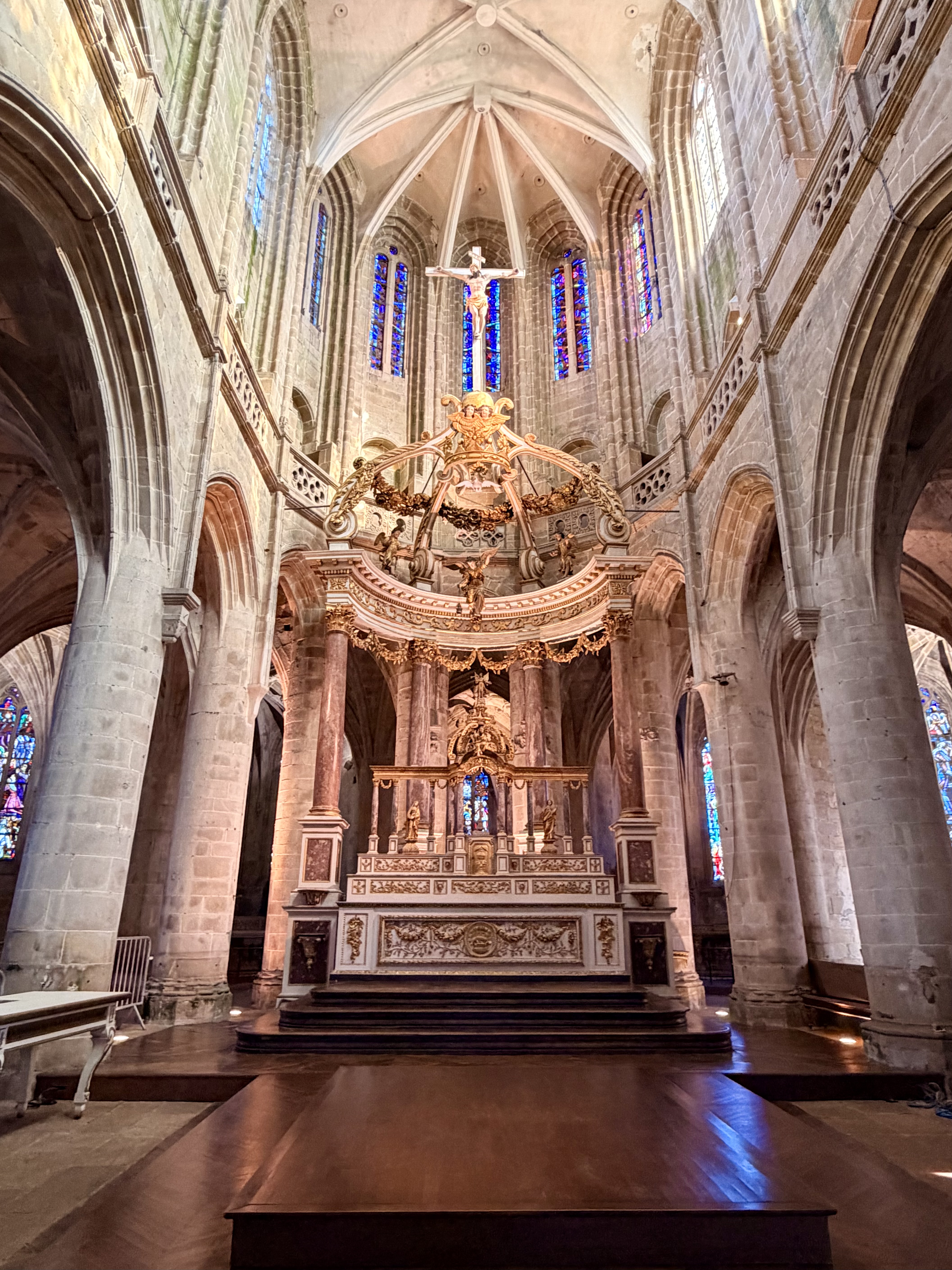
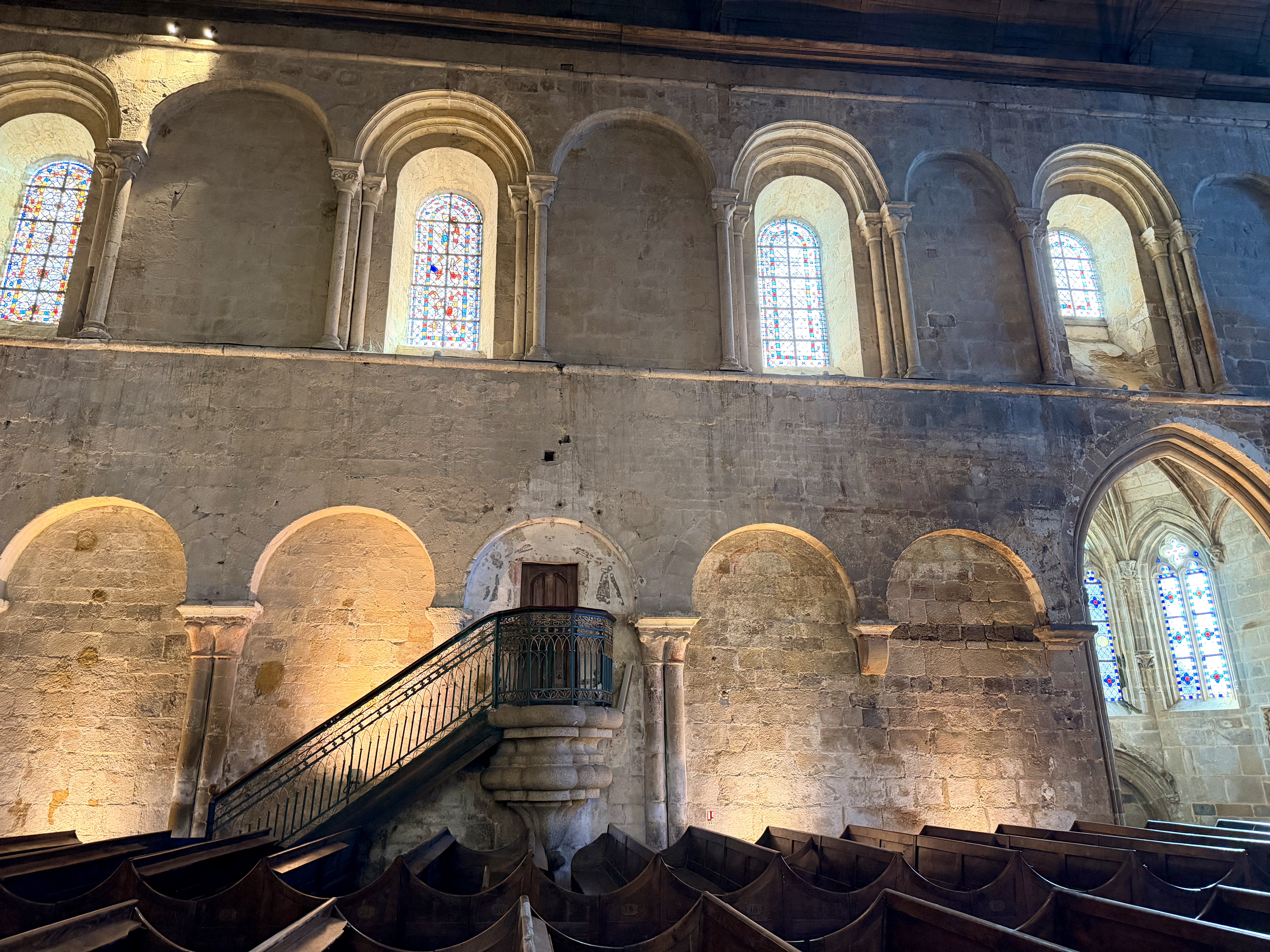
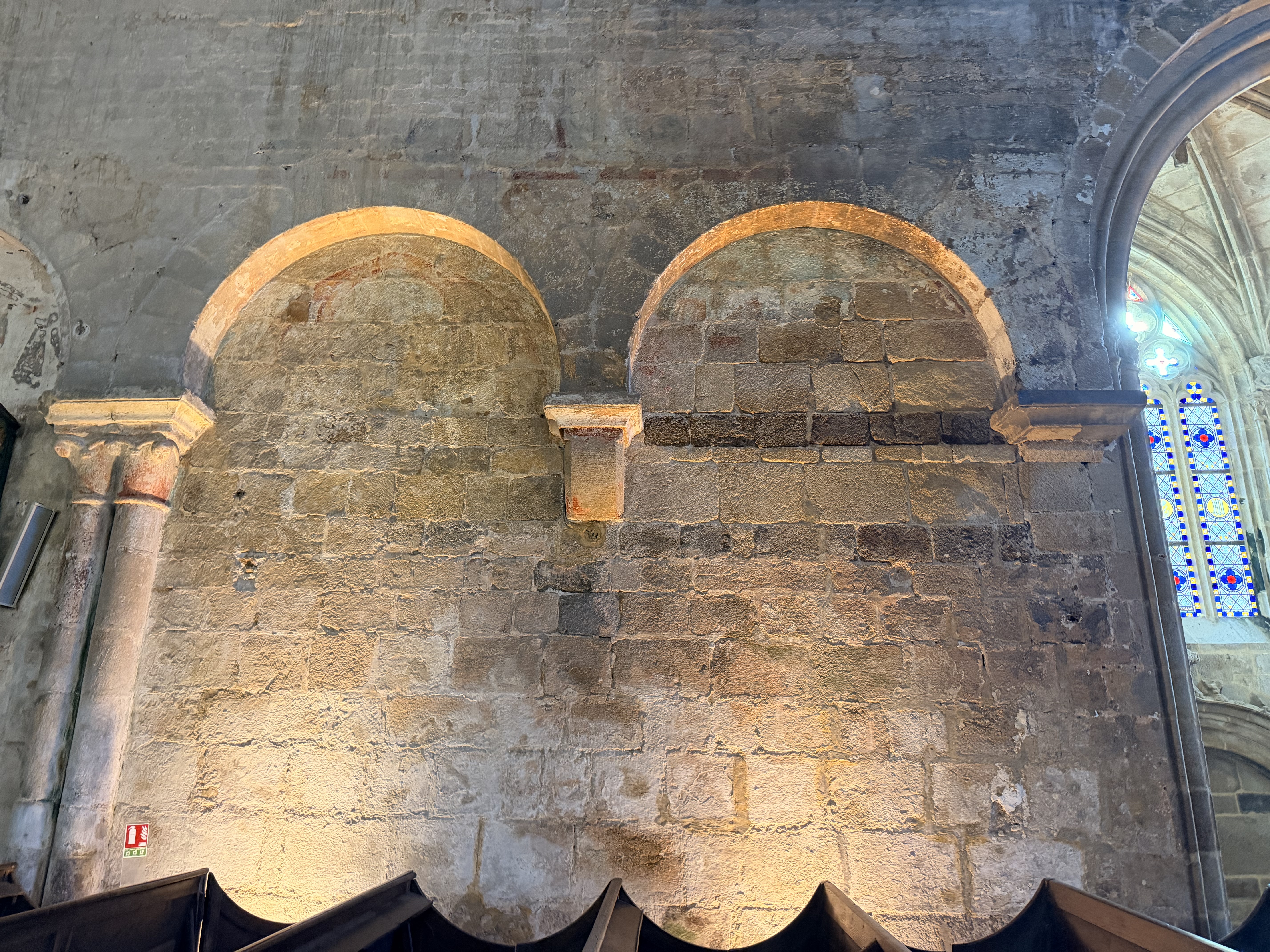
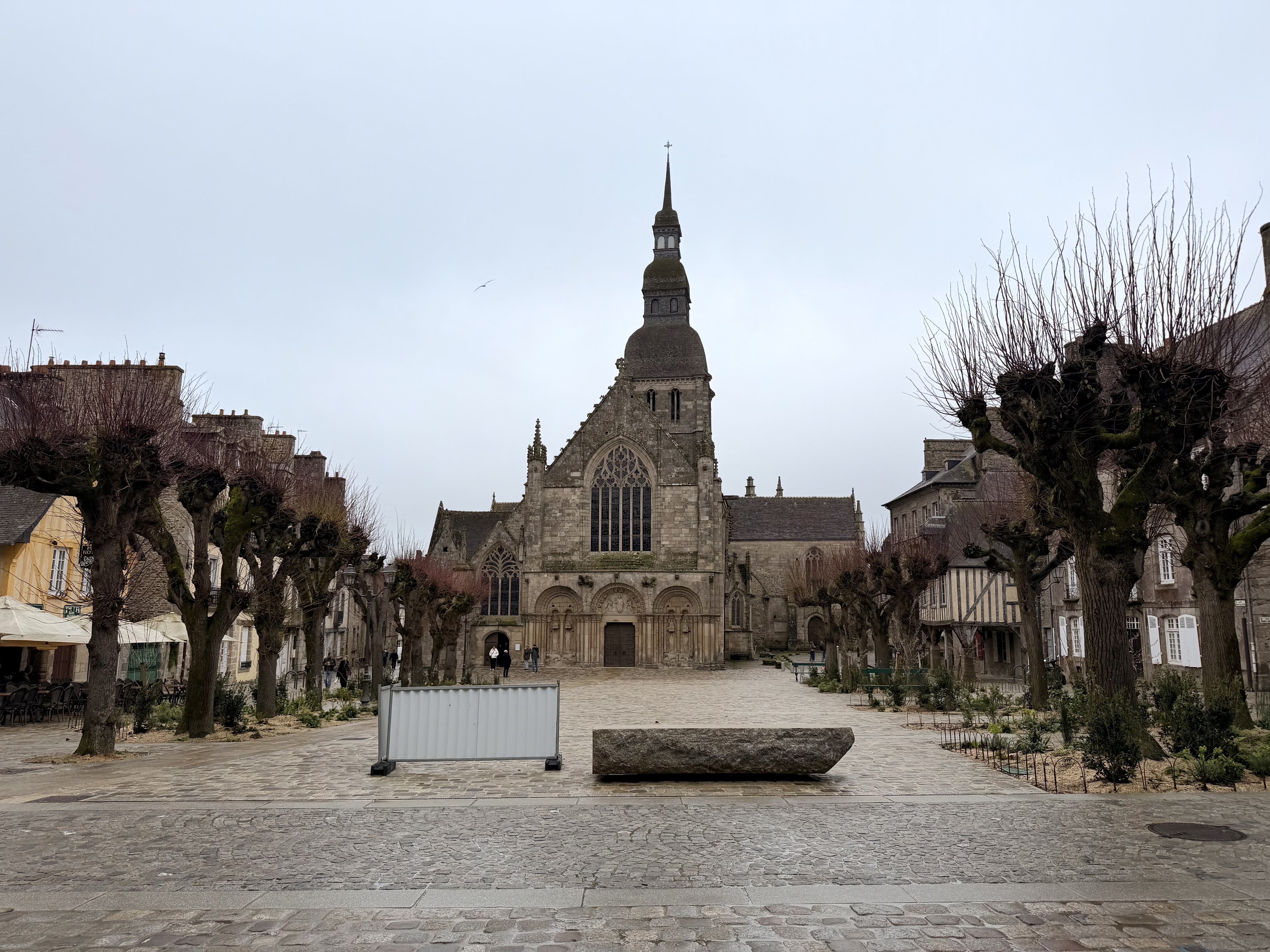
The Basilica of Saint-Sauveur is the other Roman Catholic Church in town. It was originally constructed in the 12th century, which reconstruction/additions occurring in the 14th and 15th centuries. Legend has it that a local knight (Riwallon le Roux, the lord of Dinan) was taken prisoner during the First Crusades and vowed to build this church if he survived. When he returned home in 1112, he kept his promise. It also houses the heart of Bertrand du Guesclin – the guy in the statue above on his horse (https://www.dinan-capfrehel.com/en/sit/Basilica-of-the-Holy-Savior/)
The arched façade (with 3 arches) was part of the original smaller church. The stained glass inside is much newer (19th-20th century)
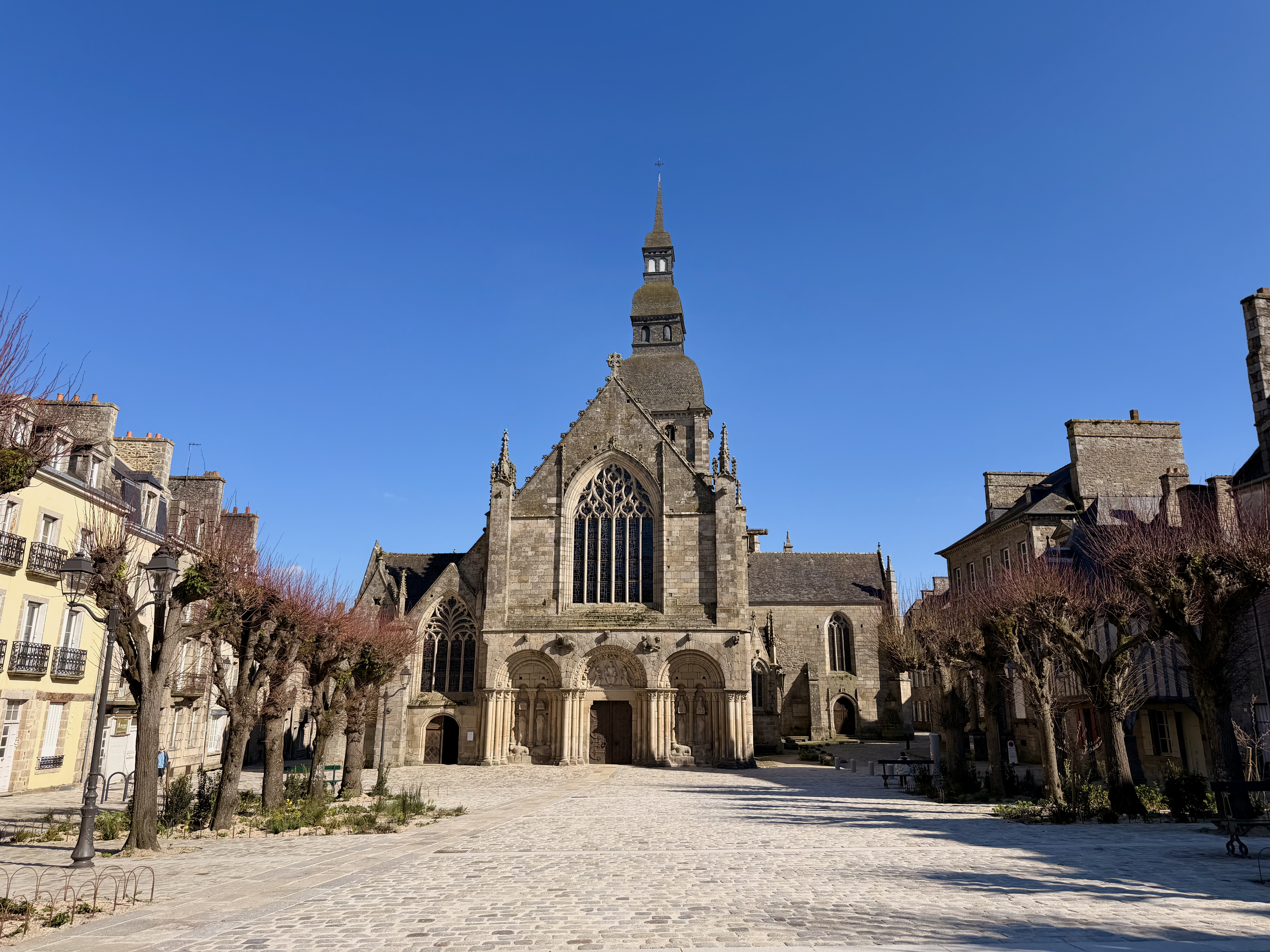
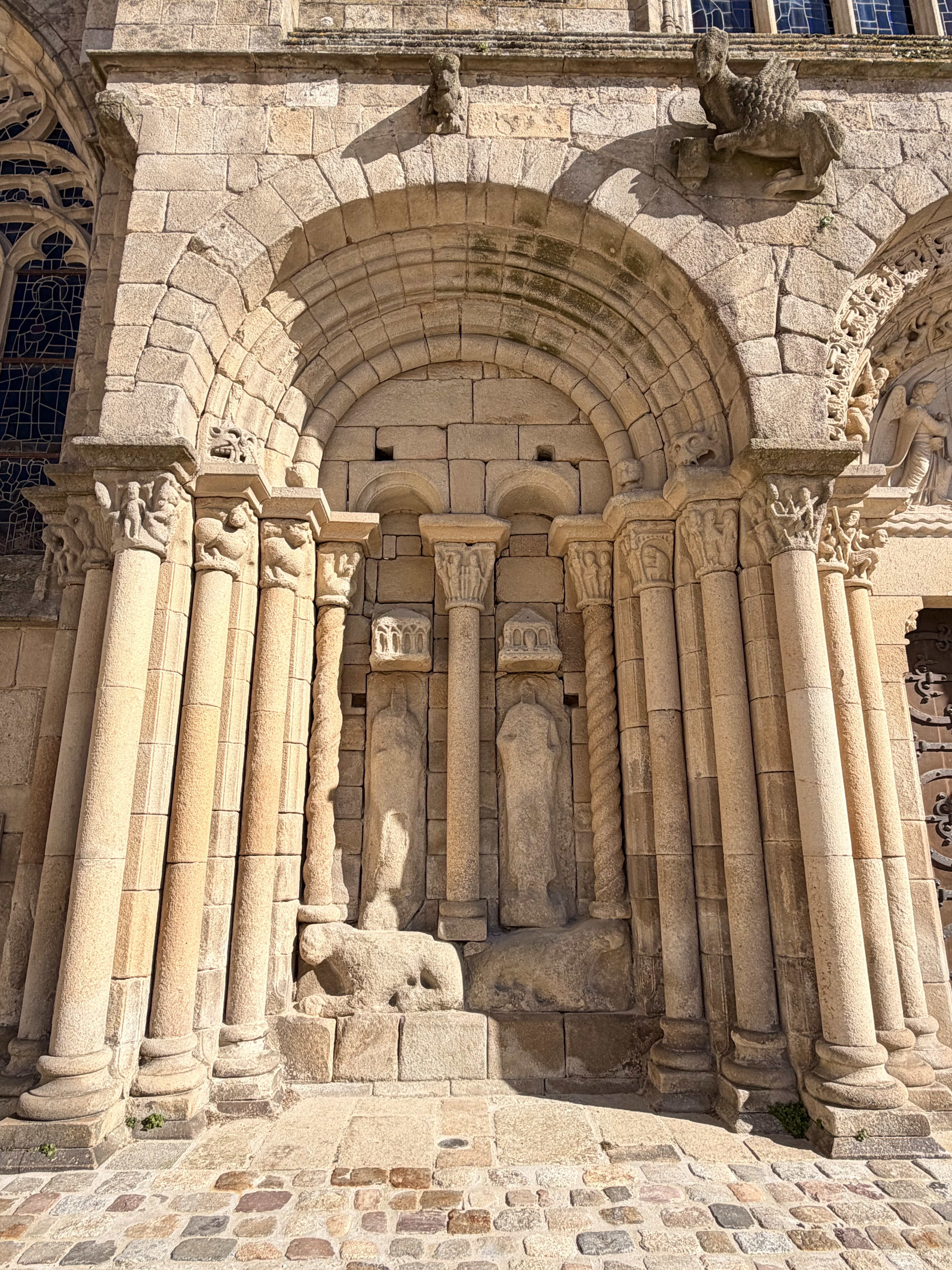
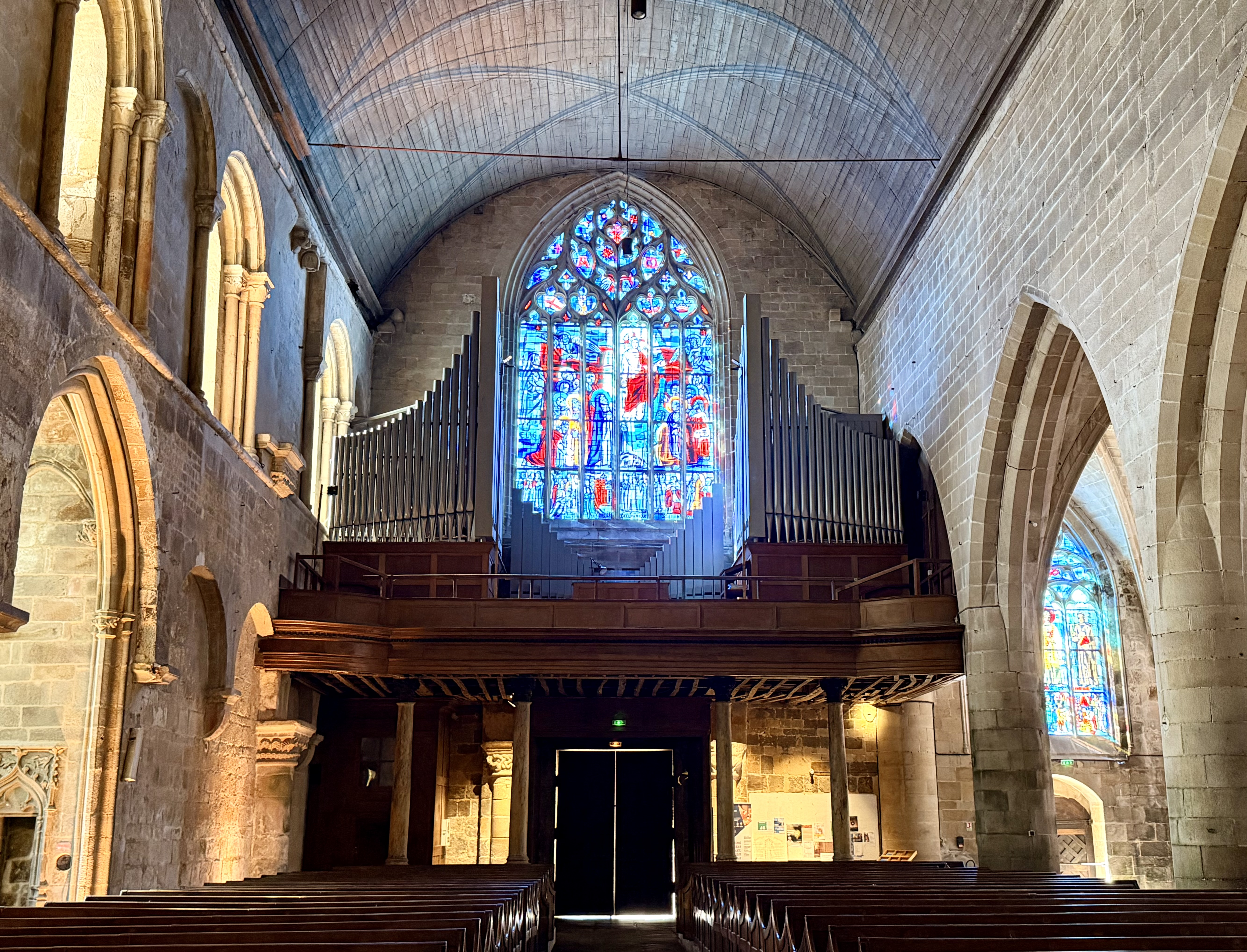
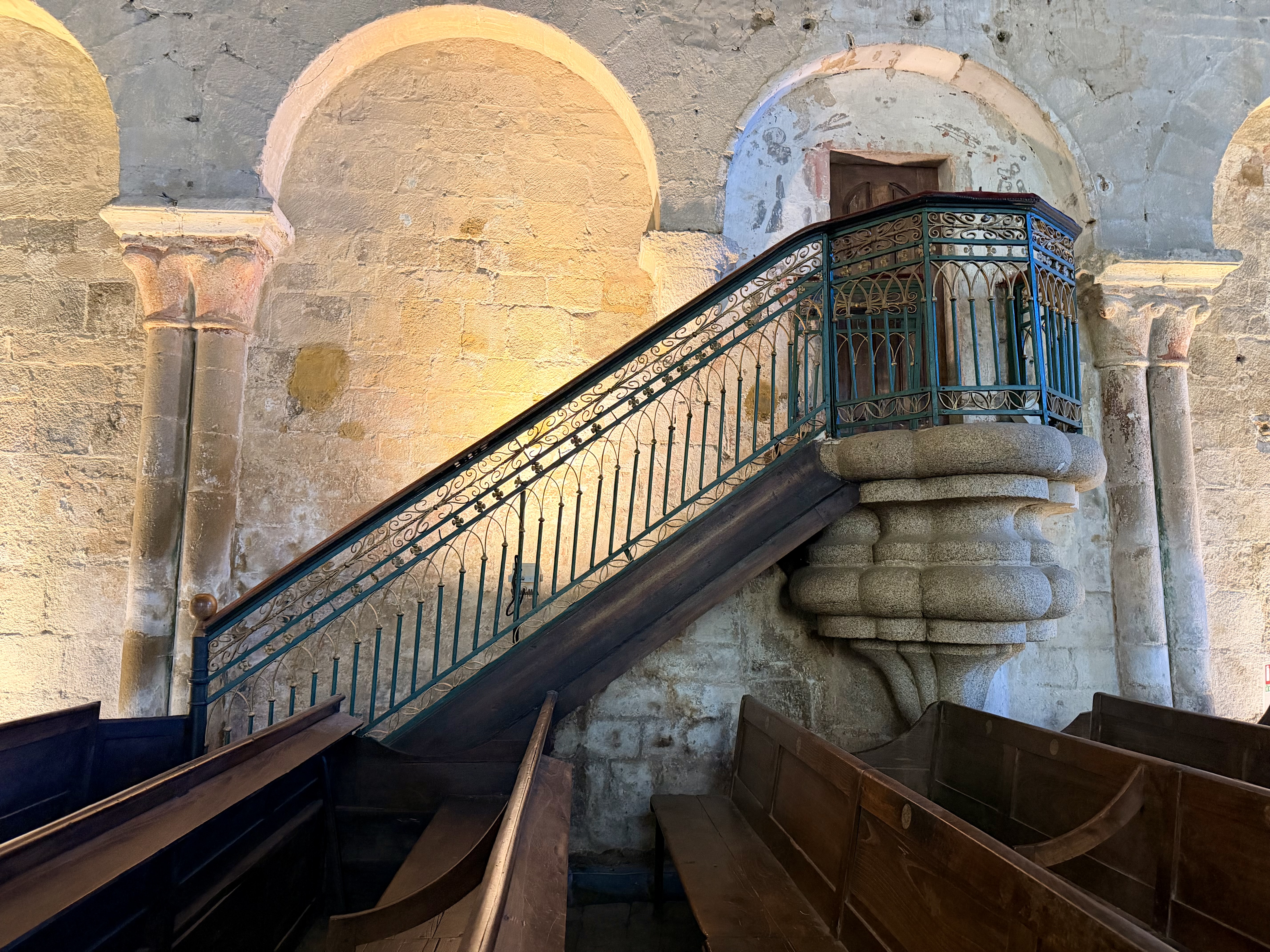
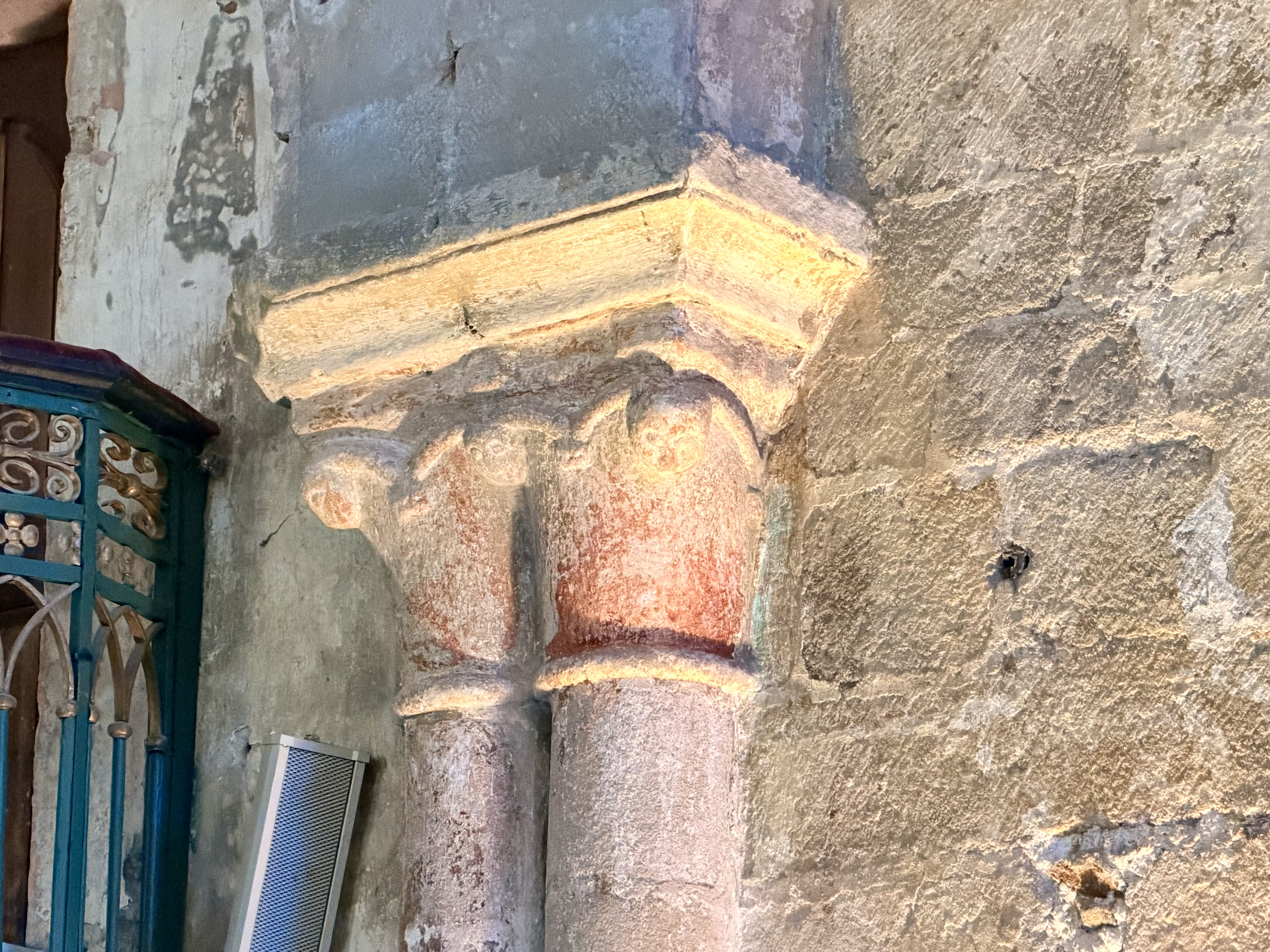
The faint red you see on these columns and arches is traces of the original red ochre from the 12th century.
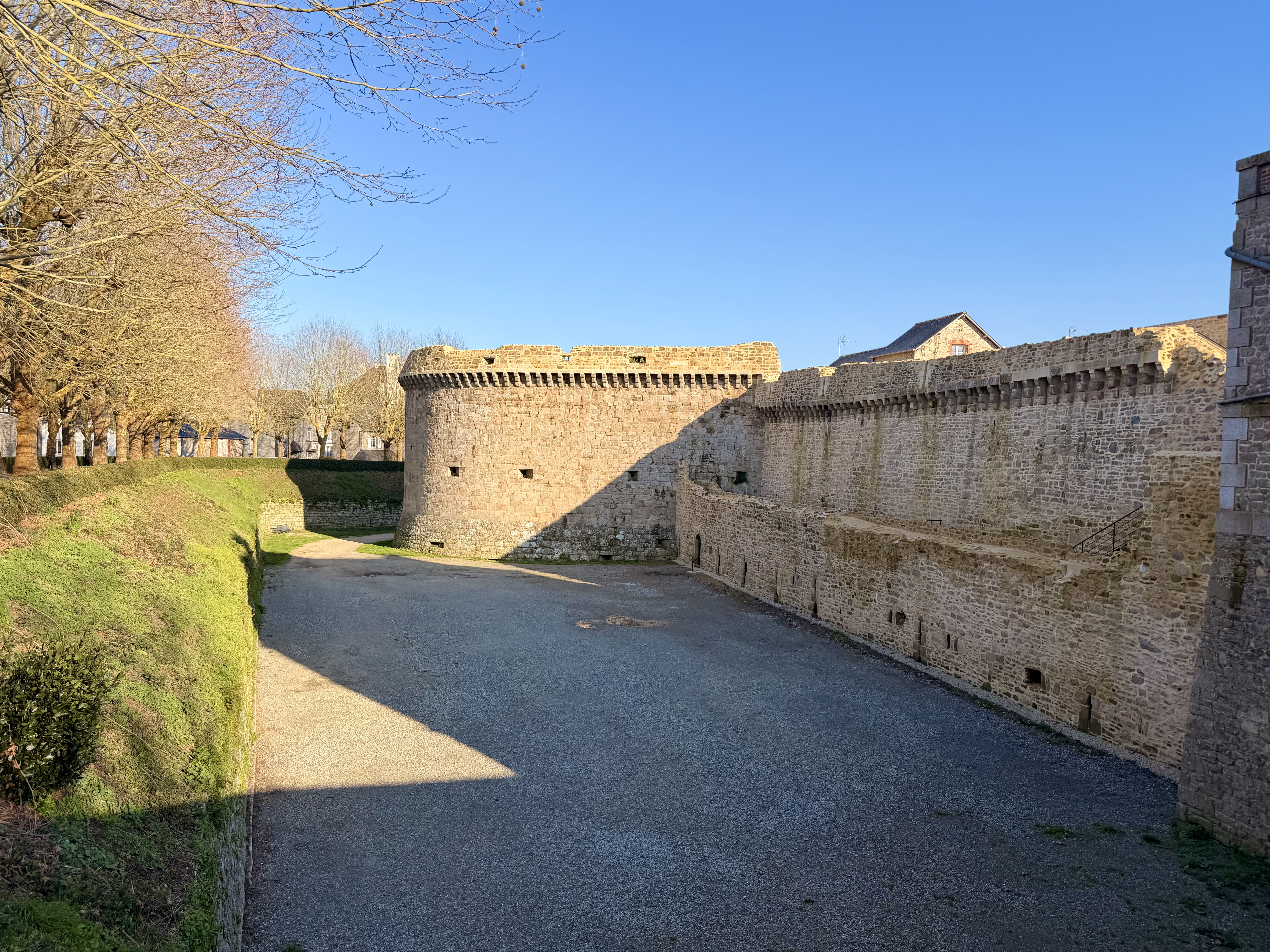
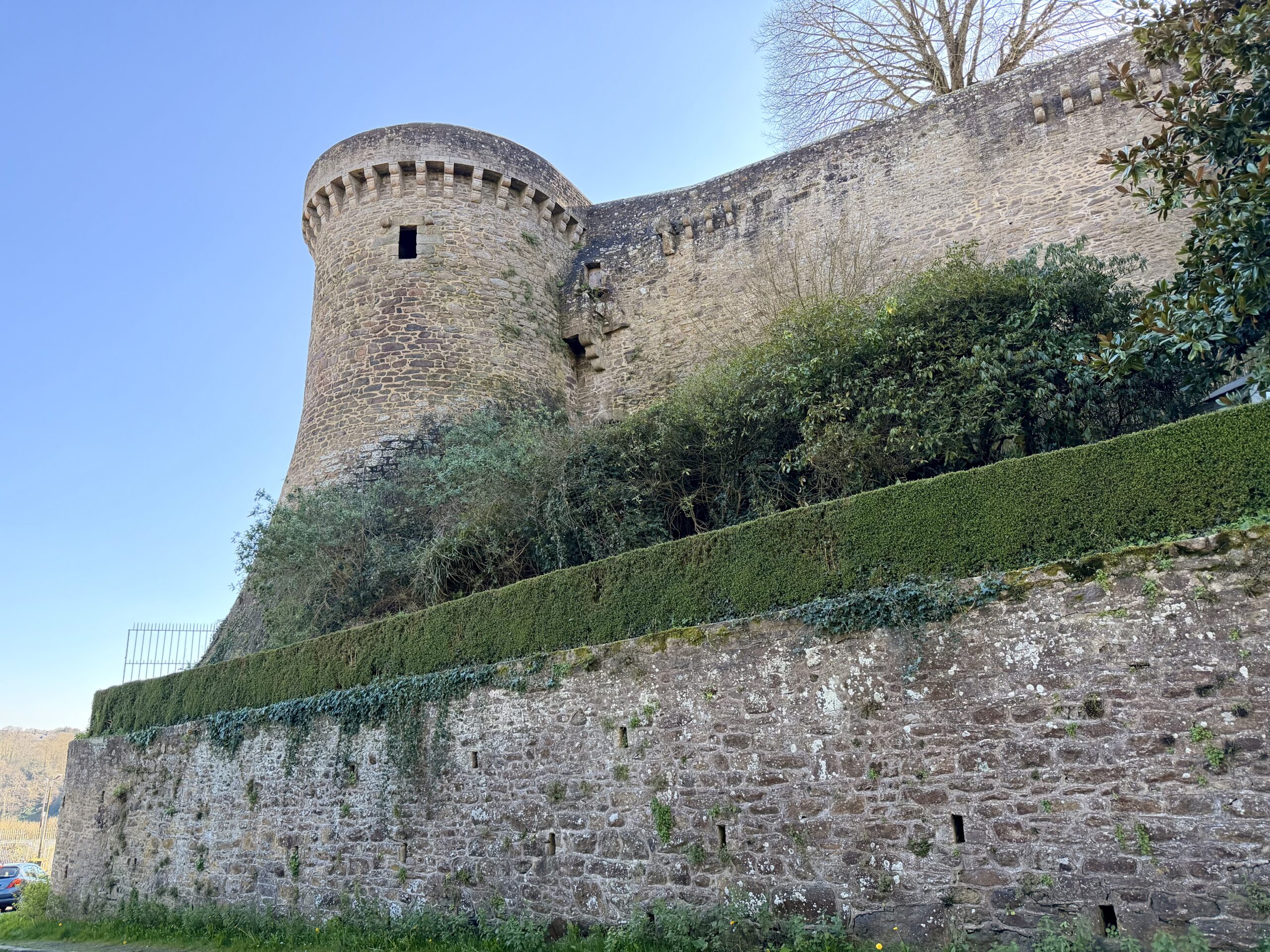
Over the course of the week, we walked along different sections of the Ramparts (the medieval walls).
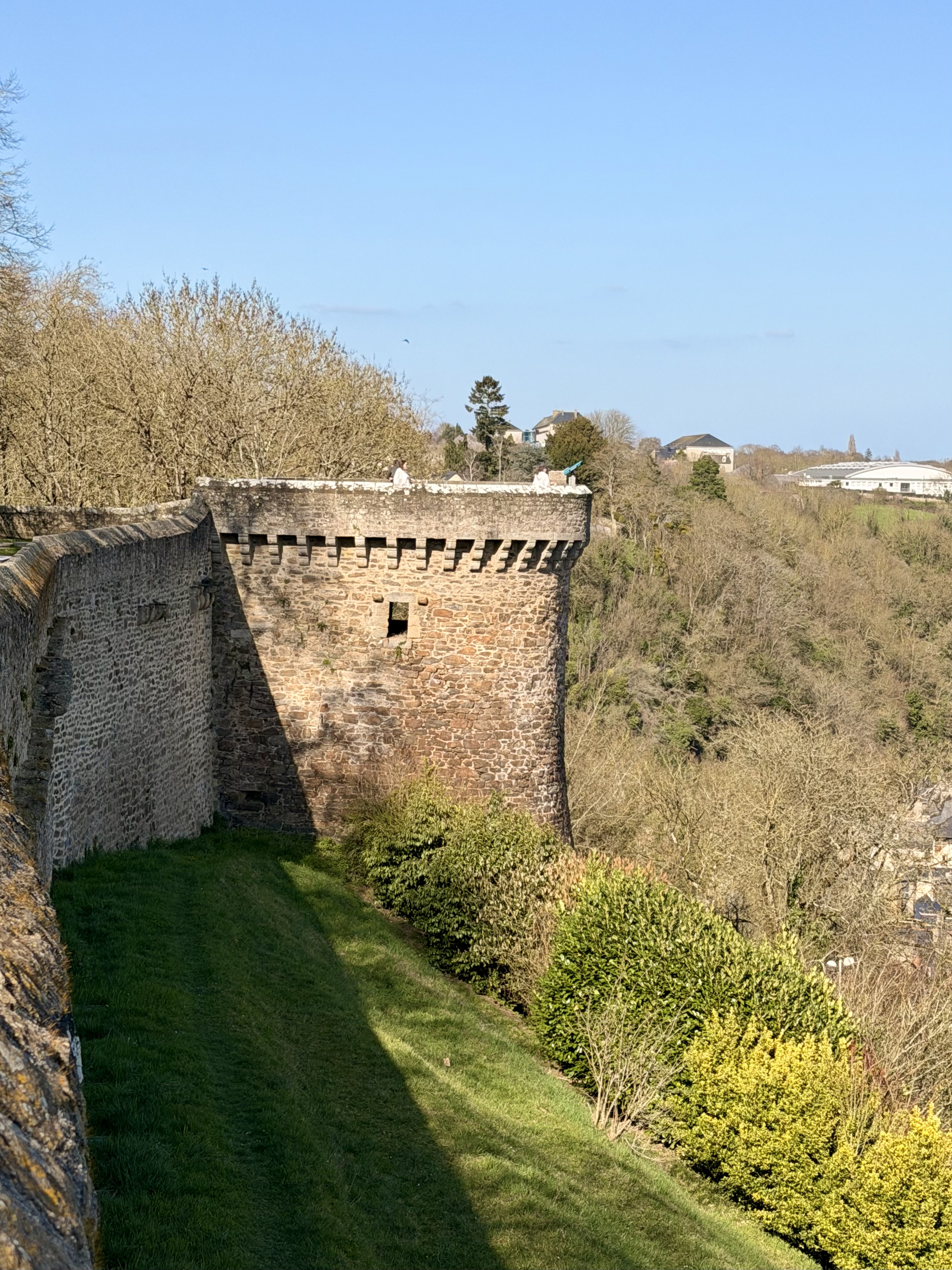
St. Catherine’s Tower is one of the towers along the ramparts. This tower sits above the Old Port and has great views of the port and Rance River valley.
A steep walk down the hill is the historic port. The Old Port sits on the Rance River – 15 miles upriver from where the Rance runs into the sea at St-Malo. This viaduct was built in 1850 to divert traffic from the older 15th century bridge and the town center.
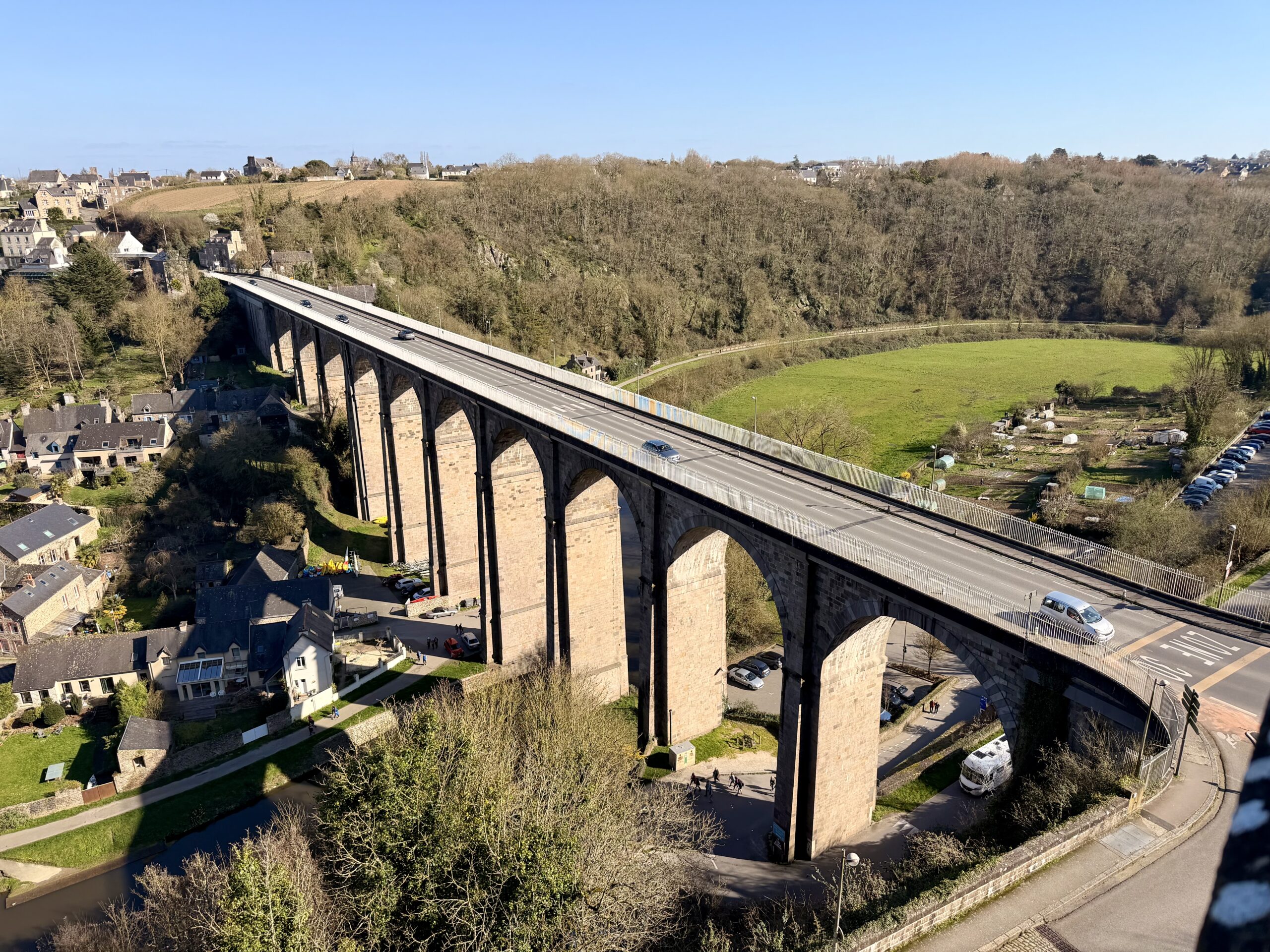
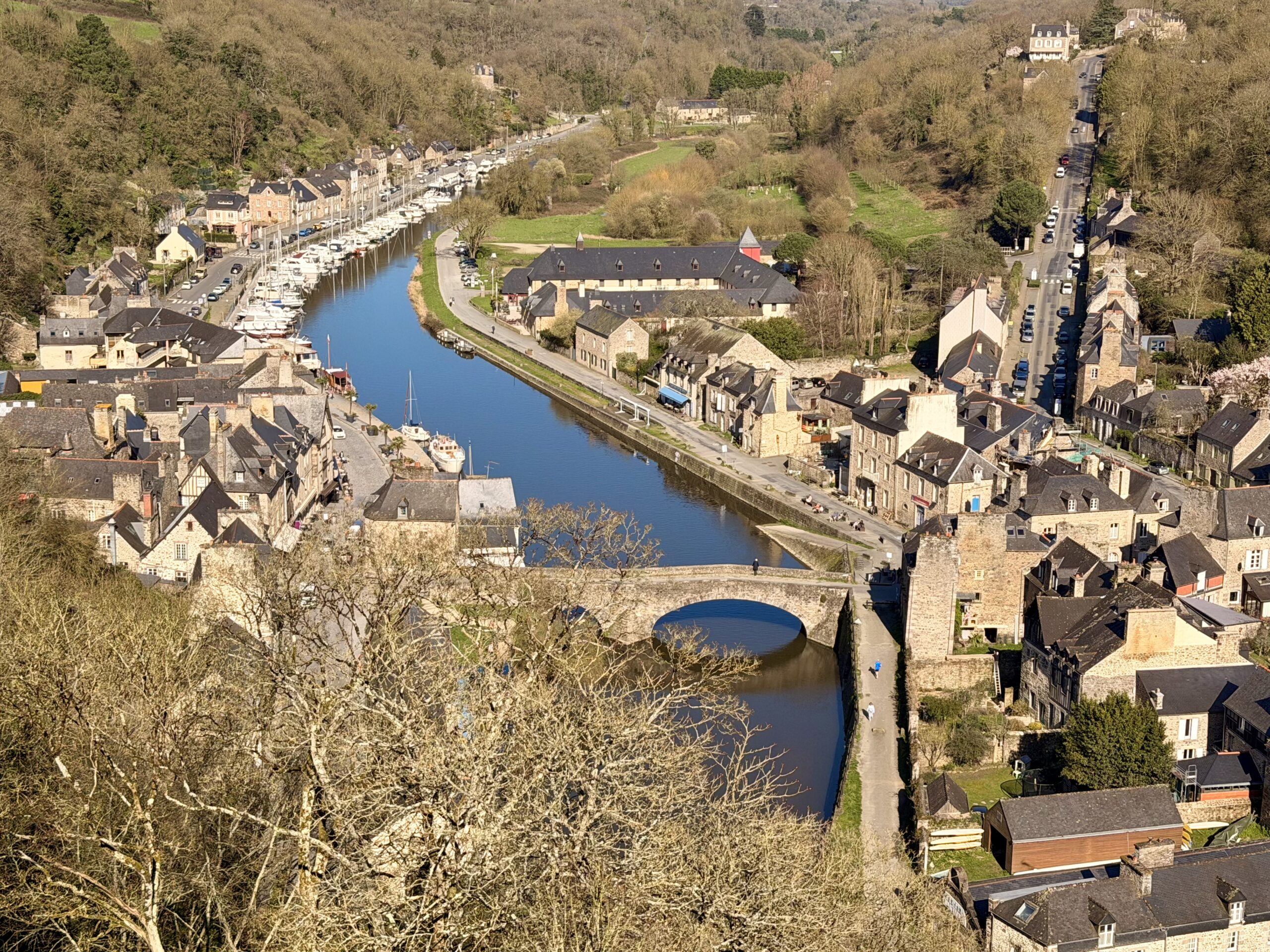
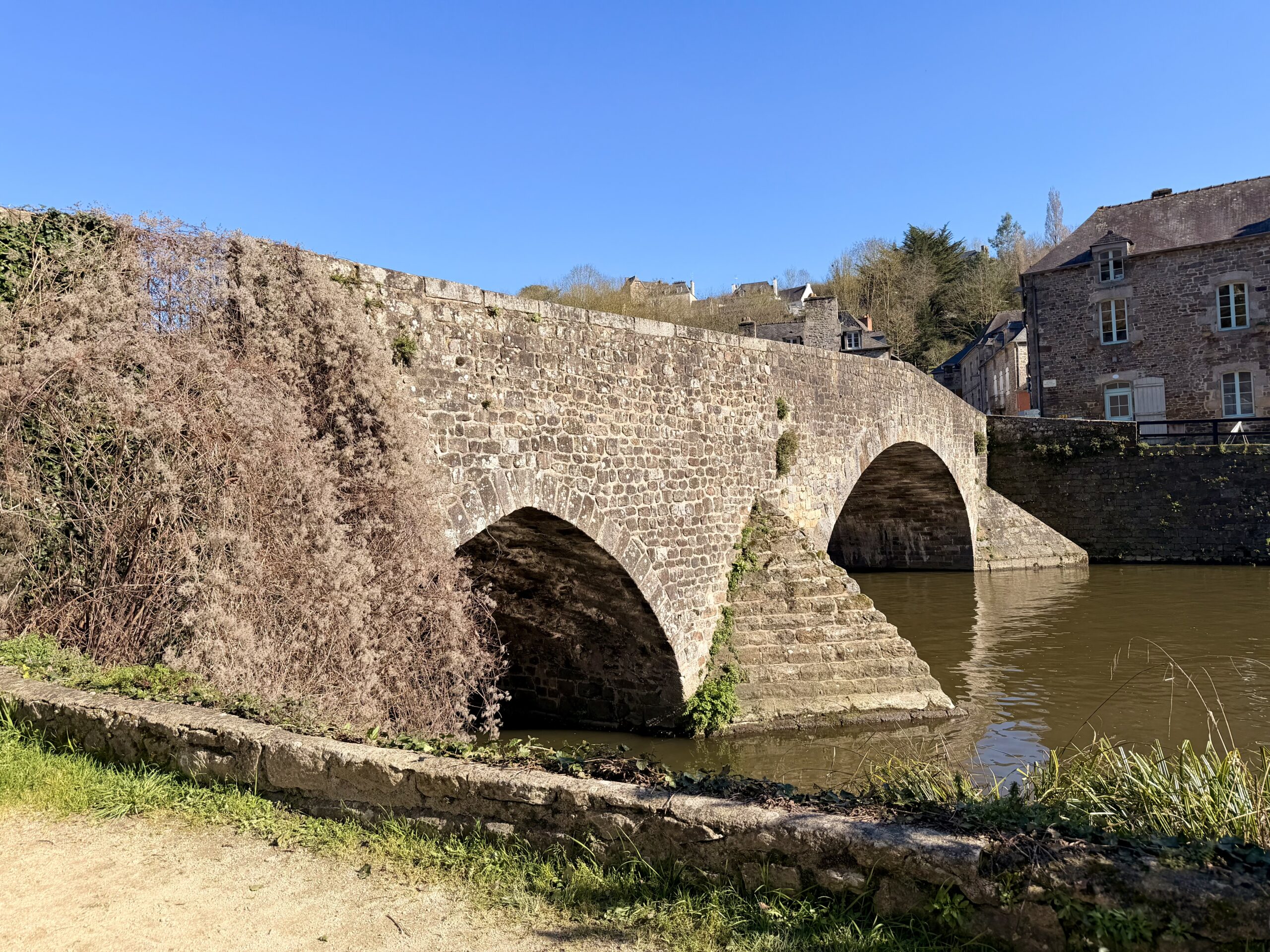
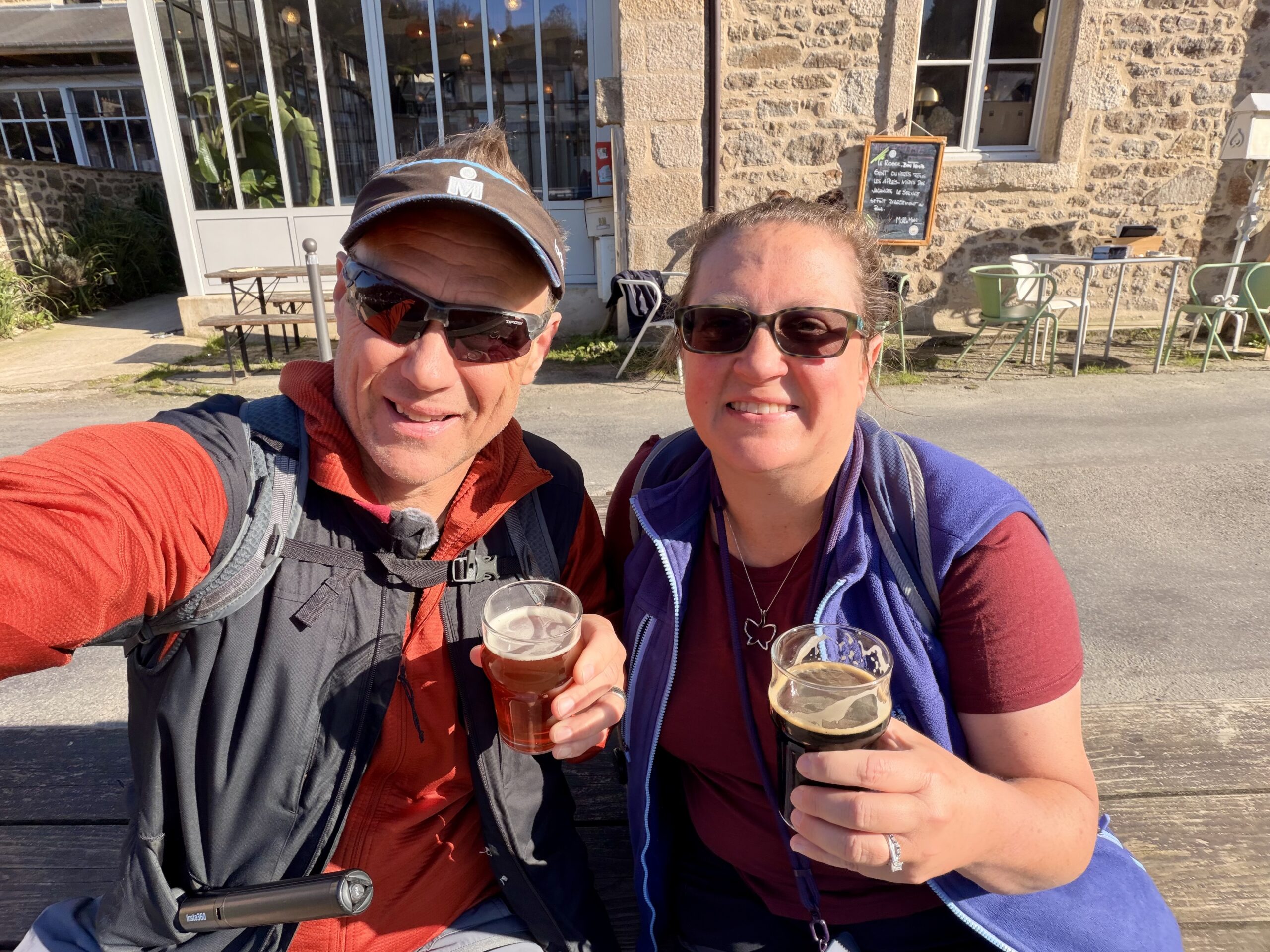
We stopped across the river and enjoyed the beautiful weather and enjoyed a locally brewed beer from Les Roger-Bontemps (a restaurant but also a microbrewery).
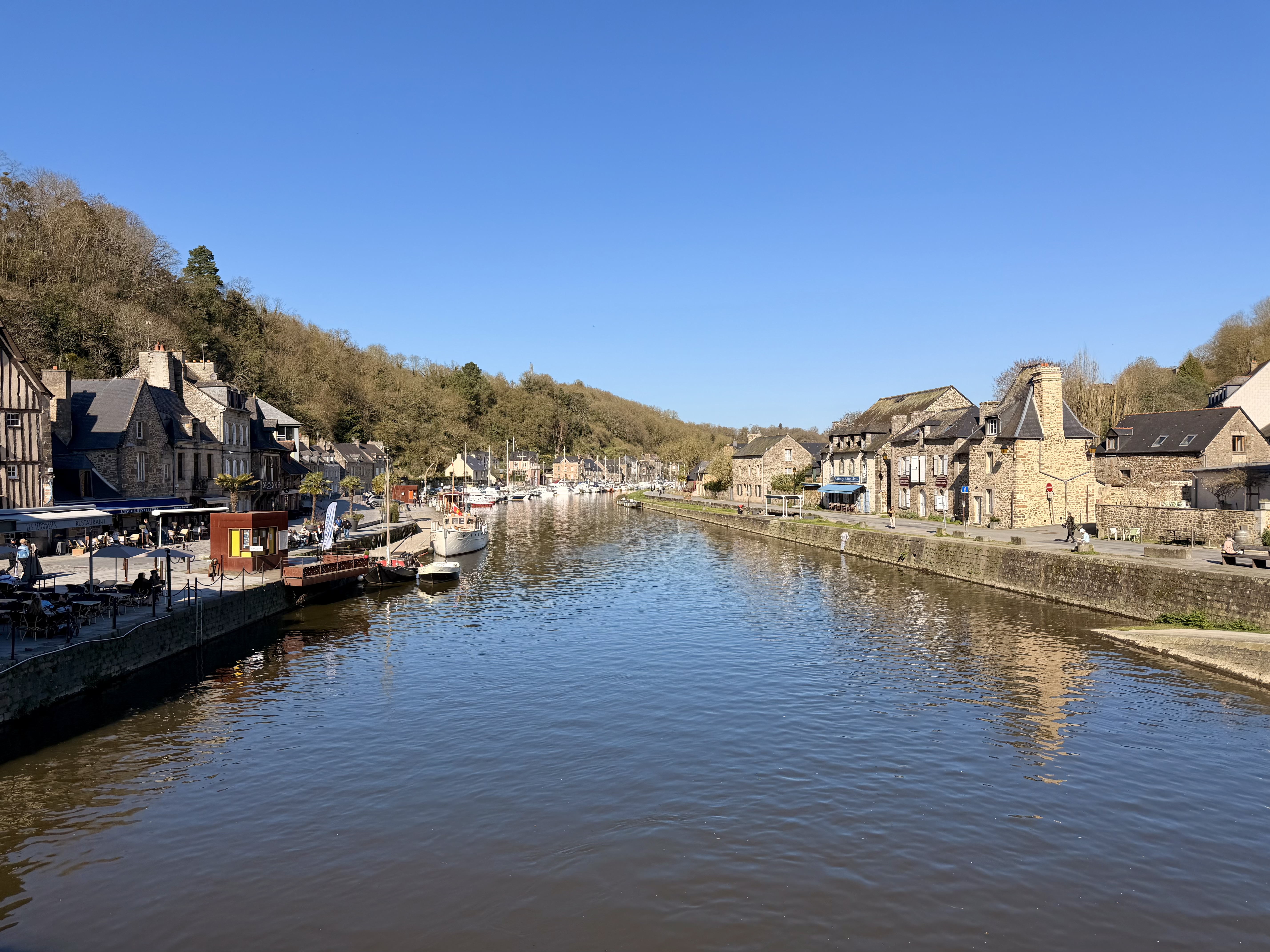
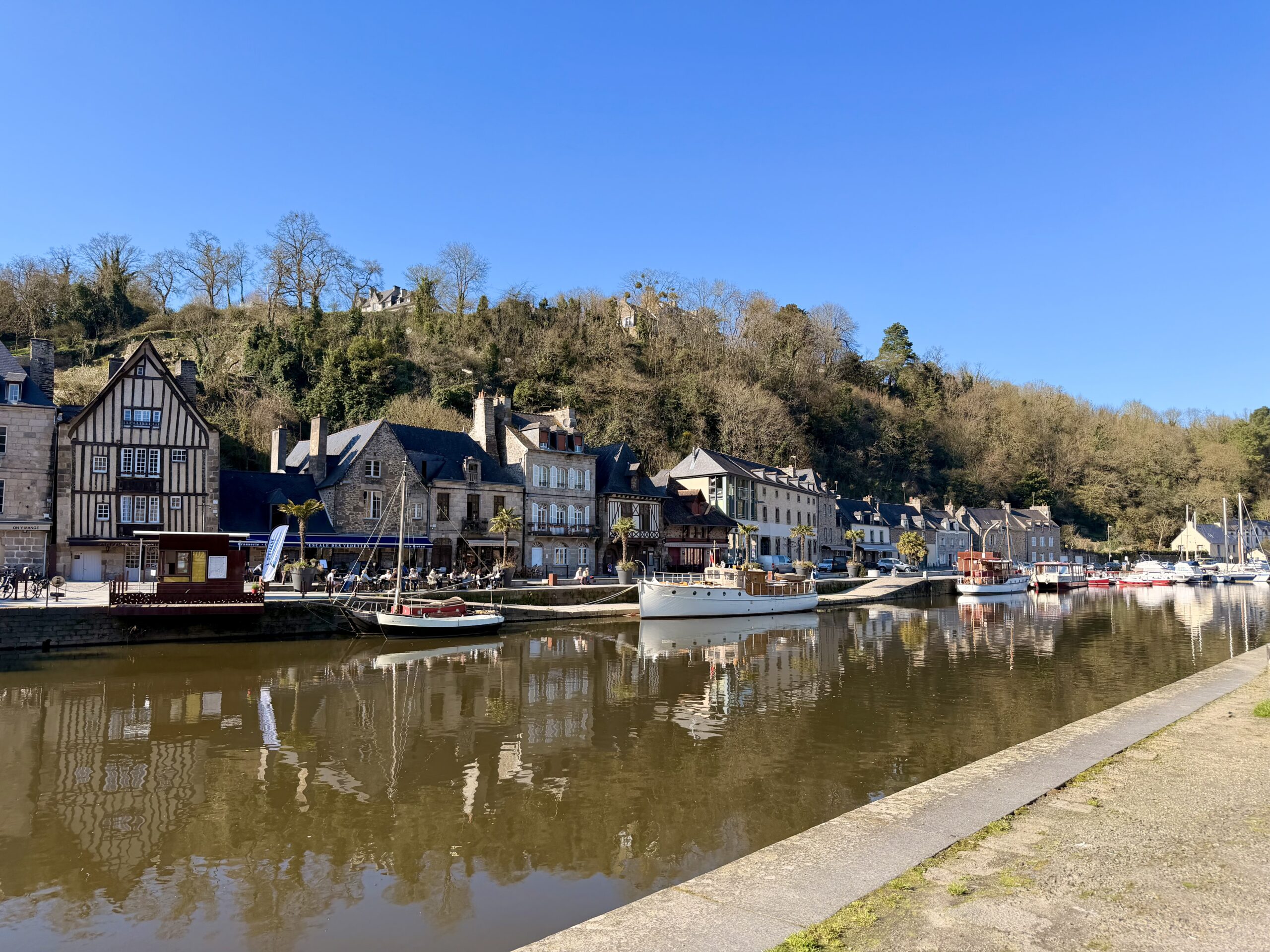
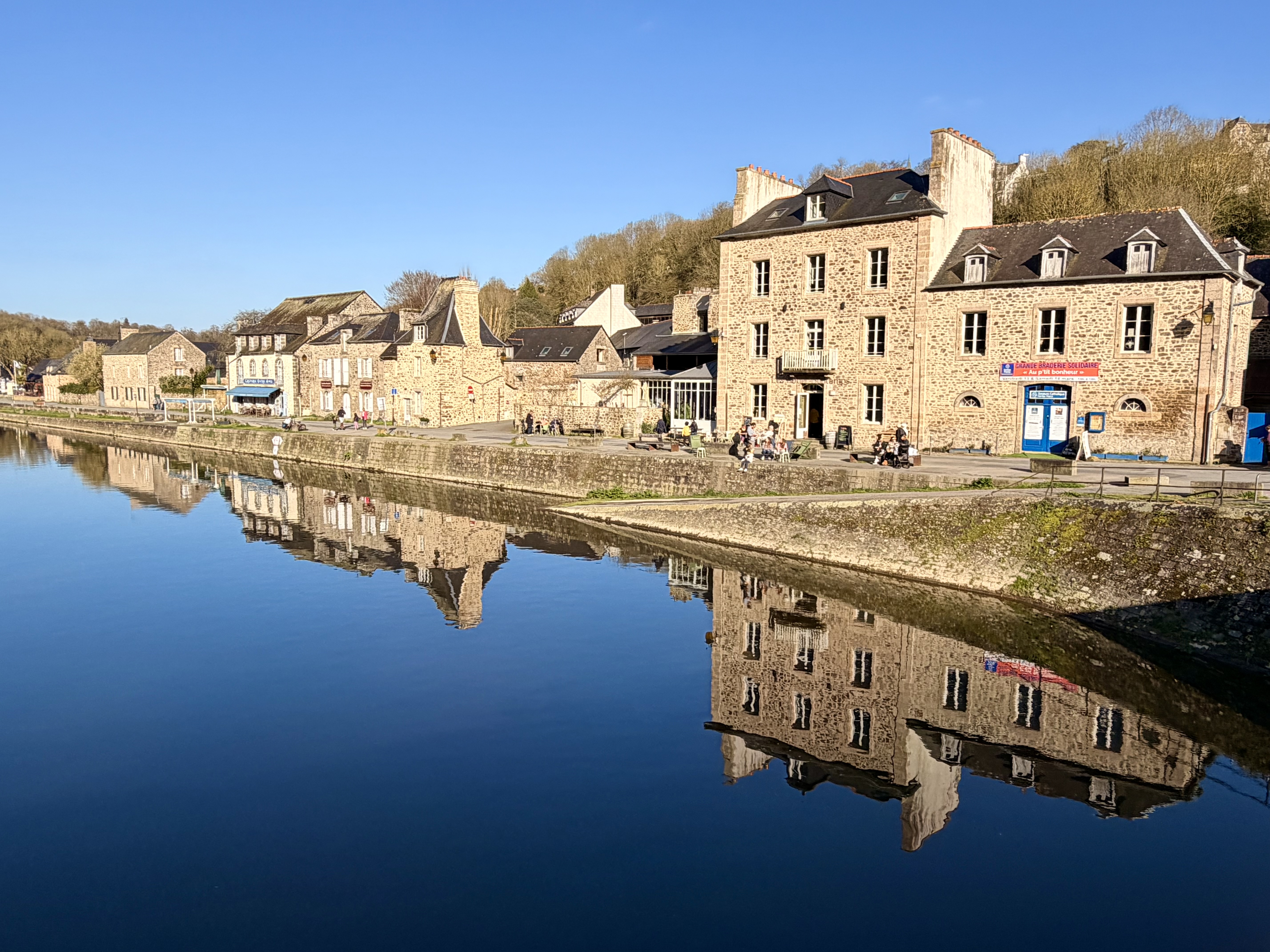
Then we had to make the steep walk back up into town via Rue du Petit Fort.
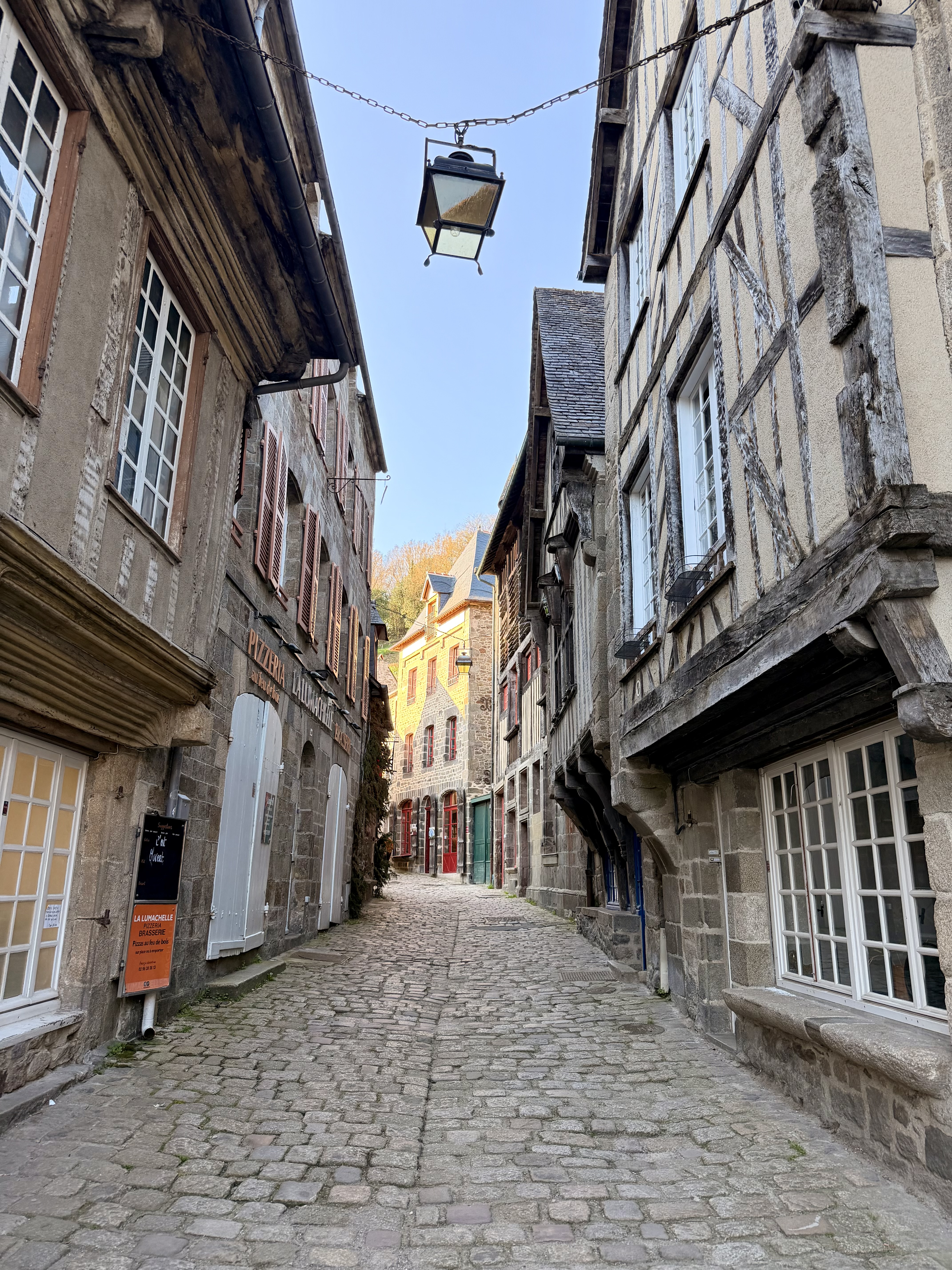
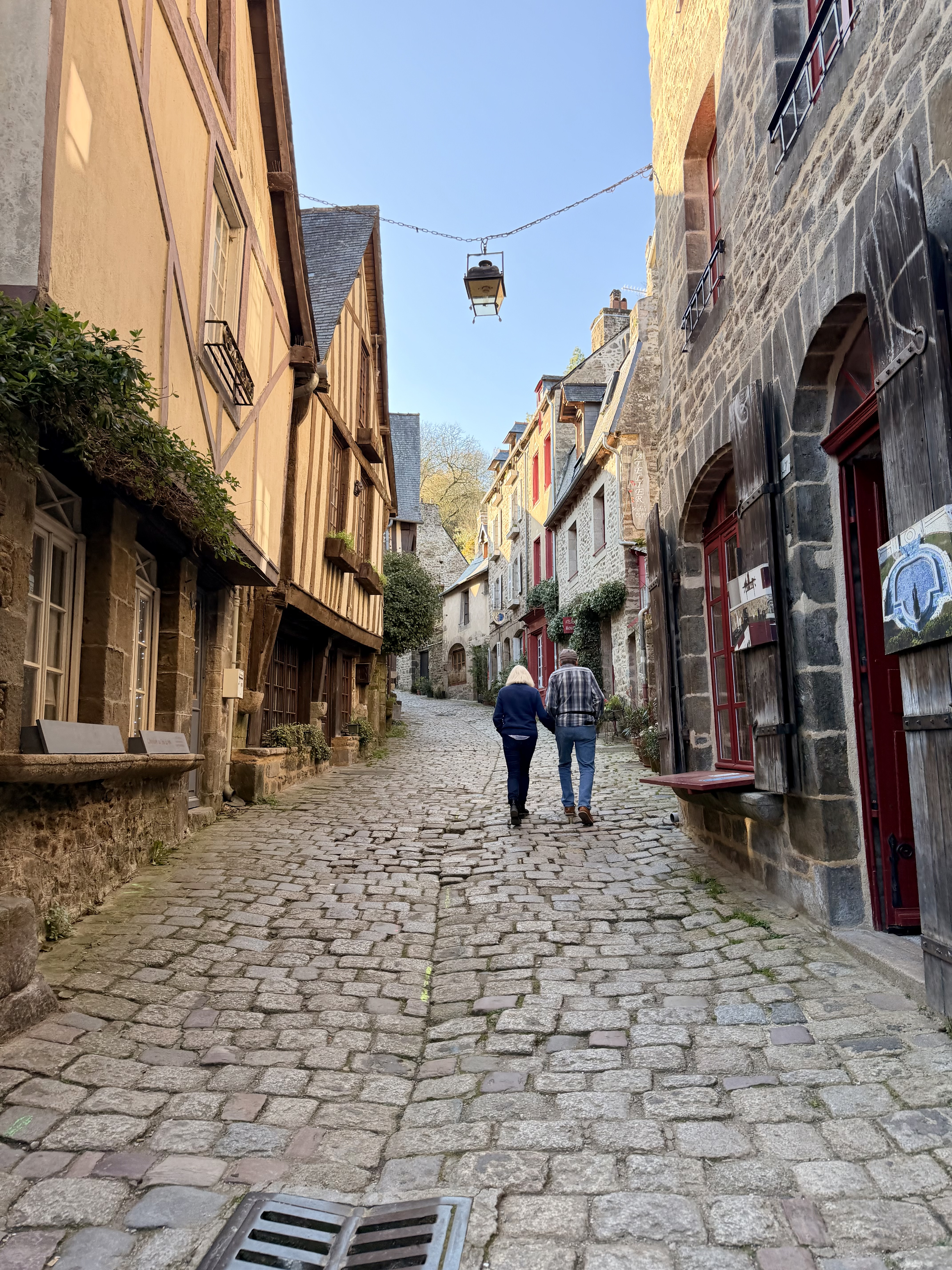
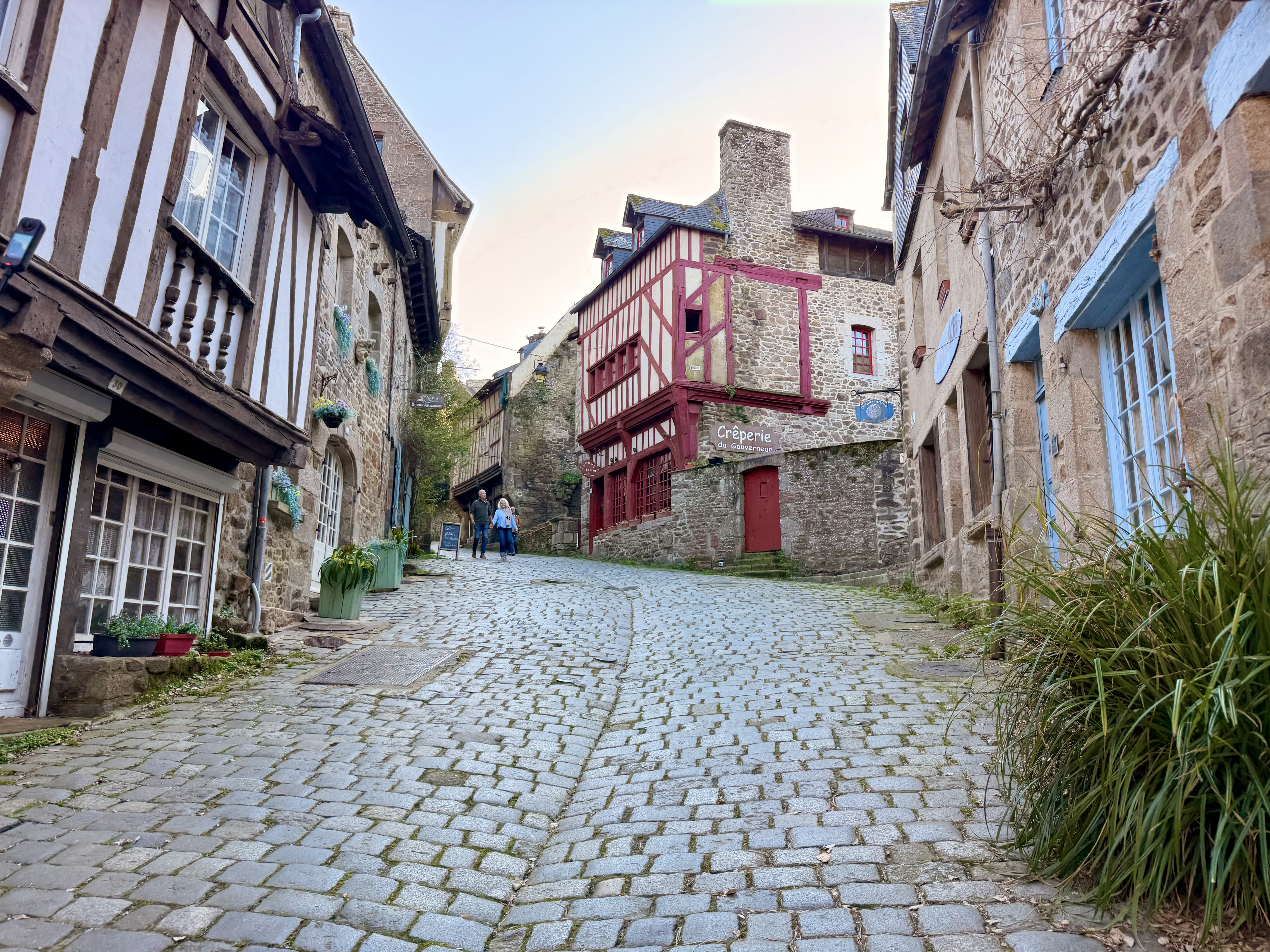
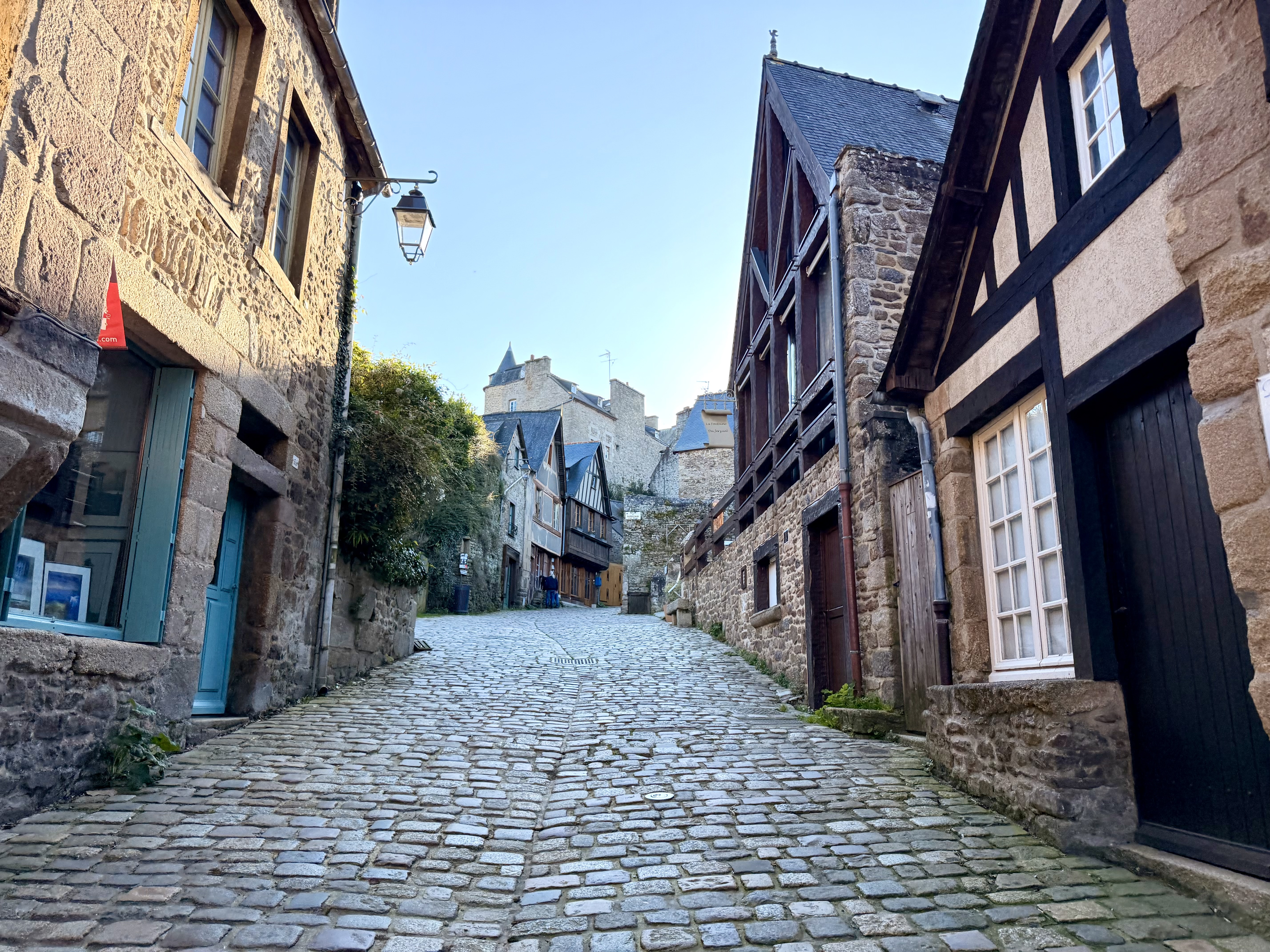
While it’s obviously much nicer to walk around in the sunshine, the town looked pretty cool in the rain too.
On one of the good weather days we had in Brittany, we took a day trip out to Fort la Latte and the Cap Fréhel lighthouse. (https://www.brittanytourism.com/destinations/the-10-destinations/cap-frehel-saint-malo-mont-saint-michel-bay/cap-frehel-and-fort-la-latte/)
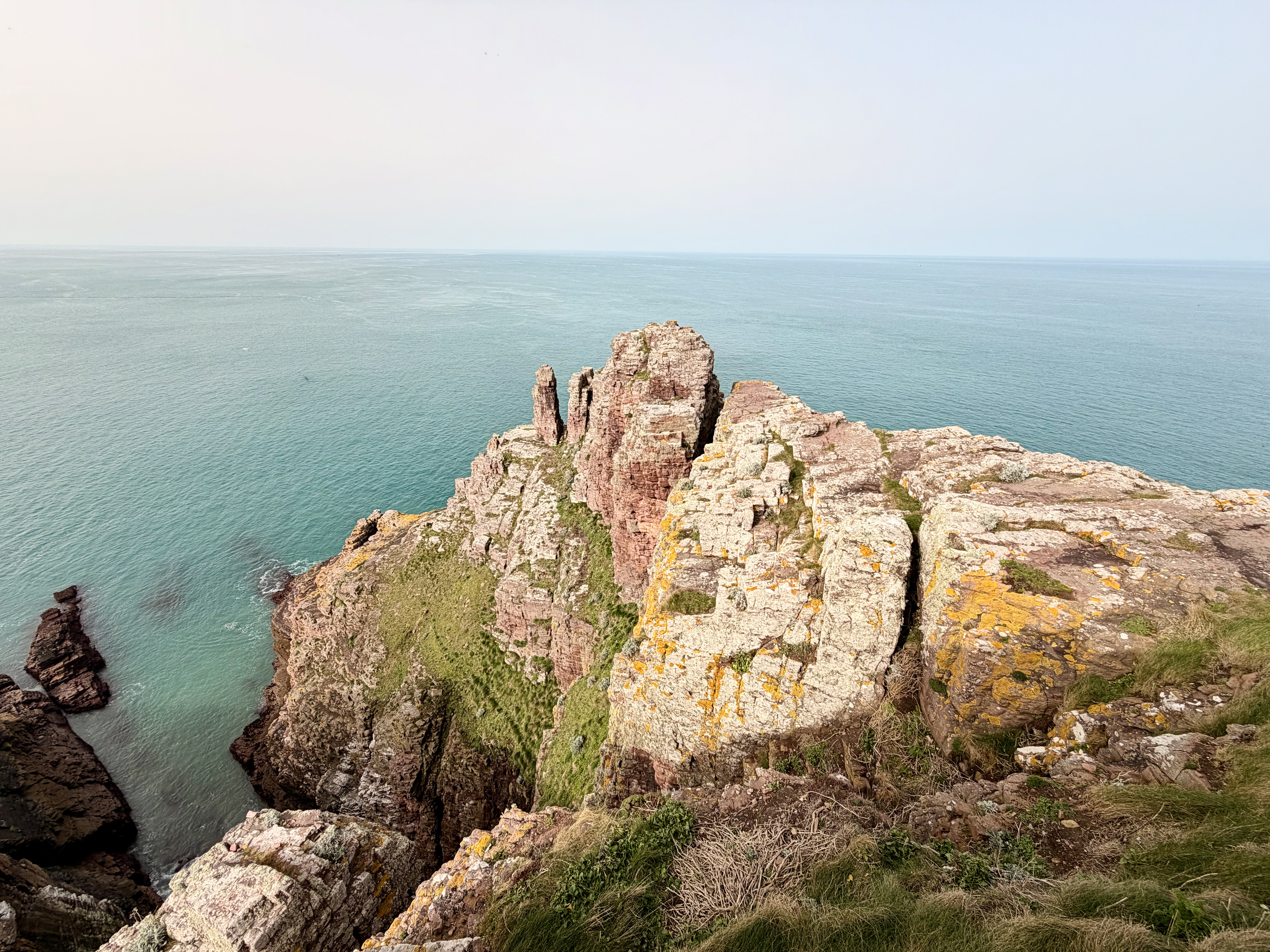
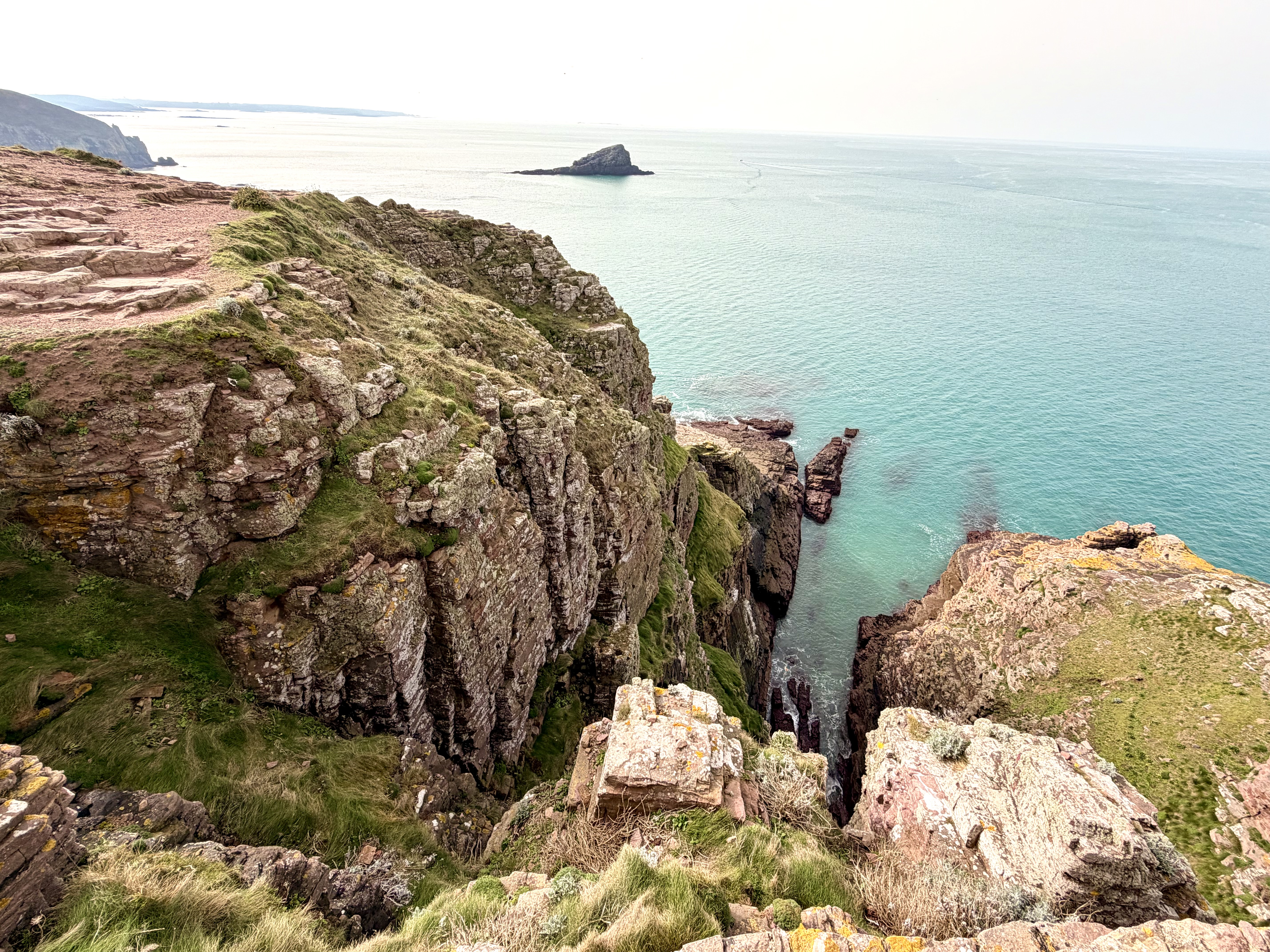
The fort/castle was about an hour drive west of Dinan then the lighthouse was another 15 min past that. Then it was about an hour drive back to Dinan. Both are right on the coast and offer amazing views of the rugged coastline and the English Channel. The stretch of coastline from the Bay of Mont-St-Michel out to Cap Fréhel is called the Côte d’Émeraude (the Emerald Coast) – I think you’ll see why in the pictures below. Of note, the Cote d’Amor – sea coast – is an administrative department in the northern coastal part of Brittany (ar mor = sea in the Breton language); Côte d’Émeraude is a specific tourist coastal region that overlaps into a neighboring department in Brittany) (https://souvenirs.vincent.voyage/emerald-coast/)
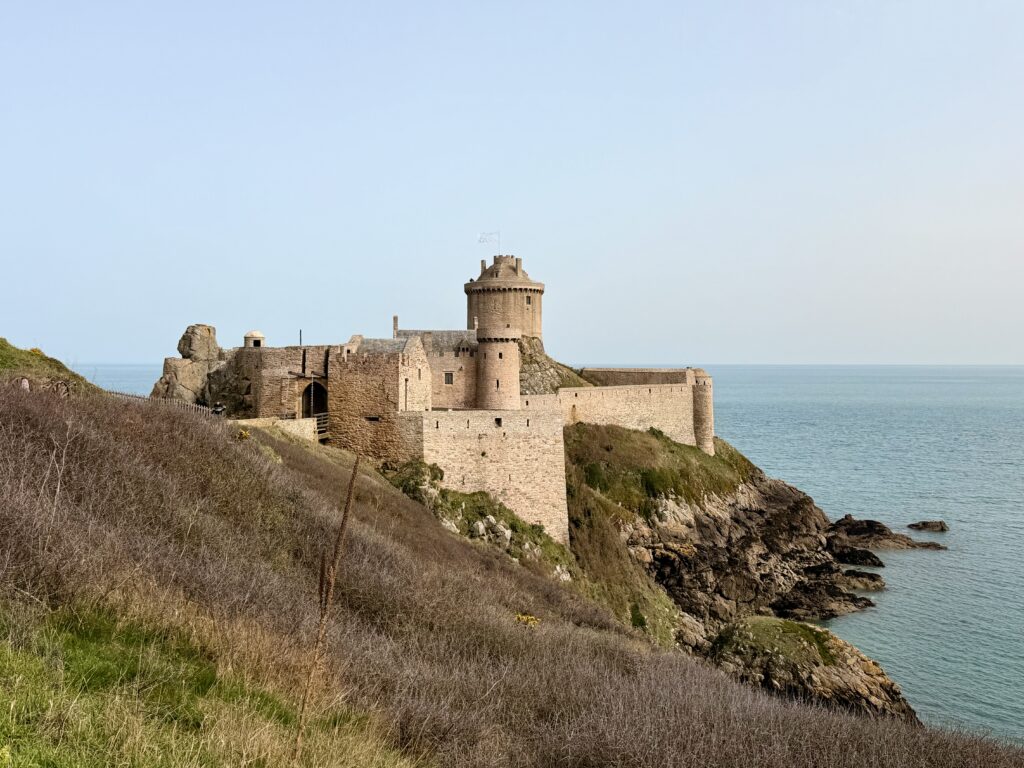
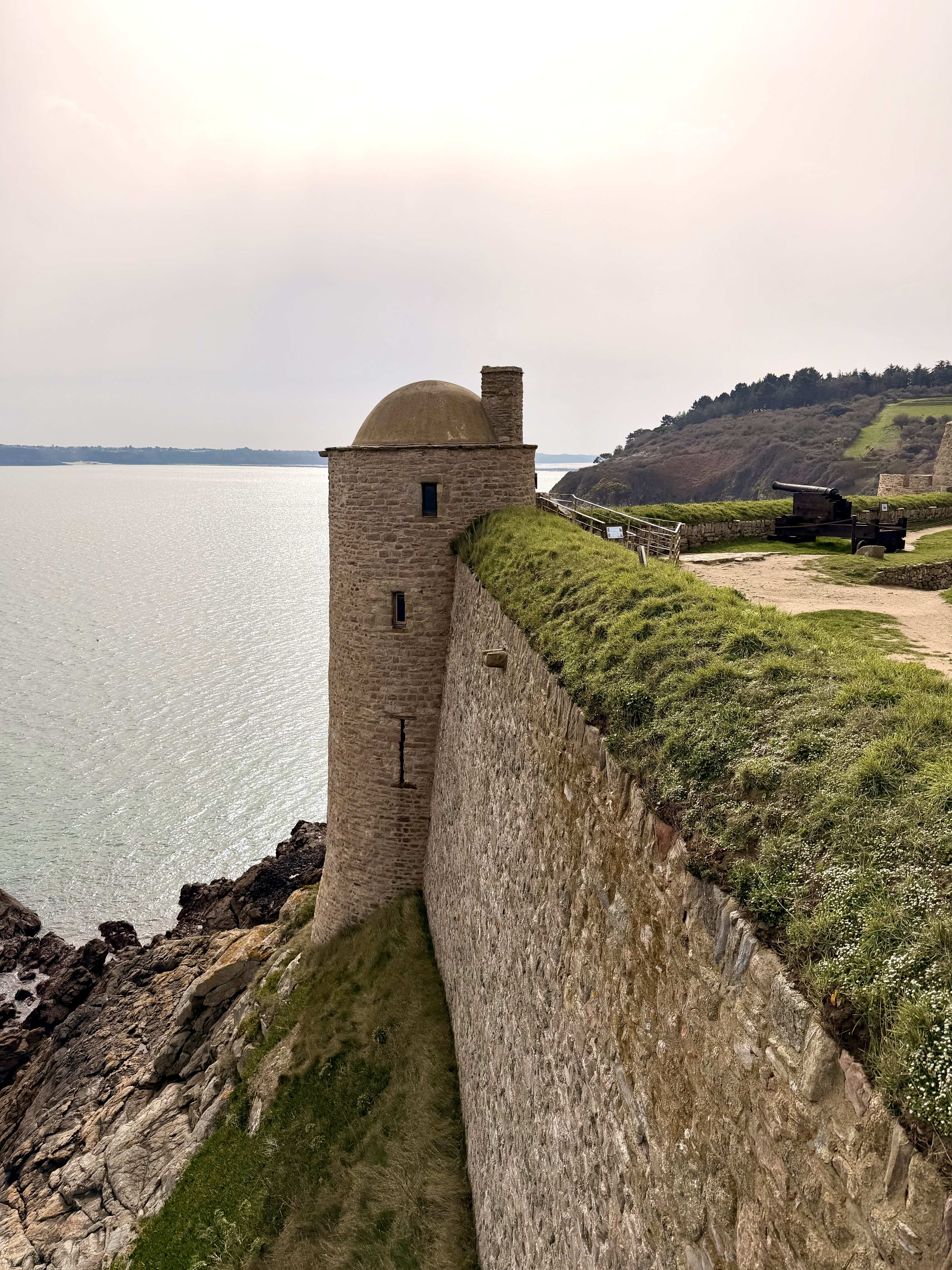
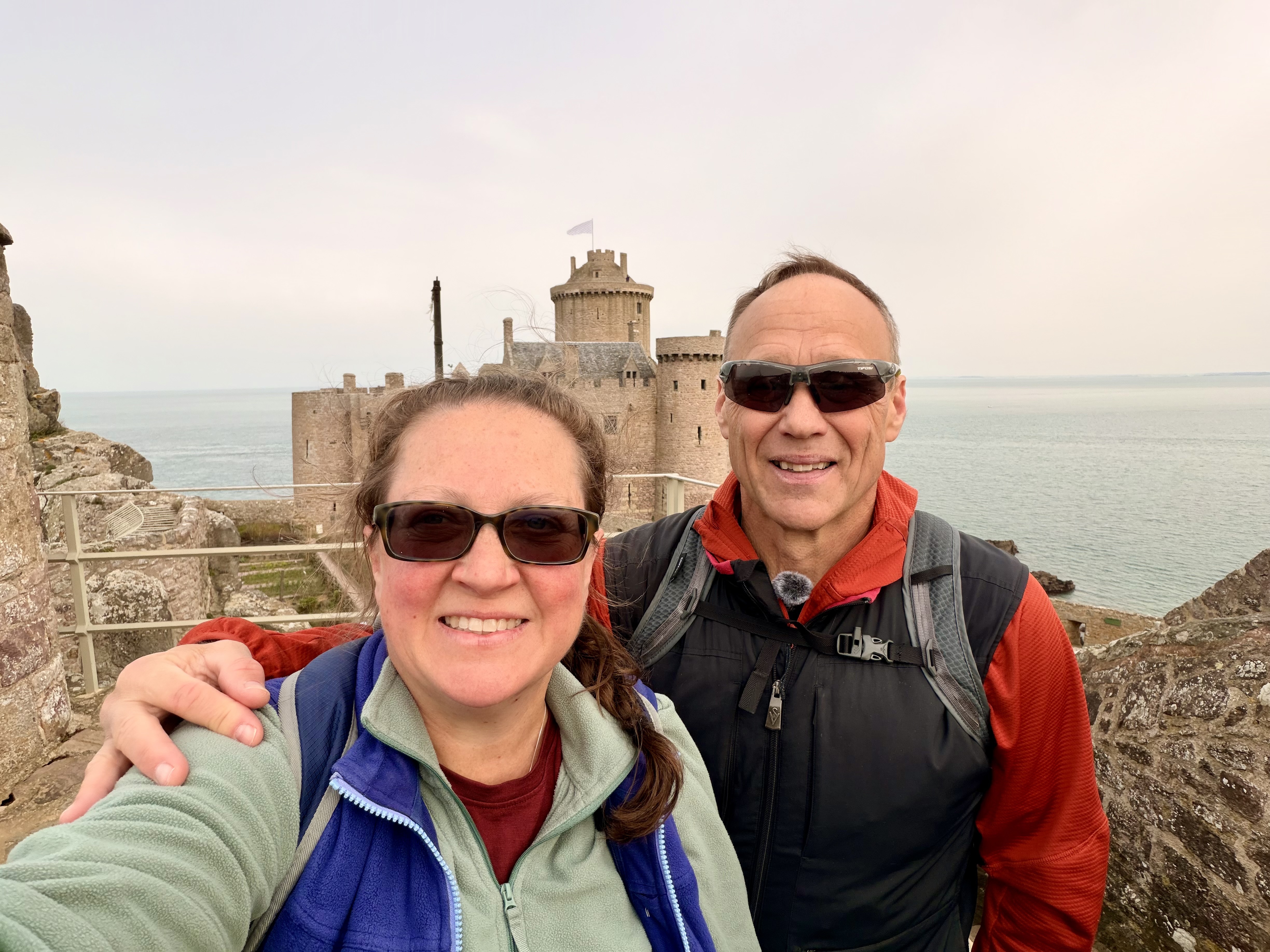
Fort la Latte (https://www.lefortlalatte.com/thecastlelalatte); also known as Château de la Roche Goyon
It was €8.50 per adult to tour and tickets can only be purchased on-site (no advance or online option). There was a lot of great information in French and English – most of the information I have below comes from the informational signs on-site.
There were older forts on this site – built to defend against invading Normans – but this current fort was built in 14th-15th centuries when Brittany was caught in the middle of ongoing wars between England and France. It was rebuilt numerous times during the 17th and 18th centuries.
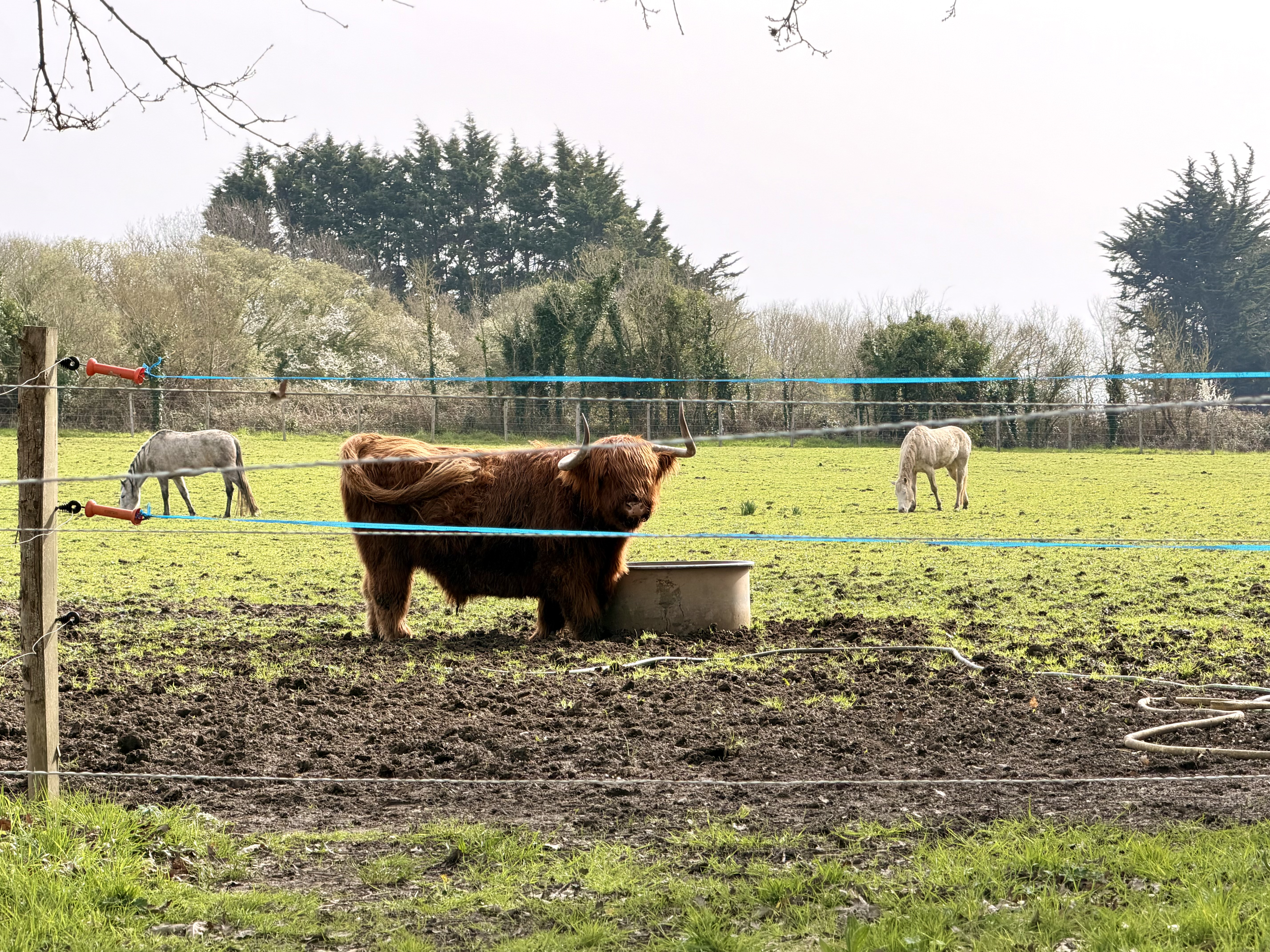
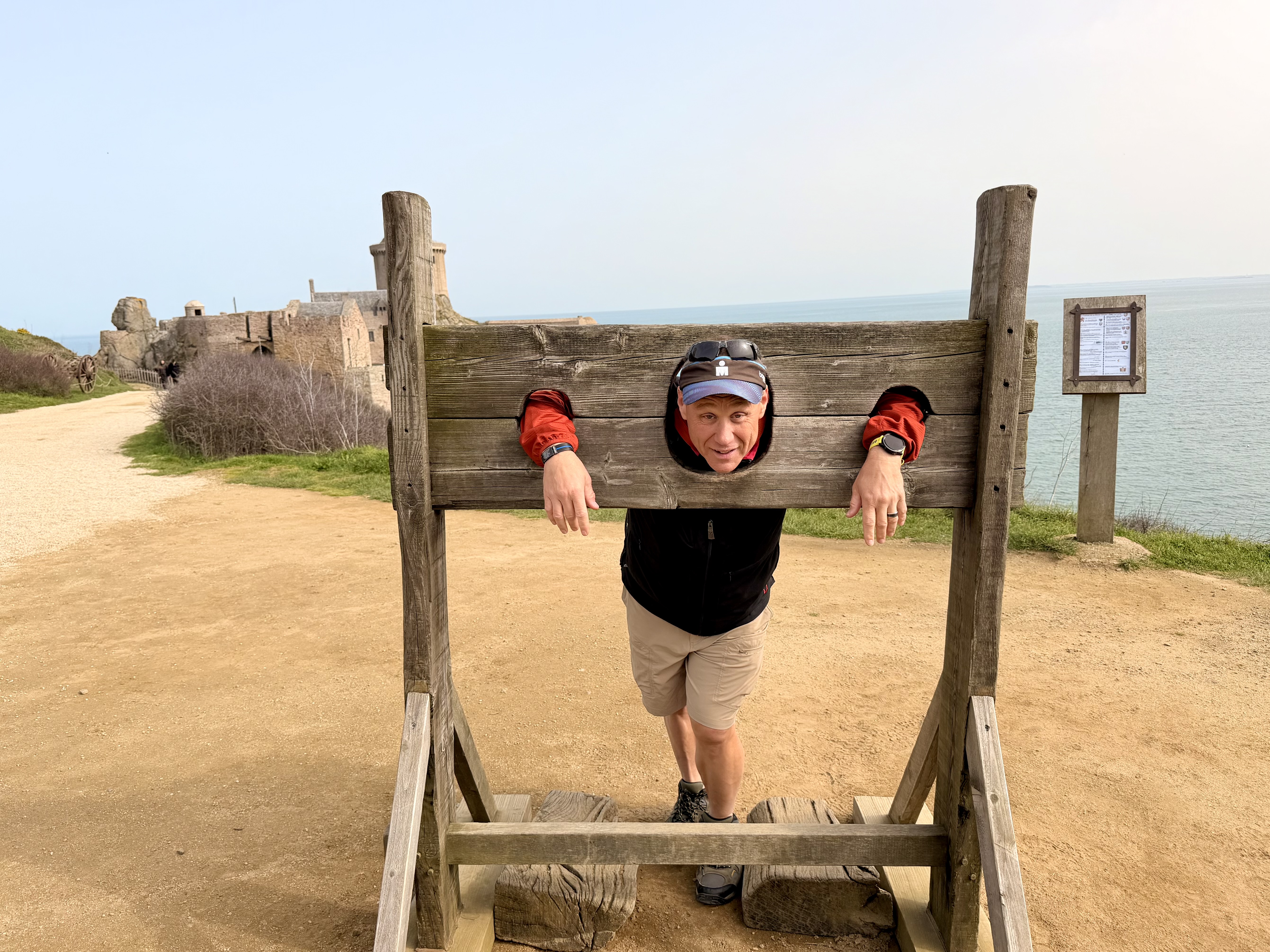
As we got close to the fort we saw a highland cow! Was surprised to one those in France. There’s a free parking lot for the fort then a short (5-10 min walk) from the parking lot to the fort itself. The views are stunning walking up to the fort too. I did have to put Chris in the stockade for a few minutes as punishment for the speeding ticket he got but then I decided he had done his time and we moved on 🙂
The first courtyard you come into is called the barbacan – it sits between 2 drawbridges and has a lockable gate. This allowed troops to hold off or contain attacking forces. If the attackers managed to make it into the first courtyard, the low walls left them vulnerable to archers and crossbowmen above the 2nd drawbridge.
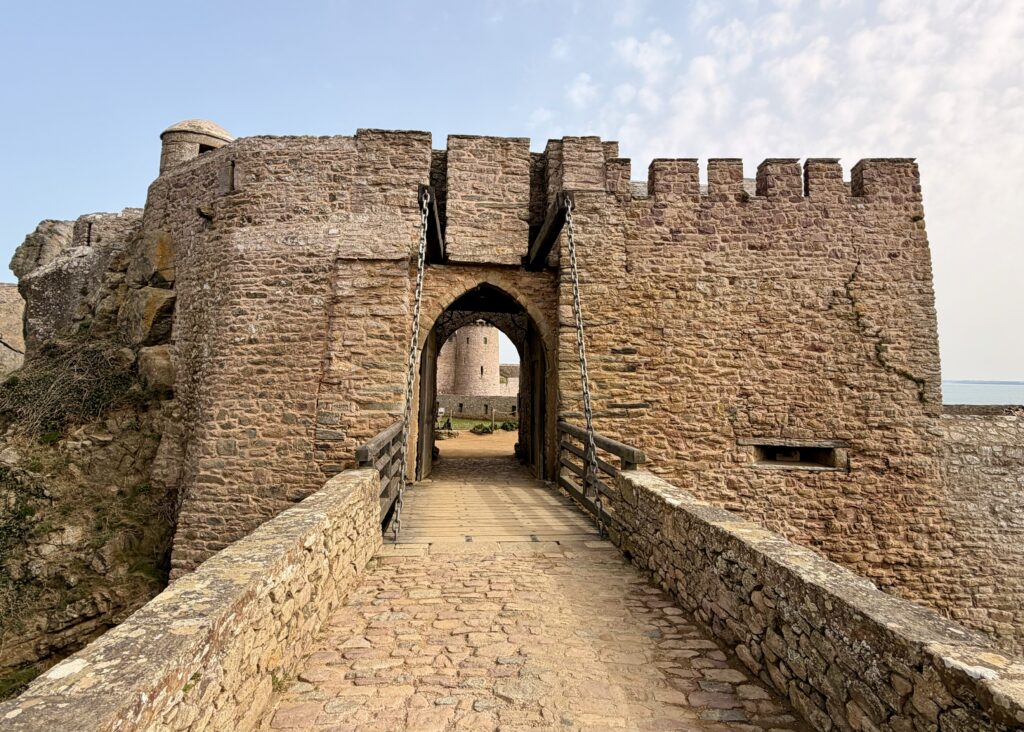
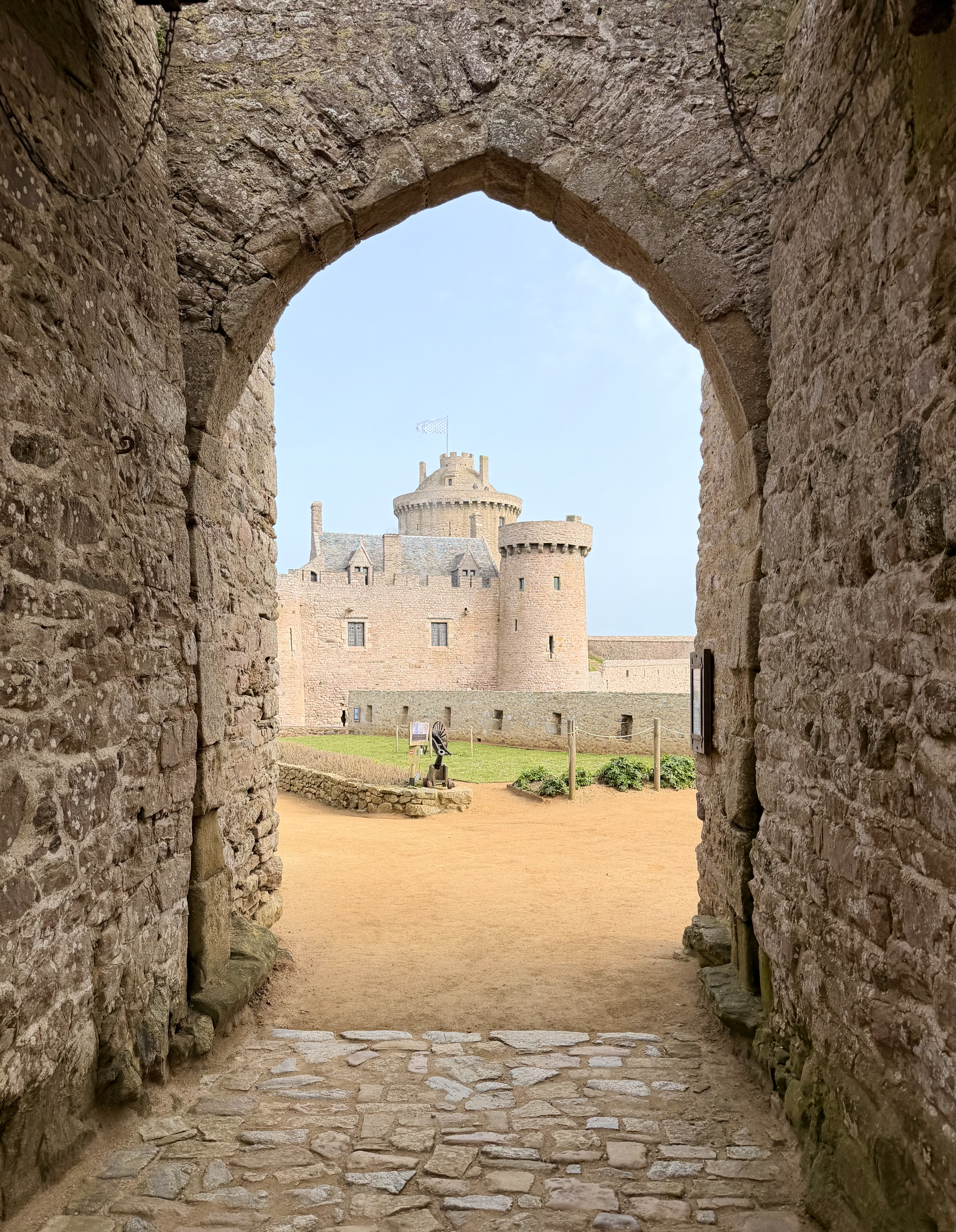
Then you pass through the 2nd gatehouse with its drawbridge and portcullis and you’re in the inner workings of the fort. There are several towers that also have dungeons (the dungeons were no longer in use by the 16th century and were subsequently used as dumping pits; they were re-discovered and excavated in the 1960s-1970s).
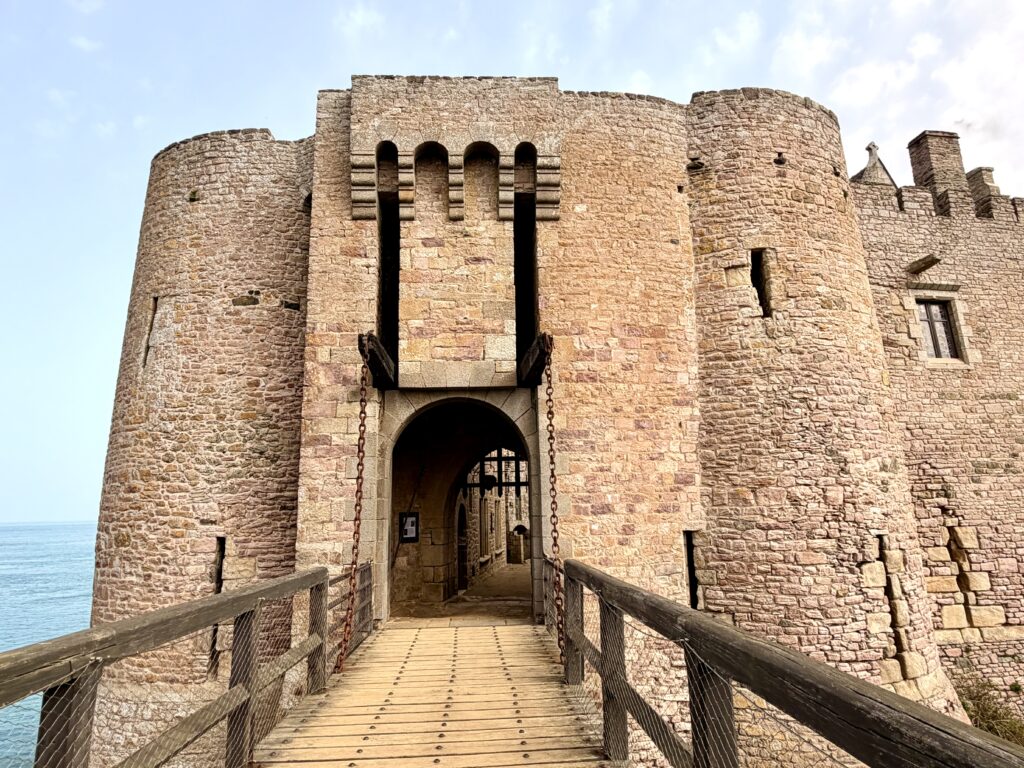
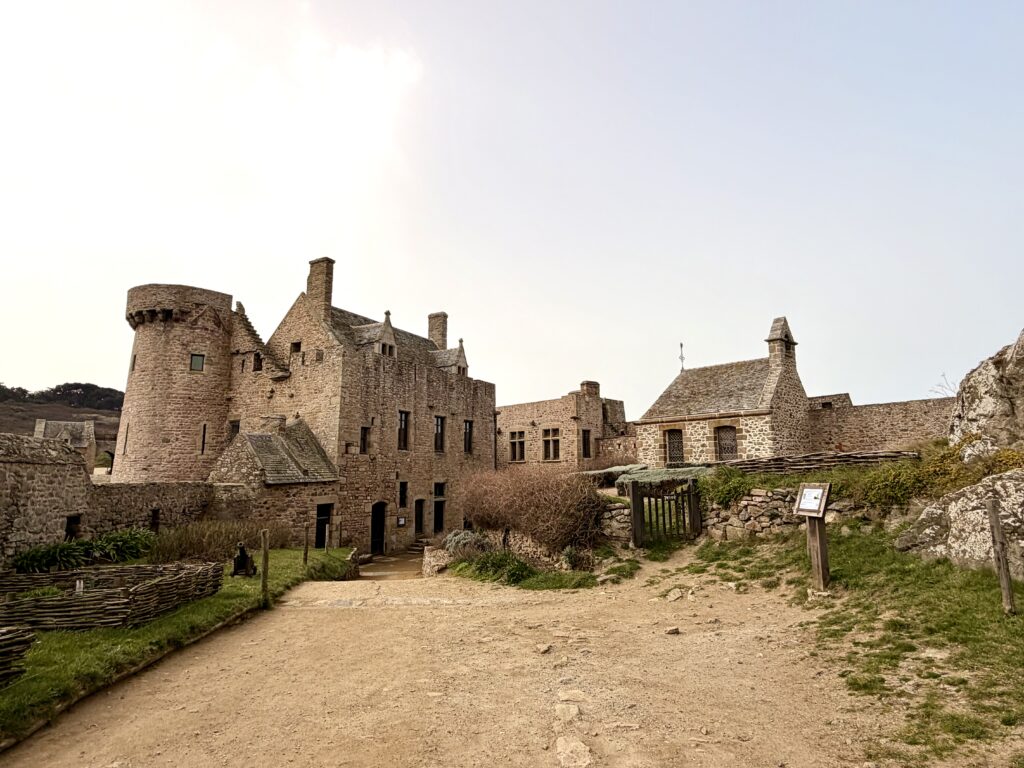
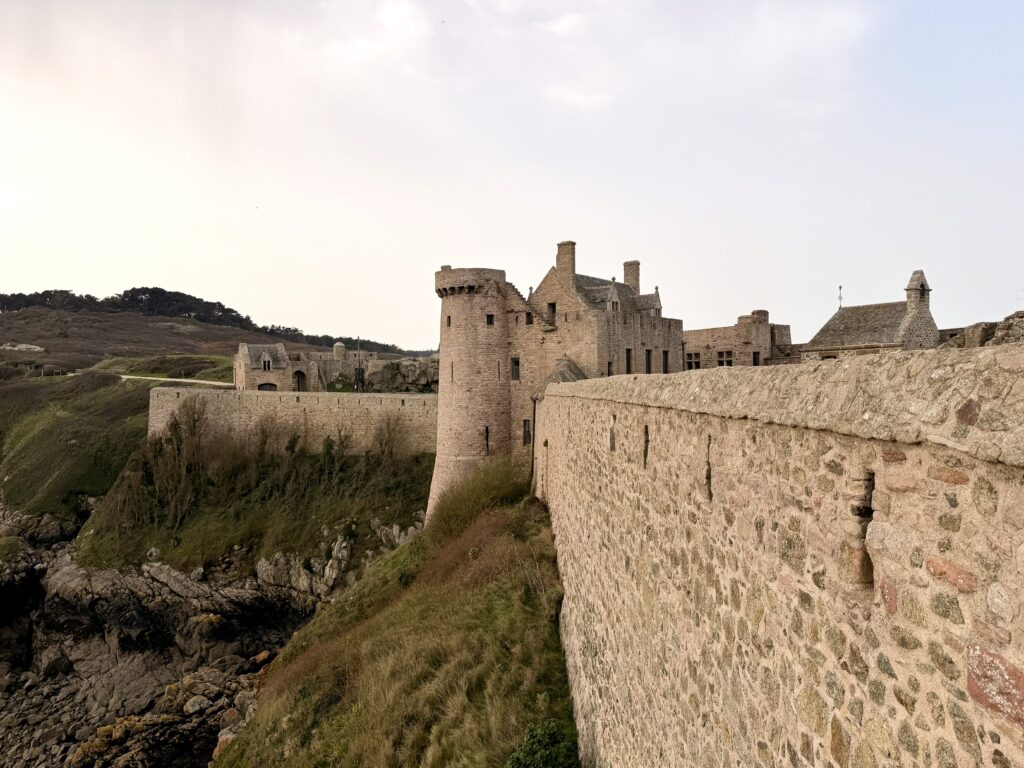
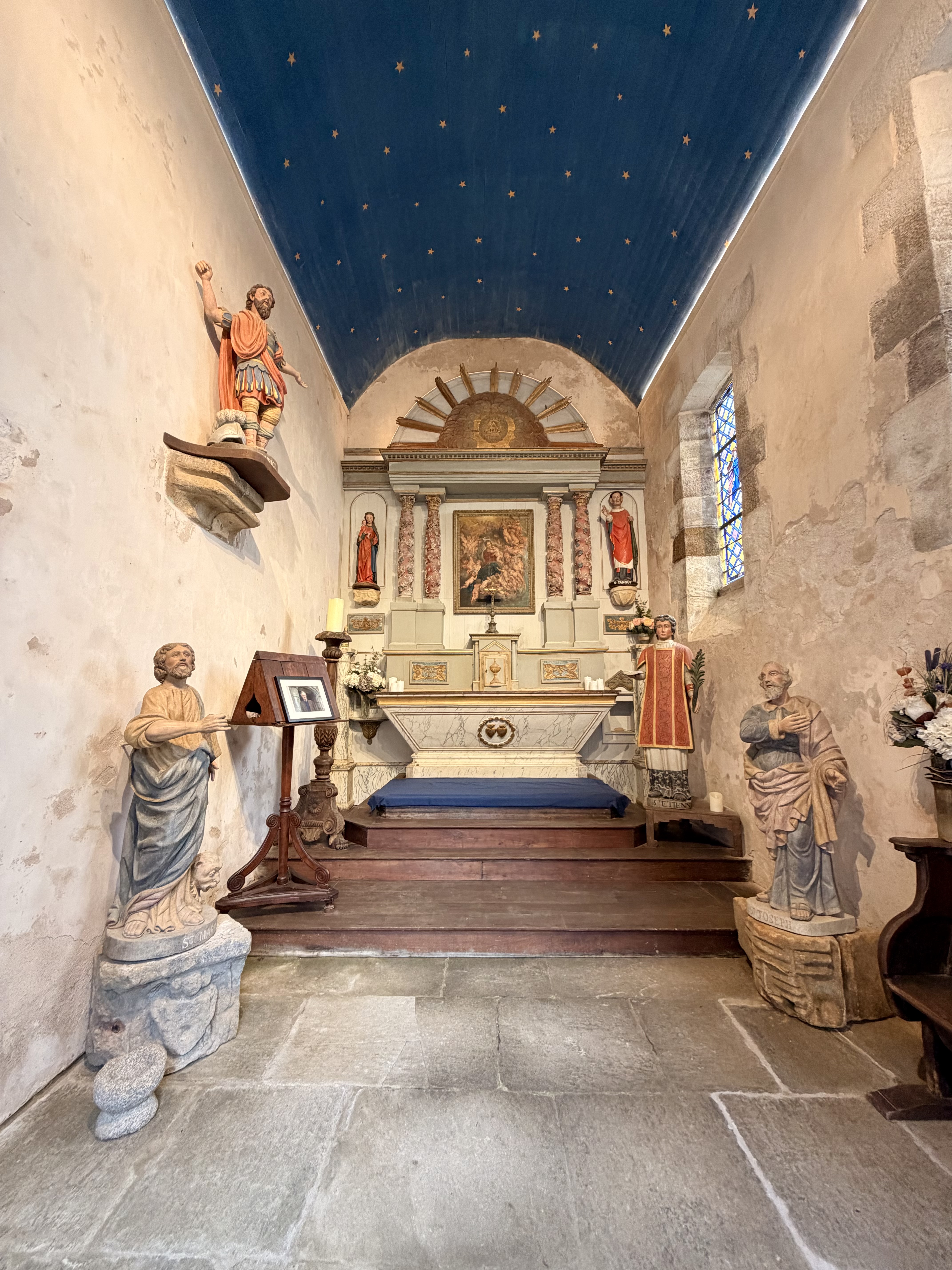
The first chapel on the site was built in 1412 but it no longer exists and its location is unknown. The current chapel was built in 1719 and named for St Michel (St Michael) – the protector of soldiers.
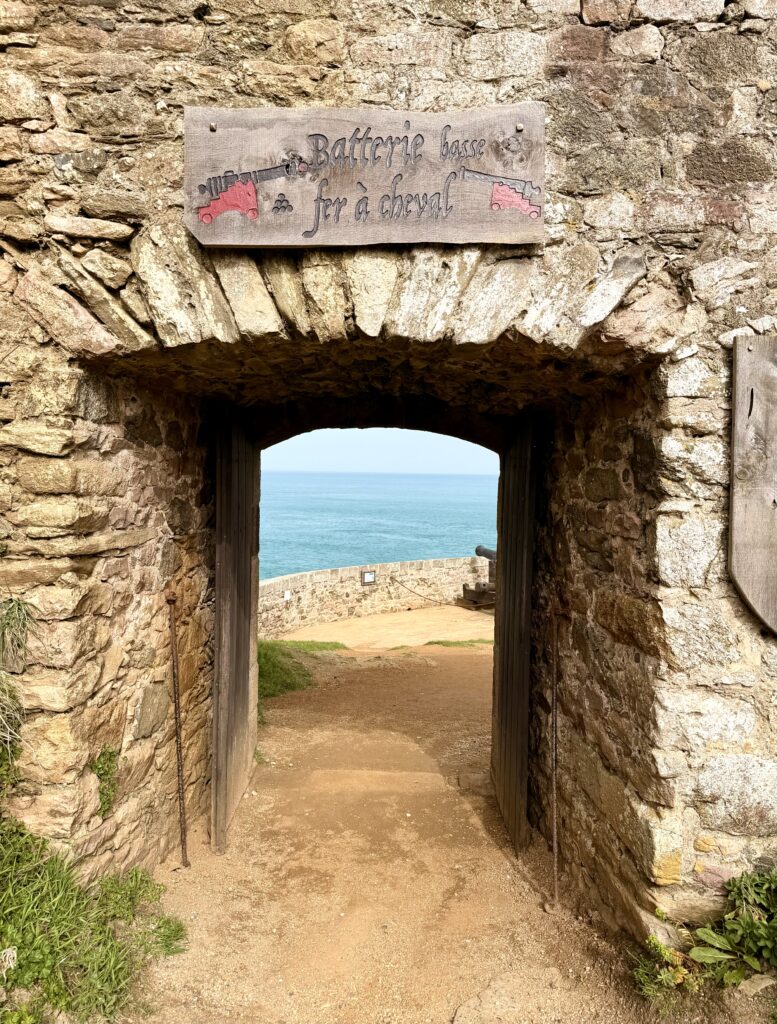
The Battery – as with many other similar sites, this was a castle where people worked and lived and also a fort providing coastal defense. So of course there were guns and cannons. The “batterie basse” (lower battery) sat right on the top of the peninsula overlooking the sea.
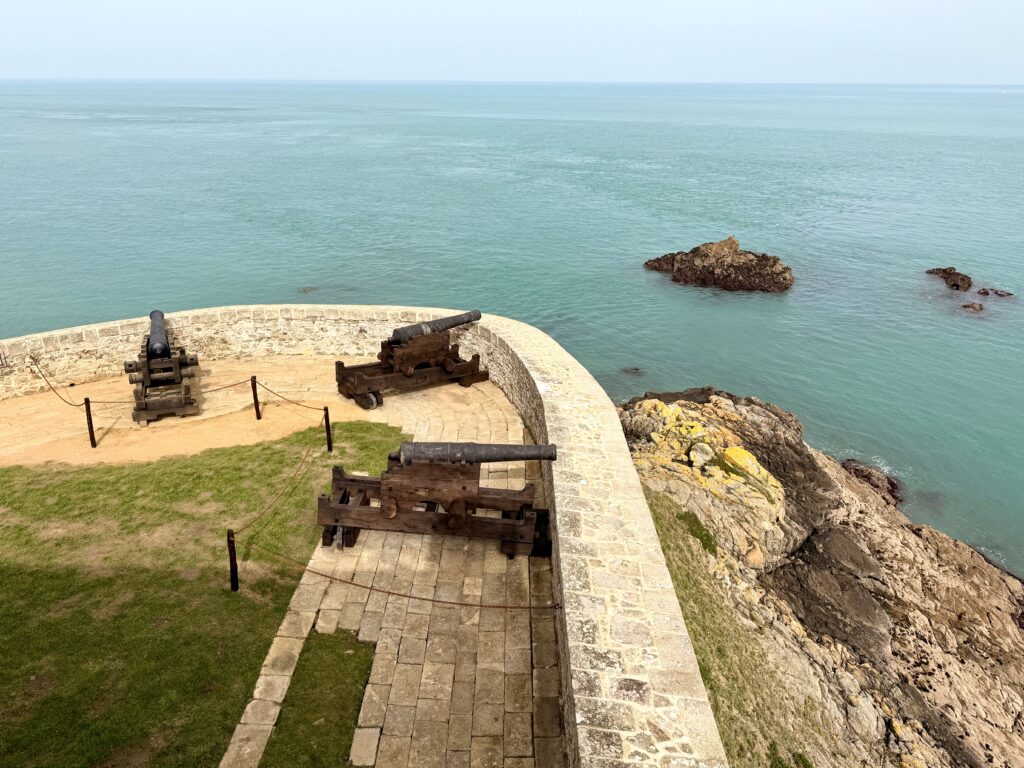
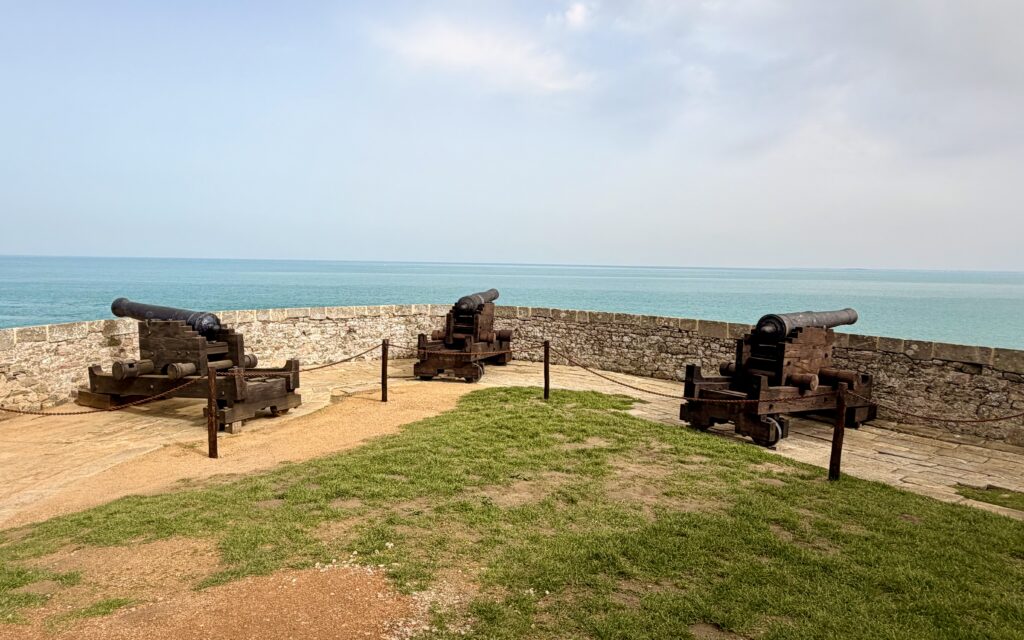
We climbed up the stairs inside the keep (the main tower) and they had great displays explaining what it would have been like to live in there. They also had displays showcasing the various movies filmed on site here.
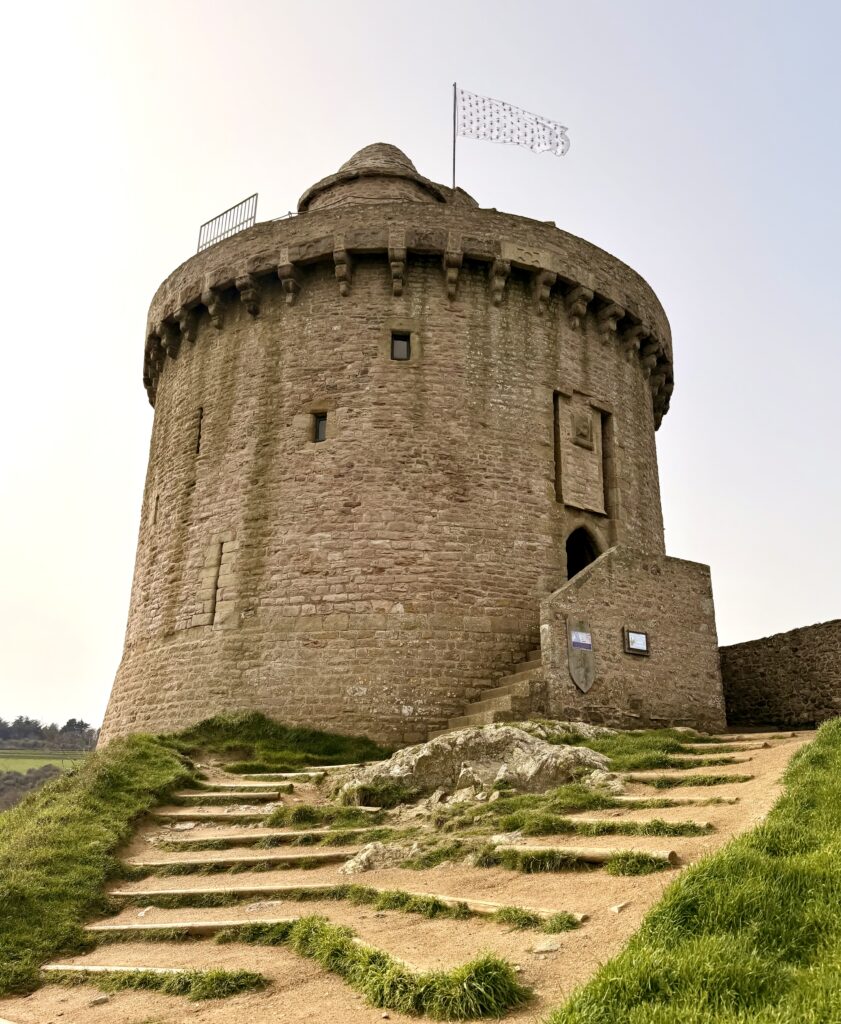
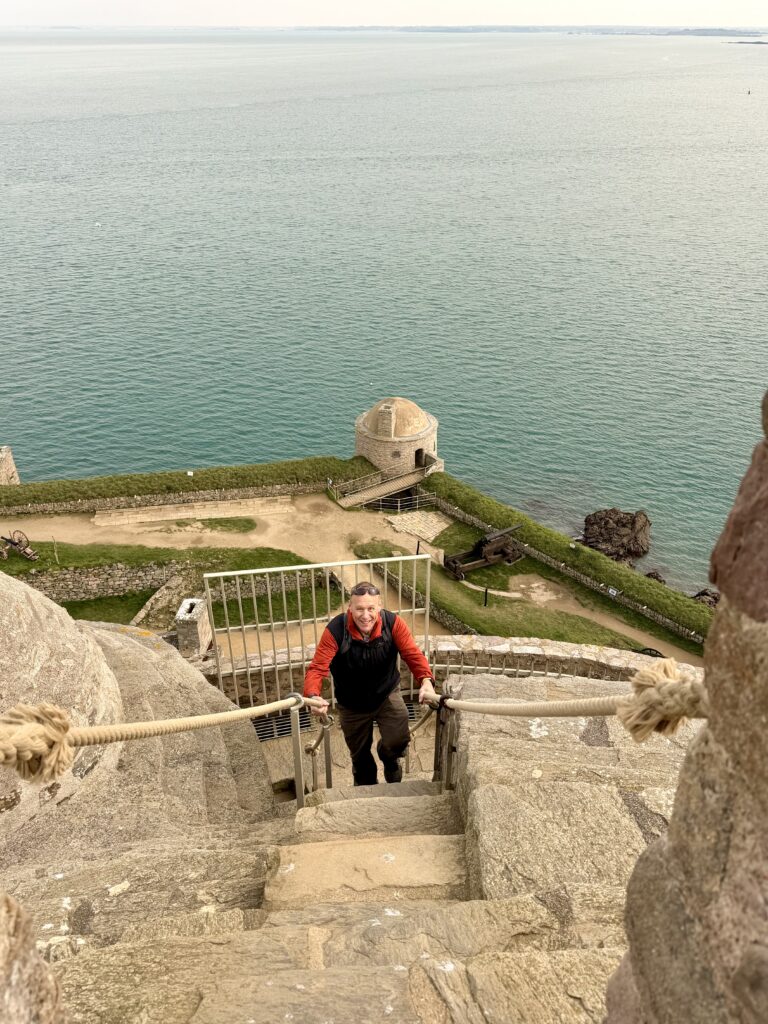
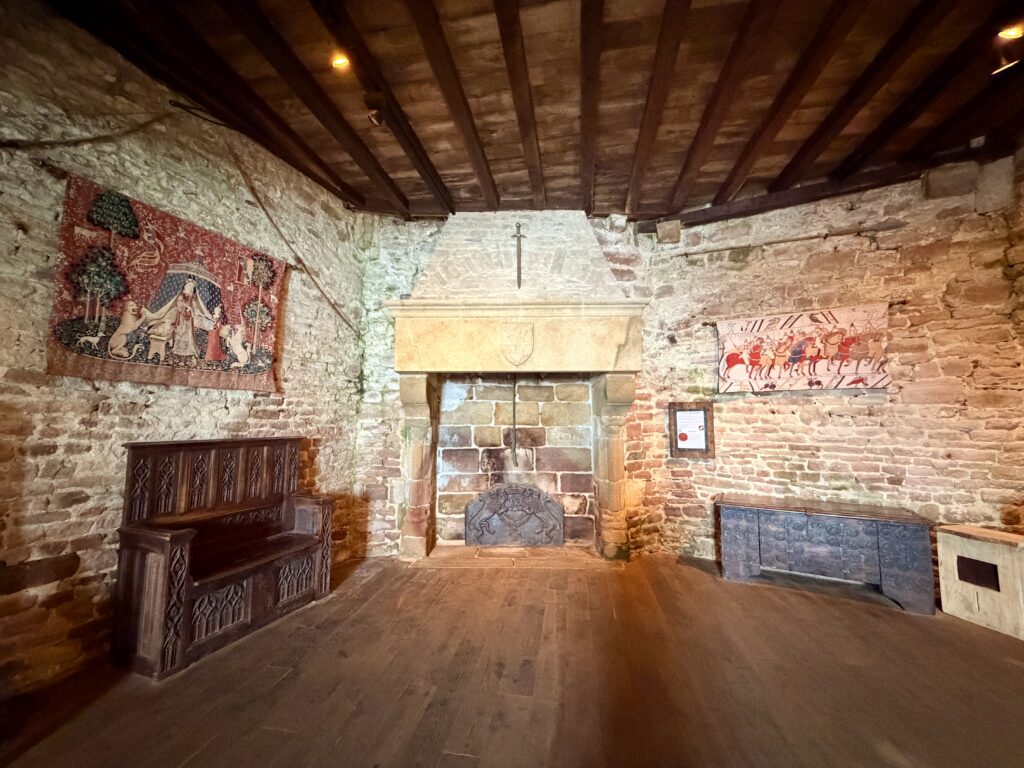
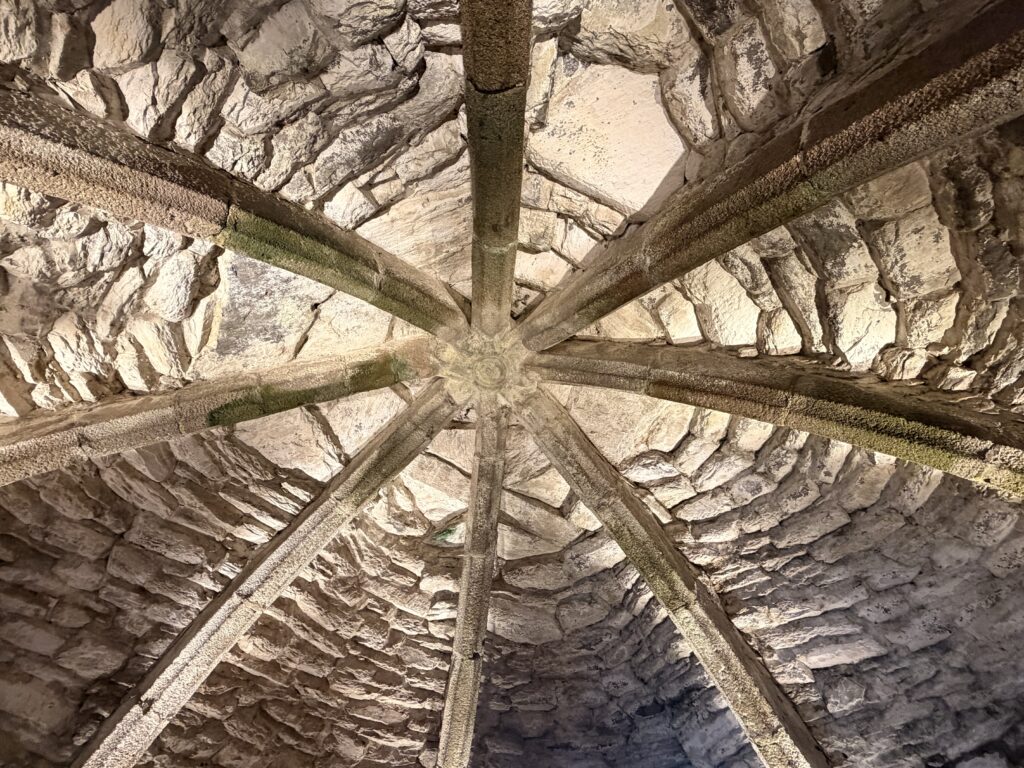
It was windy up on top but the views from there were stunning!
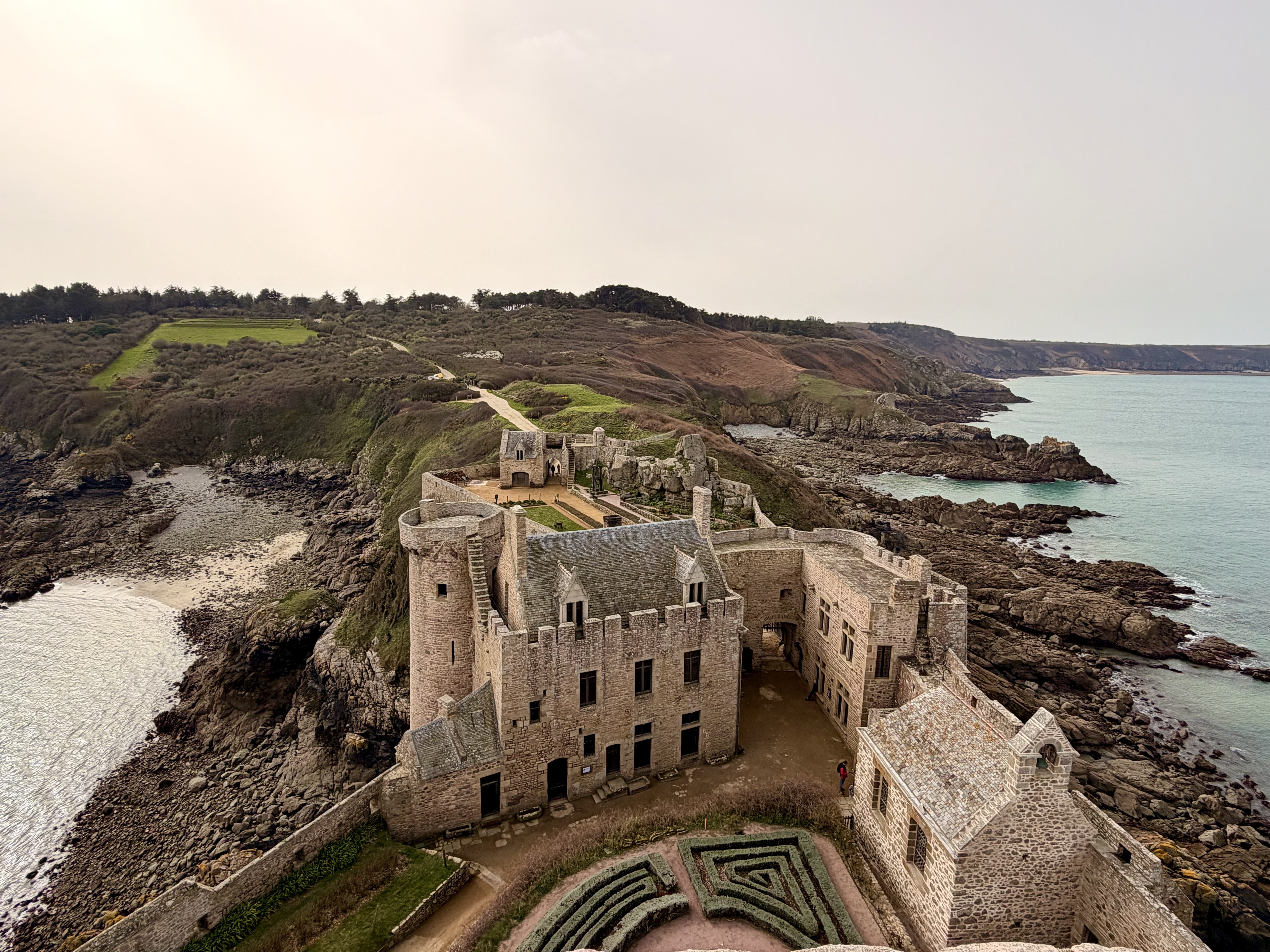
Leaving back through the 2nd gatehouse and into the outer courtyard, you can then climb up onto the walls for a view back on the inner fort.
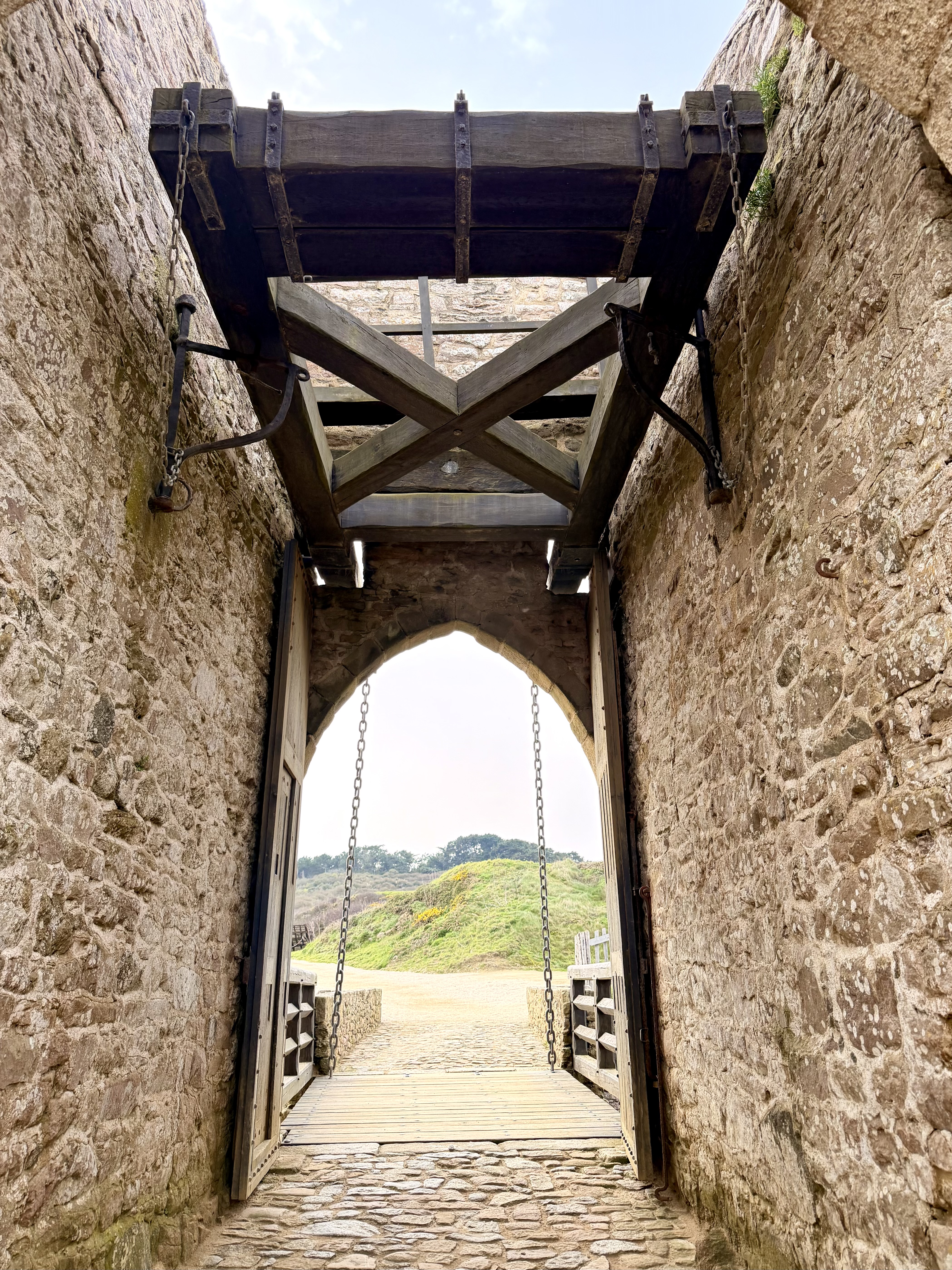
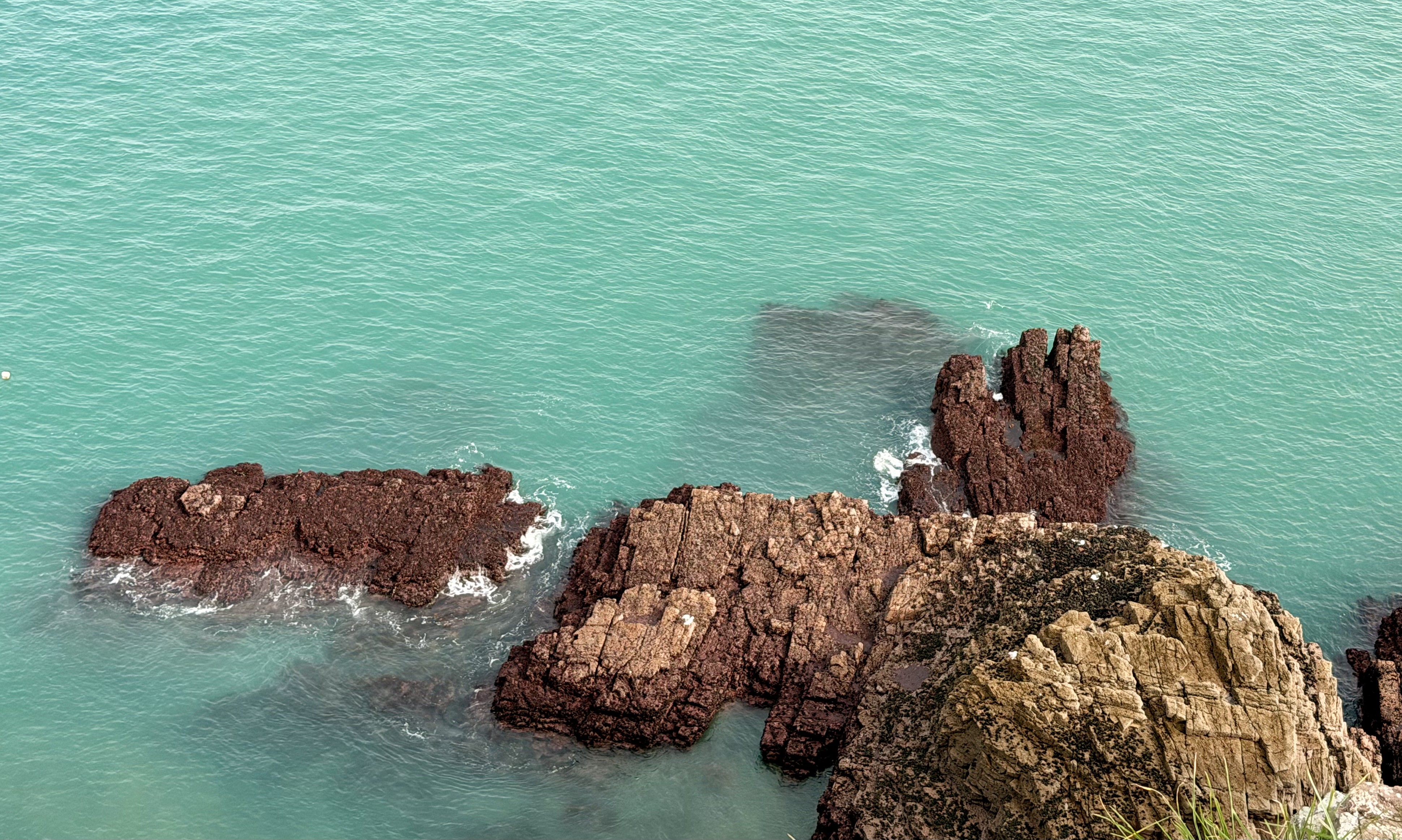
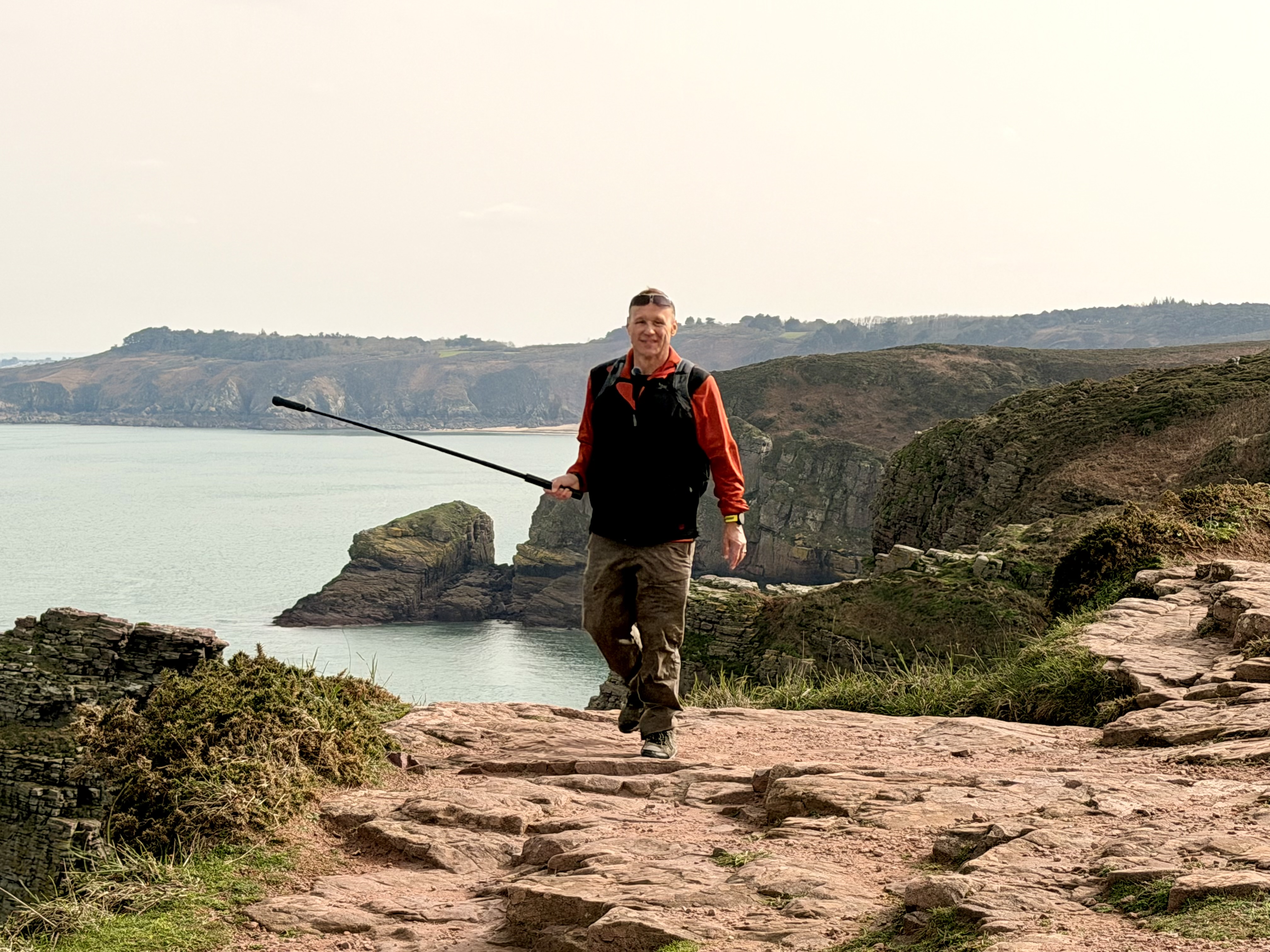
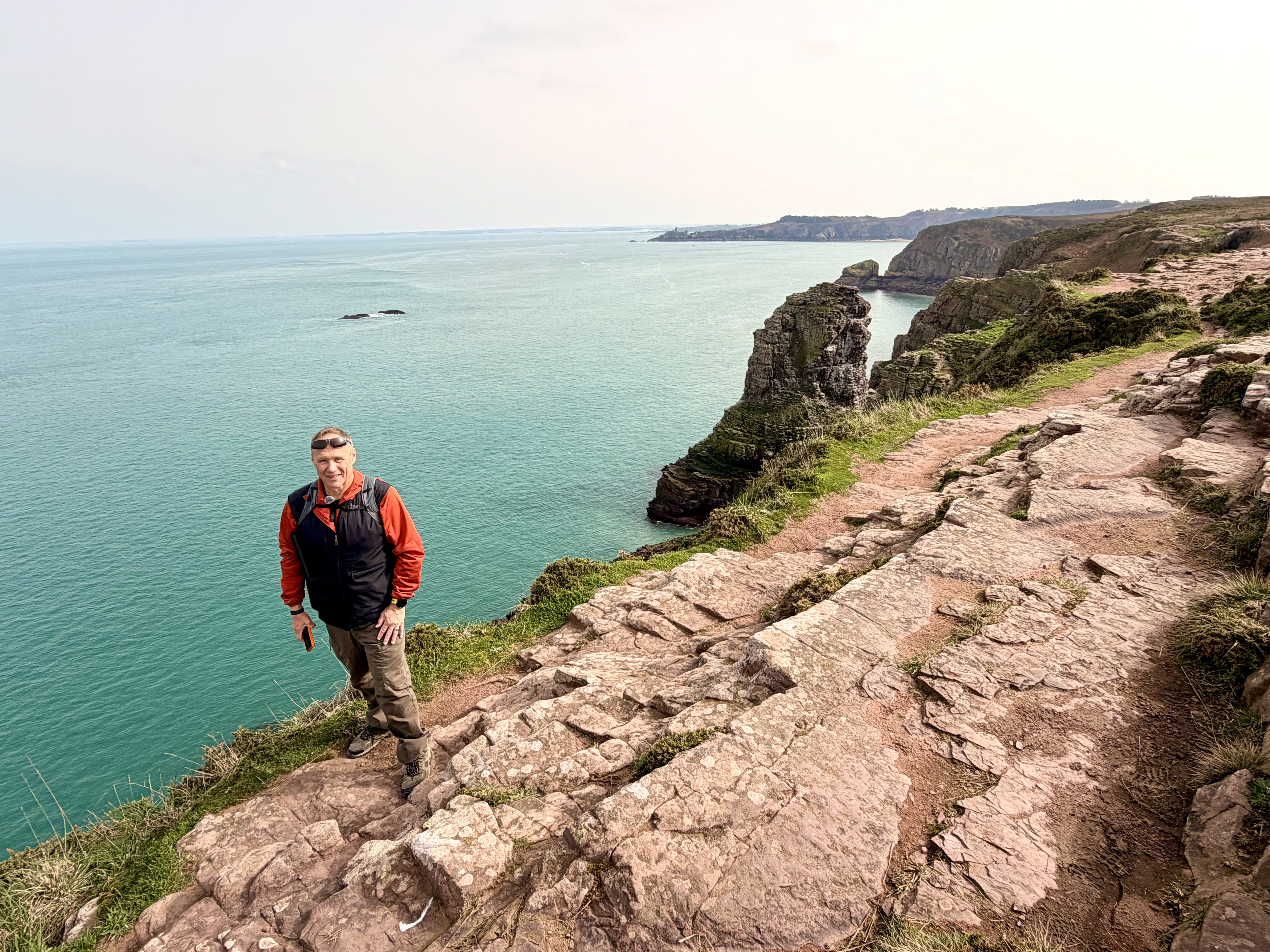
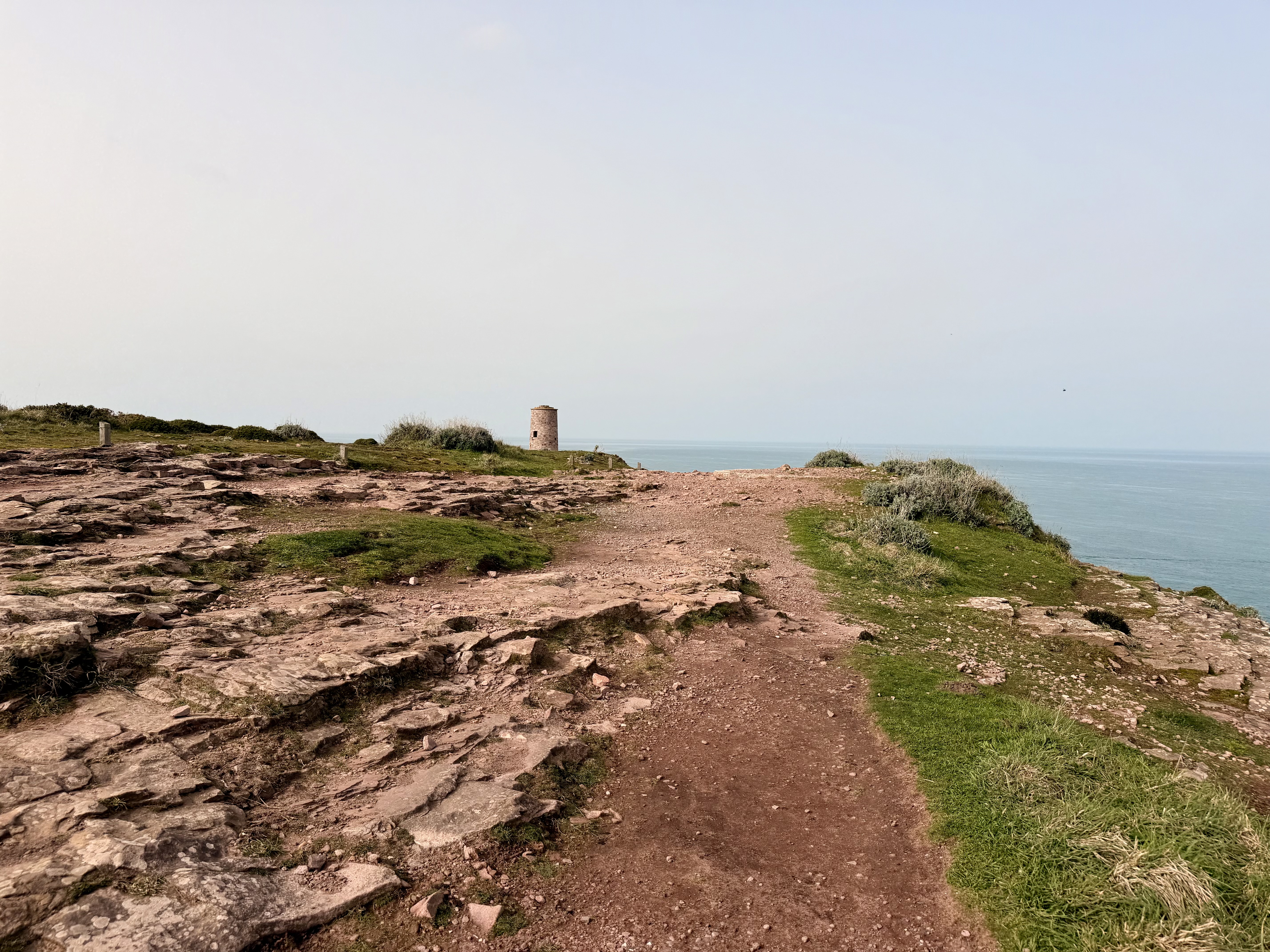
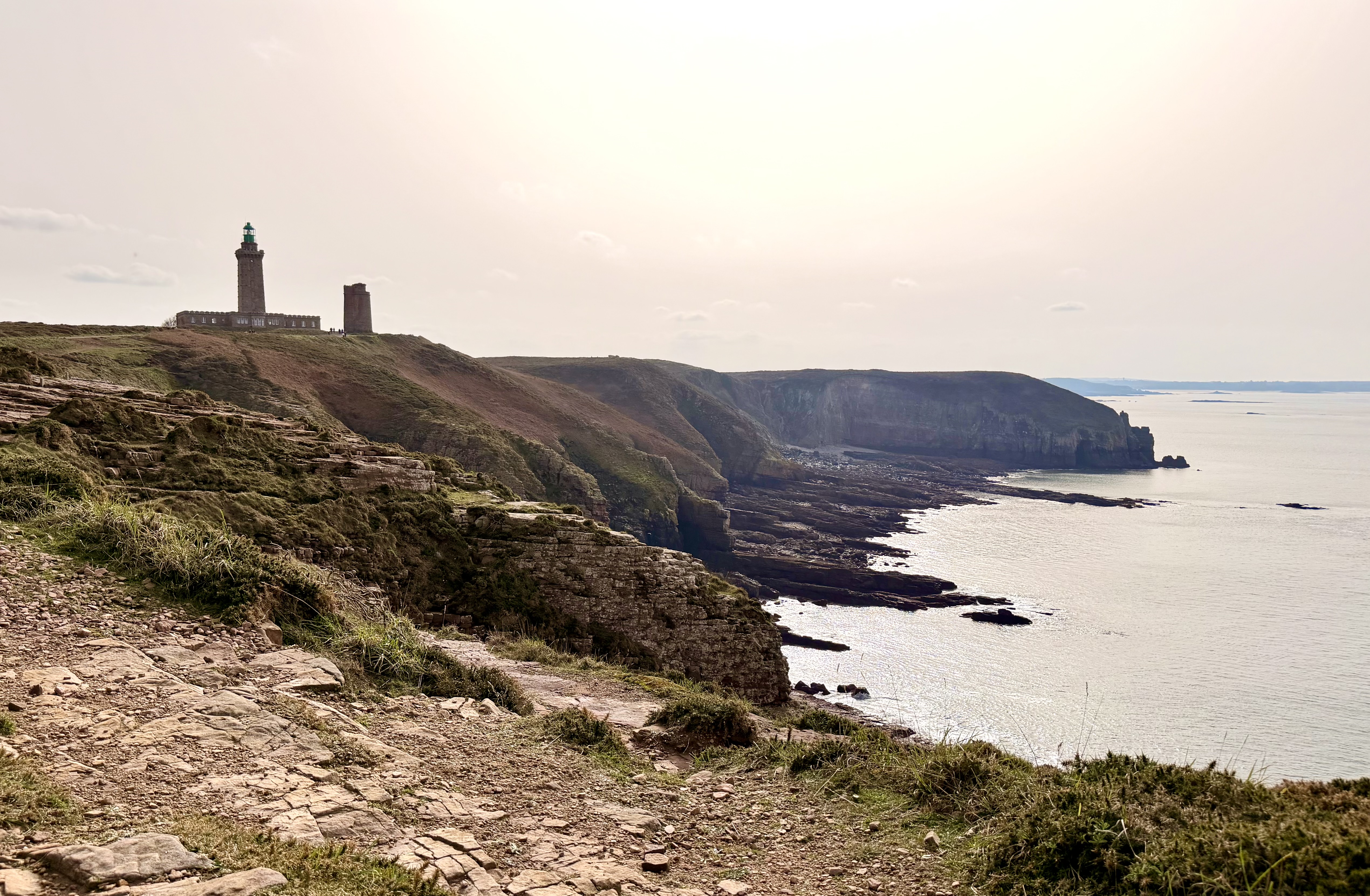
After finishing our tour at Fort la Latte, we made the short drive (about 15 min) over to Cap Fréhel to see the lighthouse and soak in the amazing views (Cap = Cape). These pictures really show why this area is called the Emerald Coast.
There’s a coastal trail that runs by both sites so you can also walk/hike from Fort la Latte to Cap Fréhel in about 1-1.5 hours (one way) but we decided to take the car.
Once there, we walked around the area. We weren’t able to go into the lighthouse but walking around the area is free – it just costs €3 per car to park.
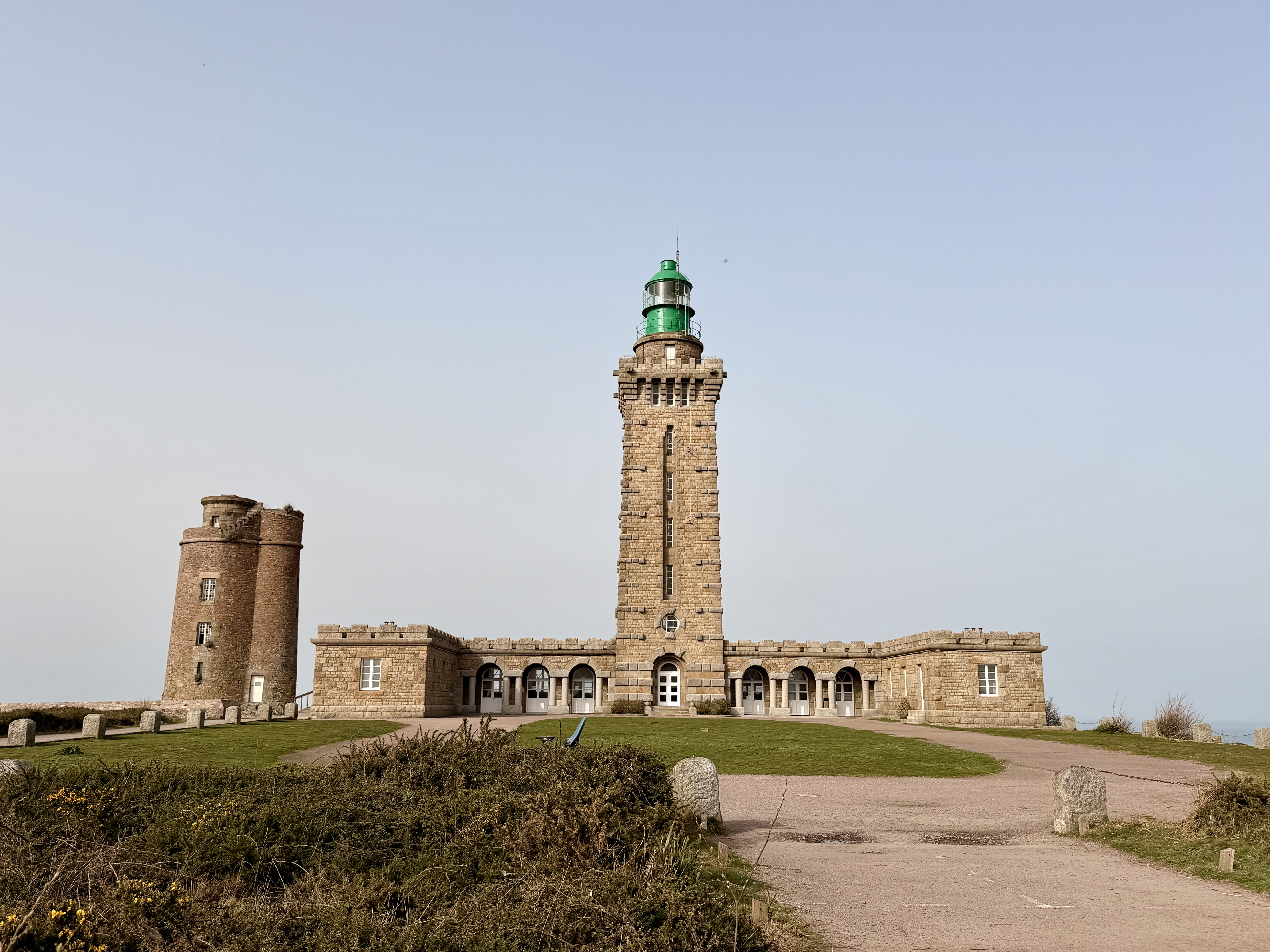
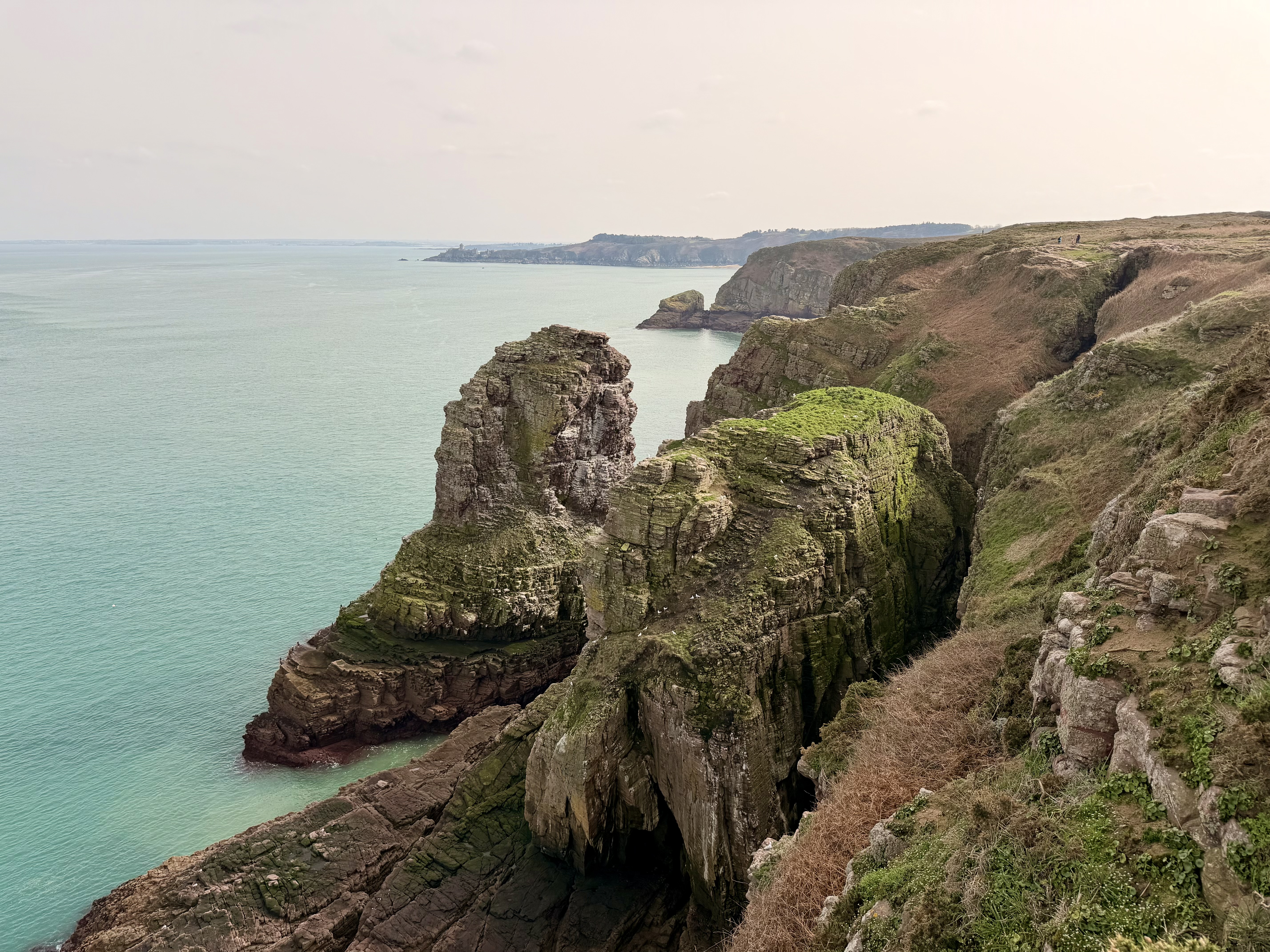
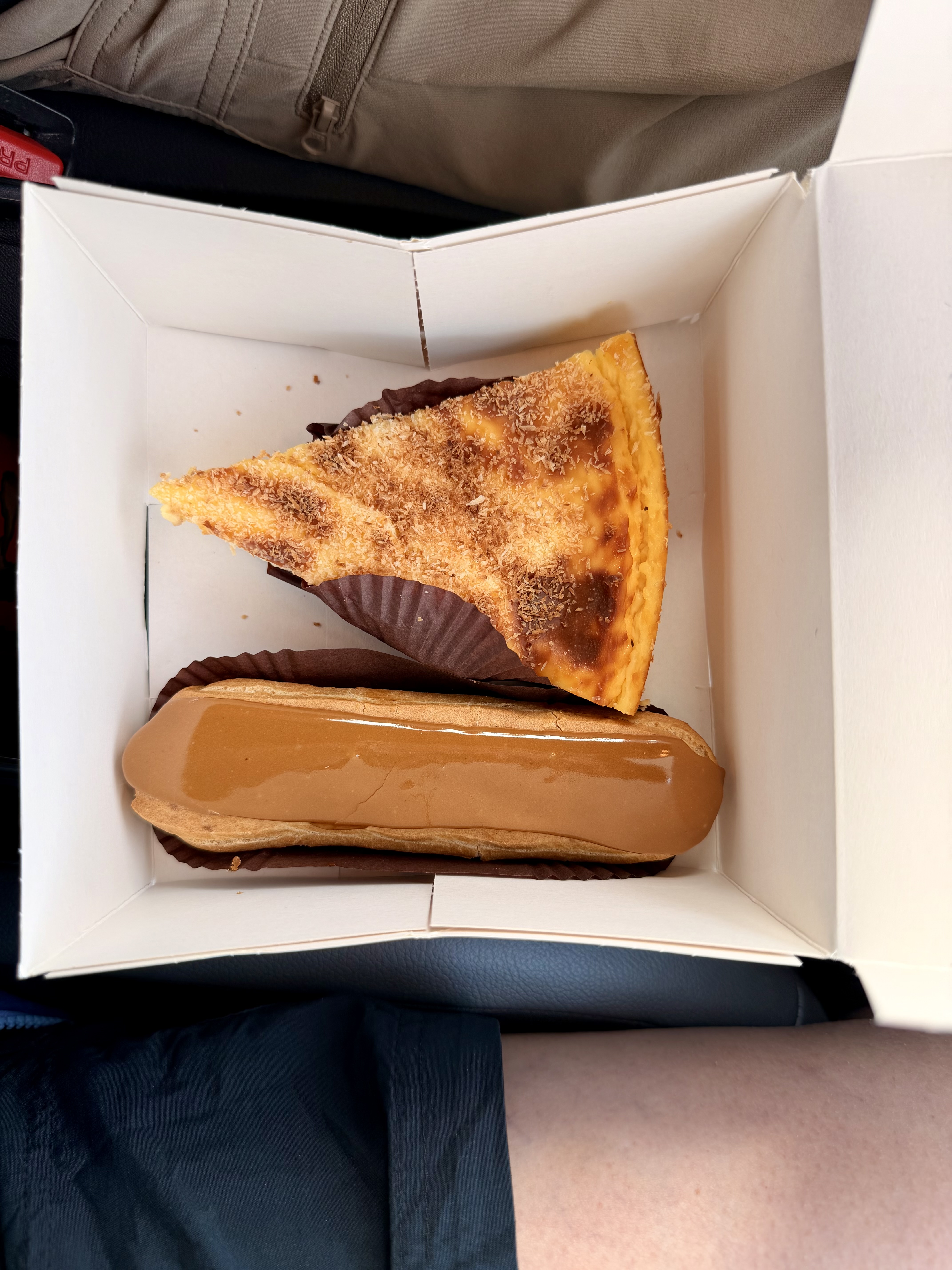
On the way home we stopped at Biscuiterie de la Côte d’Émeraude for some treats (https://maps.app.goo.gl/5kMyQHexscuYAPLA6?g_st=ic) – we hit the bakery side but they also had lots of regional souvenirs.
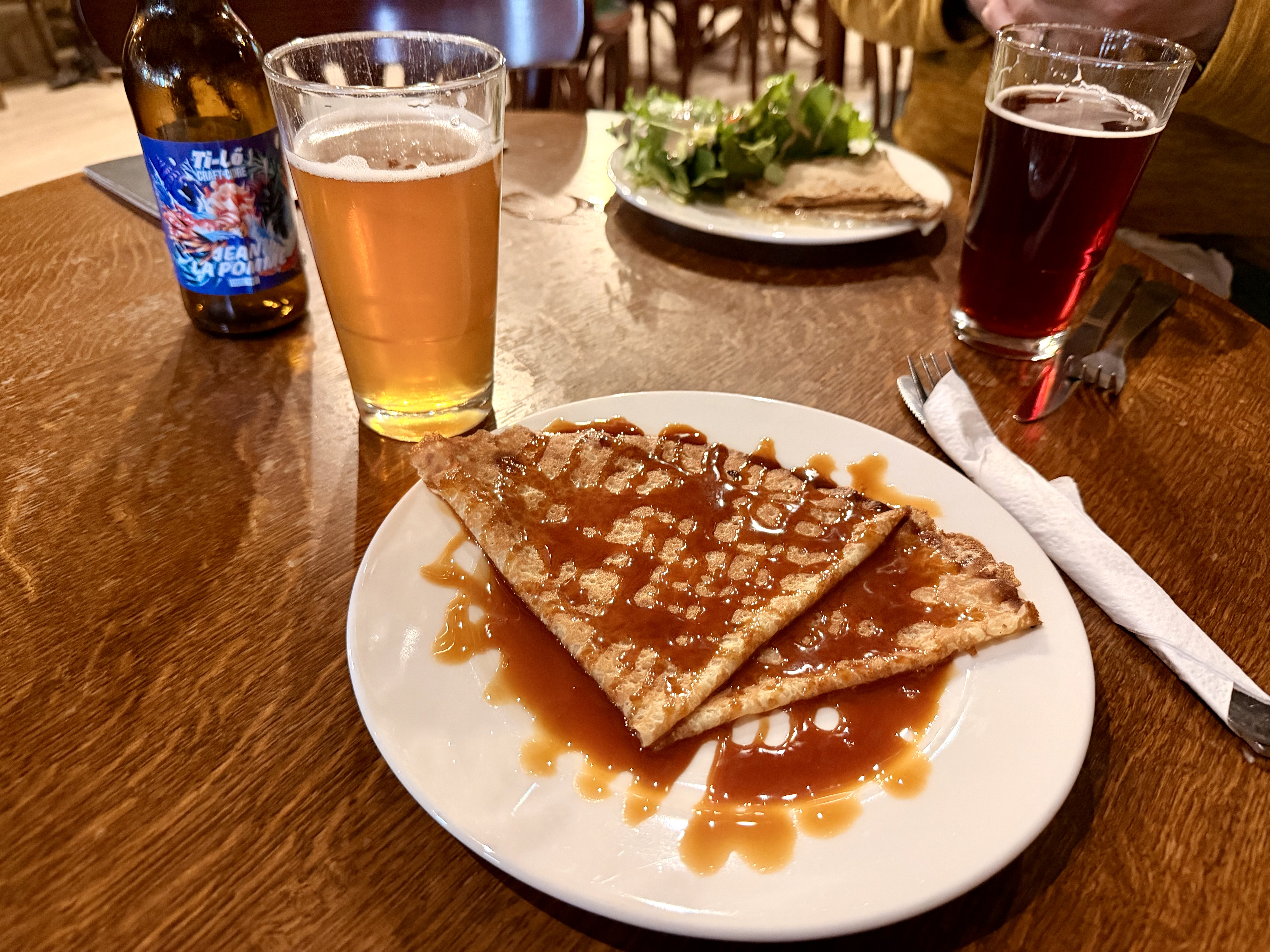
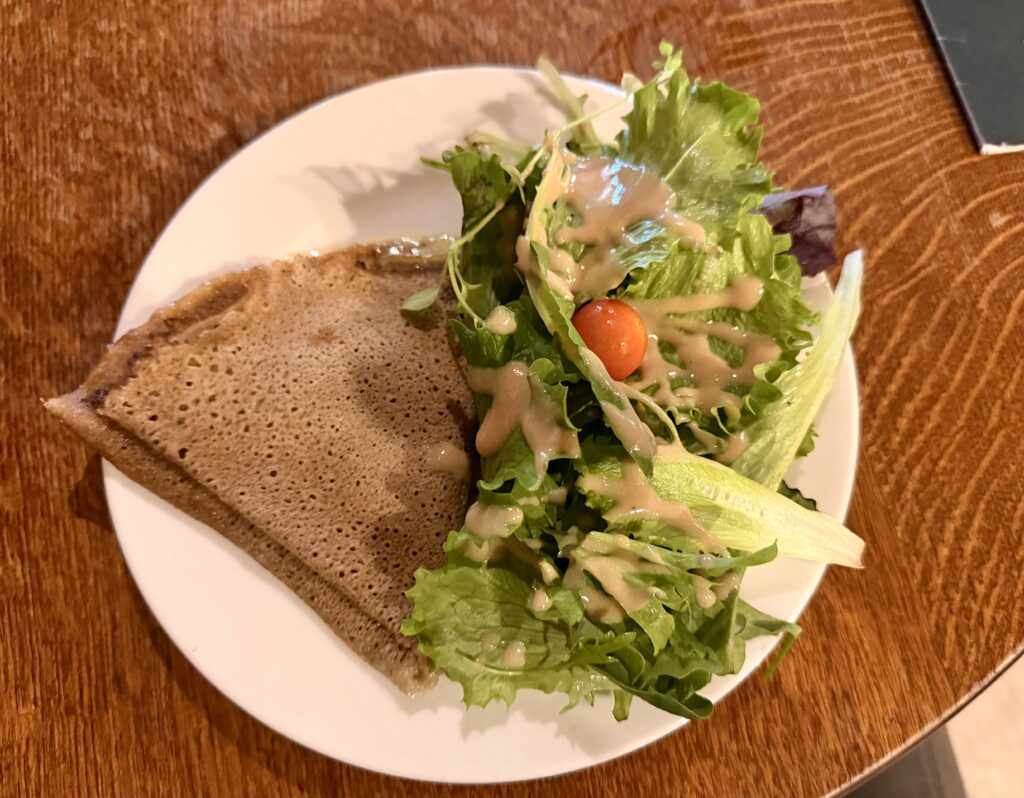
Speaking of food … there are a couple things Bretagne is known for. One is cider (traditionally served in cider bowls but mine was served in a glass) and galettes and crepes. Galettes are savory buckwheat crepes (I had a really good one in Mont-Saint-Michel on this trip and also in the Loire Valley a couple years ago). The one I got below is a sweet crepe and was very tasty and Chris got a traditional galette.
After a relaxing week in Brittany, we headed back to Paris to drop off our rental car and spend our last few days in the EU.