
When we left Brussels, we took the train just across the border to Lille, France and picked up a rental car to use for the next 10 days (cross border fees make picking up a car in one country and dropping off in another – even if they’re both EU – cost prohibitive so taking the train across the border to France saved a lot of money on the rental). We spent 2 nights in Lille and drove about an hour up to Dunkirk on our one full day in Lille.
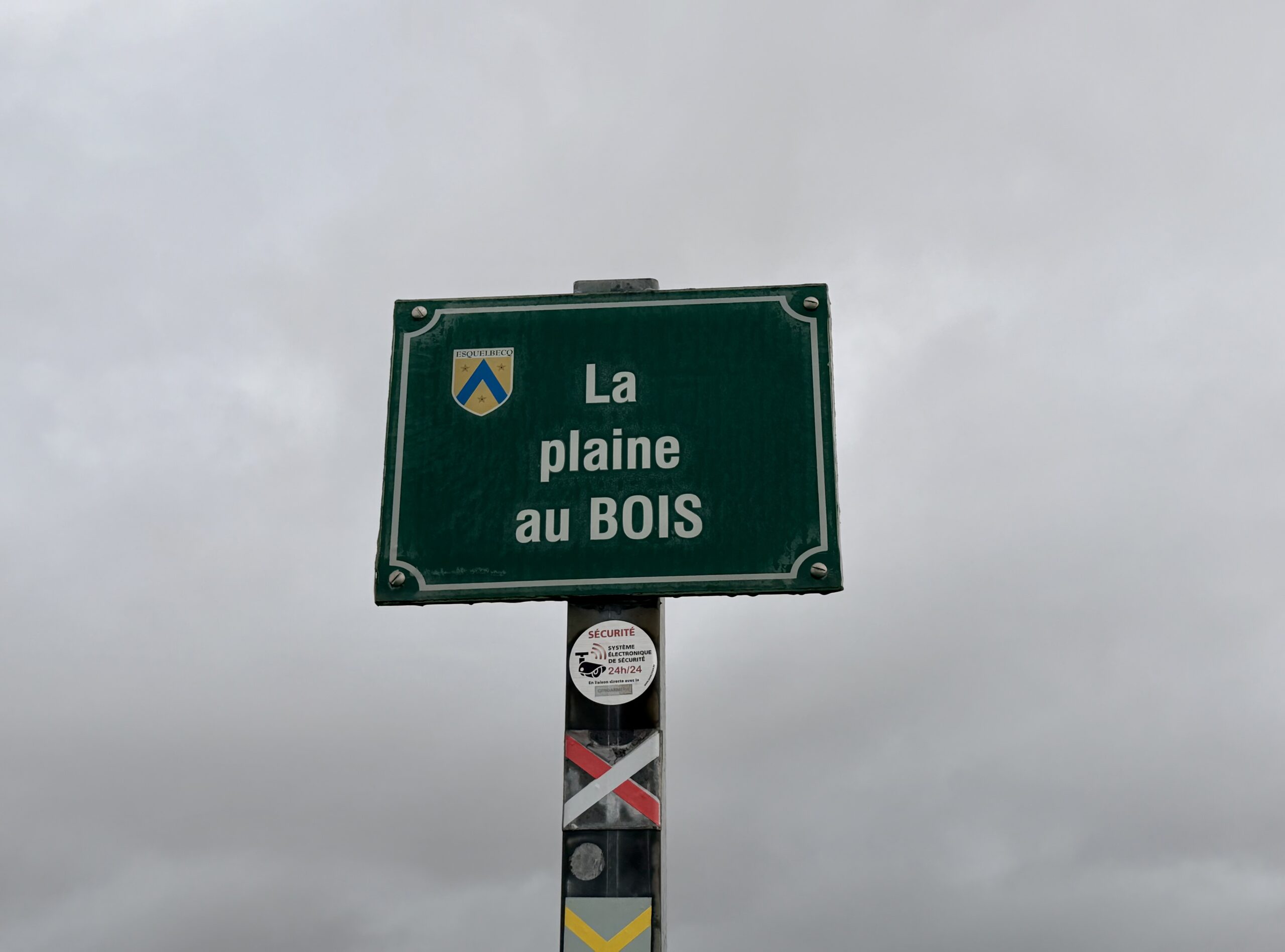
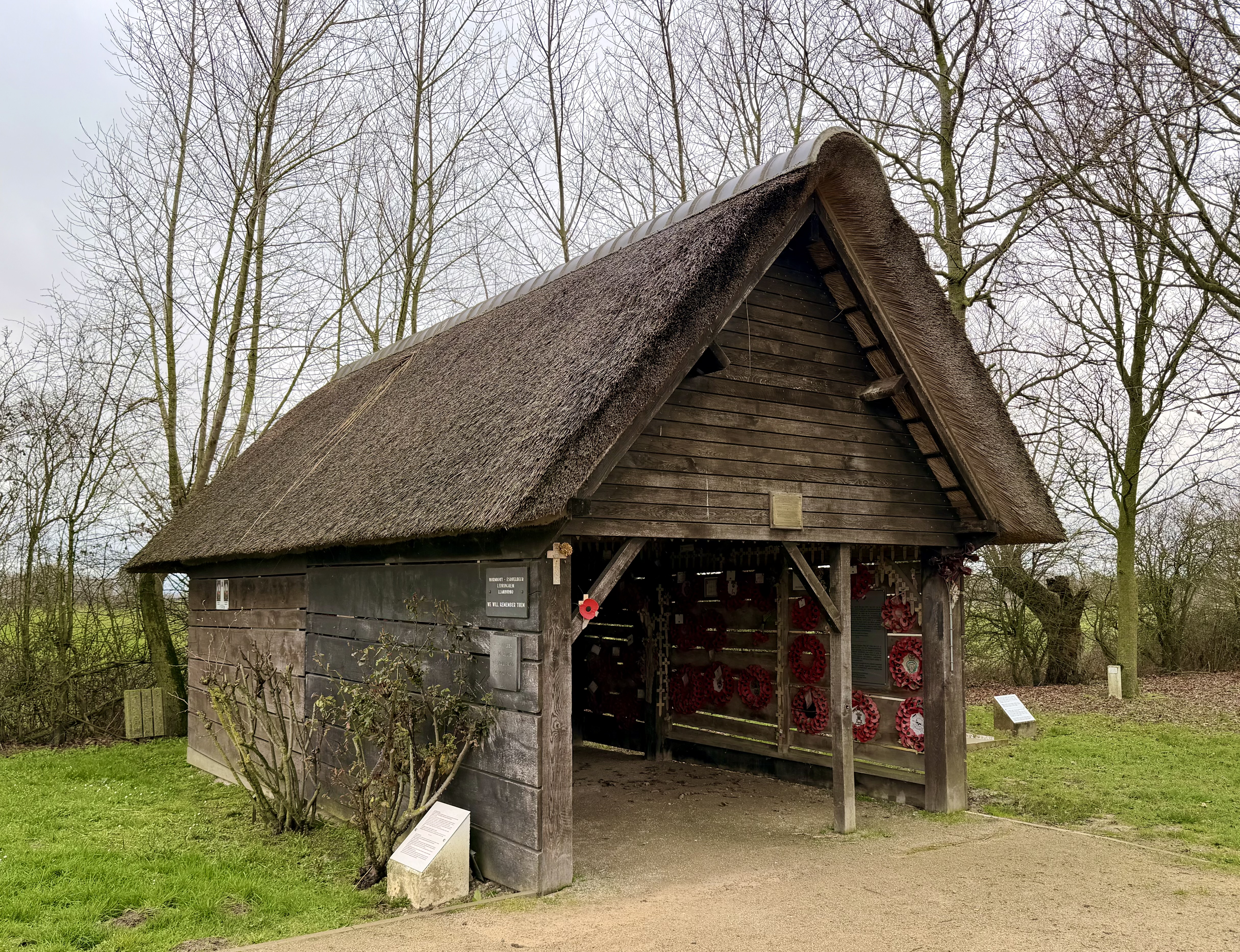
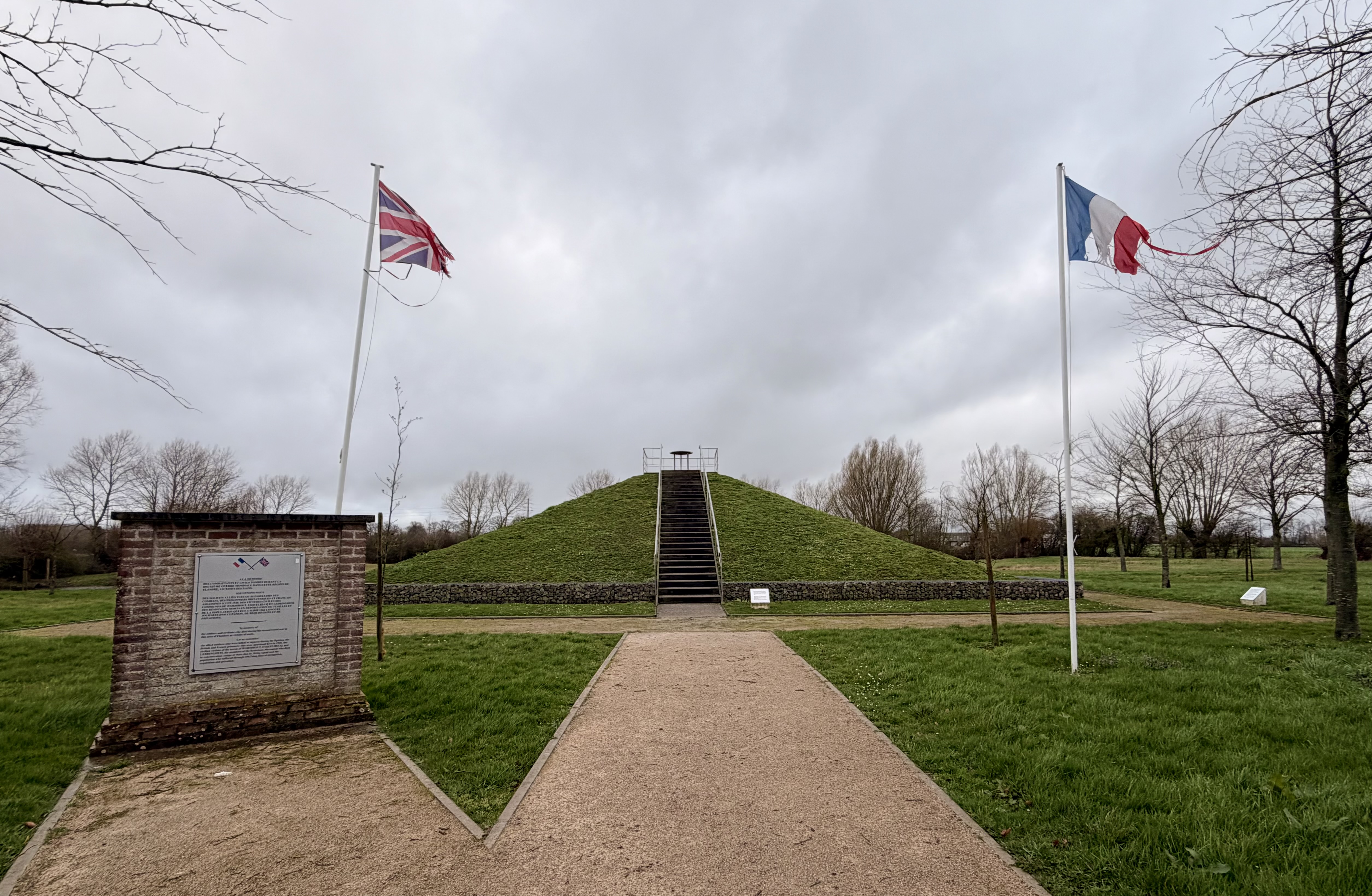
On the way to Dunkirk, we stopped at the Plaine au Bois Memorial site (the site of the Wormhoudt Massacre) – this was the site of the mass murder of British and French POWs by Waffen-SS soldiers on 28 May 1940. Nearly 100 men were rounded up into a barn and executed – only a handful survived to recount the masacre. You can read more about it here: https://www.ww2cemeteries.com/la-plaine-au-bois-memorial-site-wormhoudt-massacre.html. Also this video is about 20 mintues long and does a great job of detailing the events at this site: https://youtu.be/Zi63lxHW0UI?si=kUoPmdmG9AYp4MPz.
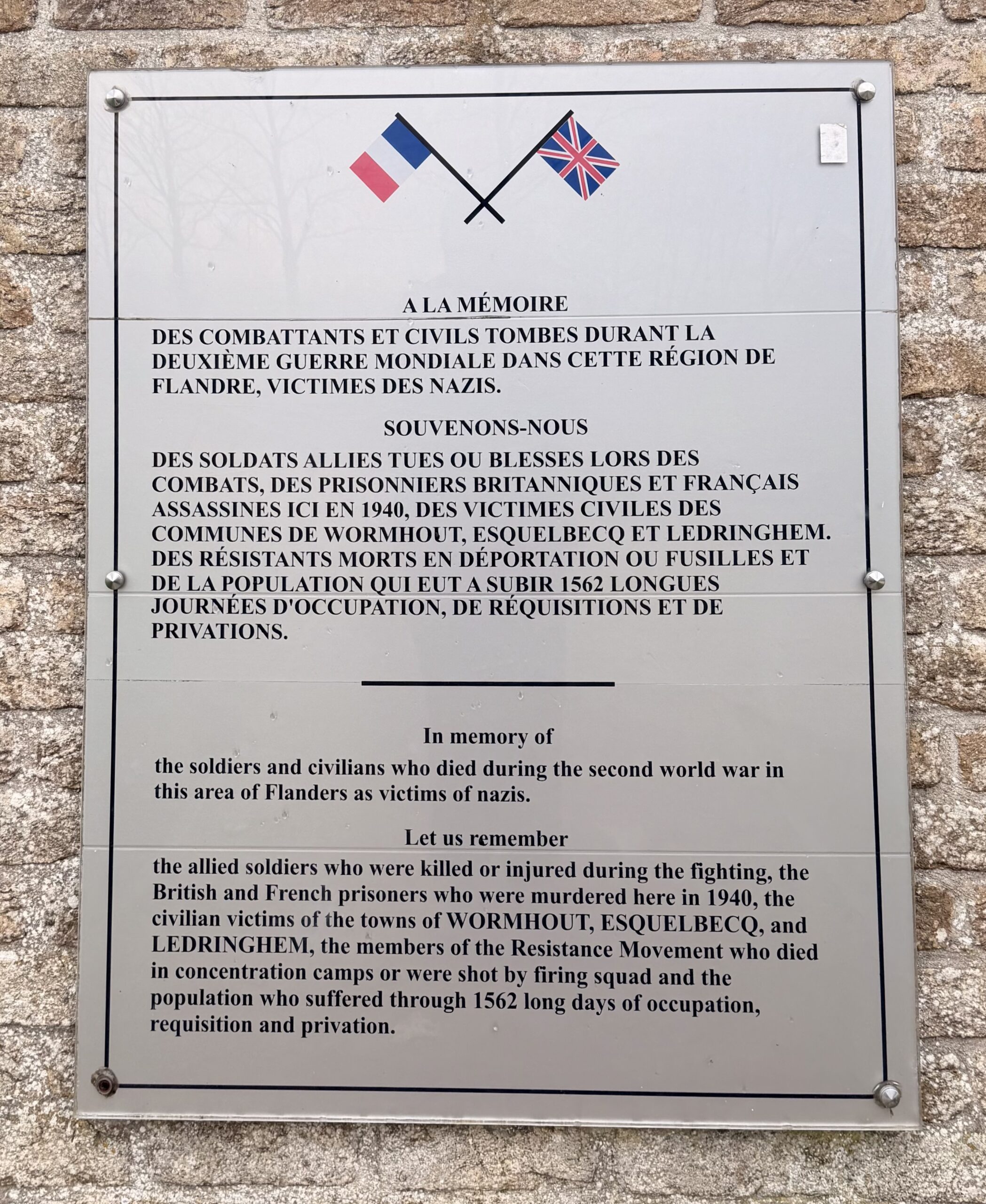
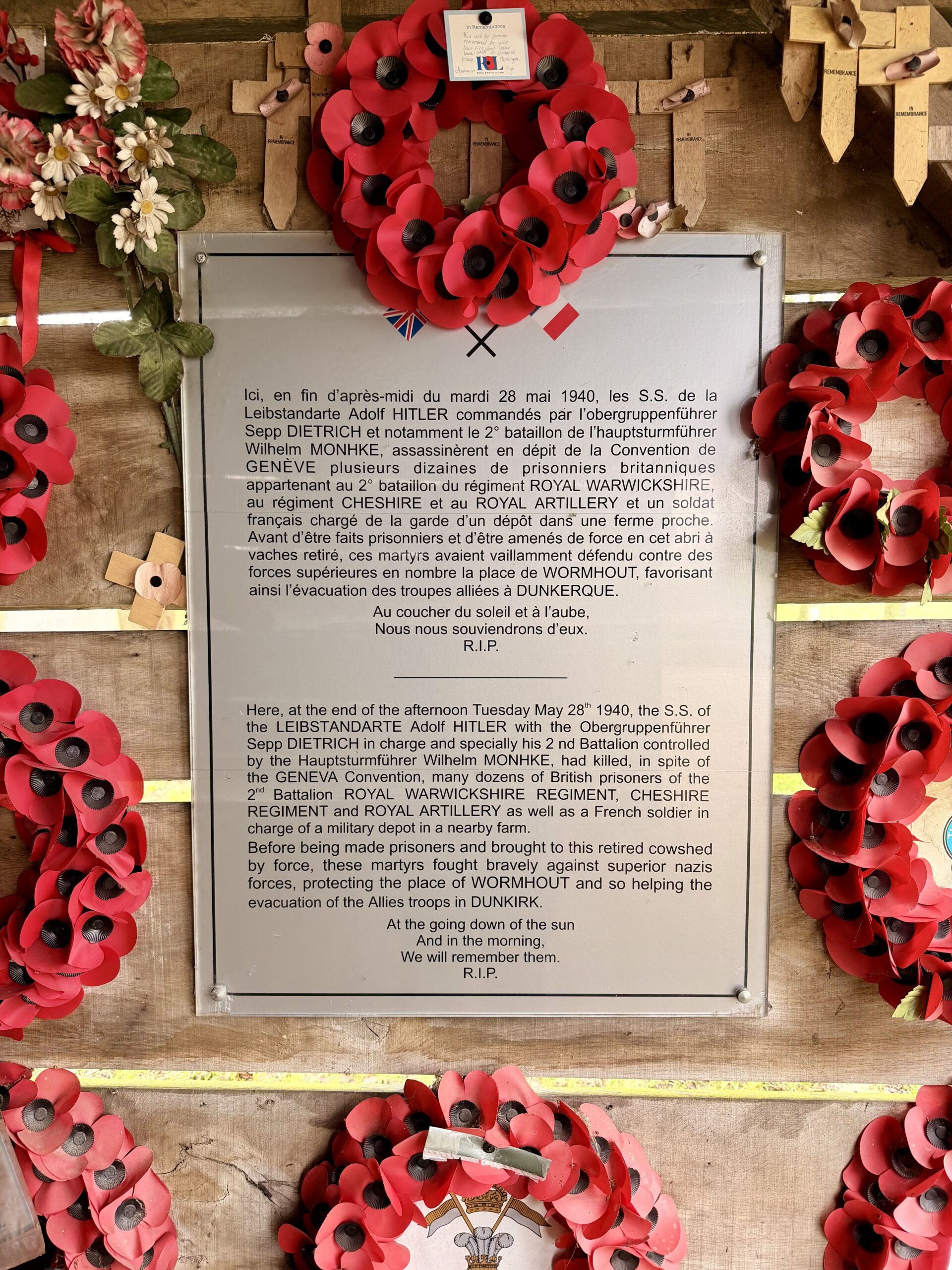
A sign at the site explains the history:
“This memorial site recalls the massacre of 80 British soldiers and a French soldier in the Second World War during Operation Dynamo, when large allied units were to gather at Bray-Dunes before being shipped back to Great Britain.
On May 28th, 1940, the German troops blocked the access to the town of Wormhout, along with the neighbouring villages of Ledringhem and Esquelbecg.
These are strategic points for a possible advance towards Dunkirk. During this confrontation, around one hundred soldiers from the Royal Warwickshire Regiment, the Cheshire Regiment and the Royal Artillery were taken prisoner and imprisoned in a barn standing in the middle of a pasture in this spot, known as the ‘Plaine au Bois’. Towards the end of the afternoon, twelve S.S. from the Leibstandarte under the command of Wilhelm Mohnke (1911-2001) began their dreadful task by throwing three hand grenades into the barn.
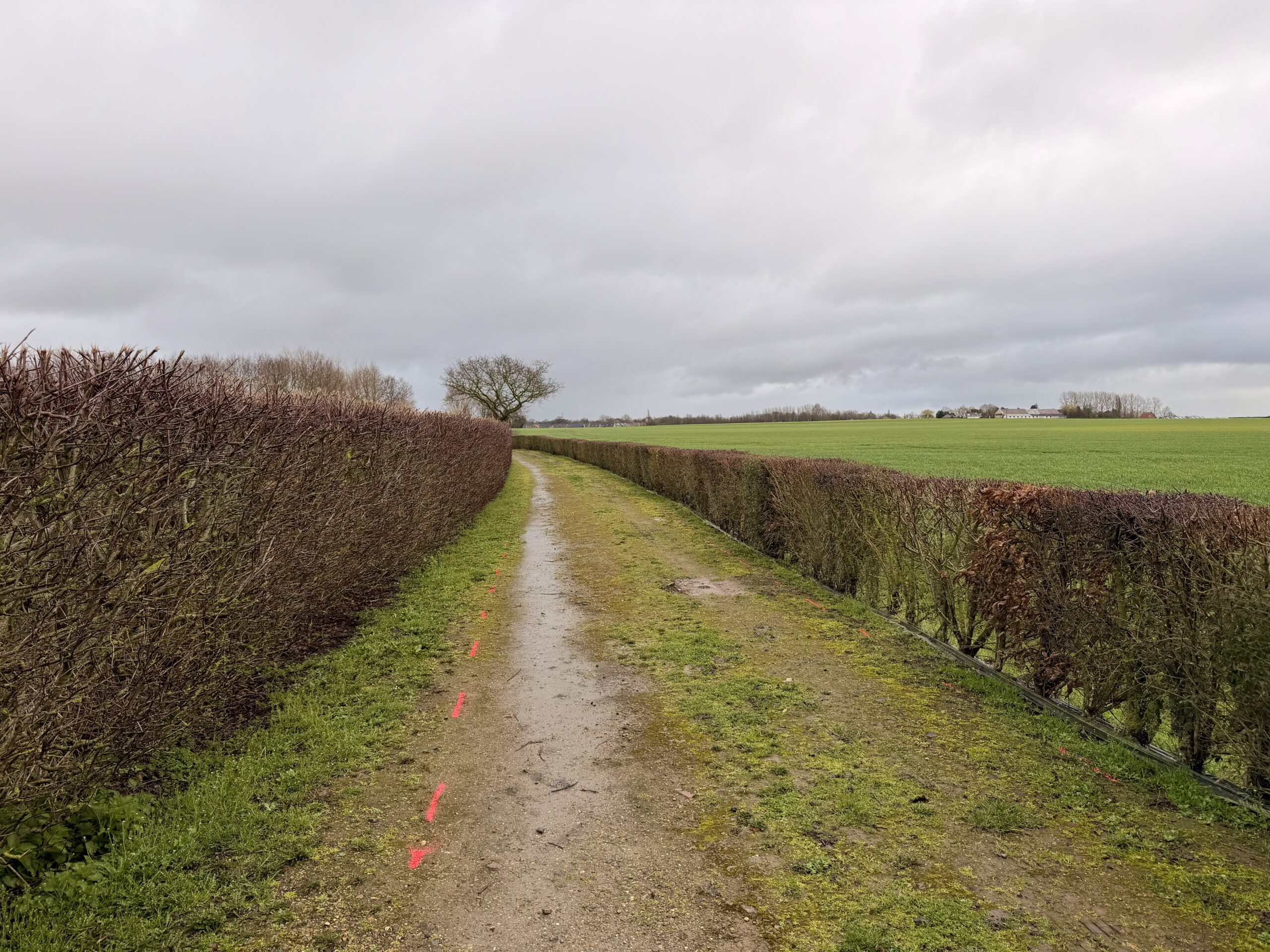
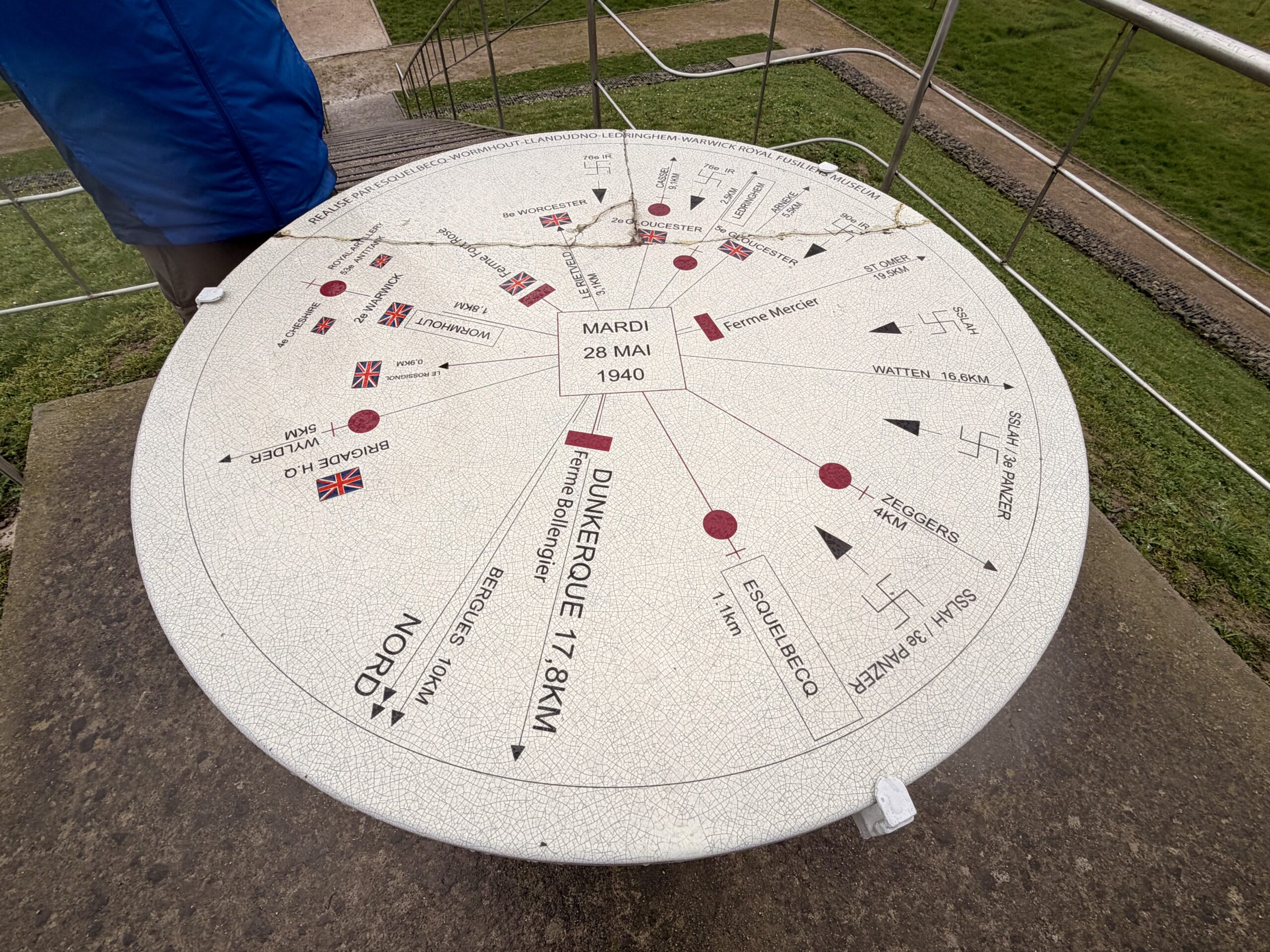
In 1972, British wars veterans who had fought in the neighbouring villages, returned to the site and laid crosses there: The barn was rebuilt and opened in 2001, in the presence of two survivors from the massacre; Alf Tombs and Bert Evans. The 80 copper beech trees represent the victims and the 40 oak trees were presented by the Birmingham war veterans. At the top of the headland, you will find an orientation table showing the British positions and the movements of the Nazi troops. A commemorative stone has been erected in memory of the combatants and civilians who fell during the Second World War in this part of French Flanders”
Another sign on site exaplins the significance of the grove of oak trees:
“The 40 Oak Trees adjoining the Barn, grown from seed in Britain, were sent to France on 18 February 2004 by Birmingham Dunkirk Veterans Fellowship to commemorate the men, many from the Birmingham area, captured and executed by German SS troops during the retreat to Dunkirk on 28 May 1940, who perished in or near the Barn. These trees, their national tree from their native land, will stand through the centuries on the soil of France where the men died as a memorial to their sacrifice in the cause of freedom. Before the men were executed they were stripped of their identity discs and belongings and the exact identities of all who died cannot be established for certain. It is believed from long research by M. Guy Rommelaere that they included those listed below whose names are registered in the Inventory of Burials at Esquelbecq in 1940. Their name liveth for ever more. The trees were planted by Guy Rommelaere and the people of Esquelbecq, to whom we, surviving Dunkirk Veterans, express our gratitude for the care and loving kindness which they have shown throughout the years in remembering these men who died, now 64 years ago.”
-Philip Malins MBE MC, President Birmingham Dunkirk Veterans, 29 May 2004
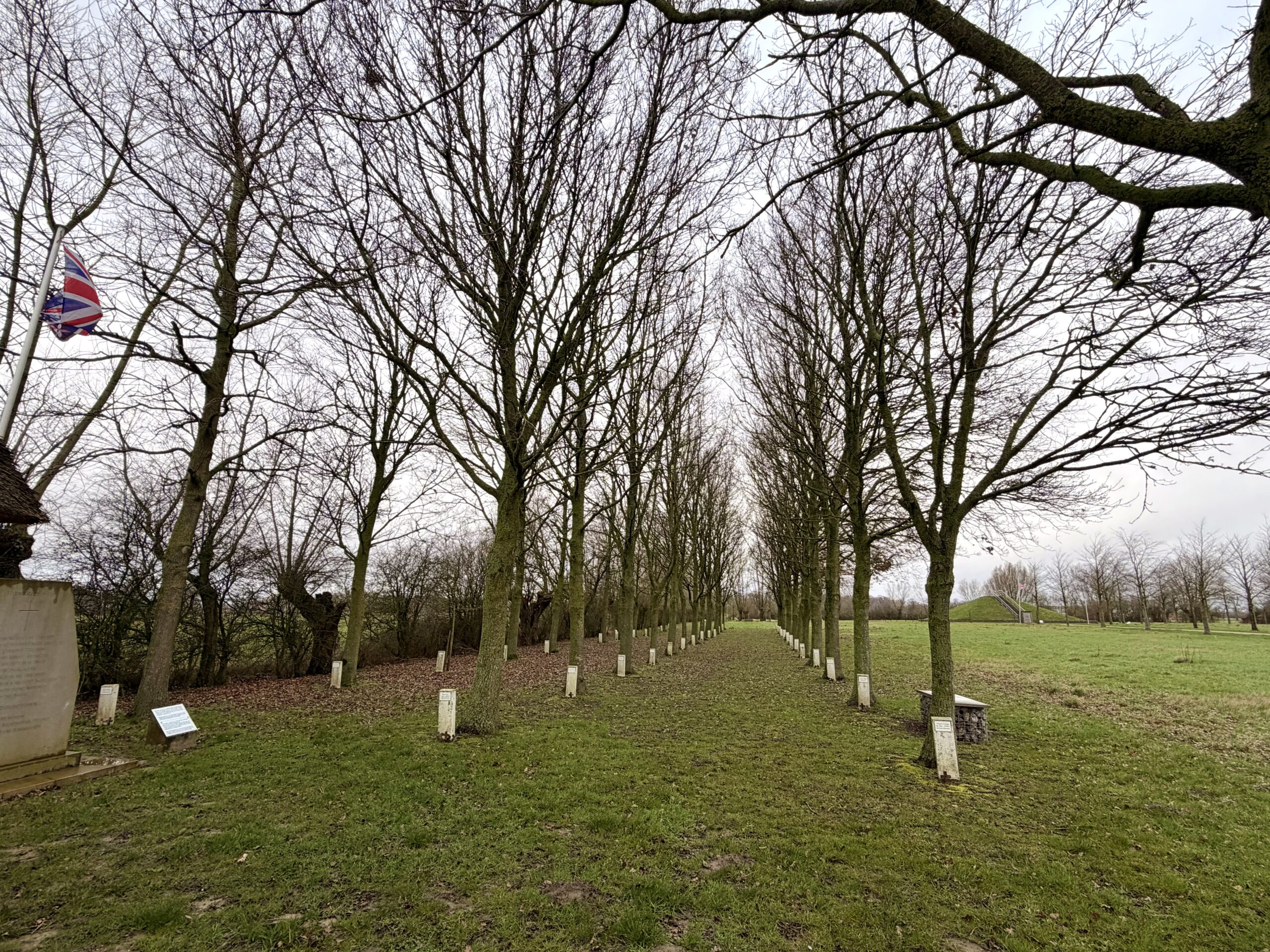
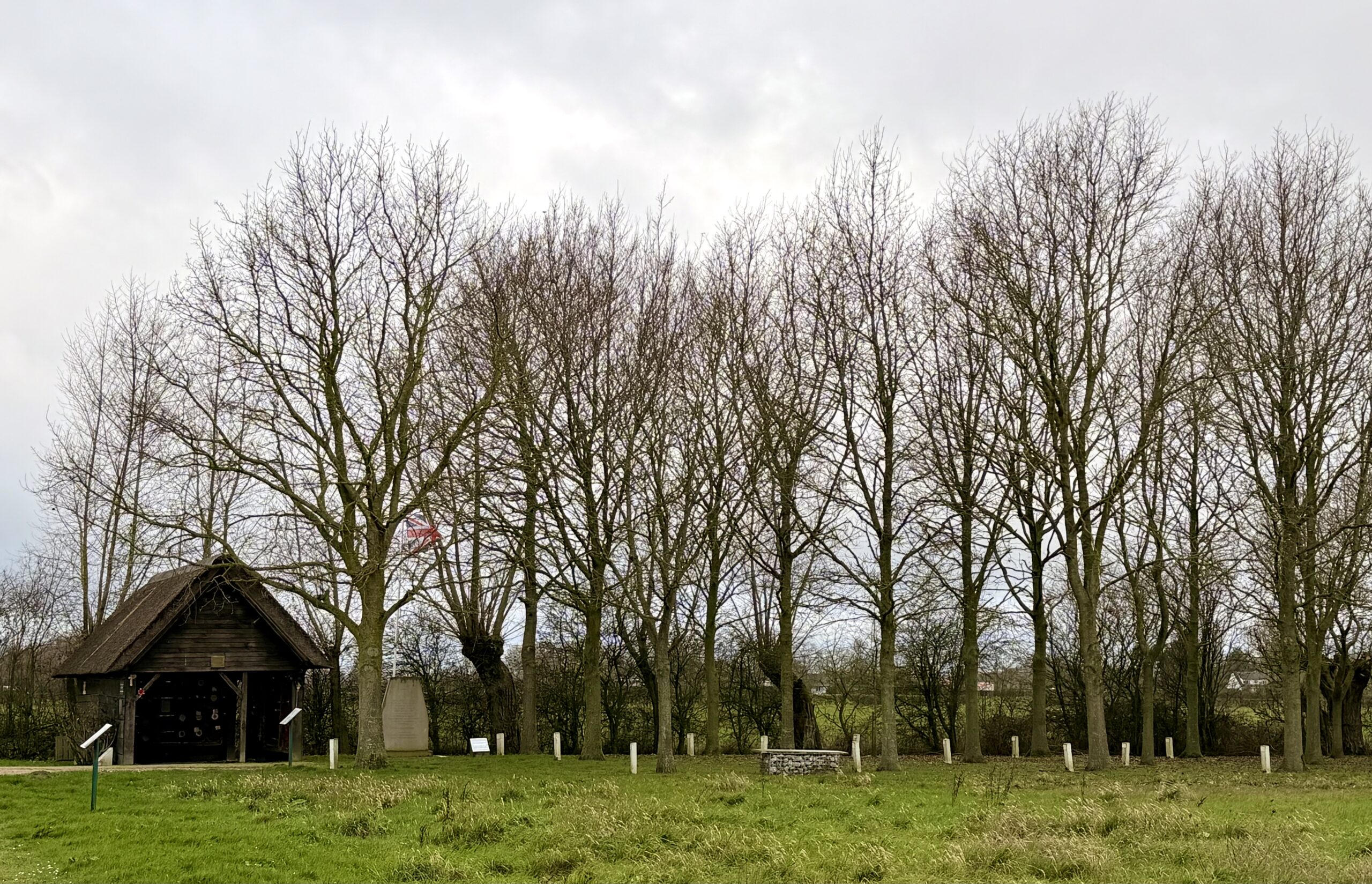
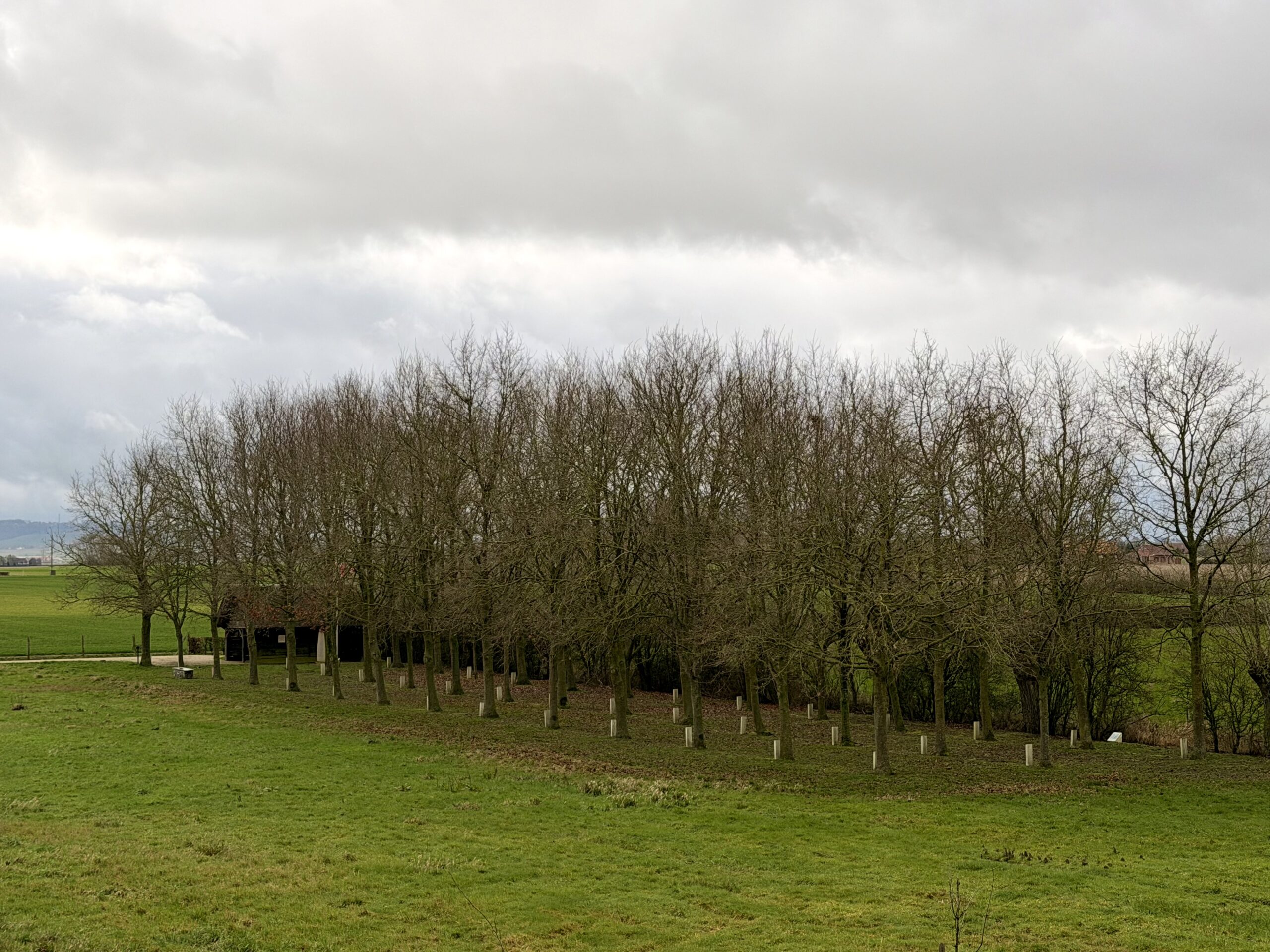
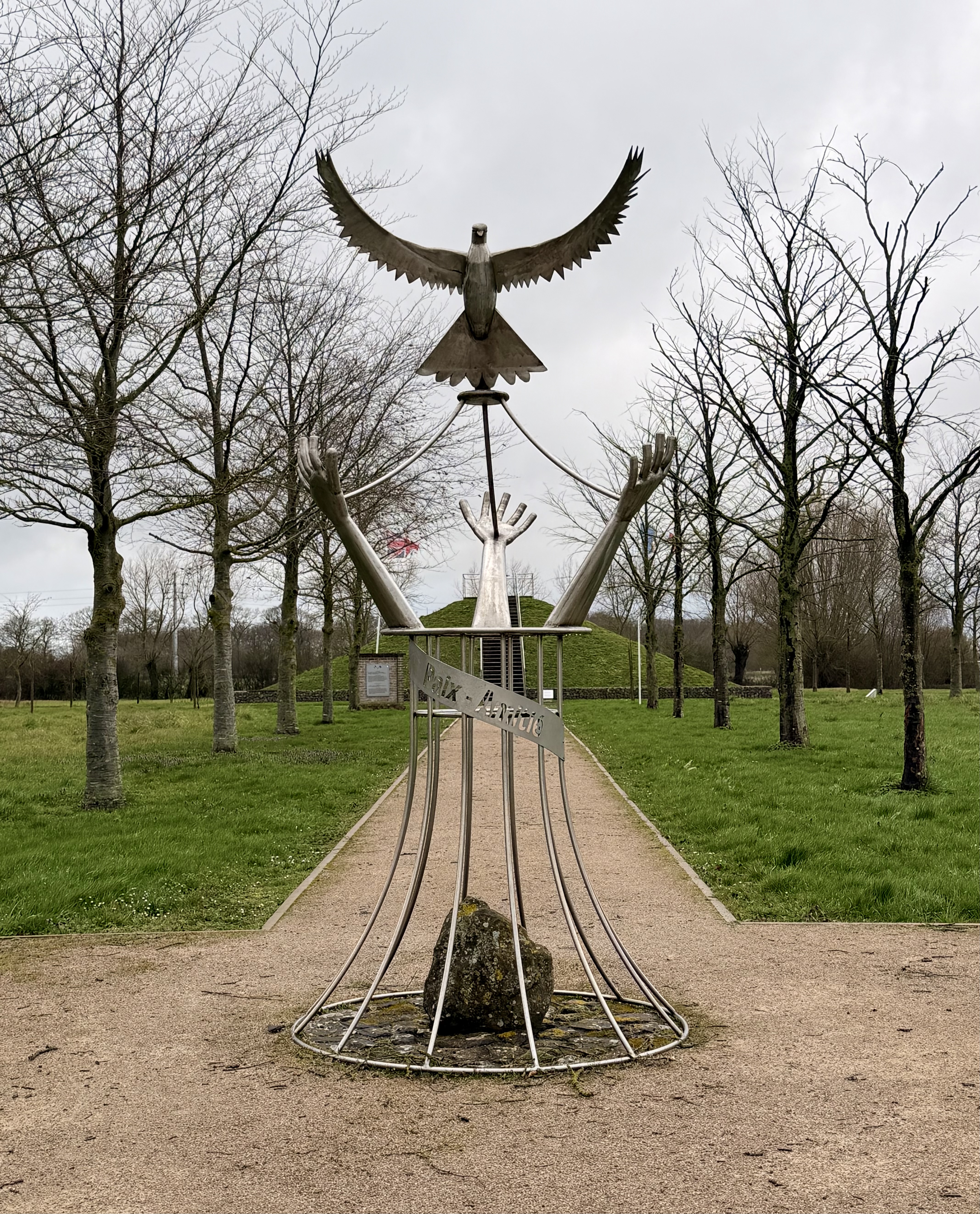
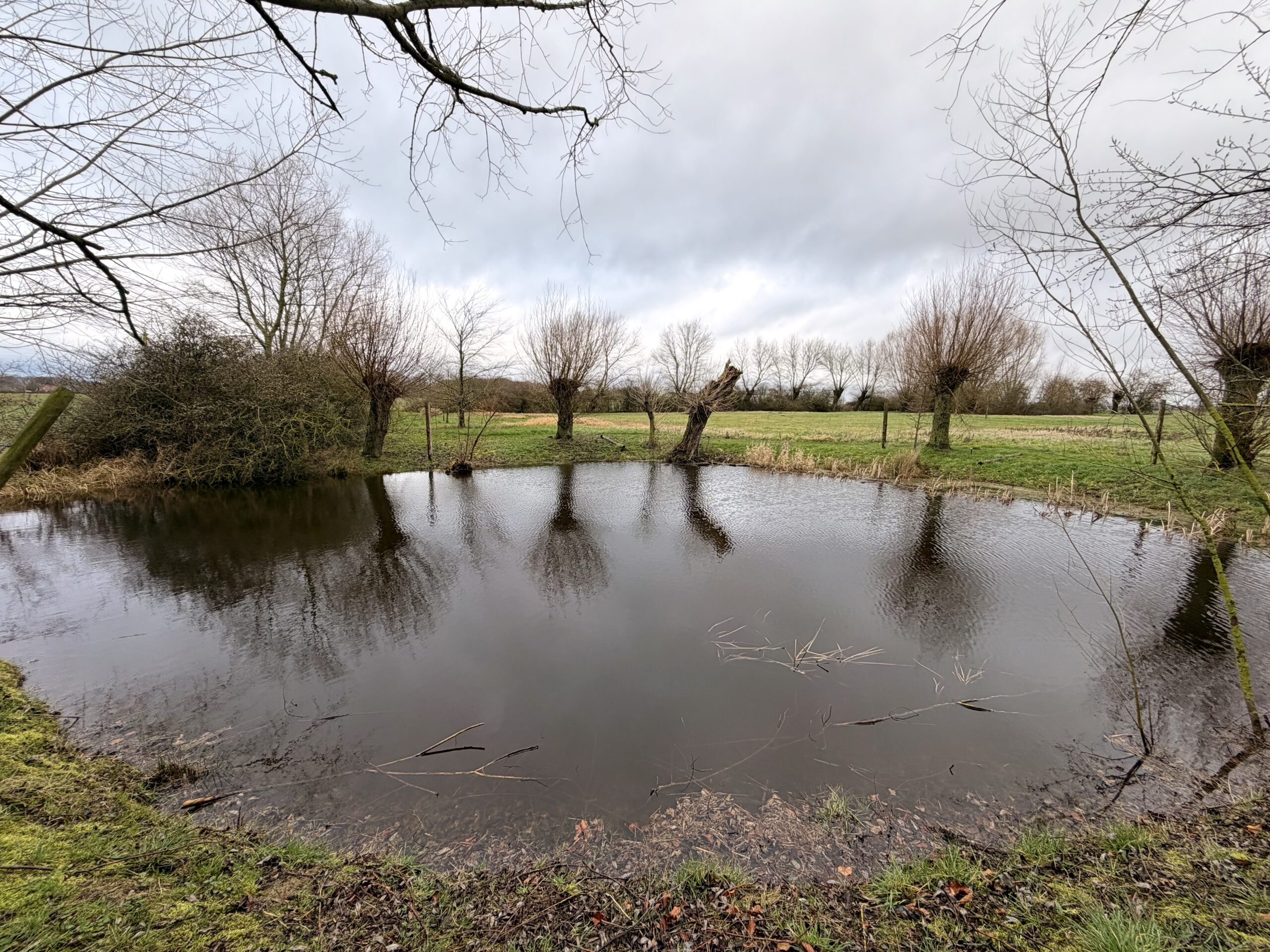
If you watch the video linked above – this is the pond where Captain Lynn Allen and Bert Evans were shot.
After that sobering stop, we continued on to Dunkirk (or Dunkerque) to see the site of Operation Dynamo. Later on in our trip, we made it to the other end of the evacuation, at Dover Castle in Dover, England. Dover Castle is run by English Heritage and they have some good information about Operation Dynamo on their website: https://www.english-heritage.org.uk/visit/places/dover-castle/history-and-stories/operation-dynamo-things-you-need-to-know/.
A highlight in Dunkirk is the Musée Dunkerque 1940 (http://www.dynamo-dunkerque.com). It’s a very detailed museum focusing purely on Operation Dynamo. If you are not familiar with this operation, it was the largest military evacuation in history. The Allied troops were surrounded on all 3 sides and pushed toward the coast by the Germans. In 9 days (26 May through 04 June 1940), an effort coordinated by the Royal Navy evacuated over 338,000 Allied troops (Belgian, British, and French) to England (across the Chanel to Dover).
Germany invaded Poland on 01 September 1939 and a “Phoney War” followed (so called because the Allies declared war then didn’t do anything to stop the Germans). Then in early May 1940, the German forces started moving – through Holland and Belgium into northern France and also through Luxembourg, into France, and up to the coast. They moved rapidly and ultimately trapped the Allied forces in a pocket that got smaller and smaller. Once the Germans took Boulogne on 25 May and Calais on 26 May, Dunkirk was the only viable port for the trapped troops to escape.
Operation Dynamic was coordinated by Vice Admiral Bertram Ramsay (Royal Navy) and a small team out of Dover Castle. More on Dover Castle later though. On 19 May, Ramsay and his team realized rescue by sea would be needed and they started planning. Just a week later, on 26 May, they had to activate their plan. They estimated being able to rescue 30-45,000 men and ultimately evacuated over 300,000.
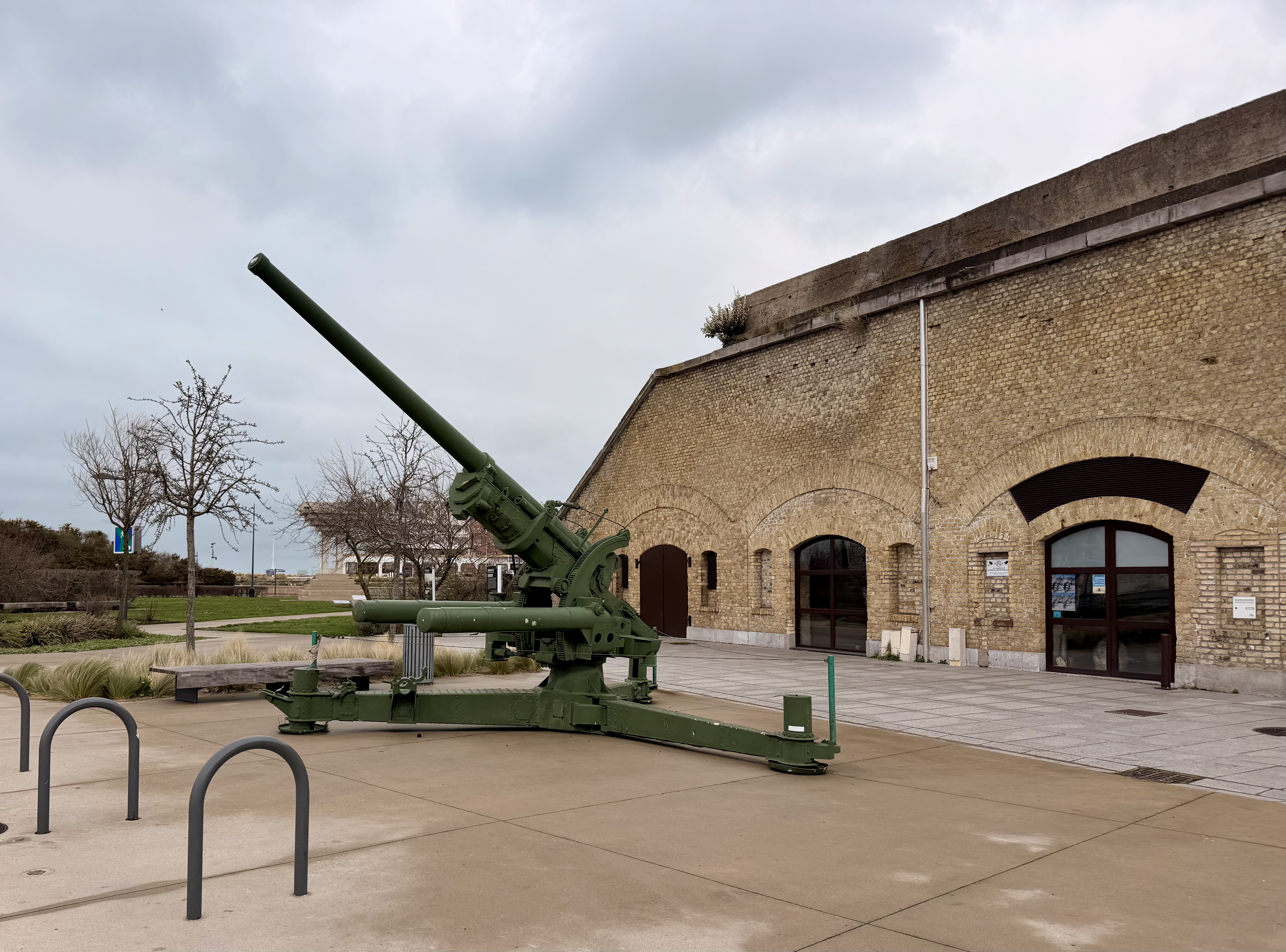
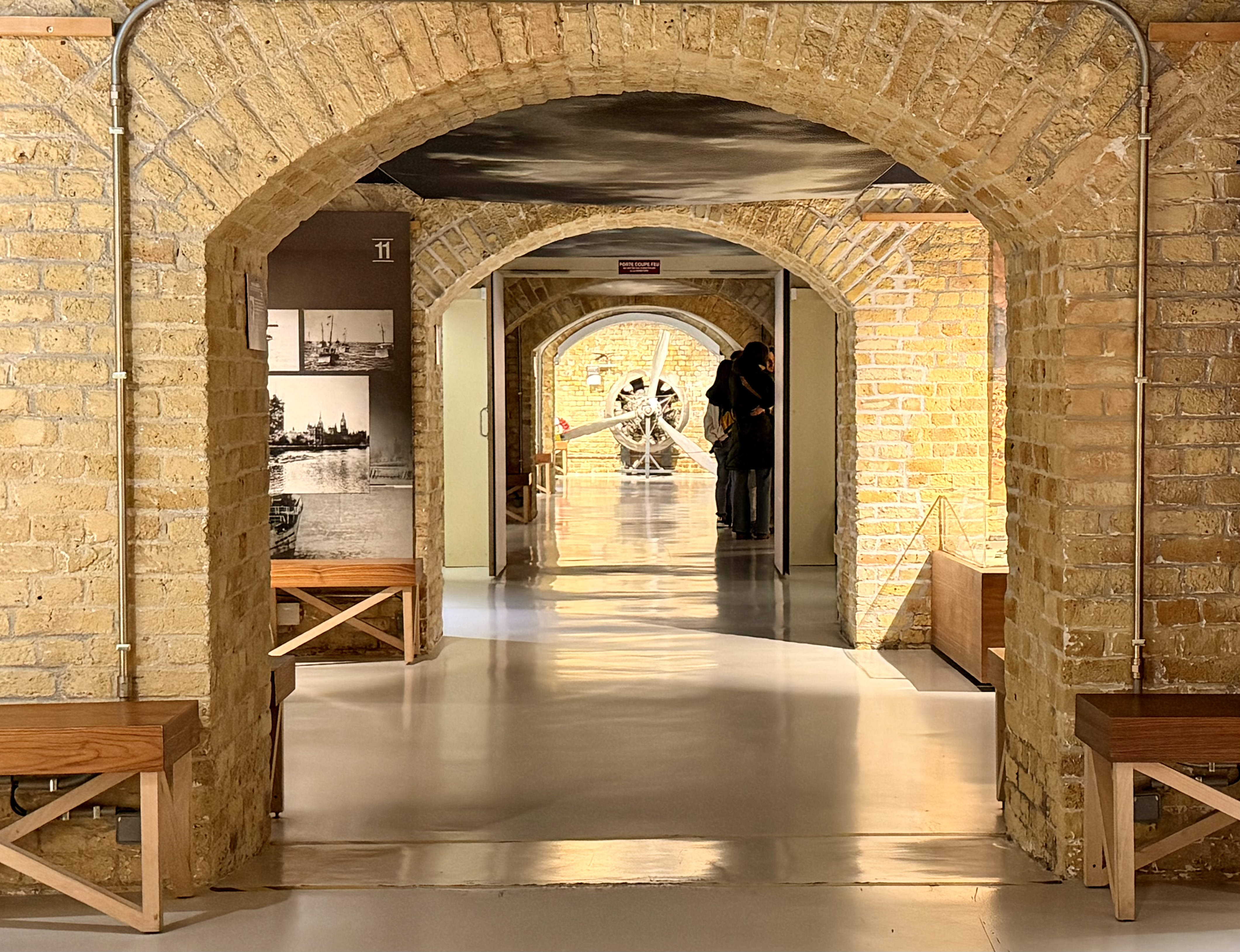
Somewhere between 1100 and 1500 British, French, and Dutch civilian vessels took part in the evacuation. Nicknamed the “Little Ships” by the BBC, they were often navigated by civilians and were subject to bombings and machine gun attacks, as well as the sea itself, and suffered heavy losses.
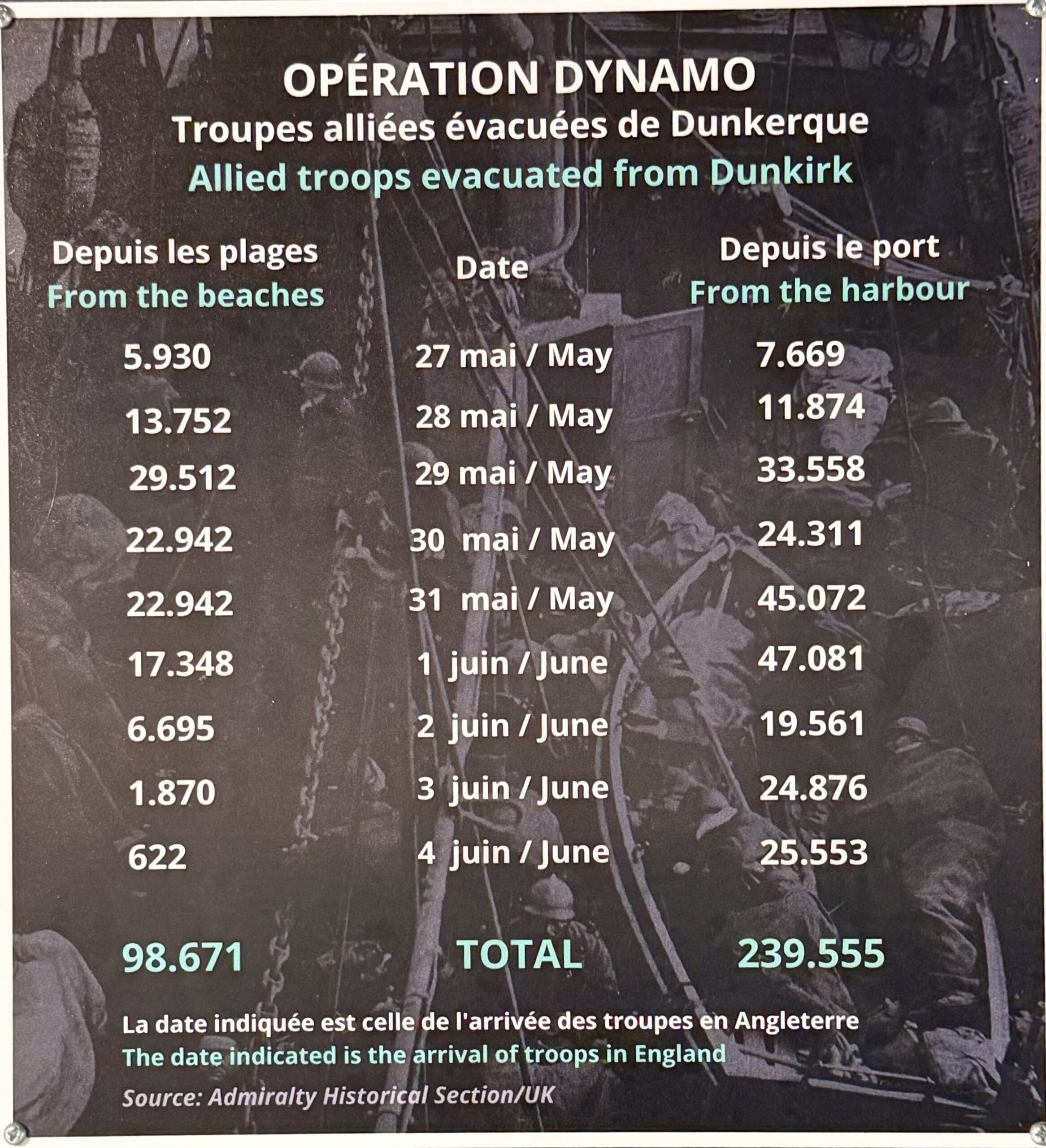
You can see in this photo just how many troops were evacuated each day (on the left are those evacuated from the beach itself and the right-hand column shows those evacuated from the port). This evacuation not only saved so many lives in the evacuation itself, but it also boosted morale in Brittain in the face of German attacks. The phrase “Dunkirk spirit” is still used today to describe courage and solidarity in adversity.
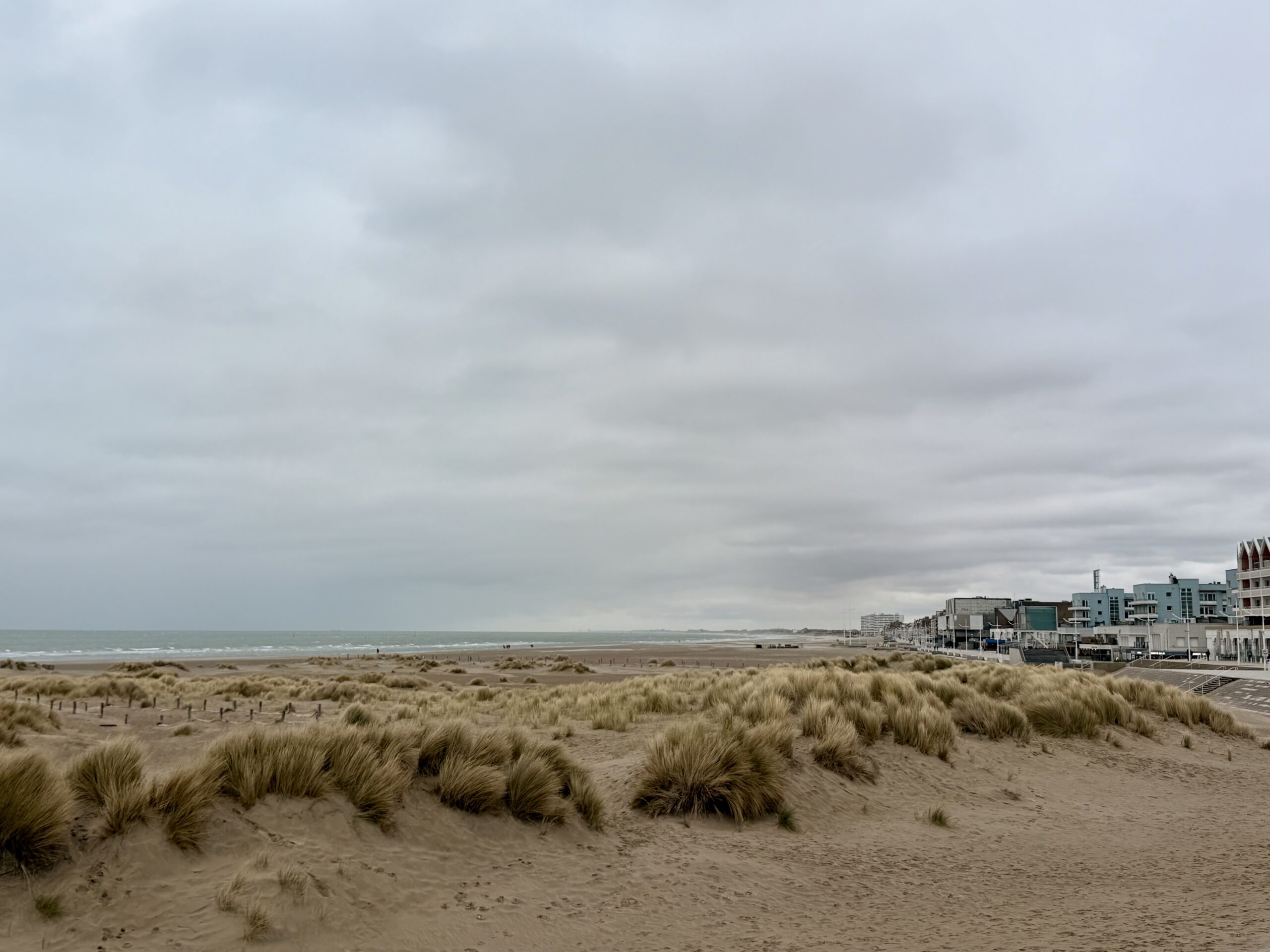
The second picture is the actual beach. It’s so empty and peaceful today …. pretty wild to picture what it looked like in May/June 1940 (similar to trying to imagine D-Day while standing on Omaha Beach in Normandy).
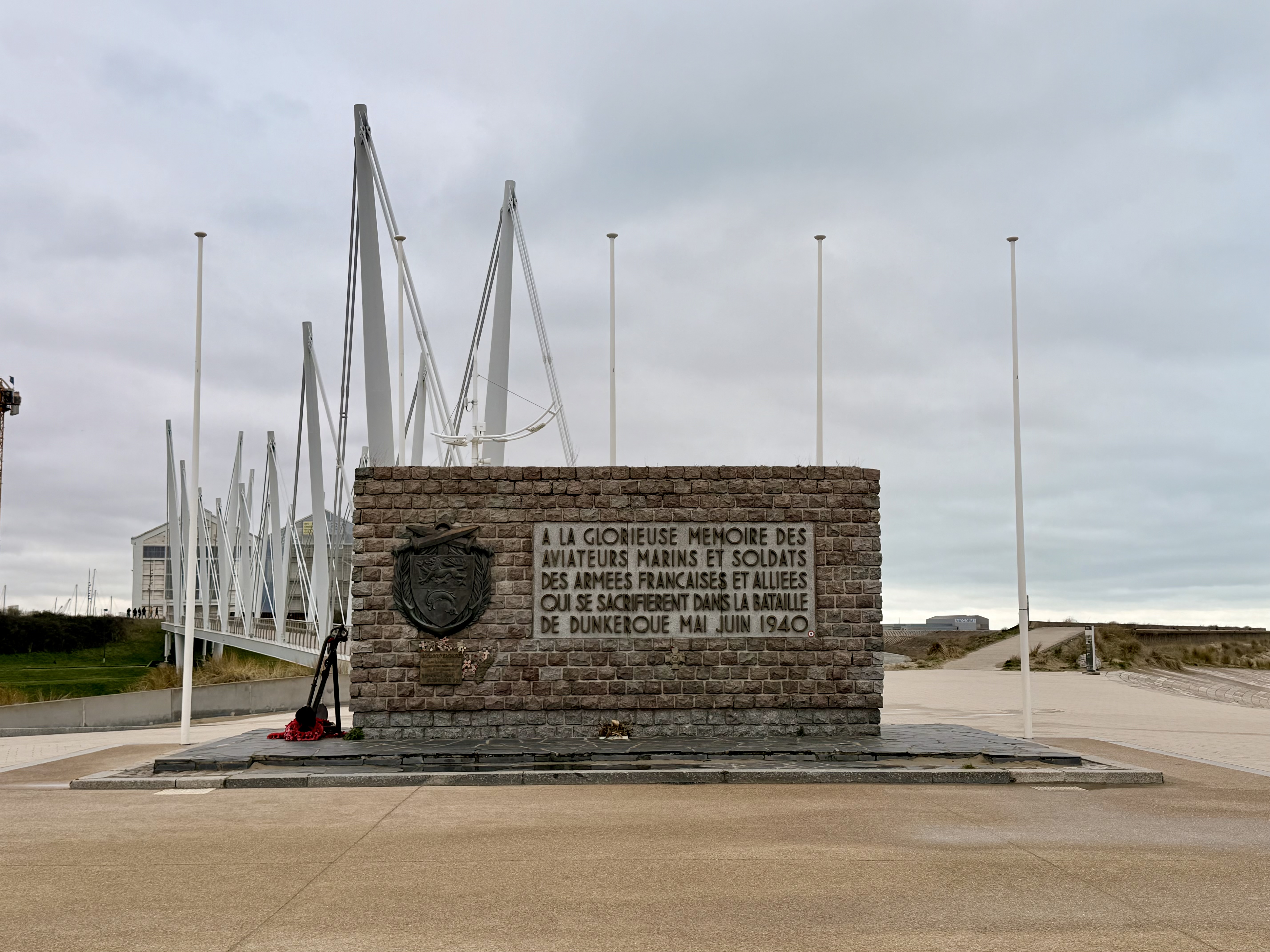
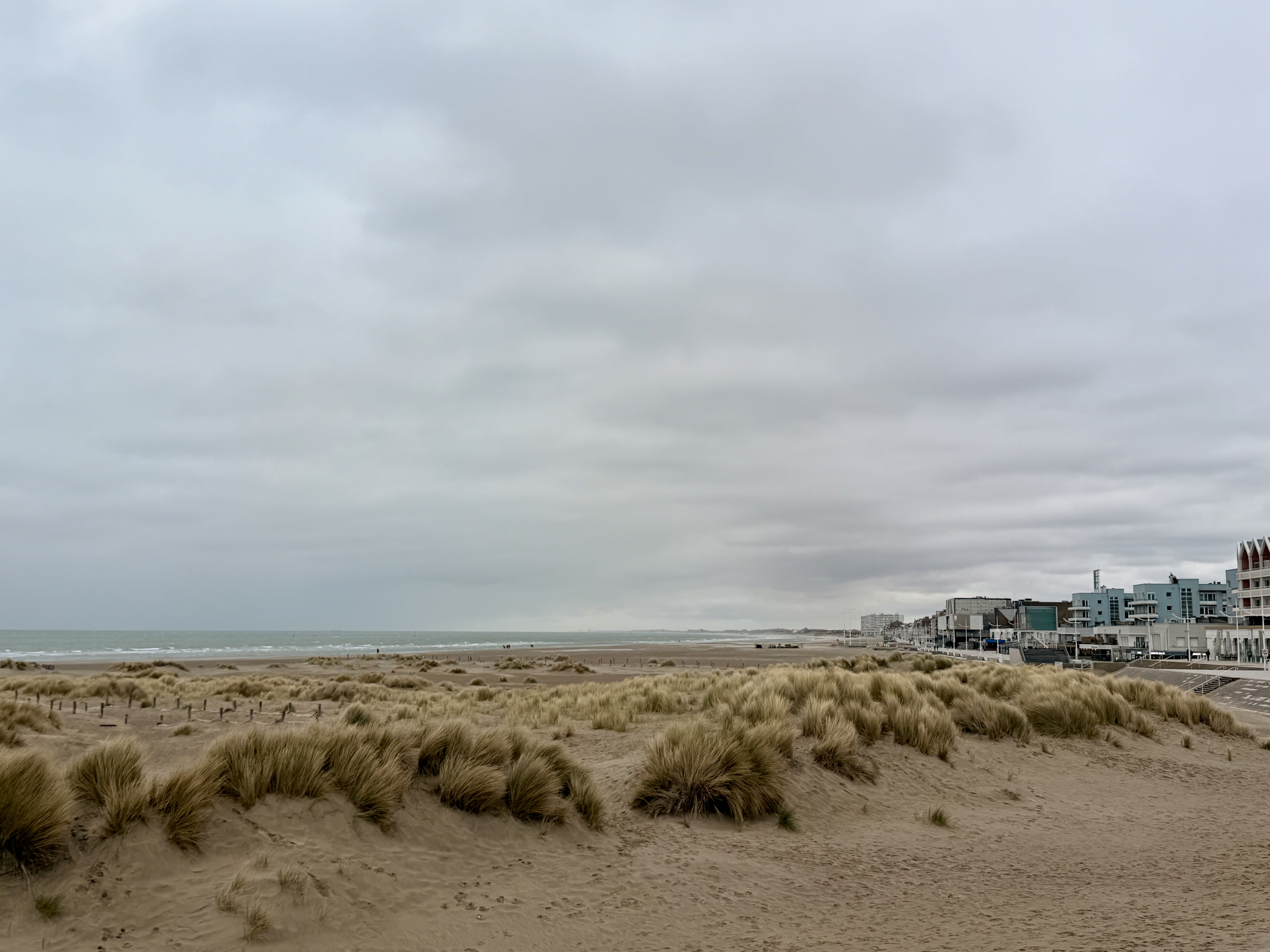
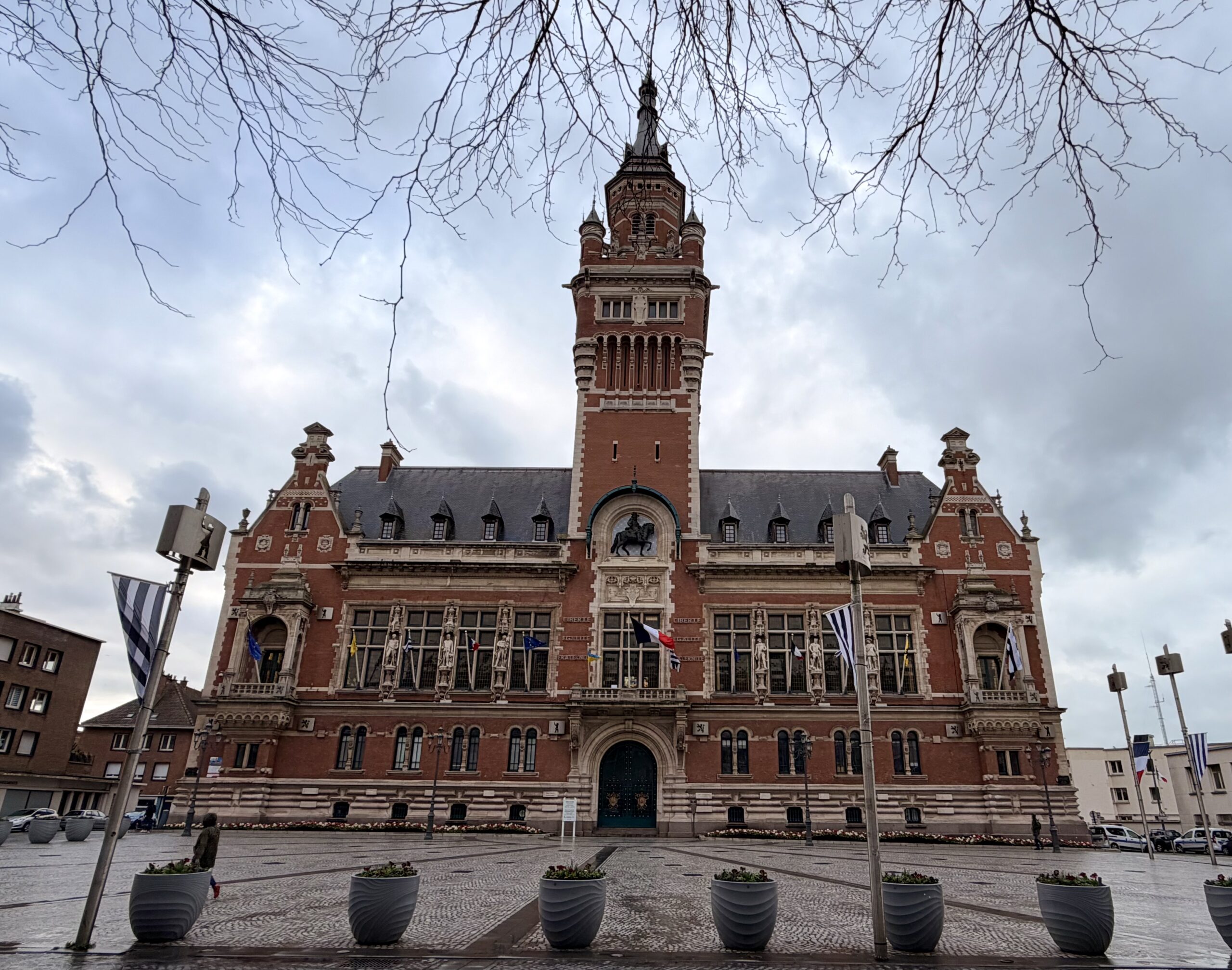
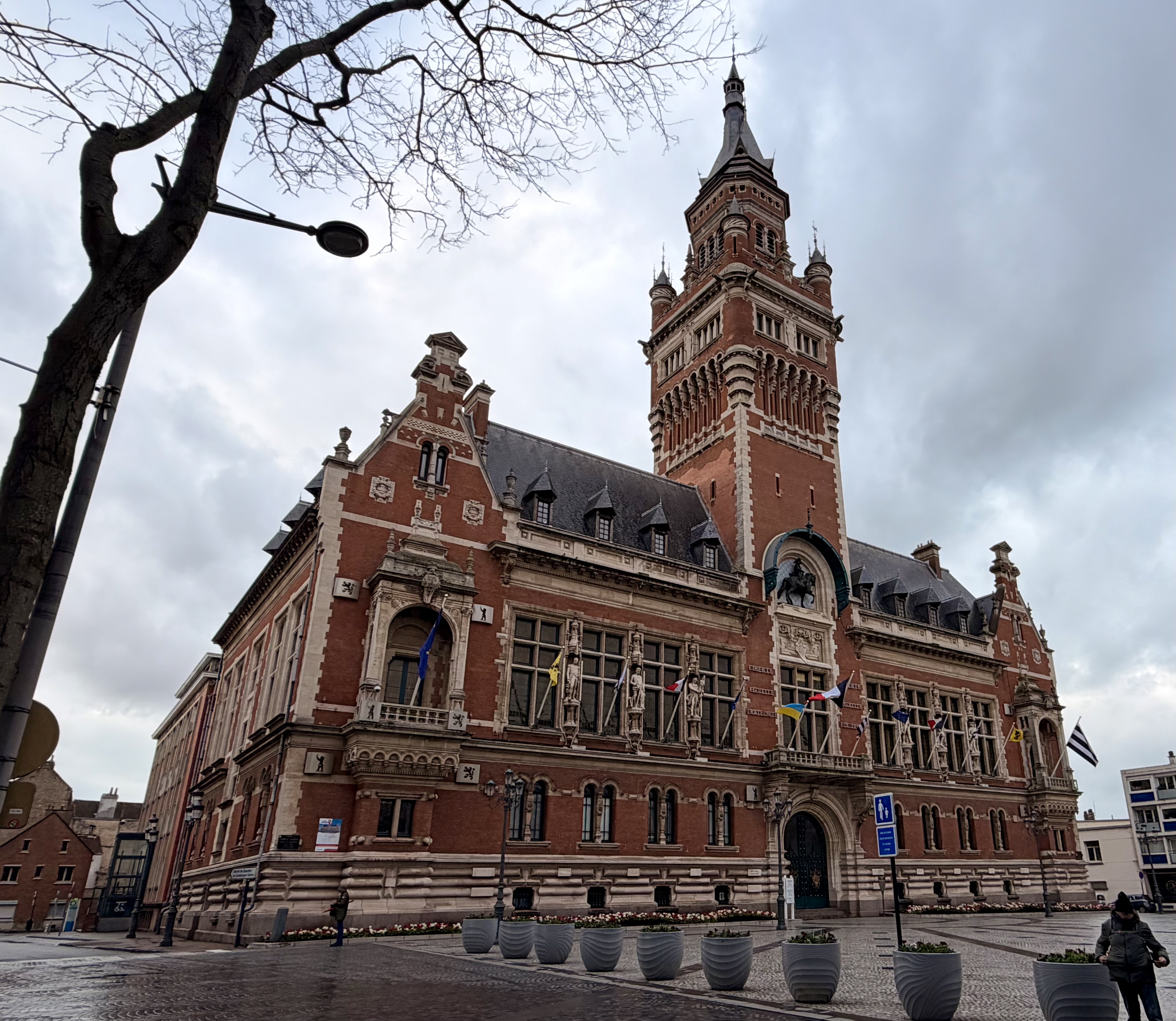
As we walked from the museum and beach back into town, we passed the Mairie (City Hall) of Dunkirk – it’s a beautiful building!
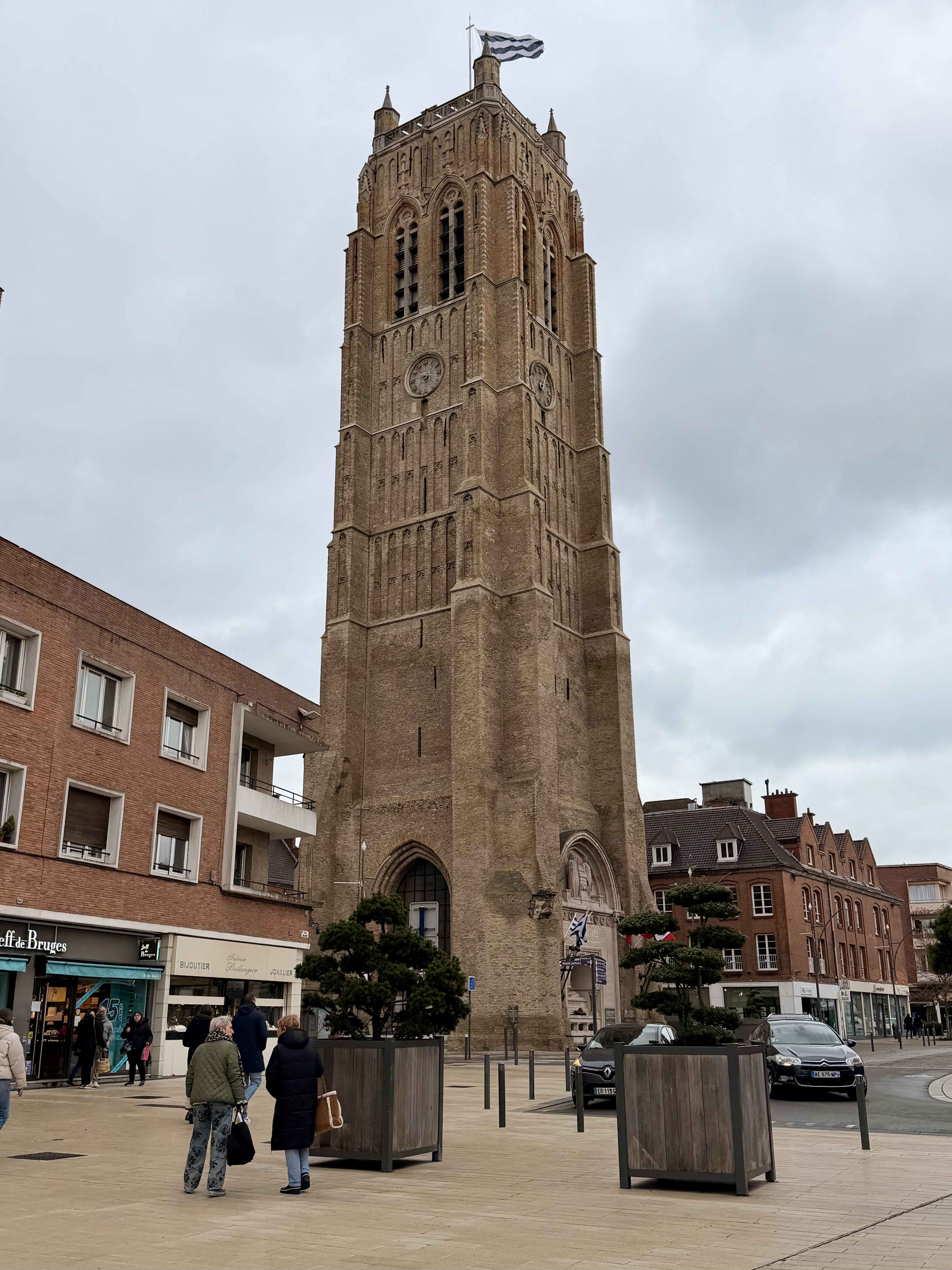
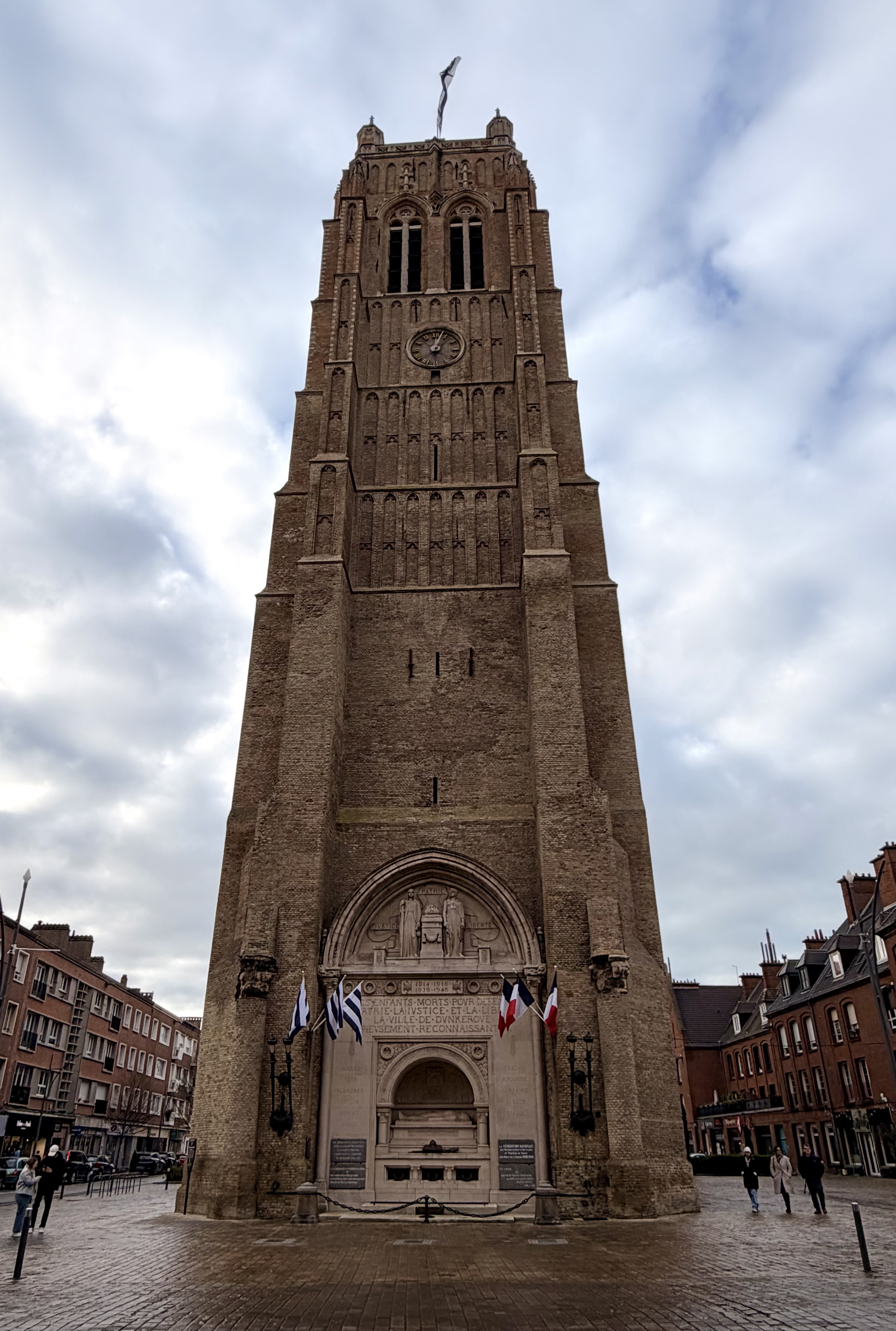
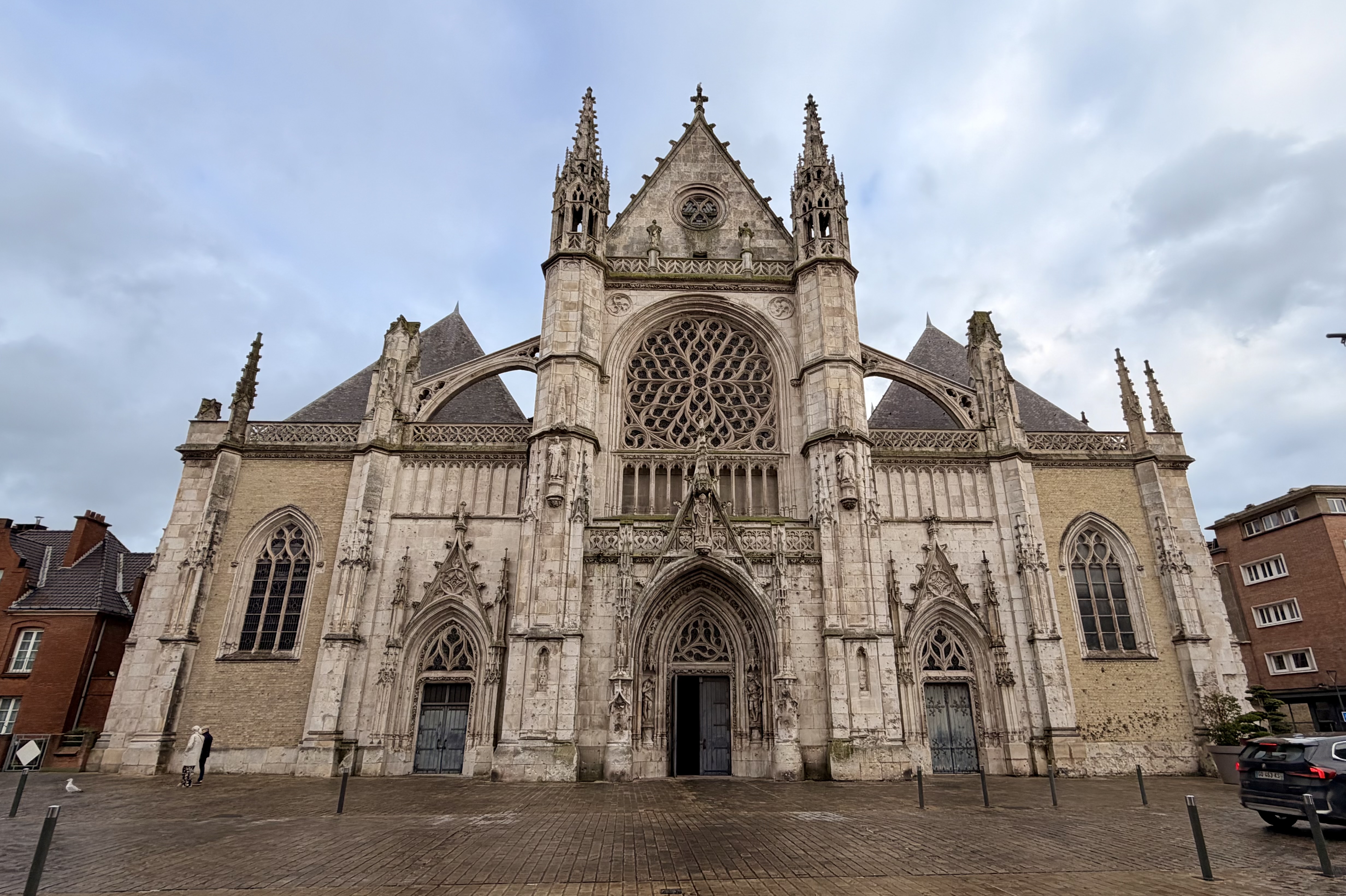
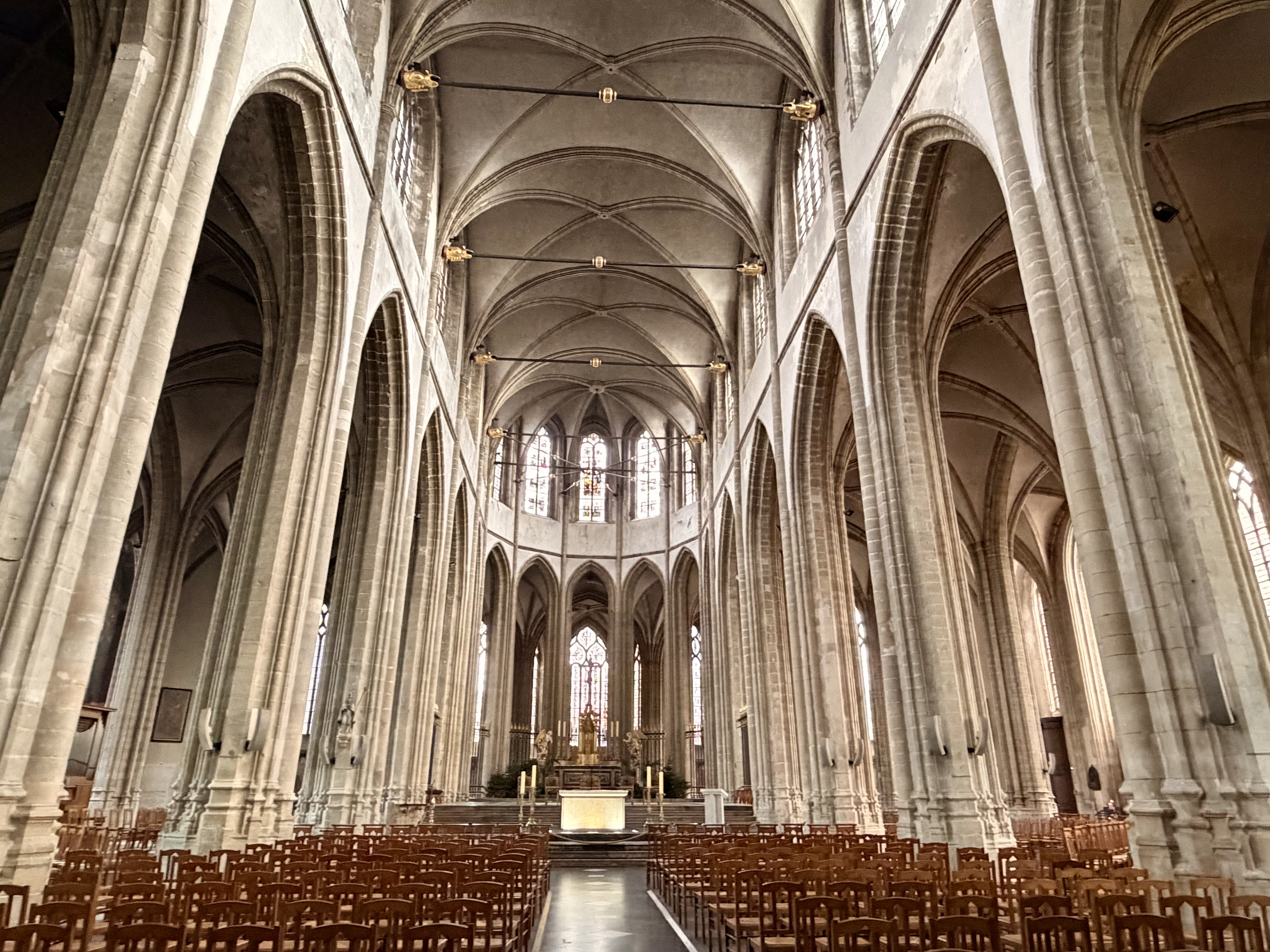
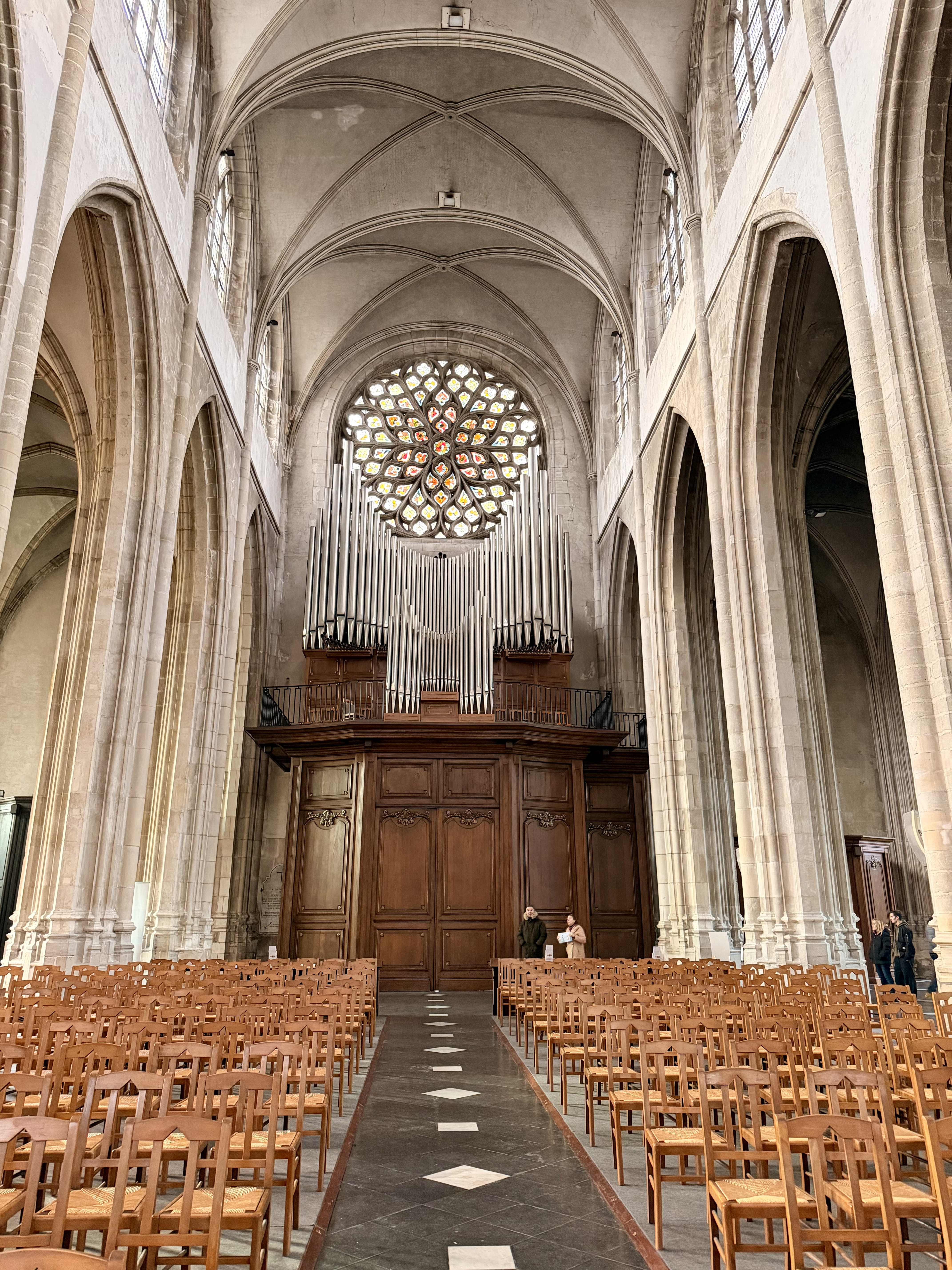
In the city center there is a beautiful church, the Church of Saint Eloi. It was built in the 16th century (on the site of a 15th century church was burned down by invading troops – the belfry was all that remained). The facade was replaced in the late 19th century but the church was heavily damaged in WW1. It was restored only to be hit by incendiary bombs in May/June 1940. Only the walls survived. It was reopened for worship in 1977 and restoration was completed in 1985.
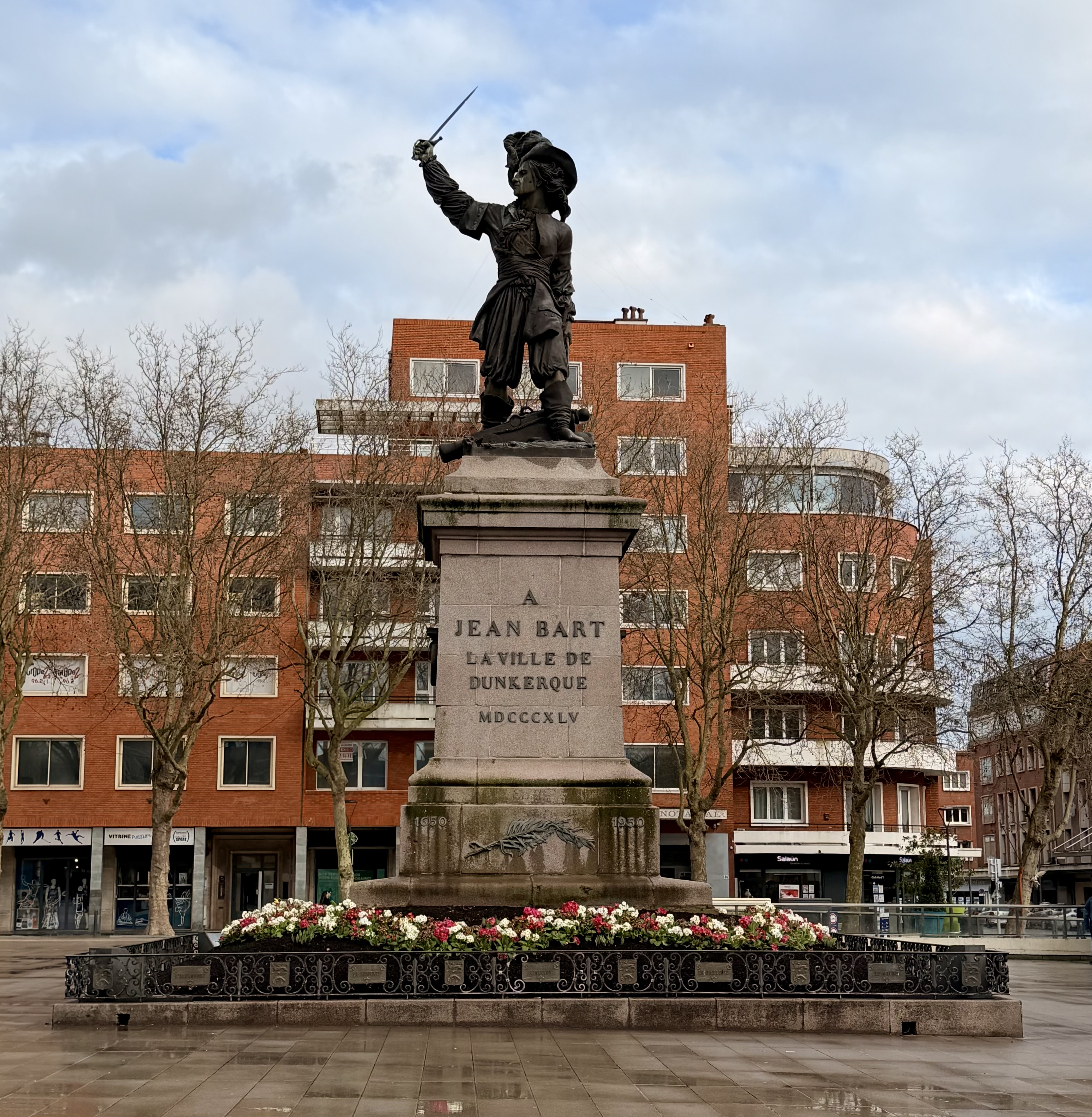
Nearby is a statue of Jean Bart (in Place Jean Bart). He was a local born in 1650 and rose from humble beginnings to become a French naval commander and privateer under King Louis XIV. He ultimately earned the rank of admiral. (https://wanderlog.com/place/details/1661030/statue-of-jean-bart)
Back in Lille ….
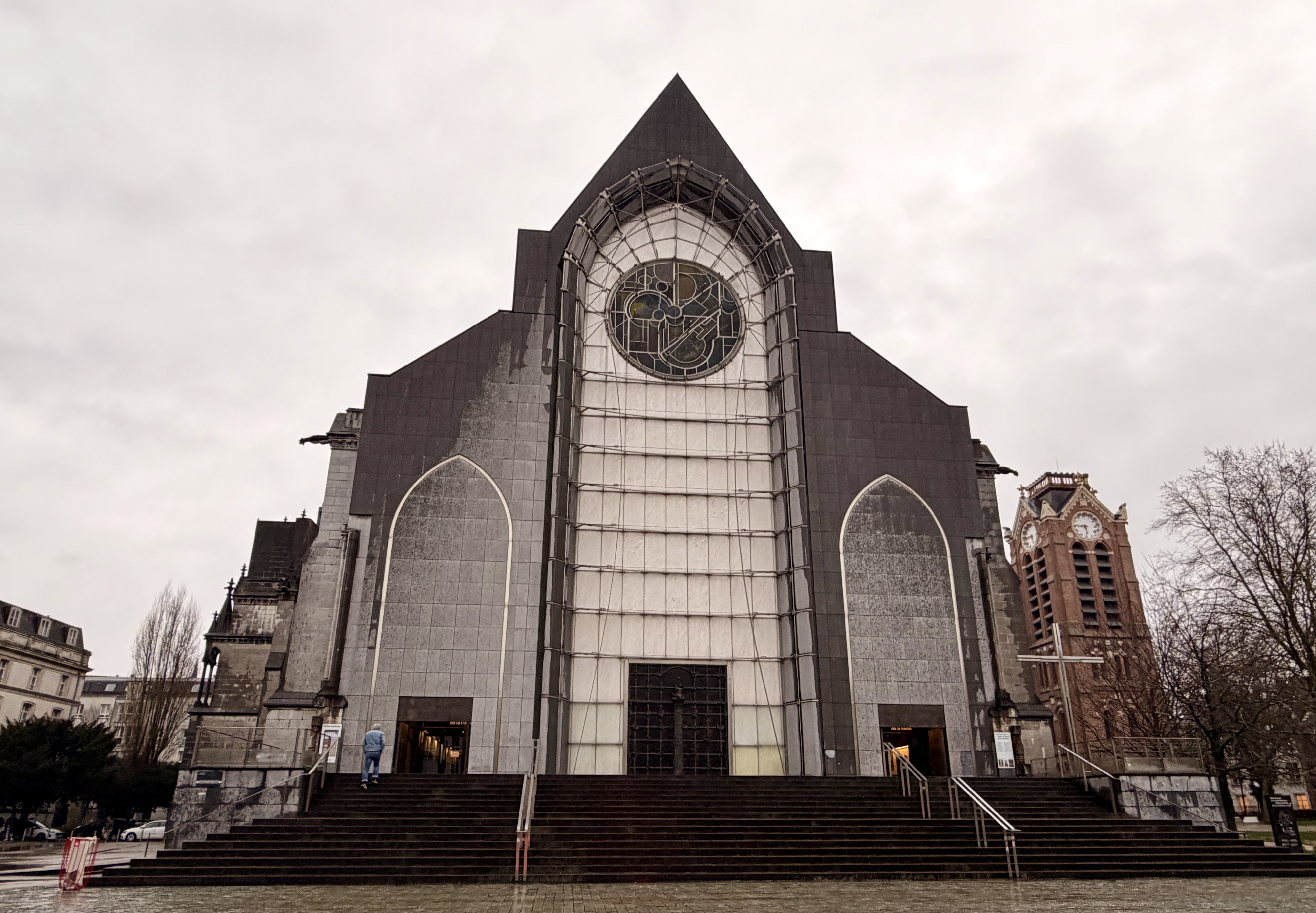
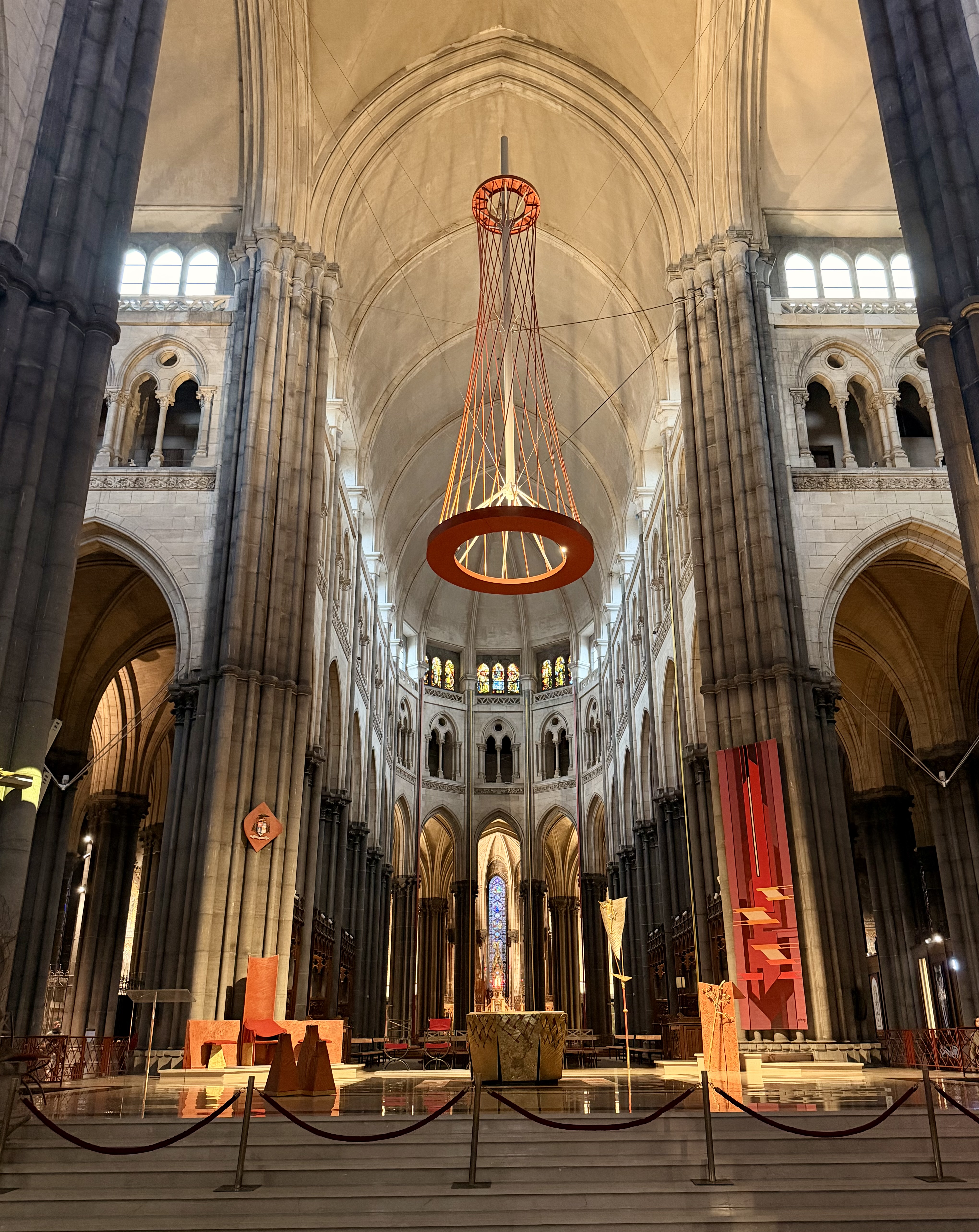
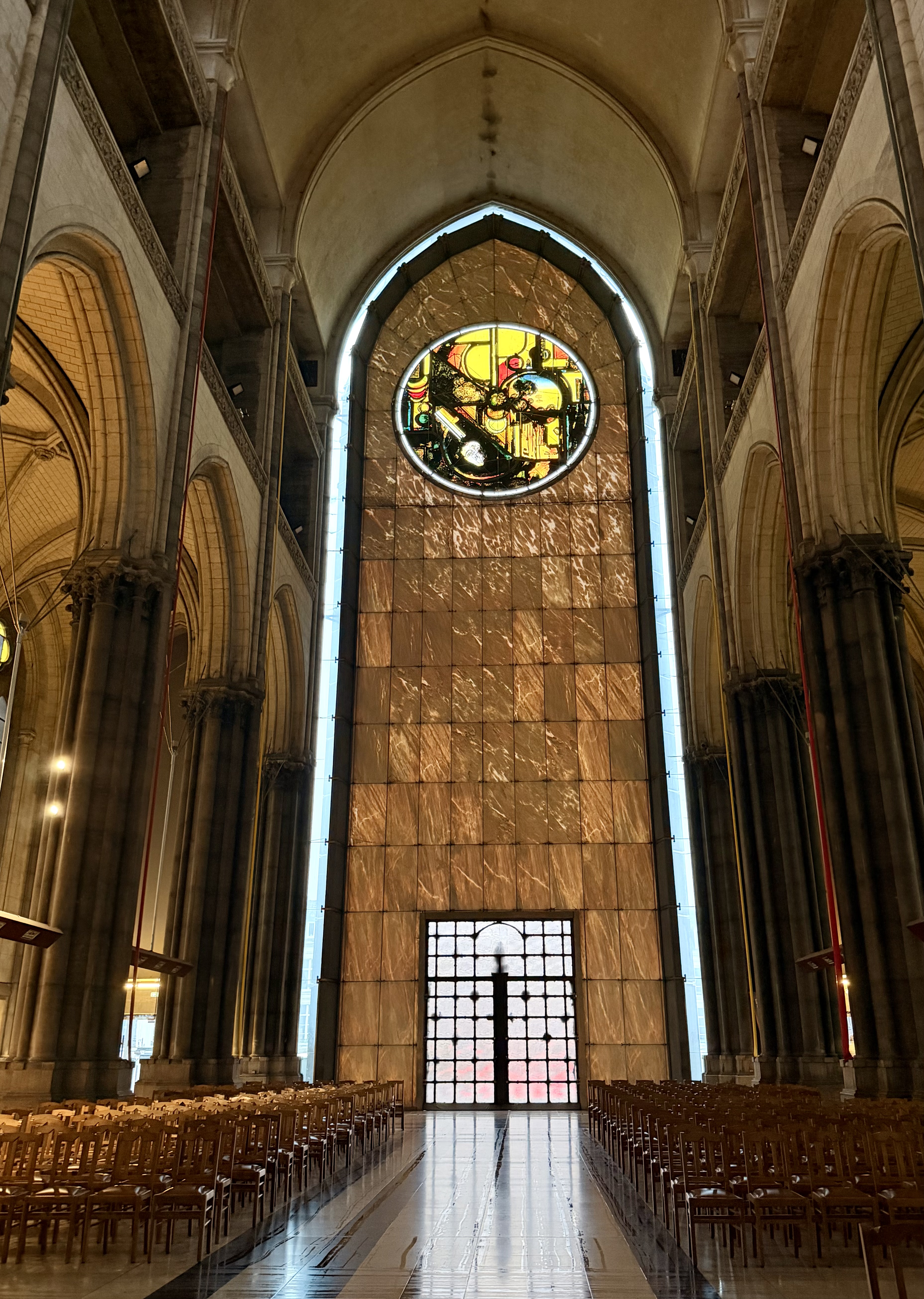
We stopped by this church our first night in town – the Notre-Dame Cathedral de la Treille. It looks pretty modern … that’s because the first stone was laid in 1854 but it wasn’t officially completed until 1999! (https://en.lilletourism.com/explore/lille-and-the-surrounding-area/museums-and-tourist-attractions/notre-dame-de-la-treille-cathedral/) It was a pretty unique church and definitely worth popping into if you’re in Lille.
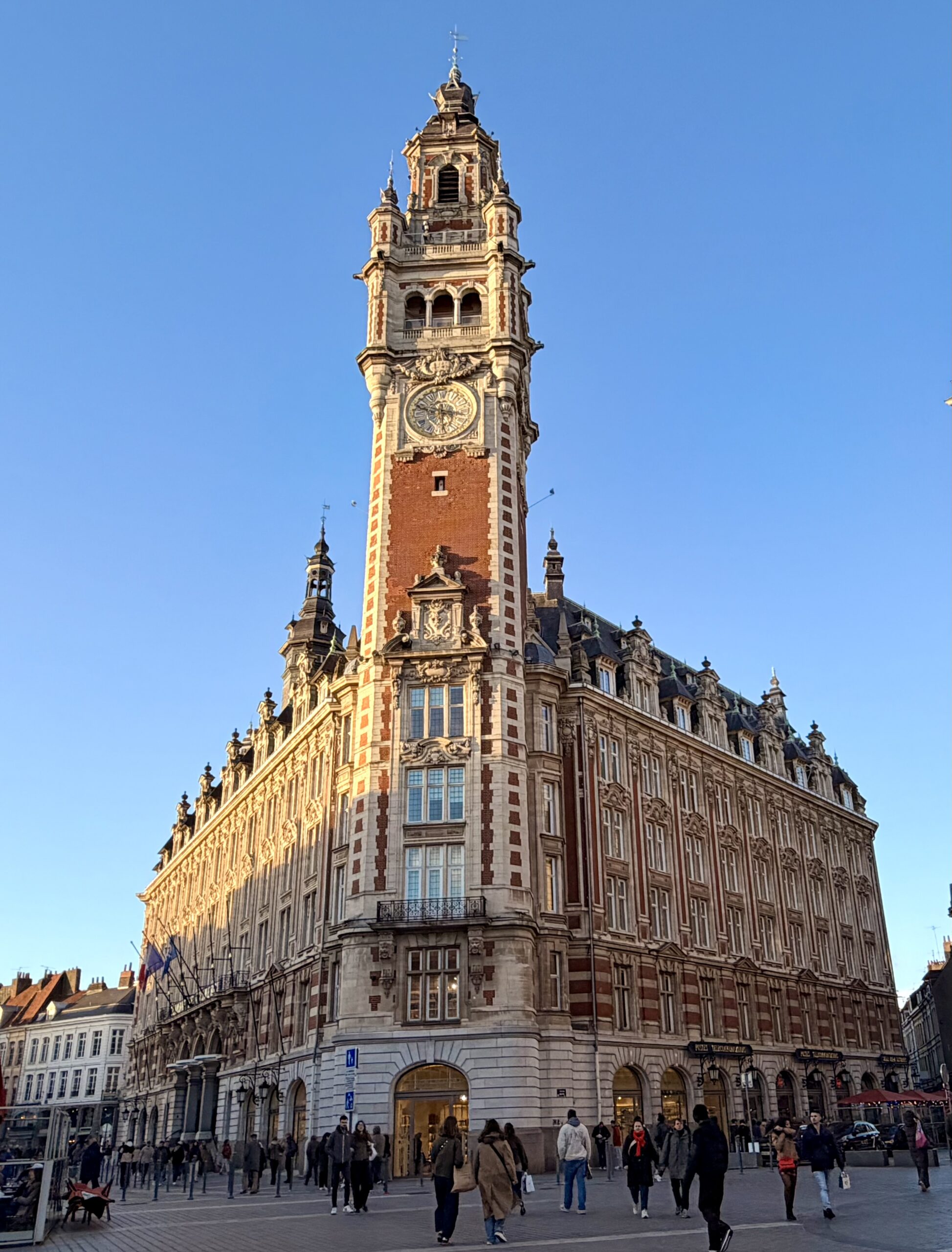
Our apartment was right in the heart of Lille and the architecture in the old town is really neat – with a heavy Flemish influence. The red brick is not what you typically see around France.
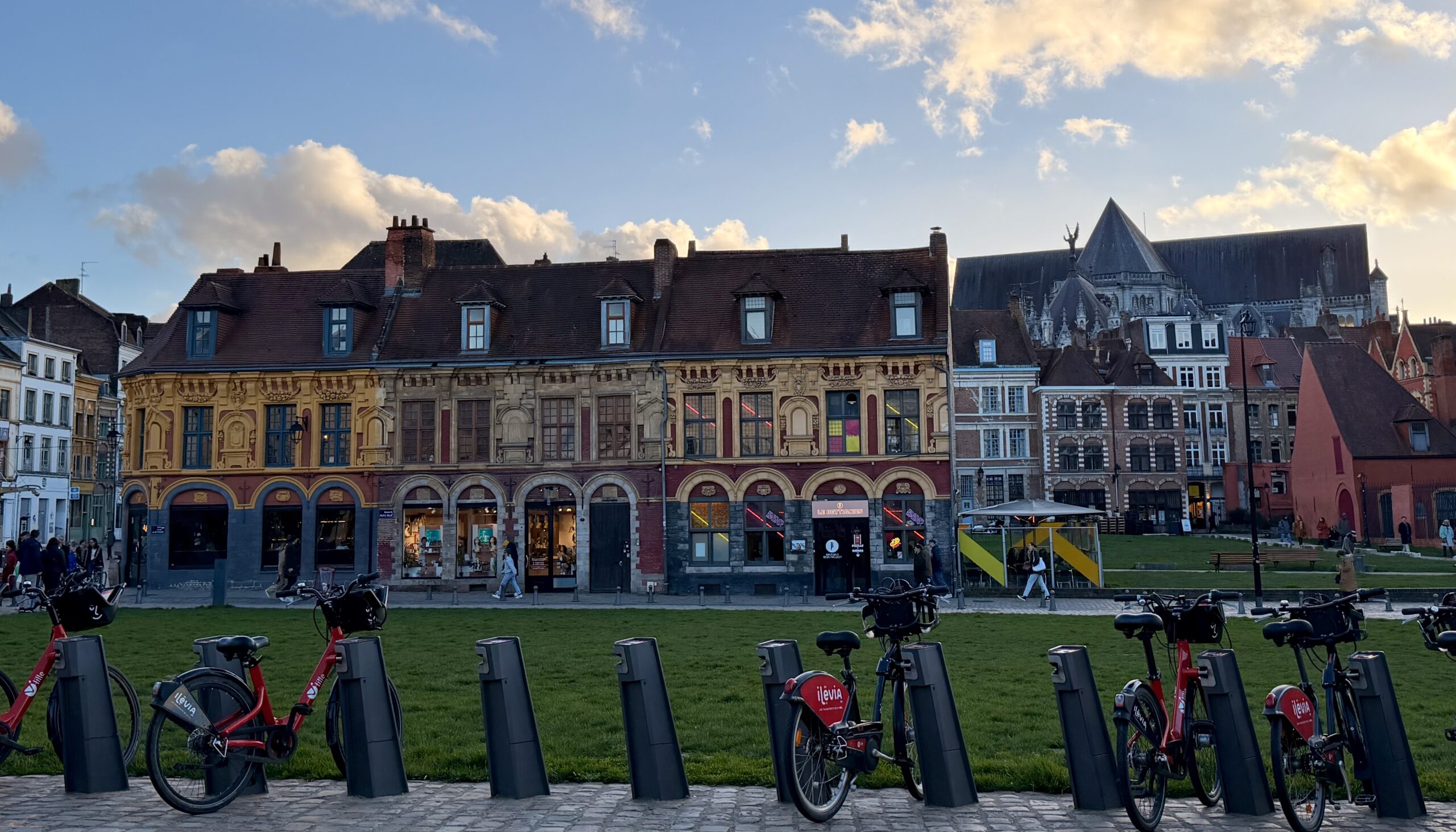
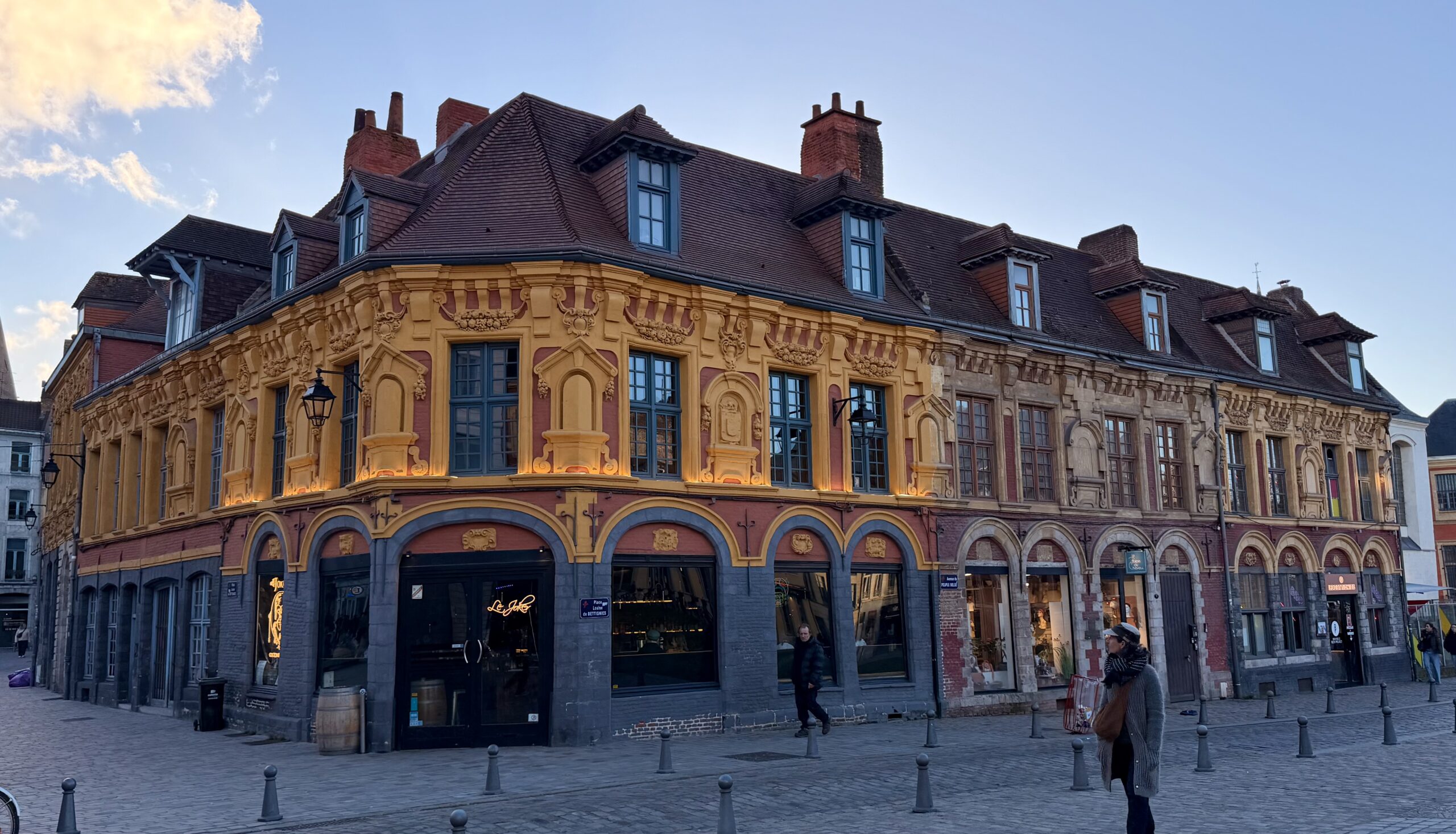
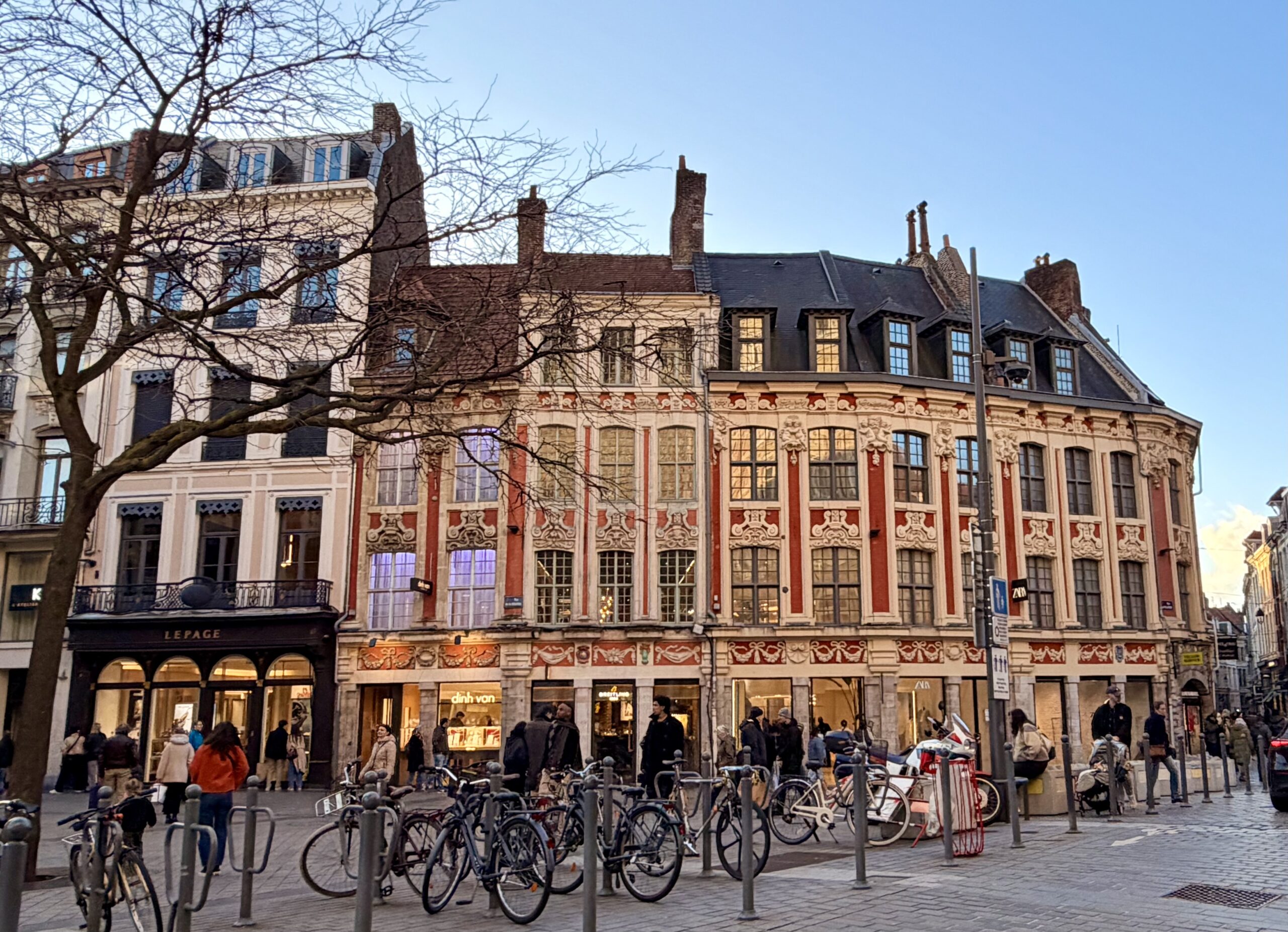
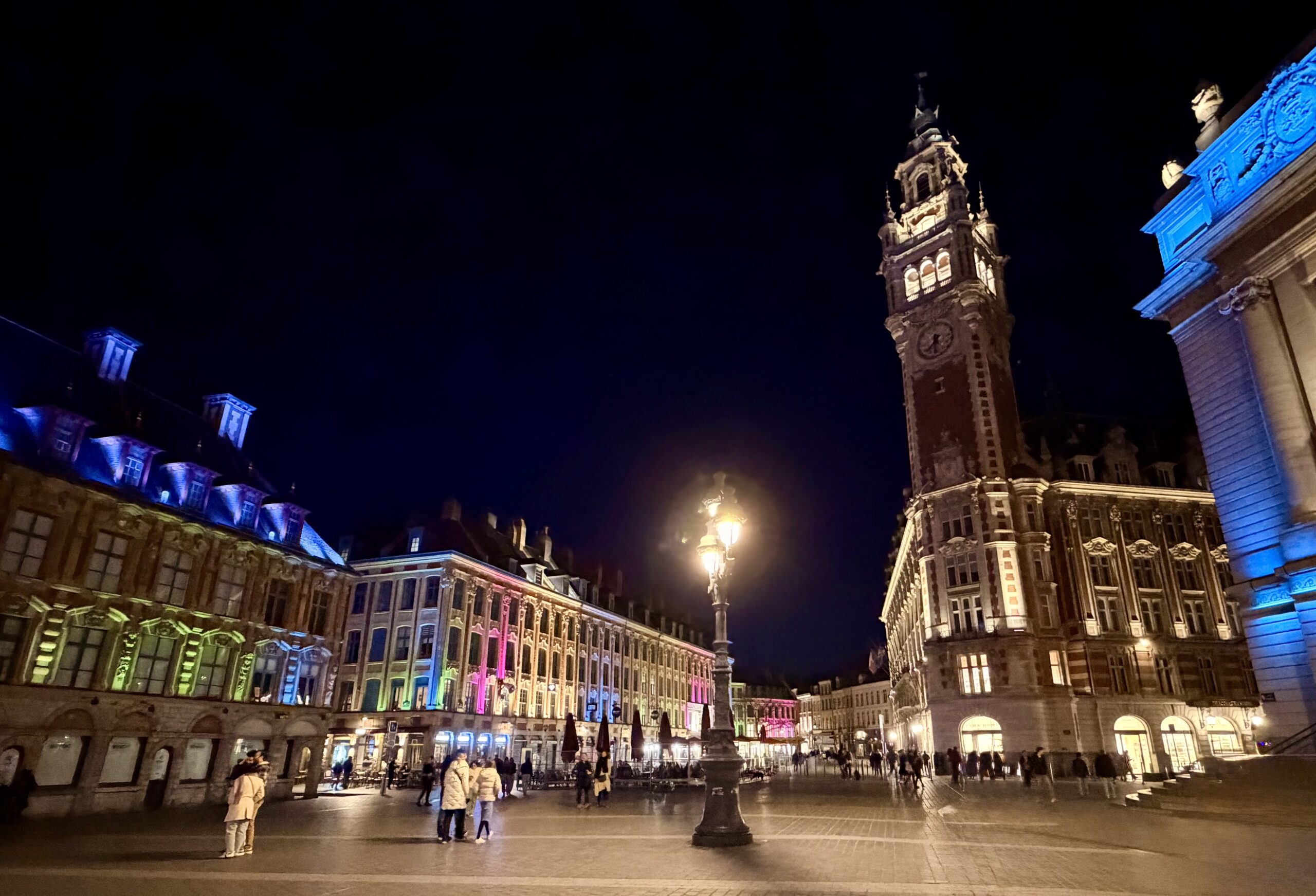
These building are all in the Grande Place in Lille.
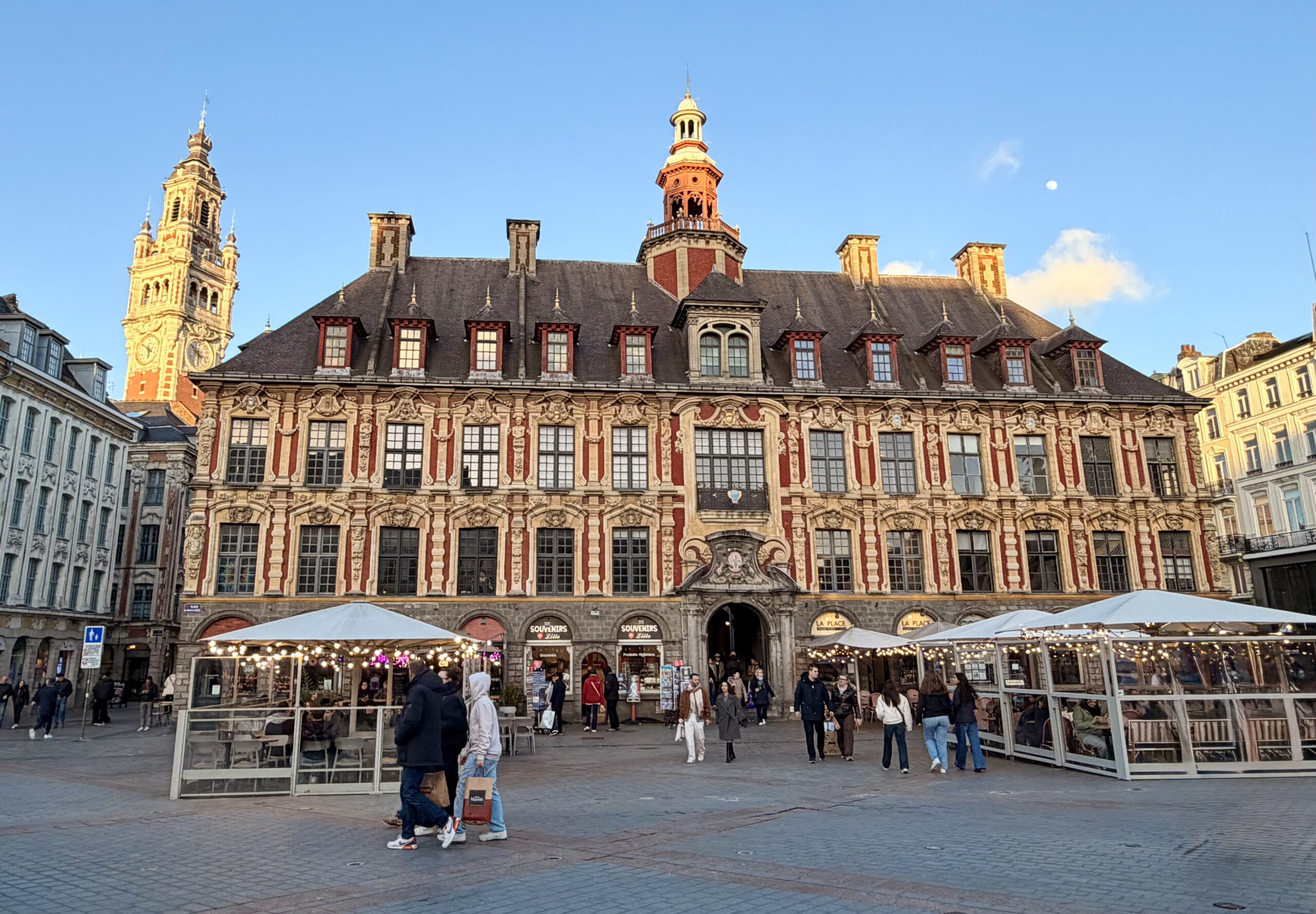
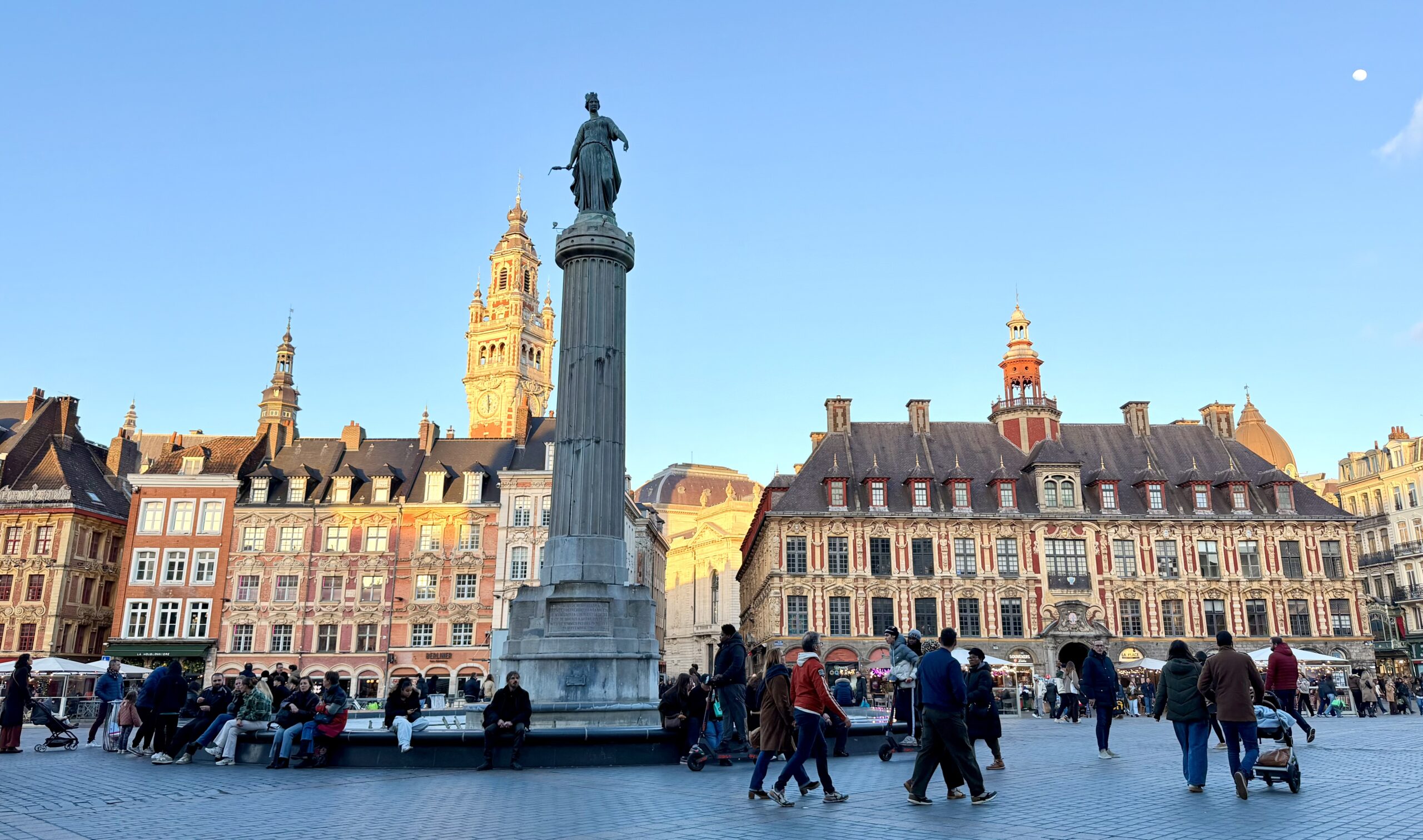
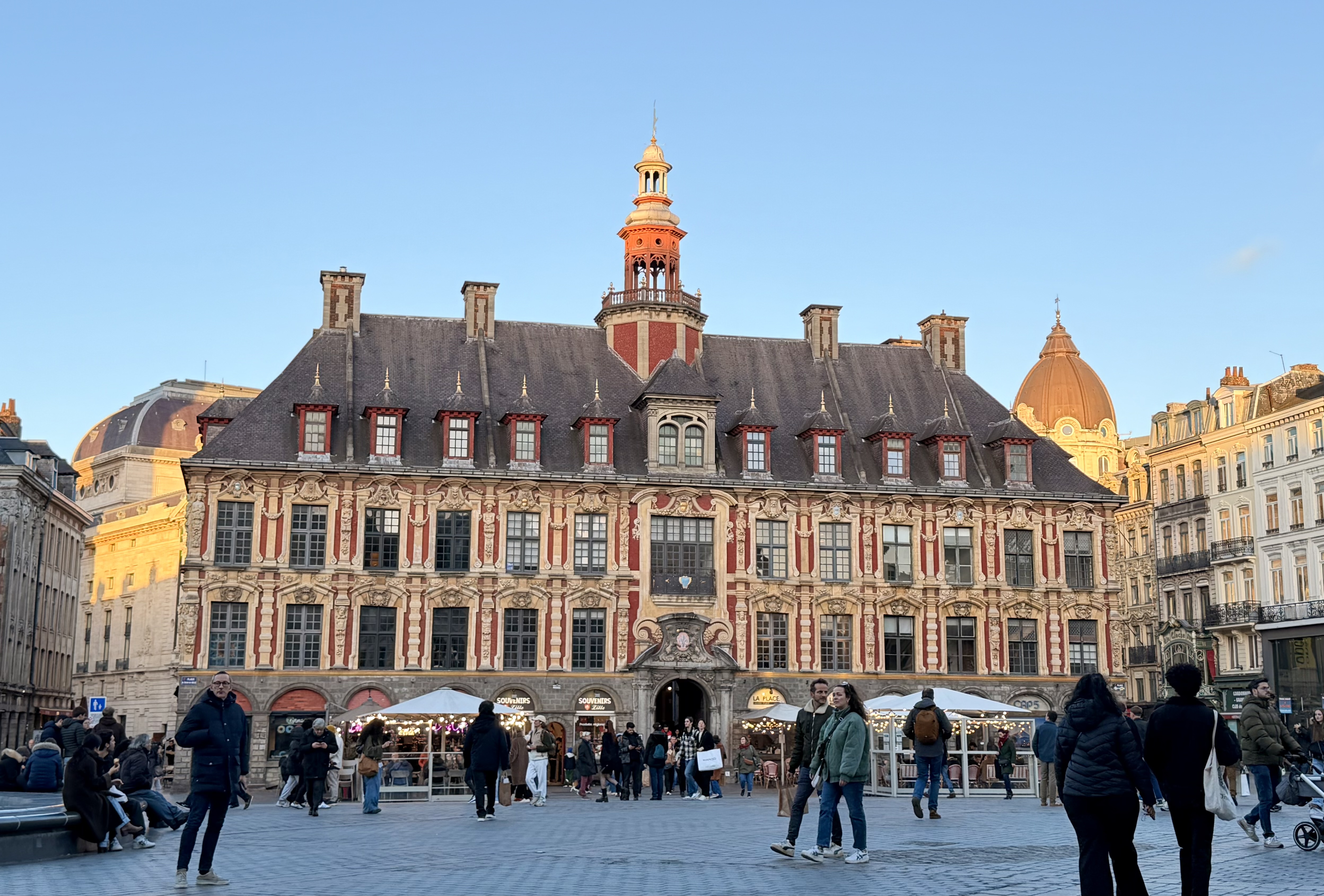
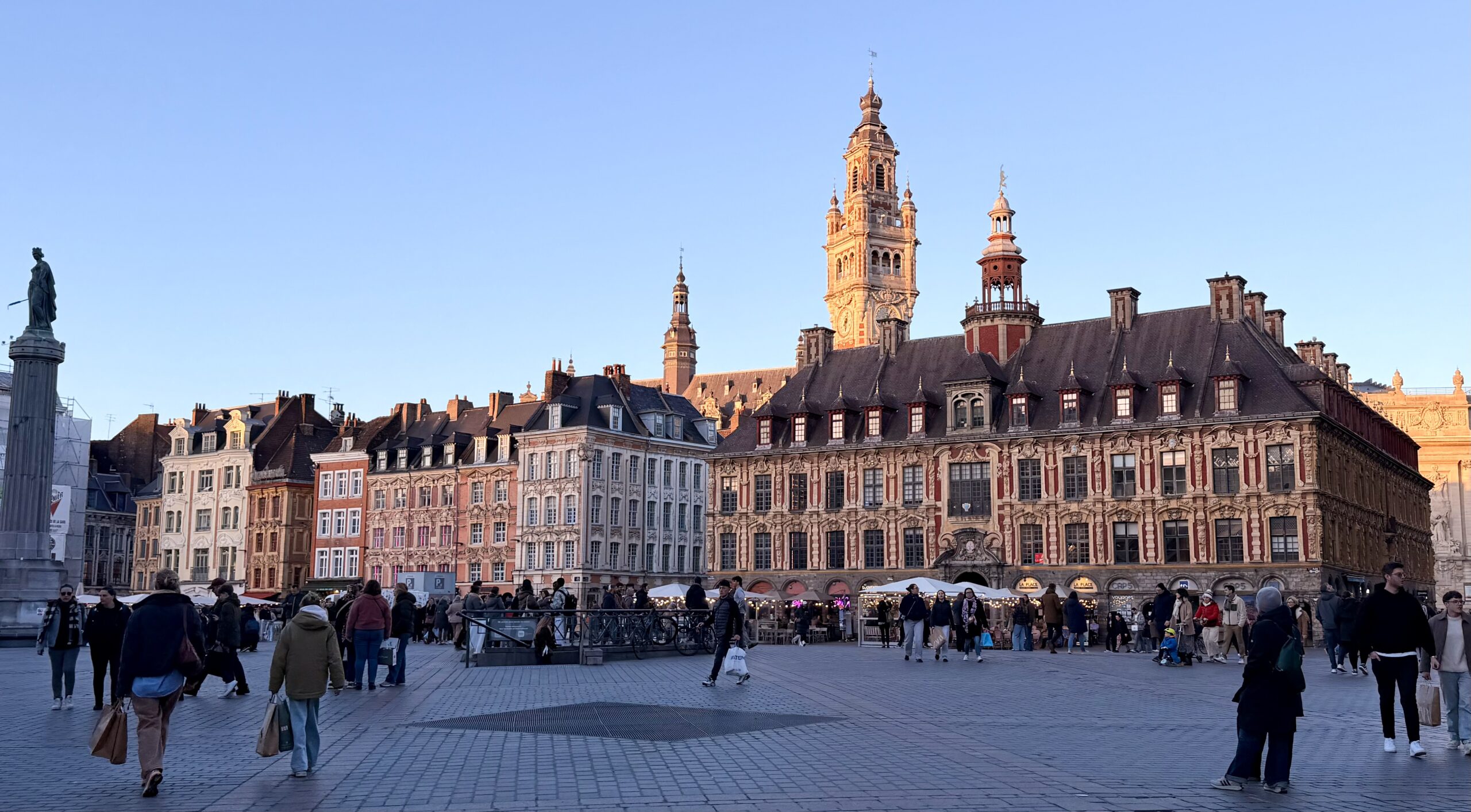
This building is the Nouvelle Bourse / Chamber of Commerce.
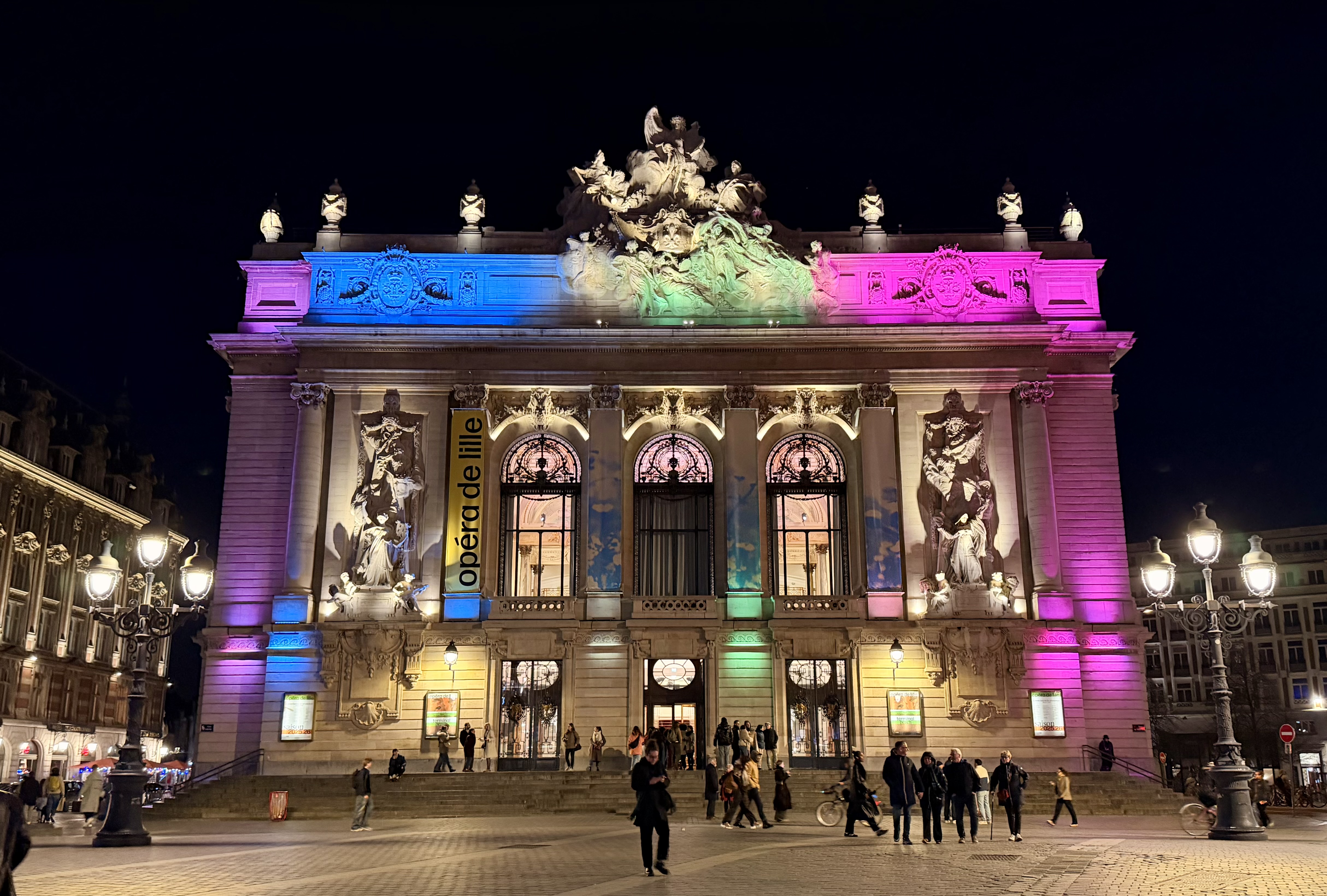
It was neat to see it all lit up at night … the Lille Opera house looked particularly cool.
After this short stop we got on the road to Normandy and Brittany to finish out our time in the EU.