

The food in Japan is so unique and tasty that it really deserved its own blog post. I found a nice Japan Guide article on various Japanese foods: https://www.japan-guide.com/e/e620.html
You could be well-fed purely from vending machines and convenience stores (konbinis) in Japan – and it’s tasty too! In vending machines you can get hot and cold drinks and soup – and we even saw one that had dog treats! I’ve also seen plenty that have alcohol – both beer and hard liquor. They don’t seem to be as common now and I’ve heard some of them do require ID these days. https://www.japan-guide.com/e/e2071.html
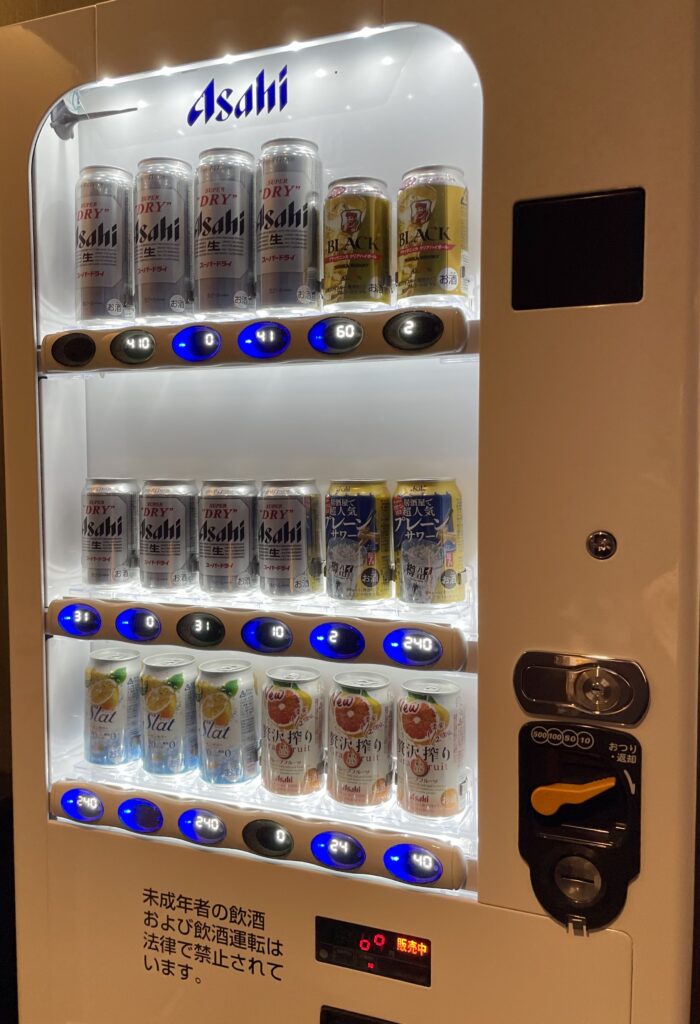
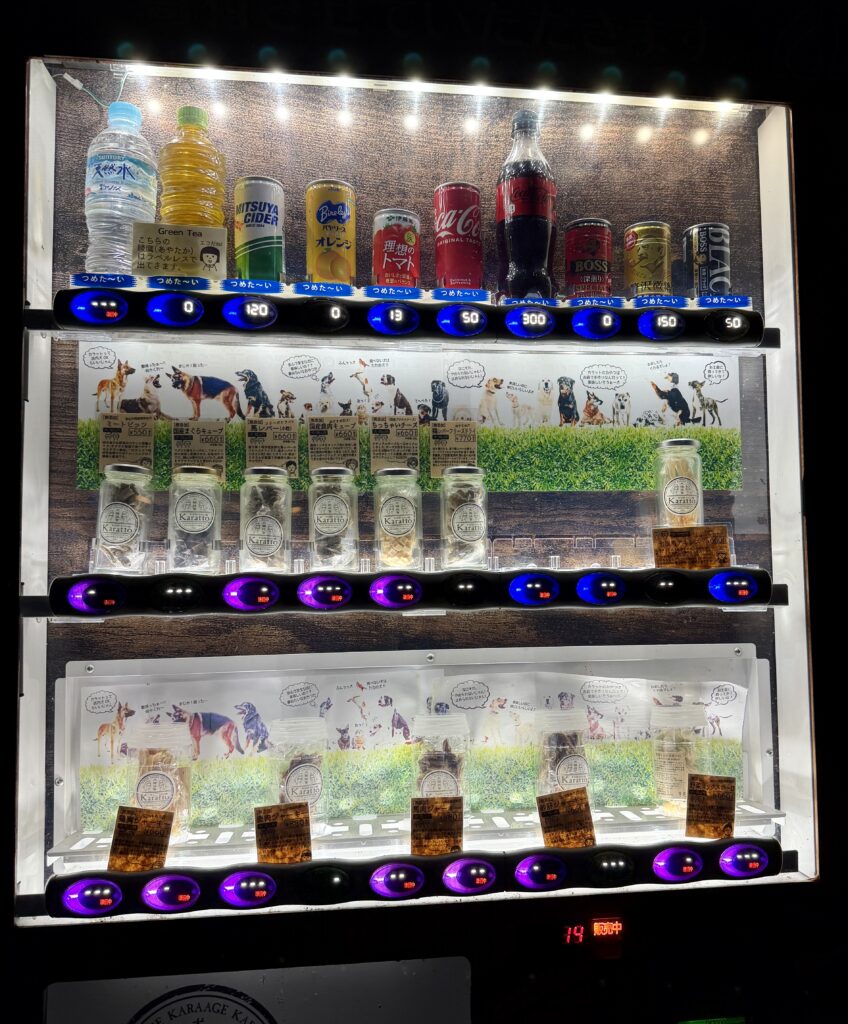
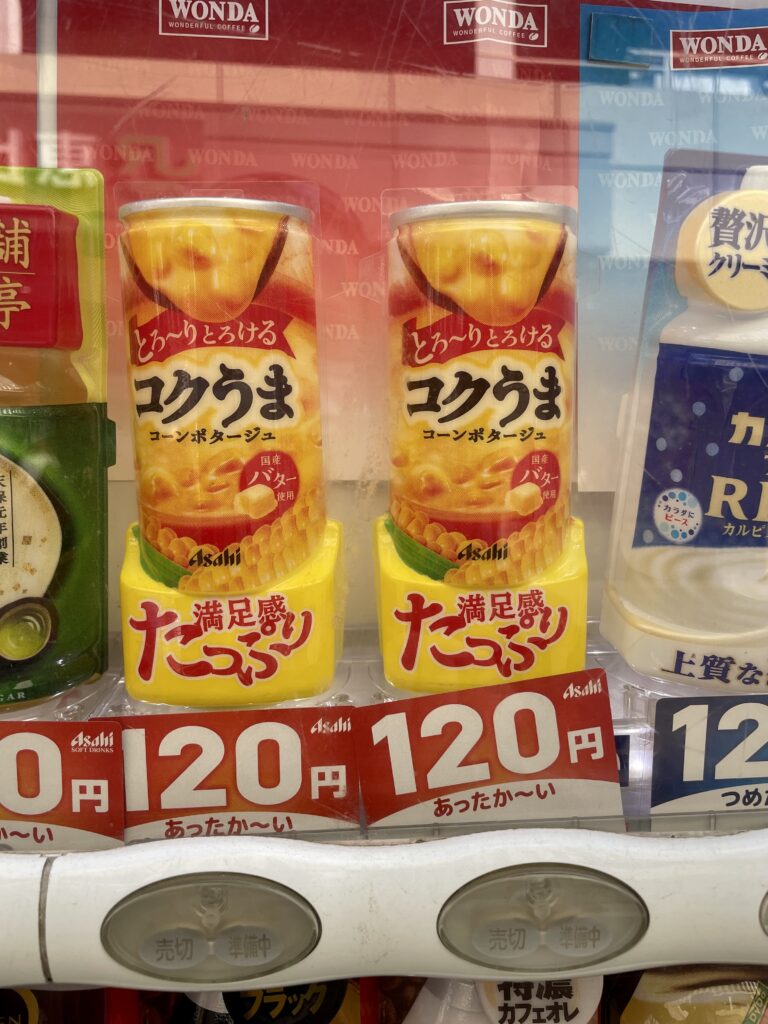
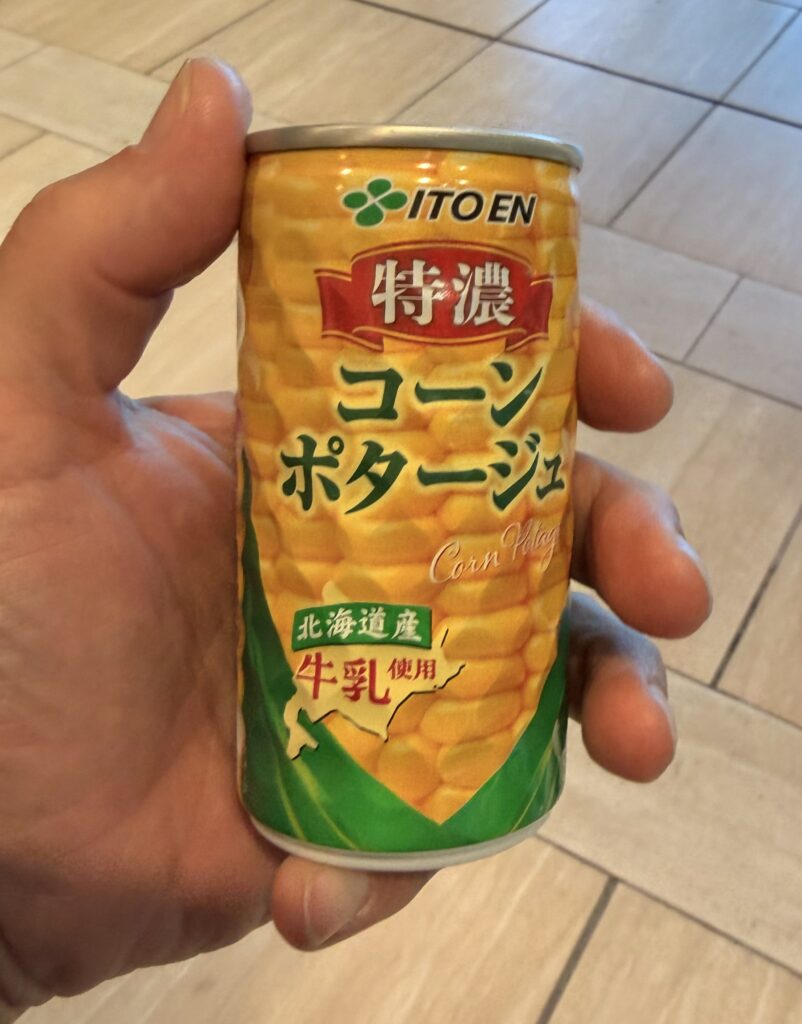
For the konbinis (convenience stores) – there are 3 main chains: 7-11, Lawson, and Family Mart. When I lived there I also used to pay my utility bills at 7-11! They are a very cash-based society (although a lot more places we went to take cards now). My utility bills had a QR code/barcode on them – I would take them to 7-11 and they scanned the code then I would pay cash for those utilities. It was very convenient!
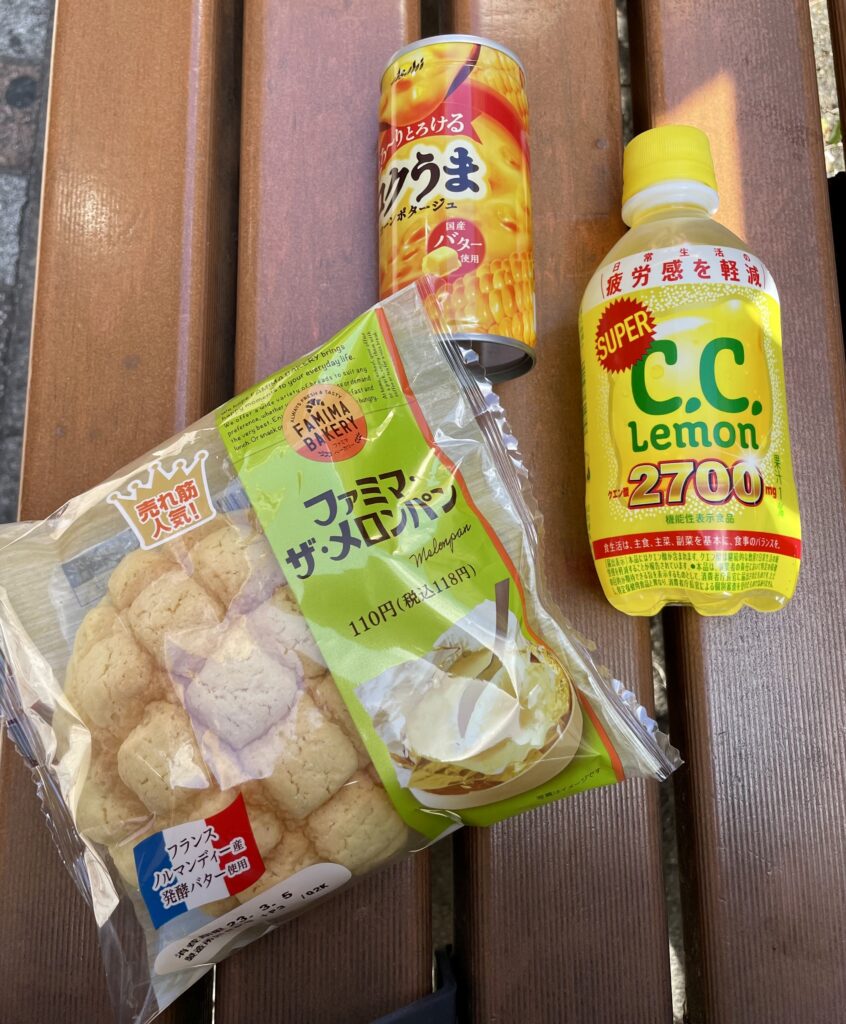
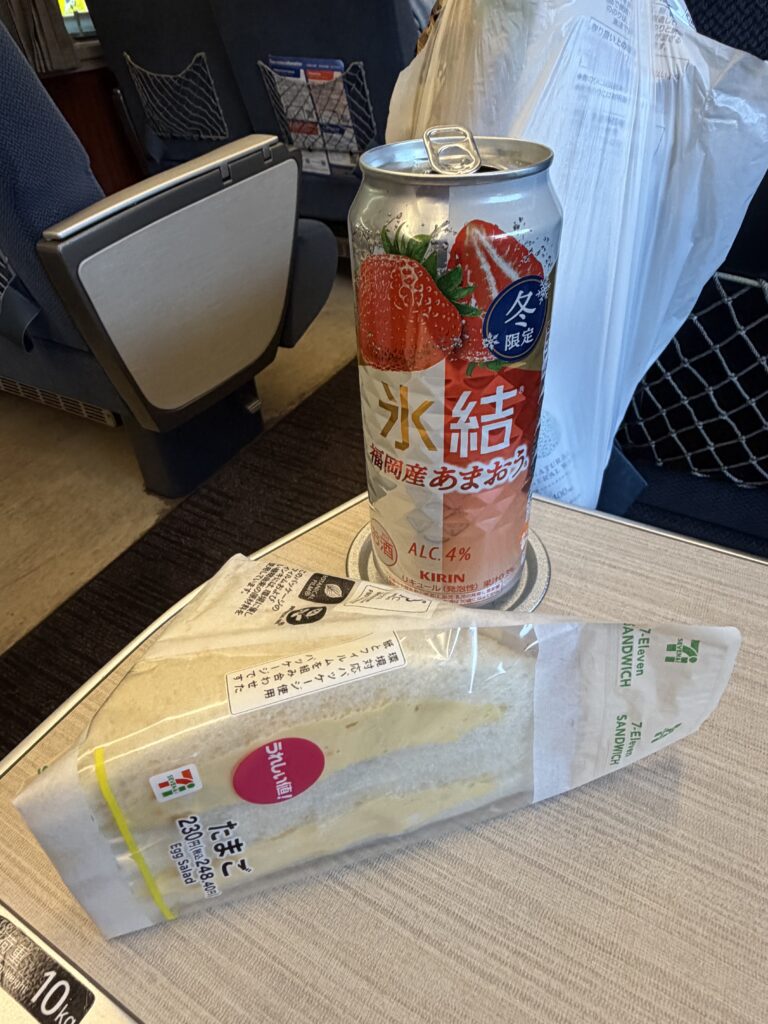
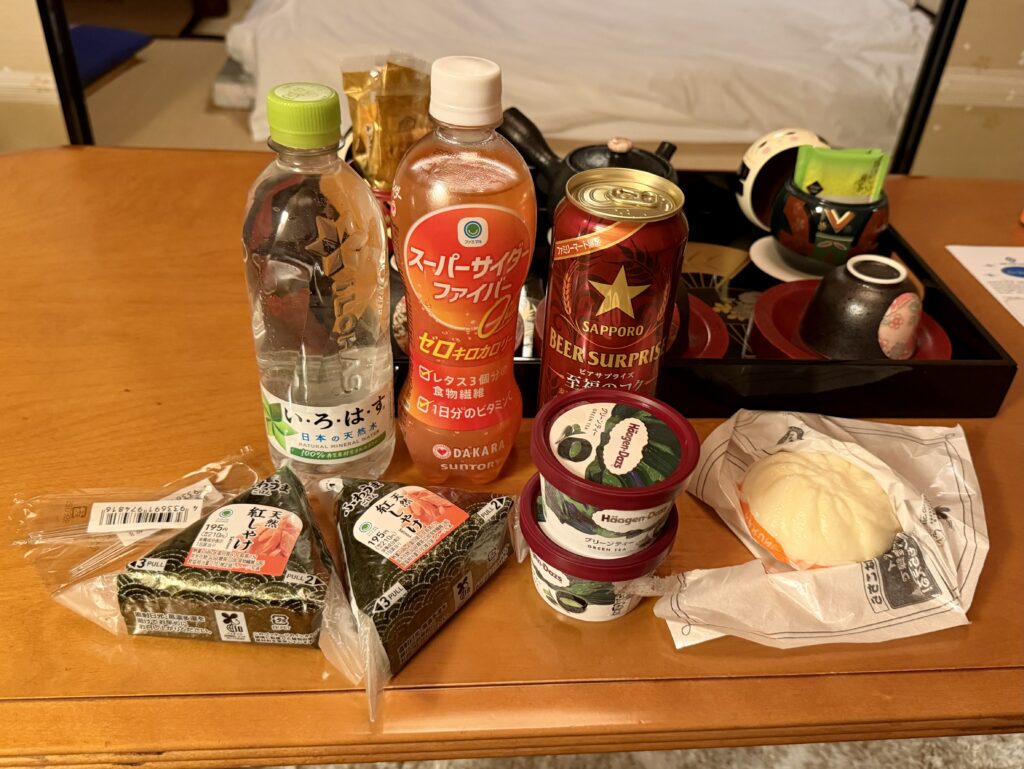
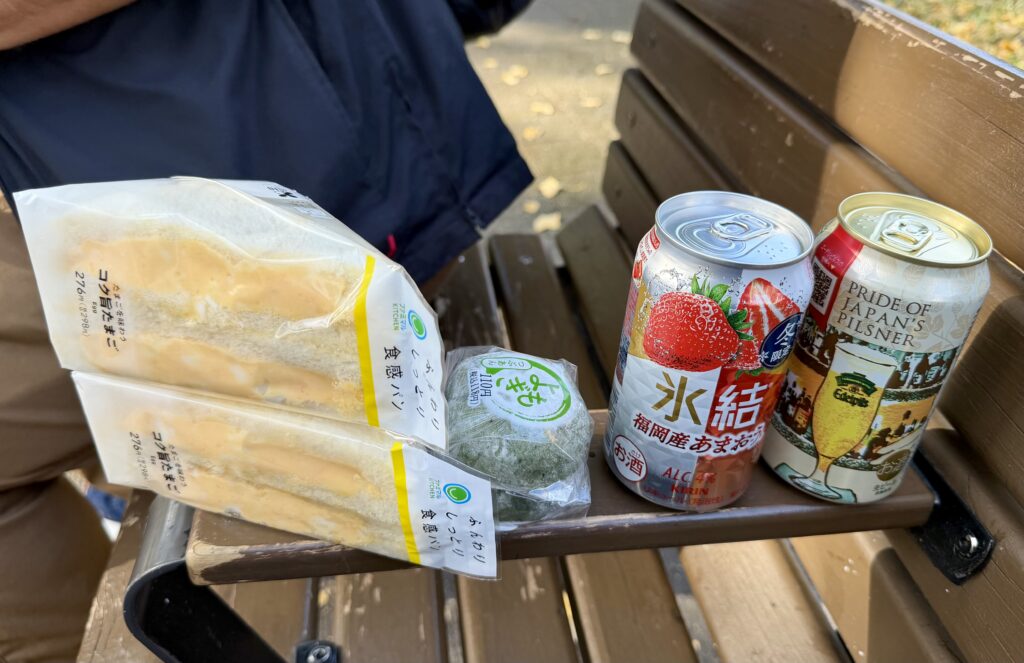
Some of my favorite are foods are o-nigiri, melon-pan, egg-salad sandwiches, daifuku mochi, and matcha-flavored Häagen-Dazs. Chris also likes the pork buns. And then we usually pick up chuhai drinks but they also sell various hot and cold coffees in cans or bottles. And one of my favorites is also CC lemon (basically a lemon soda).
One thing I have been enjoying about writing this blog is reading more about the small things – I’ve enjoyed all these food and beverages for years but never really took time to look at what the origin was for them. So here are some interesting links I found in case you are interested:
To read about o-nigiri – this article was interesting: https://www.tablecheck.com/en/blog/onigiri-guide-best-onigiri-restaurants-japan/
This article talks about the background of Chu-hai (I did know it was a “shochu highball” but didn’t realize the rest of the background info): https://www.japanesefoodguide.com/chuhai/
The melon pan – this sweet bread with a crispy top is so called for its appearance and texture (it’s not melon-flavored). The word “pan” just means bread and is actually a Portuguese word! Most western words adopted into Japanese language came from English. I always thought this one came from the French word for bread (“pain”) but I learned today that it was from the Portuguese word “pão” (https://www.japanesefoodguide.com/origin-japanese-food-names/). Who knew? Although I guess they are both Romance languages so it makes sense that the Portuguese and French (and Spanish – “pan”) words for bread would be similar.
Daifuku mochi (https://sakura.co/blog/types-of-daifuku-you-need-to-try) – mochi is made of a specific type of rice pounded into a sticky paste (were used to having it with ice cream inside). The Daifuku version has a variety of filling, traditionally red bean paste. I never used to like red bean paste (used in many Japanese foods) but I like it in this particular combo.
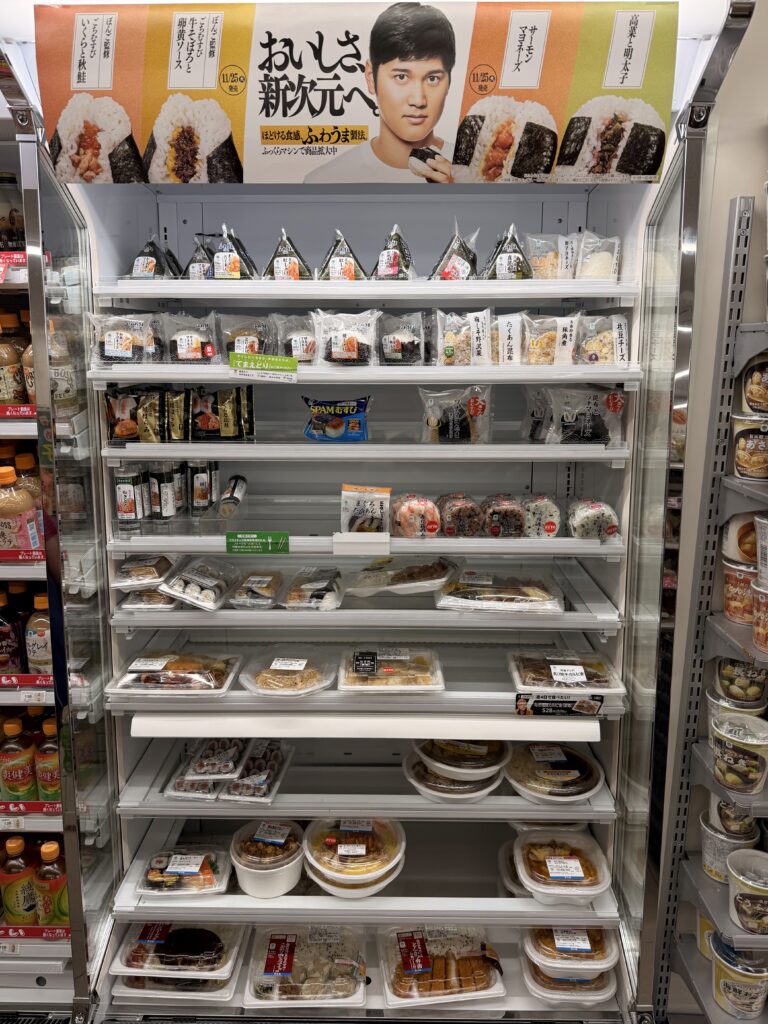
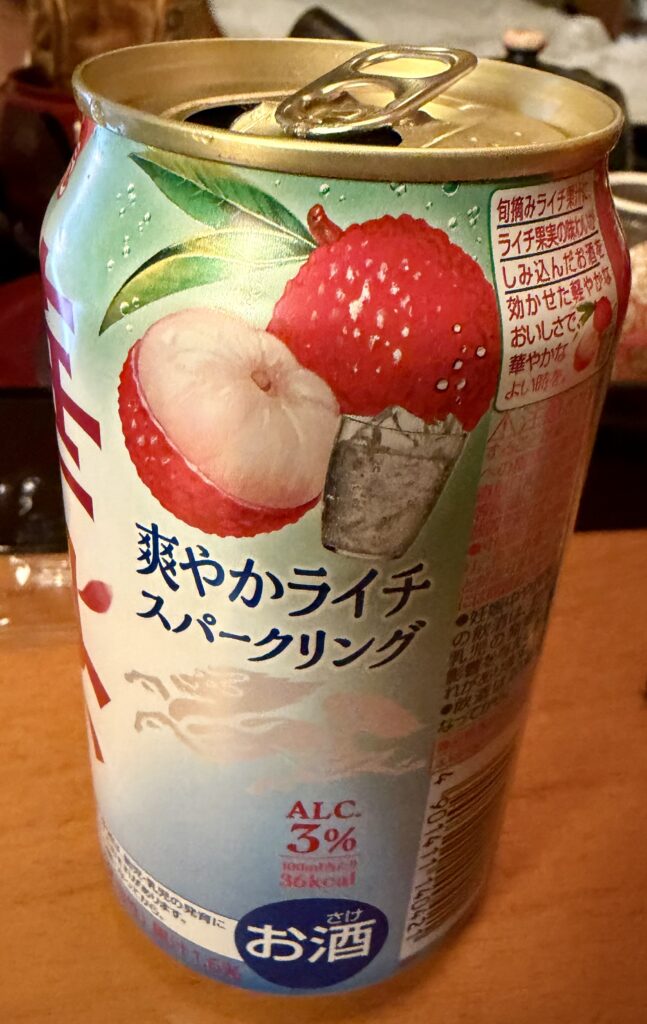
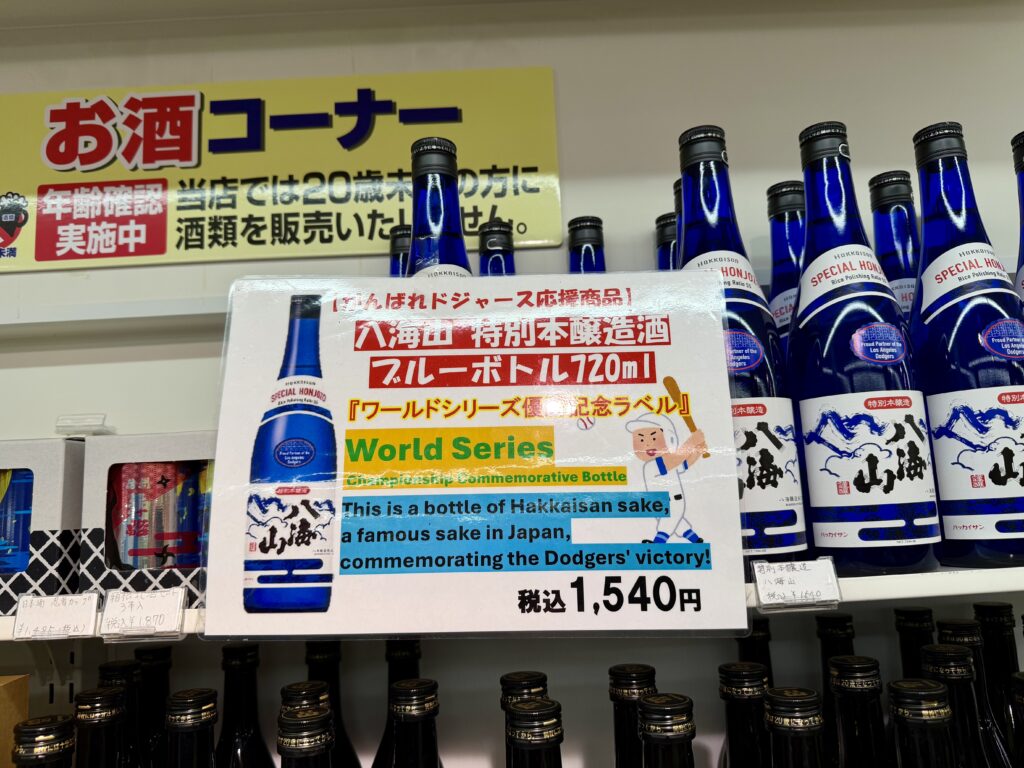
I think most people are familiar with sake but I loved this particular one we saw at the 7-11 in Hakone. I am assuming they are talking about the L.A. Dodgers given the Japanese standout players on the team that just won the World Series (there is professional baseball in Japan too and several teams share names with MLB teams but as far as I can tell they don’t have a Dodgers team (and if they do, they didn’t win the Japan Series/Nippon series championship in Japan). There’s some interesting history between Japan and American baseball: https://www.mlb.com/news/dodgers-japanese-superstars-are-the-result-of-decades-of-work.
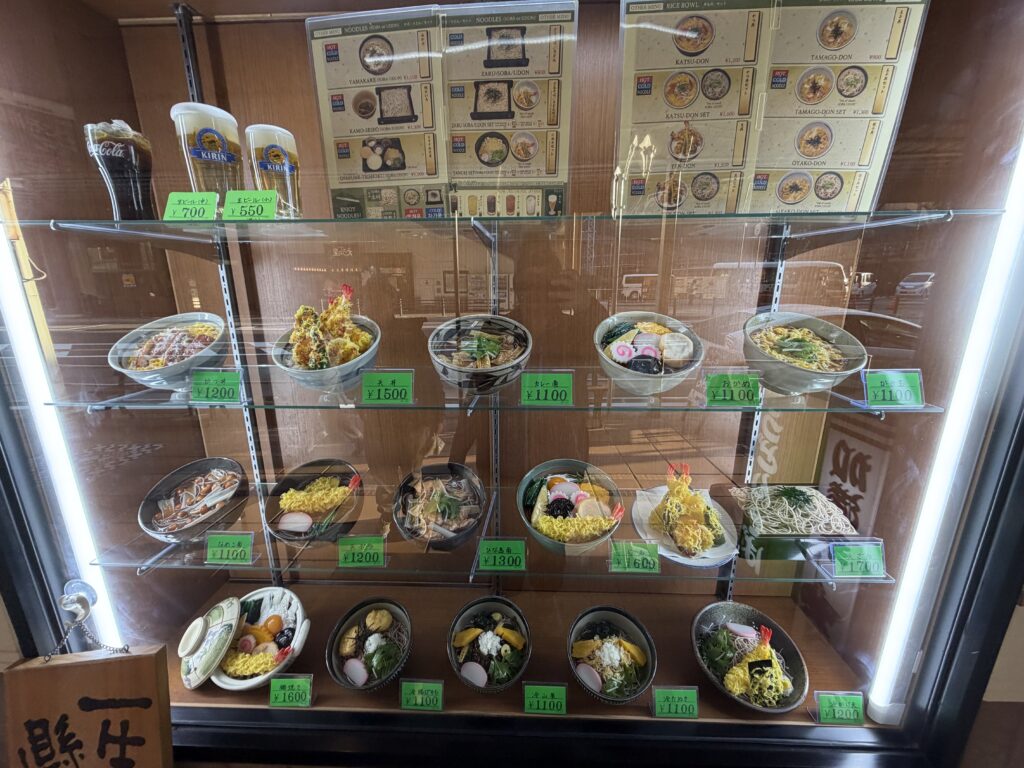
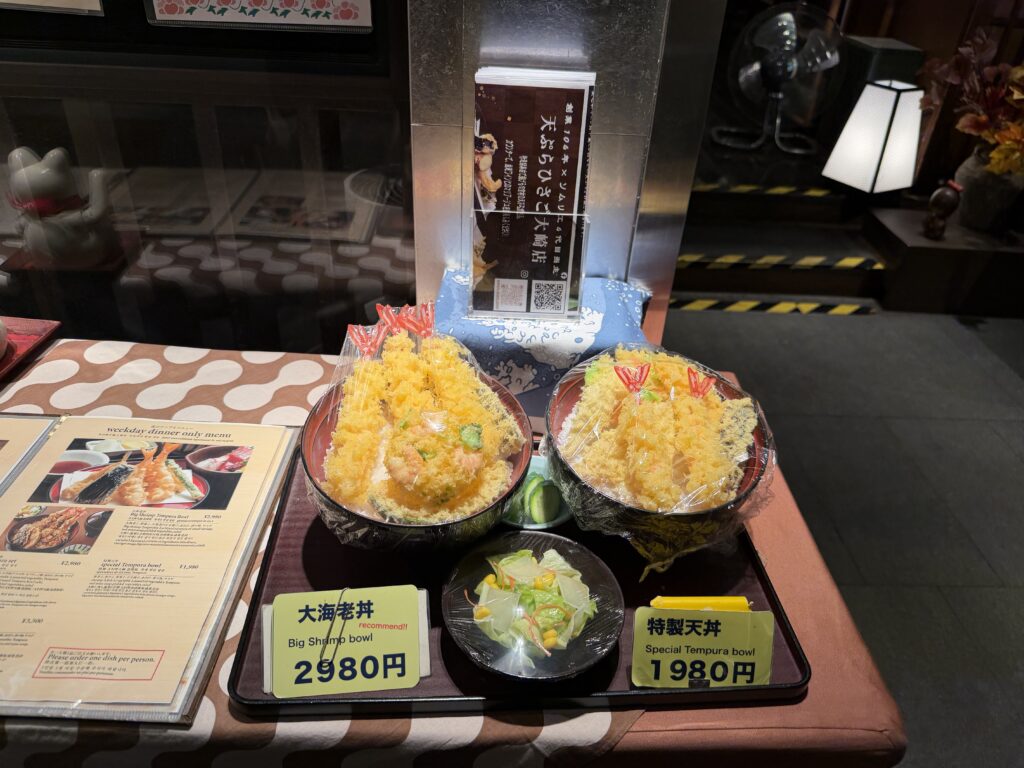
The Japanese have a whole thing with plastic food displays – there are entire stores dedicated to this in the Kappachi area (“kitchen district”) in Tokyo, where you can buy any manner of cooking supplies. It’s nice when trying to decide where to eat to just browse the windows rather than read a menu too! When I lived there I remember a couple ties walking outside with the waiter to point to what I wanted (this was before the days of google translate!).
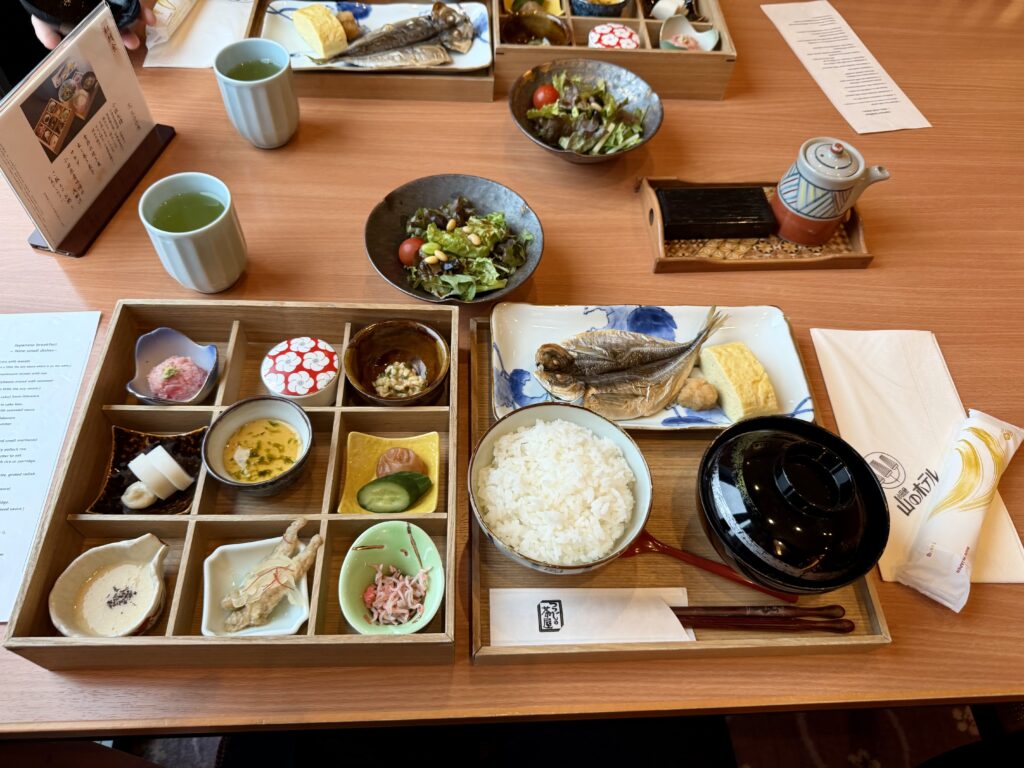
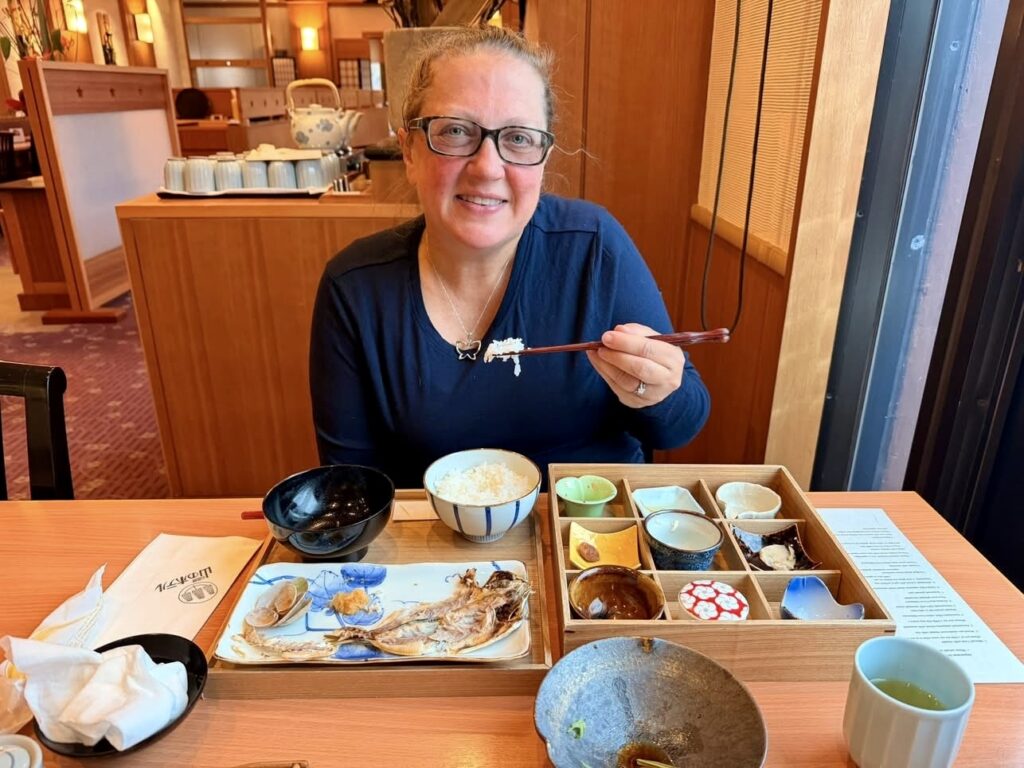
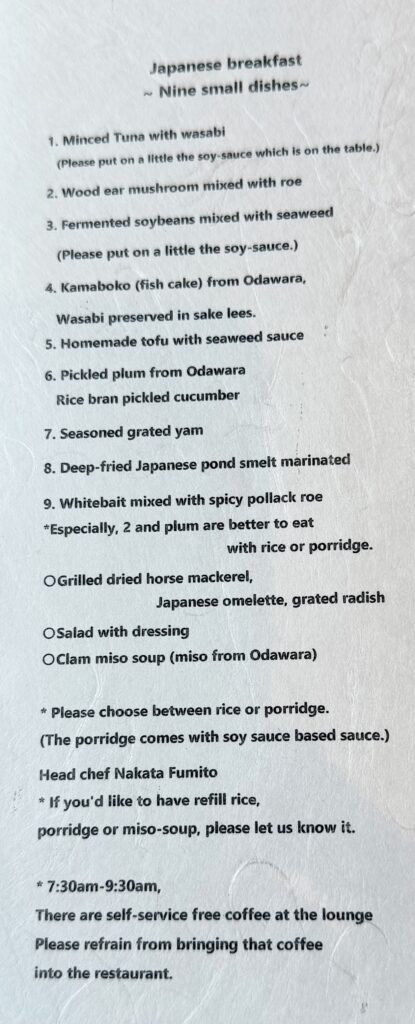
While we had plenty opportunities for lunch and dinner, I don’t know that I ever really had a proper Japanese breakfast. It was cool to have this at our hotel in Hakone (and they very kindly had a description in English too). I didn’t like everything but I liked most of it and it was fun to try small portions of so many different things.
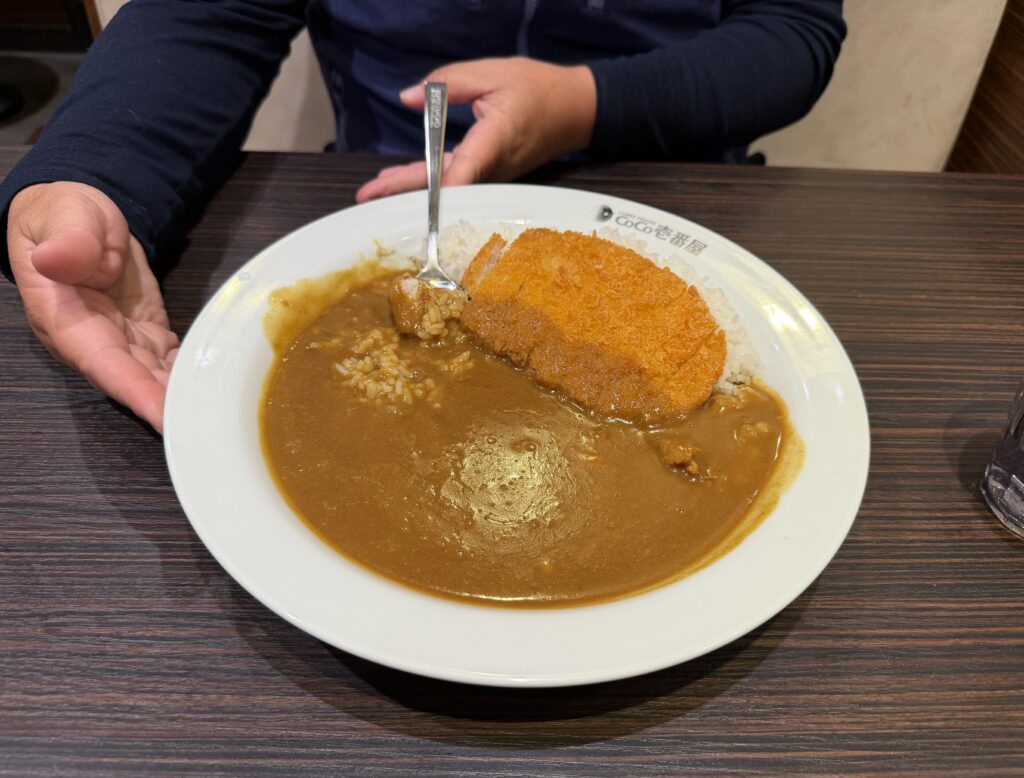
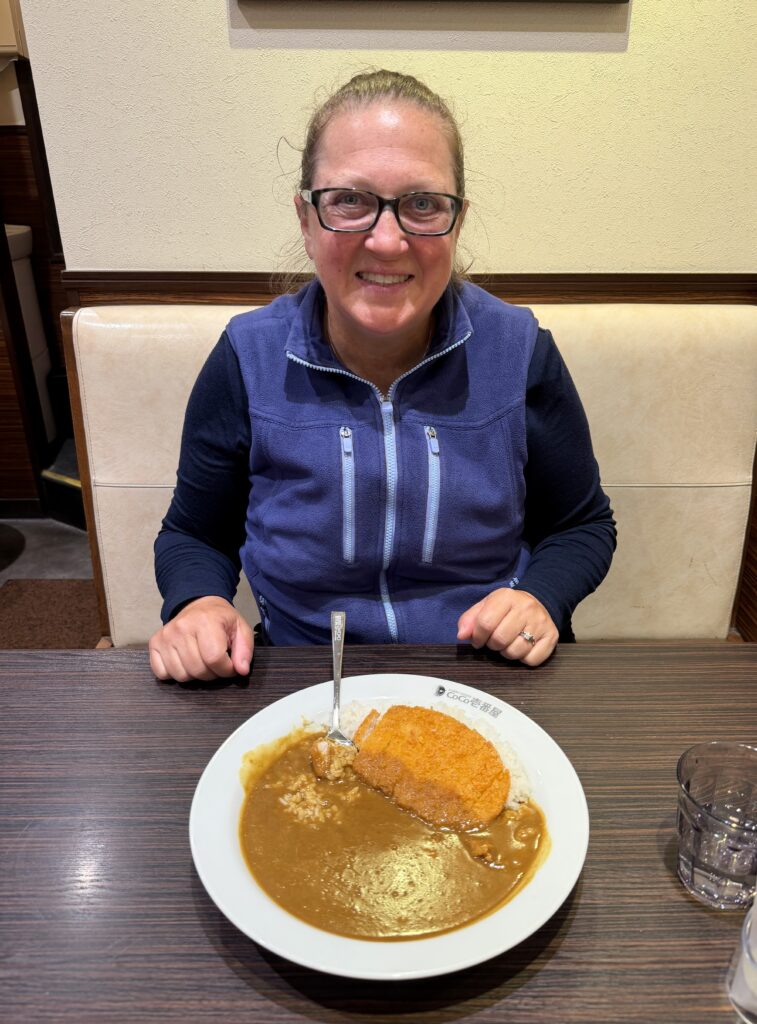
Japanese curry is another favorite – we stopped at a CoCo Curry in Shinjuku (there’s one at the Fussa train station near Yokota so that’s where I first had this). https://www.ichibanya.co.jp/english/. Japanese curry its generally not spicy. We always get the tonkatsu (fried pork cutlet) version. It’s so good!
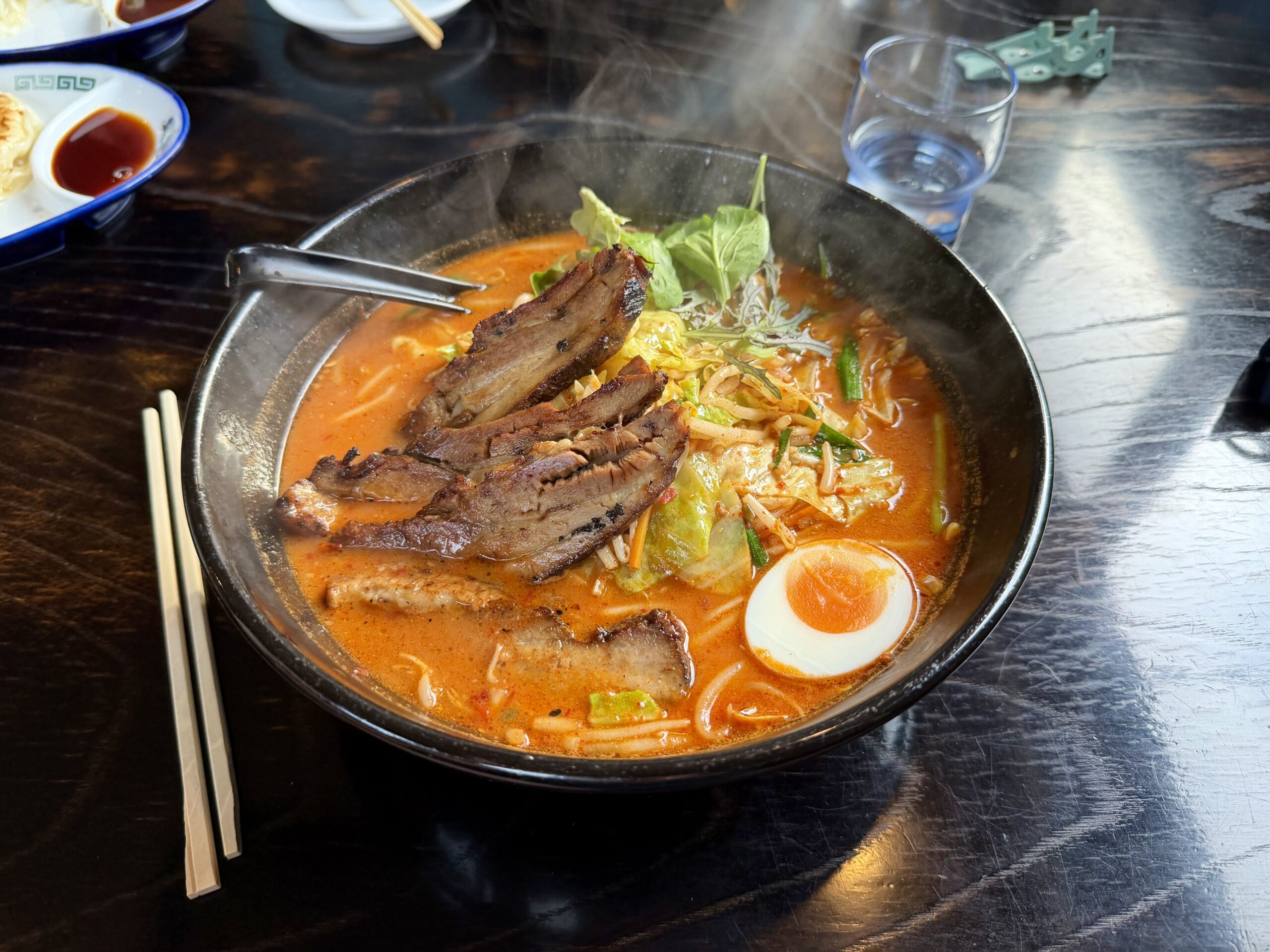
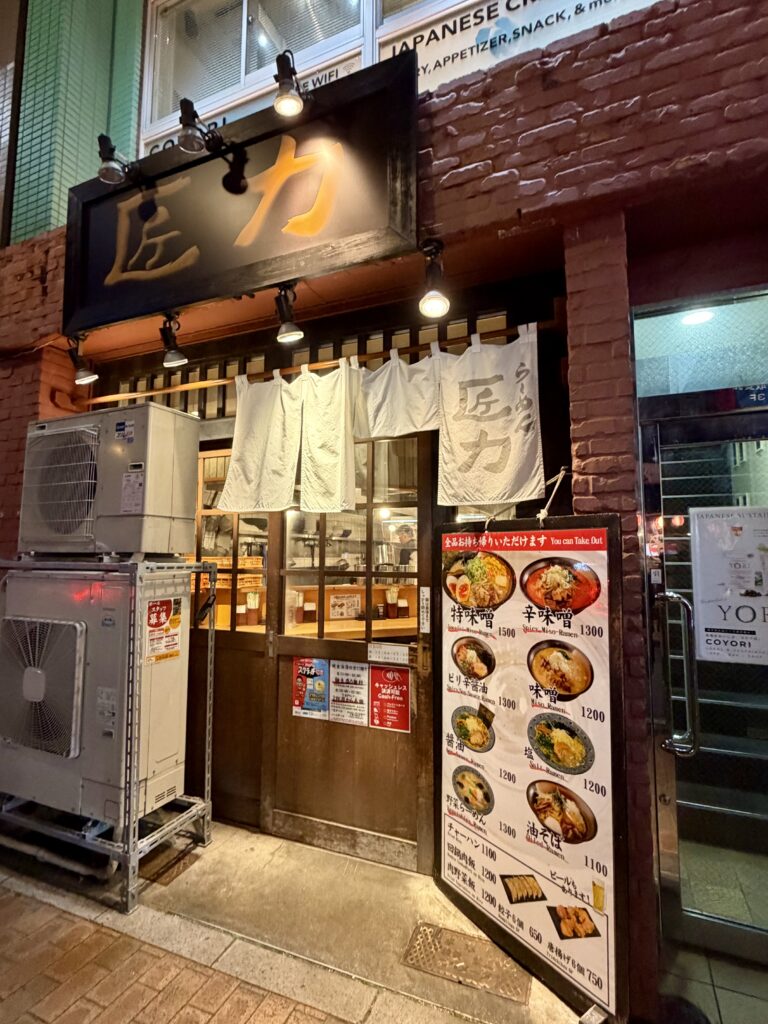
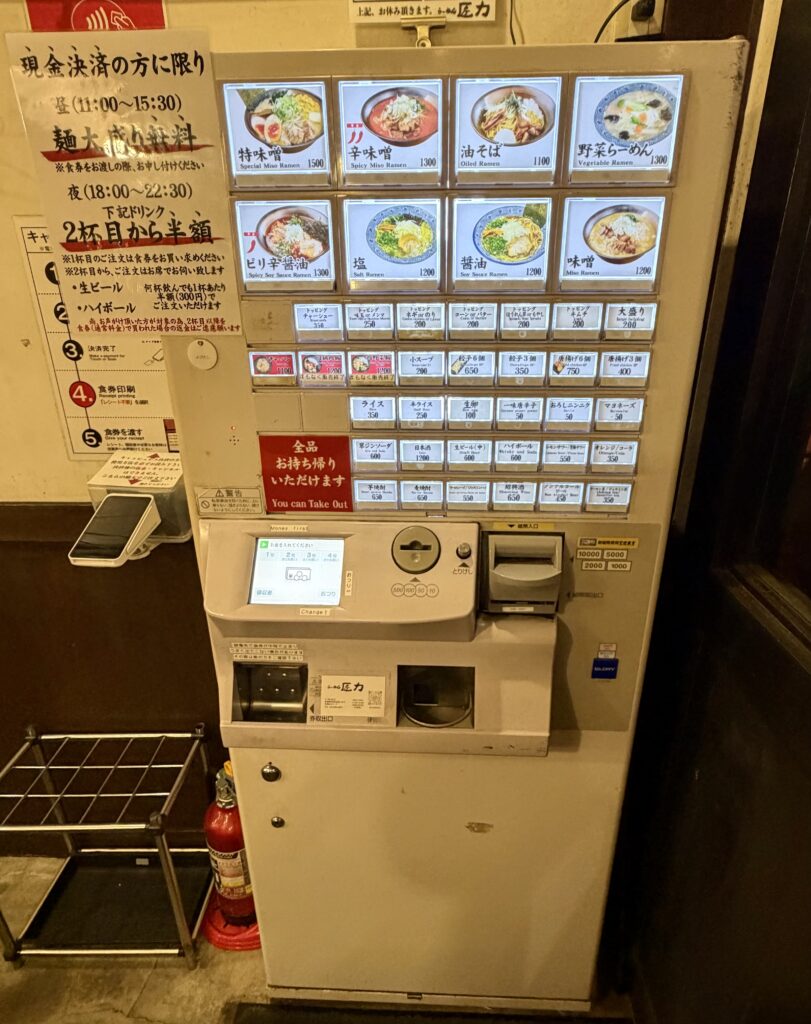
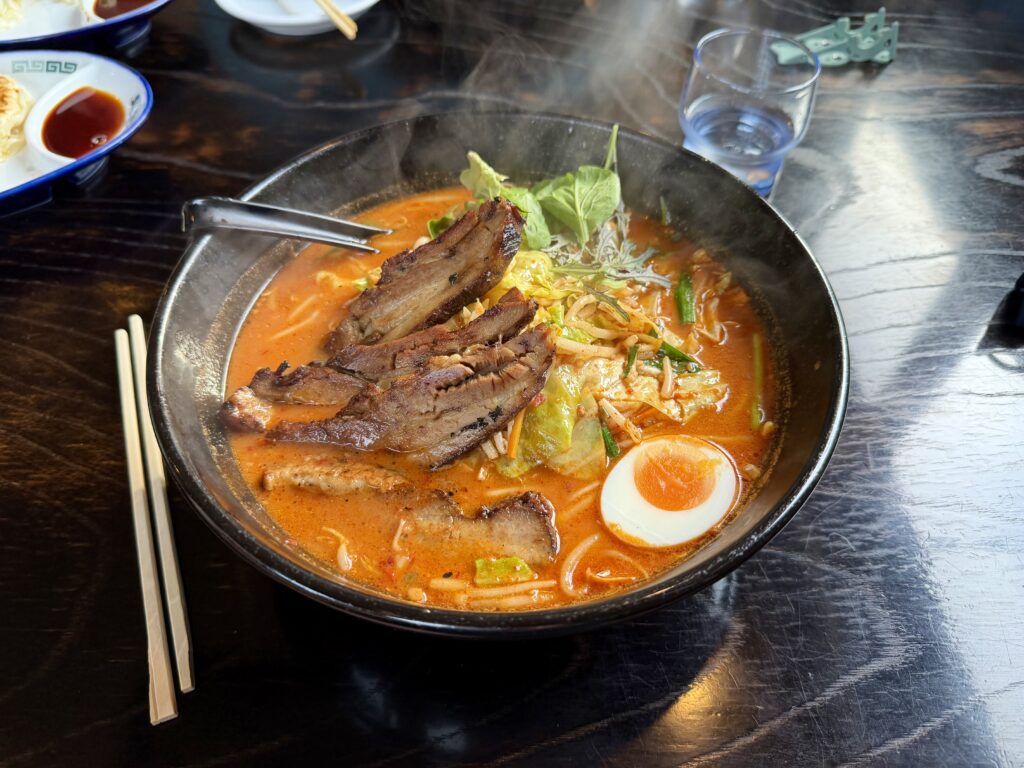
Another huge favorite of ours is ramen. There are some pretty good ones in the states (at least in major cities) – we had a favorite in Rockville not far from our house. There are many different types of broth and toppings (see here for more info: https://www.japan-guide.com/e/e2042.html) but we usually get miso ramen (I like the spicy variety and Chris gets the regular one). Ramen was actually originally brought over from China so the word isn’t a Japanese word. There are several different ways of writing in Japanese – hiragana is the set of symbols/alphabet for Japanese words and katakana is the same sounds but different symbols and is used for non-Japanese words. So ramen is written in katakana since it’s of Chinese origin (ramen ラーメン). Kanji is the set of symbols for Japanese words that are a lot more complicated to learn – there are thousands of them (also adapted from Chinese and there are even specific ways to write them – the brush/pen strokes have to be in a specific order). But I digress …. back to the food. There’s a ramen shop near the metro stop closest to The New Sanno in Tokyo that we love (Ramen Sho-Riki (https://maps.app.goo.gl/4gzbtKbYF4VUJa8V9), so we stopped there again on this trip. Many ramen shops have a machine at the entrance where you select what you want and pay then go find a place to sit.
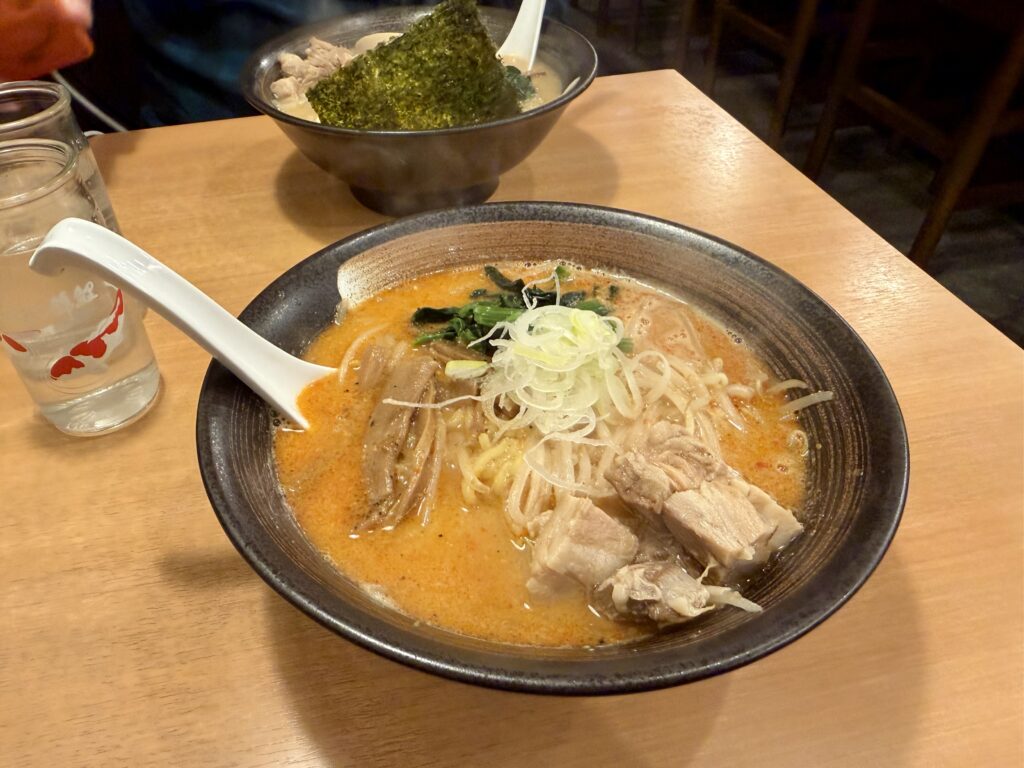
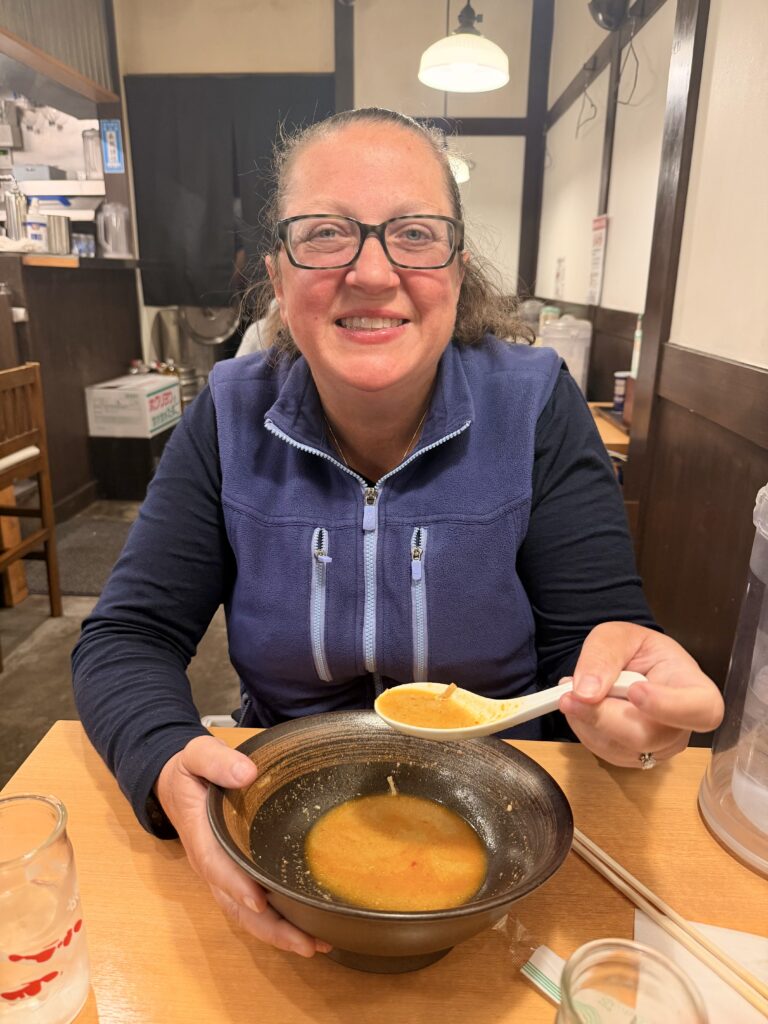
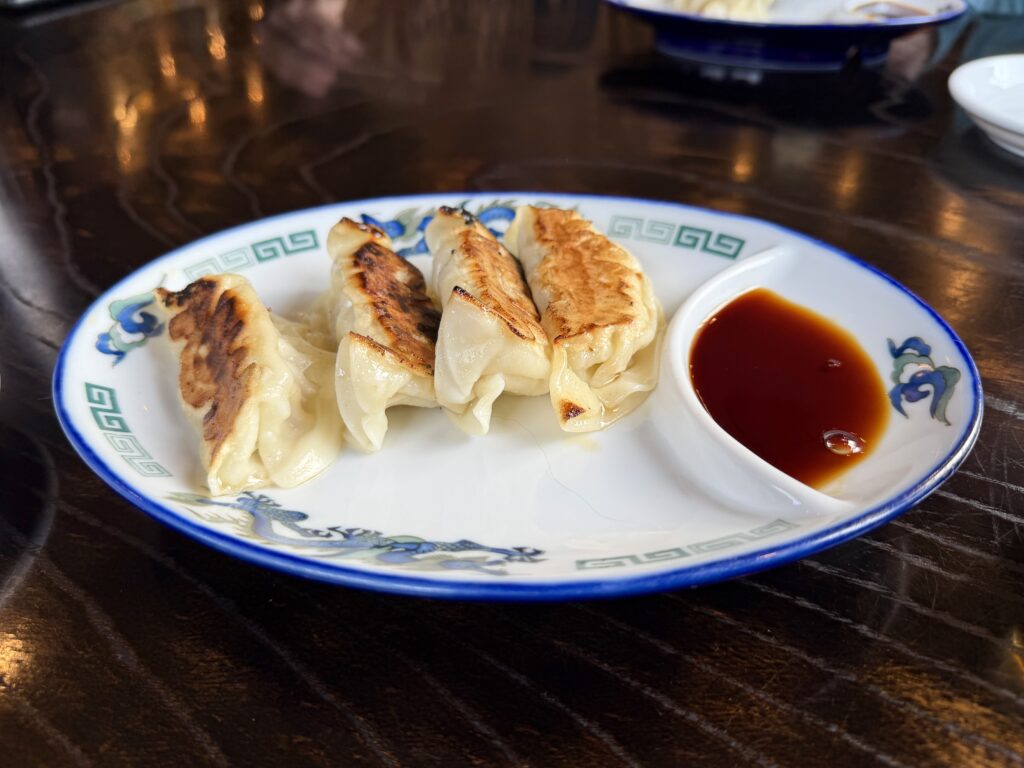
We also went with Alicia & Nick for ramen in Misawa (at Thunder Ramen/Ramen Kaminari Do) before we left to head back to Tokyo – 2 excellent ramen stops! One thing you’ll commonly find at ramen shops as a side dish is gyoza – so good! Although I was so full after this massive bowl of ramen (that I didn’t even finish – that was a first) that I only tried 1 gyoza. But it was tasty!
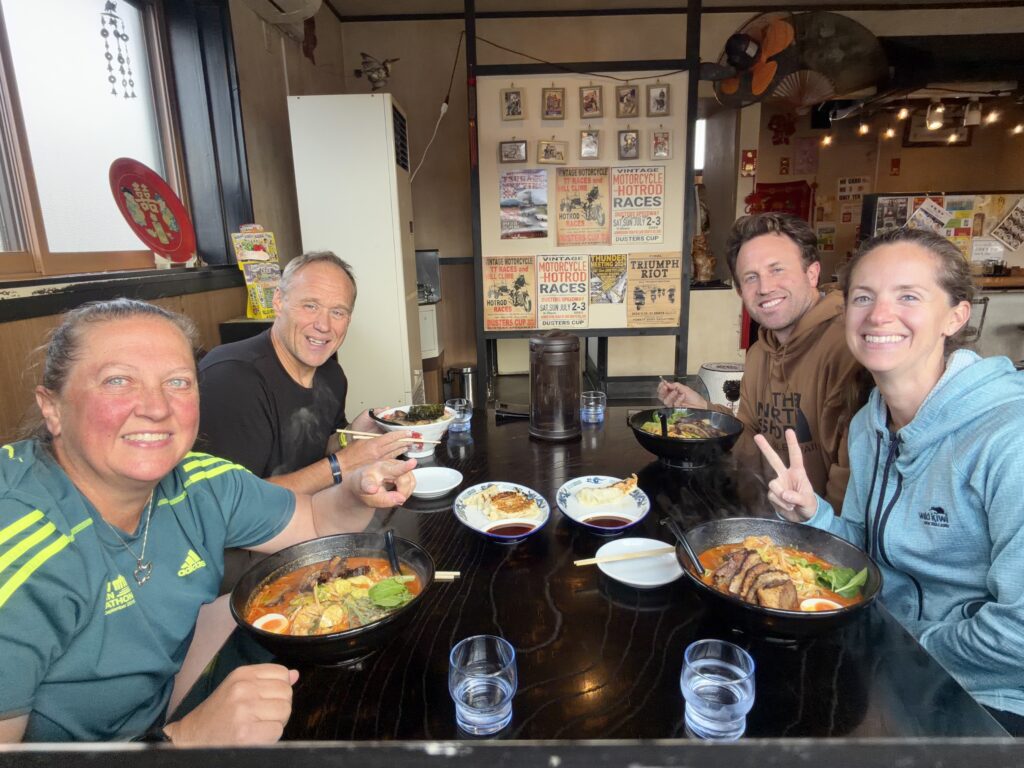
Speaking of Alicia & Nick – we had some phenomenal food while we were up there. I mentioned these in the post about Misawa but a little more in depth about the food….
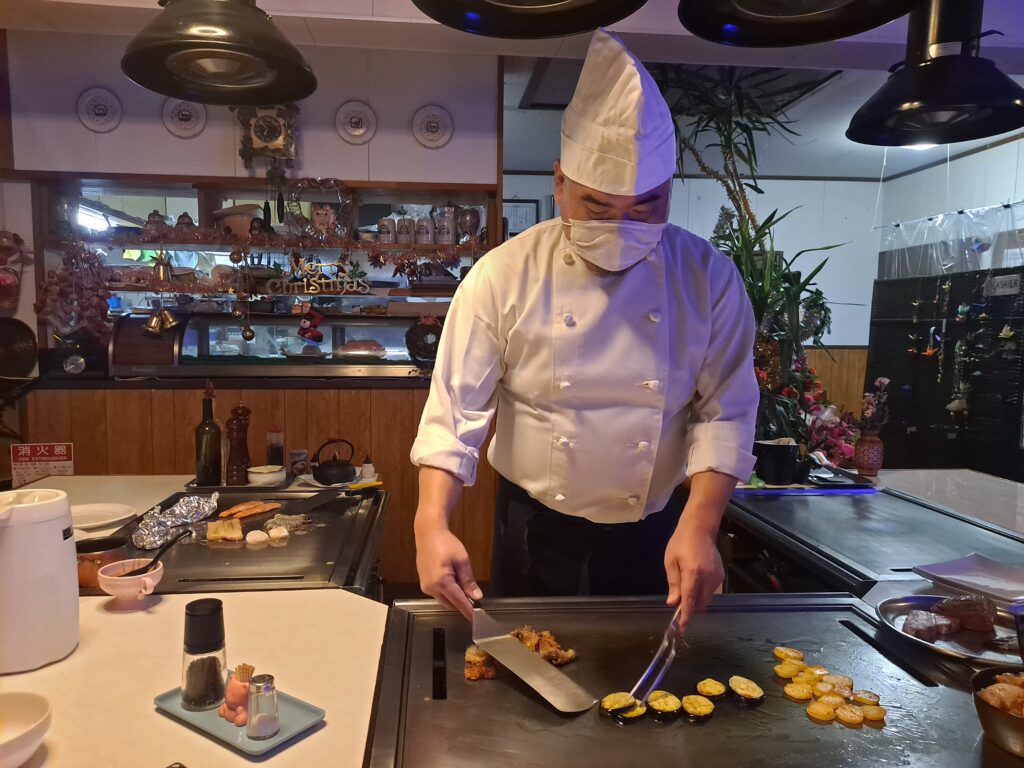
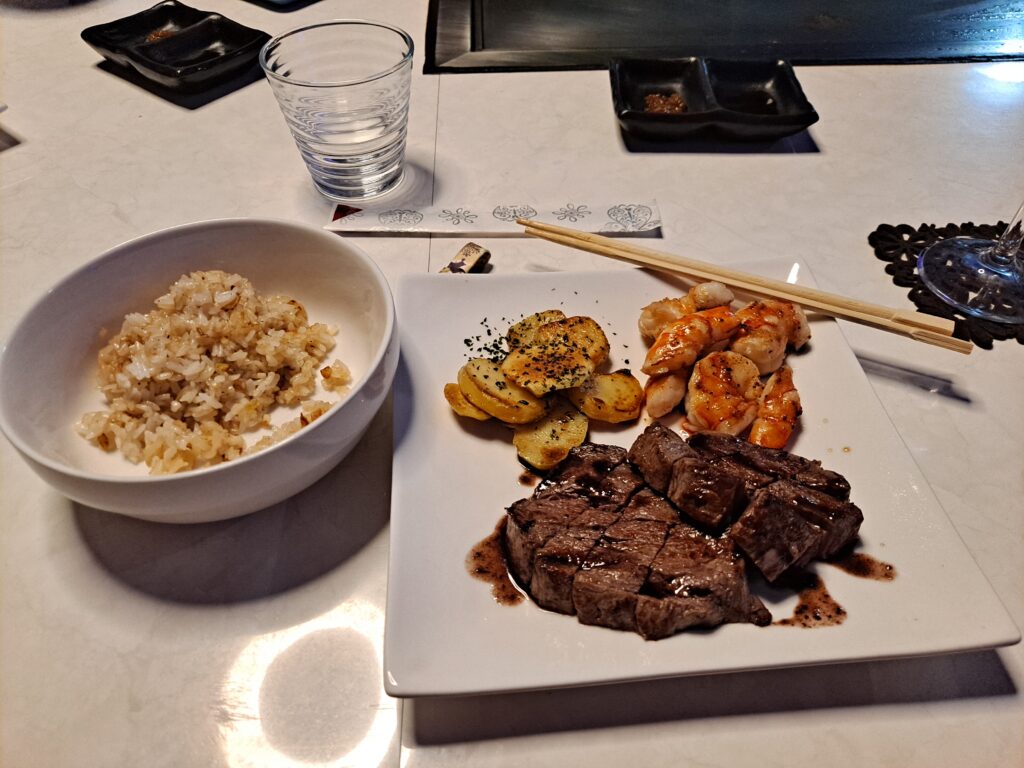
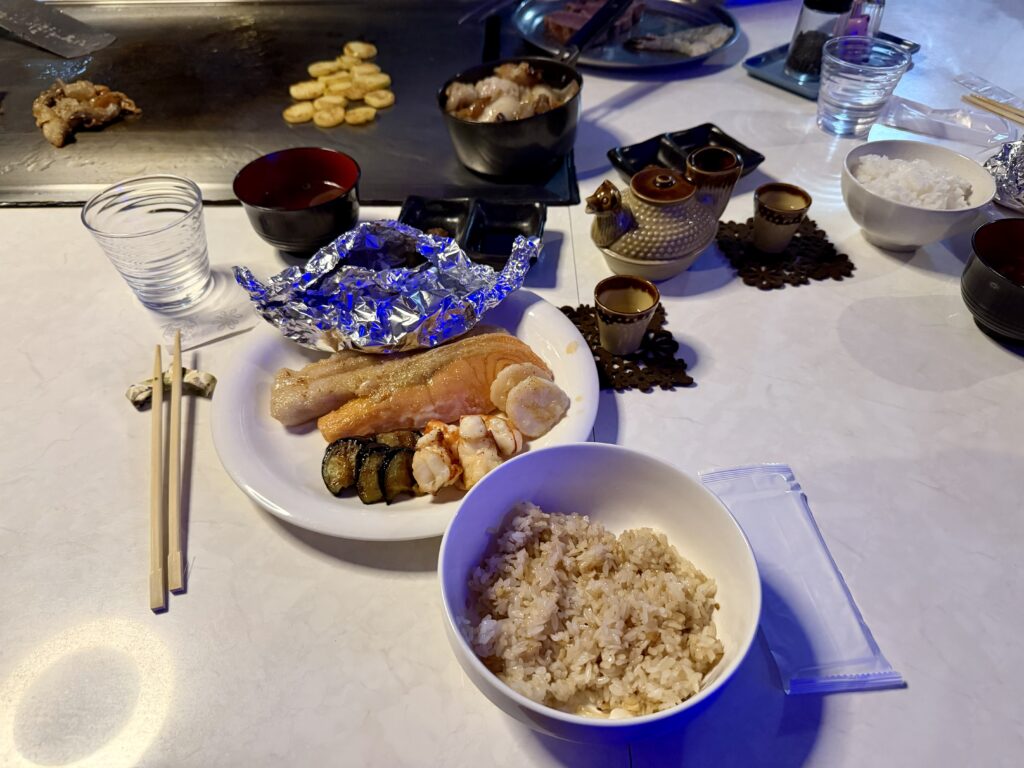
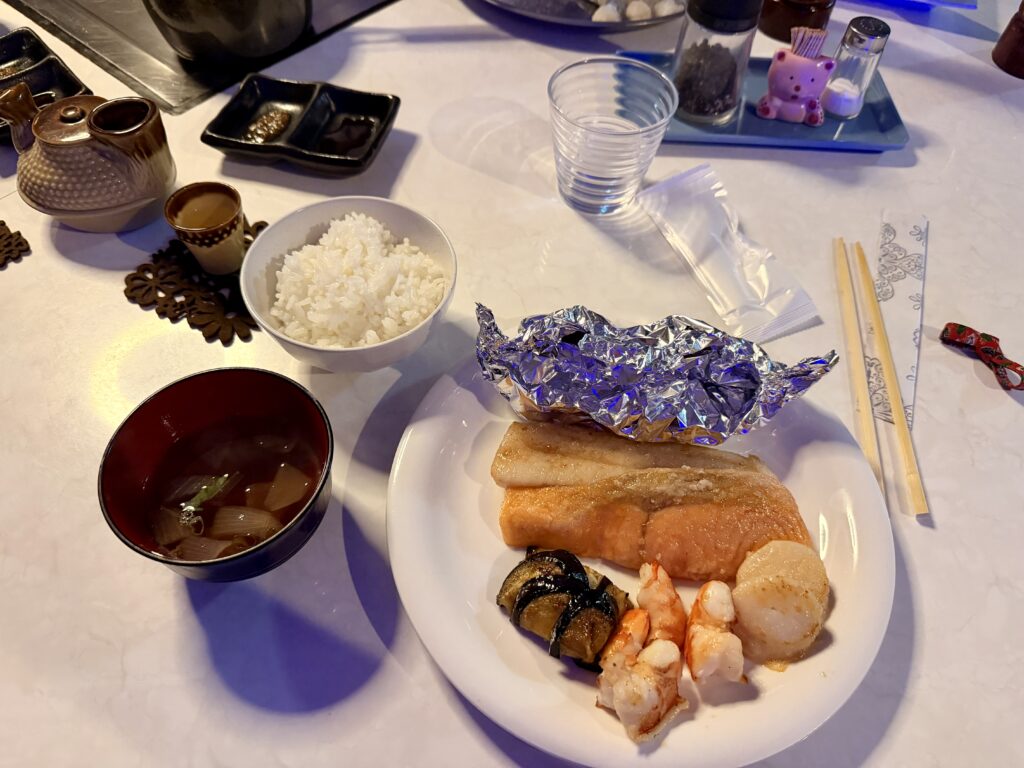
Our fancy dinner Saturday night was at Yoshino’s – which was a teppanyaki-style restaurant. I think most of the restaurants in the US that we refer to as “hibachi” are actually teppanyaki. Teppenyaki is cooking food on a “steel”teppan” – a metal plate (versus hibachi which is a grill). The times I’ve had Kobe steak, it was cooked teppanyaki-style (and cut into small pieces that are placed on your plate as they are ready so each one is hot – but that way you can eat it with chopsticks).
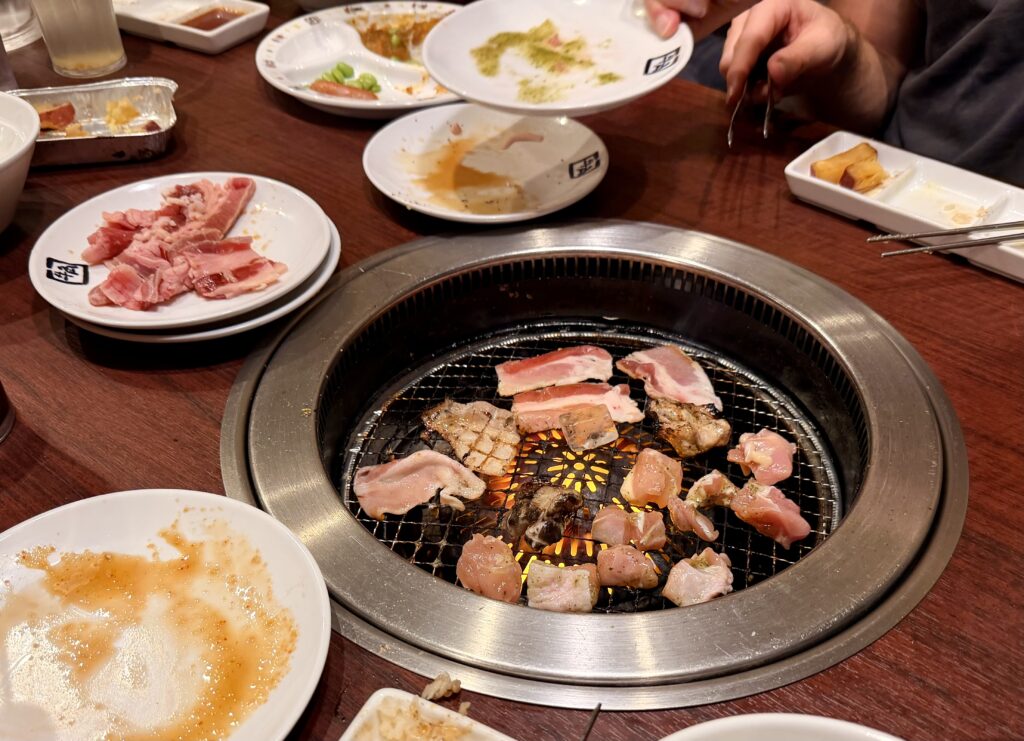
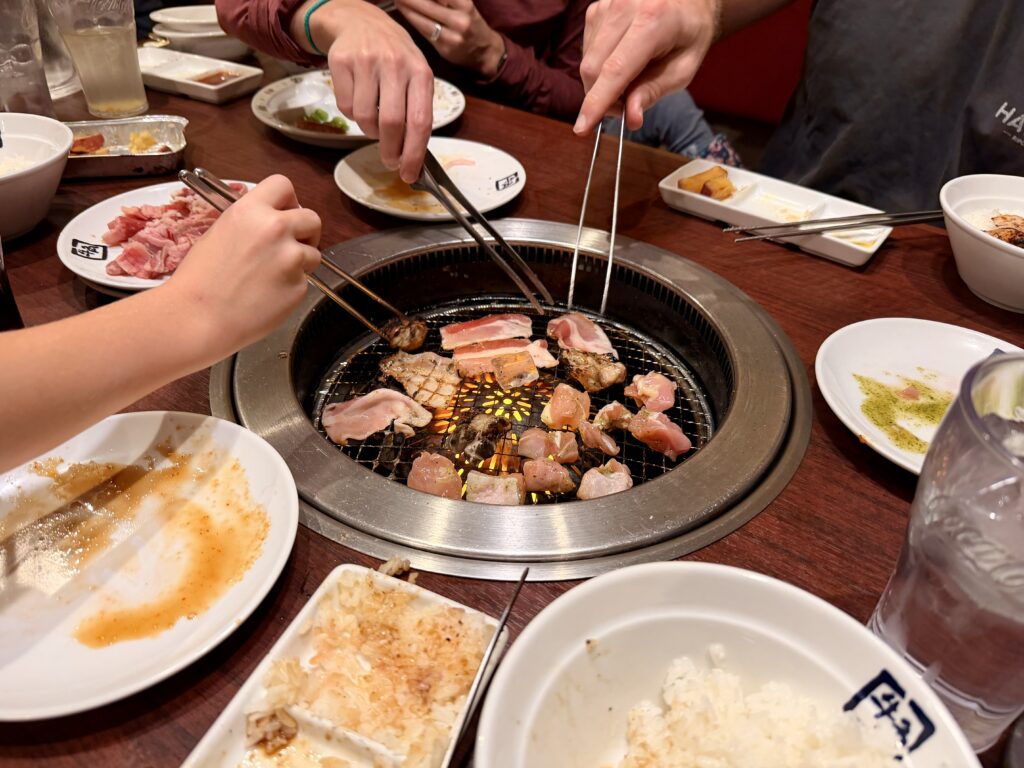
The next night we had yakiniku – basically Japanese BBQ where there is a grill in the middle of the table and you order various meats, etc to cook on the grill (all in bite-size pieces). It is usually timed – you can order as much as you want off of specific menus (the menus are different price points per person) and you can get as much as you want off that menu in the time allowed.
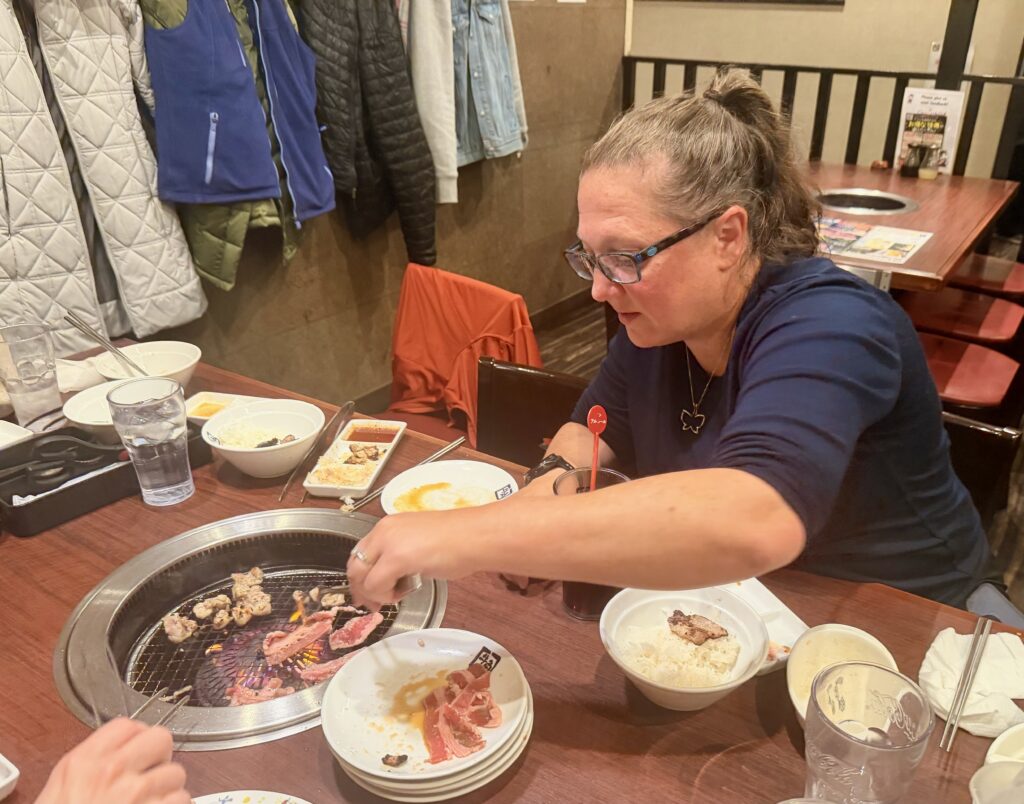
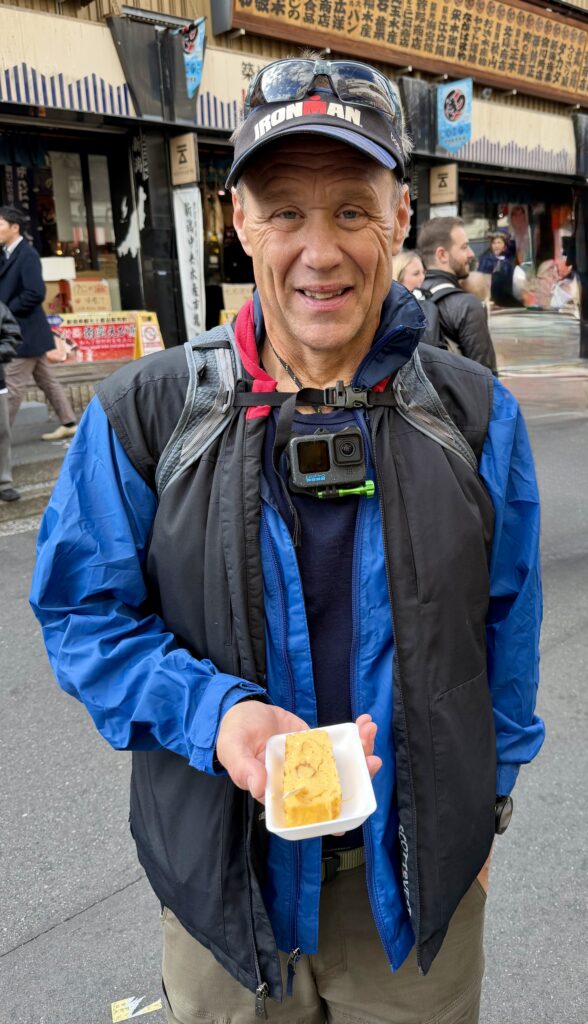
When we got back to Tokyo, we went to Tsukiji Fish Outer Market and had some great food there too. One of Chris’ favorites is tamagoyaki (basically a Japanese “omelette”). Notice the word “yaki” in a lot of these? It means to cook over direct heat – you’ve probably heard it in other words and didn’t realize it (like teriyaki!). Tamagoyaki is slightly sweet (but not over-powering sweetness) and so good right off the pan. You can even buy the special pans these use to make these (we *may* have one!).
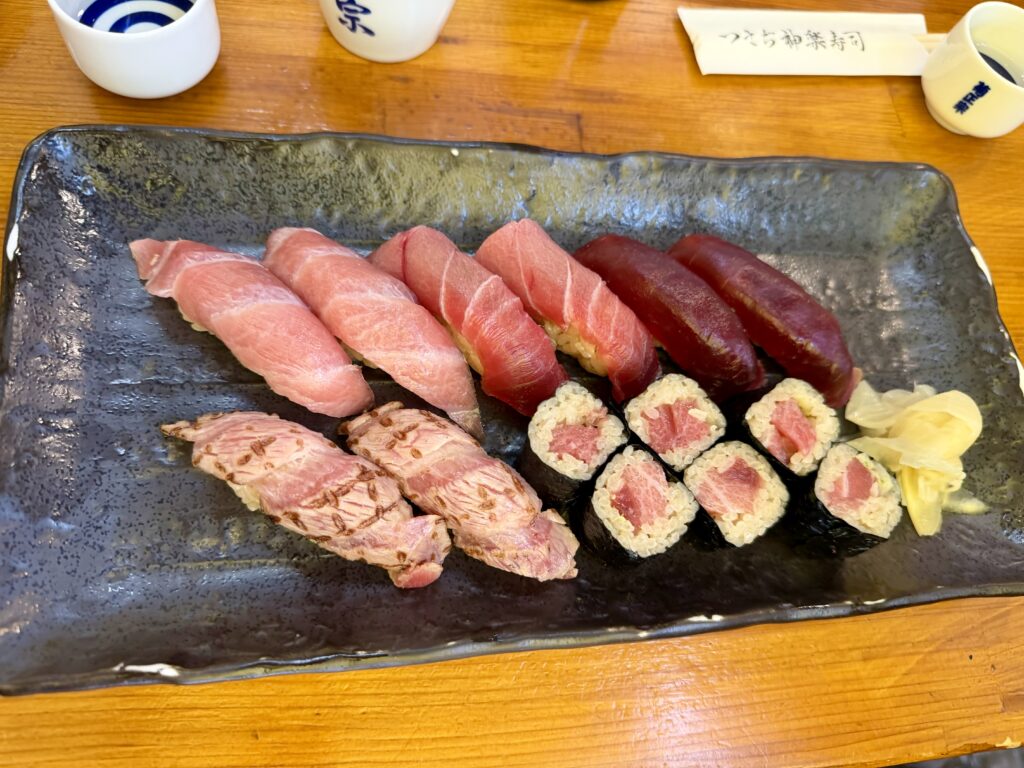
And of course at Tsukiji we had to get sushi! We got a maguro set – which was several different types of tuna -m from more lean to fatty, plus a seared one, plus a maki sushi roll. This is really the only type of roll you will see in Japan (unlike what you see in the US, which is a variety of different types of rolls).
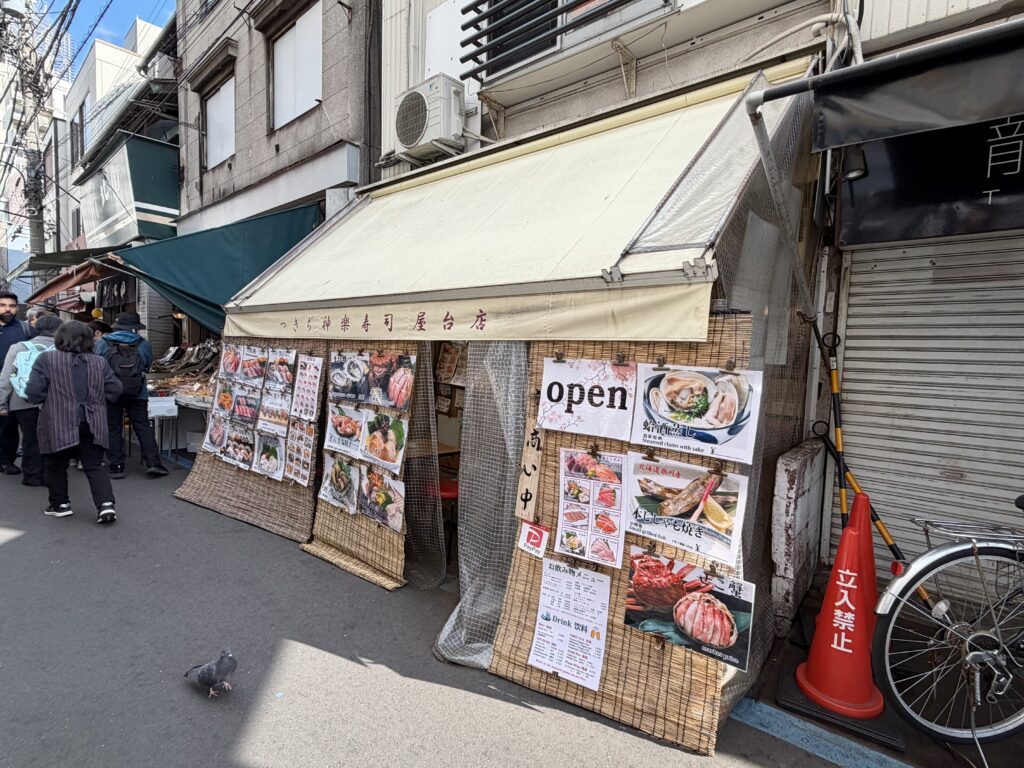
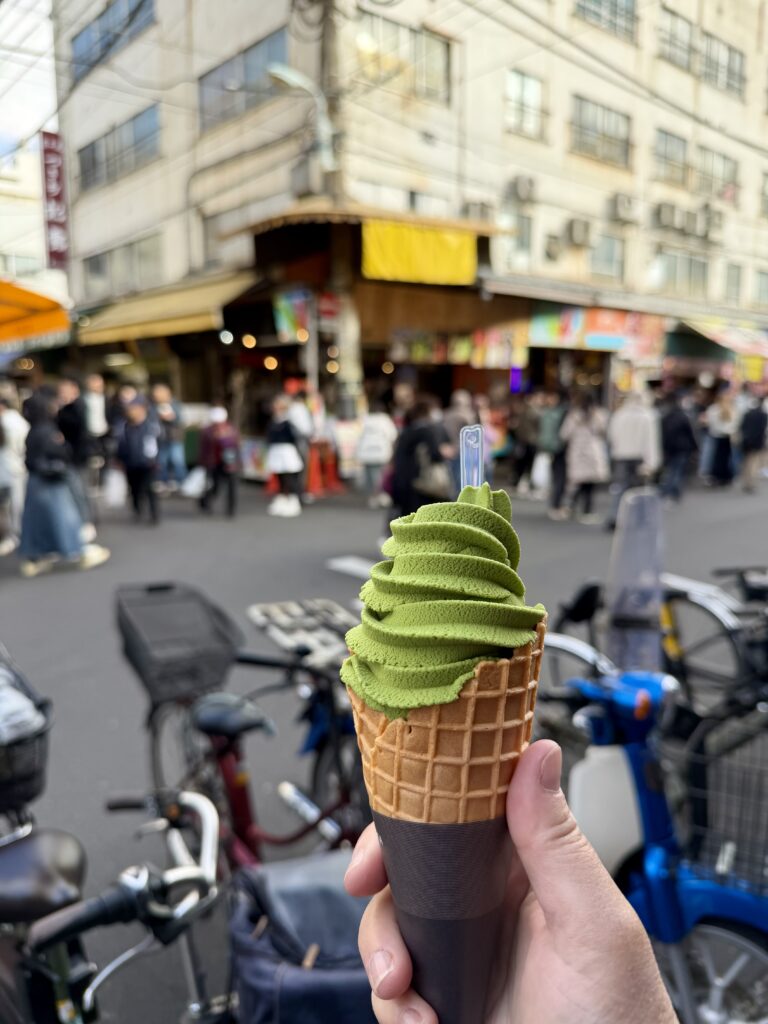
And of course I had to get some matcha ice cream while we were there. I love that stuff!
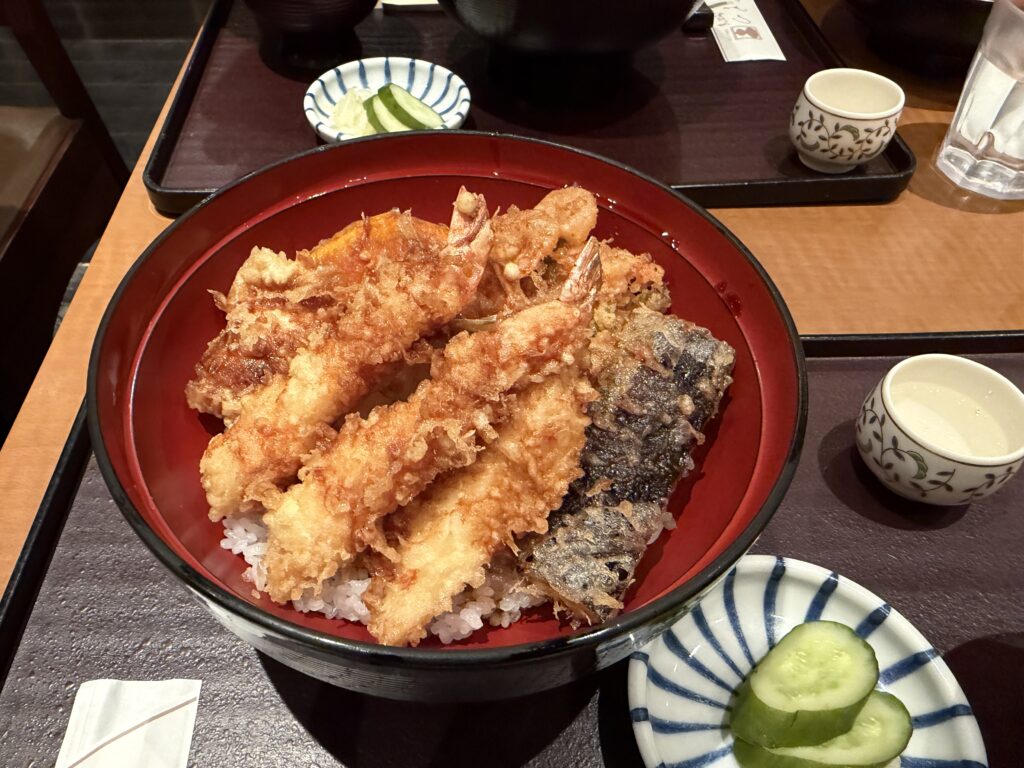
I had been craving a tempura donburi (“tendon”) and we found a great little place in Akihabara called Tempura Hisago and got a bowl with shrimp and vegetables. It was a good way to round out all the amazing food we had in Tokyo!
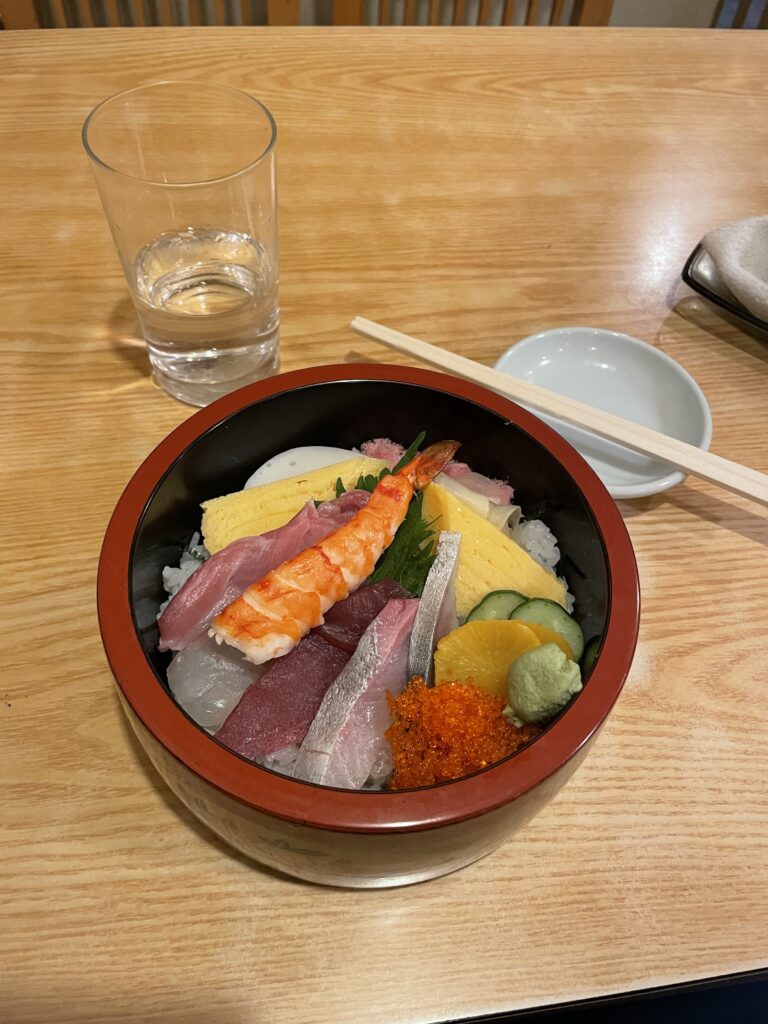
There are other types of donburi besides tempura. It’s basically a bowl of plain cooked rice with various types of food on top – katsudon for pork, gyudon for stewed beef, etc. (https://www.japan-guide.com/e/e2043.html) This picture below is kaisendon – raw seafood over rice. It was from a prior trip and was my pre-race dinner the night before the Tokyo marathon in 2023 (also from a place right by Hiro-o metro stop near the New Sanno). Turned out to be a pretty good pre-race meal!
And now I’m hungry!






I love all the information you have provided about the various dishes! I’m going back for a vacation in April and look forward to eating real Japanese food again. Thank you for sharing!
So glad you’re enjoying the posts! Have a great trip back to Japan – we definitely miss the food! And then onsens 🙂