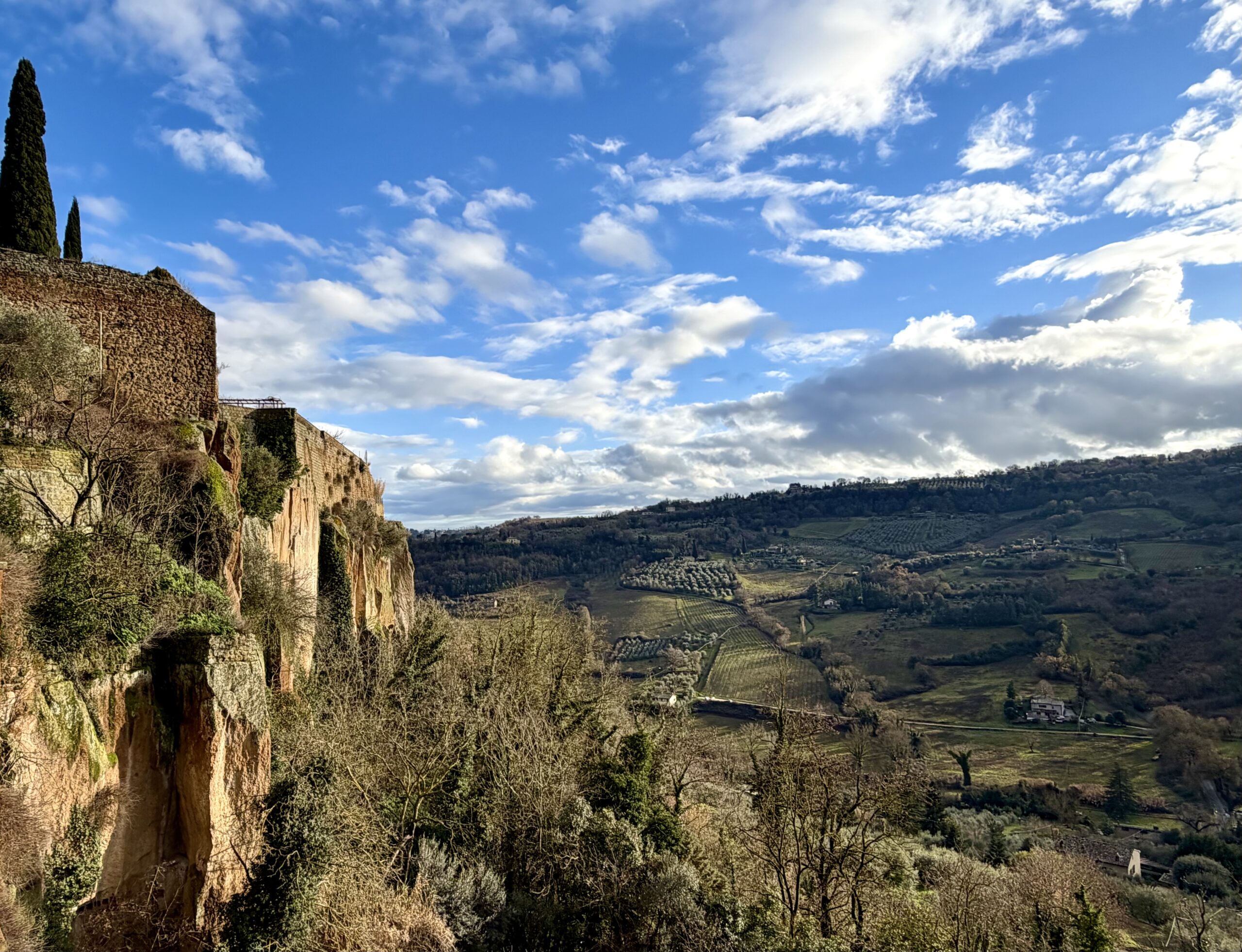

Next up was another central Italian hill town – this time in Umbria (the region next to Tuscany and also borders Lazio – the region where Rome is). It’s about 90 minutes from Rome by train. It took a little over 2 hours to get here from Siena (with 1 switch) so it was a great stopping point between Rome and Siena. It’s a popular day trip as well but we have enjoyed staying in places like this for a couple of nights to experience a full day plus some evenings when everyone else leaves. I found this village when looking at places to stop on the way to Rome and came across this article: https://www.ricksteves.com/watch-read-listen/read/articles/orvieto-what-an-italian-hill-town-should-be.
Of note, Italy is divided into 20 administrative regions. Probably the one name everyone is most familiar with is Tuscany. We ended up visiting 7 of the regions on our trip (Veneto, Toscano – Tuscany, Umbria, Lazio, Campania – as a day trip, Lombardia, and Liguria). You can check out all of the regions here: https://www.italia.it/en/italy/italian-regions.
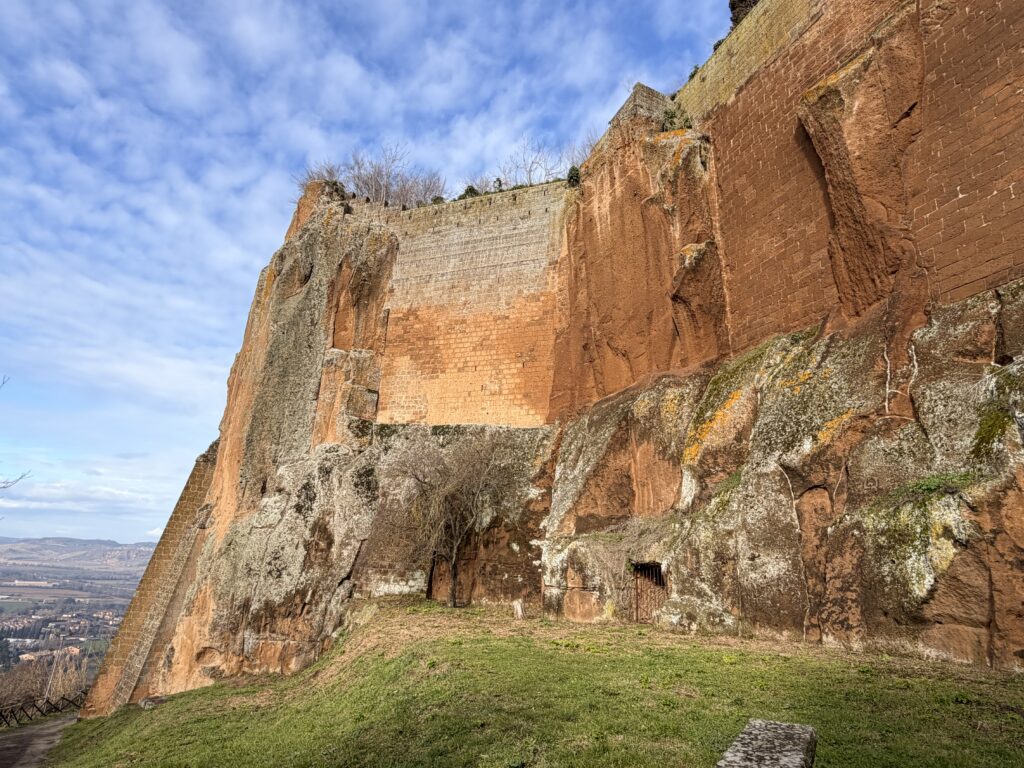
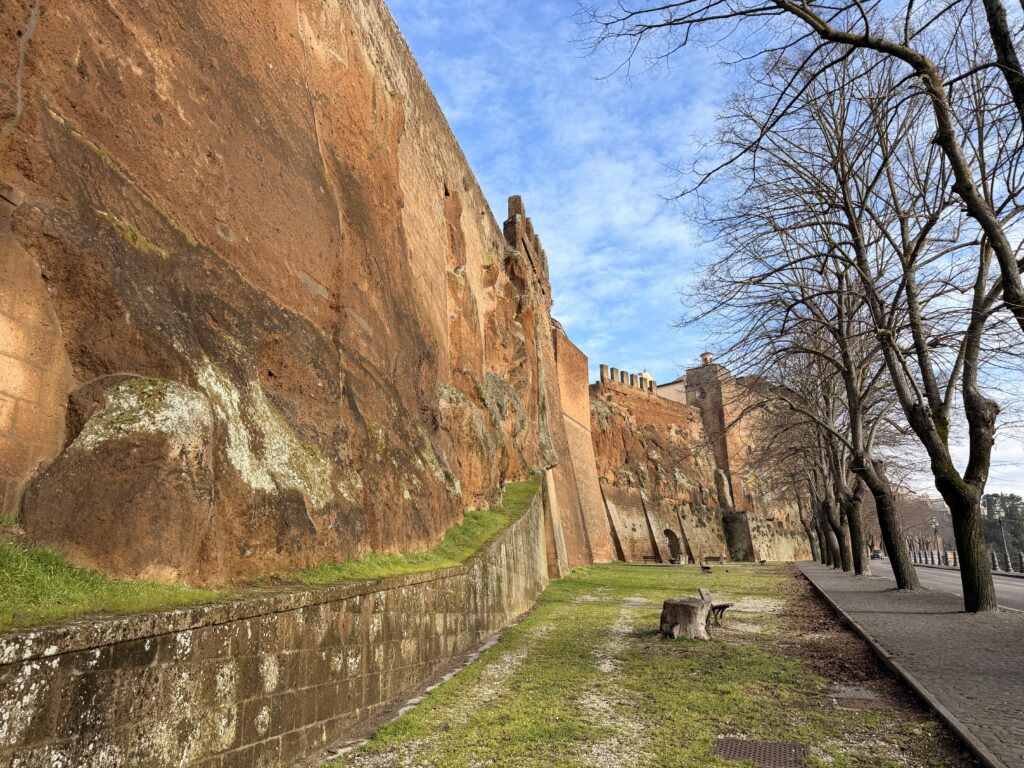
Orvieto was founded by the Estrucan people around the 9th century BC (the Estruscans were around from 900-27 BC). It sits 1000 feet above the valley floor on a huge “tufo” rock (volcanic stone). While they do have escalators (like Siena) and an elevator, they also have a fun funicular that takes you from the train station right up to the top. It’s a whopping €1.30 per person each way. And of course, Chris was right up front to watch it as we went up the hill. There’s also apparently a big free parking lot near the train station so people driving in can park there (you definitely do not want to drive in Orvieto!).
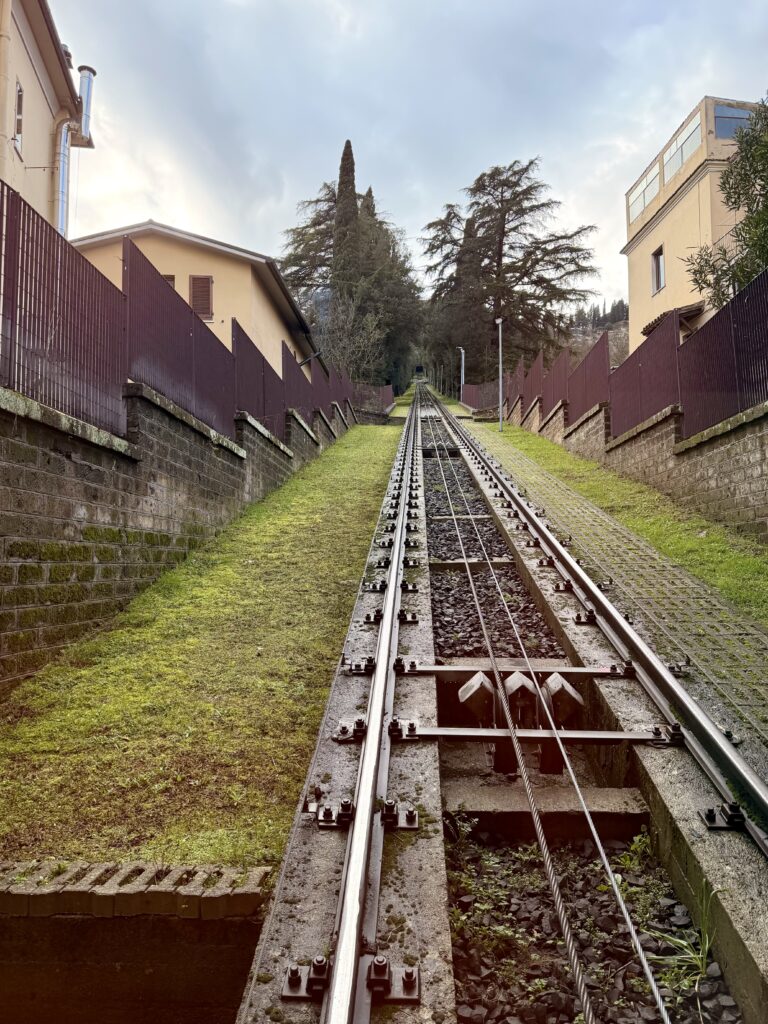
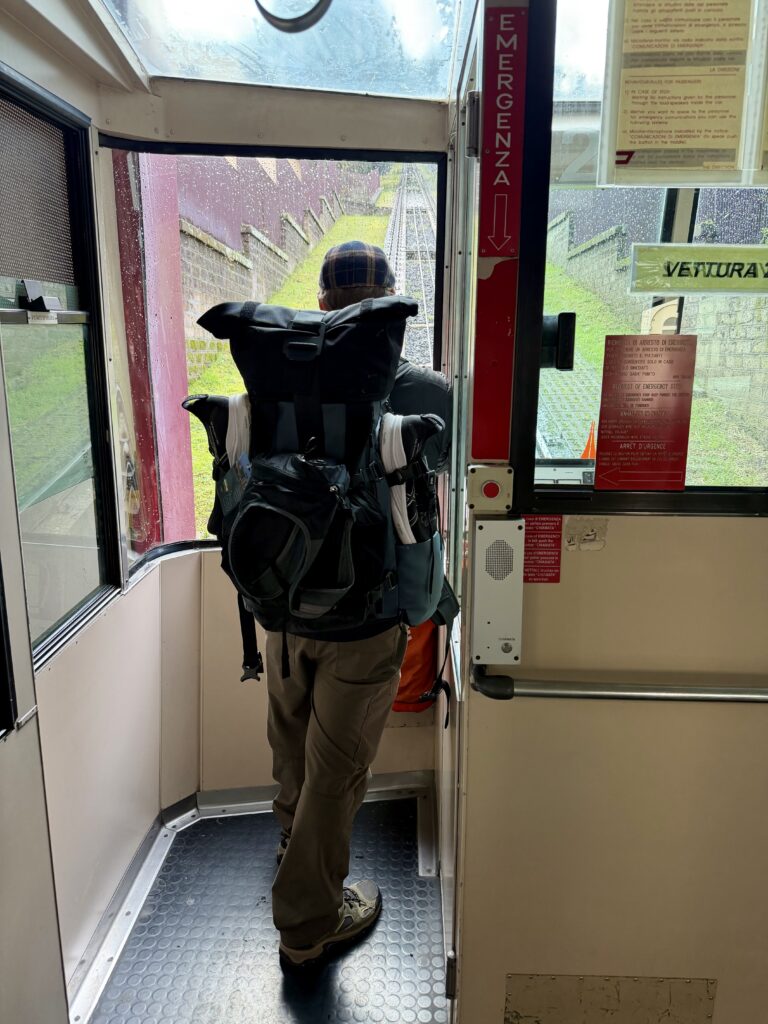
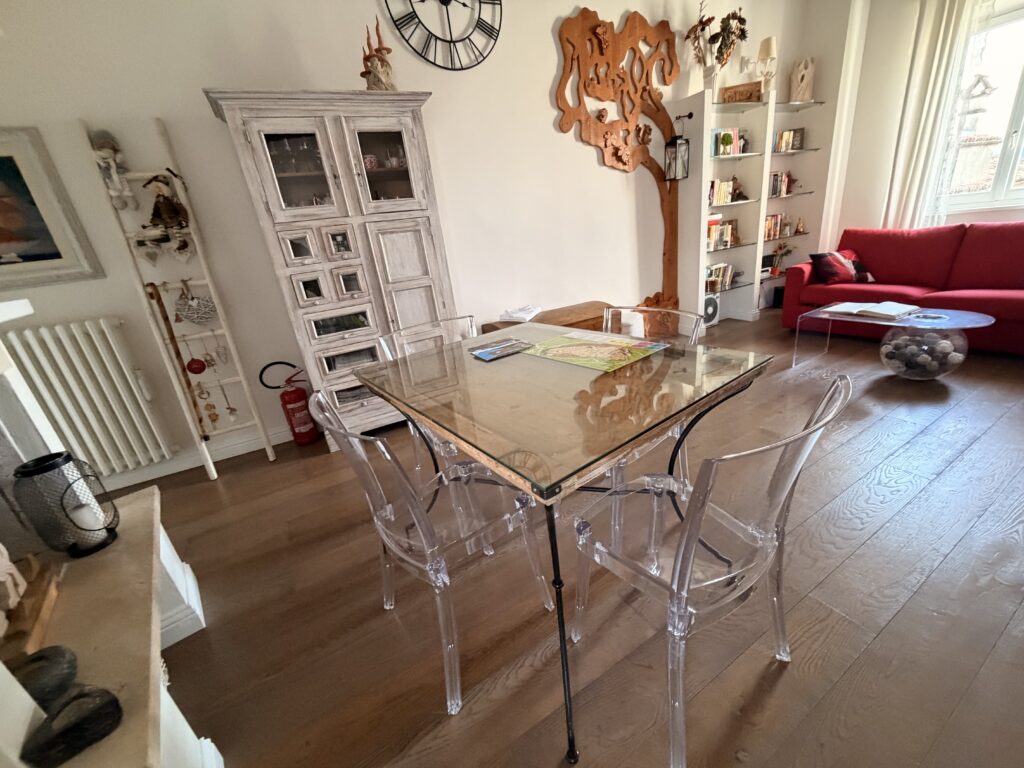
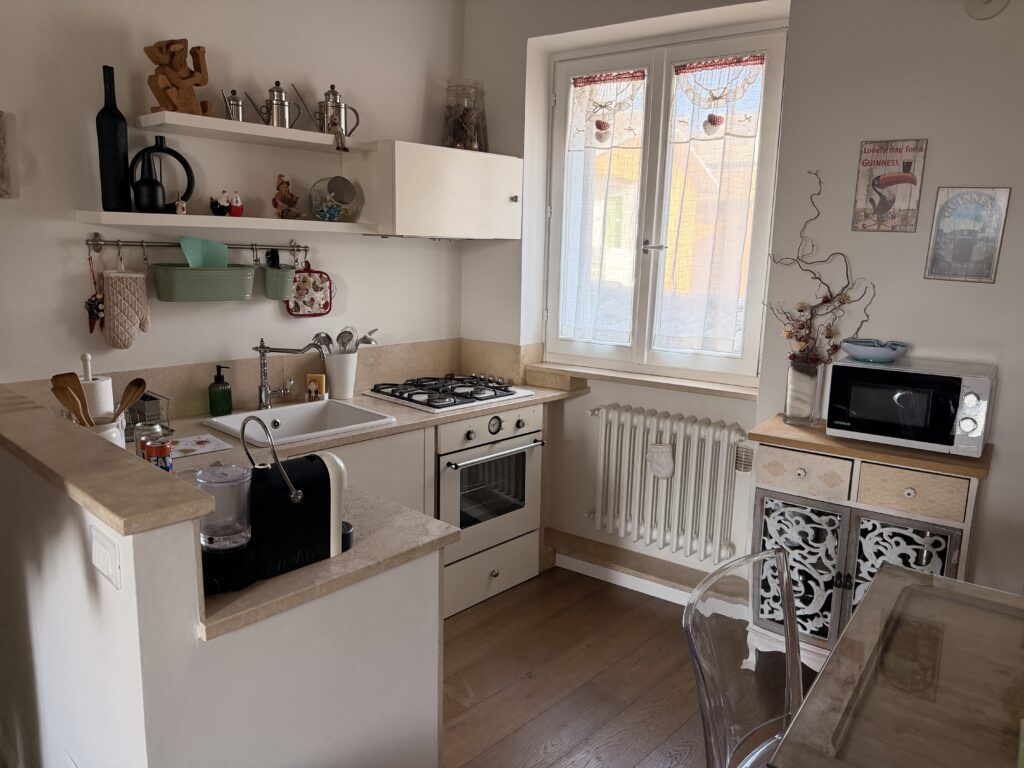
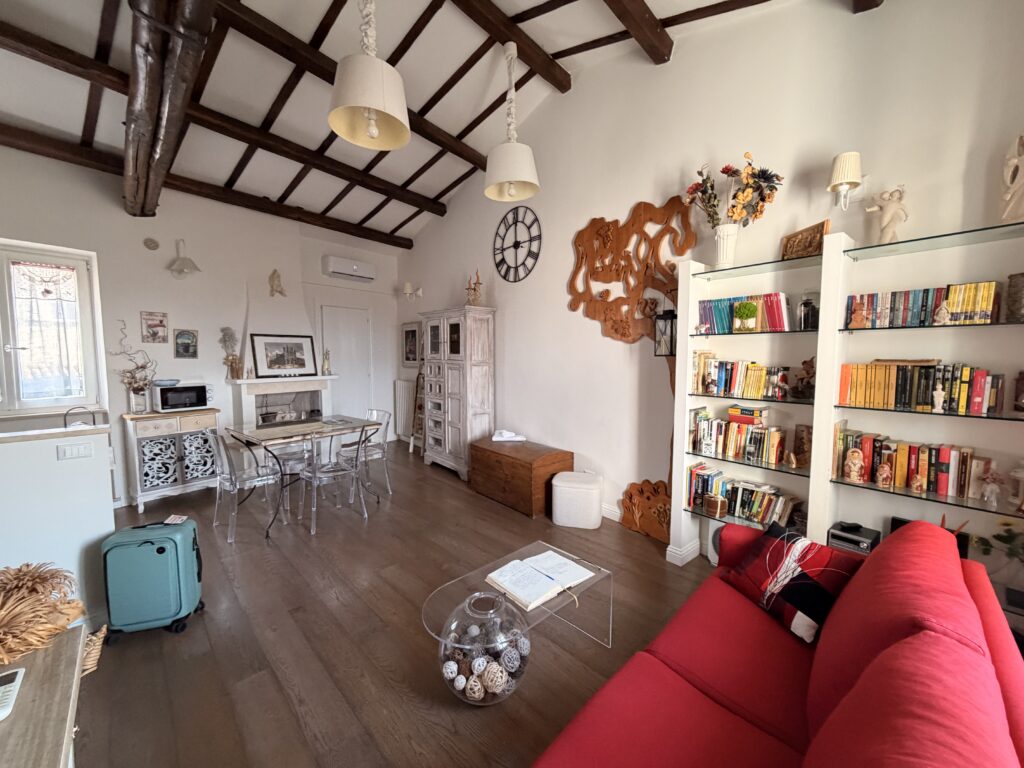
We stayed at a great VRBO(https://vrbo.onelink.me/ItNz/y0gpyflo) and the host, Luigi, actually came and picked us up at the funicular and drove us to the apartment (and dropped us back off there the day we left). From there, everything in town was walkable.
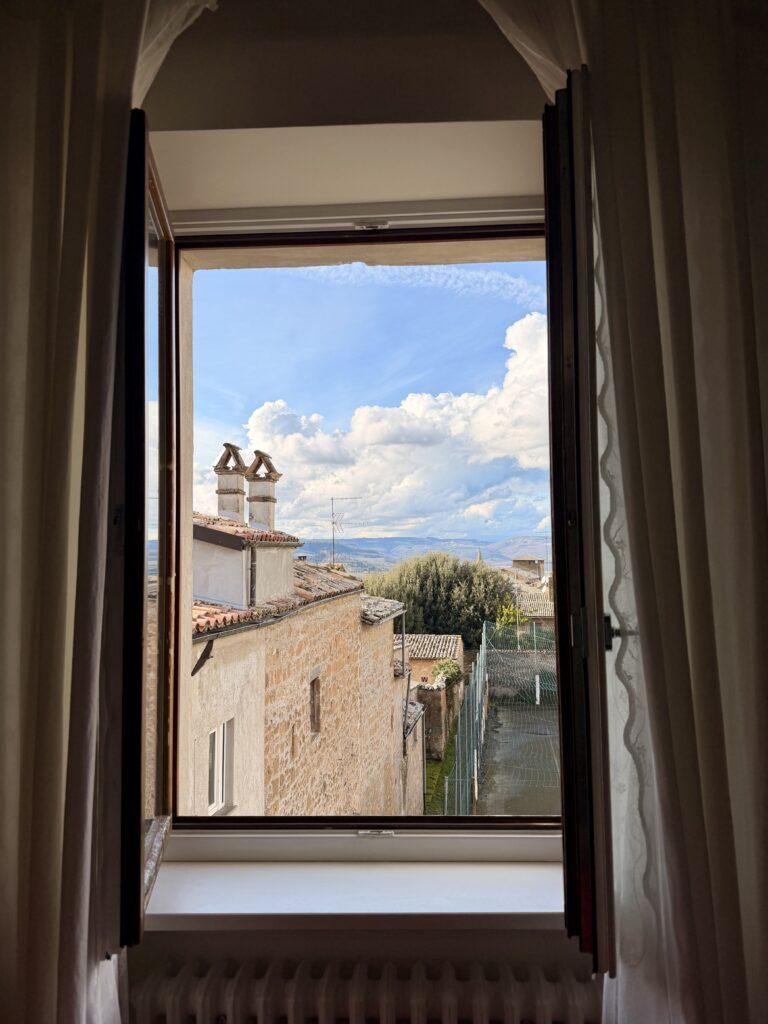
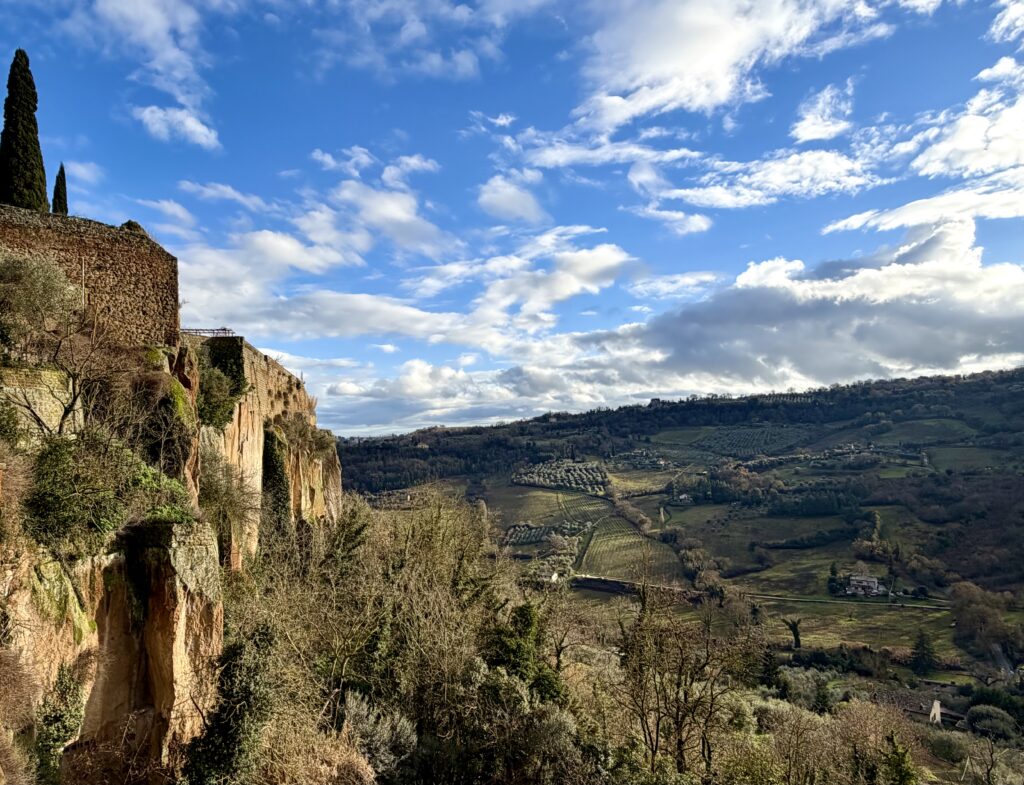
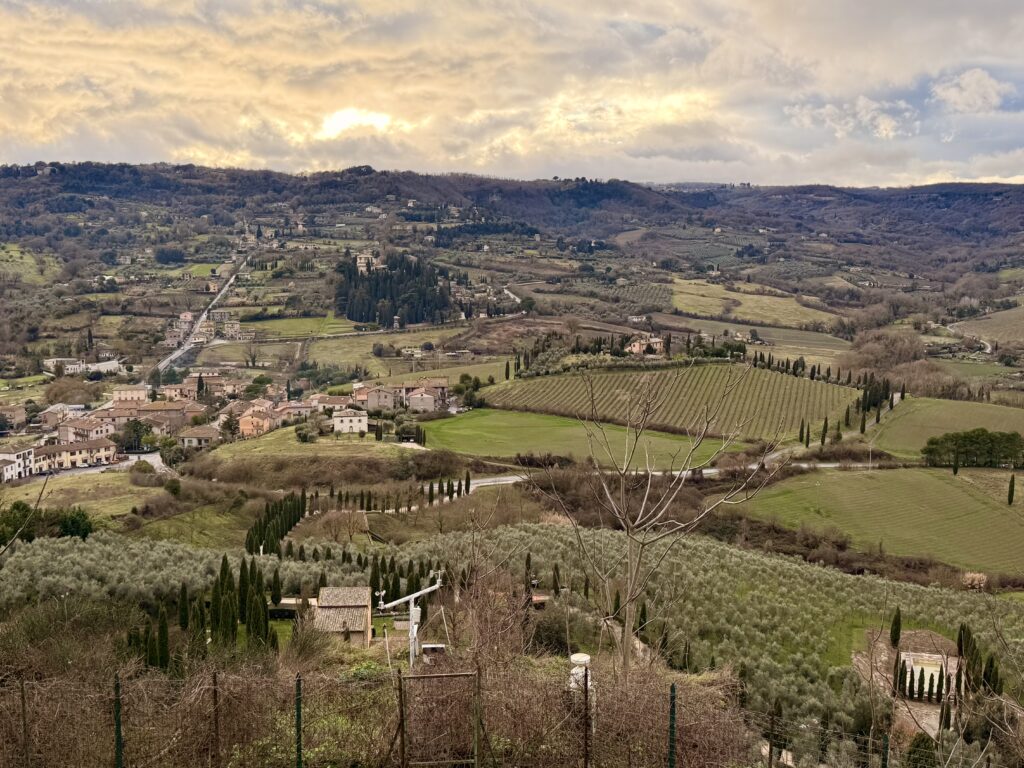
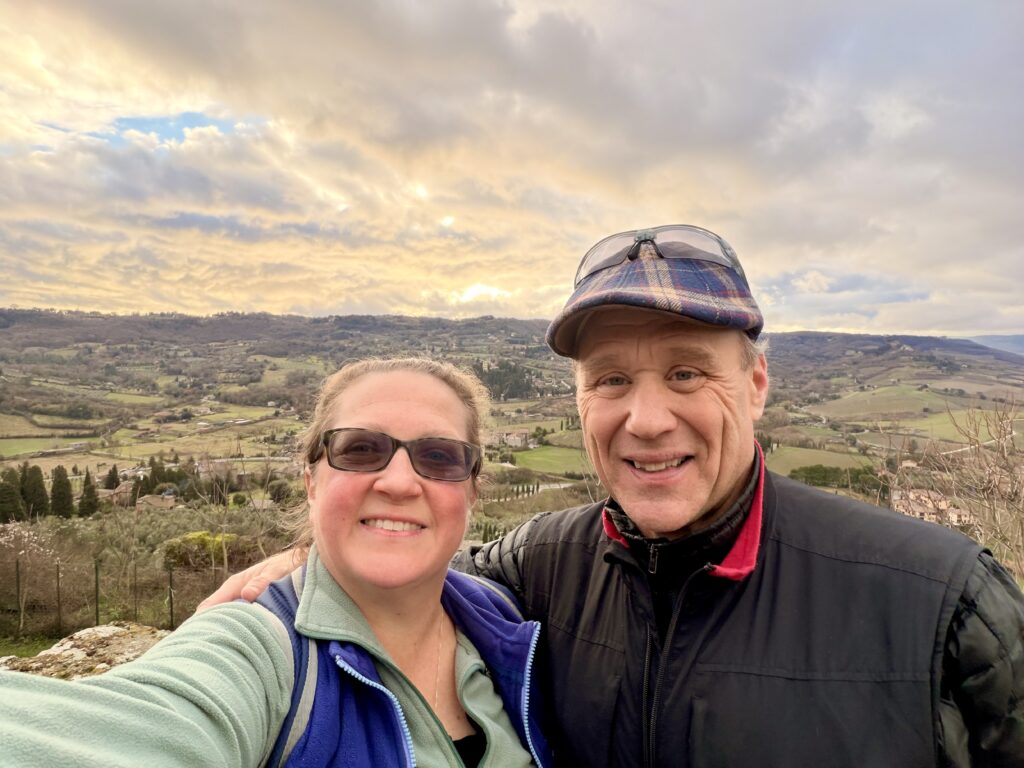
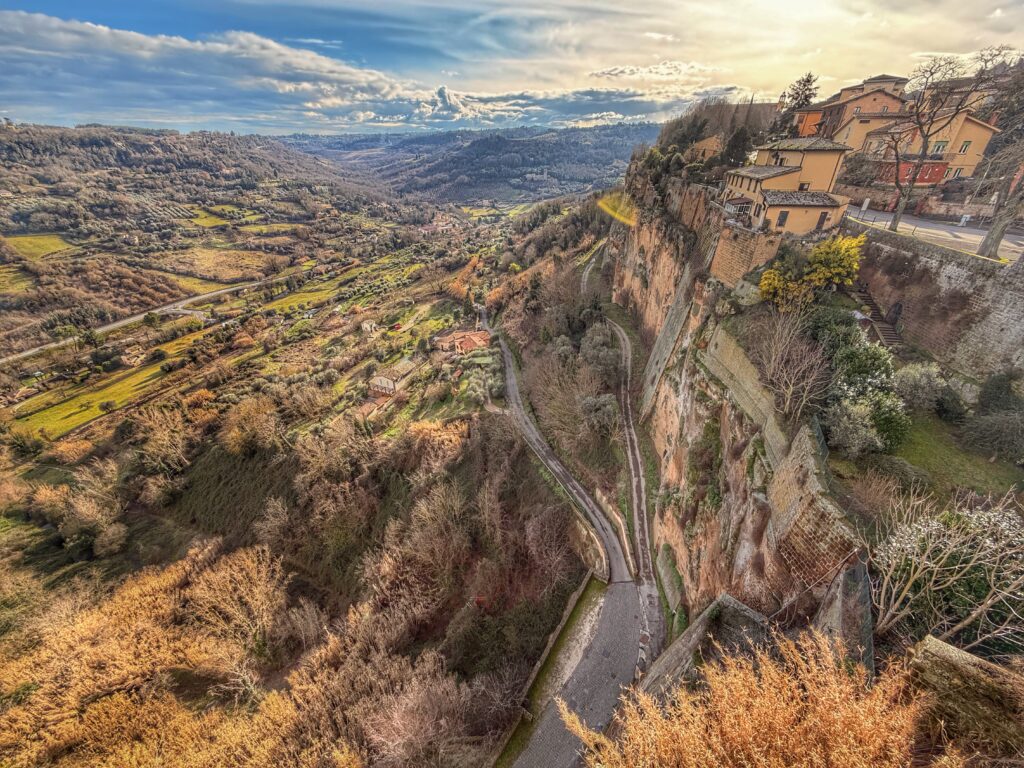
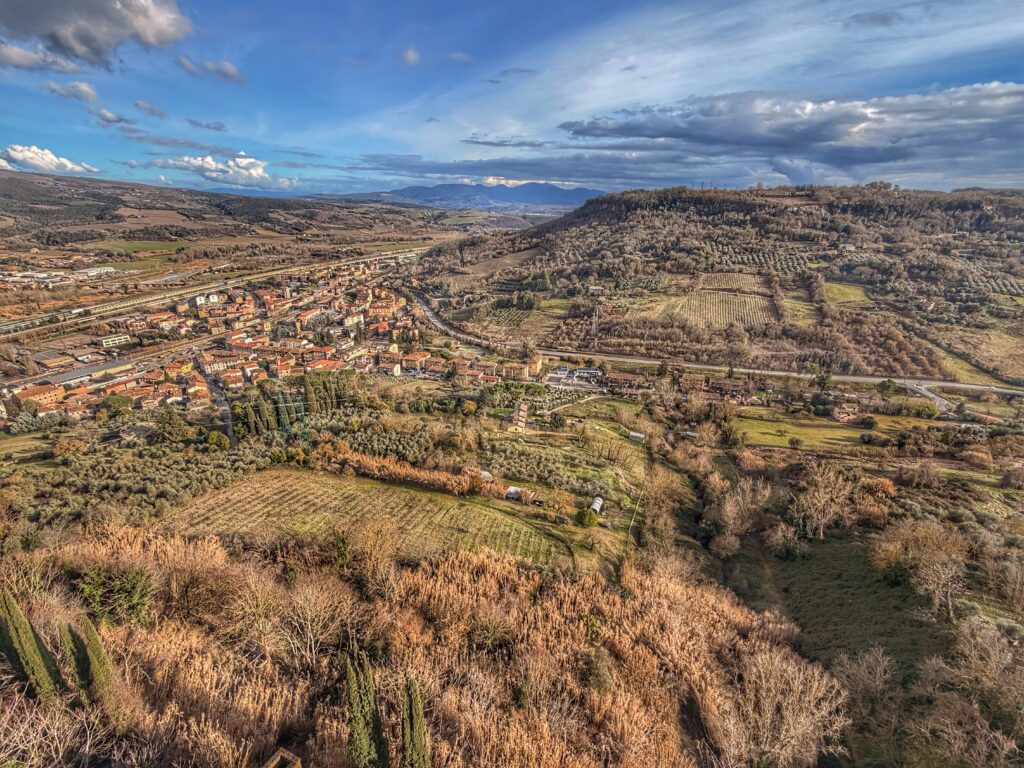
The views from the village were absolutely amazing when the weather was clear (the mornings were pretty foggy but when it cleared up it was an amazing view).
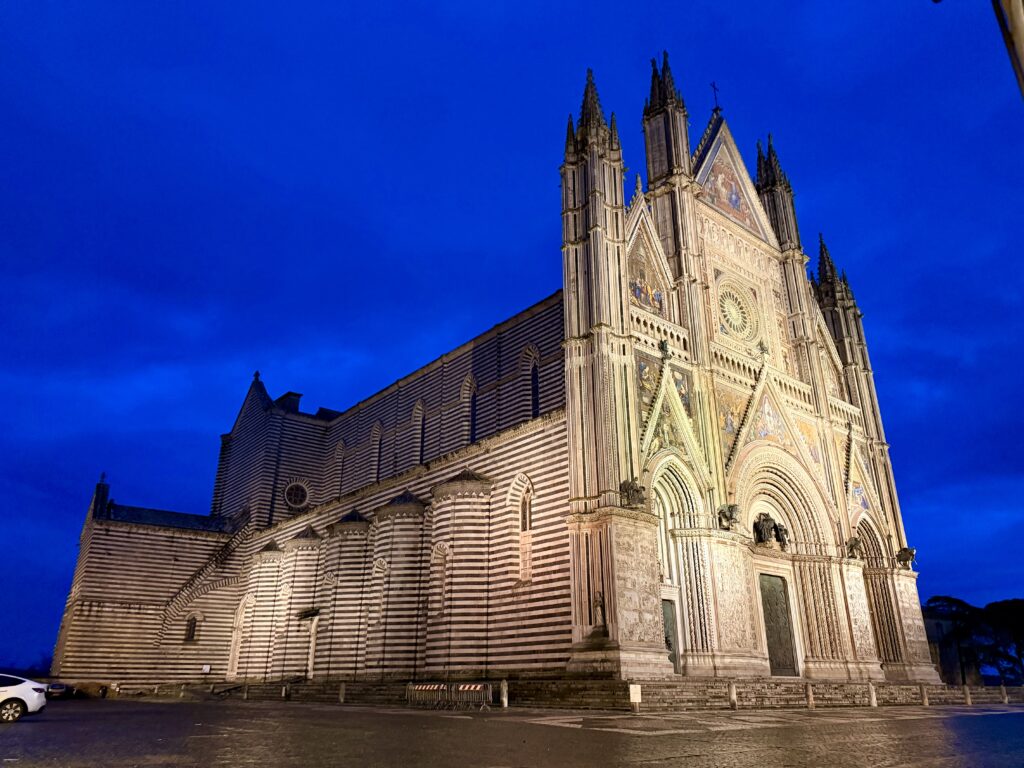
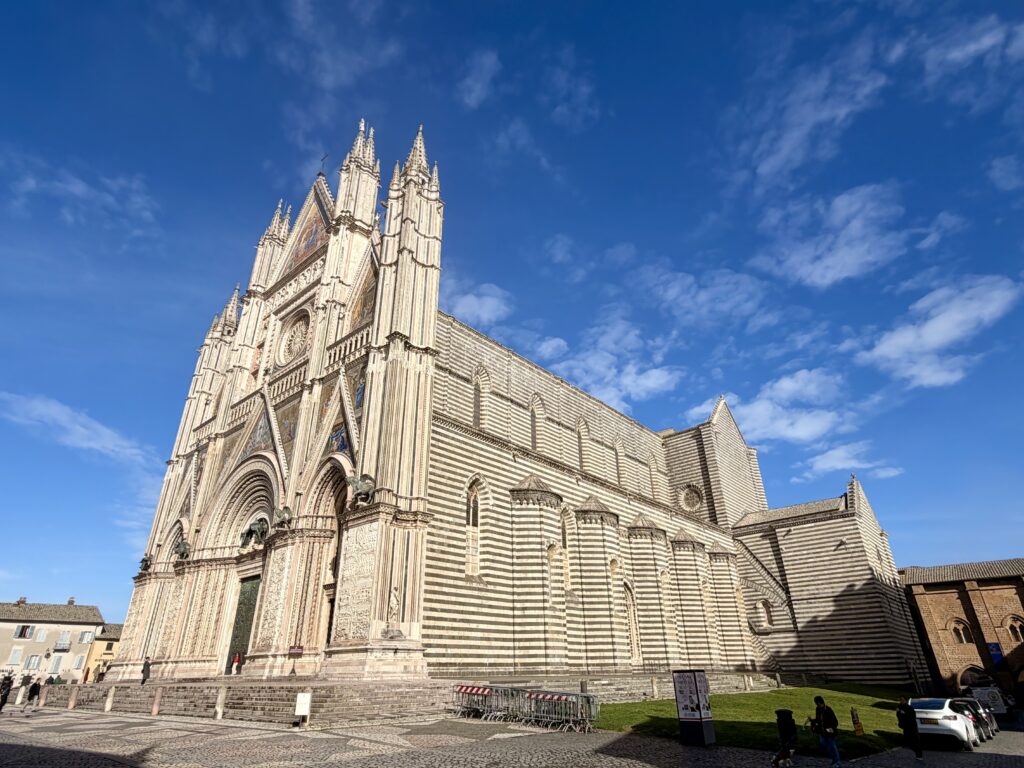
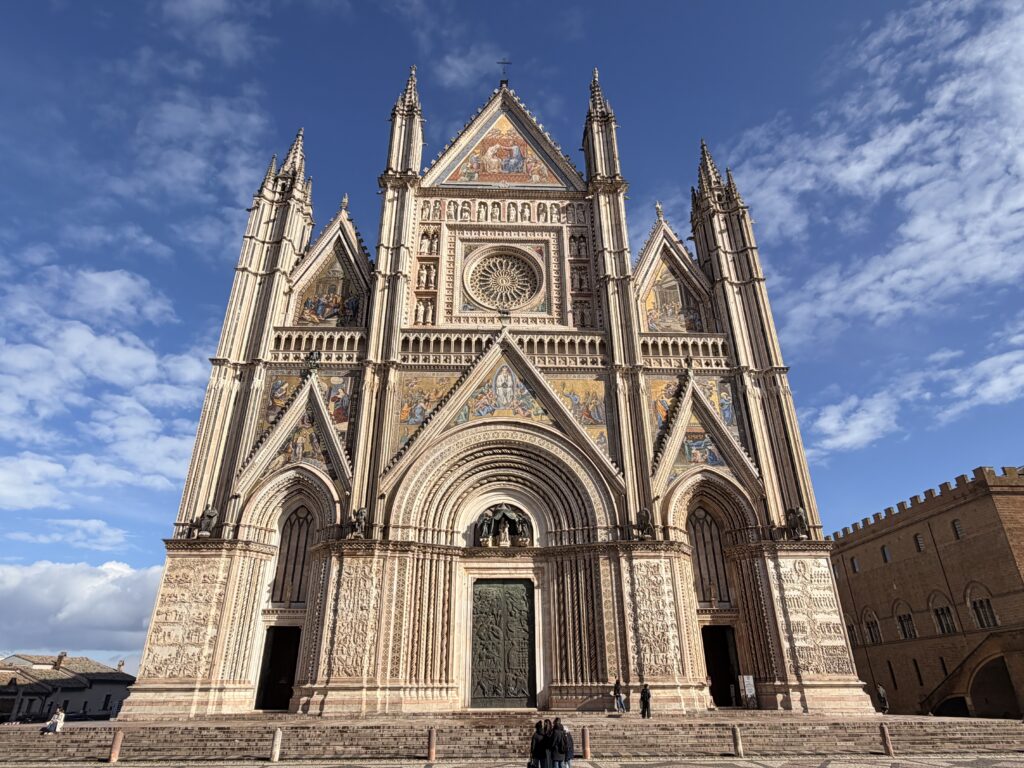
Like Siena, Orvieto has a striped marble cathedral. It was quite beautiful on the outside (we didn’t go inside).
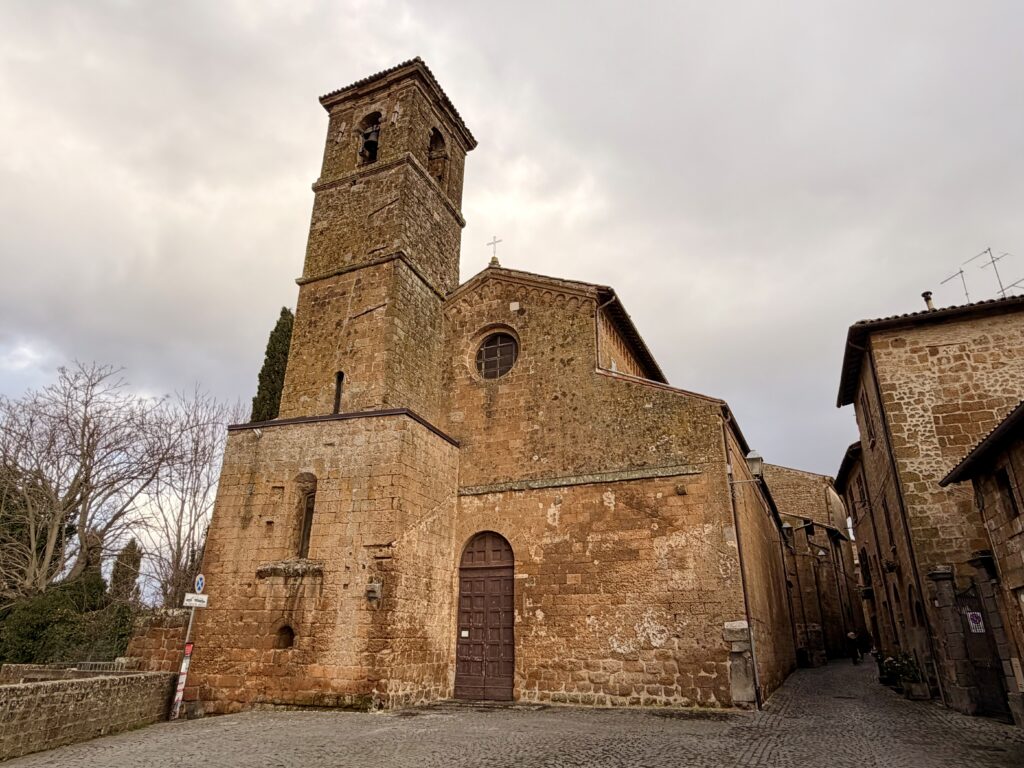
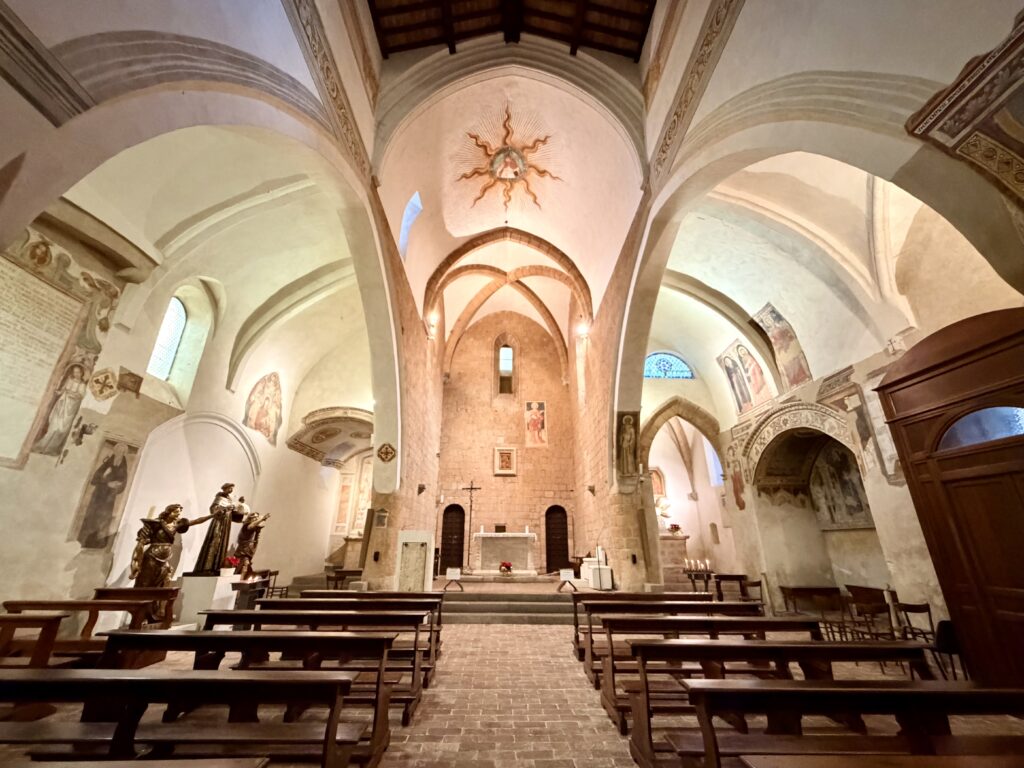
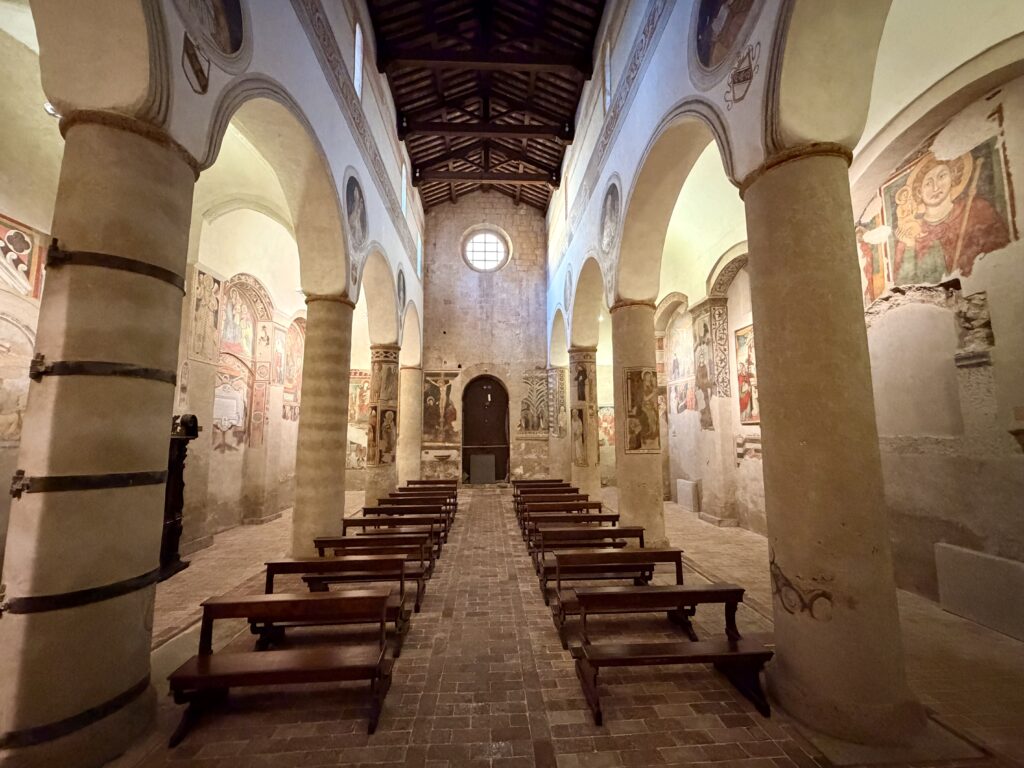
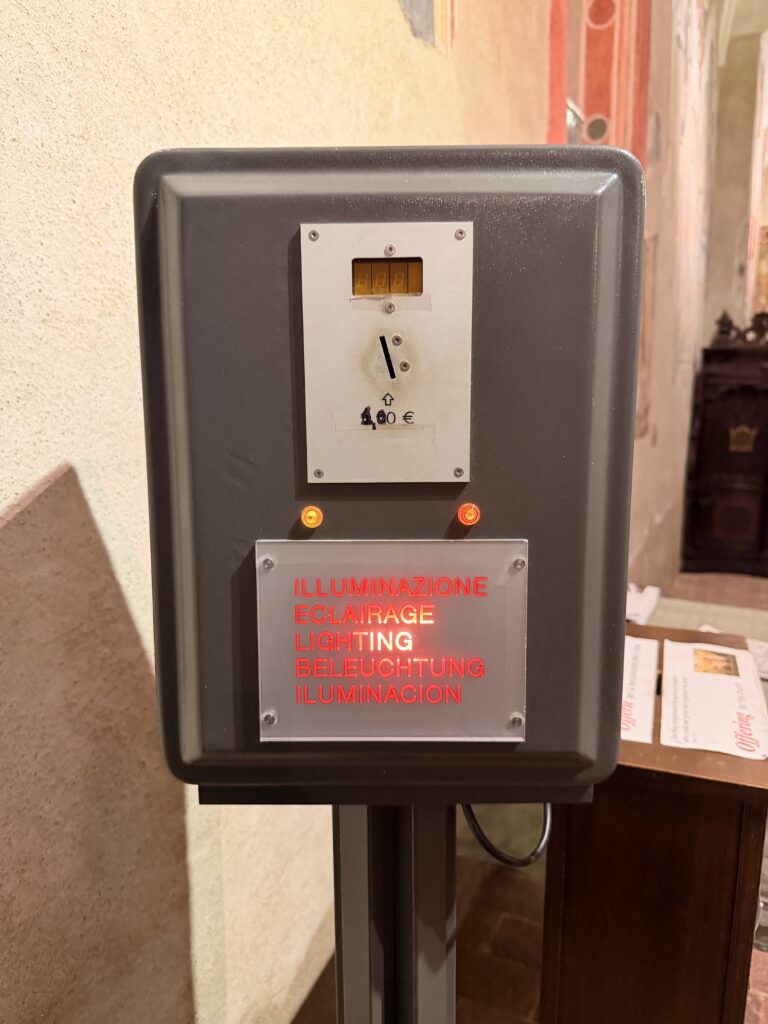
We did stop in to see a different church – the Church of San Giovenale. It’s the oldest church in Orvieto – it was built in 1004 AD on the remains of an older Etruscan temple. There were a couple of women in there when we went in but once they left we had the church to ourselves – we realized a few minutes later when the lights went out that we were using the light they had paid for. You had to put €1 in to keep the lights on (we saw this a couple other places too and thought it was pretty funny).
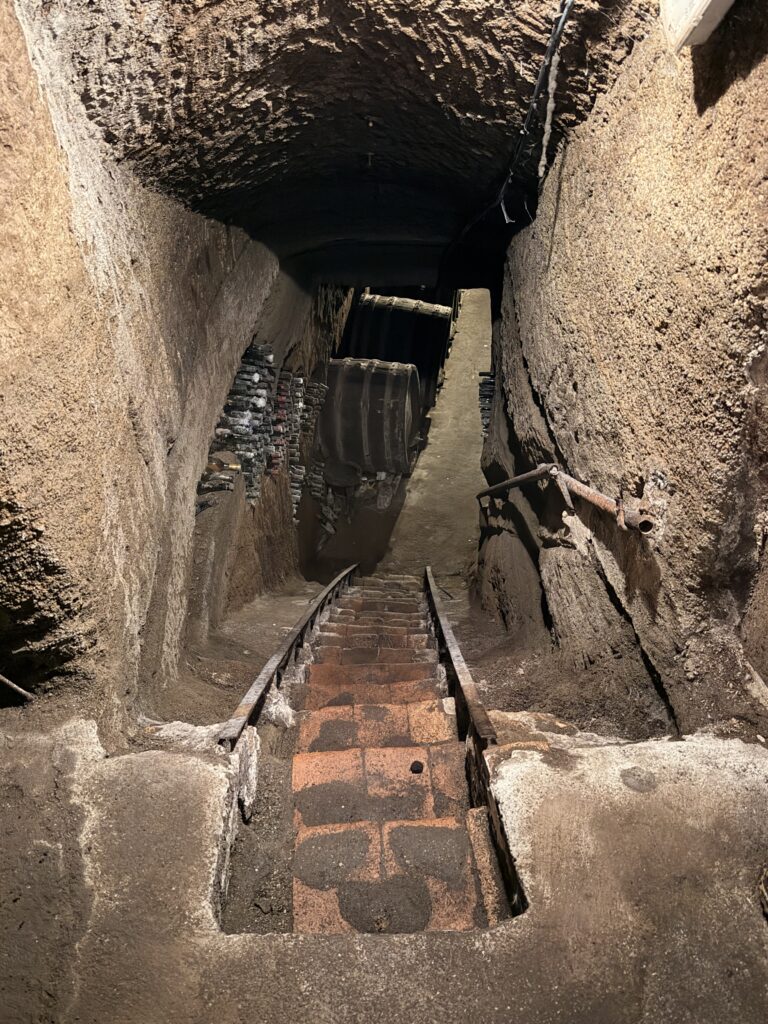
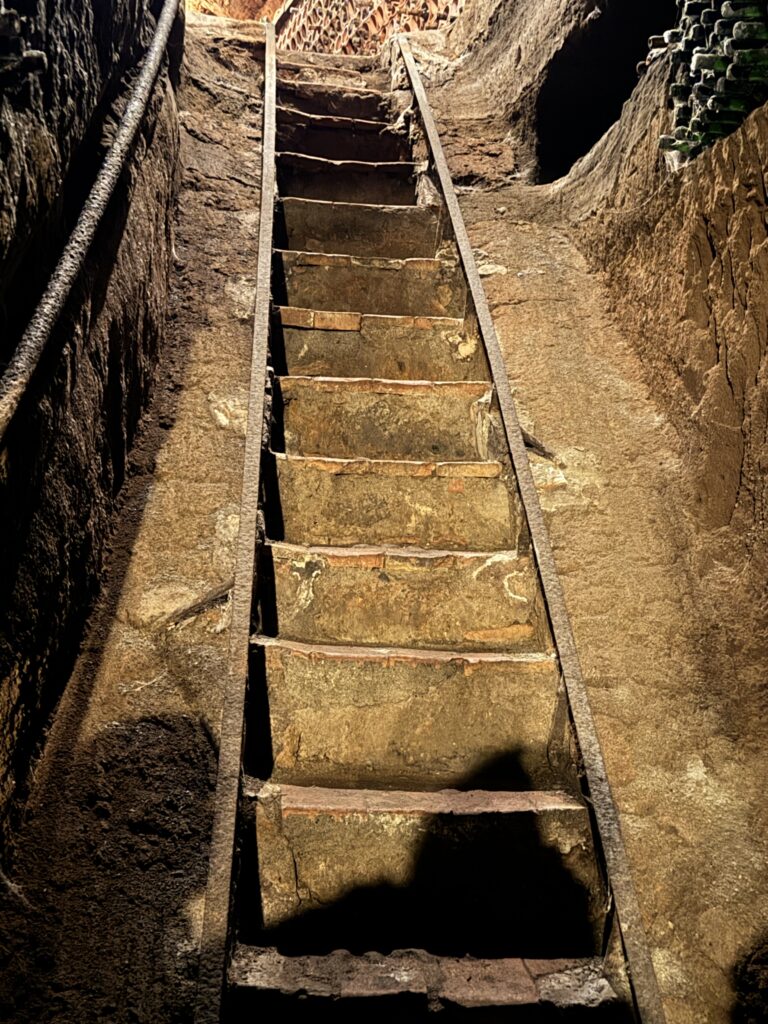
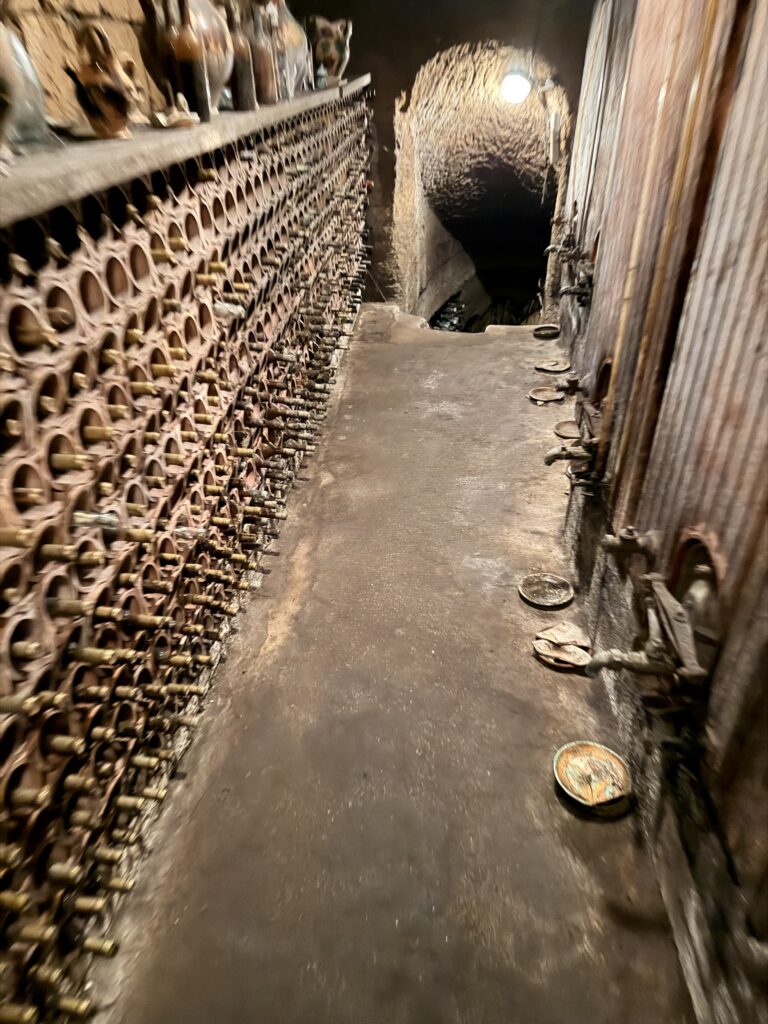
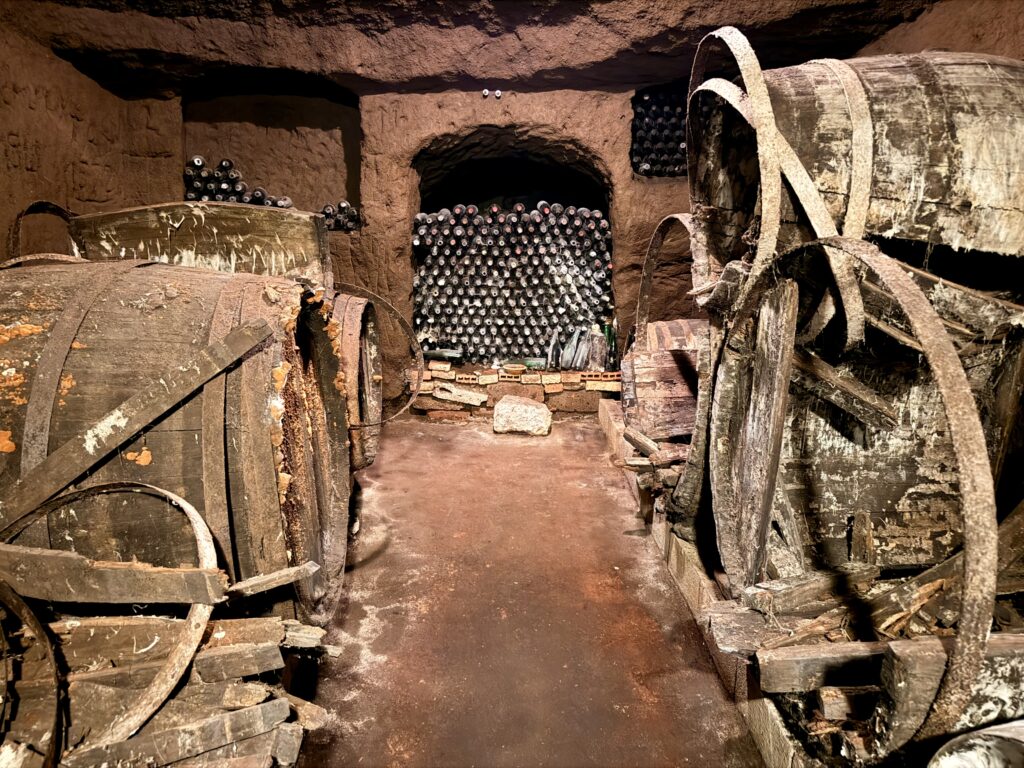
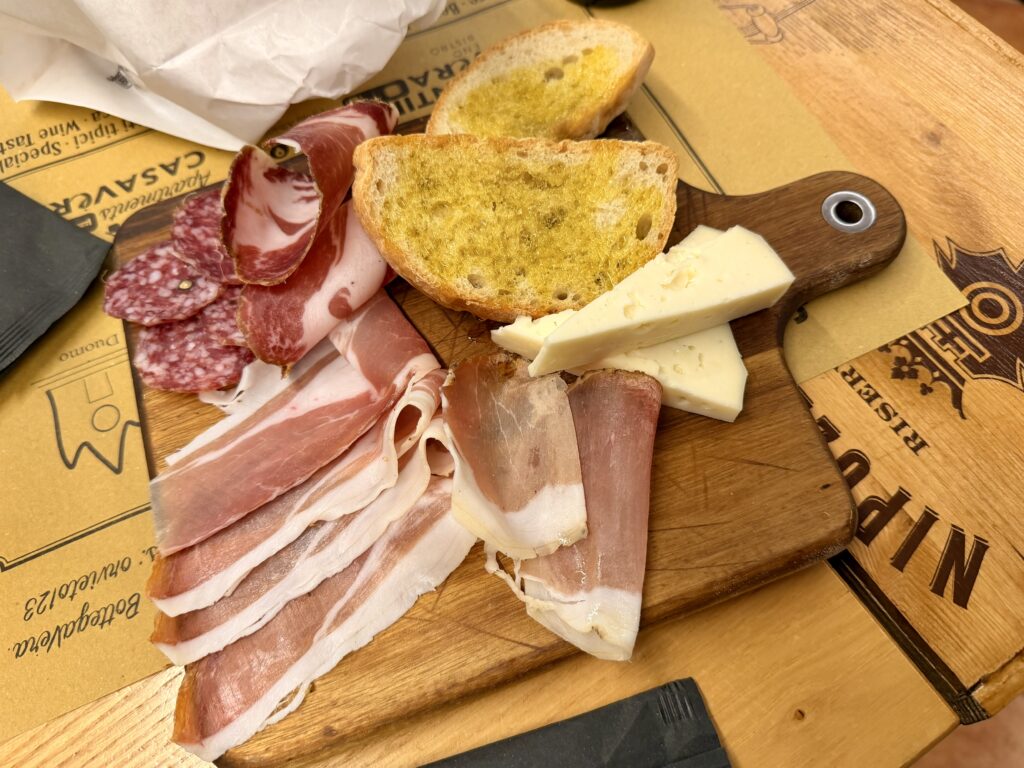
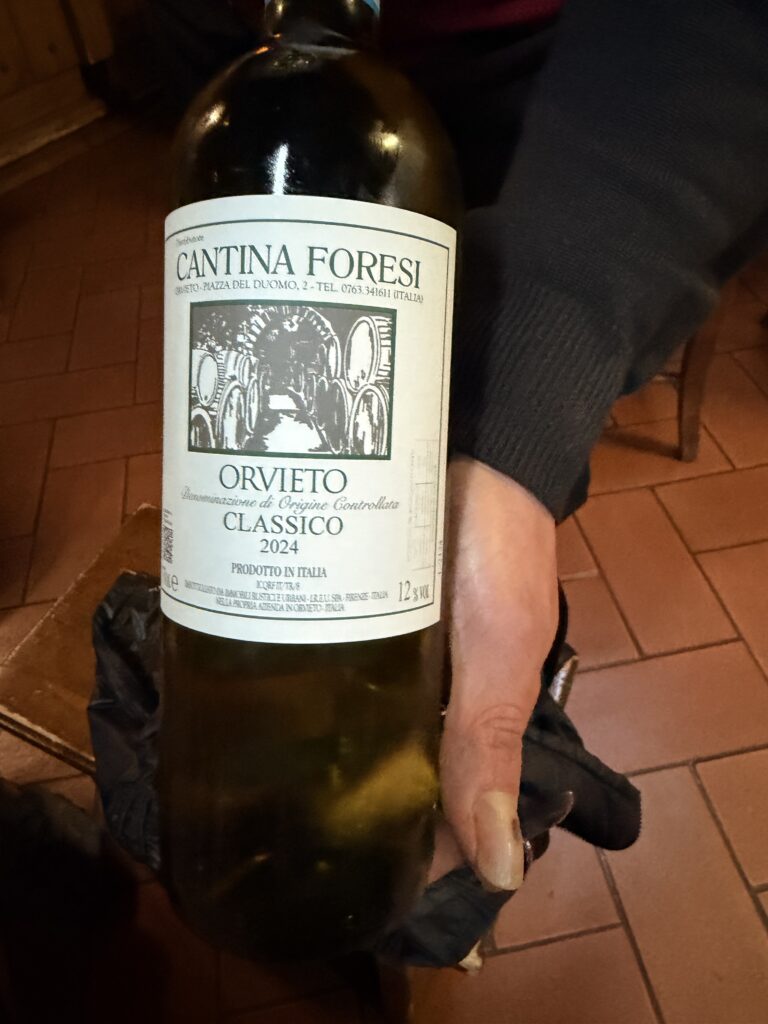
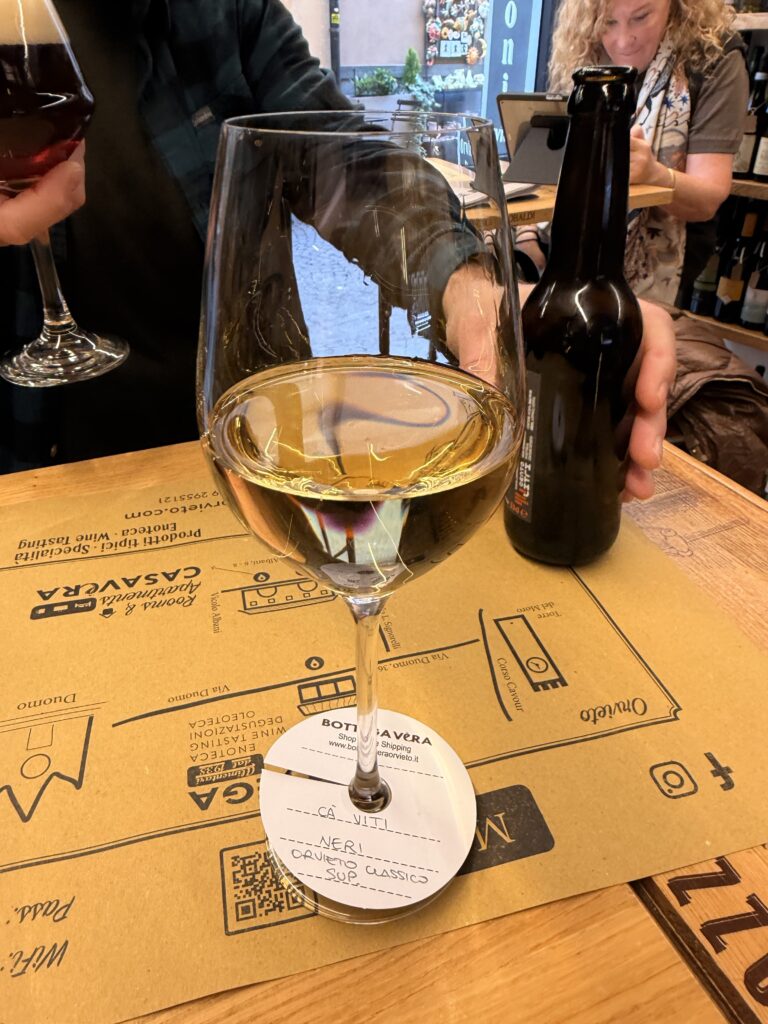
Besides the cathedral, Orvieto is known for a couple of other things – ceramics and Orvieto Classico wine. We scheduled a wine tasting and tufo cellar tour (historically the wineries had cellars in the rock to store their wine). Most of the wineries are slightly outside of town so without a car they weren’t the easiest to visit in the limited time we had. So I found a place in town (right by the cathedral) that had a cellar tour and tasting/cheese pairing (https://www.cantinaforesi.it/en/home-english/). It was a small cellar but still pretty cool to see – those stairs are no joke!
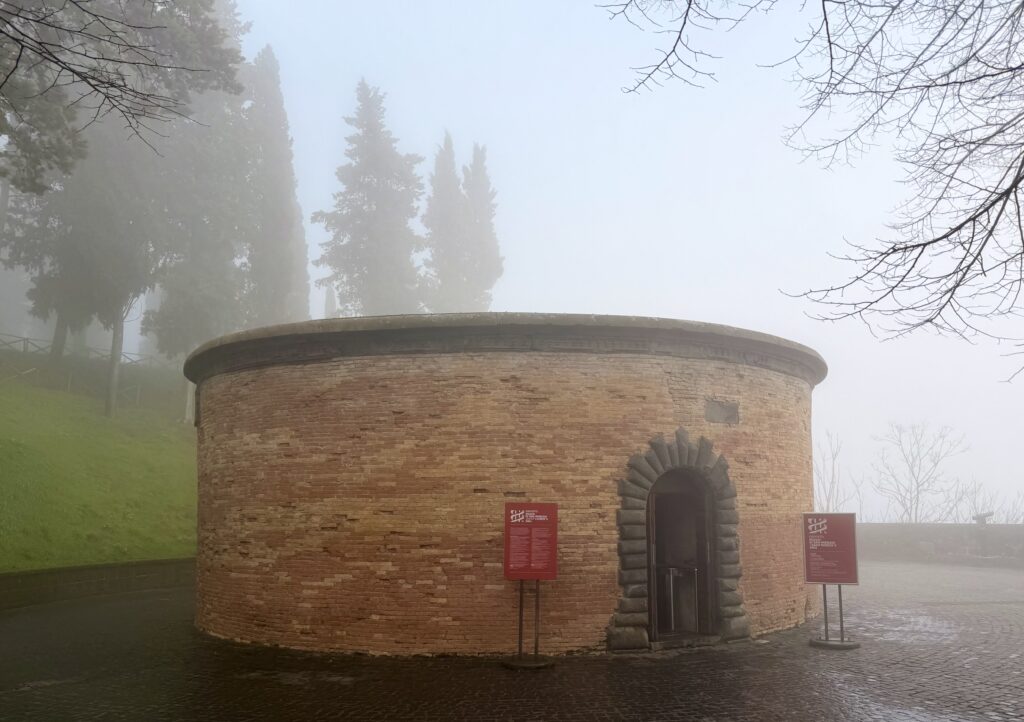
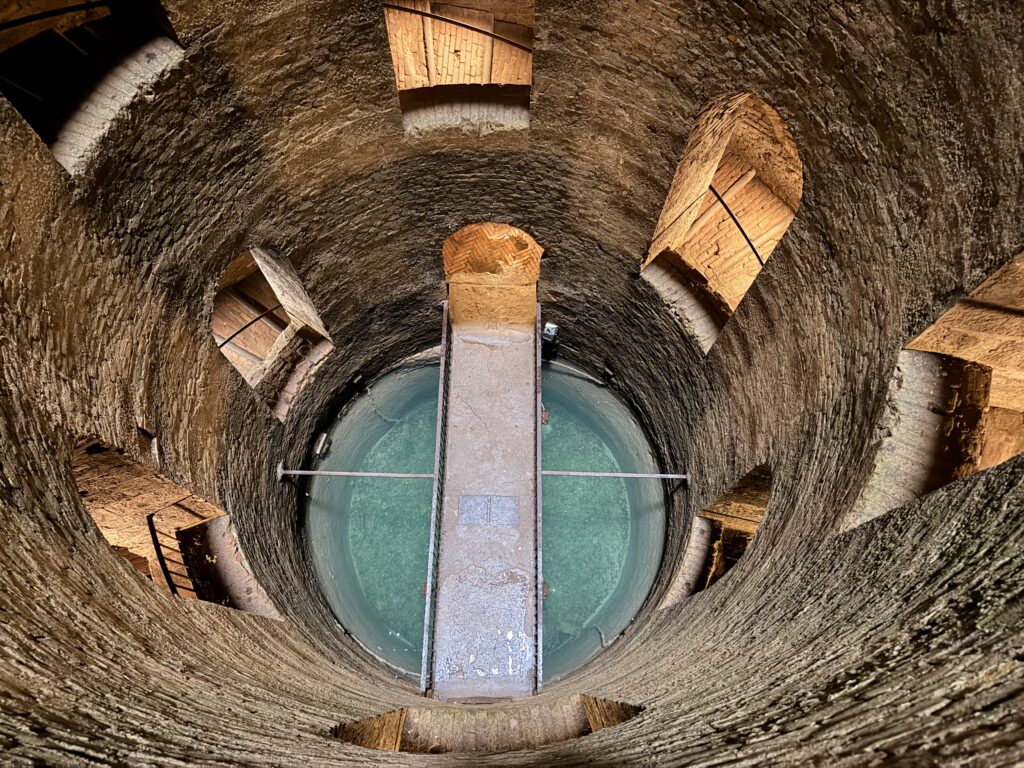
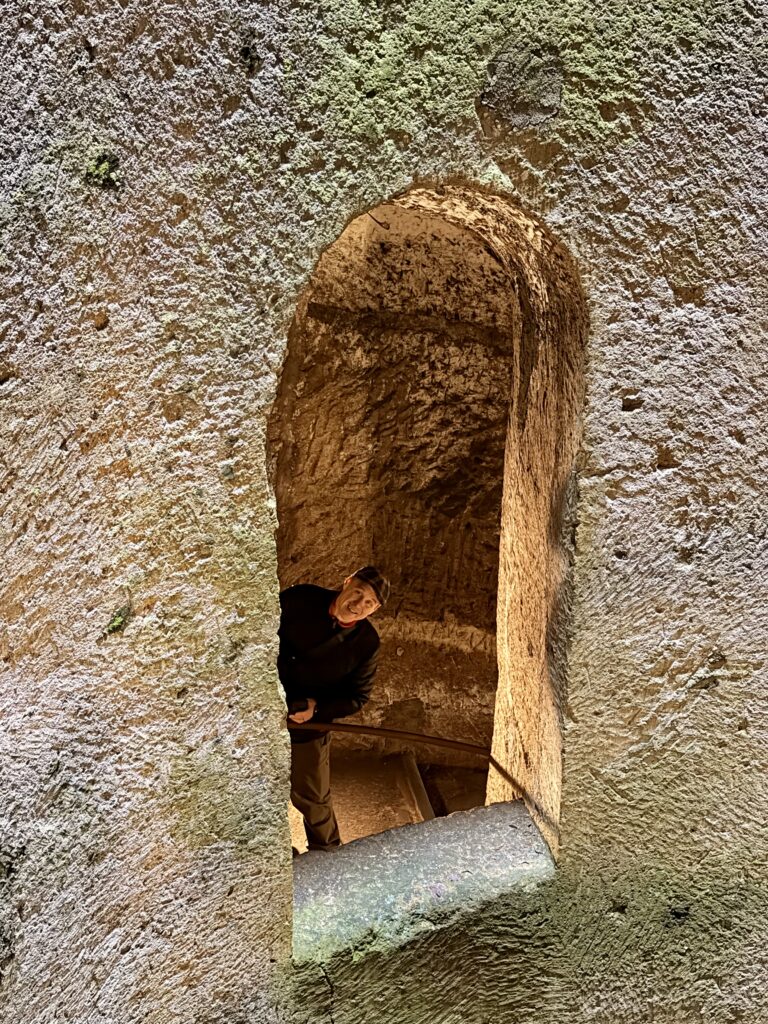
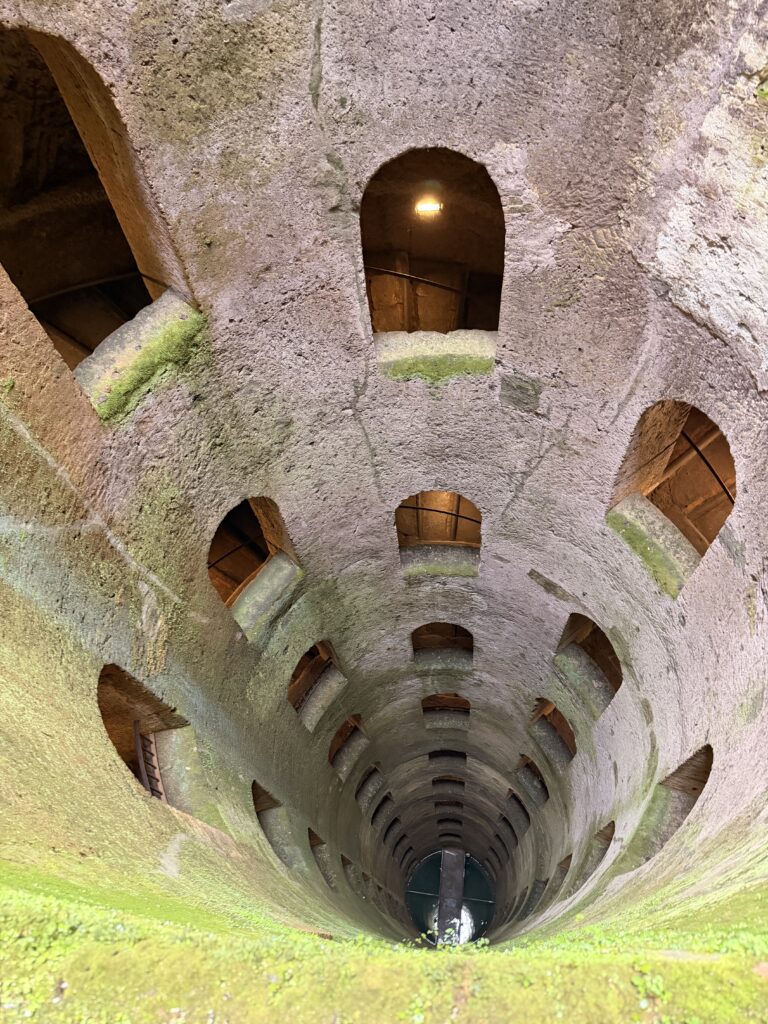
Another famous sight in Orvieto is St. Patrick’s Well (https://www.umbriatourism.it/en/-/st-patrick-s-well). It was dug in the 16th century at the request of Pope Clemente VII (who took refuge in Orvieto during the Sack of Rome in 1527) to ensure a secure water supply. It is 175 feet deep and 45 feet wide and has a double helix staircase (248 steps down and 249 steps up) with a bridge between them at the bottom. The double helix formation allowed traffic (people and donkeys!) going down to stay on one side, then cross the bridge to scoop up water, then go back up the other side for a smooth flow of traffic. 70 arched windows allowed light to flow from the skylight at the top. It amazes me the engineering they could do back then without the technology we have today.
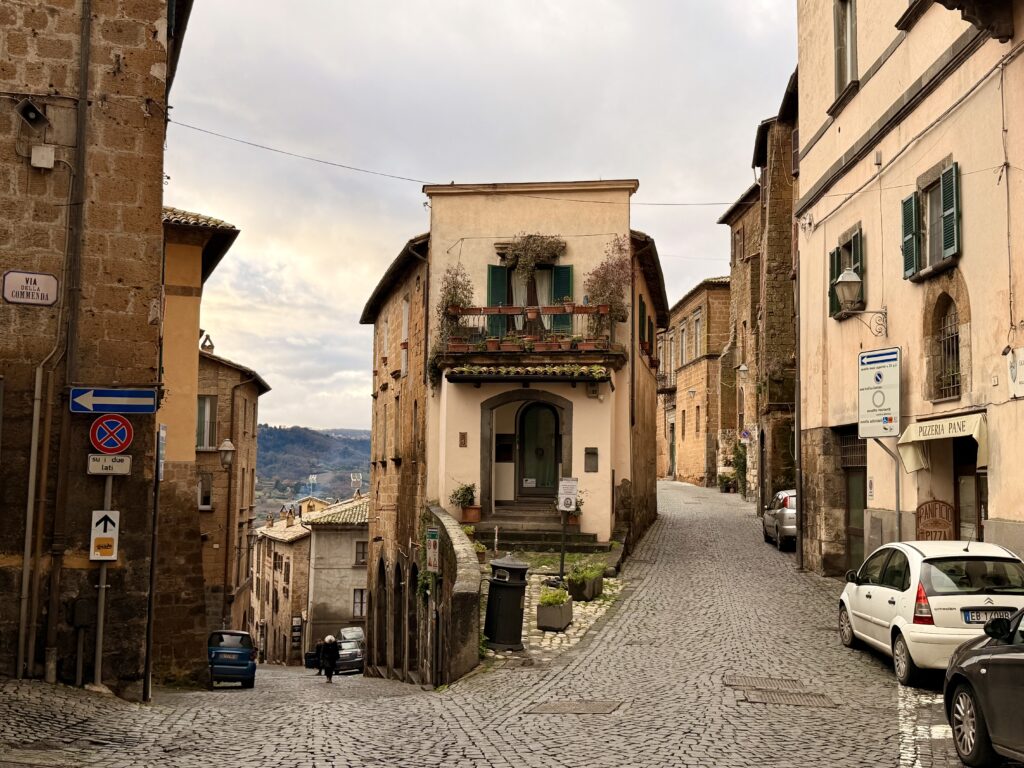
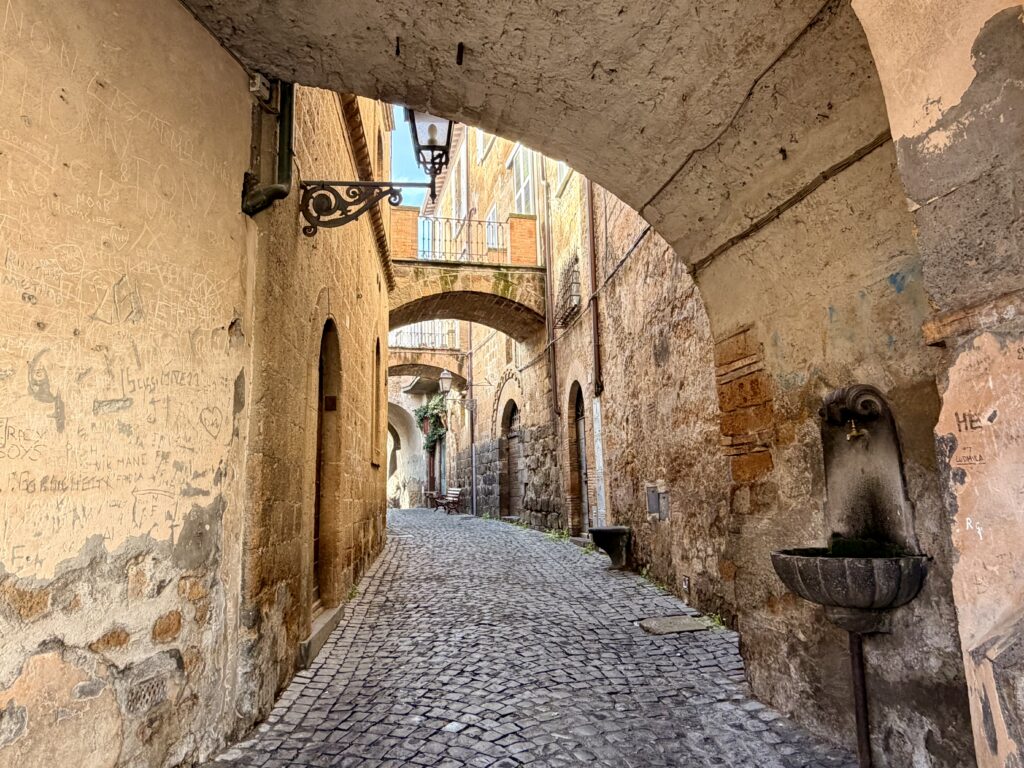
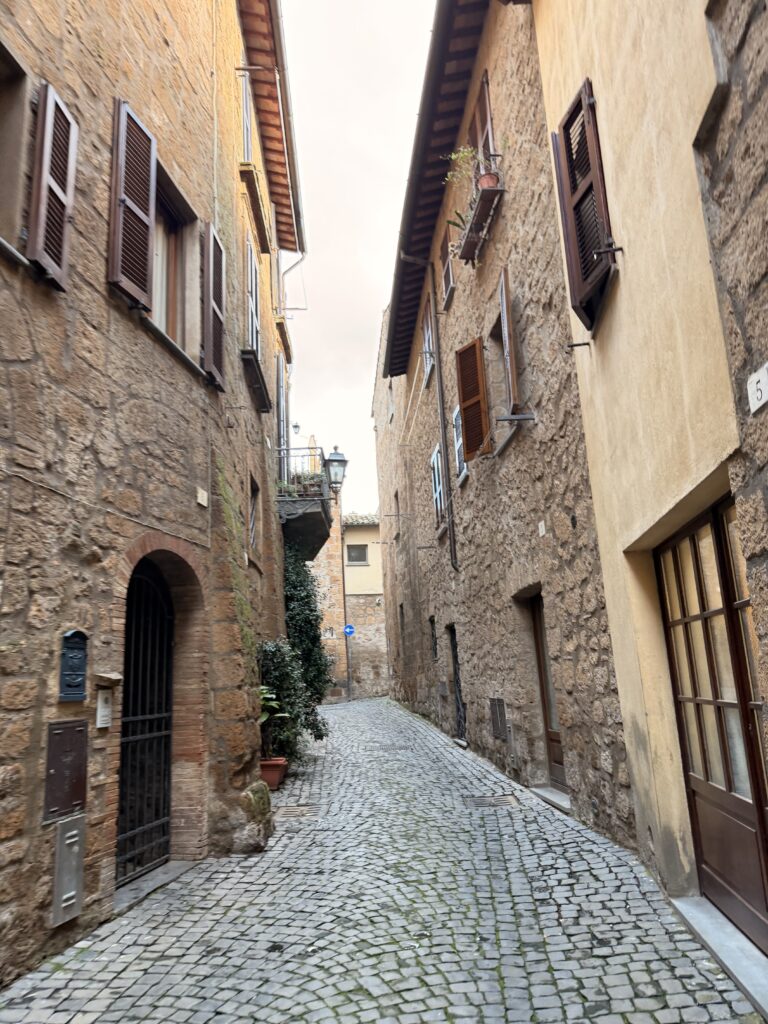
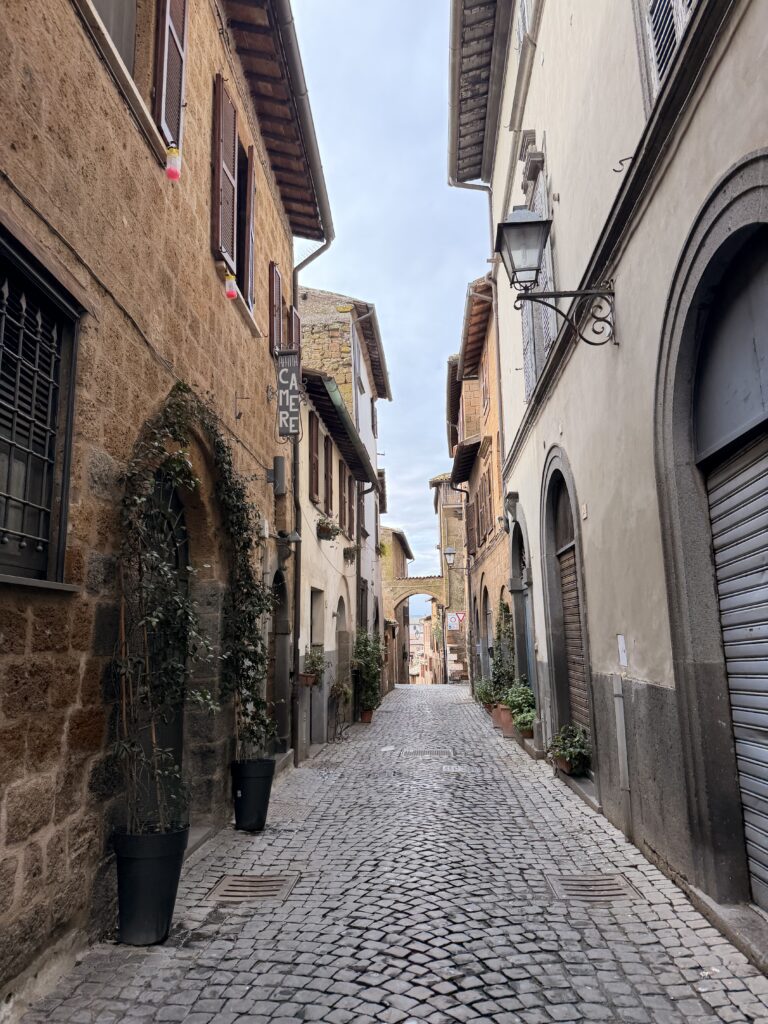
The architecture around Orvieto was really neat to see. The cobblestone streets also gave you a pretty good heads up for any cars coming down the road. Sometimes the street was narrow enough that we had to step into a doorway to let the car go by.
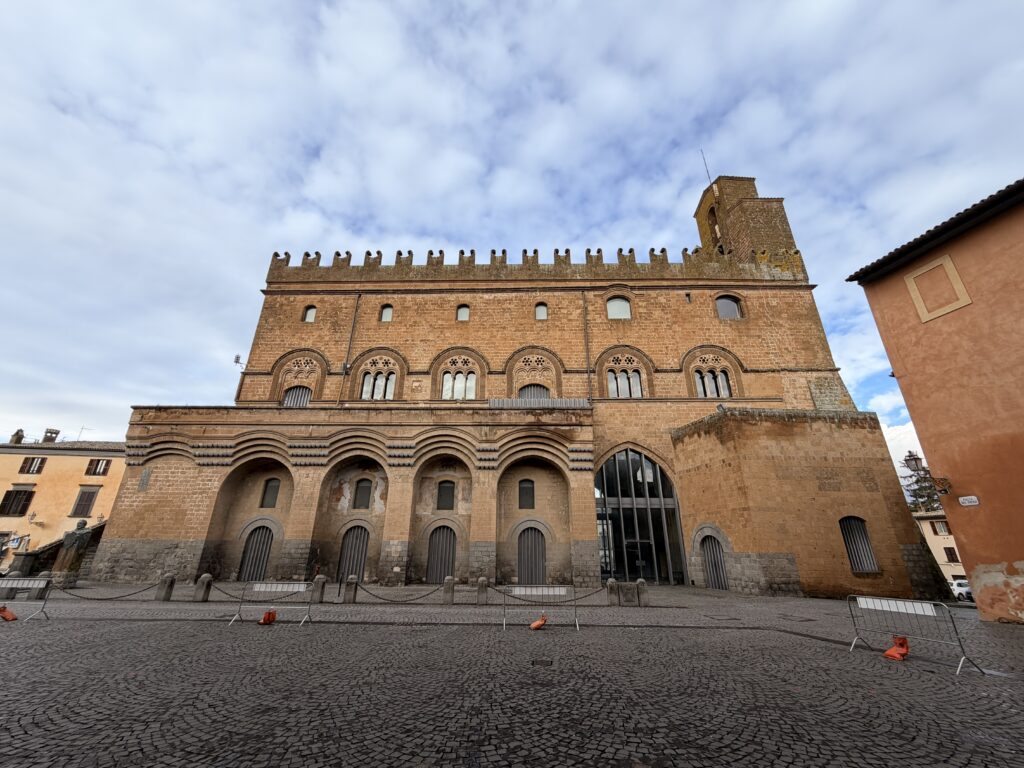
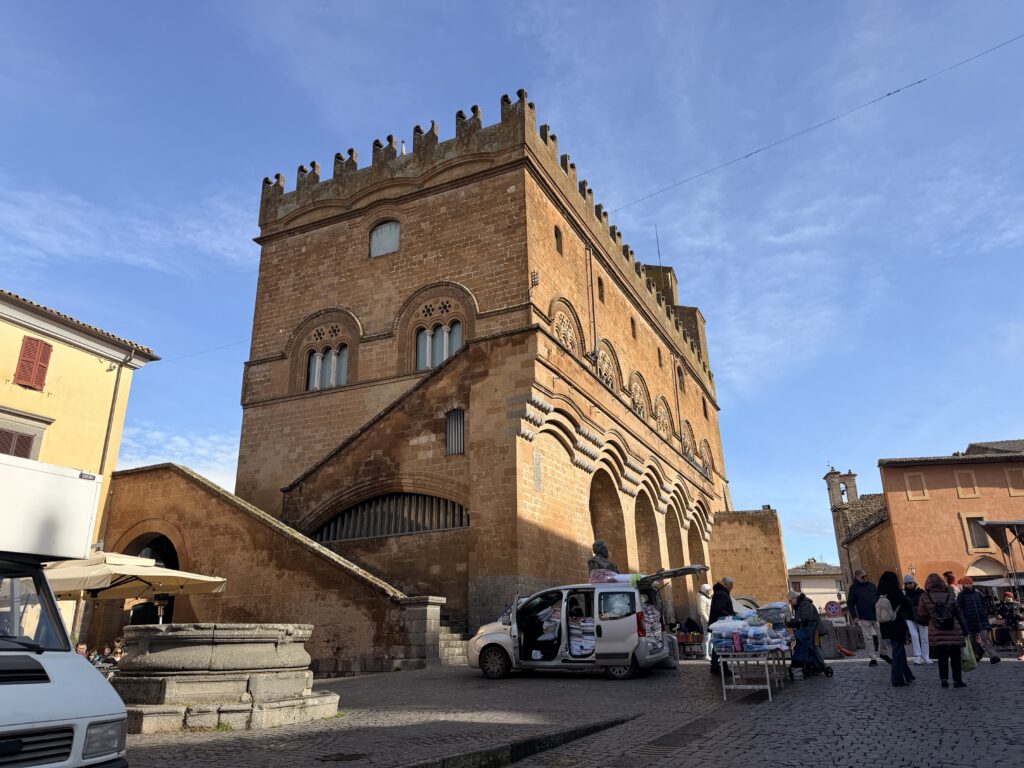
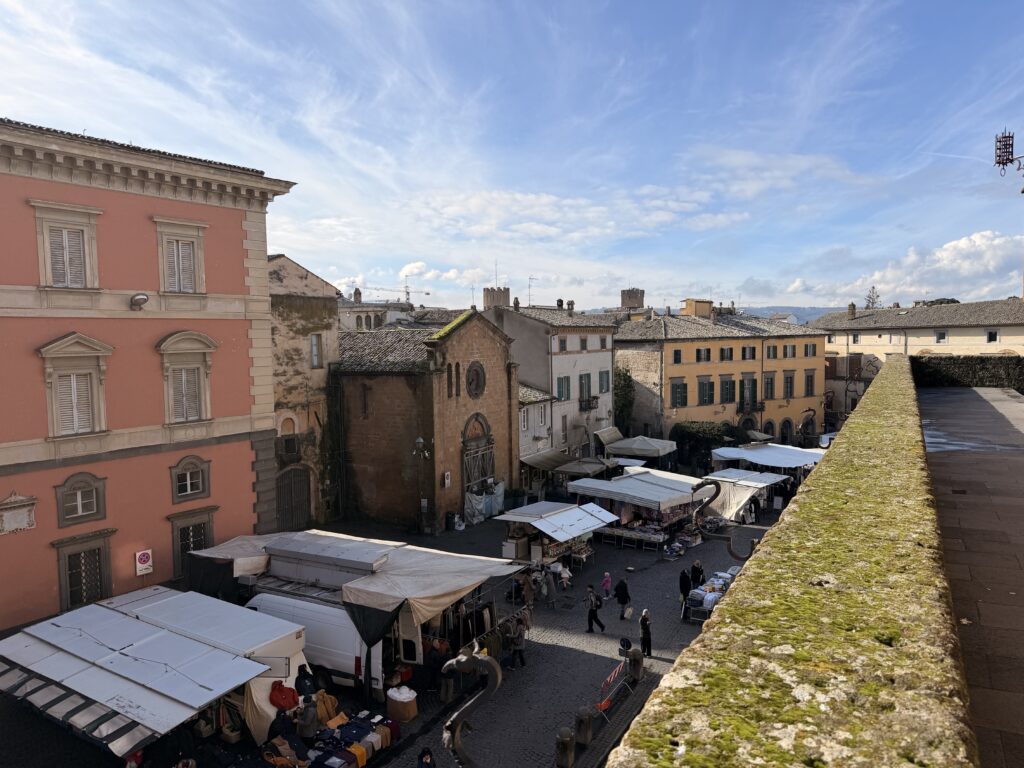
The Palazzo del Capitano del Popolo (commonly called the Palazzo del Popolo) was built in 1200 and was a seat of city government. It’s now a conference center but you can walk up the external stairs to see the view from above. There’s a market here on Thursday and Saturday mornings and we were able to catch a view of the market from above.
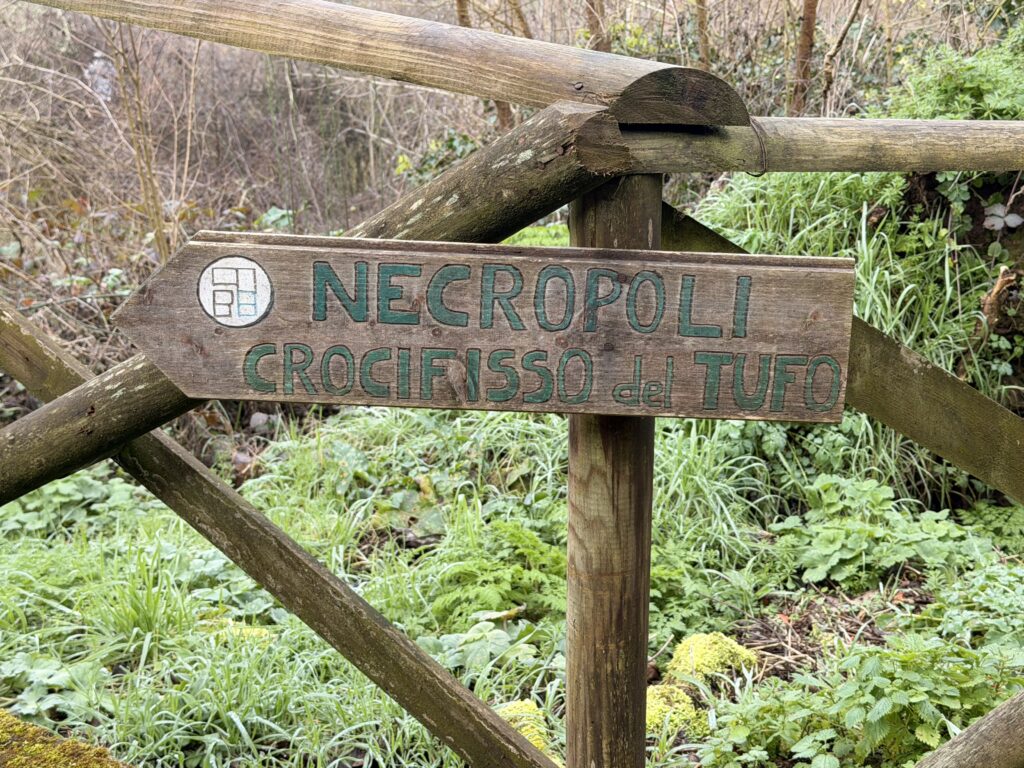
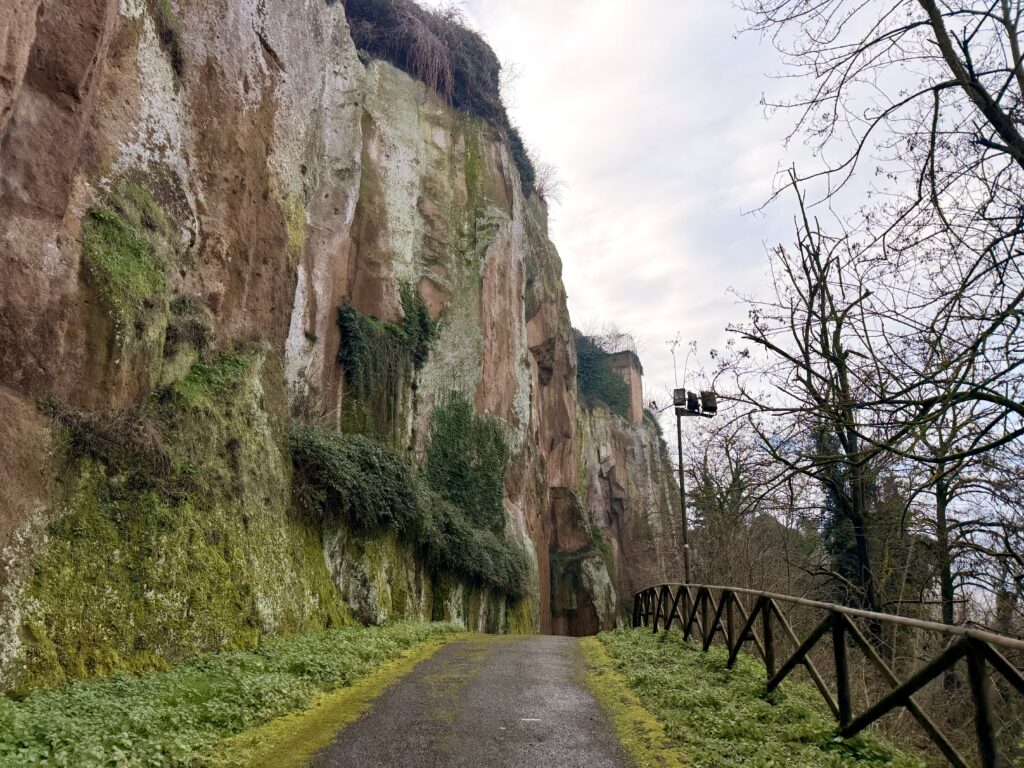
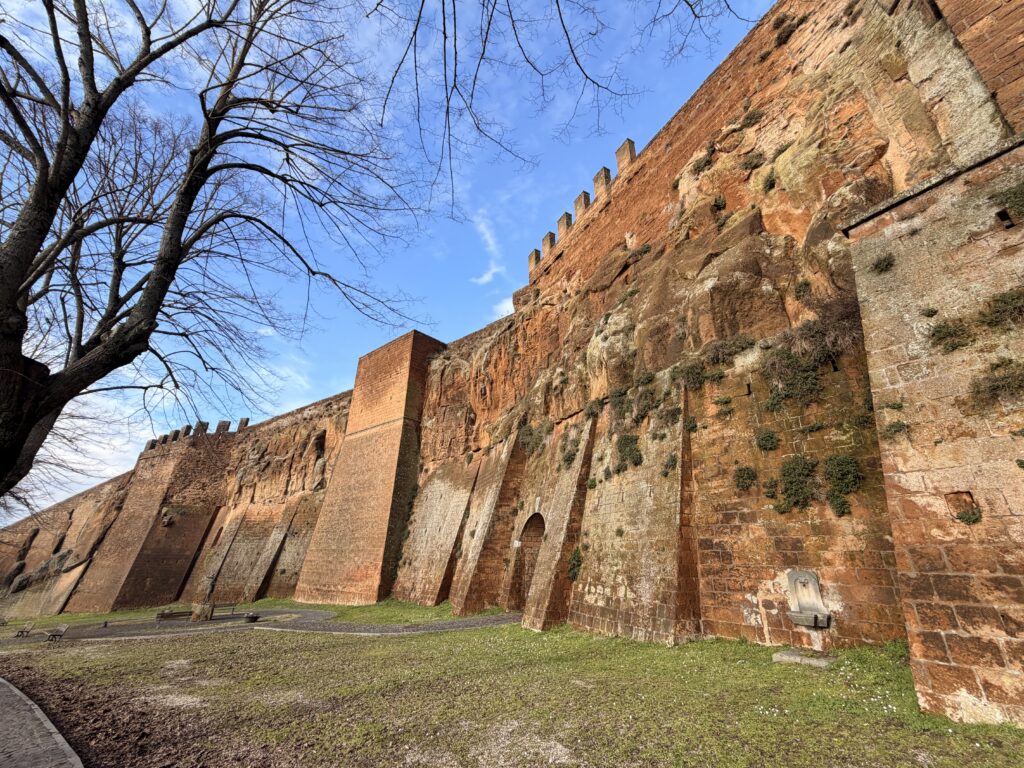
The Anello della Rupe is a 5km walking path that circles the city at the base of the cliffs. From the rupe you can also get to the Etruscan necropolis but it was closed for restoration work while we were there (we could actually see down into it from above but was hard to get a good picture through the trees). From this path you can get a good idea of the scale of the cliffs and hilltop where Orvieto sits.
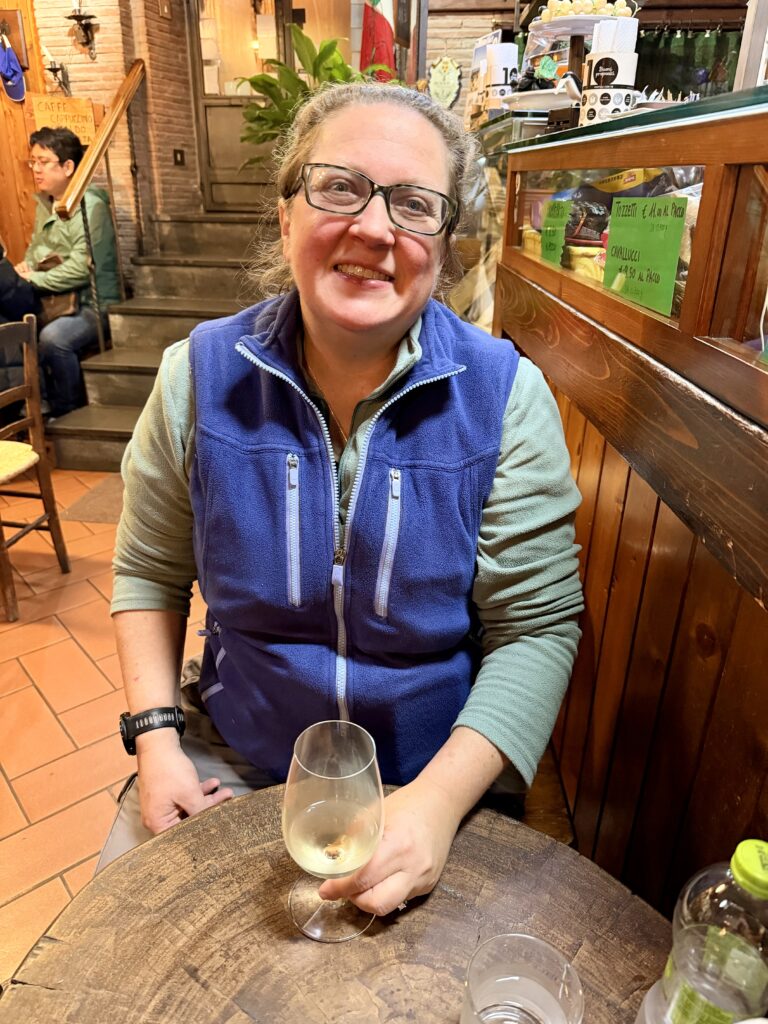
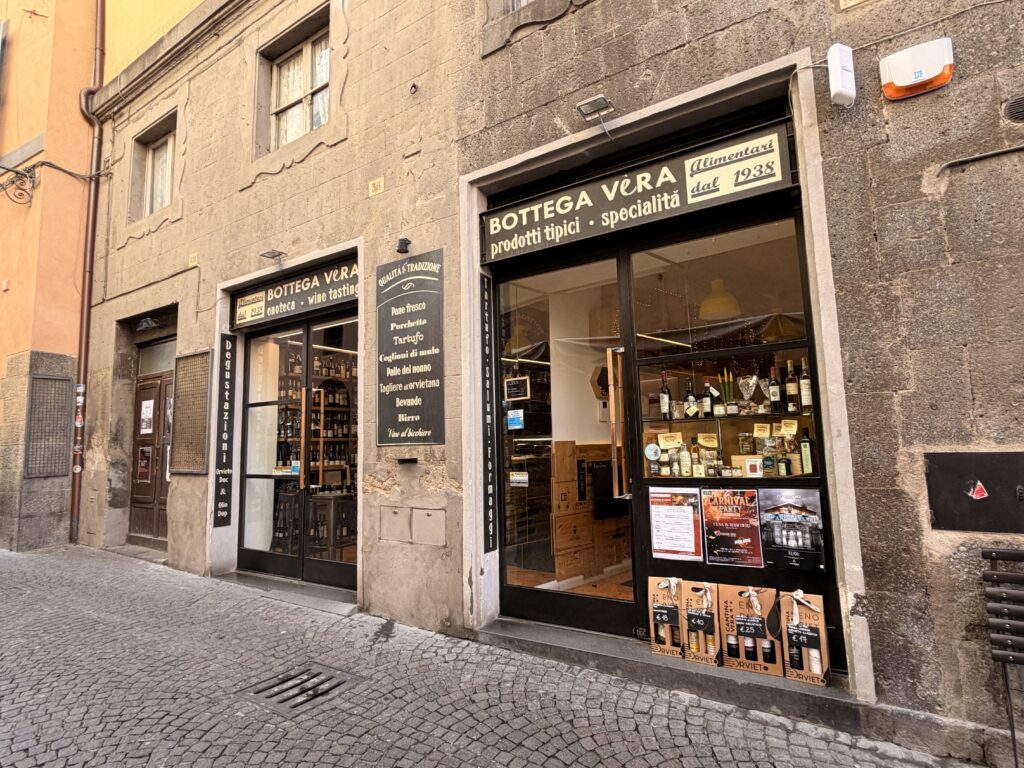
In the heart of the town we stumbled on this place called Bottega Vera (https://www.bottegaveraorvieto.it/en/menu/). We stopped in for a drink and ended up chatting with a woman from Australia who owns a home nearby and spends about half her time in the area. It was a great little shop (good beer, wine, and food) and also a great memory. We love meeting people from around the world.
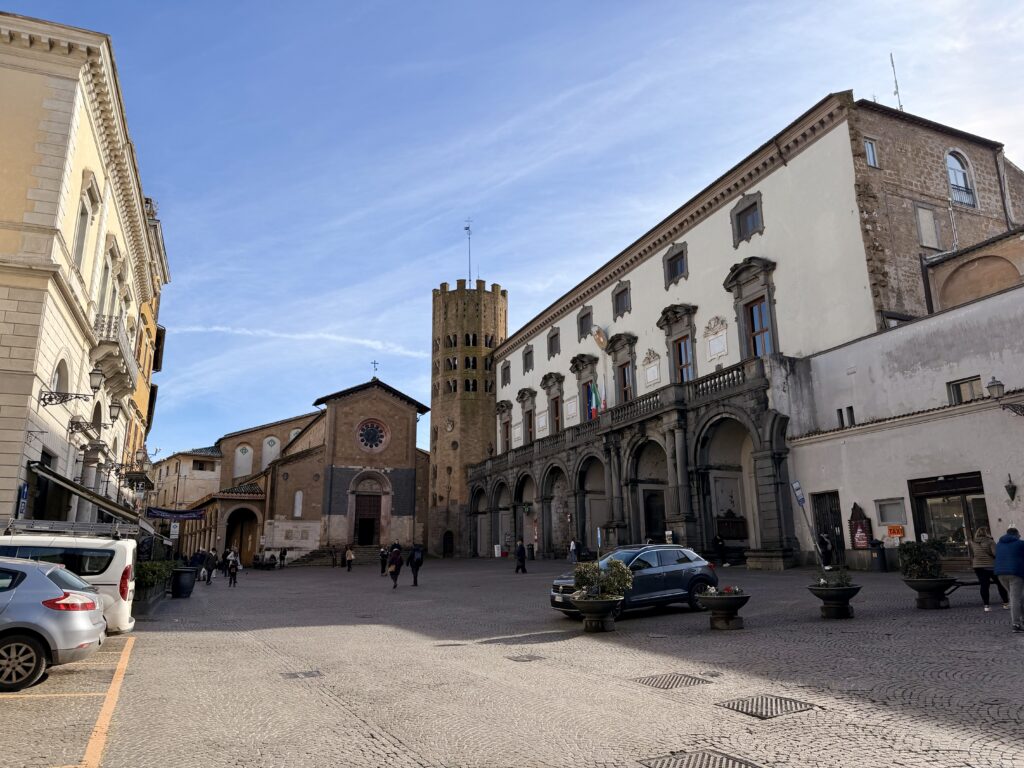
Piazza della Repubblica (Republic Square) sits right in the heart of town and traces its roots back to the Etruscan era. The church next to the roman belltower is San Andrea (St. Andrew).
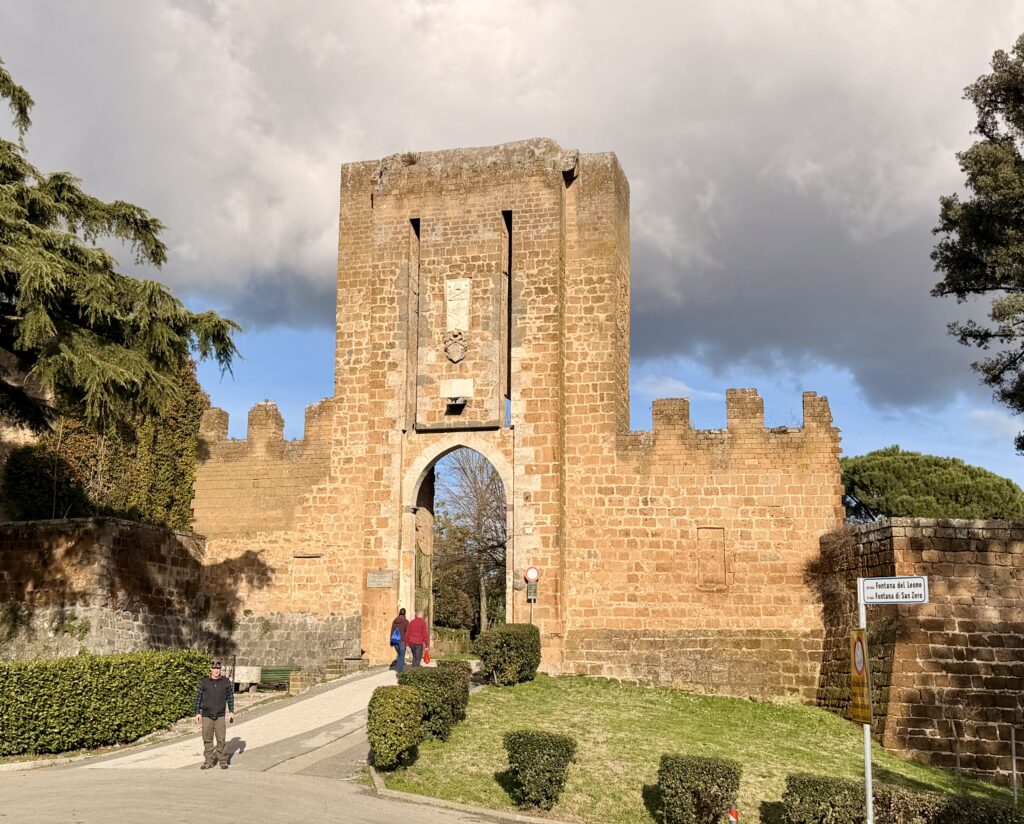
Right near the funicular (and St. Patrick’s Well) is the Porta Rocca. When we initially saw this it was super foggy (the mornings were pretty foggy) so we were glad to be able to come back here on our way out of town and get a better look.
Orvieto was a beautiful and relaxing town to explore!
And now on to Rome!