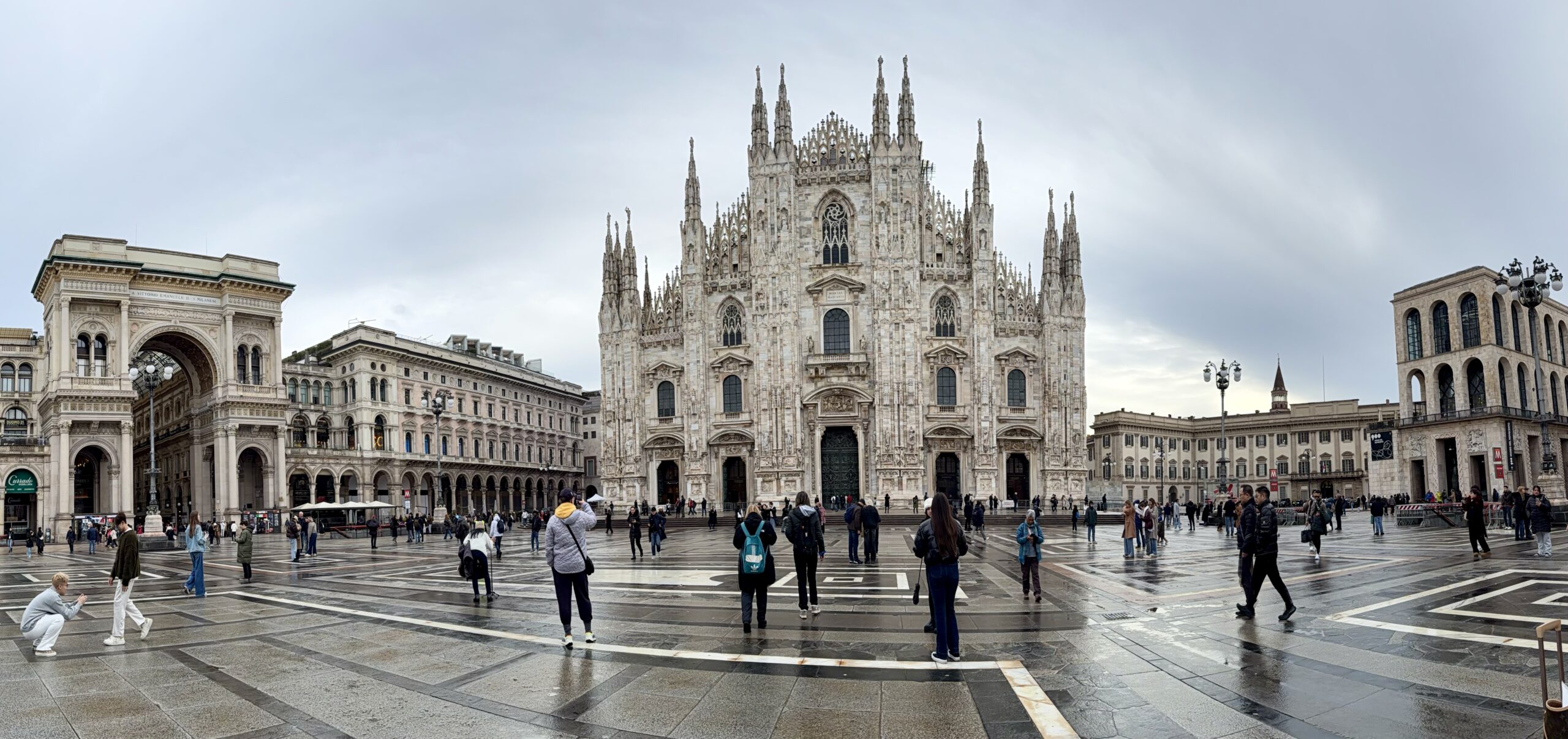

We took a high speed train from Rome to Milan (about 3 hours) and spent 2 nights there. We didn’t plan it this way but we ended up there during the Opening Ceremonies for the Winter Olympics. We didn’t go to any of the events but it was cool to be in the city with all of the events going on – there was so much energy!
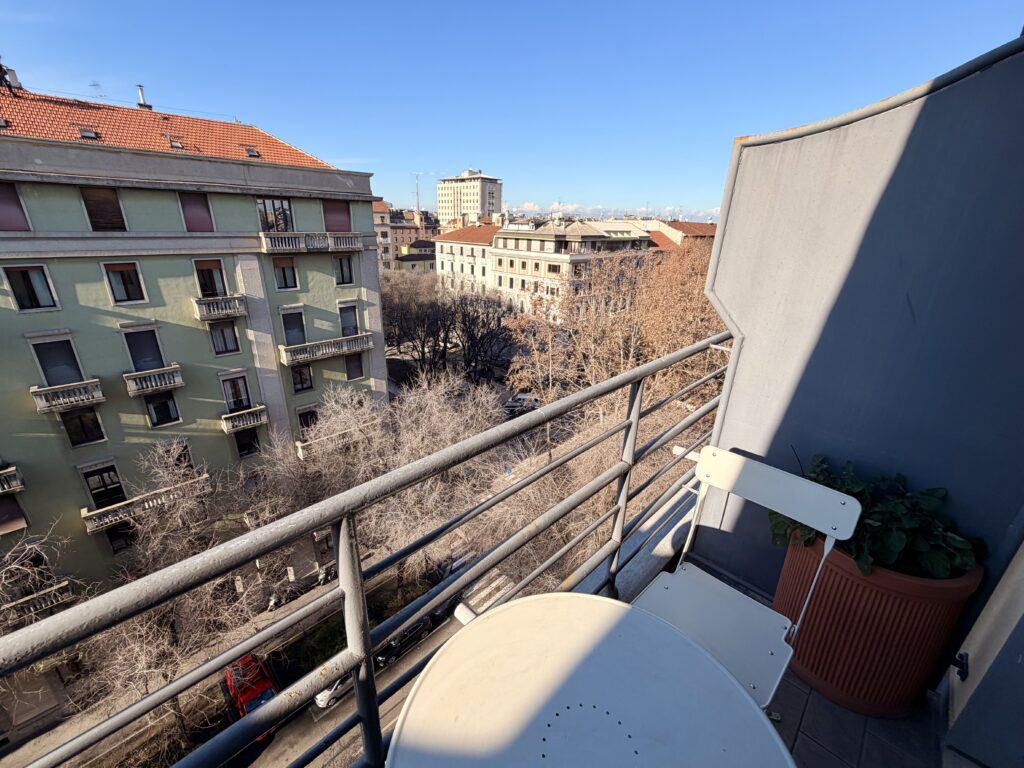
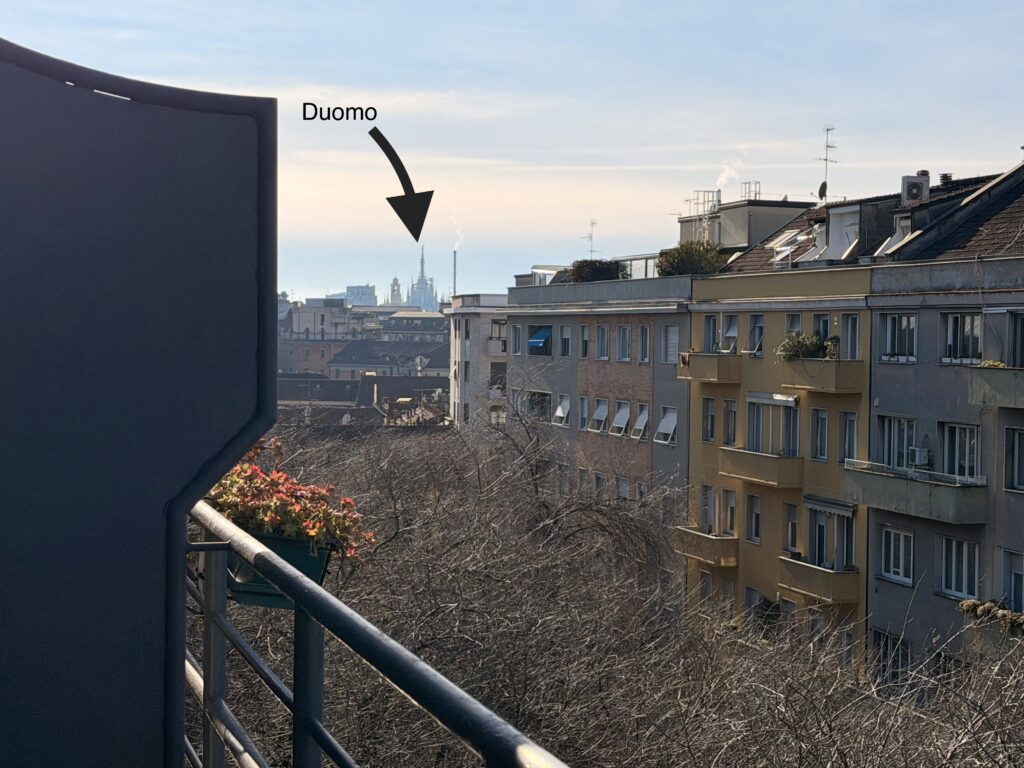
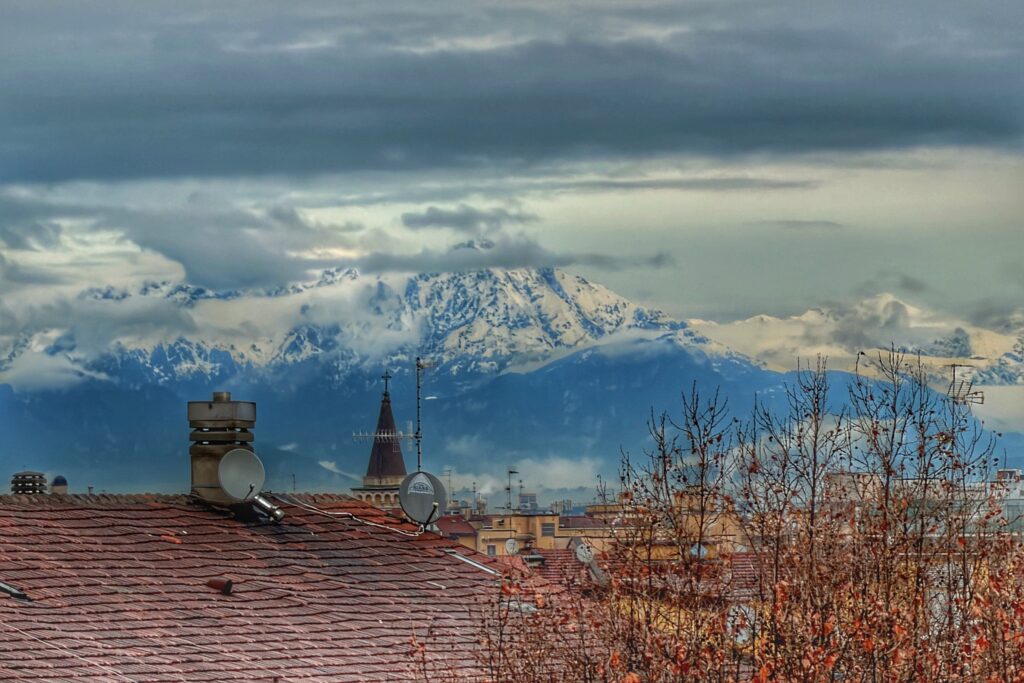
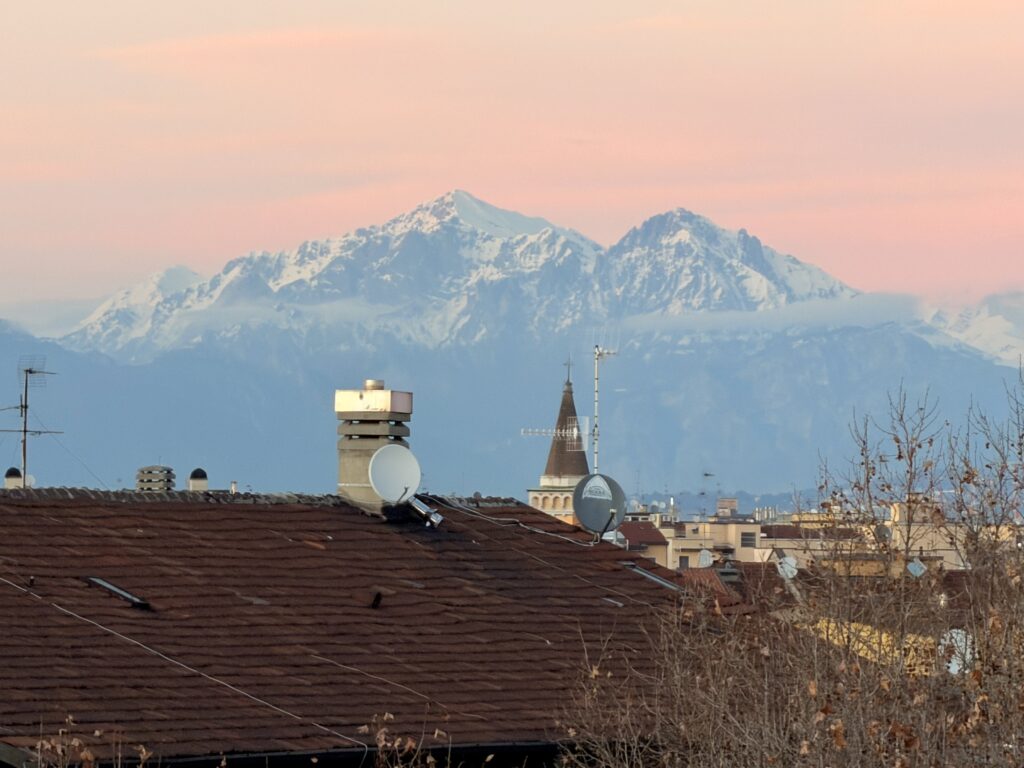
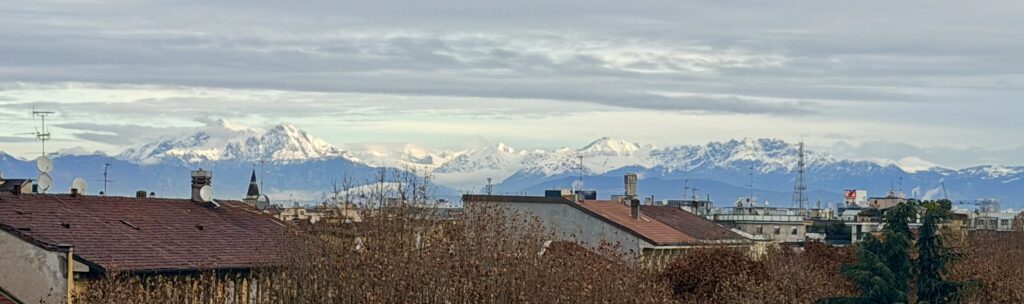
We took a bus from the train station over to our VRBO (https://vrbo.onelink.me/ItNz/ws4y6rxb) – a small studio that was a 25-30 min walk outside of the center, with easy access by bus and metro. The view from our small balcony was amazing – we could see the Duomo (cathedral) off in the distance but even better was the view of the mountains!
While Rome is known for its history and Florence for its art, Milan is the fashion and financial heart of Italy. But it’s still Italy – so one of the main sights in Milan, as with many other Italian cities we visited, is the Duomo (Cathedral) (https://www.duomomilano.it/en/). It was an easy metro ride right to the Piazza del Duomo (the main, central square in Milan where the cathedral is). We headed there our first afternoon in town then we went back the next day to actually tour inside it (I didn’t get the tickets far enough in advance to be able to go up on the rooftop portion but that’s supposed to be pretty cool).
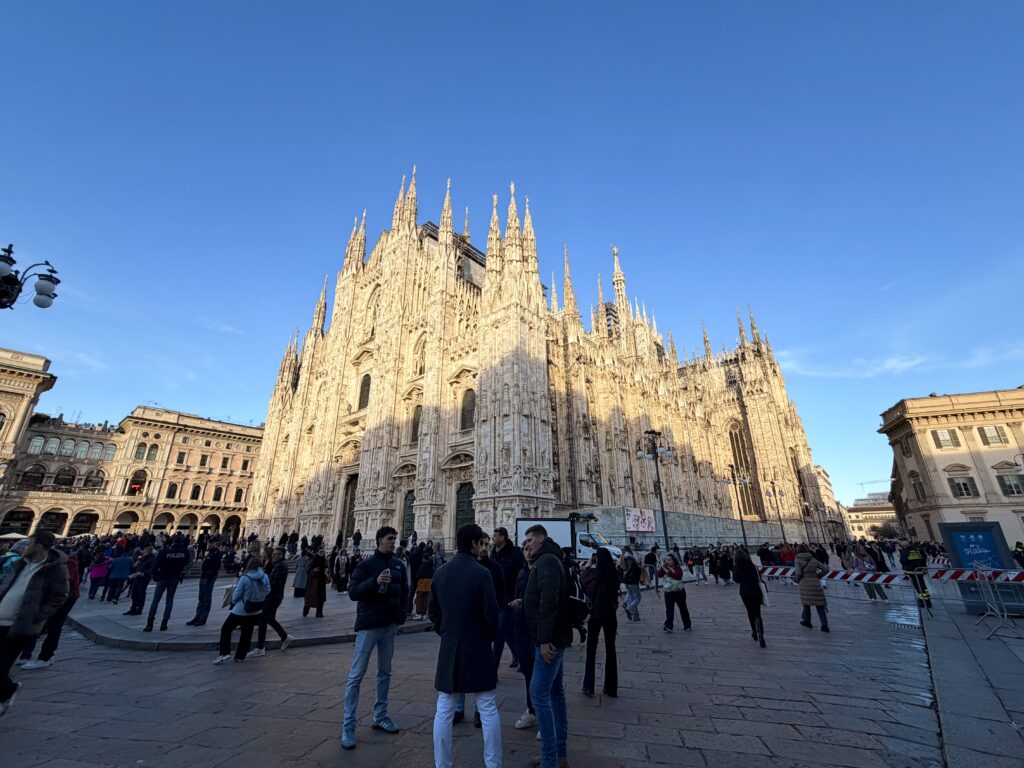
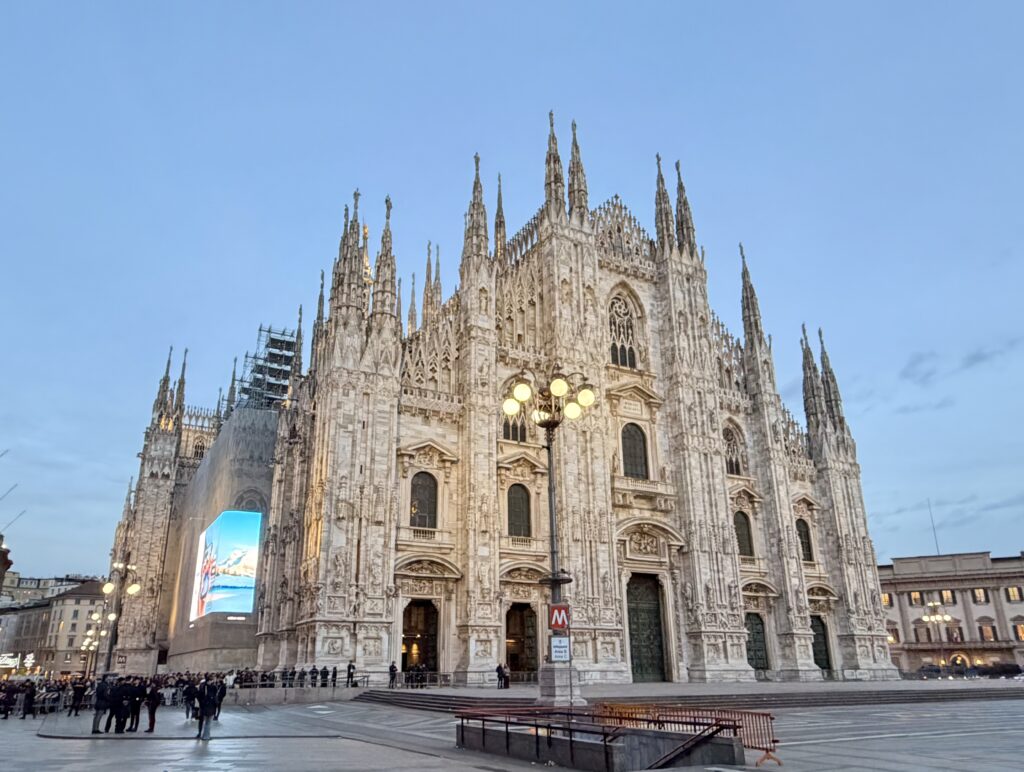
The facade of the Duomo is very intricate, with spiky spires in a “Flamboyant Gothic” style (flamboyant – flame-like). It’s made from Candoglia marble – from a quarry about 60 miles away (https://www.duomomilano.it/en/about-us/the-candoglia-quarry/). The church itself is the 3rd largest in Europe (behind only St. Peter’s Basilica in Rome and the Cathedral of Sevilla). It’s technically the largest in Italy as St. Peter’s is in the State of Vatican City. The cathedral was built on the site of older churches; construction was started in 1386 and wasn’t completed until 1810 – nearly 500 years later! And smaller details continued to be added until 1965. Imagine how much the building technology changed during that time!
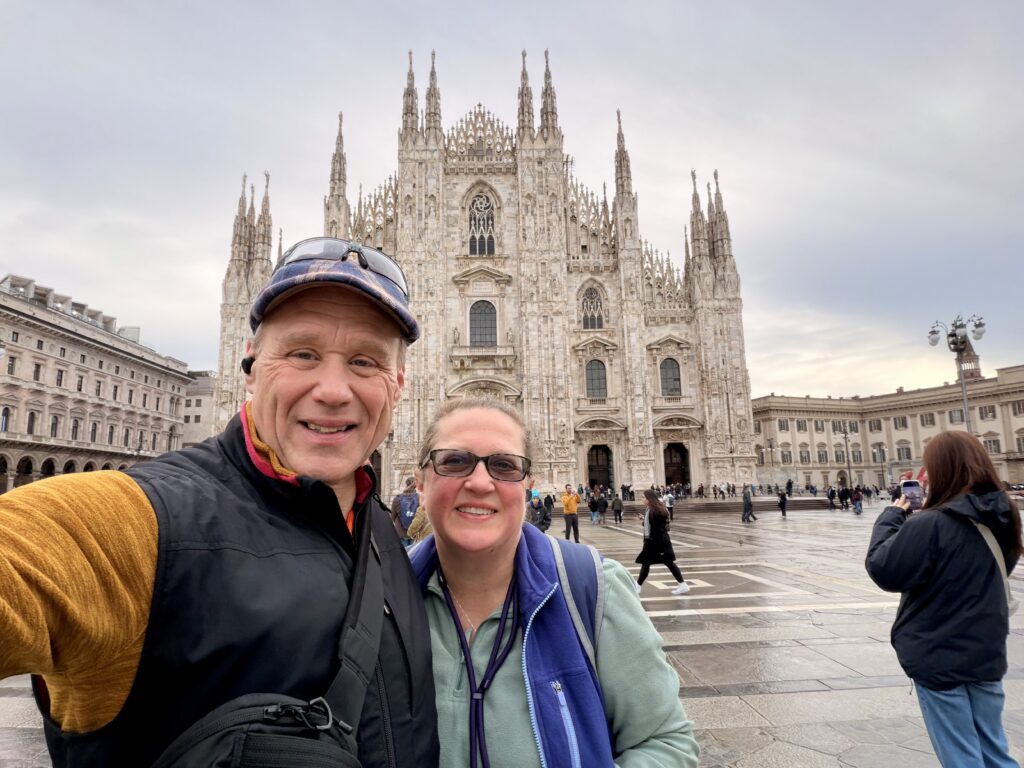
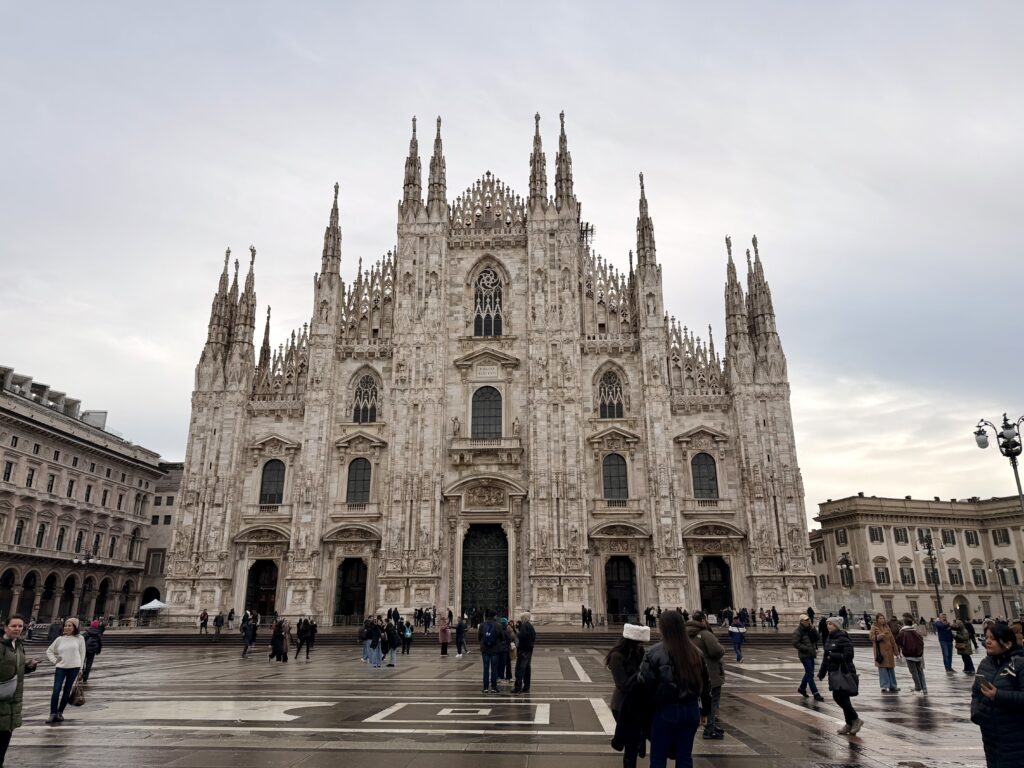
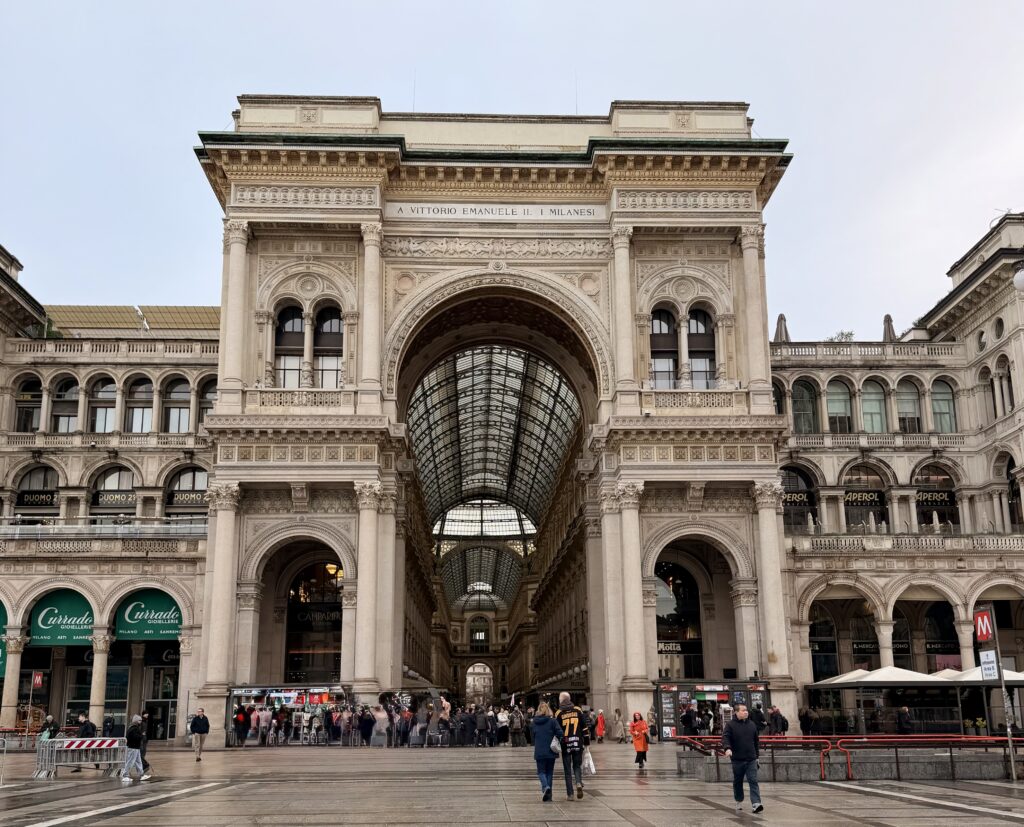
The Duomo sits on a large square – aptly named the Piazza del Duomo. In the middle of the square is a statue of Vittorio Emmanuel II (first king of Italy). As you are facing the Duomo, to the left is a large arch which is the entrance to the Galleria Vittorio Emmanuel II. To the right is this set of angular, plain-looking buildings that clash with the ornate decor everywhere else … more on that below.
When we got to the square the first night, it was pretty busy because the Olympic torch was coming into Milan that night in preparation for Opening Ceremonies the following day. The torch would end its journey for the day in the square later that night.
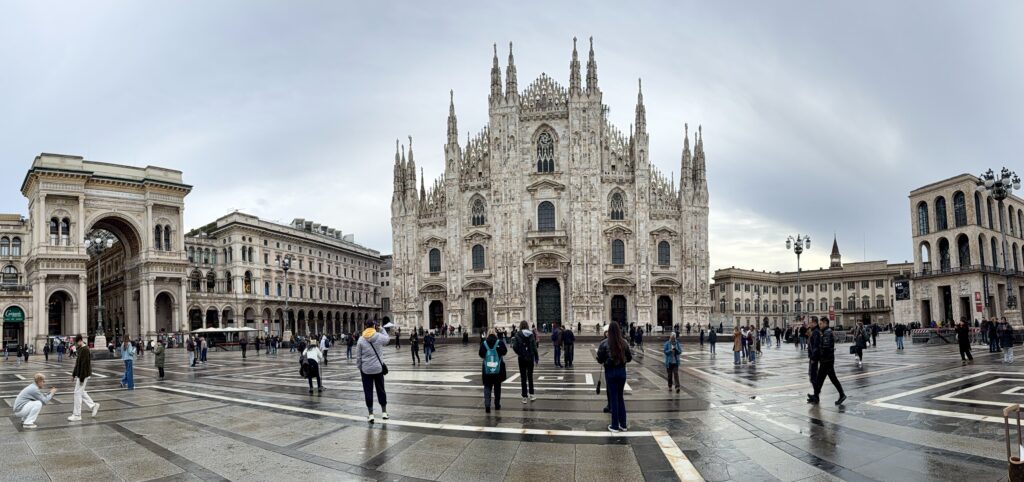
The Galleria Vittorio Emmanuel II is a glass-topped arcade with shops and resturants. When you walk through the arcade, you end up in the Piazza della Scalla on the other side, where the famous Teatro alla Scalla opera house is.
The two buildings to the right of the Duomo were built in the 1930s in a fascist style. Benito Mussolini gave speeches from here during his rule (he started the fascist movement in Italy 1919 in Milan). One of those buildings is now the Museo Novecento, which houses 20th century art (novecento means 900 in Italian and refers to the 1900s).
If you look into between these two square buildings, you’ll see skyscrapers In the distance – these were built post-WW2 to replace bomb-damaged buildings.
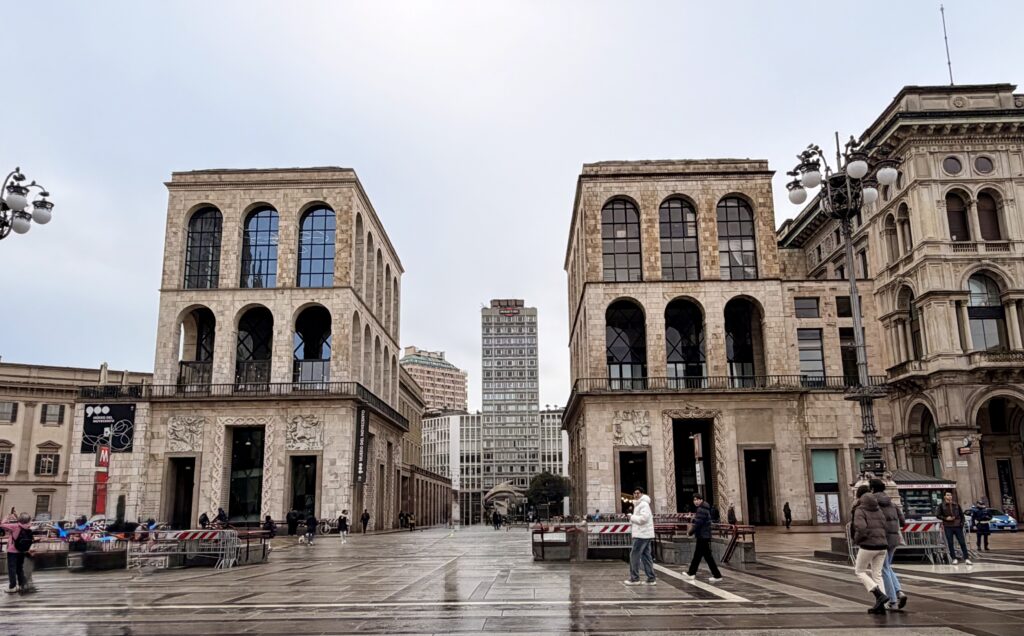
The day after we arrived in Milan, we toured inside the cathedral.
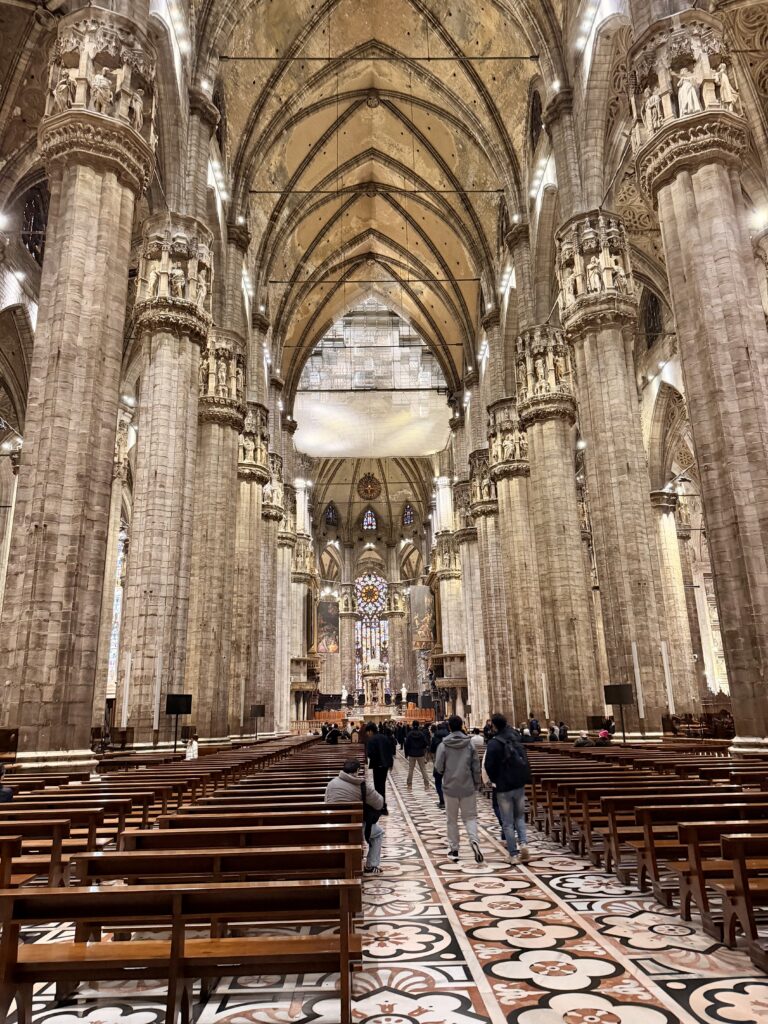
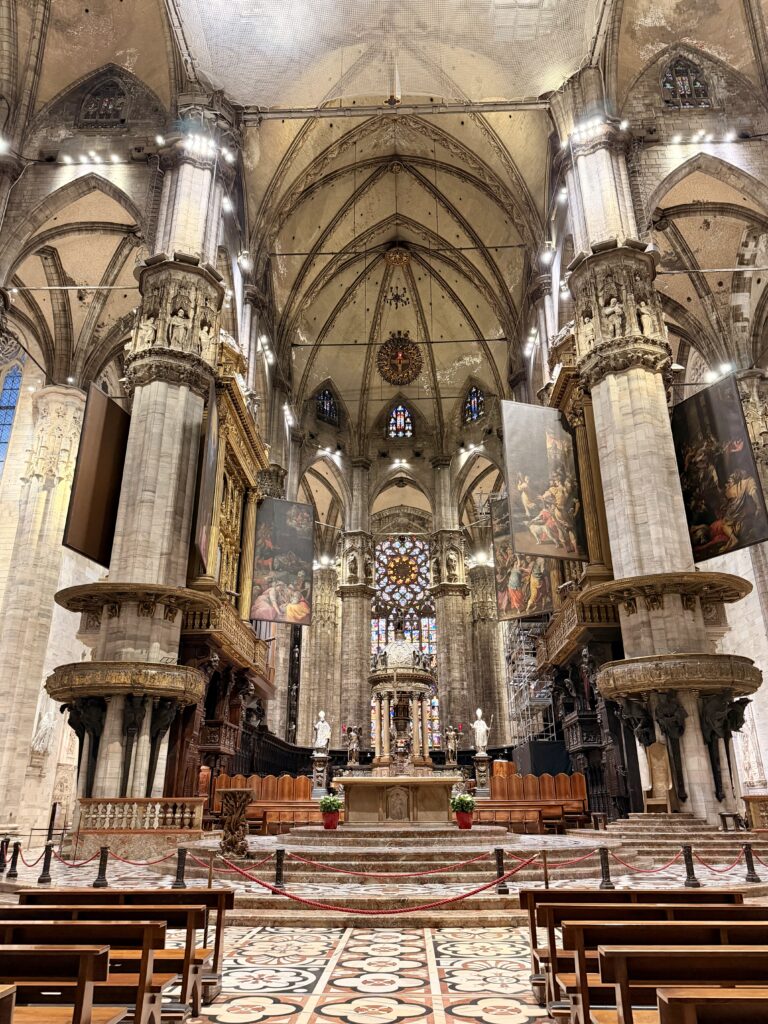
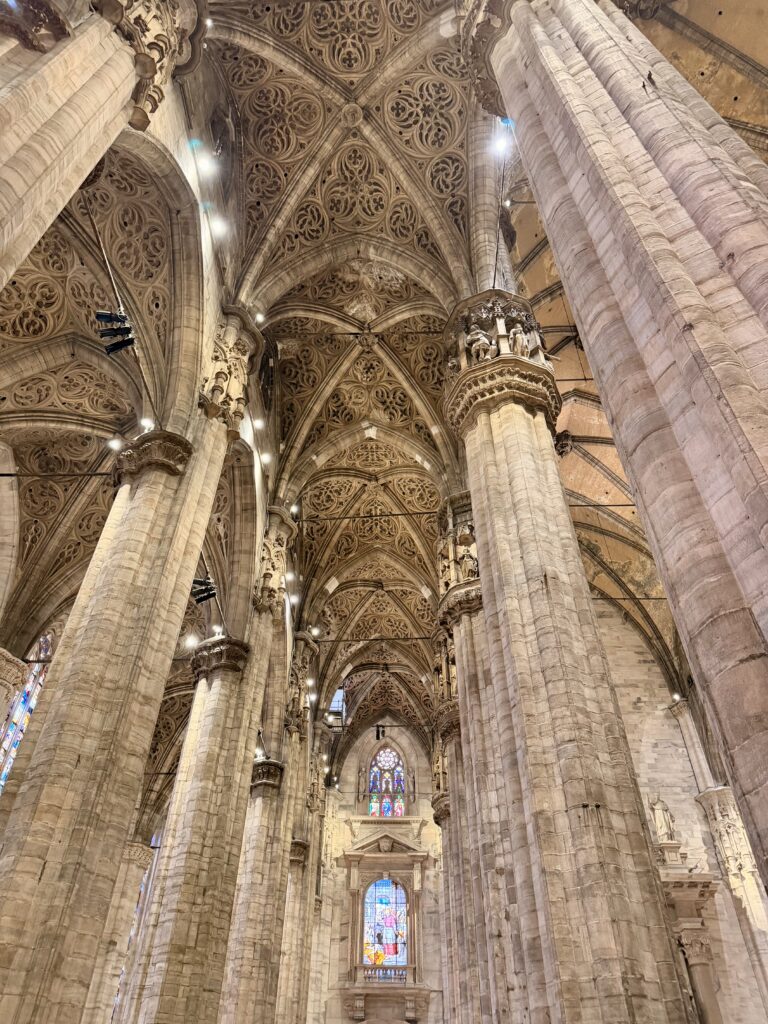
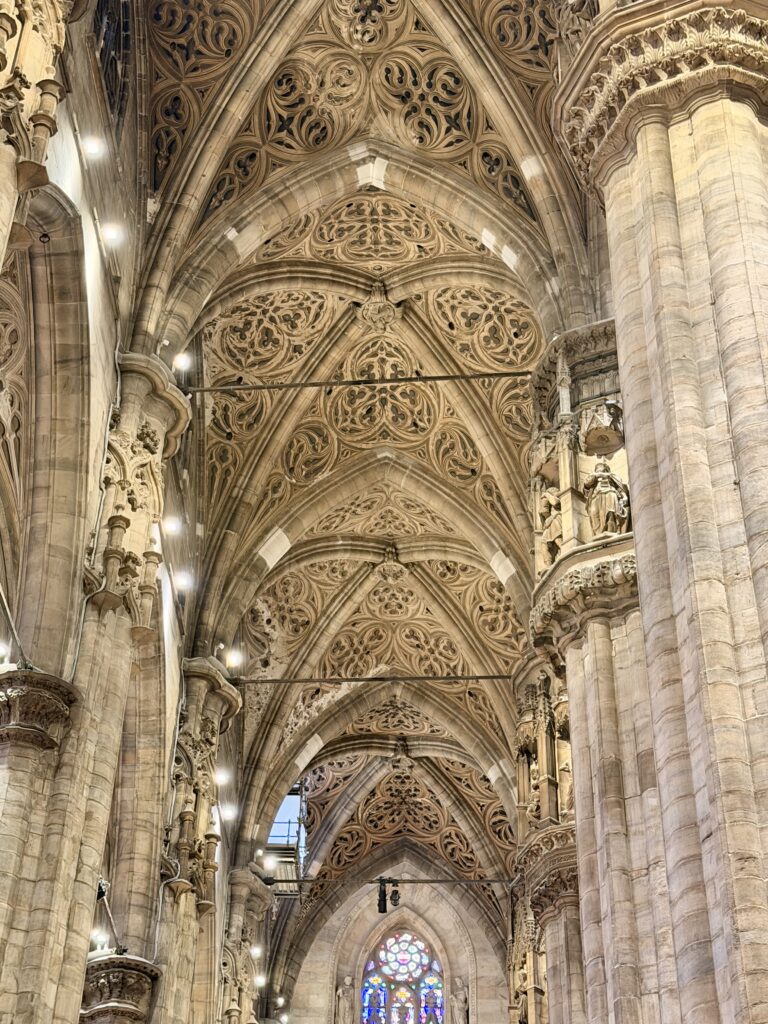
The ceiling looks like it has intricate, lace-like carved stone. It’s actually a painted illusion. It’s high up so it’s hard to look closely but it’s a good illusion! It definitely looks 3D. We saw something similar with the dome in the cathedral in Siena.
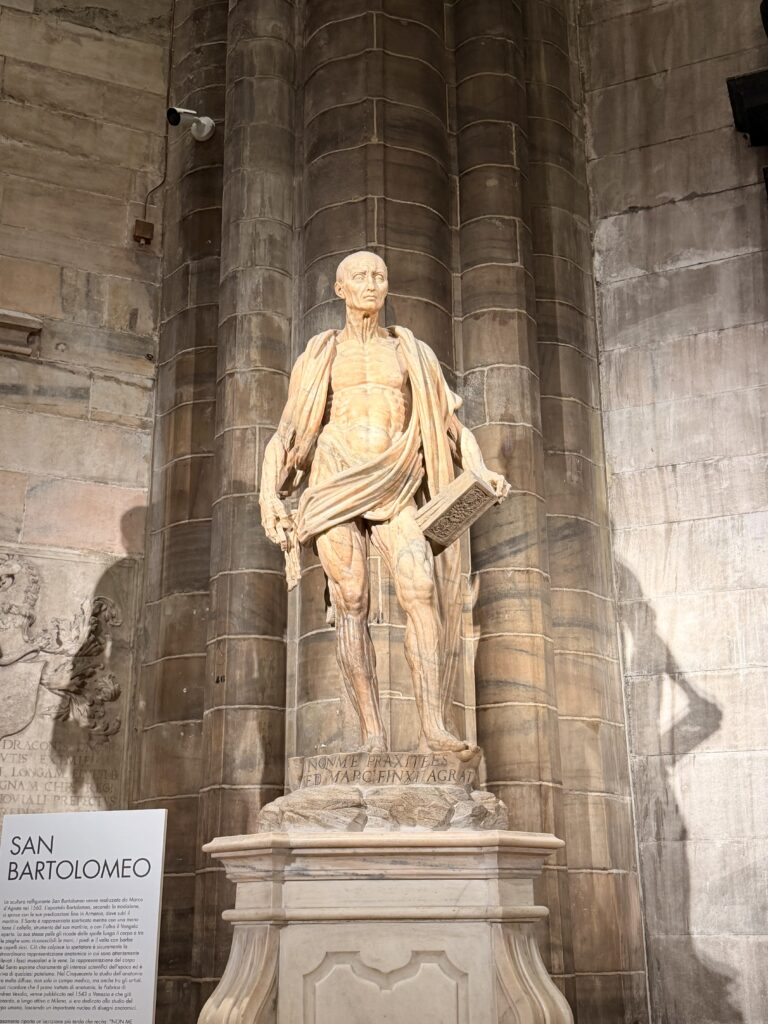
There are tons of statues but this one stood out. It’s of San Bartolomeo (Saint Bartholomew) – an apostle and 1st century martyr who was skinned alive by the Romans. The statue was carved in 1562 by a student of Leonardo da Vinci (hence the anatomic detail as da Vinci was a master of science and anatomy).
A sign next to the statue details this further:
“The statue portraying Saint Bartholomew was sculpted by Marco d’Agrate in 1562. According to tradition, the apostle Bartholomew preached as far as Armenia, where he brought Christianity in the 1 st century before being martyred. The saint is depicted flayed, holding a knife— the instrument of his martyrdom —in one hand and the Gospel in the other. His own skin hangs from his shoulders down over his body and his hands, feet and bearded face with curly hair can be seen amongst the folds. What strikes the viewer is undoubtedly the extraordinary anatomical representation, in which the veins and bundles of muscle fibres are carefully detailed. The depiction of the saint’s body clearly expresses the scientific interests of the time and is devoid of any pathos. In the 16th century, the study of anatomy was widespread, not only in the medical field but also amongst artists. It is worth noting that the first treatise on anatomy, Fabrica by Andreas Vesalius, was published in 1543 in Venice and that Da Vinci, at length active in Milan, had dedicated himself to the study of the human body, leaving an important oeuvre of anatomical drawings.”
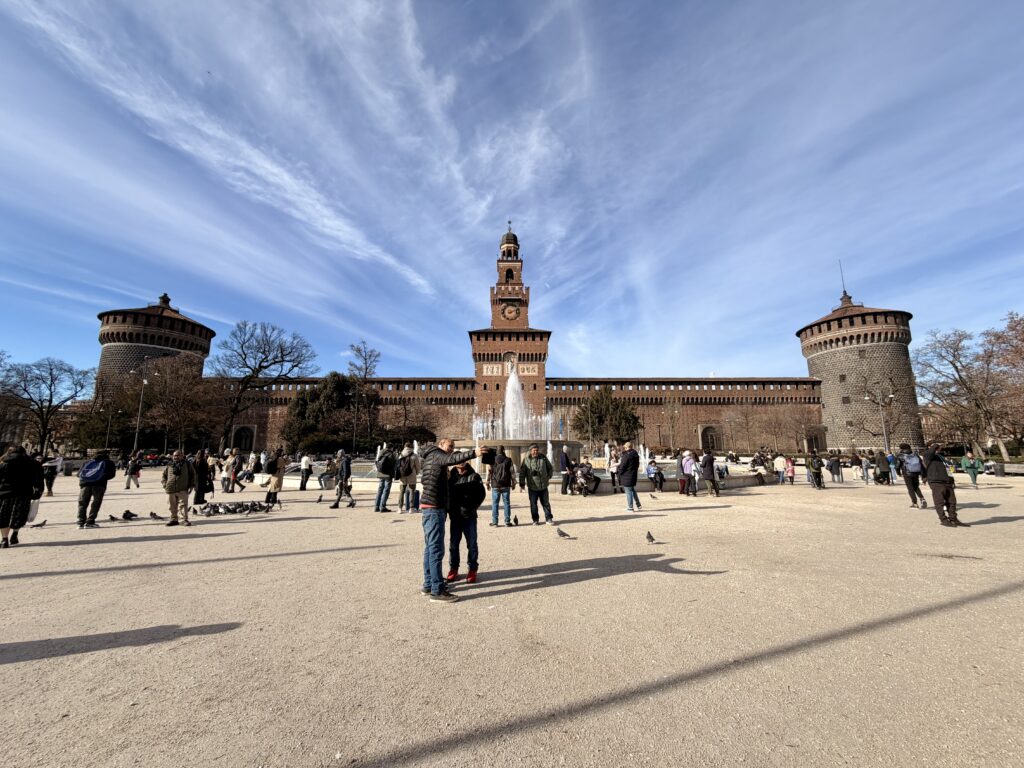
We also walked over to the Castello Sforzesco, a medieval castle from the 15th century. There are some museums inside the castle but we just walked around the grounds, including inside the vast courtyard.
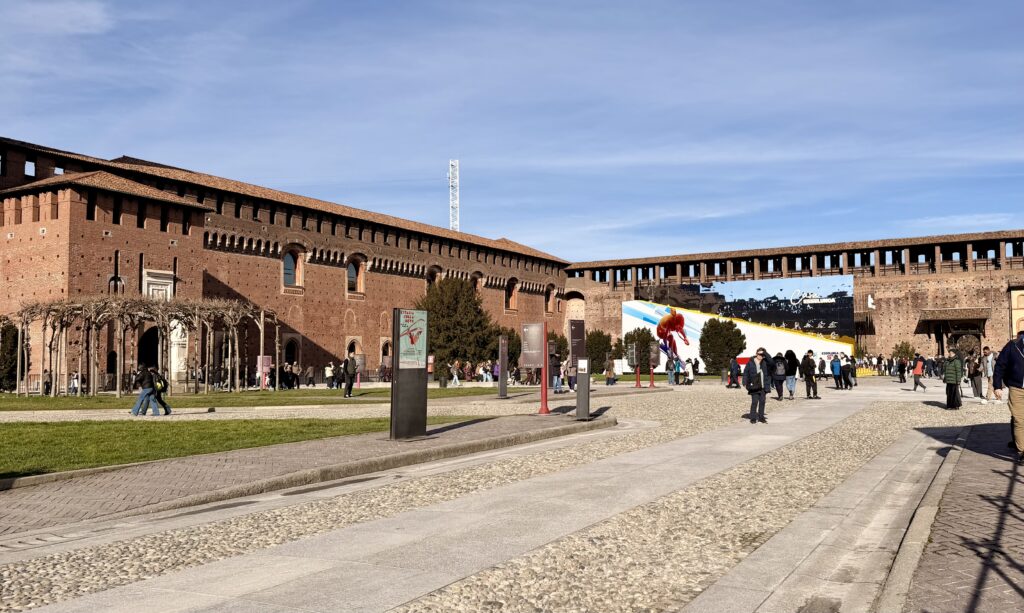
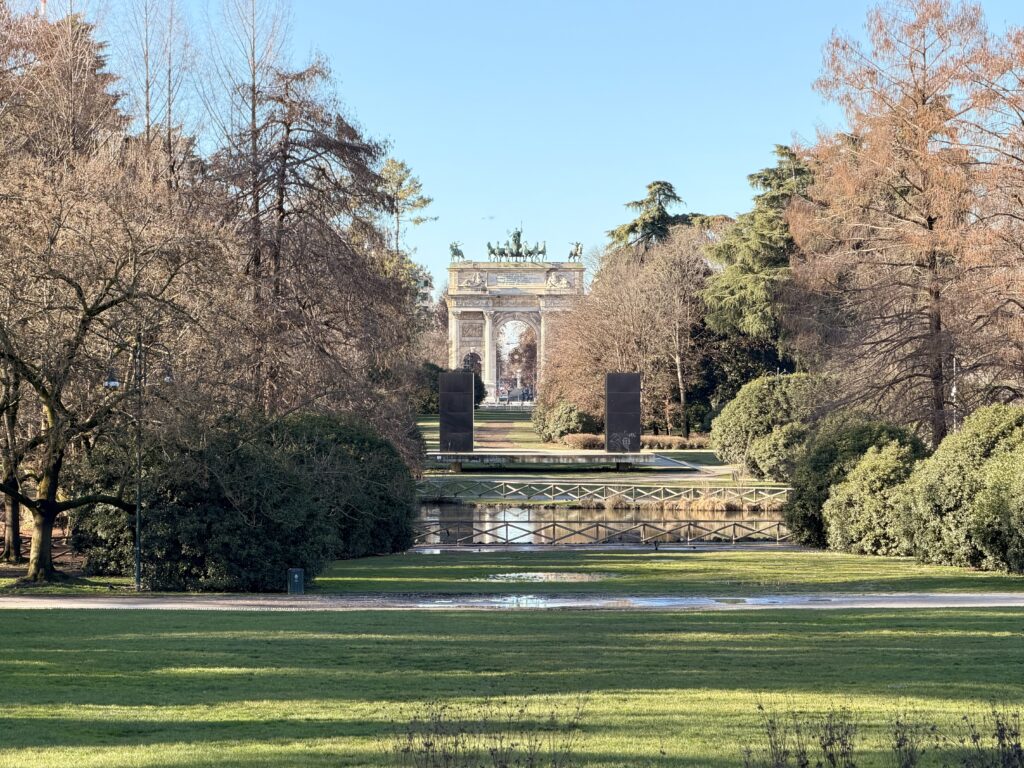
Behind the castle is a large park with a 19th century triumphal arch that we could see in the distance (the Arco della Pace – the Arch of Peace). We couldn’t get into the park to see it up close, though. It was closed off because it held the Olympic cauldron in Milan where the Olympic torch would end its journey later that day ahead of the Opening Ceremonies (there was a 2nd cauldron in Cortina as well).
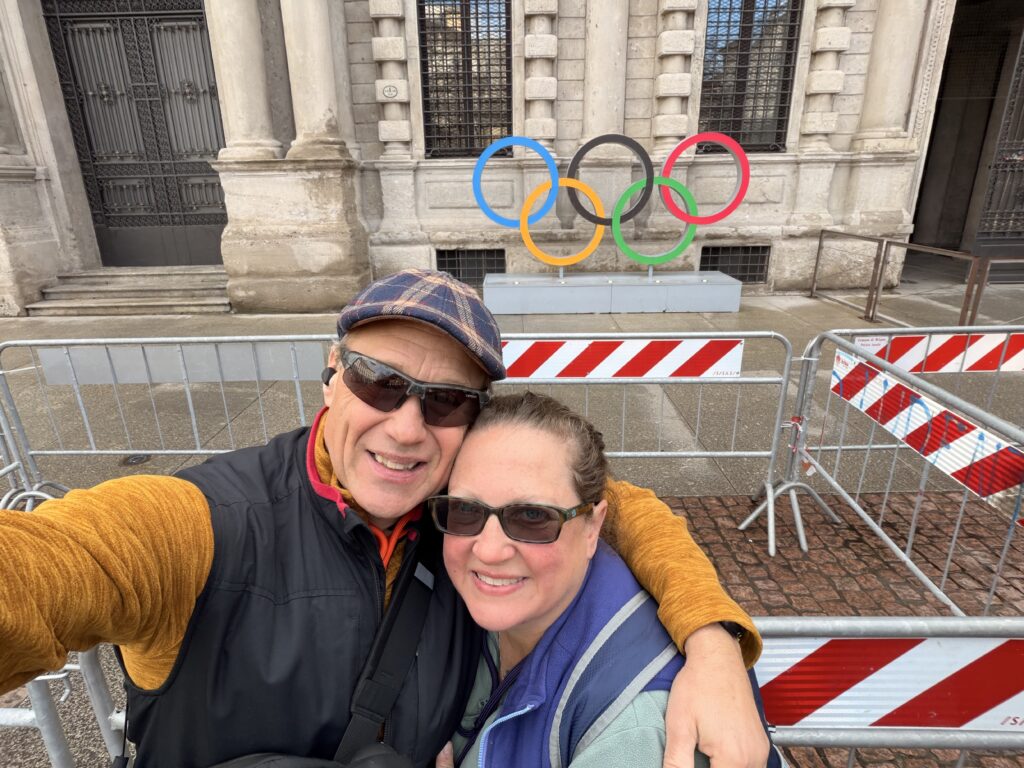
We saw Olympics stuff everywhere we went – there were even paintings on the walls inside the metro station!
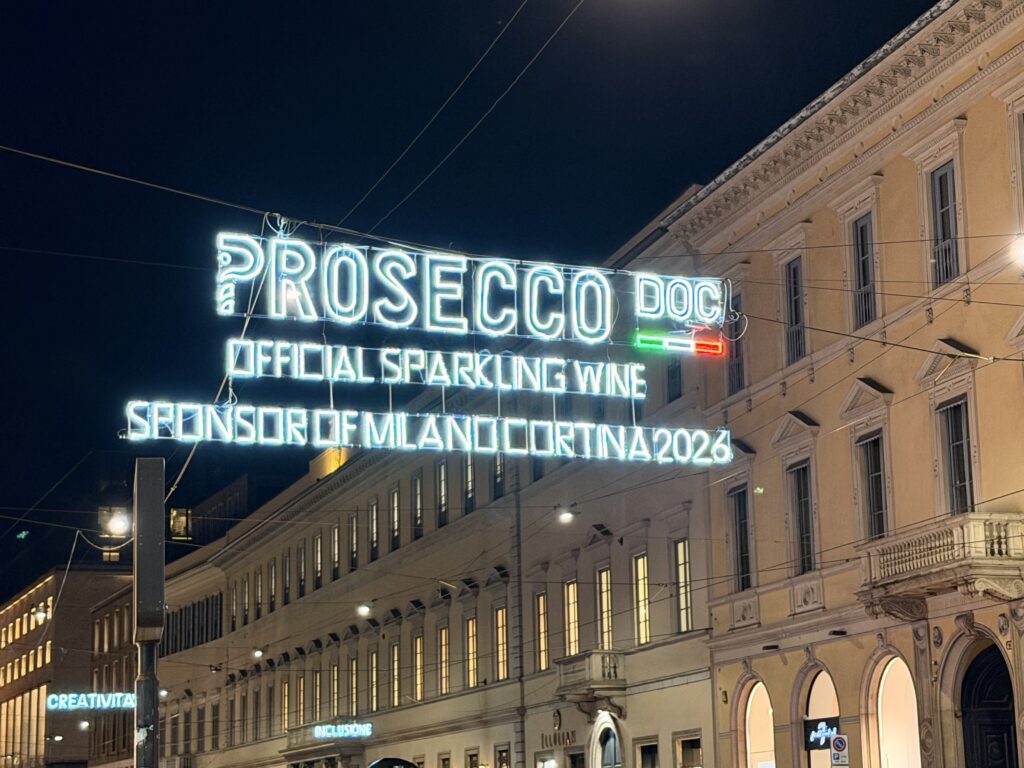
And of course the Olympics in Italy would have an official sparkling wine!
I mentioned that the night we got into Milan, the torch was coming into the Piazza del Duomo. We decided not to wait for it to get there because it wasn’t due for a few more hours. So we took a leisurely walk back to our apartment 1.5 miles away. On the way, we came across a street with tons of people standing around waiting – the torch was coming through there! We were so glad to catch it again after seeing it in Venice! It was supposed to get to the Piazza del Duomo by 7:30 PM – we caught it 1.5 miles away at 8 PM so I can only imagine what time they finally got to the Piazza.
By the way, at the start of the video it almost sounds like someone is cursing (sounds like f**k). It’s the police woman saying “tutti un po’ più indietro” – “everyone a little further back” (clearing the street for the procession to come through).
Overall we had a brief but great stop in Milan before heading down to Genoa.