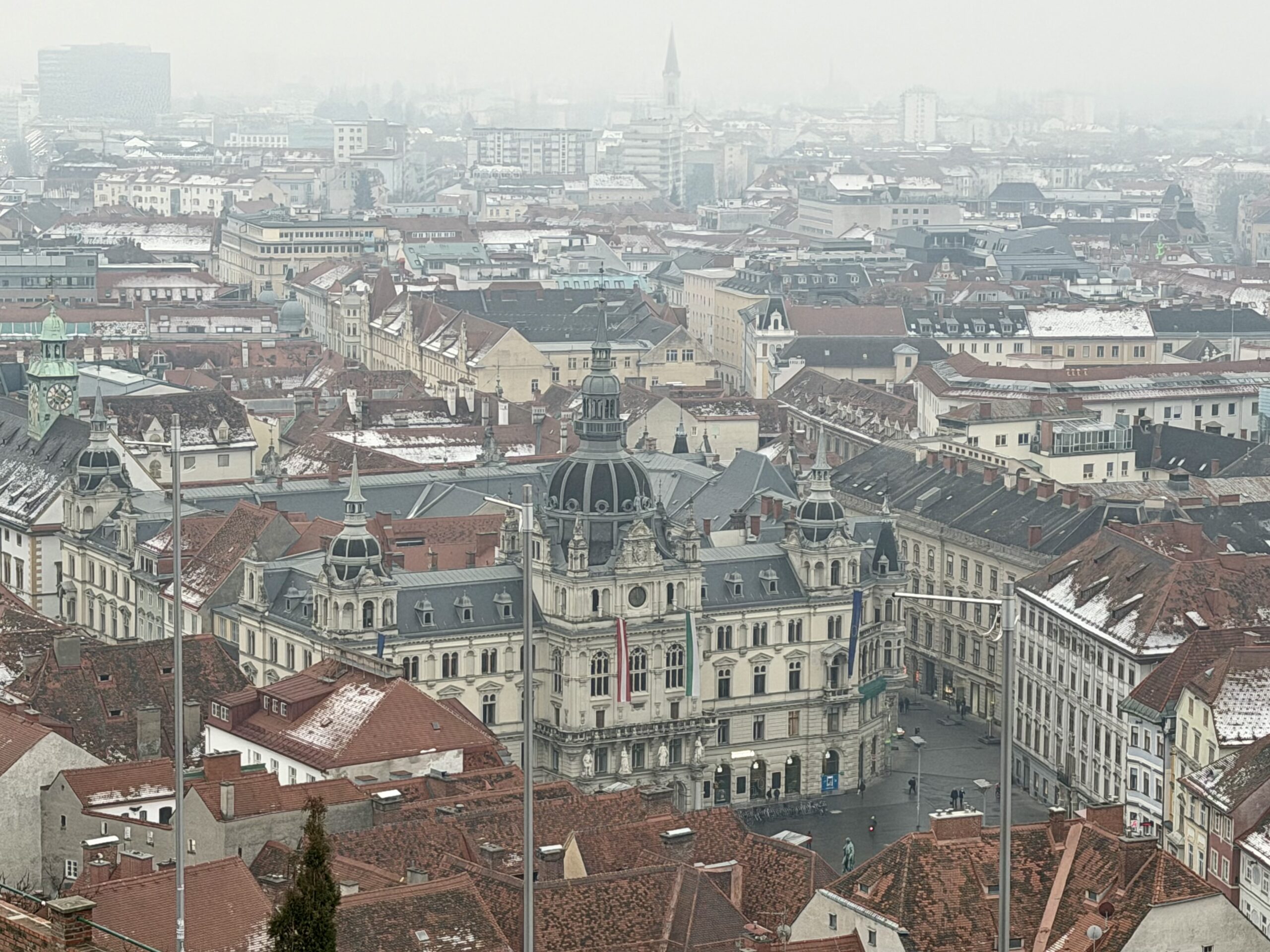

After our week in Vienna, we headed south to Graz. This stop was not initially planned but when I saw we’d have to change trains here anyway on the way to Ljubljana, we decided to stop here for a couple nights and explore Graz. This has been the beauty of not over-planning – we have the flexibility to change course. If you know me, you know I am a planner! So this has been a refreshing change. While I had planned out the first couple months since the holidays are a busier time (due to the Christmas Markets), now we’re in the off season and it’s a lot easier (and cheaper!) to do things with a shorter lead time. We booked Graz about 2 days before we left Vienna; then while in Graz, we booked out the next 10 days of stops.
The train ride to Graz from Vienna is about 2 1/2 hours. We got into Graz around 2:30 pm on a Friday and were able to go straight to our hotel to check in and drop our bags in our room before heading out to explore with the couple hours of daylight we had left. We hopped on a tram at the train station and took it to the stop a few blocks from our hotel. The tram around the historic old town is actually free but the train station is just outside of that zone (the tram ticket was only €3.20 a piece).
We walked up to the clocktower and Graz castle – only a 20 min walk from our hotel but it was a pretty steep walk to get there. They do have an elevator for those who can’t do the walk (for a small fee – €2.50; https://www.graztourismus.at/en/sightseeing-culture/sights/schlossberg-lift_shg_1484). Or you can take the funicular (same price as the elevator; https://www.graztourismus.at/en/sightseeing-culture/sights/schlossberg-funicular_shg_1482). There were some neat-looking stairs but the routes involving stairs were closed due to ice so we took the path with switchbacks.
The iconic clock tower (Uhrturm) was our first stop. According to the sign at the site, the Graz Clock Tower dates back to the 13th century, with documentation of the tower as part of the fortifications as early as 1265! It initially was not a clock tower – the tower was used as a guard post for defense of the town. It was extensively re-designed in 1560 to give it its current appearance. The clock on each of the faces of the tower were frescoed in 1712.
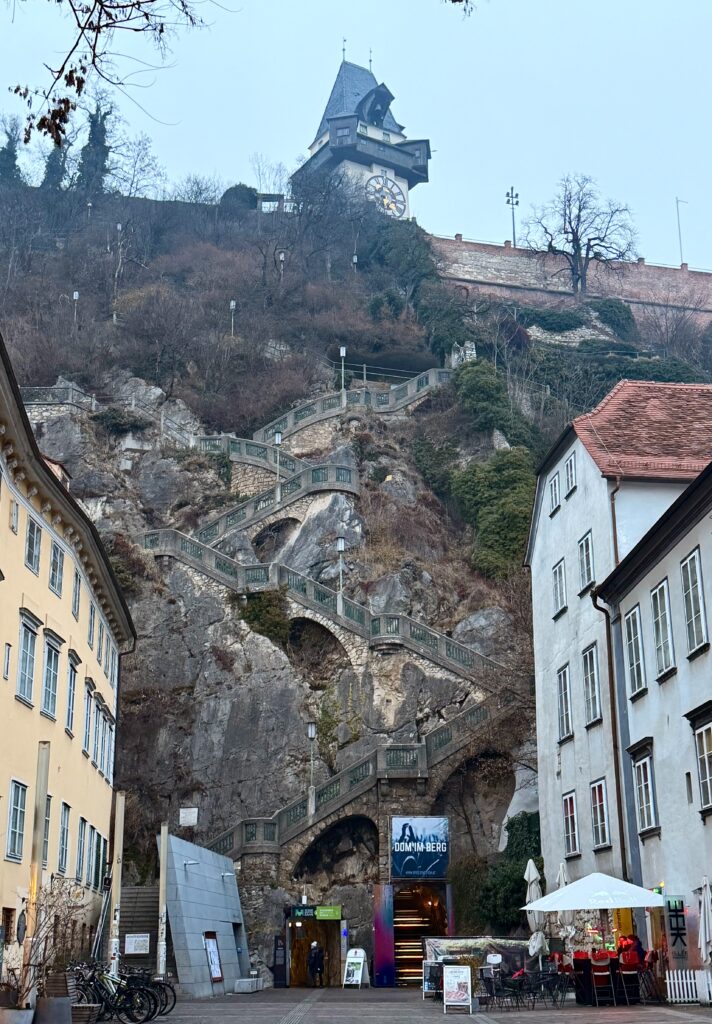
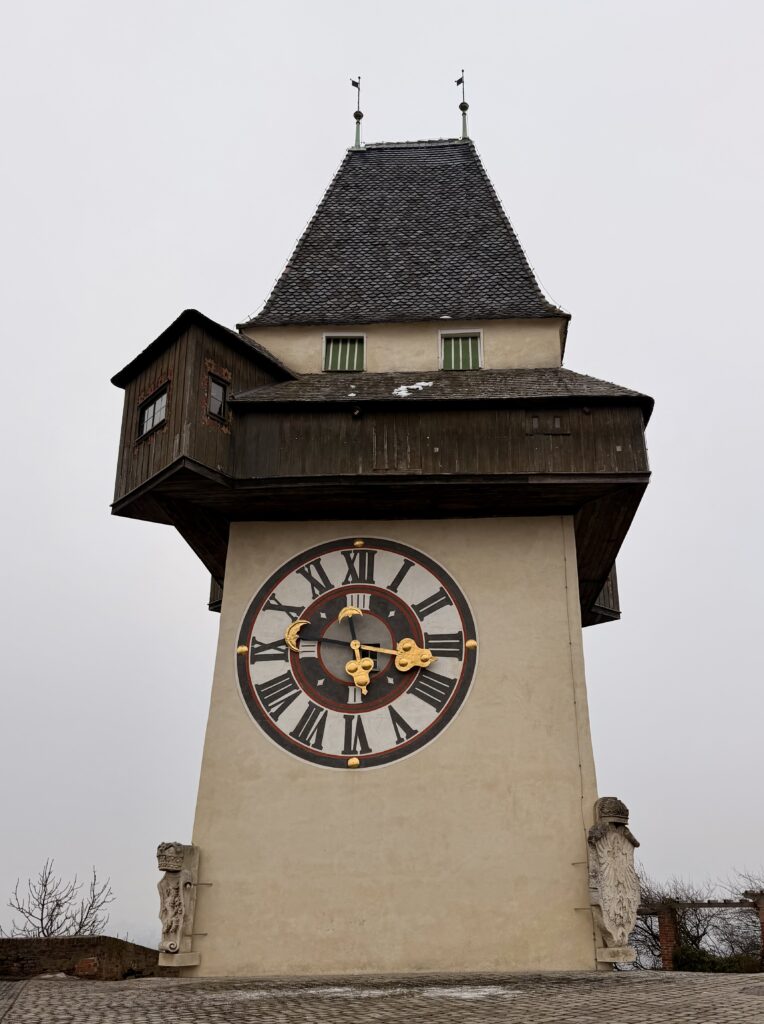
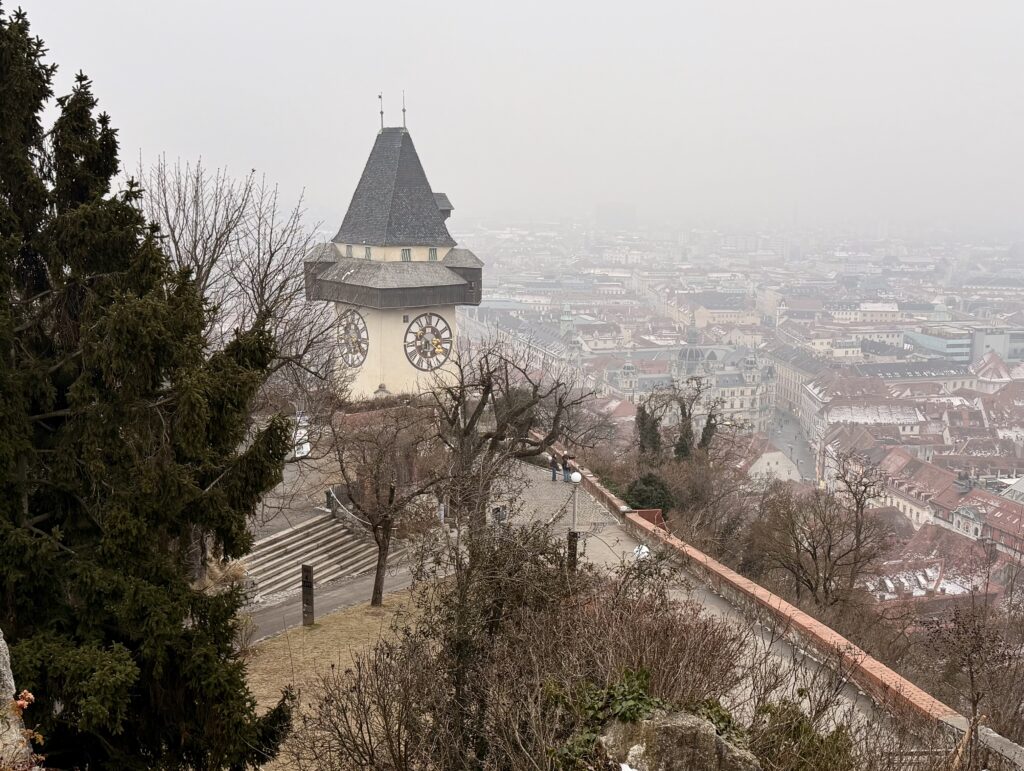
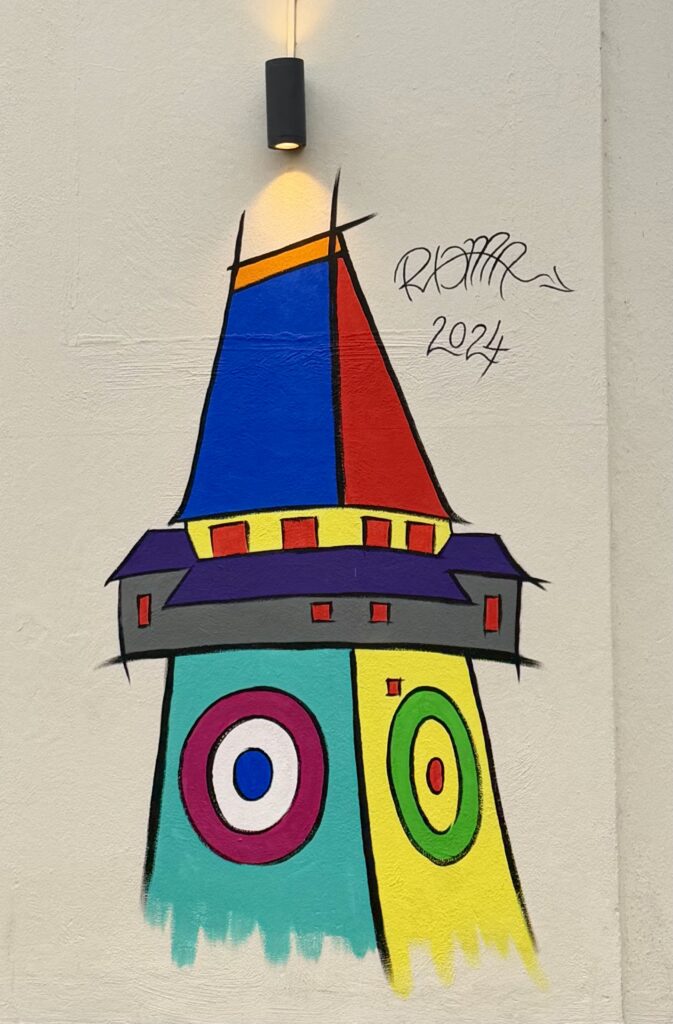
The clocktower is one of the top sights in Graz and on every tourist “must see” list – it’s all over the place in Graz and we saw it in postcards, magnets, and other souvenirs all over town – even on a wall mural!
On a clearer day you can get some great views up here but it was pretty overcast and foggy so we couldn’t even see as far as the edge of town. It was still worth the walk up the hill to see the historic site.
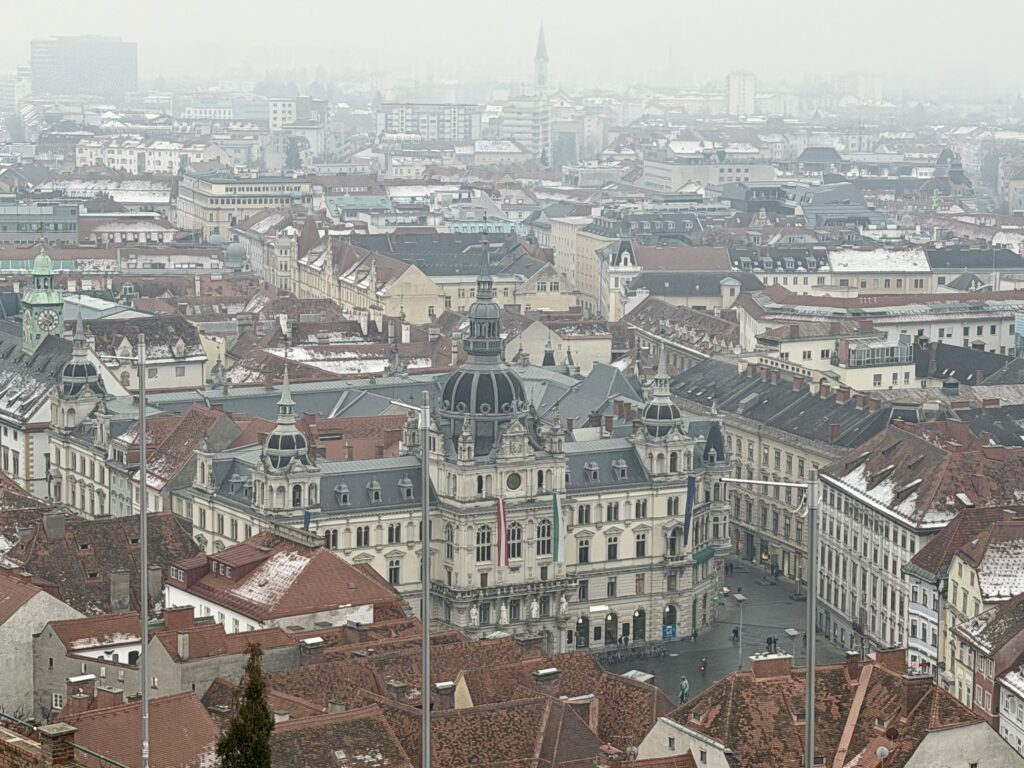
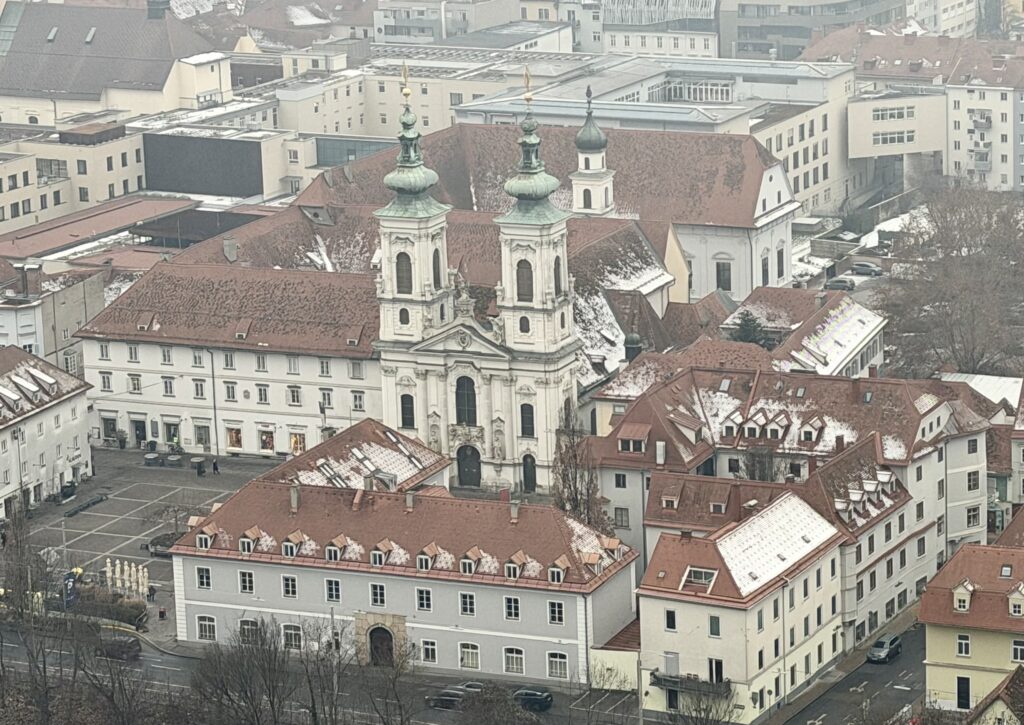
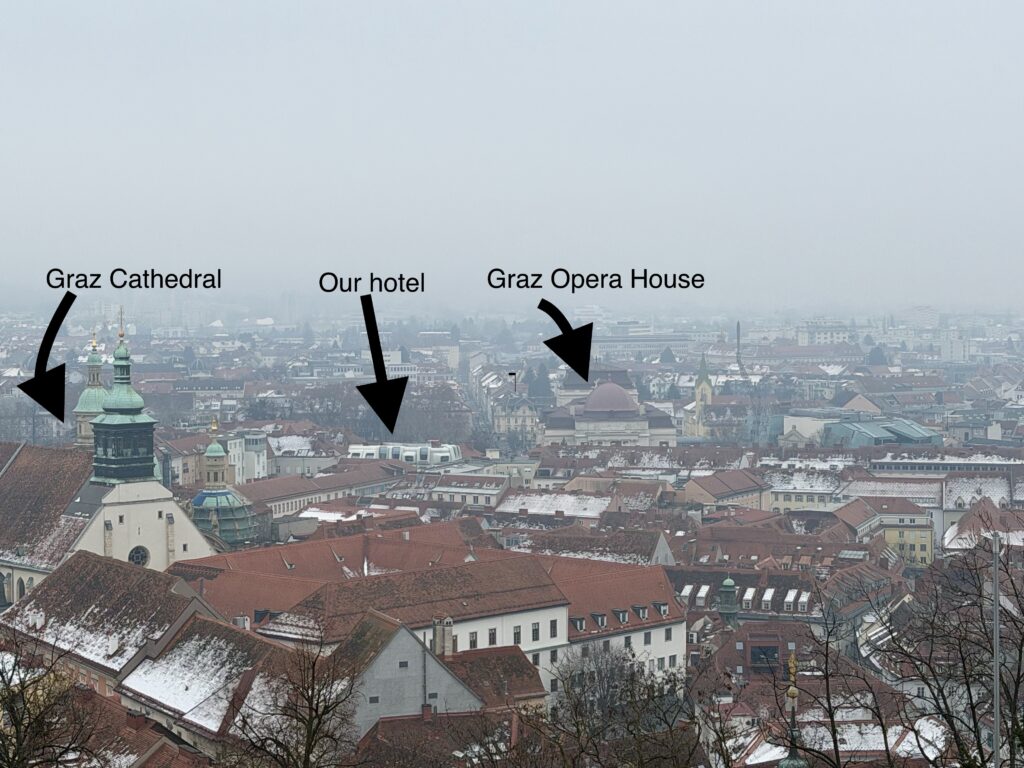
The entire castle complex sits up on the Graz Schossberg (which basically translates to castle rock) – is a huge piece of dolomite rock that sits about 123 meters (400 feet) above the city of Graz. People have lived up there since the 8th century BC and a castle has existed on the fortress hill since the 1500s.
There are several structures up on the castle hill. The Stable Bastion is a remnant from the Renaissance fortress built in 1544. The walls are up to 6 meters (20 feet) thick and more than 20 meters (65 feet) tall.
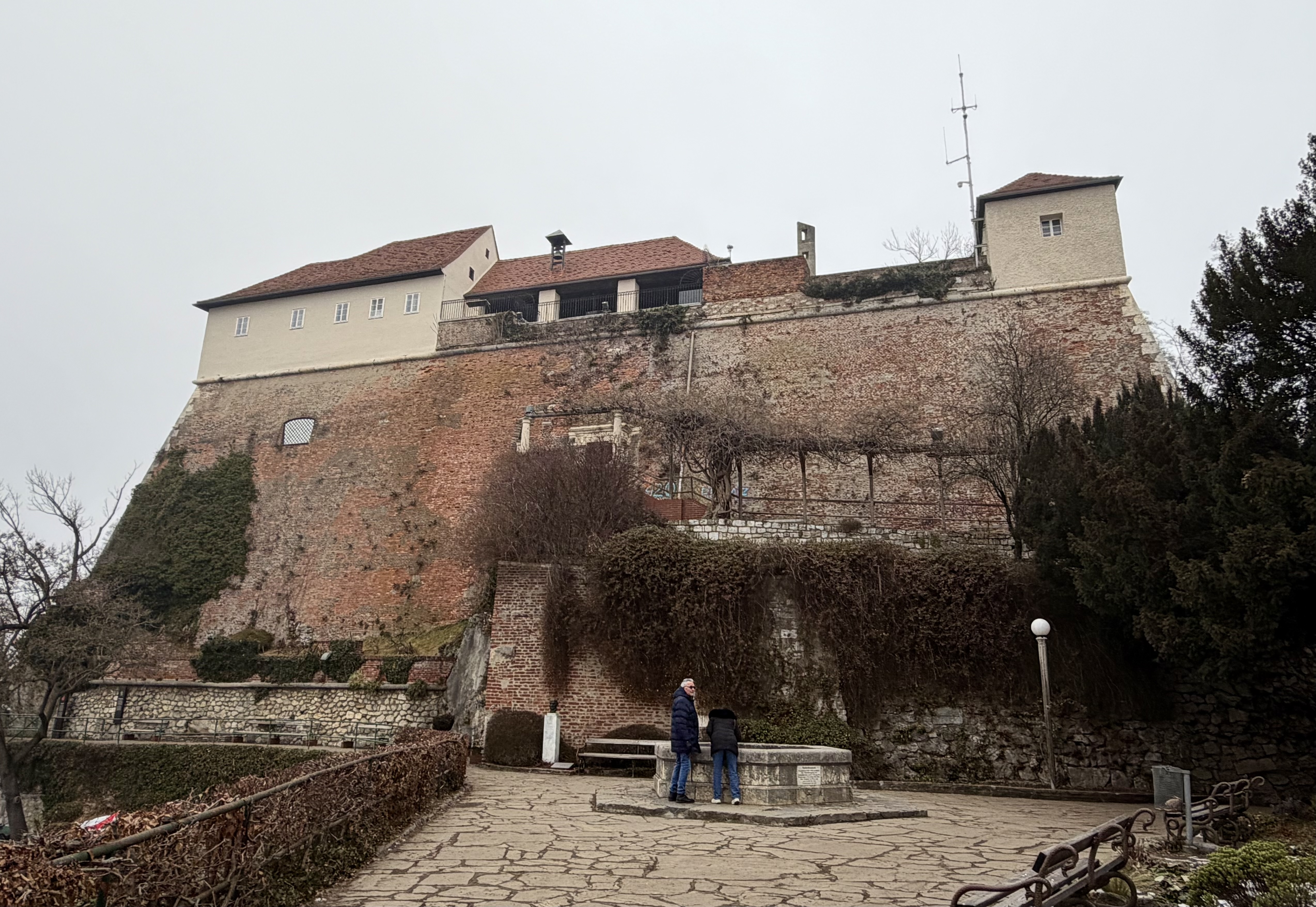
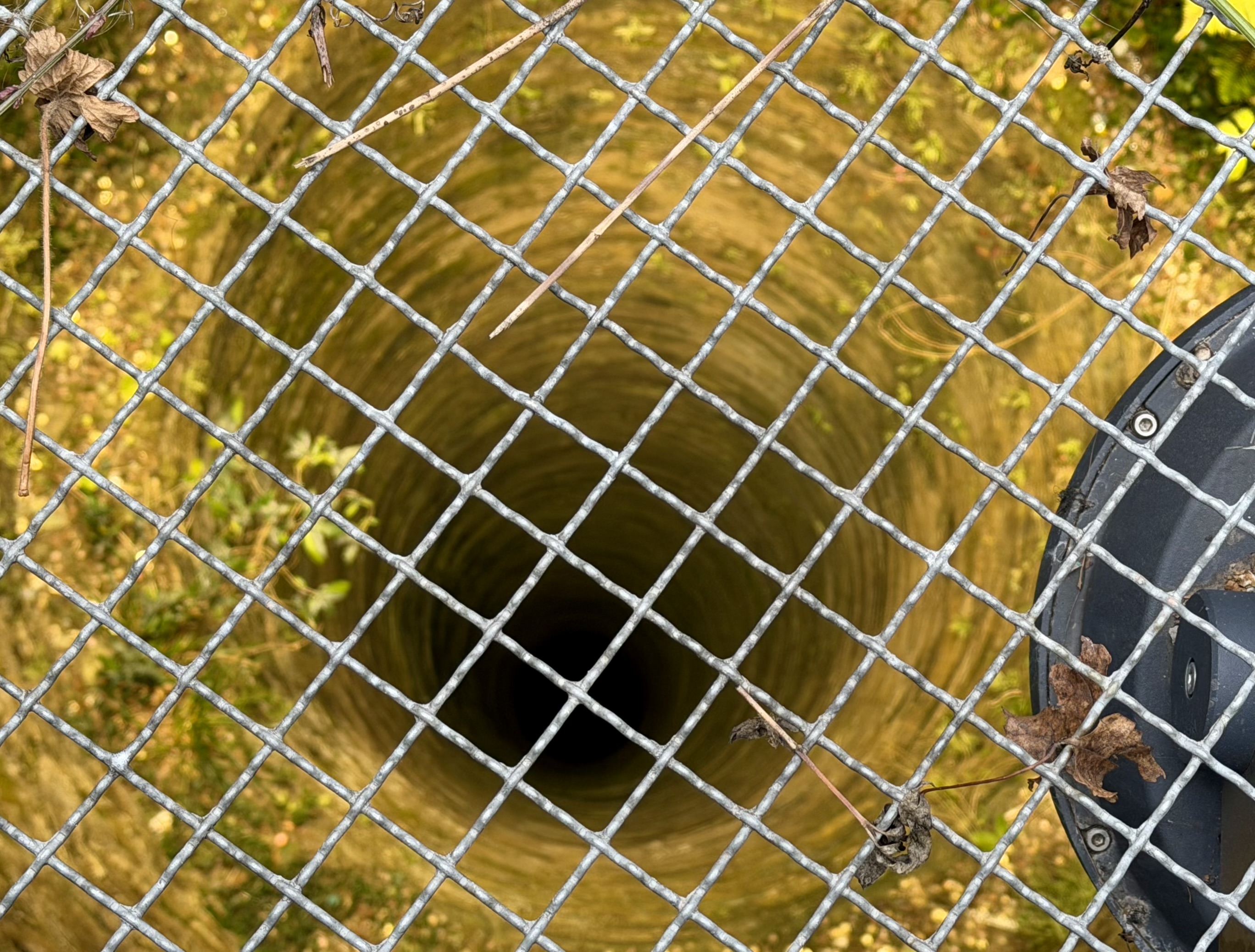
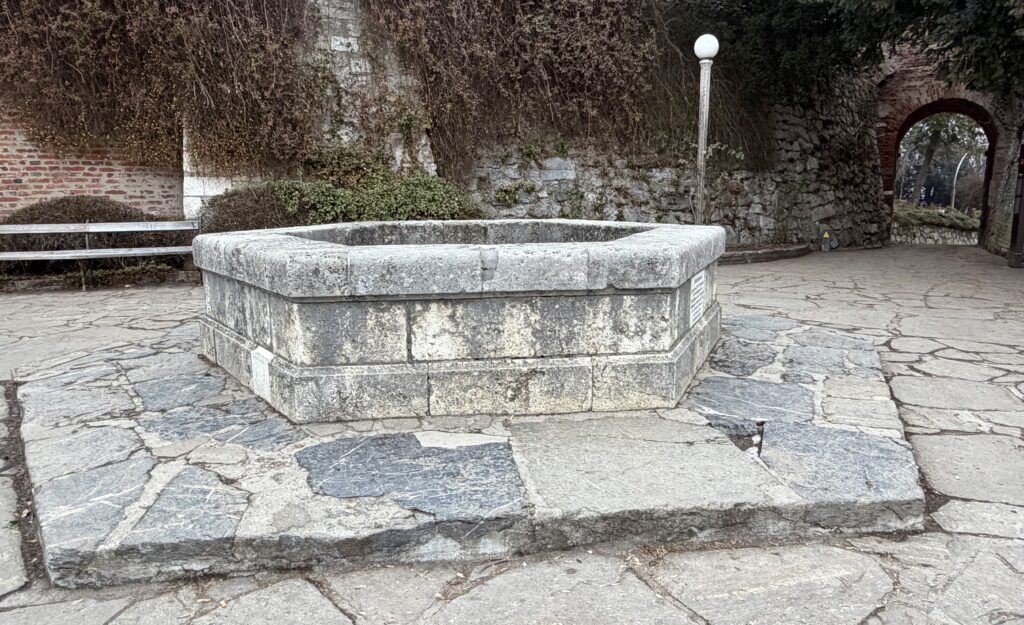
The Turkish Well (Türkenbrunnen) was dug between 1554 and 1558 and is more than 94 meters (300 feet) deep – reaching down to groundwater.
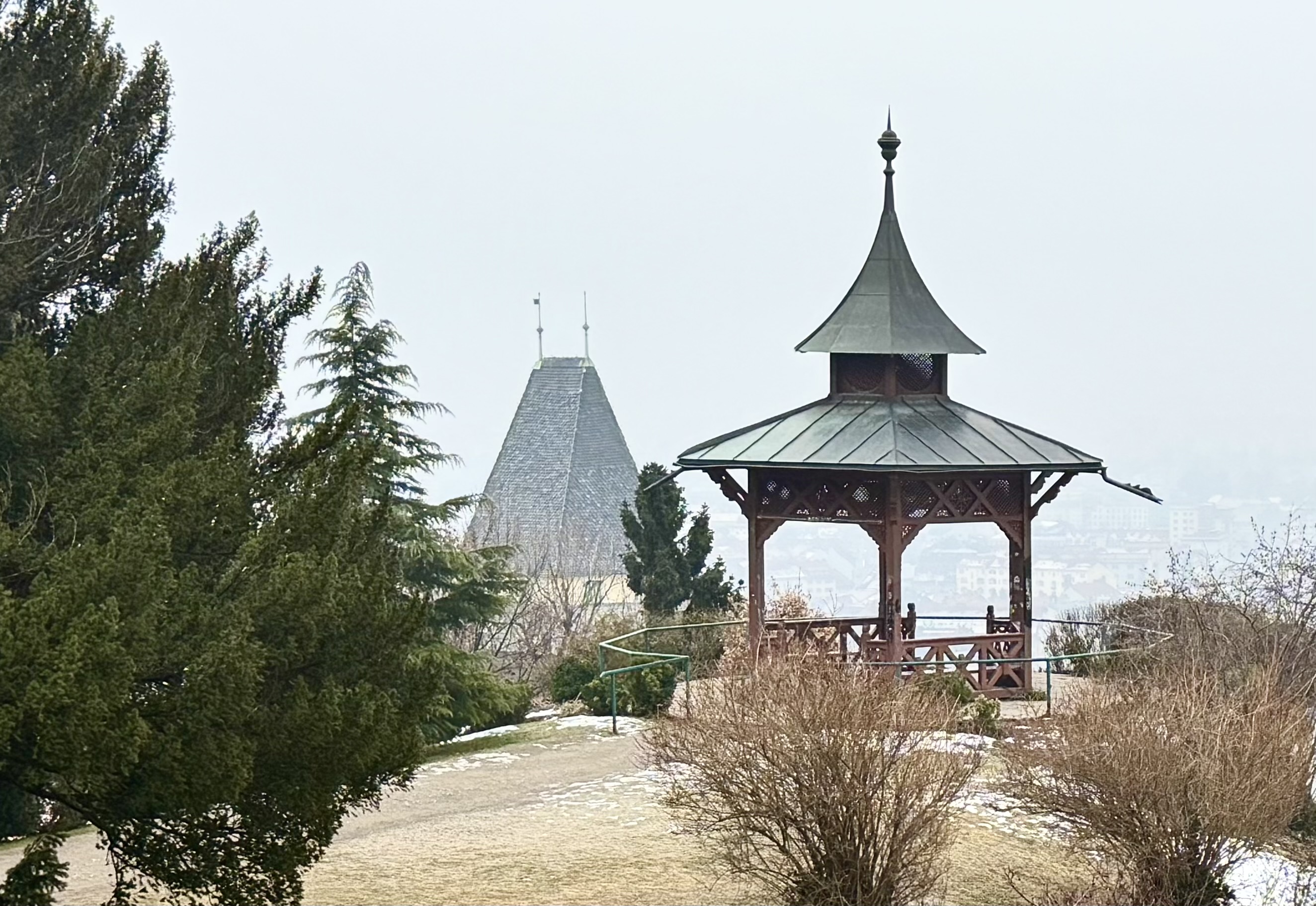
The Chinese Pavillion (Chinesischer Pavillon) was built in the late 19th century (before that a vine arbor stood in the same spot).
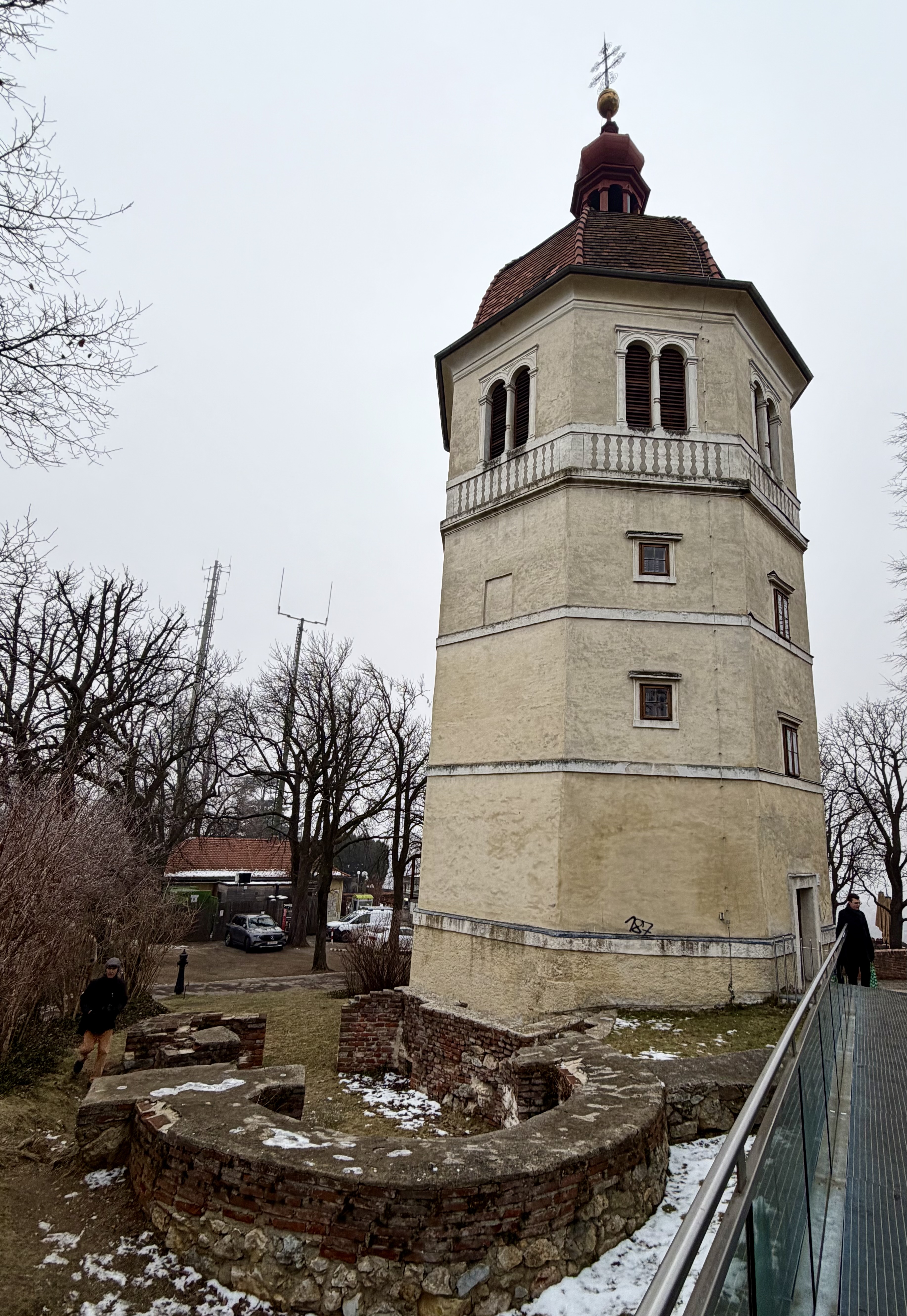
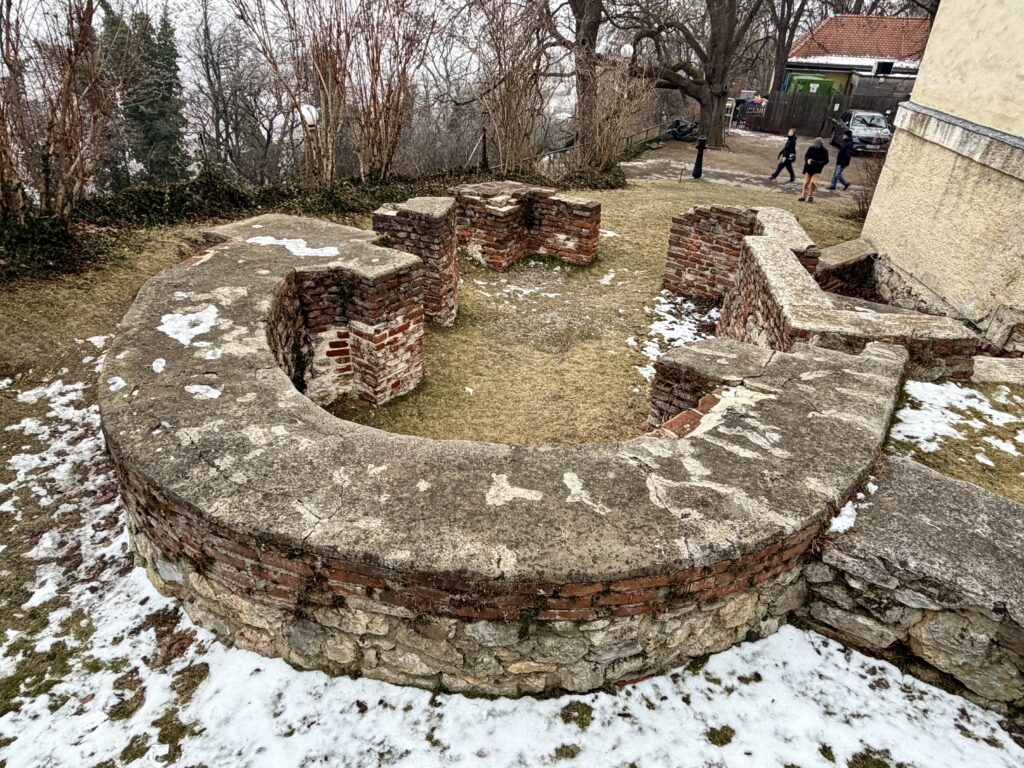
The Glockenturm was a free-standing bell tower built in 1588 next to St. Thomas Chapel (Thomskapelle). The bell tower is 125 feet (38 meters) tall. All that is left of the chapel is ruins but they are remnants of the medieval castle complex – there is documentation of this chapel as far back as 1271! In the 16th century, there were Protestant masses held here temporarily after the Reformation and church services were held here for the prisoners detained at the castle. The building was dismantled in 1810 due to structural damage and the ruins were not discovered until the 1990s.
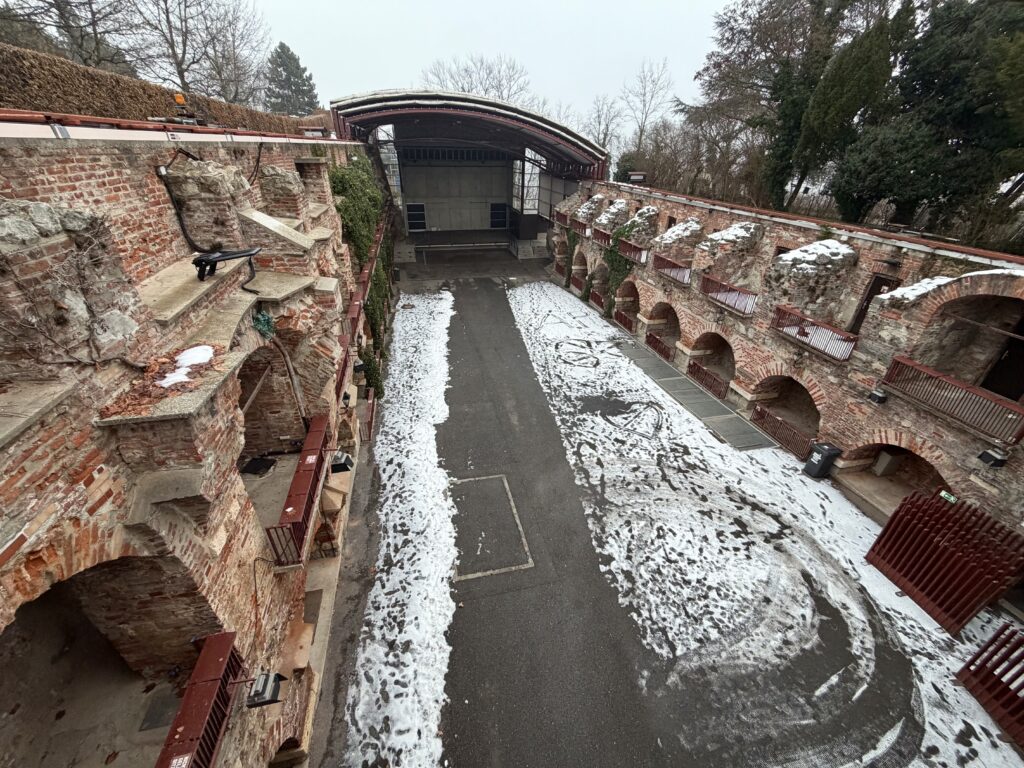
This Kasematten Stage (Kasemattenbühne) is located in the ruins of a 2-story basement of the former Castellan’s building in the fortress. The building was erected in the former moat around 1578 and was used to store supplies. In 1783 it was converted into a state prison. The building was torn down in 1809 (along with several other structures) but the ruins have been used for cultural purposes since the 1930s. The stage was opened in 1937 and had a moveable roof installed at the same time.
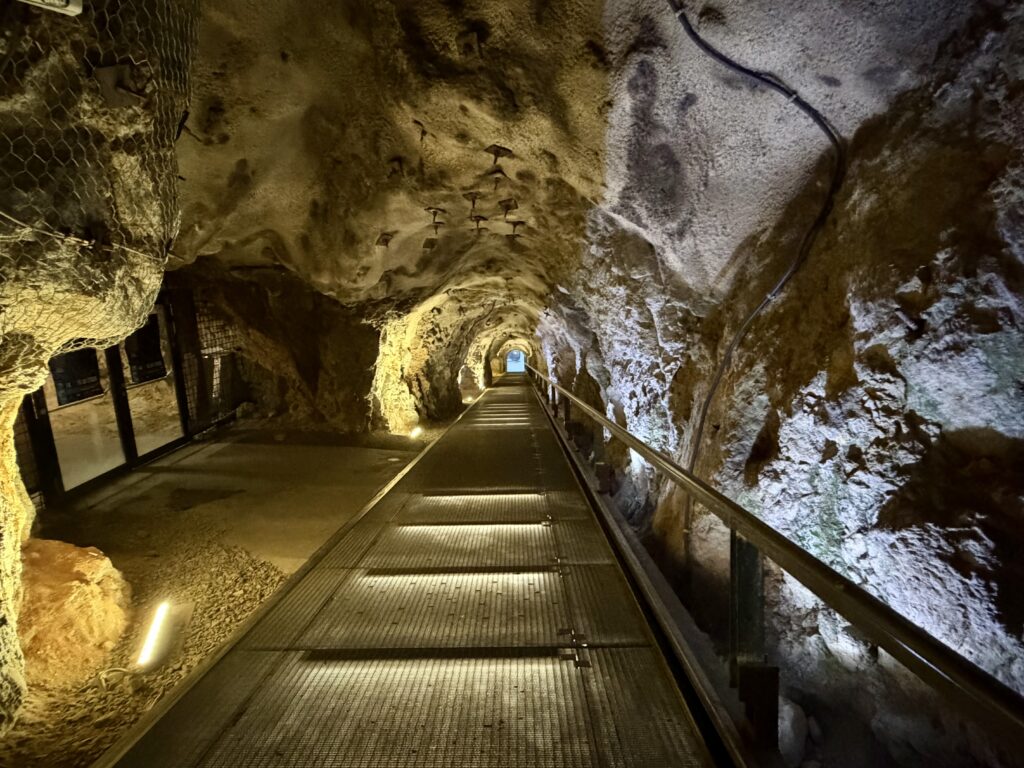
We didn’t use these tunnels to walk up to the castle but we did use them to go back down. They were constructed in 1943 to provide protection from Allied air raids (constructed using prisoners of war and civilian forced labor). In 1945, 6.3 km (about 4 miles) of tunnels with 20 entrances were cut into the mountain and could house at least 40,000 people.
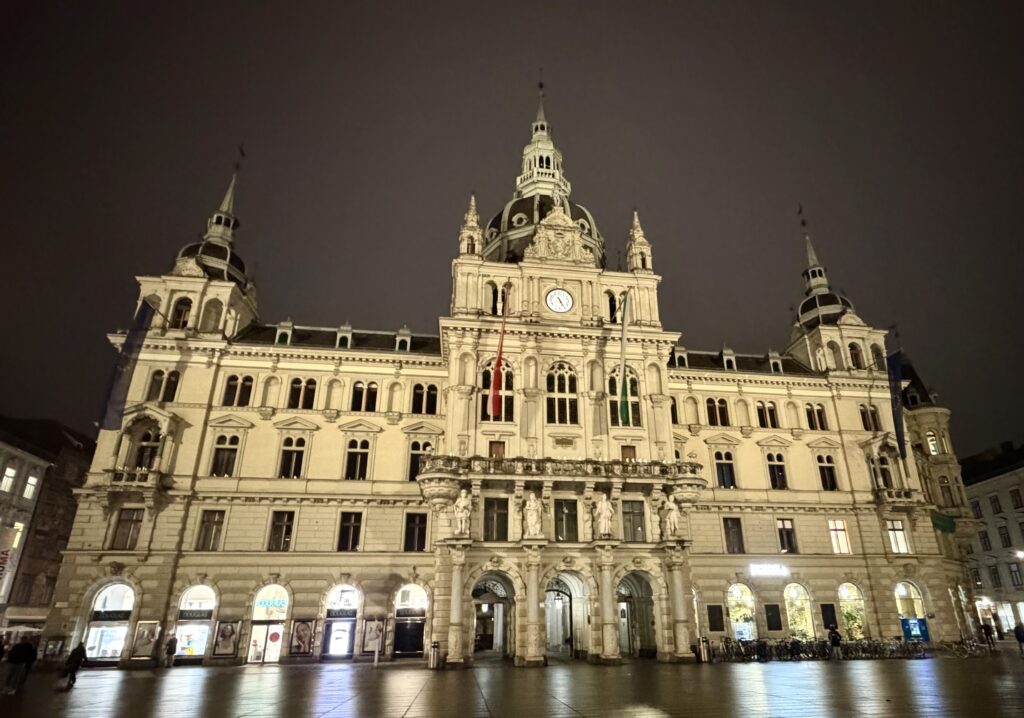
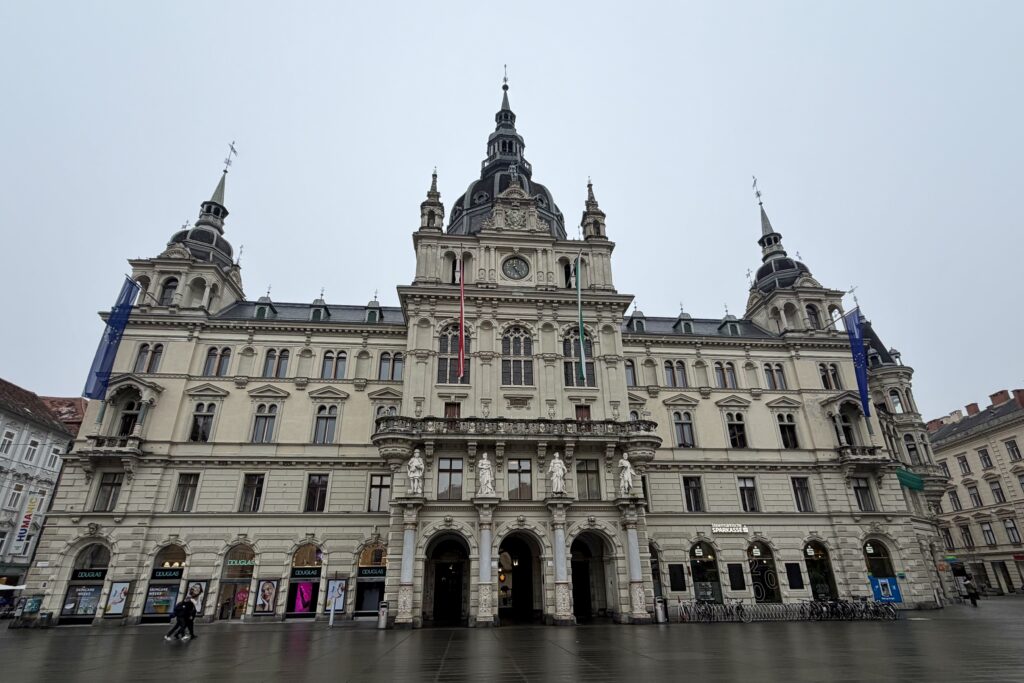
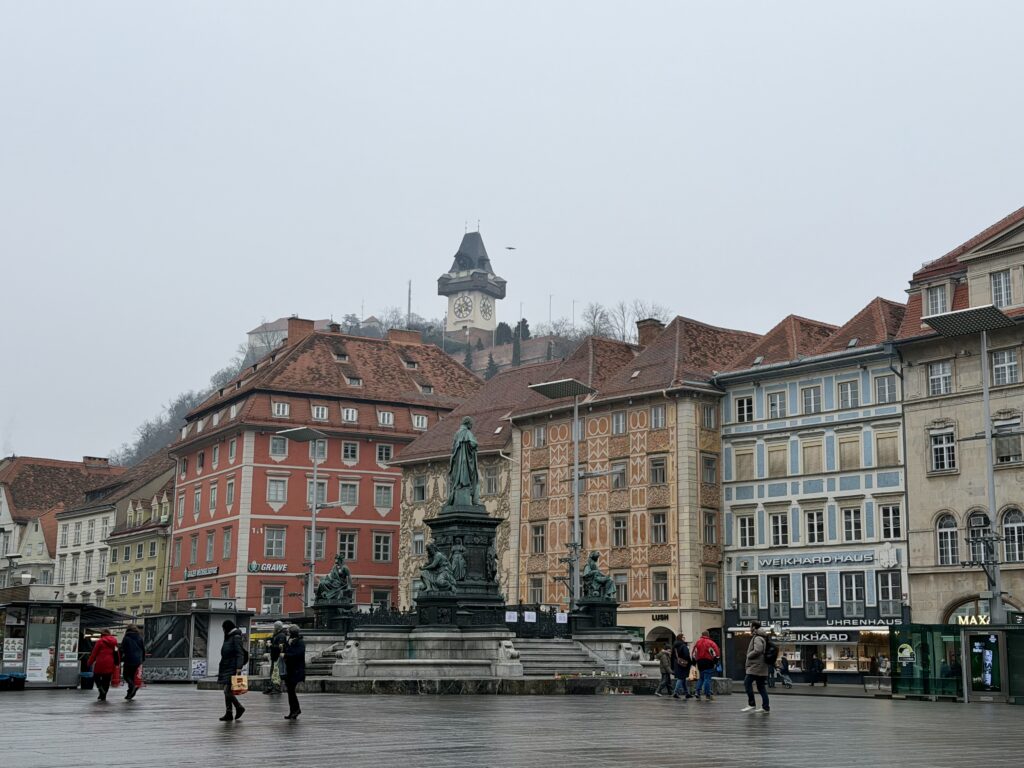
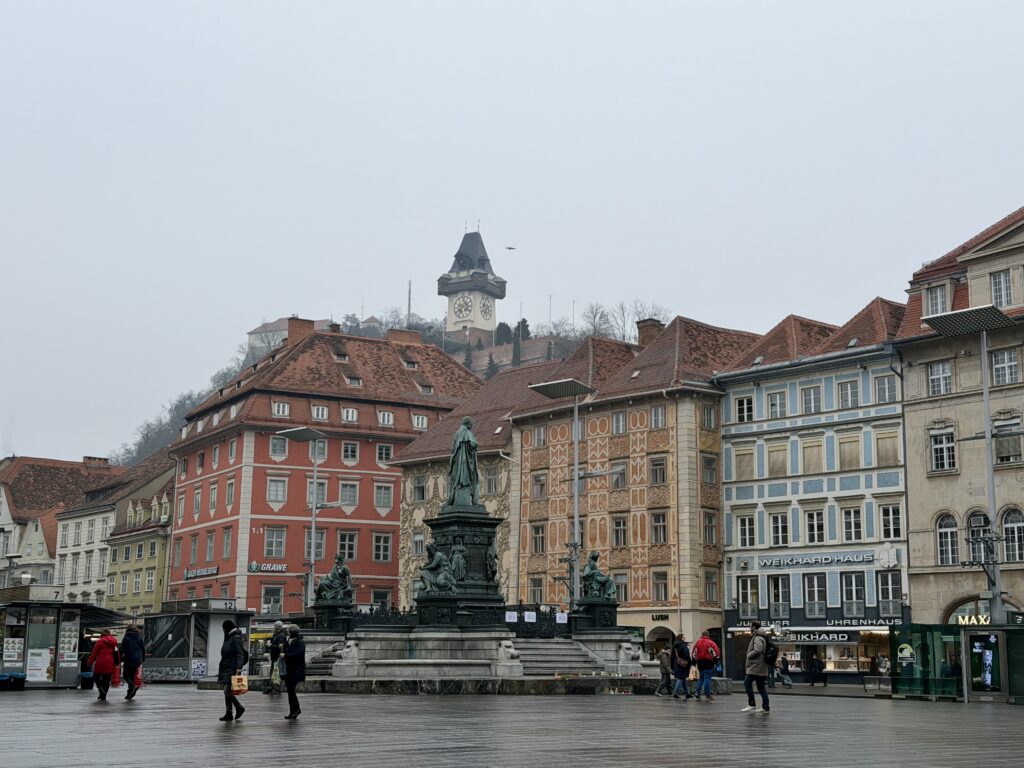
Hauptplatz (Main Square) was the center of public life and they had public executions here up until the late 18th century. The Rathaus (City Hall) is on the Main Square – a simple town hall was built here in 1550 and then a more ornate building replaced it in 1803 (finished in 1893) with the facade being simplified in the 20th century (https://www.graztourismus.at/en/sightseeing-culture/sights/hauptplatz-town-hall_shg_1456).
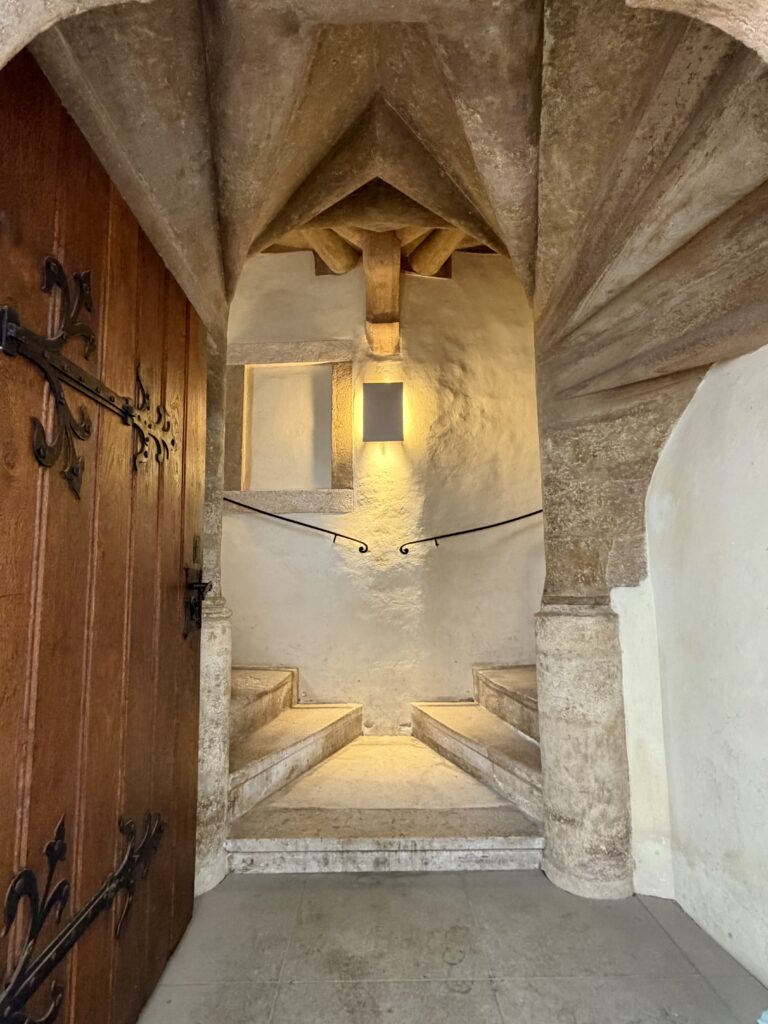
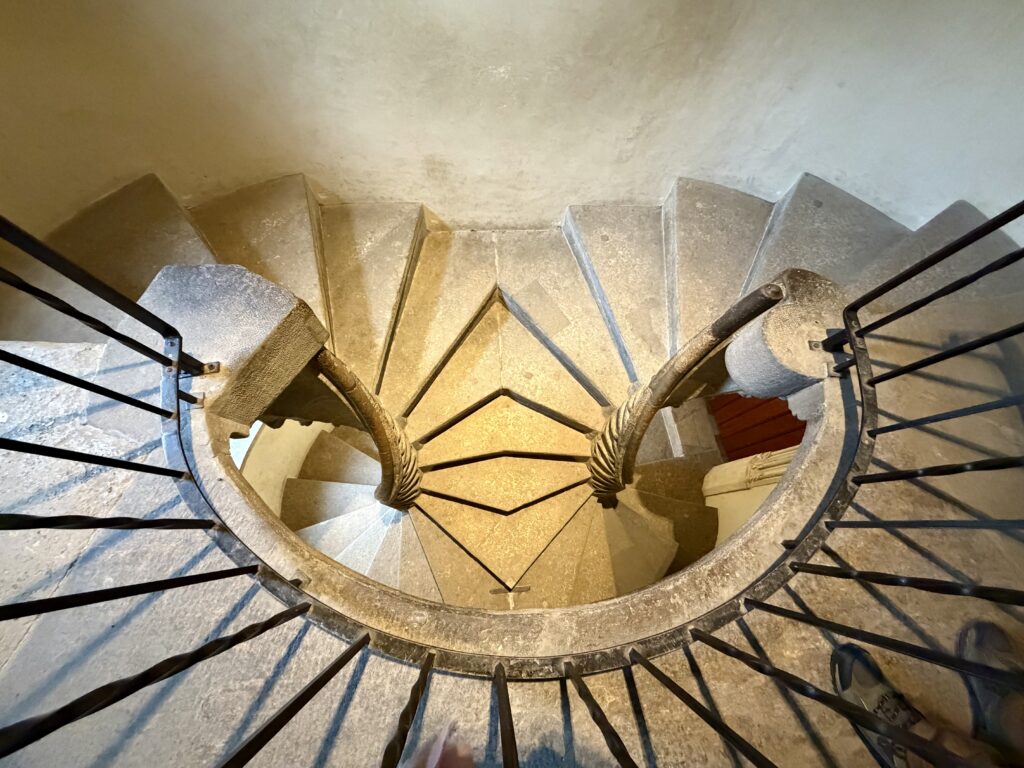
While waiting for the glockenspiel to go (every day at 1100), we checked ou this nearby double spiral staircase. Die Grazer Doppelwendeltreppe (Graz Twin Spiral Staircase) was built in 1499/1500 by an unknown master builder during the reign of Emperor Maximilian I.
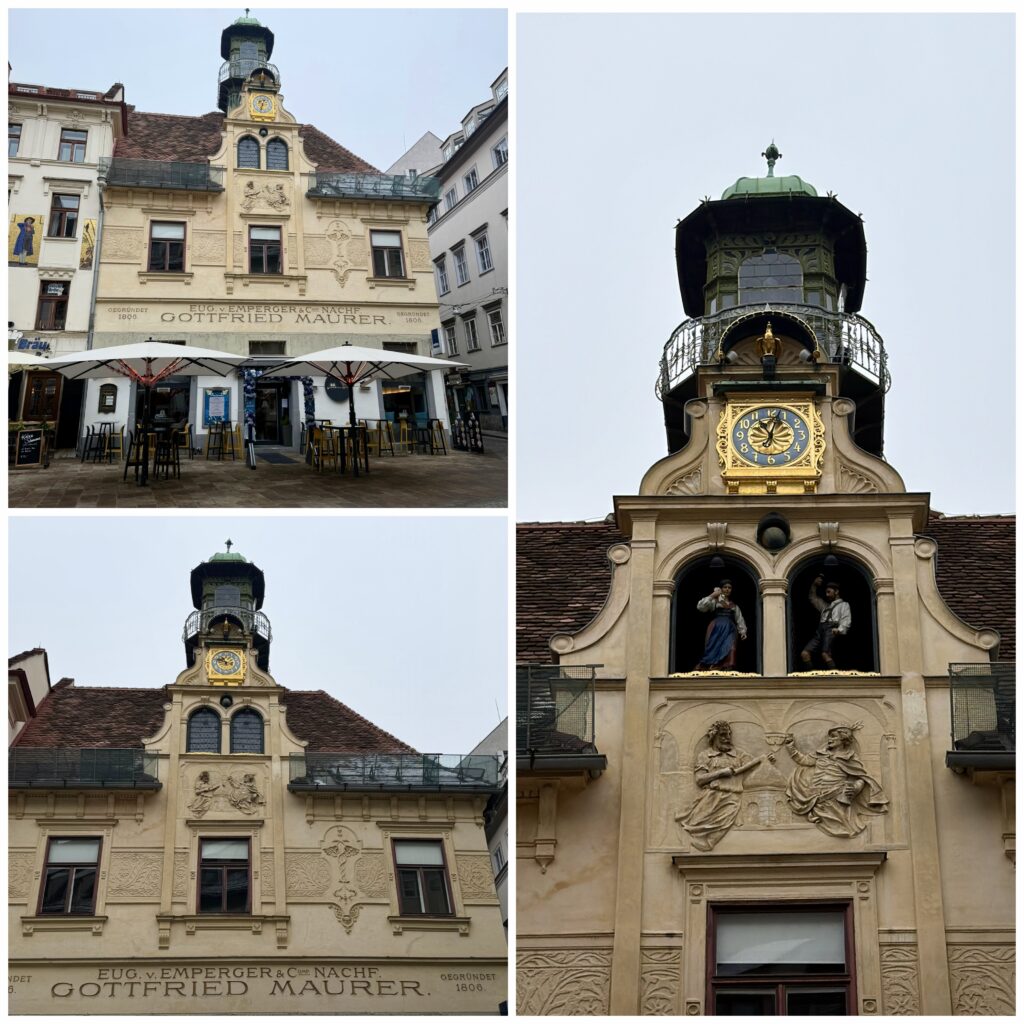
After that we went over to the glockenspiel. Not quite on the same level as the one in Munich (few are) but it was fun. At the end of the show you hear the rooster crow and flap its wings …. you can see it in the video but that last bit (with the rooster crowing) is underwhelming but pretty funny.
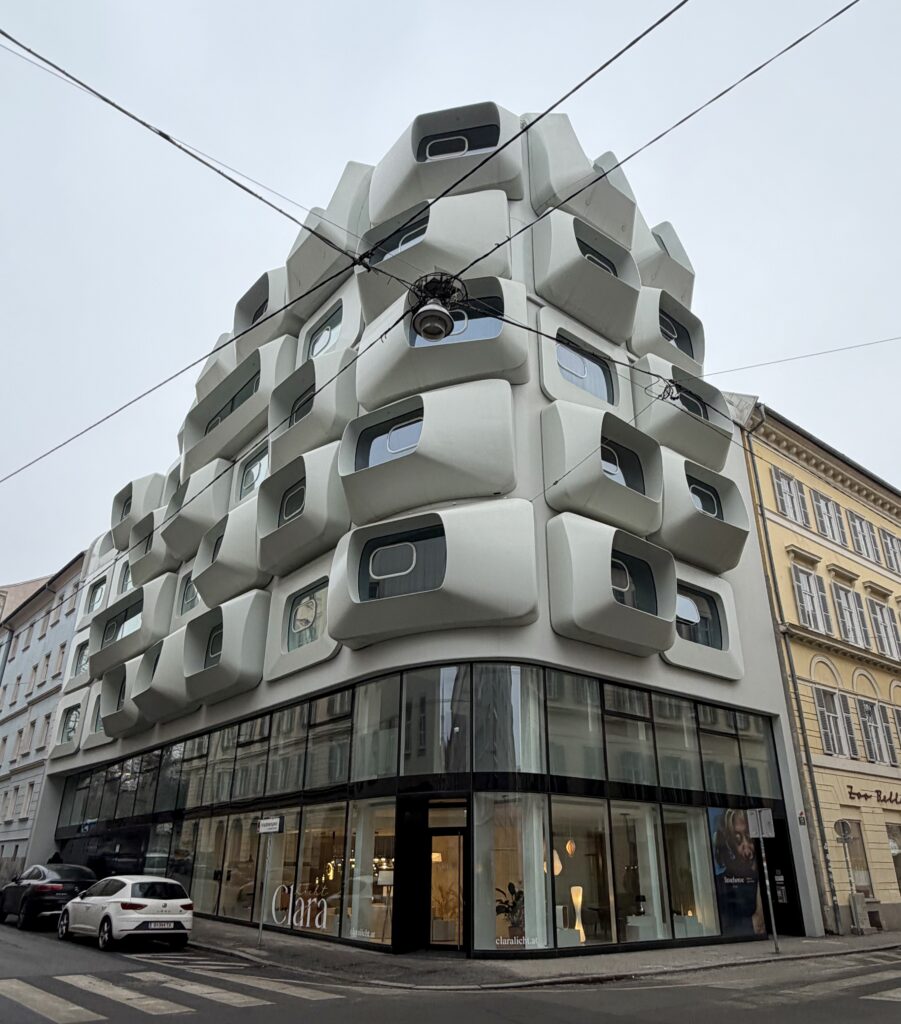
Graz is also designated as a UNESCO City of Design – interestingly if you google this, one of the buildings that comes up on google is our hotel (Graz Argos by Zaha Hadid)! It was a pretty cool building.
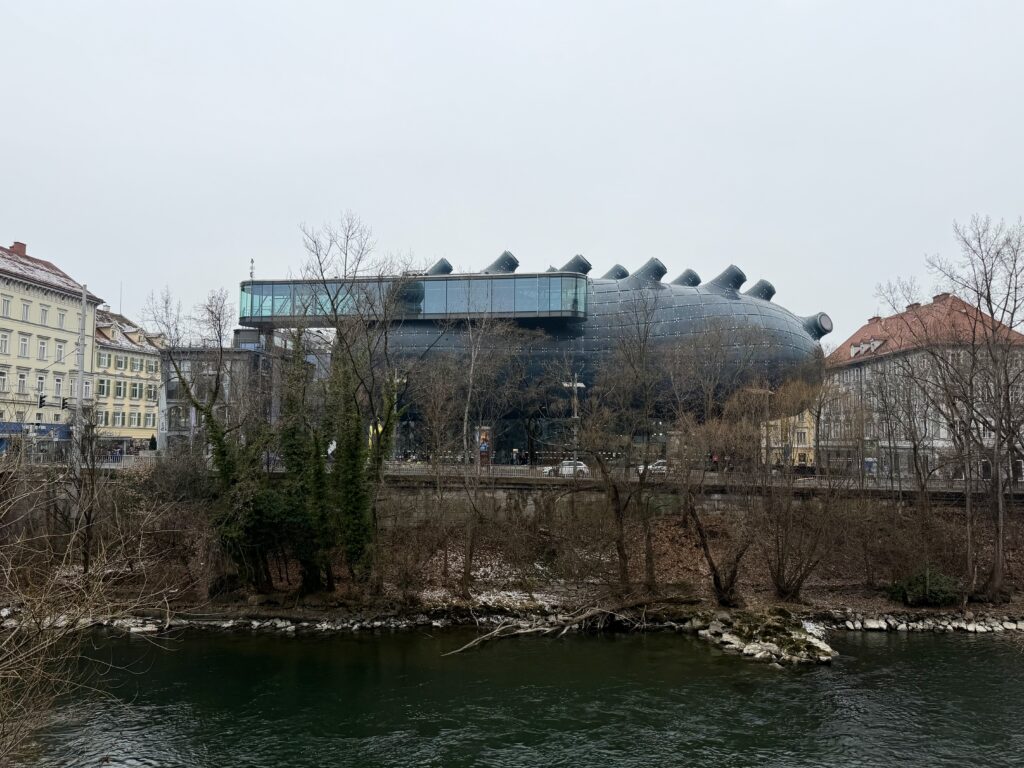
There’s also this interesting building called the Kunsthaus (https://www.graztourismus.at/en/sightseeing-culture/sights/kunsthaus-graz_shg_1462) right on the river Mur.
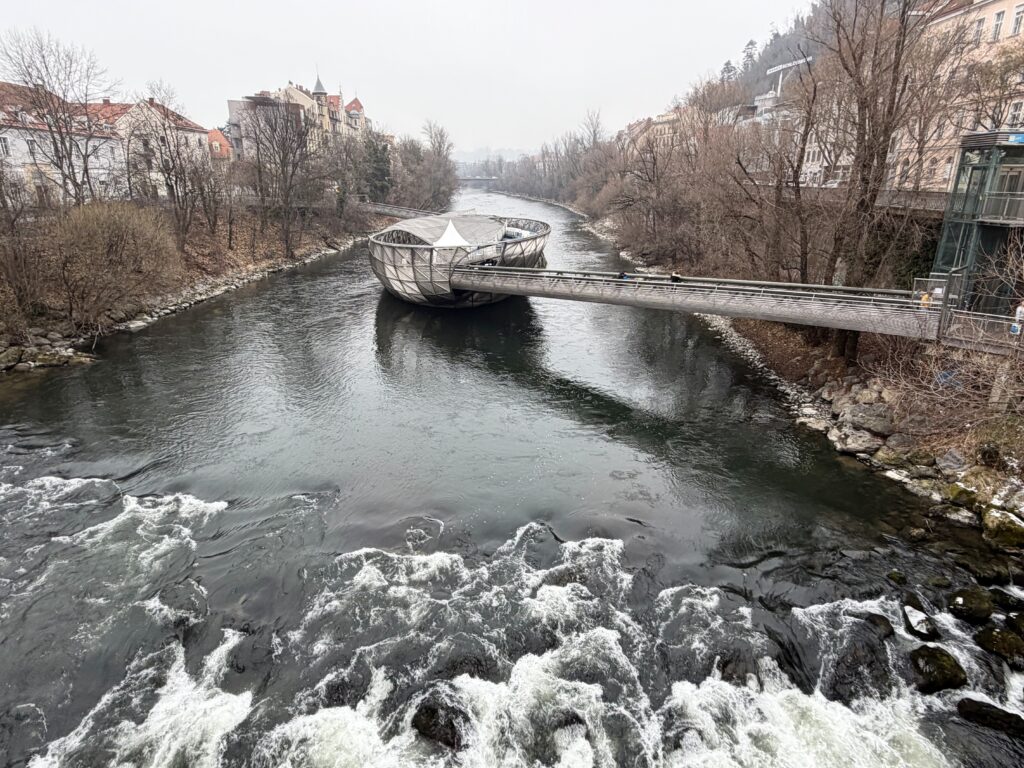
Another cool structure was this Murinsel, or Island in the Mur – as in the Mur River (https://www.graztourismus.at/en/sightseeing-culture/sights/island-in-the-mur_shg_1470). It’s a really neat structure that you can walk through to get across the river. It’s a unique bridge but also has a cafe in the middle.
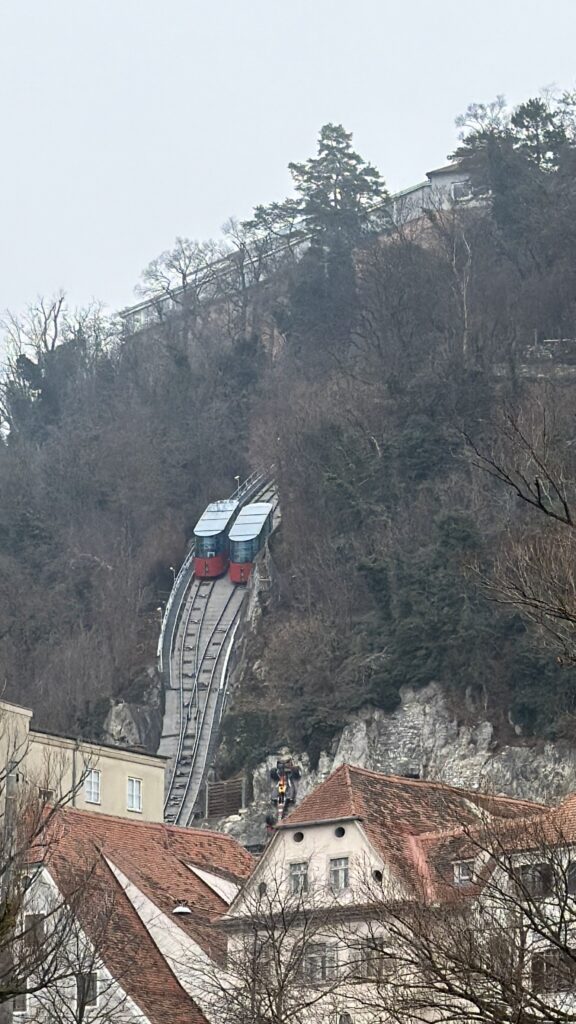
While we were crossing the Murinsel, we looked up and saw the funicular going up/down to the castle. The video gives you an idea of just how steep it is!
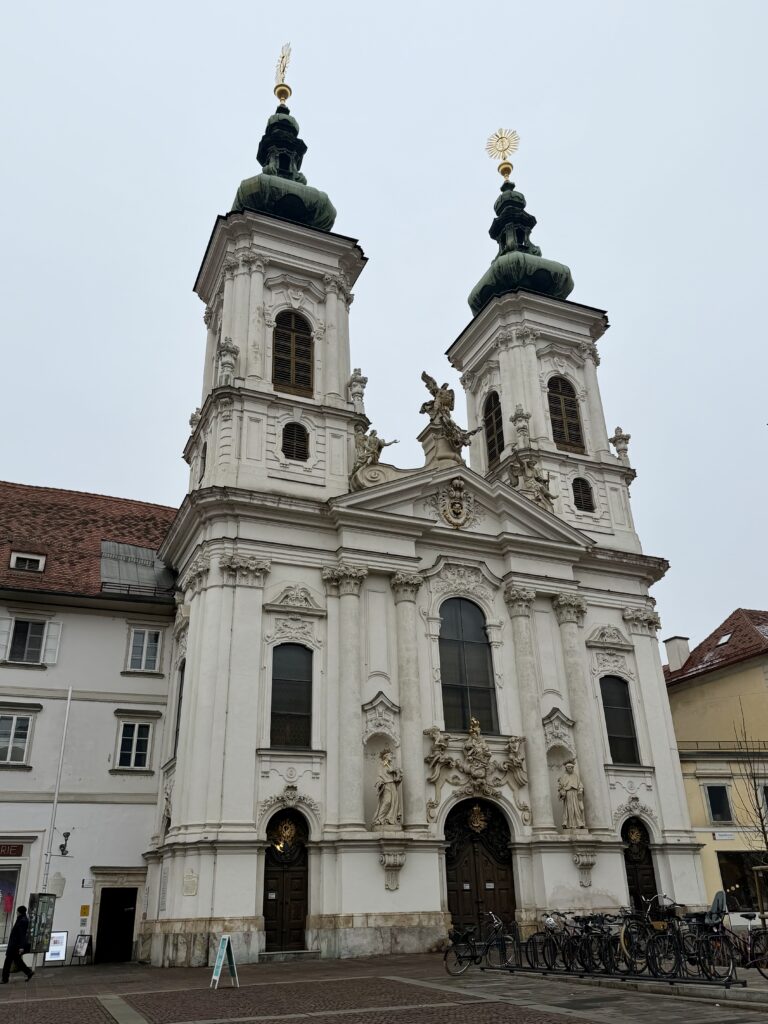
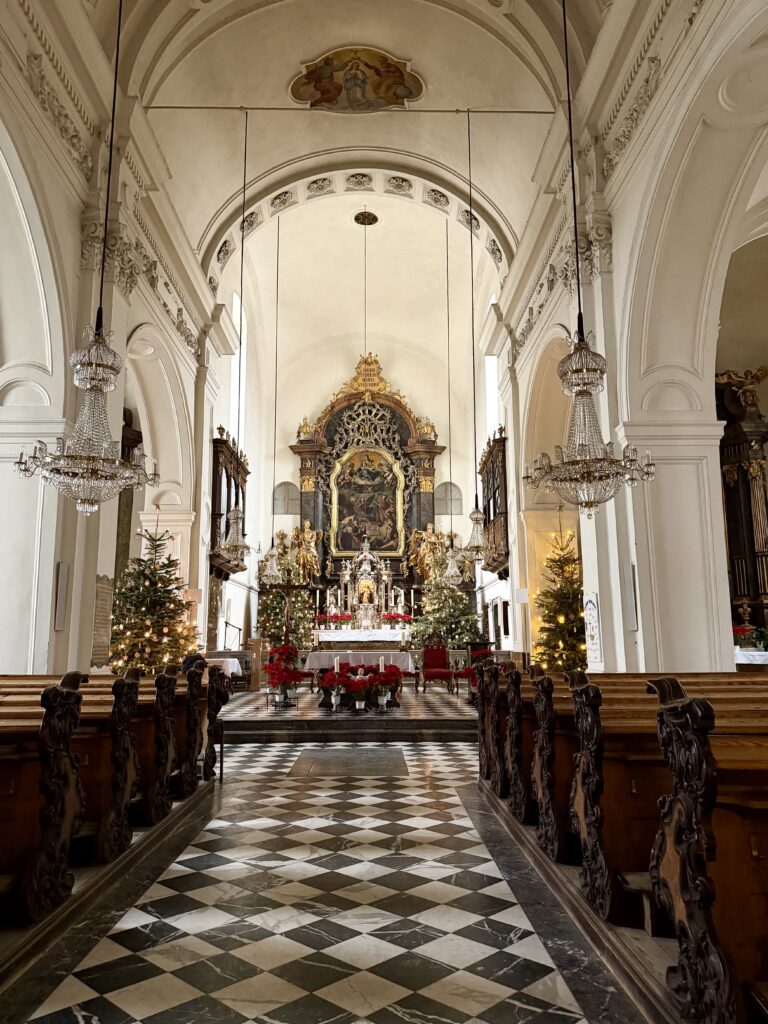
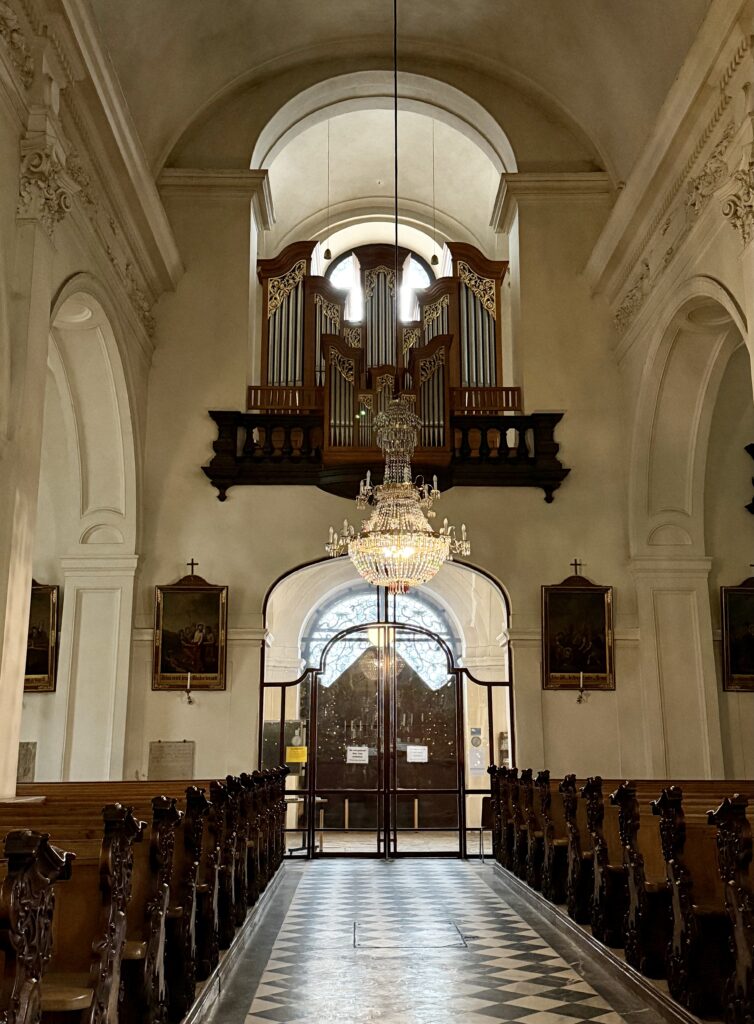
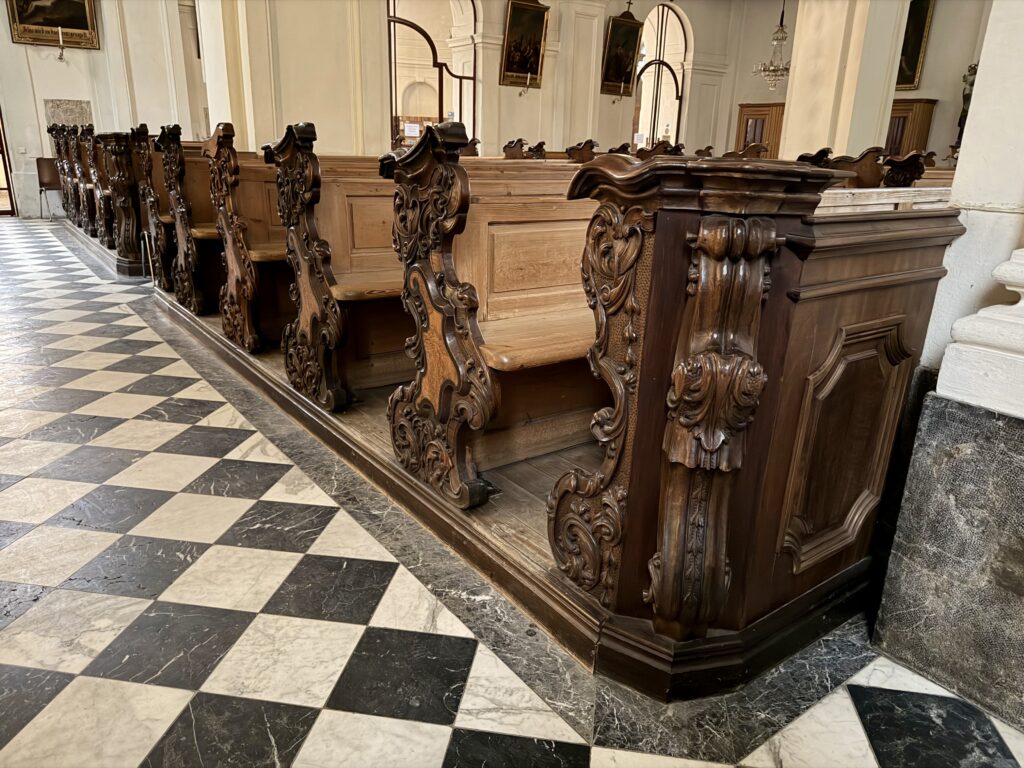
Once across the river, we popped in to check out this church we could see from up at the castle. It’s called the Mariahilferkirche, or Church of St. Mary Help of Christians (https://exploregraz.com/en/discovery-routes/mariahilferkirche-graz-baroque-splendor-on-the-left-bank-of-the-mur/). It was built between 1607 and 1611 but the 2 distinctive onion domes weren’t added until 1742-1744. The interior was beautiful. I really loved seeing the ornately carved pews in some of these churches too.
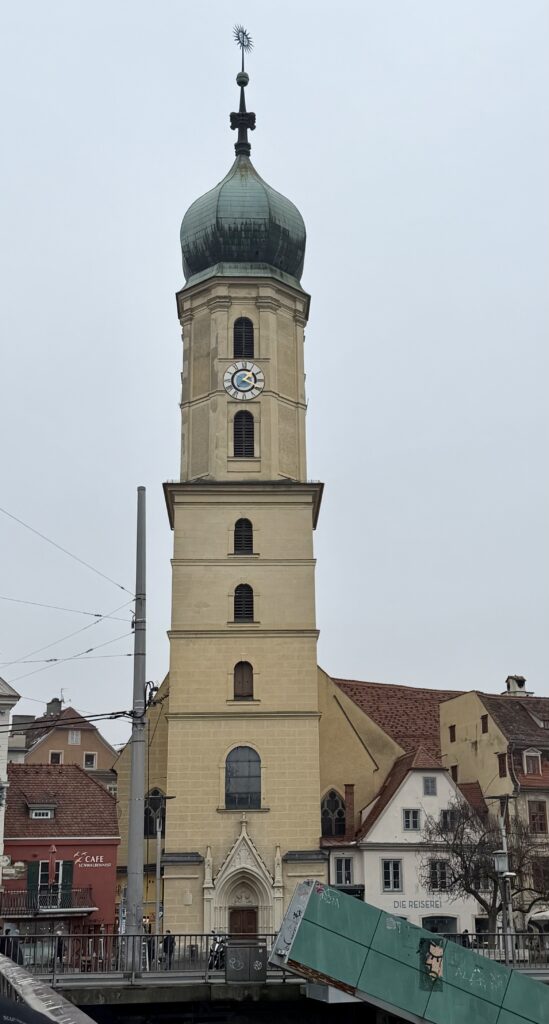
Another church that we could see from up on the hill that we also passed by (but didn’t go inside) was the Franziskanerkirche & Kloster (Franciscan church and monastery) (https://www.graztourismus.at/en/sightseeing-culture/sights/franciscan-monastery_shg_1450)
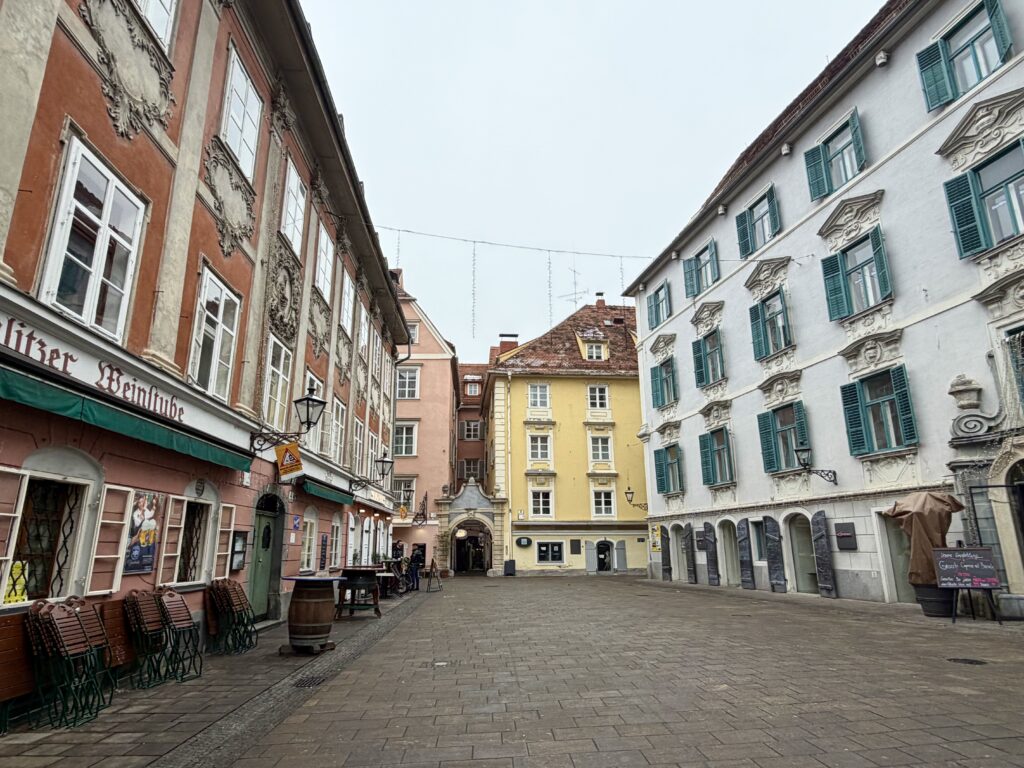
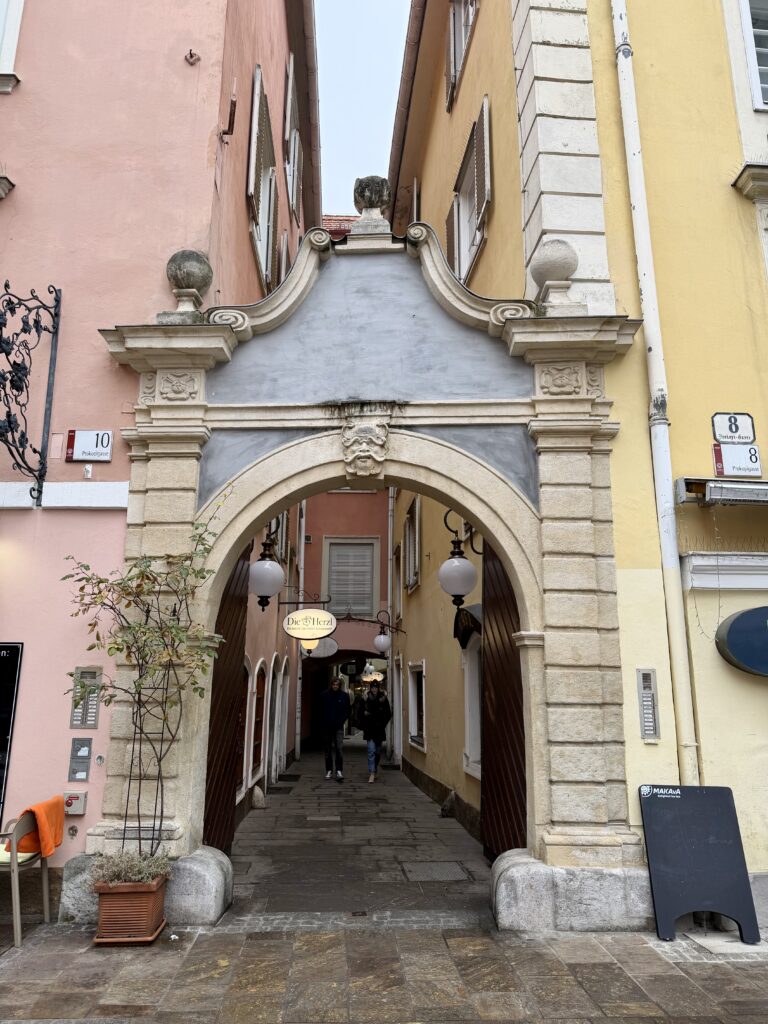
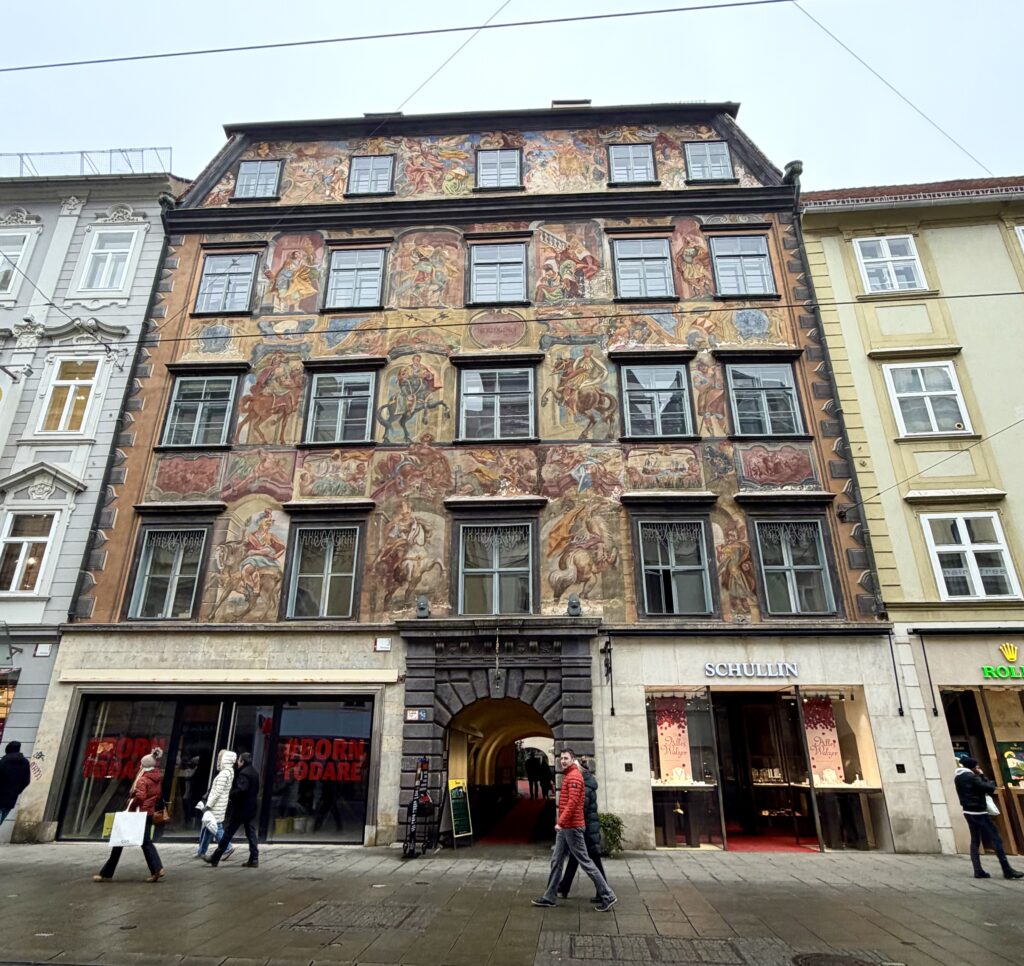
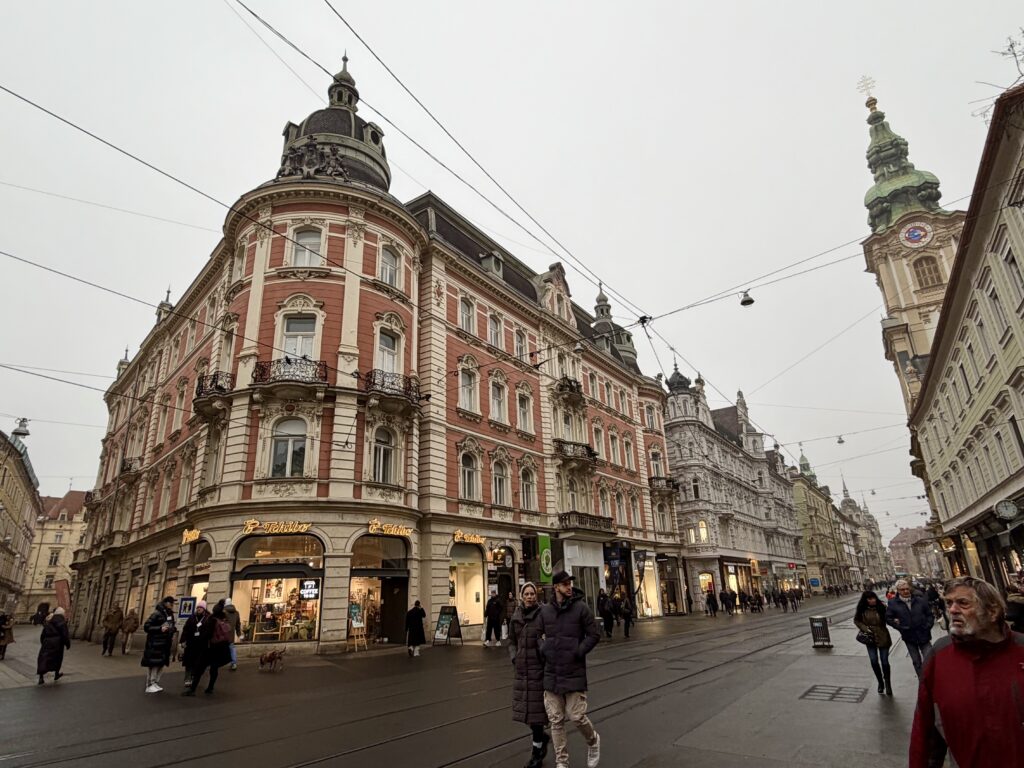
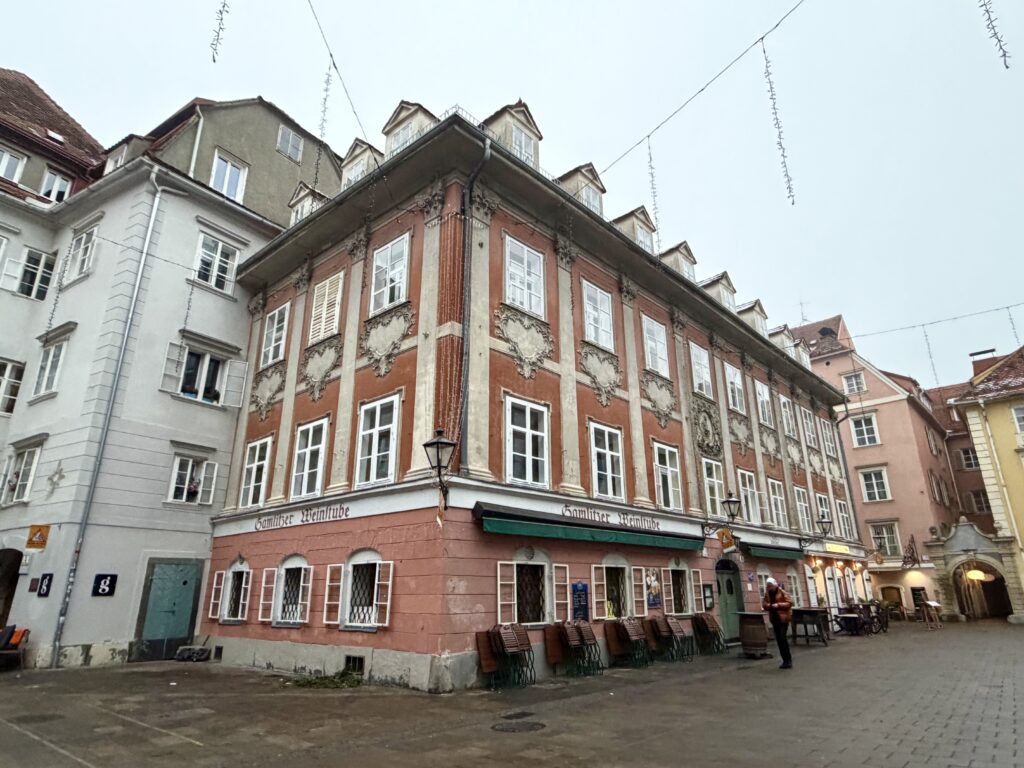
In addition to the castle and these churches, plus the interesting more modern artistic building designs, there is some incredible architecture around town. It was really neat to just wander around and everywhere you turned was a different and unique old building.
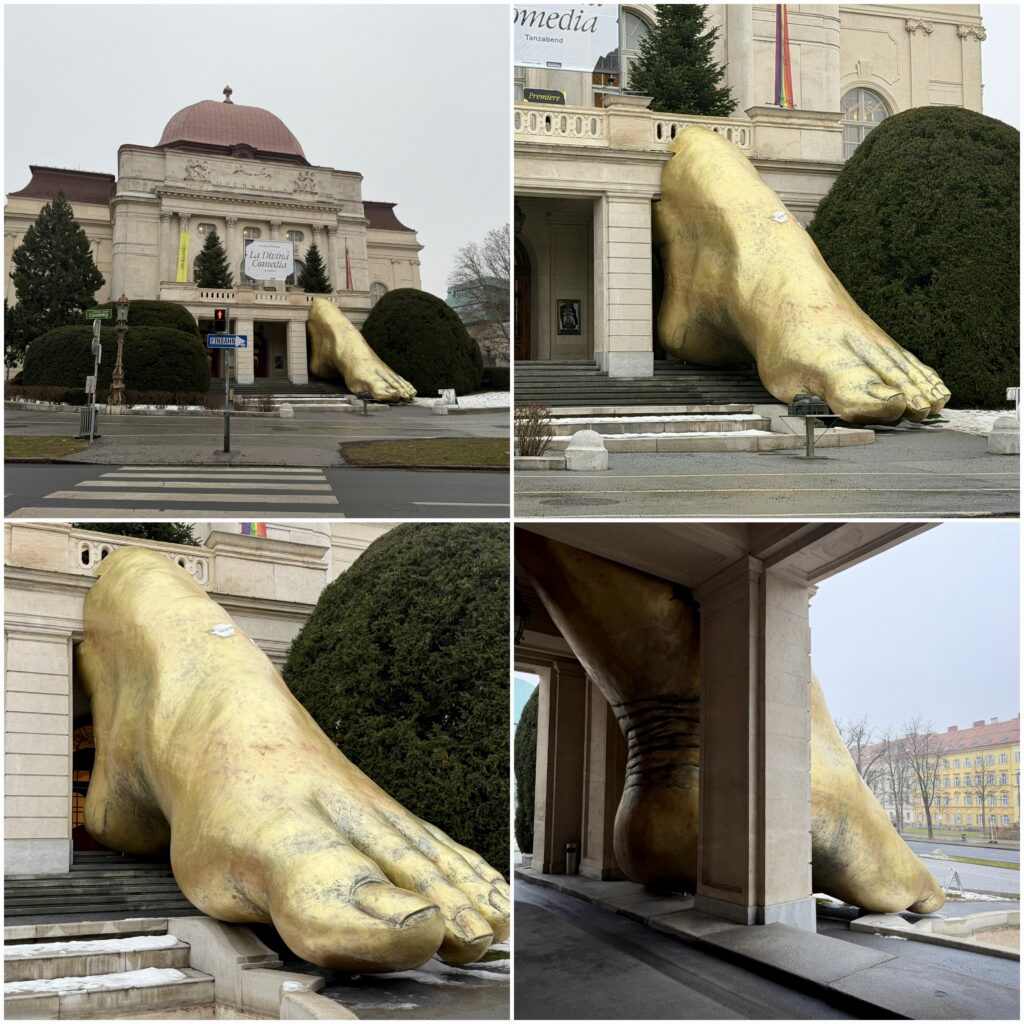
The other 2 major highlights were right near our hotel. The first was the Opera House. We didn’t go inside but we realized there was an addition to the outside that isn’t normally there – a foot! They were premiering La Divina Comedia (https://oper-graz.buehnen-graz.com/en/produktion/la-divina-comedia-en/) and the opera house was transformed into a human body.
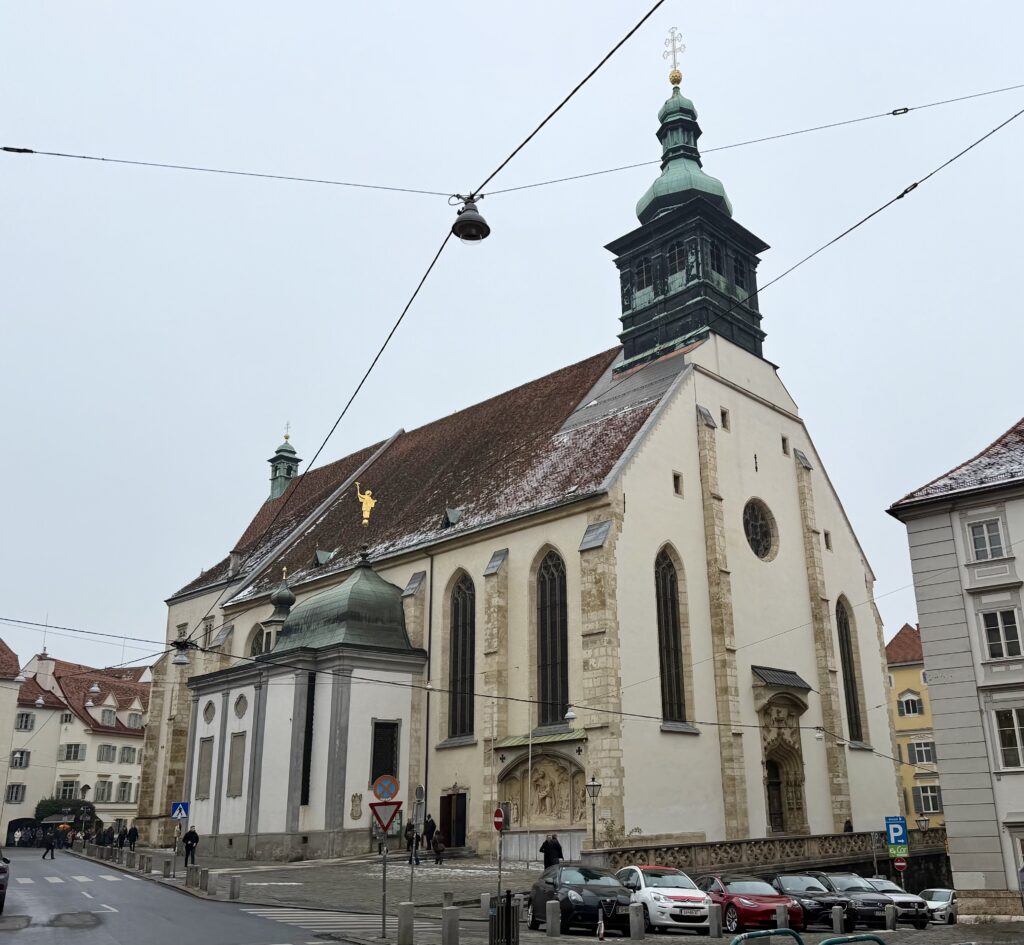
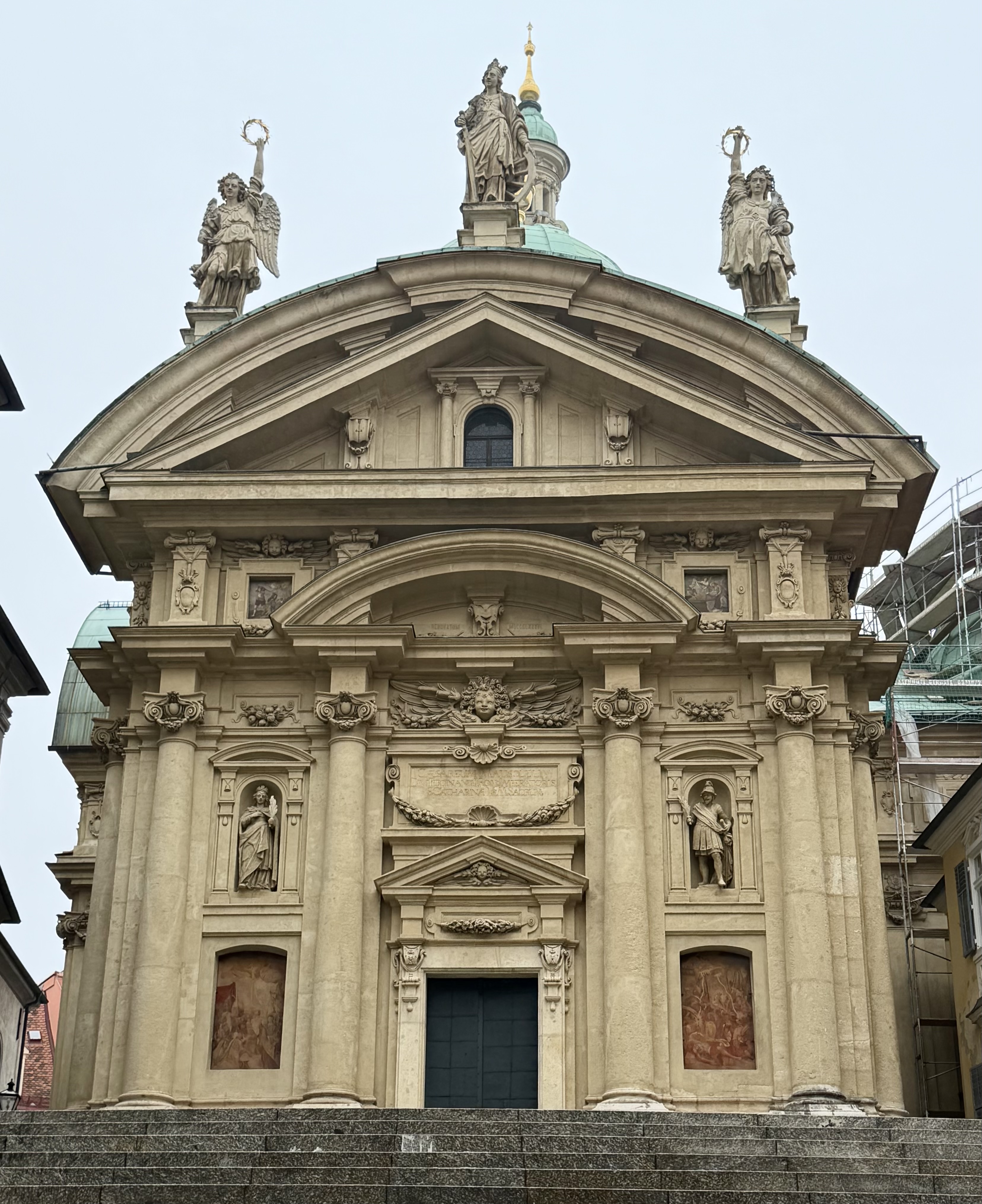
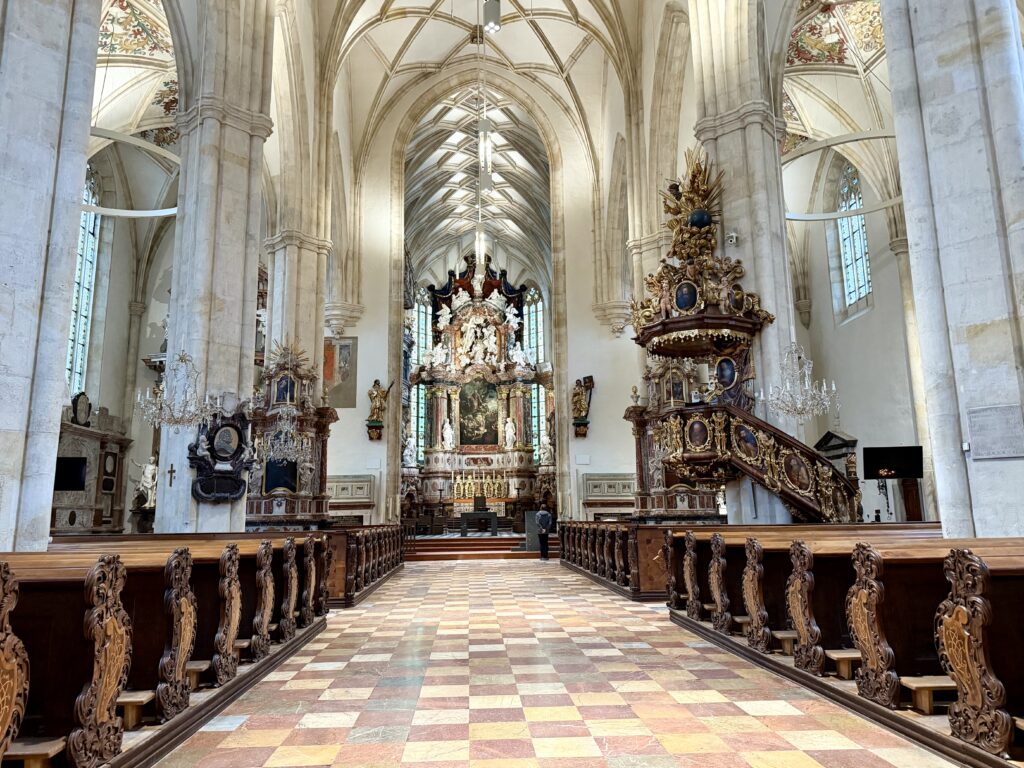
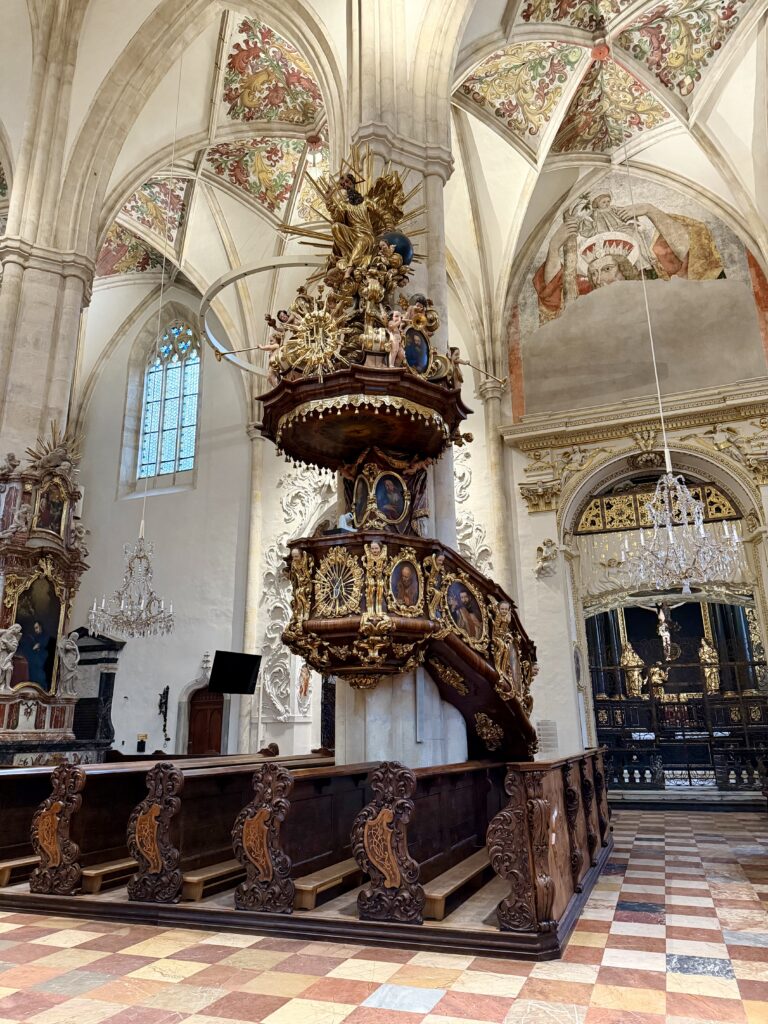
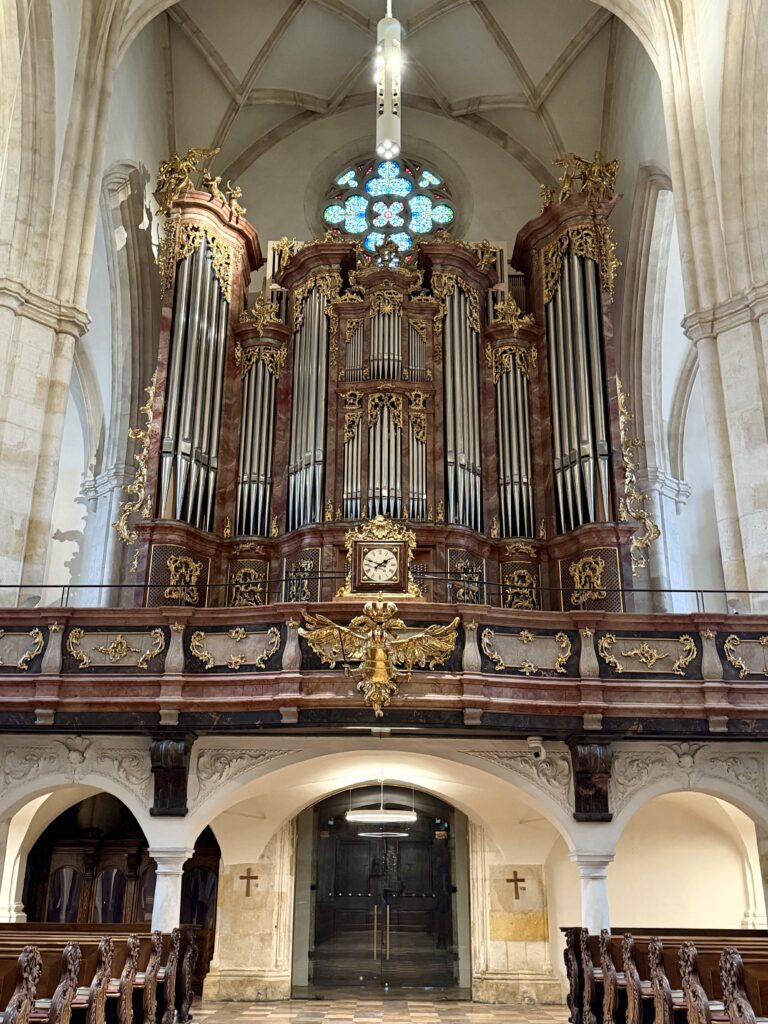
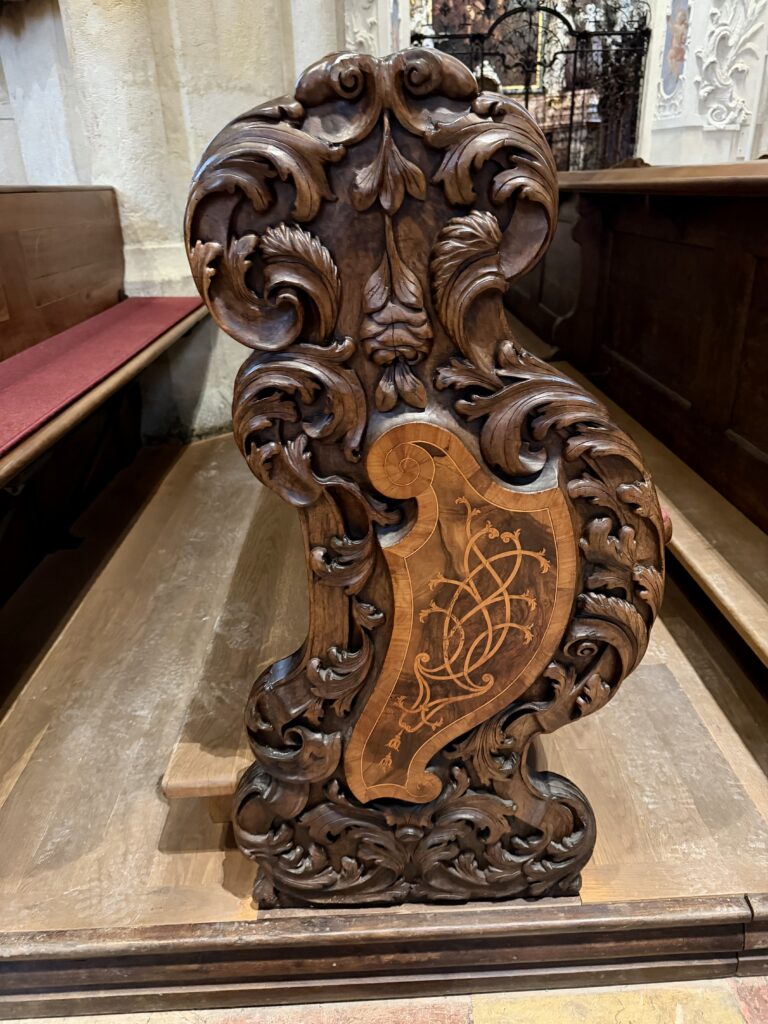
The Graz Cathedral was really beautiful – inside and out! We weren’t able to go inside the masoleum because it was closed but the church itself was so amazing. It was originally built between 1438 and 1462 as the court and parish church for Emperor Frederick III.
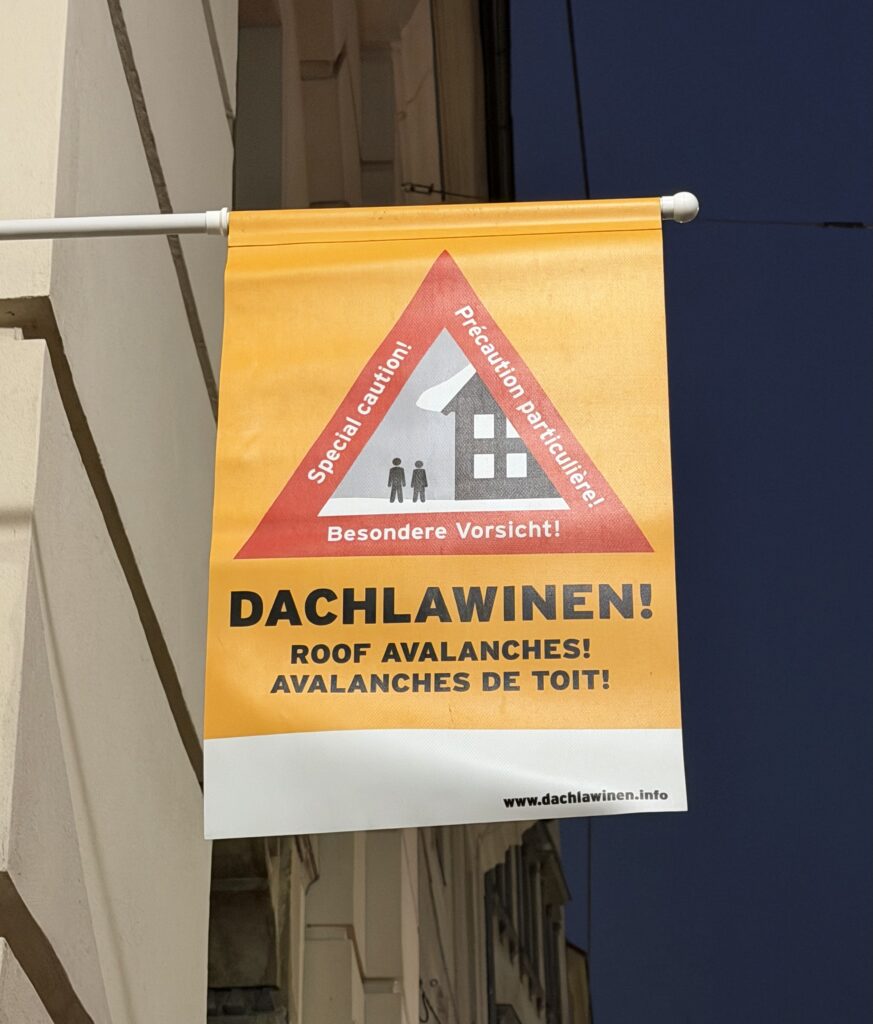
One last funny thing we saw all over were these signs about roof avalanches – we could have used those warnings in Bratislava!
Graz ended up being a fun stop in a city we normally wouldn’t have thought to travel to.