
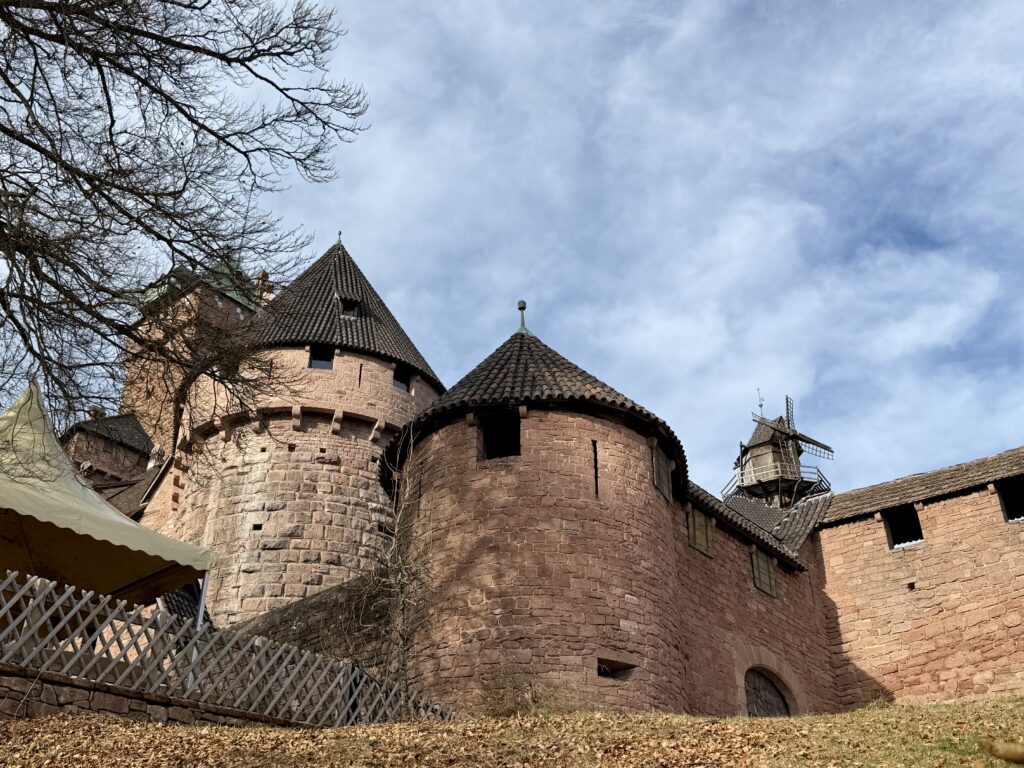
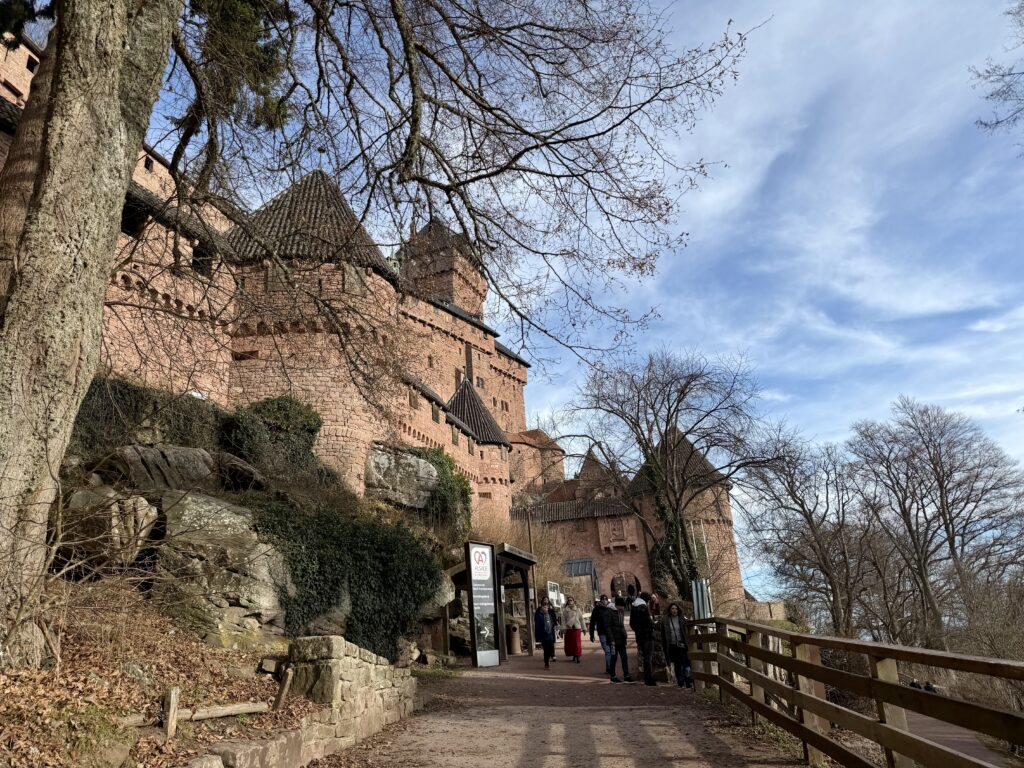
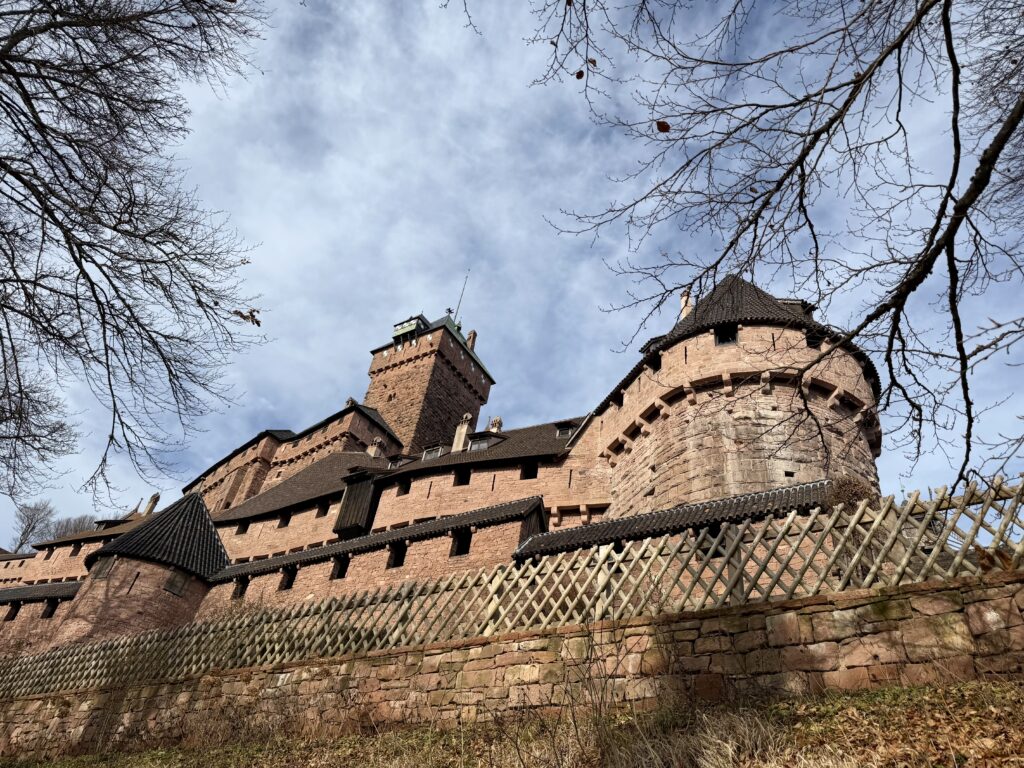
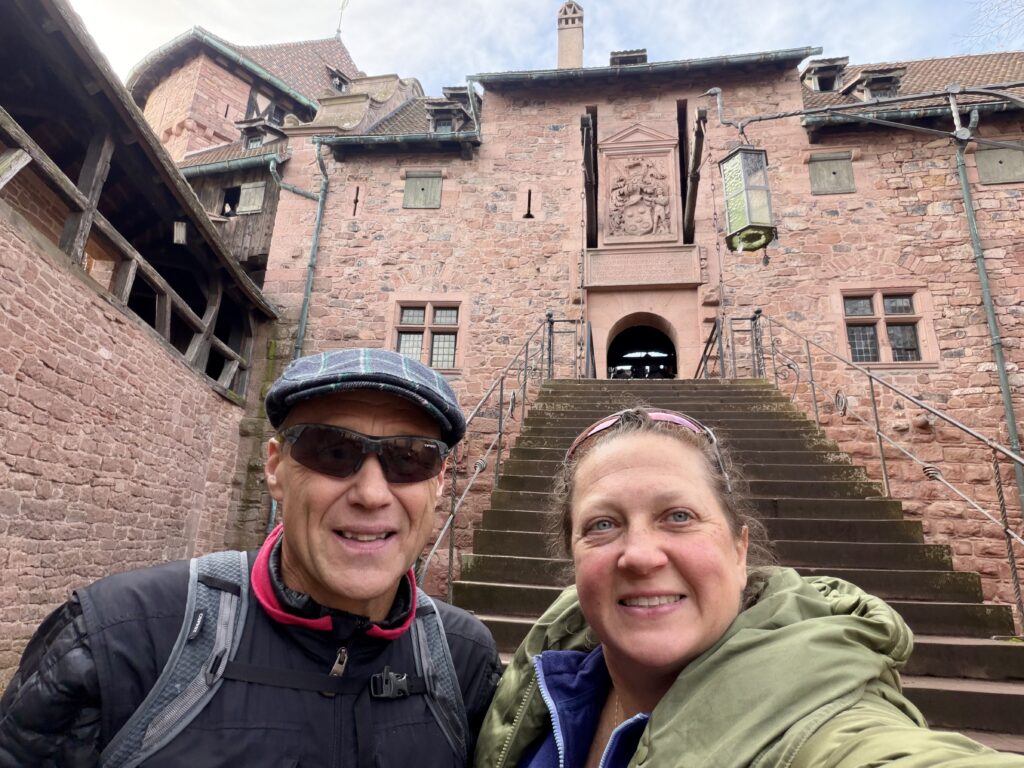
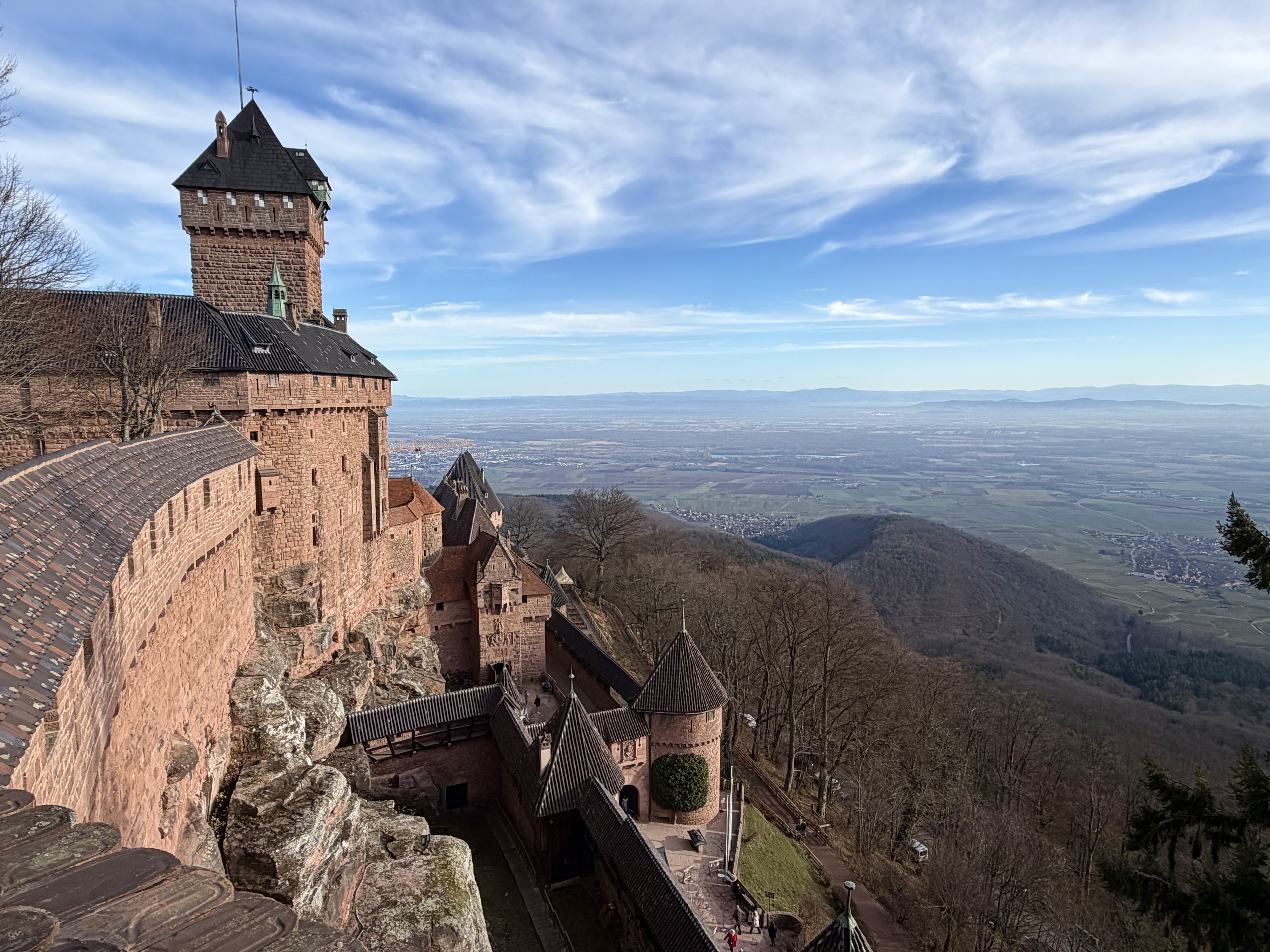
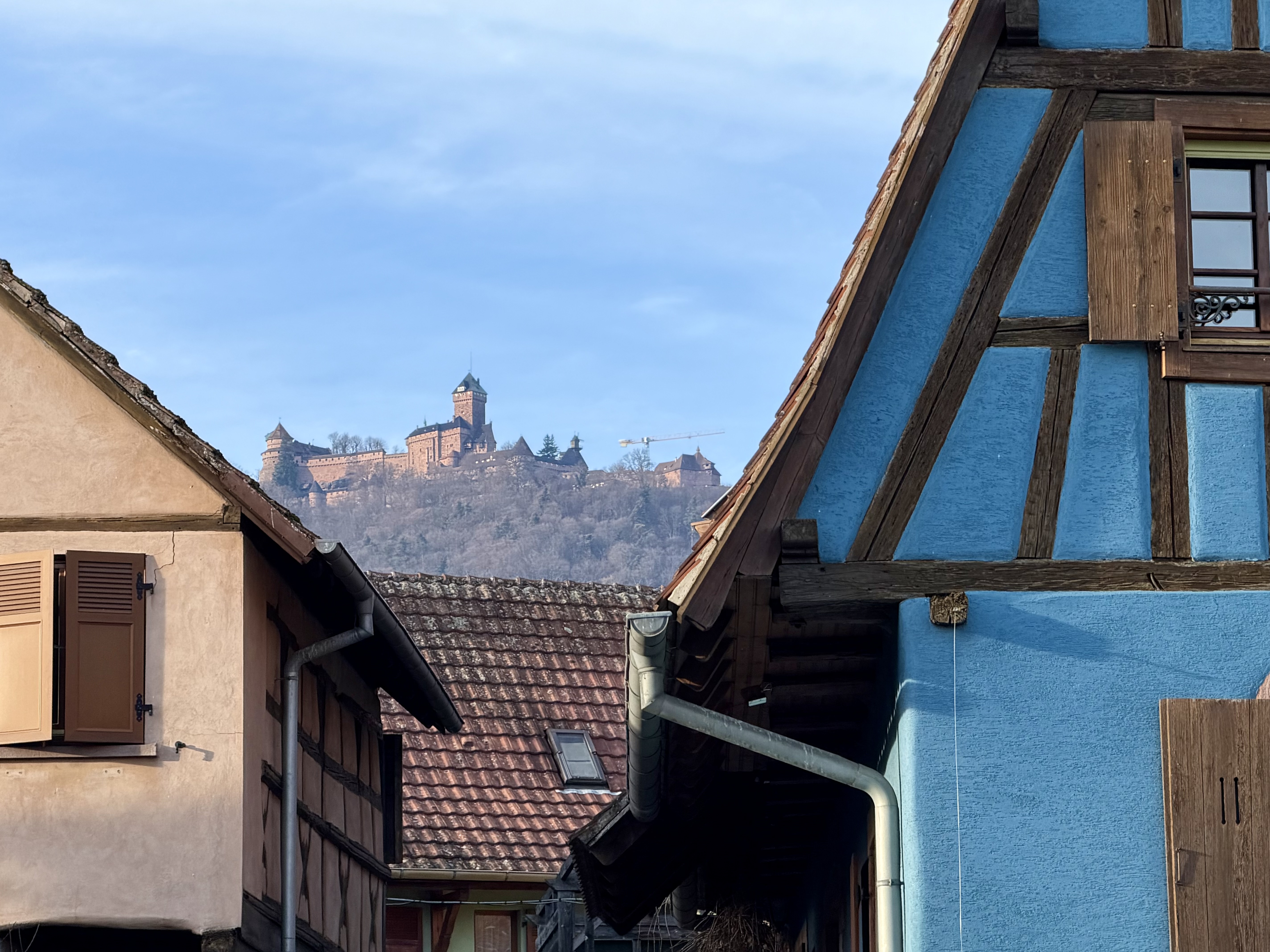
We had a rental car for this portion of our trip, which made some last minute side trips pretty easy. One was to Haut-Koenigsbourg Castle (https://www.haut-koenigsbourg.fr/en/) – about 30 minutes from Colmar. The names of these castles are pretty easy to break down – they weren’t all that creative. Haut means high in French, Koenig means King in German, Bourg/burgh is a town – this was a royal castle (and I’m sure the “haut” part was because it was up on a huge hill). It was initially built in the 12th century and, like the Alsace region, changed hands several times between France and Germany. It was reconstructed in the 15th century and then again in the early 20th century when Kaiser Wilhelm II had the castle restored between 1900 and 1908. Then in 1919 after WWI, the region (and the castle) were returned to the French as part of the Treaty of Versailles. At the castle, they have done a great job of detailing the history and restoration of the castle. It was also up on a big hill, so in addition to the interesting history, the views were awesome.
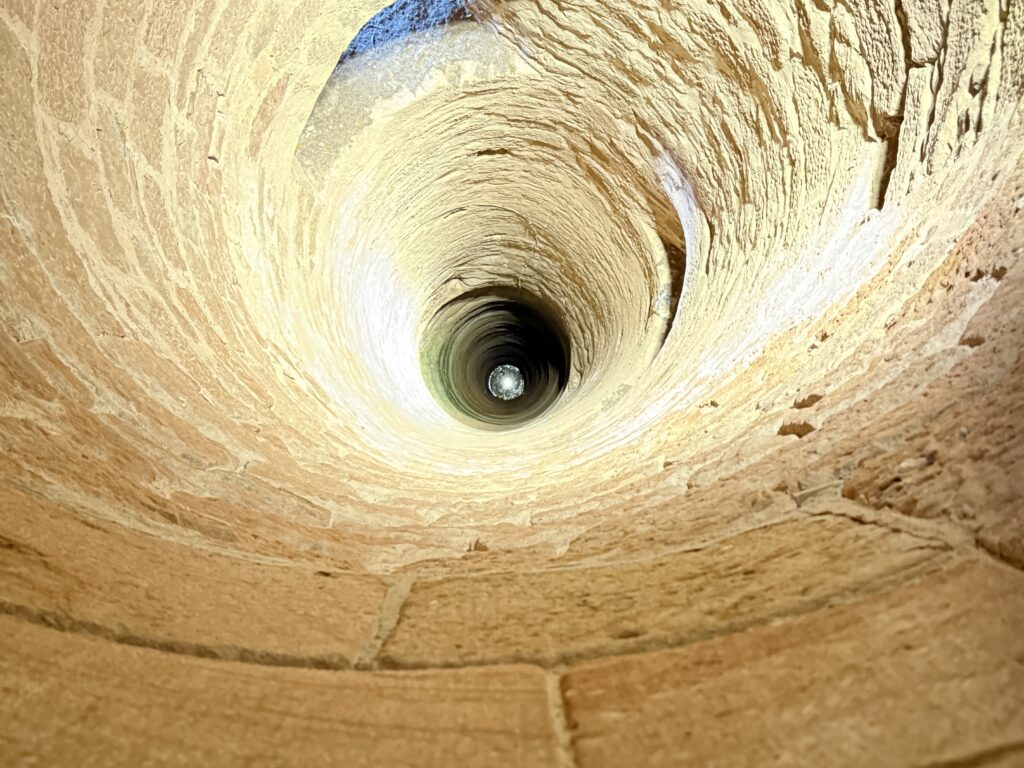
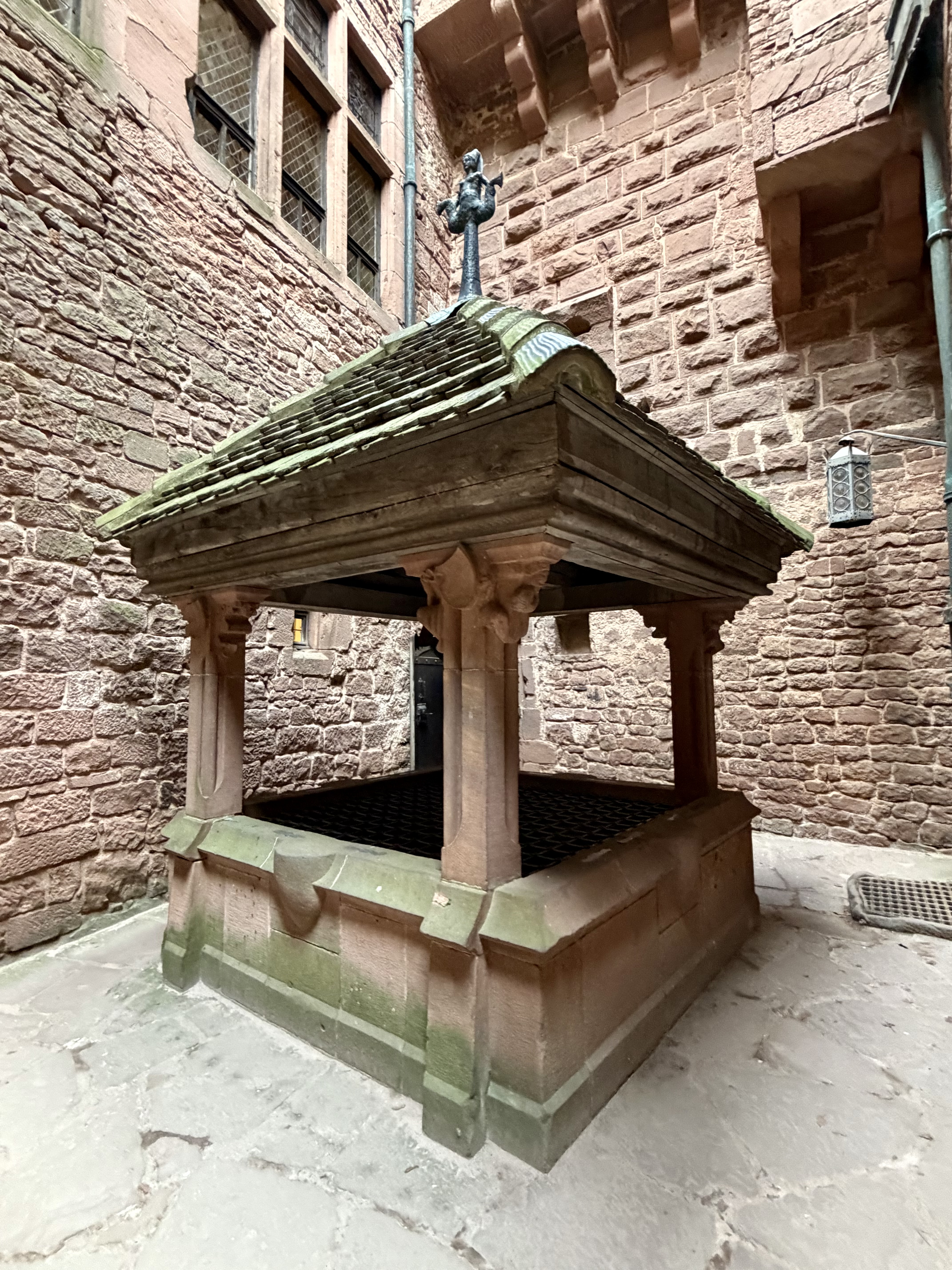
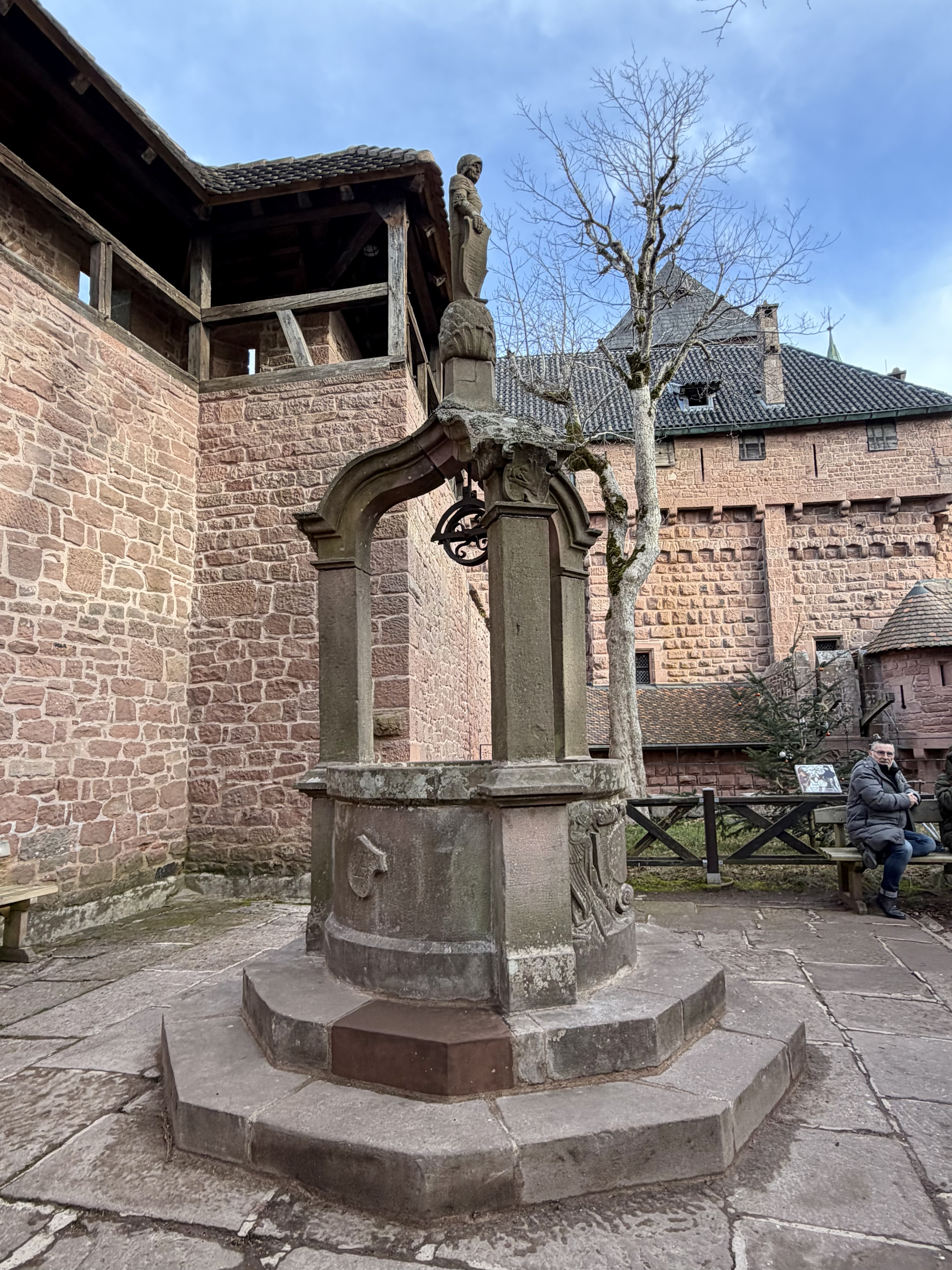
As you can imagine, a clean, reliable water source was important. They had a couple of different wells and cisterns to show off. This well is 62 meters (203 feet) deep and was dug in the Middle Ages at the edge of the rocky spur. In 1569, a fortified tower was constructed to protect it.
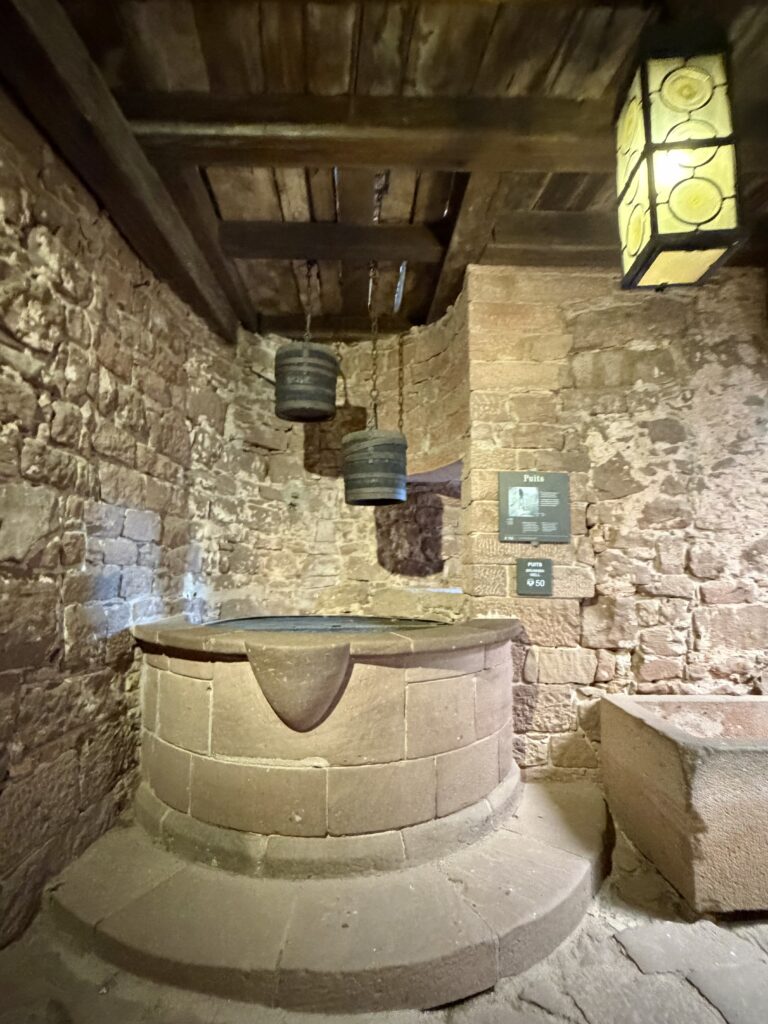
There were also a couple of cisterns to trap rainwater – both for additional drinking water and for fire fighting.
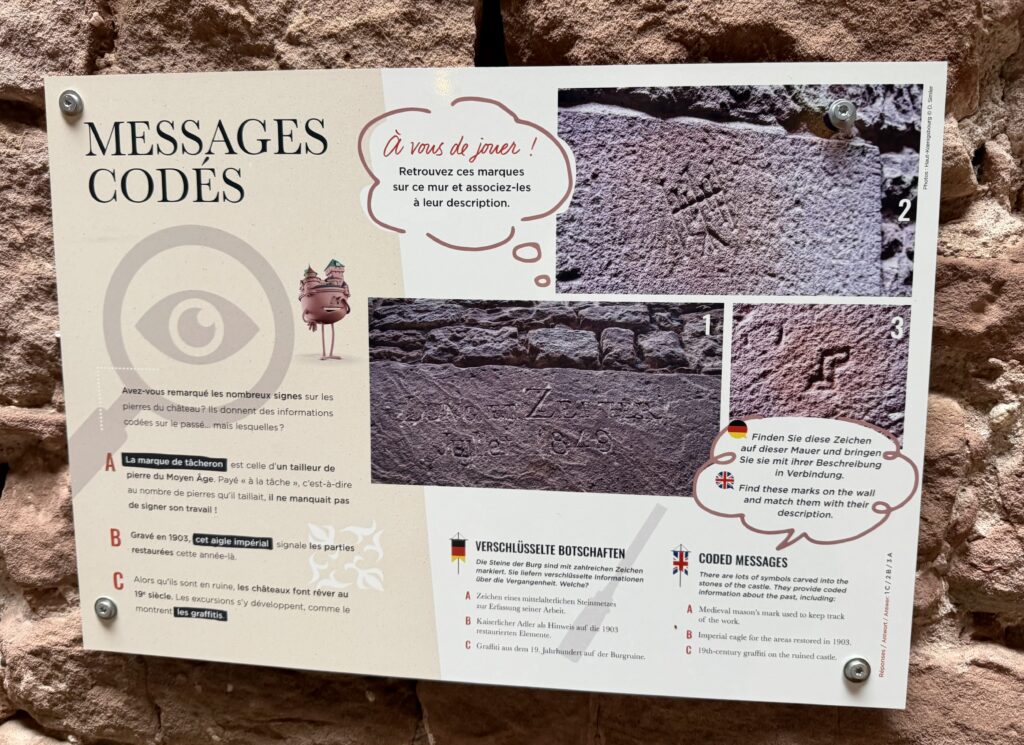
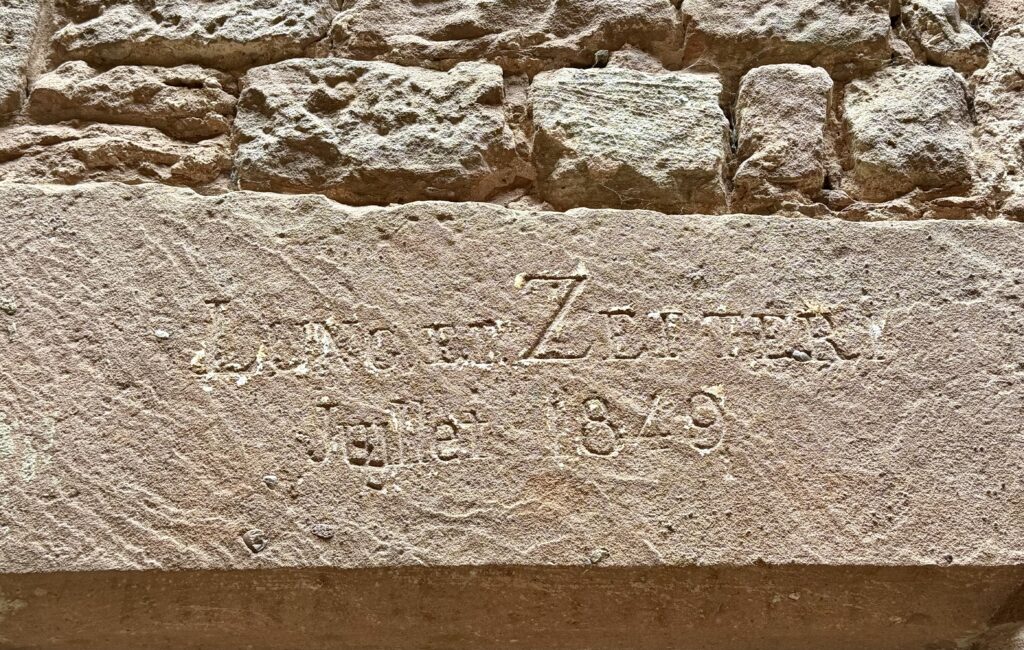
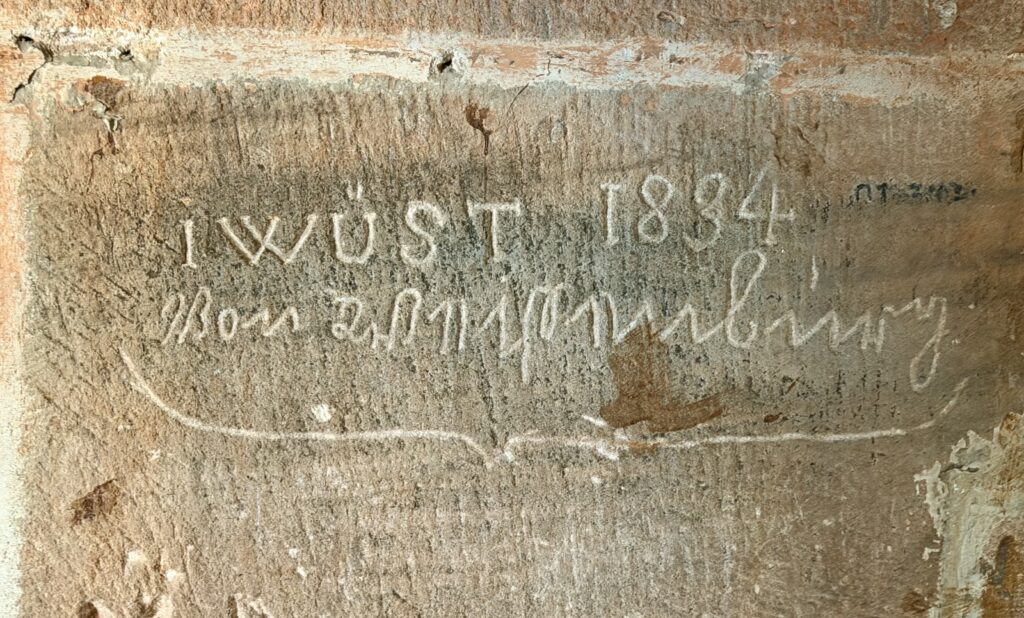
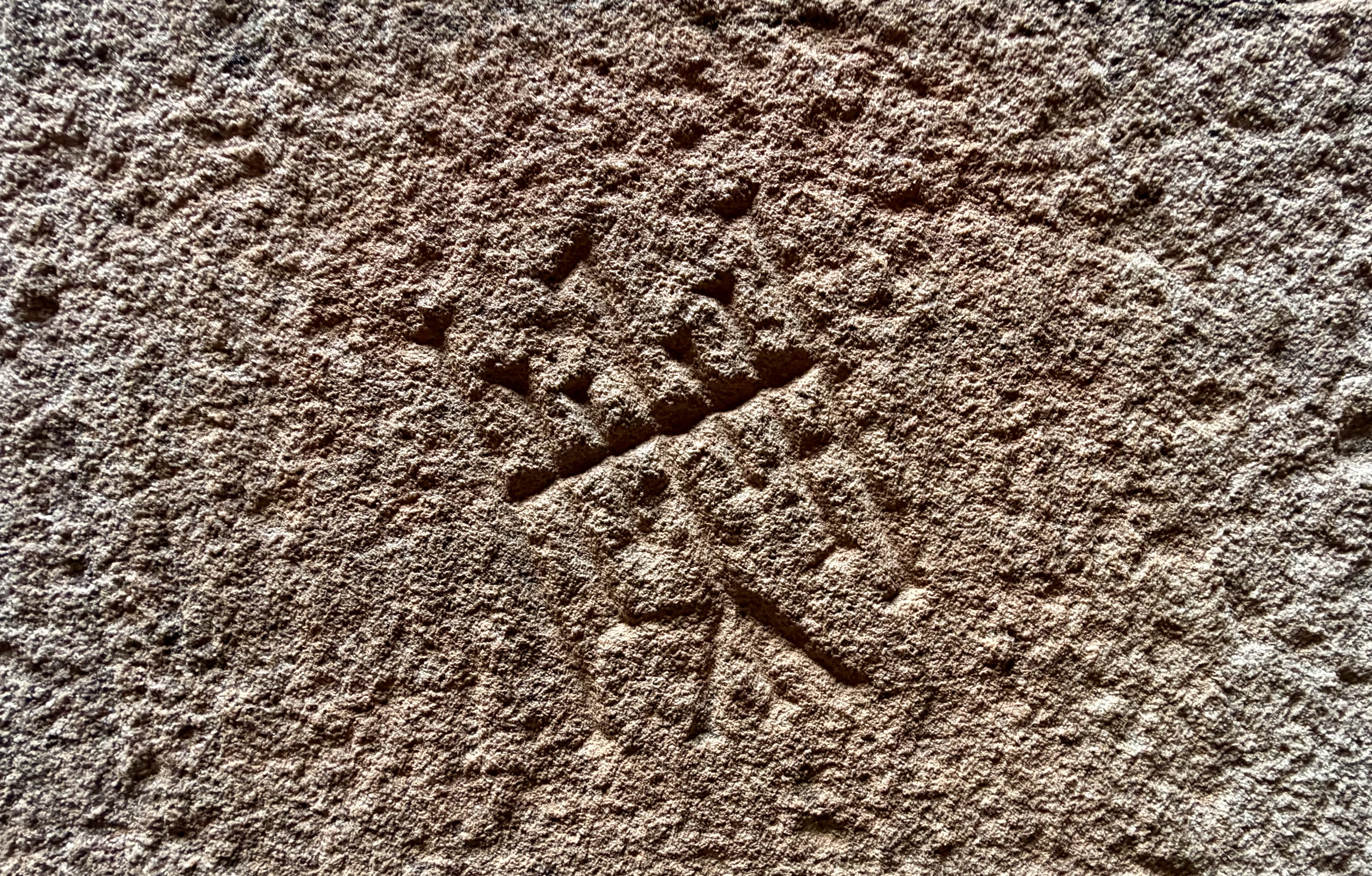
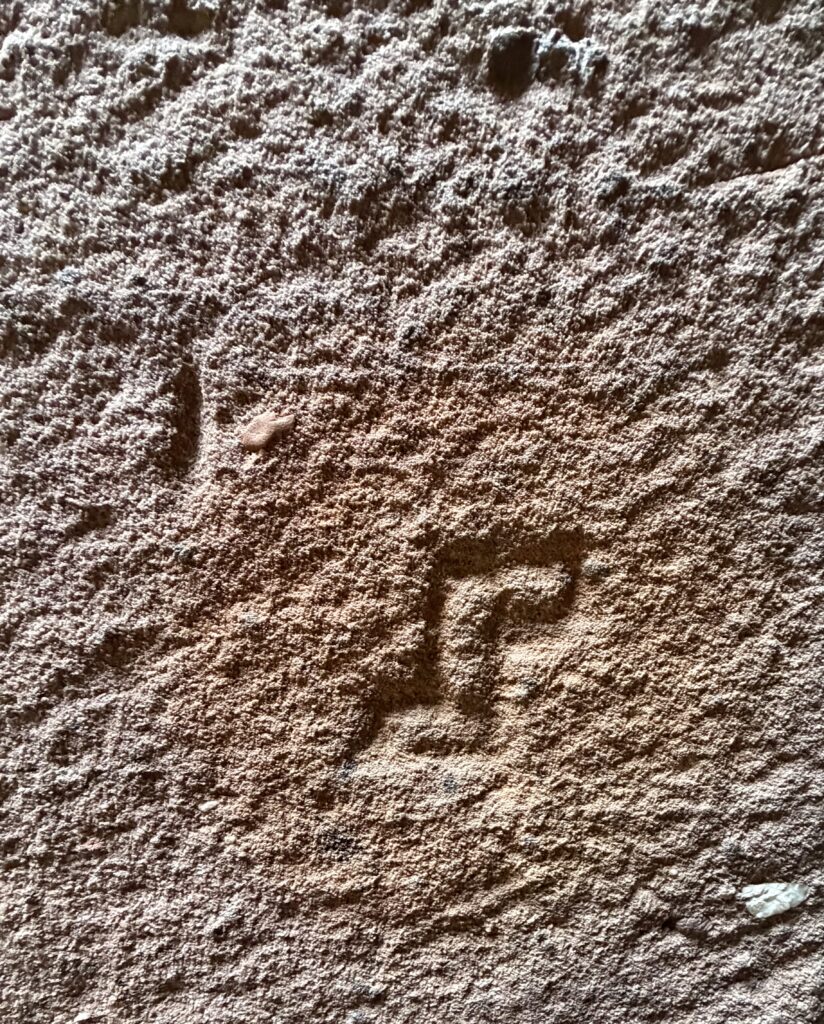
It was also fun to read about some of the old graffiti! There was 19th century graffiti on the castle ruins plus other markings that actually had a purpose (the imperial eagle for the portions restored in 1903 and a mason’s mark to keep track of the work). I don’t think they had spray paint for their graffiti back then though!
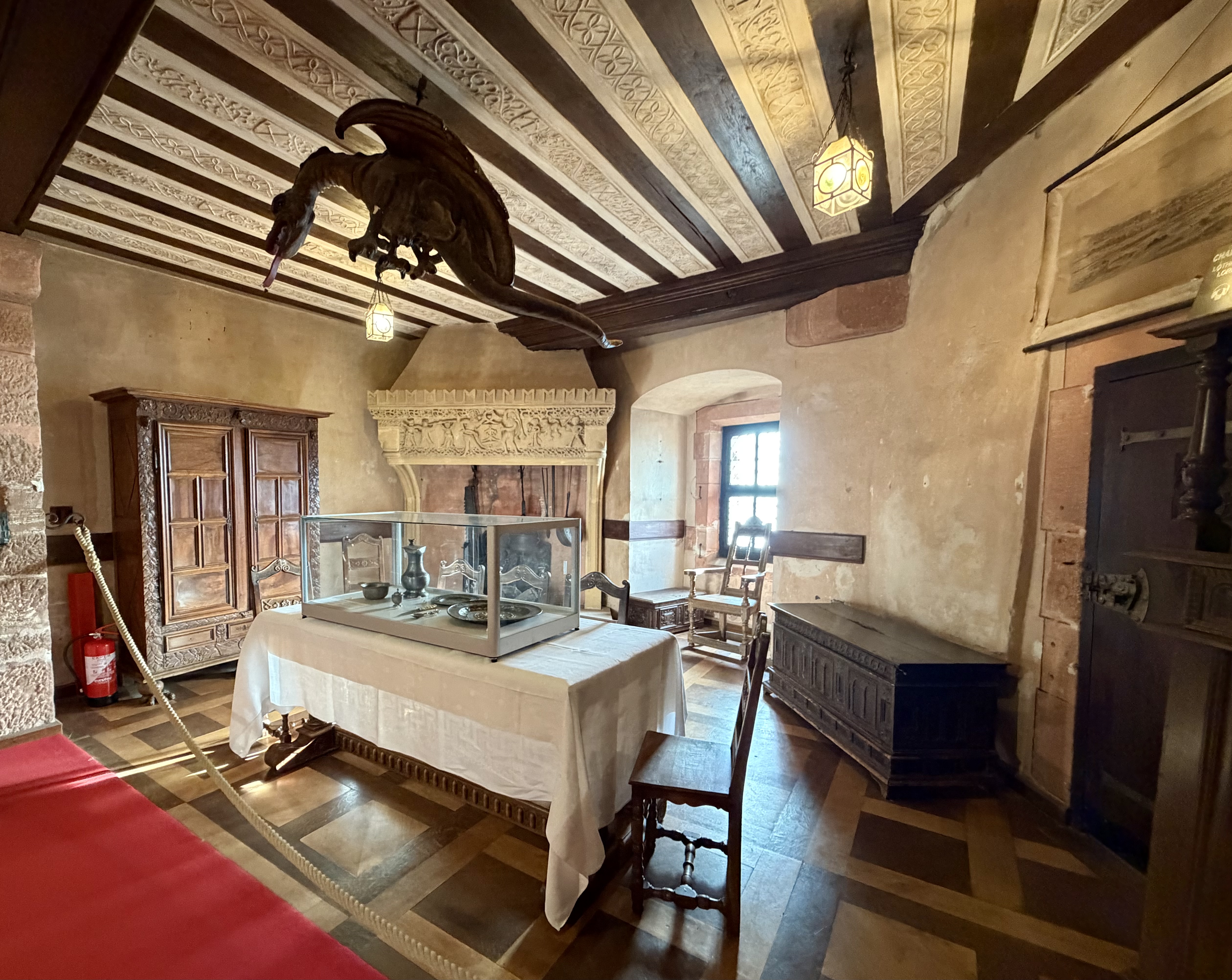
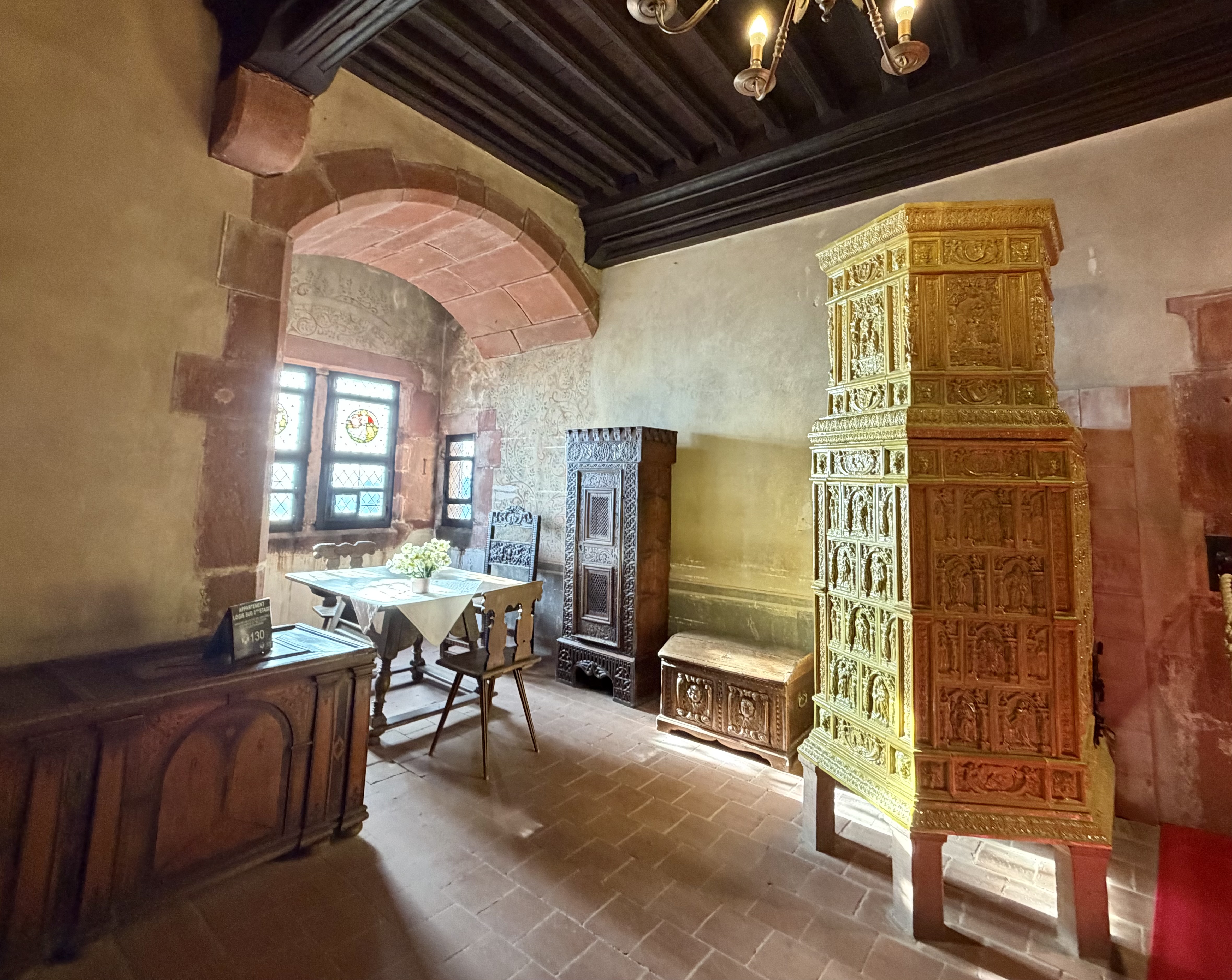
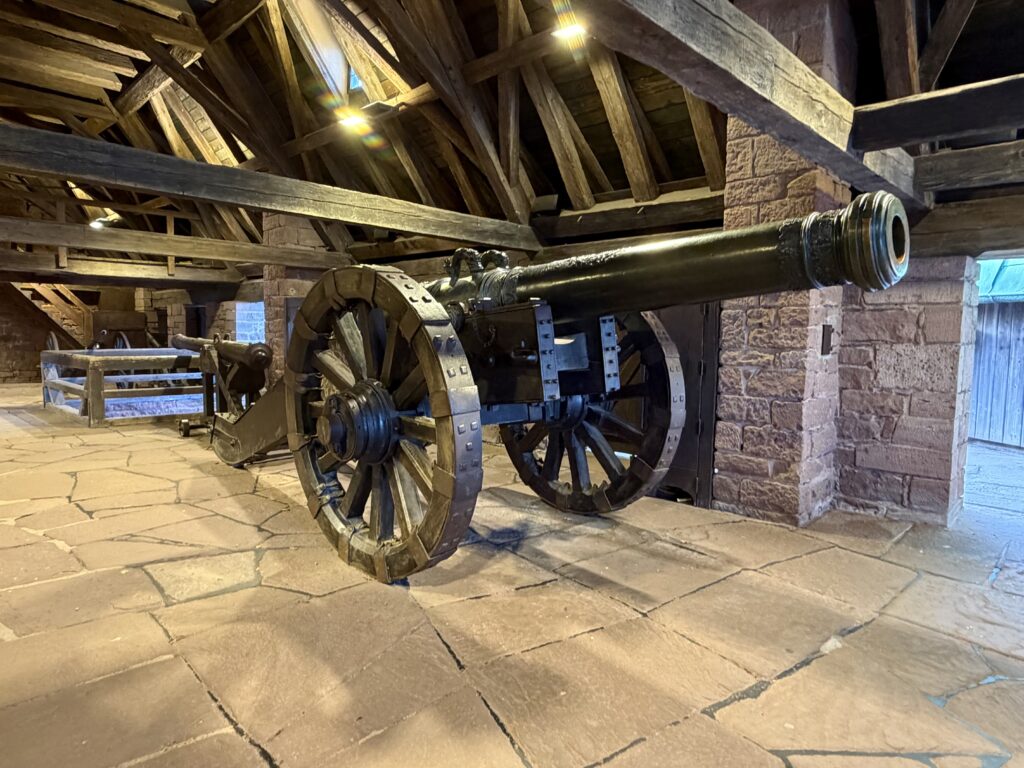
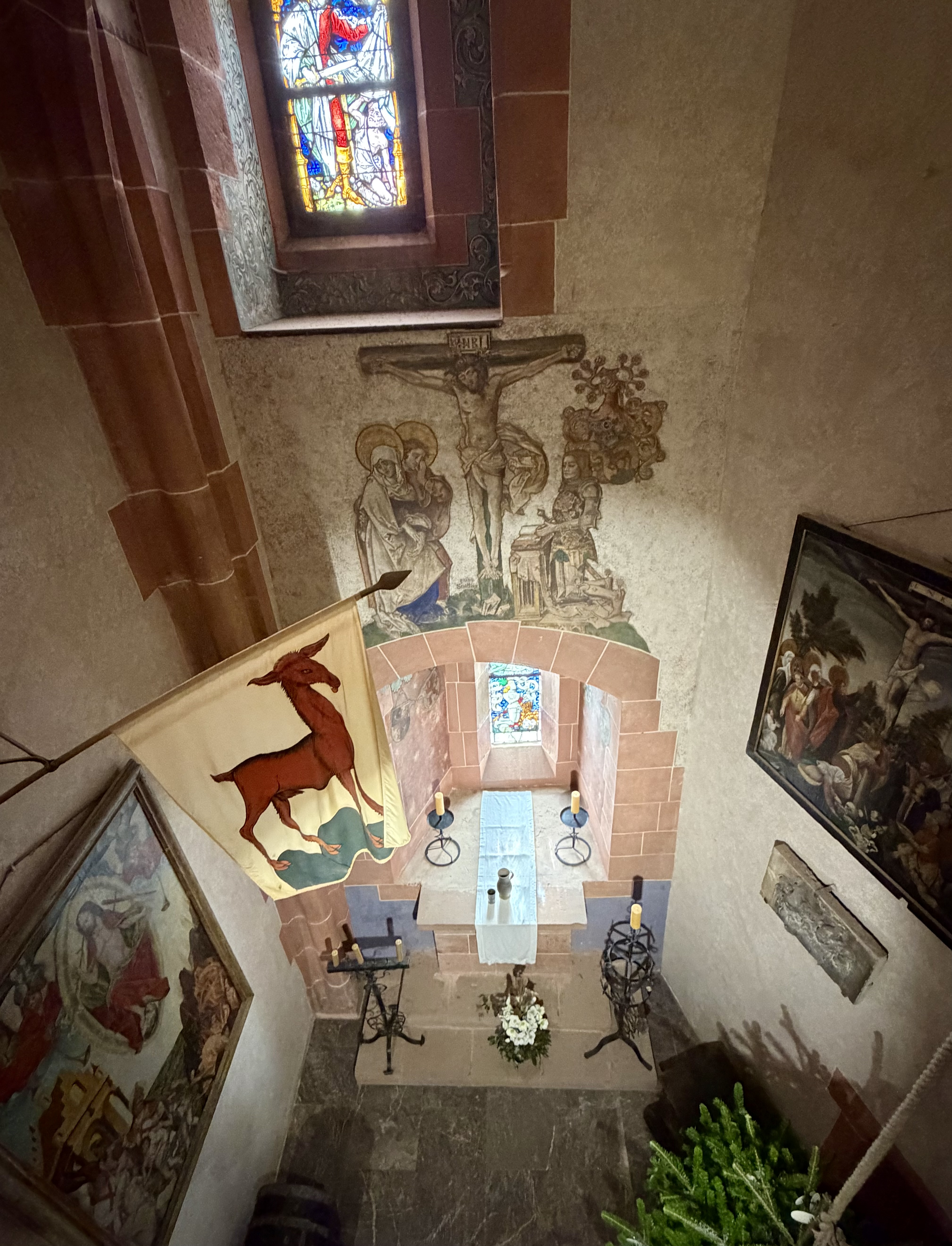
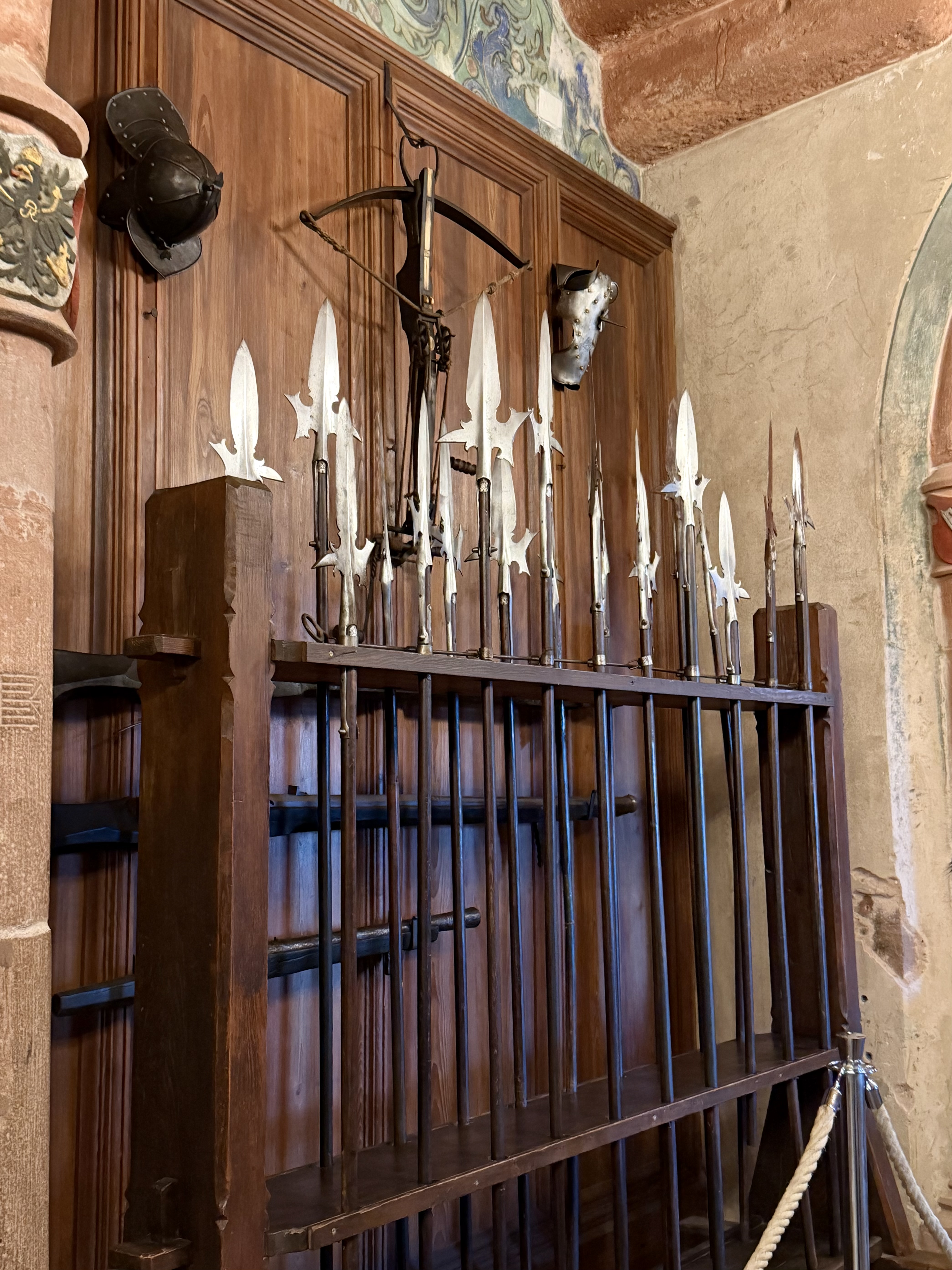
Several of the rooms had furniture and decorations reflecting different timepoints in the castle. We saw these ceramic heaters all over the place in Germany – there was even one in our AirBnB in Munich! The chapel was open at the top so you could look over the balcony from the level above it down into the chapel. And of course there were weapons and armor!
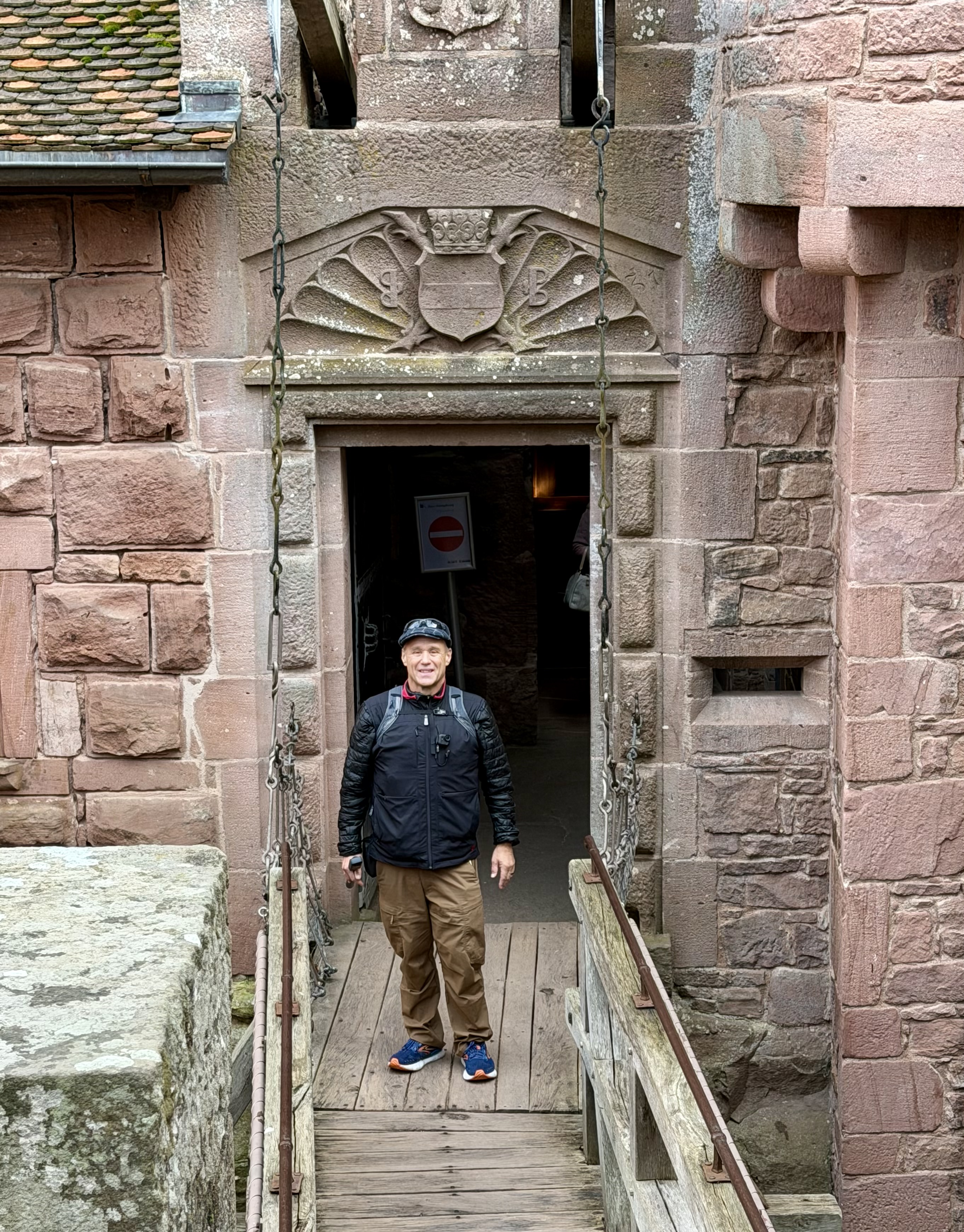
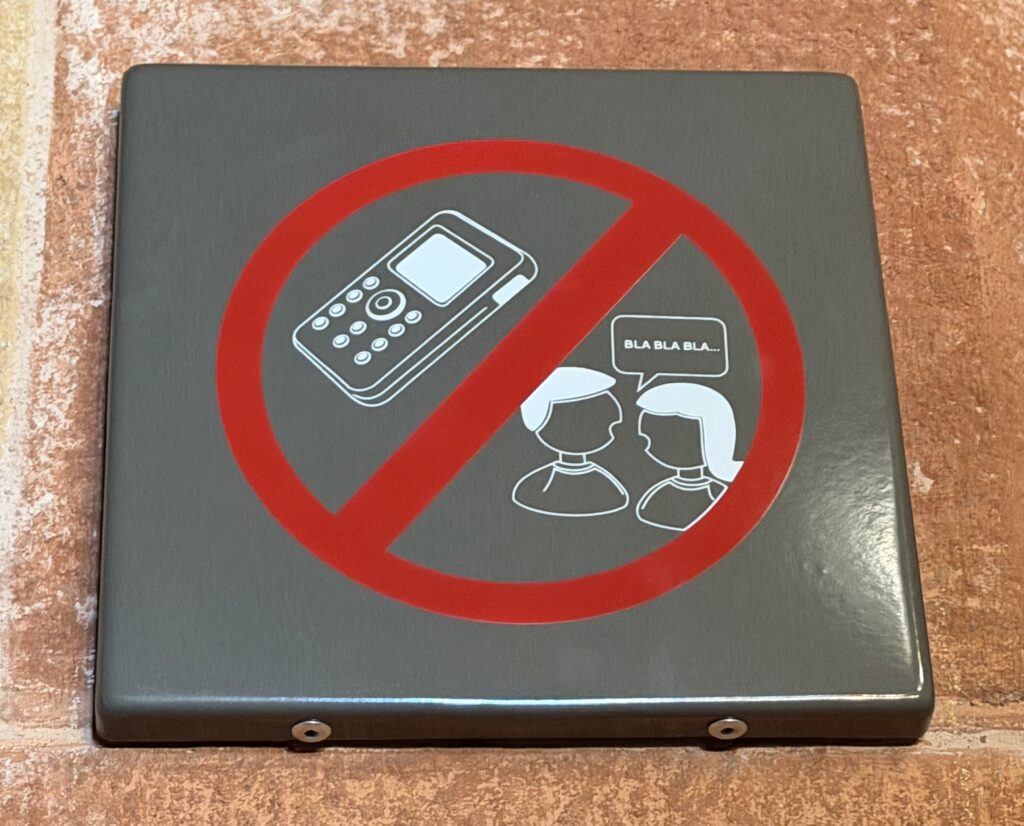
I think one of my favorite museum signs I’ve ever seen was this one – telling you in no uncertain terms to keep down your chit chat, and also maybe implying your conversation isn’t all that interesting!
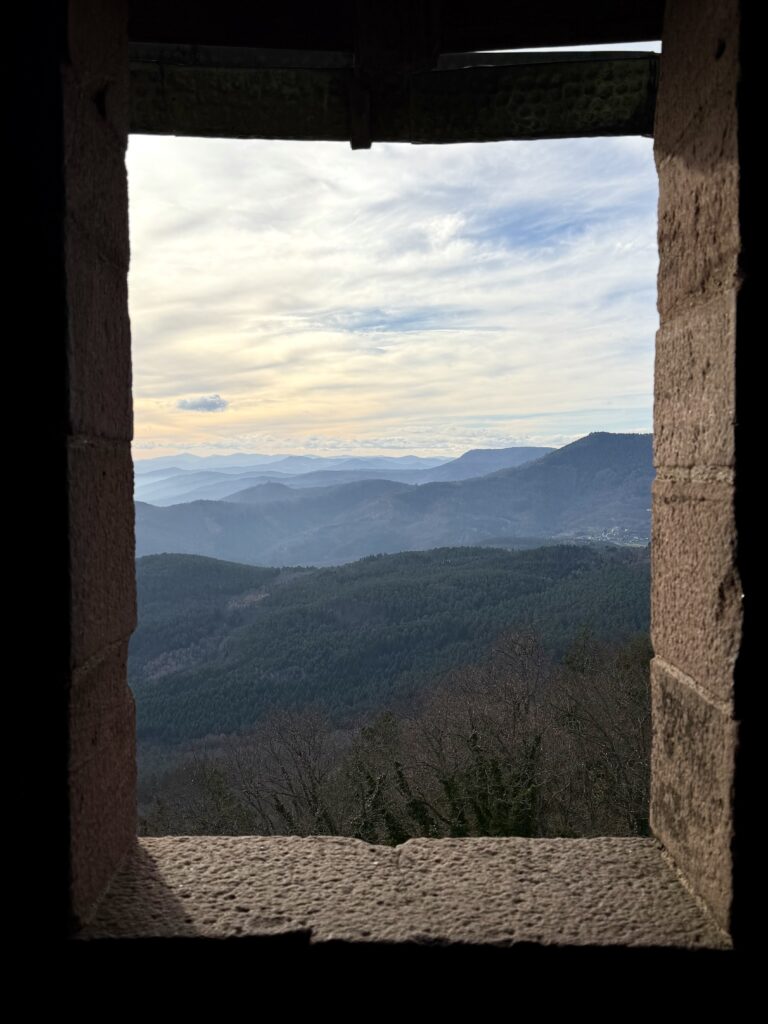
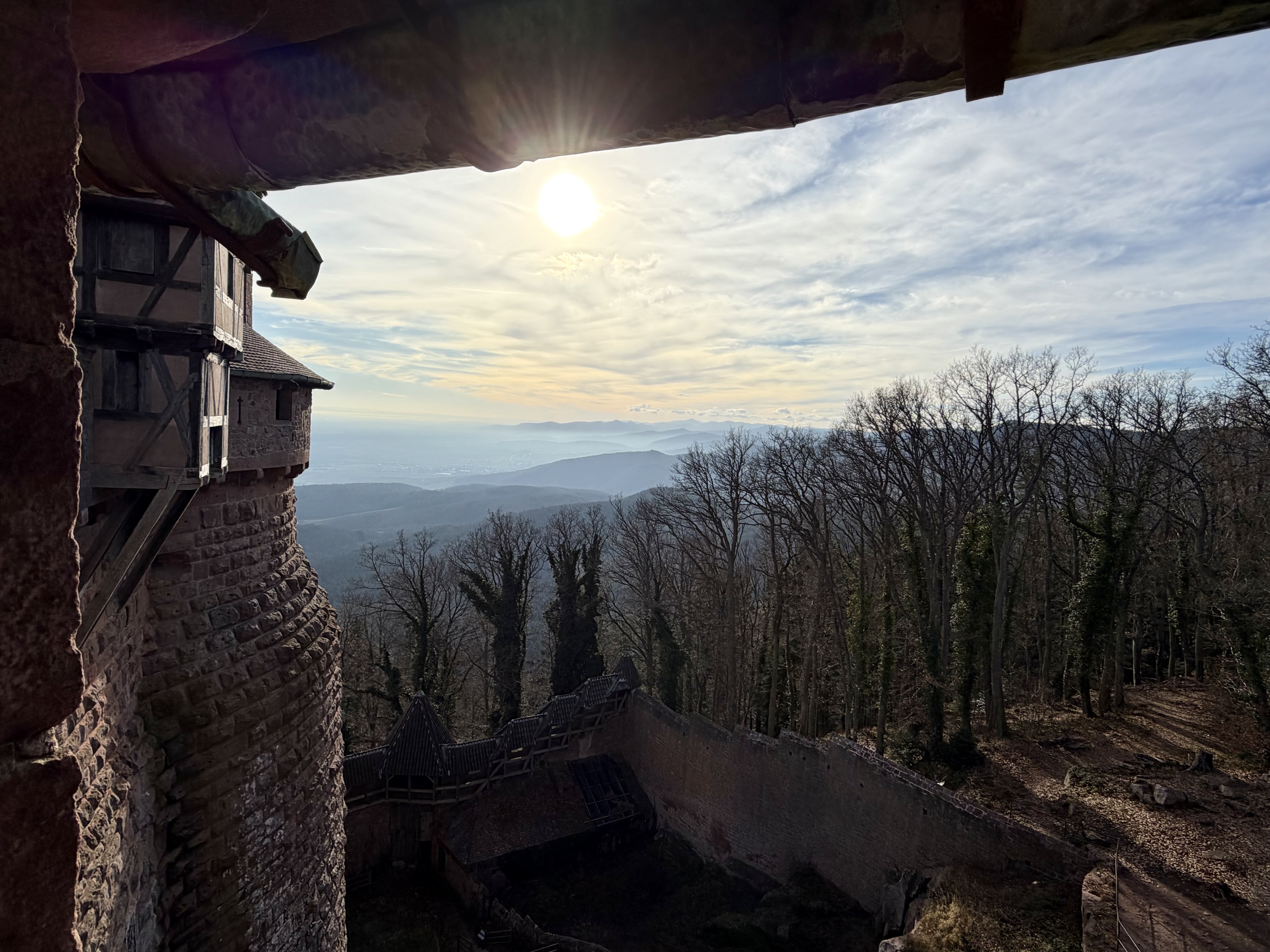
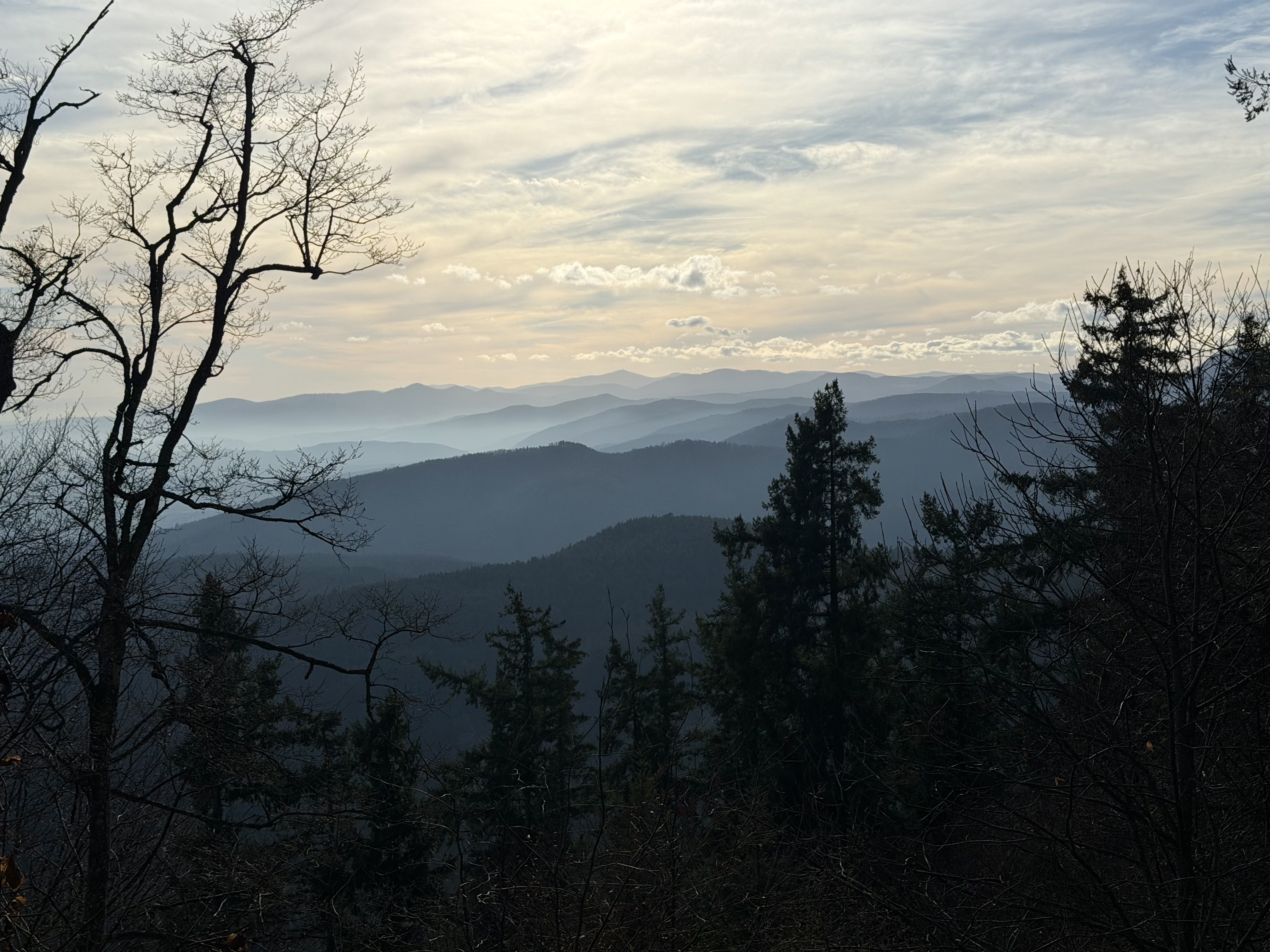
Did I mention the amazing views from the castle? We were able to walk along the ramparts for some great views then also had more great views on the walk along the road to and from our car. I also love taking pictures of views through window frames and these views were perfect for that.
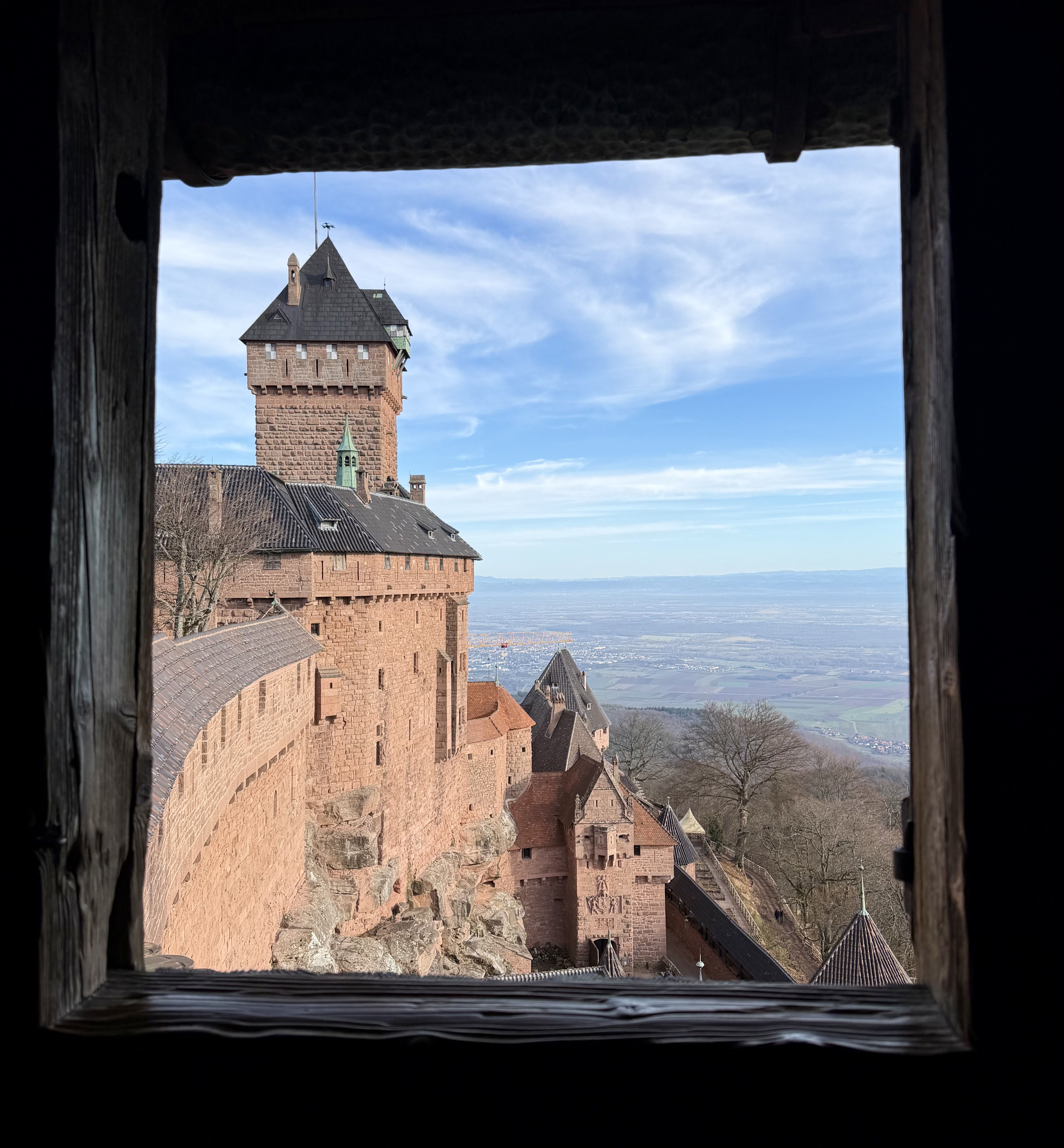
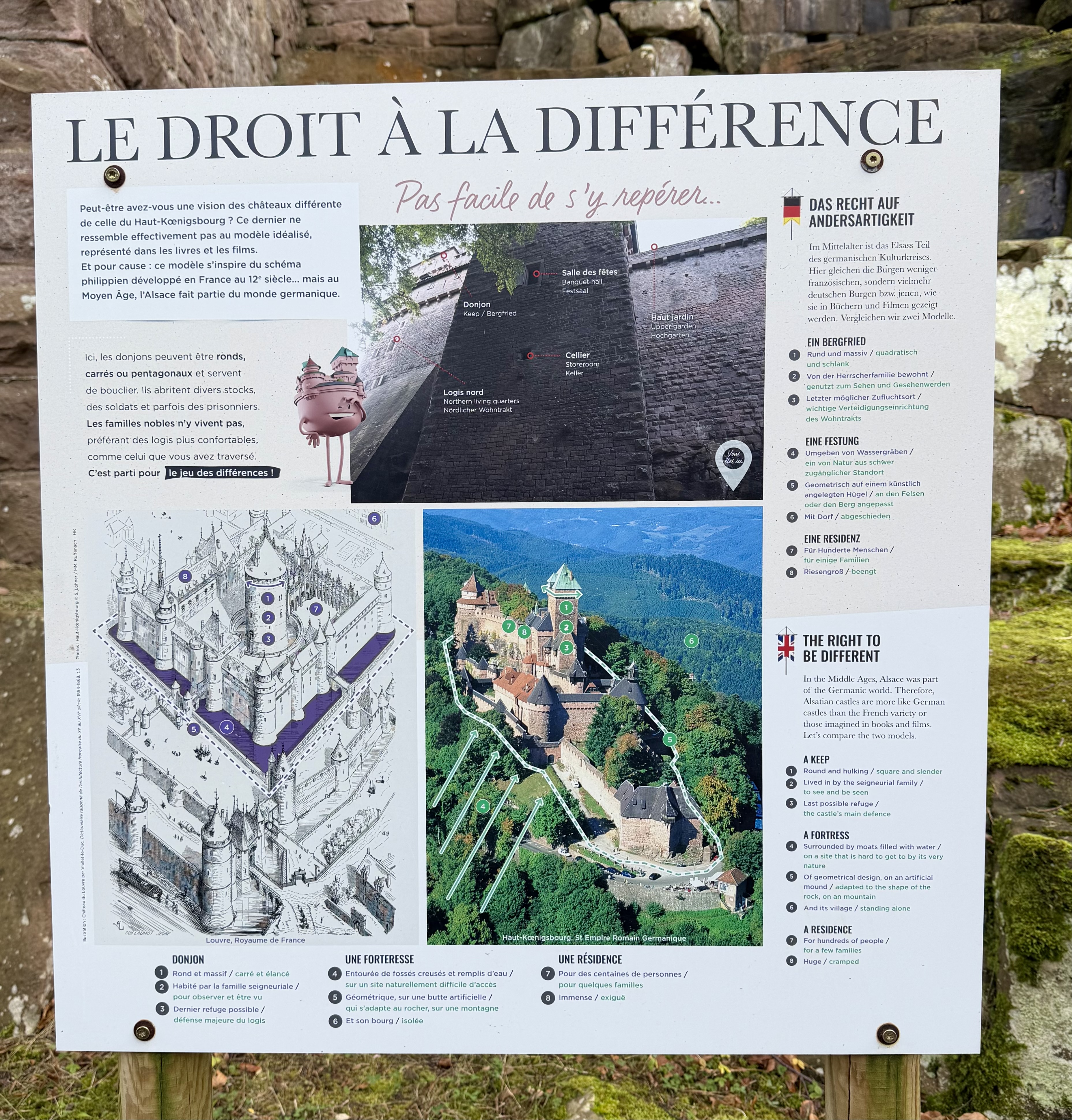
Another cool graphic they had was a sign that outlined the difference between French and German castles. Because the Alsace region was part of Germany for a good portion of its history, this castle resembles German castles more than French ones.
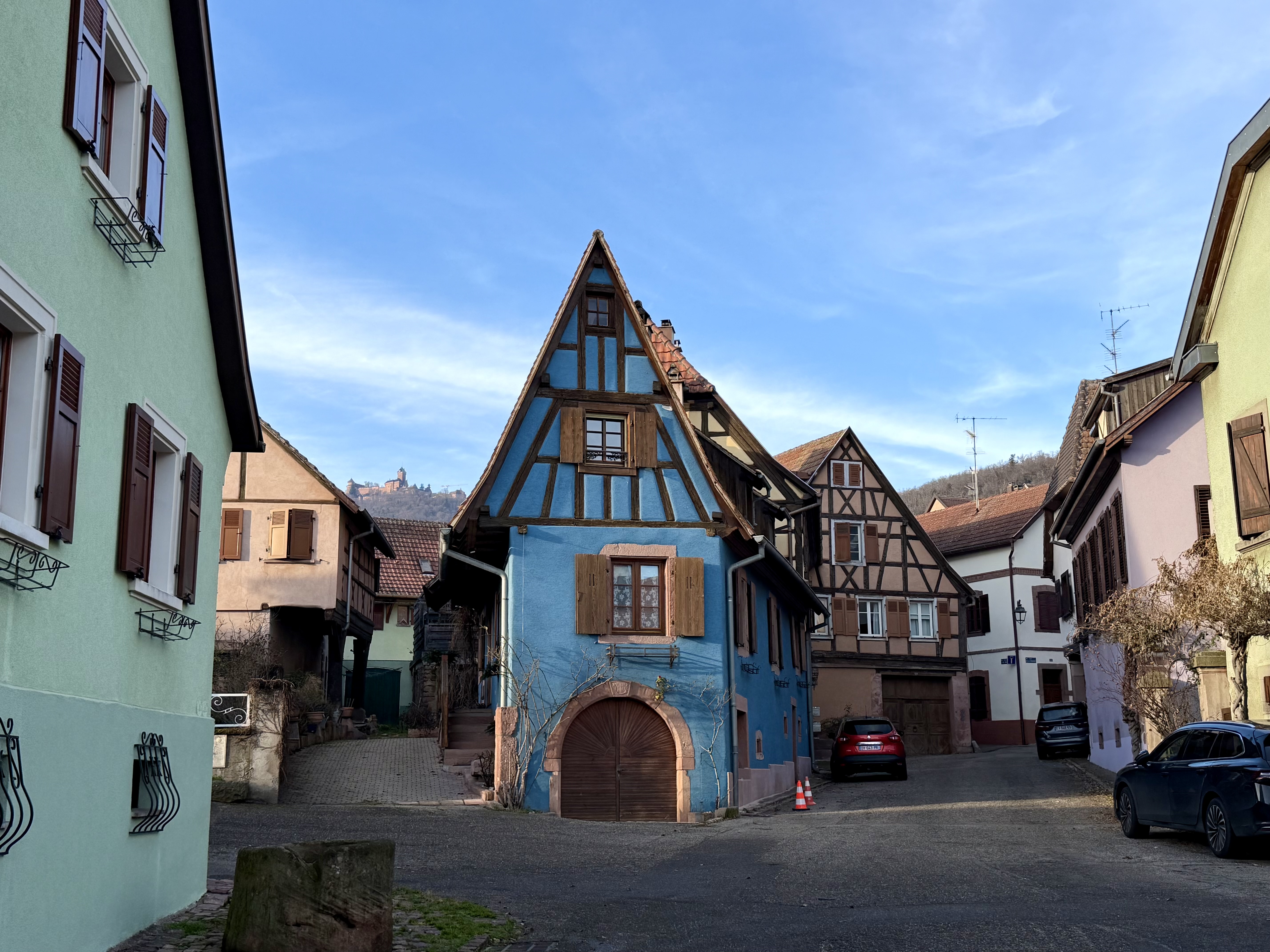
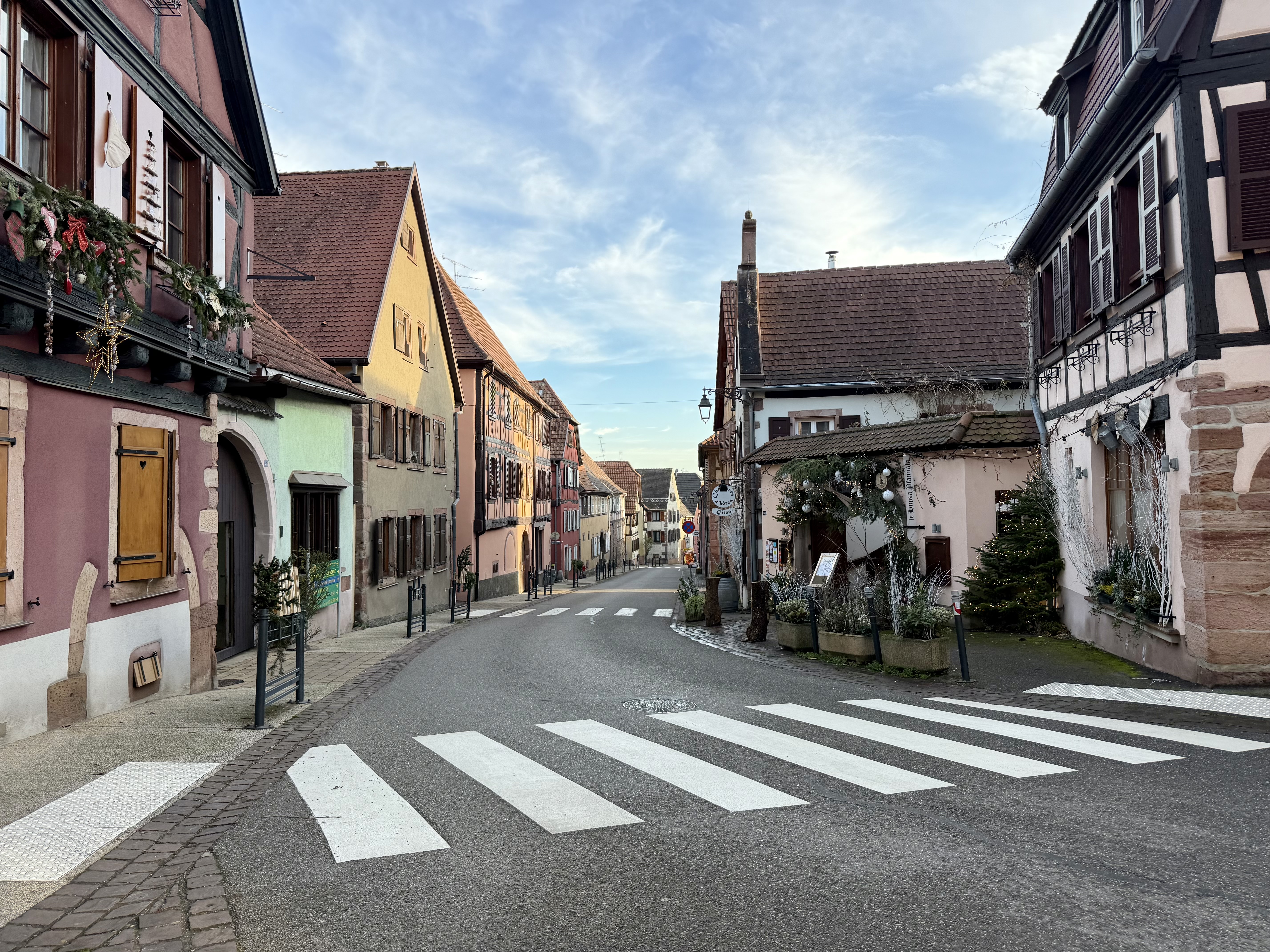
The town below the castle is called Saint Hippolyte and it was a cute town. We parked and walked around a bit – you could see the castle up on the hill from the town.
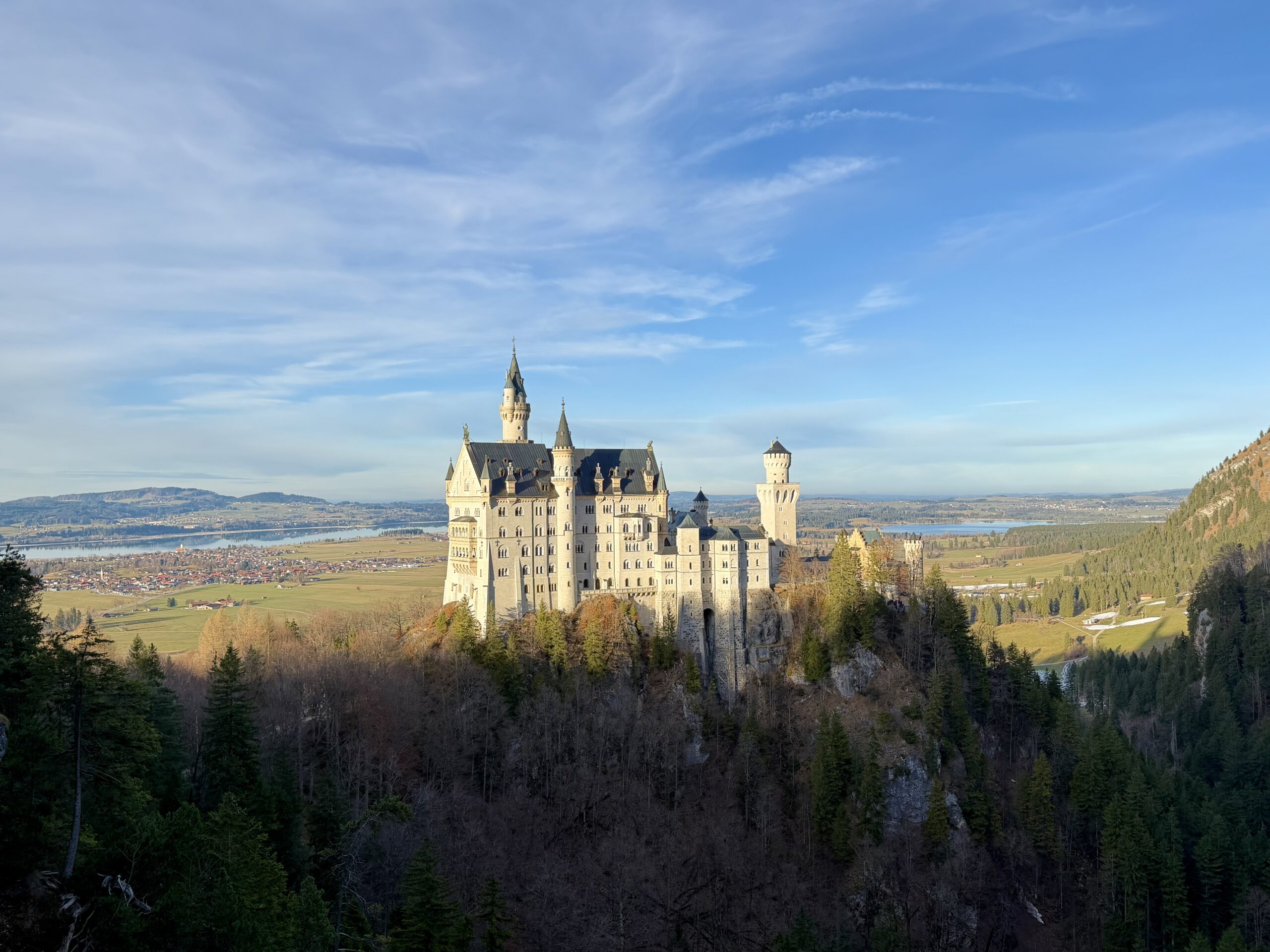
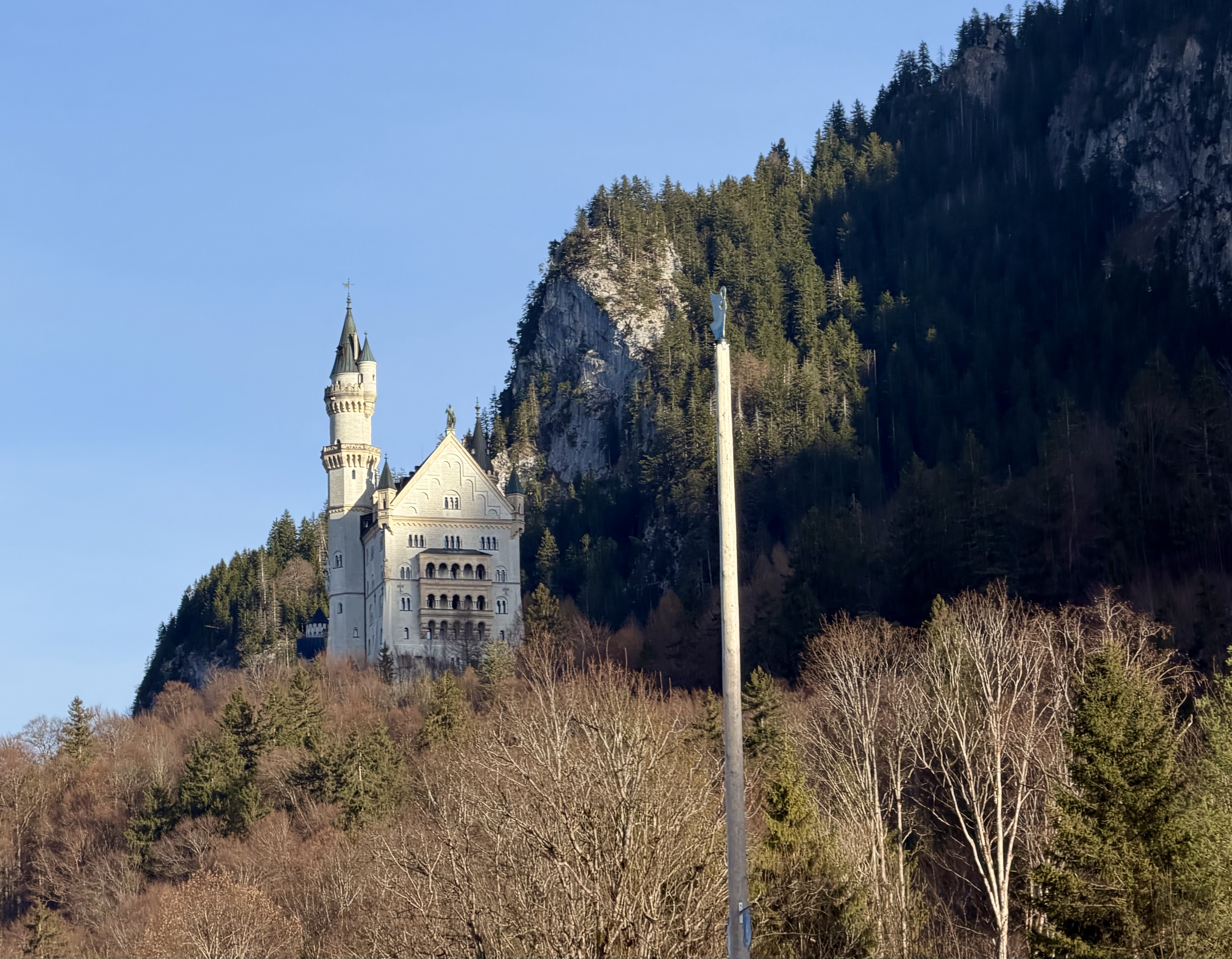
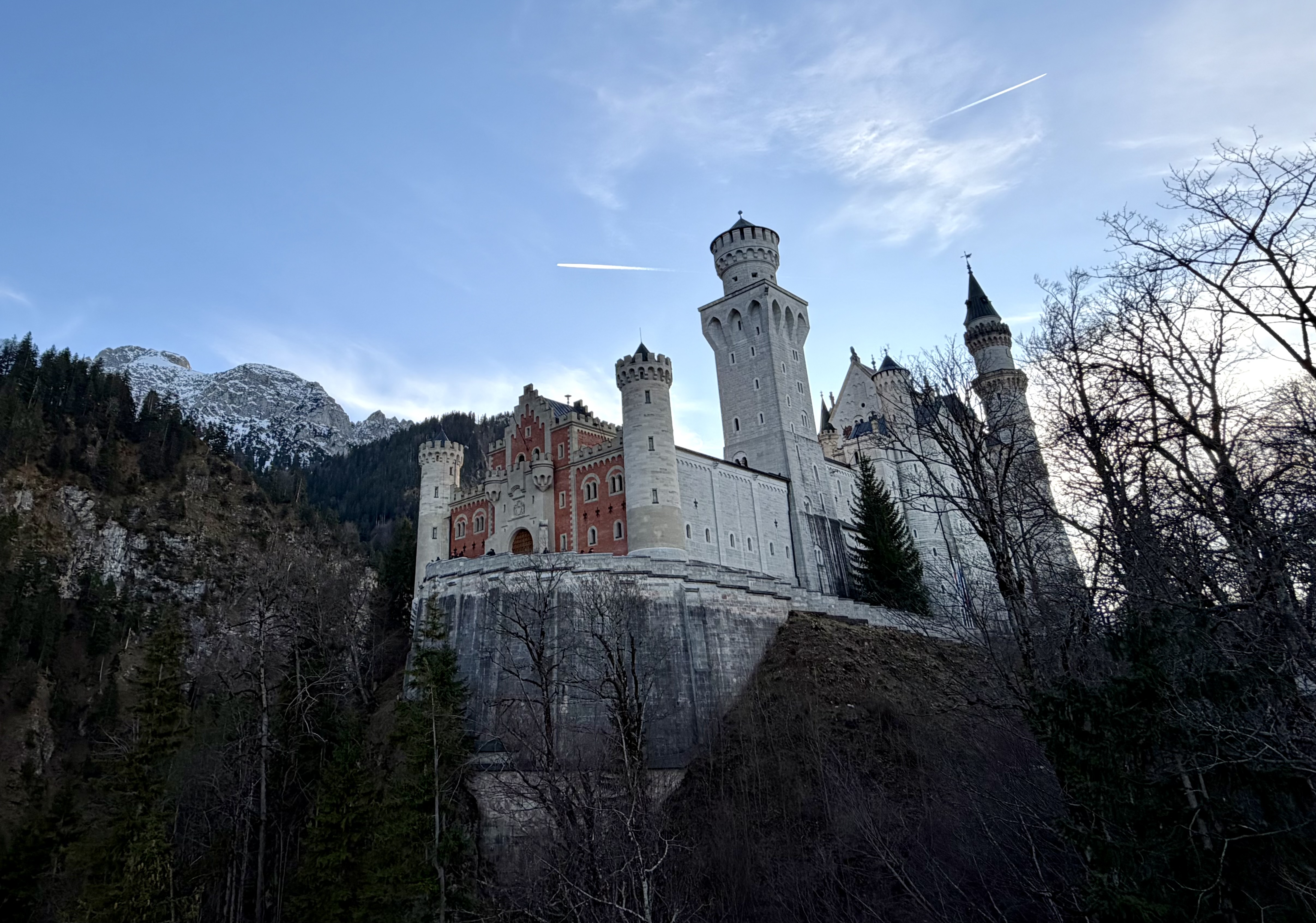
Now for the more famous castle! On our way to Munich, we stopped at Neuschwanstein Castle (https://www.neuschwanstein.de/englisch/tourist/). Most of you will recognize this one. We didn’t end up getting tickets to go in but we walked up the hill to see the exterior and also to see the view of the castle from Marienbrücke, the bridge over the Pollät gorge. We got our steps in that day! It was a decent climb up to the castle and we opted to walk it and not take the horse-drawn carriage or the bus.
The castle is up on a hill in the southern Bavarian region of Germany, in the foothills of the alps and was built in the 19th century. The castle on the hill overlooks the village of Hohenschwangau and over a narrow gorge over the Pöllat stream.
While the Bavarian monarchs already had some pretty impressive palaces (including the Munich Residenz), King Ludwig II of Bavaria felt that he needed to escape from royal life in Munich. He commissioned Neuschwantein as his retreat. The castle was built from 1869 to 1892 but Ludwig II died in 1886, never seeing it completed. It opened to the pubic shortly after his death.
It’s also famous in the US as the inspiration for Cinderella’s castle at Disneyland.
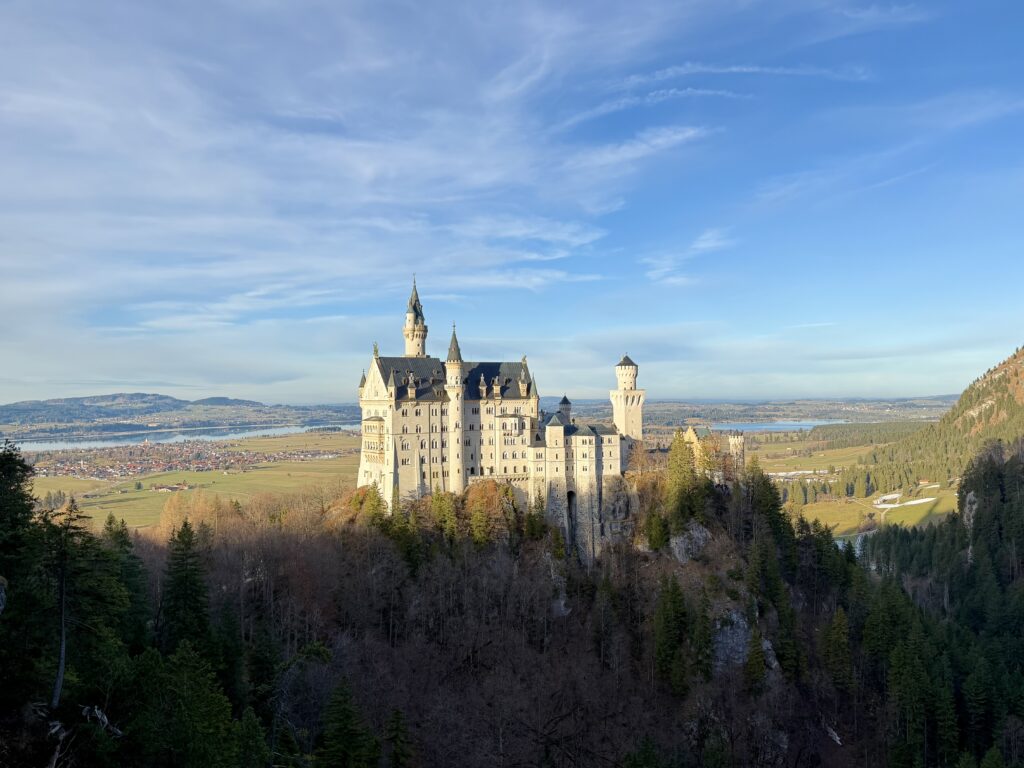
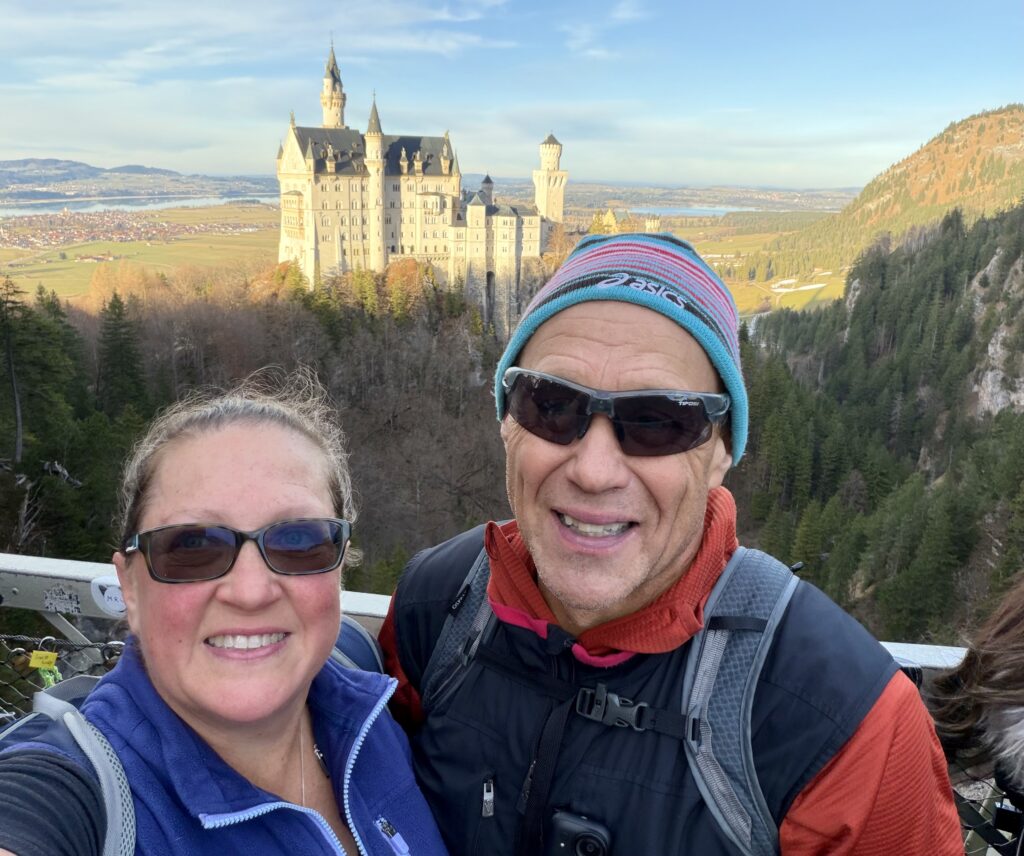
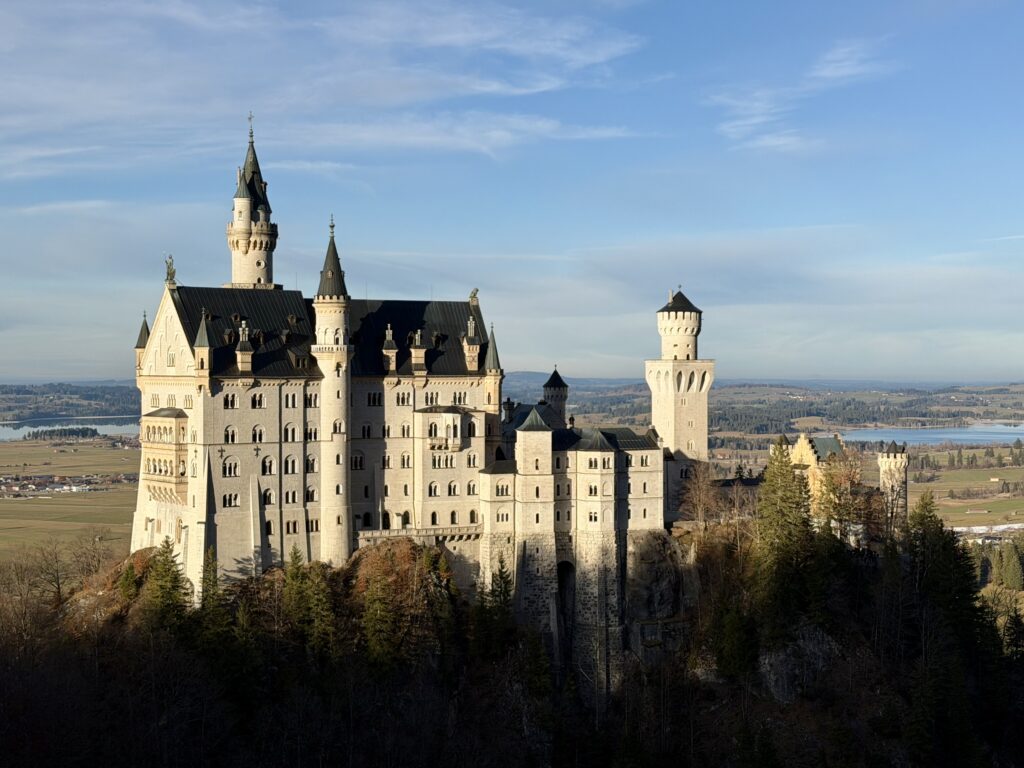
There was a sign near Marienbrücke (brücke = bridge in German) that tells some of the history – I pasted that info below. There’s also a really fantastic view of the castle and the surrounding area from the bridge (it was well worth the roughly 30 min wait to get onto the bridge).
“Marienbrücke: As a child Crown Prince Ludwig had already grown to love the beautiful scenery of the Swangau area including the dramatic waterfall in the Pöllatschlucht above Neuschwanstein. This gorge with its steep rocky walls had already been ‘discovered’ by Maximilian Il’s generation as a beauty spot. The wooden railings of the bridge that spans it, the Marienbrücke, were replaced by Ludwig l during the building of Neuschwanstein by the present elegant, cantilever construction made of iron. ‘The view from up above is enchanting, especially the view from the Marienbrücke of the castle, which will far outshine the Wartburg for all its acknowledged merits of location, architectural splendour and magnificent paintings,’ wrote King Ludwig ll in a letter in 1881.”
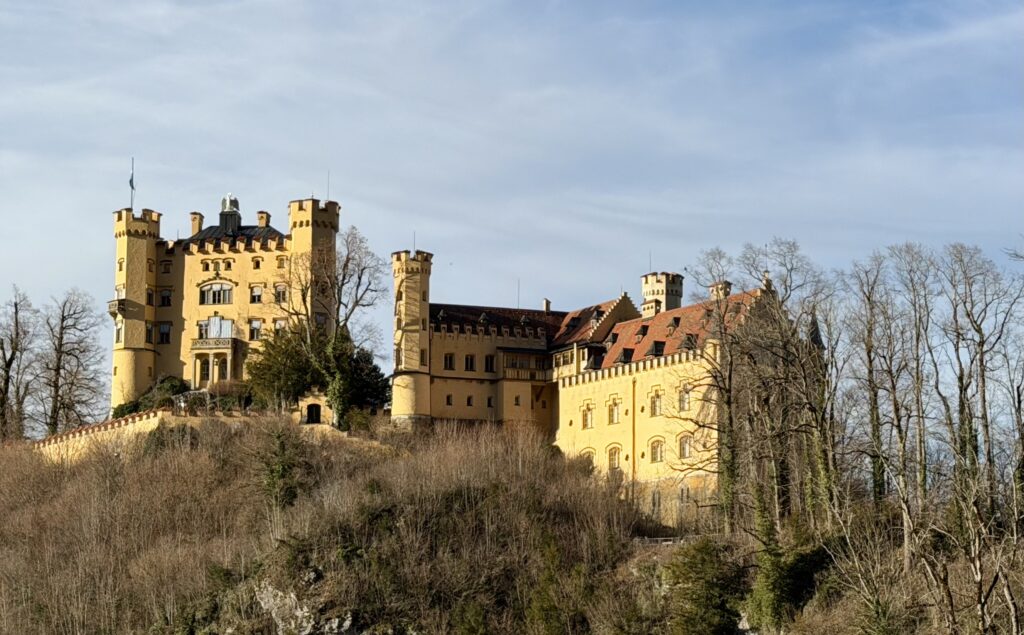
From the hike up to the castle, you can see the Hohenschwangau Castle – this castle was built by King Maximillian II and his son – Ludwig II – grew up there. Neuschwanstein sits up on the hill overlooking this castle. I feel like there is so much family psychology in that …
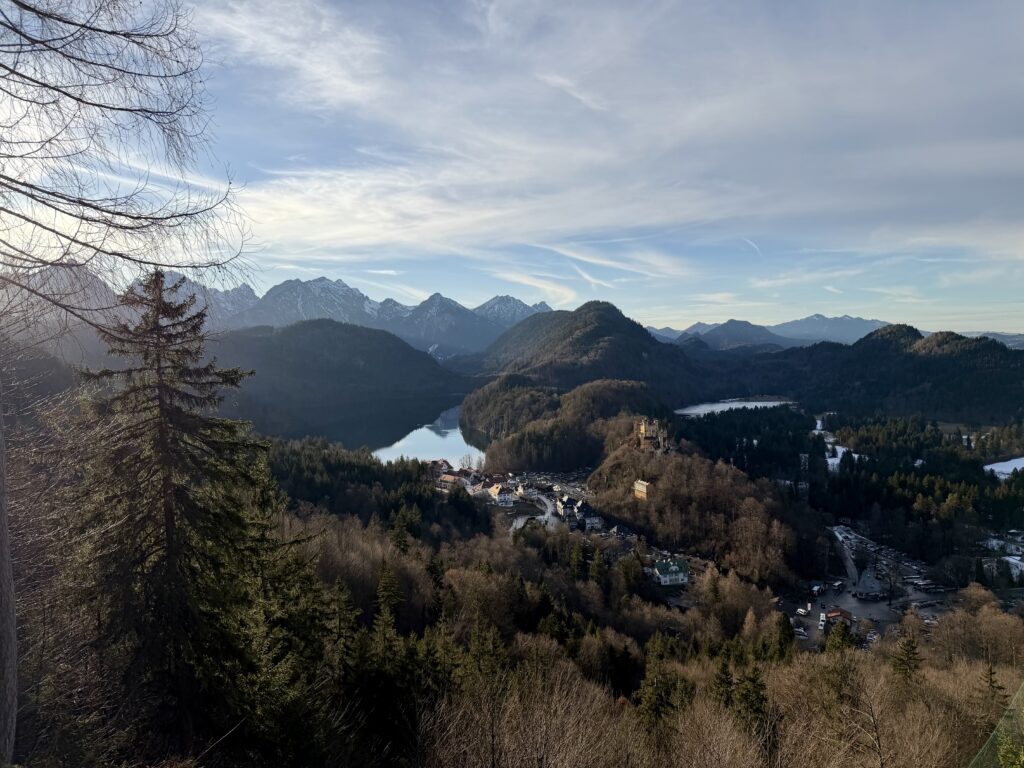
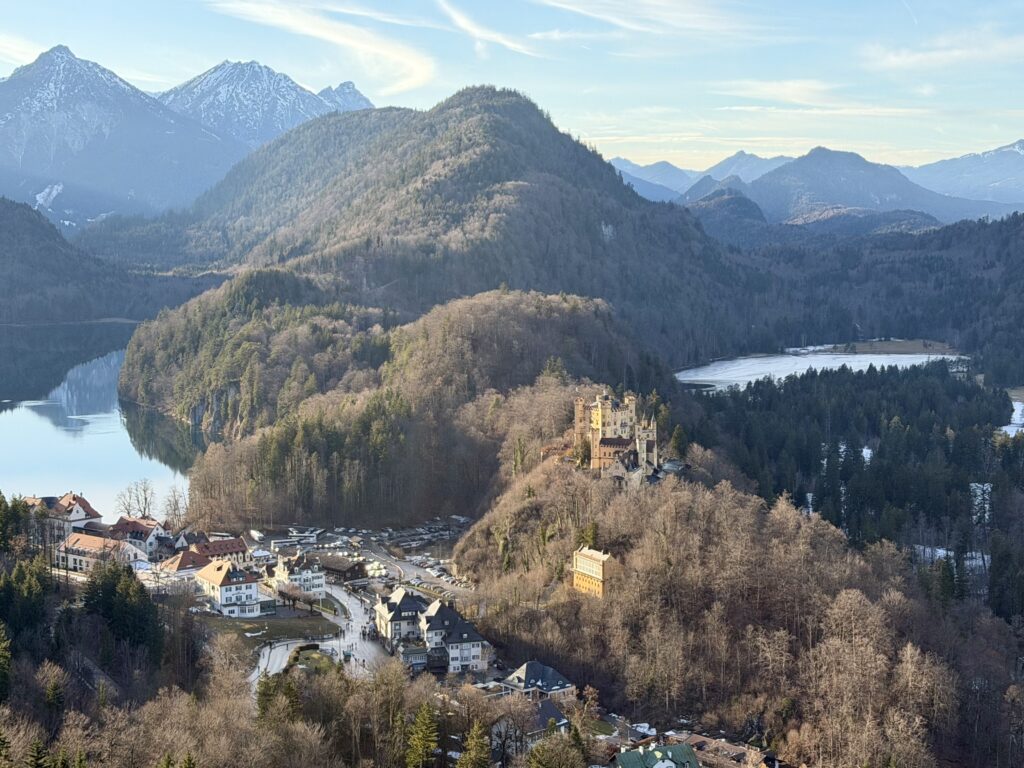
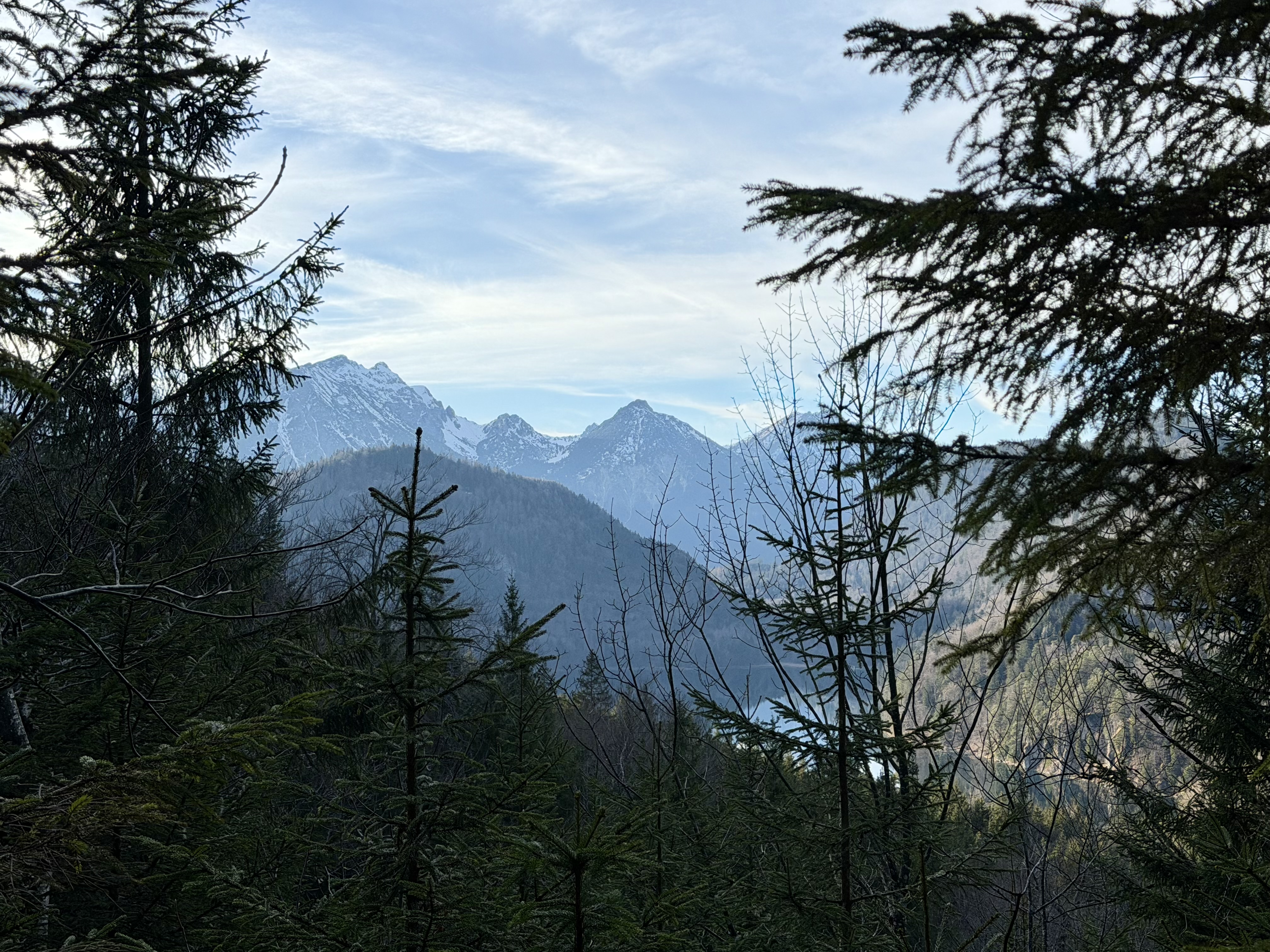
As we left, we were treated to some pretty amazing scenery at sunset too.
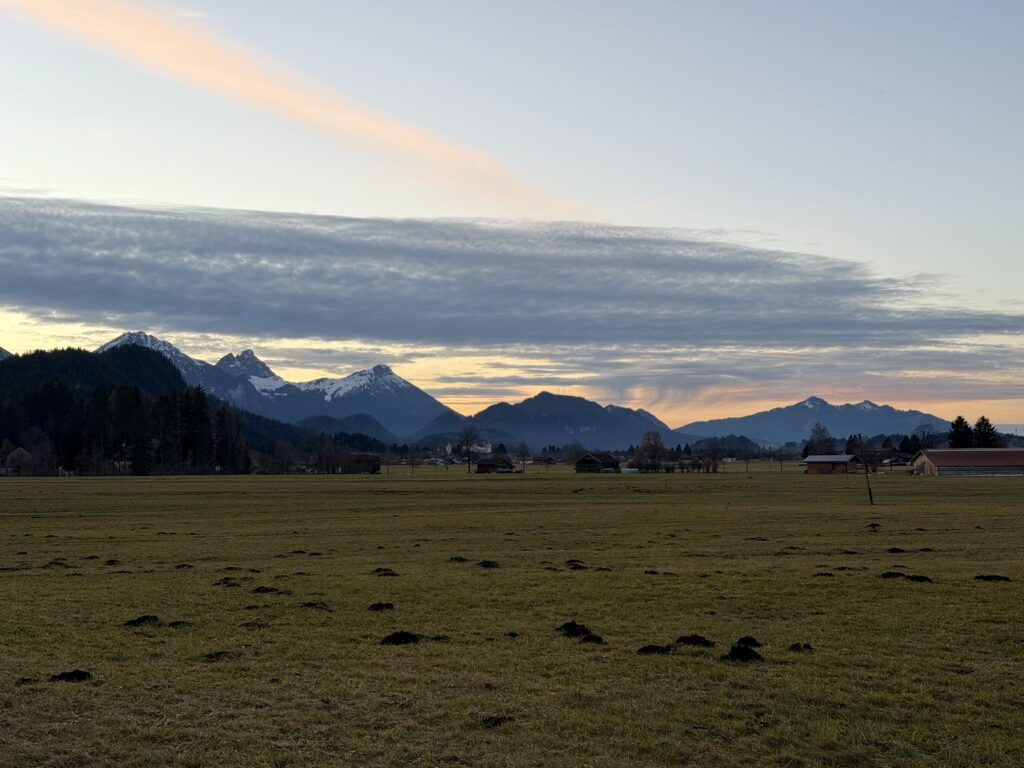
From here we made our way to Munich for the next part of our adventure. But that’s for a later post….