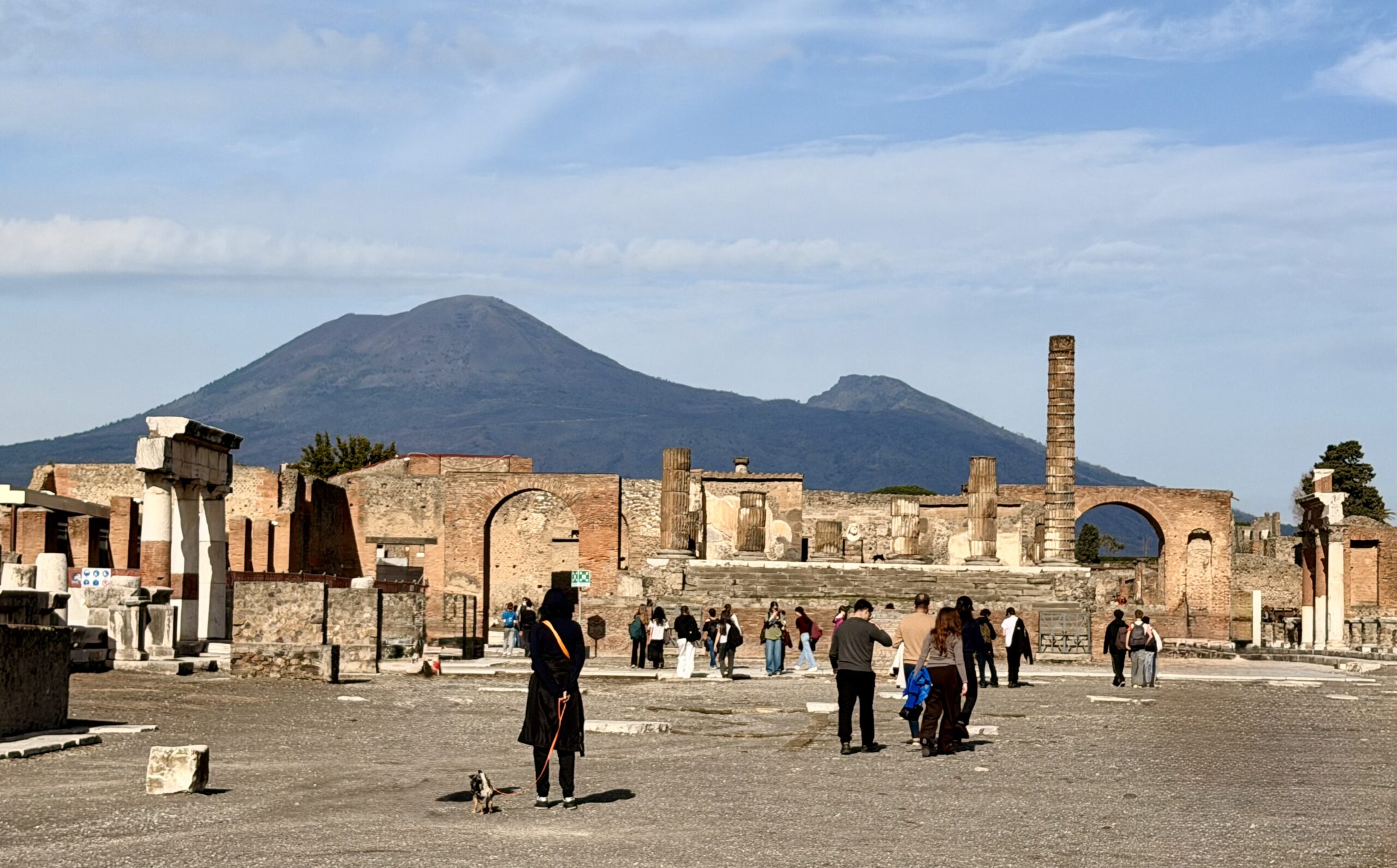

We visited Pompeii as a day trip from Rome. It’s a long day but still very do-able. We took the faster train (an hour) from Roma Termini to Napoli Centrale (left Rome just before 9 AM) then hopped on the Circumvesuviana train from Napoli Garibaldi (connected to Napoli Centrale) to Pompeii Scavi. The 2nd train was about 30 minutes then a short walk from there to the main entrance of Pompeii. I got our tickets online a few days in advance – they just all said 0900 and that was good for the entire day so it’s much easier off-season In the summer/peak season tickets from April to October have an AM/0900-1300 and PM/1300-1730 time slot. As long as you get there sometime in that AM slot you’re good for the rest of the day but you likely need to buy them further in advance in peak season (they limit to 15,000 people in the AM slot and 5,000 in the PM slot per day). (https://pompeiisites.org/en/buy-tickets/)
I had been here once before – in 2001 – but Chris had never been. We were lucky and ended up with a great weather day! From the minute you get through the gate, you start seeing so much history.
The city was founded in 600 BC and was a busy port city. It was wealthy with nearly 20,000 residents at its peak. They had a societal structure not unlike ours today – houses where regular people lived, mansions, bakeries, sports arenas, theaters, and of course … a brothel!
Pompeii is famous for being buried when Mount Vesuvius erupted in 79 AD (along with Herculaneum on the other side of the volcano). Because of the eruption, the city was preserved intact and is a UNESCO World Heritage Site as it is “the only archaeological site in the world that provides a complete picture of an ancient Roman city.” (https://whc.unesco.org/en/list/829/). This History Channel article has good information about the event: https://www.history.com/this-day-in-history/august-24/vesuvius-erupts. (this Rick Steves article also has some good info: https://www.ricksteves.com/watch-read-listen/read/articles/pompeii-italy). The eruption started mid-day on 24 August 79 AD (some debate about the actual dates with some sources putting it further into the autumn of 79 AD) and the majority of the residents fled but around 2,000 remained behind. The first day of the eruption produced a 10-mile high mushroom cloud. The ash and pumice fell down on Pompeii – this is when the majority of residents fled. Nearby Herculaneum was mostly protected from this initial eruption due to wind (but then a cloud of hot ash ran down the western side of Vesuvius followed by volcanic mud and rock). The following day the pyroclastic explosion (hot gas and volcanic matter) sealed their fate – the toxic gas killed the residents who remained. Then the flow of rock and ash collapsed in roofs and walls and buried the deceased. (https://whc.unesco.org/en/list/829/).
If you look at a map, you might notice Pompeii seems too far inland to be a sea port. The eruption in 79 AD actually changed the shoreline and Pompeii was no longer right on the sea.
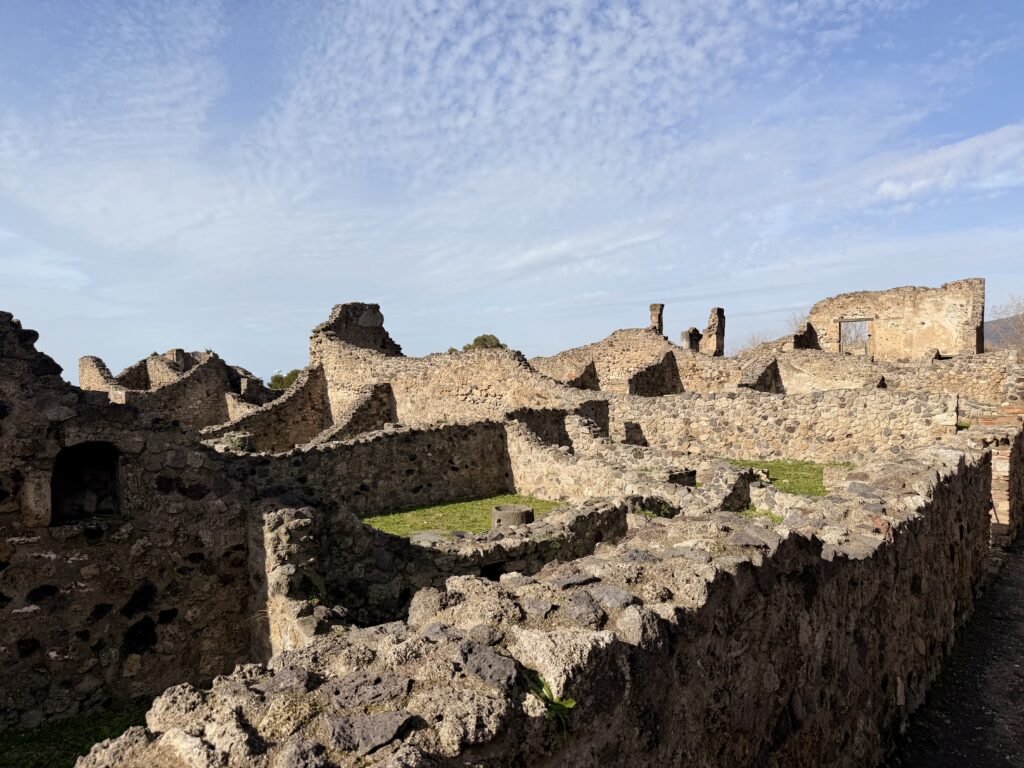
Pompeii was basically forgotten until it was rediscovered at the end of the 16th century. Systematic excavations began in the 18th century and continues today (about 2/3 of it has been excavated). This page has details about the excavations: https://pompeiisites.org/wp-content/uploads/A-Guide-to-the-Pompeii-Excavations-2.pdf
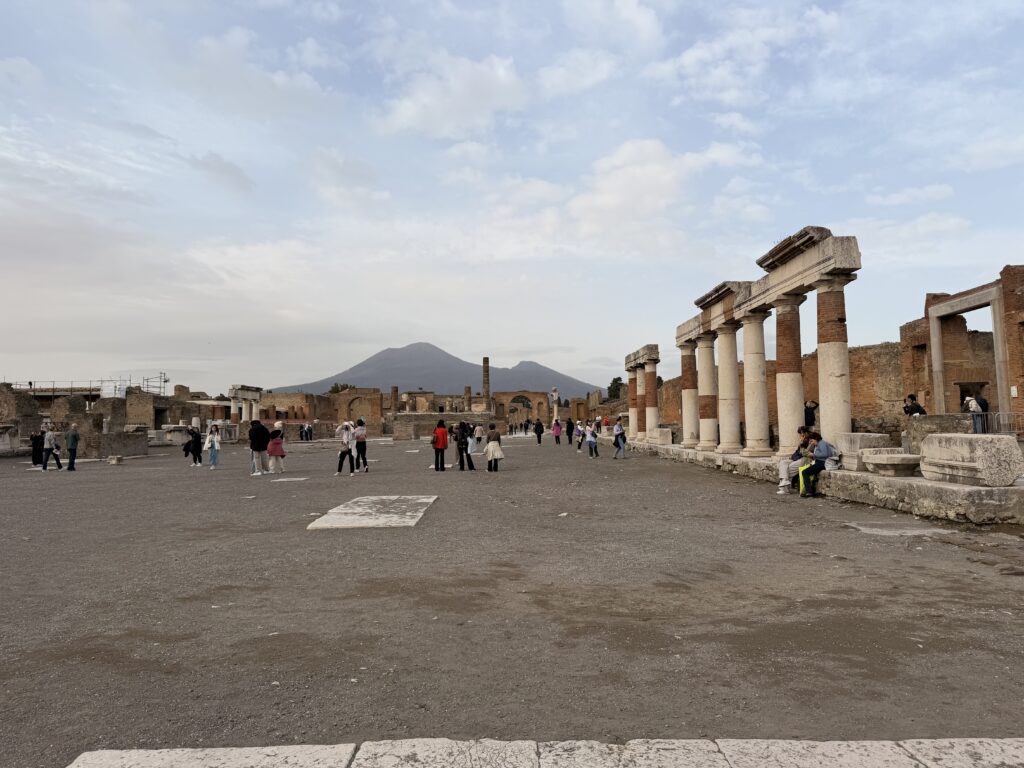
The Forum (main square) was the center of life – religious, political, judicial, and commercial life. Temples (such as the Temple of Apollo and the Temple of Jupiter), public buildings, and a market all overlooked the Forum.
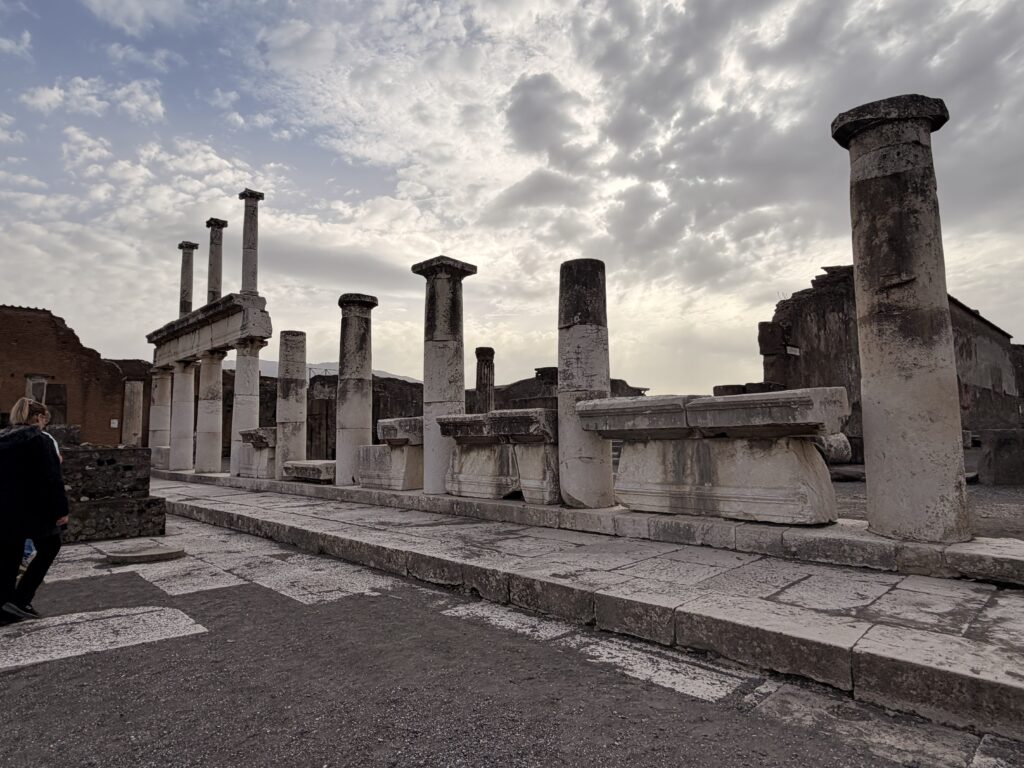
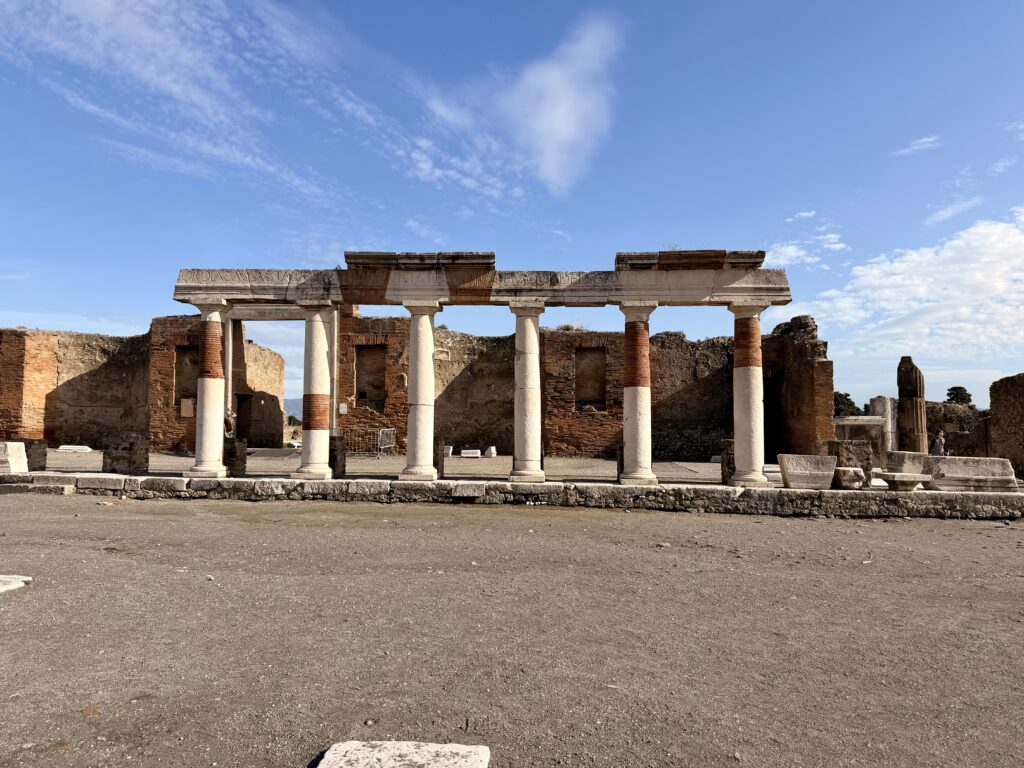
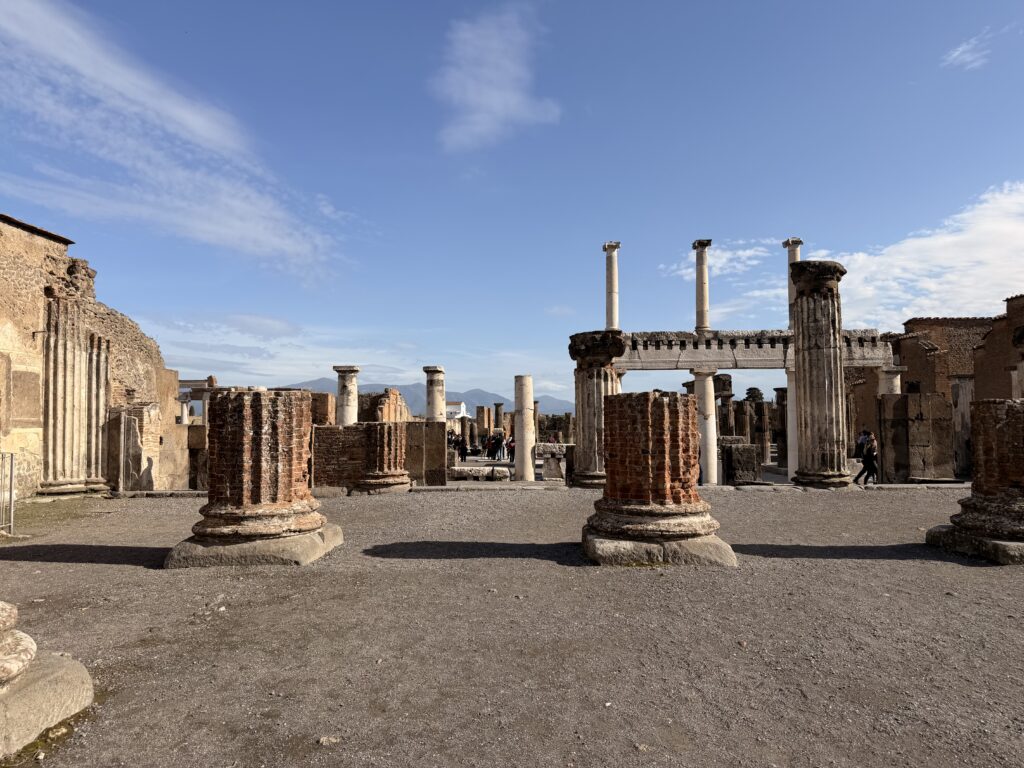
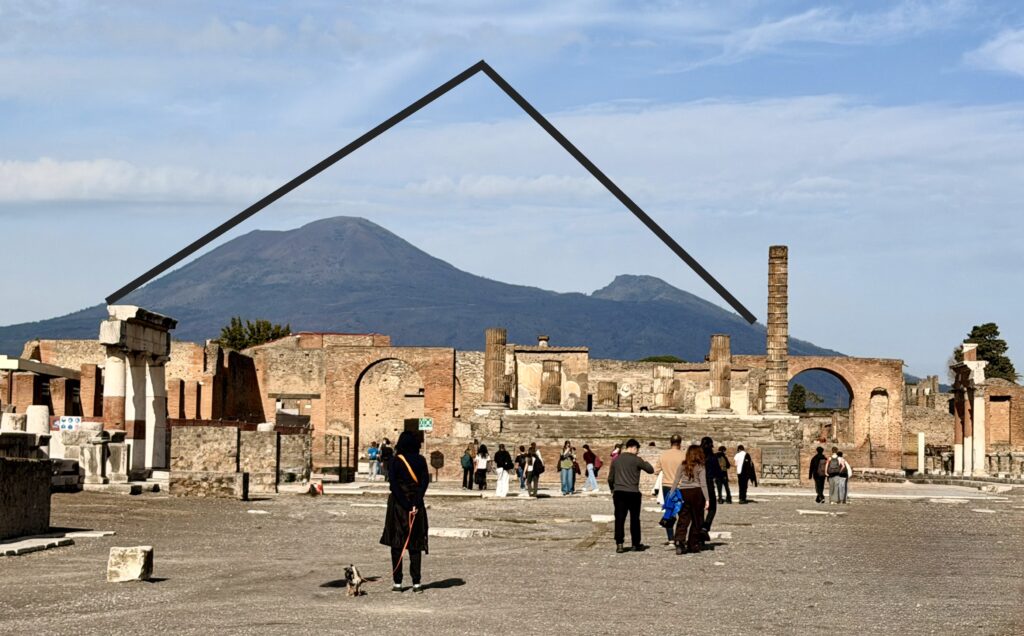
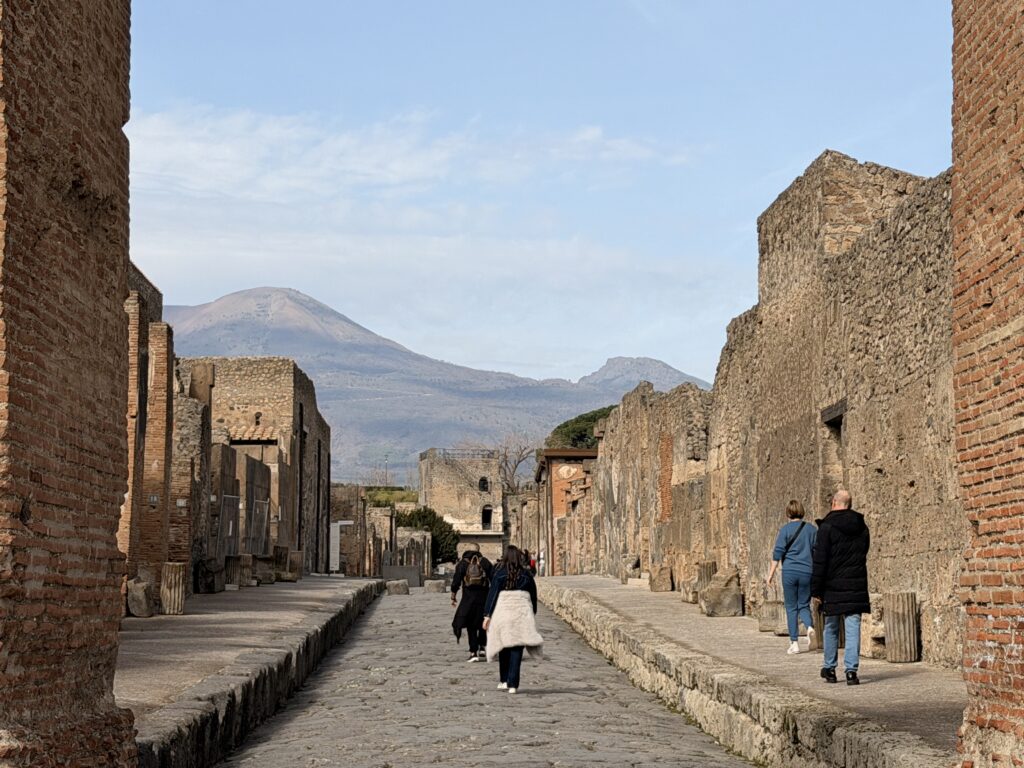
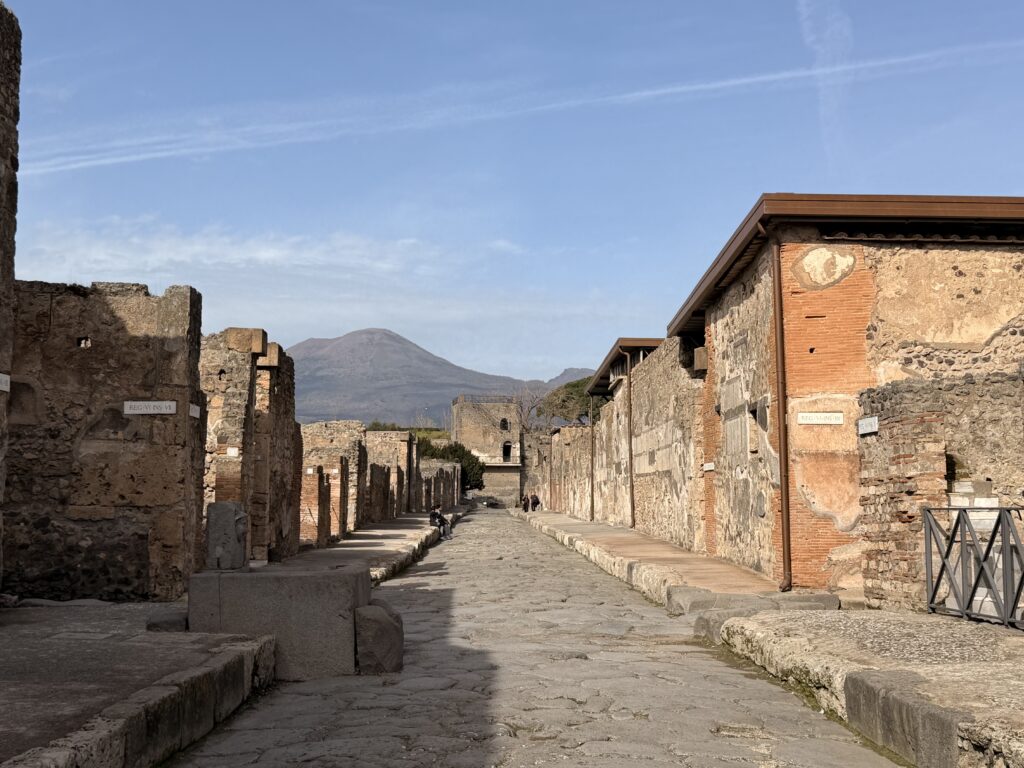
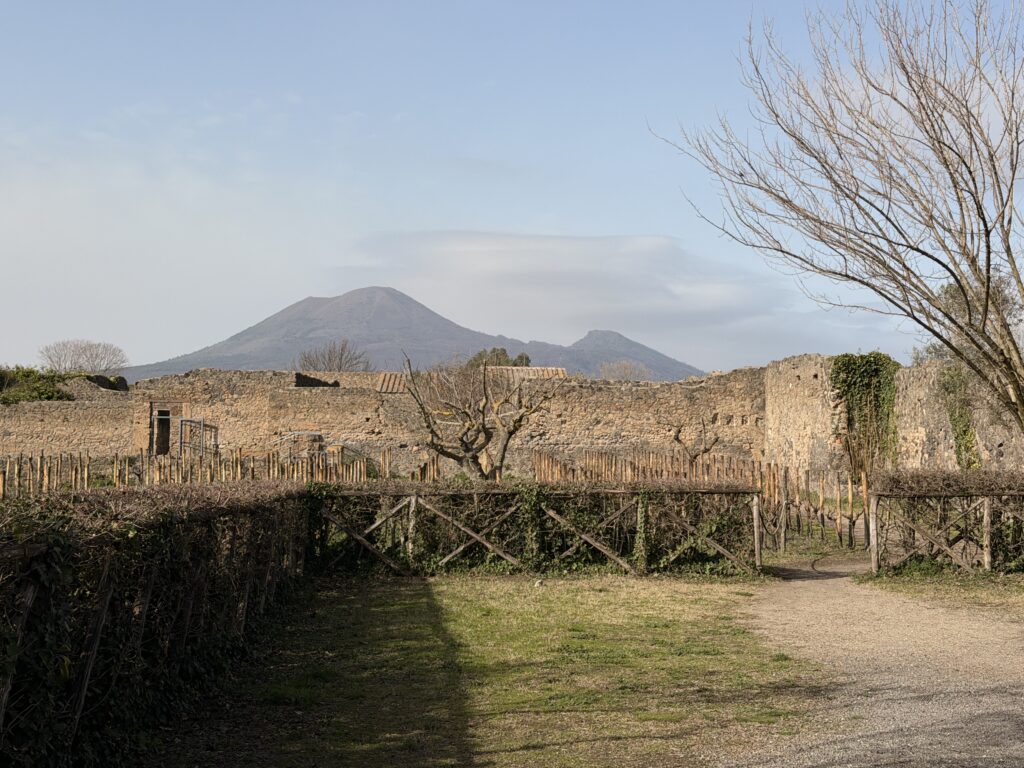
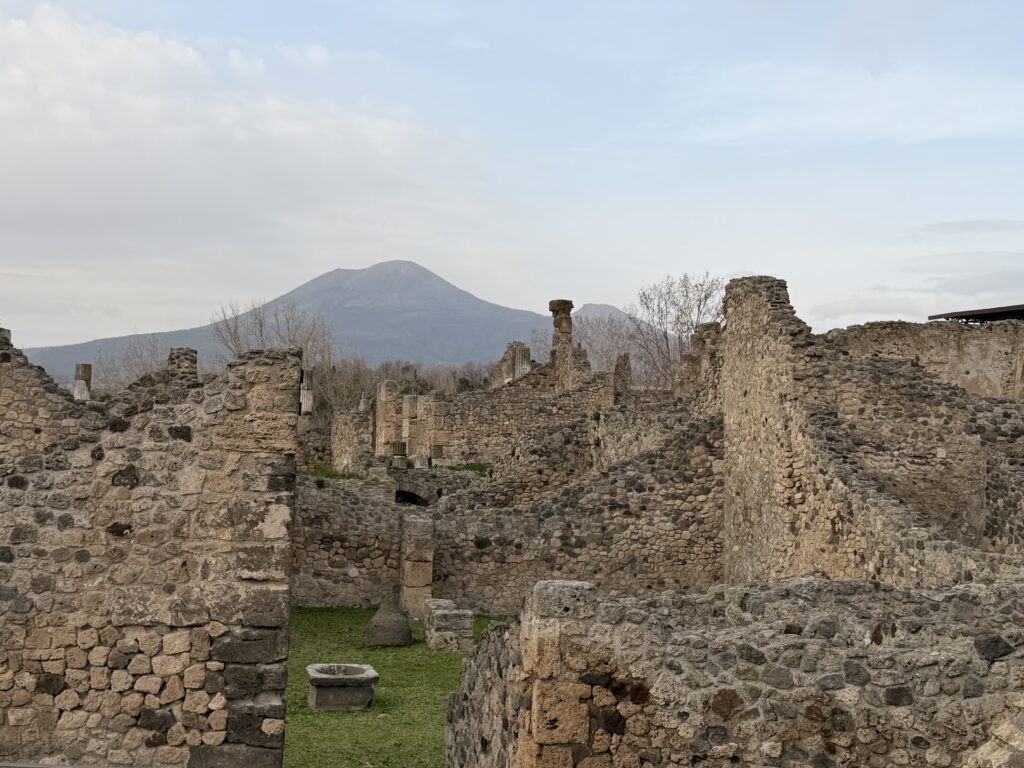
From multiple sights in Pompeii (including here in the Forum), you can see Mount Vesuvius in the distance. Mount Vesuvius is a stratovolcano and is still active (it last erupted in 1944).
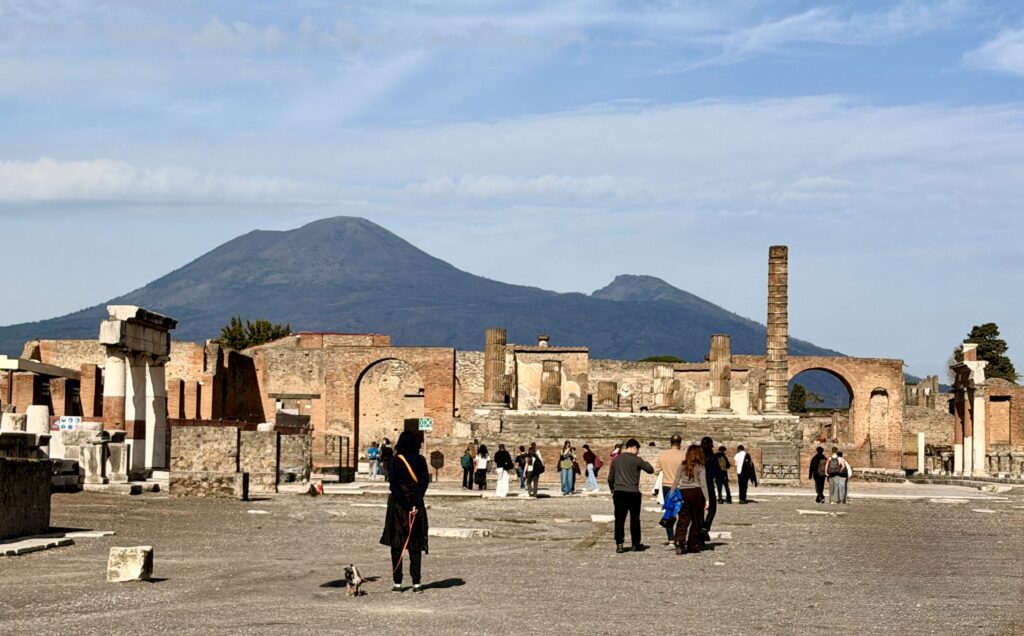
If you draw an imaginary line up from the slope on each side, you get a rough idea of the shape of the cone prior to the eruption.
Of course no city would be complete without public toilets! Seems like it could get a bit crowded in there though!
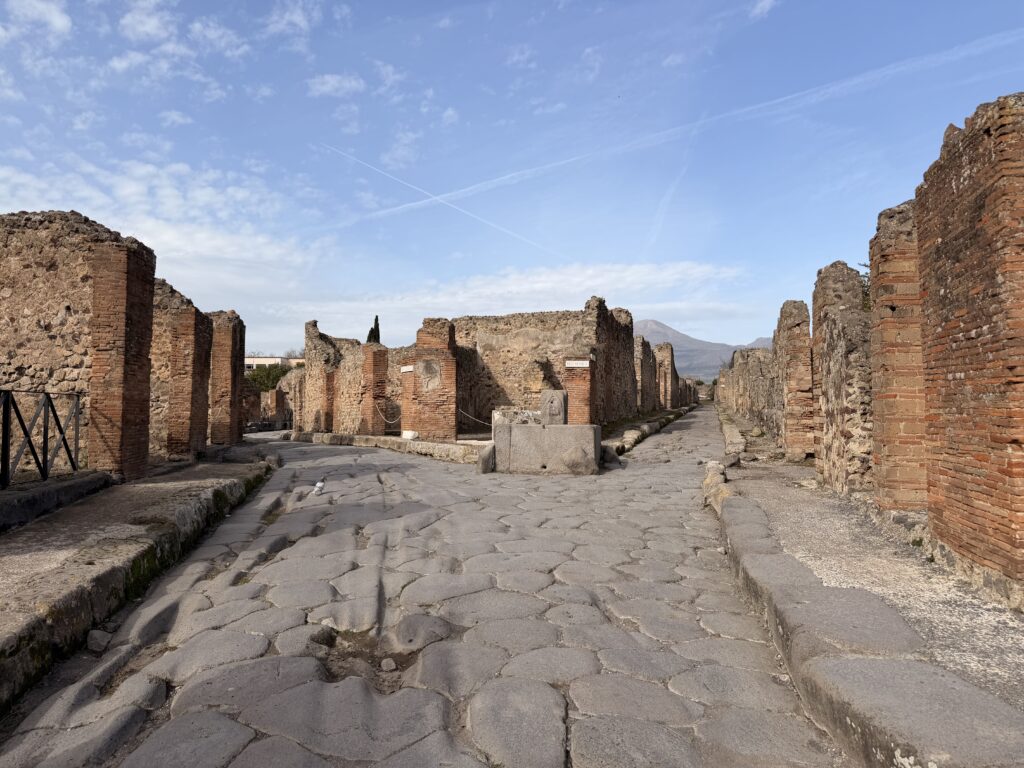
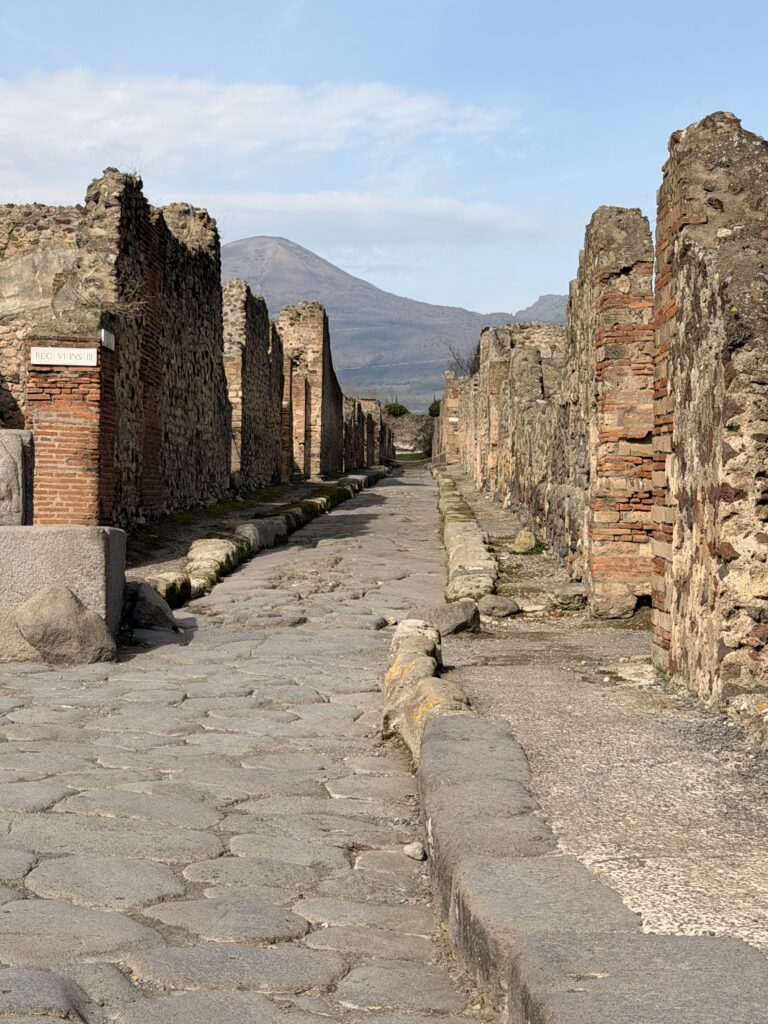
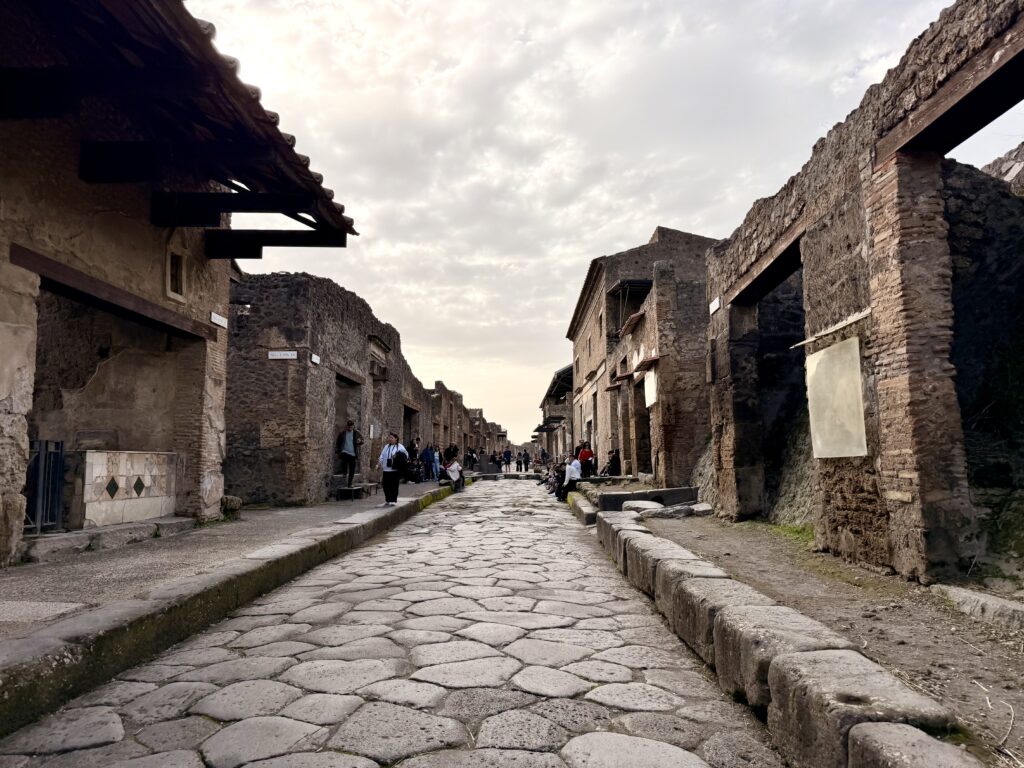
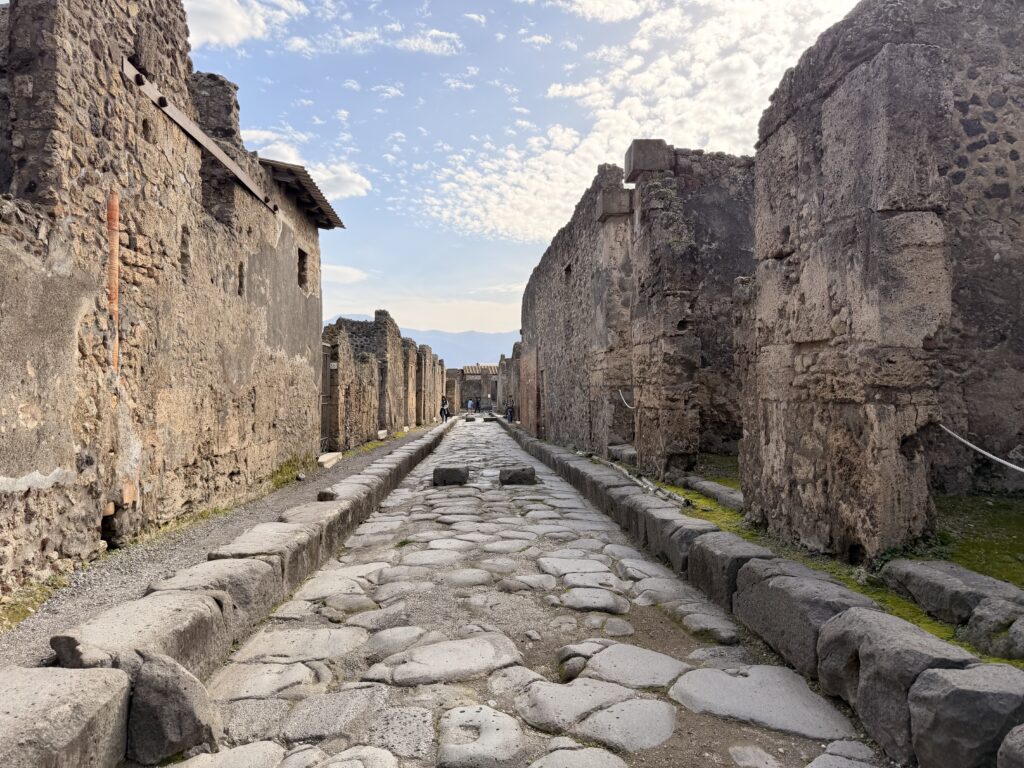
The streets themselves are pretty amazing too. They had grooves from the wheels of carts and also stones placed as crosswalks – taking into account the height of the carts. This allowed pedestrians to keep their feet clean and dry from the water and sewerage that would have been in the streets. (https://seepompeii.com/en/the-characteristic-streets-of-ancient-pompeii/; https://www.pompeii.org.uk/s.php/escursione-urbanistica-di-pompei-scavi-di-pompei-it-223-s.htm). The raised sidewalks hid the pipes and the 3 tall stones in the picture below blocked cart traffic, protecting a pedestrian shopping street.
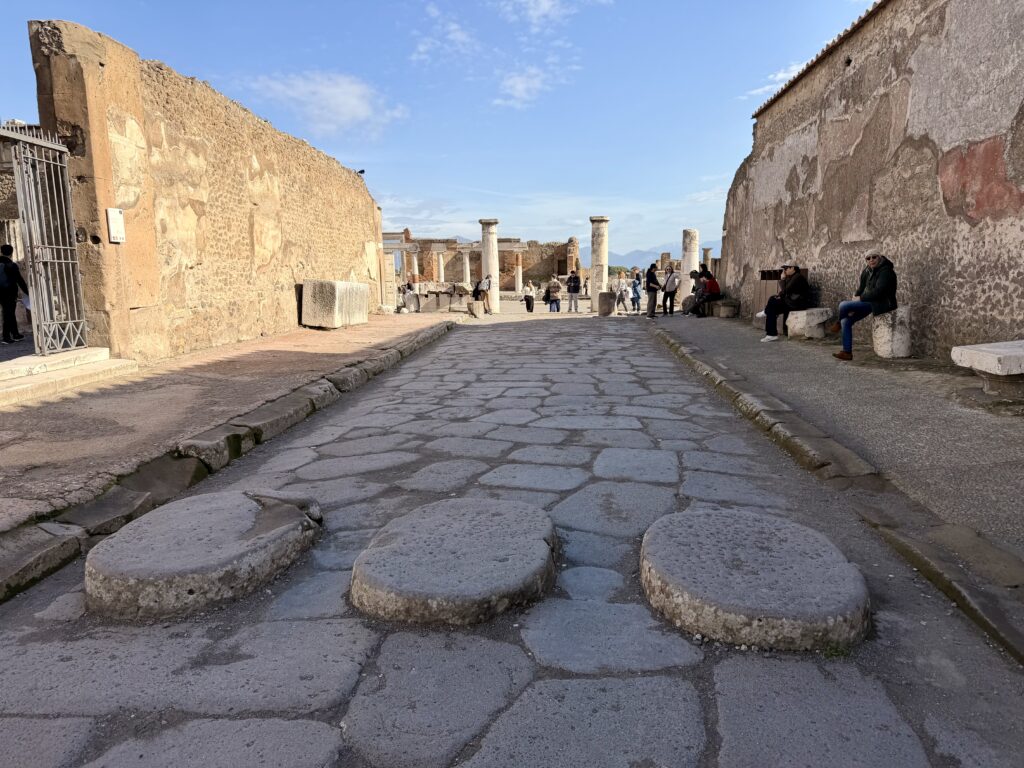
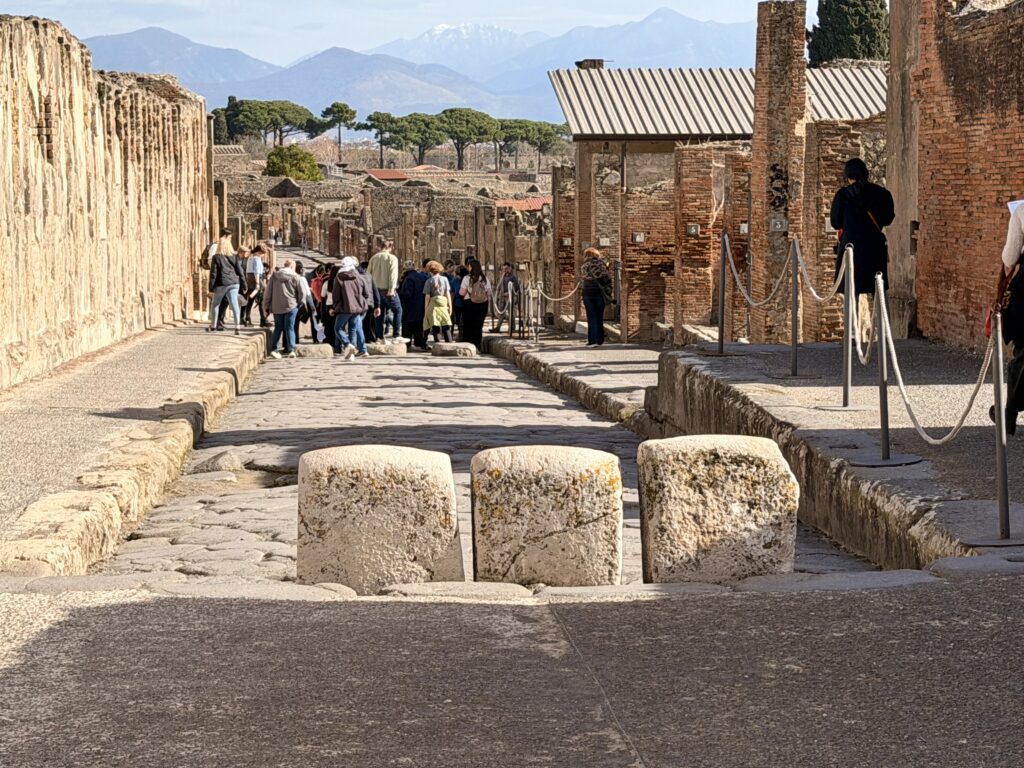
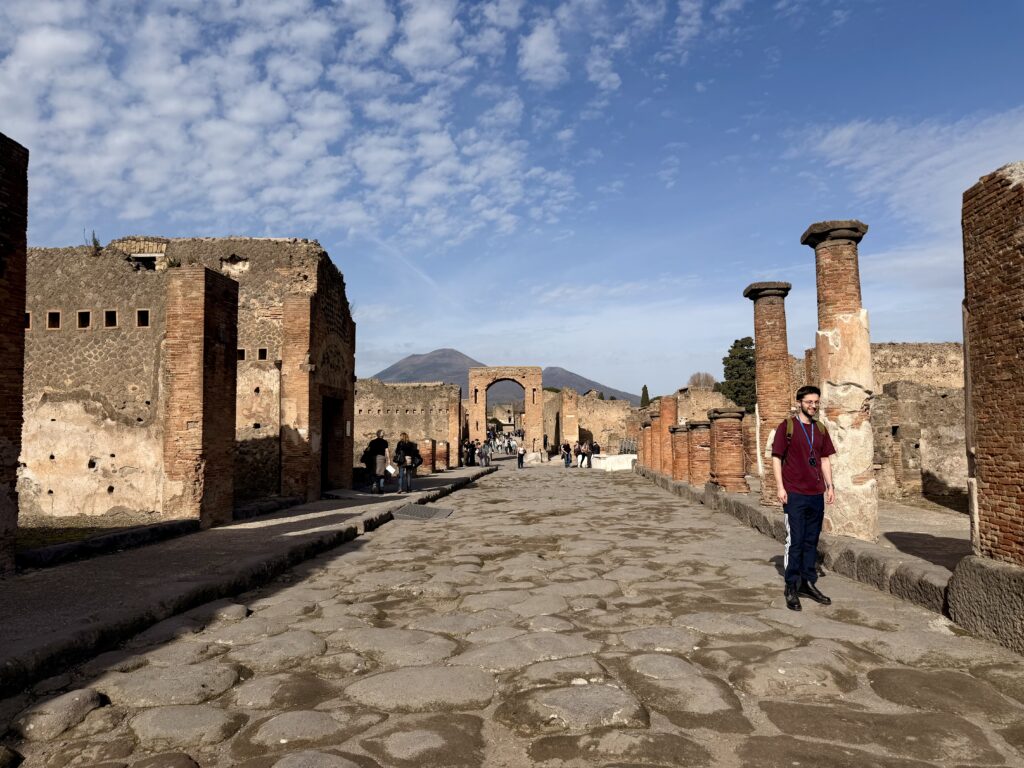
The streets were paved with basalt stone blocks, forming an even surface for walking and driving. They remain walkable today – 2,000+ years later!
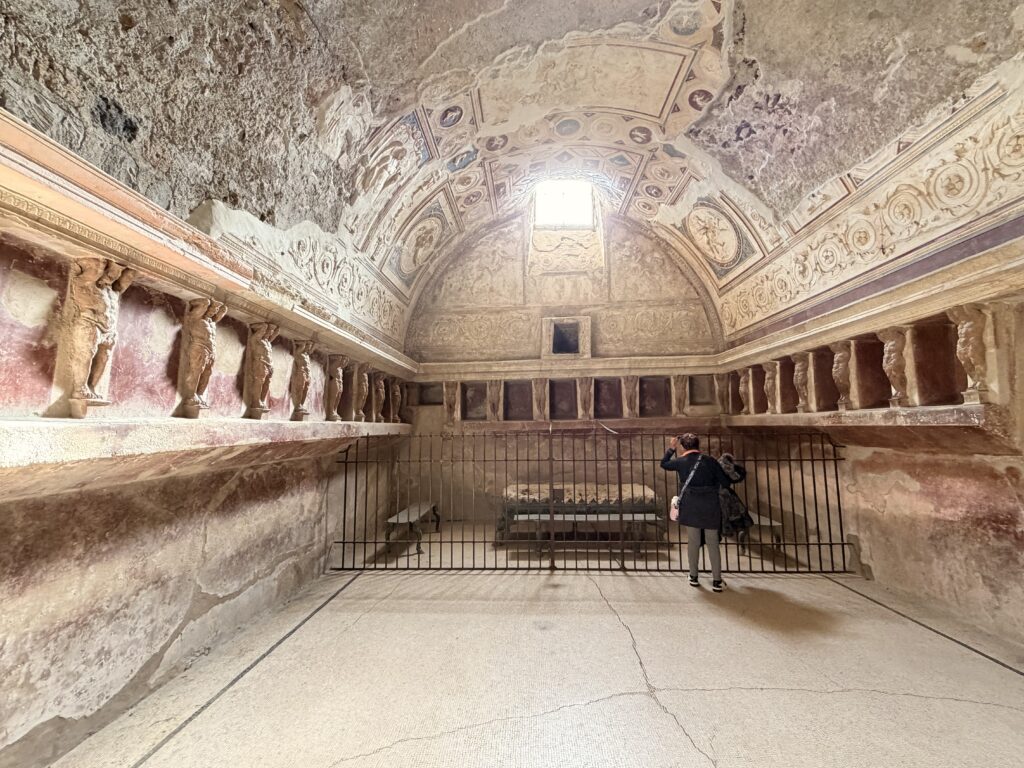
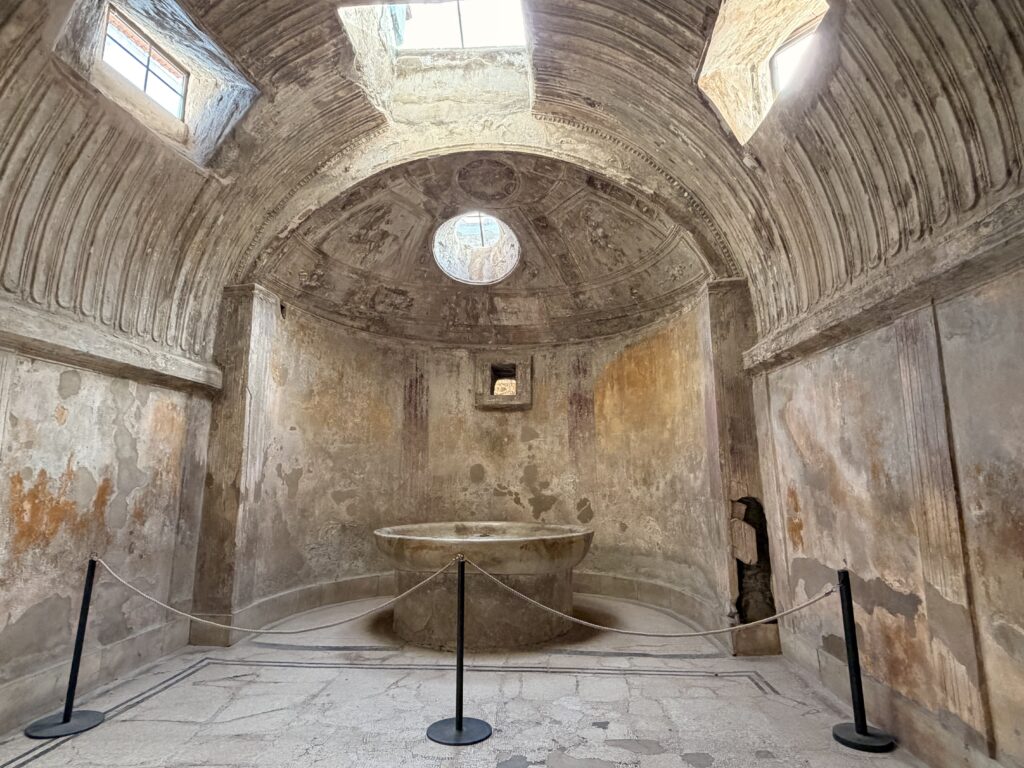
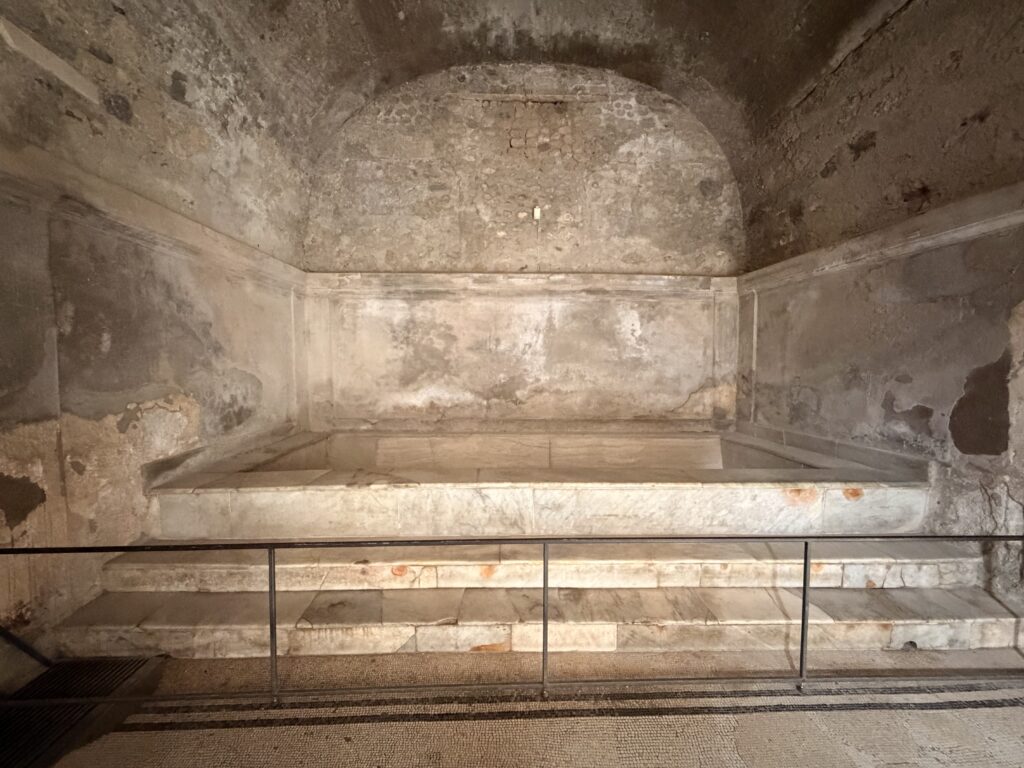
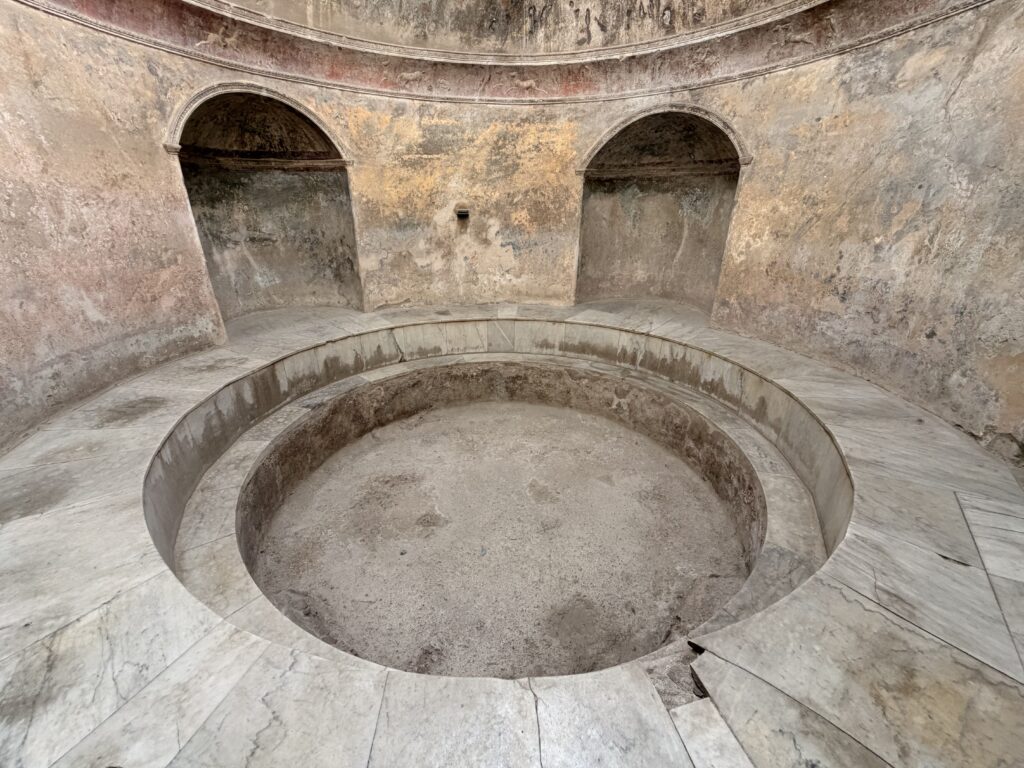
Just off the Forum is a public bath house. Typical Roman bath houses were separated by gender and each side would have a changing room, a caladium (hot water bath), tepidarium (warm water bath), and a frigidarium (cold water plunge).
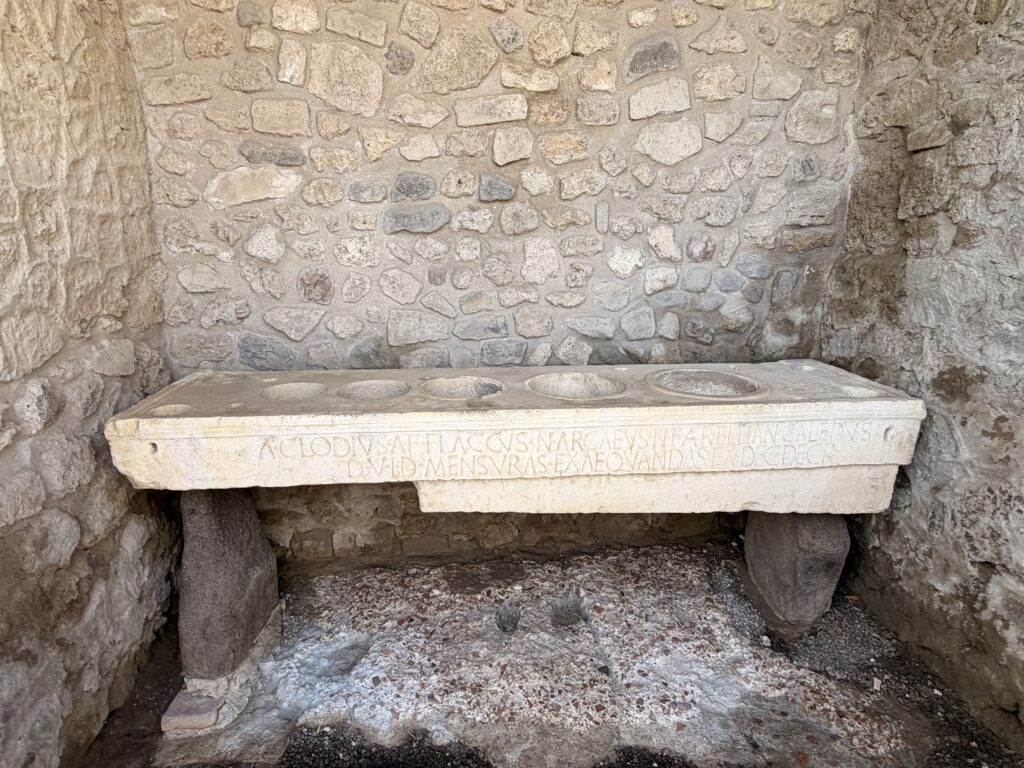
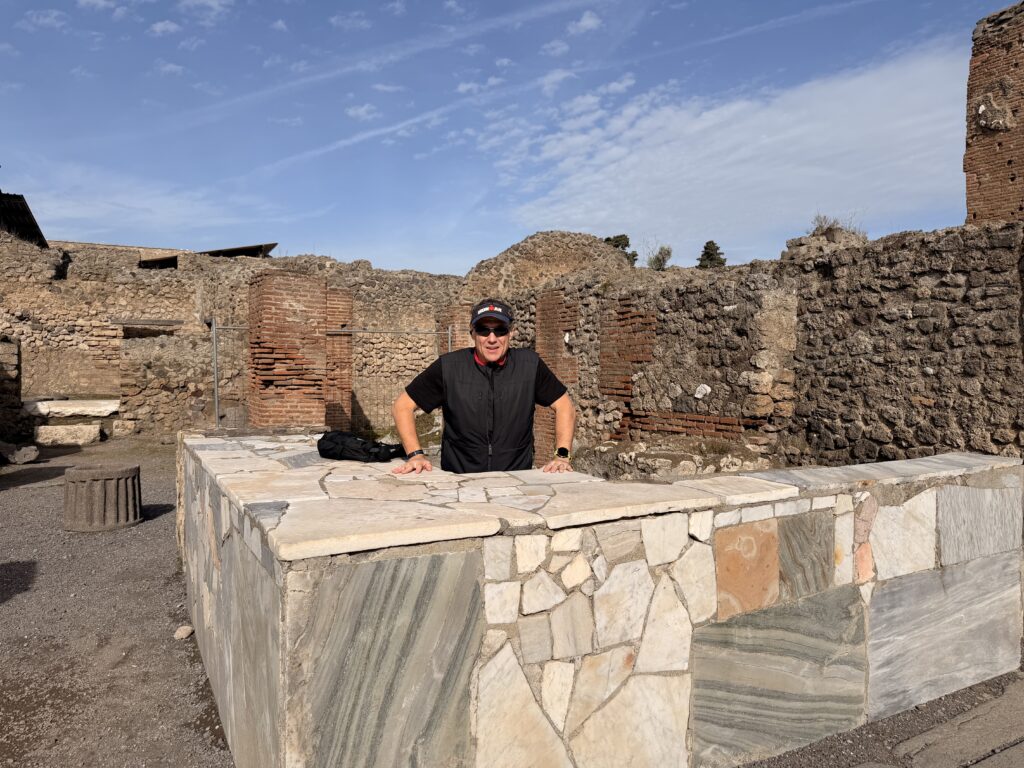
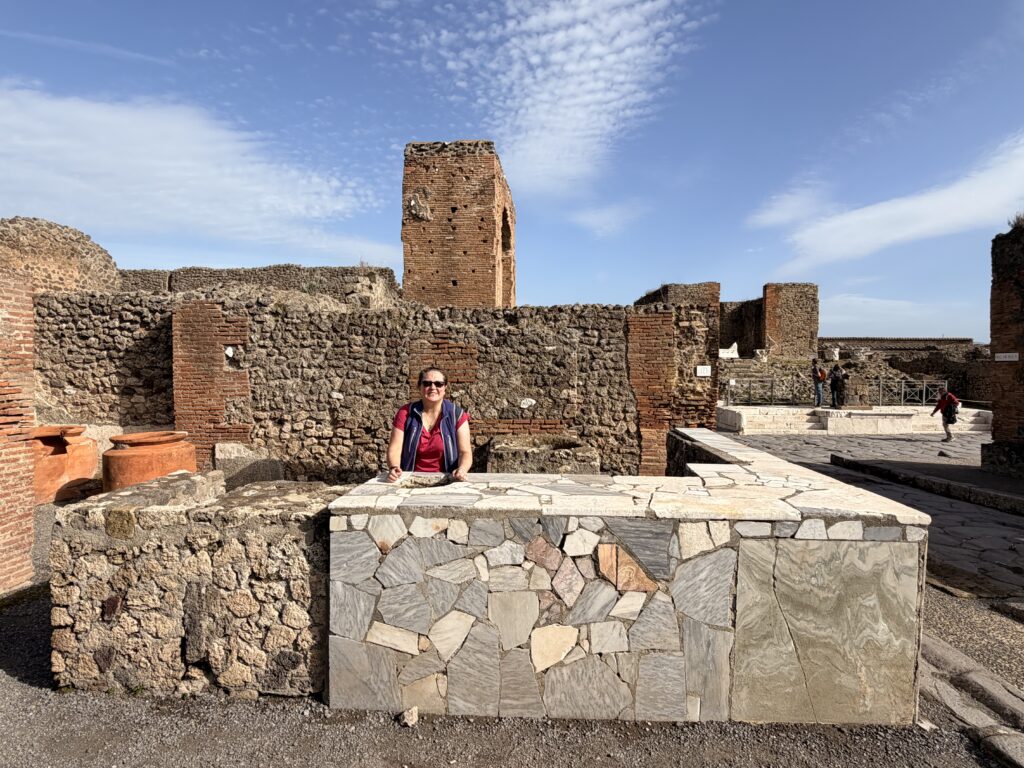
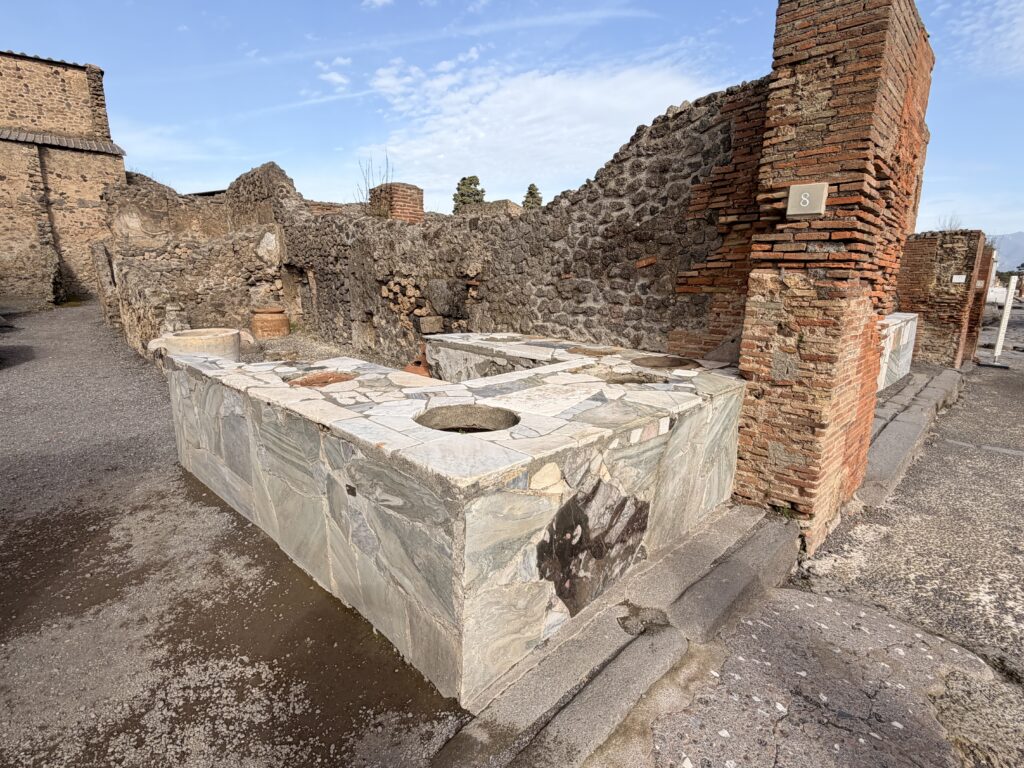
There are also several thermopolia around Pompeii – basically “fast food” joints. They have terra cotta containers set into a counter and are thought to have sold hot food to the public.
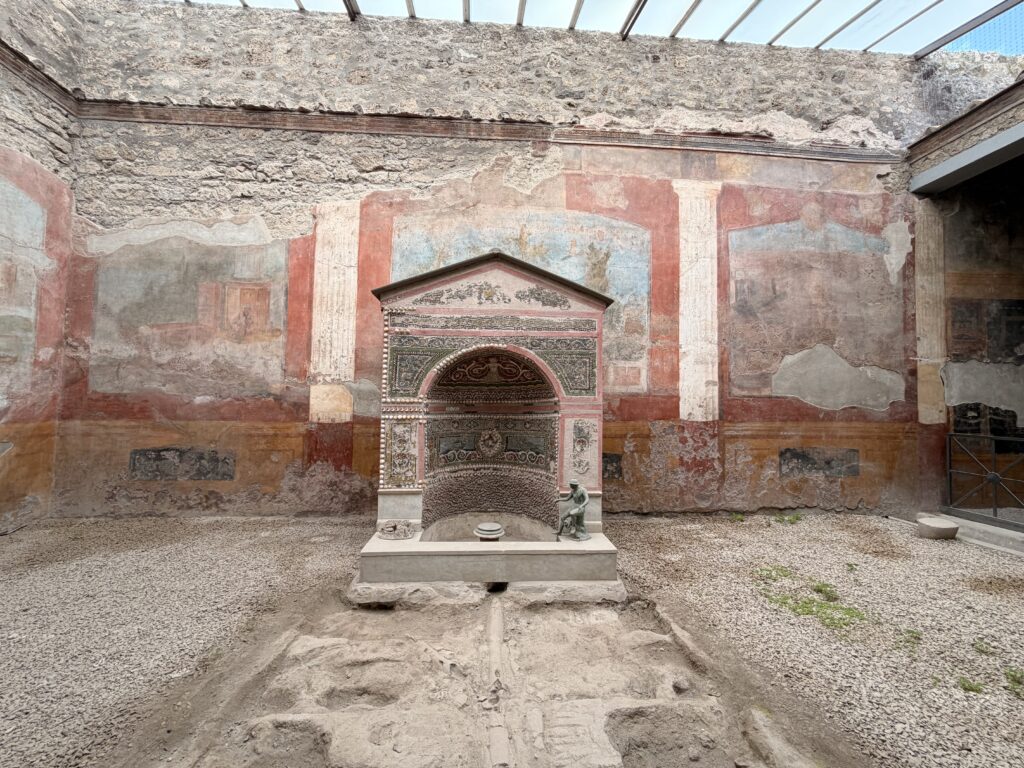
The Casa della Fontana Piccola (House of the Small Fountain) has this beautiful mosaic fountain in it. It’s crazy to think of how old these mosaics and frescoes are.
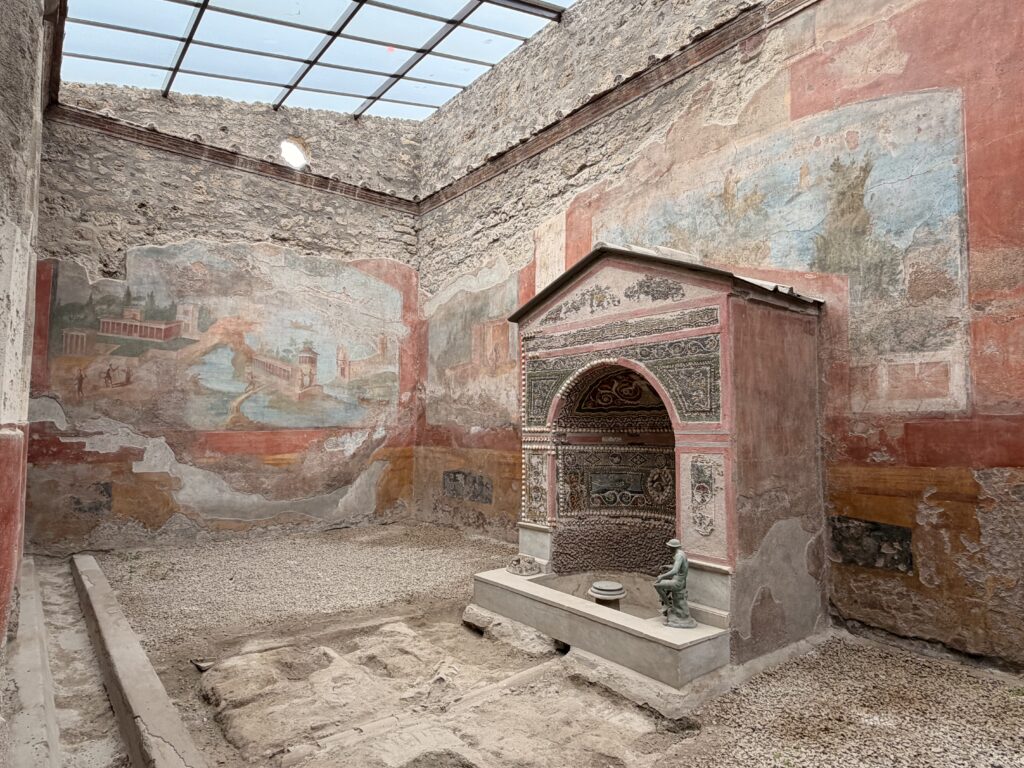
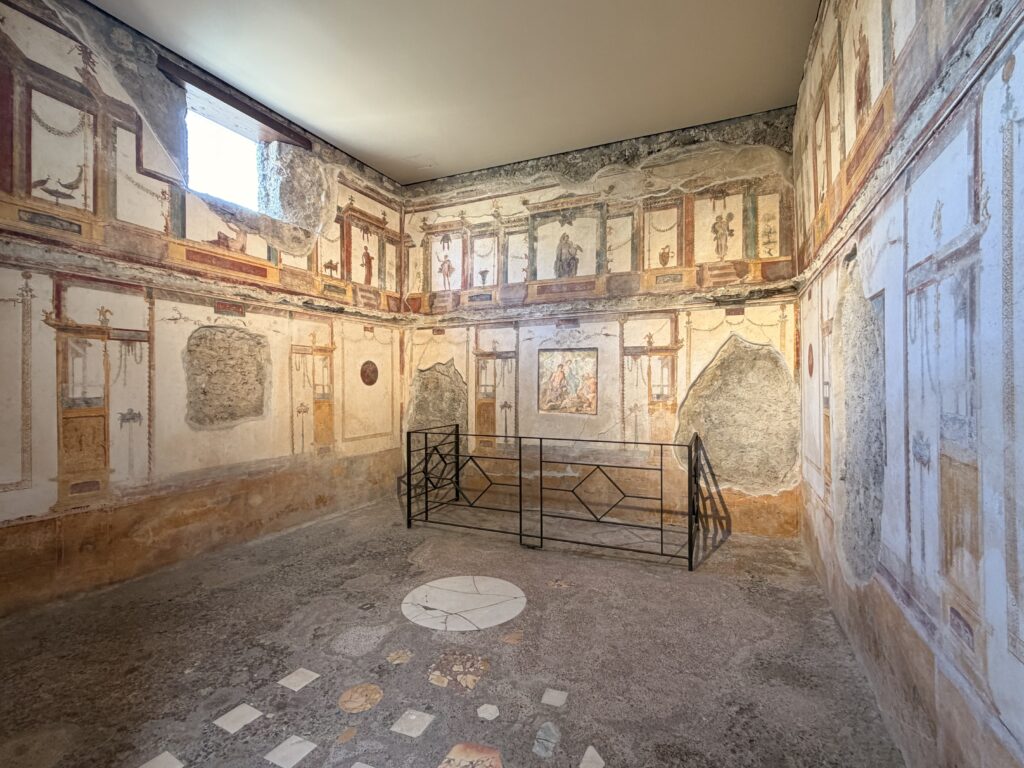
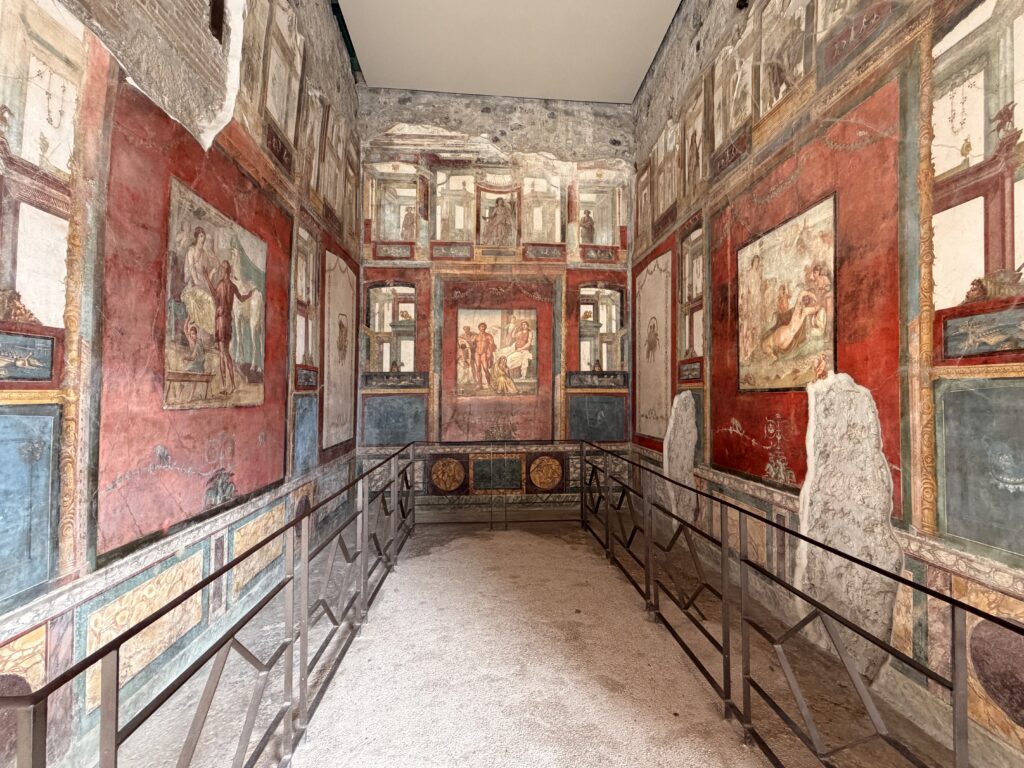
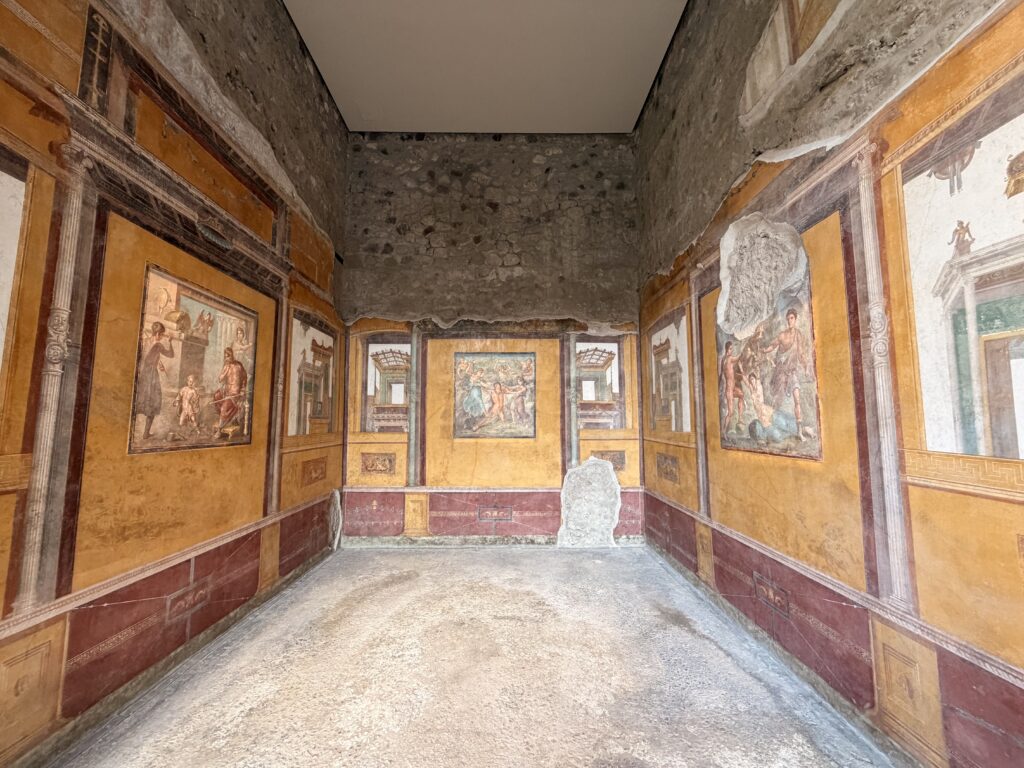
The House of Vetti was a home owned by the Vetti brothers Aulus Vettius Conviva and Aulus Vettius Restitutus – they were former slaves who became wealthy as wine merchants once they were freed. This house was closed for 20 years for further restoration and reopened again in 2023. (https://www.bbc.com/news/world-europe-64225813) It was full of colorful frescoes, some of which included erotic paintings (not shown here).
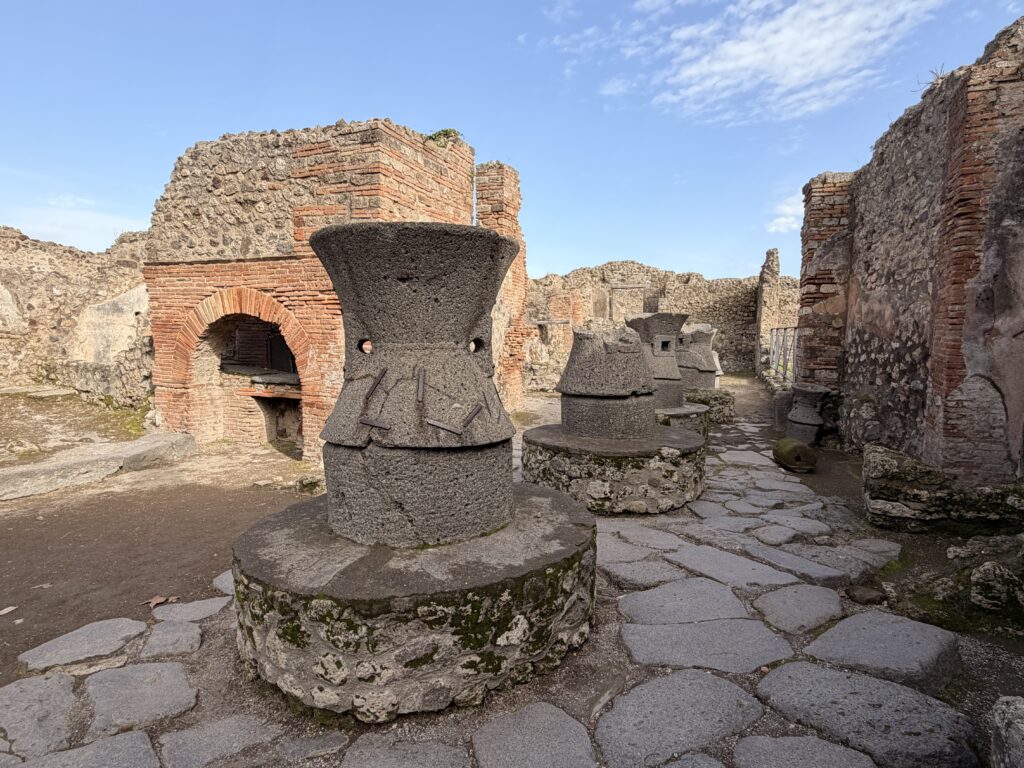
This was a bakery that contained a large oven and 4 millstones made of lava stone.
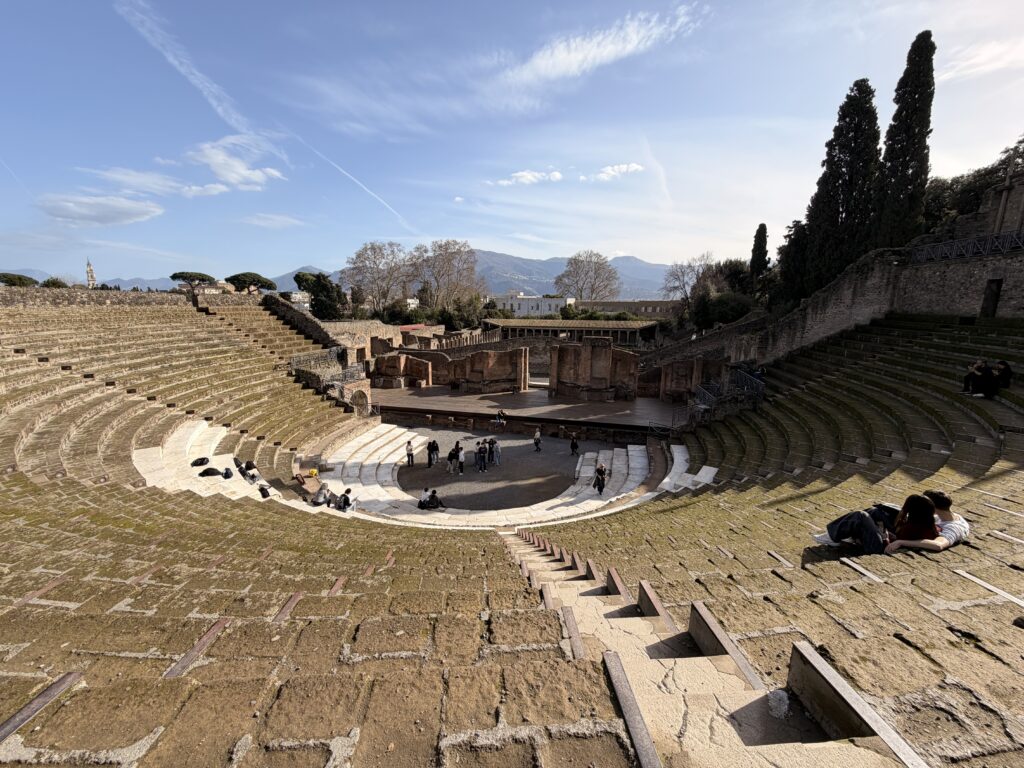
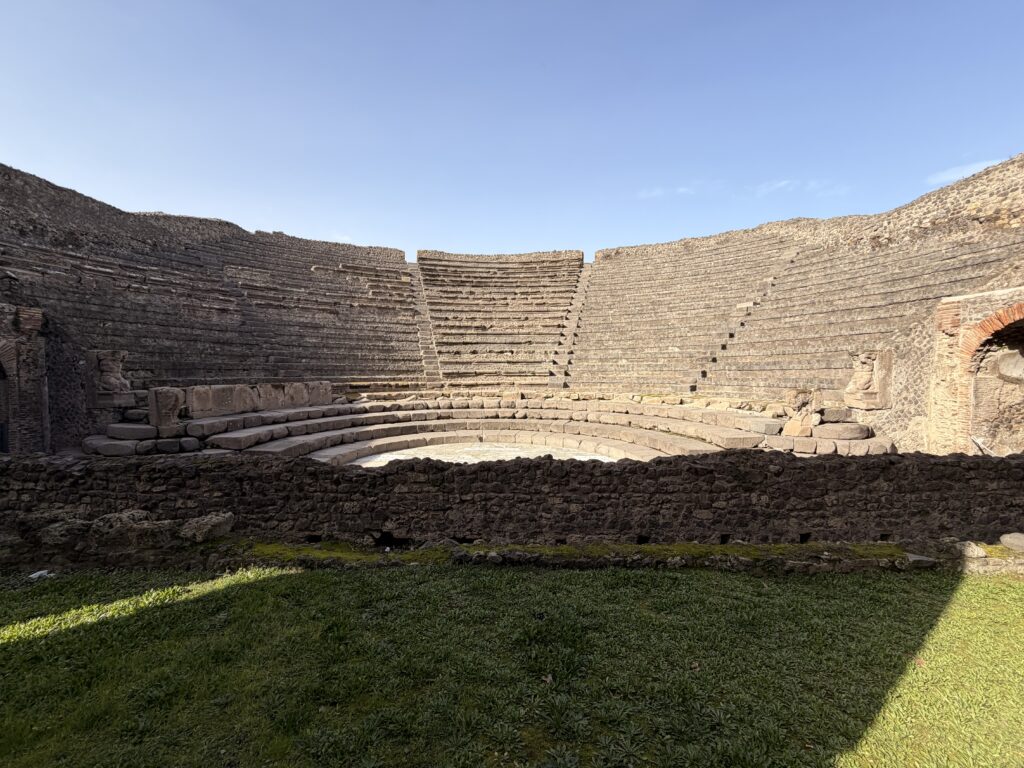
There are a couple of amphitheaters as well. The Large Theater likely dates to the 2nd century BC and was one of the first public buildings excavated in the 18th century. It was built using the natural slope of a hill which allowed it to be built without needing stone substructures. It has a Greek appearance and was used for Greco-Roman shows.
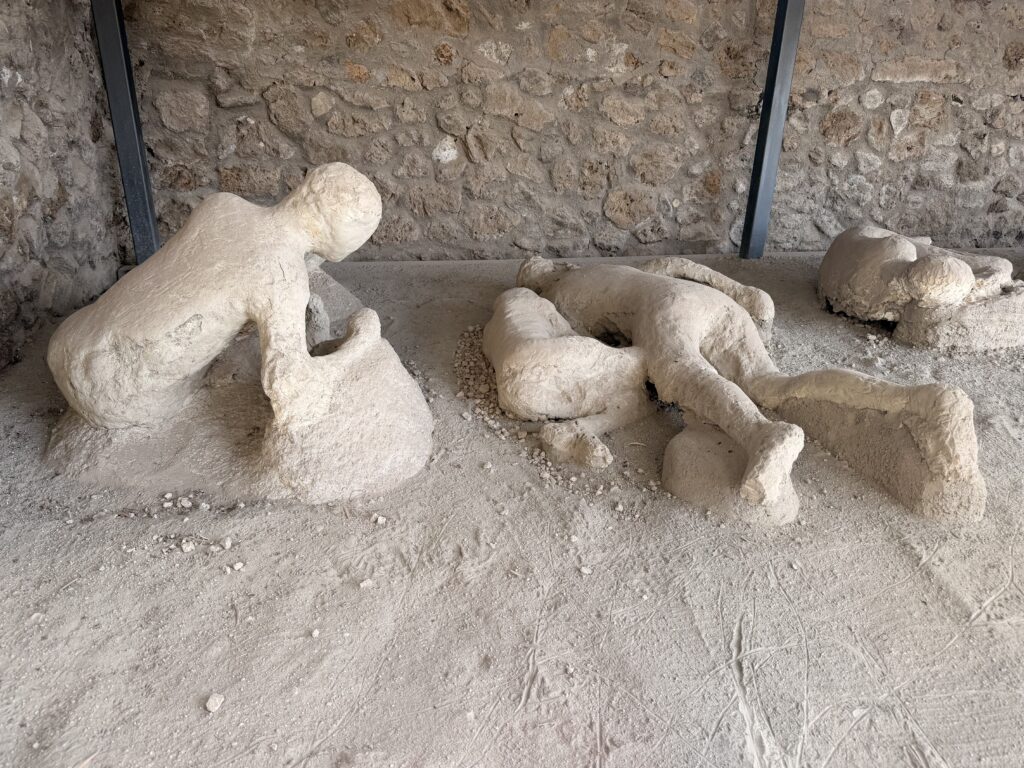
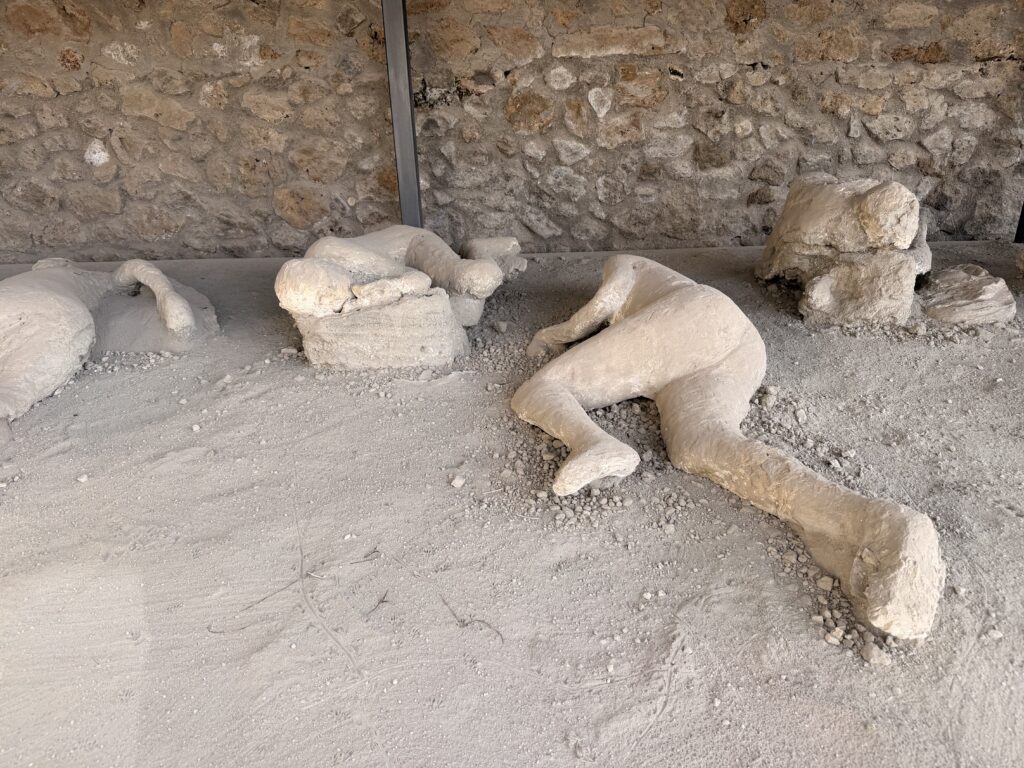
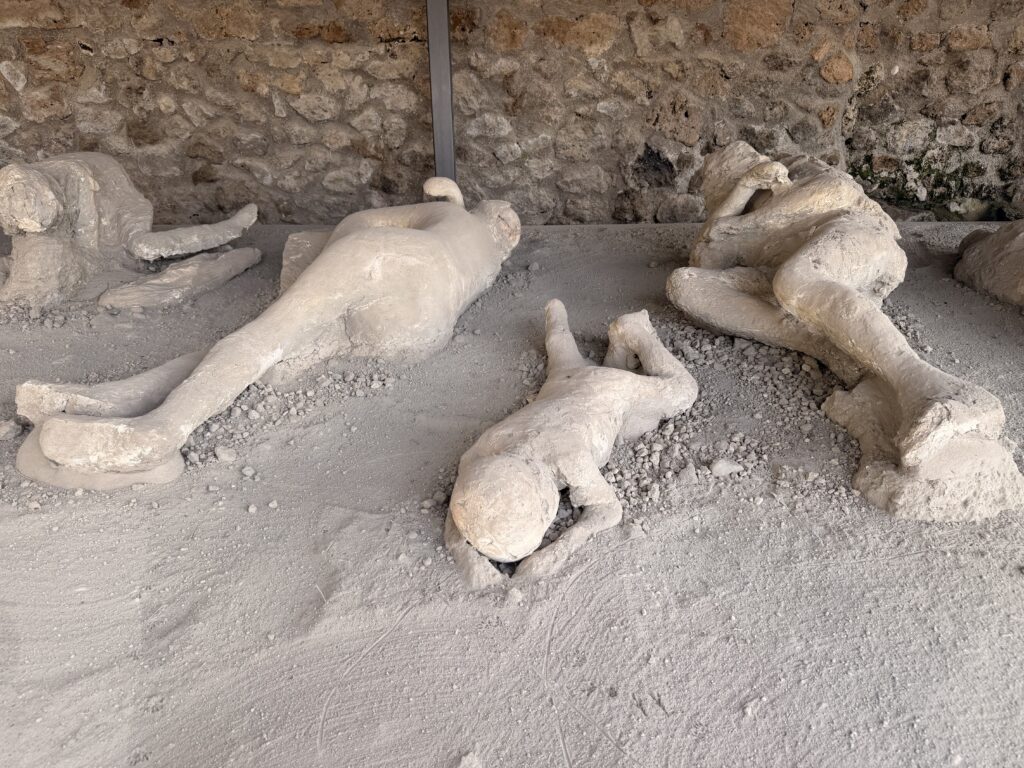
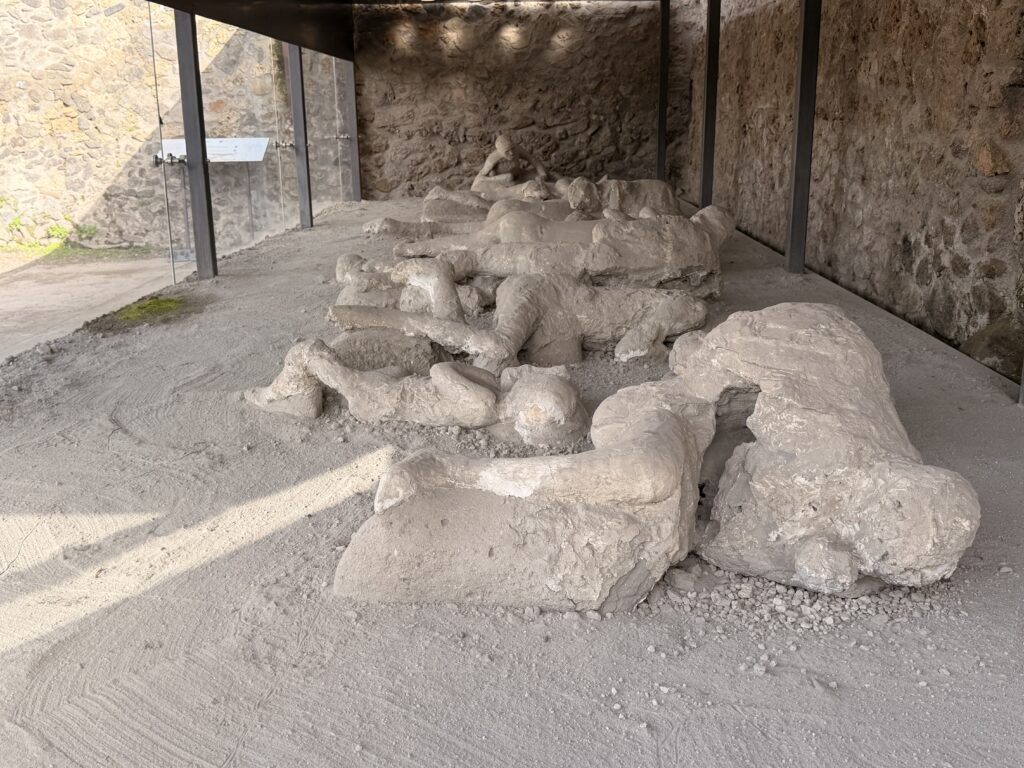
It’s easy to forget the human loss associated with the destruction of Pompeii. But the casts of victims displayed in various sites serve as a sobering reminder.
Thirteen victims were found in this vineyard. Plaster casts have been made from the void that their bodies left behind. A sign at the site explains how they did this:
“In this vineyard 13 victims of the eruption were found, including adults and children, as well as masters and servants, who lost their lives as they sought salvation whilst running towards Porta Nocera, running over the blanket of pumice which would reach 3.5 metres in depth.
It was possible to create the plaster casts due to the unusual nature of the eruption of AD 79: for between 18 and 19 hours, a volcanic rain of pumice covered all of the open spaces of the city, the streets, the Forum, the courtyards and the gardens. Then, clouds of ash and gas overwhelmed the city and proved lethal for those who had survived thus far, causing the instantaneous death from thermal shock of anyone still in the city. The bodies of these victims remained in the positions in which they had been struck by the proclastic flow, and the solidified ash preserved their imprint.
Pouring a mixture of gypsum and water into the voids, caused by the decomposition of organic substances, it is possible to preserve the volume, shape and position of the object or body that had been buried within.”
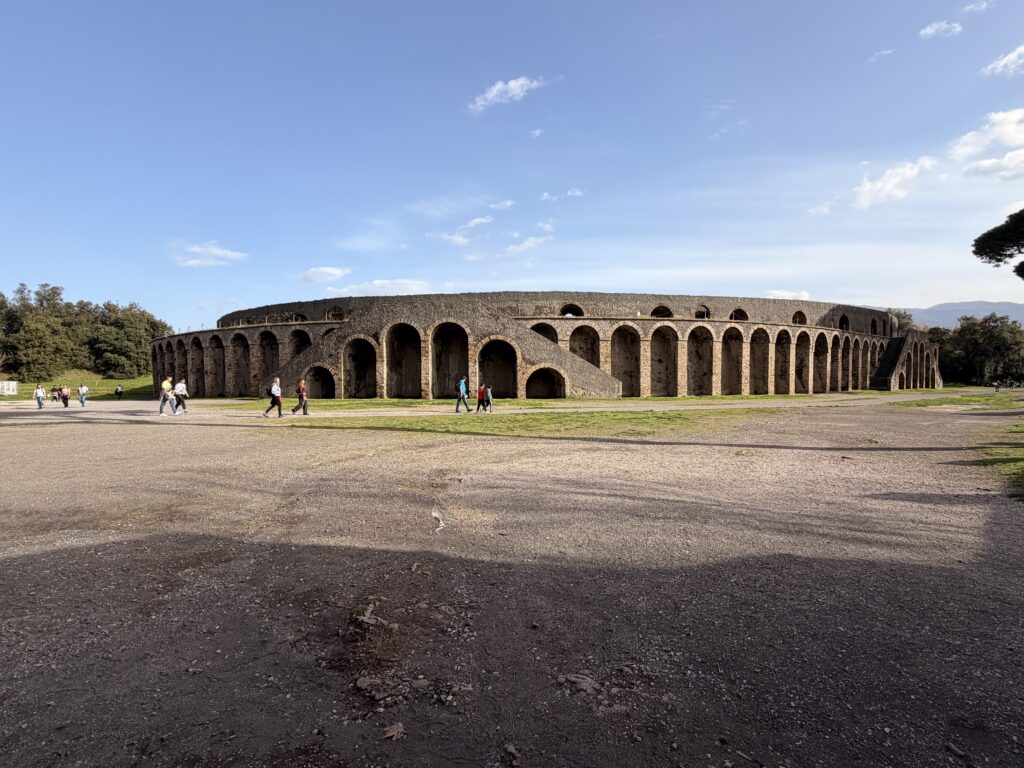
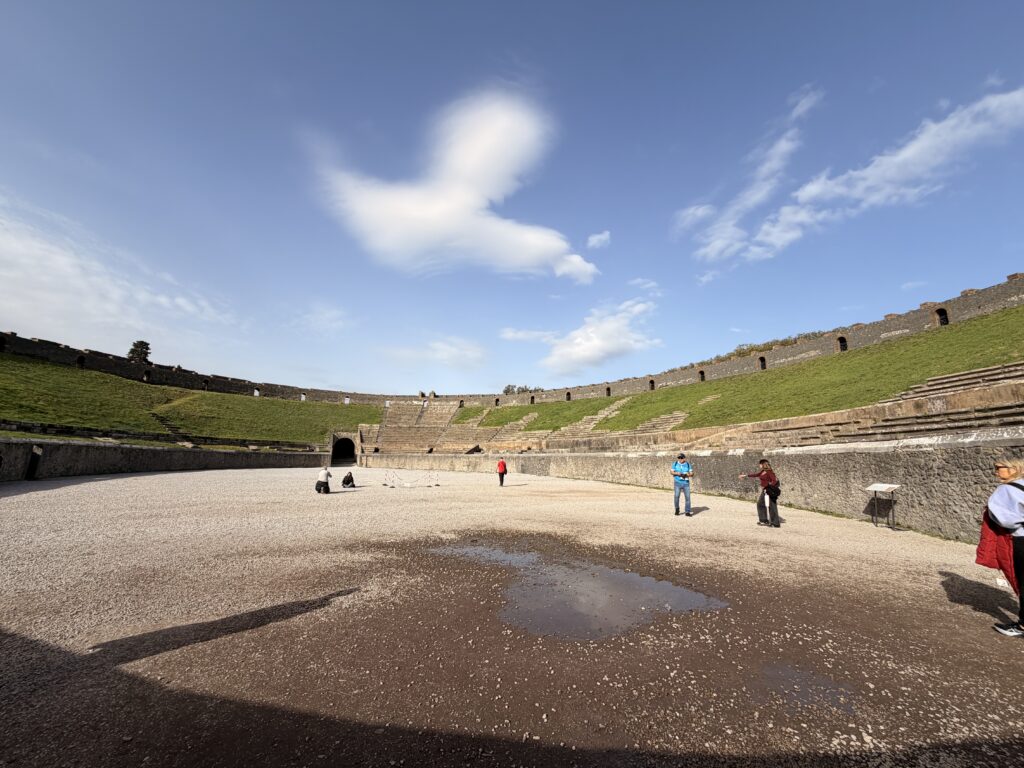
Past the vineyard and further out of the main center is another amphitheater. It was built in 70 AD and likely used for gladiatorial displays. It survived mostly intact, making it “one of the earliest constructed Roman amphitheaters and the oldest one left standing” (https://historyandarchaeologyonline.com/the-worlds-oldest-arena-the-amphitheatre-of-pompeii/#google_vignette). It was hard to capture the inside with a single picture so I did a quick 360 video of it.
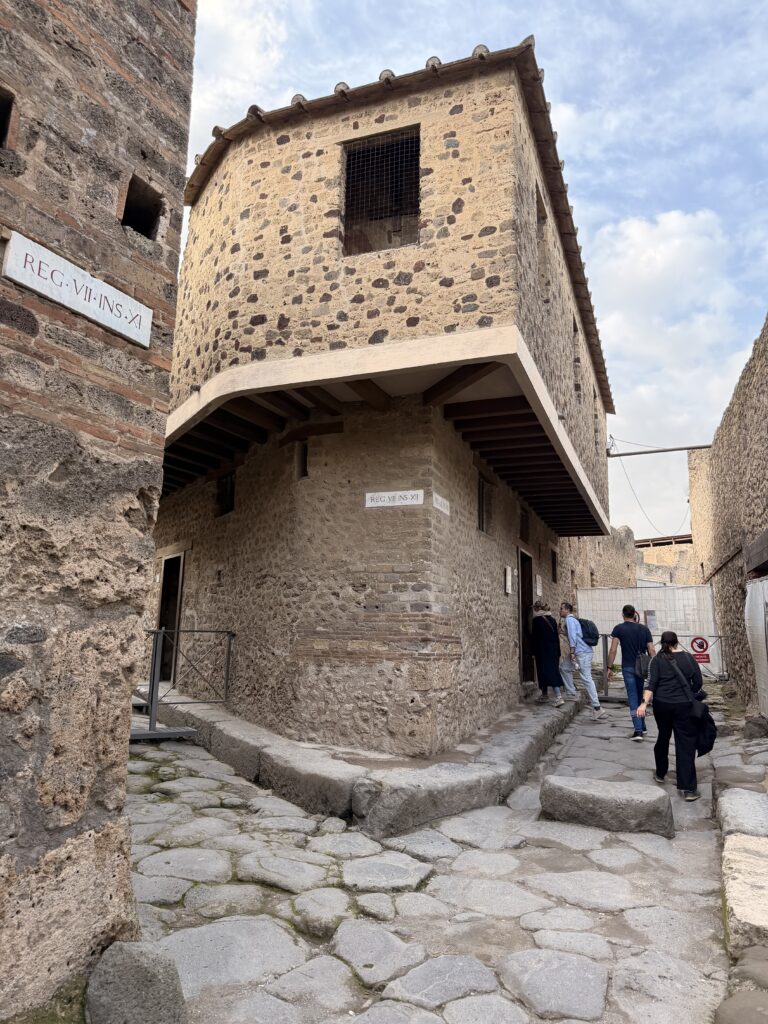
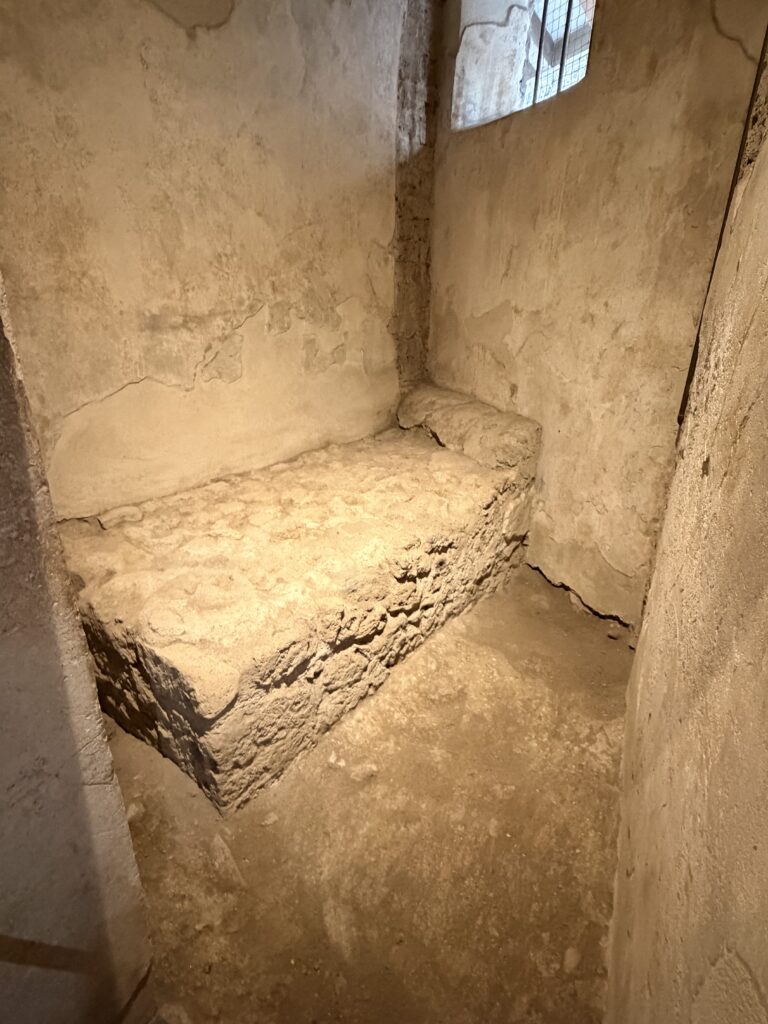
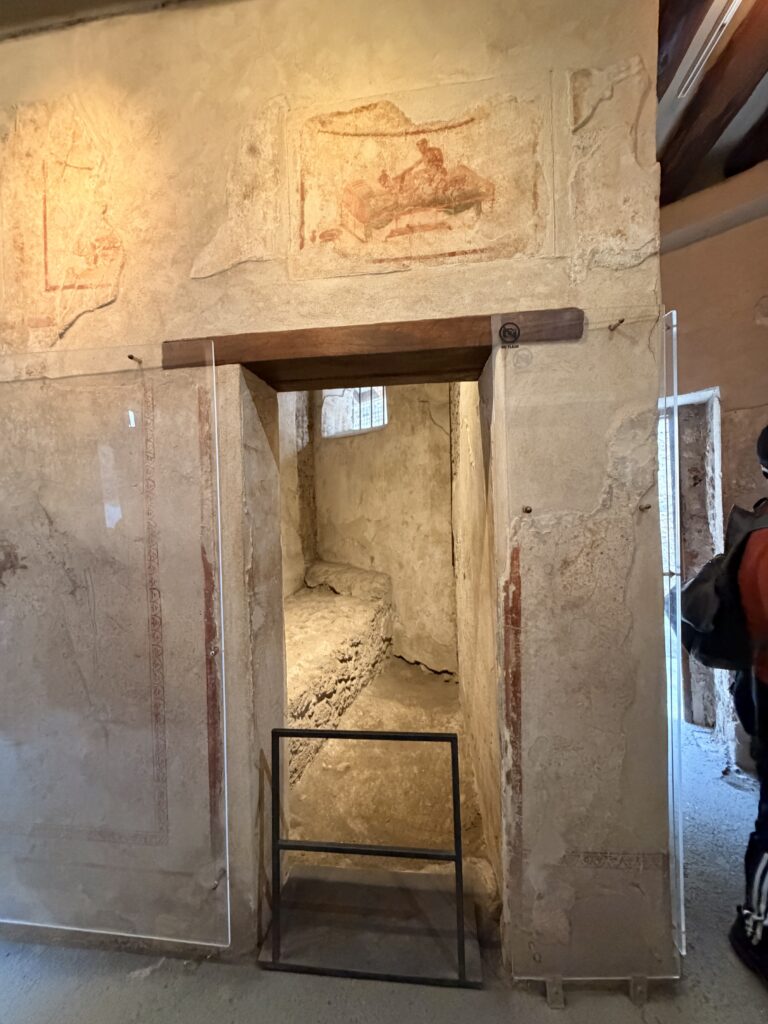
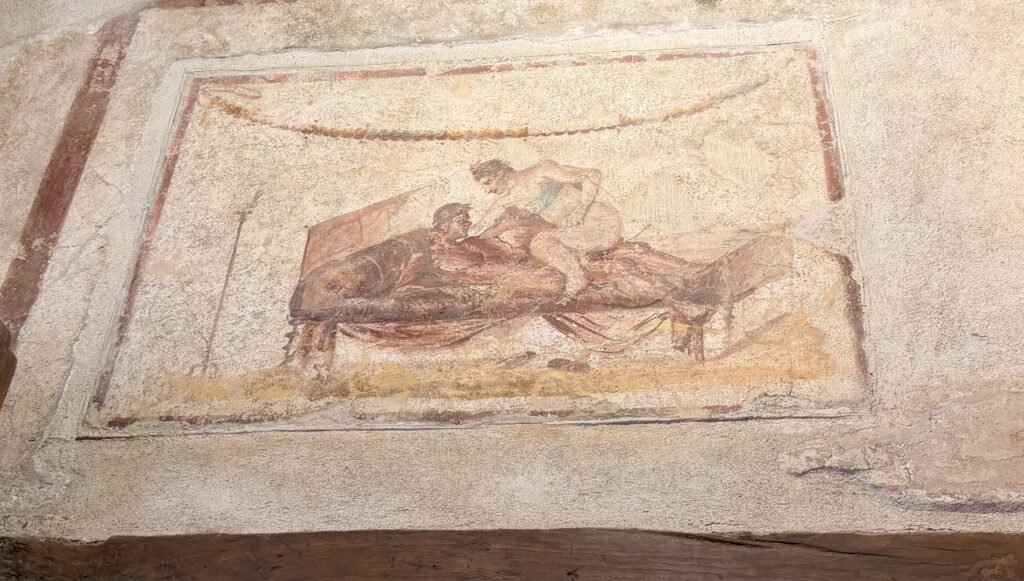
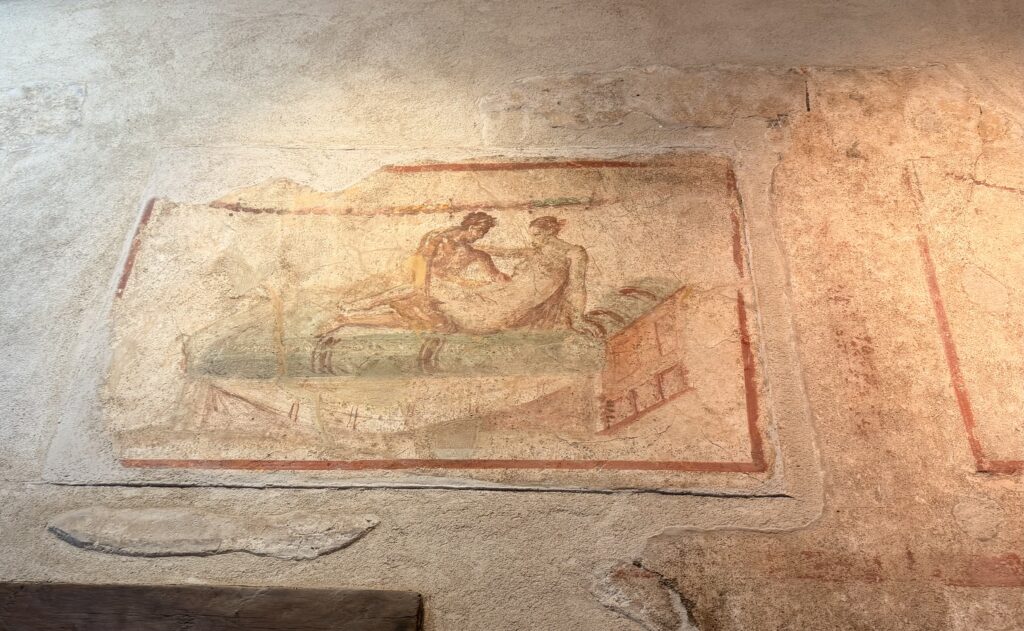
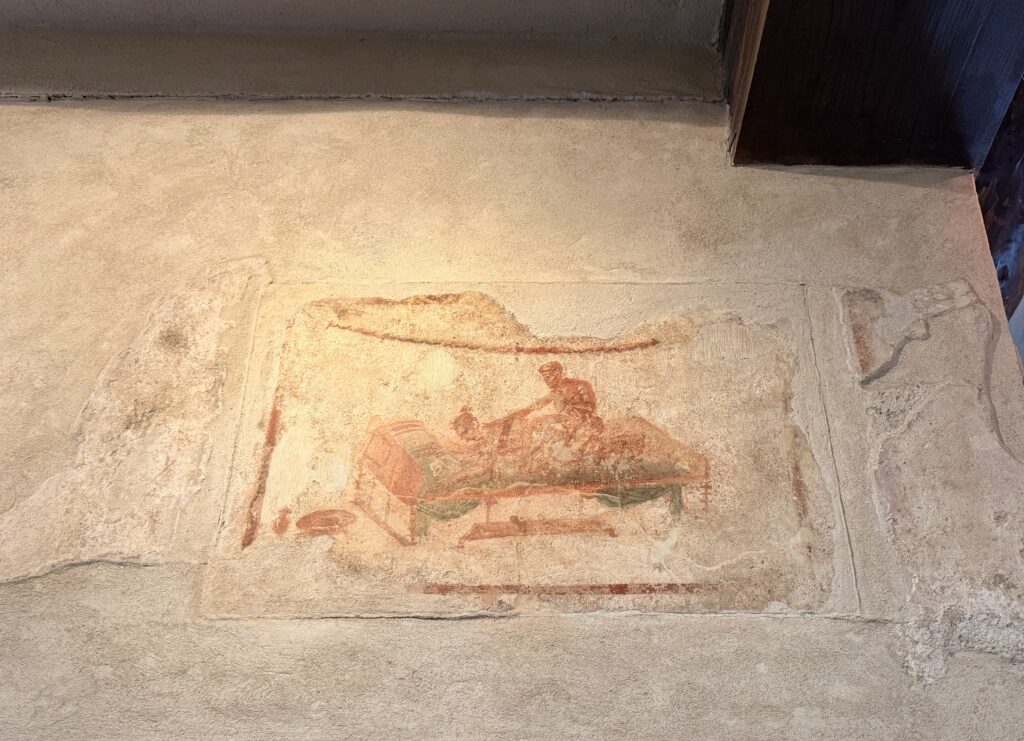
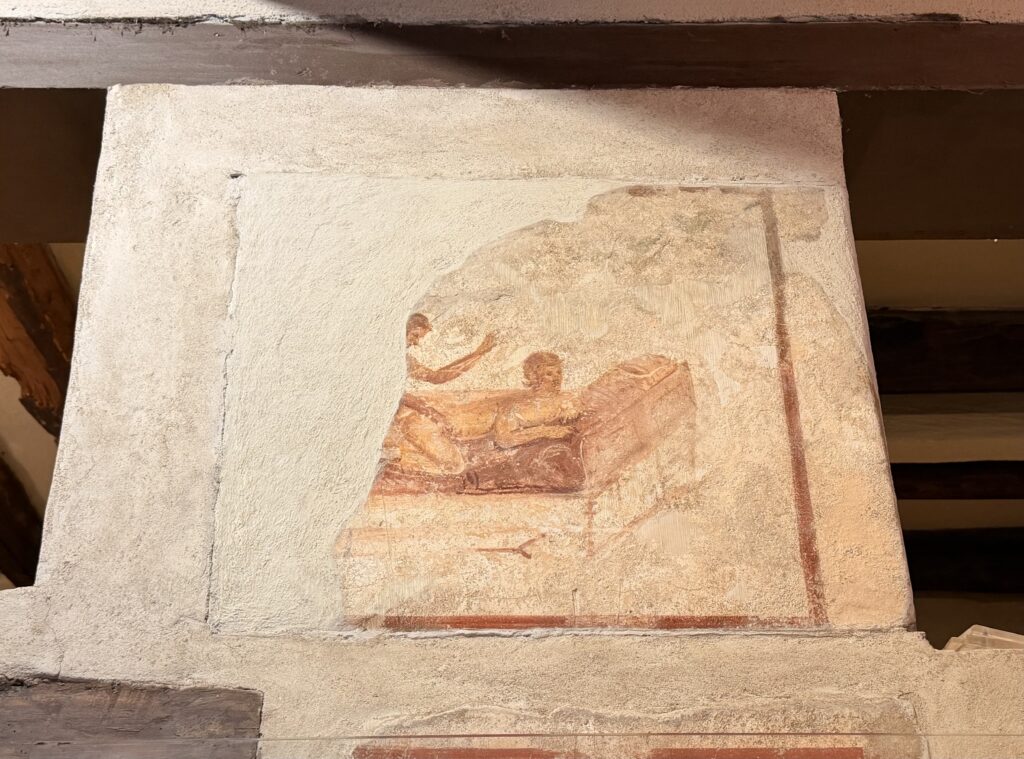
The Lupanare (Lupanar) – the brothel. Because Pompeii was a sea port, it attracted sailors from other parts of the world. This could make communication difficult so the brothel had several rooms and a picture menu of available services …. those stone beds don’t look very comfortable! But they would have had thin mattresses of hay, wool, and straw on top. Those mattresses of course did not survive the volcanic eruption.
As we left the Pompeii site, we got one last look at the ruins and the volcano on our way out.
On the way home we took the same Circumvesuviana train back to Naples, grabbed some pizza at a restaurant in the station (because you can’t go to Naples – the birthplace of pizza – and not get pizza!) (https://youtu.be/JZoruOm3_5w?si=DfkHxw0AJaULjFP8). I got a potato pizza – we saw this on the menu at several places and it was tasty! Also these pizzas are huge but seem to be meant for one person – we thought they were smaller when we each ordered our own. Thankfully they had boxes for us to take our leftovers back home with us.

After we had our pizza, we hopped on the slower (2hr) and cheaper train back to Rome. This day trip was such an amazing historical adventure!