
After a great stay in Venice, we hopped on a train down to Florence. The last time I was on a train in Italy was in 2001 and we had a Eurail pass (I’ve been to Italy since then but always flights from England to 1 city for a few days when I was stationed there) so there was no online booking or apps back then! I was pretty impressed with how easy the Trenitalia app was to use. I initially used the website but the app was so easy – it was easy to book, we had our tickets readily available to show the inspectors (you can add them to you Apple Wallet or Google Wallet), and it was also very easy to make changes as needed. You can save your information plus any people you frequently travel with – so once I added Chris and I to my account, it was really easy to add us both to a ticket. (https://www.trenitalia.com/it.html)
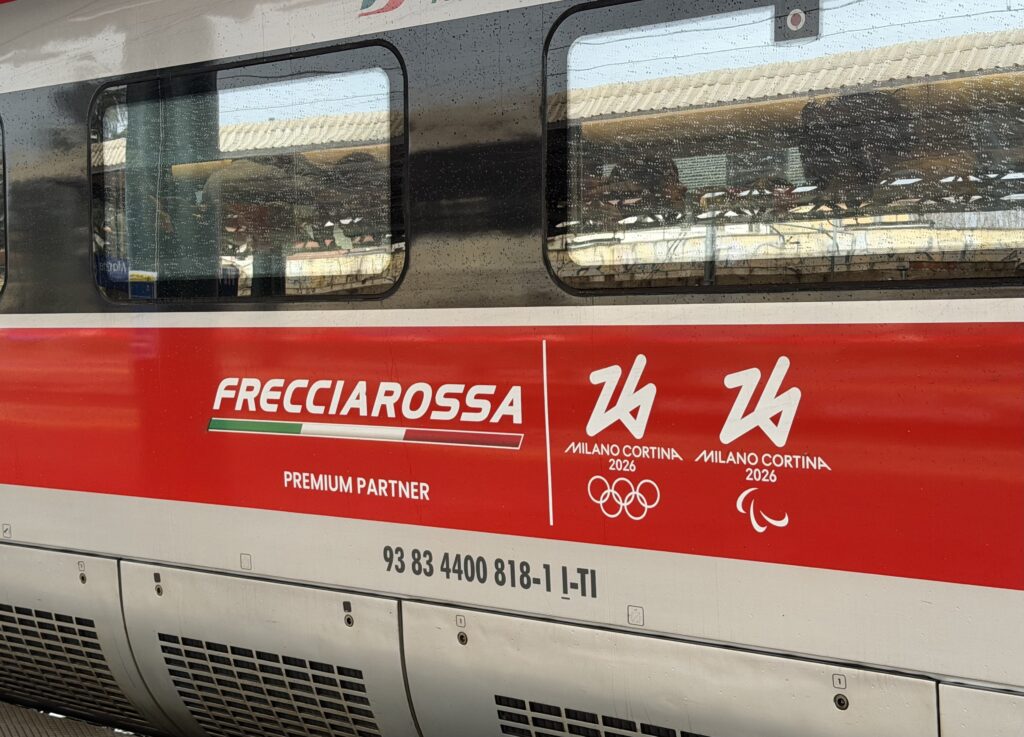
The train ride was just over 2 hours but we had to go to Firenze Campo di Marte station because there was work on a bridge for a couple of days and the high speed trains couldn’t get to the main station that brings you right into the historic center (Santa Maria Novella). It was a little bit of a pain to get into town from there (plus it was raining) so we just ended up taking a taxi to our VRBO. The high speed trains are the Frecciarossa (which translates to “red arrow” – you can see why in the video below) and they were pretty nice. We mostly rode in economy but on one of our trips (Rome to Milan) we did business class since it wasn’t much more price-wise. On that ride they came through the cabin with prosecco, sandwiches, and even an espresso machine – all included! I think I was most impressed by the guy pushing an actual espresso machine on a cart down the aisle. Because the Winter Olympics were coming up, we saw the Milano Cortina 2026 logo everywhere – even on the outside of the train.
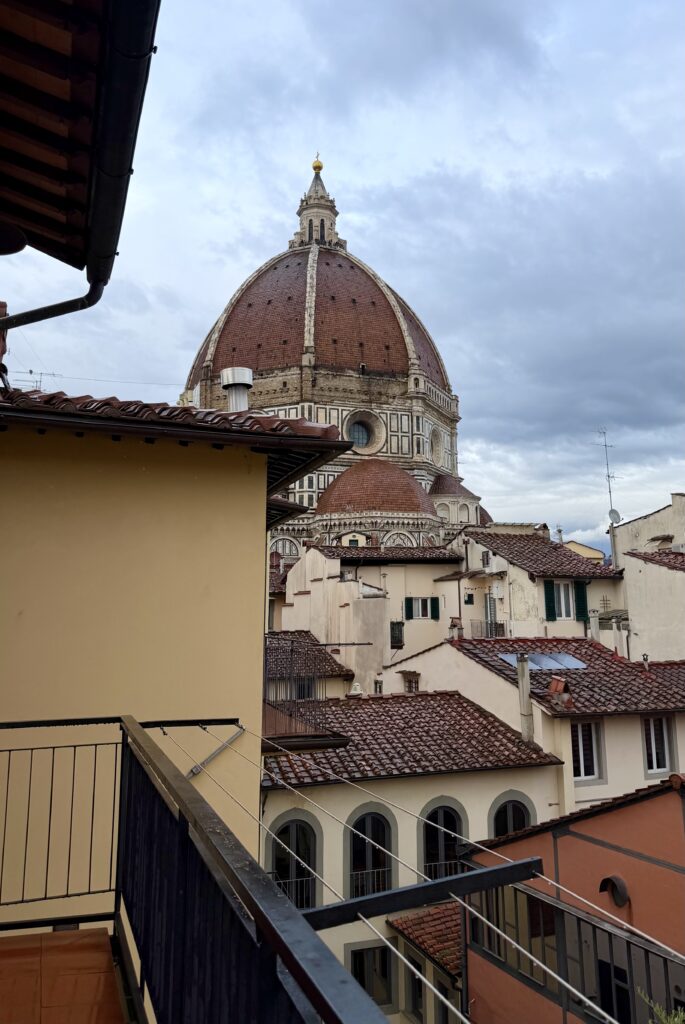
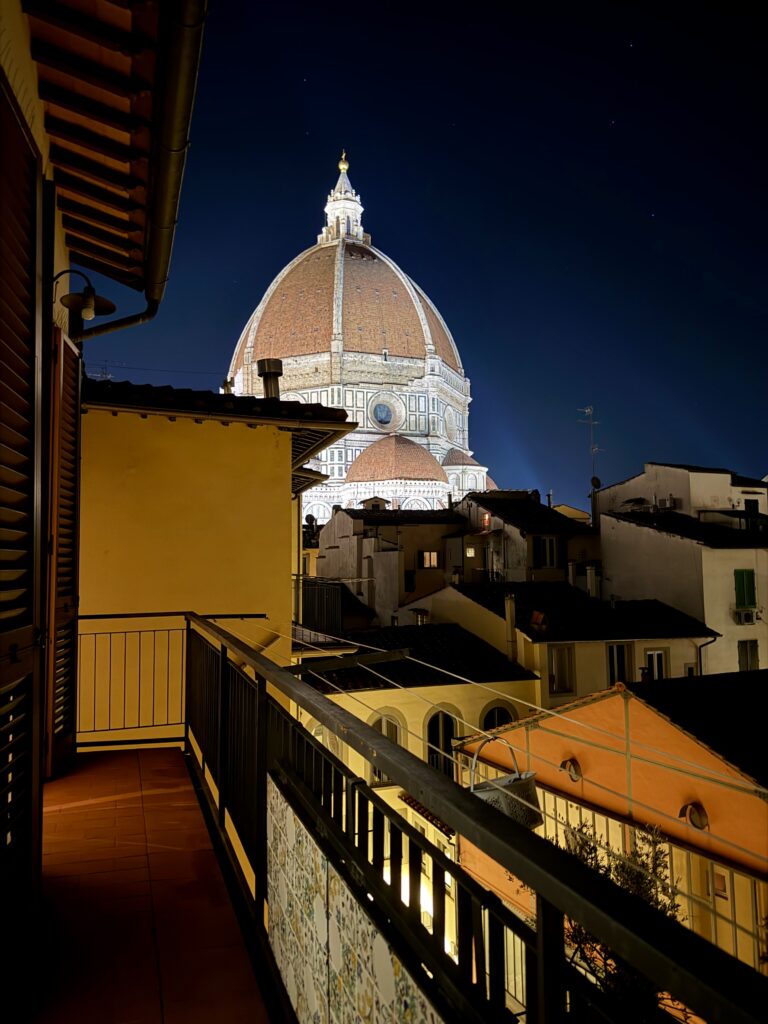
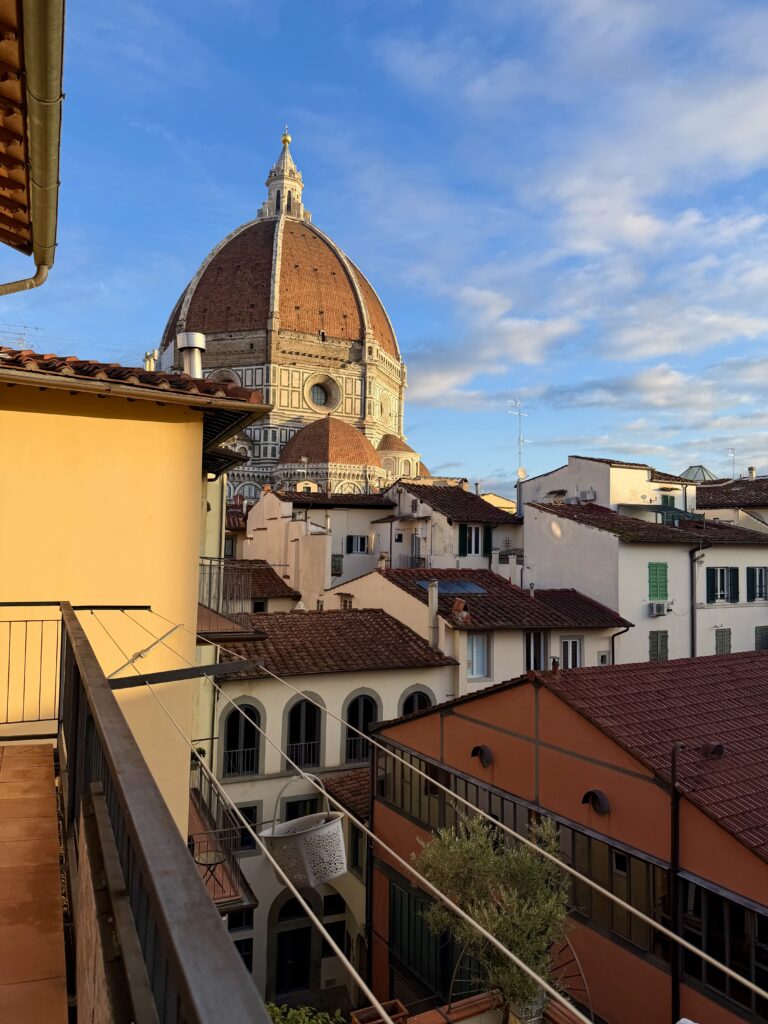
We stayed at this amazing VRBO in Florence (https://vrbo.onelink.me/ItNz/a5c01pvs) – it was within a 5 minute walk to the cathedral and we could see the cathedral dome from our balcony. It was a little chilly out but I took a blanket out with me just to sit on the balcony and enjoy it – the view was especially beautiful after dark. I had to laugh at one of the VRBO reviews though – overwhelmingly positive but one person complained about the cathedral bells waking him up (they stopped by 10pm or so and started back at 7am so it was not disruptive!). The video below isn’t much in the way of a video but I took it from our living room purely for the audio because the bells were beautiful.
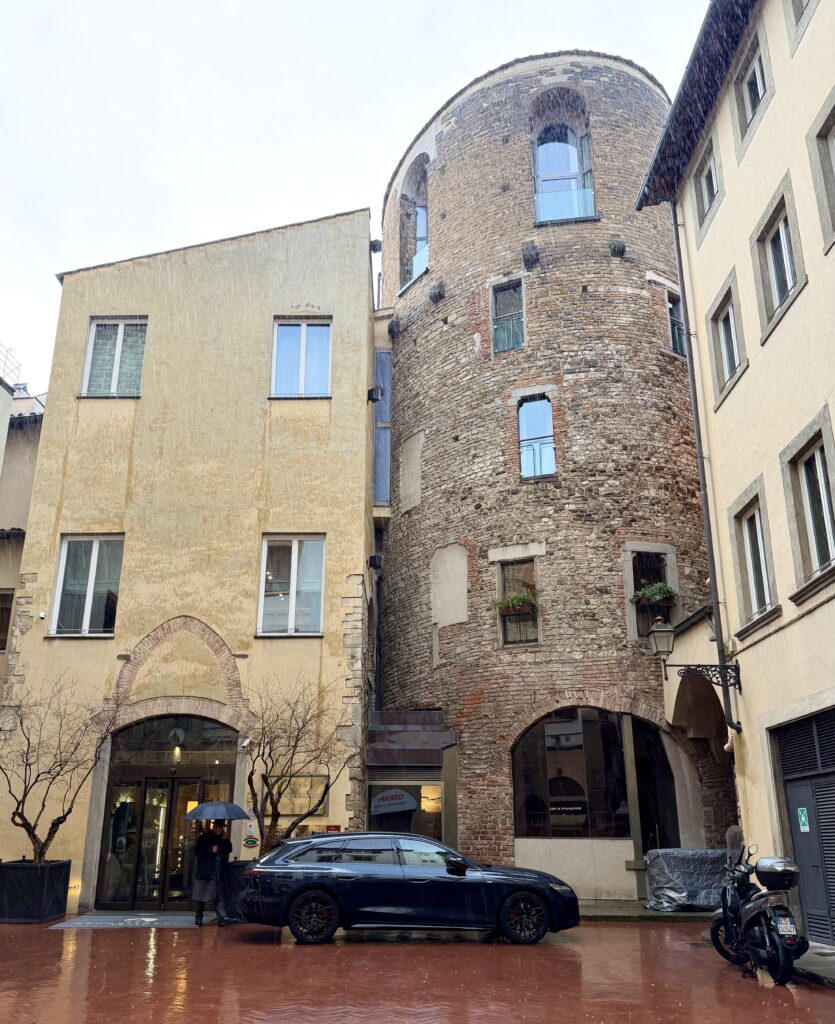
This tower was also right outside our front door. It’s the Pagliazza Tower and is the oldest building still standing in the historical center of Florence – from between the 6th and 7th centuries. In the 20th century it was used as a women’s prison. It’s part of the Brunelleschi Hotel and they have some information about it on their website: https://www.brunelleschihotelflorence.com/magazine/the-pagliazza-tower-in-florence/.
The main sight we visited in Florence was the Duomo (Cathedral). There were a couple of ticket options (https://tickets.duomo.firenze.it/en/store#/en/buy?skugroup_id=3006). We went with the Brunelleschi Pass, which covered everything – the cupola (dome), campanile (bell tower), battistero (baptistry), the crypt (called the Crypt of Santa Reparata), and the museum.
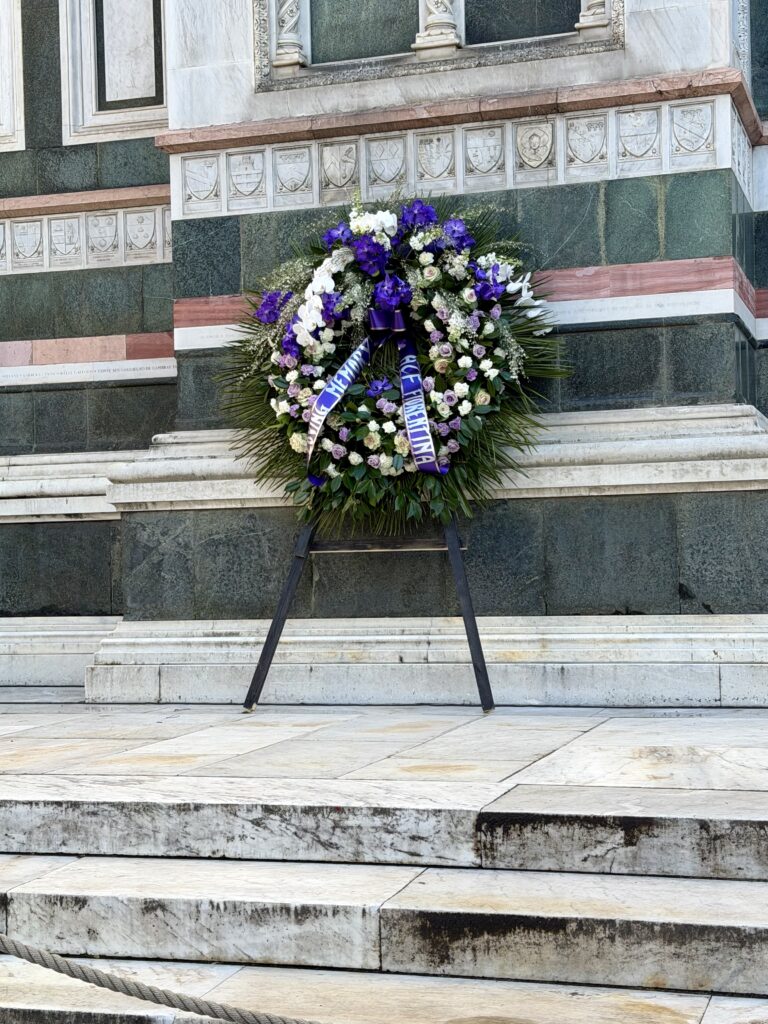
The cathedral itself (Santa Maria del Fiore; https://duomo.firenze.it/en/discover/cathedral) is free to enter but we weren’t able to go inside because it’s closed on Sundays and then it was also closed on the Monday we were there because there was a memorial service for Rocco Benita Commisso, an Italian American billionaire and CEO of Mediacom and also the owner of the Italian football club in Florence (Florentina). He died about a week before we were in Florence and his funeral was actually the week prior in New Jersey but the cathedral was all set up for a memorial service for him – they had a bunch of camera equipment set up since it was televised. The flowers out front of the cathedral were purple, the color of the football club.
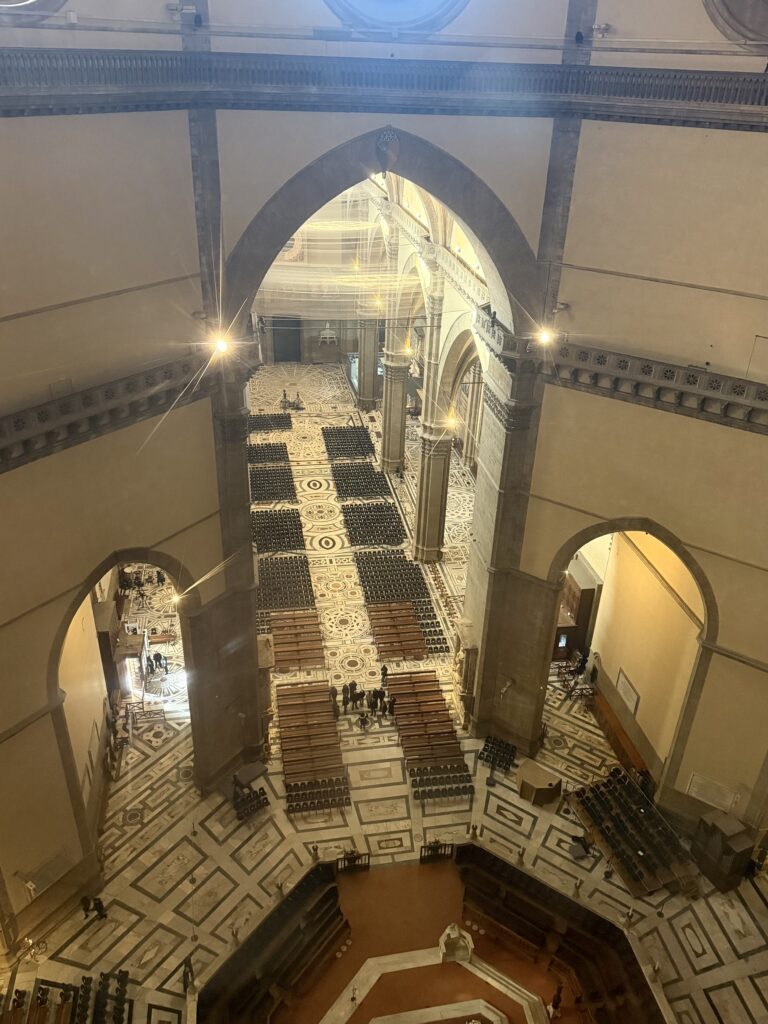
Thankfully, when we climbed the dome, we could see down into the nave of the cathedral from inside the dome and we also got a glimpse from the side when we went inside to go down to the crypt.
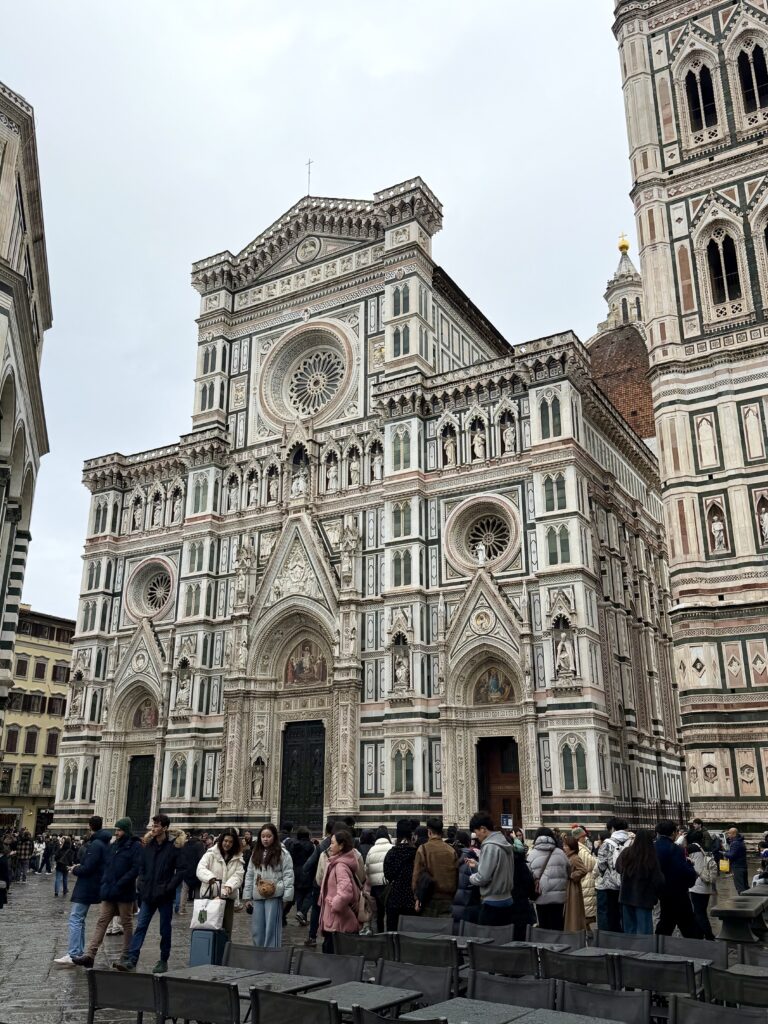
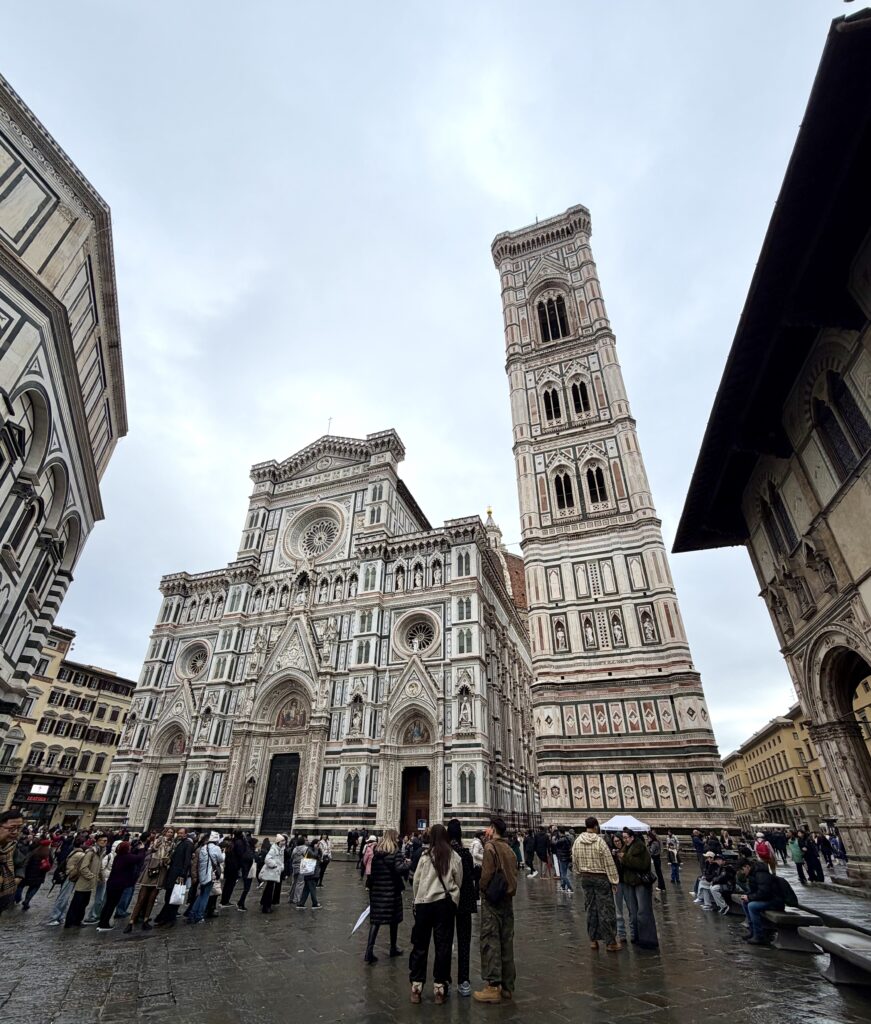
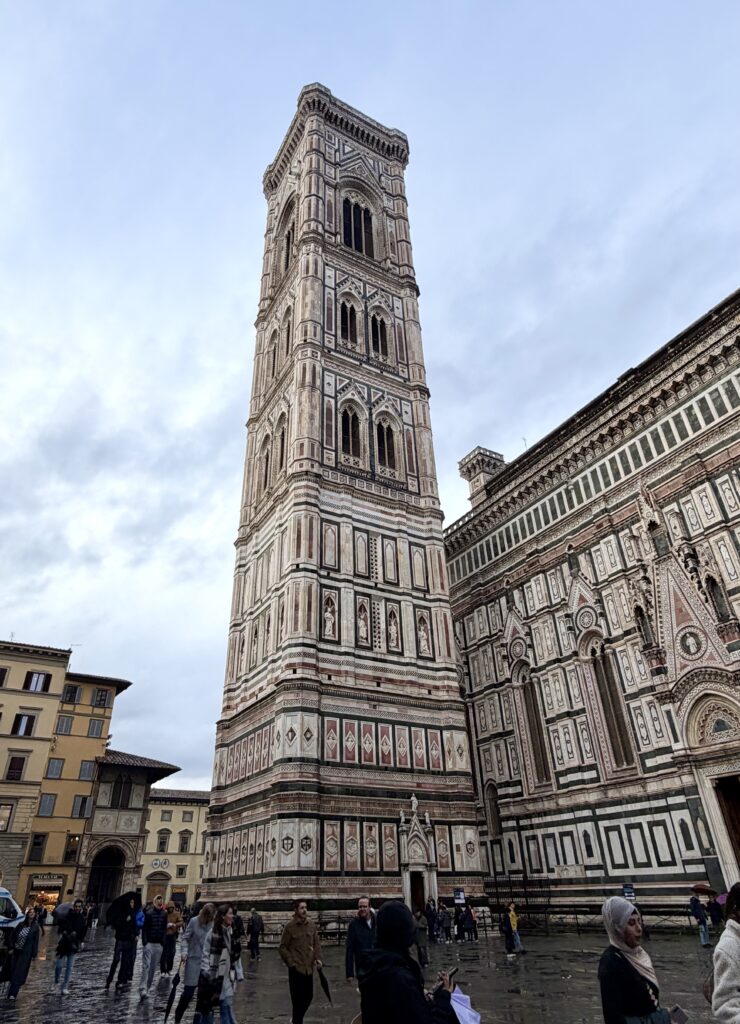
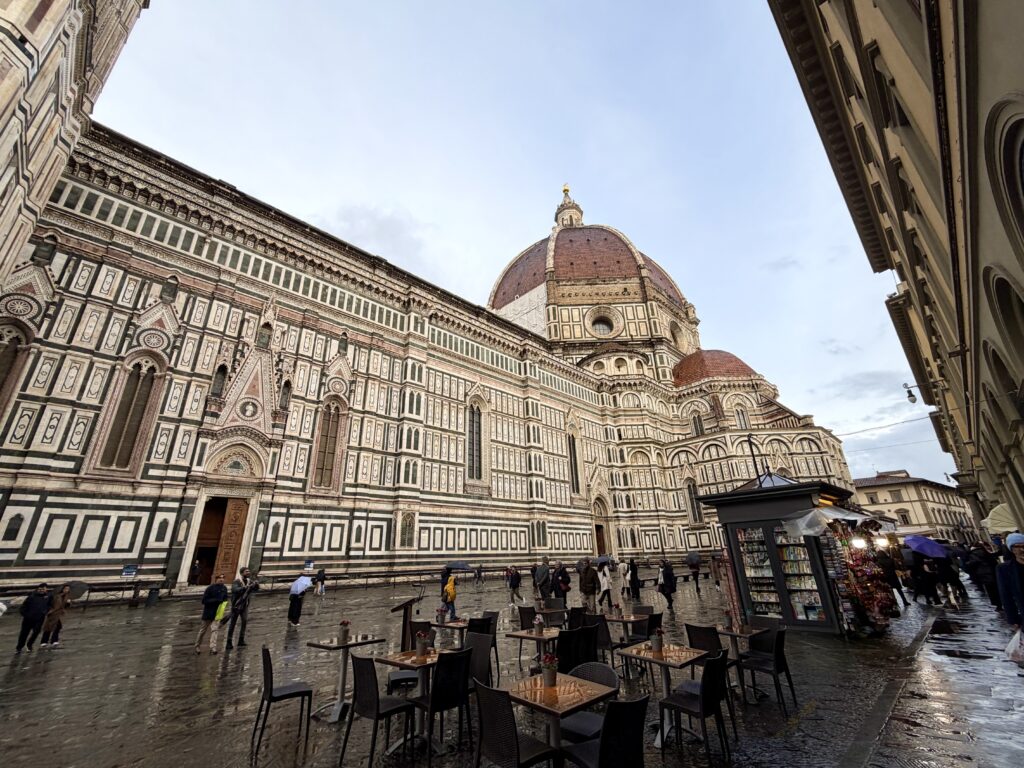
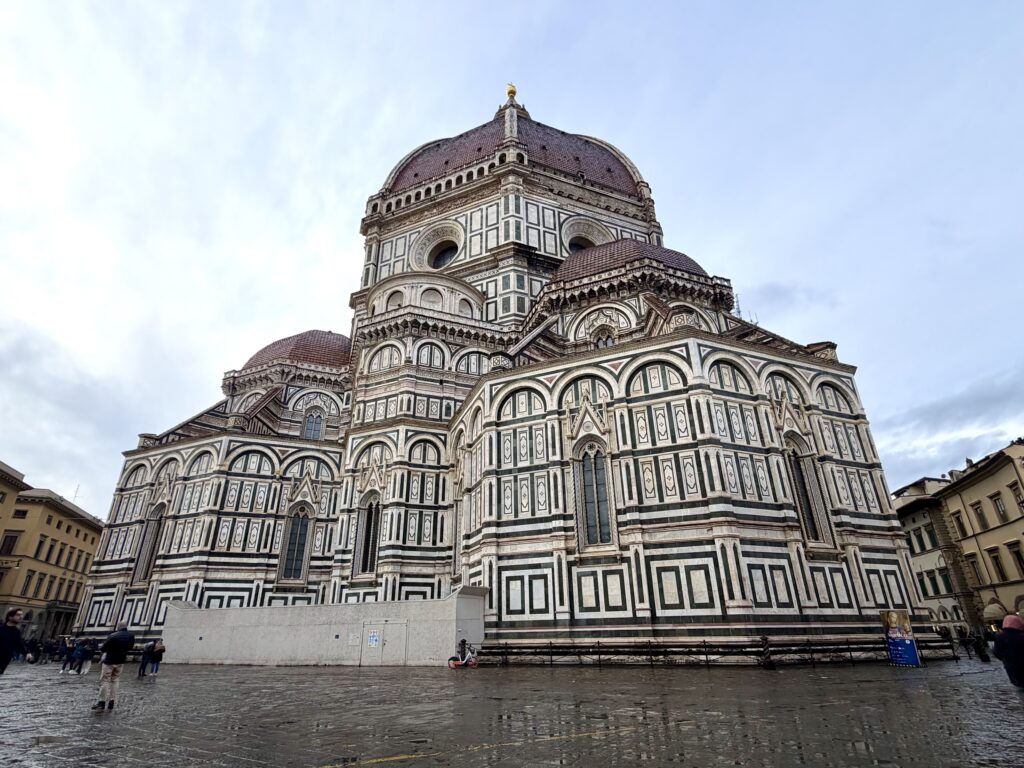
The cathedral and associated buildings are really amazing to see, even just from the outside. The exteriors are made from white, red, and green marble and are incredible works of art. The cathedral was built from 1296-1436 and is one of the largest churches in the world.
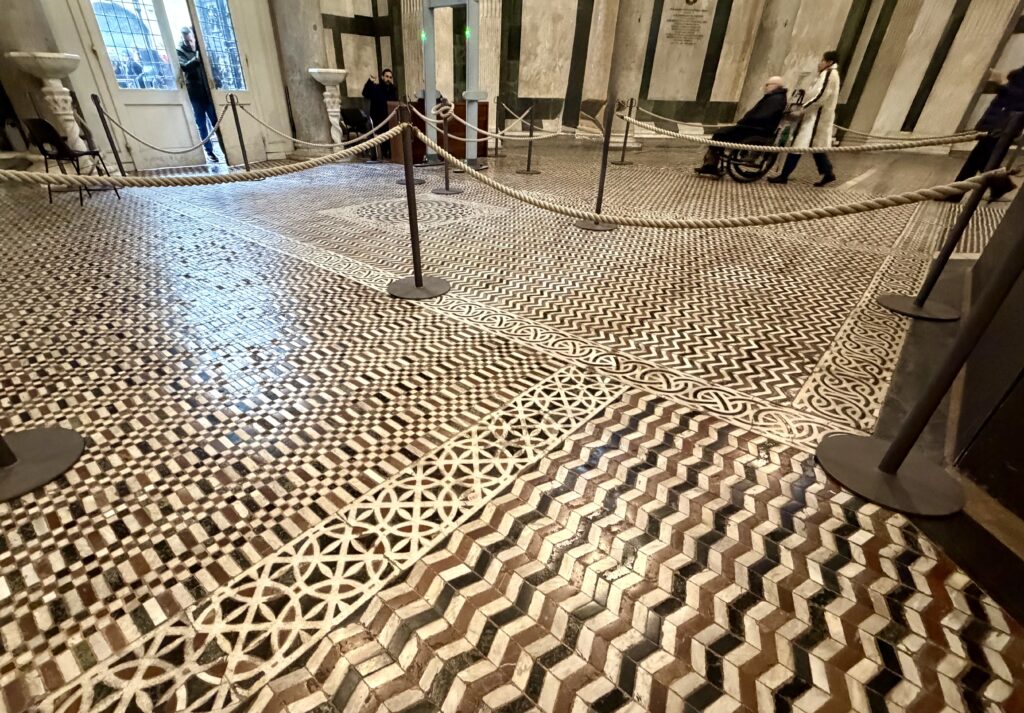
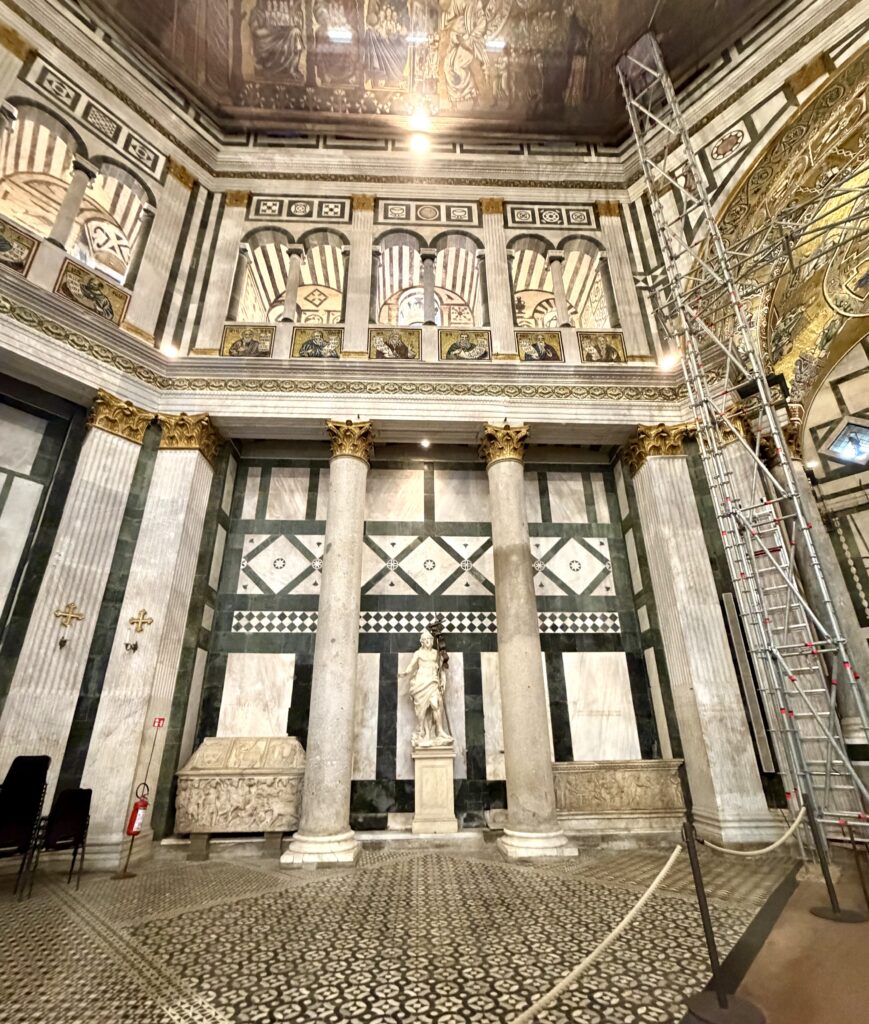
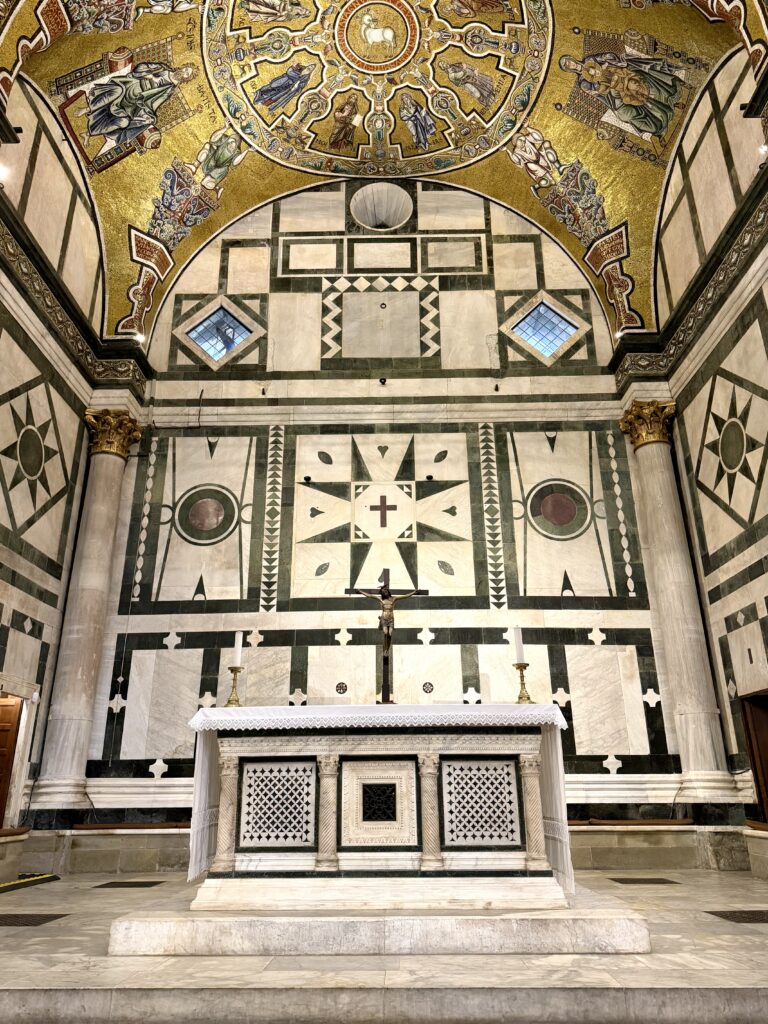
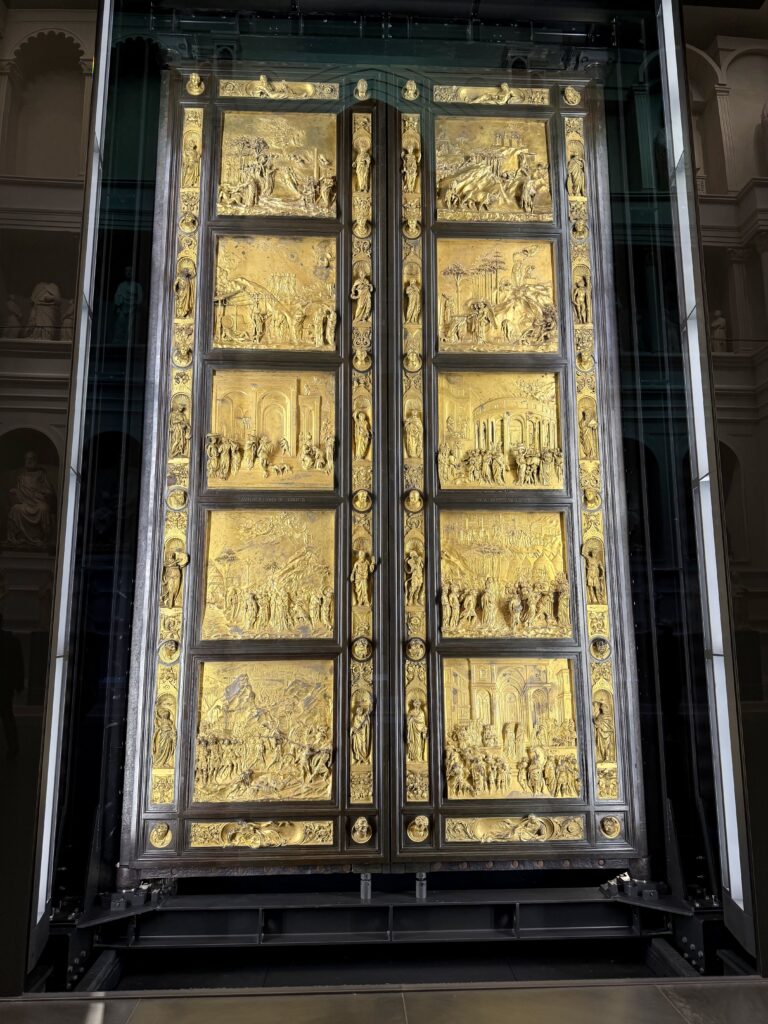
Our first stop was inside the Baptistry (https://duomo.firenze.it/en/discover/baptistry). They’re doing some restoration inside but we could still get a good look at things. In particular I thought the floor was really cool. The doors on the Baptistry currently are replicas – the originals are preserved inside the museum (the picture below is the original set of north doors).
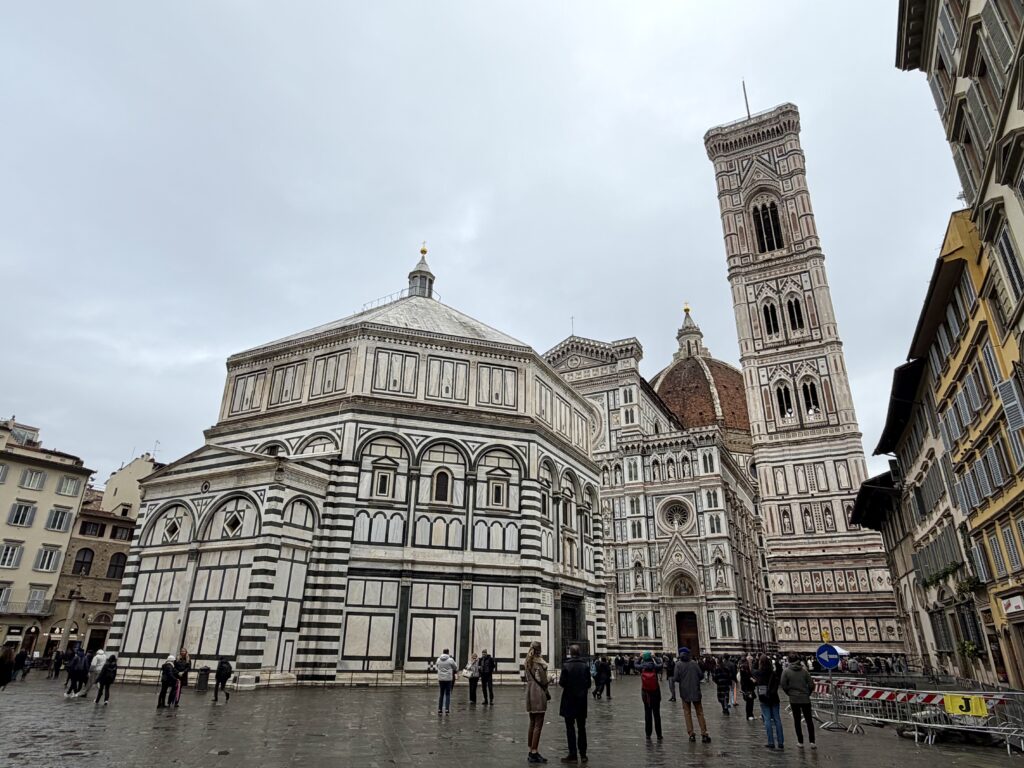
Next we went up into the bell tower (campanile), built between 1334 and 1359. The bell tower is 84.7 meters (278 feet) tall it’s 414 steps up to the top, where we got great views of Florence and also of the cathedral dome (cupola). (https://duomo.firenze.it/en/discover/giotto-s-bell-tower)
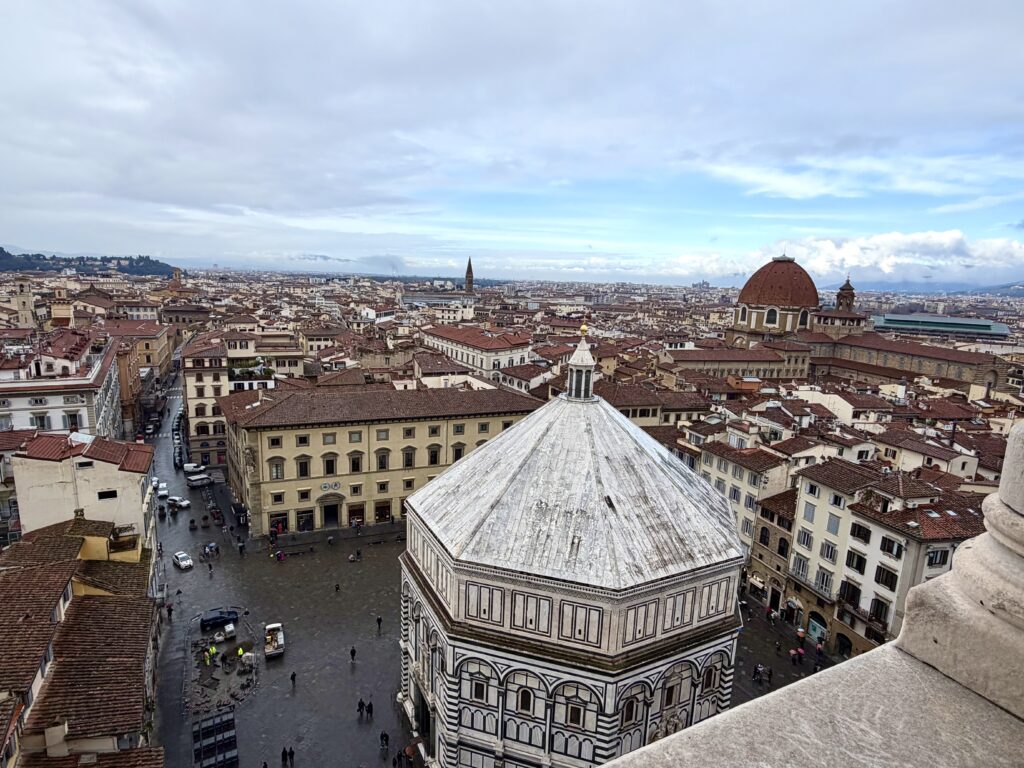
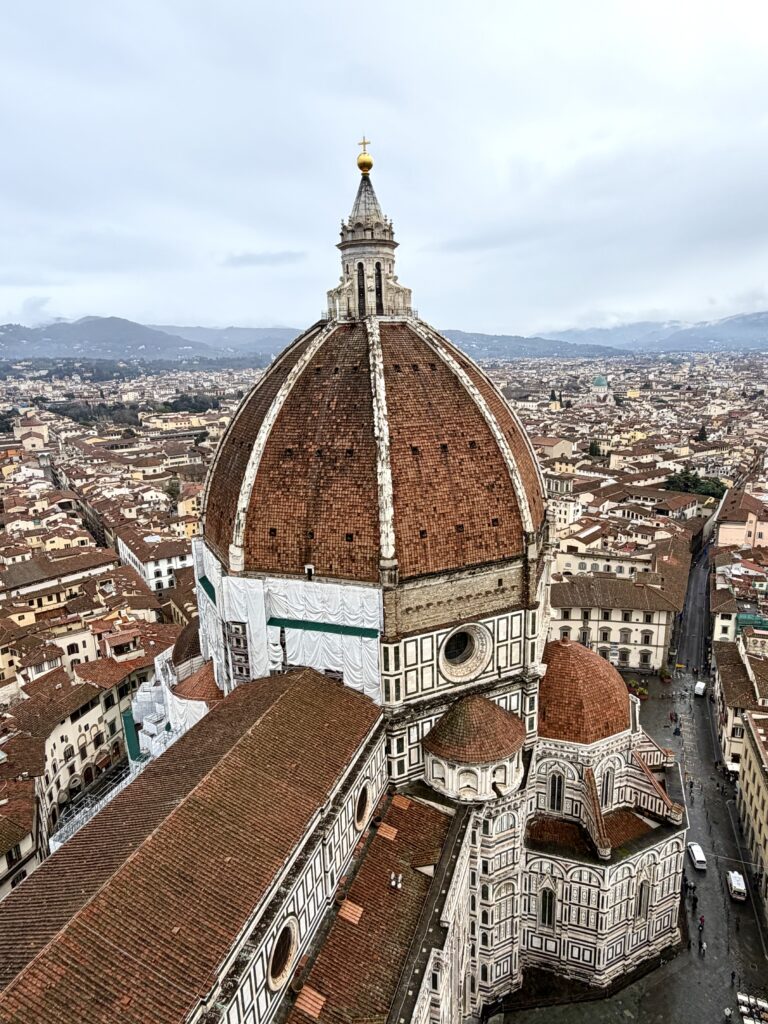
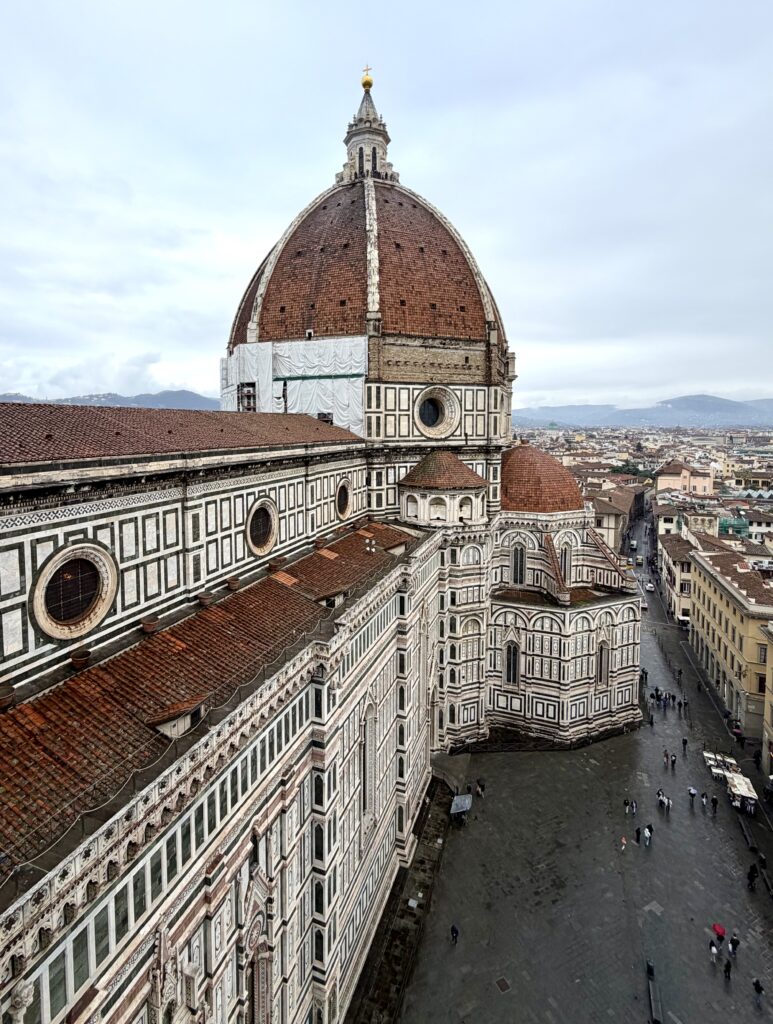
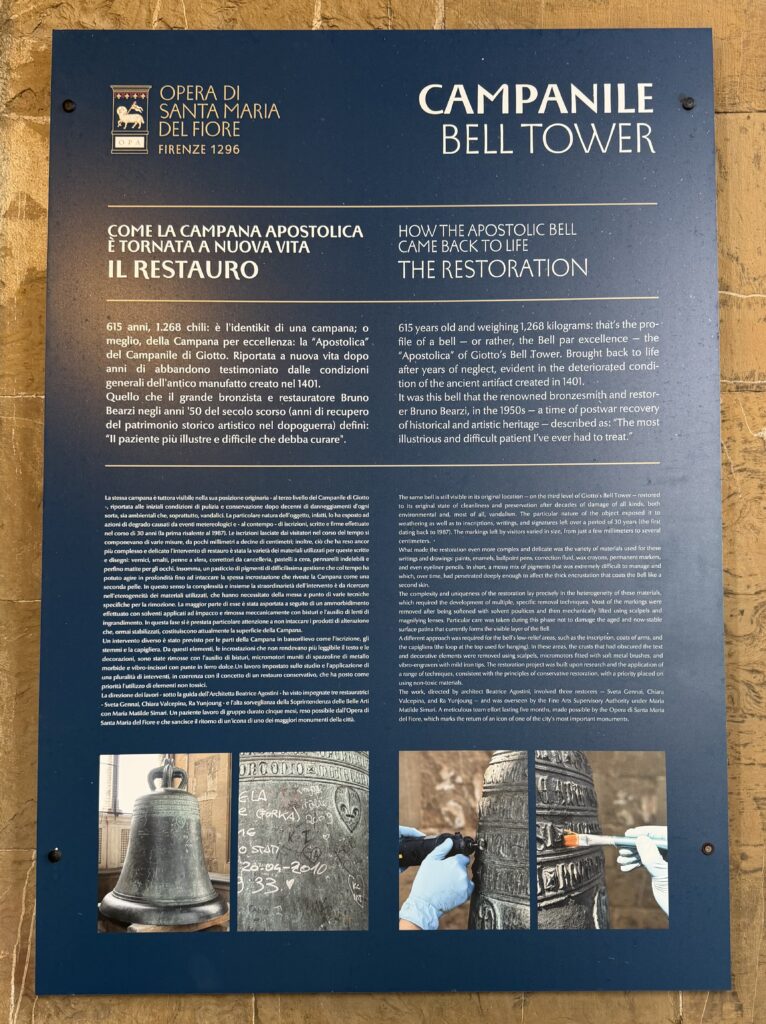
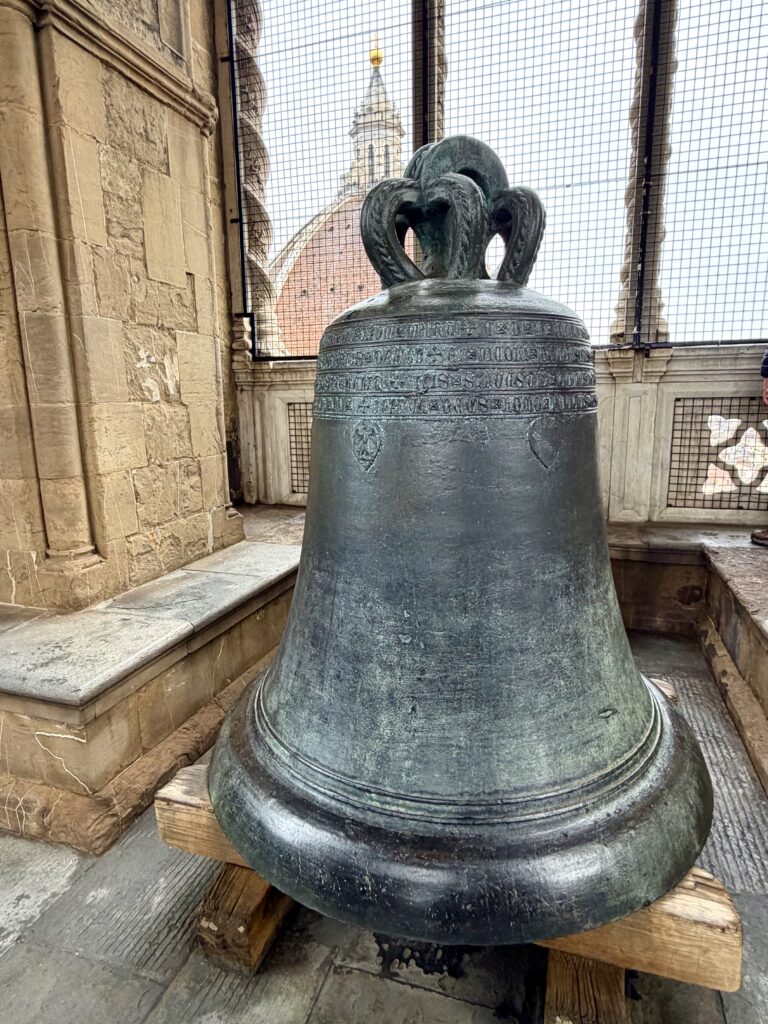
There were thankfully a few levels on the way up so we could catch our breath. One of the stops has this bell – the Apostolica. It was made in 1401 and weighs 1268 kg (about 2800 pounds!). It was restored in the 1950s (during a time of postwar recovery of historic and artistic items). It had been exposed to weather as well as vandalism. The markings varied in size as well as the materials used. I included the sign describing the restoration because it has some pictures from before and during the restoration. Highlights from the text:
“What made the restoration even more complex and delicate was the variety of materials used for these writings and drawings: paints, enamels, ballpoint pens, correction fluid, wax crayons, permanent markers, and even eyeliner pencils. In short, a messy mix of pigments that was extremely difficult to manage and which, over time, had penetrated deeply enough to affect the thick encrustation that coats the Bell like a second skin. … Most of the markings were removed after being softened with solvent poultices and then mechanically lifted using scalpels and magnifying lenses. … A different approach was required for the bell’s low-relief areas, such as the inscription, coats of arms, and the capigliera (the loop at the top used for hanging). In these areas, the crusts that had obscured the text and decorative elements were removed using scalpels, micromotors fitted with soft metal brushes, and vibro-engravers with mild iron tips.”
It took 3 people 5 months of meticulous work to restore this bell to its former glory.
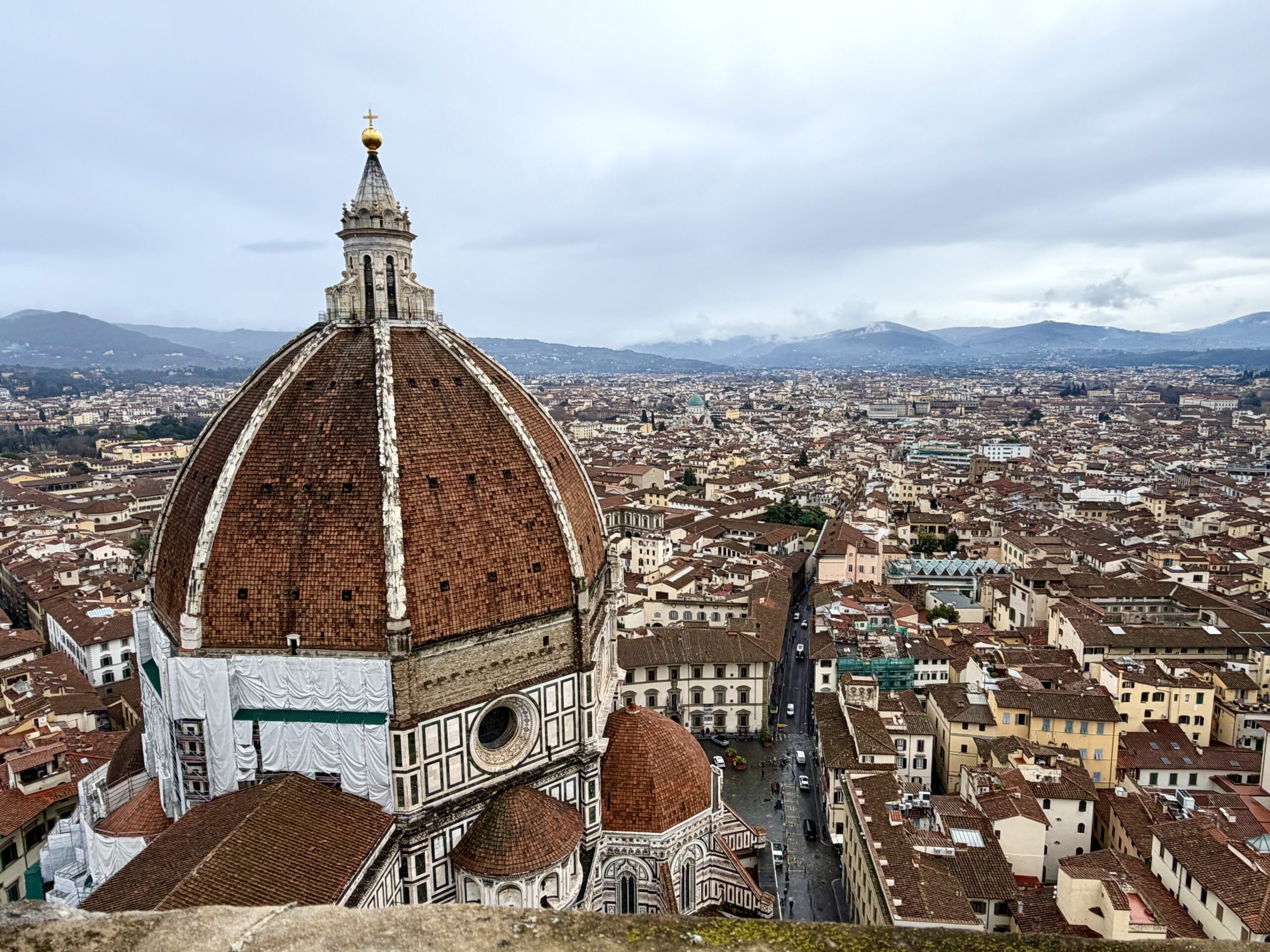
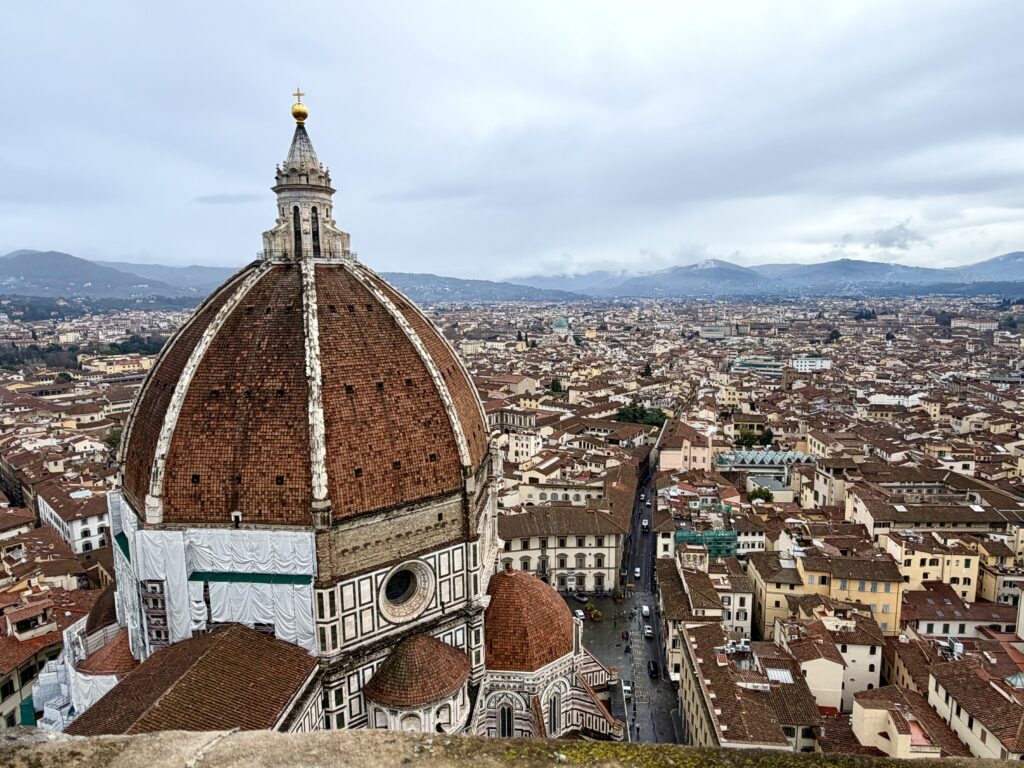
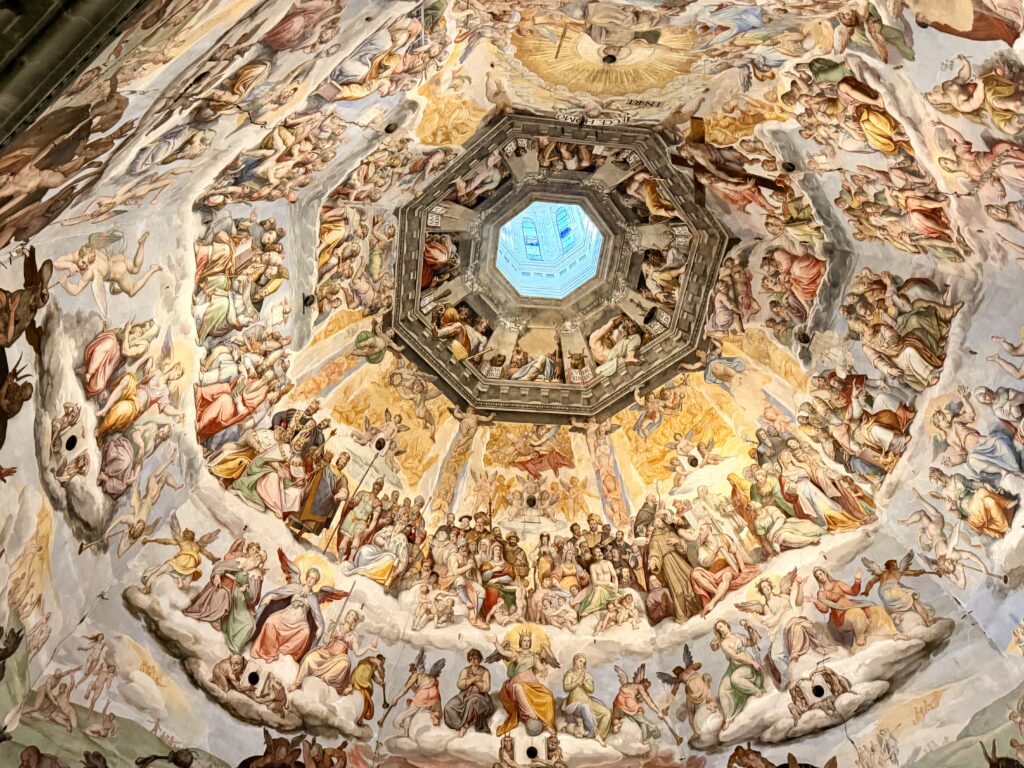
Once we came down from the bell tower, it was time for our timed-entry to the dome (https://duomo.firenze.it/en/discover/dome). Because a limited number of people can go up at a time, this was the only portion of the ticket that required a timed entry – so we worked everything else around that. This involved another 463 steps (so between the bell tower and the dome we climbed 877 stairs total – plus another 77 stairs back up to our VRBO!). We got our workout that day! The initial part of the climb was pretty normal. Then they led us around a balcony on the inside of the dome over to another door where we climbed the rest of the way. From this balcony we got a view of the inside of the cathedral and also the ceiling of the dome. The dome is 45.5 meters (149 feet) in diameter with a total height of over 116 meters (380 feet) – making it the largest masonry vault in the world. It was built between 1420 and 1436 by Filippo Brunelleschi.
From the sign inside: “Brunelleschi’s major innovation was to built the Dome without a supporting structure. The Dome consists of two distinct domes: one internal, more than two meters [6.5 feet] thick, with a deeper angle than the other and consisting of large arches held together by ribs and made of bricks arranged in a “herringbone” pattern. The external dome is covered with terracotta tiles and marked by eight white marble ribs.”
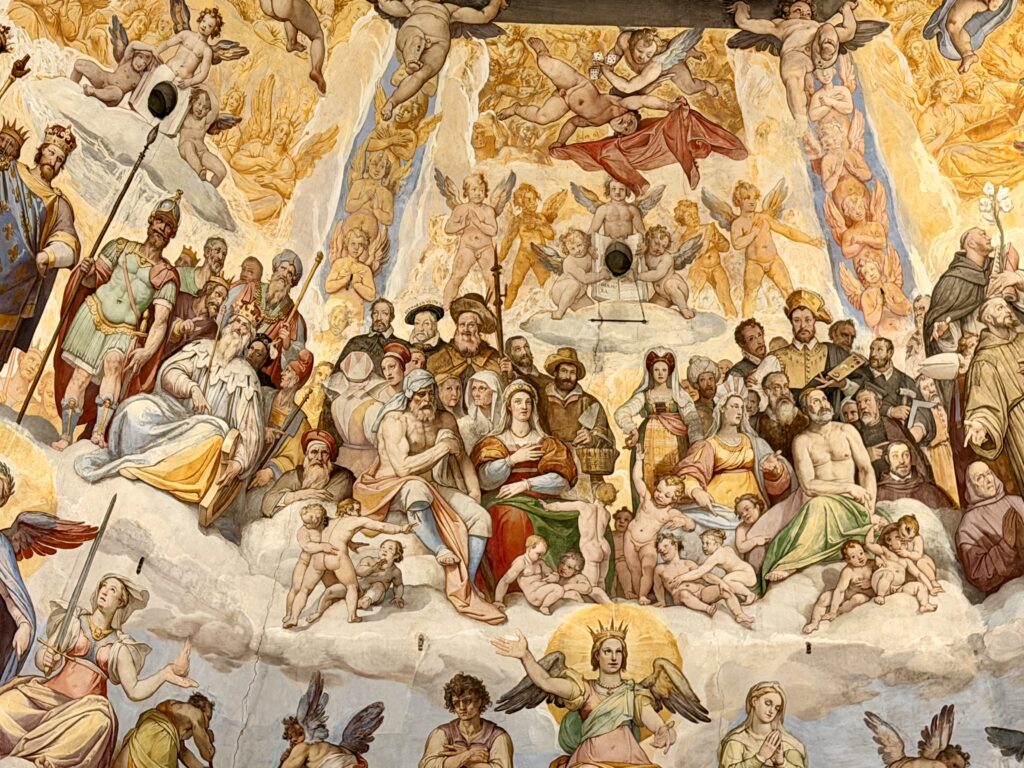
The internal vault of the dome was painted with the Last Judgement over a century later (between 1572 and 1579).
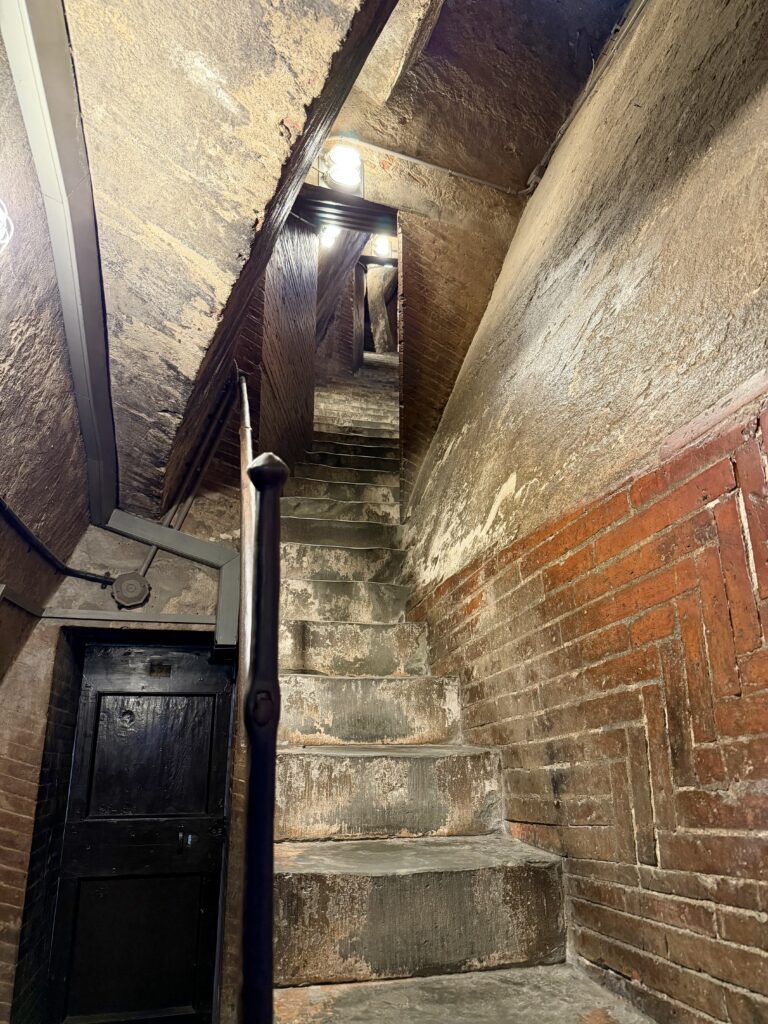
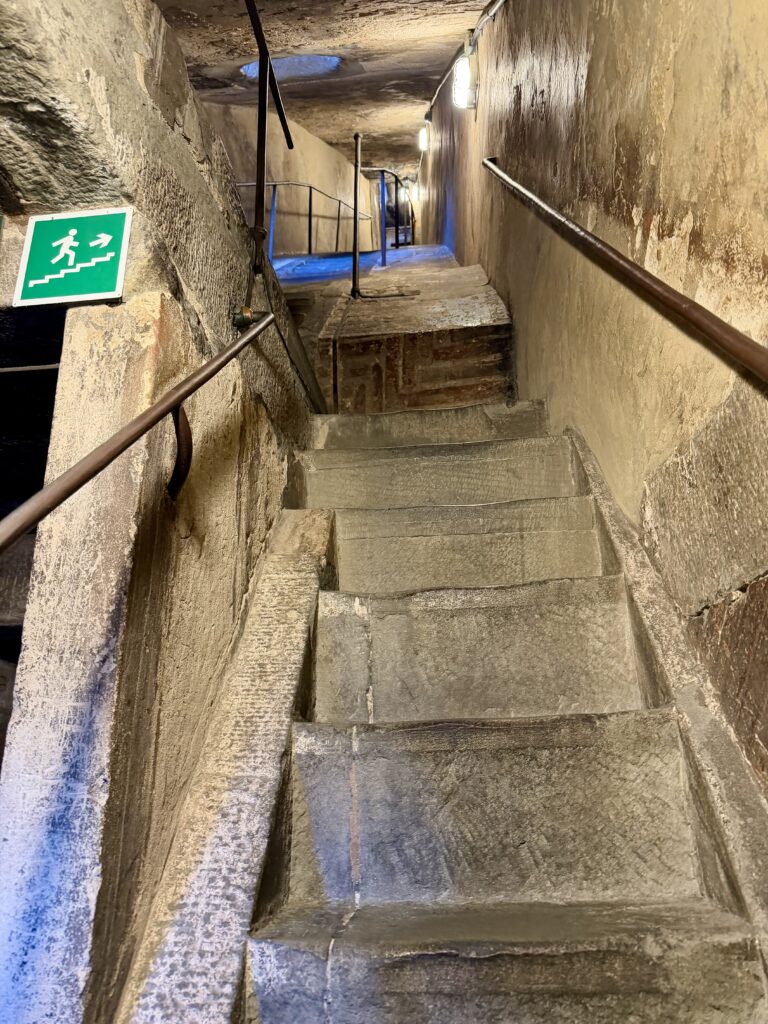
The second part of the climb was …. interesting. The steps were very narrow and steep – you could tell we were following the curve of the dome itself. It was hard to capture that with just a photo but Chris got some good video of it too.
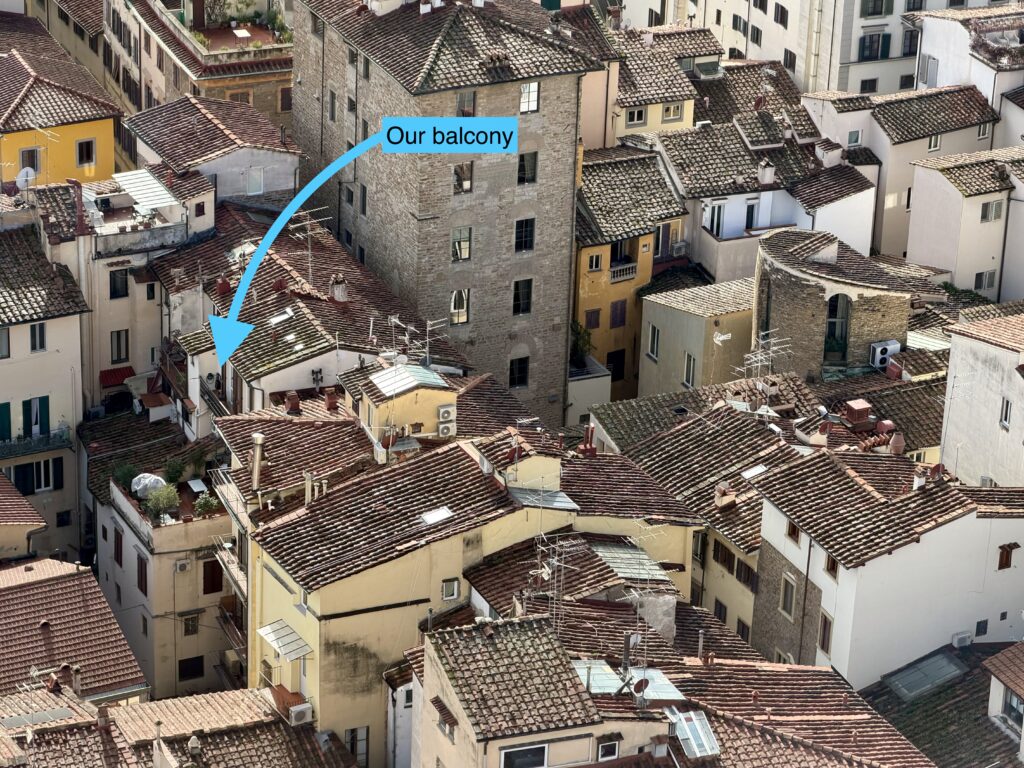
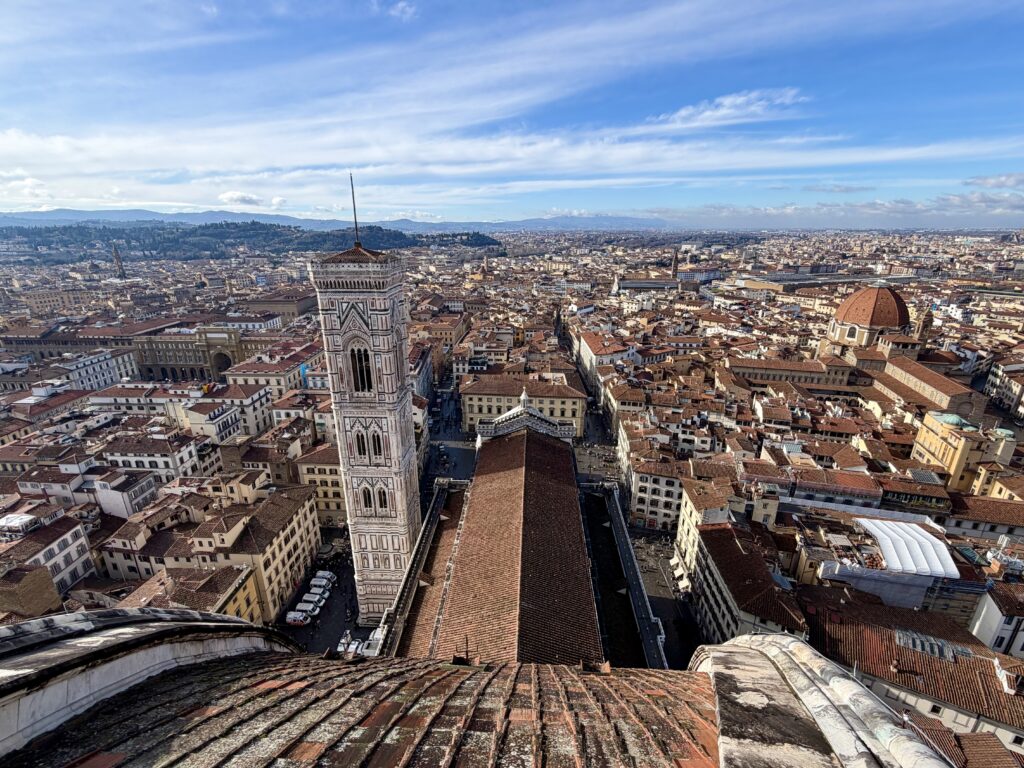
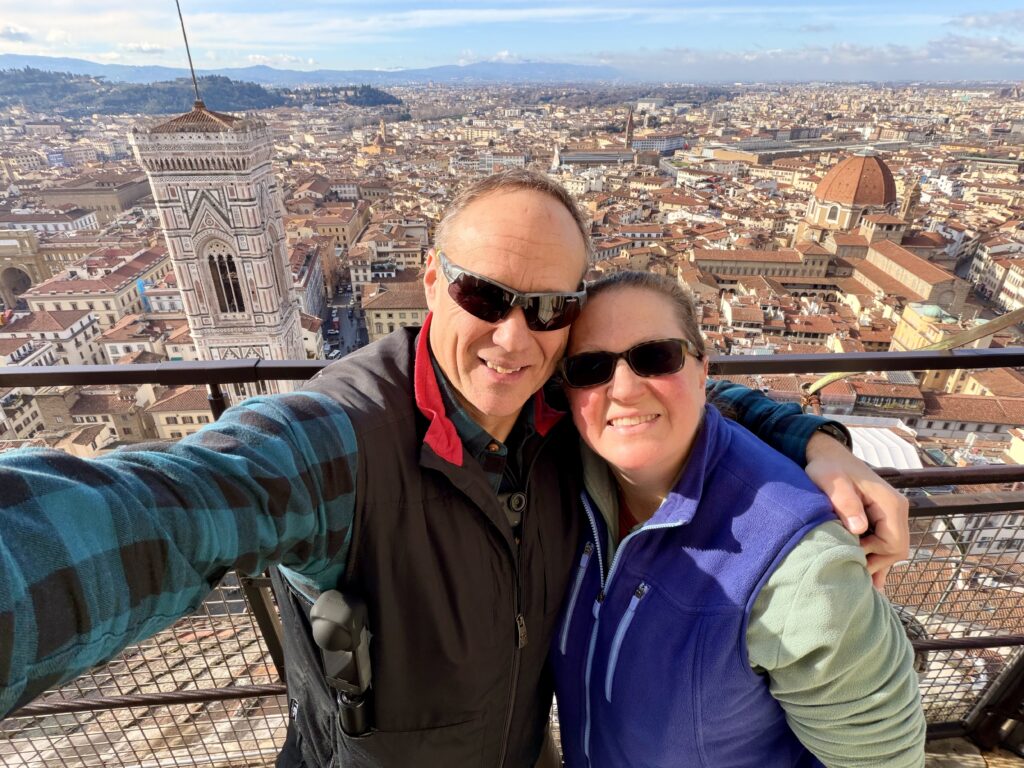
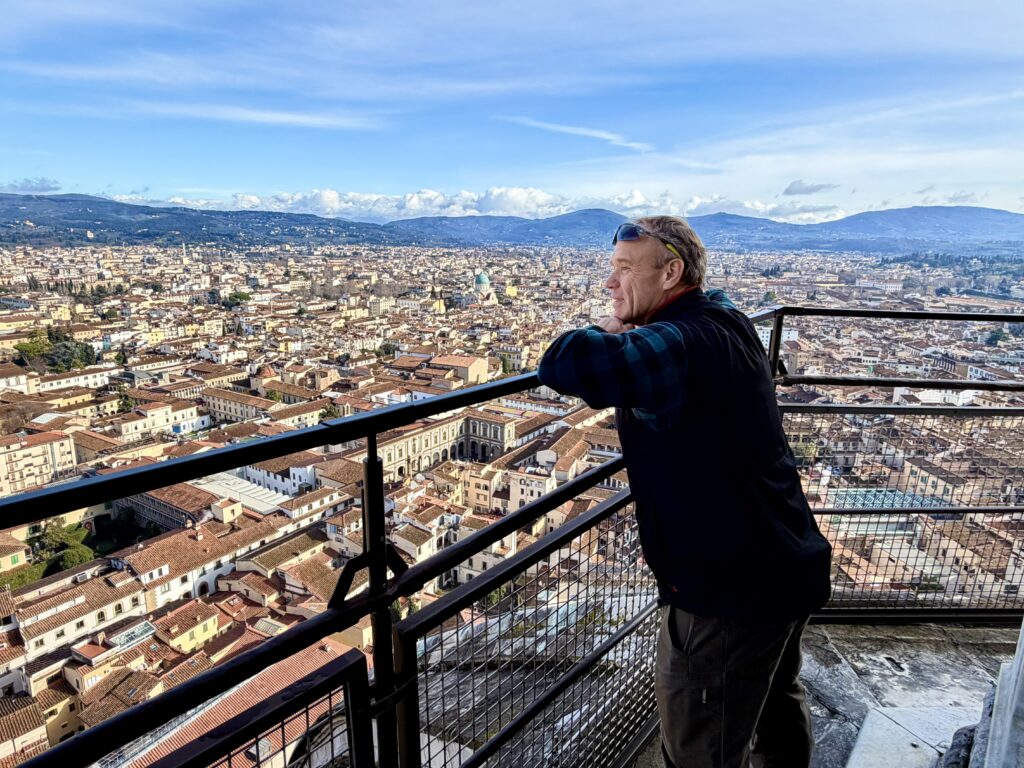
The view from the top was pretty spectacular. It was crazy to see how much higher we were up on top of the dome compared to the bell tower we had just climbed. We could also see our VRBO balcony from the dome!
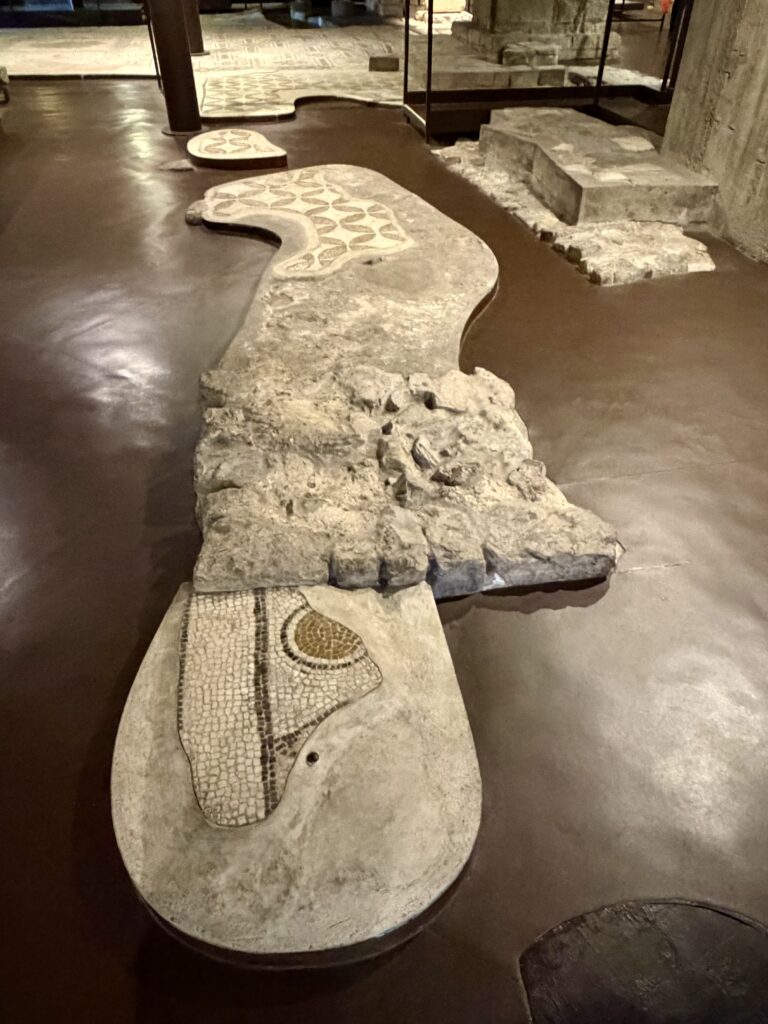
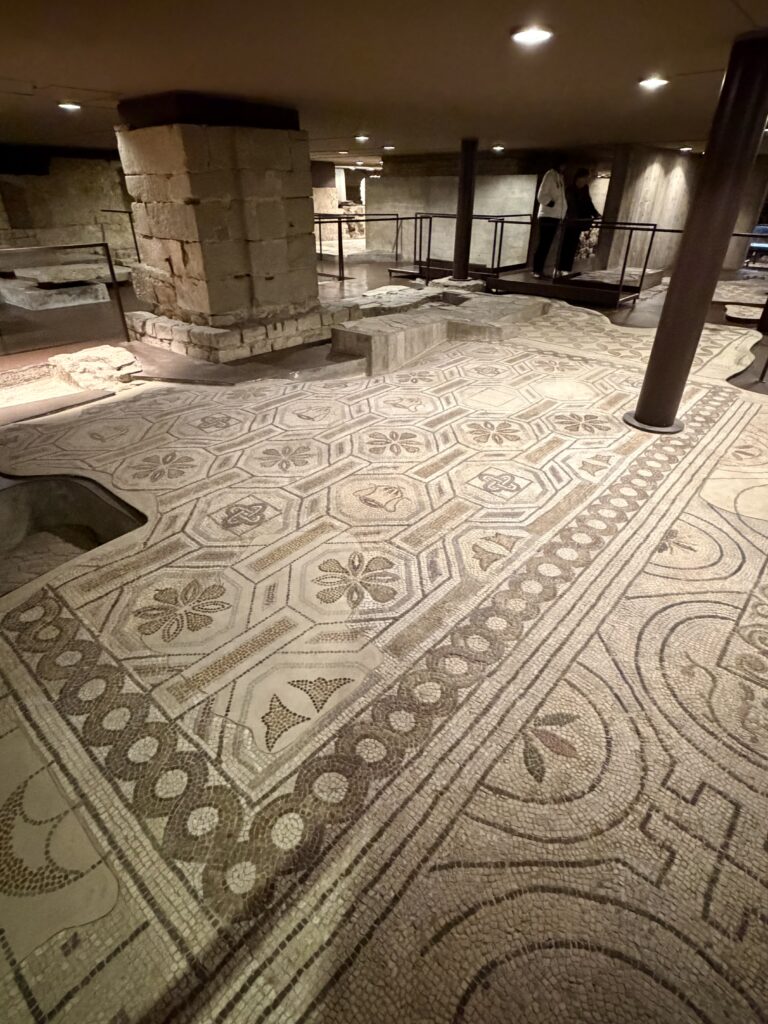
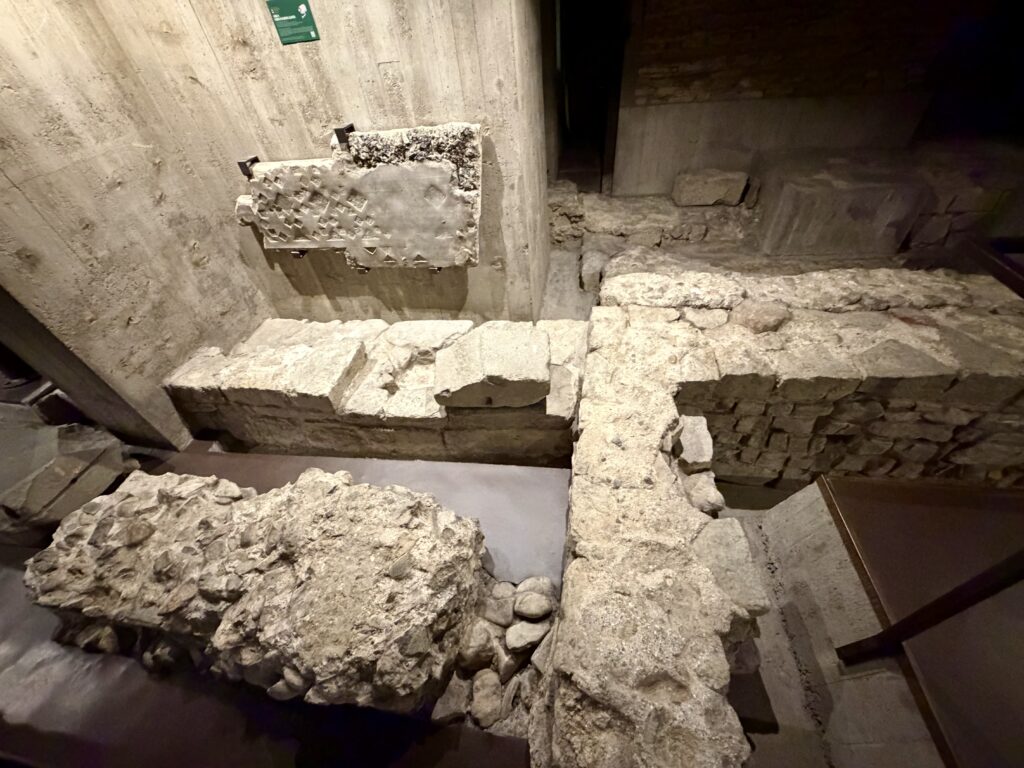
Eventually we had to make our way back down. Then we went to the crypt, which is actually the site of the ancient basilica of Santa Reparata (https://duomo.firenze.it/en/discover/crypt-of-santa-reparata). It was founded in the early 5th century and was demolished in 1379. The site was excavated between 1965 and 1973. The crypt includes remains of the church with an amazing mosaic floor. It also includes the tomb of Filippo Brunelleschi. According to the sign inside, the inscription on the tomb reads “the body of a man of great genius Filippo di ser Brunelleschi Florentine”.
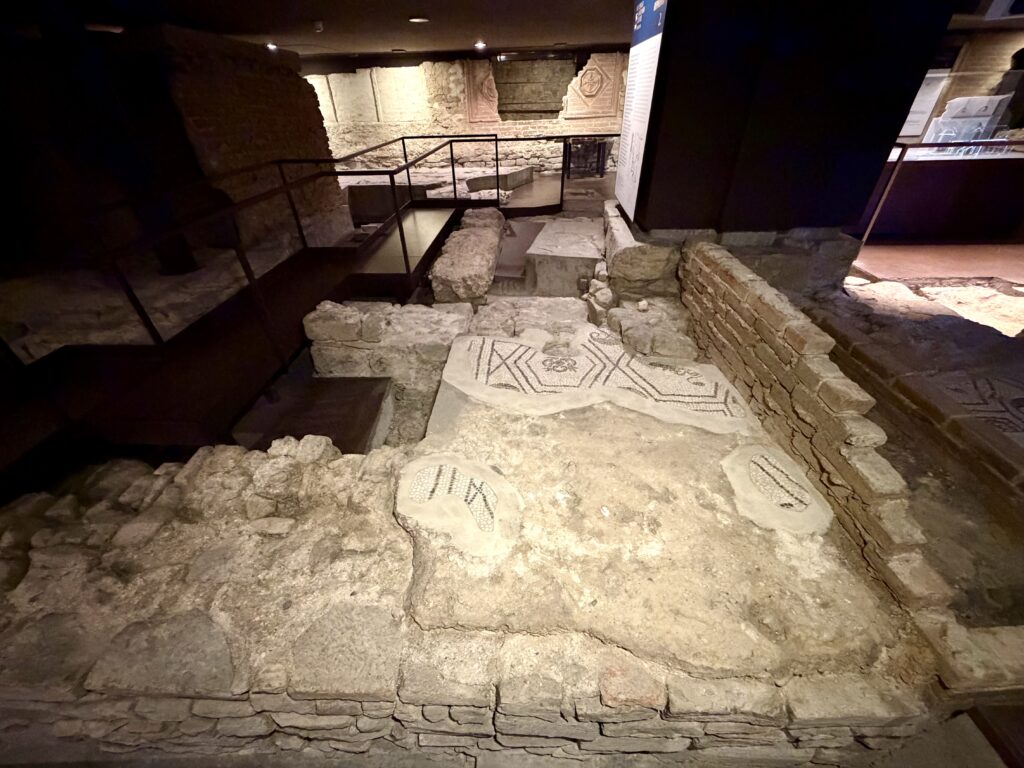
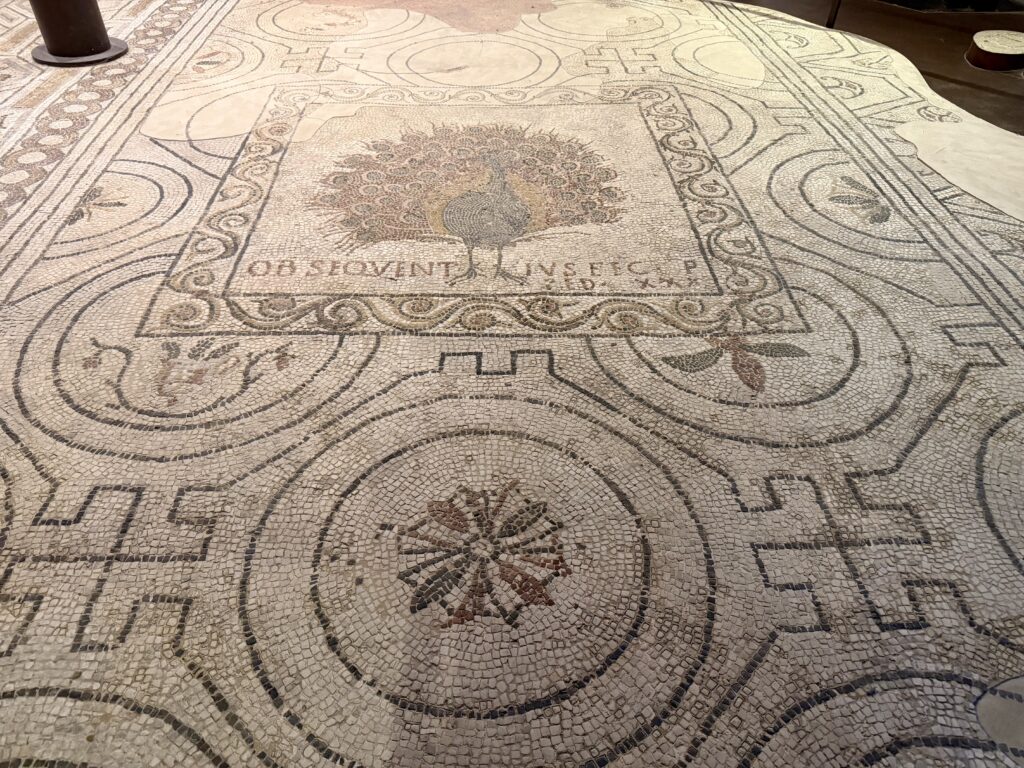
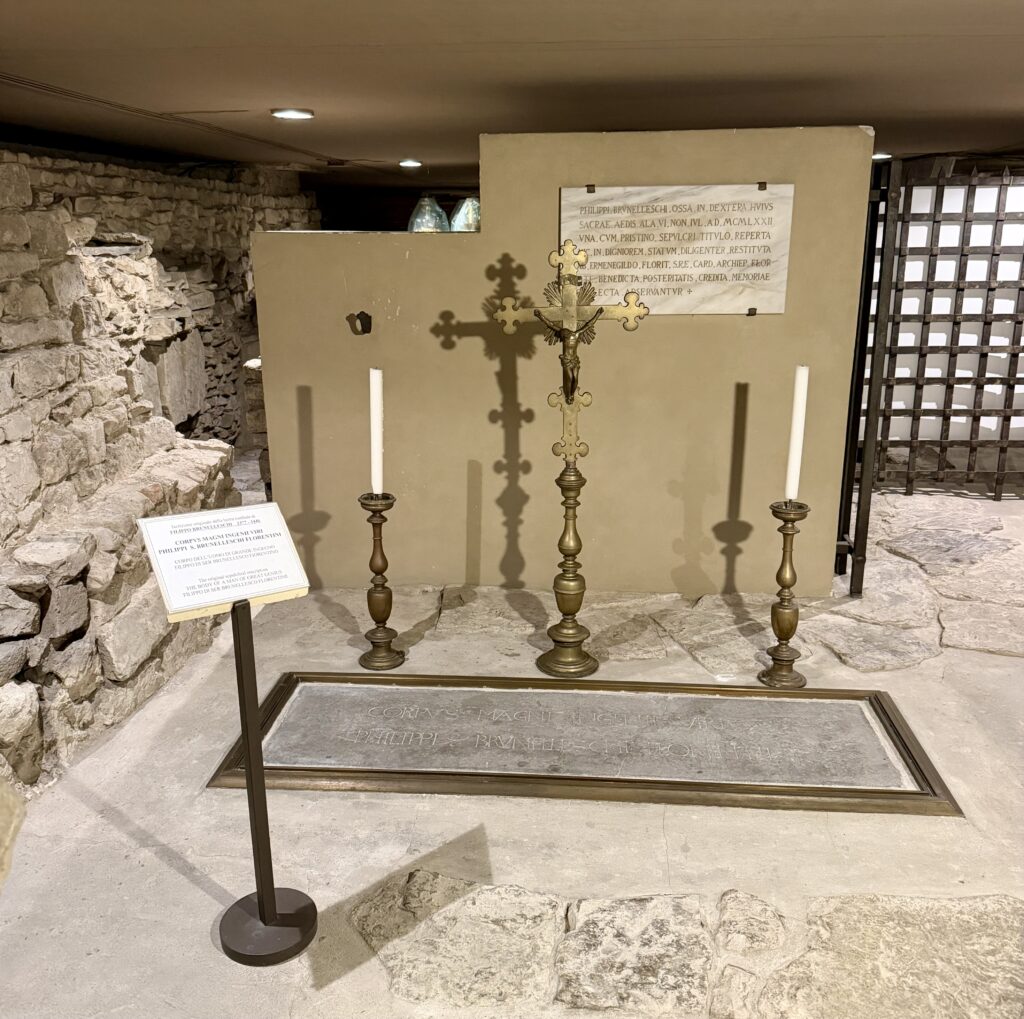
After that we headed into the museum, which was quite large and it took us around 2 hours to go through. If we had more time in Florence, that would have been a good one to save for the next day since the ticket we got could be used over 3 days. It was a long day (about 6-7 hours from start to finish to see all of the sights) but definitely worth it.
A couple of other major sights in Florence are the Uffizi Gallery (which houses Botticelli’s Birth of Venus plus works by Michelangelo, Leonardo da Vinci, and Raphael) and the Accademia Gallery (which houses Michelangelo’s David). We didn’t visit these because we wanted to maximize our time seeing other sights but we’ve been in the past and they are both great if you like art.
A few other sights around Florence that we passed by included the Piazza della Signoria …
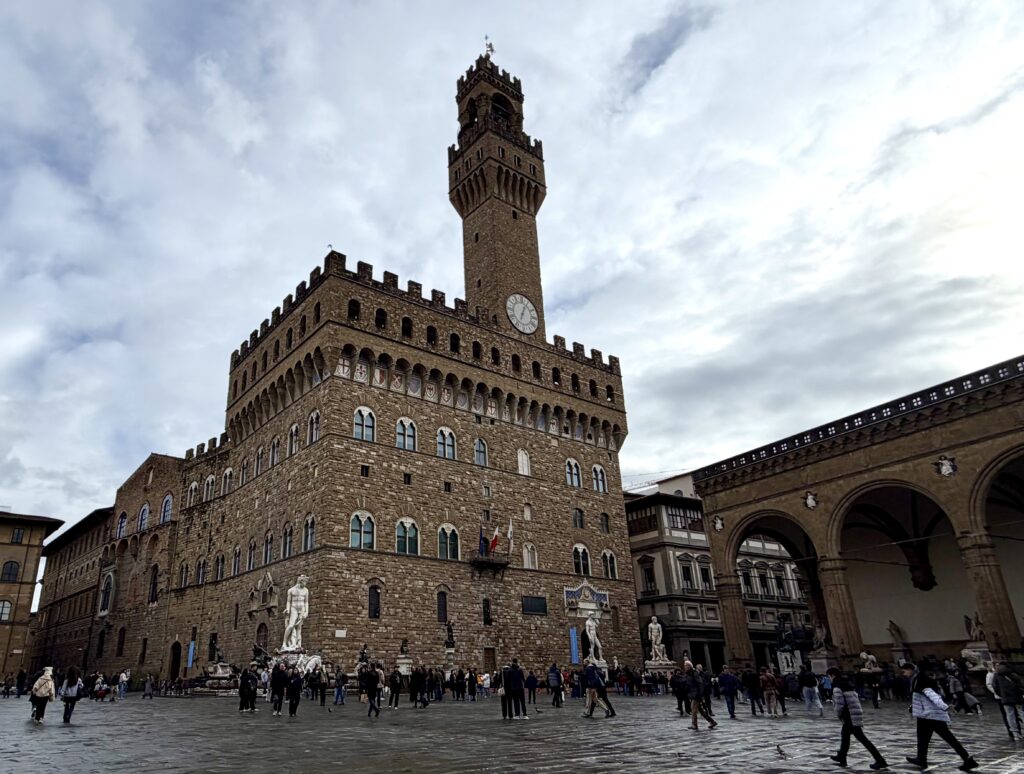
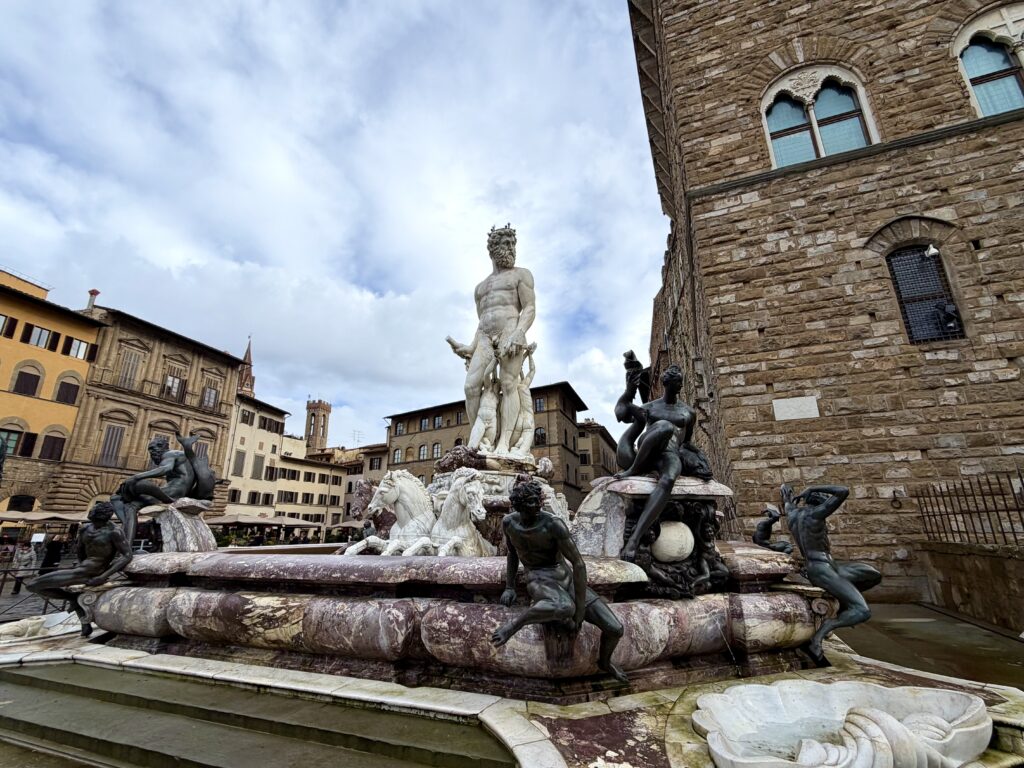
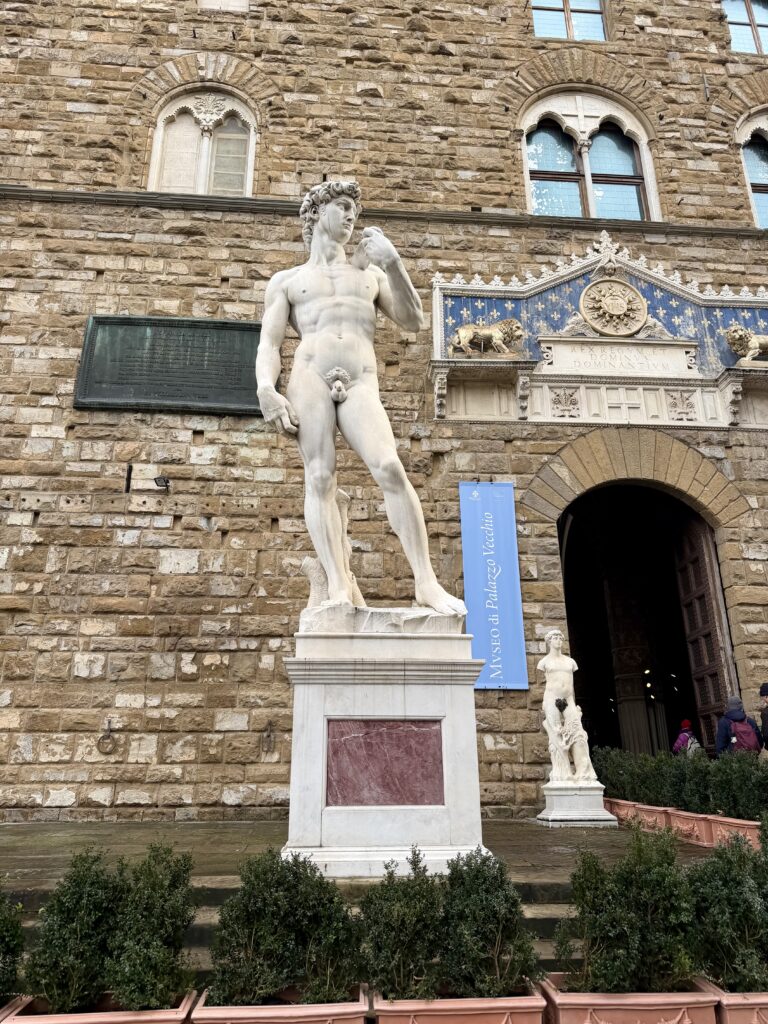
… the Piazza della Republica with its Arco di Trionfo ….
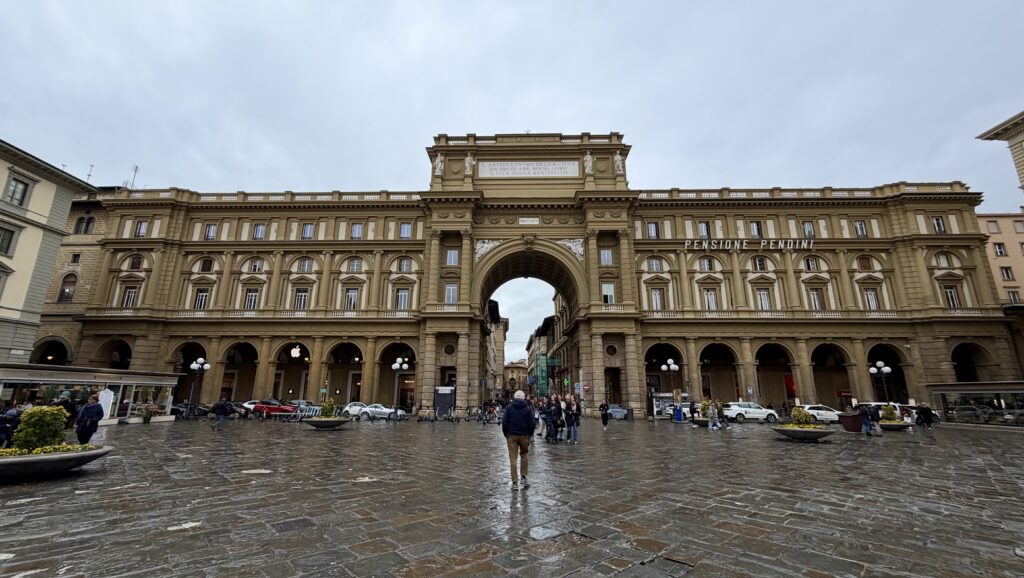
… the Ponte Vecchio over the Arno River …
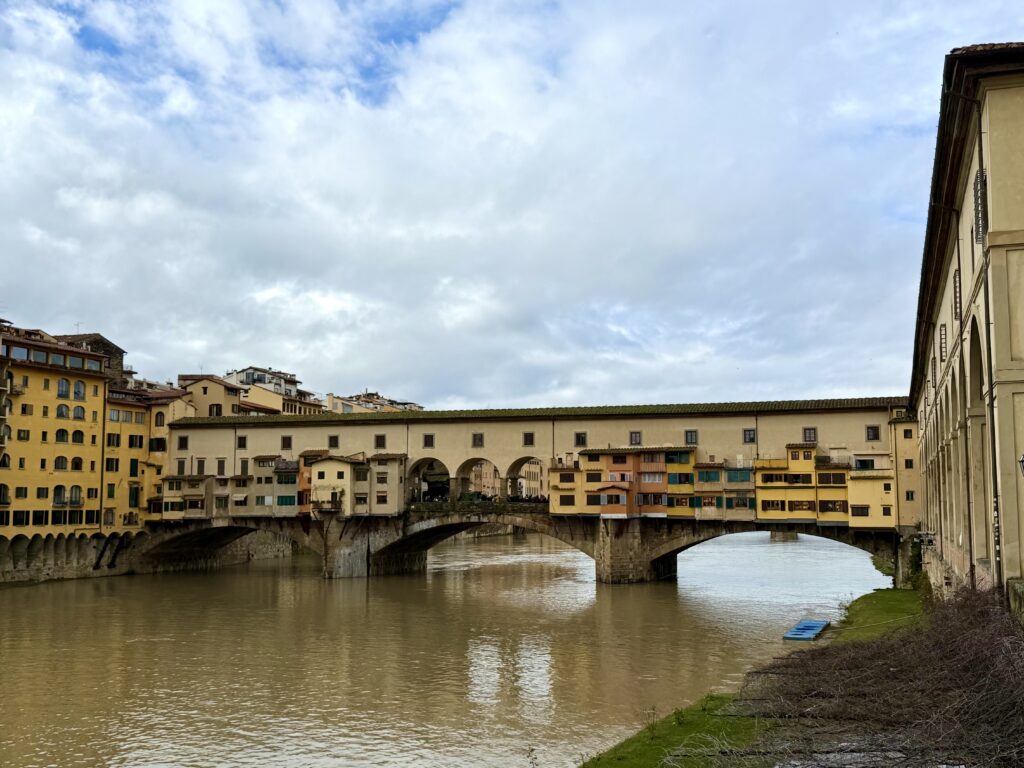
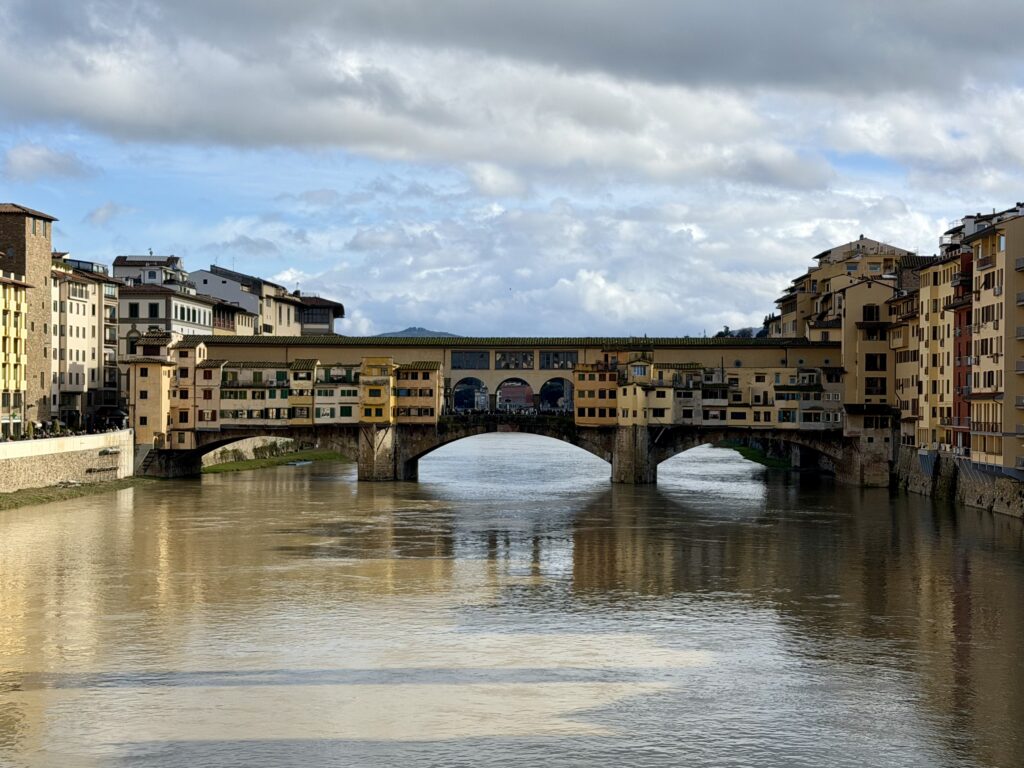
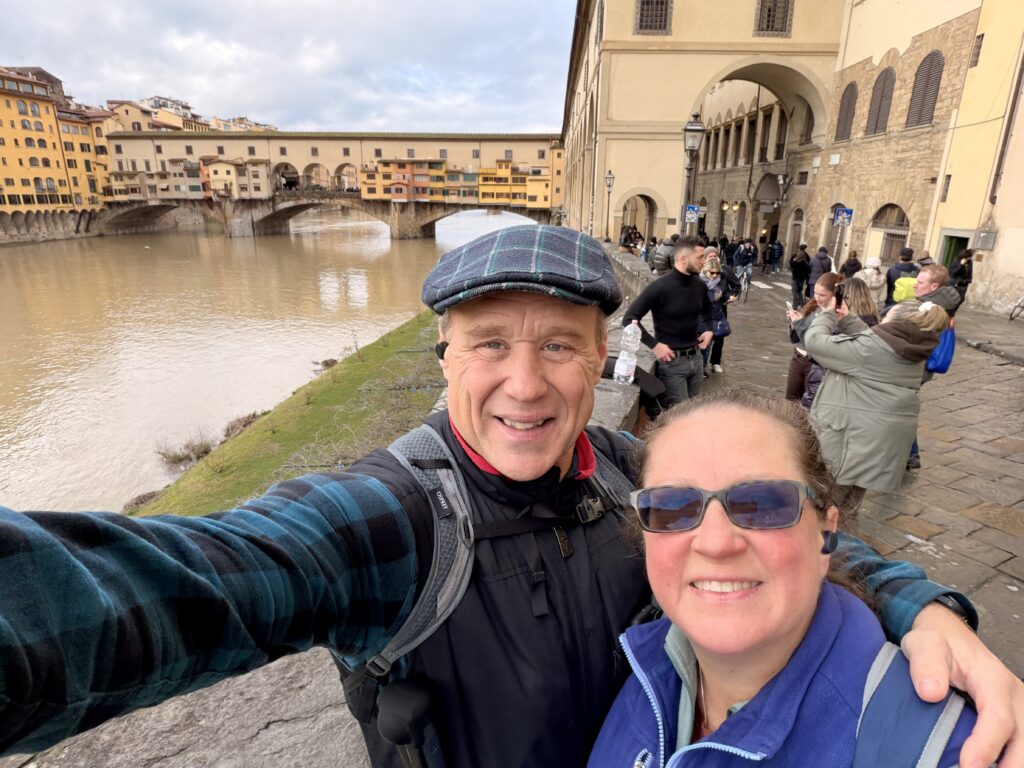
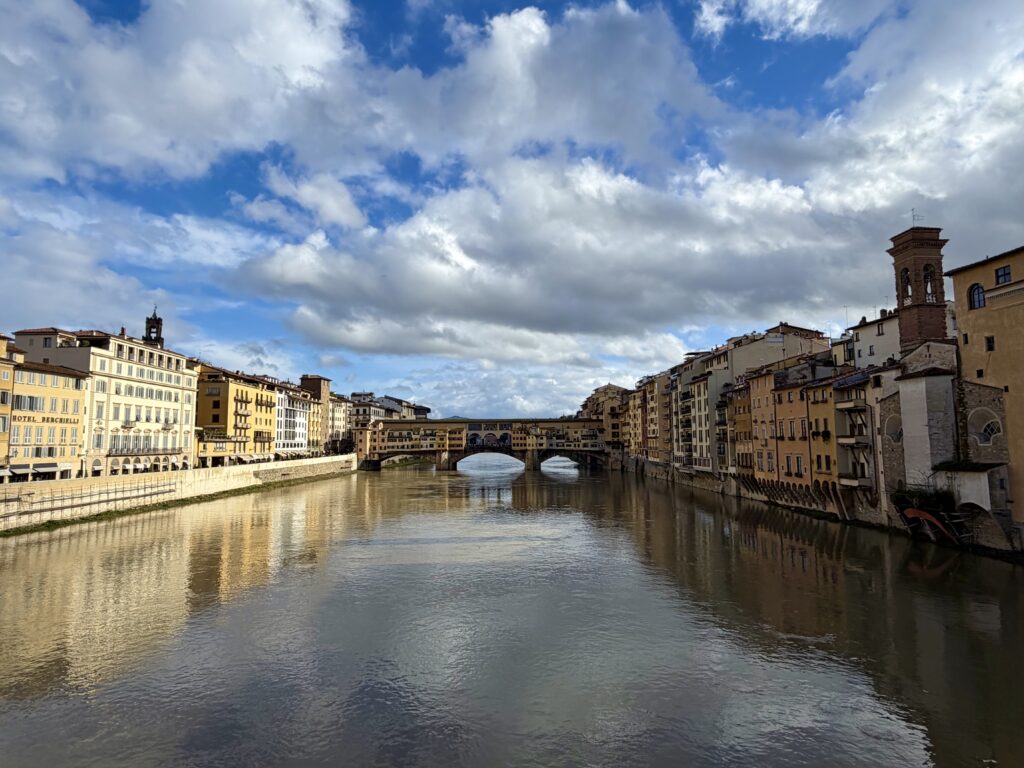
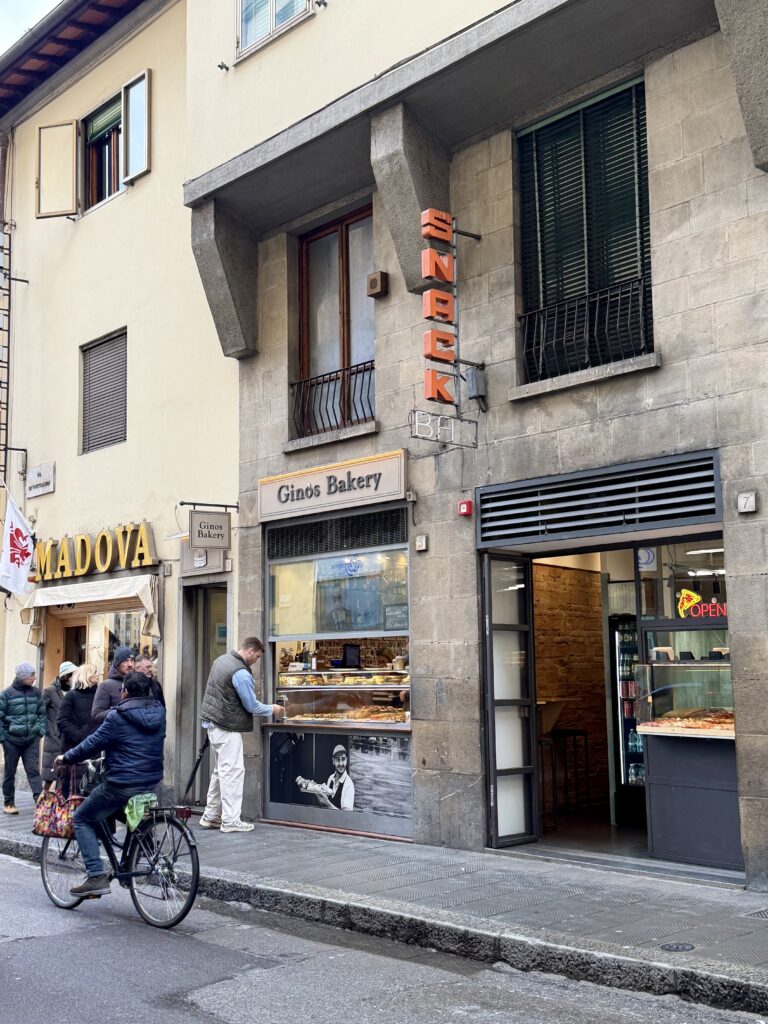
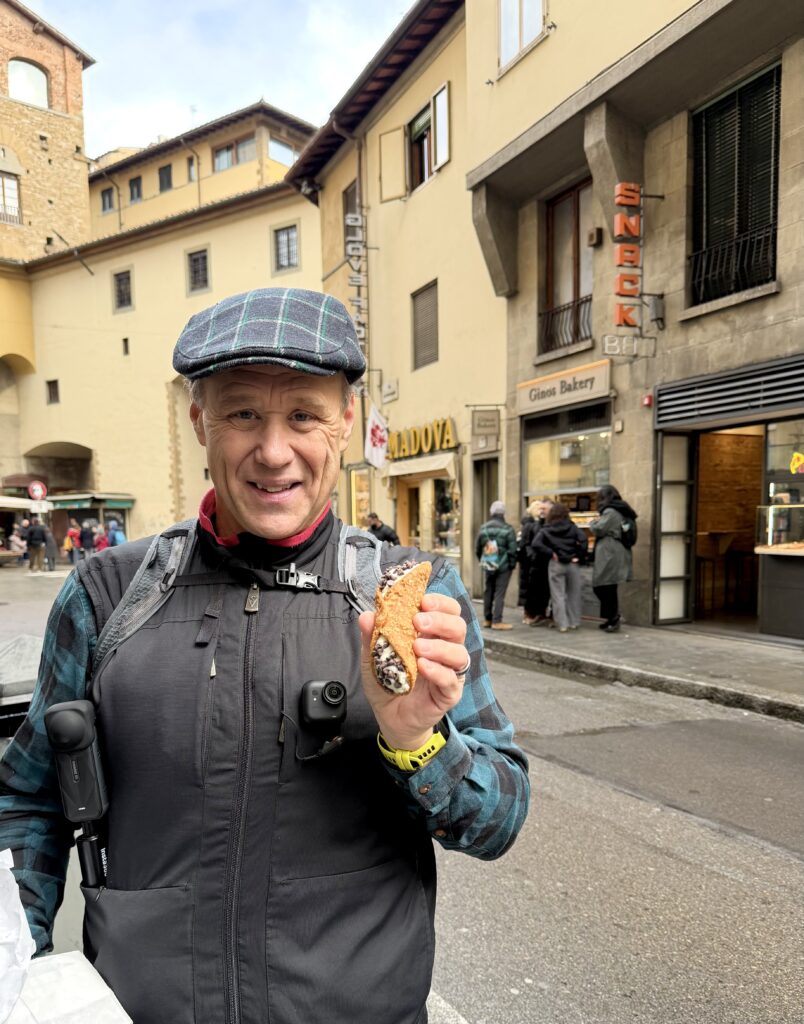
… and a place called Gino’s for excellent cannolis.
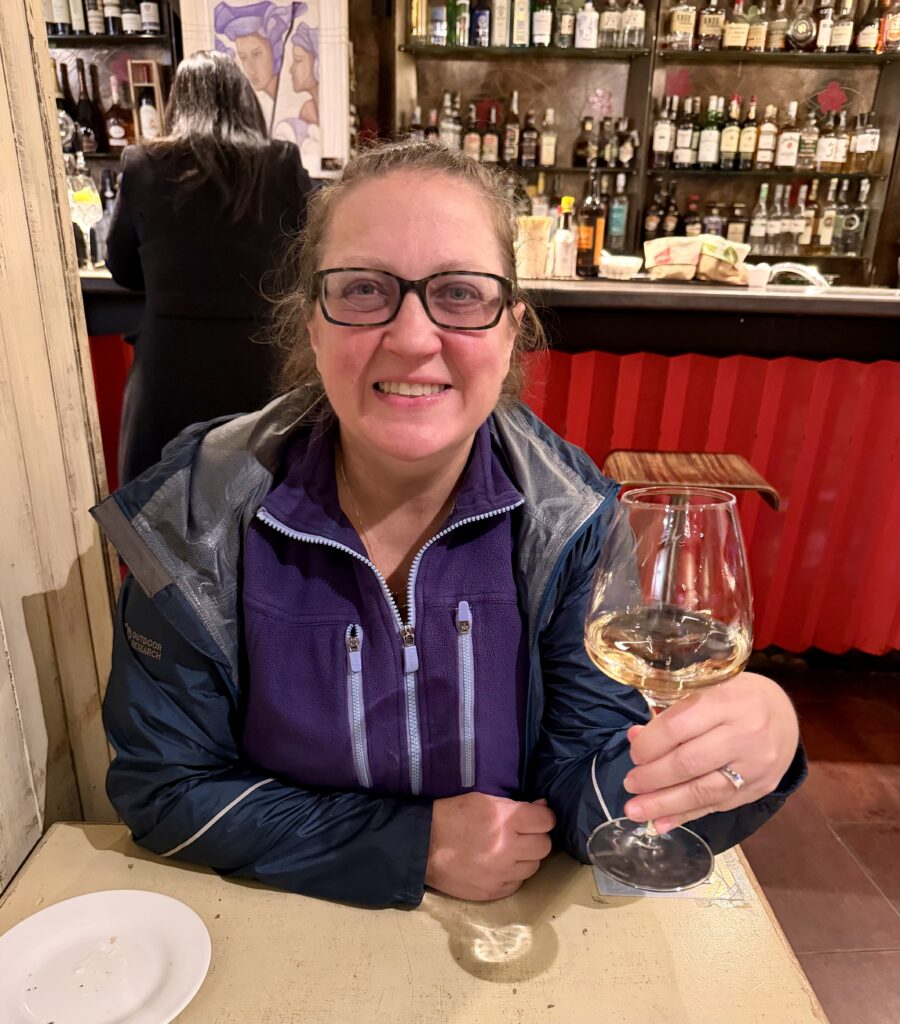
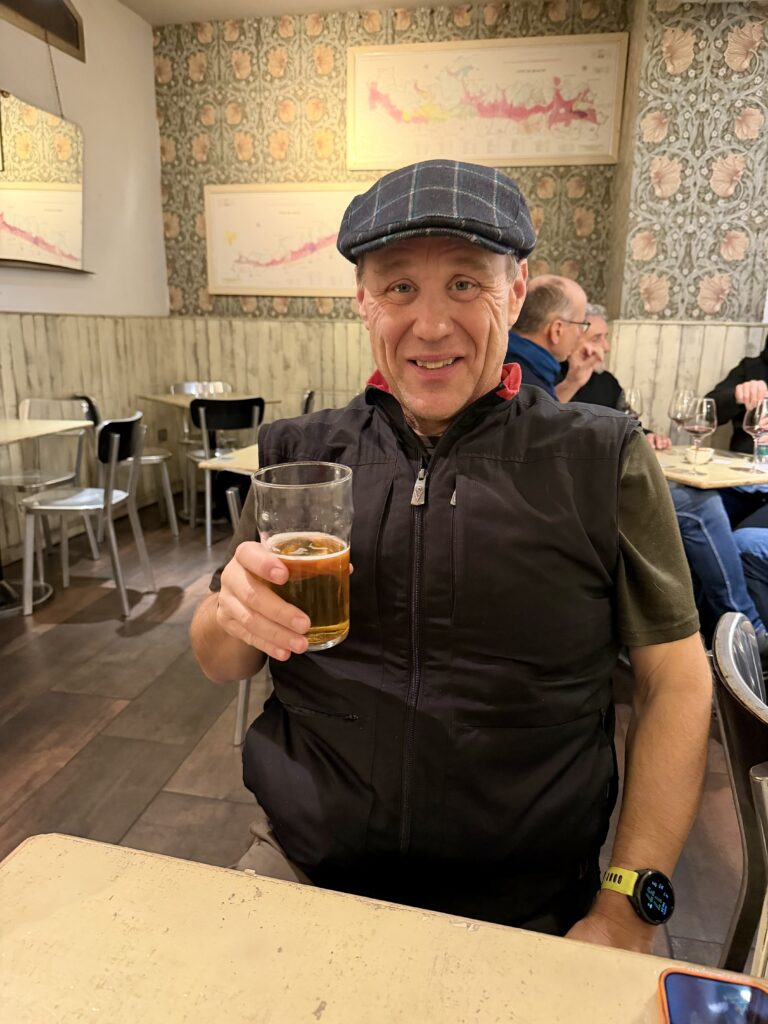
We also found this great bar called Caffè Sant’Ambrogio. We popped in for a drink and a snack to get out of the rain and ended up going again later in our stay because we liked the atmosphere.
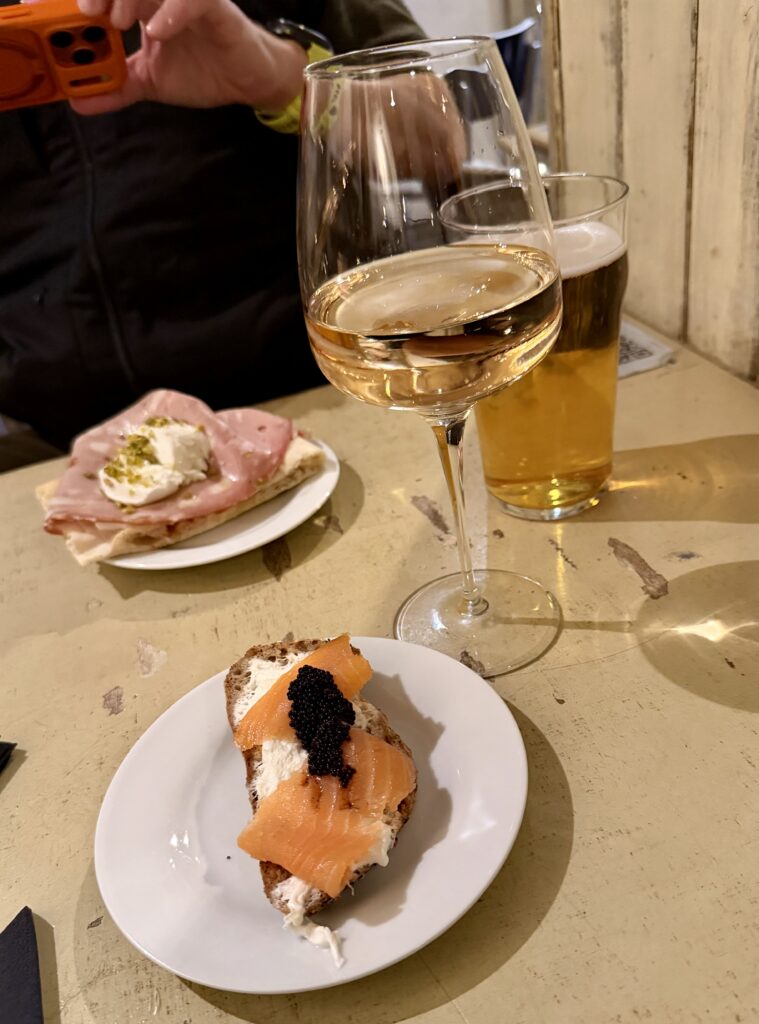
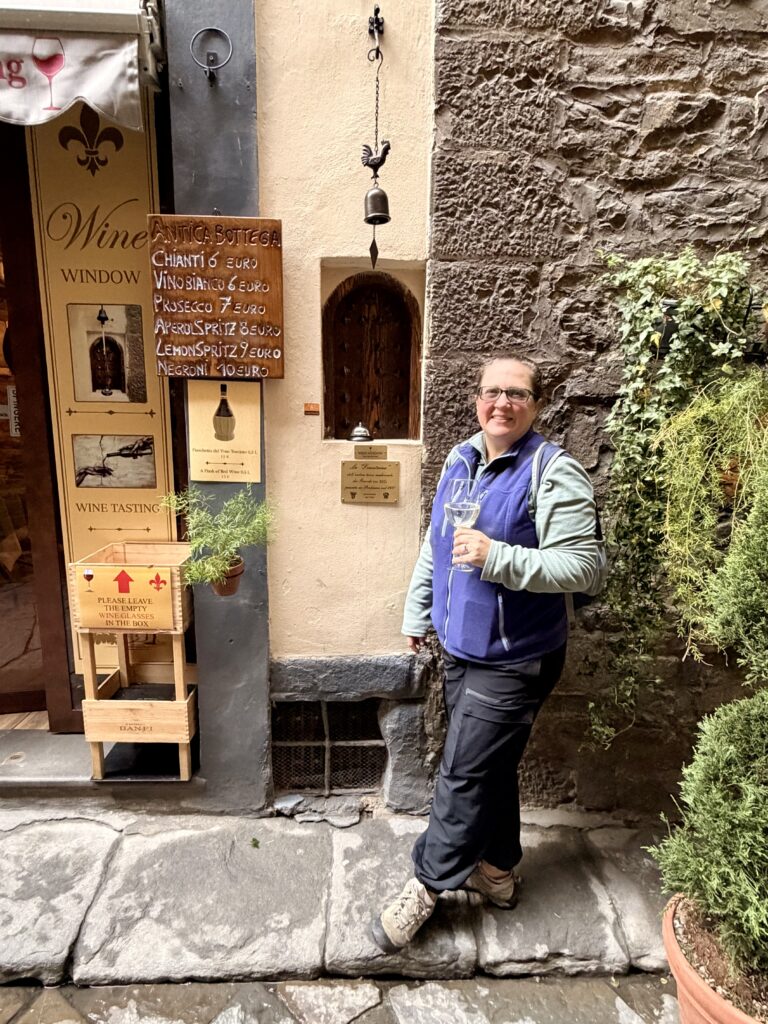
And last but not least, we learned just before getting to Florence that they have something called wine windows! You go up and ring the bell and order wine through the window. So much fun!
We only spent 3 nights (2 full days) in Florence but we got to see a lot in that time while also just cruising around taking in the historic center. Thankfully by the time we left we could use the main train station again, which is within walking distance of the historic core. We got on a train down to Siena (about 90 minutes by train) for our next stop.