
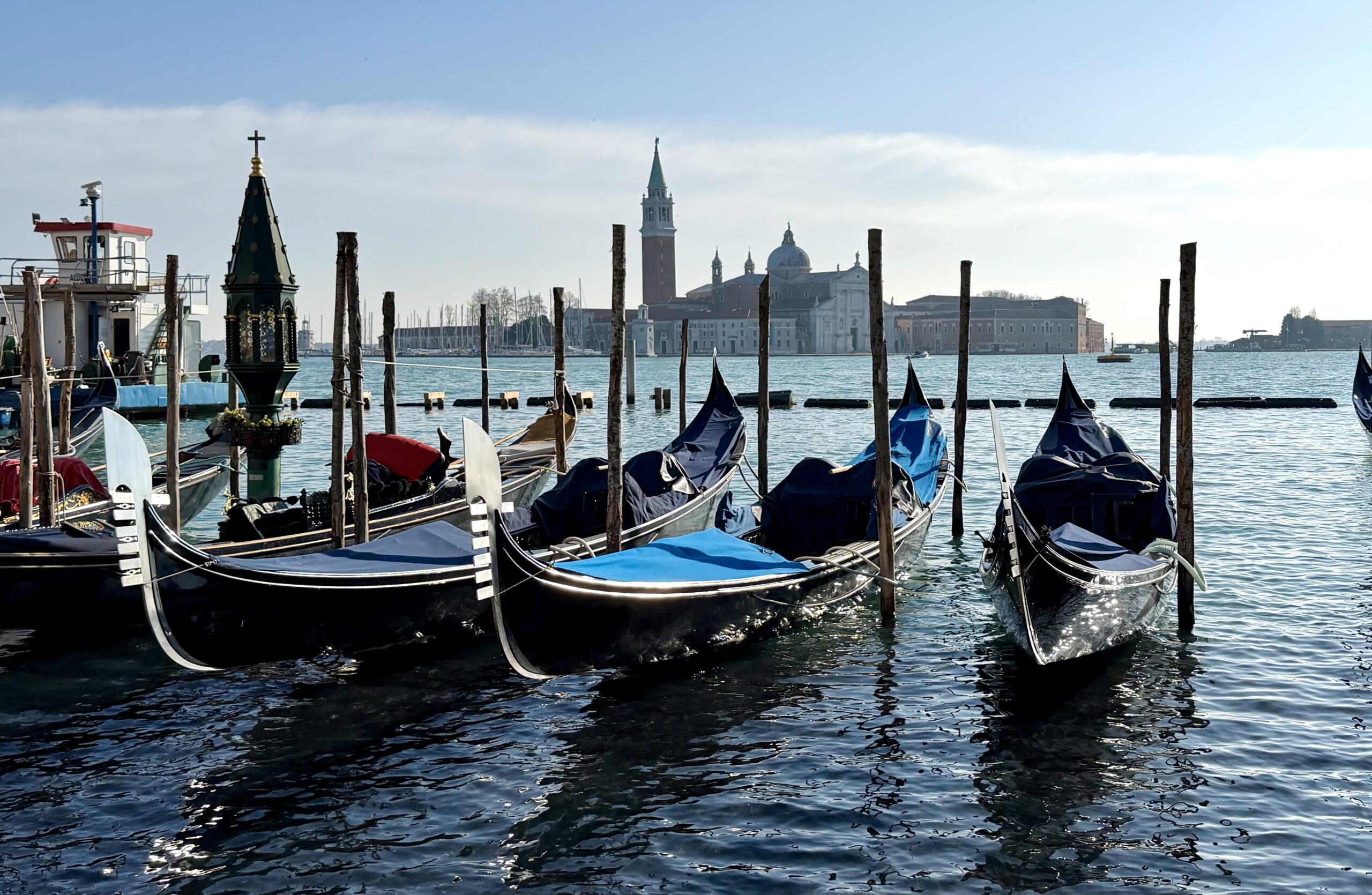

We took a train from Ljubljana down to Venice. We had initially planned to go to Poland after Austria but it was so cold around that time that we decided to head south instead. So this was the start of about a month in Italy.
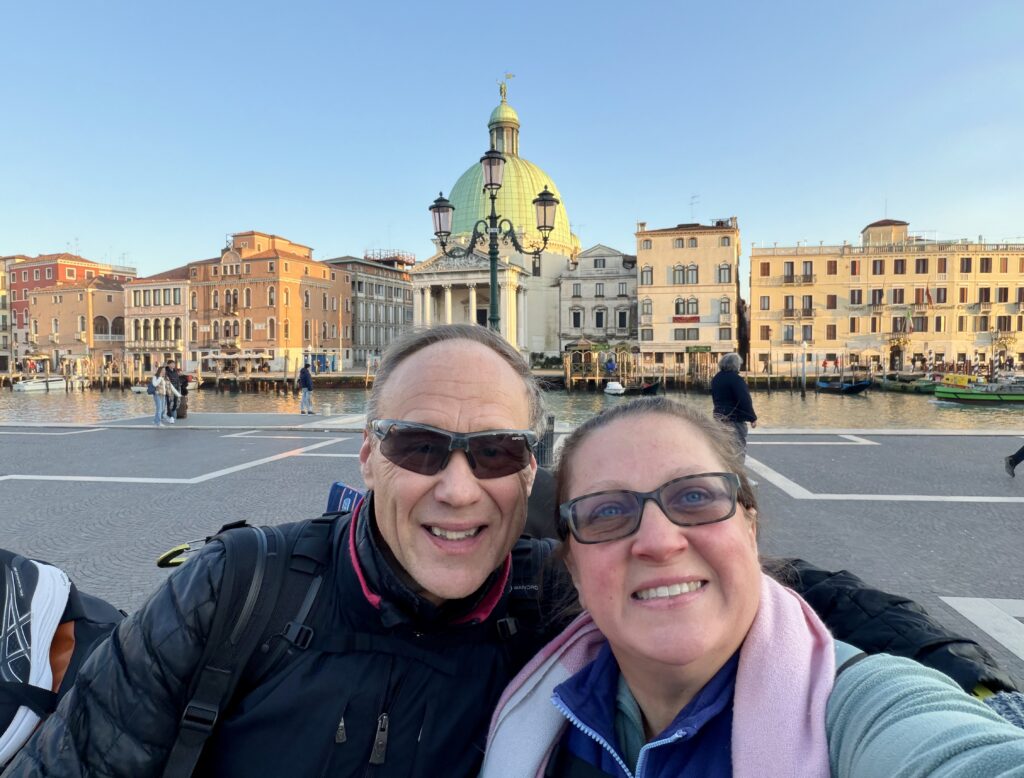
We arrived at Venice’s Santa Lucia train station – you get off the train and you are right on the Grand Canal making it a very easy way to get into Venice (as opposed to the airport on the mainland).
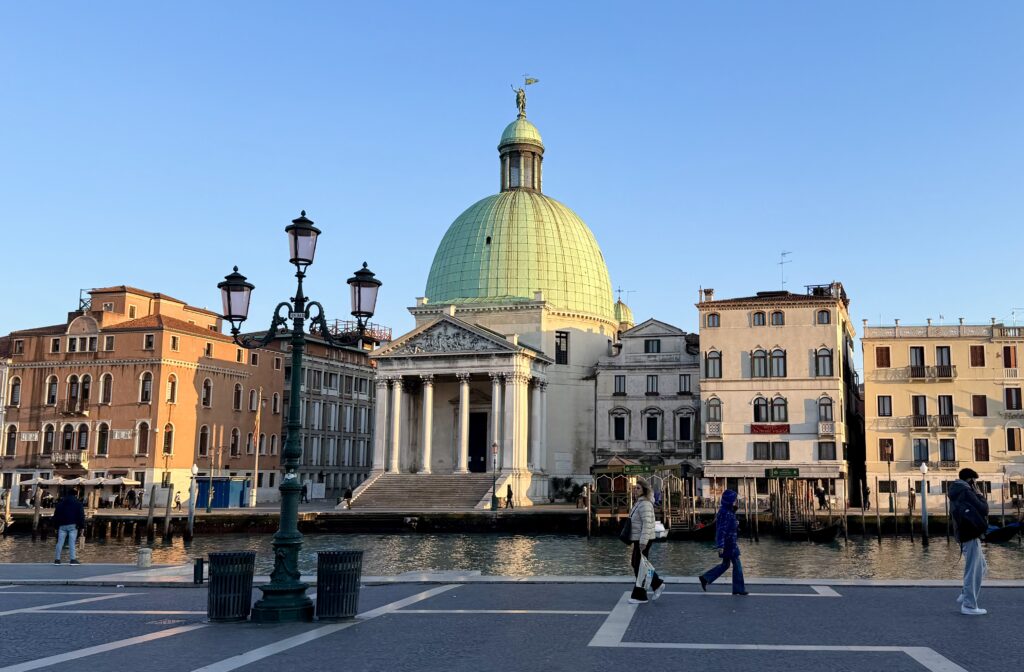
There are a couple of ways to get around Venice – walking (great way to explore, not so fun with luggage up and down multiple bridges!), water taxi (quick and door-to-door but super expensive – between €40-€100 from the train station to stops within Venice and €105-€135 from the airport), and the Vaporetto (a water “bus”). The Vaporetto is a great way to get around, especially along the Grand Canal. The stops alternate each side of the canal which is helpful because there are only a handful of bridges that cross it. There is also one other way – it’s called a traghetto. These are gondolas that you can take at certain points to get directly across the canal (€2 per person) (https://www.visit-venice-italy.com/transport-venice-traghetto.html).
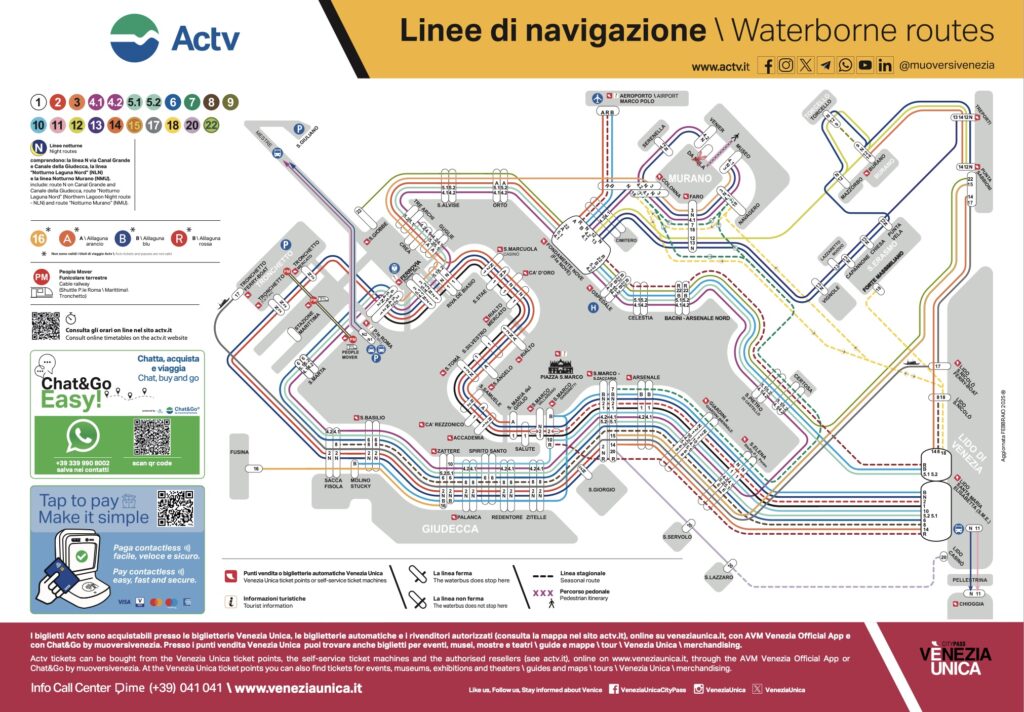
There is a big vaporetto stop right outside the train station. Similar to multiple bus lines in a city stopping at the central train station, there are multiple vaporetto lines that stop at Venice’s Santa Lucia. Looking at the screenshot of the route map below (https://avm.avmspa.it/it/content/consulta-le-mappe), you can see there’s a lot of lines (and also – notice on the google map screenshot that Venice is shaped like a fish!). (https://avm.avmspa.it/en/content/venice-urban-services-0)
The vaporetto still isn’t cheap (nothing in Venice is), which is likely a reflection of the high cost of operating these systems in a water-based network. A single trip is €9.50 for up to 75 minutes (not cheap like a regular bus but much cheaper than a water taxi for 2 people). But they also have multi-day passes for 2, 3, and 7 days (€ 35, € 45, and € 65, respectively). These tickets include the routes out into the lagoon such as Murano and Burano. We were in Venice for 5 days/4 nights so we went with the 7-day pass because we knew we’d use it (you need to take 7 trips to make it worth it and with a round-trip to and from the train station and a planned round-trip to Burano, that was already 4 we knew for sure we’d take). It’s also super convenient not to have to worry about getting tickets for each trip – just validate the pass when you get on the first time and you’re good to go.
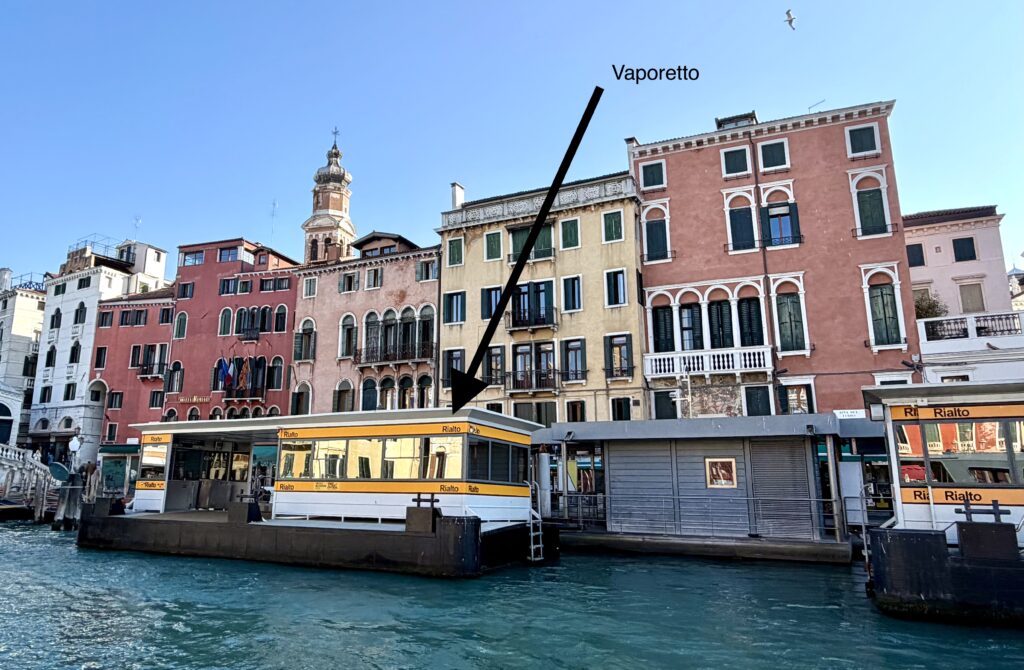
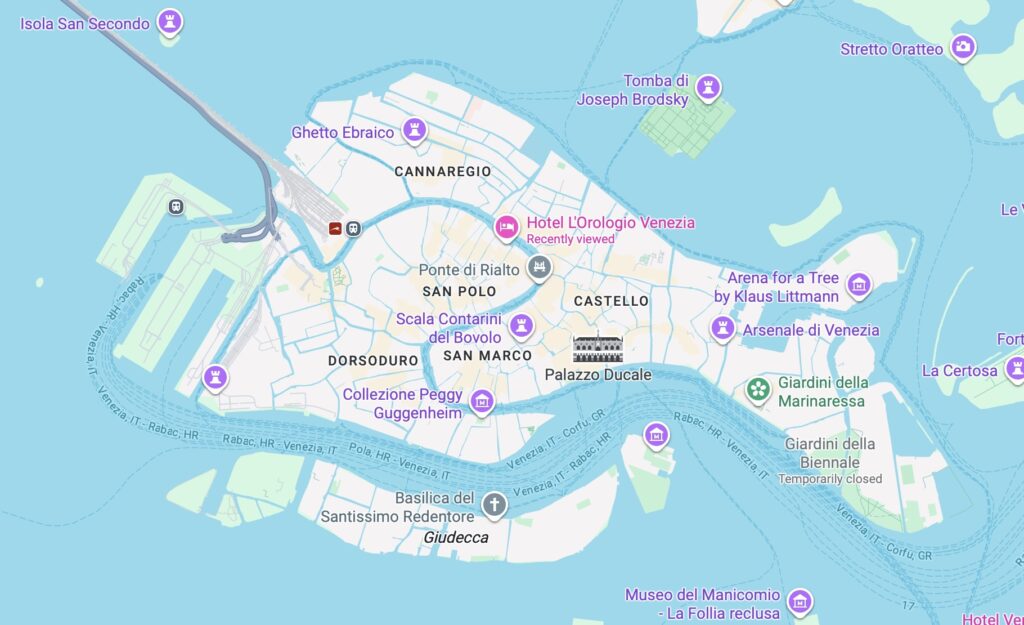
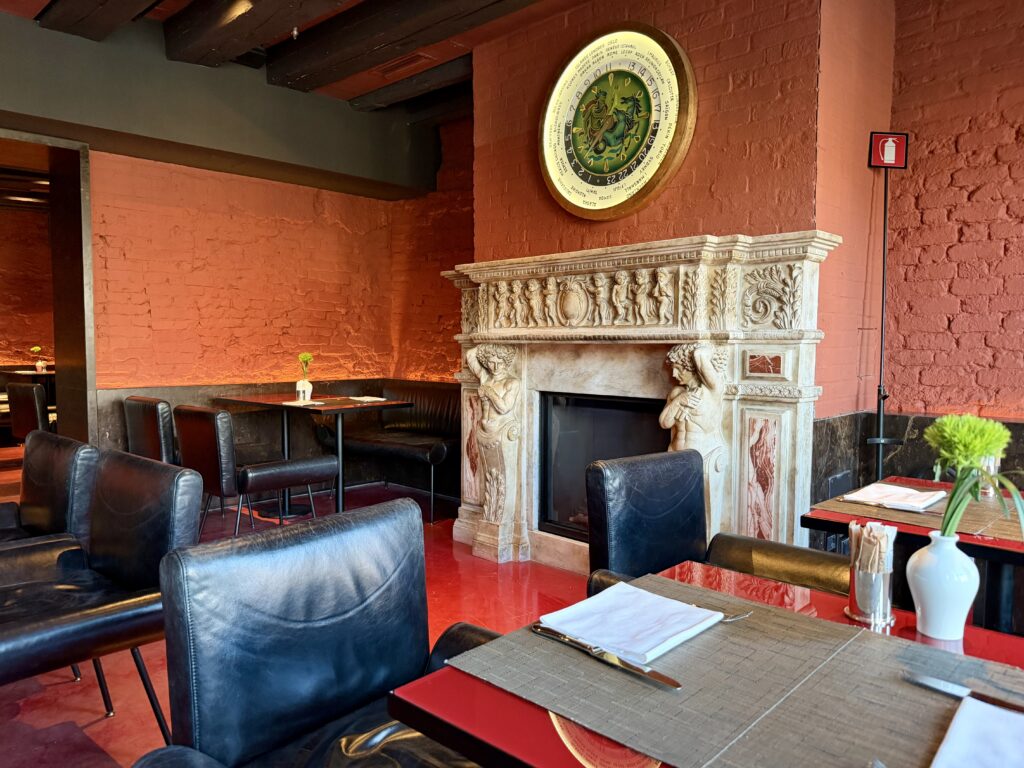
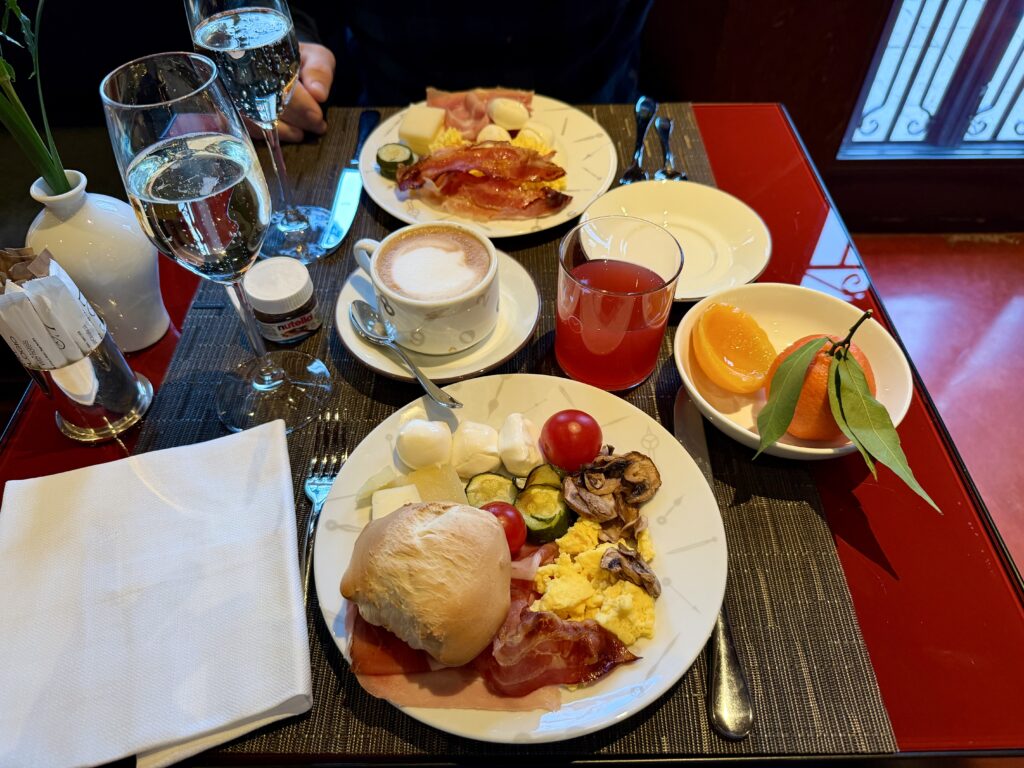
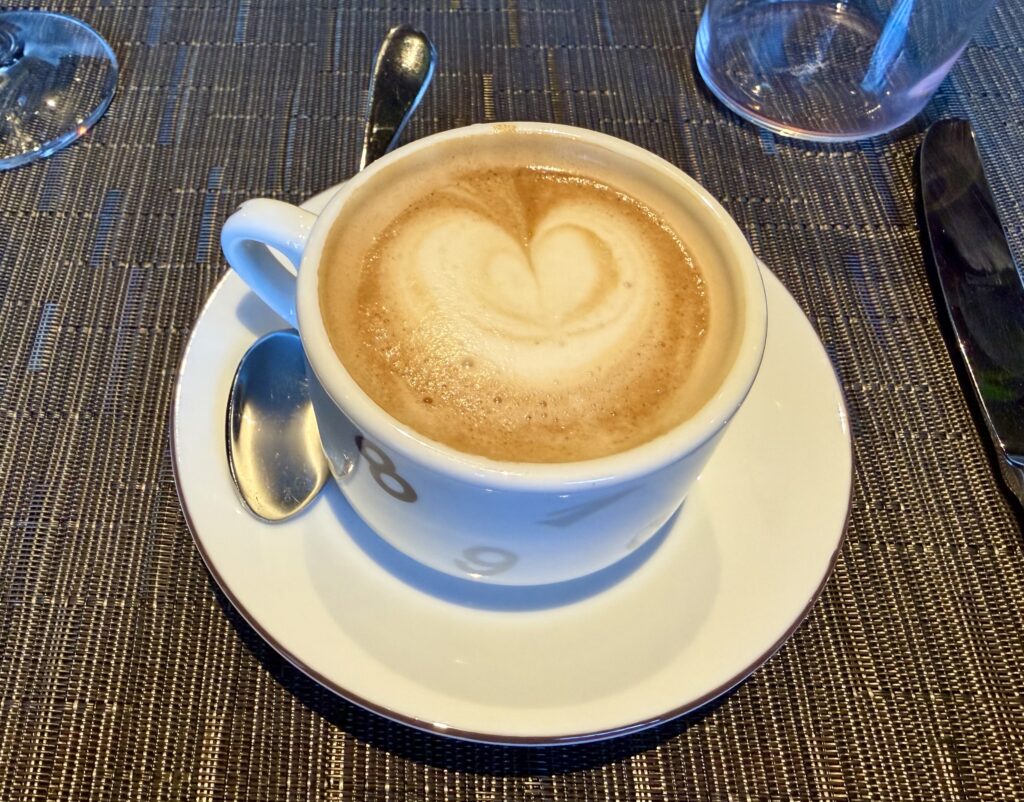
So we got our passes and hopped on a vaporetto to the Rialto Mercato stop to get to our hotel, then it was a short walk (less than 5 minutes) to our hotel. We stayed at the Hotel L’Orlogio (https://www.hotelorologiovenezia.com) – orlogio means clock in Italian (similar to l’horloge in French) and the hotel went with that theme with clocks everywhere in the decor. There were even clock numbers on the coffee mugs! This hotel included an excellent buffet breakfast (including prosecco!) and made-to-order coffee (the Italians take their coffee seriously which we loved). The breakfast room is in the lobby area right on the Grand Canal so we had amazing views with breakfast.
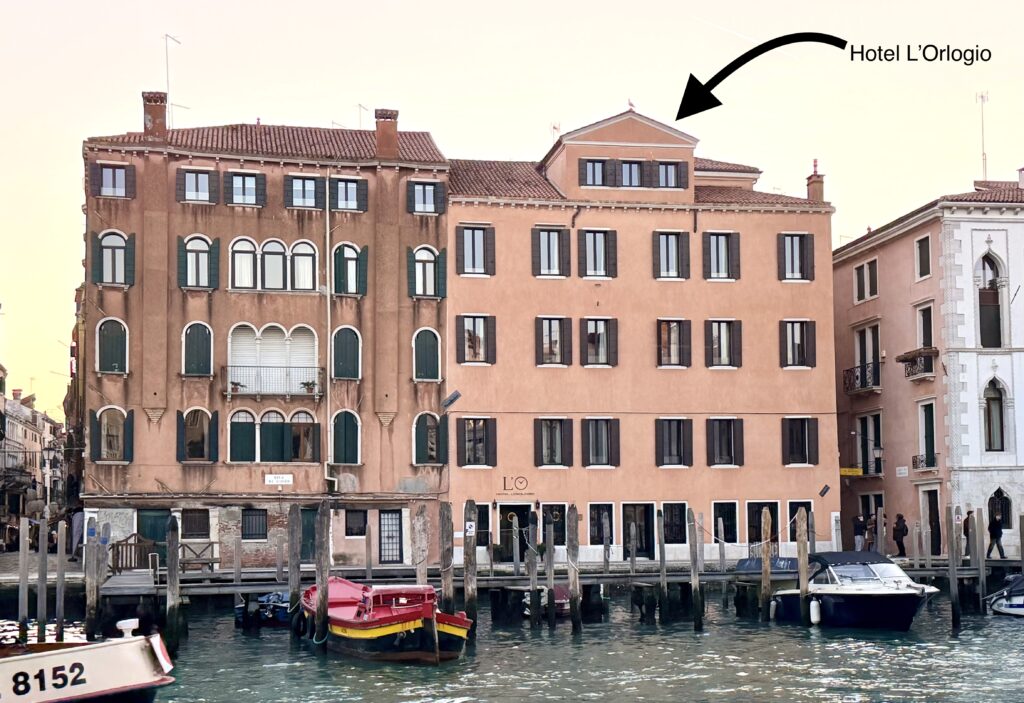
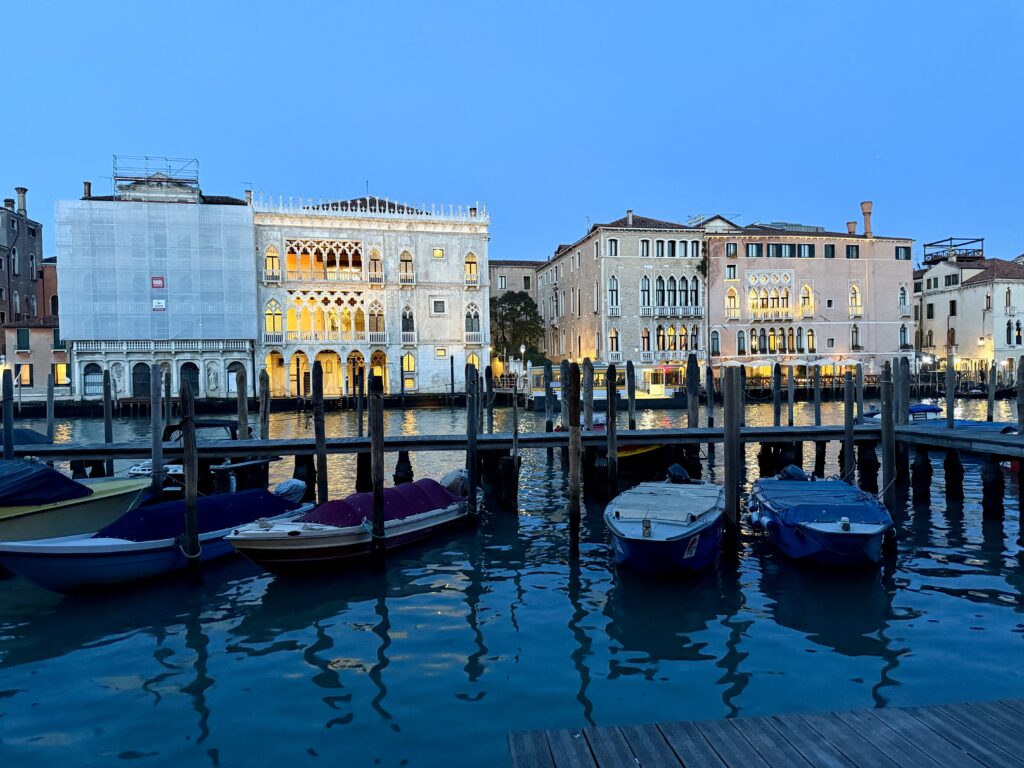
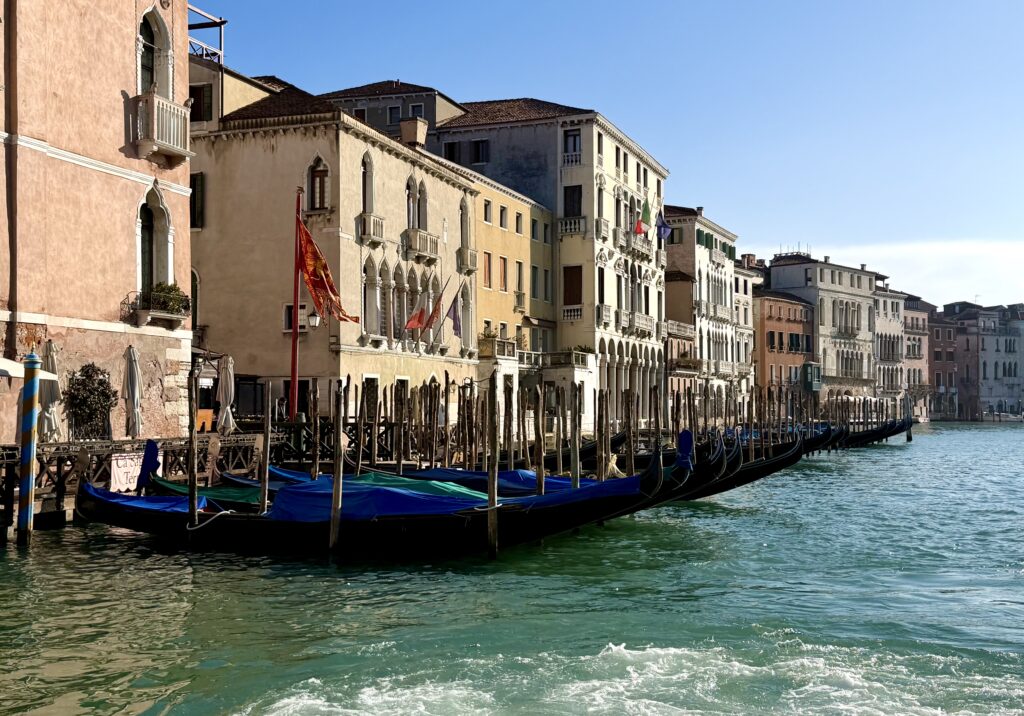
This was the view from the front of our hotel.
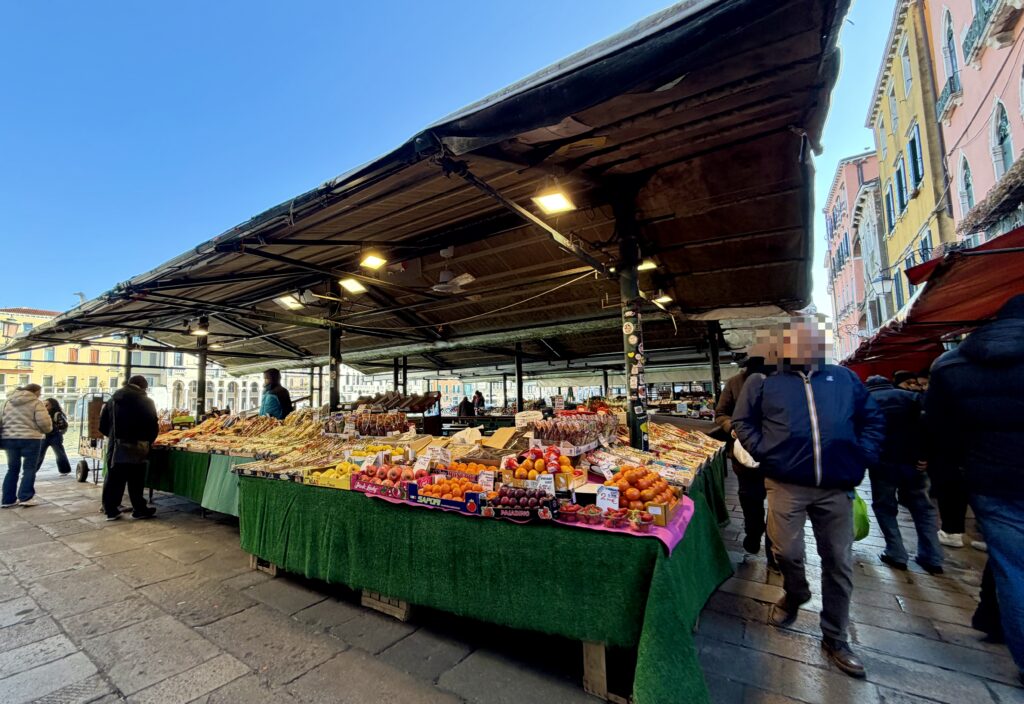
The vaporetto stop by the hotel (Rialto Mercato) is named for the fish market (mercato). It’s a bustling market with fresh seafood and fresh fruits and vegetables. As you can imagine, a city surrounded by water has a lot of excellent seafood.
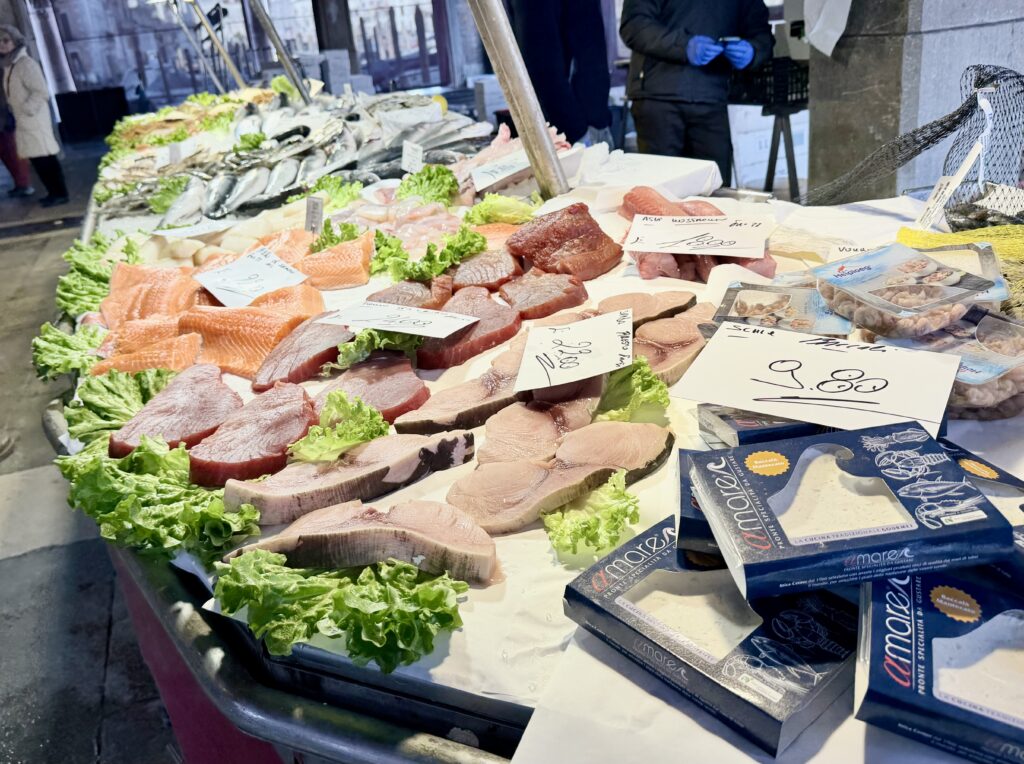
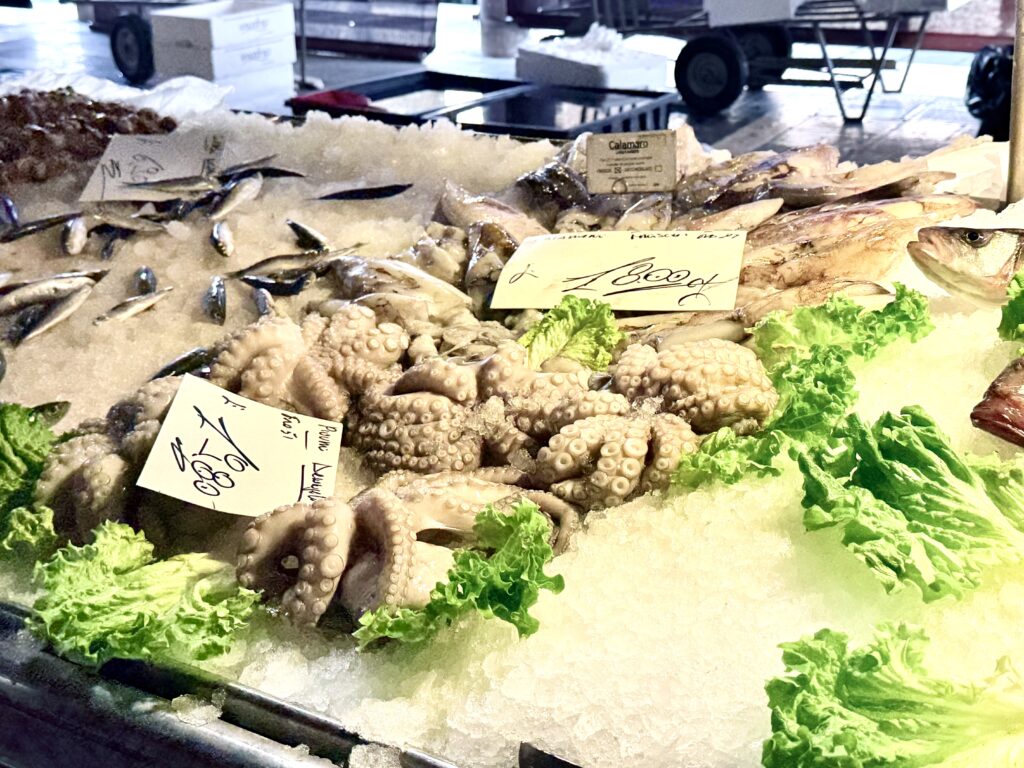
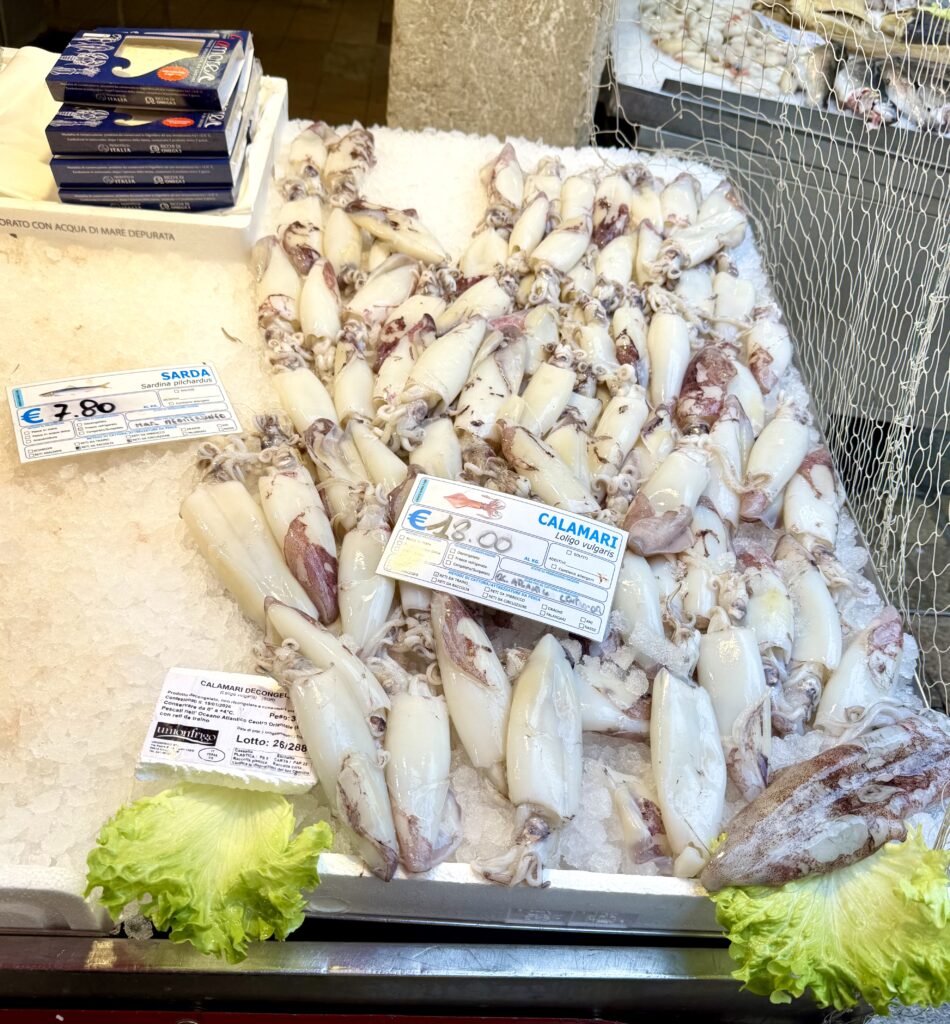
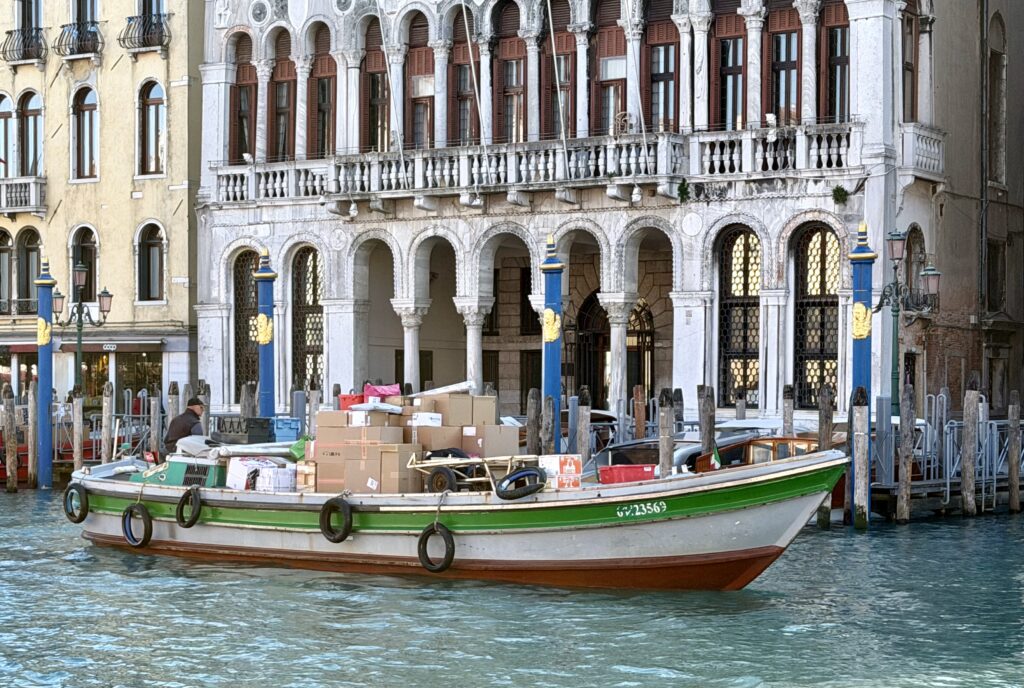
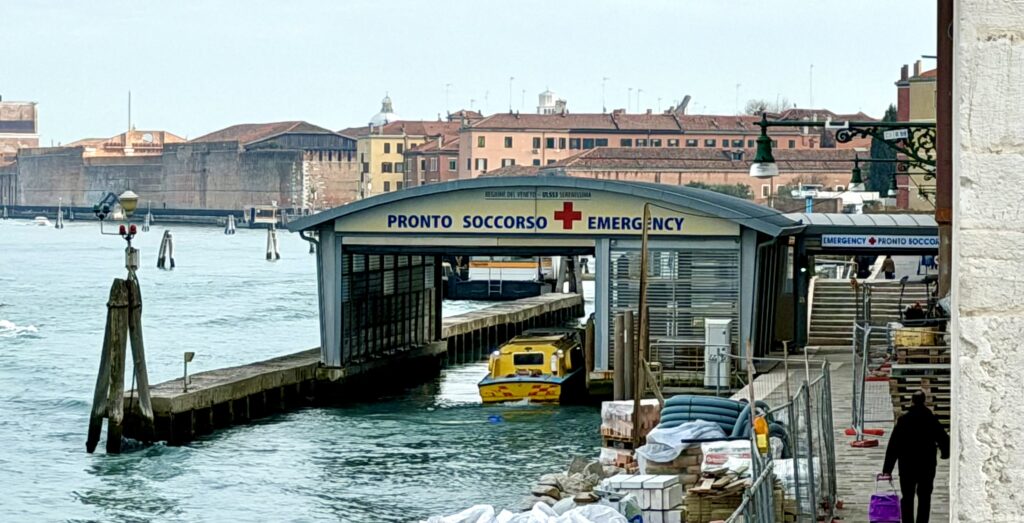
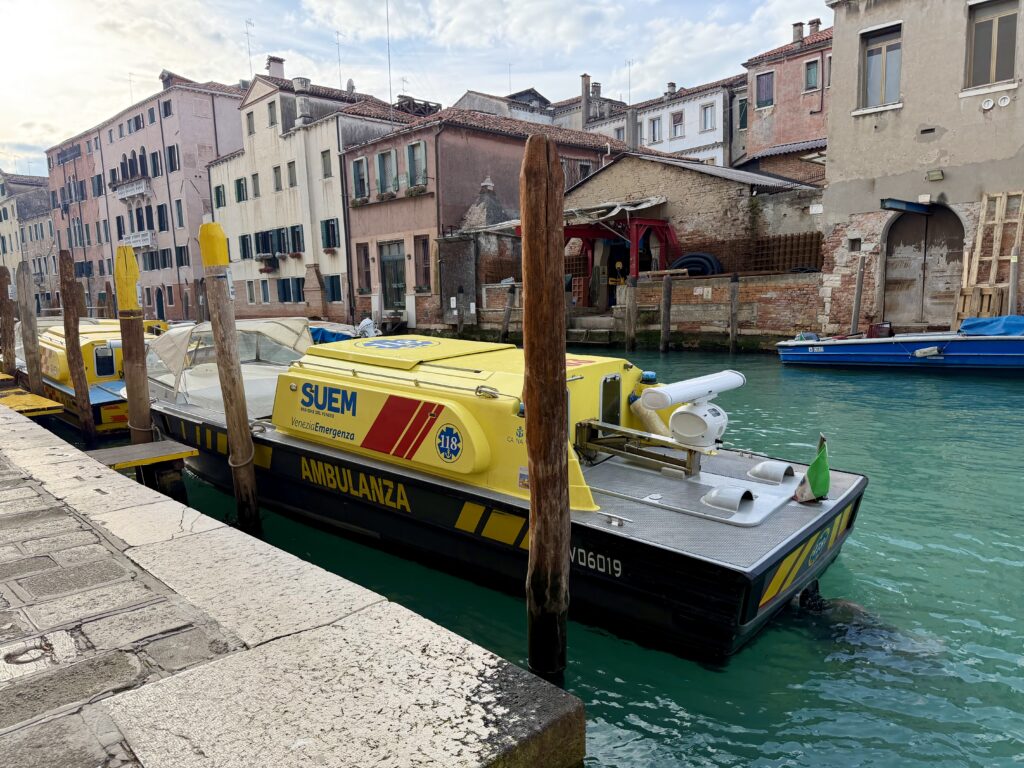
It’s fun to see all of the everyday transport that happens by boat …. package delivery, ambulance, police, garbage, etc. We came across an Emergency Room entrance and saw the ambulance there and I thought that was so cool!
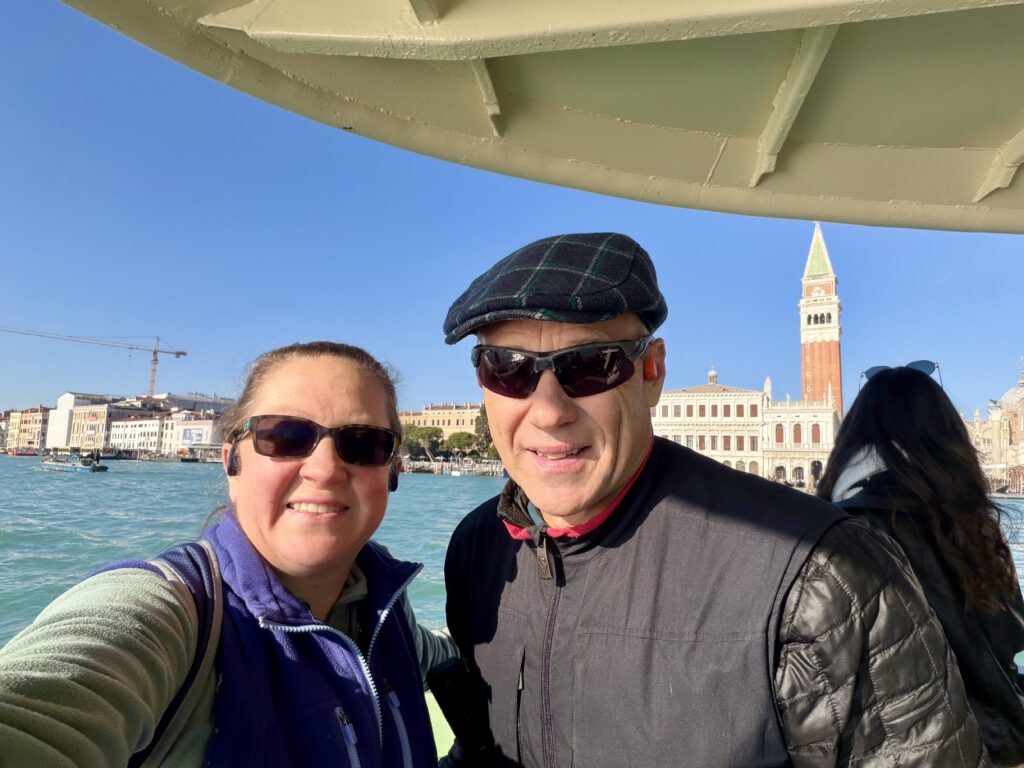
We took many trips along the grand canal and across the bridges. We also did a Rick Steves Audio Europe vaporetto tour (these are self-guided – usually walking tours but we did a tram-based one in Vienna and there was a vaporetto-based one in Venice). There are actually 2 vaporetto lines that run along the Grand Canal – a slower one (Line 1) with more stops, and a faster one (Line 2). The slower one was a great way to cruise the canal and sightsee. The vaporettos have inside seating for the cold, rainy days but also have some seats outside that were great for a nice sunny day.
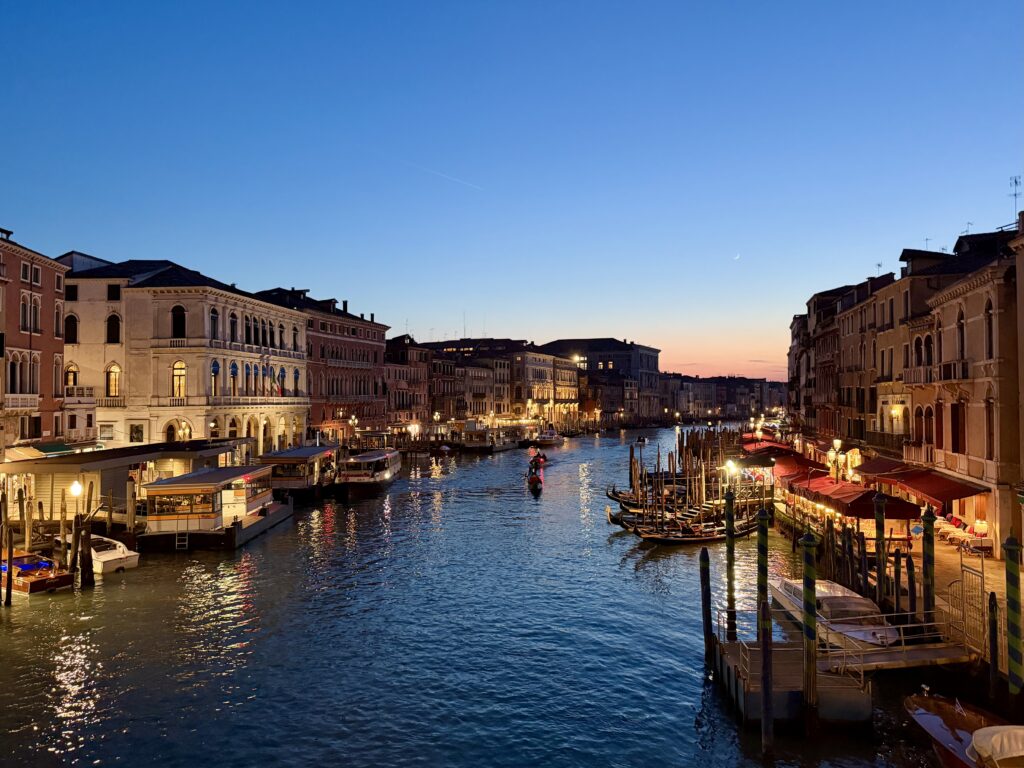
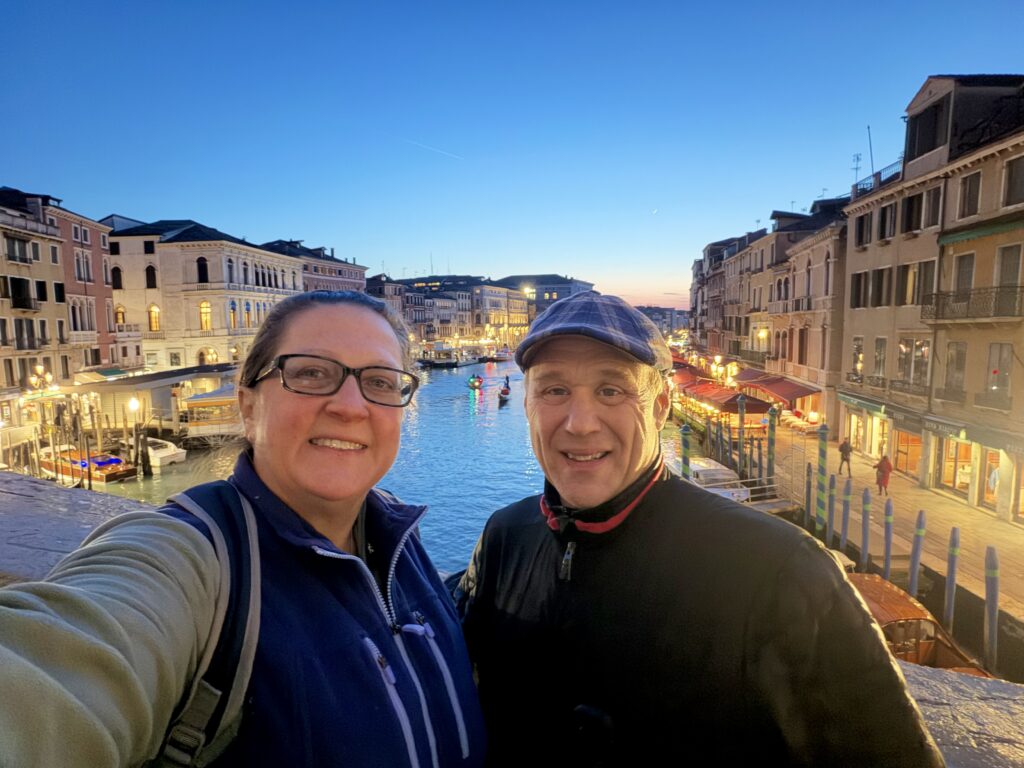
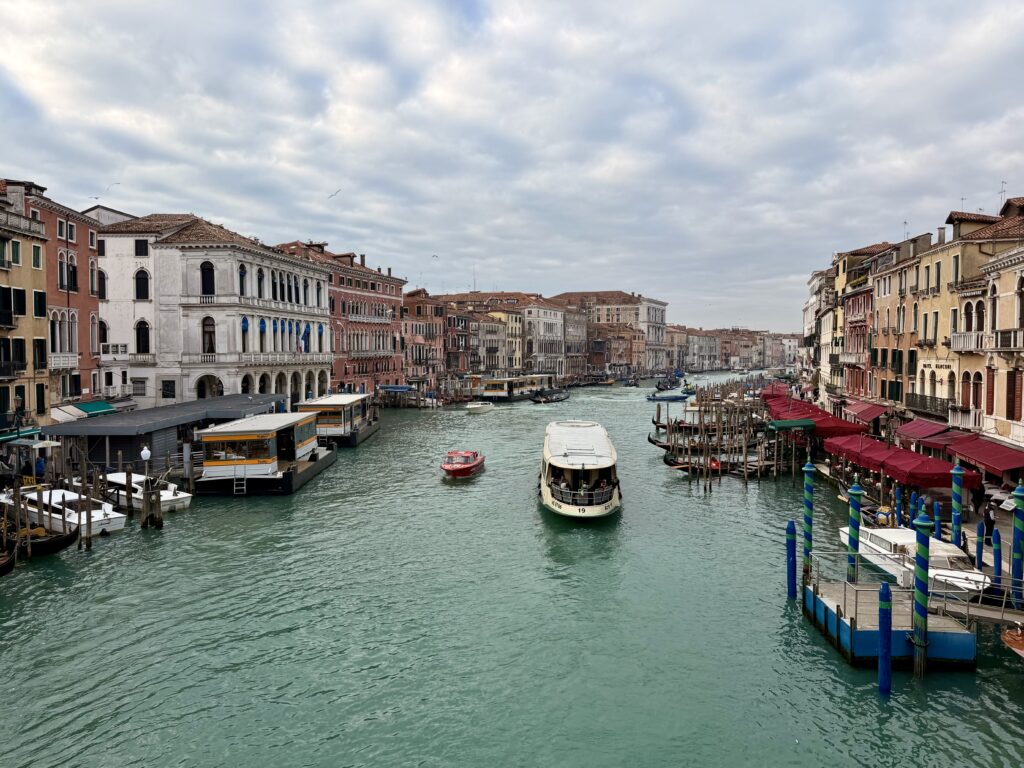
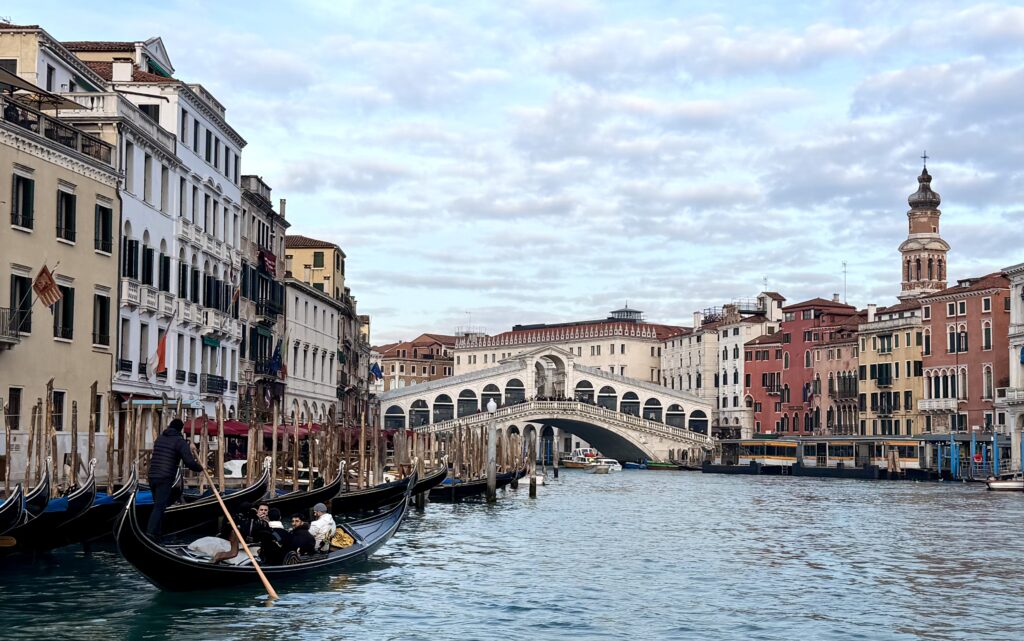
In addition to the view of the canal on the water itself, the view from the Rialto Bridge is also pretty amazing.
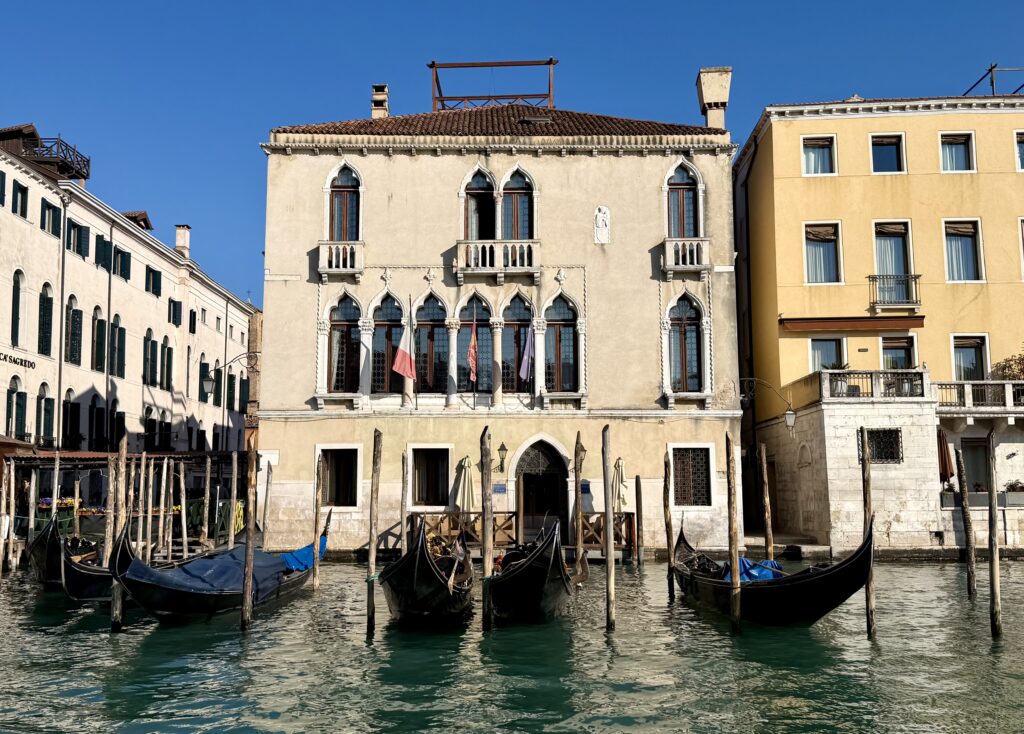
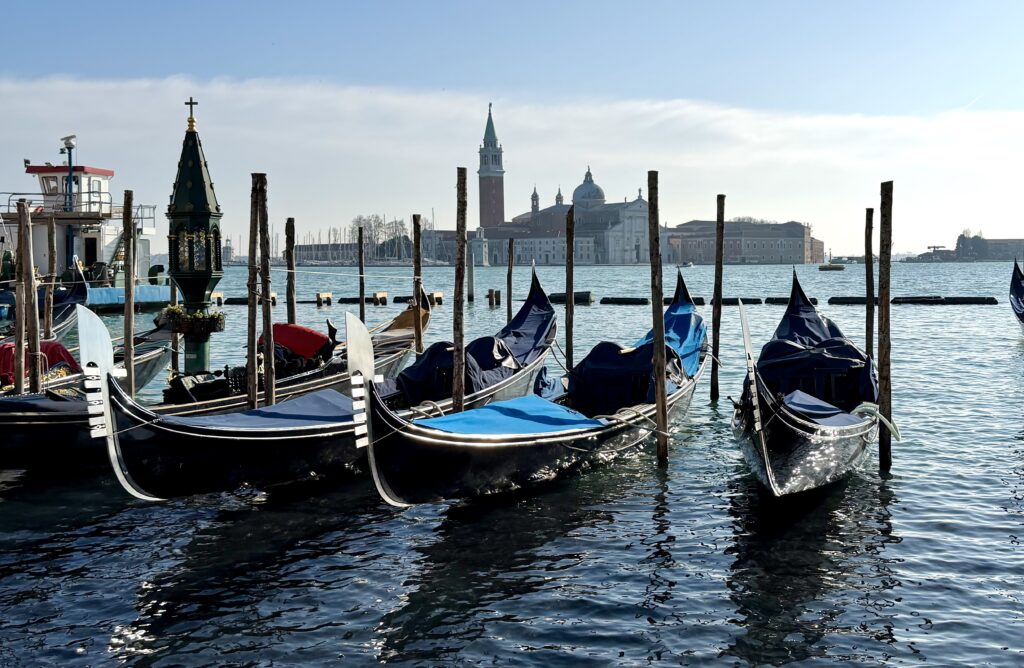
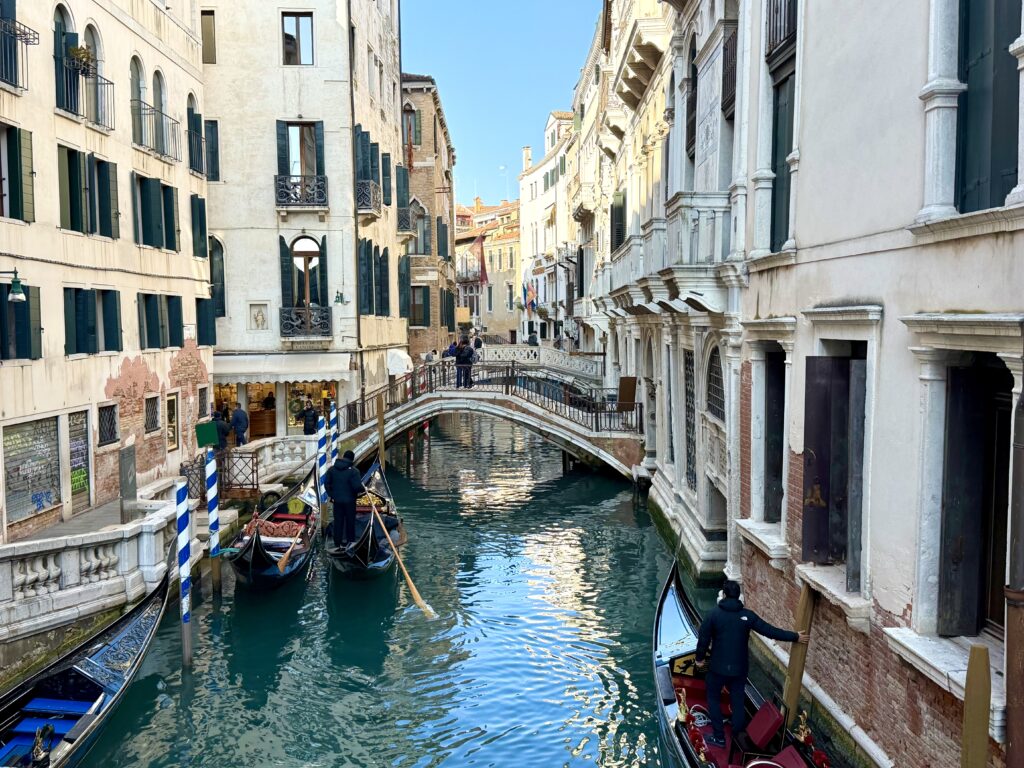
The gondolas were really cool to see. We decided not to ride in one but I loved watching them get around.
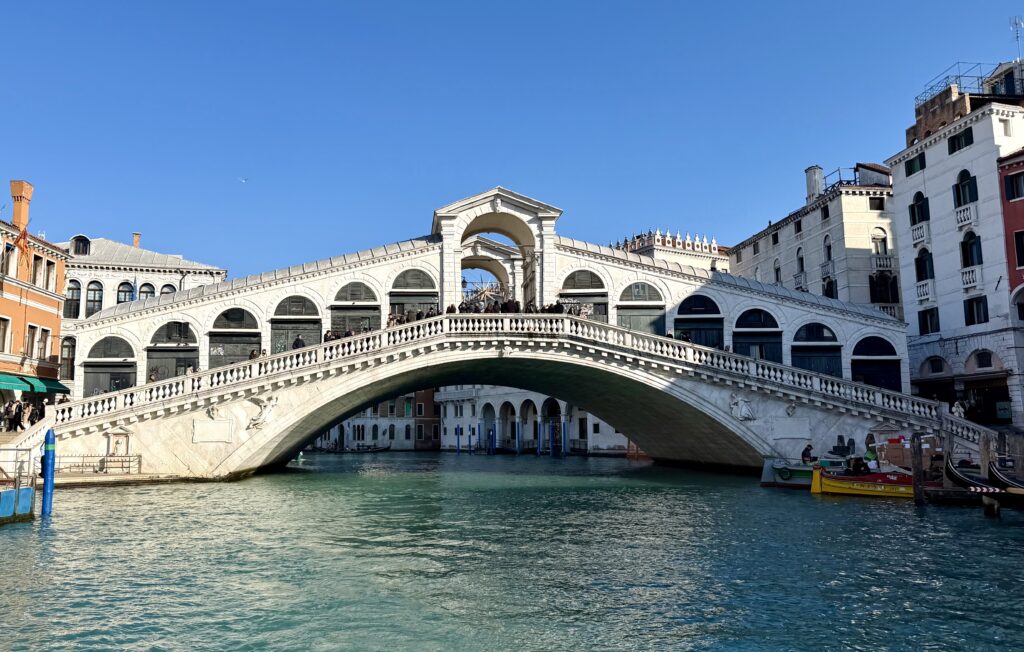
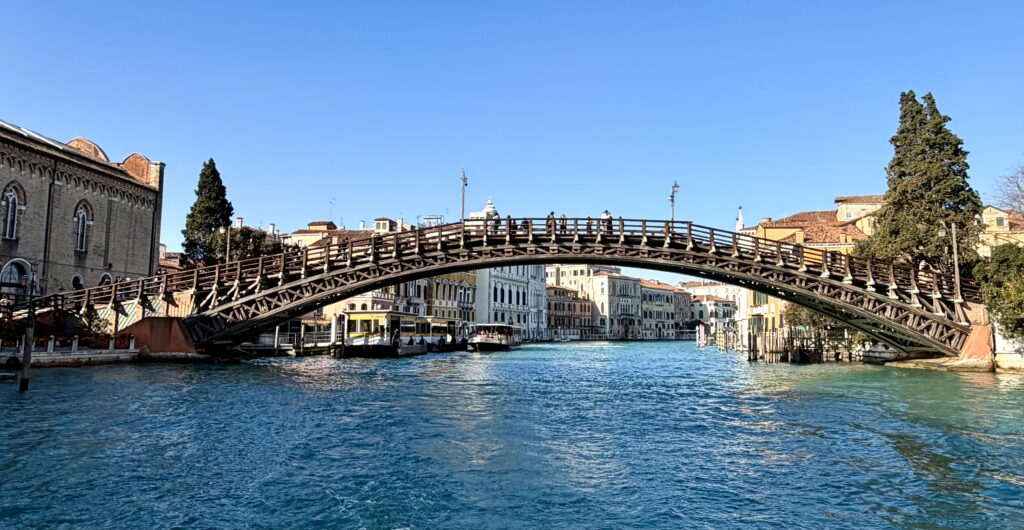
I mentioned the bridges earlier. There are 4 that span the Grand Canal: the Ponte degli Scalzi (Scalzi Bridge) right by the train station, the Ponte dell’Accademia (Academy Bridge) on the other end closer to Piazza San Marco (St Mark’s Square), the Ponte di Rialto (Rialto Bridge) in the middle, and a fourth I didn’t even know about – the Ponte della Constitizione (Constitution Bridge).
The Rialto bridge is the oldest and most famous. It was built in 1591 to connect San Marco and San Polo (yes, really). There were several other bridges at this site prior to the current structure (a pontoon bridge and a couple of wooden bridges). It has a middle path lined with shops and then a path on either side behind the shops. Shops existed on this bridge (and its precursor) from the 15th century – rent from the shops went to the State Treasury, who were responsible for maintenance of the bridge. It was a few centuries before another crossing was built.
The Ponte dell’Accademia was first built in 1854 using steel and then was replaced with a wooden bridge in the 1930s (I think this is the first time I’ve read of a wooden bridge replacing a different material like steel or stone – usually it’s the other way around). In 1985, the original wooden bridge was demolished and replaced with the current bridge.
The stone Scalzi Bridge was finished in 1934 and sits just across from the Chiesa degli Scalzi (Church of the Barefoot or Discalced Monks). Ponte della Constituzione was more recent – it only opened in 2008 and connects the main train station to Piazzale Roma on the far end of the island (Piazzale Roma is the main bus station and is at the end closest to the road bridge that the buses and trains use to come to the island) (https://imagesofvenice.com/bridges-of-the-grand-canal/). And then there are tons of smaller bridges to get you across all of the smaller canals.
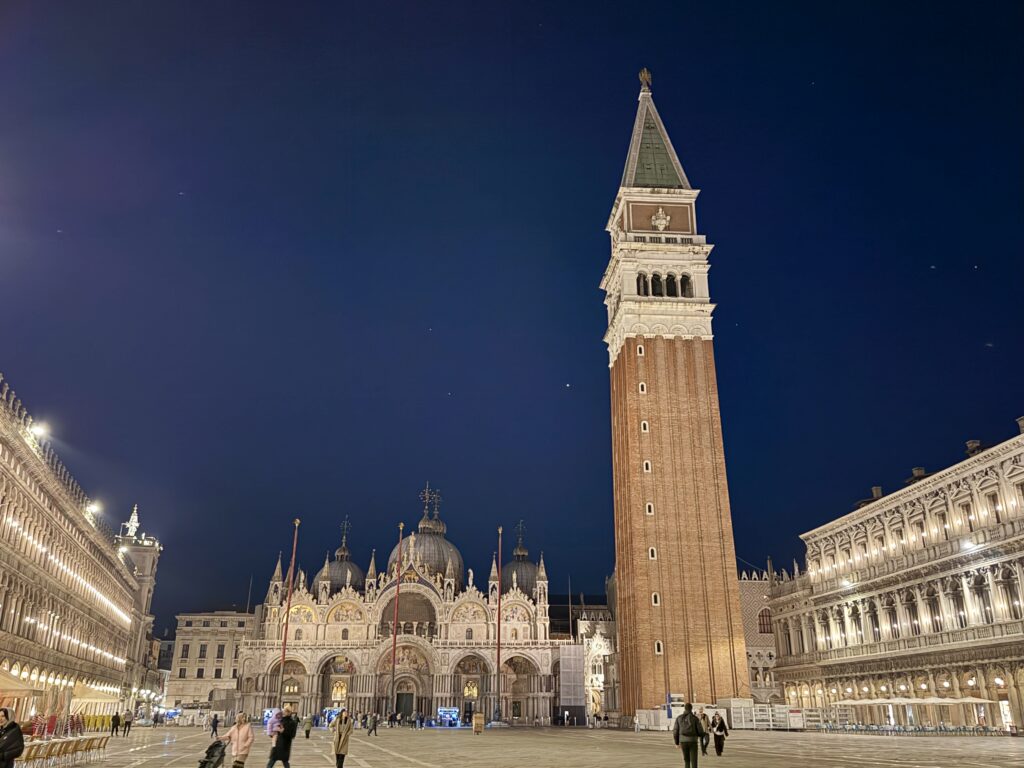
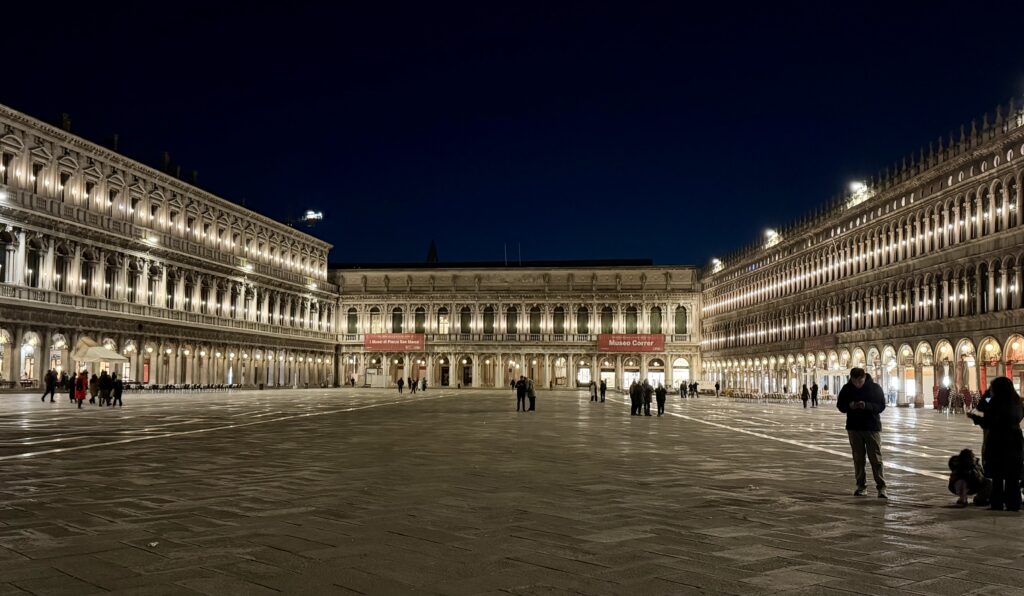
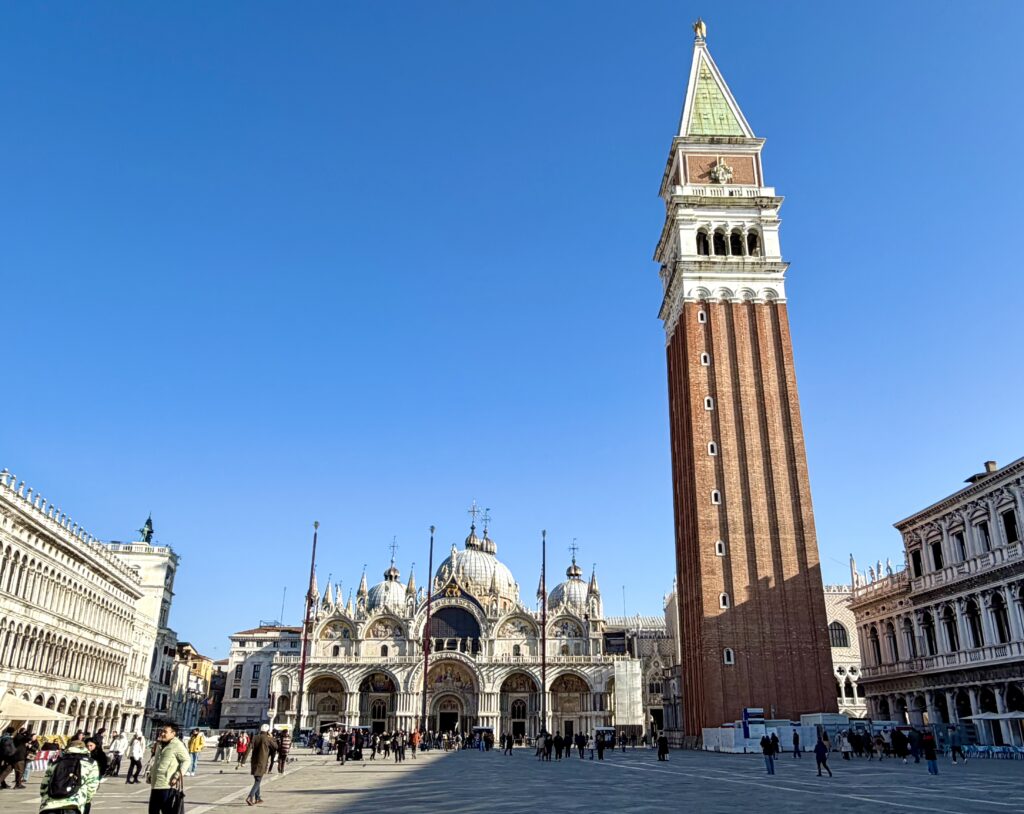
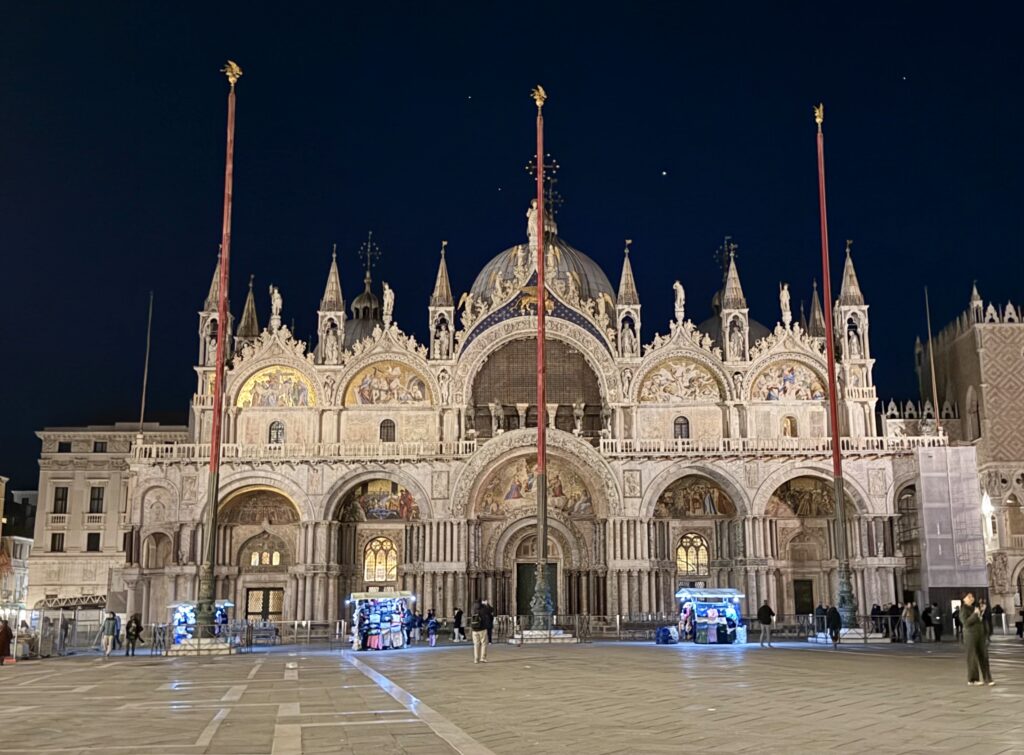
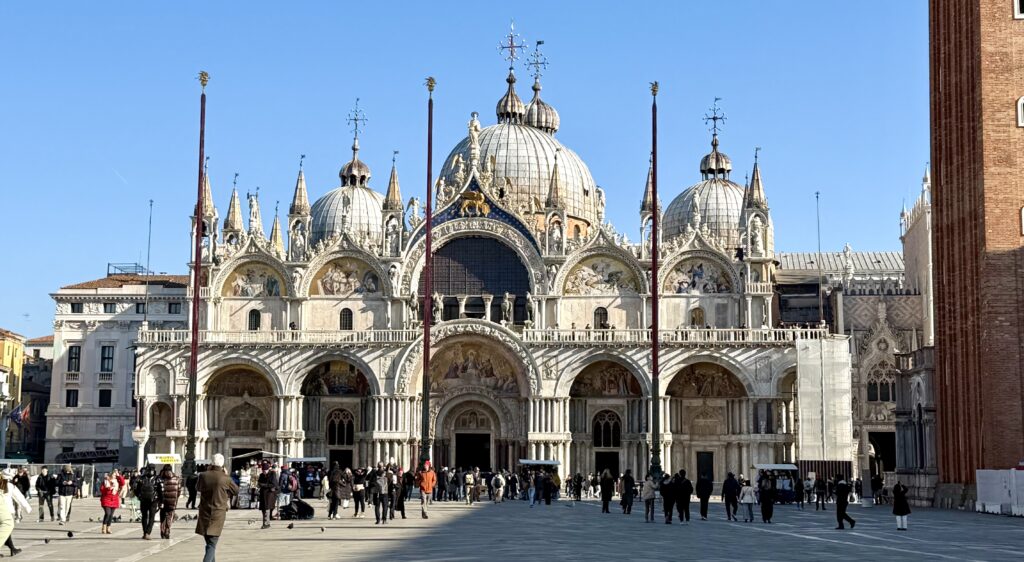
One of the main sights in Venice is Piazza San Marco, or St. Mark’s Square. The square itself is huge and has a bunch of cafes and shops around it. It was really nice to see it at night (we walked over there the night we arrived) when it was nearly empty. During the day there were more people but it still wasn’t very crowded (the benefit of traveling in the off-season).
There’s a really cool astronomical clock in St. Mark’s Square that was unveiled in 1499 – the minute portion only changes every 5 minutes which I thought was pretty unique. So I waited for it to change to get a video
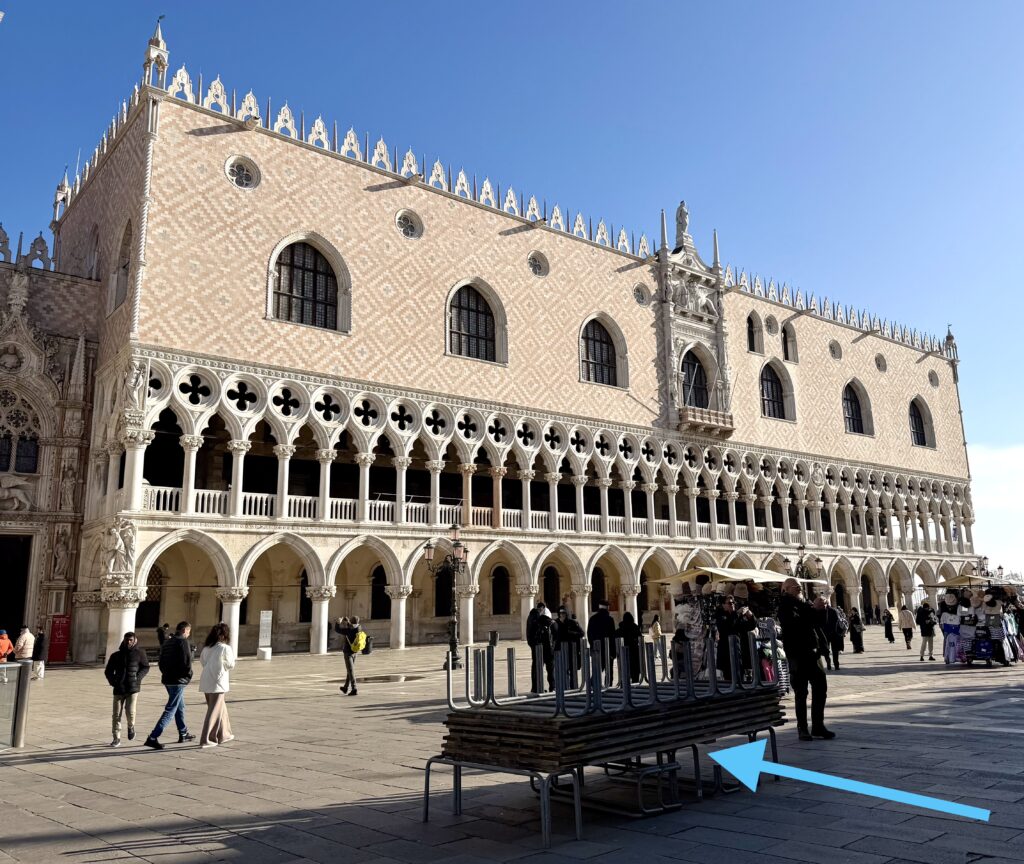
Since the city is surrounded by water (both around it and through it), it is prone to flooding. The acqua alta is a seasonal tidal phenomenon – it is usually brief (around an hour) since it is related to the tides. When this happens, the city creates elevated walkways – we saw tons of small platforms (they looked like short tables) that create walkways to use during the acqua alta (https://www.comune.venezia.it/en/content/venice-and-high-water).
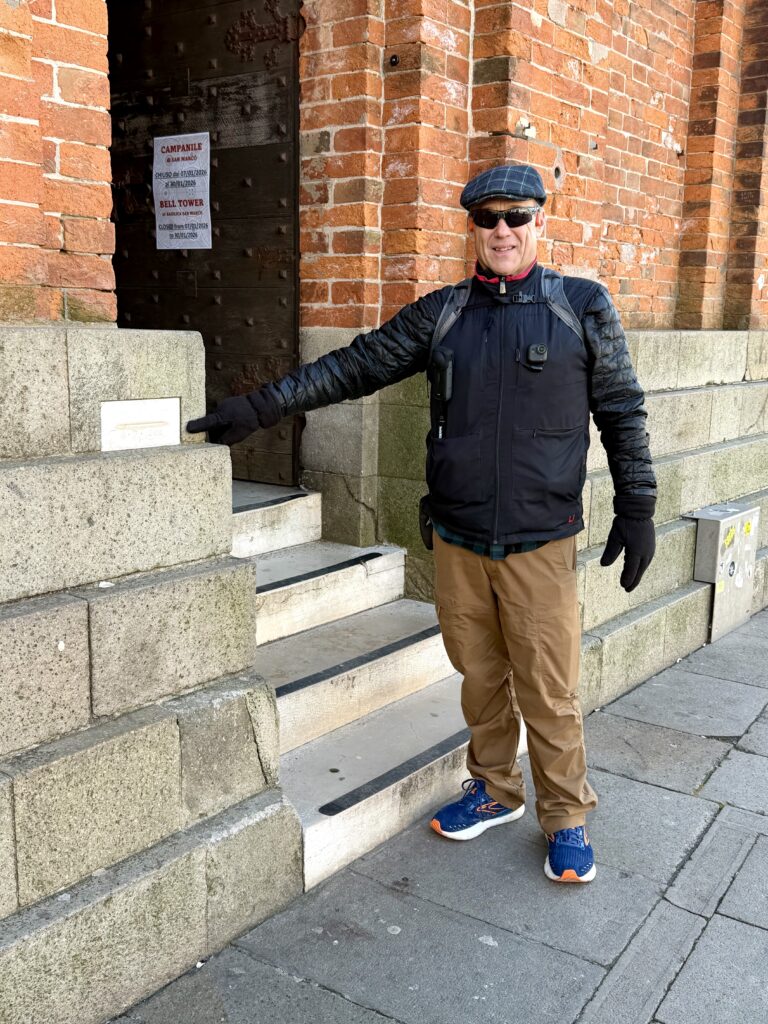
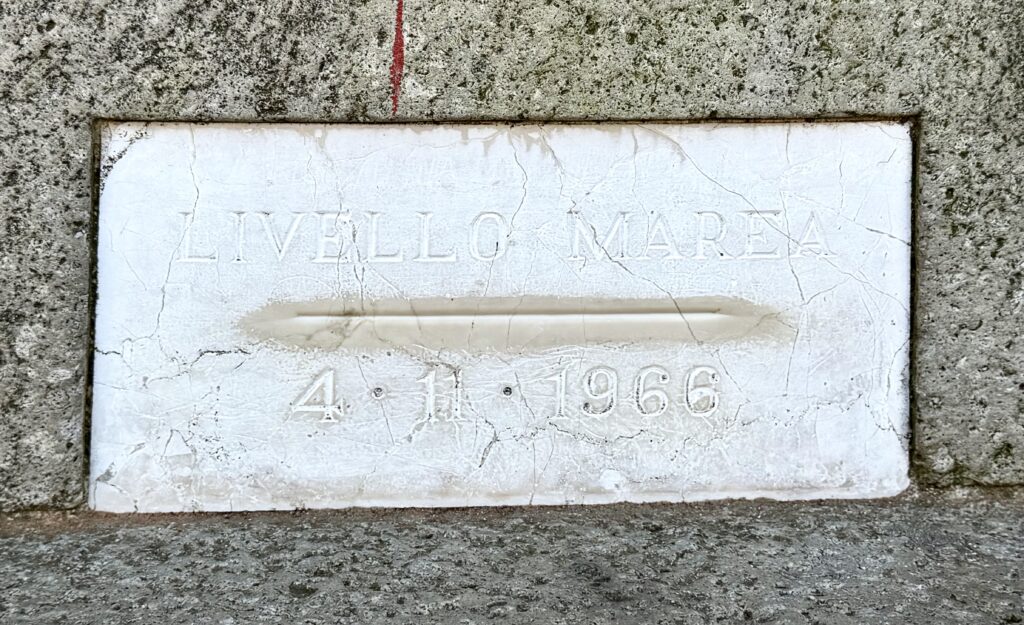
There was a major flood, though, on 04 Nov 1966 (there are some impressive pictures of it here: https://imagesofvenice.com/the-great-venetian-flood-of-1966/). St. Mark’s Square had 4 feet of water and it hung around for hours. There’s a plaque on one of the buildings that marks the water level. The MOSE system is a series of barriers put up in 2003 to help prevent these kinds of major floods that cause so much damage.
During our trip we made sure to visit St. Mark’s Basilica and the Doge Palace, both on St. Mark’s Square. St. Mark’s Basilica has very unique architecture and ornamentation – in the Rick Steves audio tour he refers to it as “Early Ransack” because so much of it was taken from places they had conquered. The original church was built to house the remains of St. Mark (Mark as in the biblical authors Mathew, Mark, Luke, and John). In 828 AD, when merchants “acquired” St. Mark’s remains from Egypt and brought them to Venice, a church was built over his bones and he was made the patron saint of Venice. The original church burnt down in 979 AD and the existing church was built in 1063. Then over the years it was decked out with loot from around the empire.
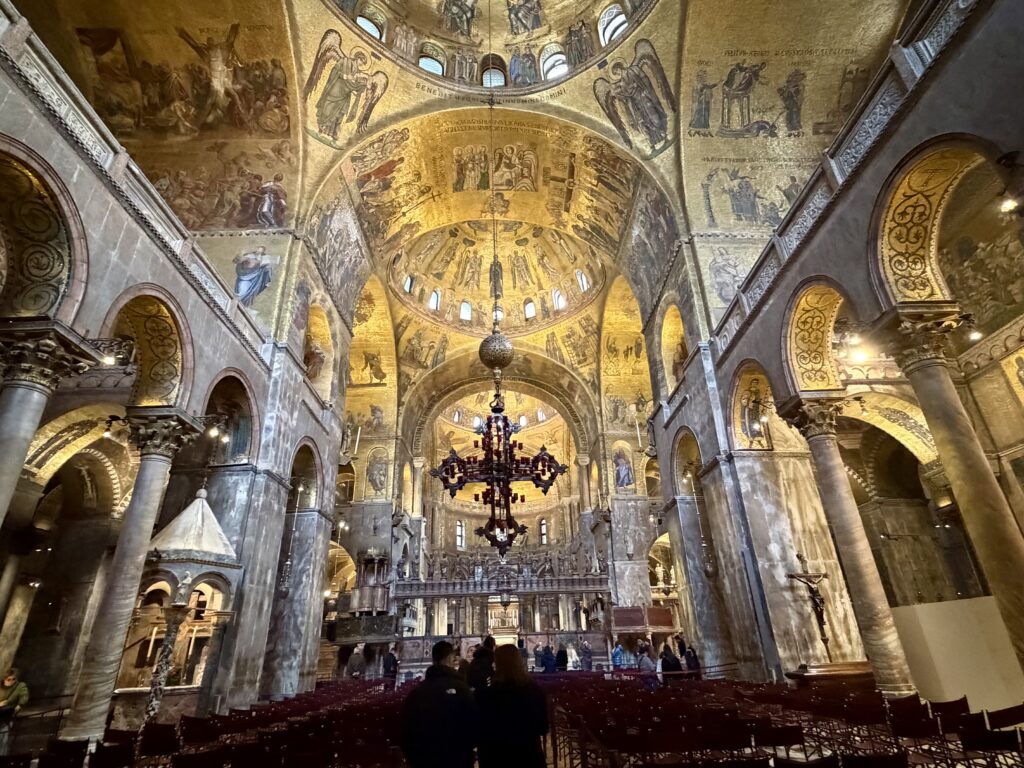
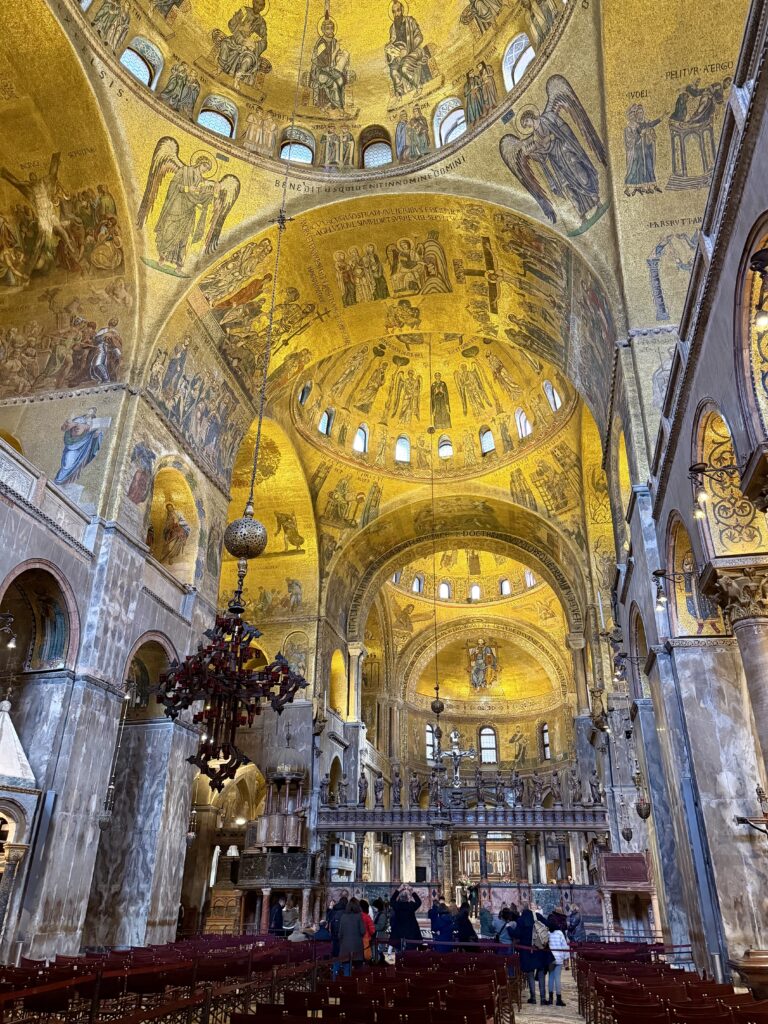
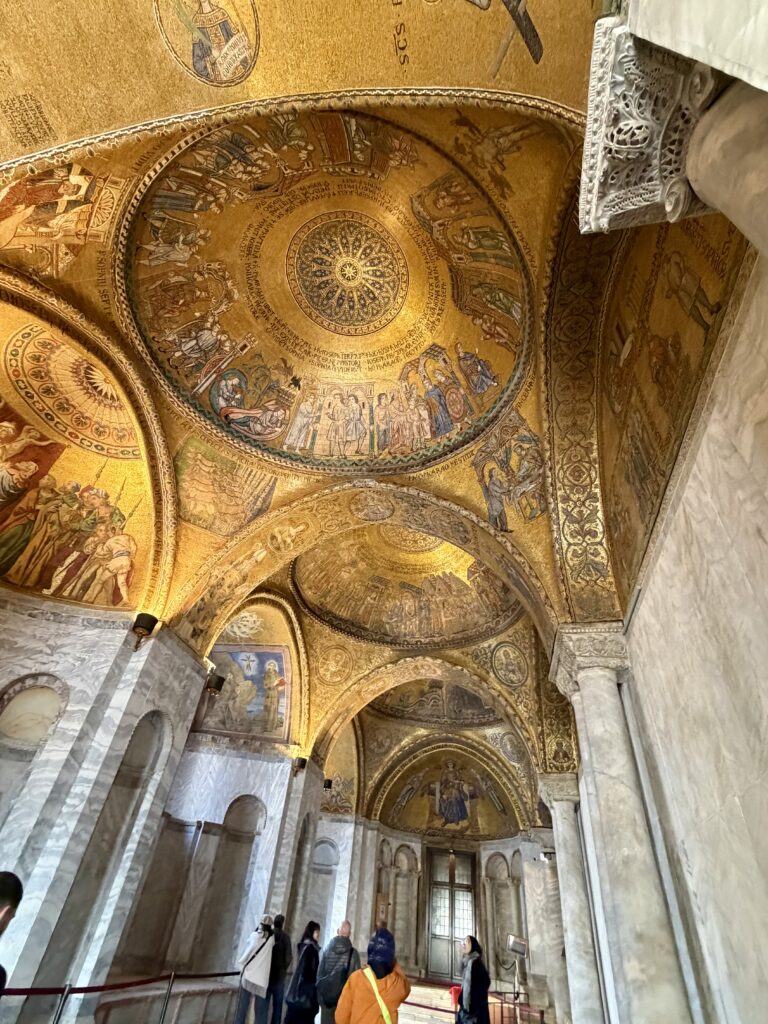
The inside was impressive and a bit overwhelming. There is gold mosaic basically everywhere. In the ceilings of the nave and even on the ceilings of the entryway. We bought our timed-entry tickets in advance (€10 for just the basilica and then there are some other add-ons that we skipped; https://www.basilicasanmarco.it/en/). Because we were traveling in the off-season, we were able to book our tickets a day or two in advance, but if you go in summer/peak season then I’m sure you need to book much further in advance. It’s been nice doing these kind of things relatively last minute because then we can adjust to the weather. For example, we did St. Mark’s and Doge’s Palace on what was supposed to be a rainy day since they’re inside, etc. We got really lucky with the weather while we were there though. We visited St. Mark’s Basilica in the morning then the Doge’s Palace in the afternoon since they are right next to each other in St. Mark’s Square.
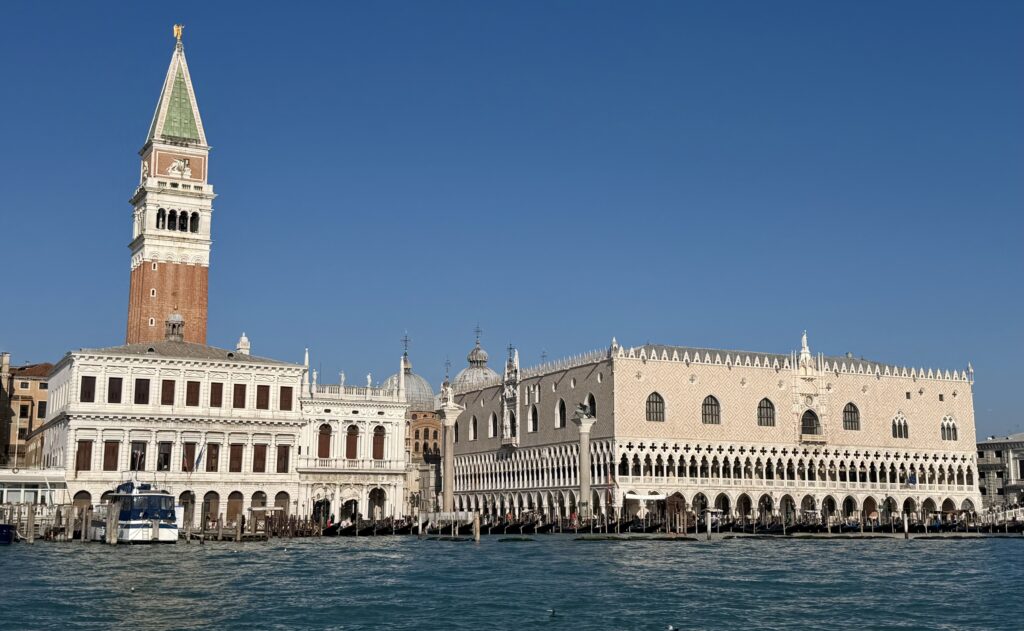
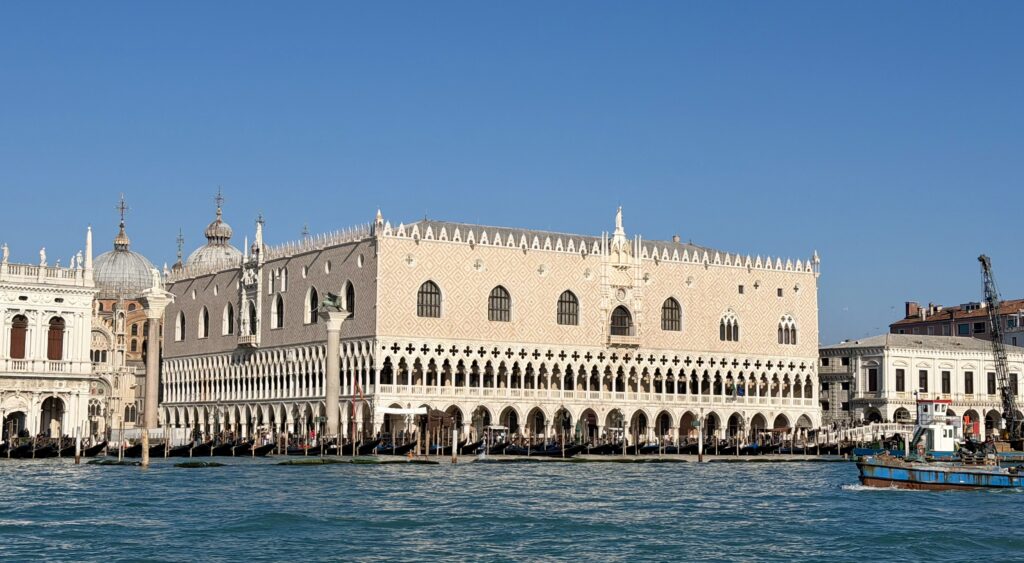
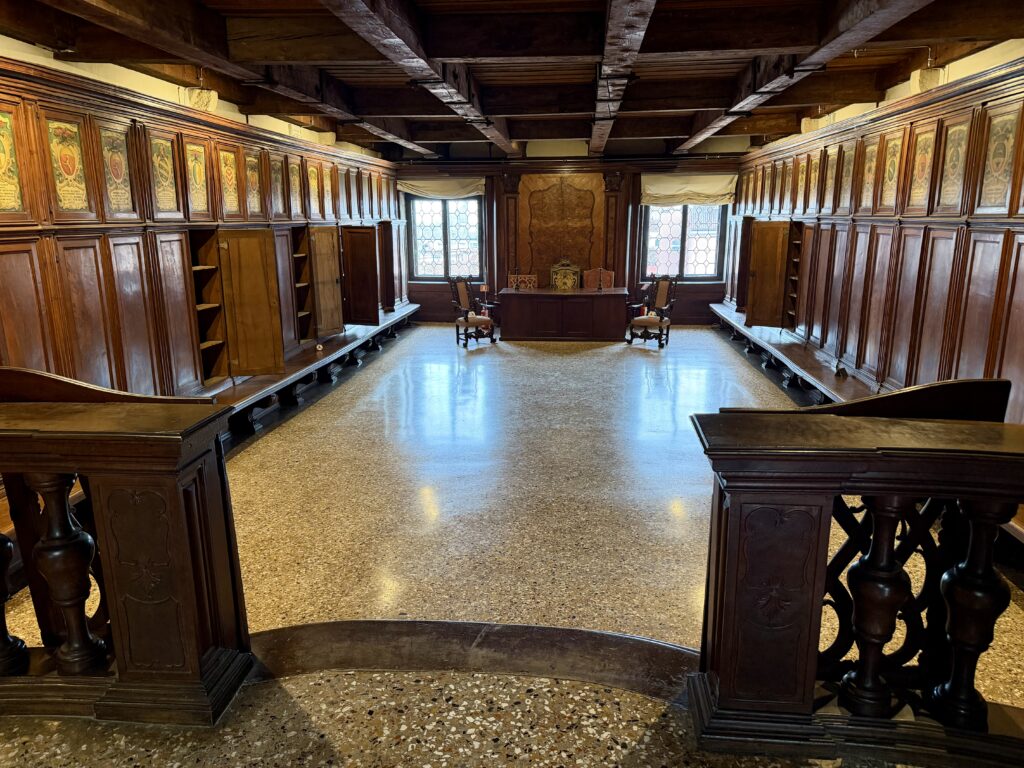
For the Palazzo Ducale (Doge’s Palace) – the Doge (pronounced doh-jay) was the elected official of the Venetian Republic. The original palace was built in the 9th century and the current one was built in the 14th century (with expansions and modifications over the years). In its heyday, the palace housed government offices and a prison. The standard entry ticket is €35 (although if you book online at least 30 days in advance, you can get in for €30 (https://palazzoducale.visitmuve.it/en/visitor-information/). This is a self-guided tour of the palace plus entry to a few other sights. For only €5 more, you can do one of the special guided tours (and then also still do the self-guided portion afterward). The 2 options are the Doge Hidden Treasures Tour and the Secret Itineraries Tour – we did the Secret Itineraries Tour. It included seeing the prison, some of the government offices, the torture chamber, and the room where Casanova was a prisoner (https://palazzoducale.visitmuve.it/en/layout-and-collections/special-itineraries/). By the way, if you notice the links for the Doge’s Palace and St. Mark’s Basilica contain “.it” in them. There are so many fake/scam sites out there selling tickets – it’s been important for us to know the extension for official sites in the country we’re in (for Italy, it was “.it”, for Austria it was “.at”, etc) – the scam sites are pretty sophisticated and it’s really easy to think those are the official sites.
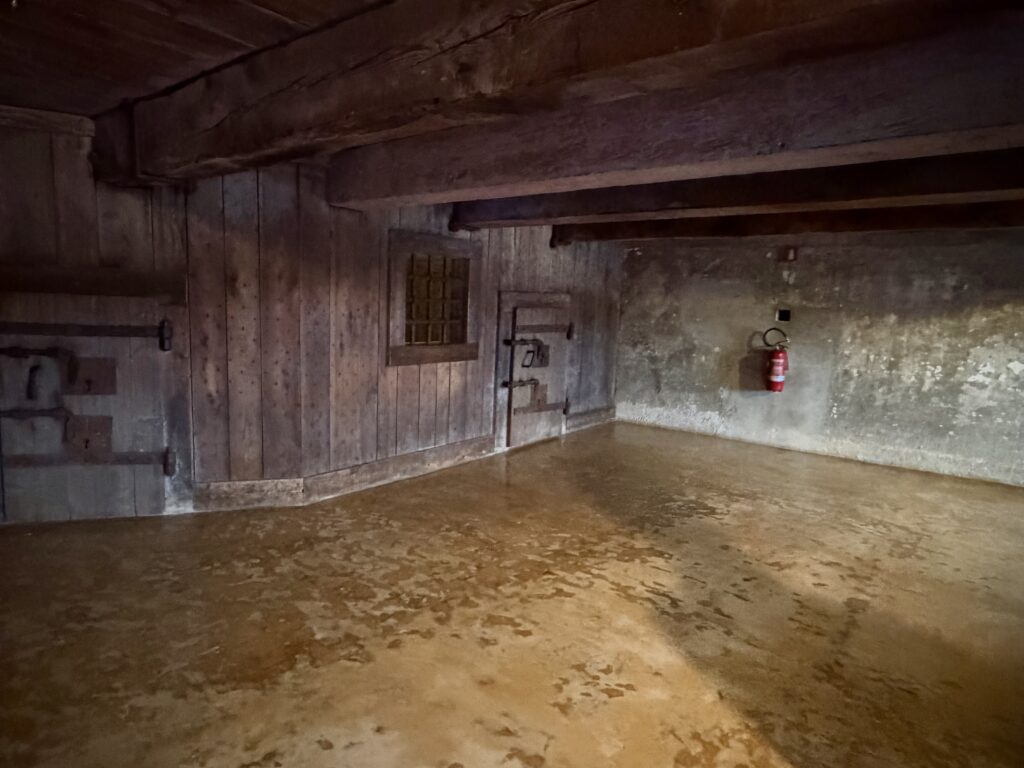
The palace sits right on the Grand Canal with St. Mark’s Basilica behind it. The prison was housed within the palace but eventually (around 1600) they built a separate prison connected to the palace by the Bridge of Sighs (more on that later). I was looking up info for this post and found this site with a great history of the palace: https://imagesofvenice.com/the-doges-palace/. One of the highlights of the Secret Itineraries Tour was seeing Giacomo Casanova’s prison cell. He was jailed for 5 years for “outrages against religion” (he was jailed indefinitely without a trial; it ended up being only 5 years because he escaped). His cell was pretty large compared to what we saw in the other parts of the prison and he was allowed to have his personal belongings. But the cell was only 5 feet tall and he was 6 feet tall so he was persistently stooped over. It was also up under the lead roof of the castle so it was very cold in winter and very hot in summer. So it wasn’t as bad as the cramped prison cells that less wealthy prisoners were placed in, but it wasn’t exactly pleasant either.
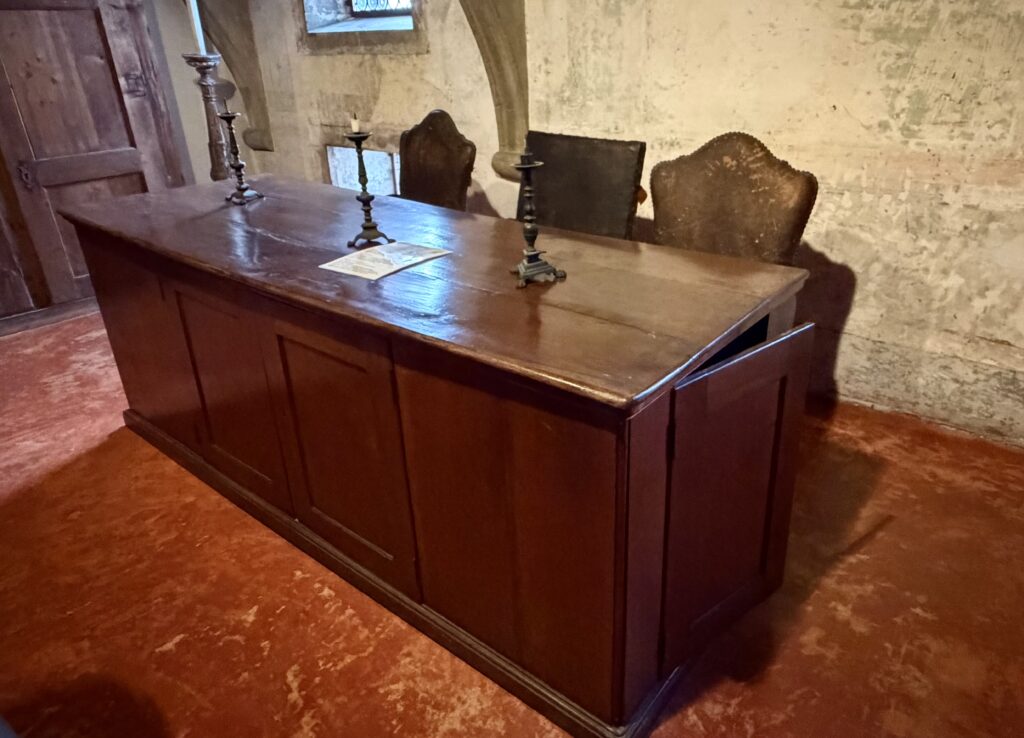
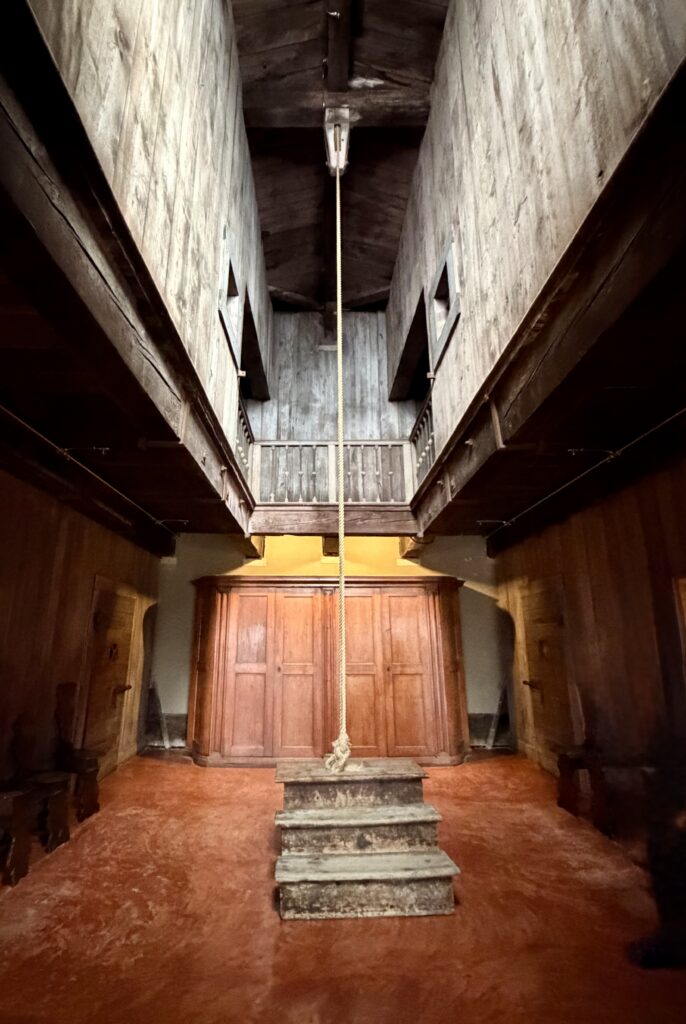
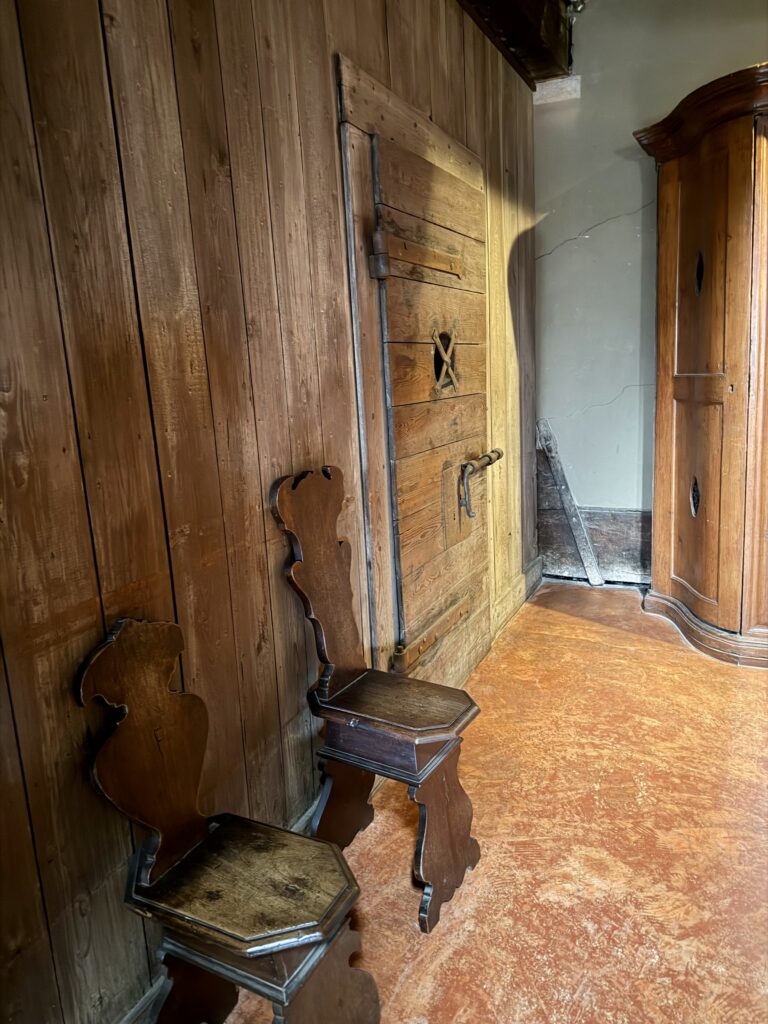
Something else we saw on the Secret Itinerary Tour was the Torture Chamber. This blurb from the official website explains it well: “The tour continues into the Torture Chamber, where interrogations were held and the most commonly used instrument of torture was the rope, from which the person being interrogated was hung and pulled by his arms tied behind his back. Although torture was practiced in Venice, it was gradually abandoned starting in the 17th century.”
The 3 chairs in the picture below are where the panel that was interrogating the prisoner sat. The rope was right in front of them. Apparently it was also usually dark in the room so the prisoner couldn’t even see who was torturing him. Then they’d have 2 other prisoners sitting right outside in the chairs in this picture – they could hear the first prisoner being tortured so the thought was they’d be more likely to comply when it was their turn.
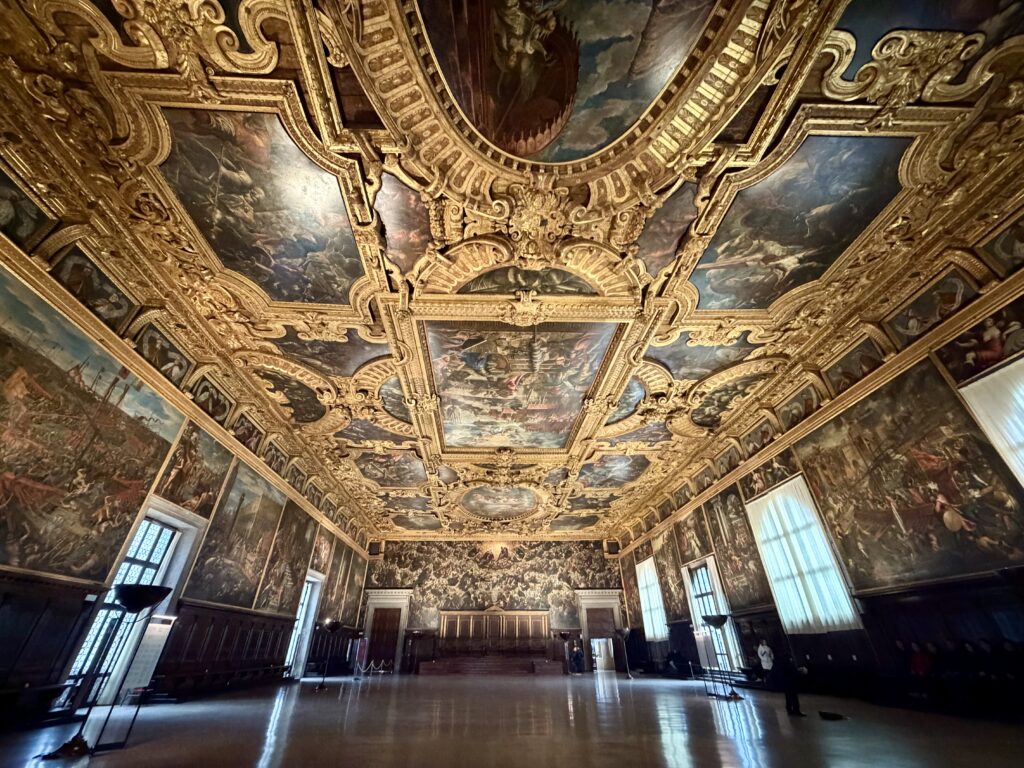
Once we were done with the Secret Itineraries Tour, we were able to explore the rest of the palace on our own. The rooms were very ornate. There was a lot of artwork and gold molding on the walls and ceilings.
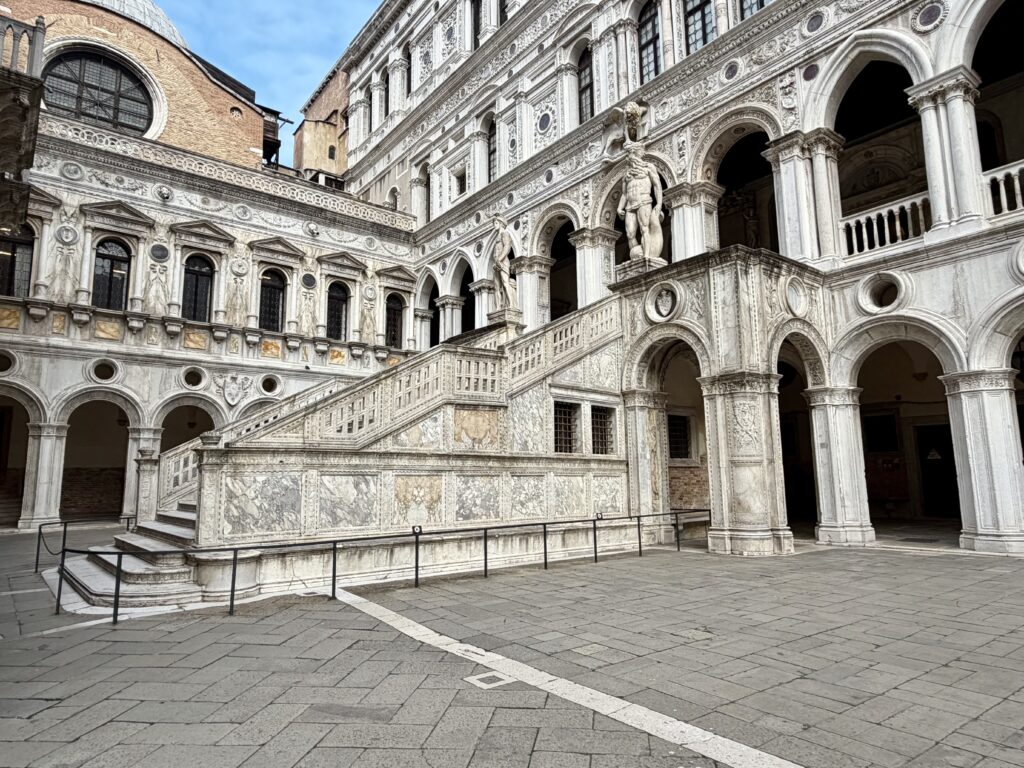
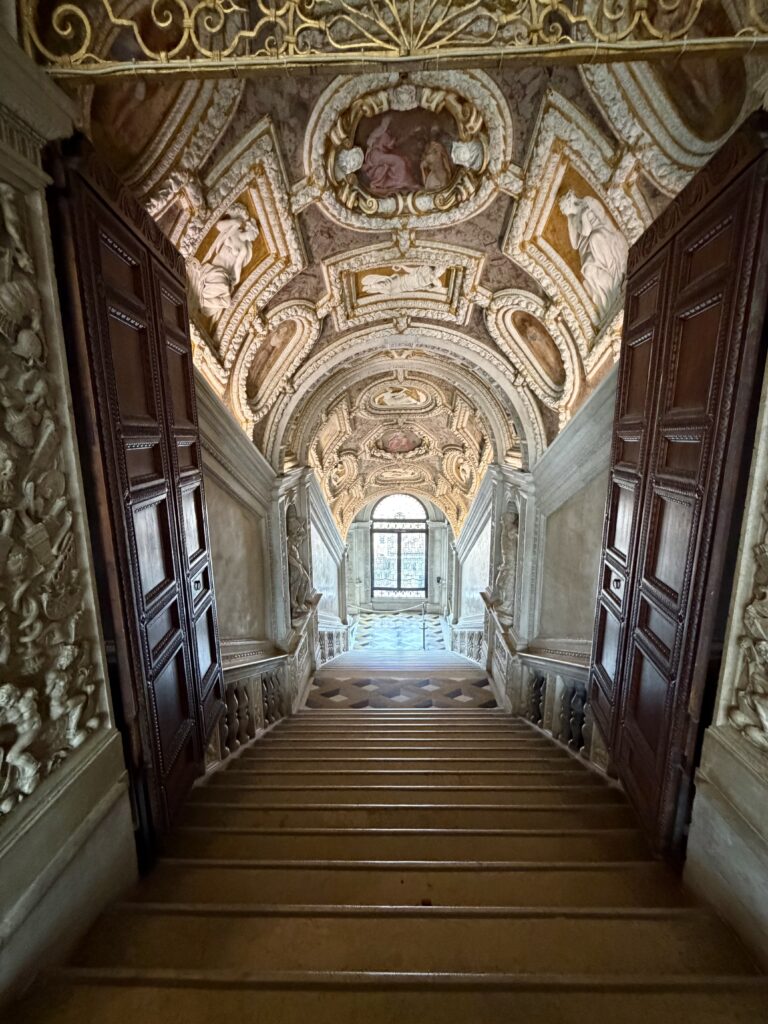
The grand staircase leads outside the courtyard. Our guide told us an interesting story about Casanova and his escape in 1756. Casanova and another prisoner, Father Balbi, escaped their cell through the rafters and ultimately ended up inside the main palace. The guards mistook them for nobles and let them walk down this staircase and out to their freedom. This website had more details about the escape: https://the-history-avenue.eu/2025/02/09/casanovas-great-escape-from-venices-most-secure-prison/.
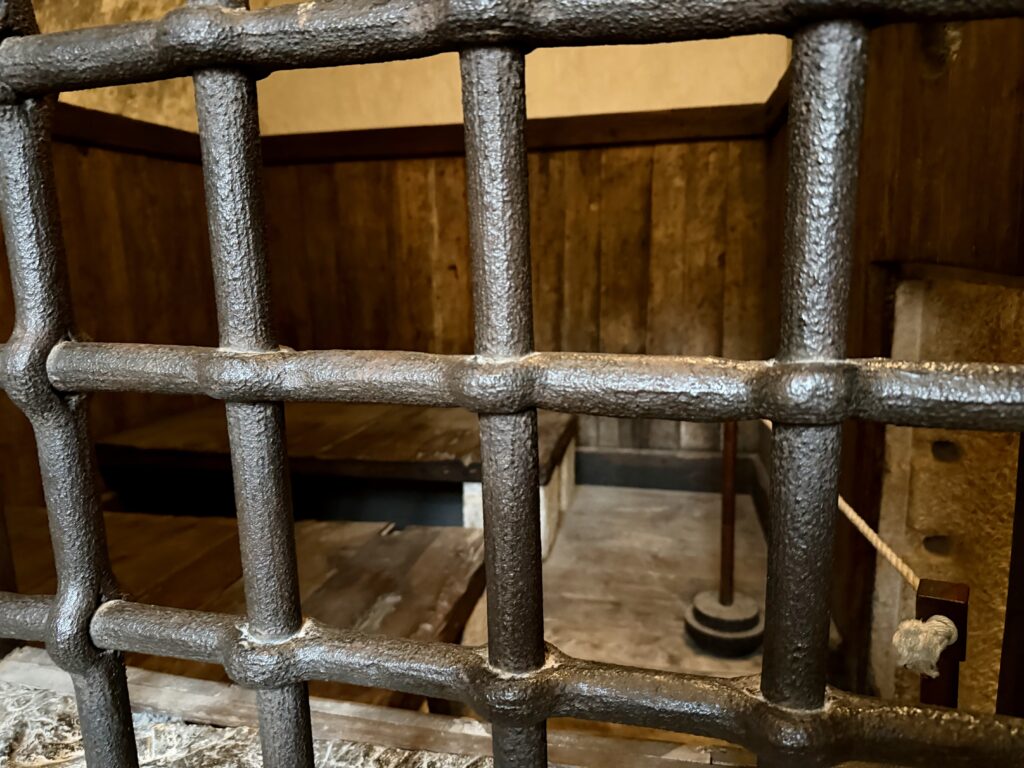
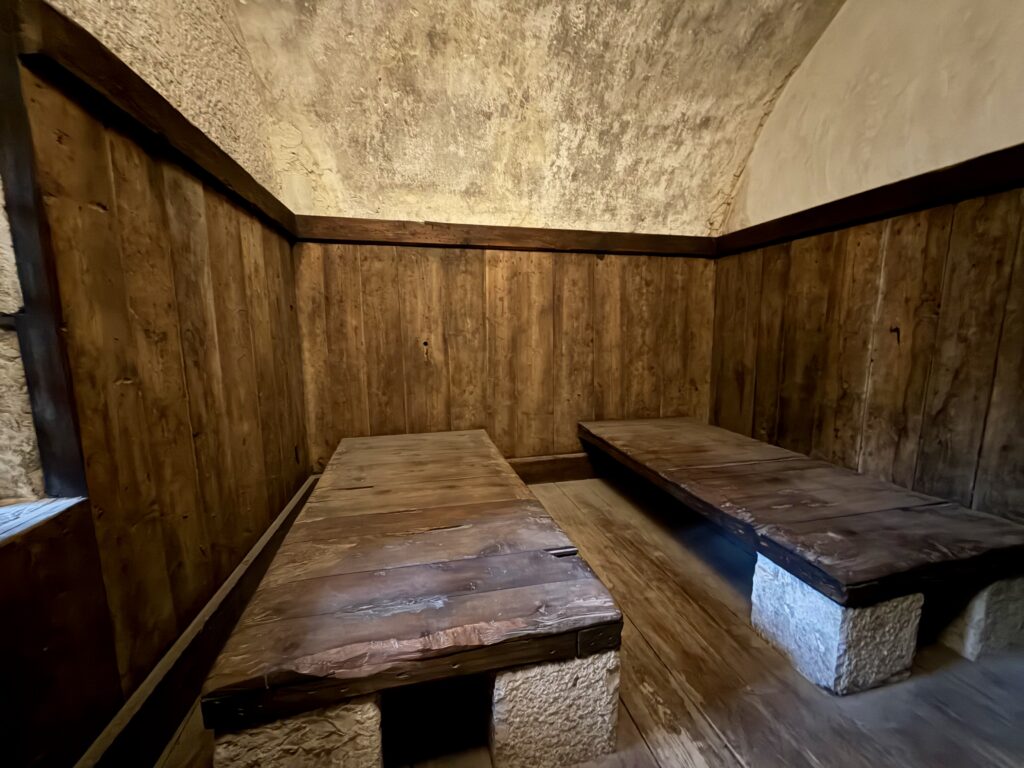
Once we walked through the main palace, we were able to cross over the Bridge of Sighs into the New Prison. New is relative – construction started on the prison in 1591 and the Bridge of Sighs was built from 1600-1603. Those wooden beds don’t look very comfortable! But conditions were much better than in the old “wells” (the prison cells inside the palace).
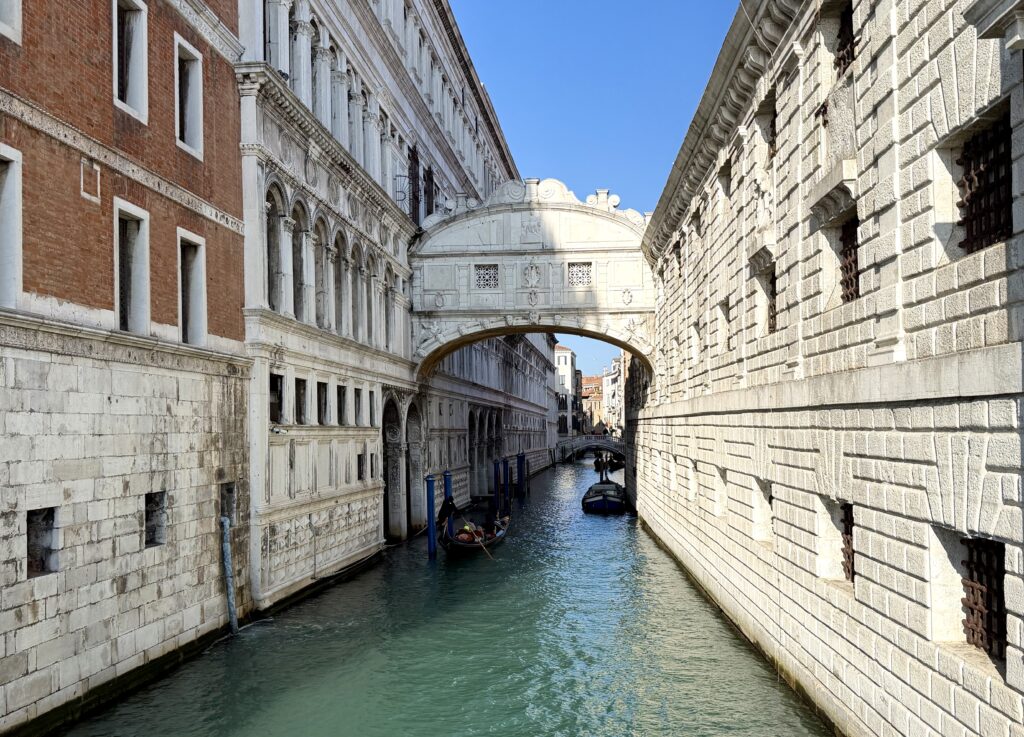
We crossed the Bridge of Sighs to get into the prison then we crossed back over it to get into the palace again. The Bridge of Signs got its name because the prisoners were said to sigh as they caught their last glimpse of the outside world when they were led from the court to the prison. So of course Chris re-enacted that when we crossed the bridge.
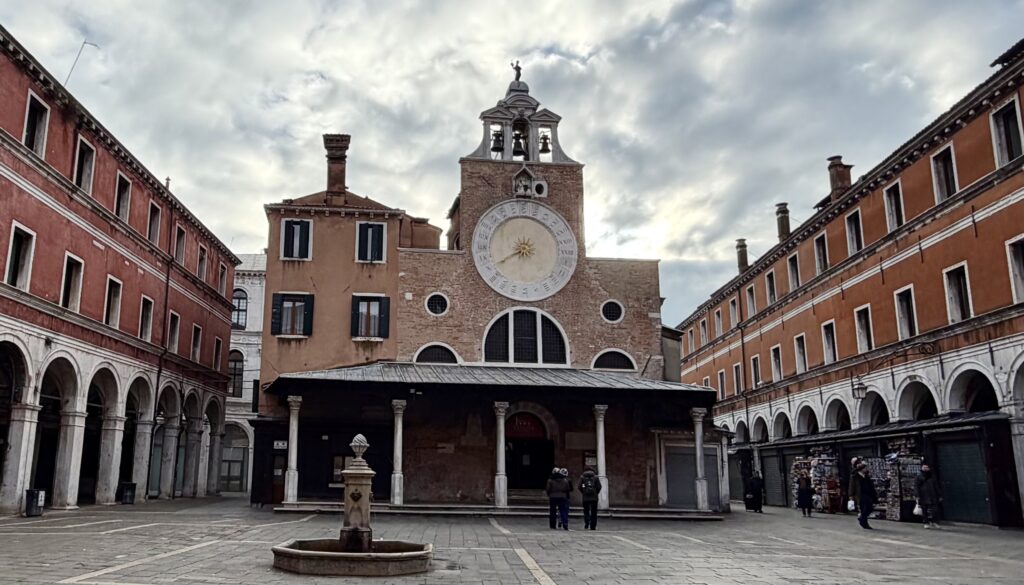
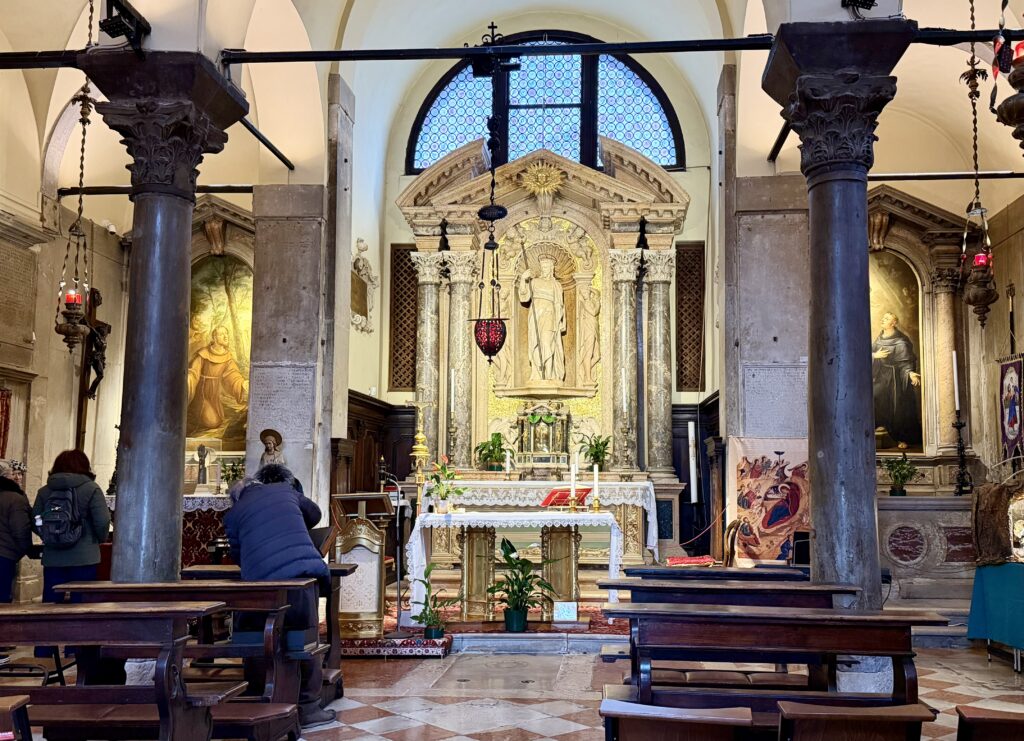
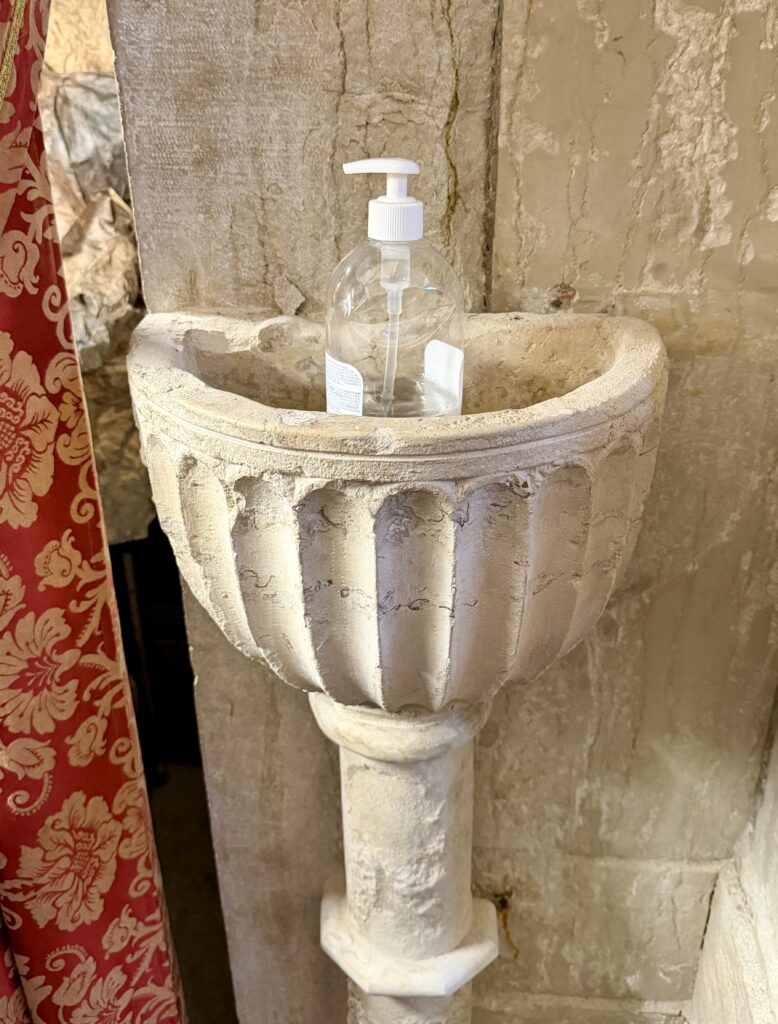
As we wandered around Venice, we found so many churches to pop into. This one is San Giacomo di Rialto and is believed to be the oldest church in Venice. It was reportedly consecrated in 421 AD but more recent evidence suggests it was built in the 11th century. Its large 24-hour clock with a single hand makes it unique and easily recognizable. I also thought the hand sanitizer in the Holy water font at the door was pretty funny.
We did a day trip out to Burano, one of the smaller islands out in the Venetian lagoon. It’s a 45 minute vaparetto ride from the Fondamente Nove station in the Cannaregio neighborhood of Venice. The same vaparetto line also stops at Murano. Murano is famous for its glass blowing. The glassmakers came from Venice in the 13th century as the extreme heat from the furnaces were dangerous to have in the wooden Venetian buildings.
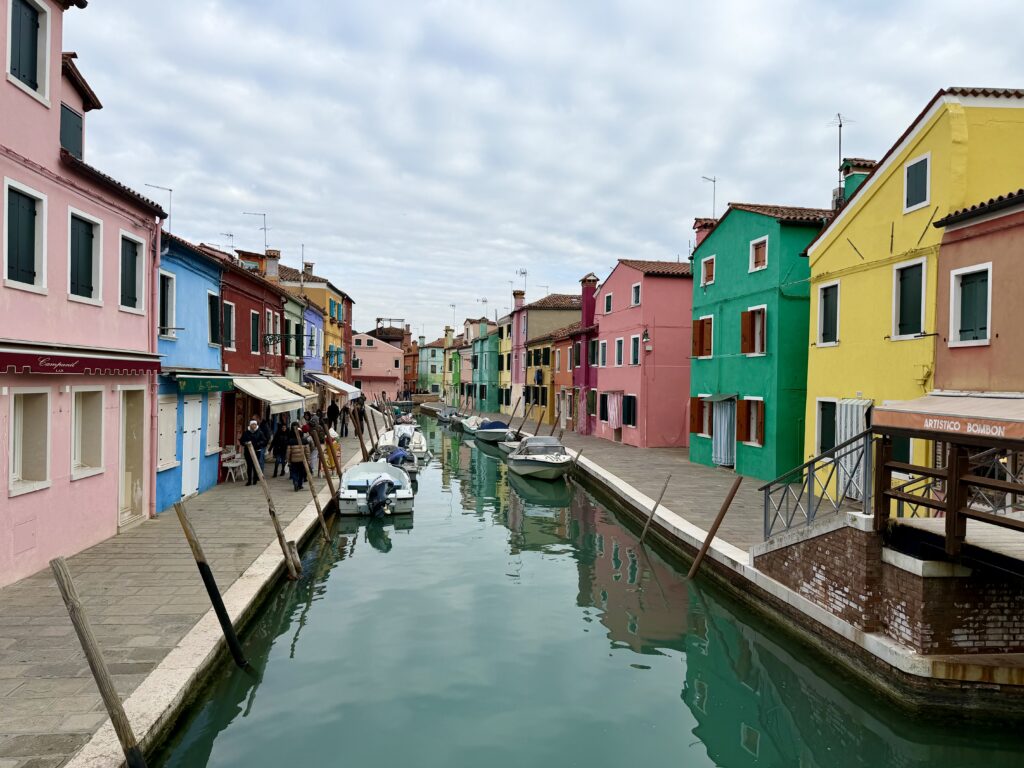
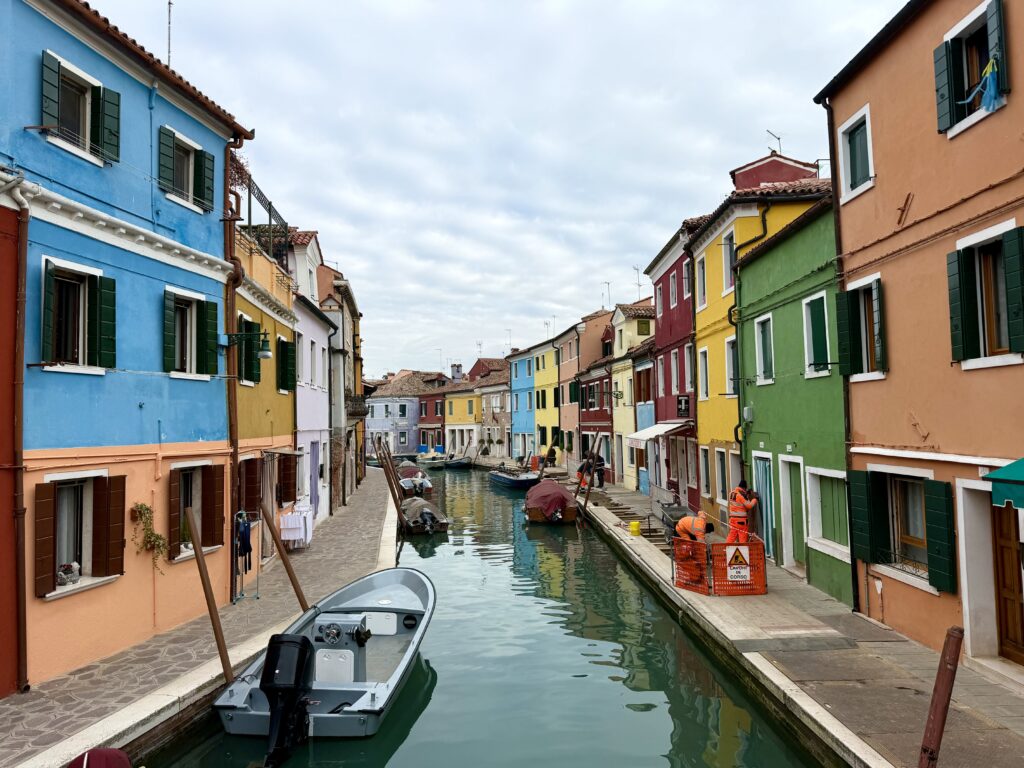
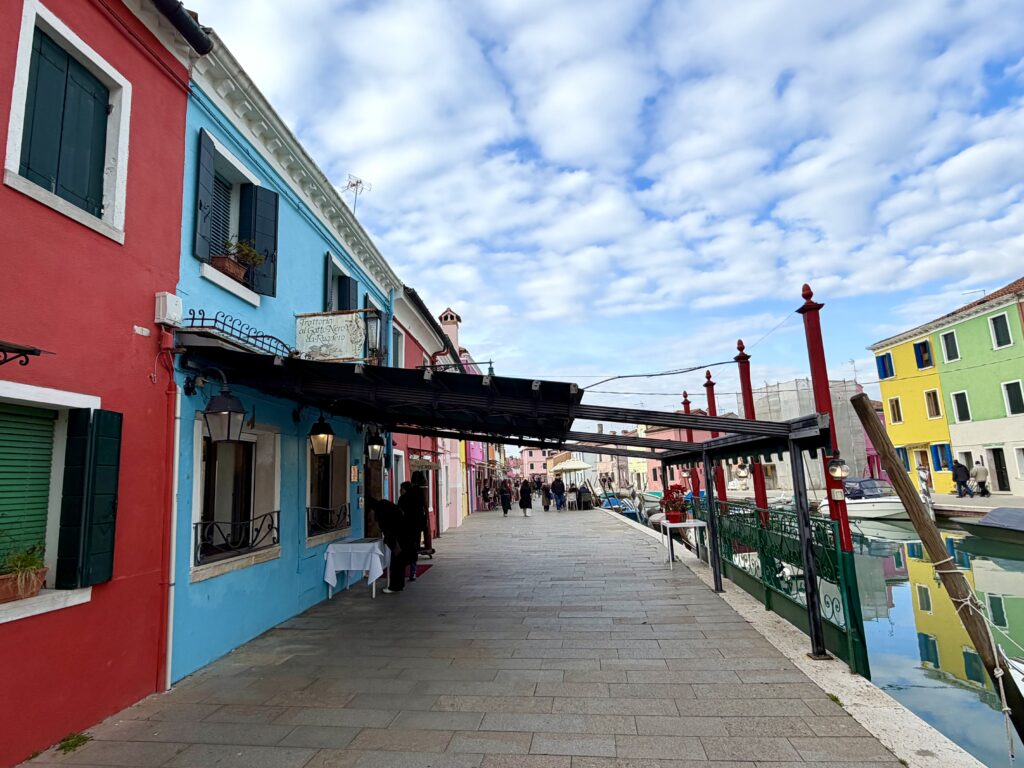
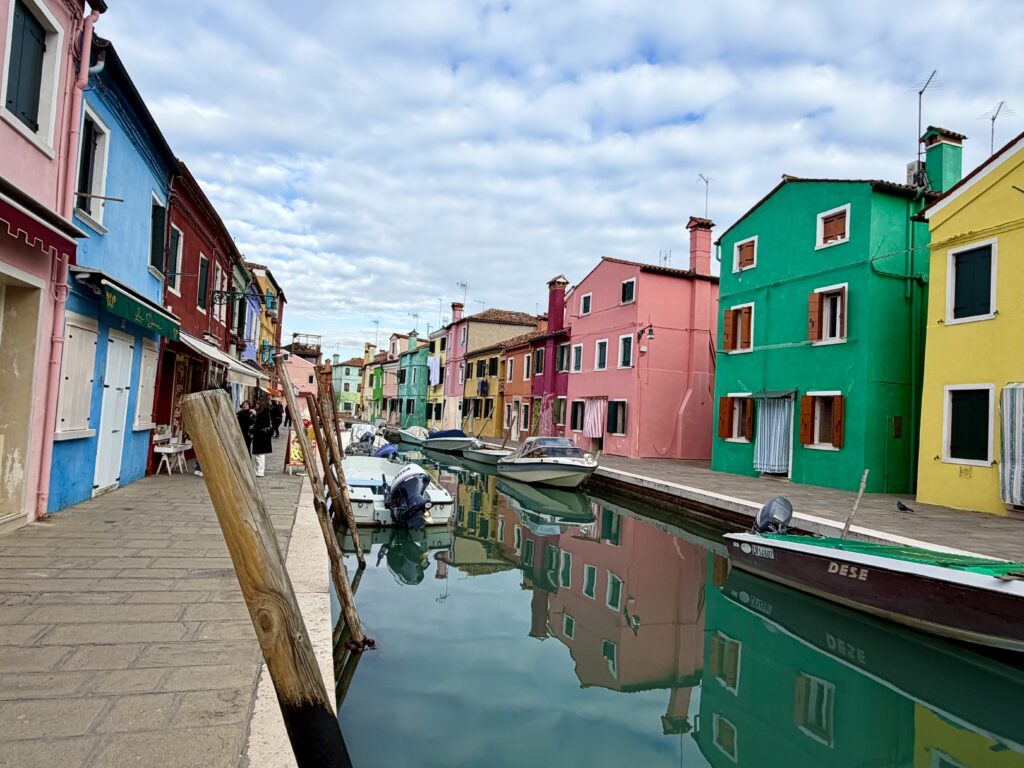
Burano is known for lace and for its brightly colored houses. Legend has it the houses were painted this way so that fishermen could see their house from a long way out as they were coming back in at the end of the day (in reality the colors demarcated each property but the fisherman story is more fun). Their official website further details some of the history of Burano: https://www.isoladiburano.it/en/.
We got to the island and walked around to explore all of the beautiful houses and then had lunch at Trattoria al Gatto Nero – al gatto nero means black cat (https://www.gattonero.com). It’s a family-run restaurant with excellent seafood (among other things). I’ll be doing a separate post about food in Italy so stay tuned for more on this restaurant.
One our way back from Burano we met another couple on the vaparetto who told us that the Olympic Torch relay was coming through Venice that same evening. We found a map of the route online and managed to catch it passing by not far from our hotel, near the building that houses the Municipality of Venice government offices. Right in front of this building, the torch was passed on to a team on a boat and a large procession of boats (including gondolas) continued down the Grand Canal to St. Mark’s Square. It was such a cool experience – and because we caught it on the way rather than in St Mark’s Square, we avoided the crowds in the Square and the torch procession passed right in front of us. Check out the video compilation below – it was certainly one of the highlights of our trip!
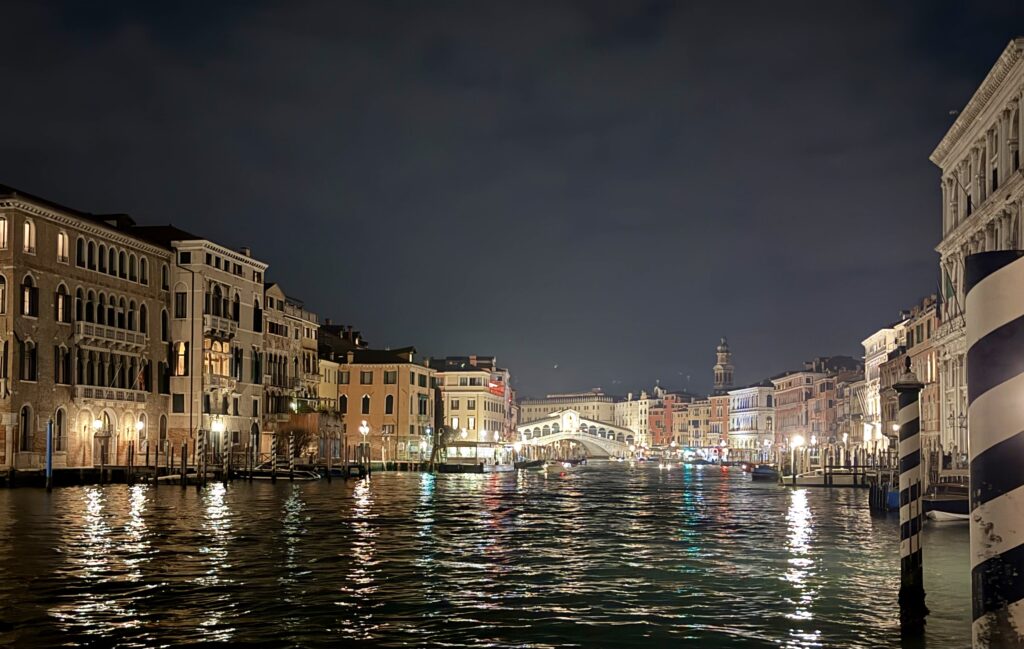
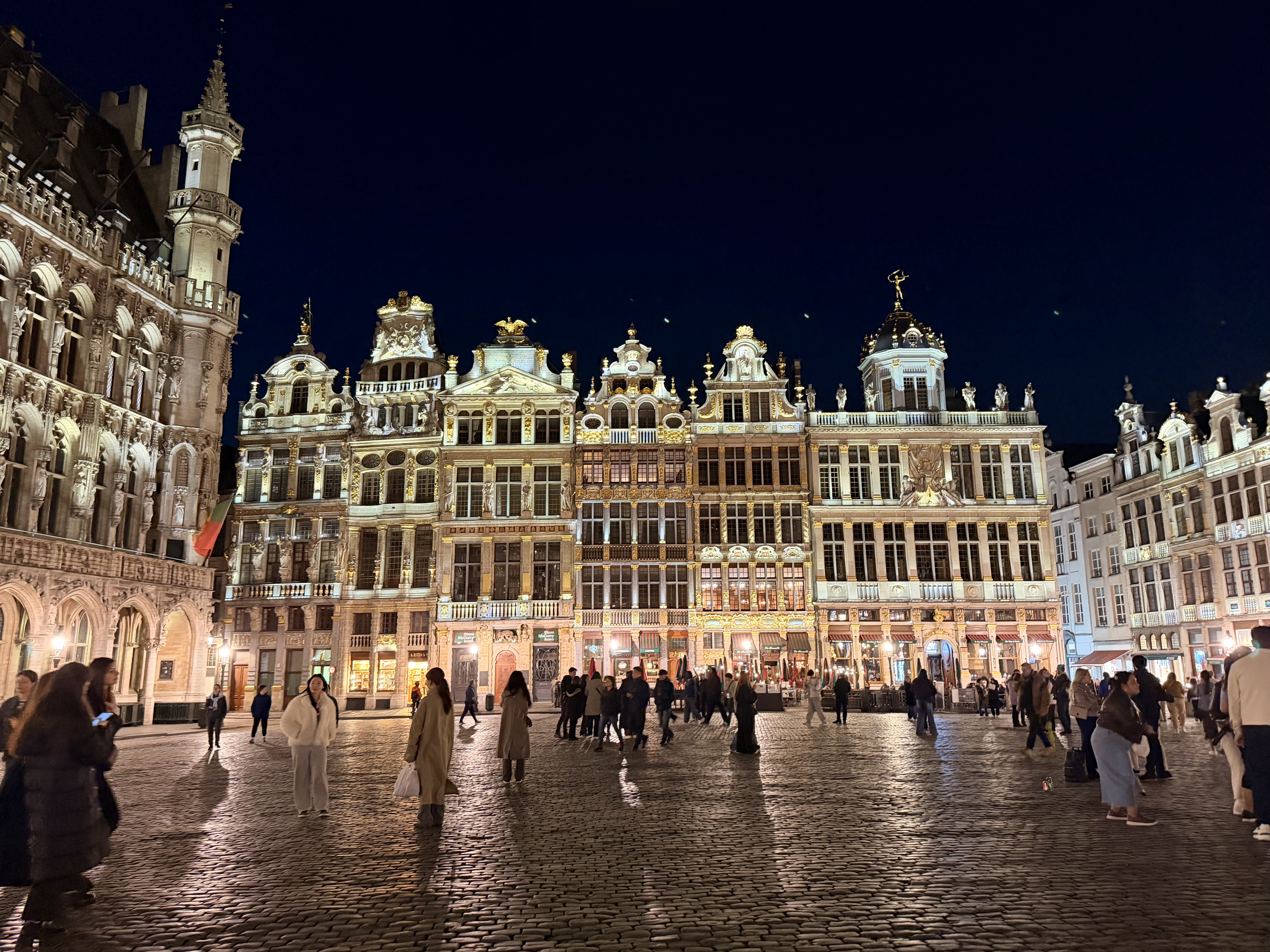
Venice is beautiful during the day but especially beautiful at night. I took this picture after the torch procession had passed and everyone had left. It was a very peaceful walk back to our hotel.
Stayed tuned for more about our month in Italy. Ciao!




Love your pictures and stories of your vacation. I loved Italy when stationed at Aviano.
So glad you’re enjoying the blog! We loved Italy too! We spent about a month total there on this trip.