
We got into Vienna with the remnants of the same snow storm that came through Prague as we were leaving so it was pretty cold the week we were in Vienna. Our first day we did a Rick Steves Audio Europe walking tour to see some of the highlights and then the next day we did a different tour on the same app – he had a tram-based tour on the Ringstraße (the ring road around town – it was built in the 1860s in place of the old city walls that encircled the city center). It was a perfect tour for a cold day since we were inside the tram for a good bit of it. Over the course of the week, we revisited several sights on those overview tours.
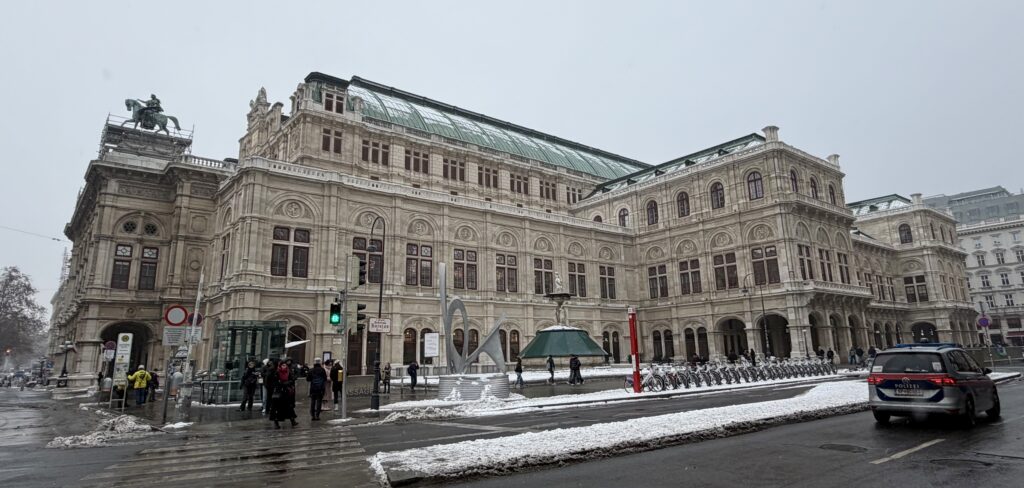
Both tours started at a particularly famous building – the Vienna Opera House!
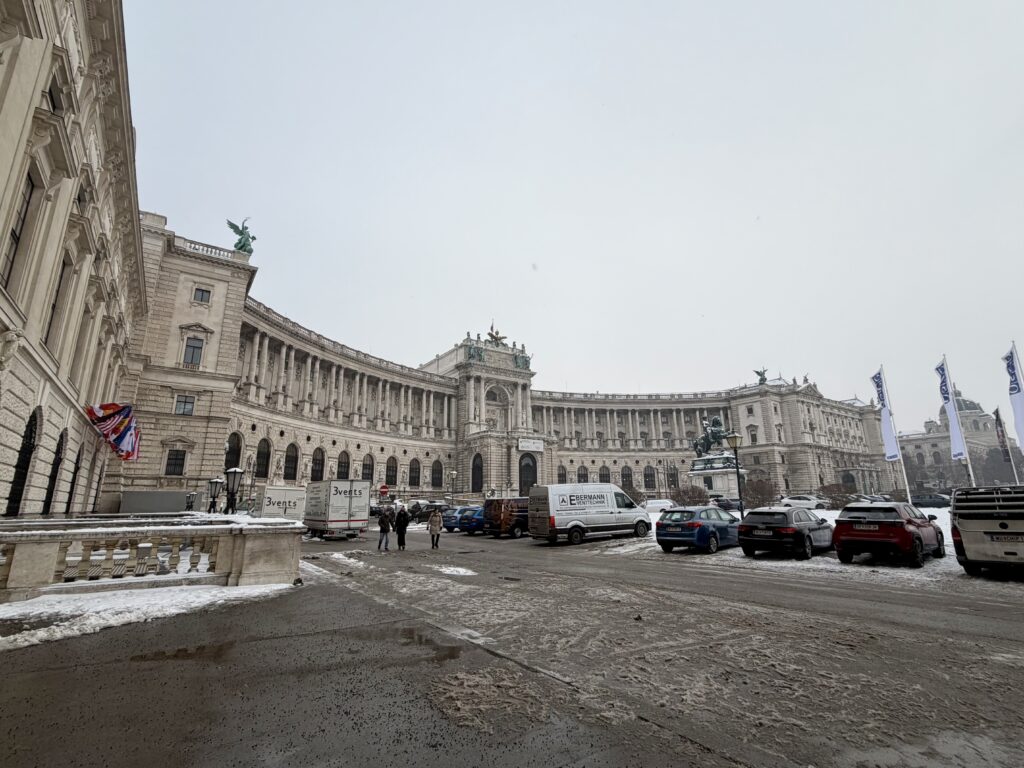
The Hapsburgs ruled Austria for around 6 centuries (until the heir to the Austrian throne, Archduke Franz Ferdinand, was assassinated in Sarajevo in 1914, sparking WW1). There are a couple of their palaces you can visit in and around Vienna. The Imperial Palace (Hofburg) in Vienna was their main residence. It now includes several museums as well as being home to the Austrian Federal President. (https://www.austria.info/en-gb/locations/hofburg-palace/)
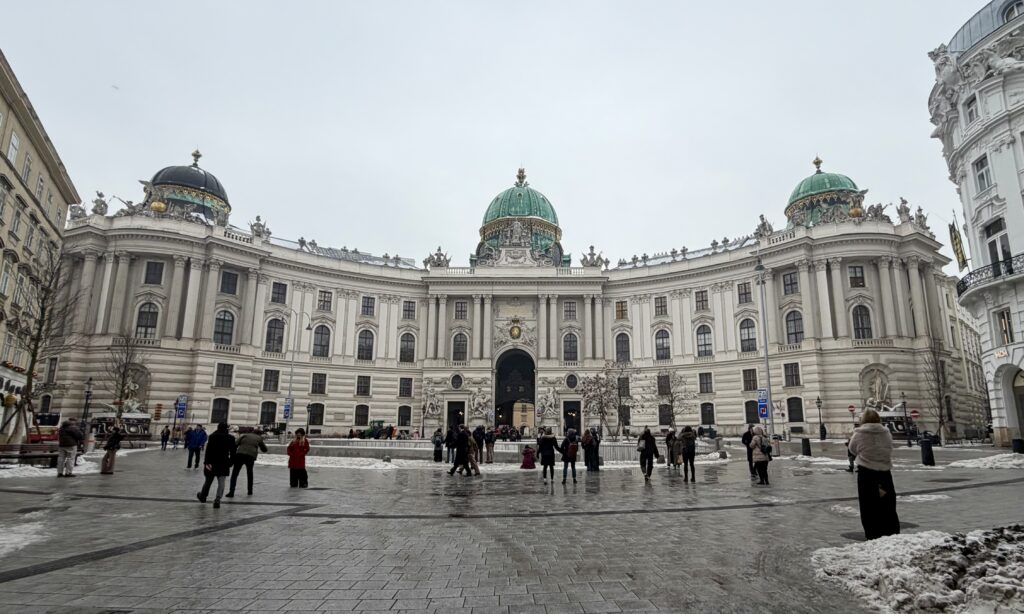
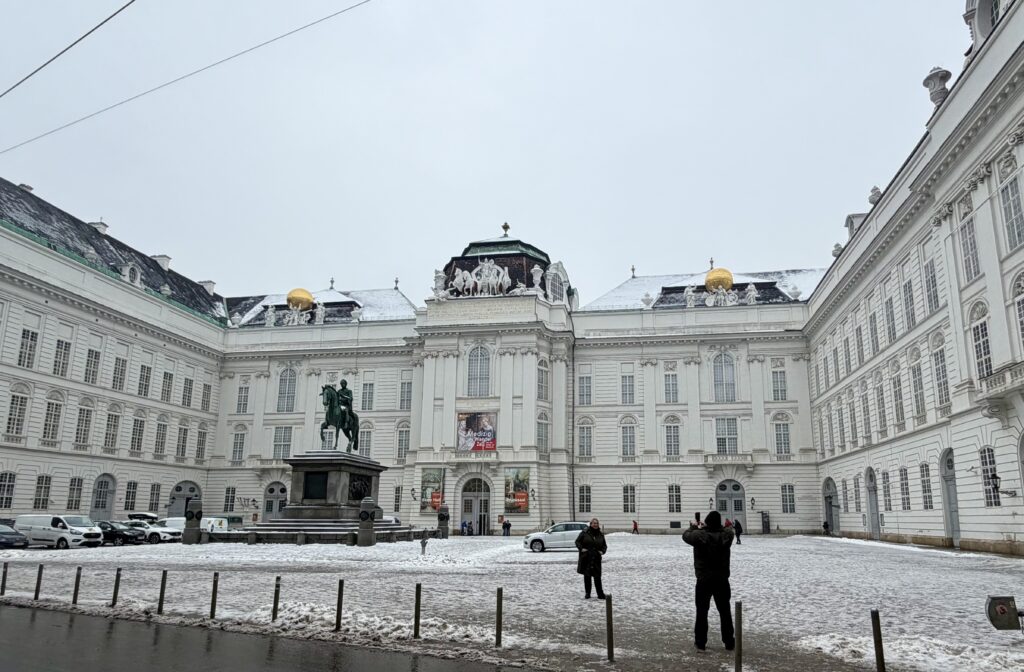
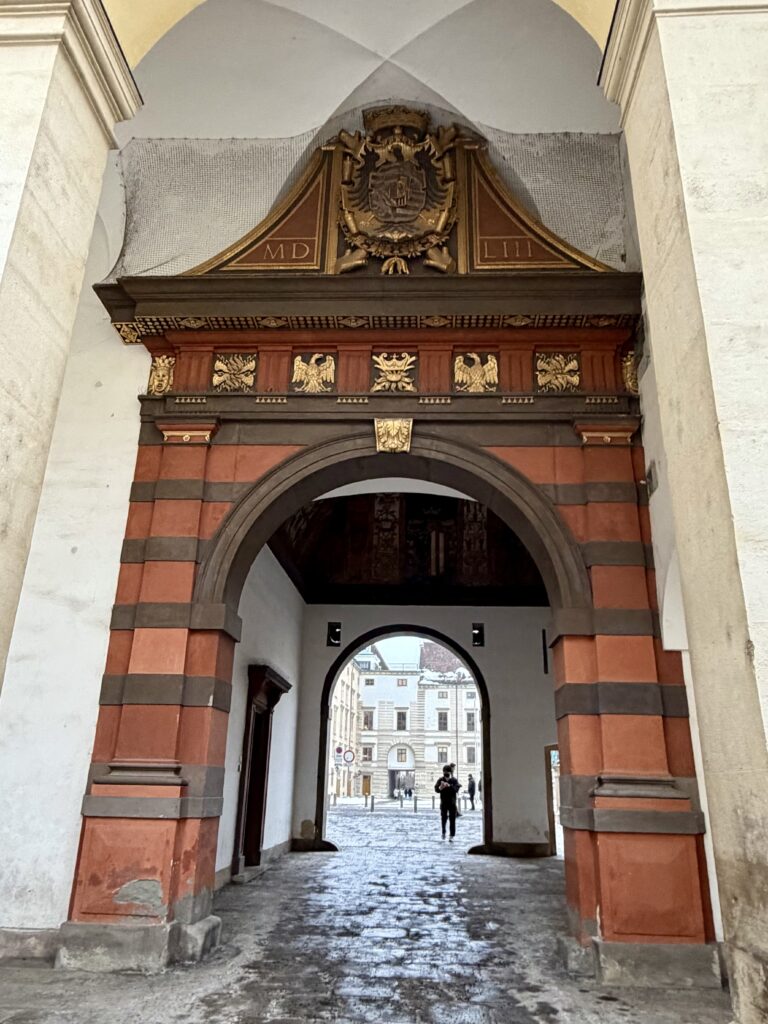
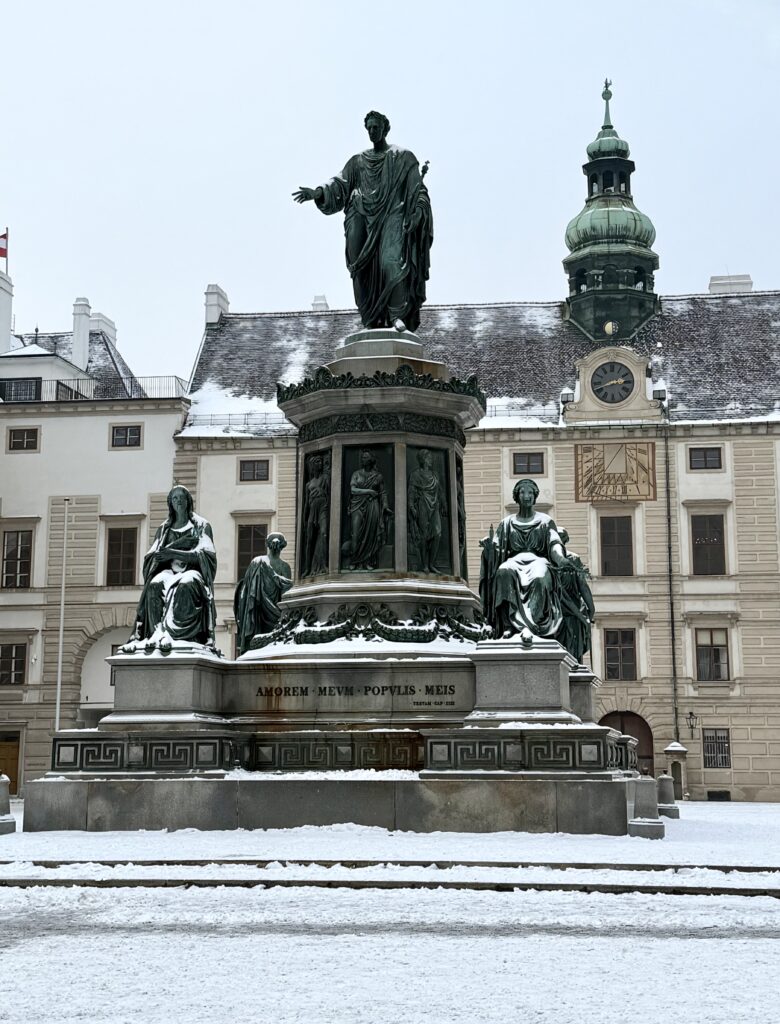
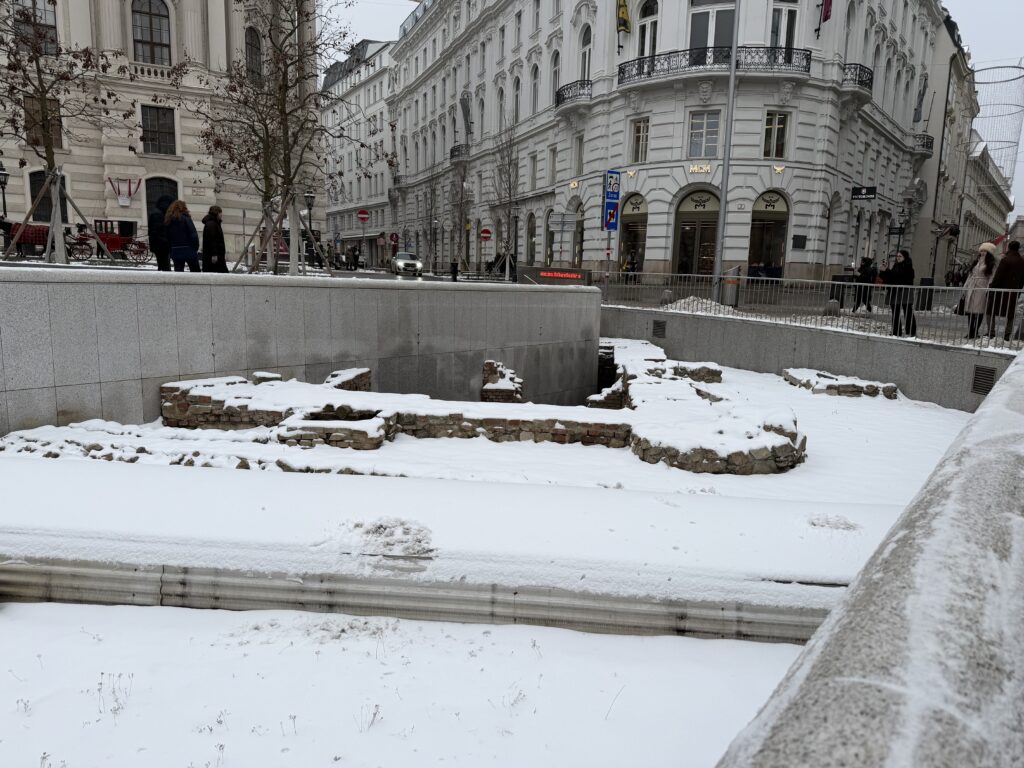
In Michaelerplatz (still part of the sprawling complex), you can see excavated roman ruins (they were covered in snow when we were there).
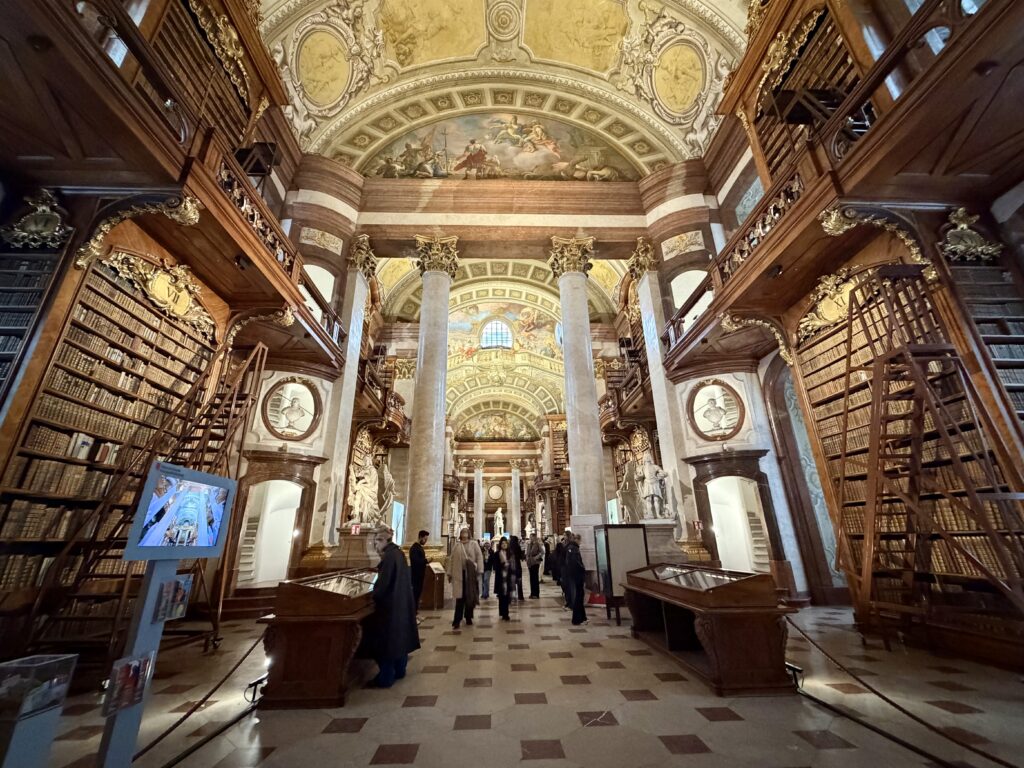
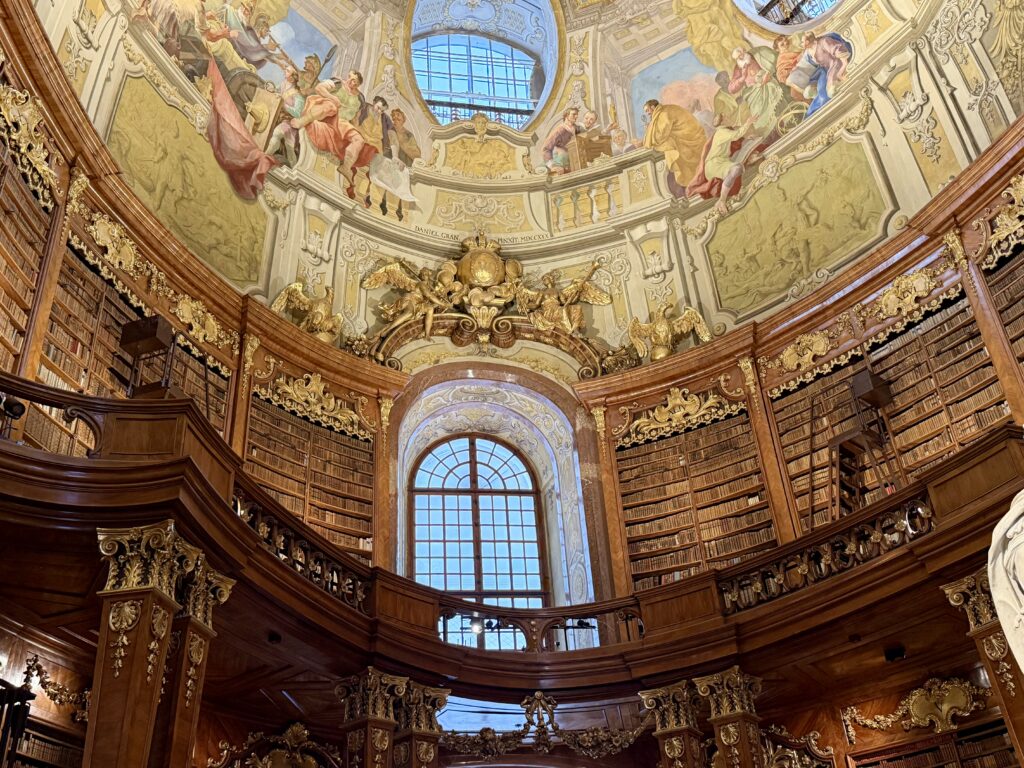
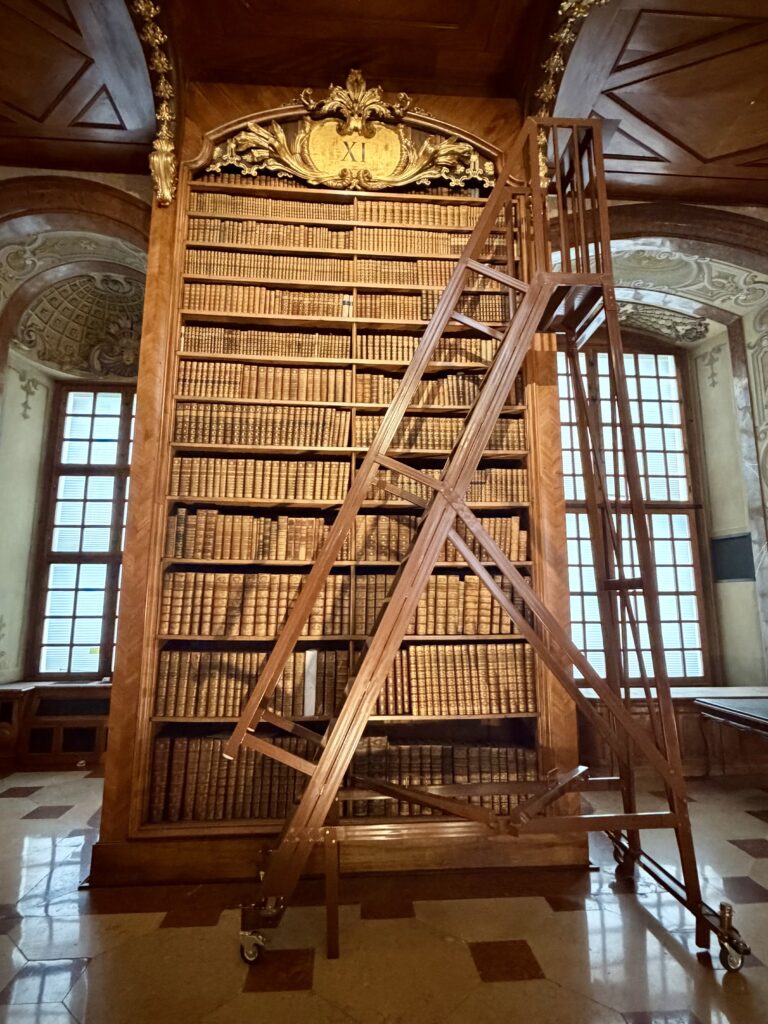
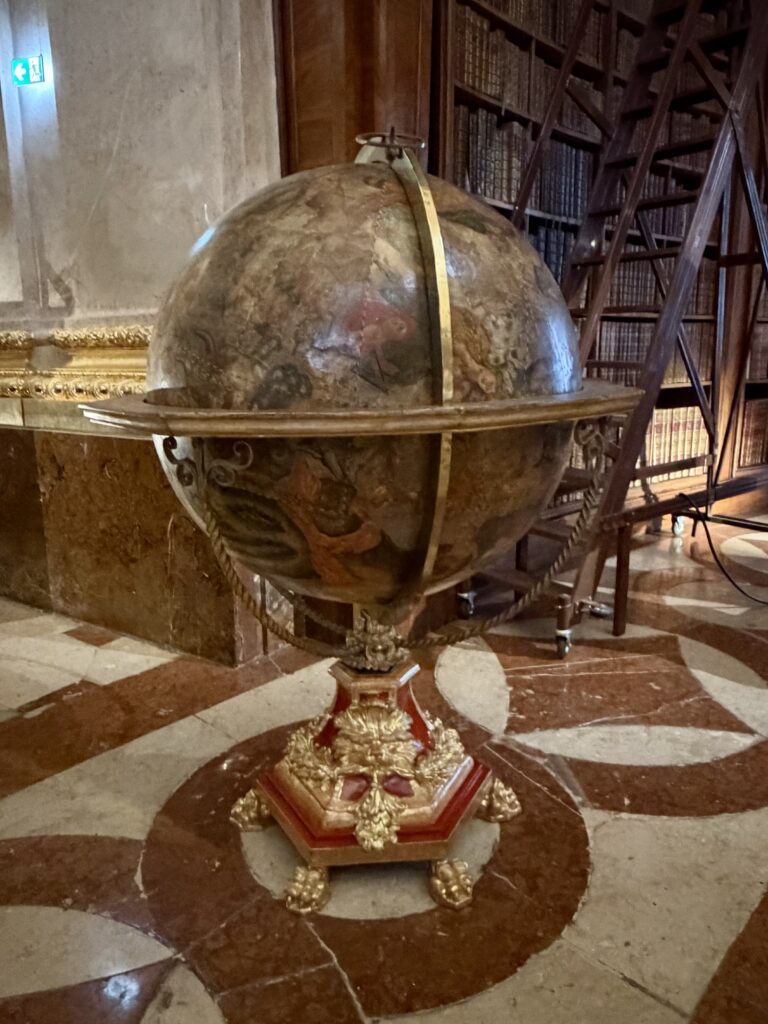
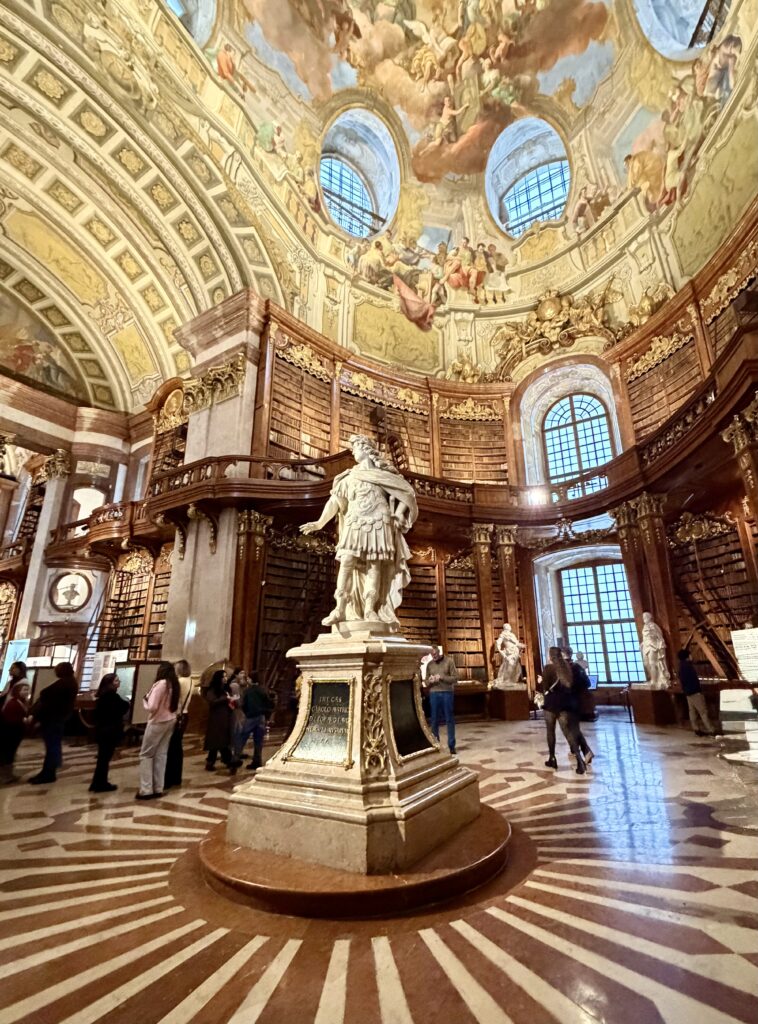
One of my favorite sights within the Imperial Palace complex was the National Library (Prunskaal). It was beautiful inside and they also had a very cool exhibit of historical medical books so that was right up my alley!
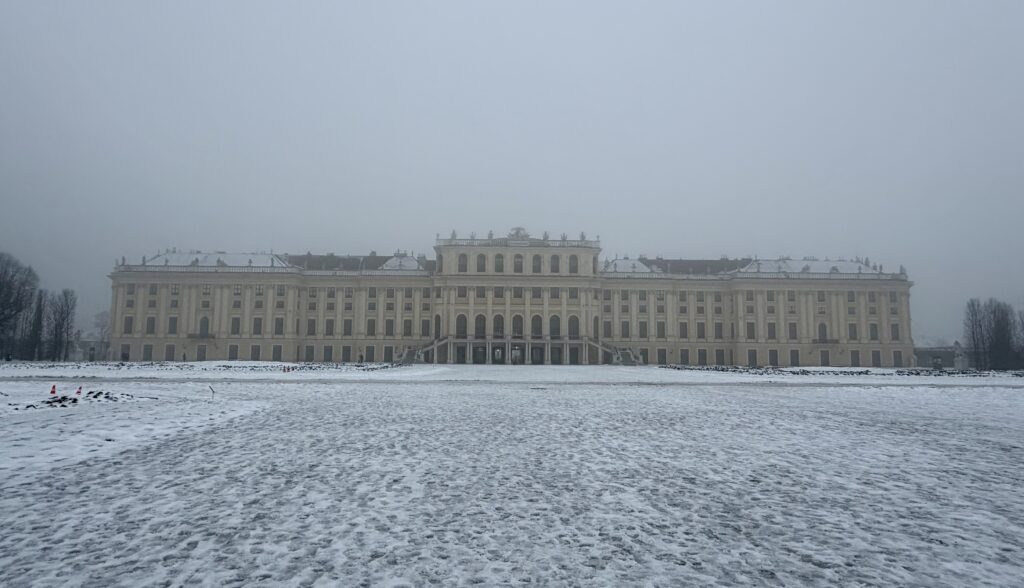
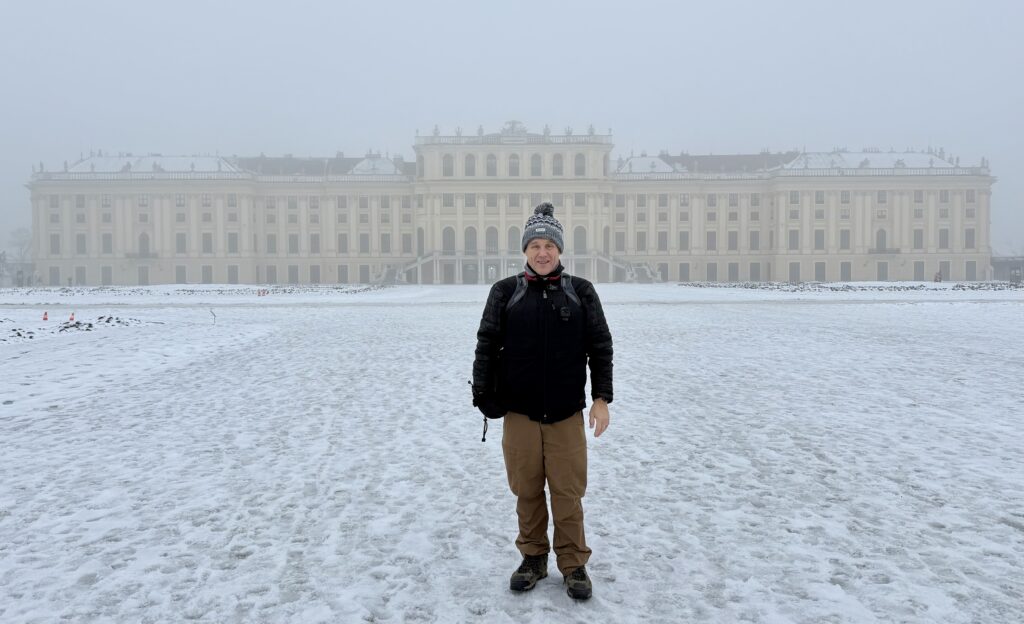
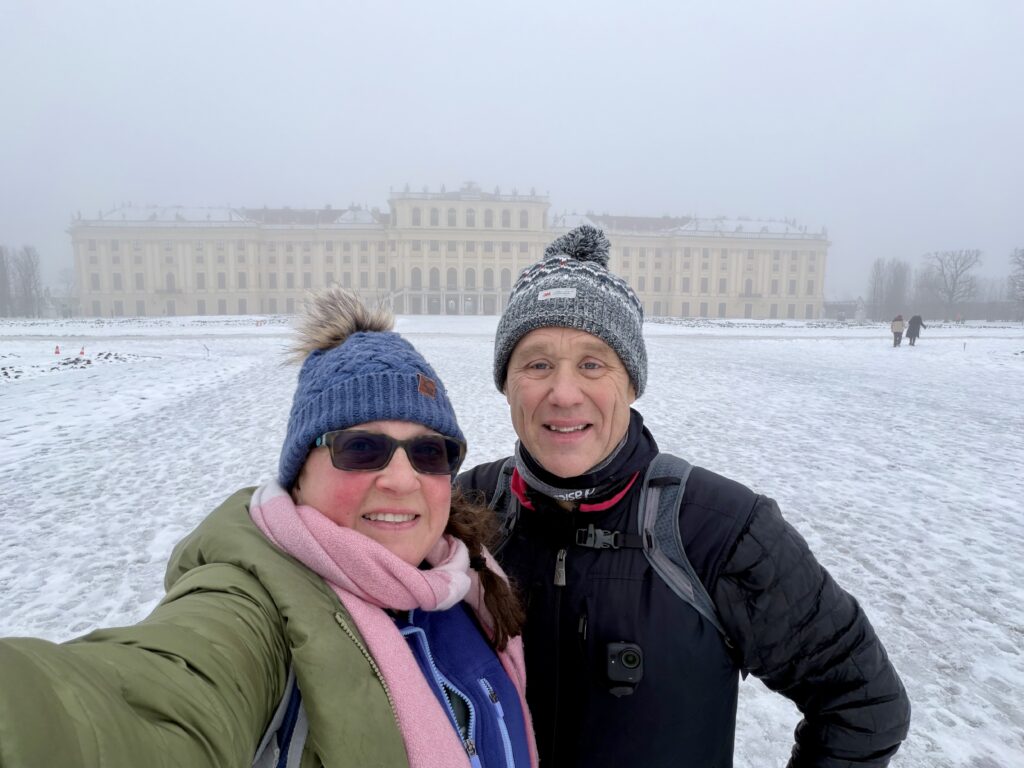
The other main palaces you can visit easily from Vienna are the Belvedere (now an art museum) and Schönbrunn. We headed out to Schönbrunn (about 30 min by train) – this was basically the Hapsburg “summer palace” (https://www.schoenbrunn.at/en/about-schoenbrunn/the-palace). Our visit was certainly not the time of year the imperial family would have spent time there. We were able to walk through grounds but it was very foggy and much of the outdoor sights were not open (I have heard the zoo is cool though).
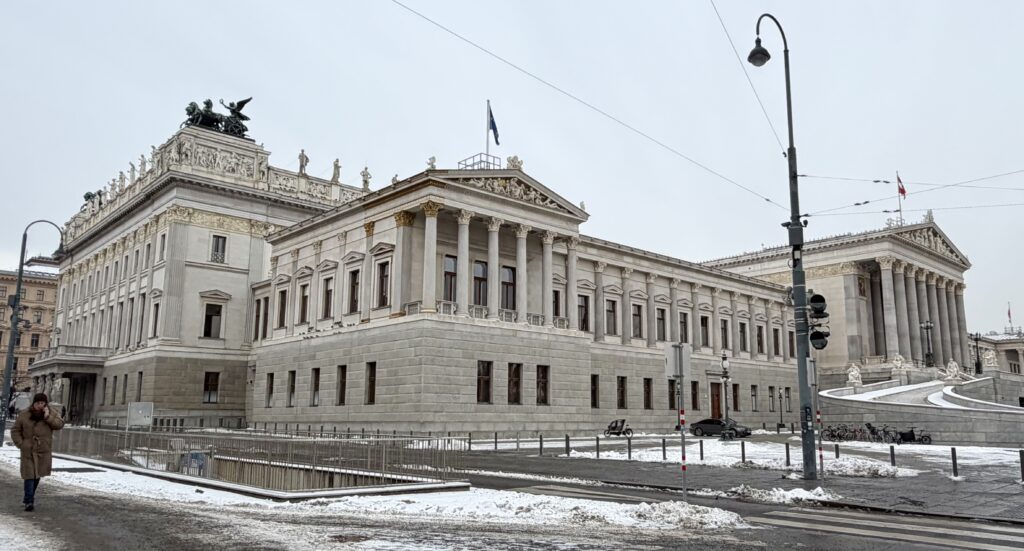
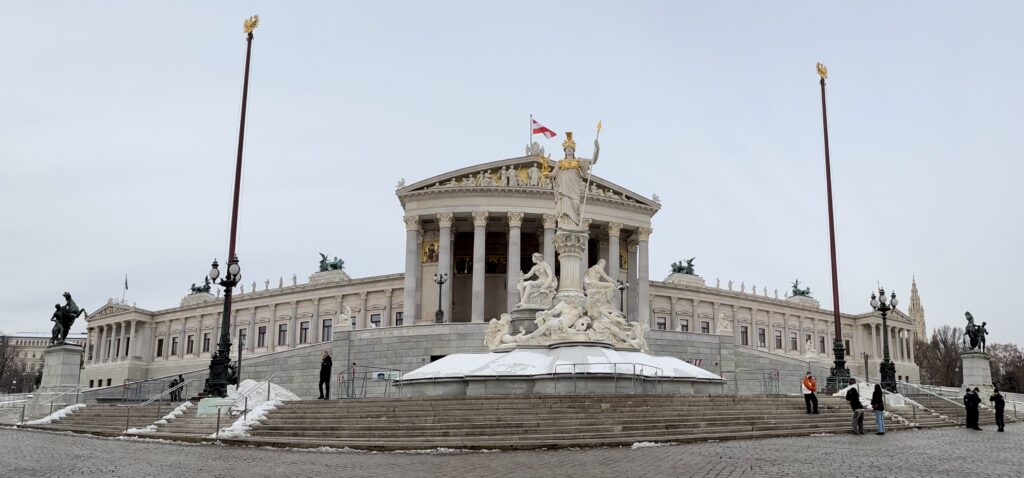
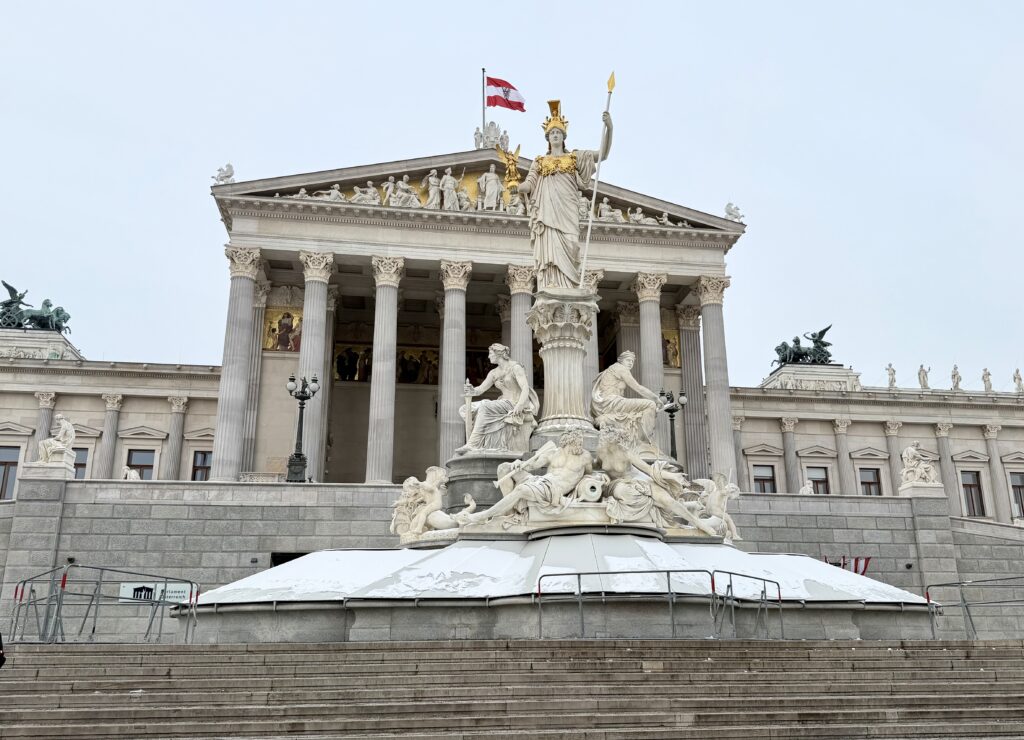
We passed by the Austrian Parliament building on our Ringstraße tour and went back another day to visit. There’s a section when you first enter that is open to the public and it had informative panels about Austrian government structure over the years.
There are several beautiful churches in Vienna as well. The most famous is St. Stephan’s Cathedral but a couple others are worth mentioning as well:
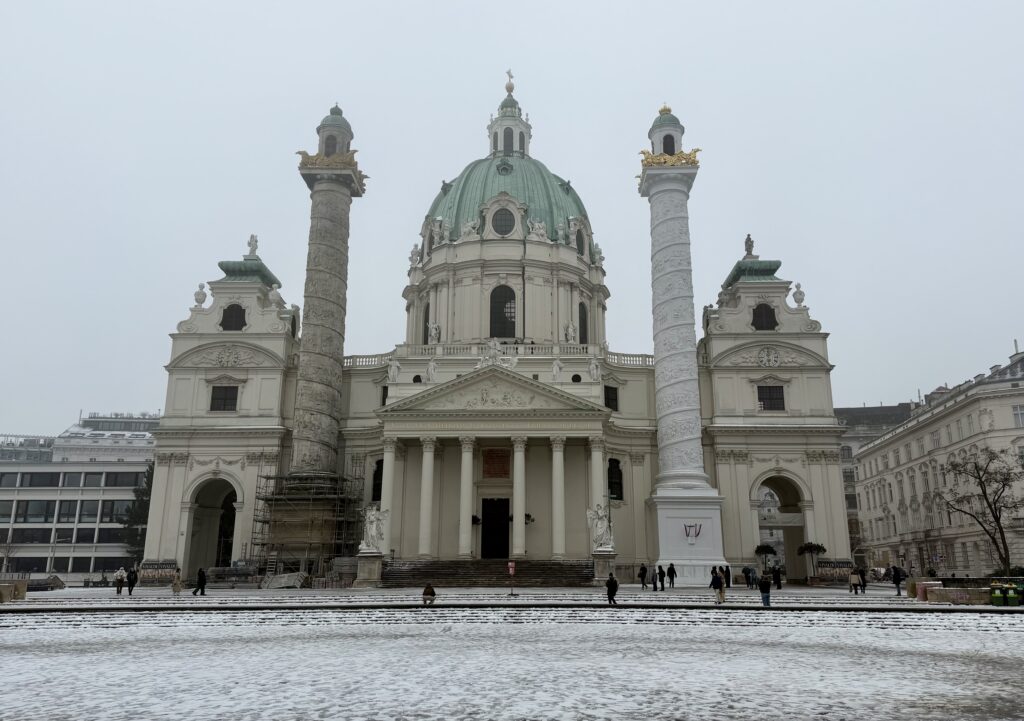
- Karlskirche, or St Charles’ Church with its easily identifiable green dome sits in Karlsplatz. It was commissioned by Holy Roman Emperor Charles VI in 1713 following the plague epidemic and was completed in 1739. He didn’t name the church after himself – the name comes from his patron saint, Saint Charles Borromeo of Milan, who was known as a healer of plague victims. The church frequently houses concerts and art exhibits. (https://www.karlskirche.at/en/visitor-information/)
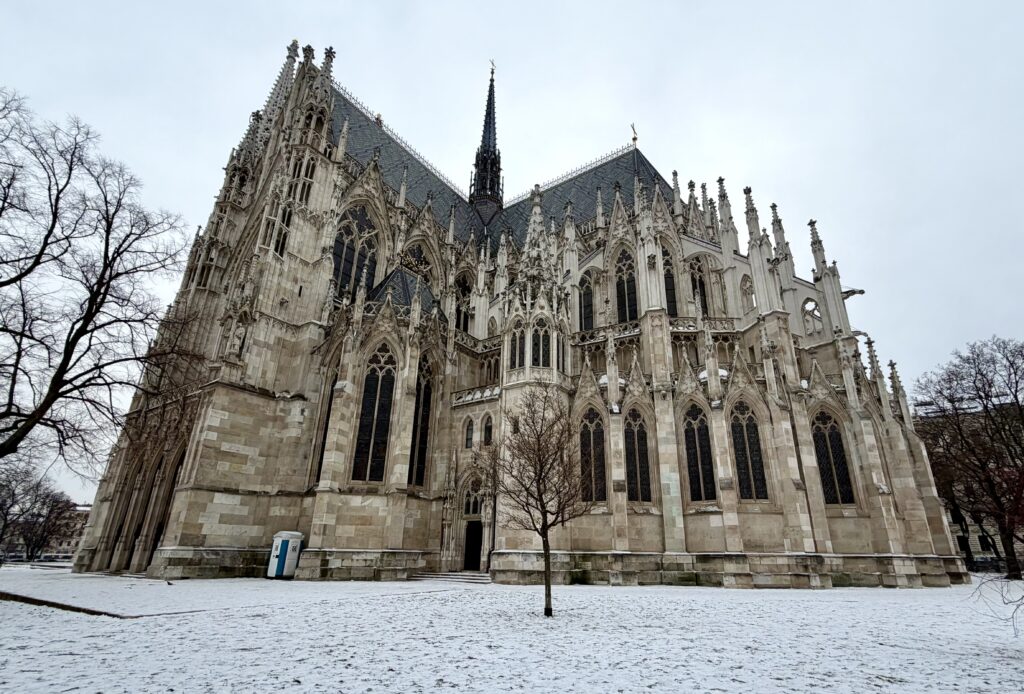
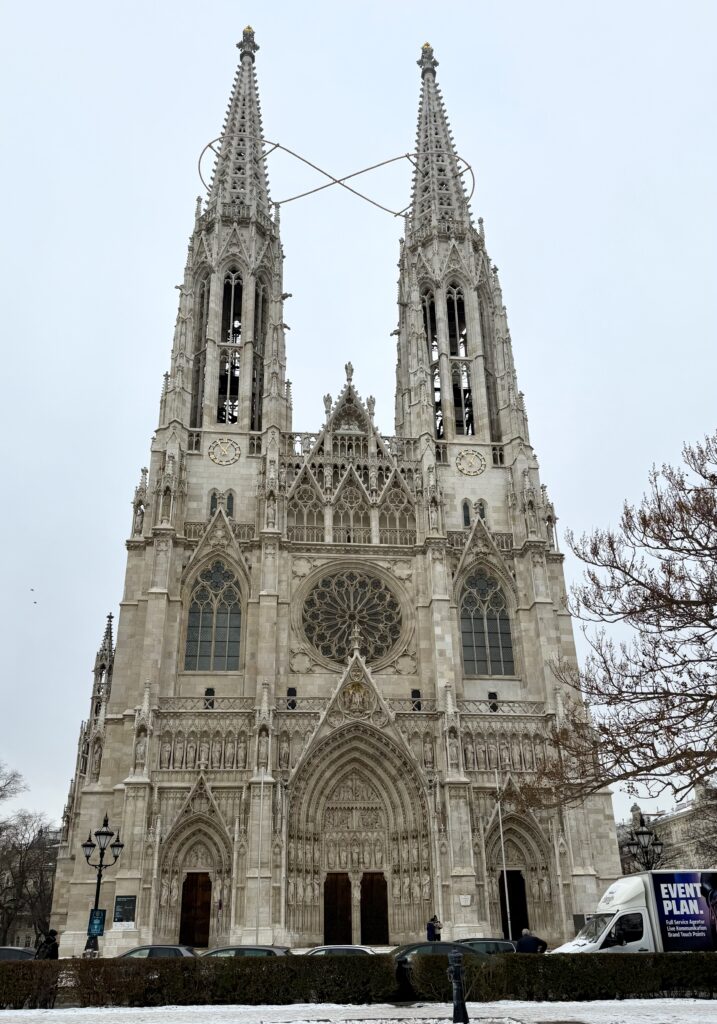
- Votive Church, or Votivkirche, was completed in 1879 and is the 2nd tallest church in Vienna after St. Stephan’s and sits on the Ringstraße . It was built by his brother (Archduke Maximillian) in thanks after Emperor Franz Joesph survived an assassination attempt in 1853. (https://www.visitingvienna.com/sights/votivkirche/)
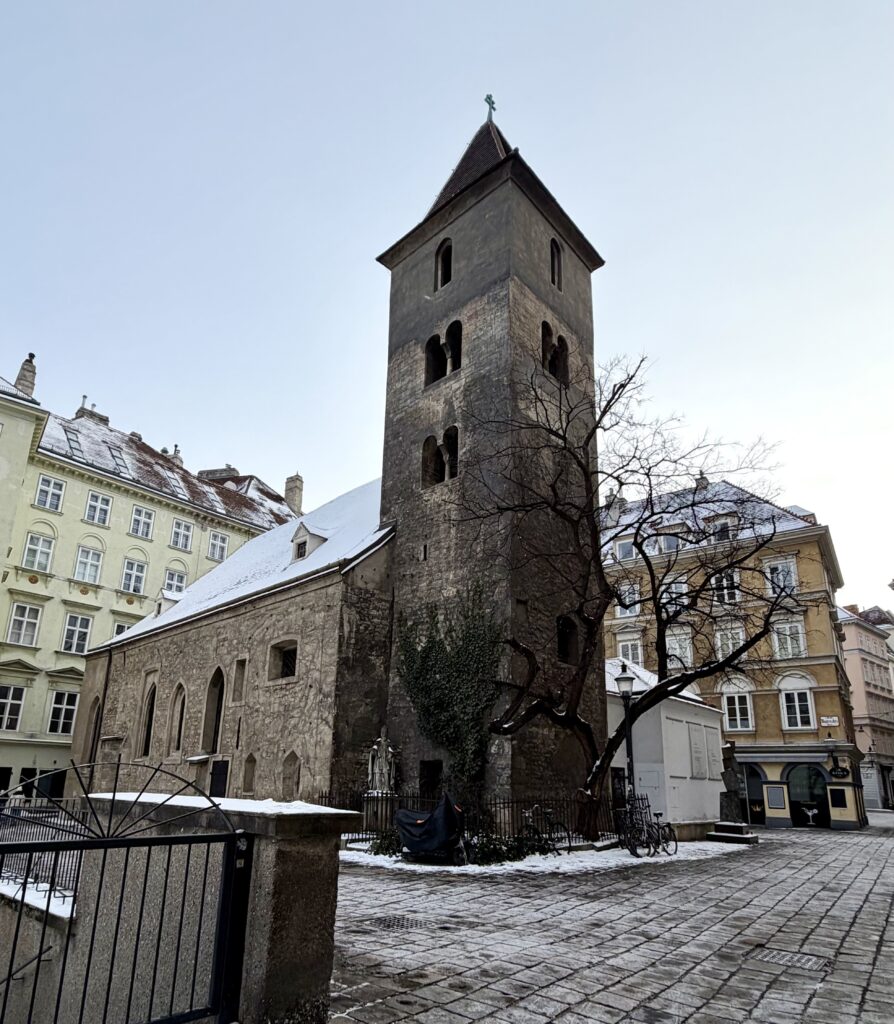
- St. Rupert’s Church (Ruprechtkirche) in Ruprechtsplatz holds the honor of being the oldest church in Vienna, with the oldest parts of it dating back to at least the 12th century (but some evidence exists that it may be as old as the turn of the 8th and 9th centuries). It is named for Saint Rupert of Salzburg, the patron saint of the salt merchants in Vienna (https://www.erzdioezese-wien.at/unit/virc/en/sightseeings/places/article/87617.html)
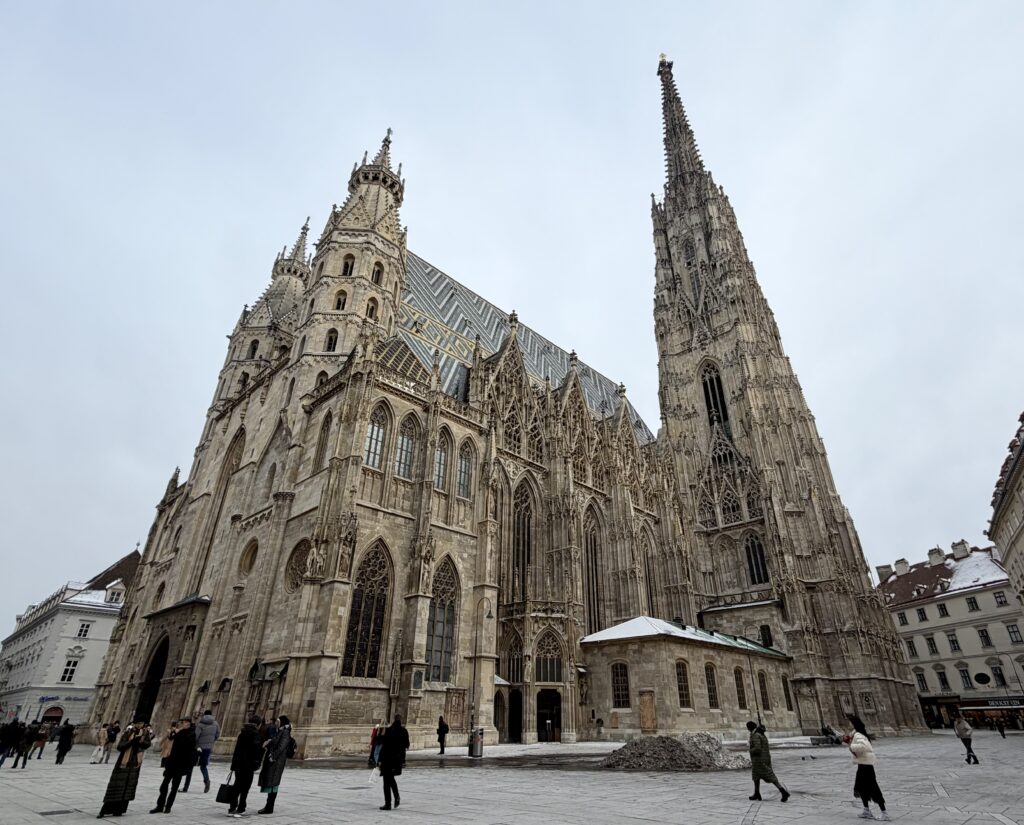
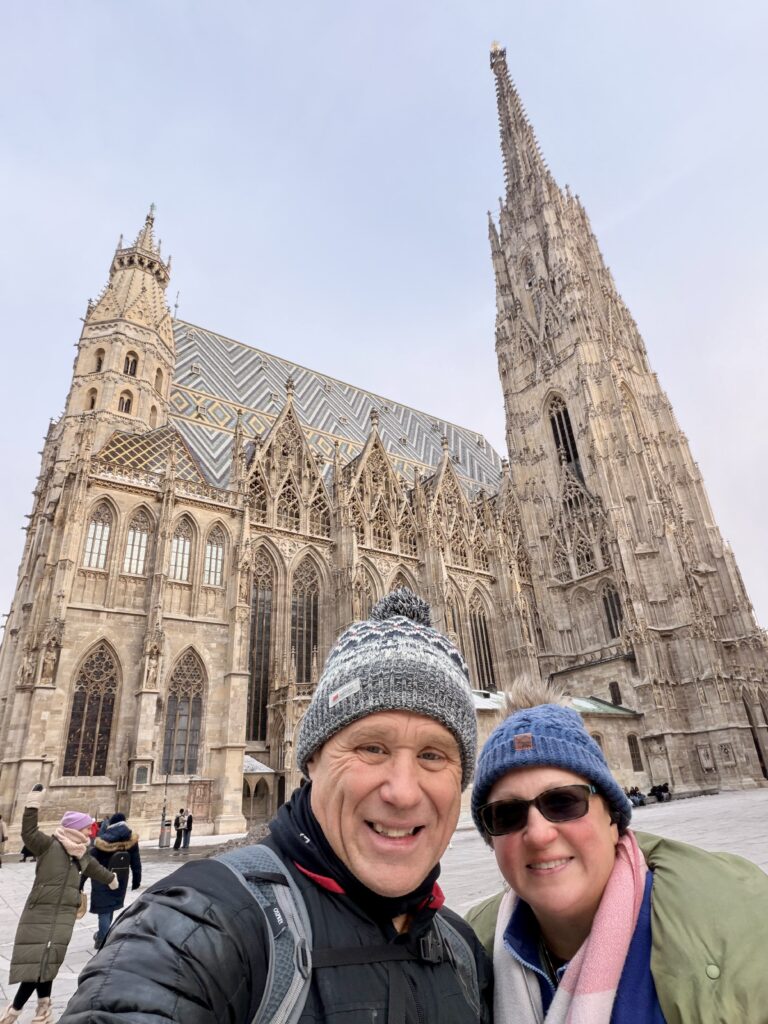
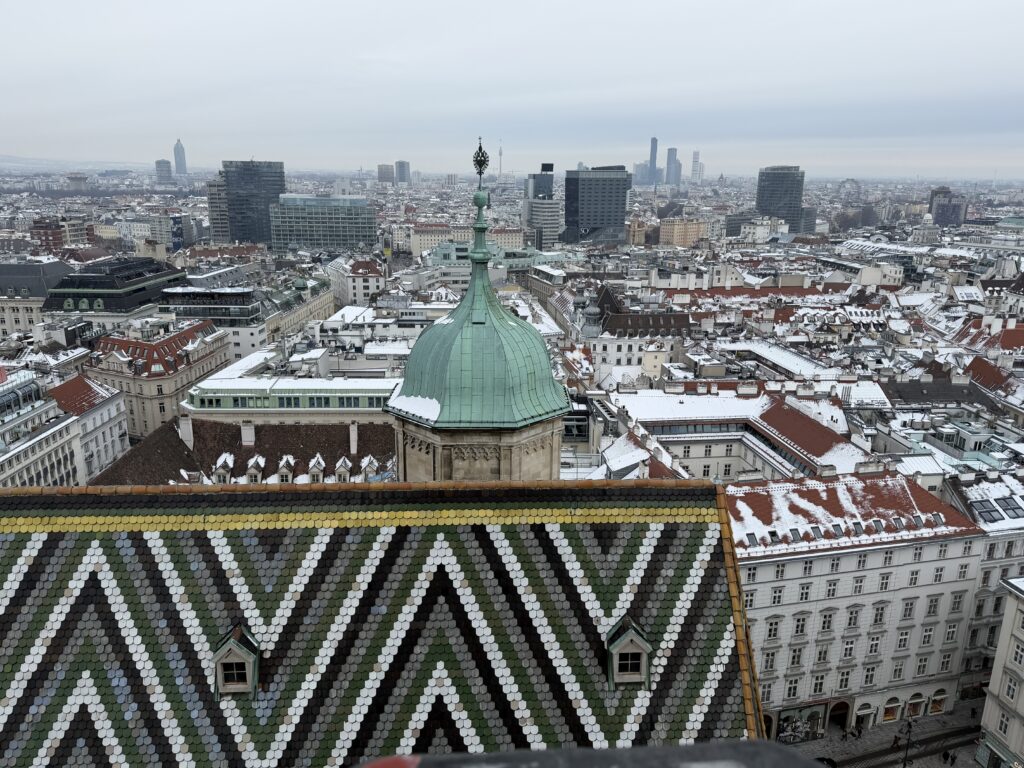
St. Stephan’s Cathedral, or Stephansdom (https://www.stephanskirche.at) is a must-see sight in Vienna. This was the only church we ended up going inside of and it was well worth it. There are a variety of ticket options, including a combo ticket that included basically everything you could possibly see (including the church itself, the crypt, and both towers). We decided to just see the main church itself and to go up the taller south tower. The climb up the south tower involved 343 steps but was well worth it for the view (the shorter north tower has an elevator).
The current church is the 3rd church on this site and dates back to the 14th century. The north tower was meant to be taller but construction was stopped due to the Protestant Reformation as well as competing interests of the city to further fortify its walls to protect against Turkish armies.
The roof caught fire from sparks of nearby house fires 1945 related to WWII and collapsed. It was replaced with the current roof consisting of 230,000 glazed tiles. They were made in 1950 in the Czech Republic and each tile weights over 2kg.
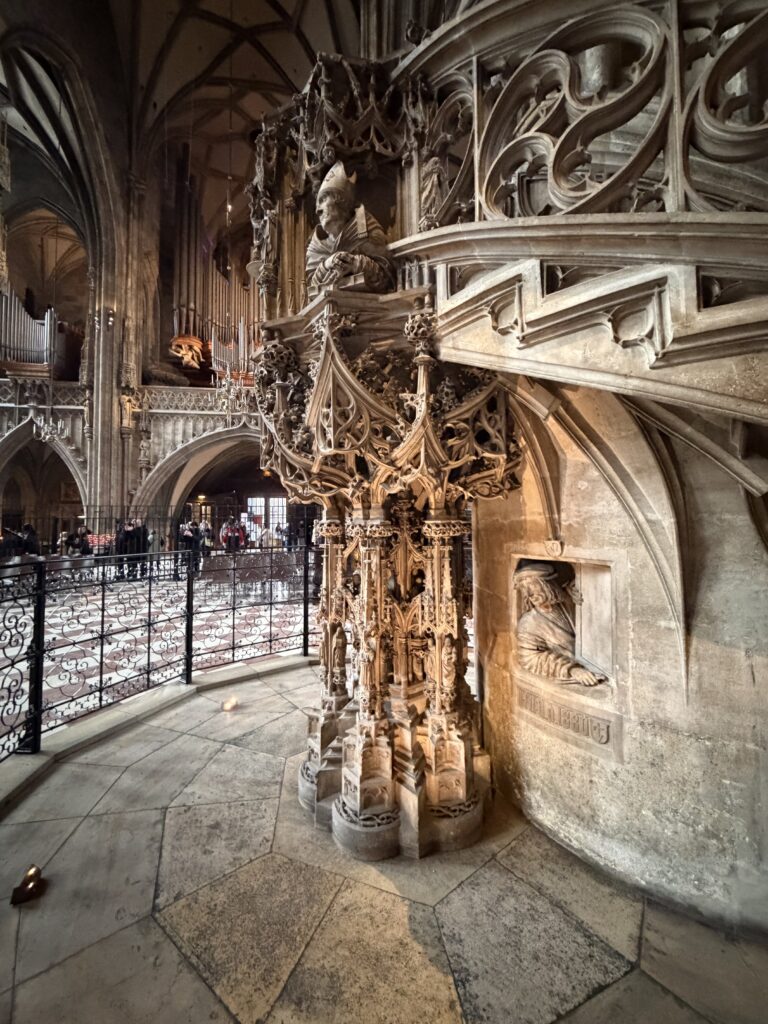
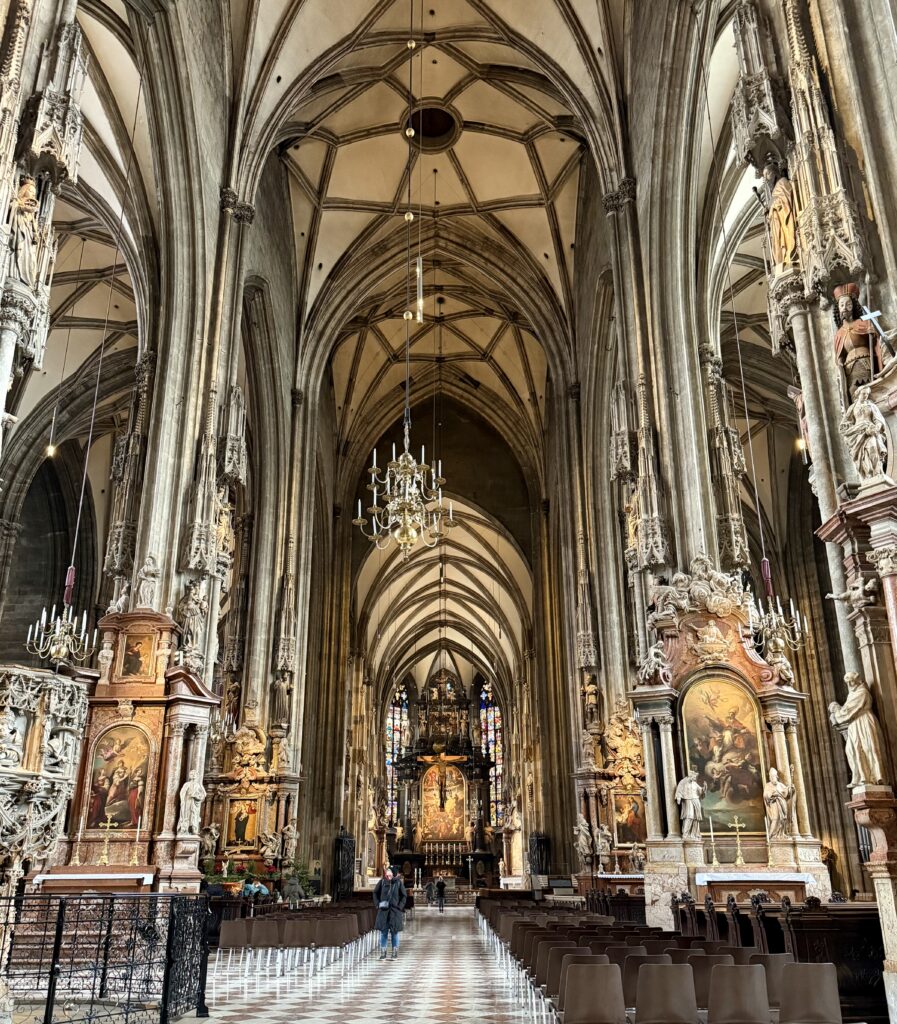
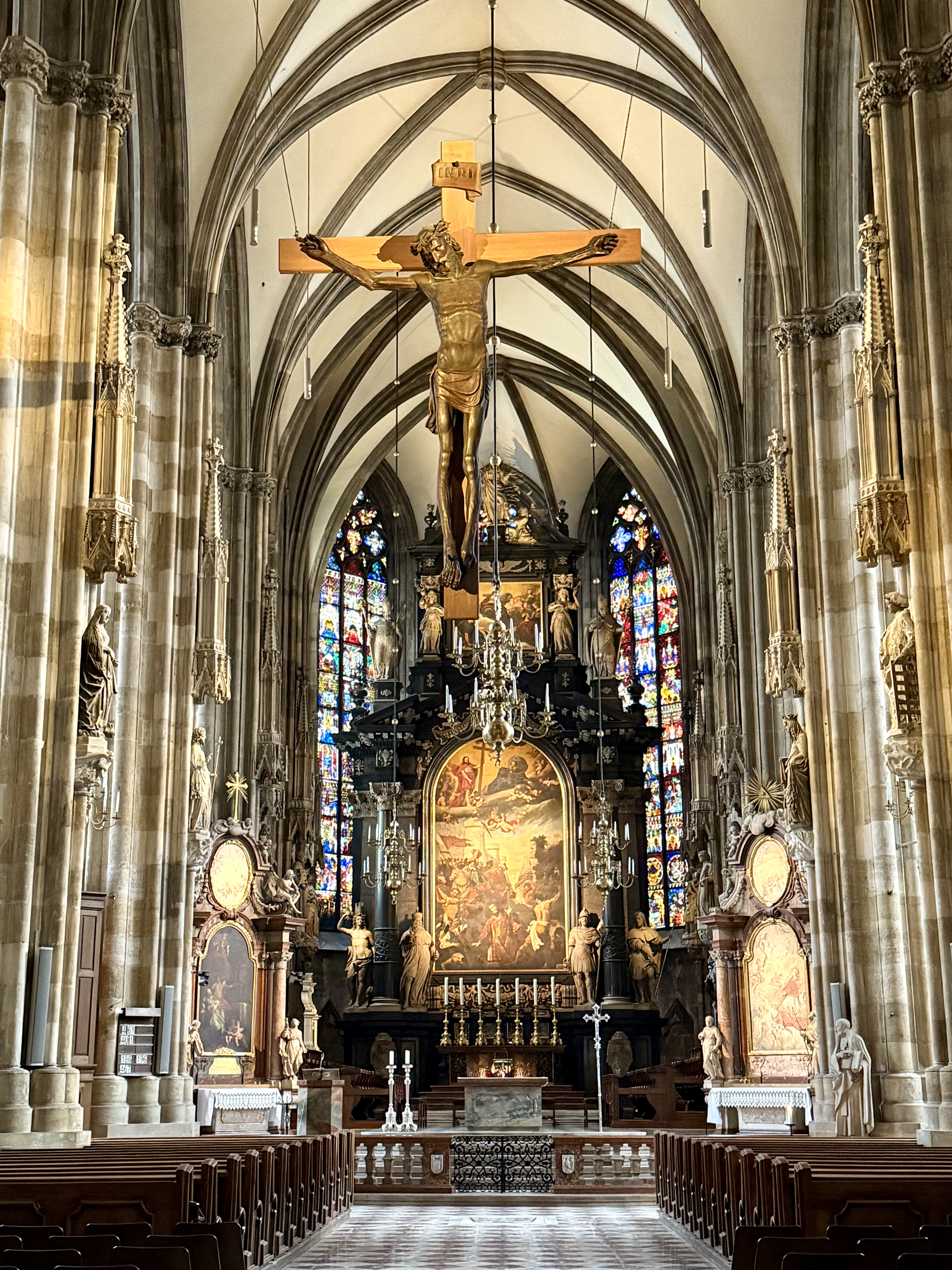
There are several amazing sights inside the church. The beautiful pulpit was carved from sandstone around 1500. There’s a side chapel where Wolfang Amadeus Mozart married Constanze Weber. The tomb of Frederick III (1415-1493; considered the “father” of Vienna) sits to the right of the altar. The black marble altarpiece was built in 1641. To the left of the high altar is the Wiener Neustäder Altar. Commissioned by Frederick III in 1447, the 3 panels are on hinges so it can be opened and closed depending on the church calendar.
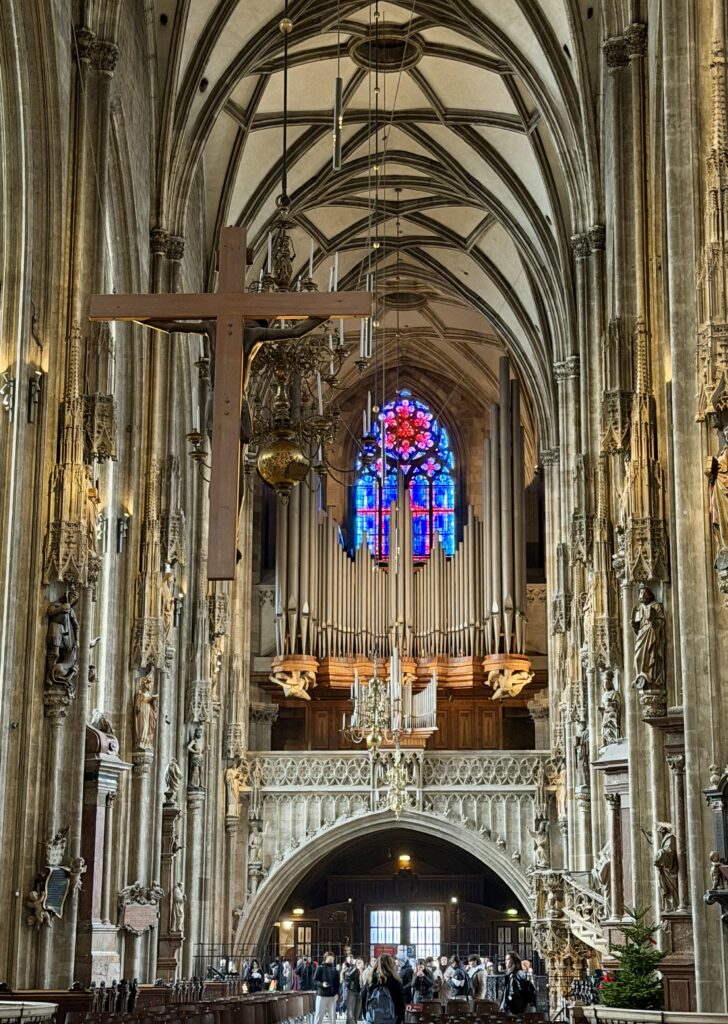
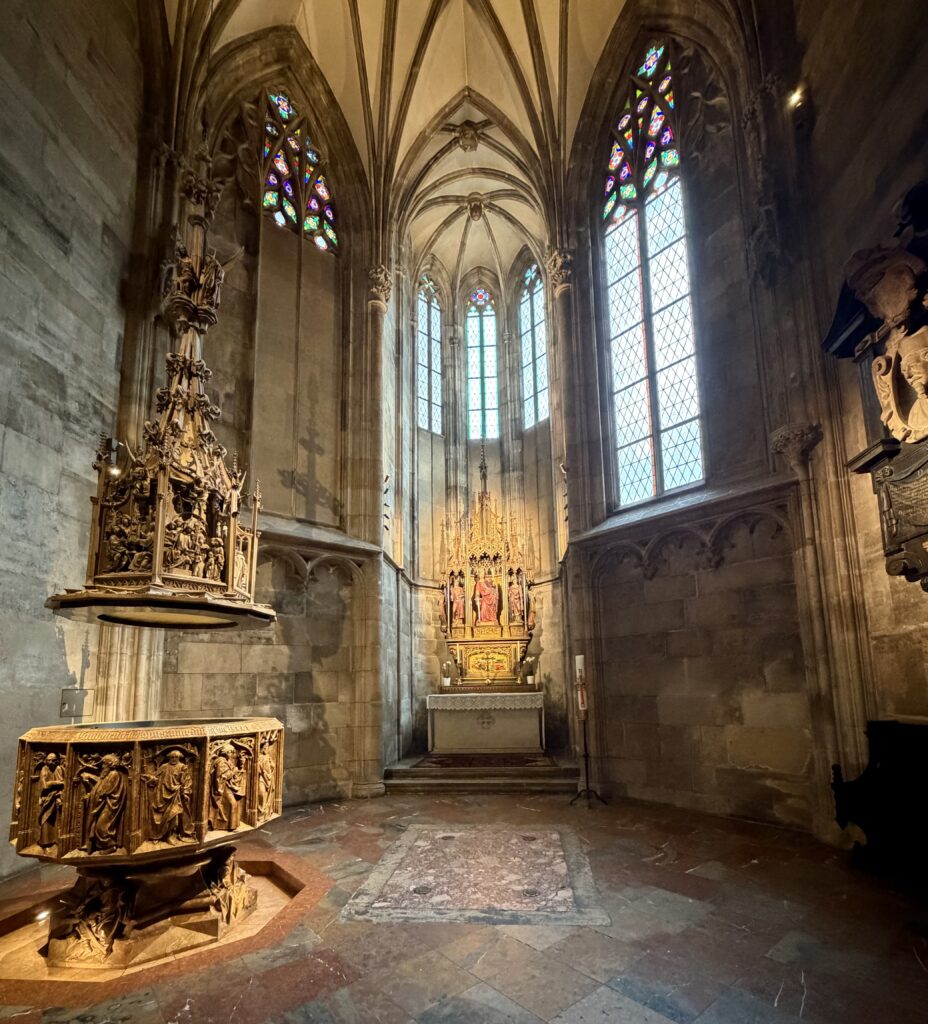
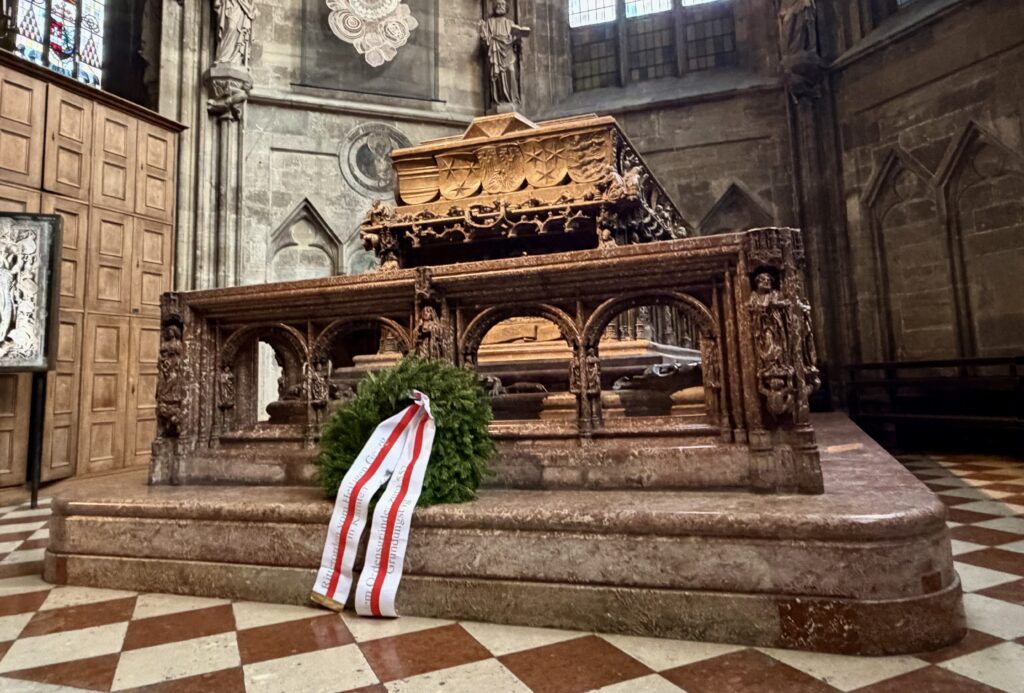
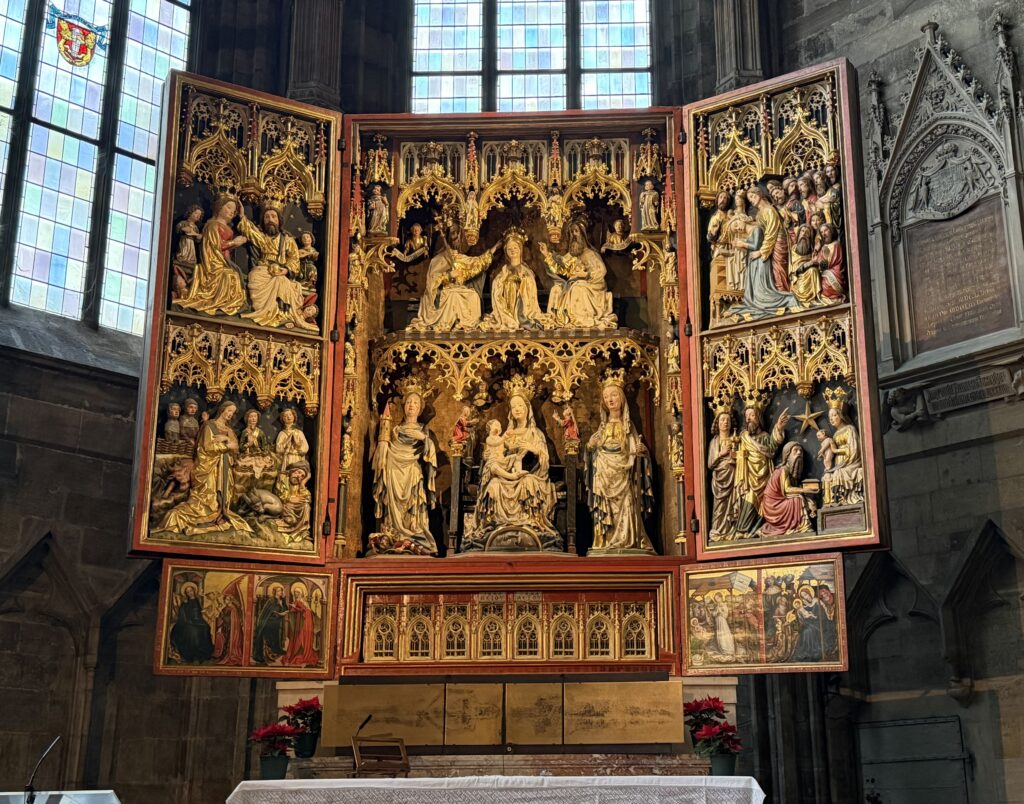
After visiting the inside of the church, we hiked up those 343 steps for some amazing views. You can pick out the Votive Church towering high in the distance.
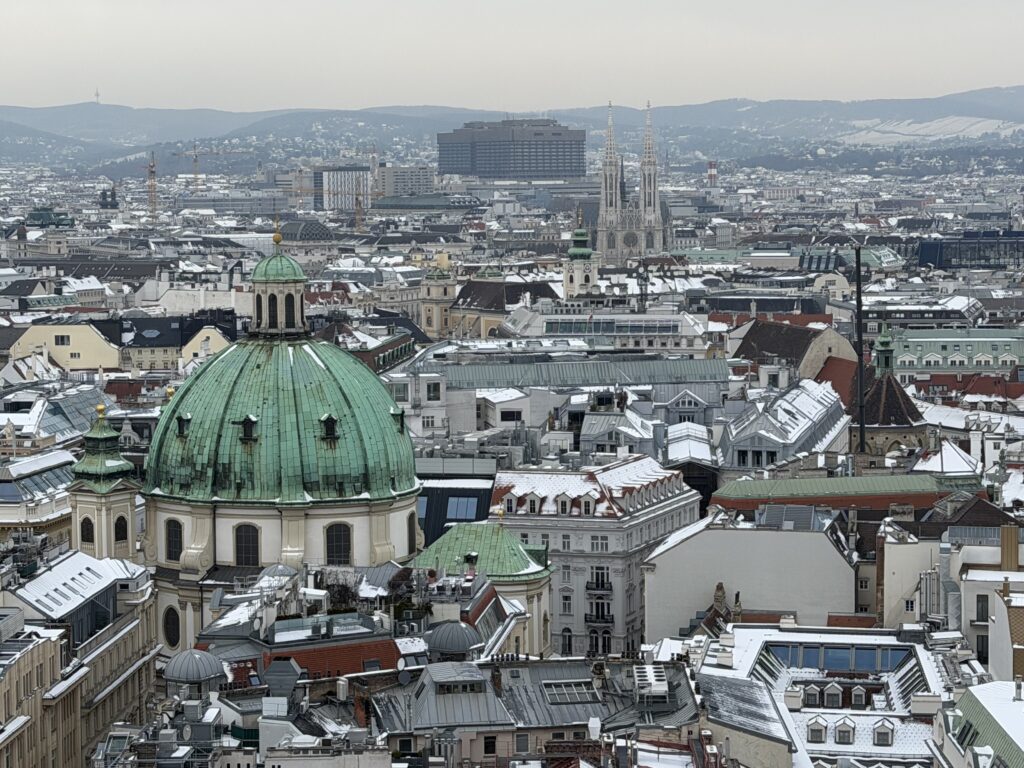
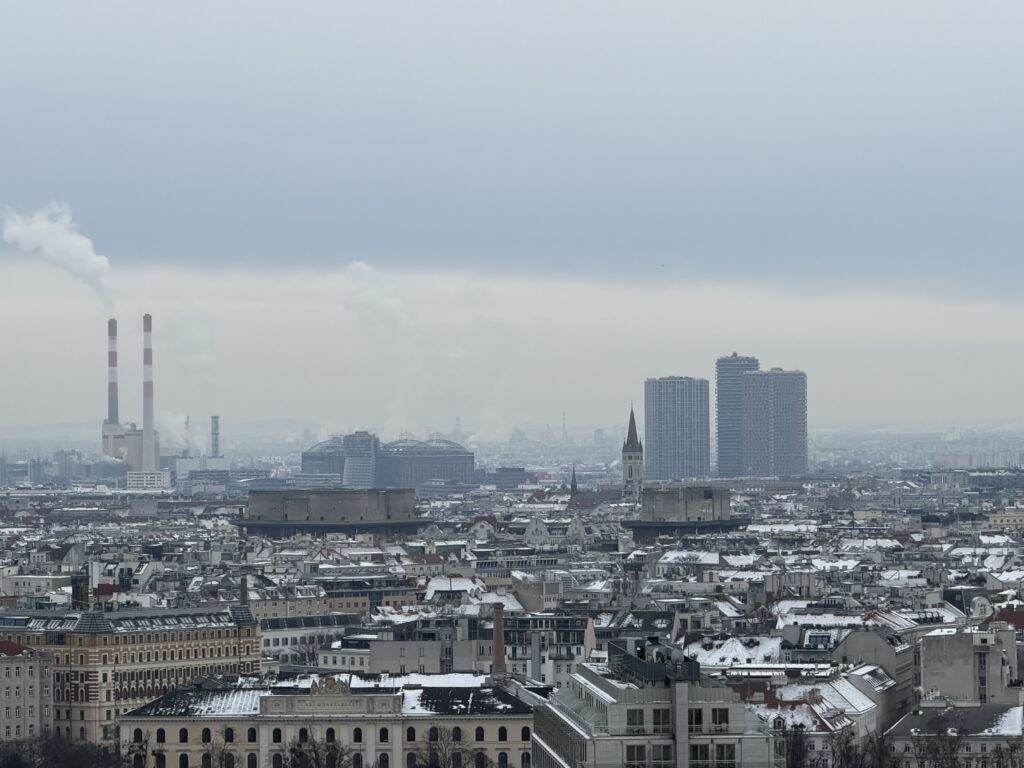
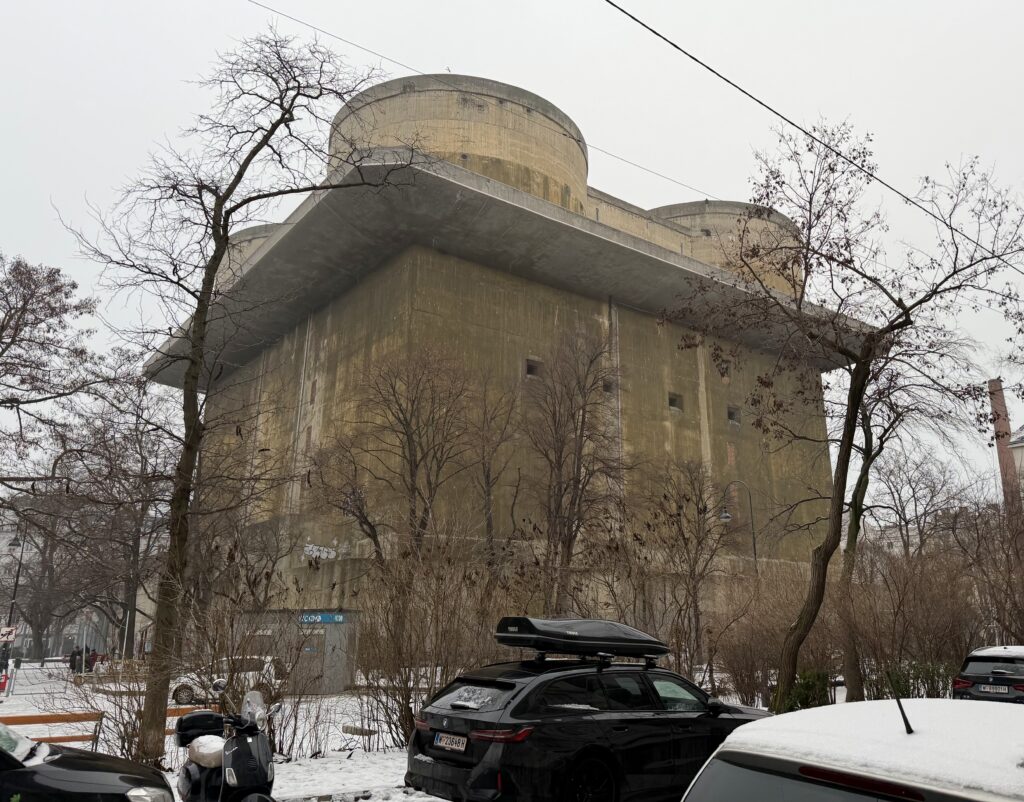
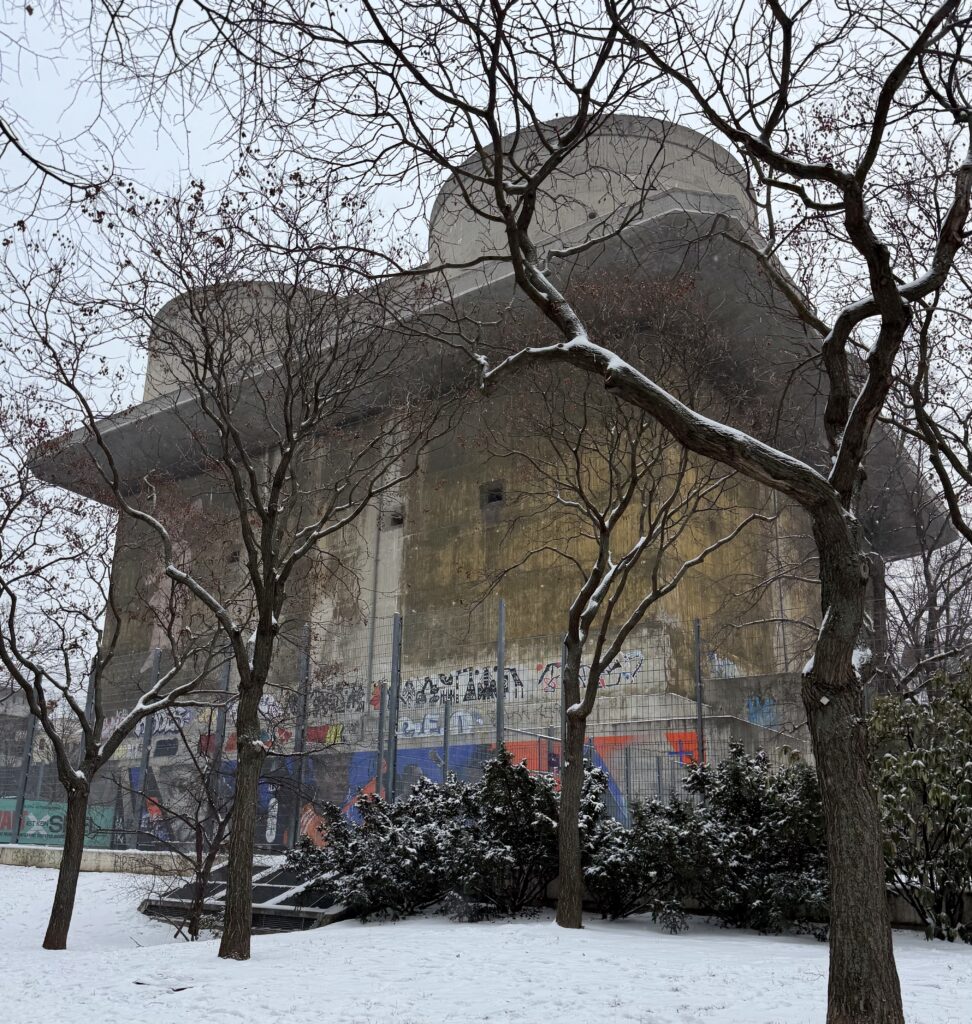
One of the things we could also see from the roof were these Nazi Anti Aircraft Towers (Flakturm or Flakturme). We saw several in the parks near the apartment where we stayed. I read that they were basically very difficult to demolish so they are still sitting there. It was really strange to see kids playing in a park with these in the middle of it. There is some more detail about these here: https://www.visitingvienna.com/culture/wwii-vienna/. There’s a lot more to the WW2 history in Vienna but I will touch on that in my separate WW2 post.
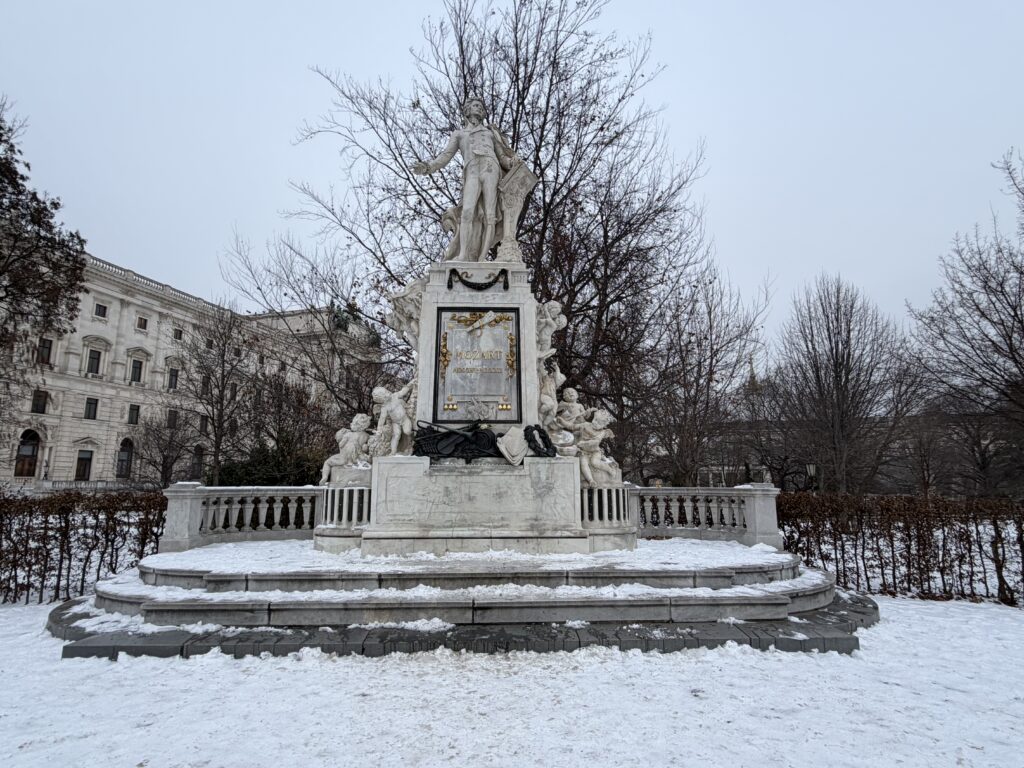
There are lots of statues all over Vienna and it’s not surprising that many of them are dedicated to musicians and other artists. There’s a famous Mozart statue in Burggarten (right by the Imperial Palace).
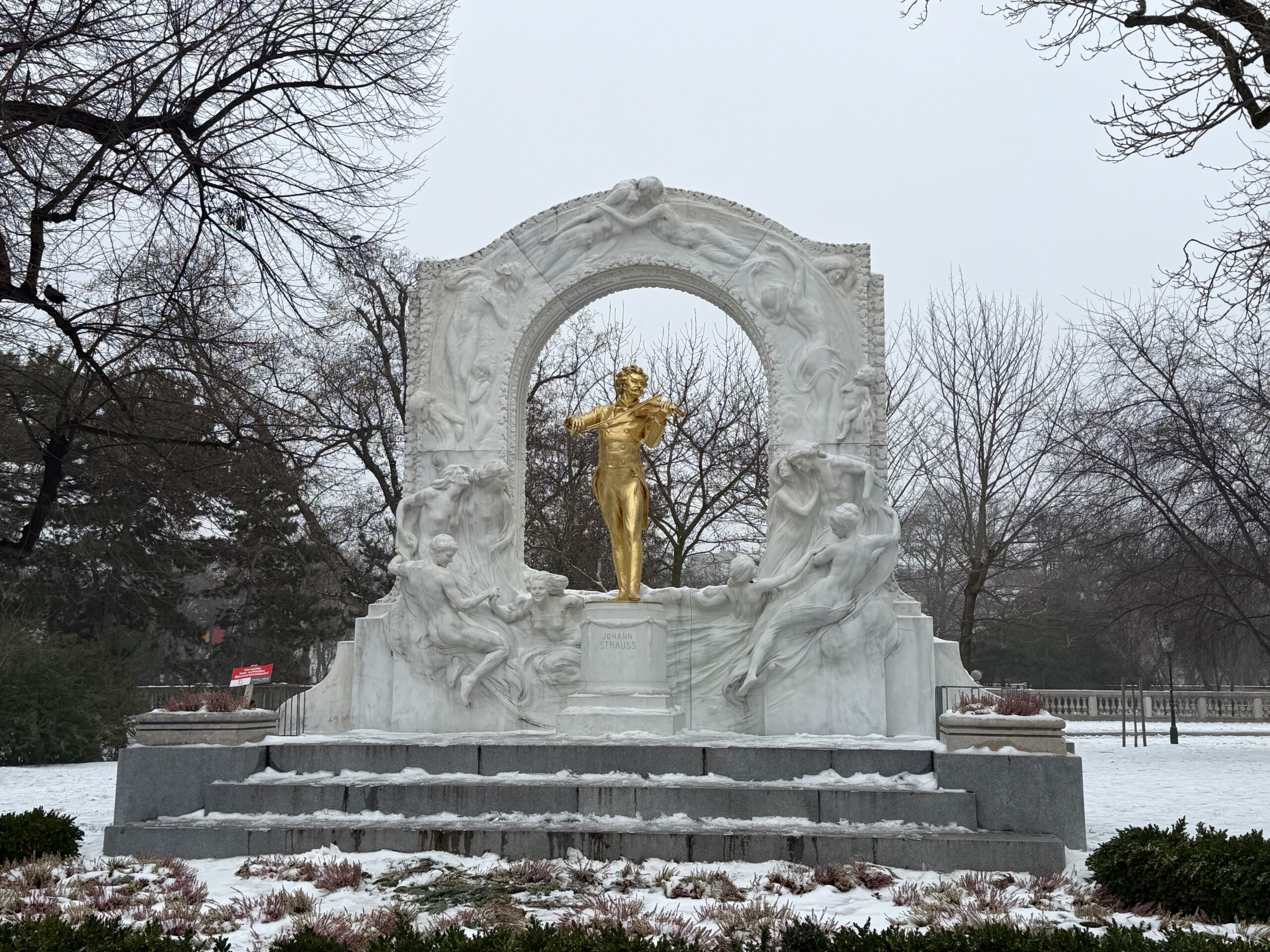
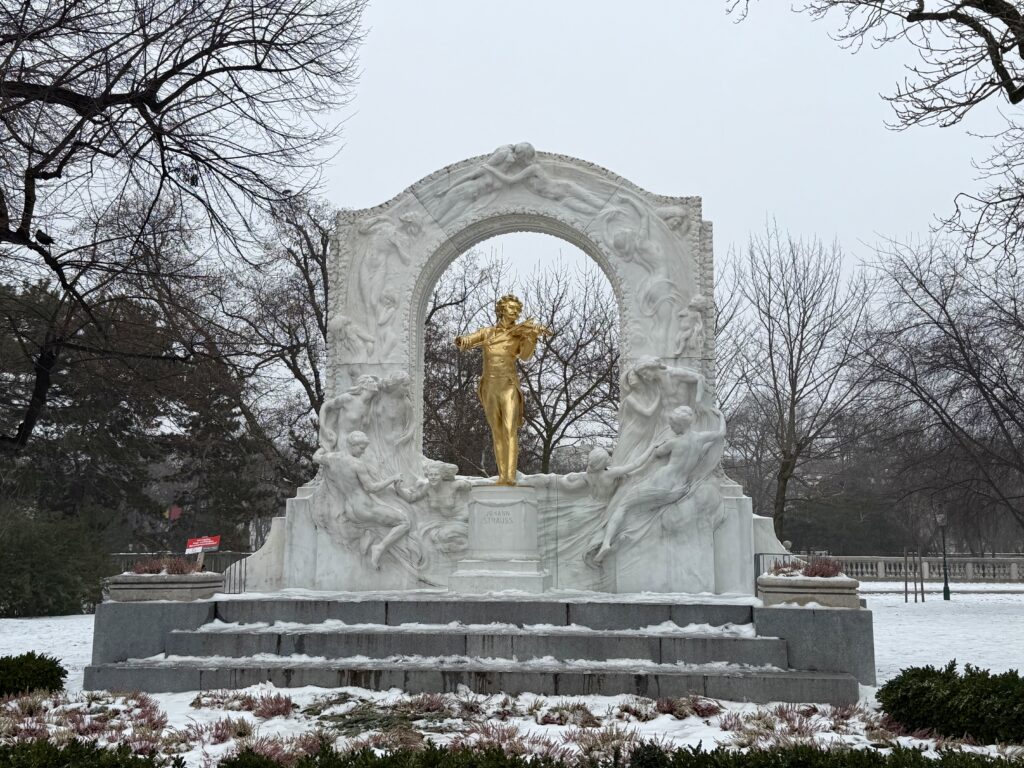
Another is this one of Strauss in the Stadpark.
There’s a lot to see and do in Vienna so this is just scratching the surface.