
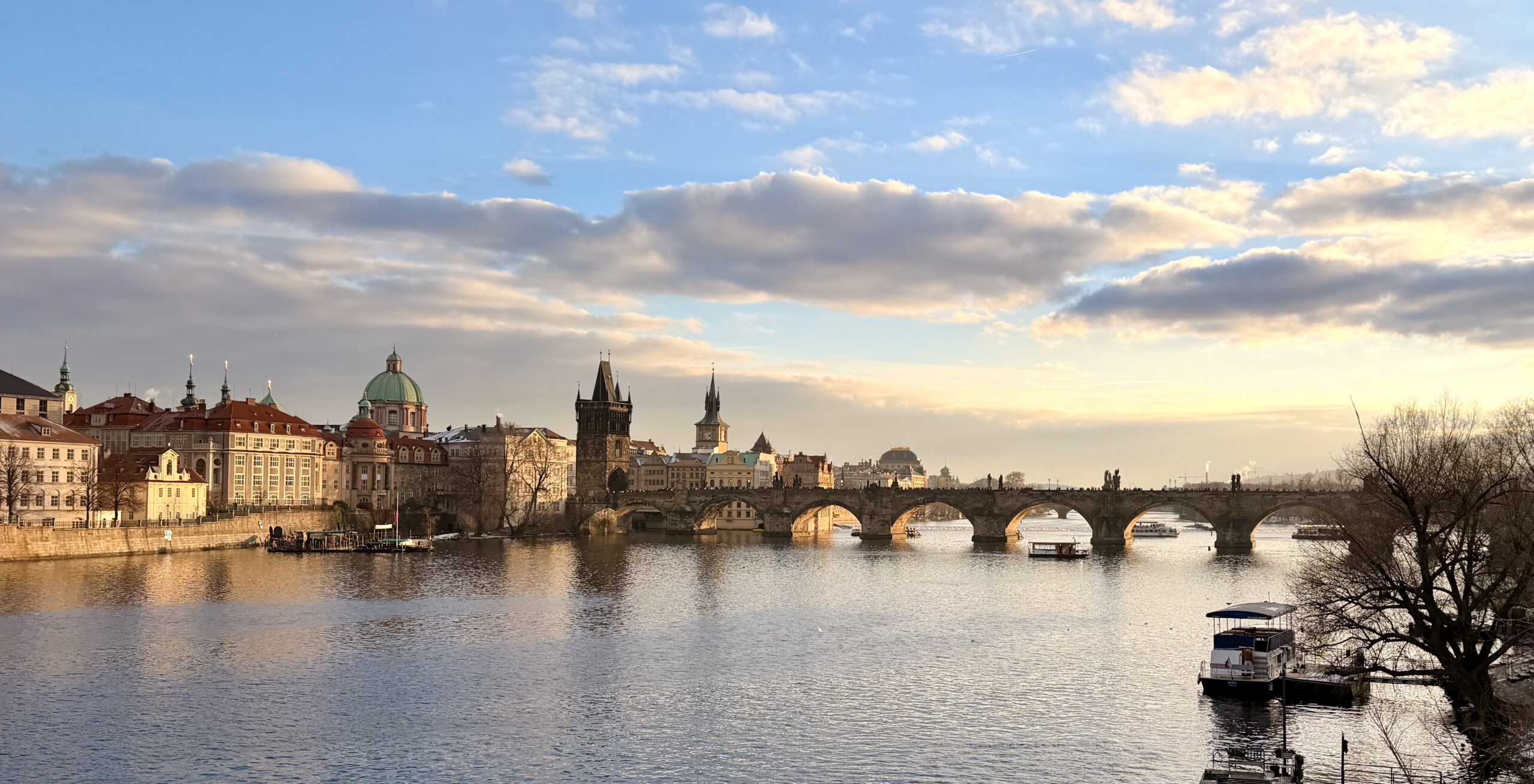

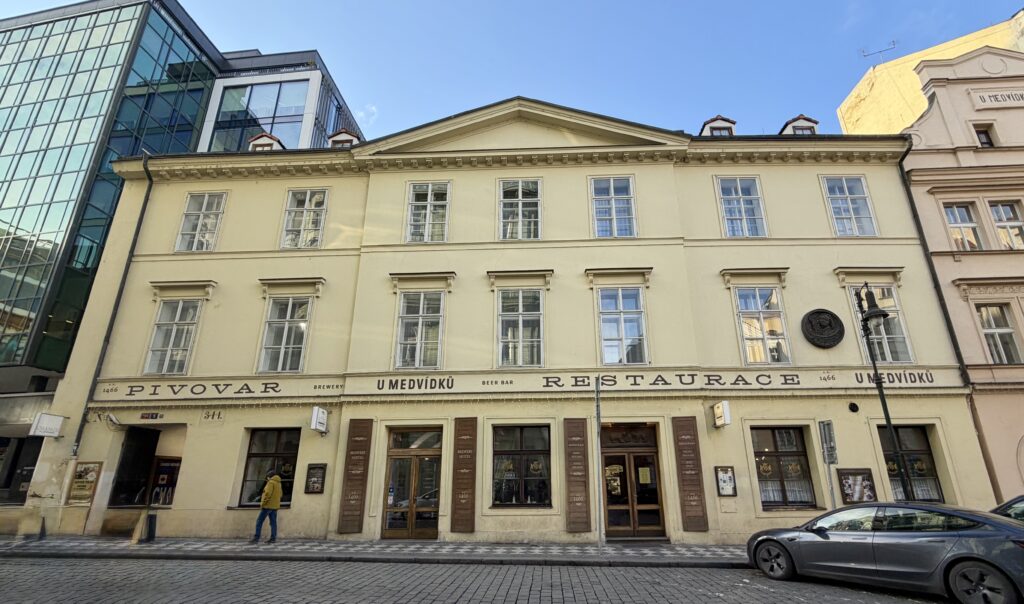
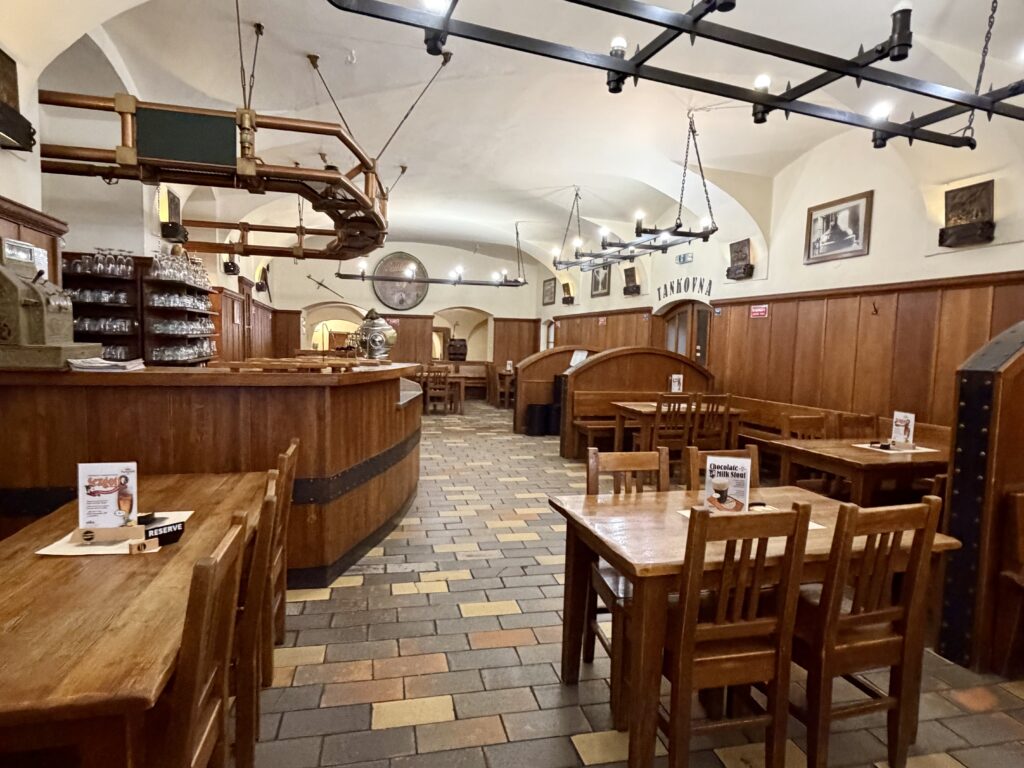
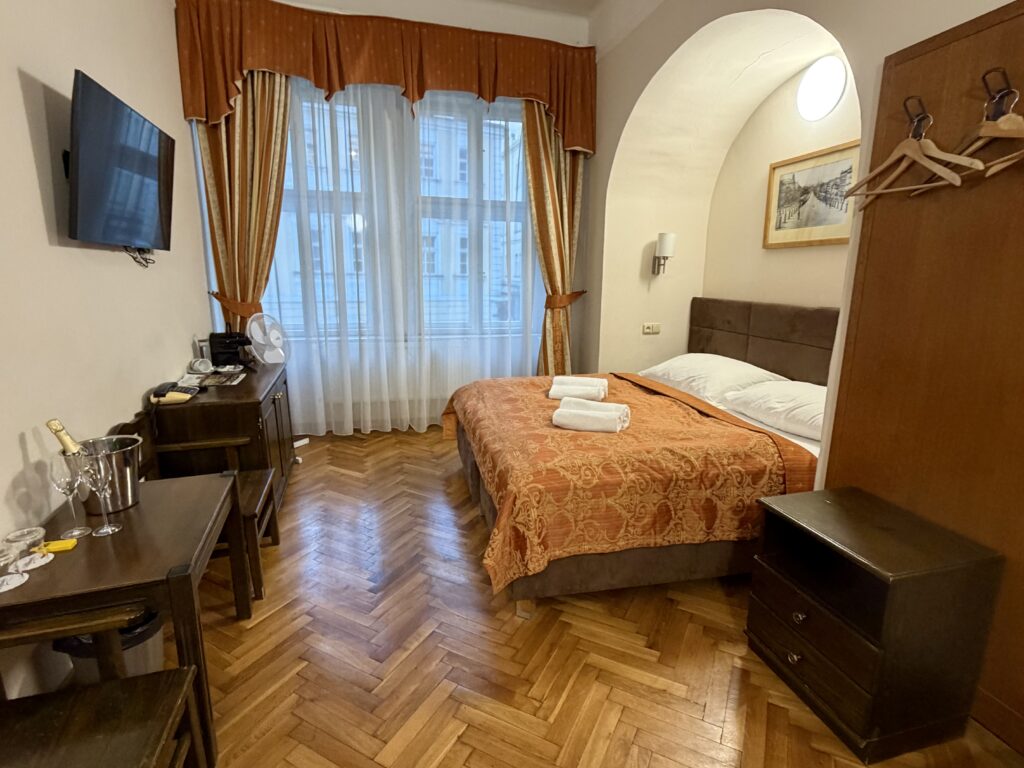
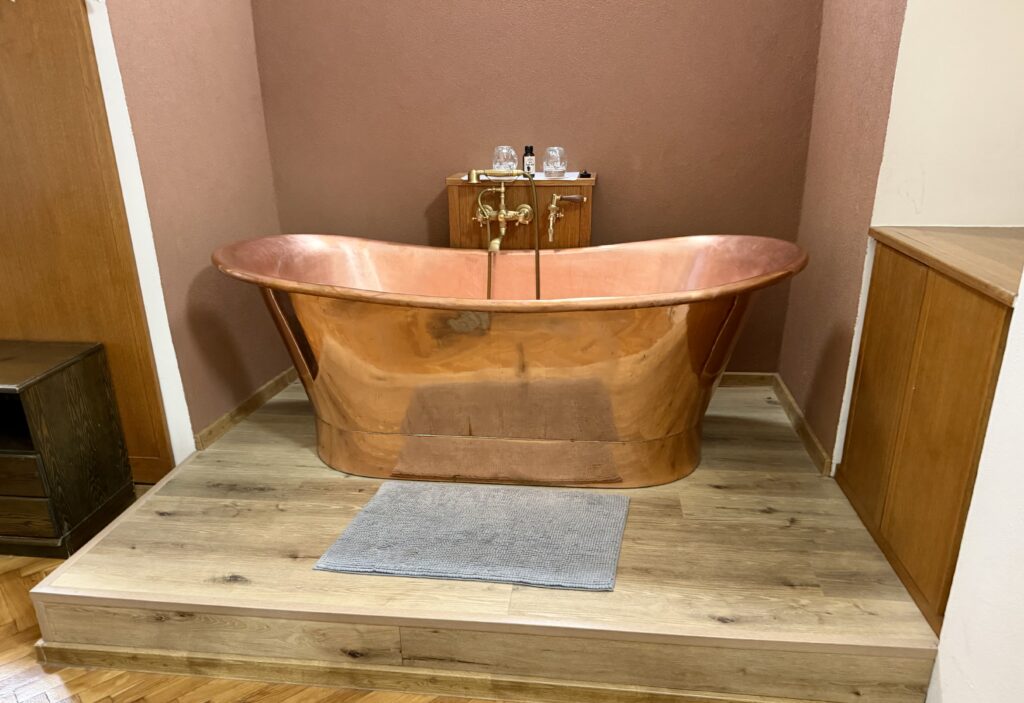
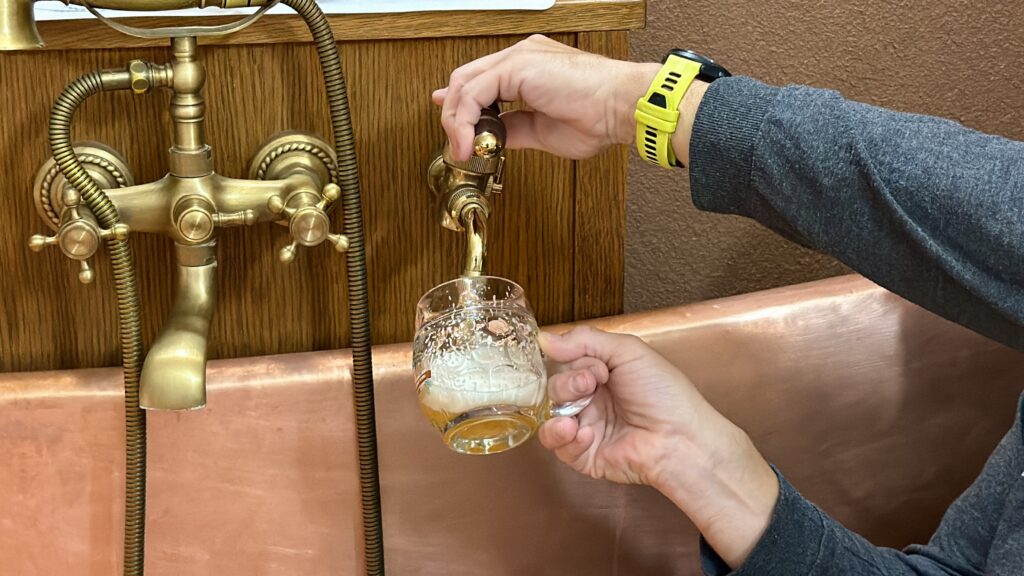
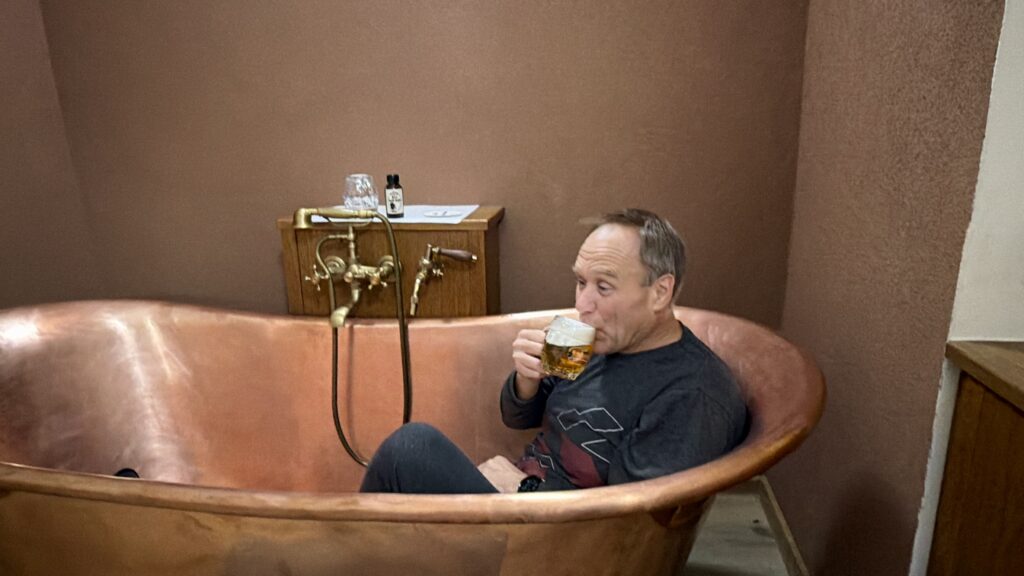
After our stopover in Pilsen, we continued on to Prague for 5 nights. We were pretty excited about this particular stay because I had booked a unique hotel. We stayed at the Brewery Hotel U Medvíků (https://umedvidku.cz/en/) – it’s a brewery and restaurant with a hotel. But on top of that, they have a handful of beer spa rooms. We had a large tub in our room and the tub had 3 taps – one each for hot & cold water and then 1 for beer! Included in our room price was breakfast (and it was a really great buffet breakfast) as well as up to 5L of beer per day! It’s only 4% ABV and we only went through 2 1/2 canisters (12.5 L) during our 5 night stay so nothing too crazy but it was pretty cool!
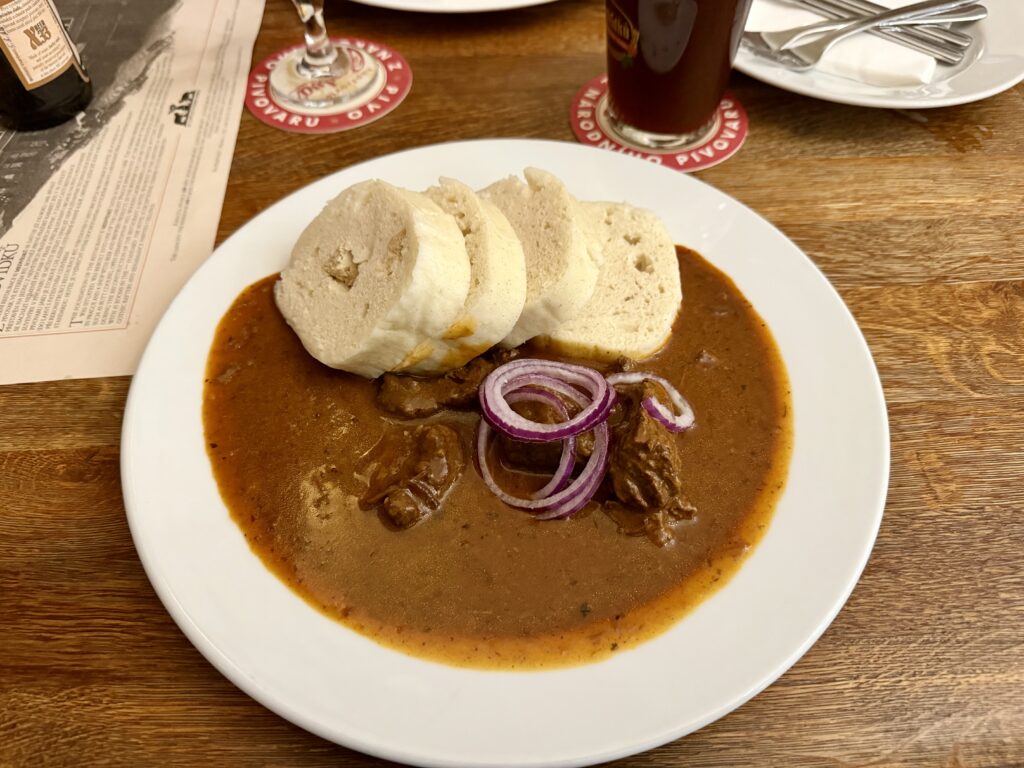
Breakfast was down in the restaurant and during the week we also had dinner in the restaurant once – the food was so good! And it also gave us a chance to try out some of their other beers.
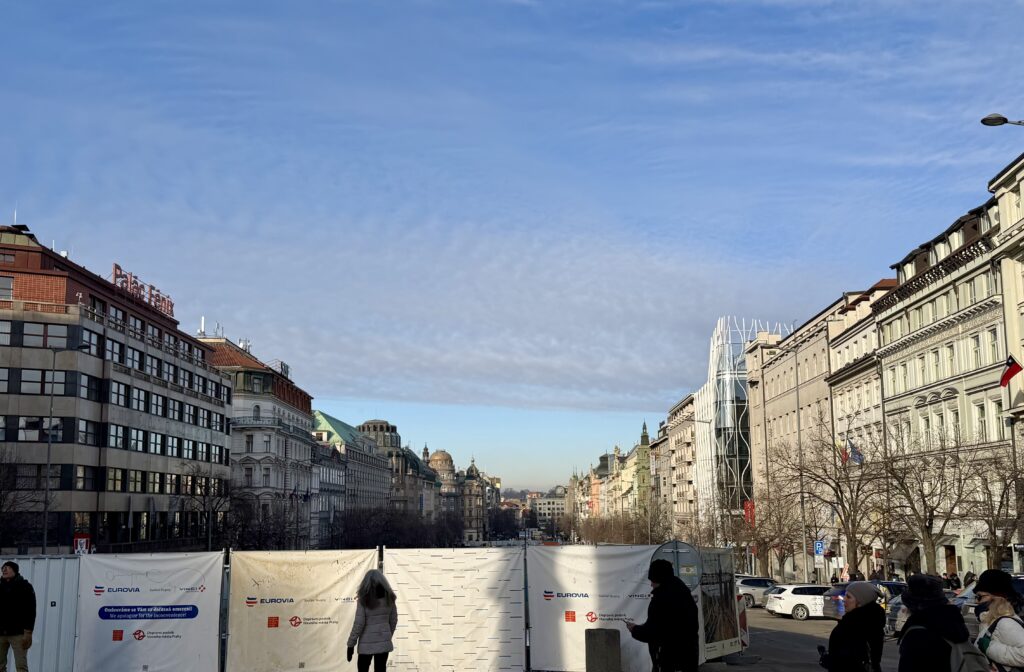
Our first day there we used the Ricks Steves Audio Europe app to do a self-guided walking tour. It’s a great way to get oriented to a city when you first arrive. Our first stop on that tour was Wenceslas Square in the New Town – and then of course I had “Good King Wenceslas looked out on the feast of Stephen ….” in my head all day (and now you probably do too – sorry!). The “square” is really a several blocks long rectangle and is under construction but we could still get a good look at some of the buildings. It was an interesting mix of old and new/newer.
Czech history is so interesting to me. Maybe in part because some of the eventful things that happened were during our lifetime. In 1918 in Wenceslas square, crowds gathered to celebrate the end of WW1. This is also when Czechoslovakia became its own country, independent of Austria-Hungary. Then the Sudentland (part of Czechoslovakia that had a large population of ethnic Germans) became part of Nazi Germany in 1938 as part of the Munich Agreement (basically the UK, France, Italy, and Nazi Germany met and they agreed to let Nazi Germany annex the Sudentland but they left Czechoslovakia out of the conversation entirely). From 1939-1945, Czechoslovakia no longer existed (Slovakia became part of Hungary and Germany took over the rest). After WW2, Czechoslovakia was re-established according to its pre-1938 borders except the part that had become part of Hungary – that became part of the Ukrainian SSR. The communist party took over after a coup in 1948 and from 1948-1989, Czechoslovakia was part of the Eastern Bloc. In 1968, the Prague Spring Uprising ended when the Soviets invaded Czechoslovakia. In 1989, Czechoslovakia peacefully deposed their communist government during the Velvet Revolution. And then in 1992, they split peacefully into the independent states of the Czech Republic and Slovakia.
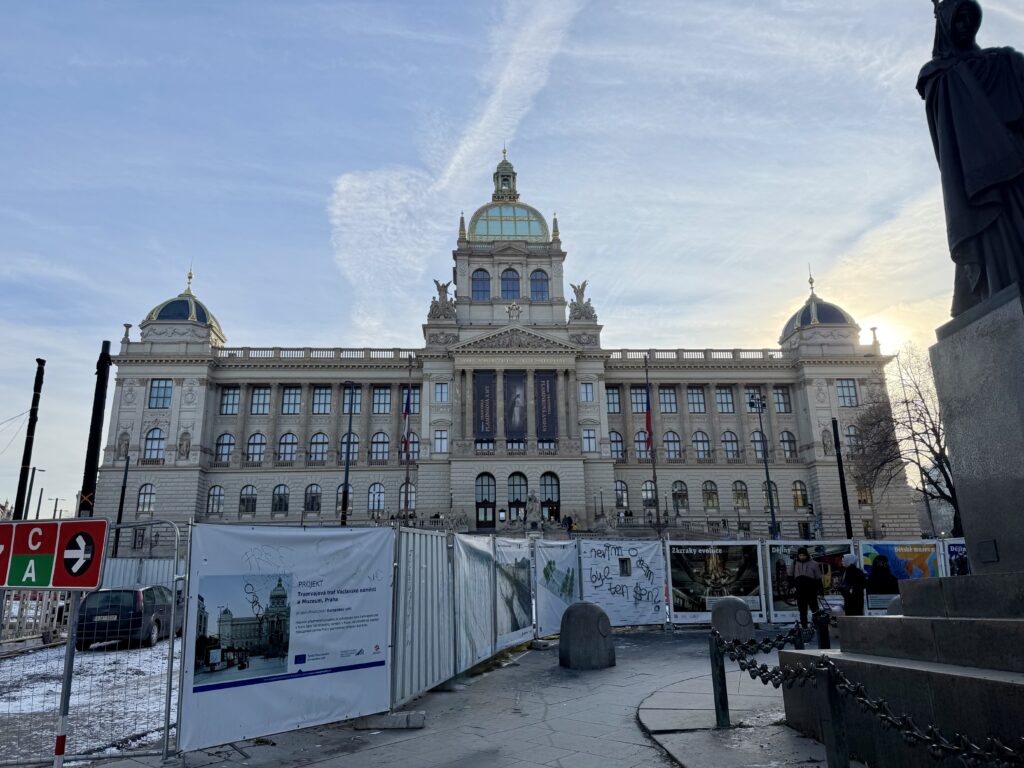
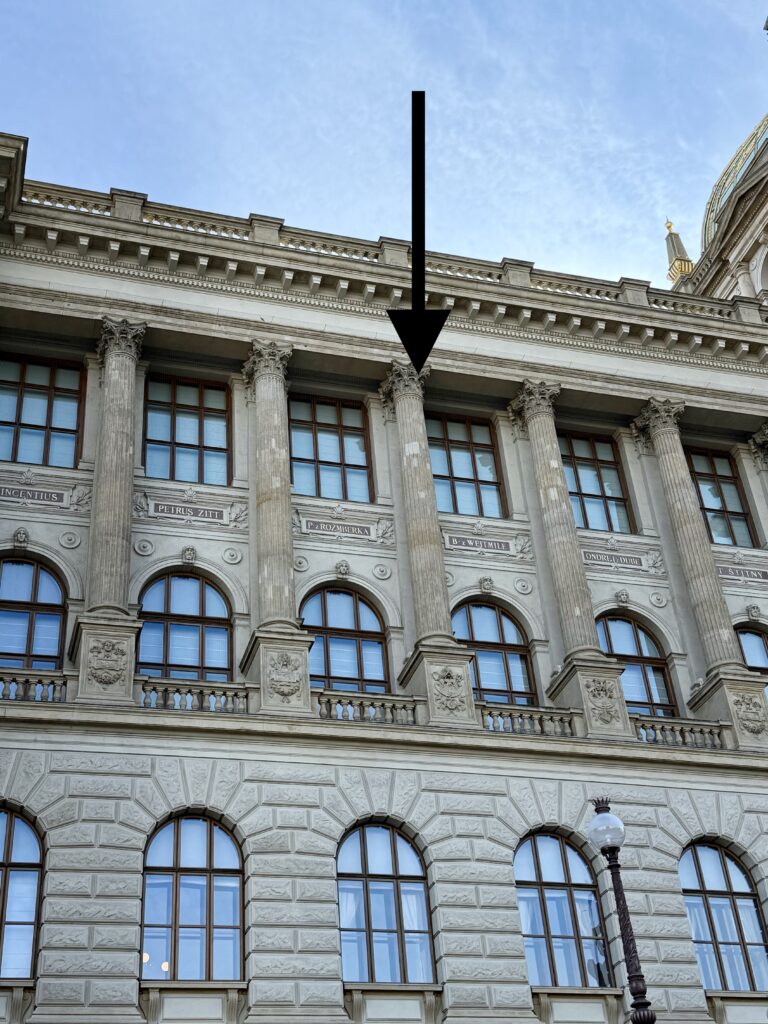
At the top of Wenceslas square is the National Museum. Notice the patchwork color of the columns on the national museum? This was from an intentionally “sloppy” repair as a form of resistance. The holes made by Soviet bullets (during the Prague Spring Uprising in 1968) were supposed to be fixed (and thereby forgotten) but the masons made the repair lighter and mismatched on purpose so there was a visible reminder.
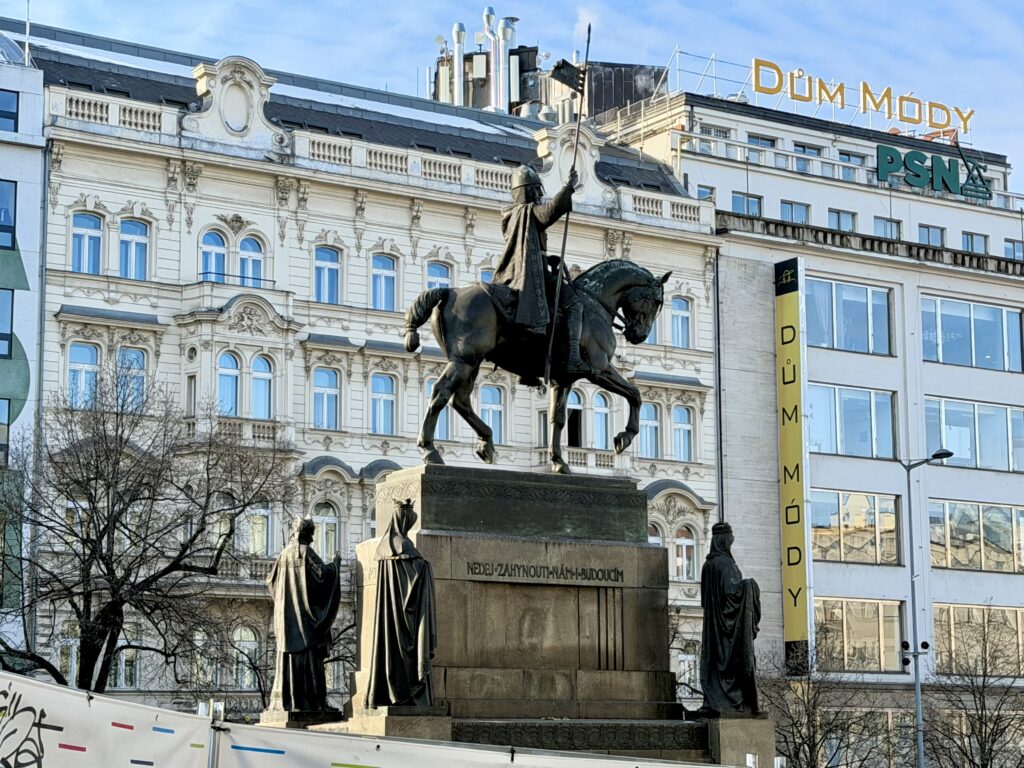
King Wenceslas (his Czech name Václav) lived from 907 to 929 AD and was actually a Duke who united the Czech people back when this was Bohemia. He was murdered in 929 (his brother had him killed so that he could become Duke), canonized as a saint, and became a symbol of Czech nationalism (this article has a great detailed history of him: https://www.umnews.org/en/news/the-real-story-behind-good-king-wenceslas). There is, of course, a statue of Wenceslas in the square bering his name.
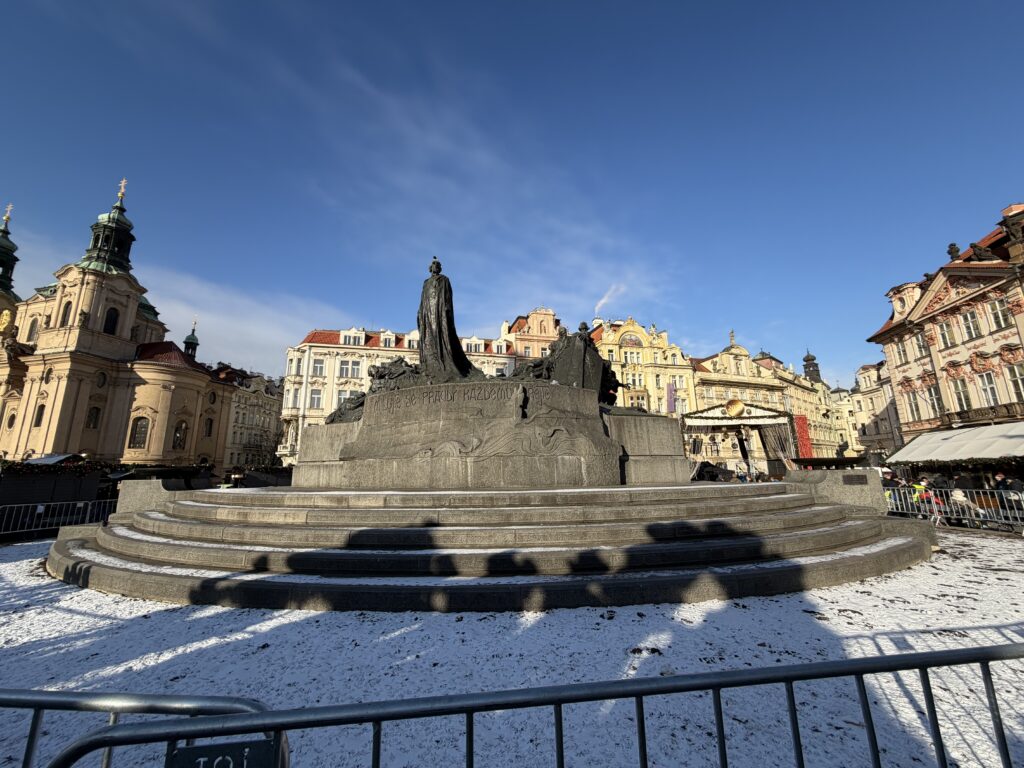
Ultimately our walking tour brought us into the Old Town and into the main square – Old Town Square. There was still a Christmas market going on for the first couple days of our stay in Prague (we got into town Jan 5 and the market ended Jan 6 so we did pass through it on our city walk). In the middle of the square is a statue of Jan Hus. His was born around 1370 (the exact date of his birth is unknown). He sought church reform and also pushed independence for the Czech people. He was executed (burned alive) in 1415 after refusing to renounce his faith. His followers (Hussites) continued to battle the Holy Roman Emperor and the Roman Catholic Church for 200 years, eventually incorporating into the Protestant Reformation (https://reformation500.csl.edu/jan-hus/; https://johnhus.org/content/who-was-jan-hus/; https://www.thecollector.com/who-was-jan-hus-priest/).
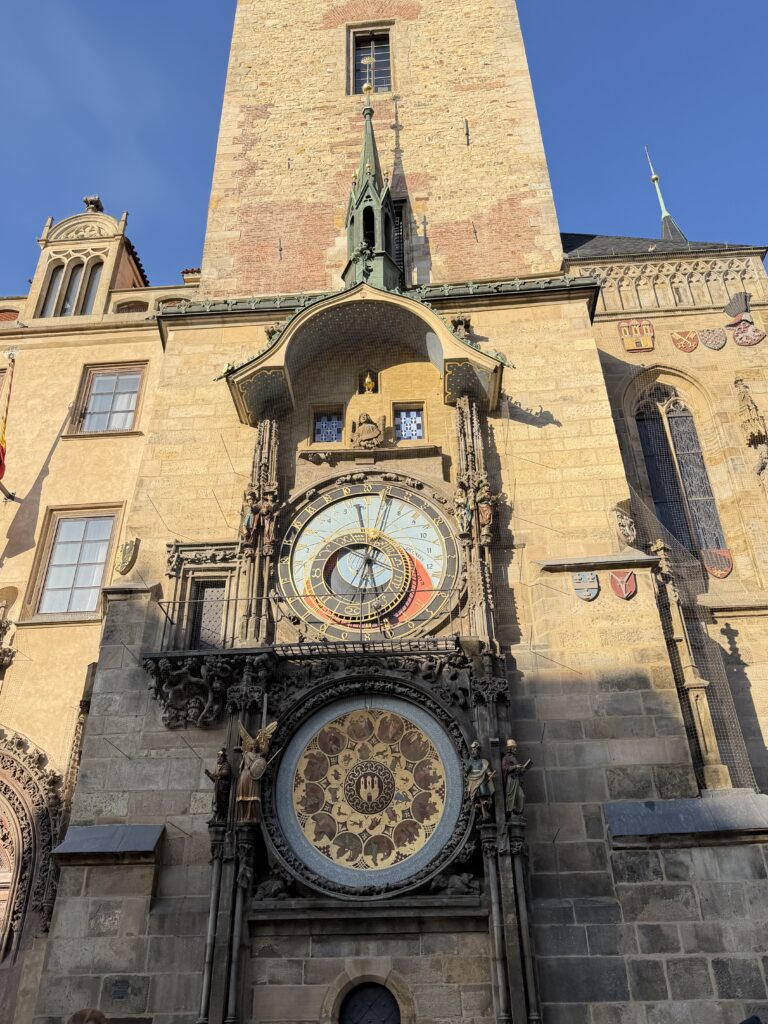
Then of course there’s the astronomical clock. The clock not only shows the time of day (on a 24hr clock), it also shows the position of the sun and moon in the sky as well as other astronomical information. It goes off at the top of every hour from 9:00 AM to 11:00 PM.
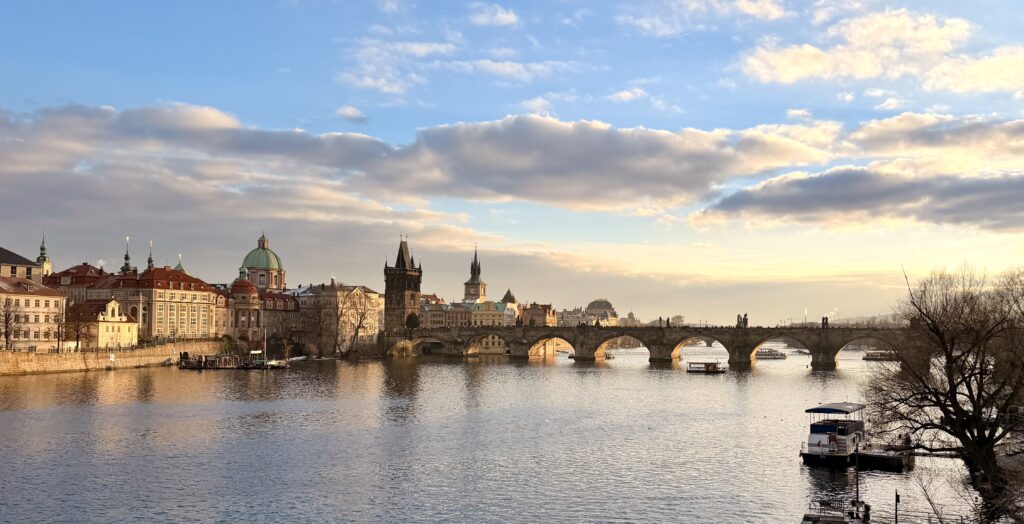
After leaving the Old Town main square, we headed across the Charles Bridge – there are several bridges crossing the Vltava River, but this one is by-far the most famous. It was started in 1357 and finished in 1402. (https://prague.eu/en/objevujte/charles-bridge-karluv-most/)
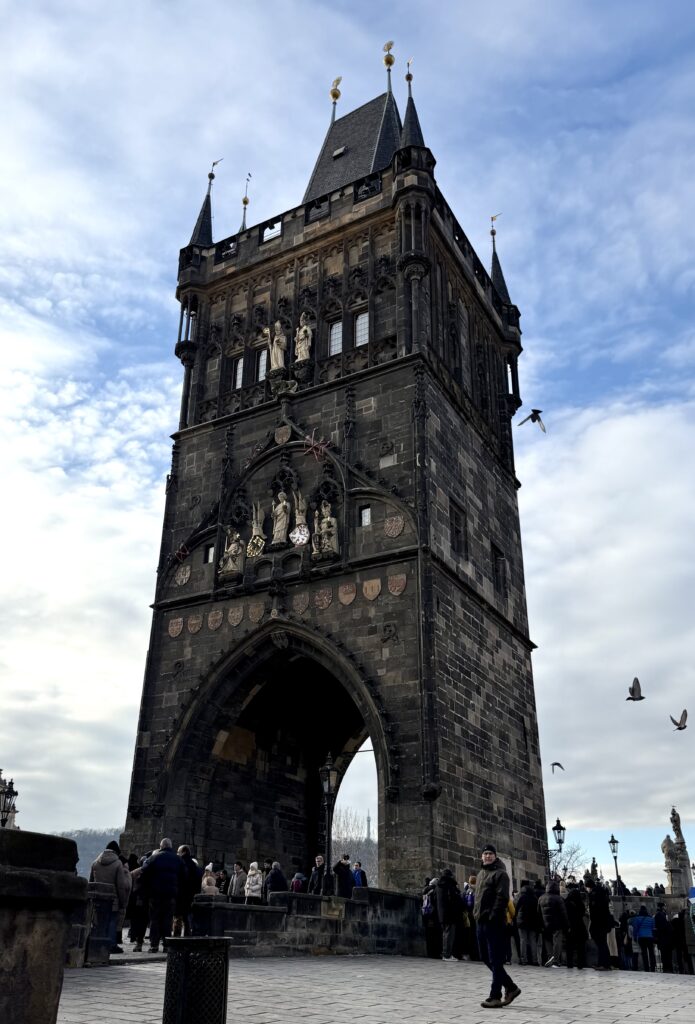
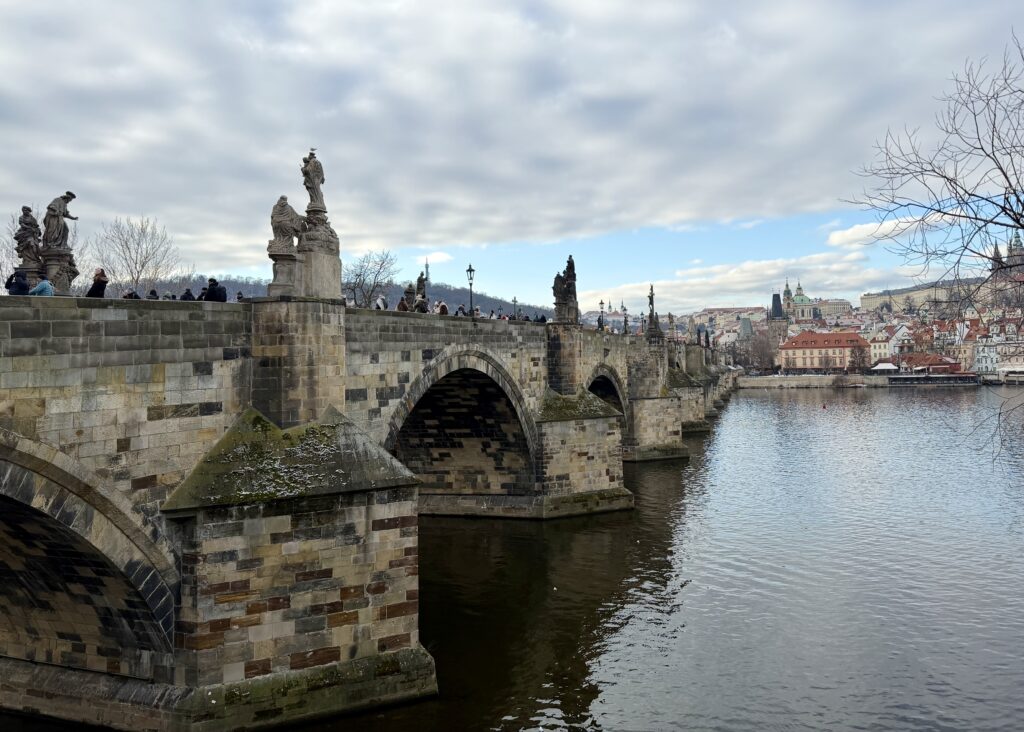
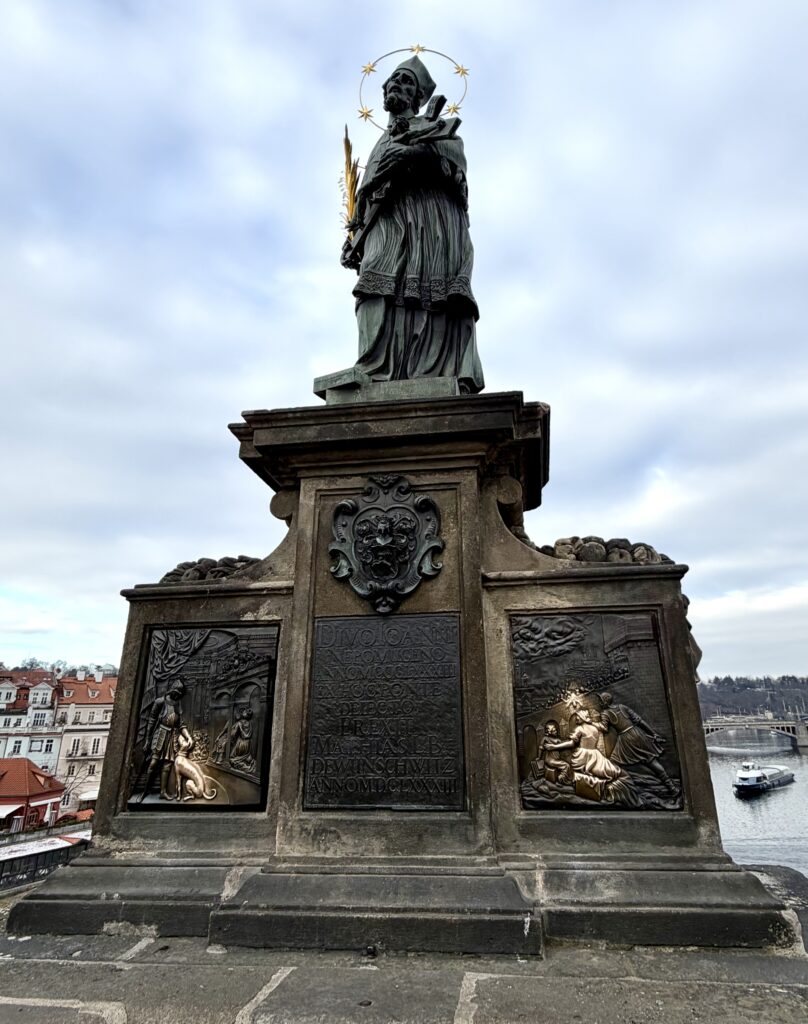
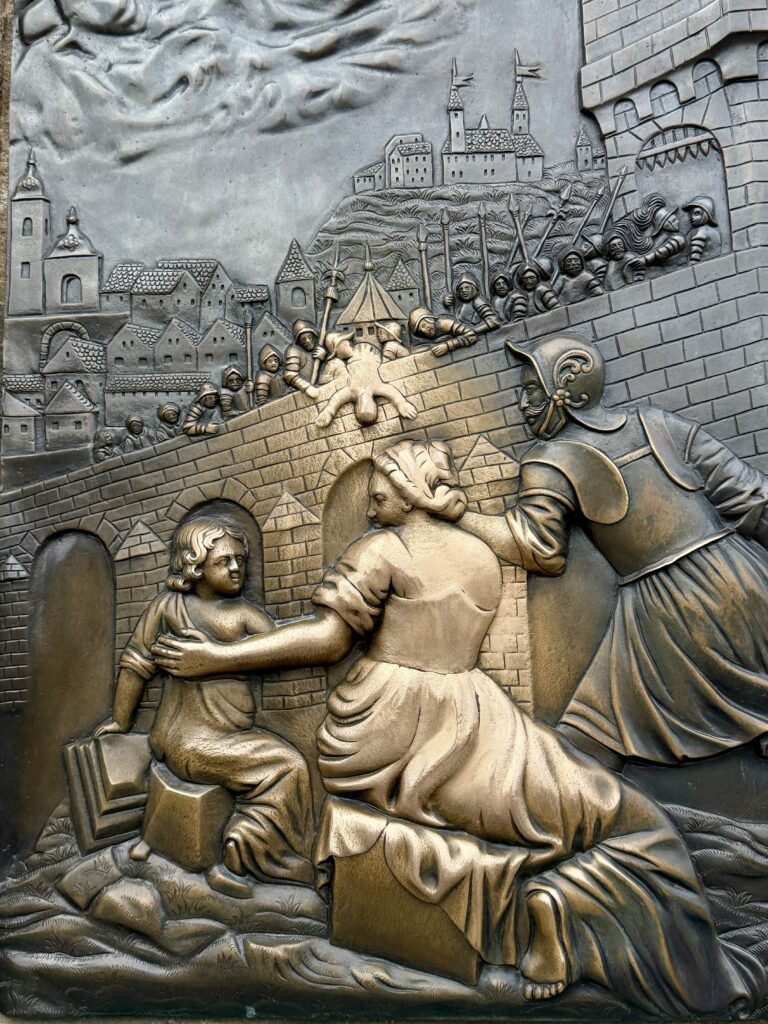
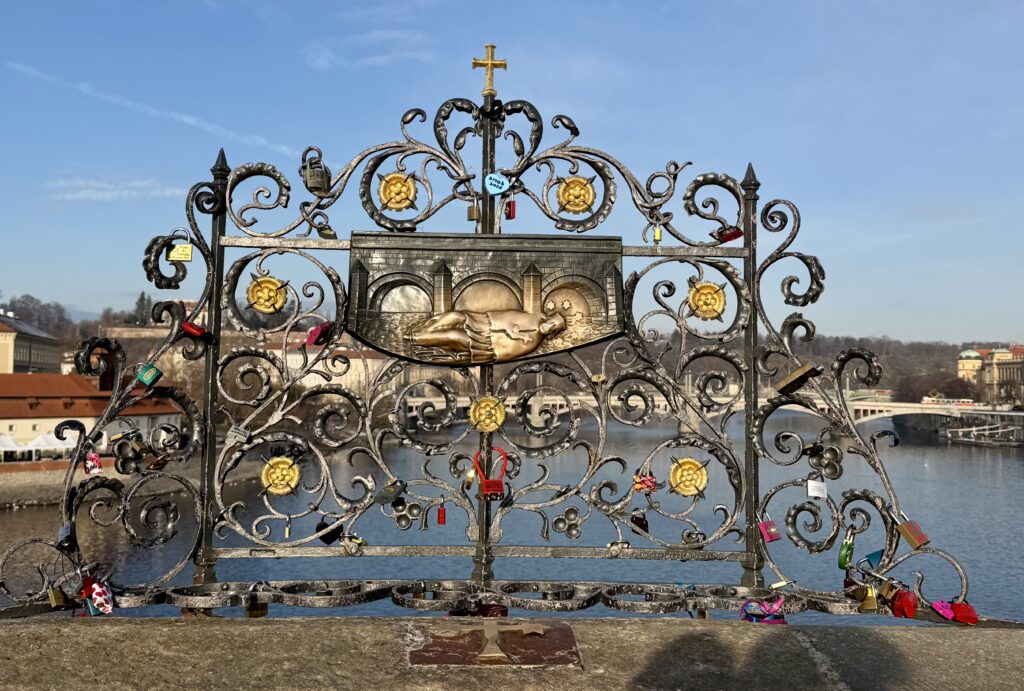
There are several statues and plaques along the bridge but the most interesting are the ones celebrating Saint John of Nepomuk. The story goes that he was the confessor for the Queen of Bohemia and he refused to reveal the Queen’s secrets to her husband, King Wenceslas IV. A jealous King Wenceslas IV then had the priest tossed Ito the river and drowned in 1393 (more likely it was religious disagreements). This article had some good detail about the history and myths surrounding this event: https://www.patrickcomerford.com/2023/04/why-do-tourists-in-prague-rub-panels.html?m=1. There is a plaque showing how when they threw him into the river, 5 stars appeared signifying his purity. So in this statue he has a halo of 5 stars. This particular statue is the oldest on the bridge, dating to 1683. On that statue there is a plaque depicting him being thrown in the river. At another site on the bridge there is a plaque depicting him lying in the river with 5 stars around his head – this plaque is said to mark the spot where he was tossed over the bridge. He is buried in St Vitus Cathedral (at Prague Castle).
One must-see sight in Prague is Prague Castle. It sits up on a high point in town (as do most castles I suppose!) so we had great views of it on the way up there.
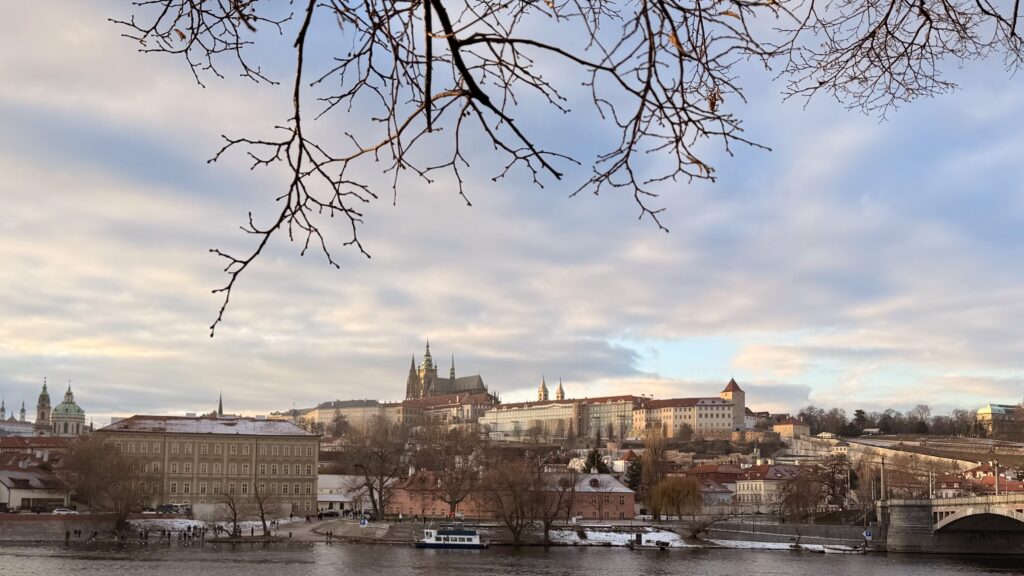
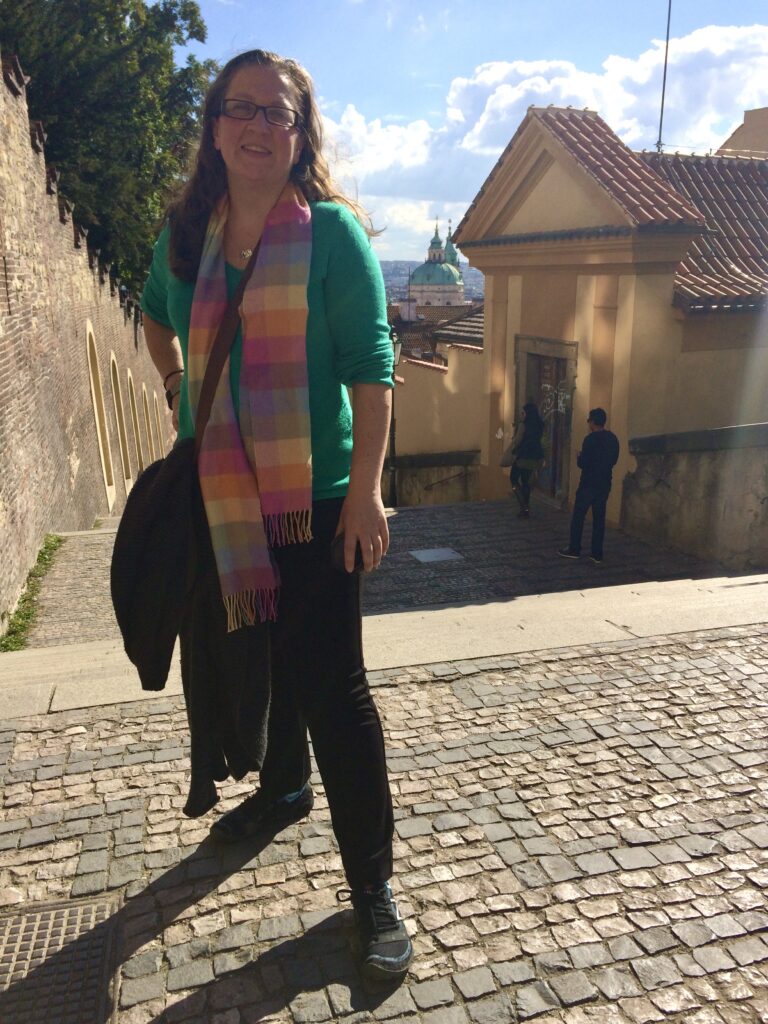
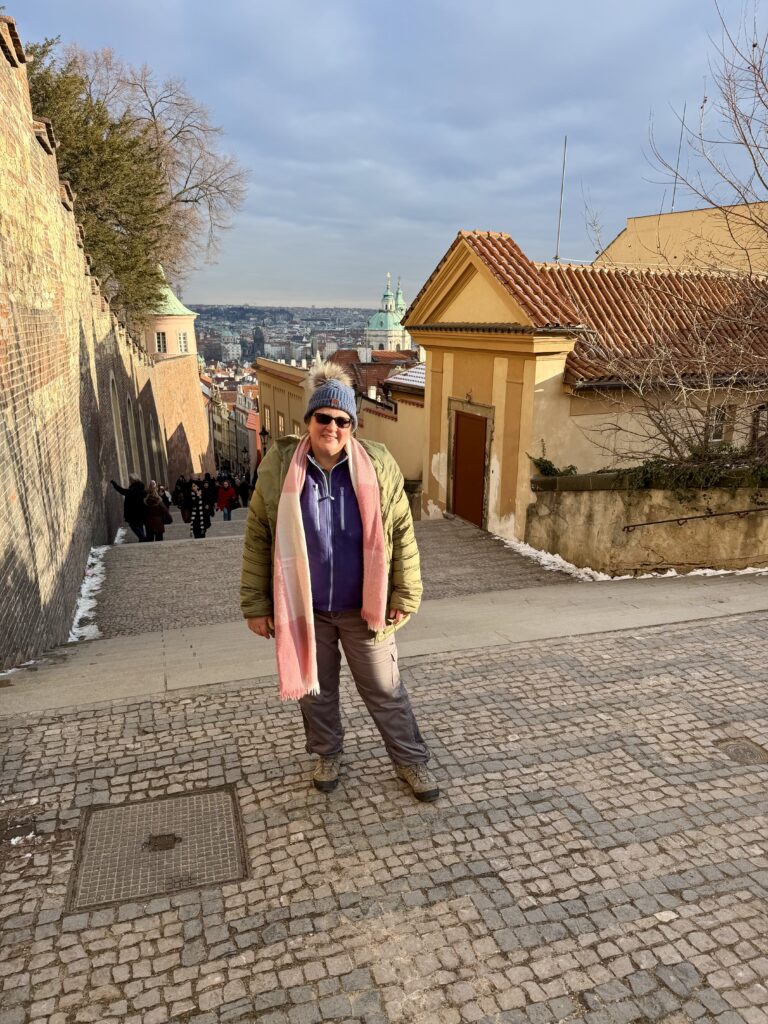
I went to Prague in 2015 and I have a picture from the top of the steps on the way to the castle. So I had to recreate it! (the 2015 picture was in late September – it was clearly quite a bit colder for this visit in January!)
Right as we got up near the castle, we fortuitously got to see the Changing of the Guard. It happens every day at noon at the First Courtyard (Matthius Gate) at Prague Castle.
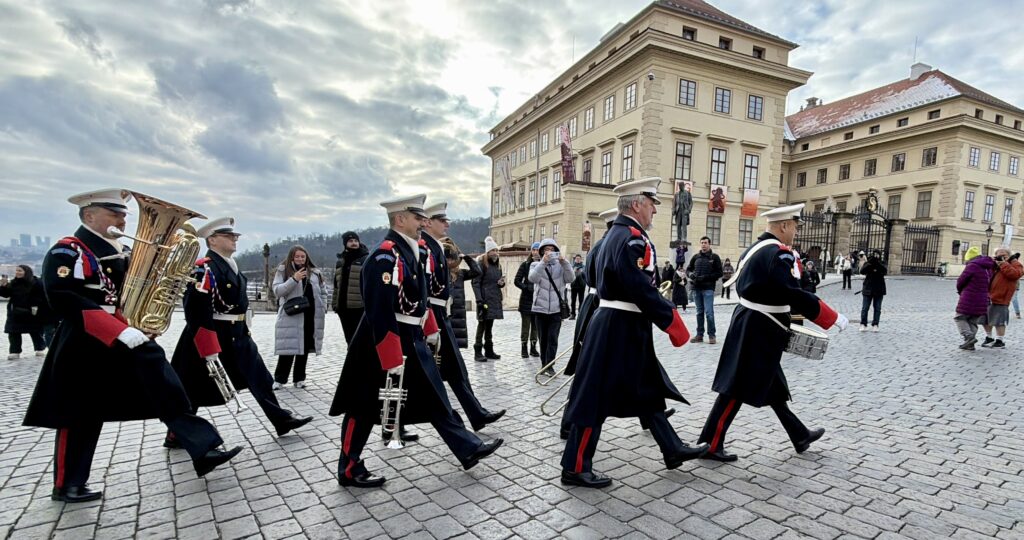
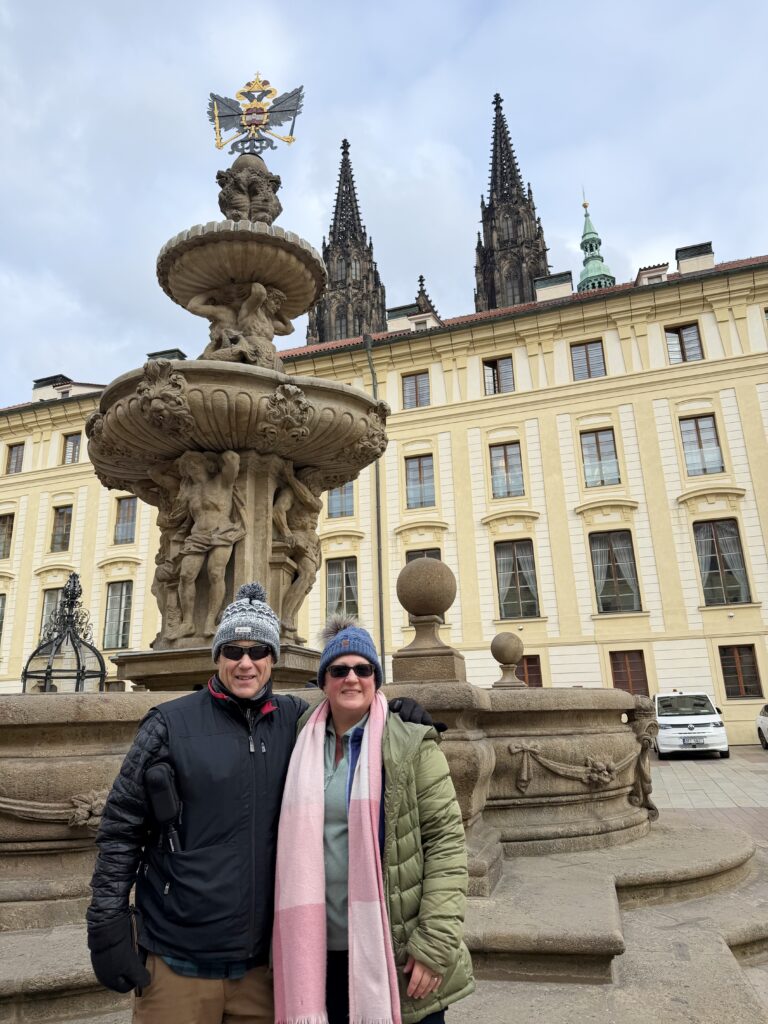
The main Prague Castle ticket costs 450 Czech (Czech Koruna (about $21 US dollars) each and included the Old Royal Palace, St George’s Basilica, Golden Lane, and St. Vitus Cathedral (https://www.hrad.cz/en/prague-castle-for-visitors/tickets) – you can see the spires of St Vitus peaking out above the building in the picture.
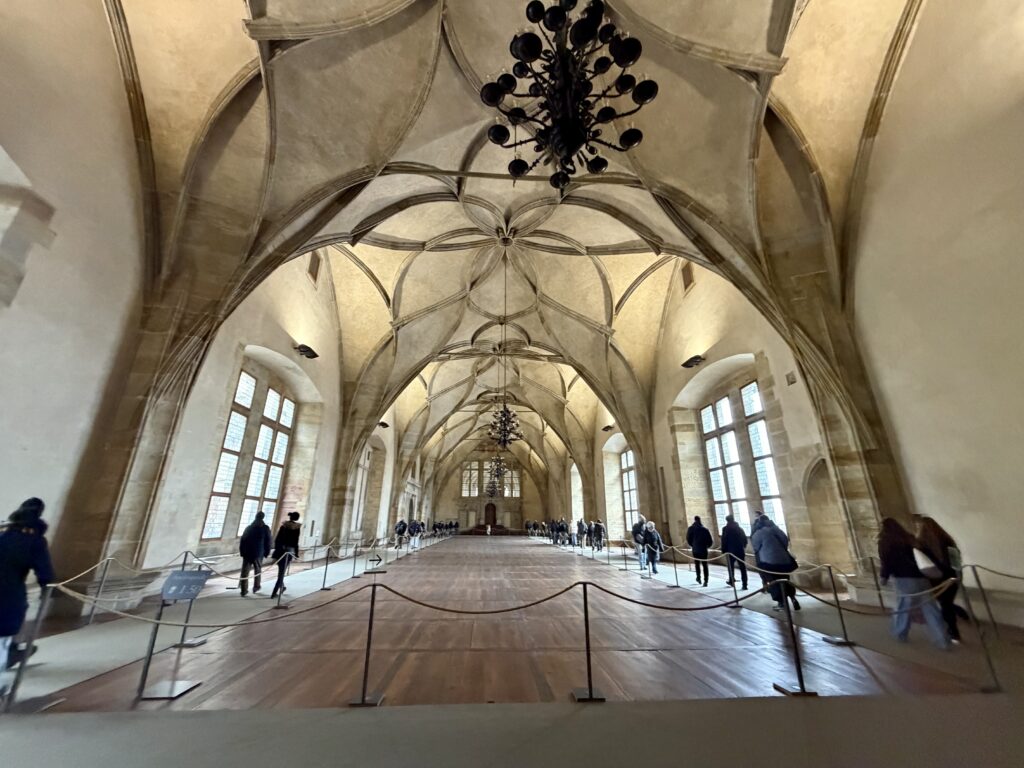
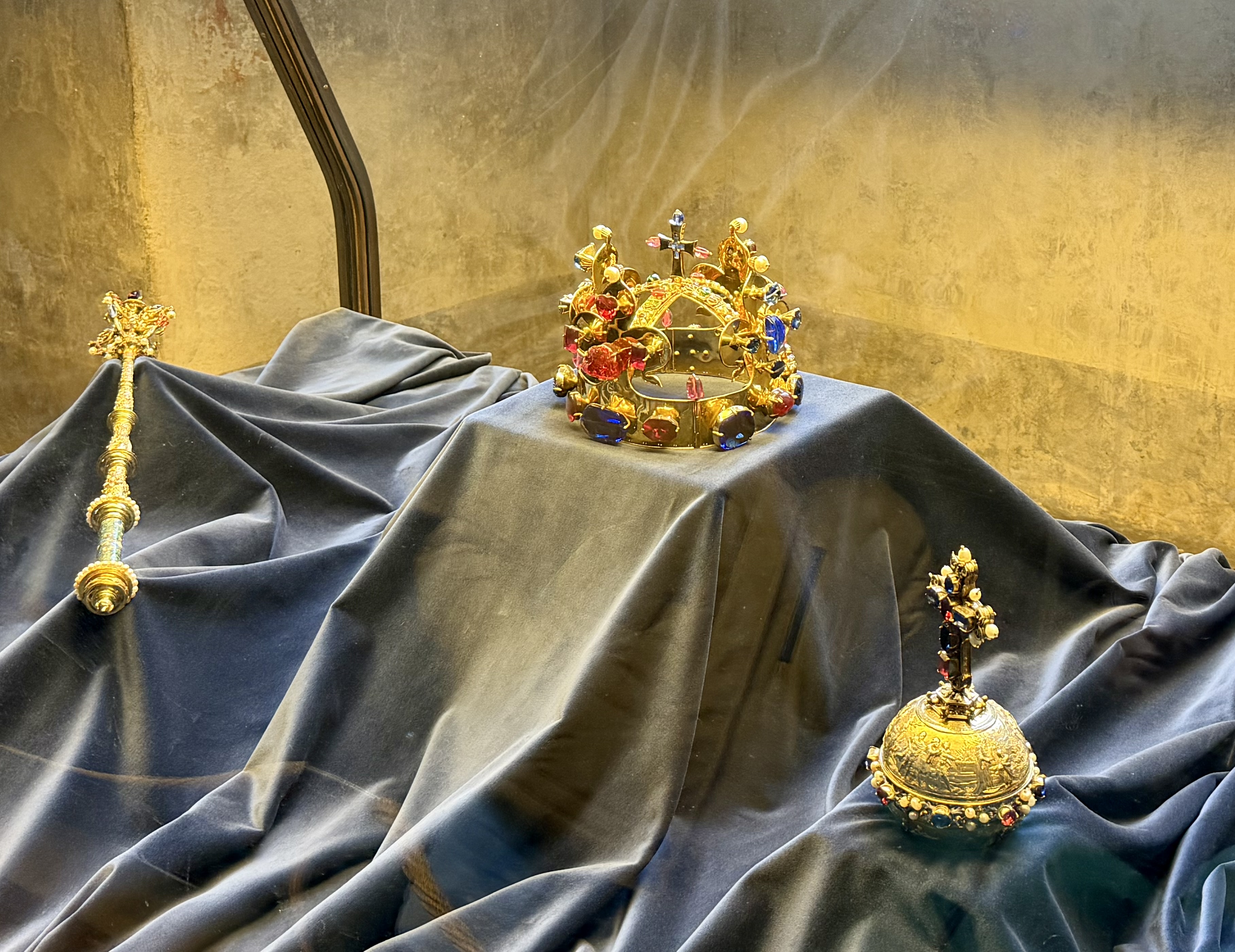
We started in the Old Royal Palace. There were great descriptions in Czech and English – we were so thankful for the English because reading all of that with Google translate gets old fast.
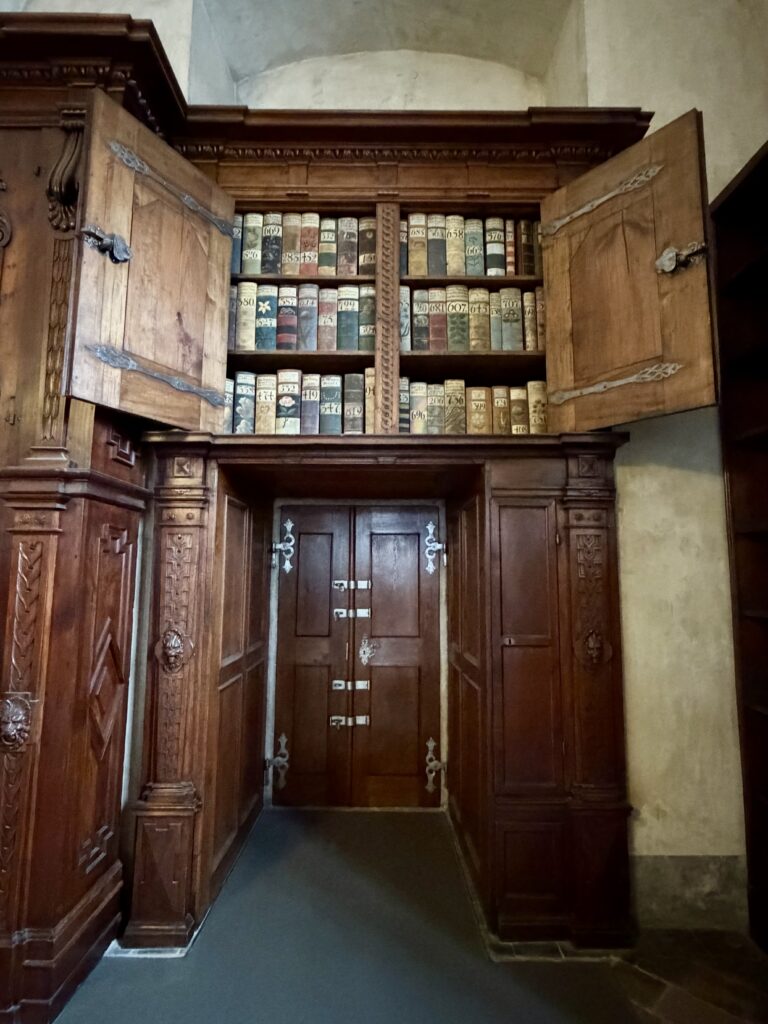
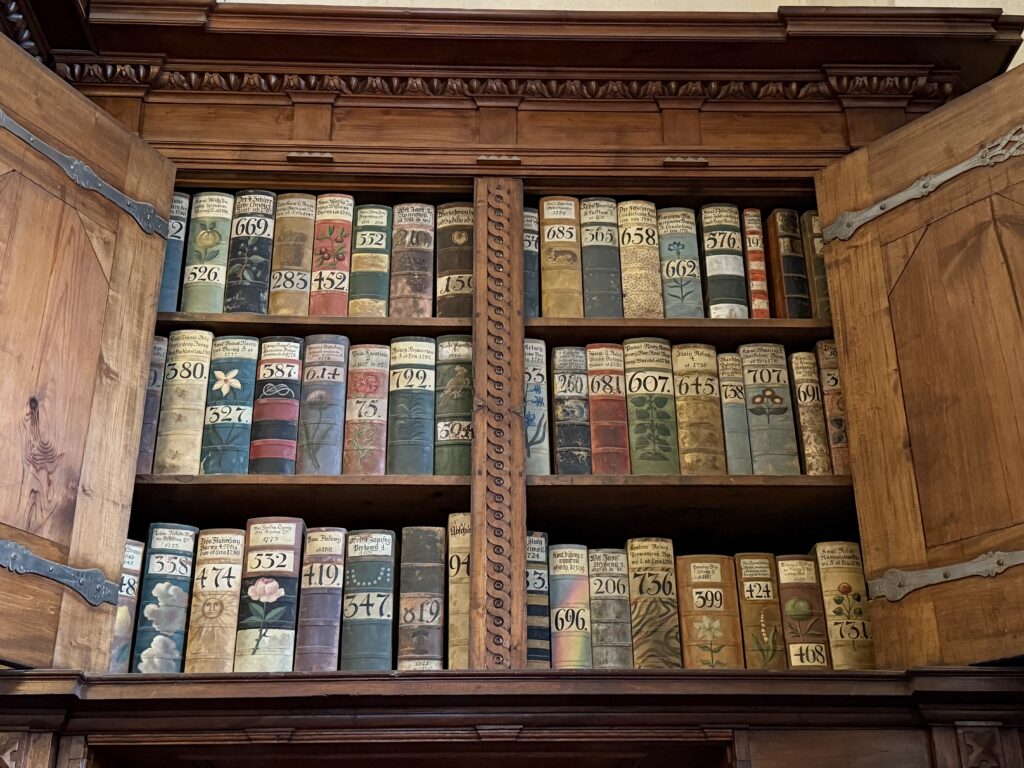
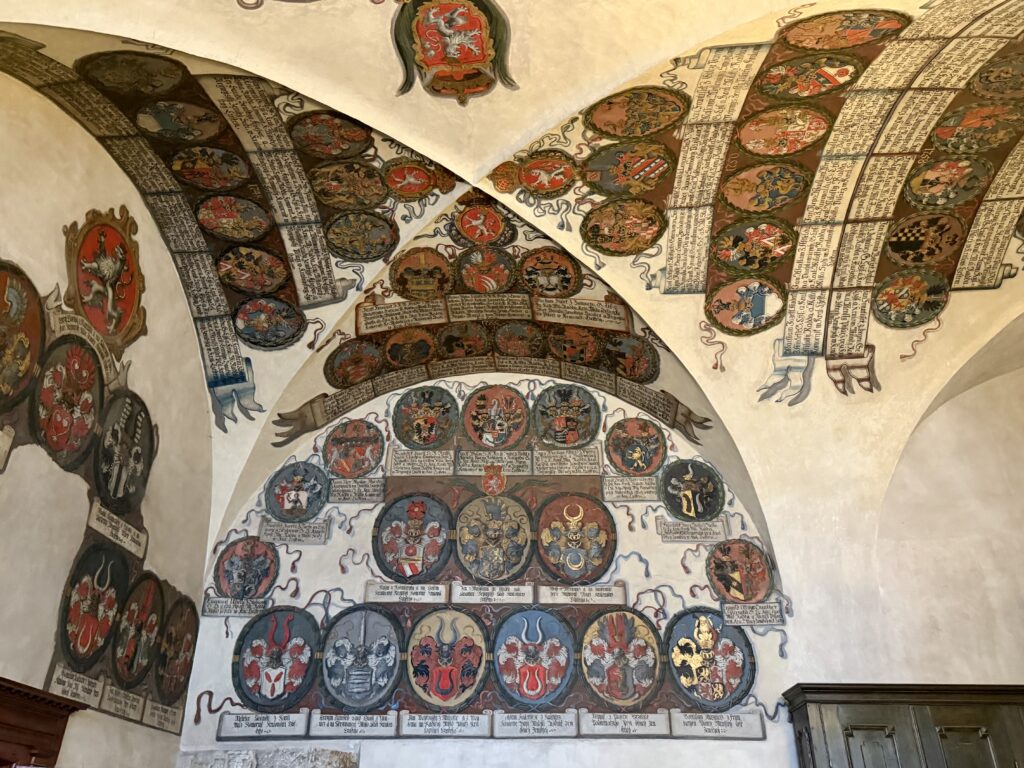
After a fire in 1541, the rooms close to the Court of Justice were renovated for the Land Scrolls authority. This included office space and also permanent storage of the Rolls – this allowed quick access to the Rolls when needed in court. The colorful coats of arms on the walls and ceiling commemorated men who held important land offices between the 16th and 18th centuries.
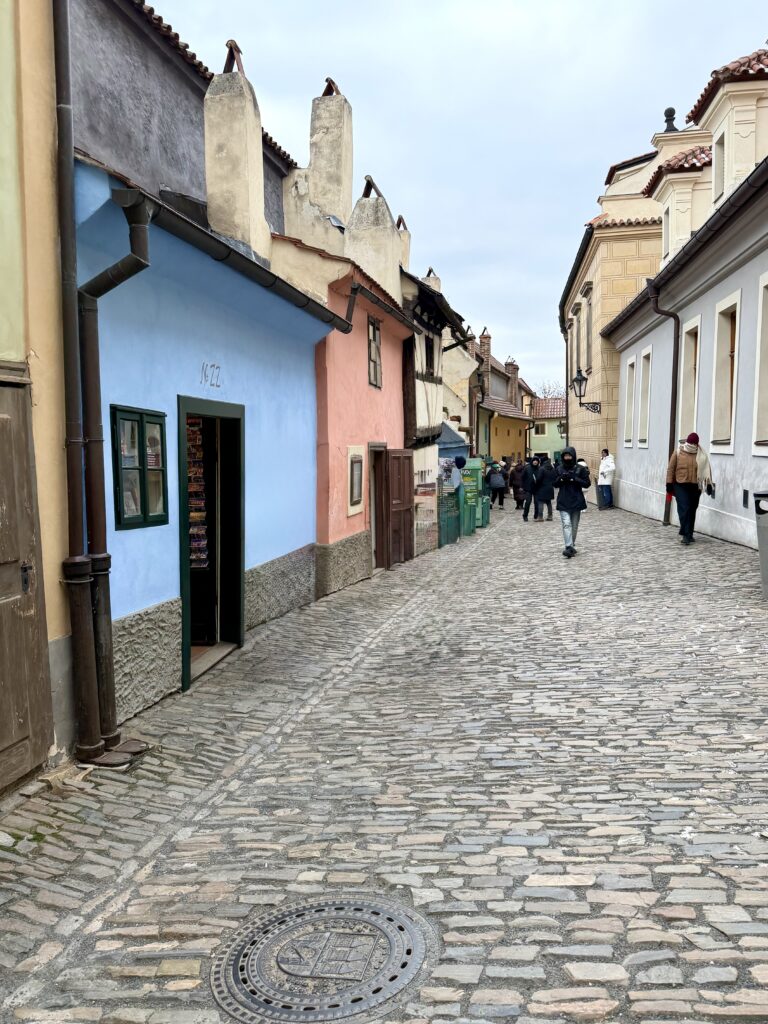
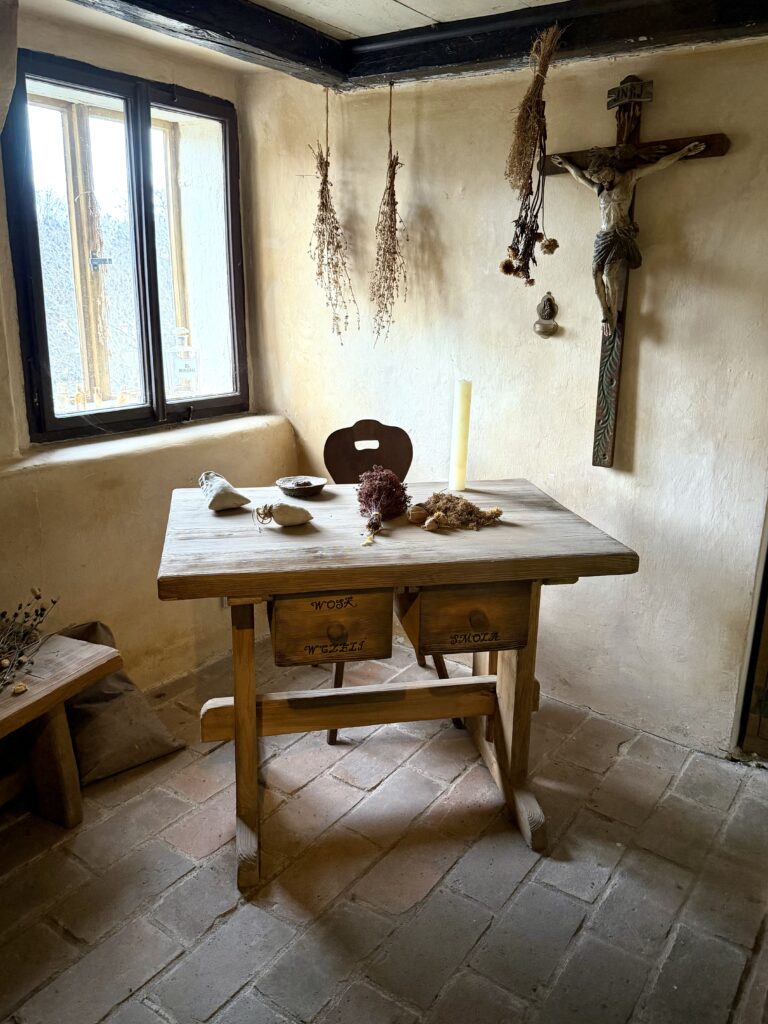
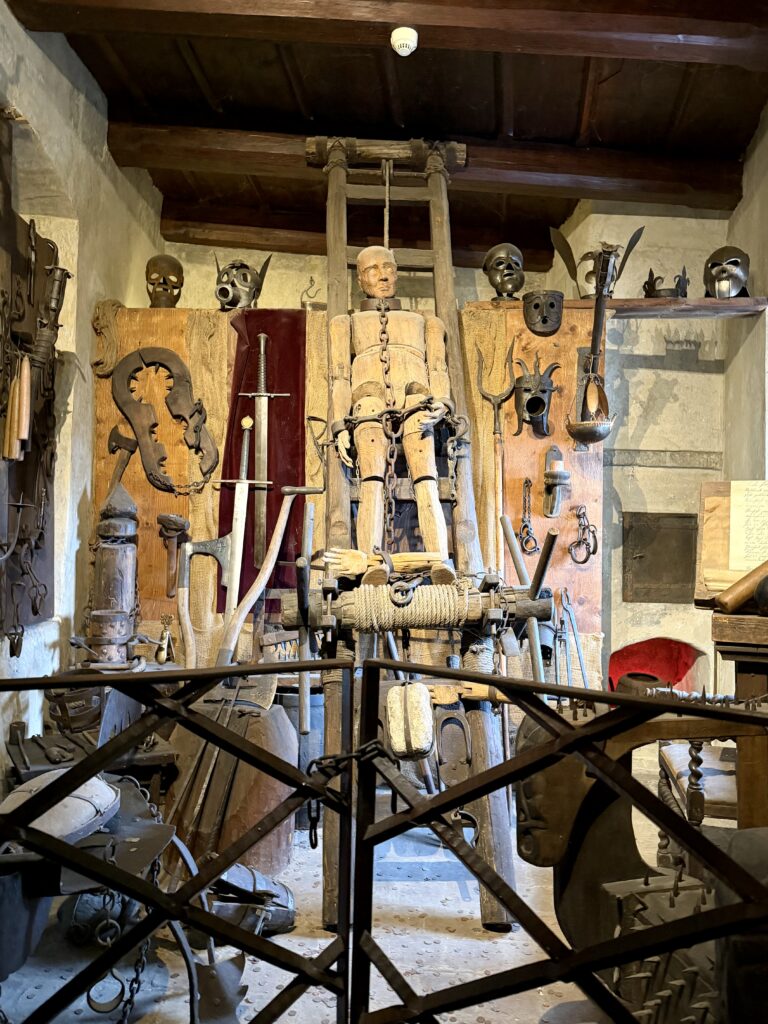
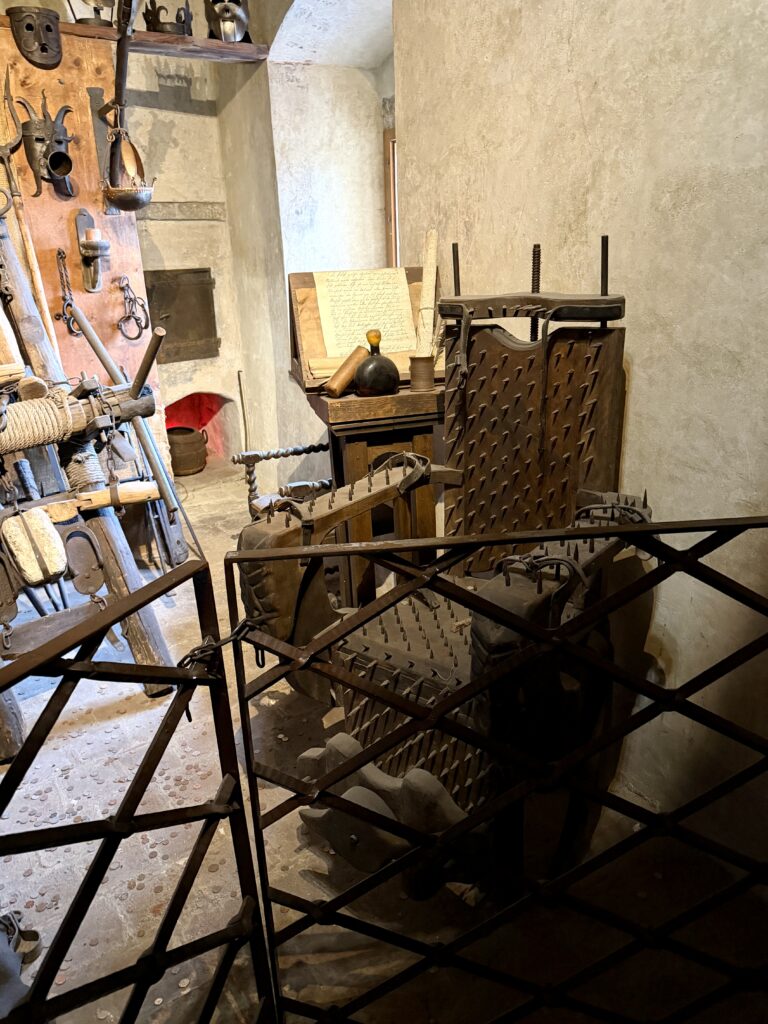
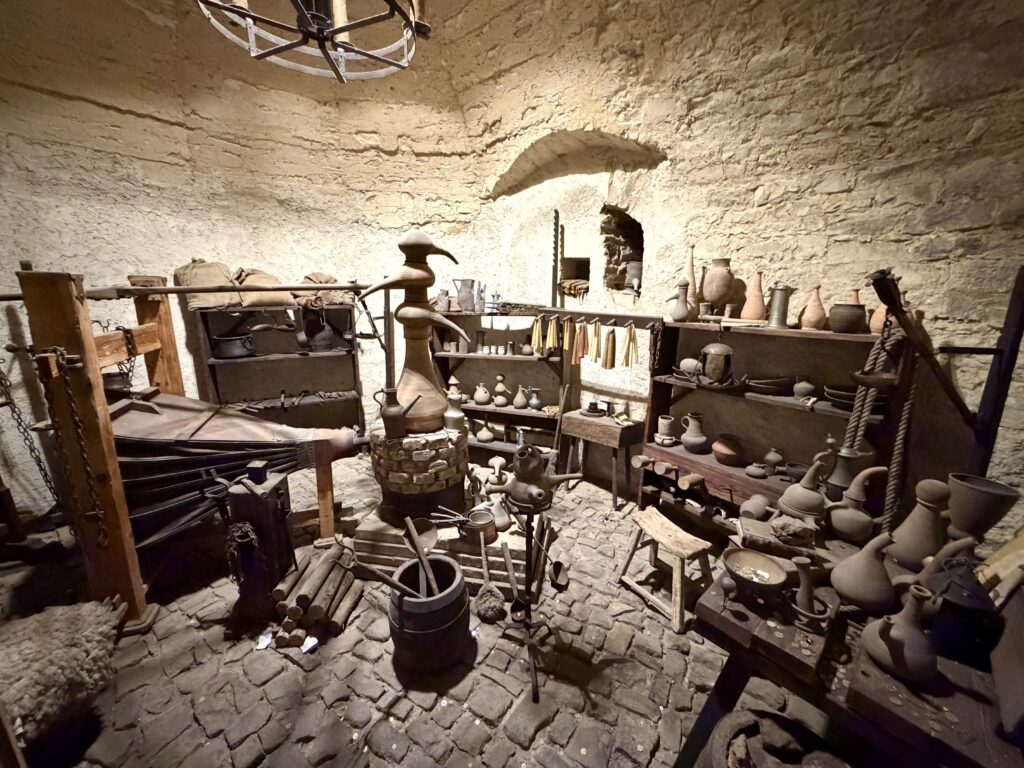
Golden Lane is a street on the castle grounds that had residences built into the castle walls. Initially employees of the castle lives in these (gatekeepers, guards, etc). Later the owners would lease the houses to others, including some famous owners and tenants – such as poet Jaroslav Seifert, dramatist and fiction writer Jiri Maránek, and tarot-card reader Madame de Thebes. I hadn’t heard of most of these people but I did recognize one name – Franz Kafka. He lived at house #22 in 1916 and 1917 – he wrote The Country Doctor here. The last tenant was there up until 1952! Among these houses was also a room with a bunch of torture devices and also a long hallway with a ton of coats of armor.
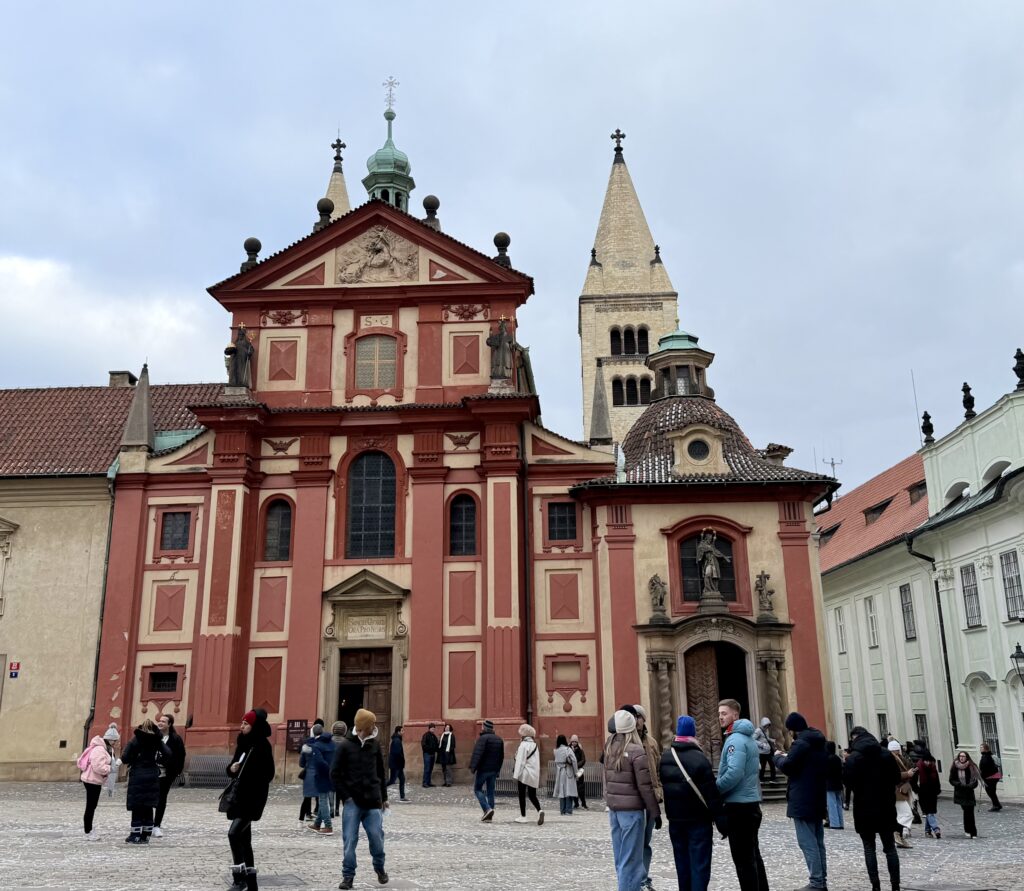
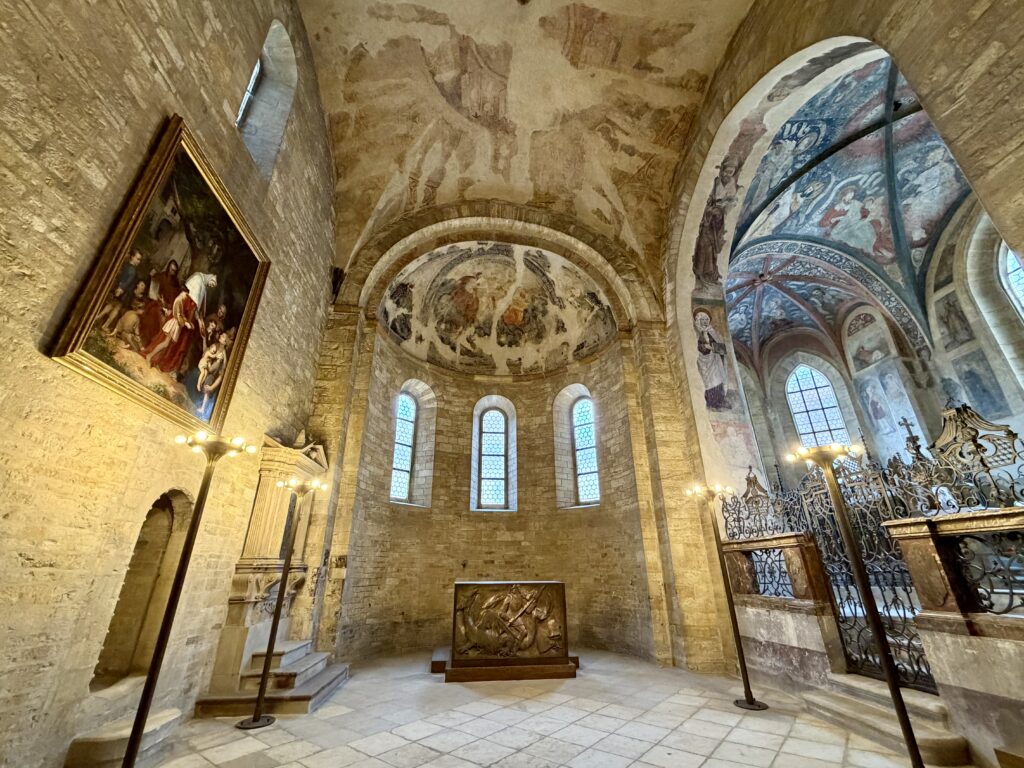
St George’s Basilica dates back to the 10th century and is the oldest surviving church at Prague Castle. It was repaired and expanded in the 12th century after damage from heavy bombing from a siege on Prague Castle. It is less grand than St. Vitus Cathedral but beautiful in its own right.
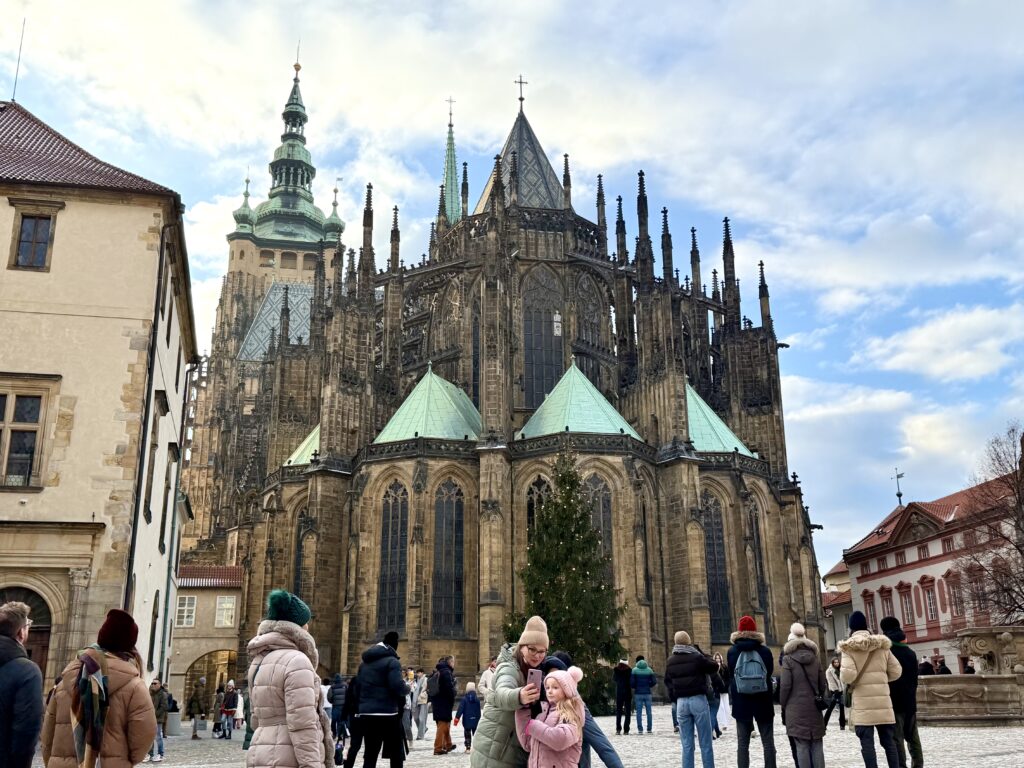
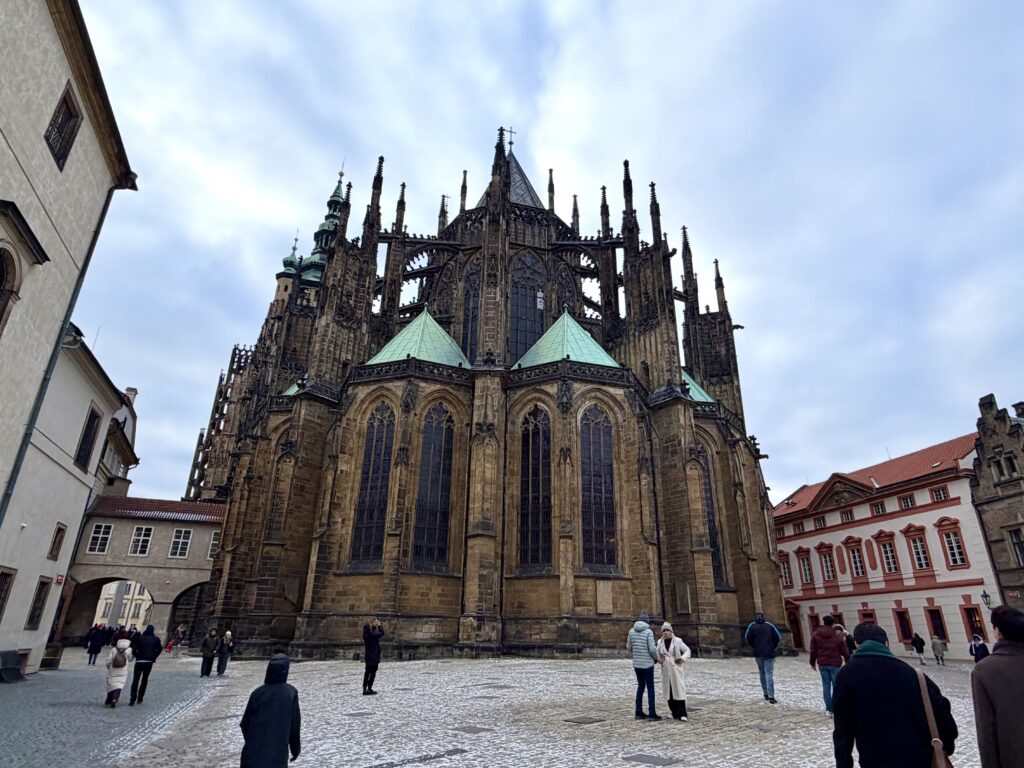
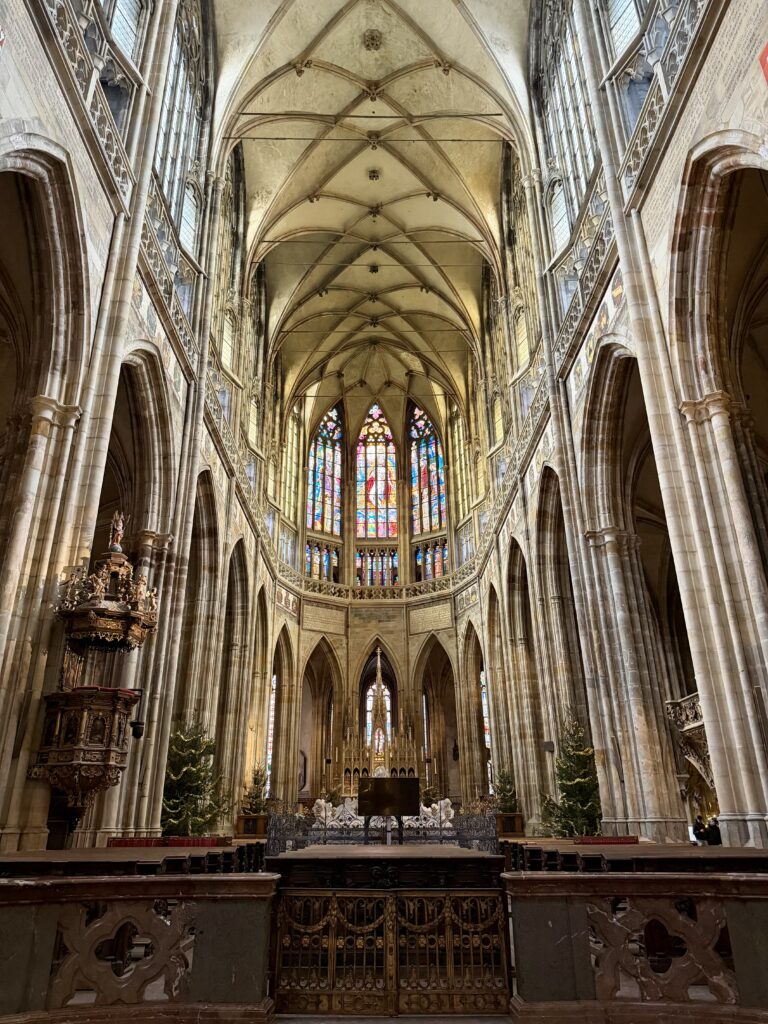
And last but not least, St Vitus Cathedral is the largest temple in Prague and a key sight at Prague Castle. In addition to religious services, coronation ceremonies for Czech kings and queens have also been held in St. Vitus. Construction began in 1344 but construction stopped in 1419 due to the Hussite Wars. While various parts were completed over the years, it was uncompleted for centuries, being consecrated in 1929.
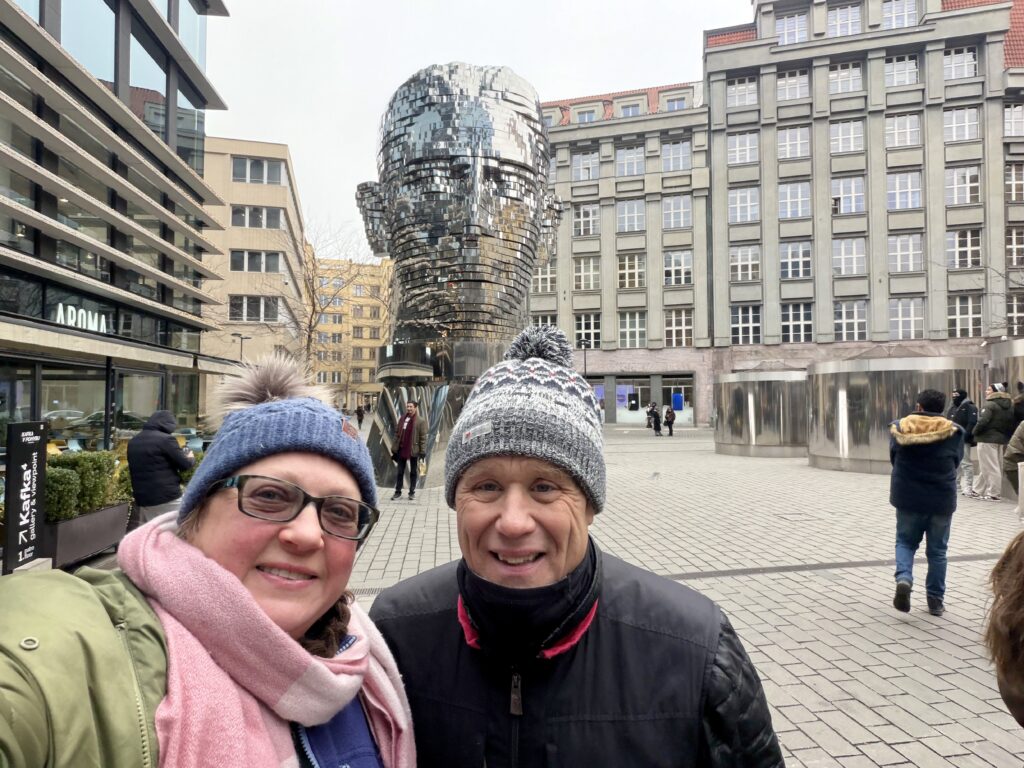
There were also some fun (and a bit weird) statues around town related to Franz Kafka. This one of his head was interesting!
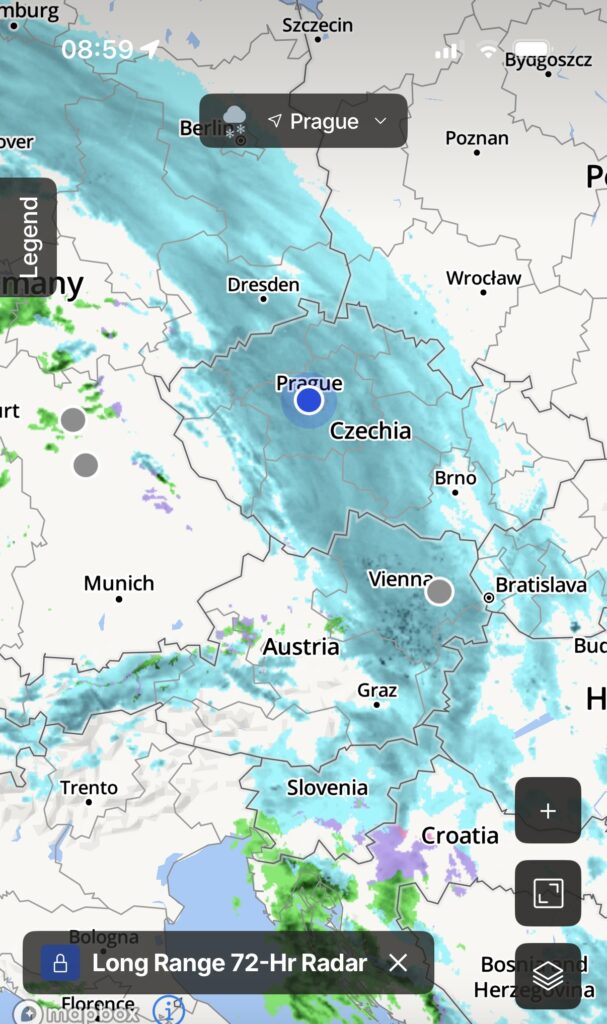
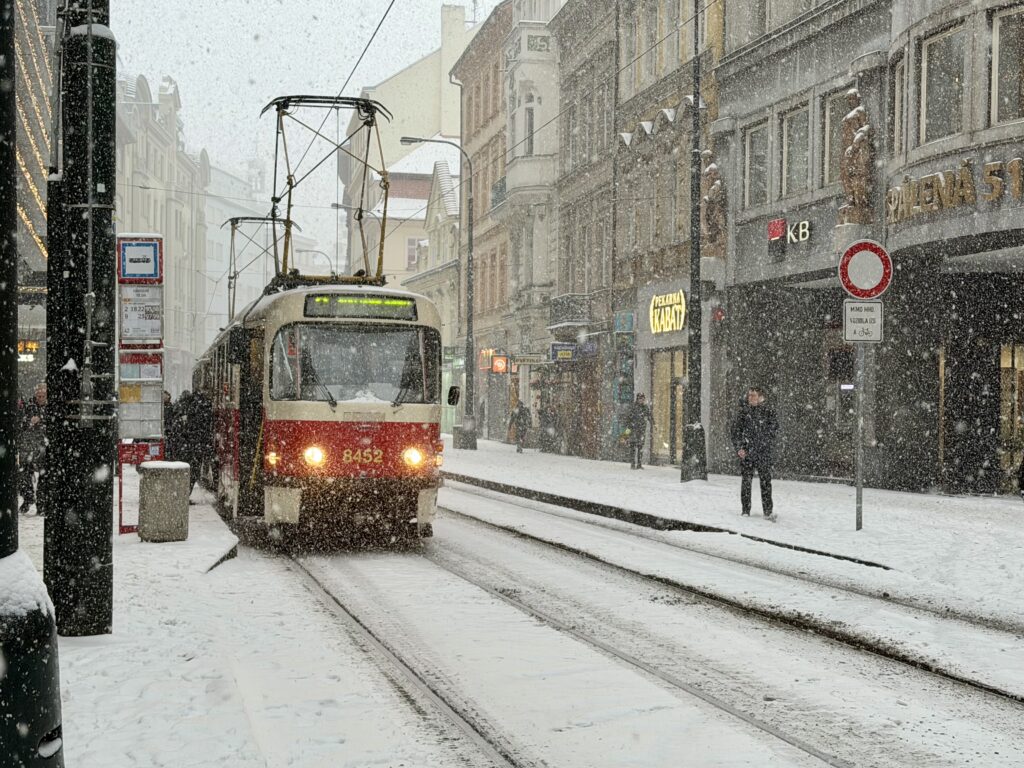
On the day we left Prague, a big snow storm came through. It was pretty but it made for an interesting trip to the train station (I learned rolling suitcases don’t really roll well in the snow!).




Love your travels kids!