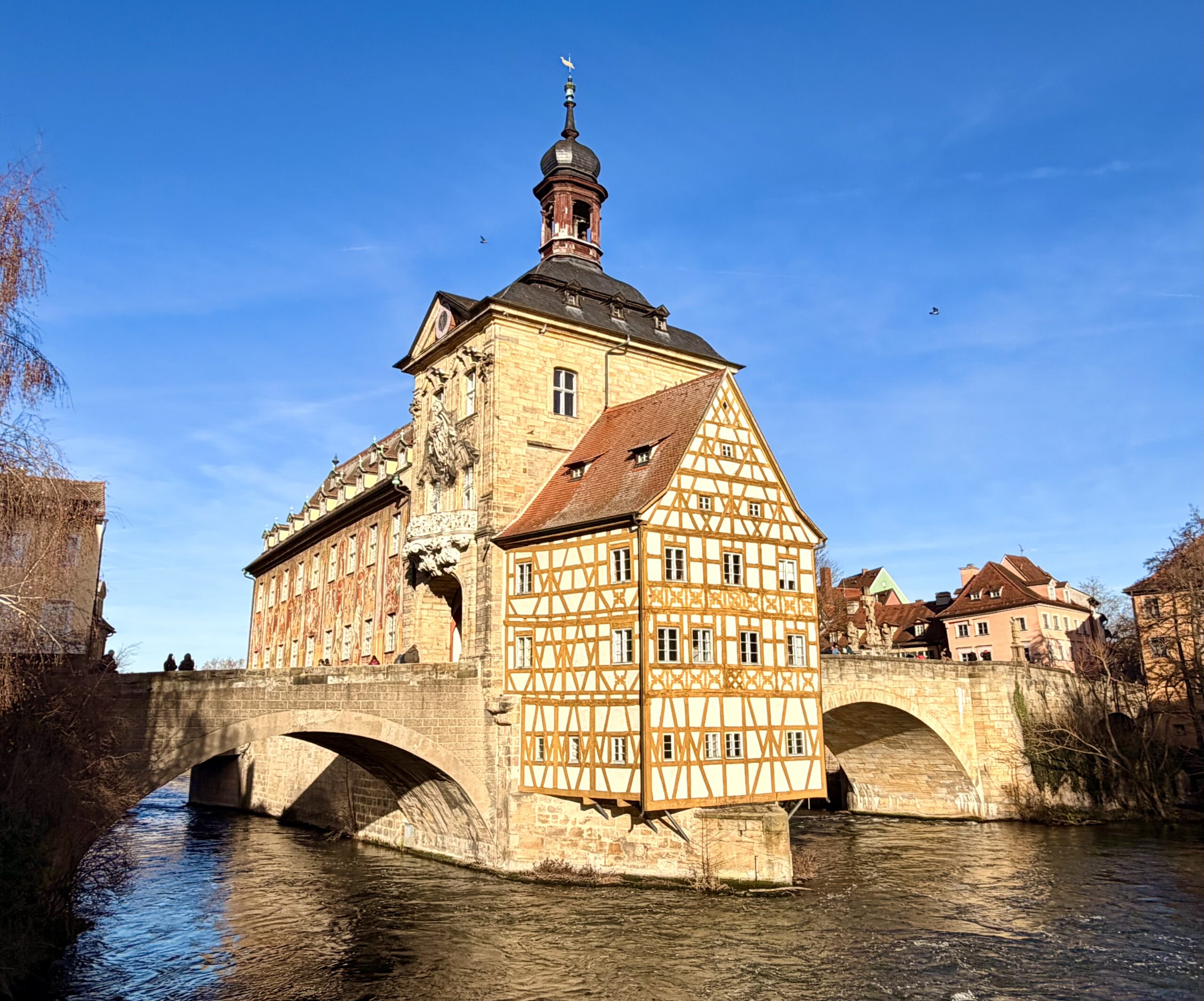

While we were in Nuremberg, we took a couple of day trips – one to Bamberg to try out their famous smoked beer, and the other to Regensburg. Both were easy trips on the train. One day trip we also wanted to do was Erlangen – but the main activity we wanted to do was visit a particular brewery and do the tour of their underground cellars (https://entlaskeller.de). But sadly they are not open in the winter. So I guess we’ll have to go back!
Bamberg
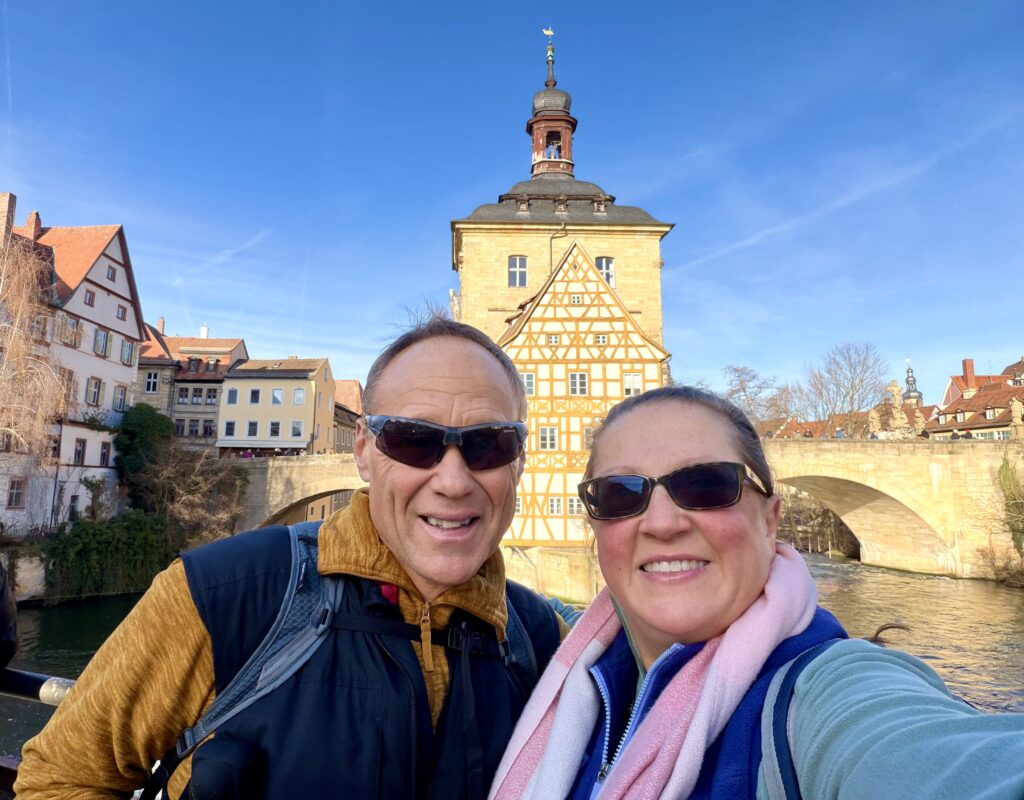
Bamberg is about 40 minutes by direct train from Nuremberg and then a 20 min walk to the city center from the train station. It’s a historic town that dates back to the 10th century. They are famous for their smoked beer but there are plenty of other sights to see too! If you see just one picture of Bamberg, it was probably the town hall. It’s a neat building that sits right in the middle of the river. The bishop of Bamberg apparently didn’t grant any land for the citizens to build a town hall so they created an artificial island in the middle of the Regnitz river and built a town hall there. (https://en.bamberg.info/poi/old_town_hall-4656/).
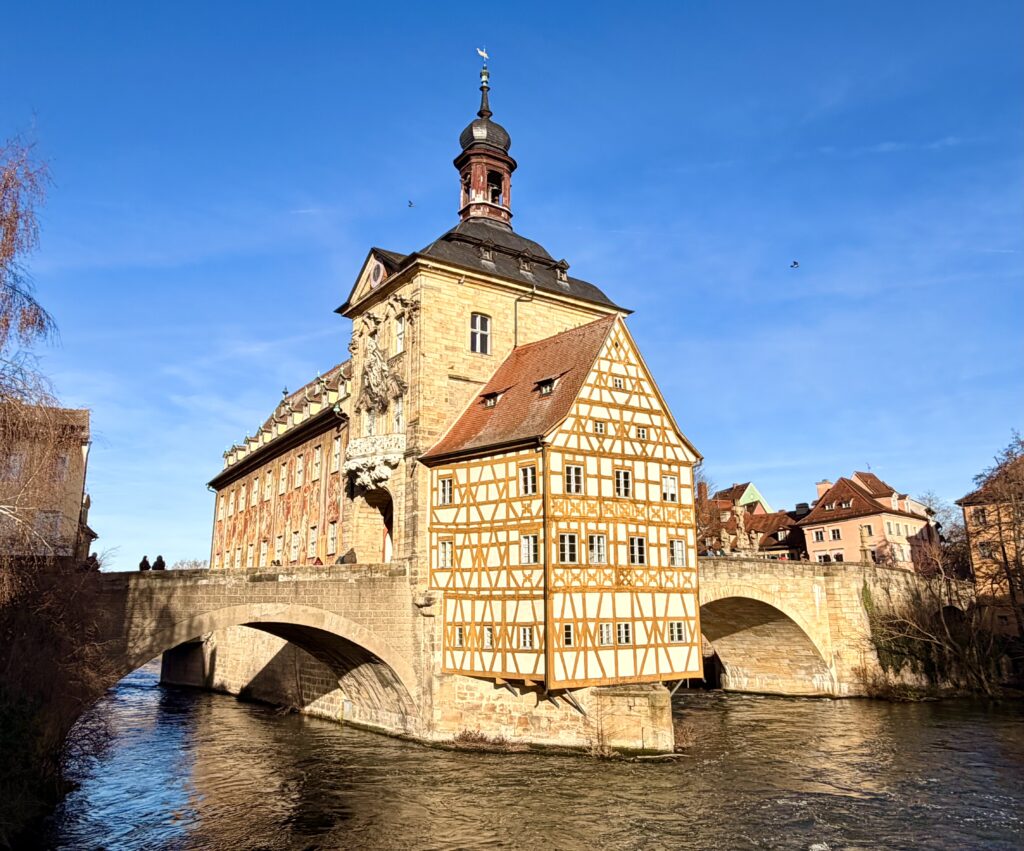
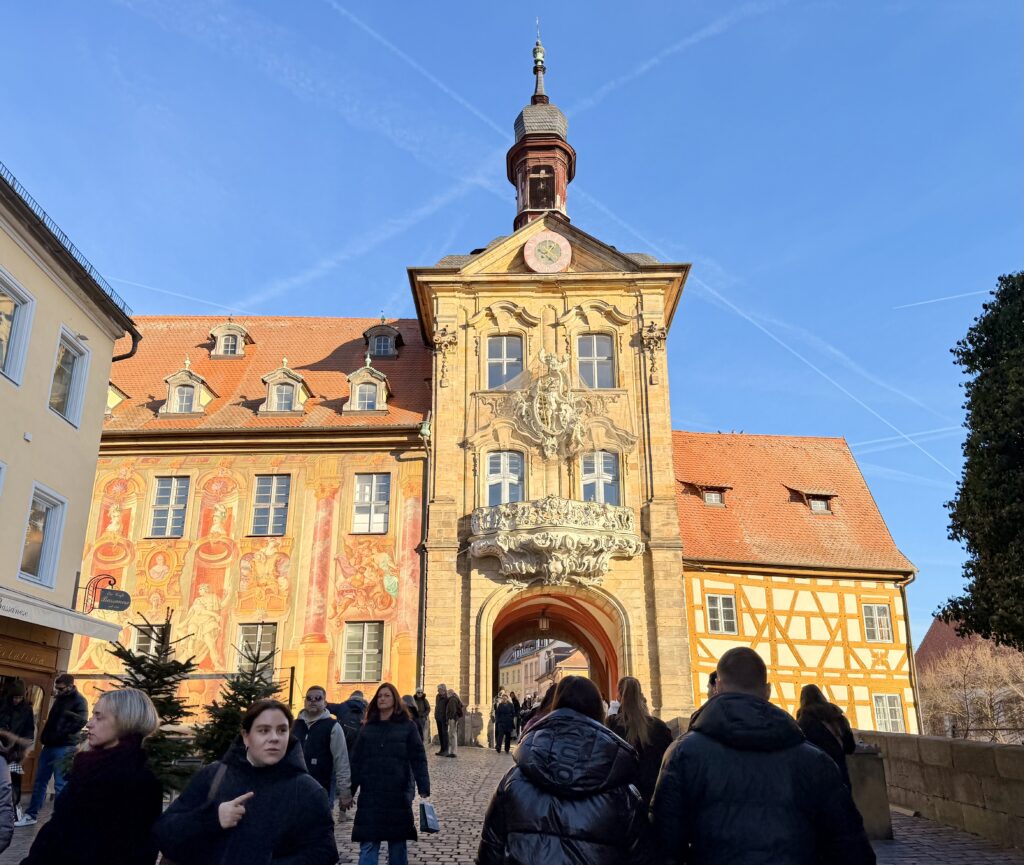
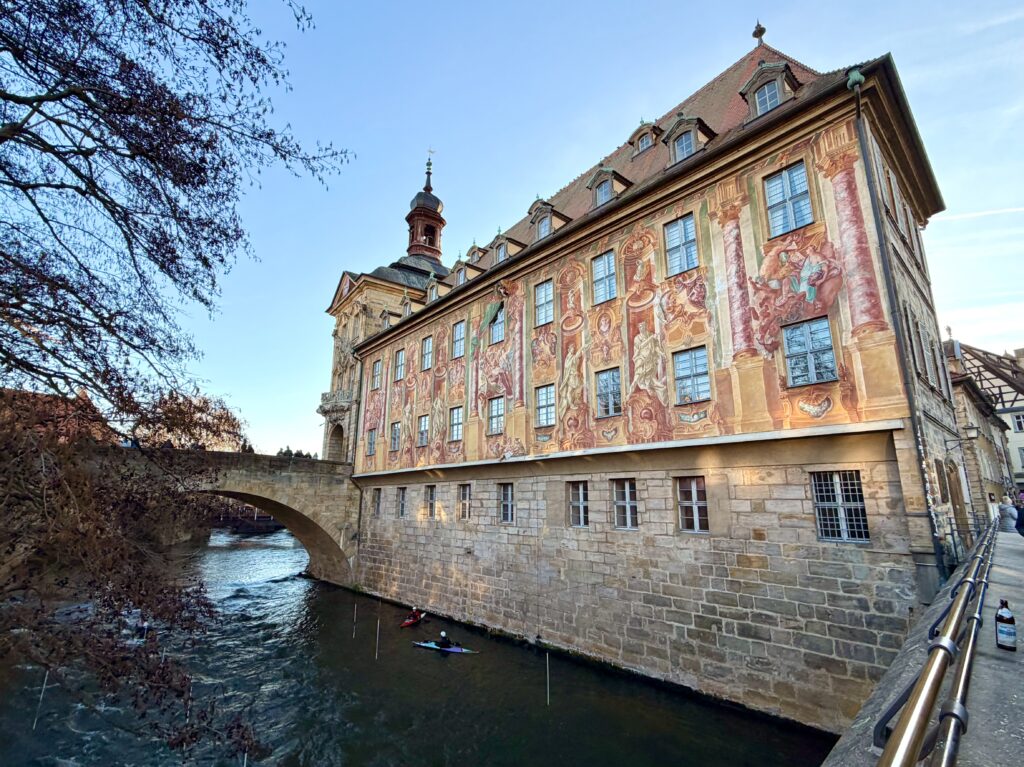
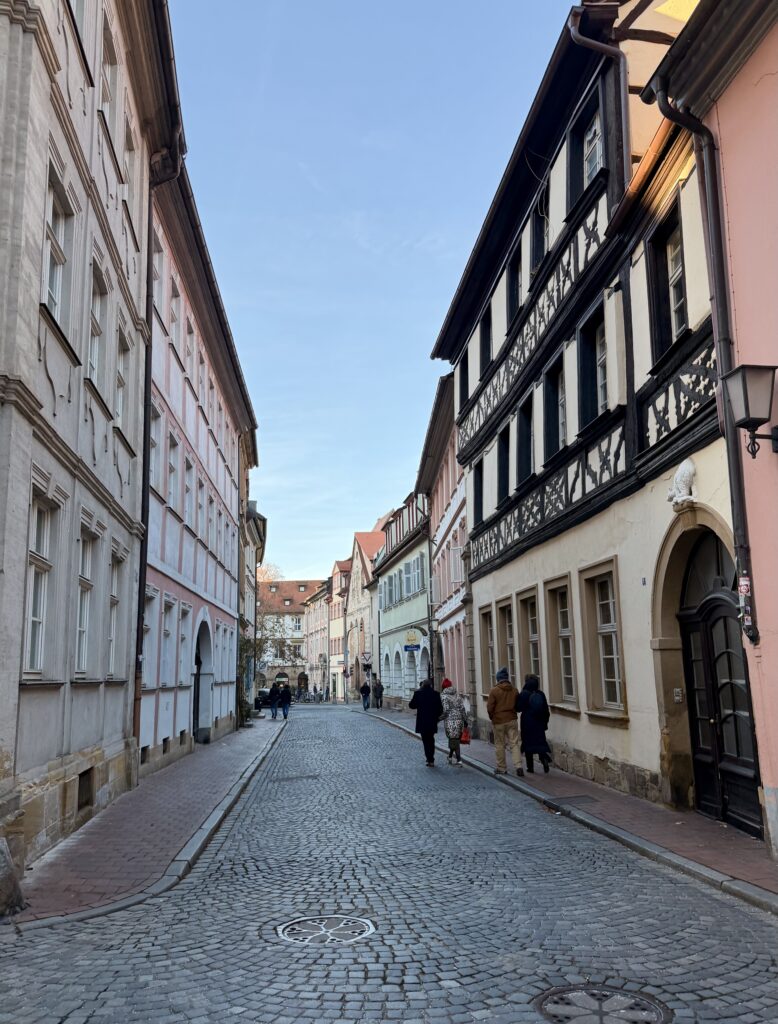
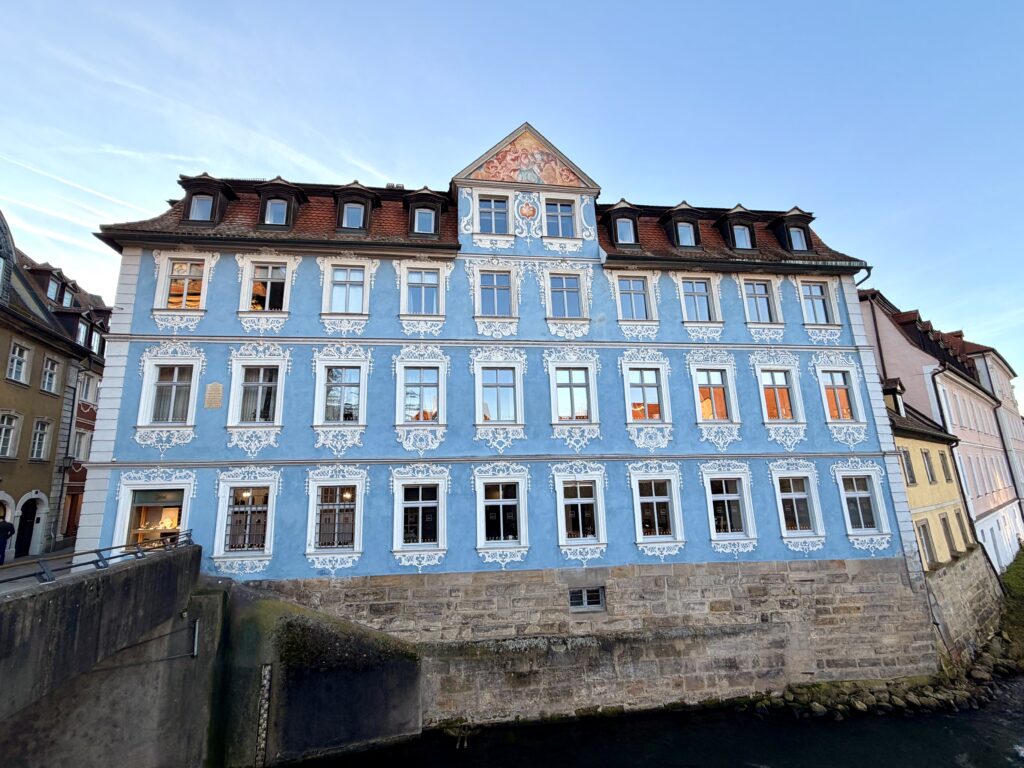
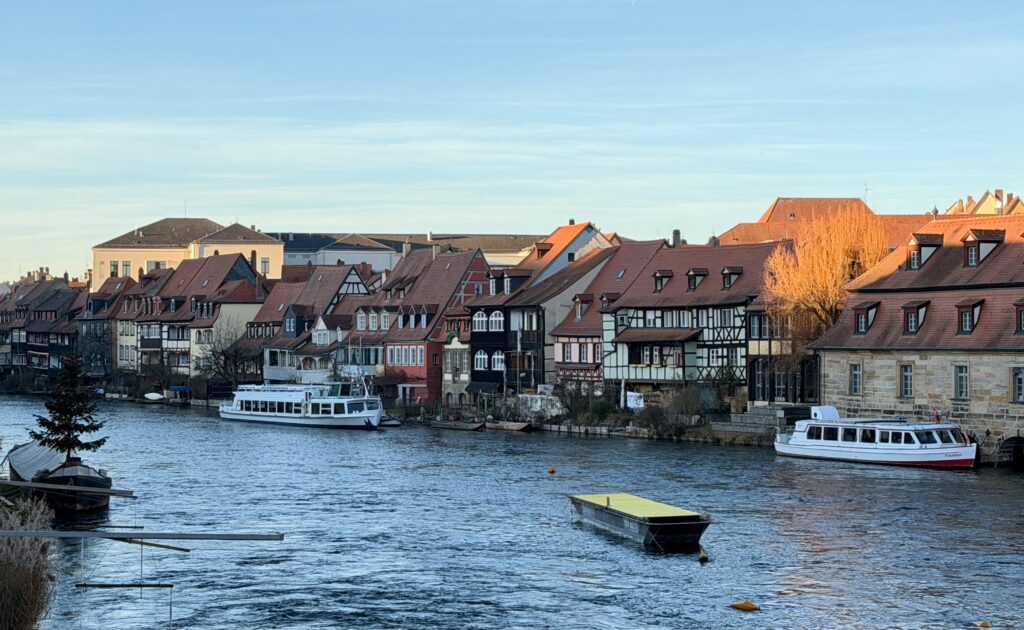
Bamberg also had some cute architecture around town. The picture on the river is an area called Little Venice.
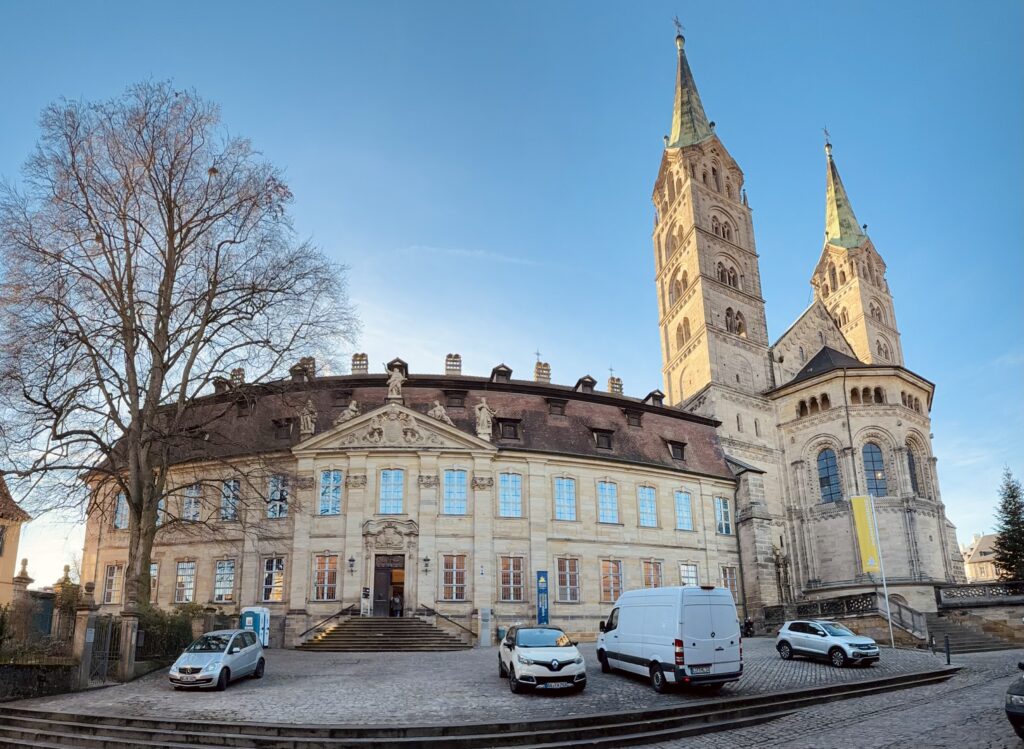
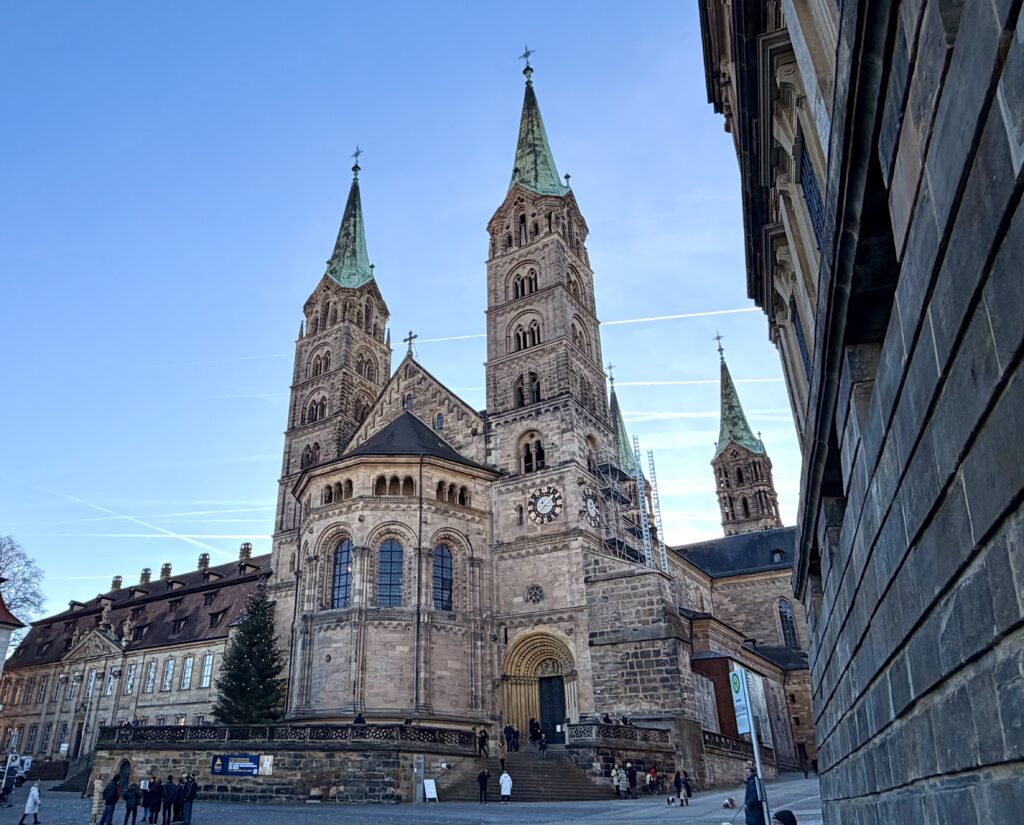
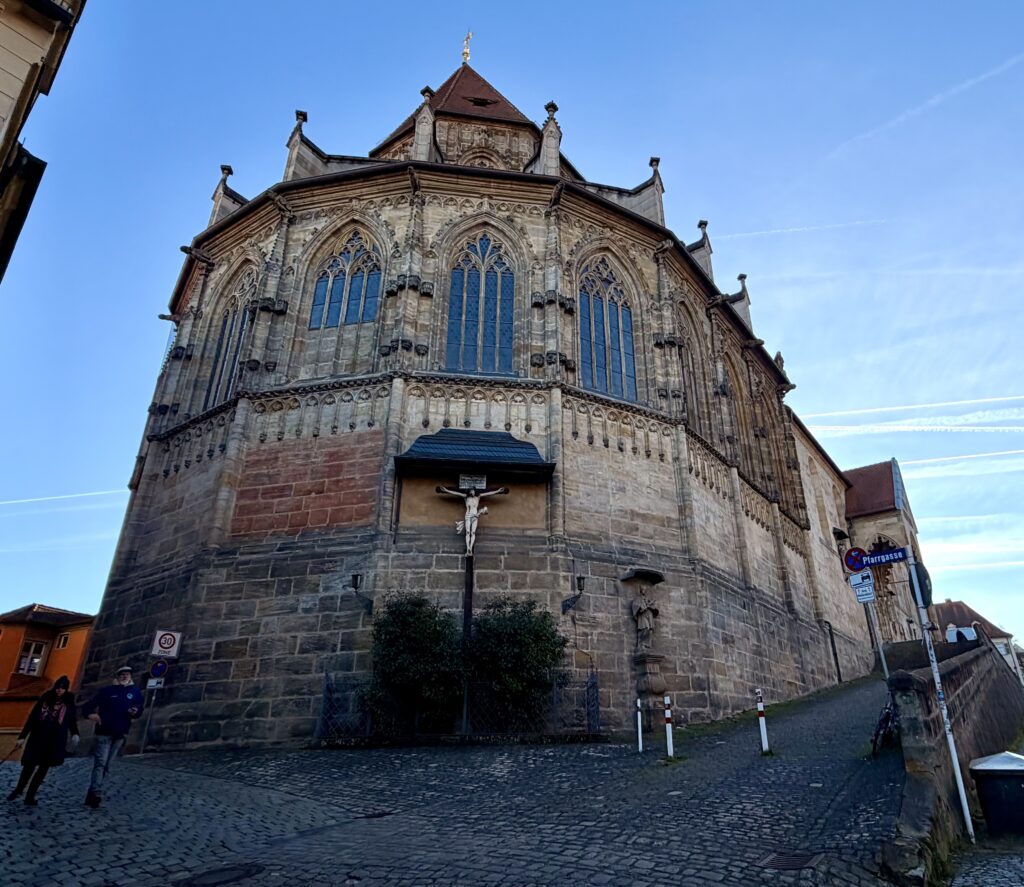
The cathedral is beautiful outside (we didn’t go inside).
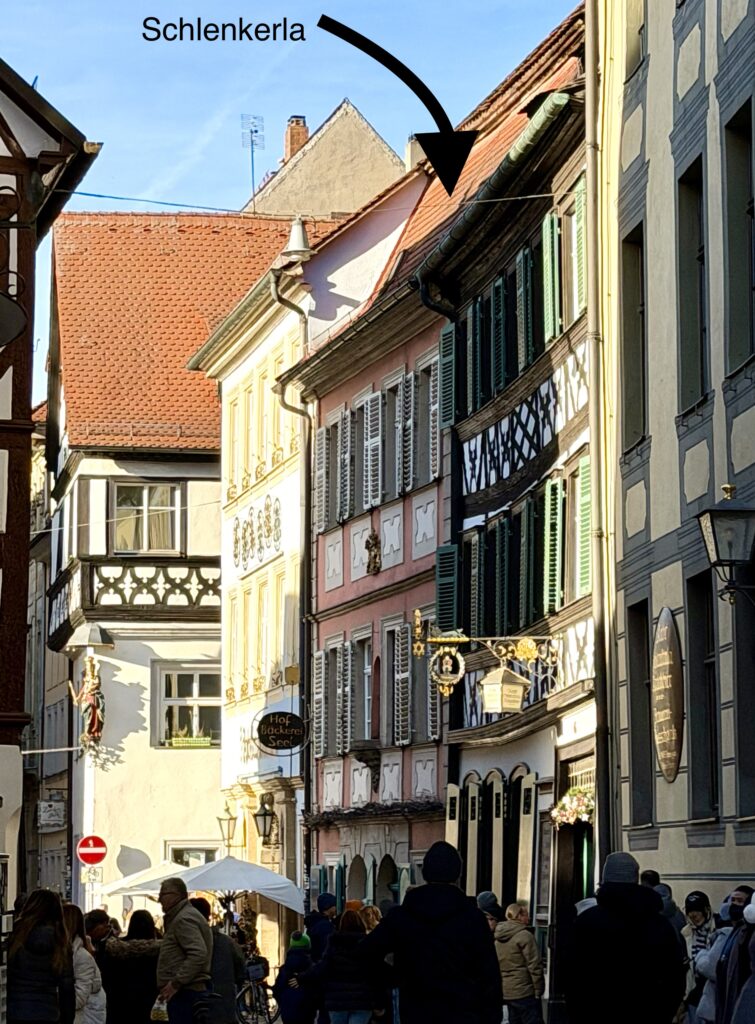
And then of course the main reason for our visit to Bamberg – to try their unique beer! Bamberg is famous for their Rauschbier (smoked beer). One of the main breweries in town (Schlenkerla; (https://www.schlenkerla.de/indexe.html) has a great history on their website (https://www.schlenkerla.de/rauchbier/geschichtee.html) but basically back in the day (like waaaay back) there were 2 ways to dry the malt – air drying or fire drying, the latter of which had to be used in more humid climates. The fire drying gave a smoky flavor to the beer. But during the industrial revolution in England, a machine was invented to have a smoke-free process for drying the grain (the first patent was awarded on 23 July 1635). There were a few breweries that were still using a fire kiln by the turn of the 20th century (all in Bamberg). Today this retro beer has become popular again but there are 2 breweries that have used this original process continuously – Schlenkerla and Spezial. Spezial was closed the day we went but we were able to visit Schlenkerla and try their beer (and we were able to find Spezial for sale in the store in bottles so we tried theirs too). At Schlenkerla, I got the marzen and Chris got a seasonal dopplebock (both smoked). They were so good!
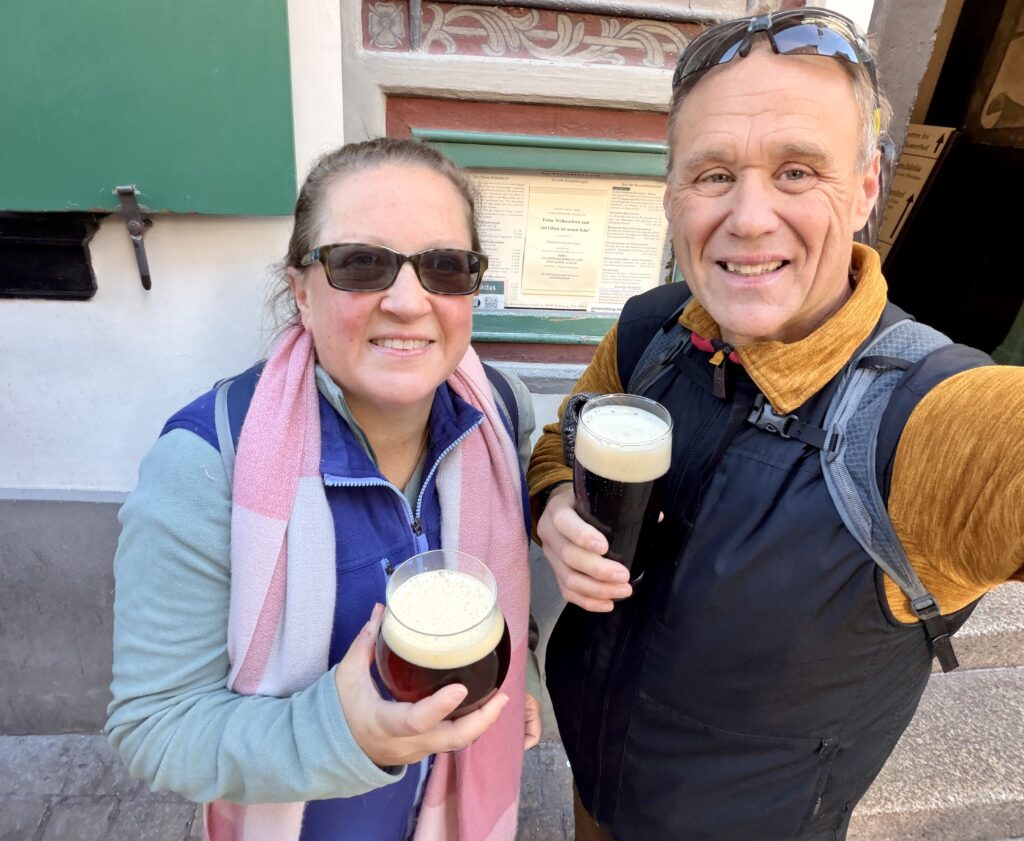
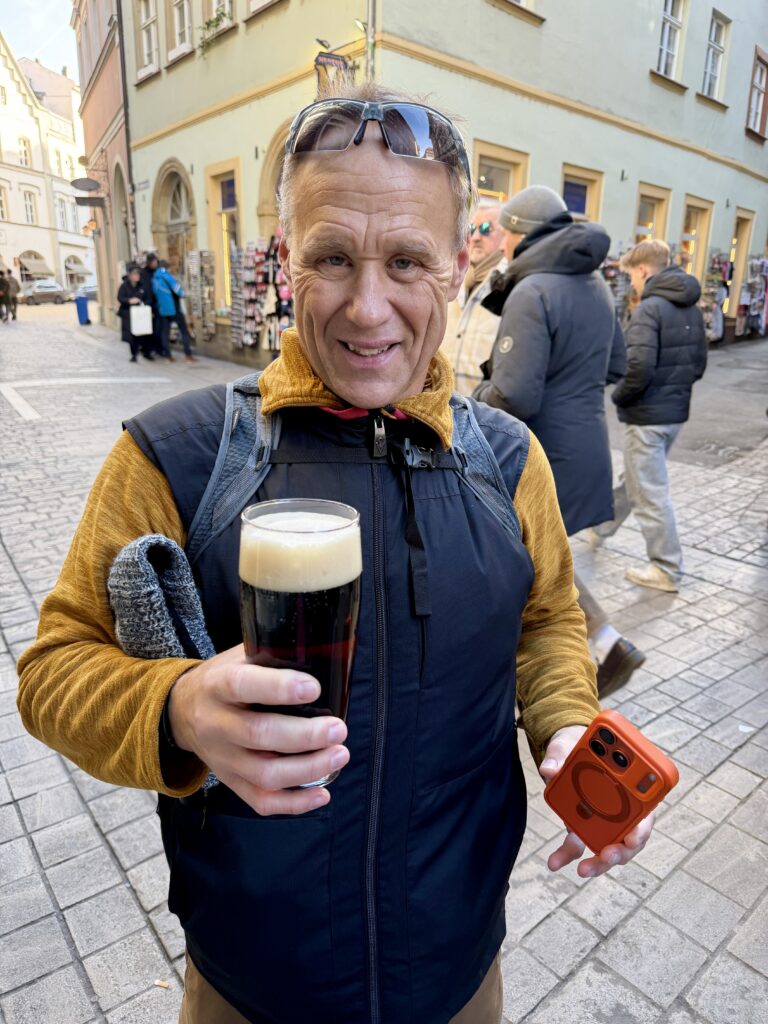
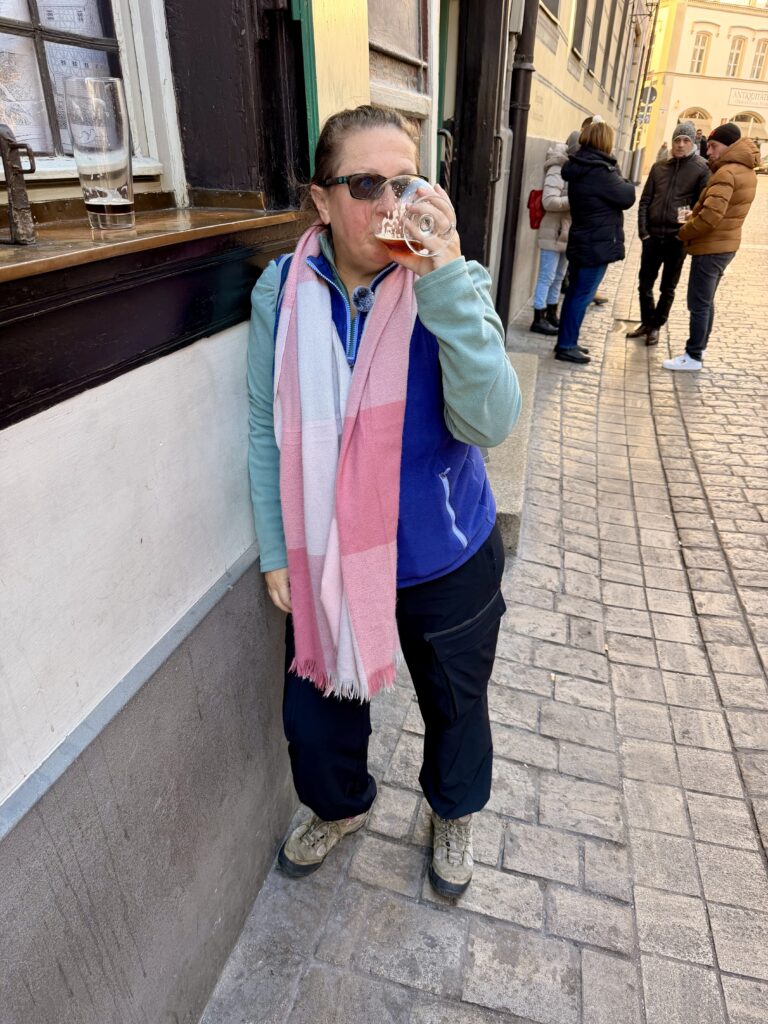
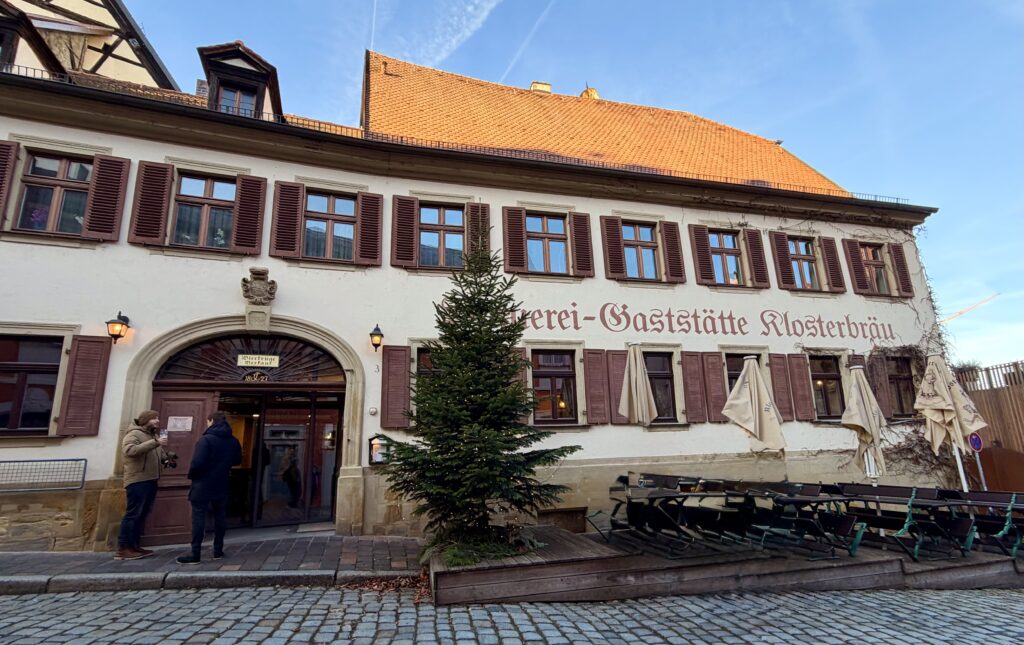
We also checked out a brewery called Klosterbräu (https://klosterbraeu.de/brauereifuhrung/ – I could not find this link in English and just used the browser translate function). I tried their rauschbier and Chris got the marzen. The beer was excellent and they had a fun beer window where you could ring a bell and order your beer right there. We also visited Fässla – it’s across the street from Spezial and was one on a list we found of places to visit. It was good as well but the other 2 were better.
(https://www.packing-up-the-pieces.com/bamberg-self-guided-brewery-tour-sampling/).
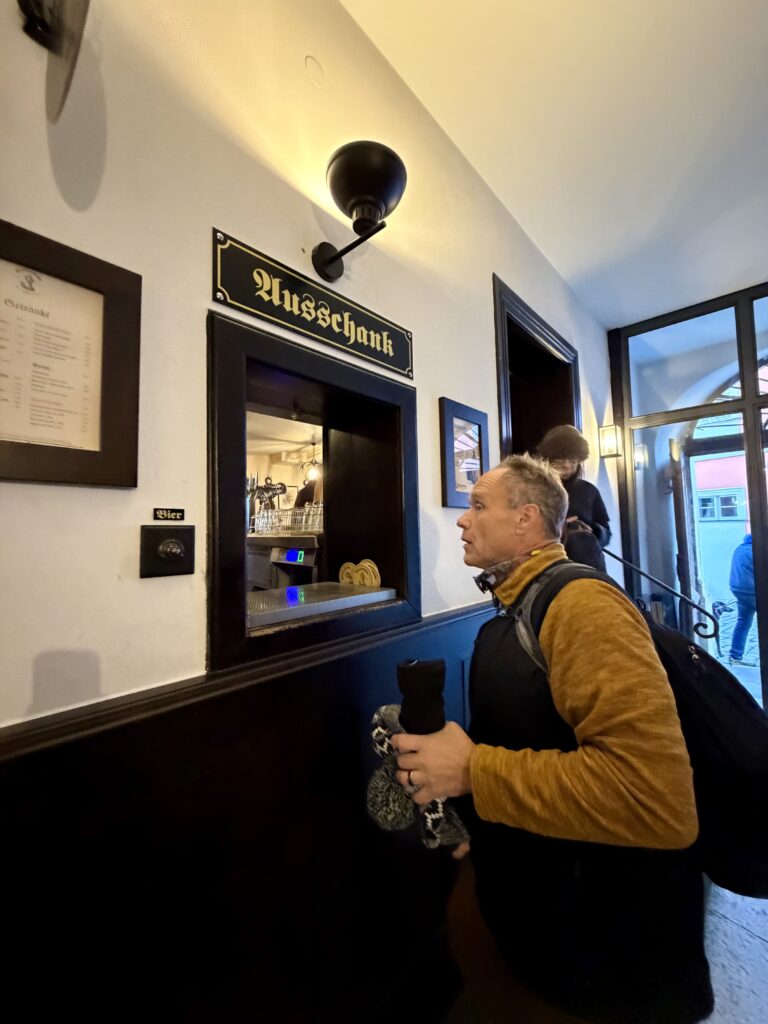
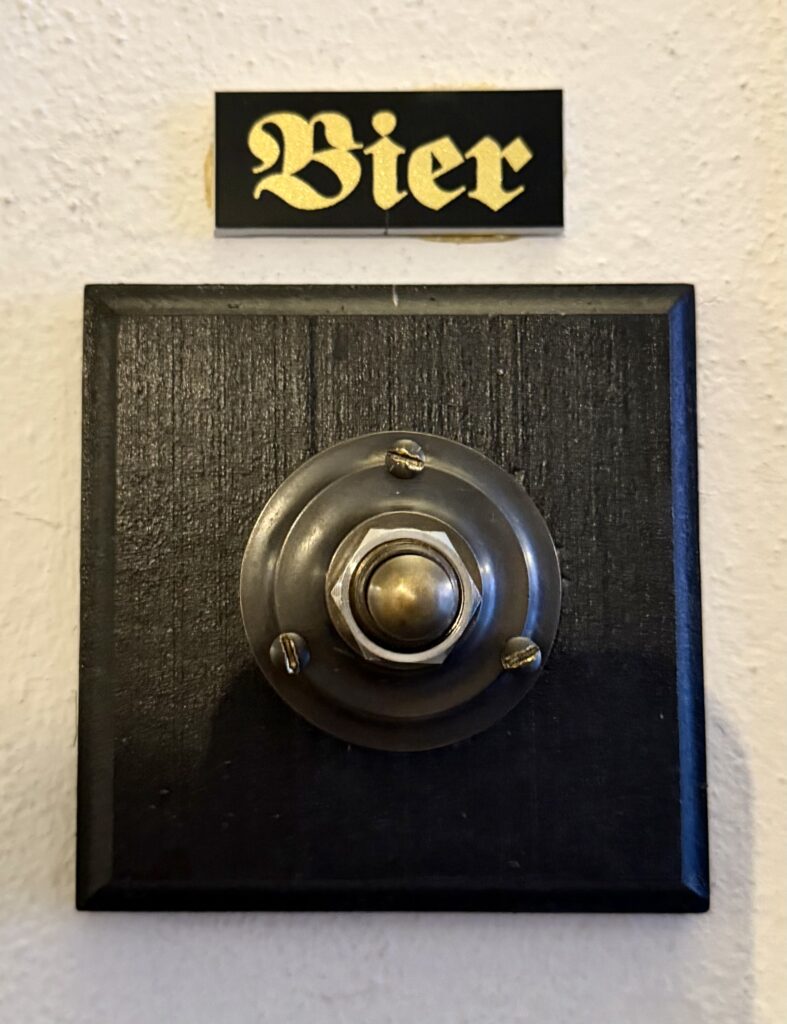
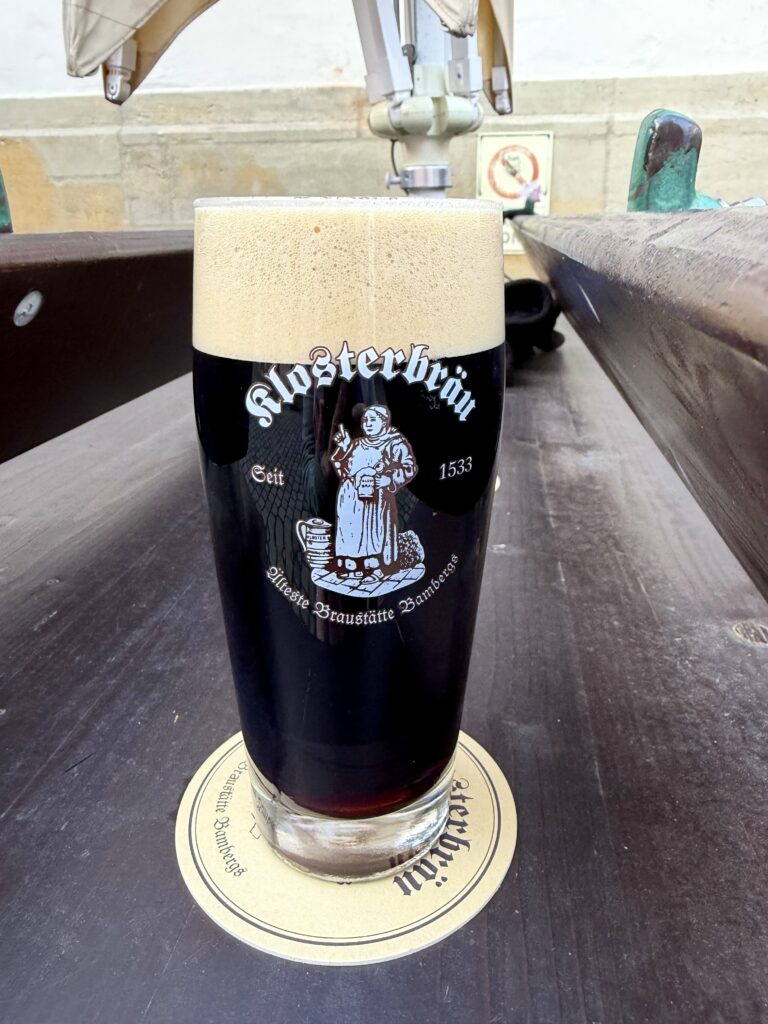
We truly enjoyed our day trip to Bamberg – we nearly went a 2nd time that week but decided we should see other places too.
Regensburg
A couple days after our visit to Bamberg, we did another nearby day trip – to Regensburg. It was about 1 1/2 hours by direct train from Nuremberg. It’s about halfway between Nuremberg and Munich so it would be an easy day trip from Munich too.
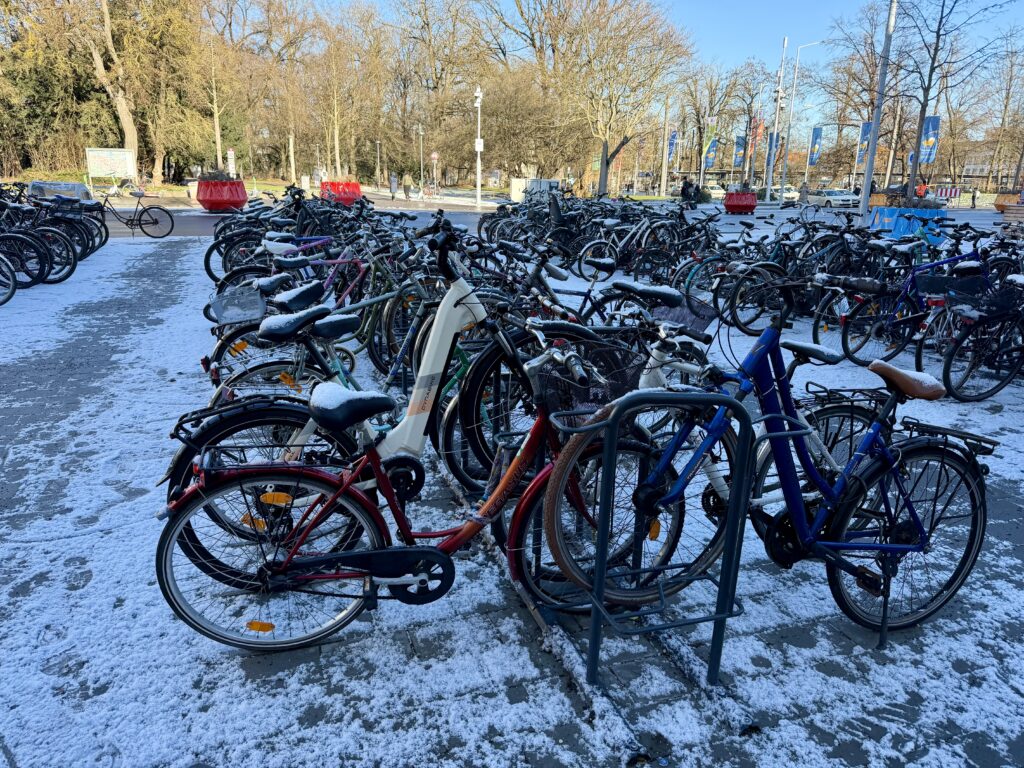
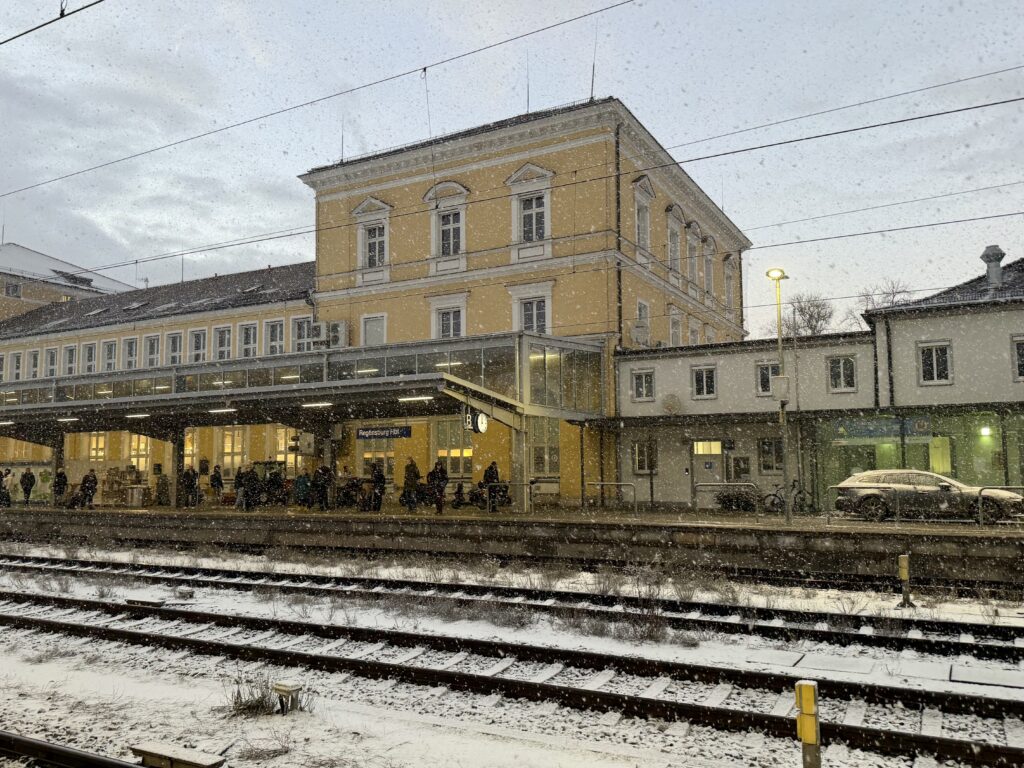
It was pretty cold while we were there and it had snowed recently – we walked out of the train station and saw so many bikes. I can’t imagine riding a bike in that weather but I guess people do it! Once we got there, it was an easy 15 min walk into town.
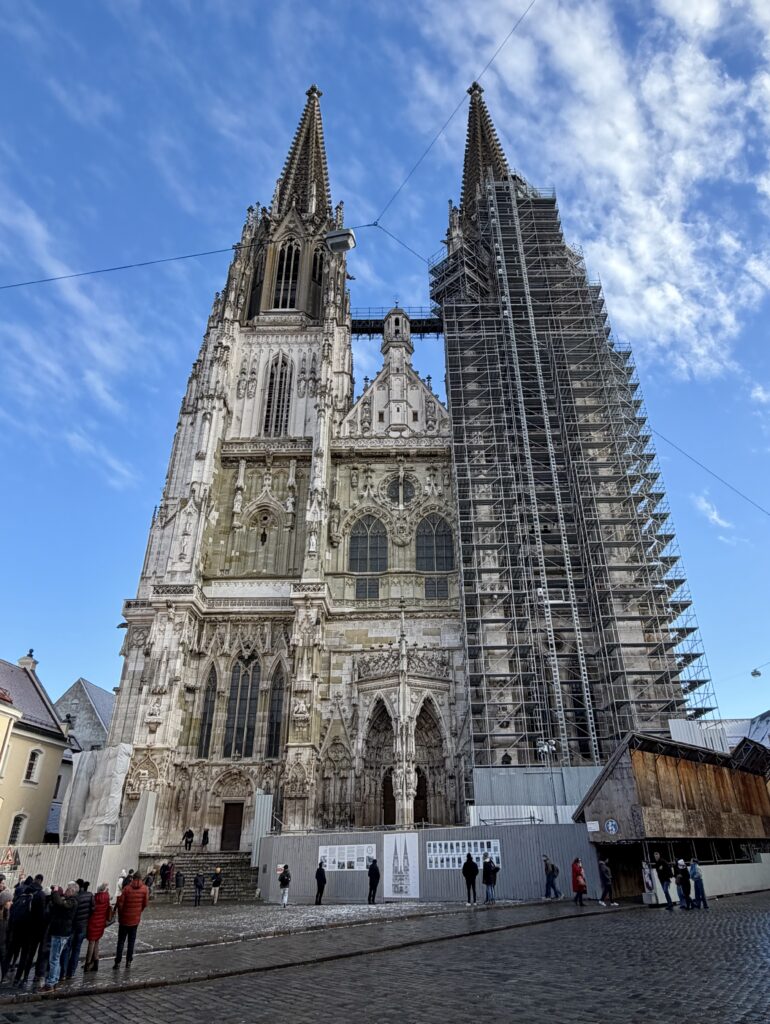
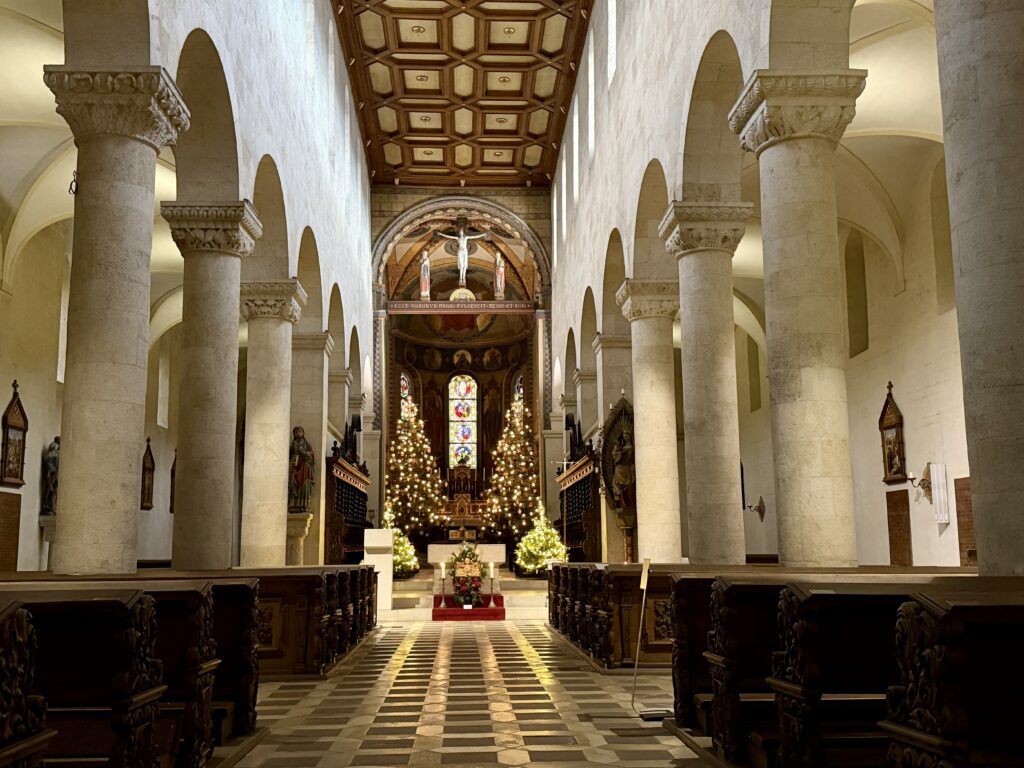
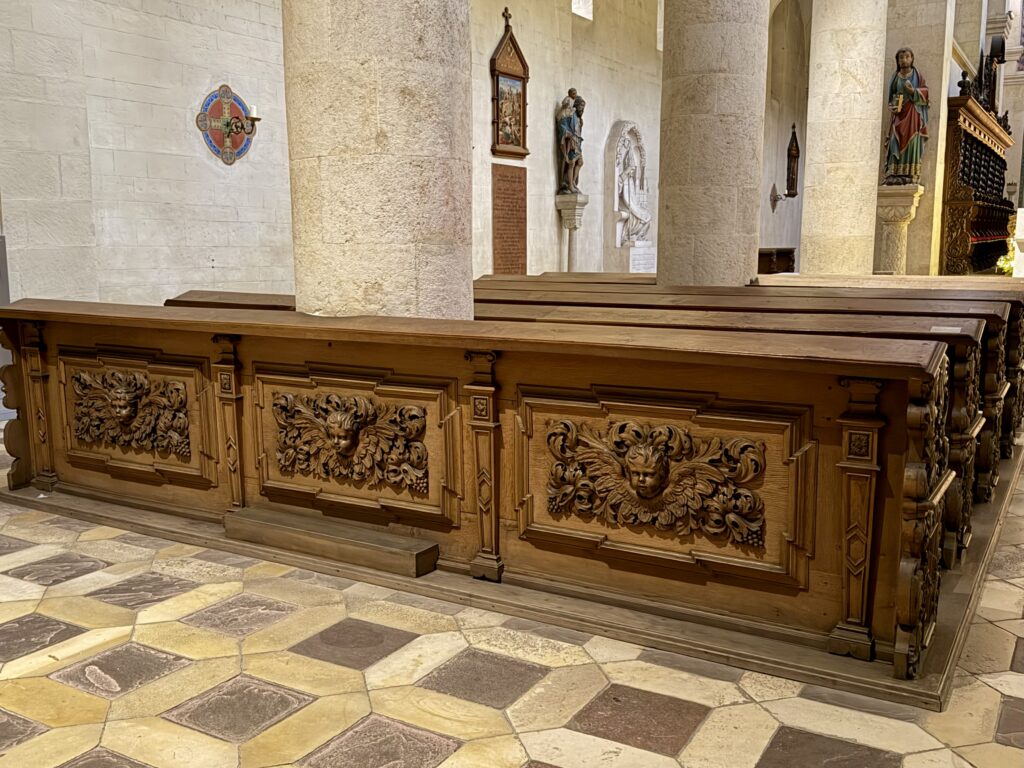
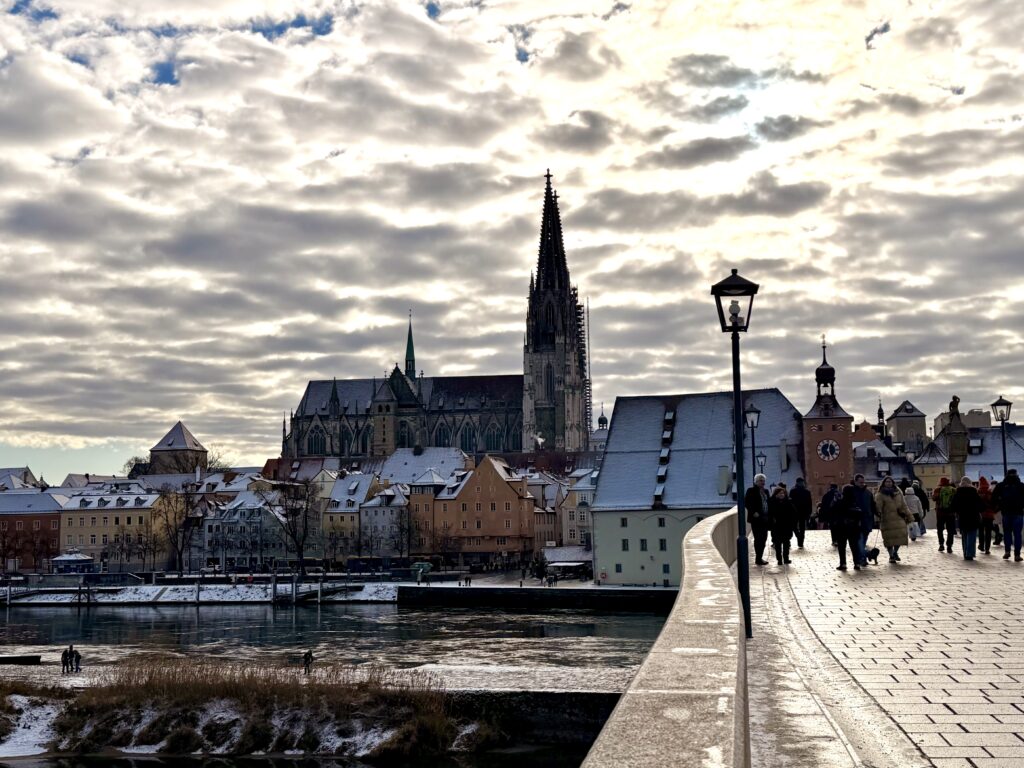
Like Nuremberg, Regenburg also has several churches. There’s of course the main cathedral (St. Peters Cathedral) built between 1280 and 1520. We didn’t go inside this one but we went in a few others.
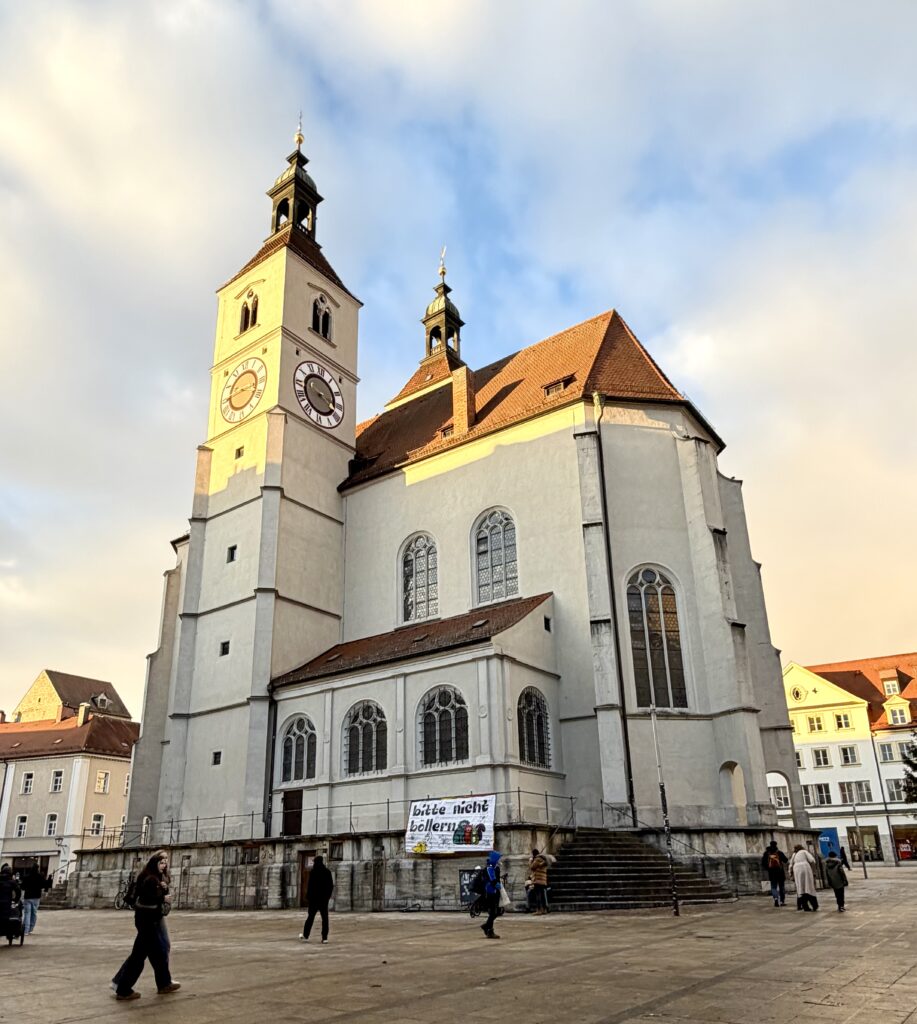
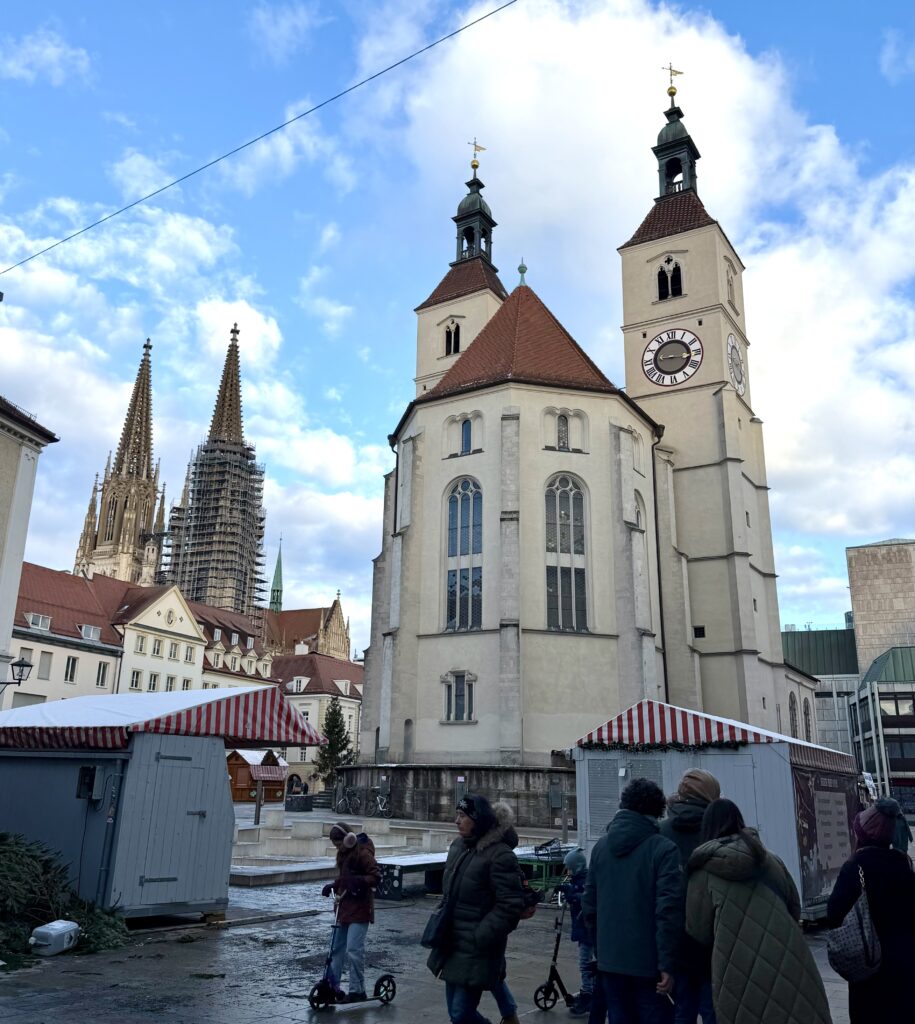
Then there’s Neupfarrkirche (New Parish Church), which sits in Neupfarrplatz (New Parish Square). There was a sign inside detailing the history and I also found a brief history on this website (https://tourismus.regensburg.de/en/experience-discover/unesco-world-heritage-/-sightseeing/neupfarrplatz). Around 100 AD there was a Roman legionary camp on this site. From around 1000 AD, this was the Jewish Quarter, with about 40 houses, a school, and a synagogue. Things changed in the 16th century though. Emperor Maximillian had been protective of the Jewish population in his empire. He died in 1519 and immediately after his death, the city council made the Jewish people vacate within 5 days. They then destroyed the synagogue. The master mason was injured in the process but survived – this was attributed to the intervention of the Virgin Mary. So they built a small wooden church on the spot in her honor – and had a wave of pilgrims coming to see the site of this miracle. The city wanted to build a larger stone church on the site to accommodate the pilgrims so they started building this current church but by 1525, the pilgrims stopped coming. Around this same time, Martin Luther had a growing number of followers and ultimately in 1542, they had their first protestant service here. This became the “parent” church of protestant Regensburg.
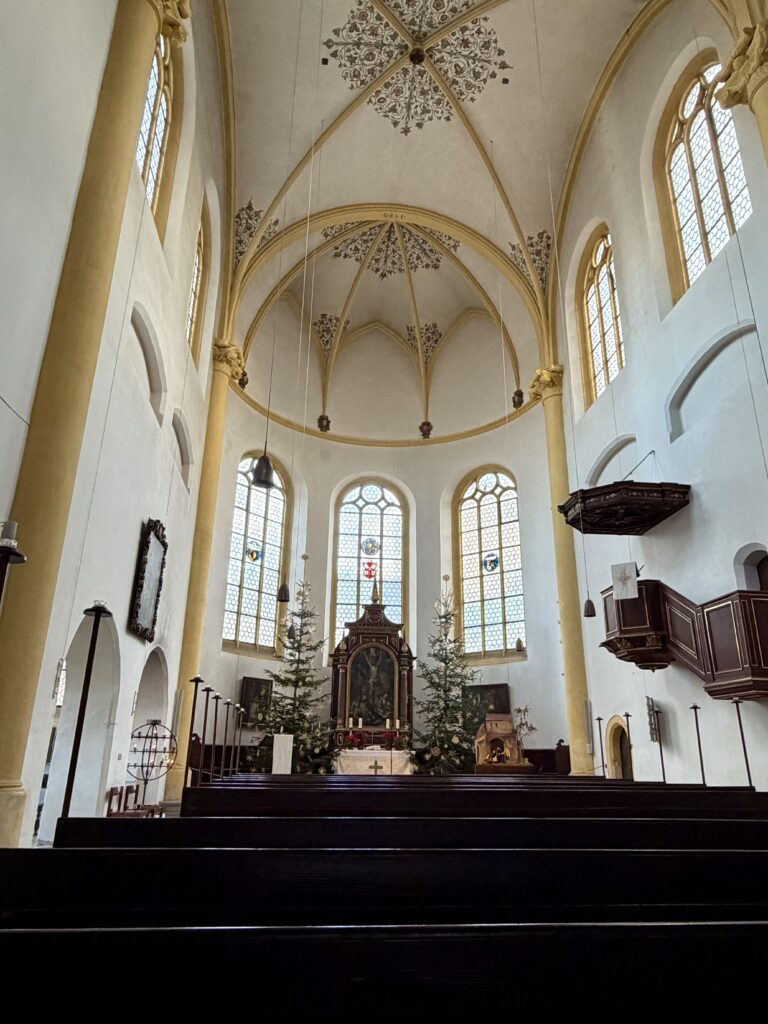
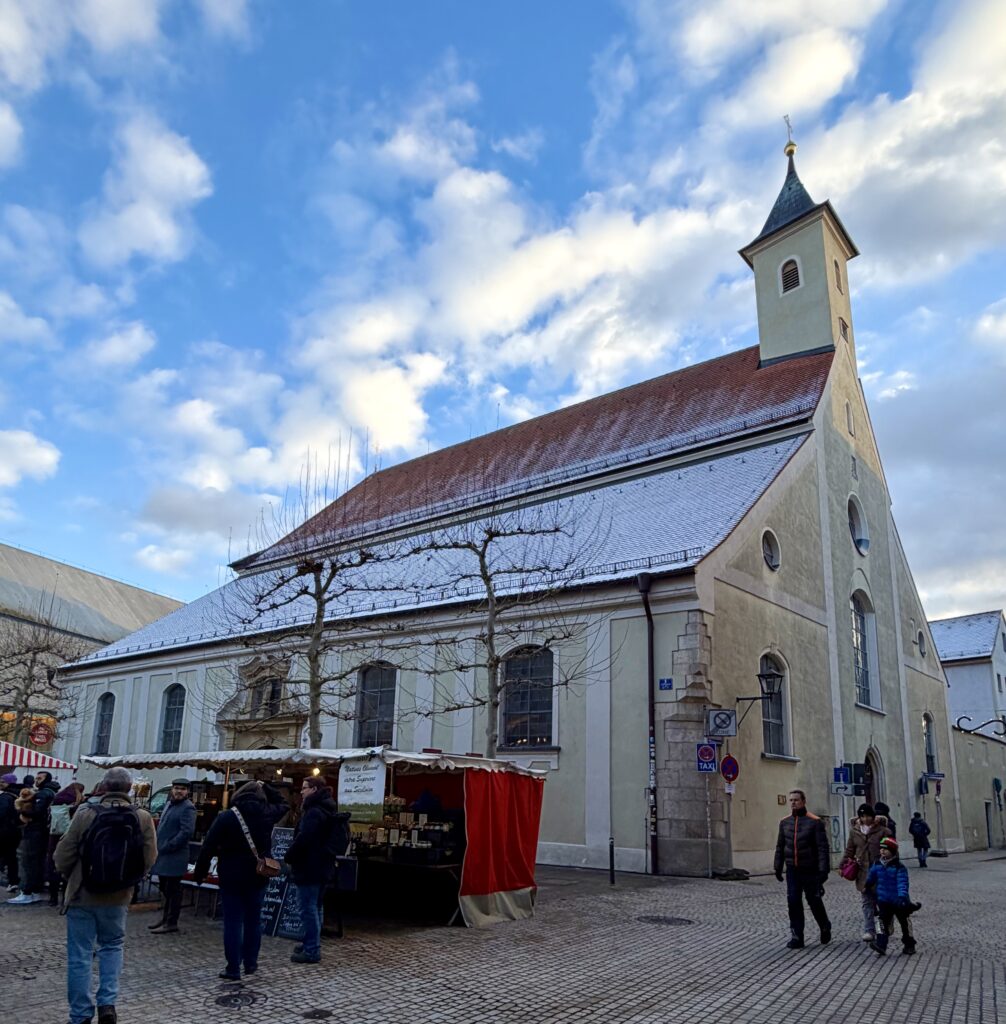
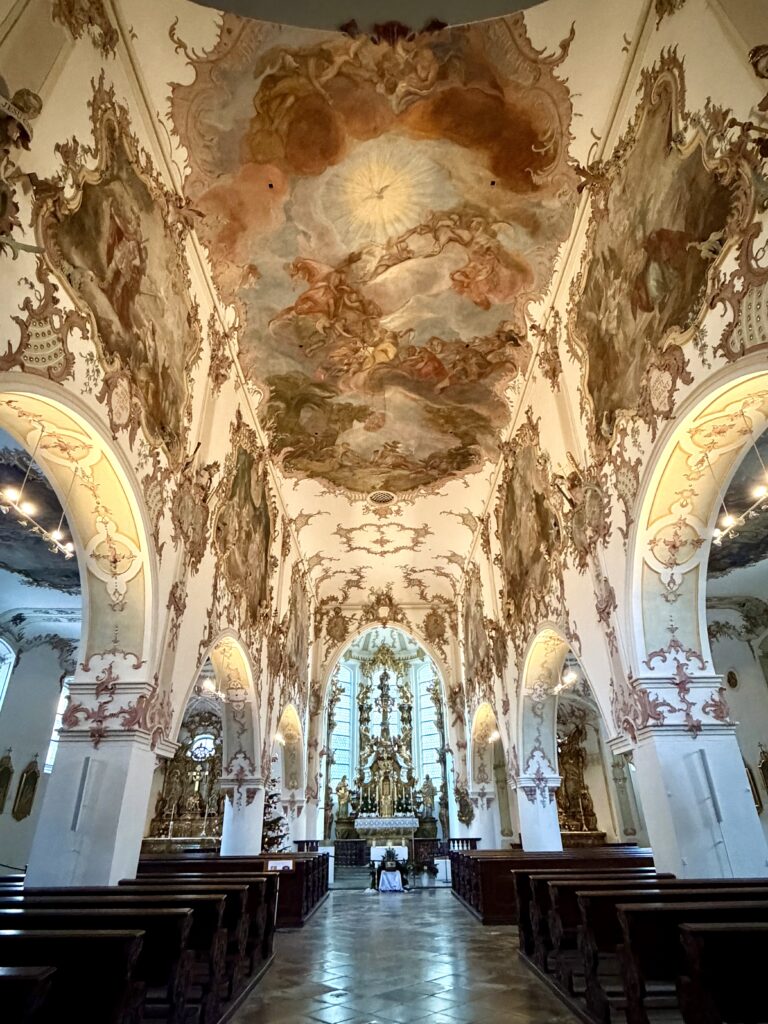
The Collegiate Church of Saint Cassian (Pfarrkirche St Kassian) has a really unique interior, with frescoes all over the ceiling. It’s the oldest Parrish church in Regensburg, dating back to 885. It’s also notable for being the smallest parish in Regensburg, with 65 Catholics.
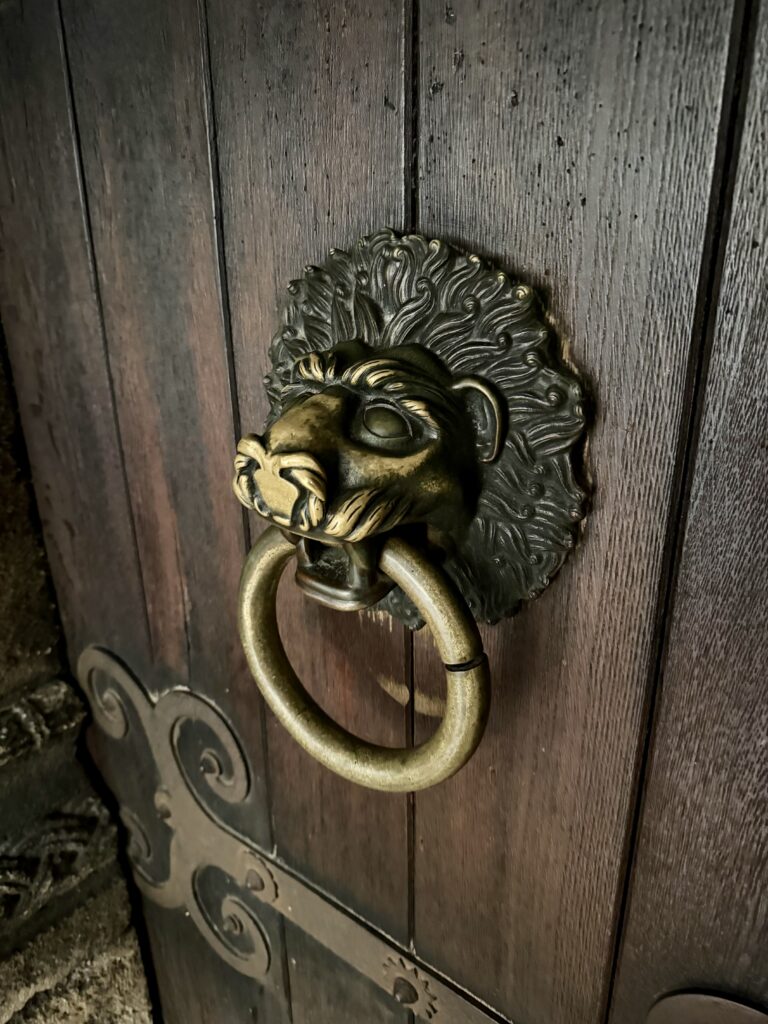
On our way back to the train station at the end of the day, we also popped into St. Jacob’s (Scots’) Church, or Scots monastery (https://tourismus.regensburg.de/en/experience-discover/unesco-world-heritage-/-sightseeing/st-jacobs-scots-church), dating back to the 11th century. The whole outside is covered in scaffolding so I don’t have a good picture but this site has some great ones: https://www.eichinger.ch/eichifamilyhom/Reisen/Donauradwandern/EN/Regensburg_StJakob.htm
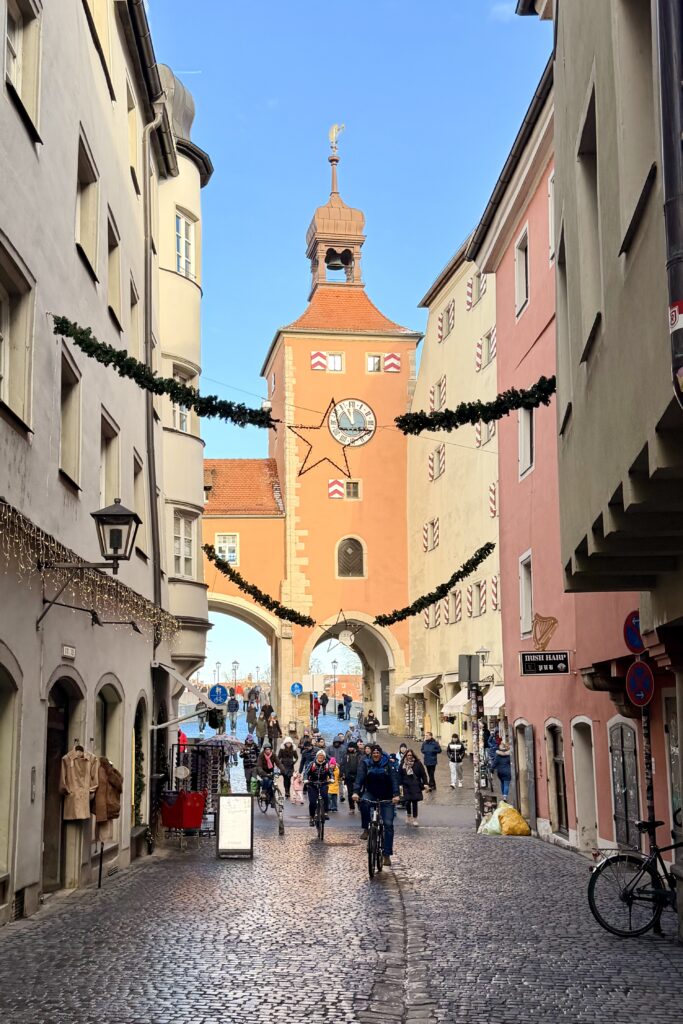
Of course there was plenty to see in Regensburg besides churches The city sits on the Danube River. As you get close to the river, you cross through this neat-looking watch tower called the Brückturm (Bridge Tower).
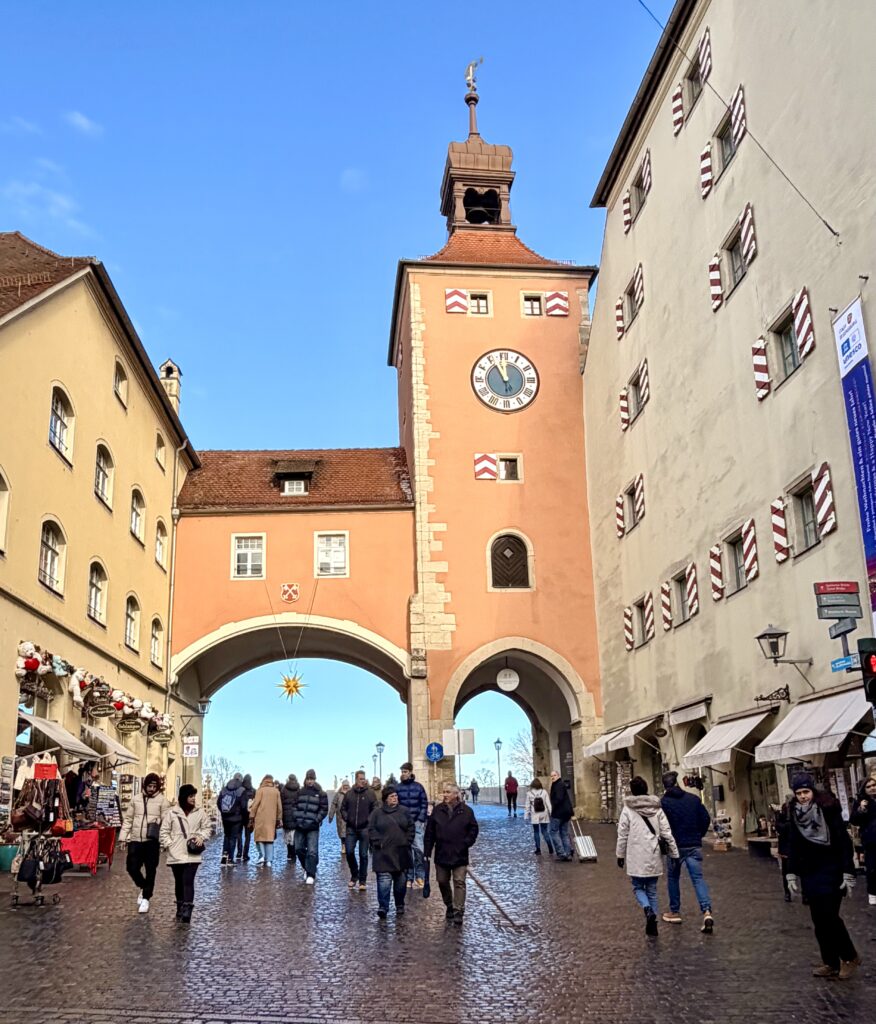
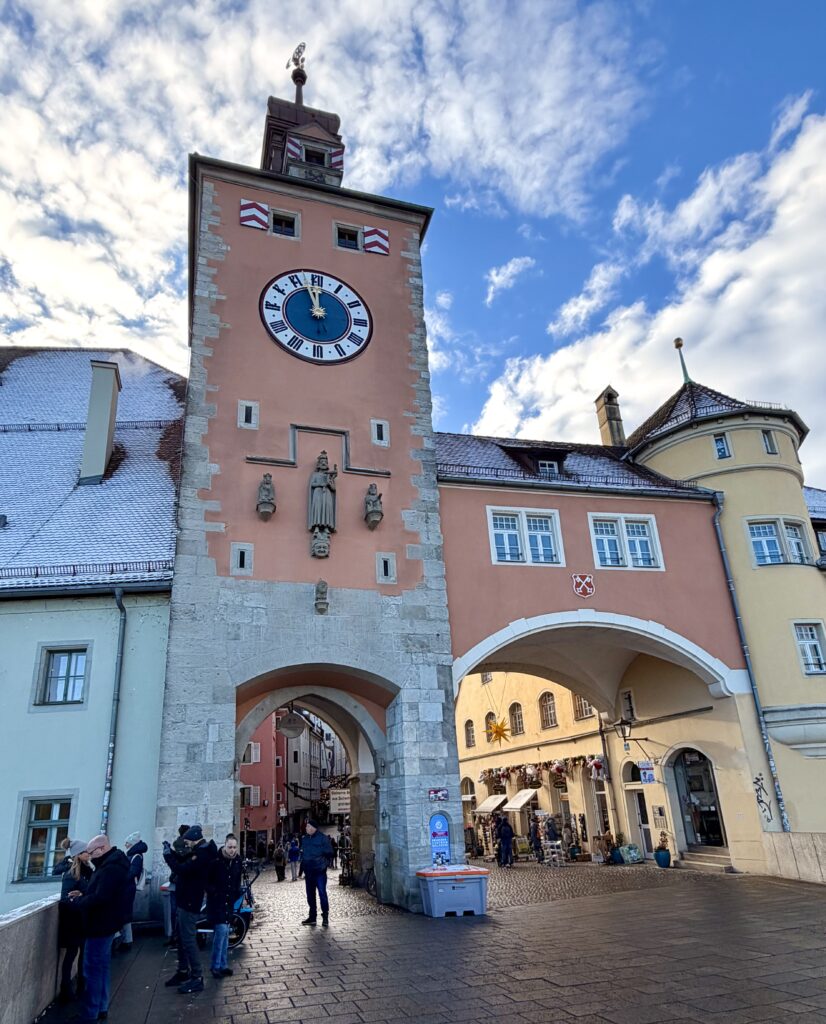
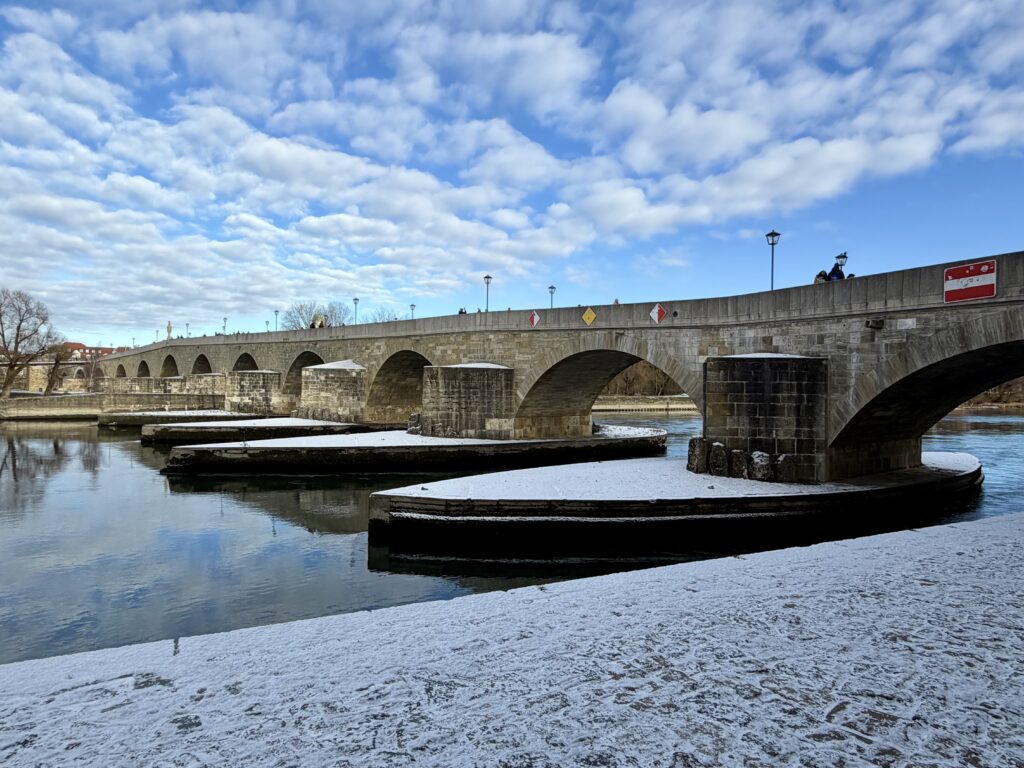
Then you come to the Old Stone Bridge across the Danube. It was started in 1135 and is the oldest preserved bridge in Germany, and until 1935 was also the only reliable bridge crossing the Danube in Regensburg (https://tourismus.regensburg.de/en/experience-discover/unesco-world-heritage-/-sightseeing/stone-bridge).
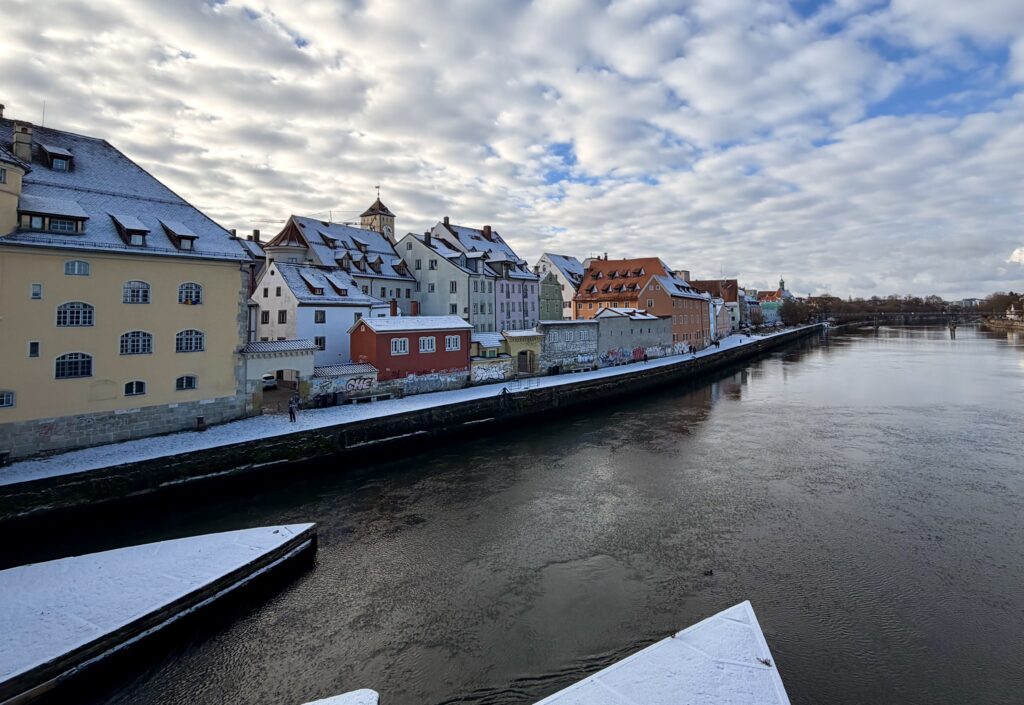
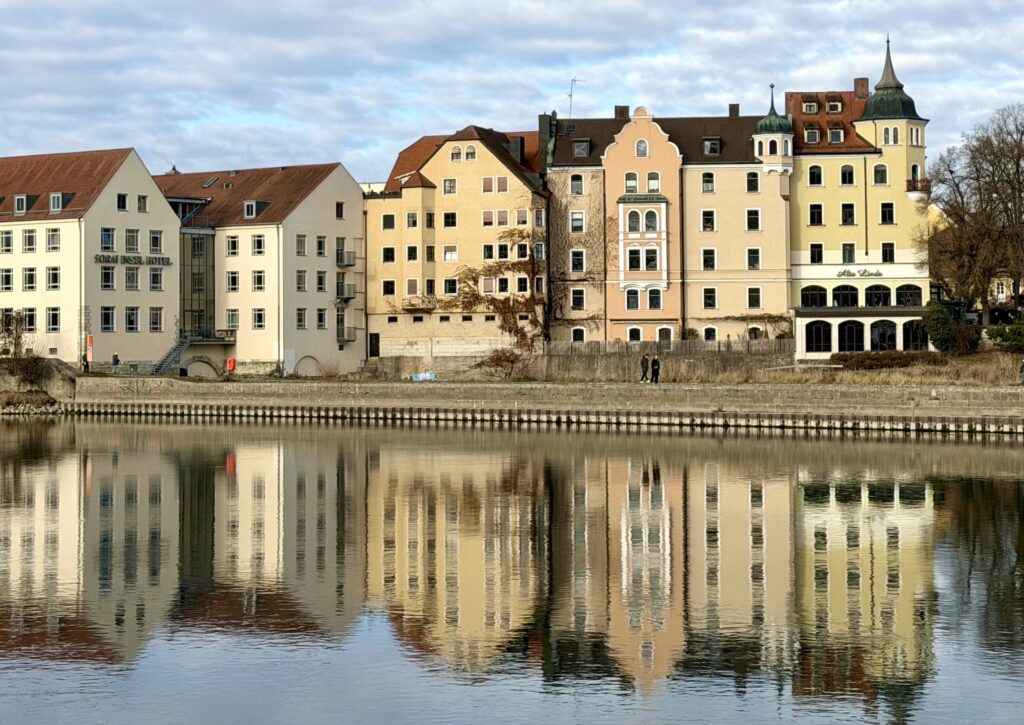
Just across the river there is a quiet neighborhood where there’s a building that housed a sub-camp of the Flossbürg concentration camp system. This building held male prisoners from 19 Mar – 23 Apr 1945 – they were forced to help repair bomb damage to the railroads from Allied bombing runs. In that short 5 week period, more than 40 of the 400 men held here died (44 were recorded but likely closer to 70 according to accounts from other prisoners). Following that period, the remaining prisoners were forced on a 9-day march to quickly evacuate the camps due the Allied advance near the area. 27 of the men who were too ill or injured to march were left behind and many others died along the way. There’s an information plaque on the building and a memorial across the street. (https://muse.jhu.edu/document/1725; https://www.gedenkstaette-flossenbuerg.de/en/history/satellite-camps/regensburg).
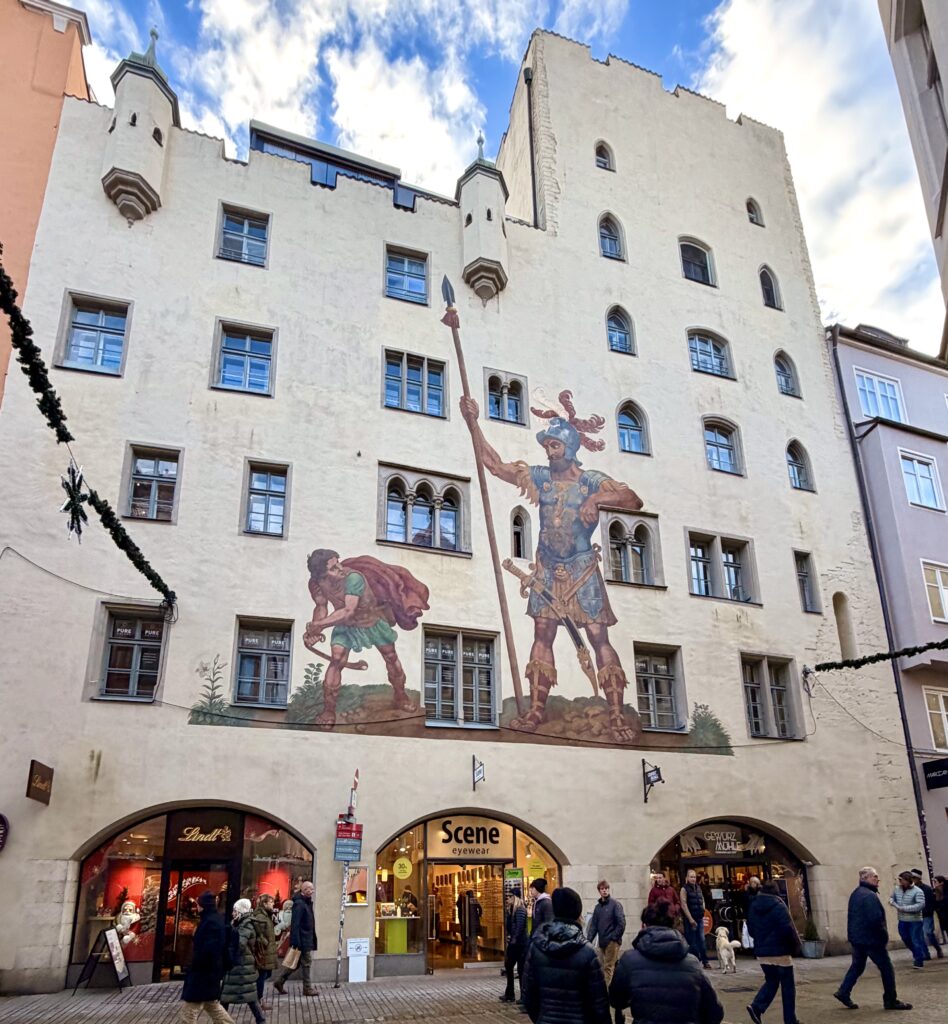
Back in the main part of town, there’s a house called the Goliath House. The house was built in 1260 and the David & Goliath fresco painted in 1573. The house was one of the largest “city castles” in the inner city. The name is likely derived from “Goliards” (theology students) as the house was built on the site of where the theology students used to stay. (https://www.regensburger-touristen-guide.de/en,bauwerke,6,goliathhaus/)
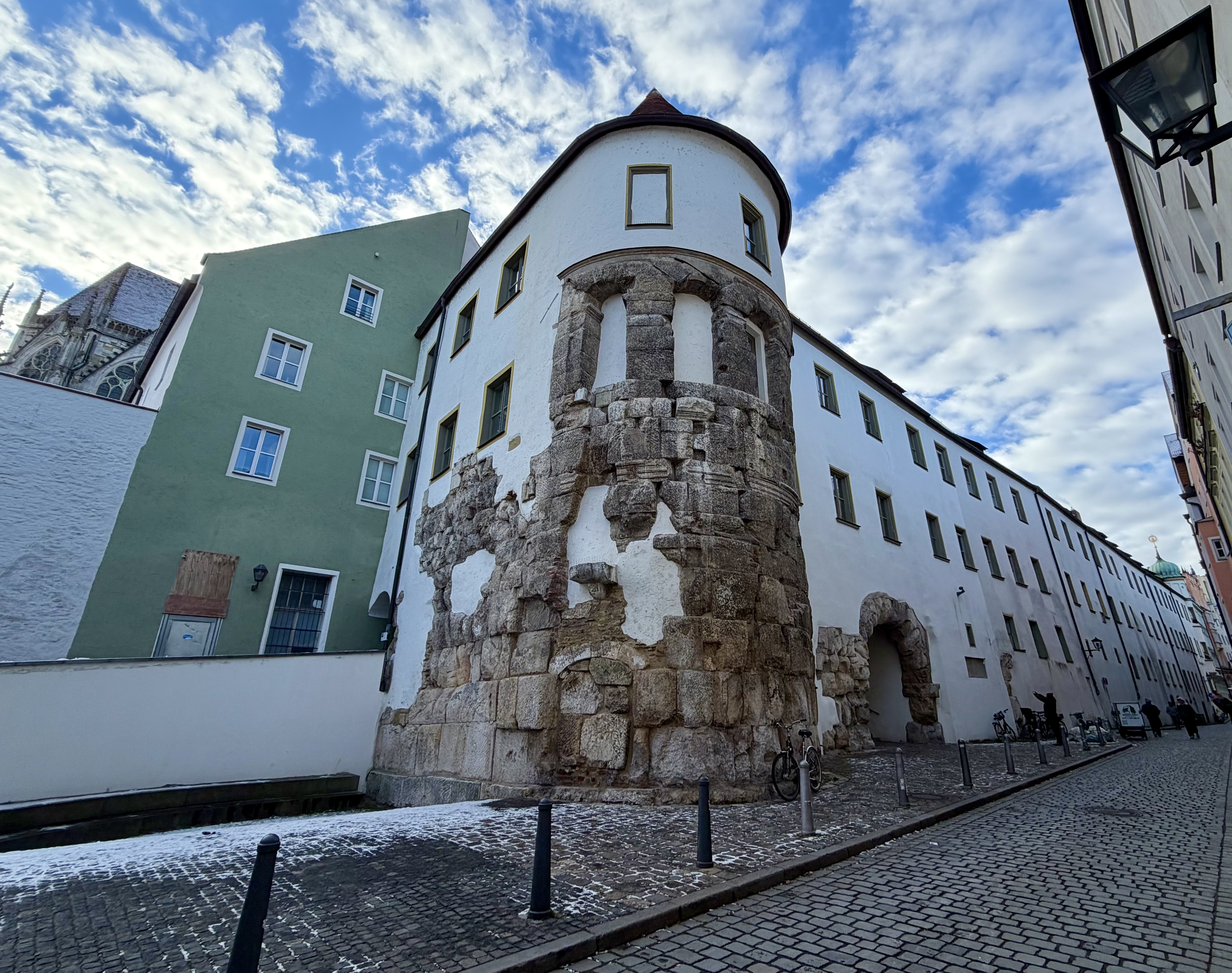
The Porta Praetoria is one of only 2 partly preserved Roman gates north of the Alps (the other is the Porta Nigra in Trier) and is built out of limestone blocks. It was the northern gate of a legionary camp and was completed in 179 AD. It was known as the Porta Aquarium (“water gate”) to the Danube as late as AD 932. When extensions from subsequent years started being torn down in 1885, this gate was re-discovered.
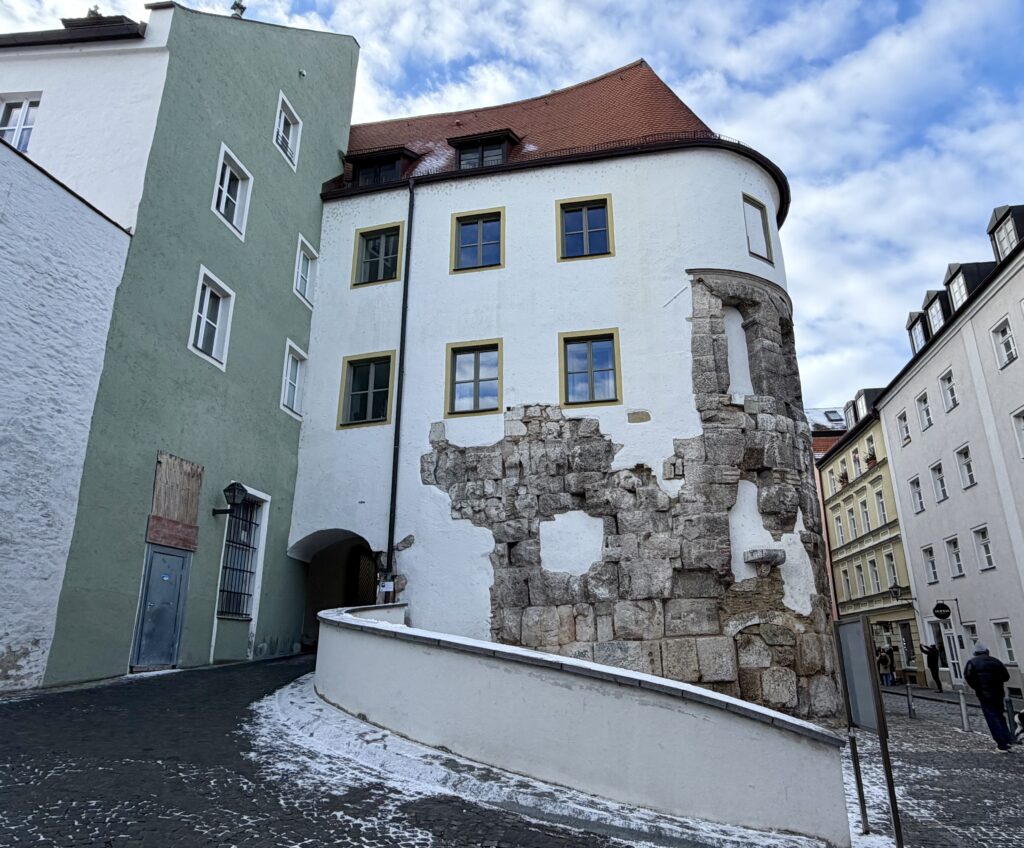
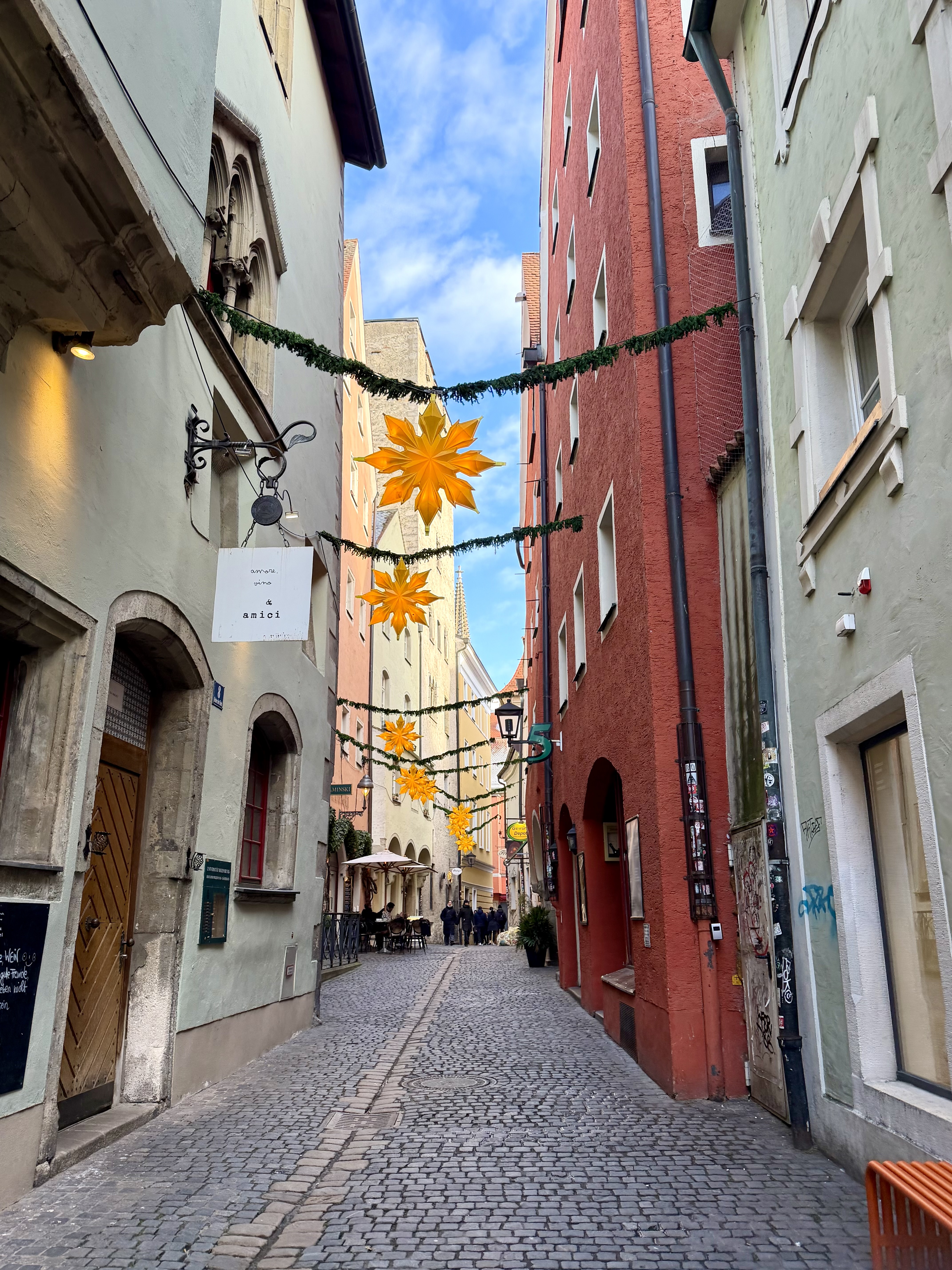
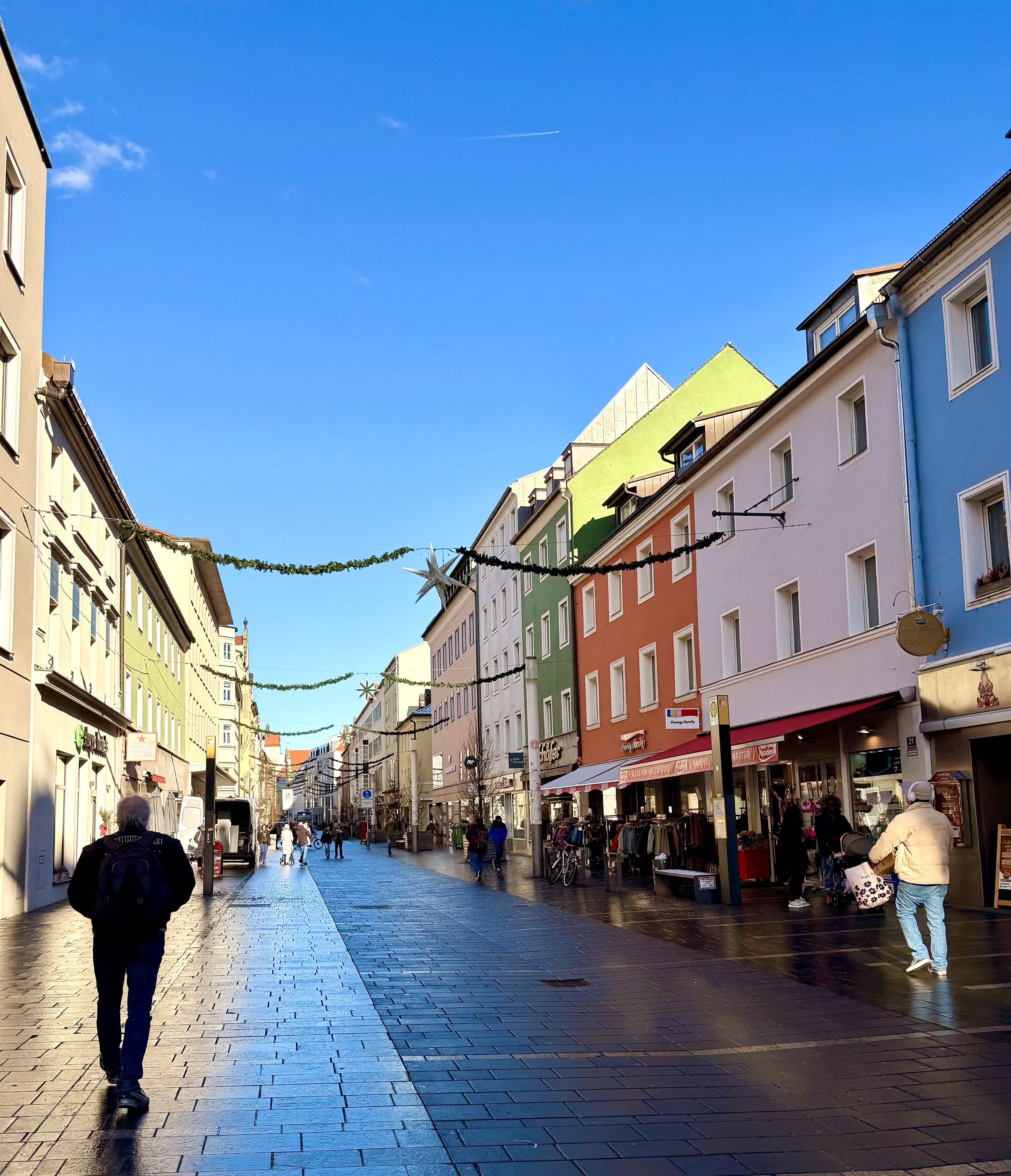
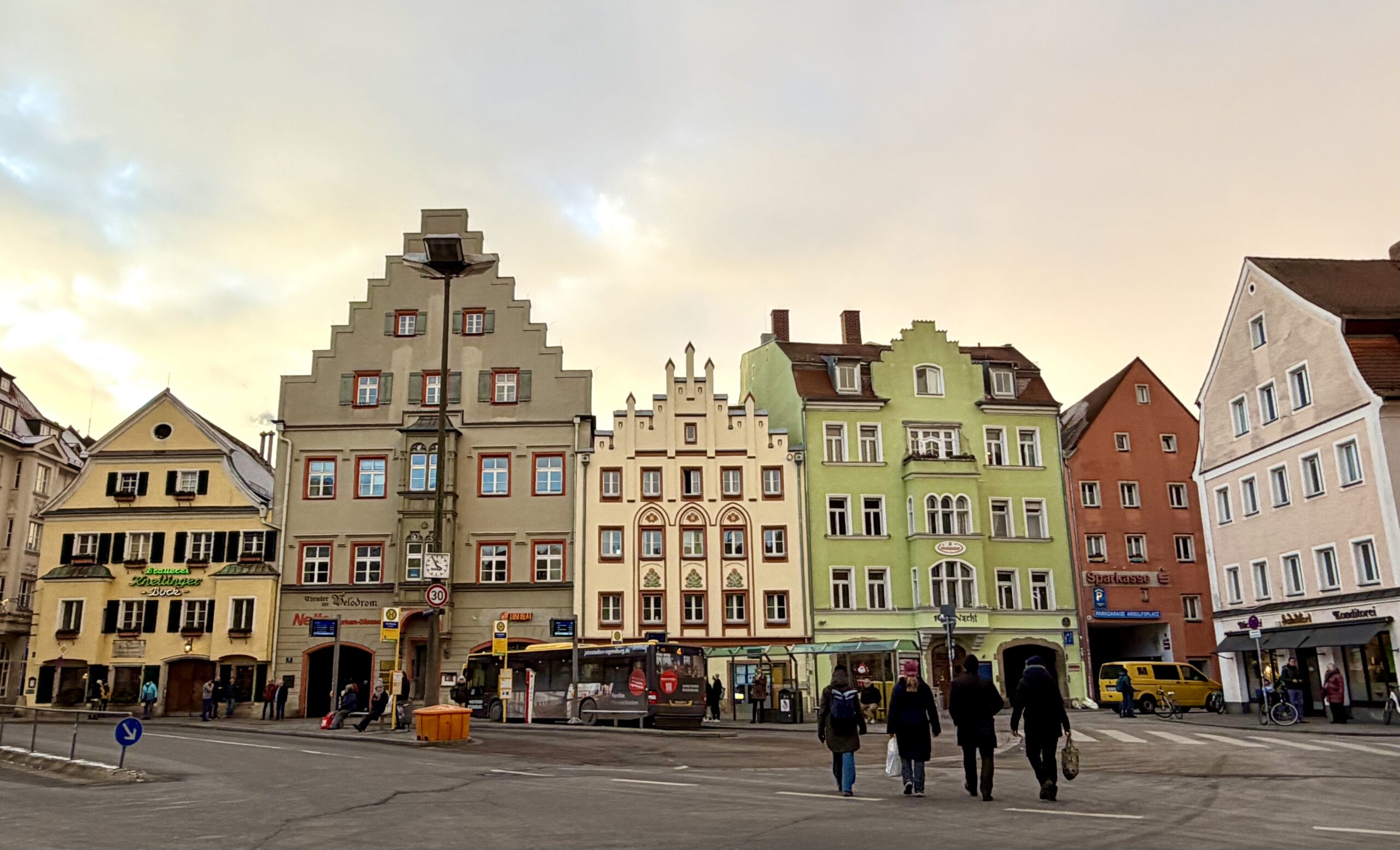
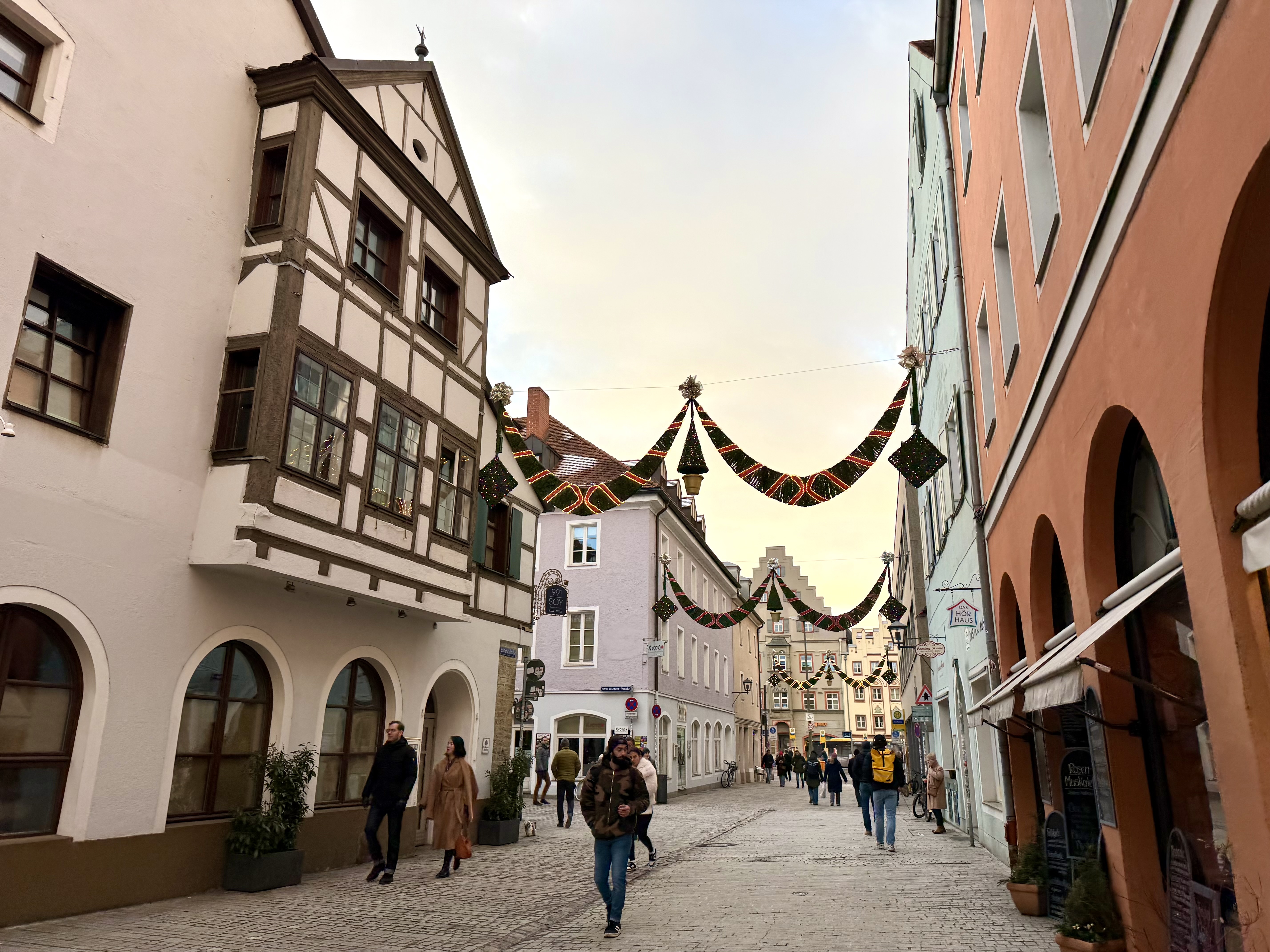
There were also a lot of festive decorations (the week between Christmas and New Year’s) and cool architecture to see.
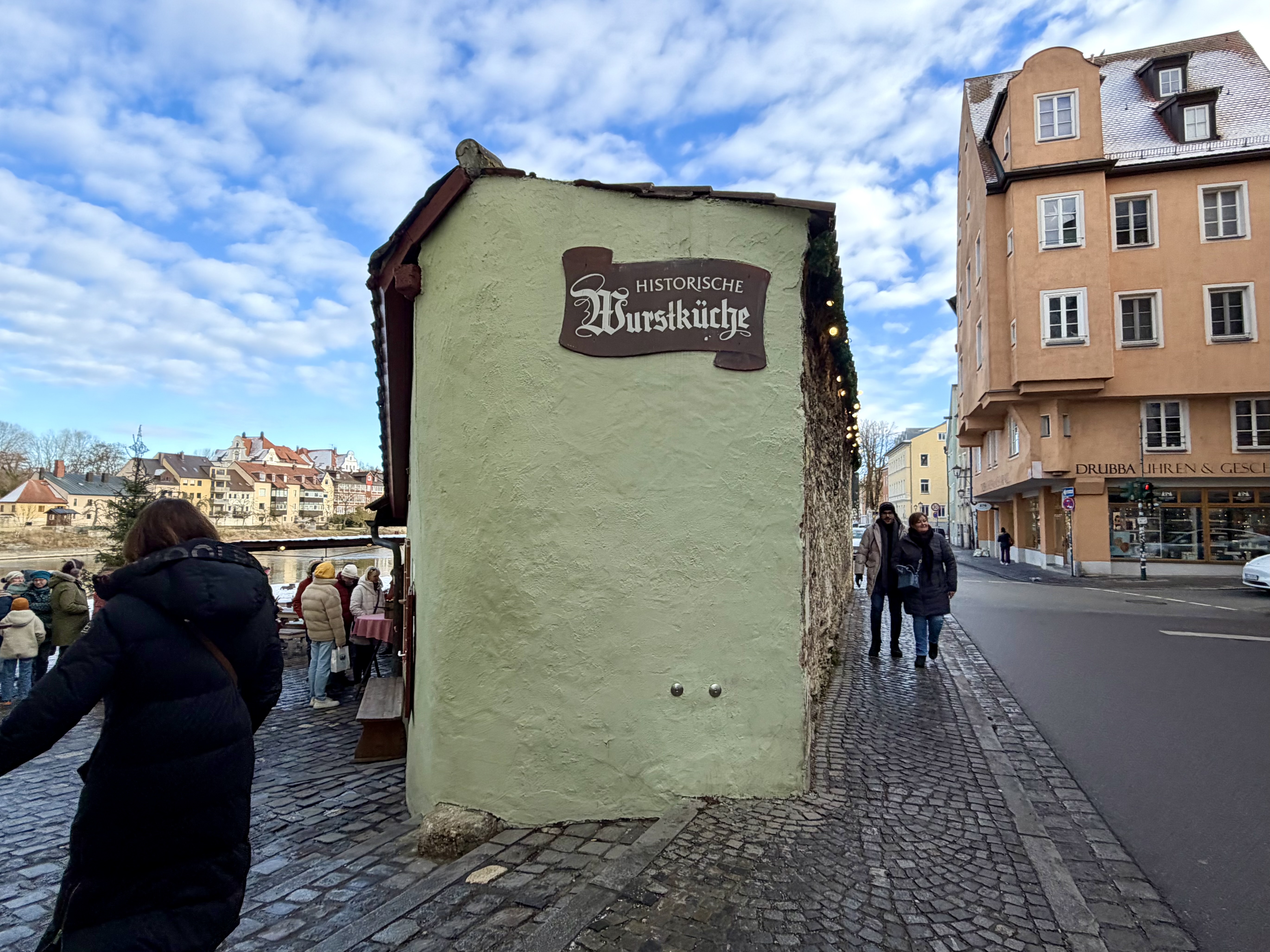
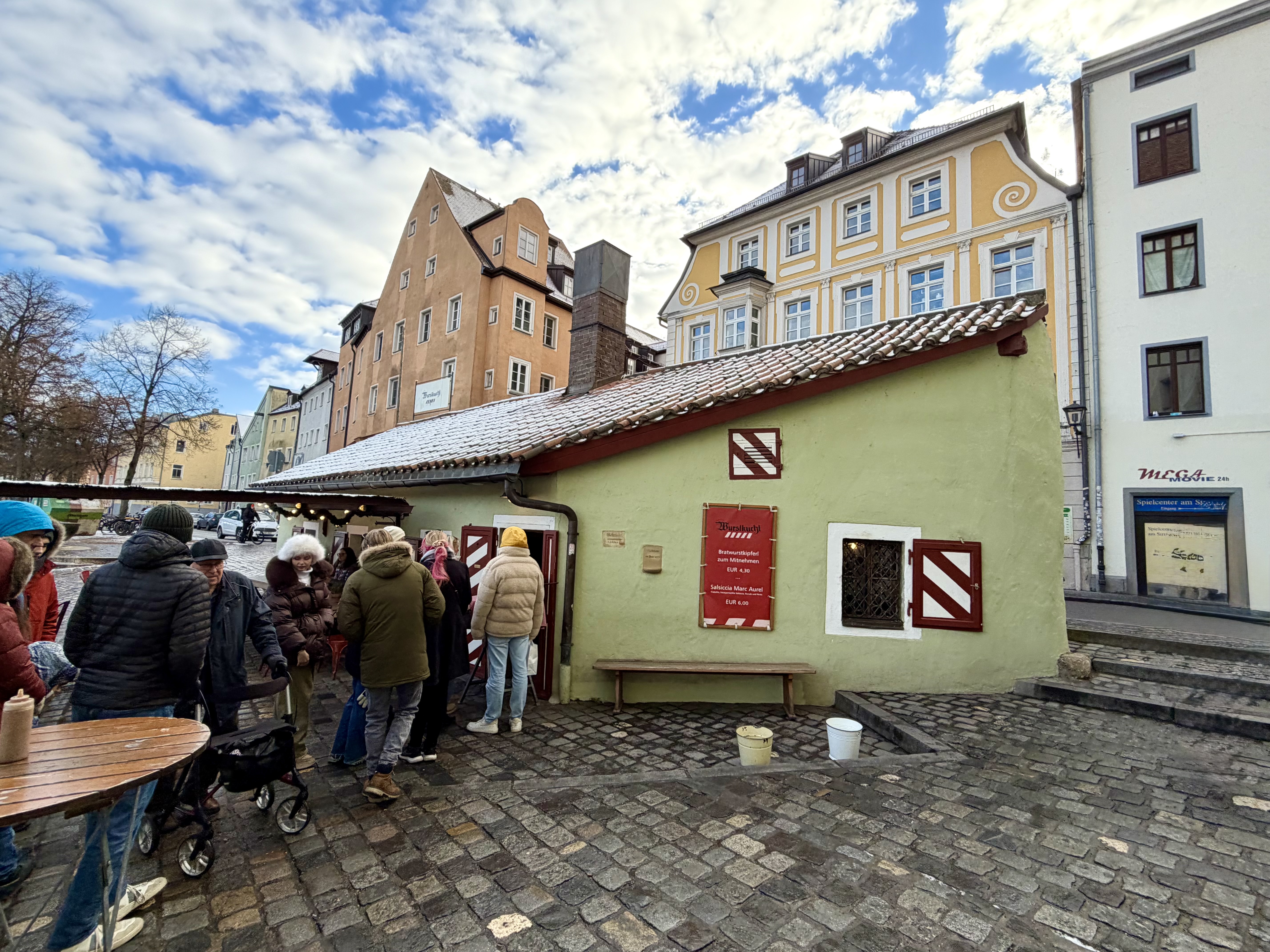
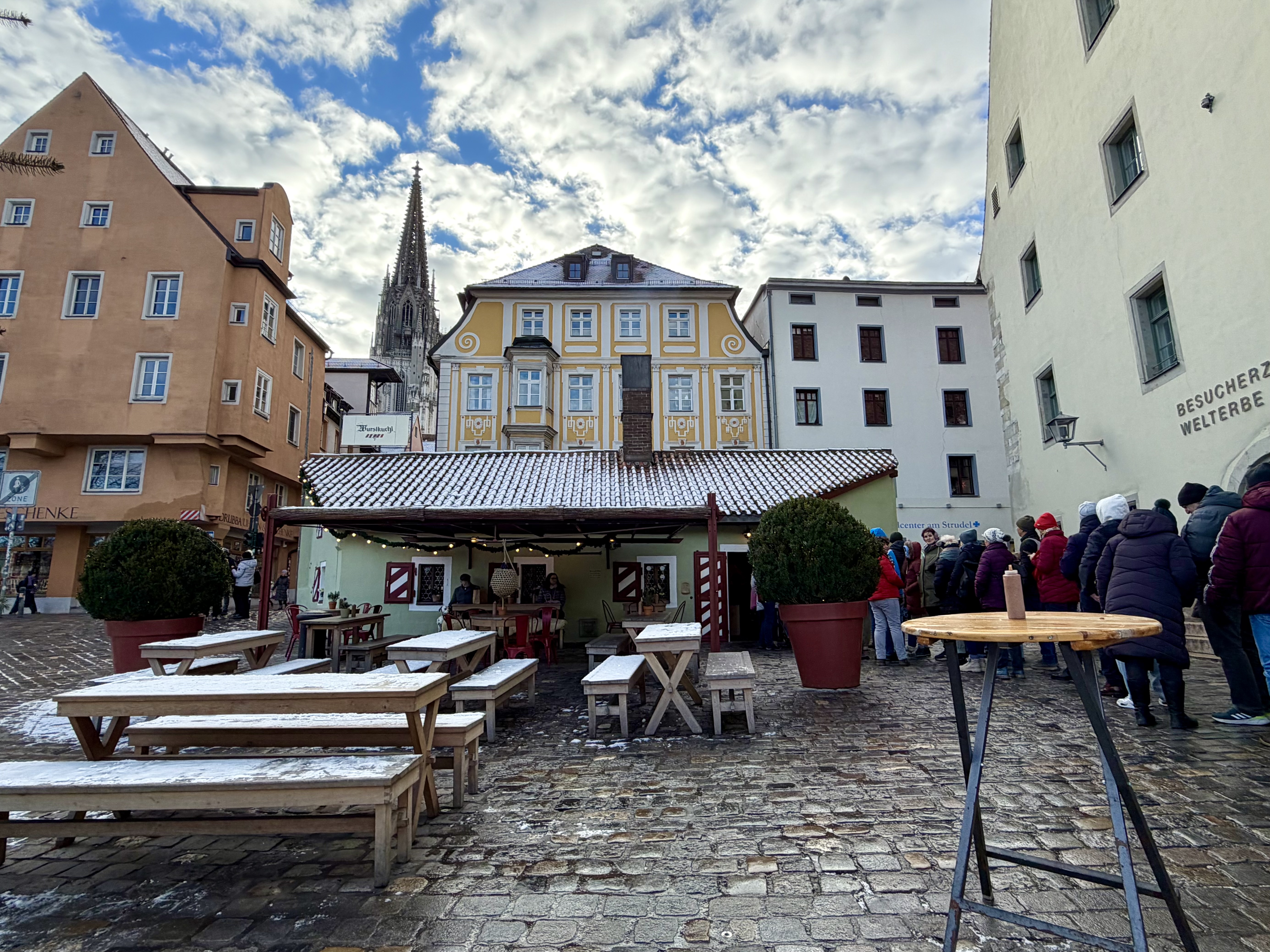
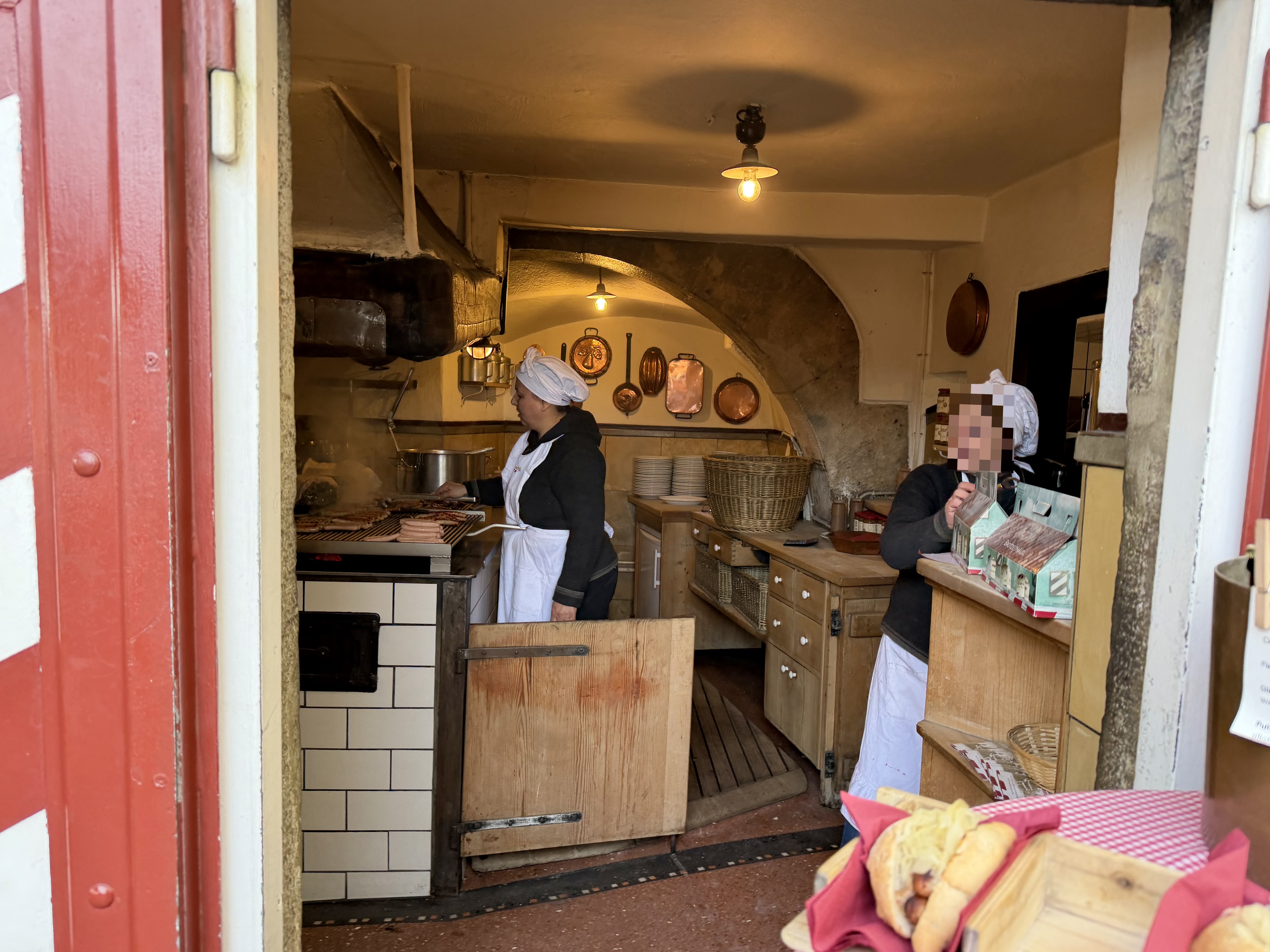
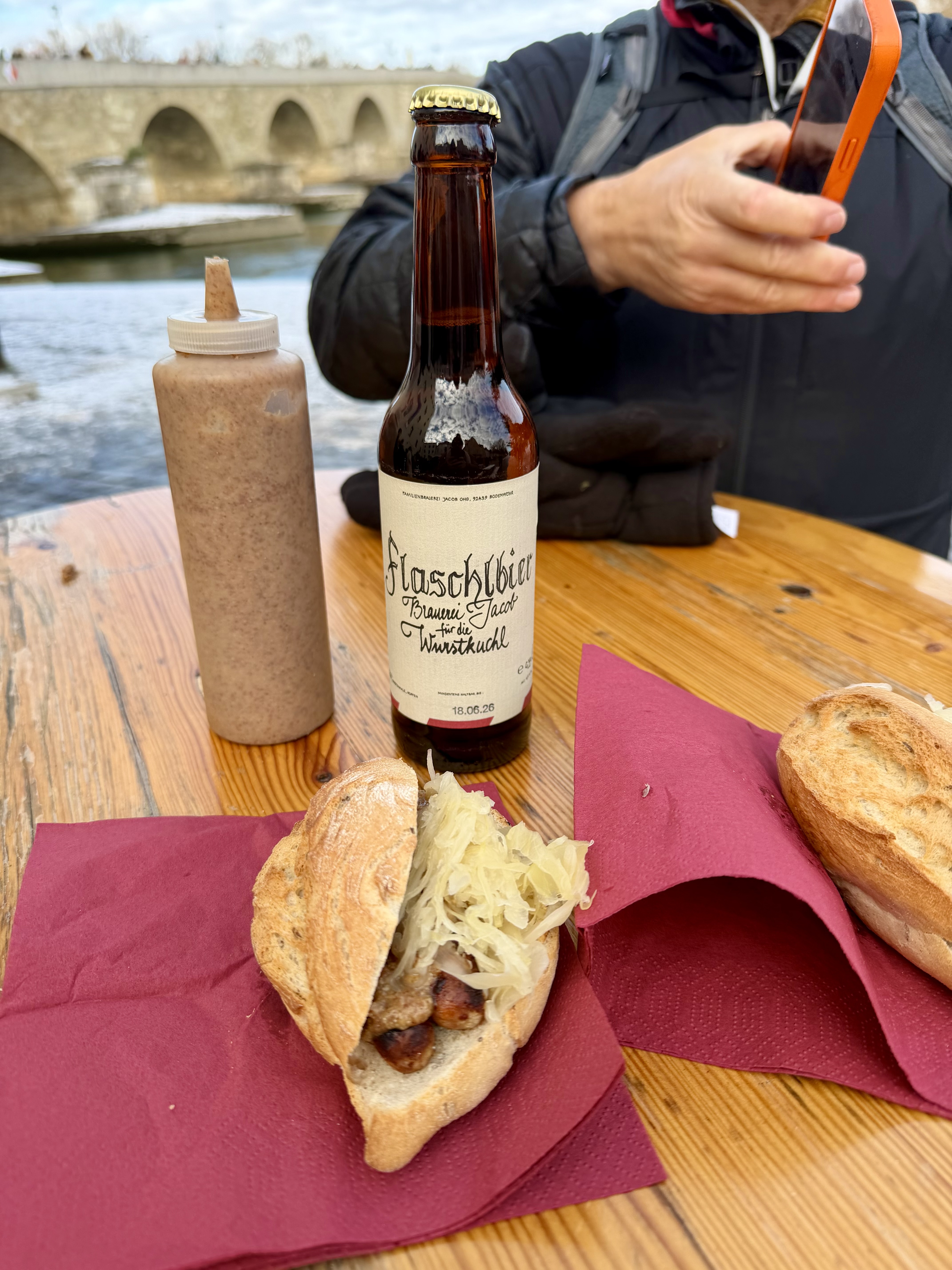
One highlight that is a “must-do” in Regensburg is getting sausage (wurst – pronounced “vurst”) at the Historiche Wurstküchl (Old Sausage Kitchen). It’s the oldest continuously operating restaurant in the world and is a tiny green building leaning up against the city wall right next to the Danube river. The building was a construction office from 1135-1146 during the construction of the Old Stone Bridge. After that it was then used as a restaurant and it served port and construction workers (Regensburg was a busy port city; the construction workers came from the construction of the Cathedral). They use an open charcoal grill, homemade pork sausages, sauerkraut from their own fermentation cellar, and of course senf (mustard) using the historical recipe of Elsa Schricker (https://www.wurstkuchl.de – website in German, I used Google translate). There is a sit-down restaurant but you can go up to the building and order it to takeaway – clearly a popular choice since the line was long (but it moved fast). When you get up there to order you can see right into the kitchen and watch the magic happen. We also got a local beer to try – from Familienbrauerei Jacob (https://brauerei.brauerei-jacob.de/en/).
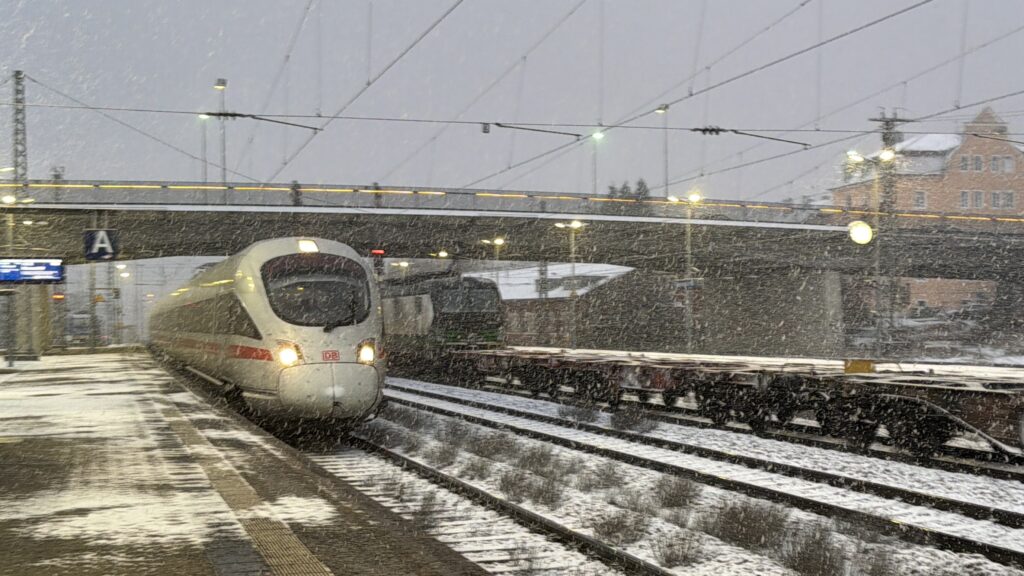
Eventually we had to head back to the train station and get back to Nuremberg. As we were walking back it started really snowing. It was so pretty!
Bamberg and Regensburg ended up being two great day trips from Nuremberg. Cheers!