
After spending Christmas week in Munich, we dropped off our rental car and hopped on a train to Nuremberg. You can take the ICE (high speed) Deutsche Bahn train or you can just take the cheaper regional train. For this trip it was a difference of around 20 minutes with a big difference in price (more than double the price to take the faster train) so we opted for the cheaper regional train. We got a Bayern-Ticket (Bayern = Bavaria) which was €44 (approximately $52) for the 2 of us. The Bayern Regional day ticket is actually good for up to 5 people and you can travel anywhere in Bavaria for the entire day so it can be a great deal if you’re traveling with a family. One nice thing when buying these tickets (either at the ticket machine or on their app/website) is that you plug in where you are going and who is traveling and it will offer you the best option for that route (if you’re buying the ICE train ticket then you’d know in advance that that was more expensive as well). Train travel all over Europe is so convenient, easy, and affordable! It can be harder to get to some out of the way places by train but easy for the larger cities.
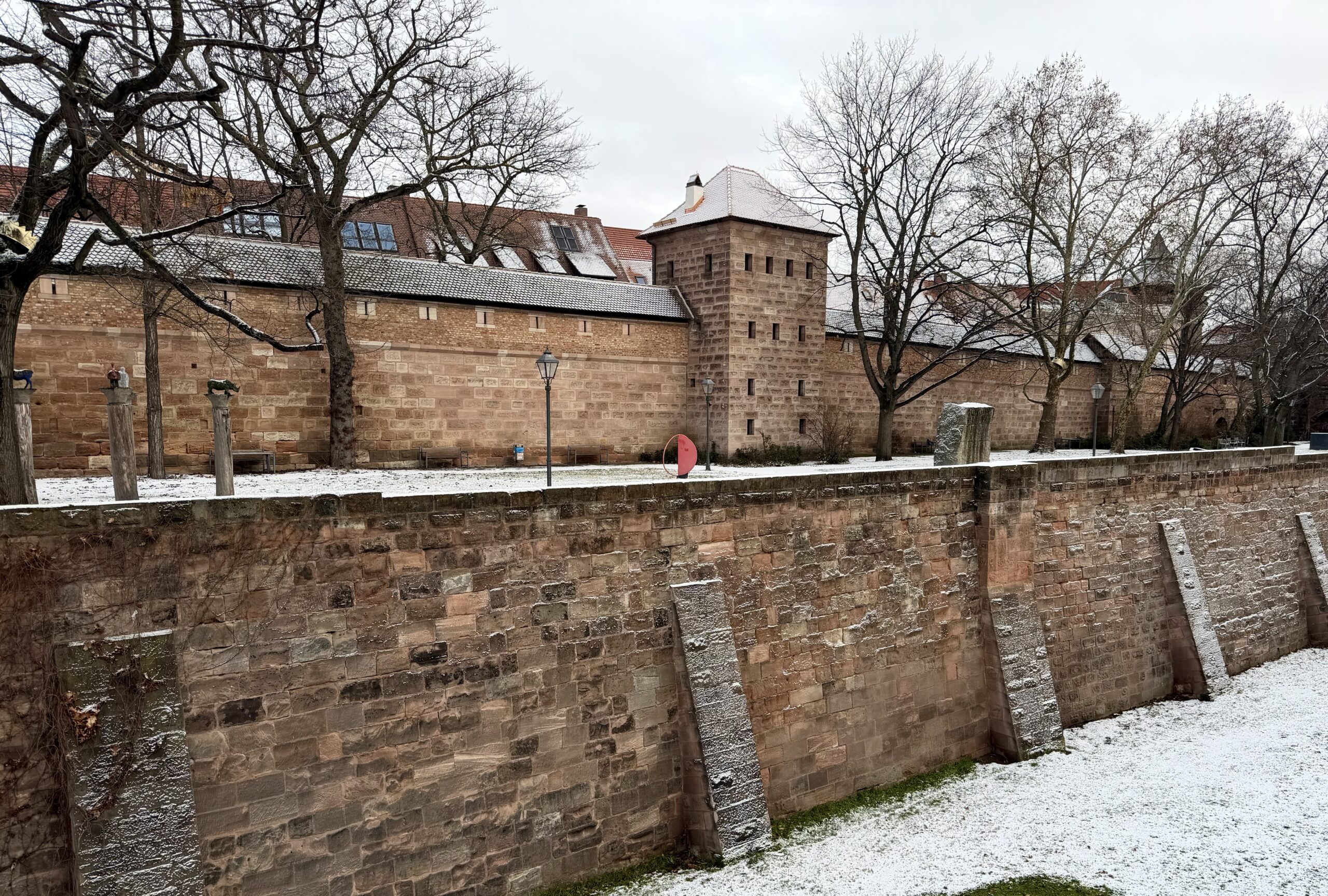
Once we got to Nuremberg, it was a short (12 min) walk to our hotel so we did that instead of taking the UBahn (metro). Dragging a roller bag along the cobblestones isn’t the easiest thing to do but it was a a lot more scenic than the metro would be since we walked along the old city walls to get there. The train station itself is pretty neat-looking too.
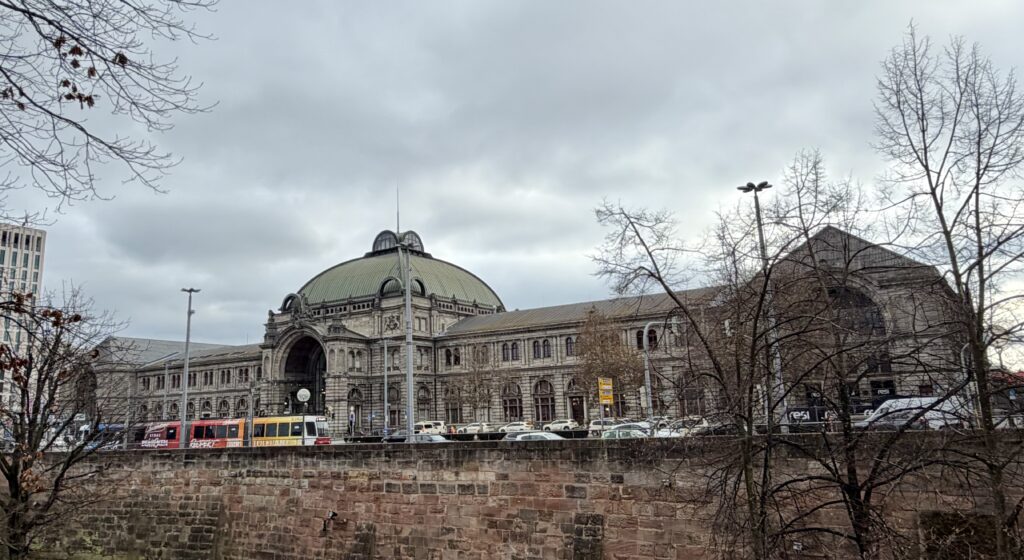
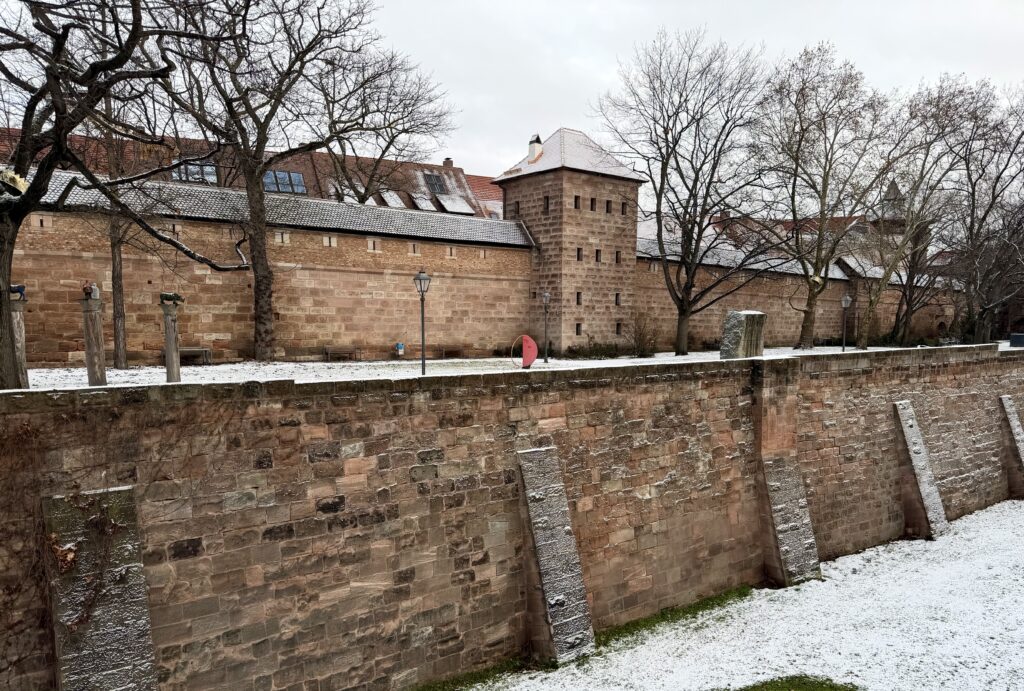
My roller carry-on bag is pretty easy to pull around but the cobblestone streets can be a challenge sometimes – I need some off-road wheels on my suitcase! Even if it’s not hard to pull, it can certainly be loud! Chris went the backpack route which doesn’t have the same issue but can also be more of a pain to carry around when I’m wheeling mine along on smooth surfaces. So it’s a trade-off.
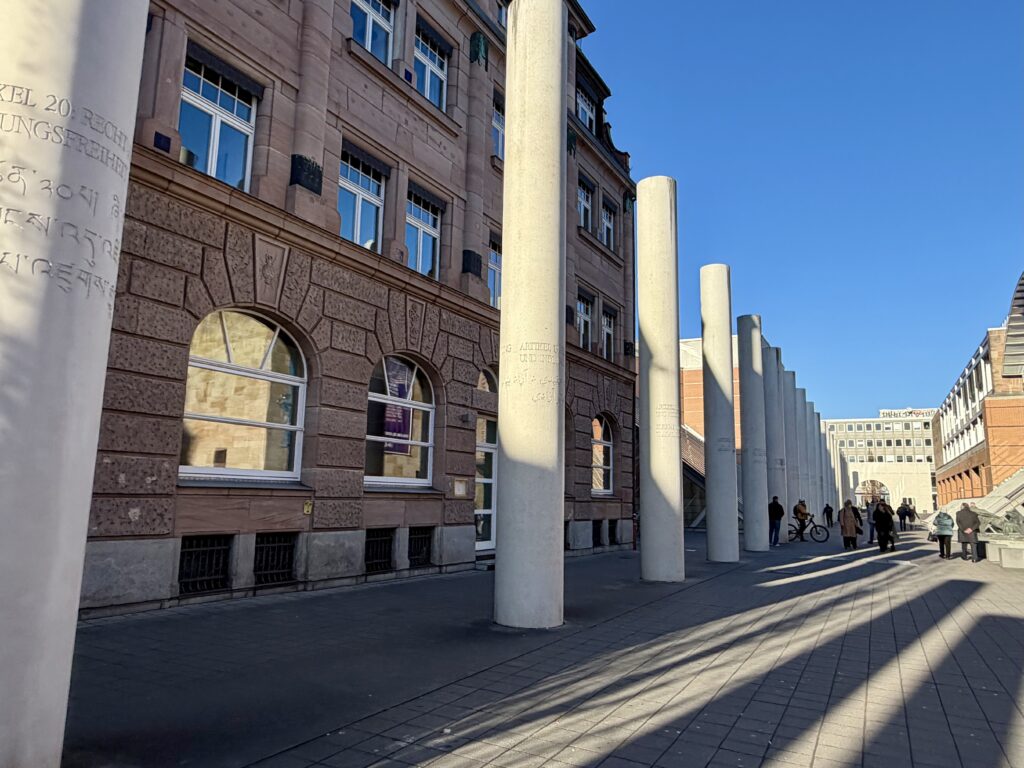
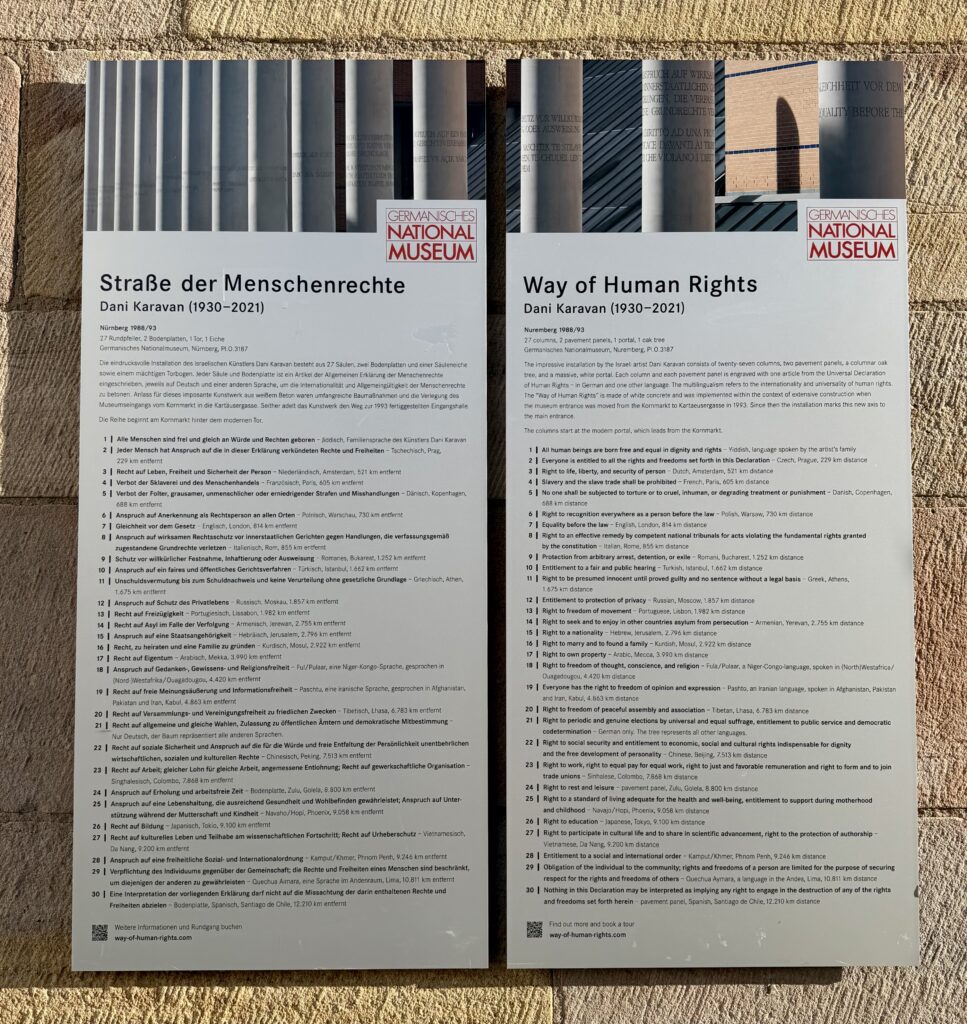
As we got closer to our hotel, we also came across this instillation called the Way of Human Rights. Each column has a specific Human Right listed in a different language (the signs lists all of them – in German and in English).
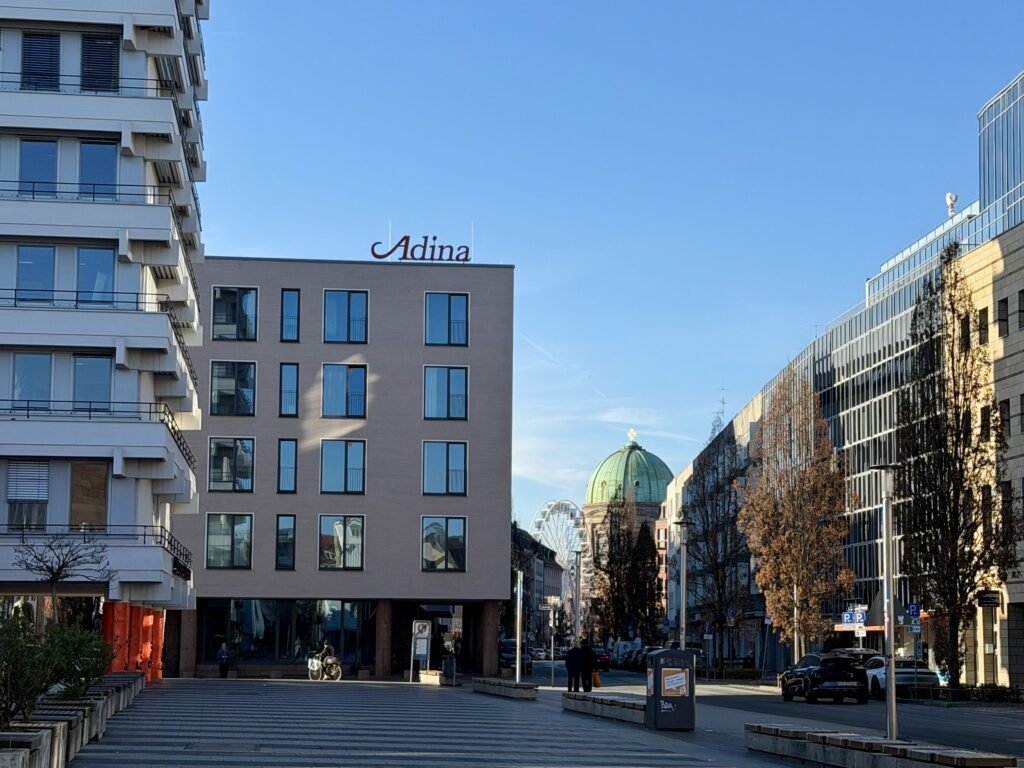
We stayed at a place called Adina Hotel (https://www.adinahotels.com/en/apartments/nuremberg/), which is an aparthotel right in the city center. The rooms have a full kitchen and a combo washing machine/dryer. When traveling this long, these apartment hotels or VRBO/AirBnb have been really important to us so we’re not just in hotel rooms all the time. It allows us to cook meals so we’re not eating out all the time and the washing machine is so helpful since we tried to minimize the clothes we brought. We spent 8 nights in Nuremberg – partly to see Nuremberg itself and partly to use it as a base for a couple of day trips (to Bamberg and Regensburg). Also since we were there over a holiday, we knew a lot of sights would be closed New Year’s Day. You could see the main sights in Nuremberg in 2 full days but they would be busy days – 3 full days would be plenty if you’re not doing day trips. We have been enjoying “slow travel” so if we find something that says you need a certain number of days in a city, then we’ll often add an extra day to make sure we’re not rushing through things.
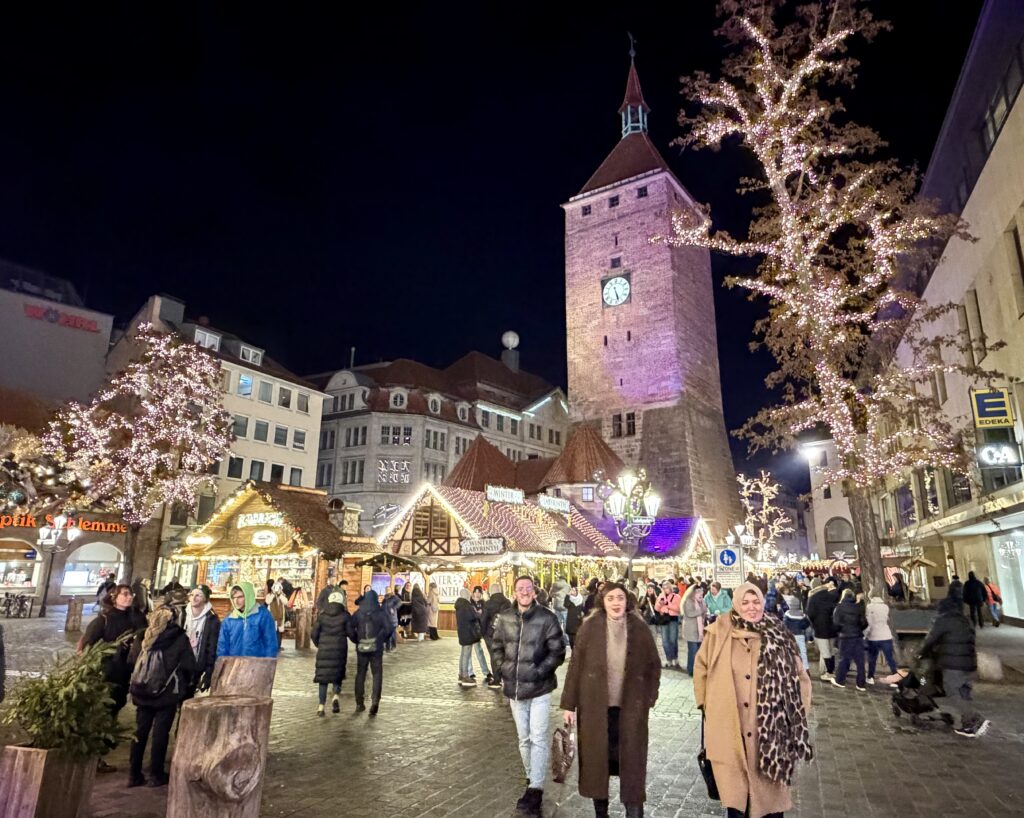
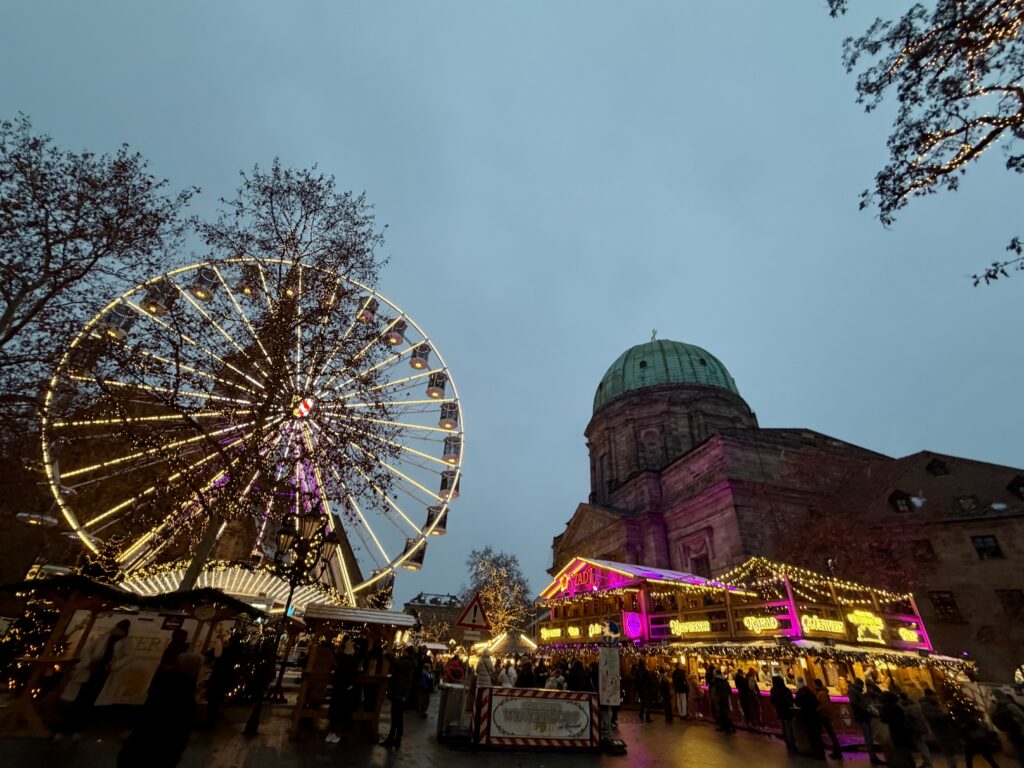
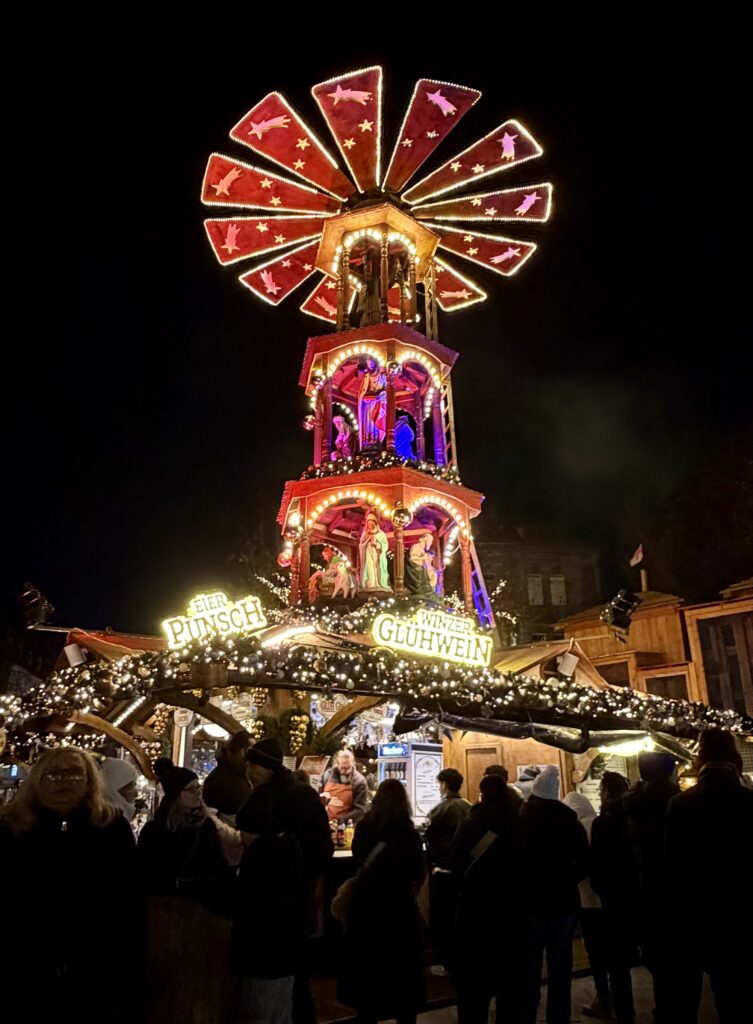
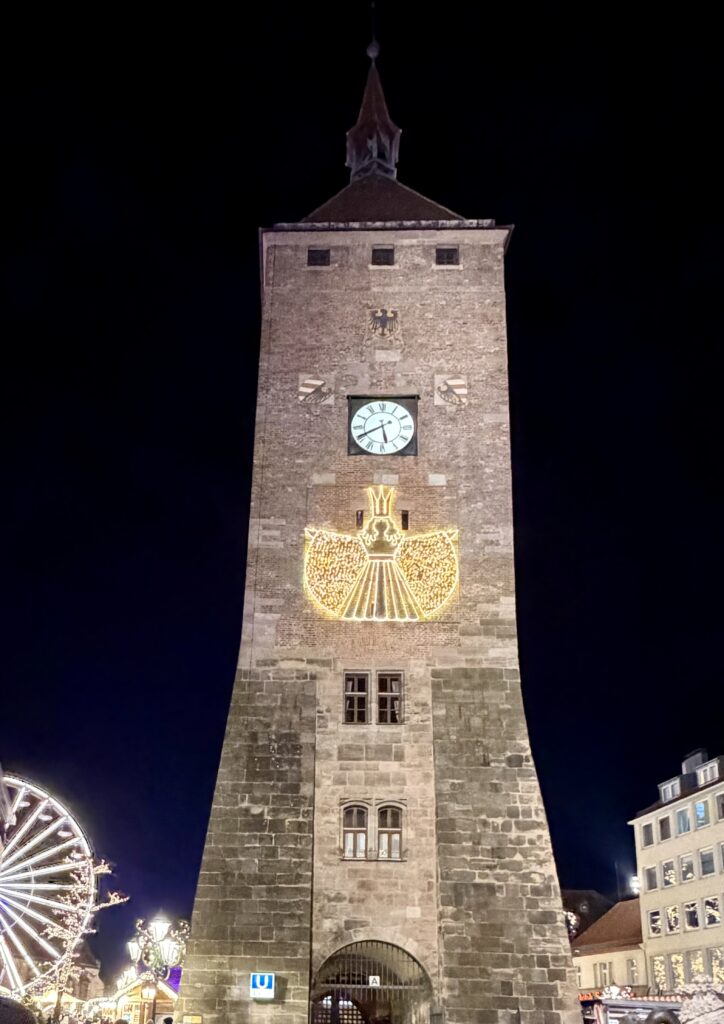
While the Christmas market was over in Nuremberg, they still had a winter wonderland market right down the street from our hotel (the main market is only open through 24 Dec but this winter wonderland market was open through Jan 6). It was still very festive even though Christmas itself had passed.
Imperial Castle
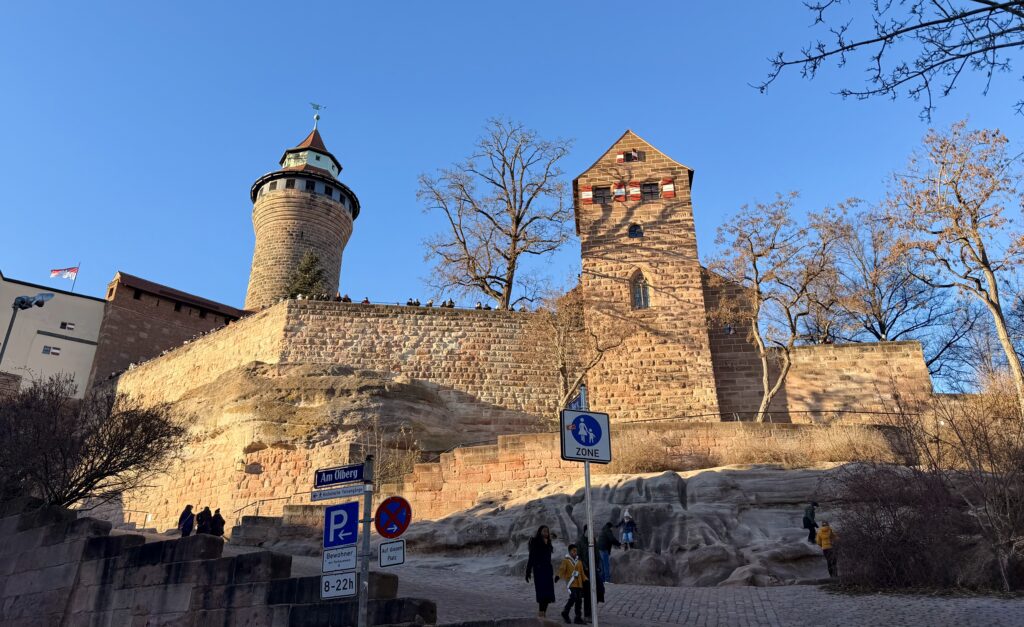
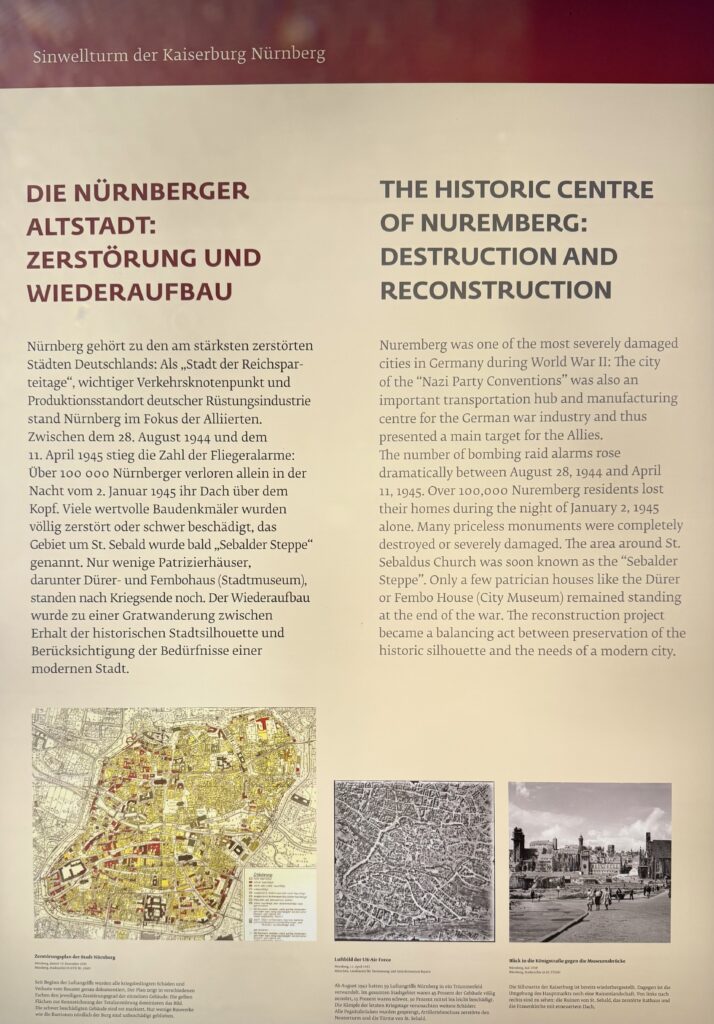
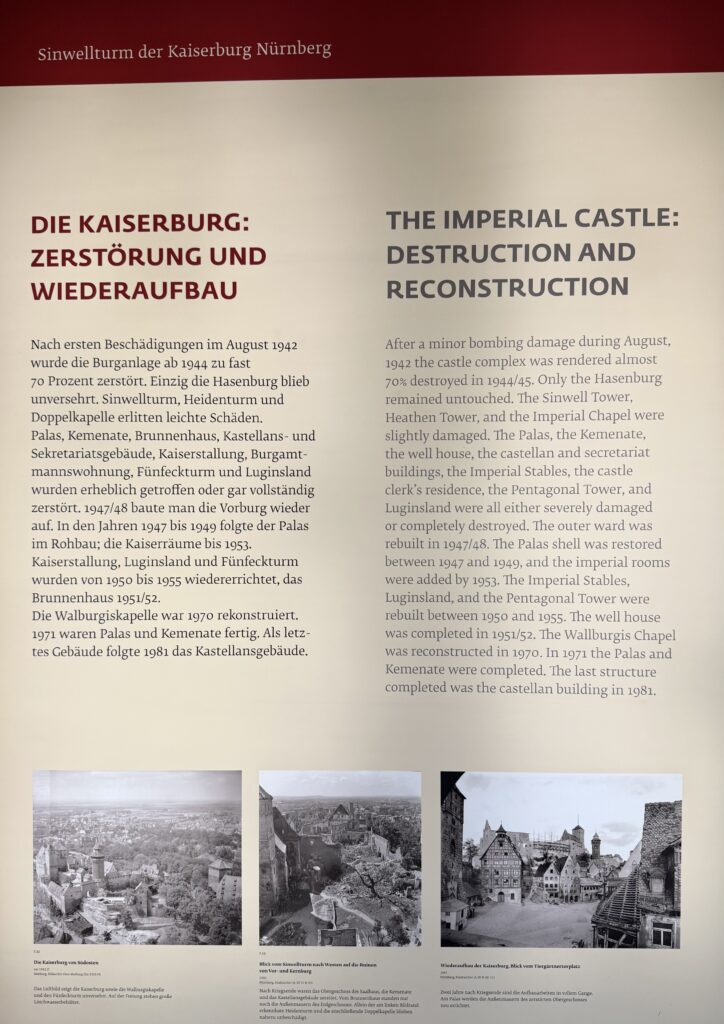
One of the main sites in Nuremberg is the Imperial Castle (https://www.kaiserburg-nuernberg.de/englisch/castle/). The tickets were really reasonable – only €9 per person for the castle and included the Deep Well and the Sinwell Tower. The castle part and the tower are self-guided then the well is a short guided tour. The castle was first mentioned in literature as far back as 1050 so it’s been around a while! The history of the castle is really nicely documented on the link I posted above. It’s been renovated several times over the years but it was largely destroyed by Allied bombing in WW2. I’ll address some of the Nazi history in Nuremberg (such as the Nazi Party Rally Grounds and the Nuremberg Trials museum) in a separate post – I felt like the WW2 history we saw all over Europe deserved it’s own post. Because of it’s importance to the Nazi Party (Nuremberg was the city of the “Nazi Party Conventions”, an important transportation hub, and a manufacturing center for the German war industry), Nuremberg was the 2nd most bombed city in Germany (behind Dresden).
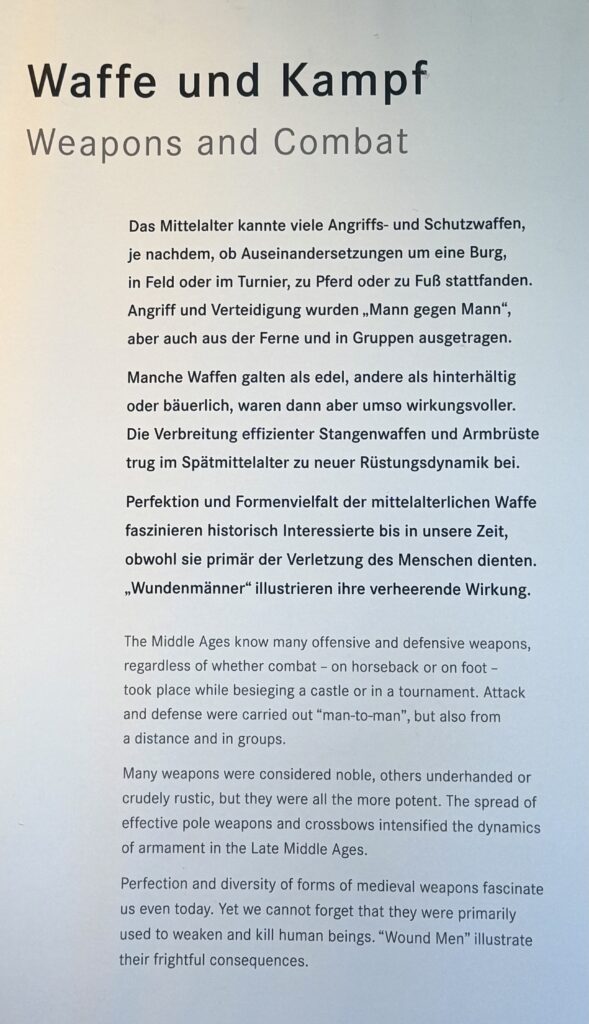
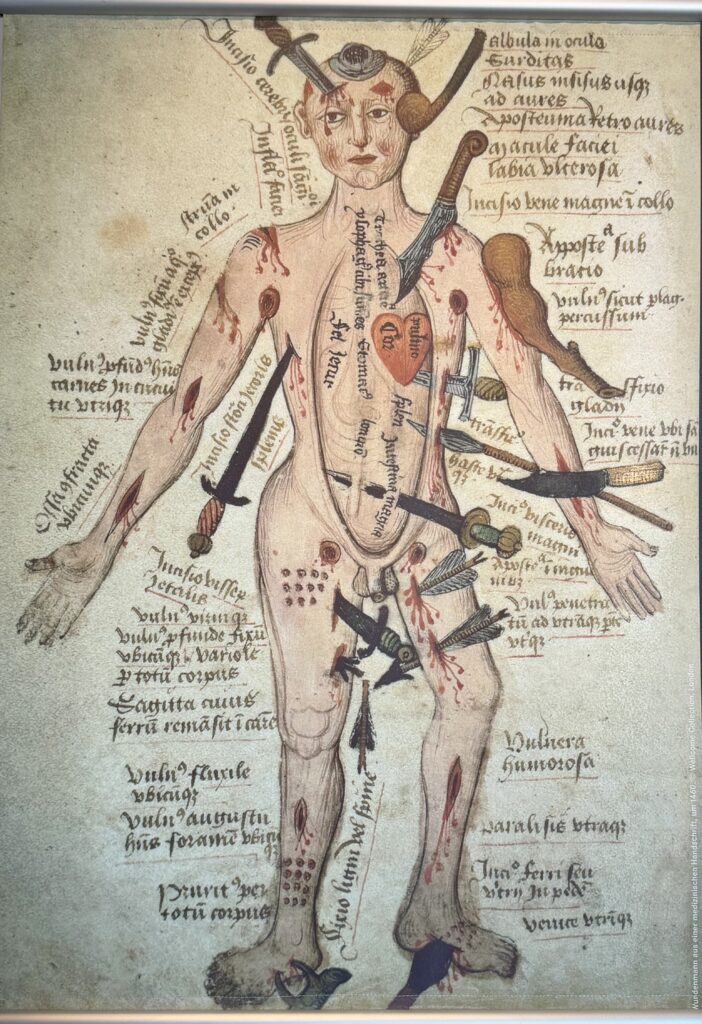
Among the many exhibits inside the castle was one on weapons. My favorite part of this was the “Wound Men” – it basically showed them how to best wound or kill their opponent. I find it pretty fascinating that they knew this anatomy so well even back then.
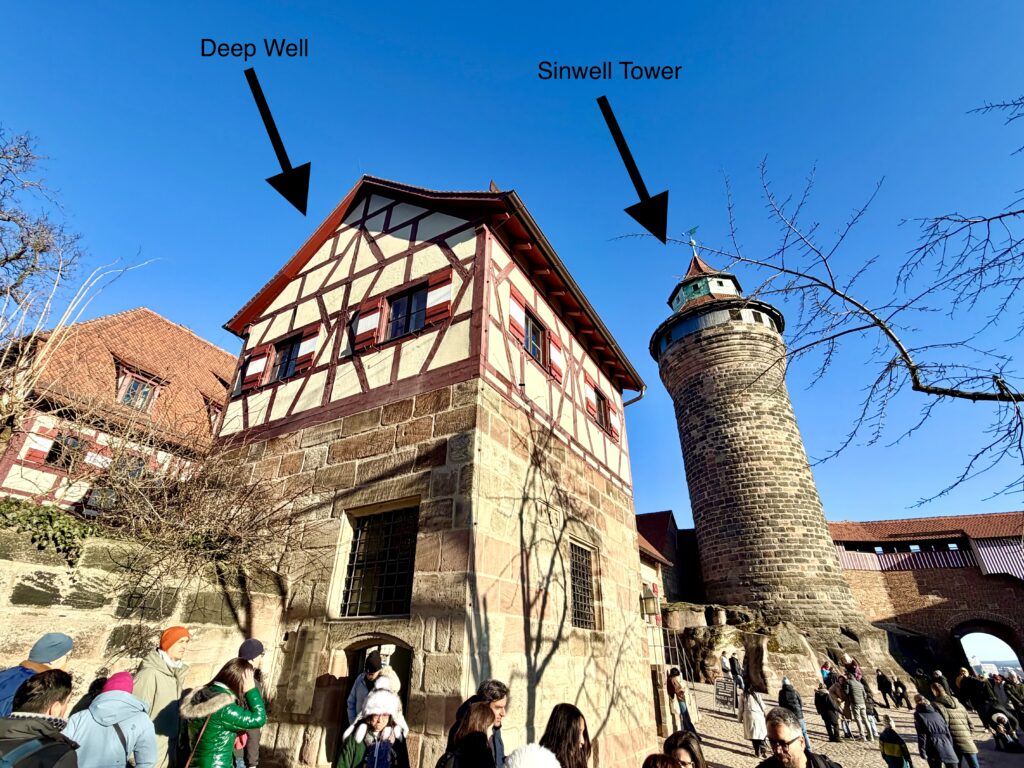
The Deep Well dates back to before the 14th century. A structure was built over it in the 16th century to protect the water source (from debris falling in). It’s 50 meters (160 feet) deep. I wish we had our camera ready because the guide poured some water down the well so you can hear how long it takes to hit the bottom – but I found a good video of it online: https://youtu.be/rwFfo61fVSY and also one from Rick Steves: https://www.tiktok.com/@ricksteveseurope/video/7528090292071730487.
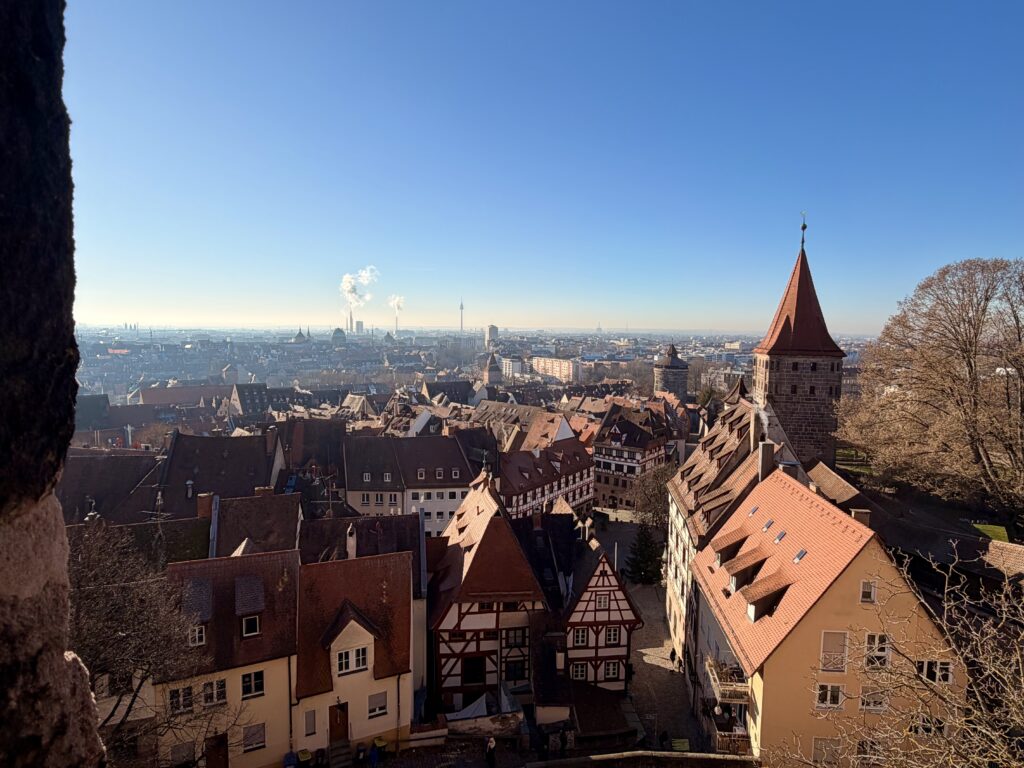
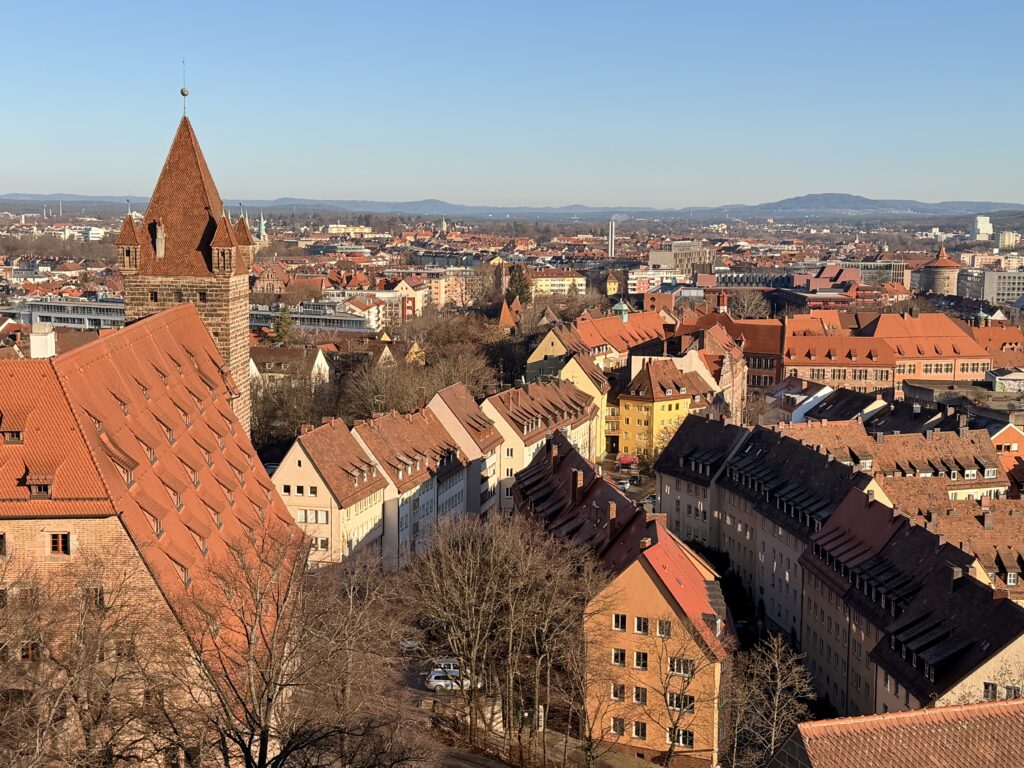
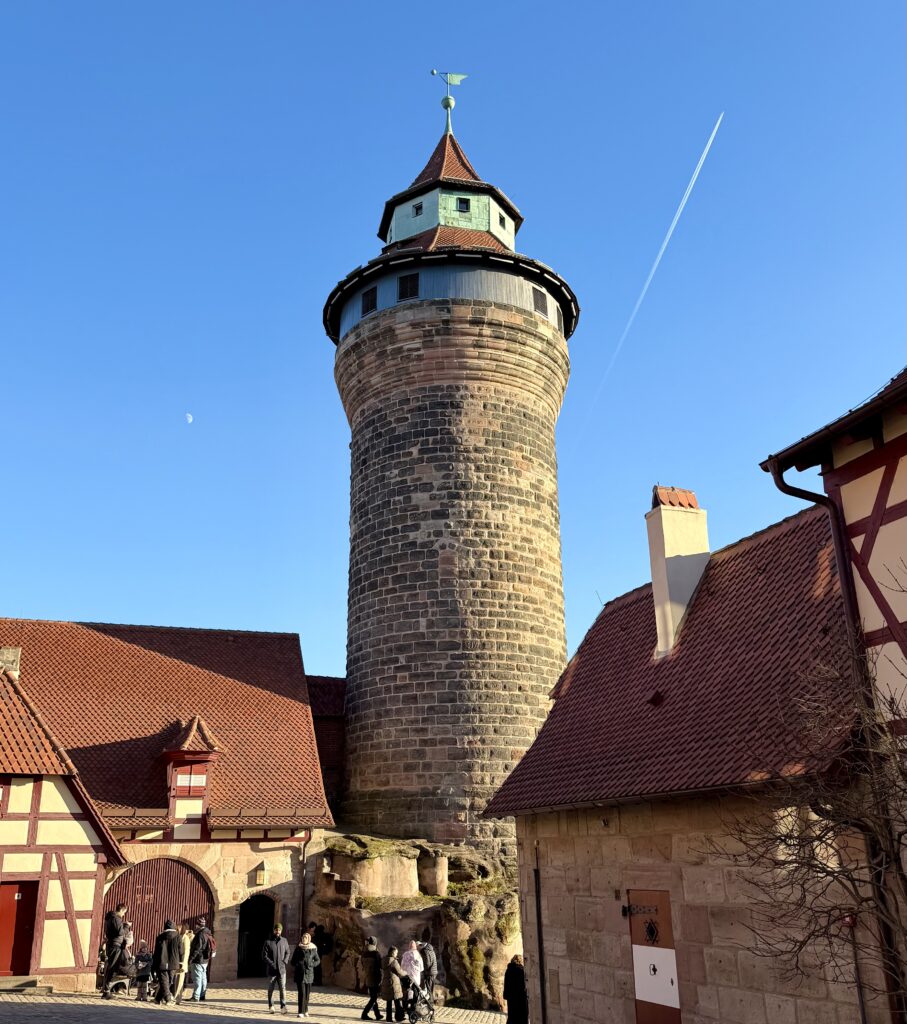
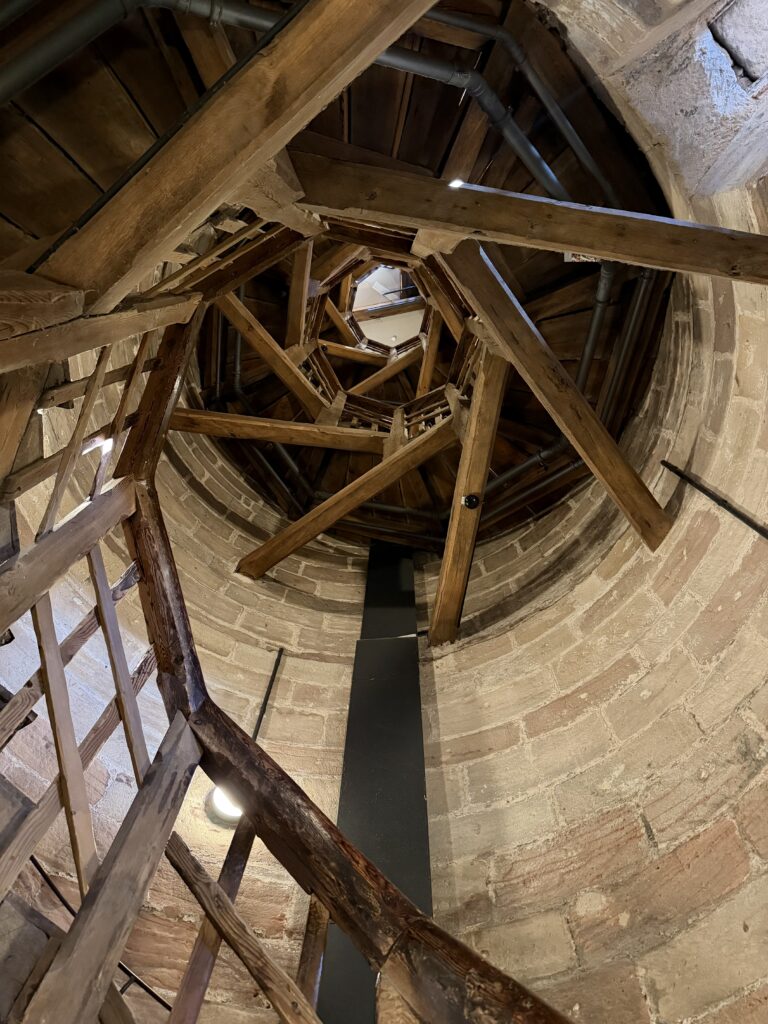
The Sinwell Tower was pretty cool too. It was built in the late 13th century and is part of the oldest section of the castle complex that is still intact. We climbed the 113 steps to the top and were rewarded with amazing views! They also had a bunch of before and after photos for each view showing pre-WW2 and after WW2 bombing, plus some info about the reconstruction of both the castle and the city.
The castle was definitely a “must-see” sight but there were lots of other things to see around Nuremberg too. One thing to consider when you are traveling to a city is whether it’s worth getting a particular city card. There is one for Nuremberg called the Nuremberg Card (https://tourismus.nuernberg.de/en/booking/nuernberg-card-city-card/#/). It’s €38 for 48 hours and includes entry into a bunch of museums plus public transit. So it can be worth it, especially if you are only there for 2 days. For us it didn’t make much sense since we only used public transit around town on one of the days (for the Rally Grounds/Trials museum) and we didn’t want to cram the sights on the card into 2 consecutive days. But if you are planning a trip there, it’s worth looking at what it covers and doing some math to see if it will save you money. You can price out public transit here: https://www.vgn.de/en/tickets/all-day-ticket-plus/. We were able to get a single day pass for €15 that covered the 2 of us for the whole day (that single ticket actually covers up to 6 people, max 2 adults – so it can be a really great deal for a family). For all of the other days we just walked (either around town or to the train station for our day trips).
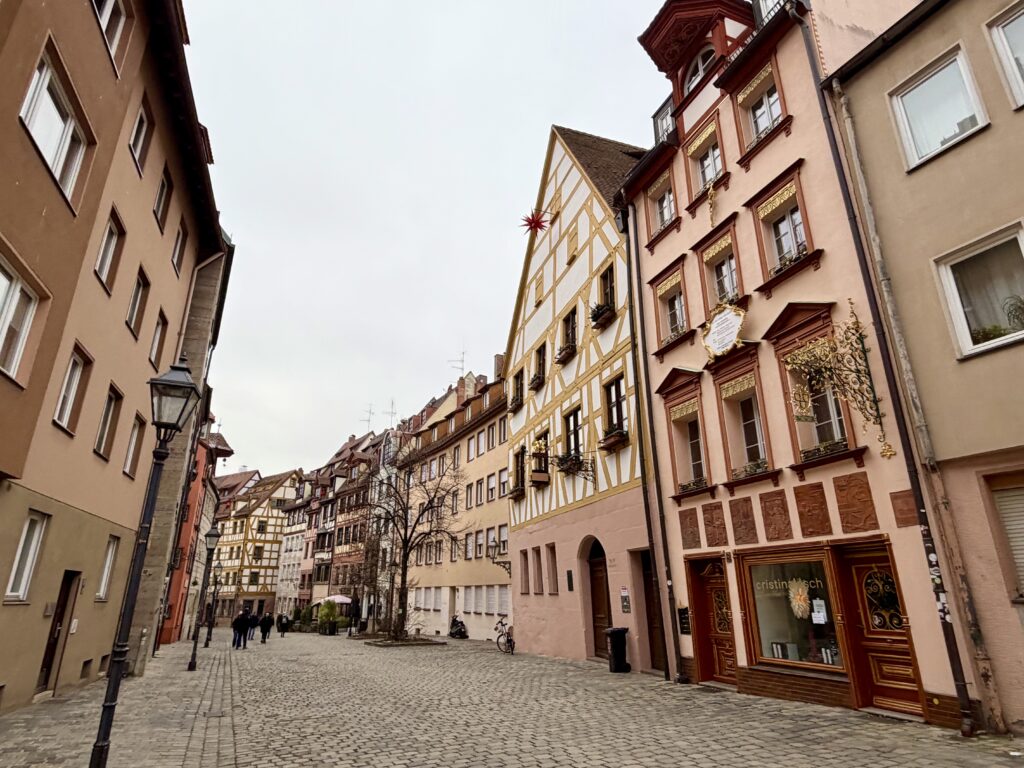
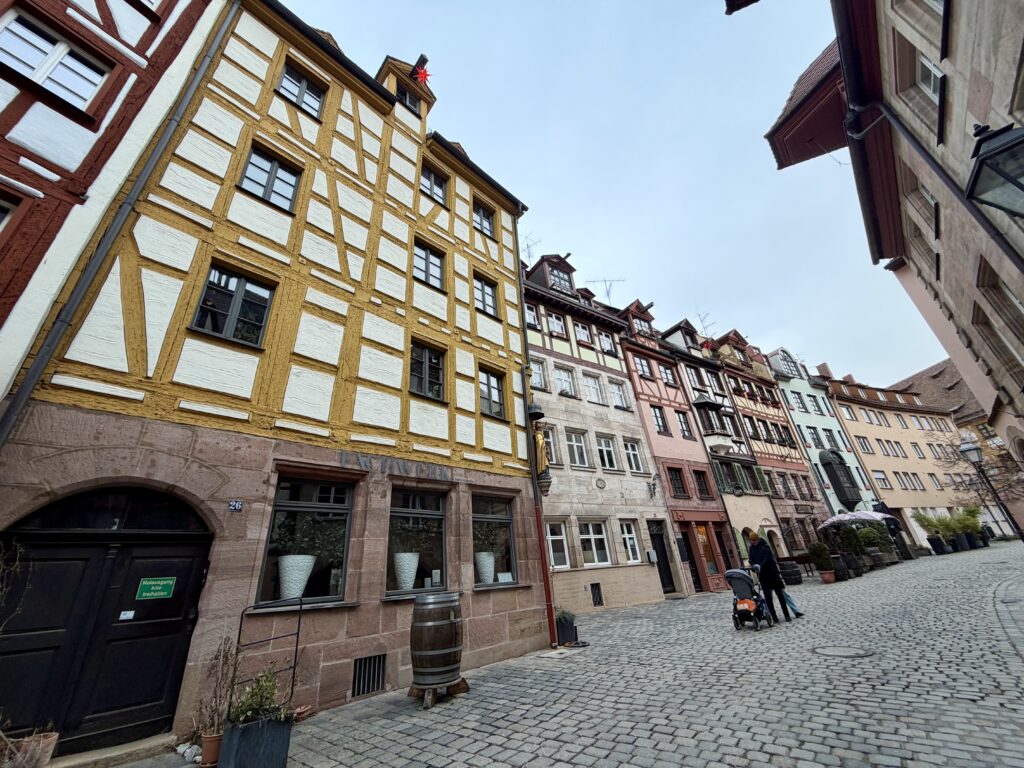
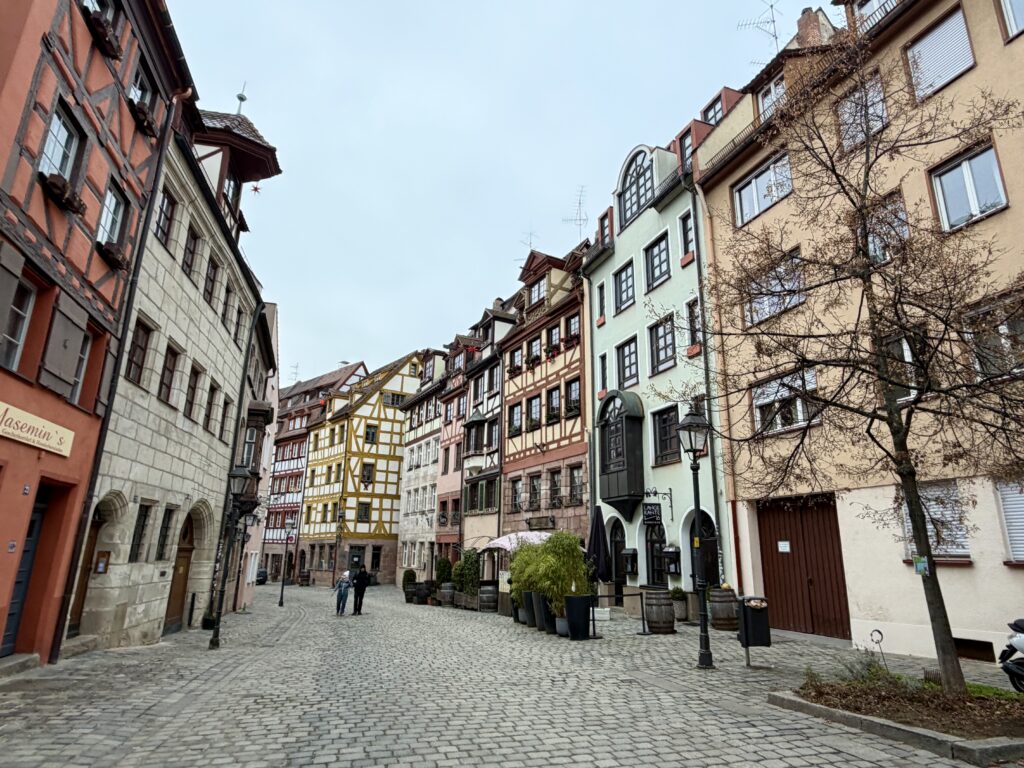
Weissergerberstrasse (Tanner’s Lane)
Weissergerberstrasse (Tanner’s Lane) is a well-preserved street of artisan houses – it’s full of half-timbered houses and was definitely worth a walk down it. (https://tourismus.nuernberg.de/en/discover/places-of-interest/location/weissgerbergasse/)
Hauptmarkt & Schöner Brunnen (Beautiful Fountain)
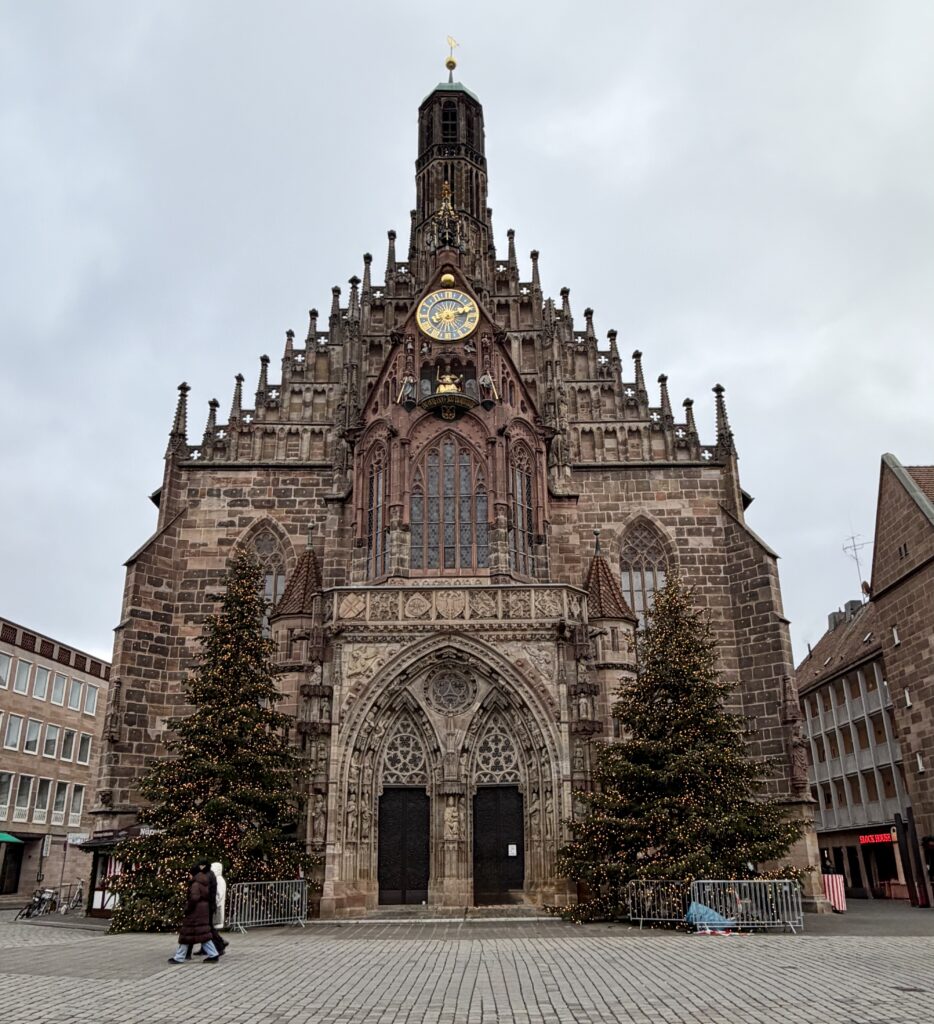
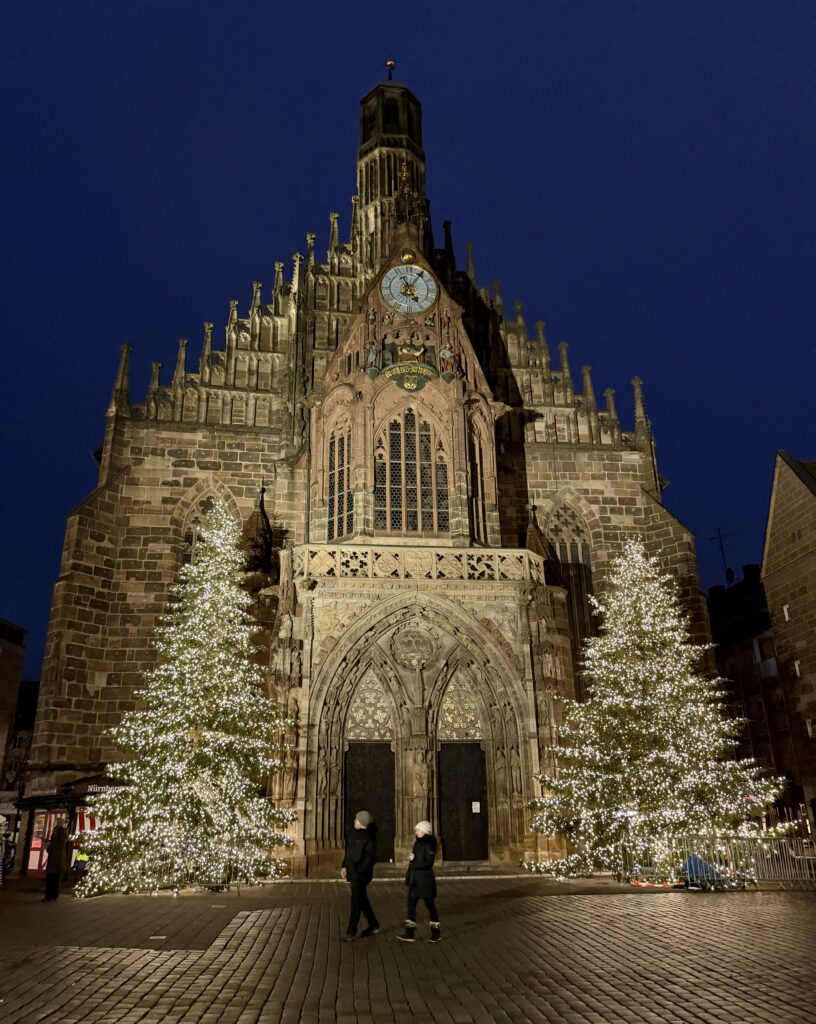
The Hauptmarkt is a huge market square right in front of the Frauenkirche (Church of Our Lady) – it’s also where the main Christmas Market is. The Frauenkirche was built in the 1300s (it isn’t even the oldest church in Nuremberg! that honor goes to St Sebald’s, built in 1215). But more on the churches later.
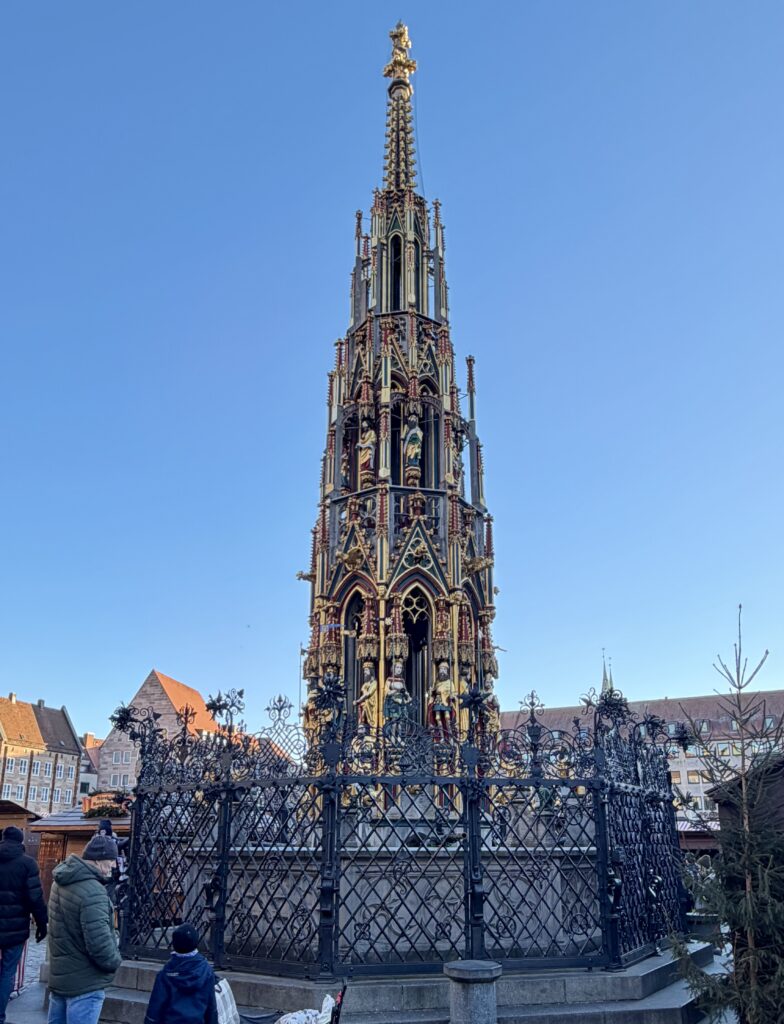
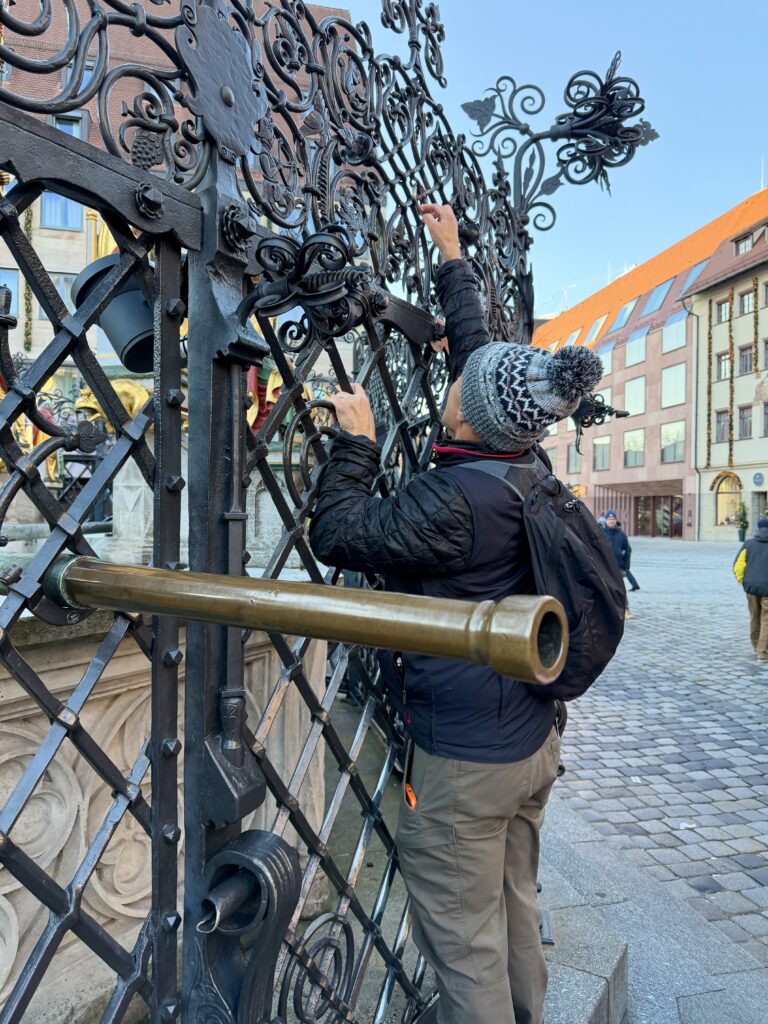
In the main square there is the Schöner Brunnen (Beautiful Fountain). It was built in the 14th century and resembles a Gothic church spire. In WW2, it was dismantled and hidden to protect it. The statue in the square now is a replica – the original is in the Germanisches Nationalmuseum (German National Museum) in Nuremberg (https://www.nuremberg.museum/projects/show/549-beautiful-fountain). There is a golden ring in the fence surrounding it that you’re supposed to turn 3 times and make a wish. And there’s also a less conspicuous (and poorly kept “secret”) black ring on the other side – I couldn’t reach that one but Chris could.
Albrecht Dürer’s House and Tiergärtnerplatz
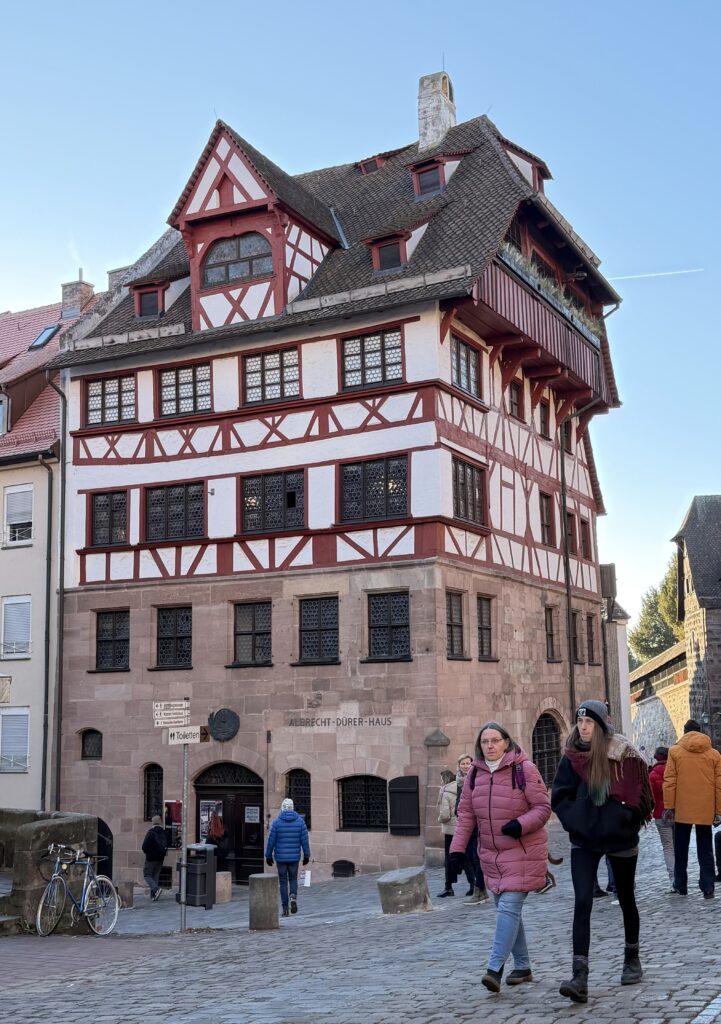
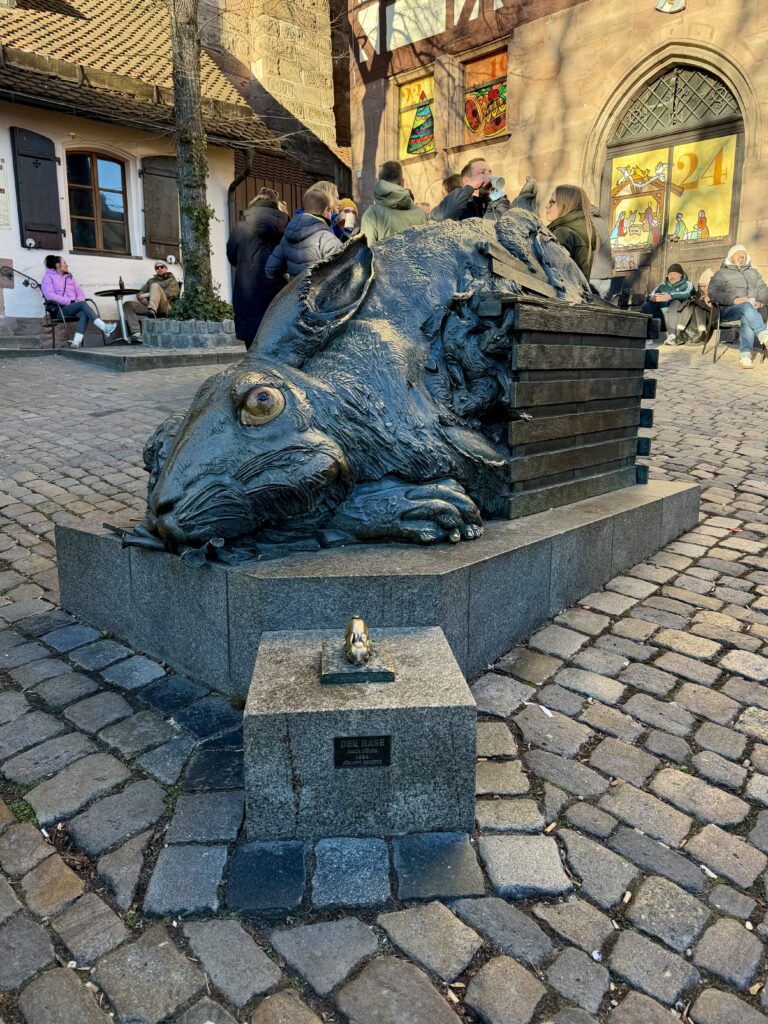
Albrecht Dürer was a famous German artist (from Nuremberg) from the late 1400-early 1500s. He lived in this house for the last 20 years of his life and it’s now a museum. We didn’t go in the museum but it is on the Nuremberg Card if you are visiting Nuremberg and want to go to this museum (https://museums.nuernberg.de/albrecht-duerer-house). One of his famous paintings was called Young Hare, so there is also a rather weird statue of a hare in the Tiergärtnerplatz (the square where the museum is). The statue doesn’t resemble the painting though – other than the fact that they both have a hare in them (https://quartiere-nuernberg.de/en/quartiere/quartier-burgviertel/kurioses/the-hare-sculpture).
Historic Art Bunker / Historischer Kunstbunker Tour
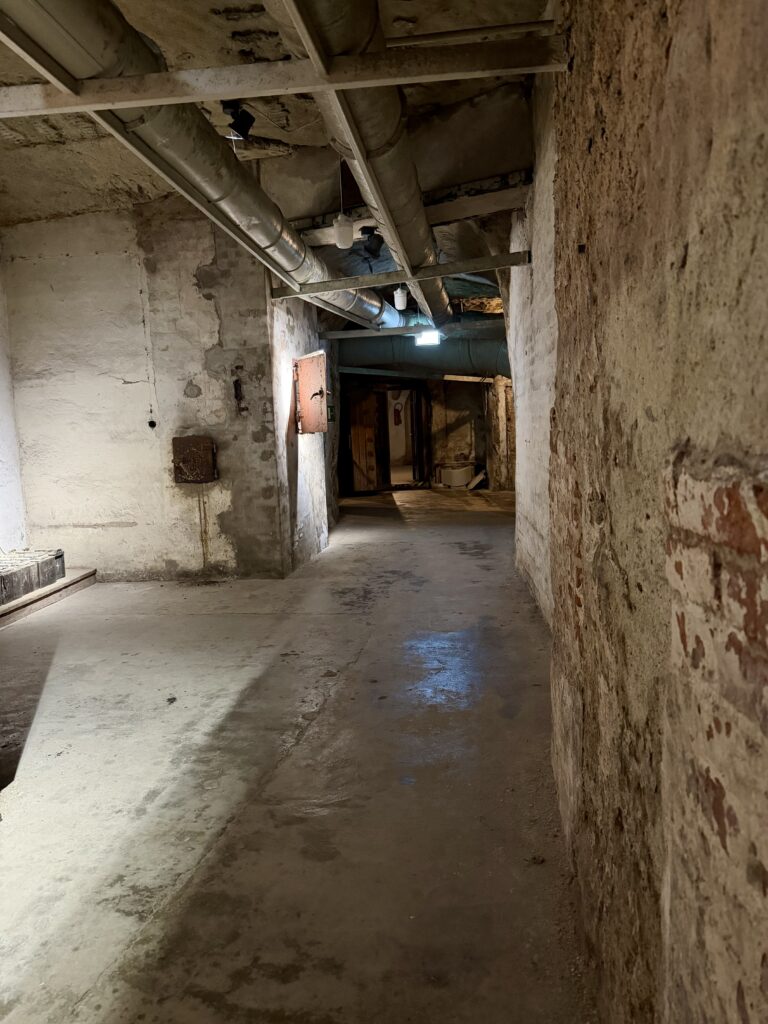
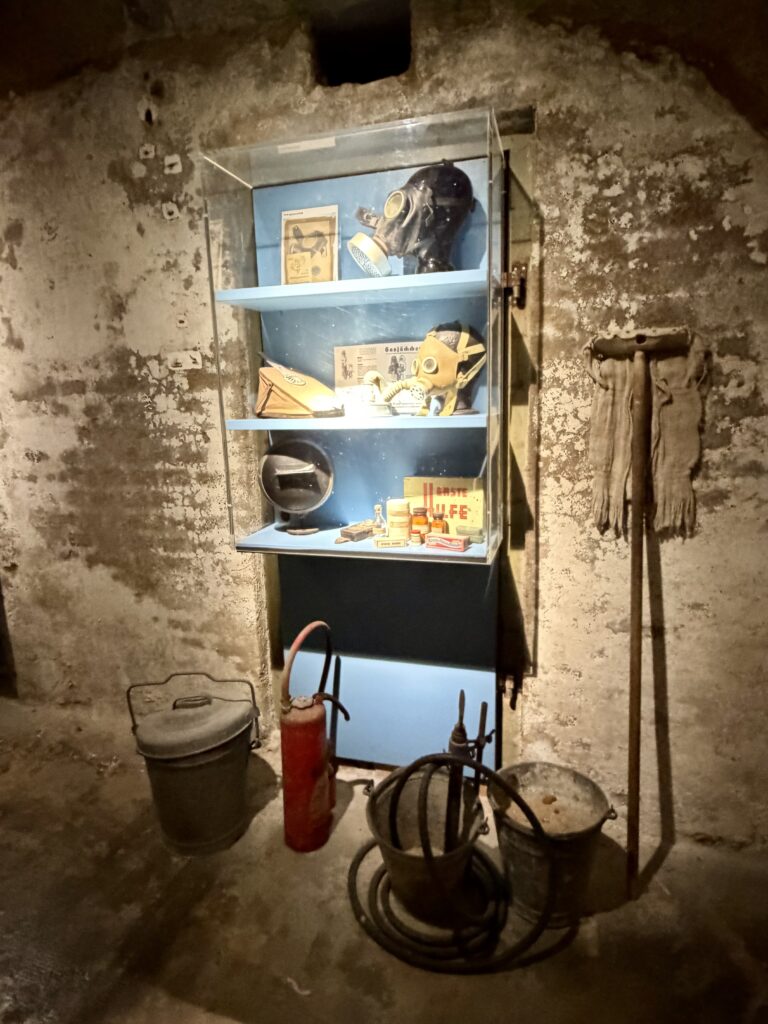
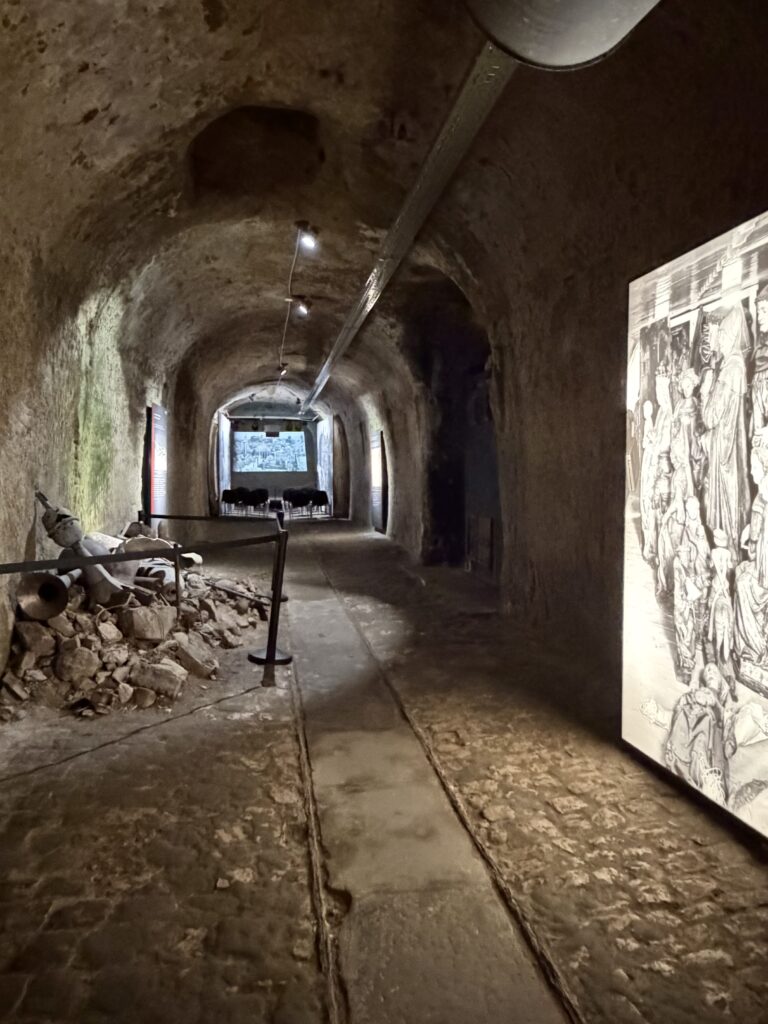
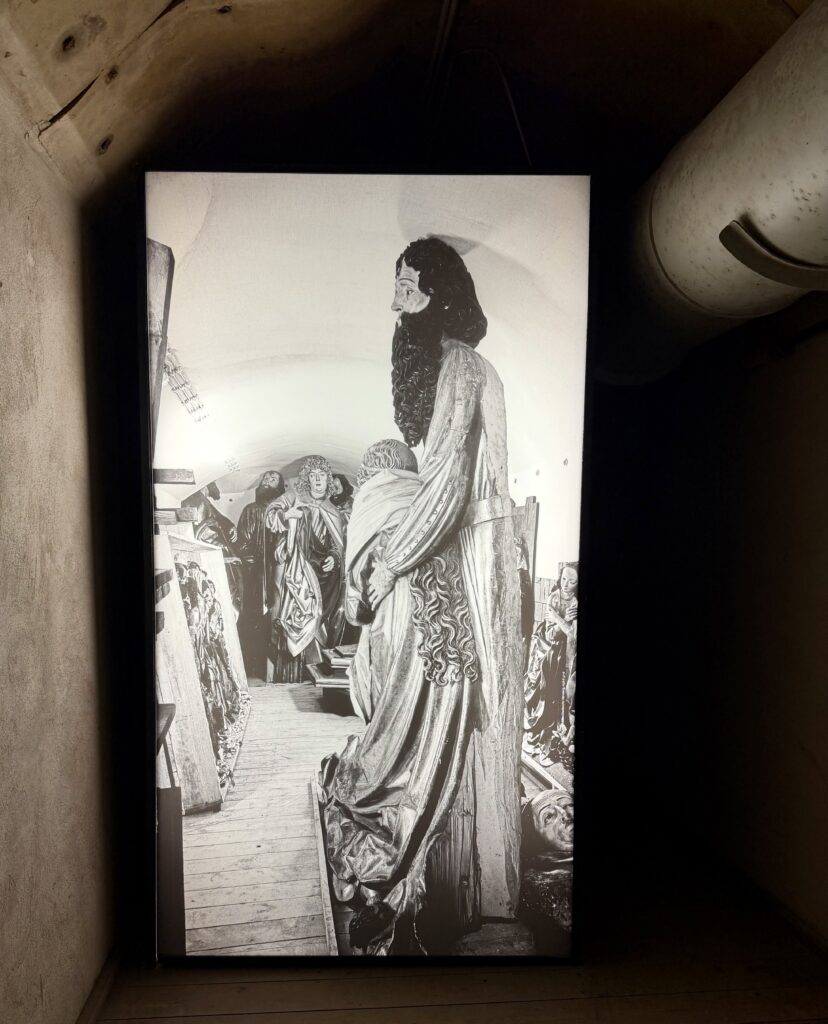
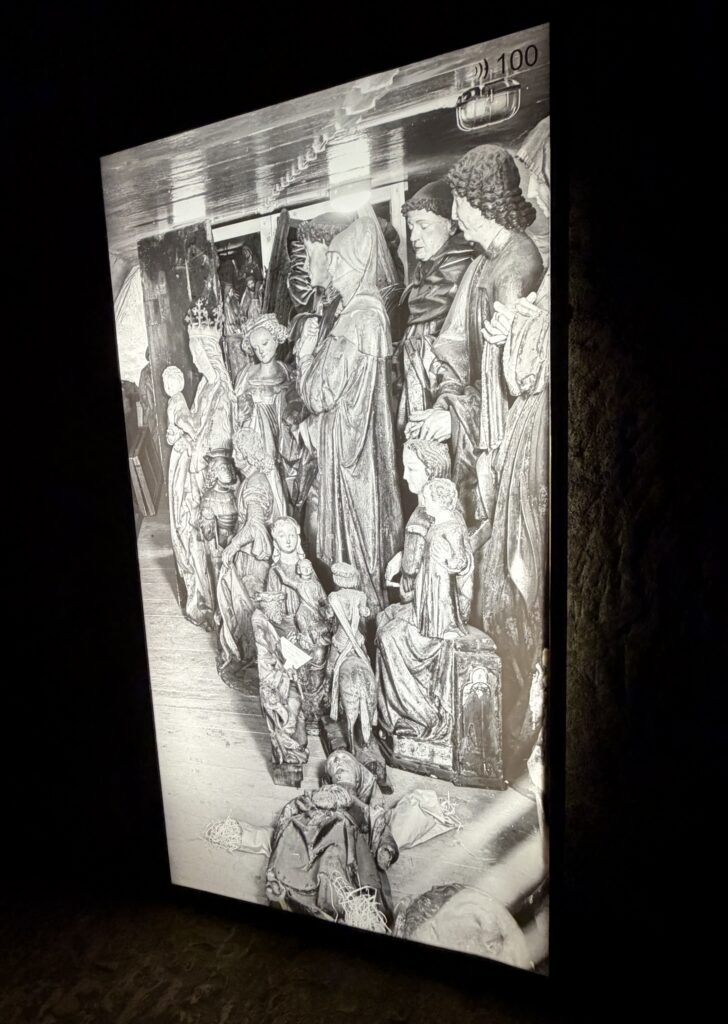
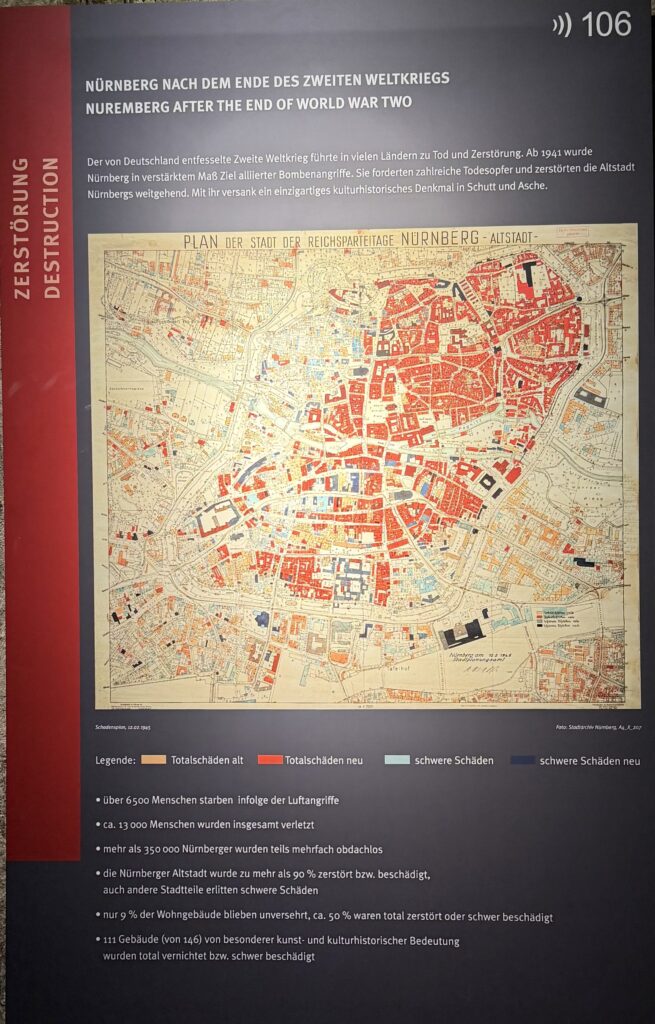
Right aside of that square is the Historic Art Bunker / Historischer Kunstbunker Tour. We decided to do a tour of this (https://museums.nuernberg.de/world-war-art-bunker/visitor-services/guided-tours). You can only do guided tours and I mistakenly booked us for a tour in German (oops! chalk it up to travel adventures) – they do have English tours but I misread the website. The guide gave us a QR code for an English audioguide that worked about half the time (it relied on either a cell signal – which was weak in the tunnel – or wifi, which also didn’t work great as we got deeper into the tunnel). But it was still cool to see – and I’m sure even better if you book the right tour! There are a series of tunnels under the Imperial Castle from the Middle Ages that were originally dug to store beer. These tunnels were also used as air raid shelters during WW2. And the Nazis stored a bunch of art and artifacts in these tunnels to protect them from being destroyed in bombing during WW2. Of course this was only for artworks they felt were worth saving and much of it was stolen by the Nazis. The museum also showed some of the reconstruction of Nuremberg – 90% of the Old Town was damaged or destroyed during Allied bombing raids during WW2. The map below is in German but basically the red and yellow areas were totally destroyed and the light blue and dark blue were severely damaged.
Handwerkerhof
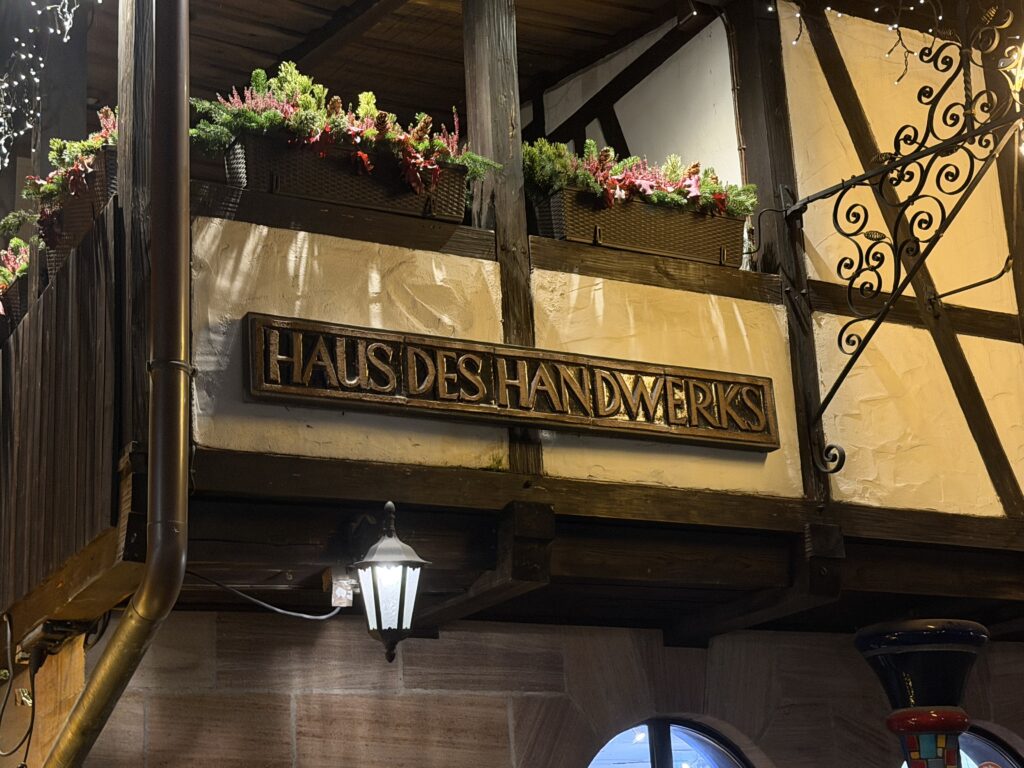
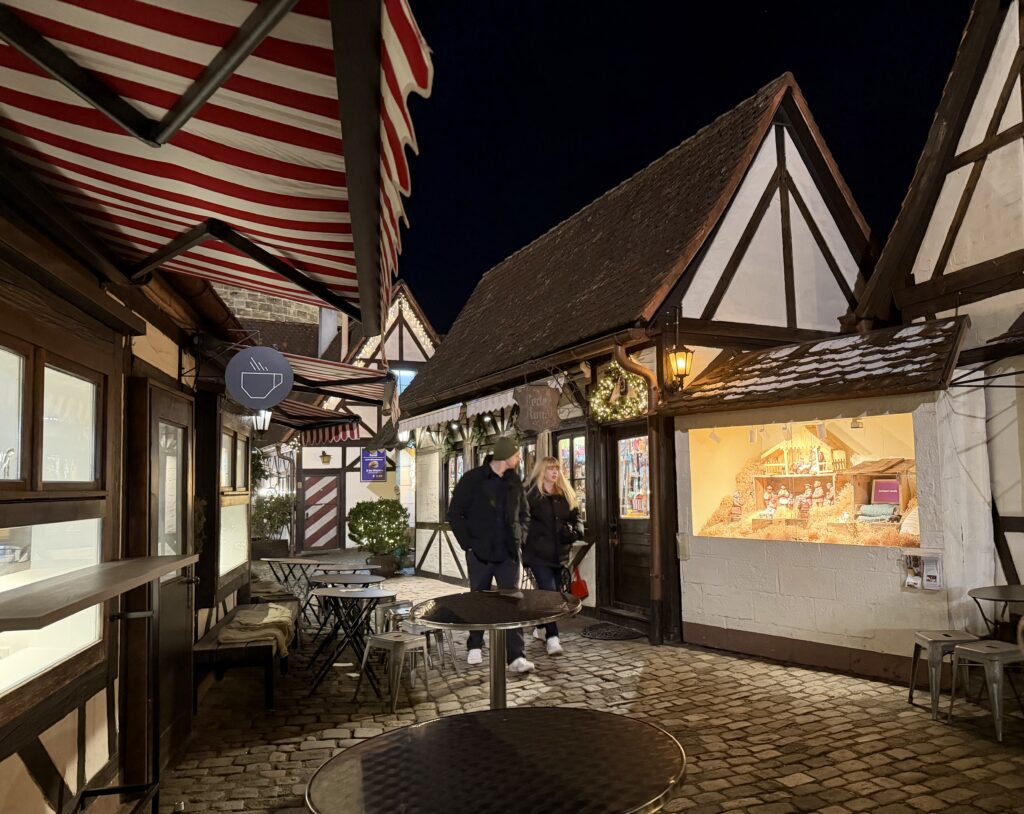
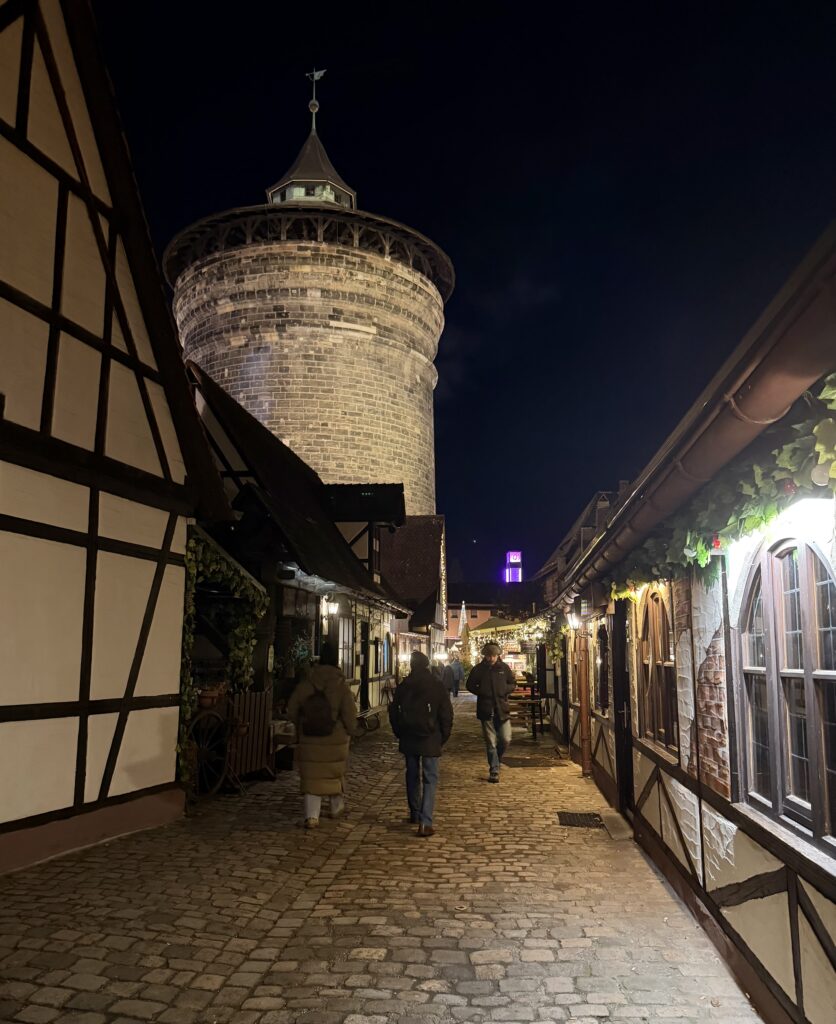
The Handwerkerhof is a “medieval” street (opened in 1971, hence the quotes) of cute shops and restaurants that’s worth a walk through. It’s just inside the old city walls right by the train station so we stopped through on our way back into town after one of our day trips. (https://www.nuernberg.de/internet/handwerkerhof_e/)
Churches
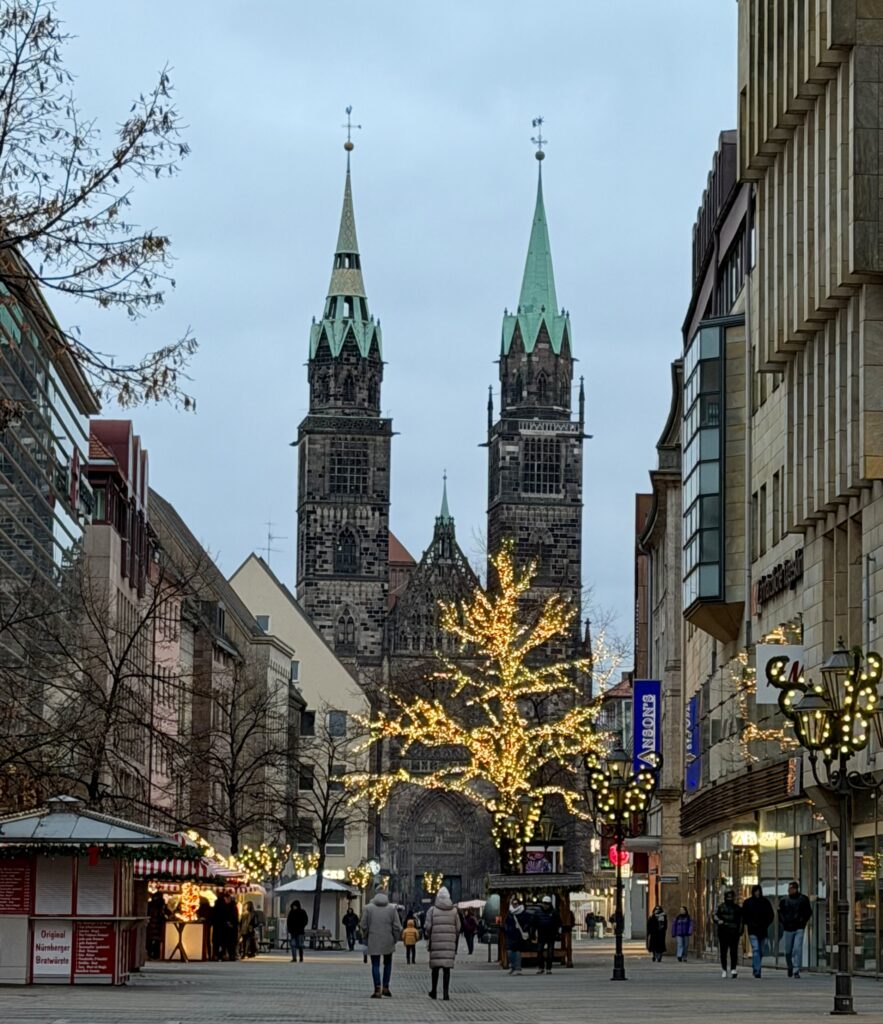
Most places we’ve visited have a main cathedral but Nuremberg had 3 – Frauenkirche (Church of Our Lady) on the main square, Sebaldskirche (St Sebald), and Lorenzkirche (St. Lawrence) (https://tourismus.nuernberg.de/en/discover/places-of-interest/churches/).
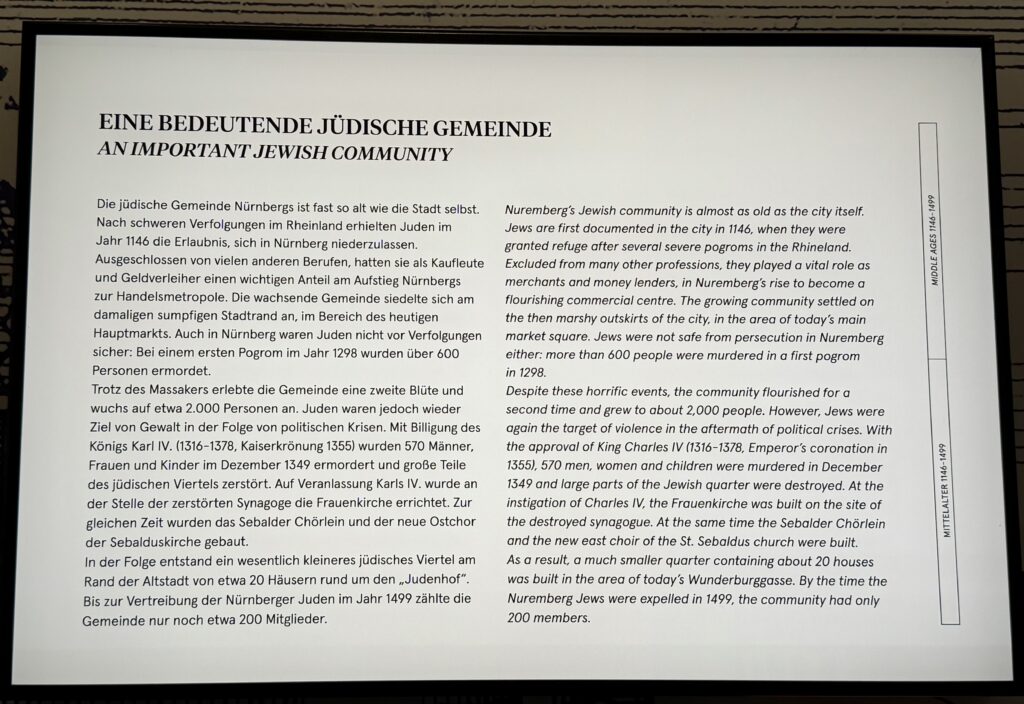
Frauenkirche was built in the mid-1300s on the site of a prior Synagogue. The history is detailed in a document on the official website (https://frauenkirche-nuernberg.de) – the website is in German but thankfully there is a Church Guide in multiple languages, including English. An excerpt from this includes the following history (in short, Charles IV had the Jewish Quarter destroyed – including the synagogue – in 1349 and over 500 Jews were burned to death – more than 1/4 of the Jewish population in the city at the time; then he had the church built on the same site):
“In the Middle Ages, the free imperial city of Nürnberg (Nuremberg) consisted of two parts, one settlement around the Church of St. Sebaldus in the north and one around St. Lorenz in the south. The two sections of the city were separated from each other by the Pegnitz.
In the 12th century, a Jewish quarter with a synagogue developed on this spot, where the Marktplatz (market square) and the Frauenkirche are located today. When the two sections of the city were combined by a common wall, this square became the centre of the city and thus assumed central importance. The city council of Nürnberg wanted to erect a large market place here and requested permission to do so from Charles IV, the monarch at the time.
As the ruler, Charles had a duty to care for the Jewish citizens of his empire. However, because his position as monarch was in question and not at all secure, he caused the cities in his empire to persecute their Jews. He received possession of the Jewish fortunes, and rewarded his followers to ensure their support for himself.
Nürnberg’s wish for a central market place came to him during this time. He gave the residents of Nürnberg, who until then had been friendly to the Jews, the permission – if not the order – to drive out their Jews. This led to a terrible pogrom in December, 1349, in which at least 562 Jews were burned to death.
At the same time that he gave permission to tear down the Jewish quarter with the so called Market Document, Charles IV also decreed that a church dedicated to Mary should be erected in place of the Jewish synagogue.“
It was a beautiful church but was sad to read its history (although this seemed to be relatively common).
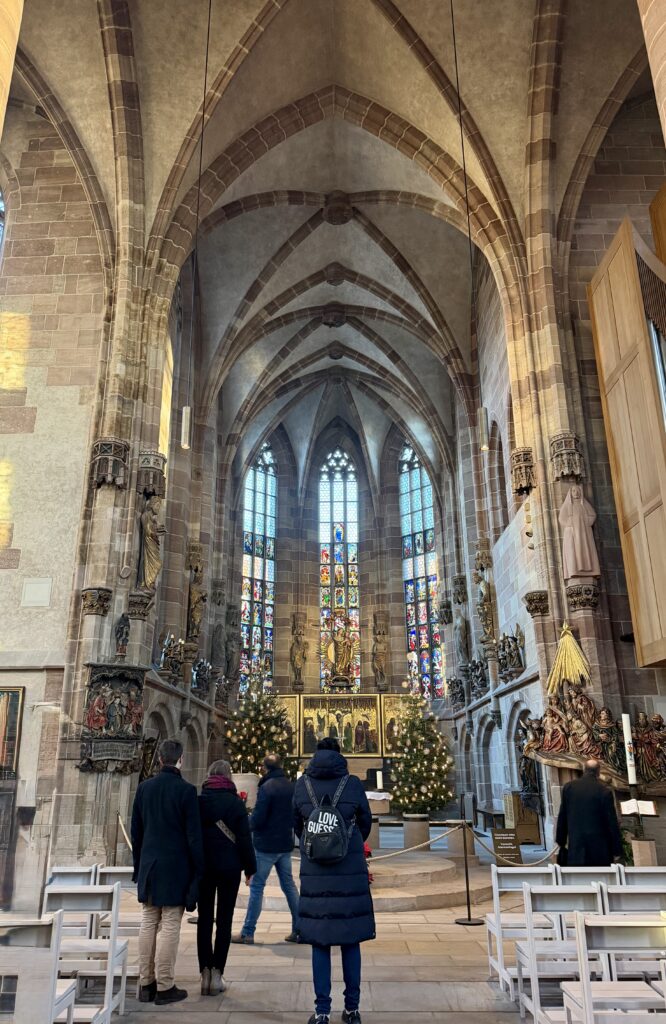
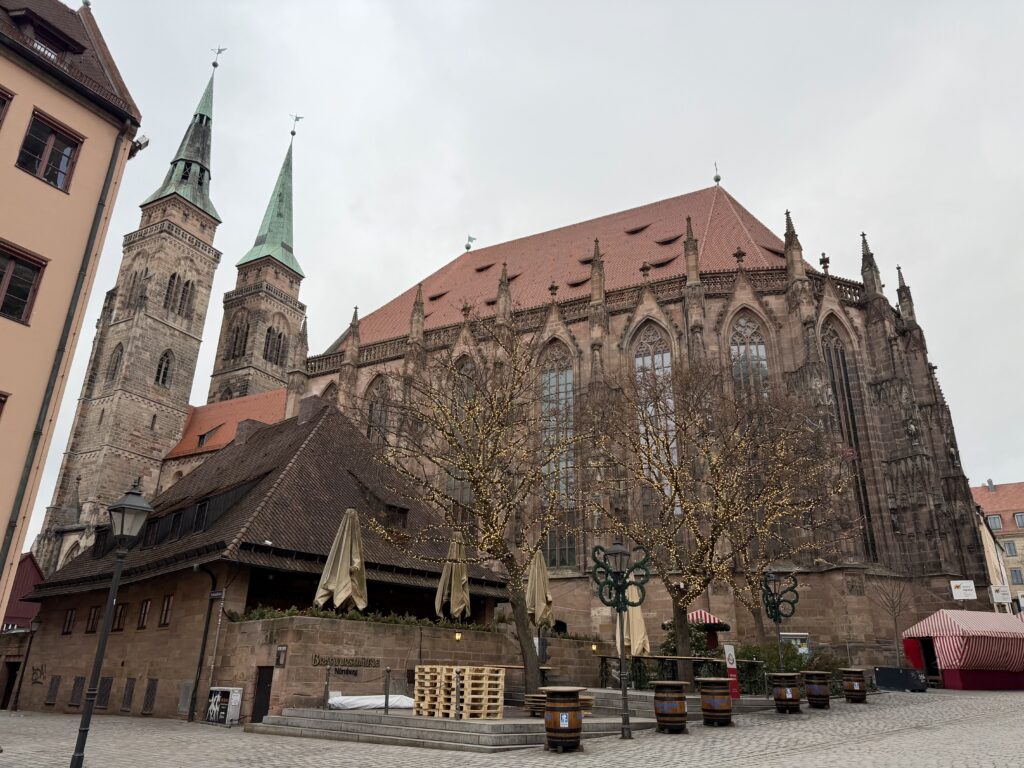
Sebaldskirche (St Sebald’s Church) is the oldest church in Nuremberg, built around 1215. It was destroyed during WW2 bombing and reconstructed in 1957. (https://tourismus.nuernberg.de/en/discover/places-of-interest/churches/location/sebalduskirche-st-sebald-church/)
There was a small but powerful museum in the Sebaldskirche rectory that talked about some of the history of the Jewish population in Nuremberg (see above under Frauenkirche).
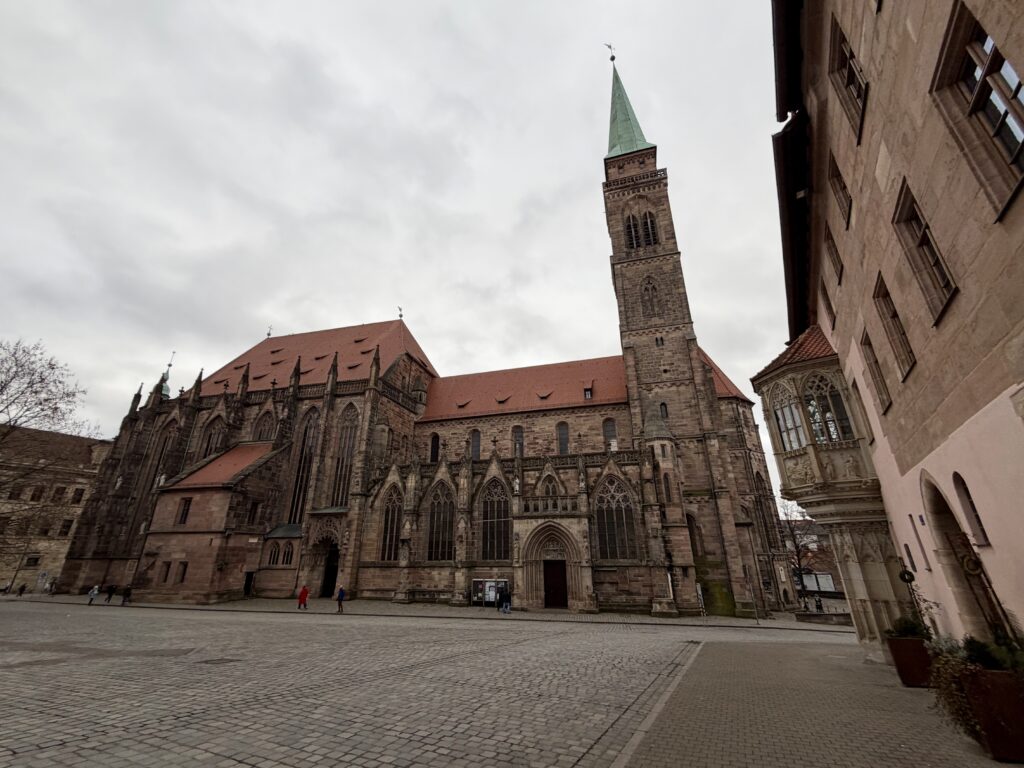
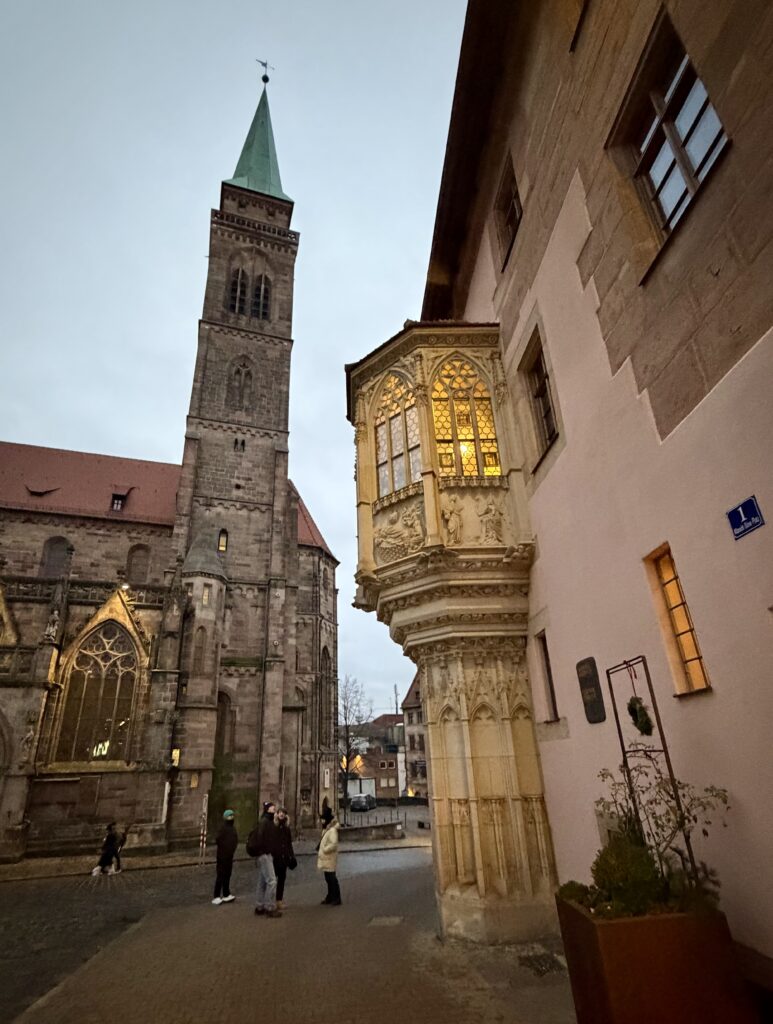
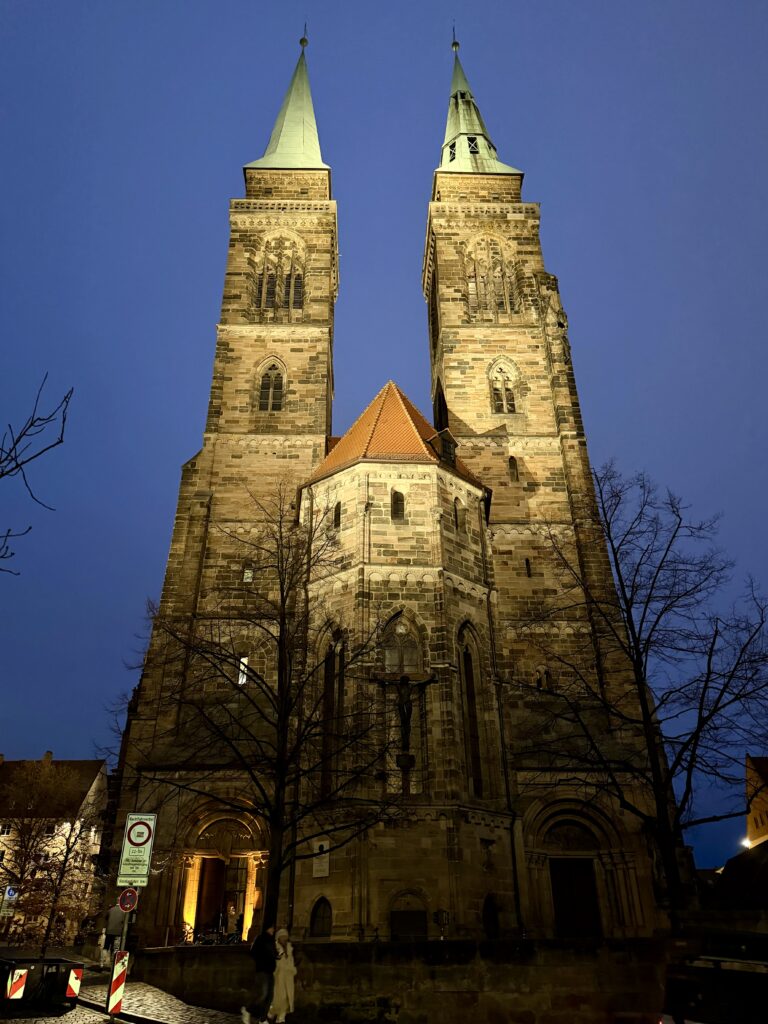
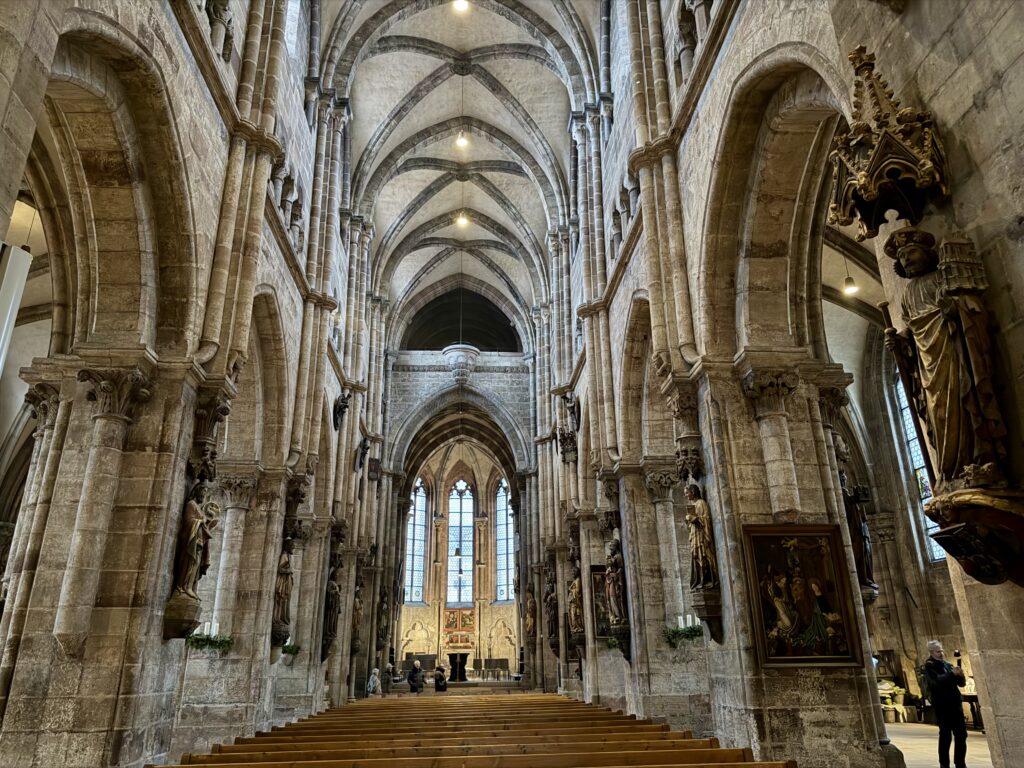
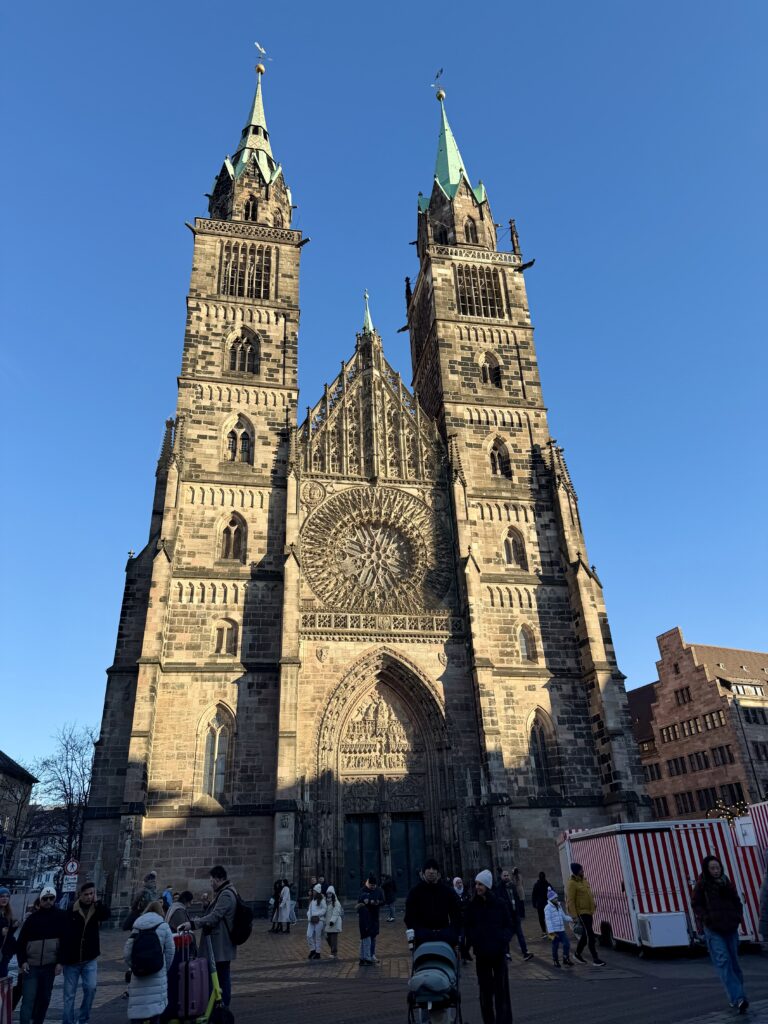
Lorenzkirche was started around 1250 and was extended in the 15th century. It’s three-part pipe organ in Lorenz is one of the largest in the world, with 12,000 pipes and 165 registers (we weren’t able to go inside this one during our visit though). (https://tourismus.nuernberg.de/en/discover/places-of-interest/location/lorenzkirche-st-lawrence-church/)
Jewish Synagogue Memorial
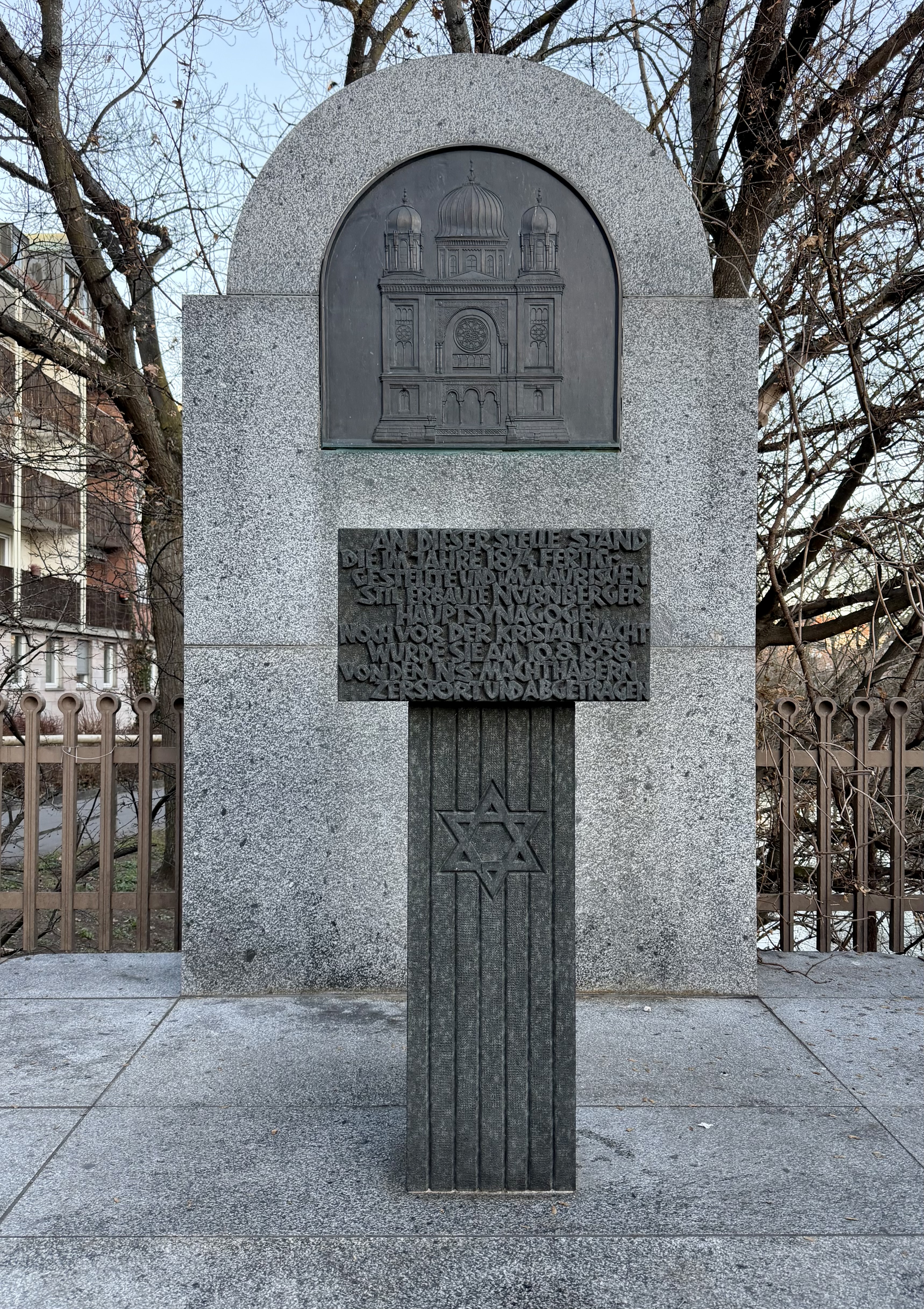
One place of worship that no longer exists in Nuremberg was a “newer” Jewish Synagogue. There is a memorial on the site of this former synagogue, which was completed in the late 1800s then destroyed by the Nazis on 27 September 1938.
Bridges
On New Year’s Day we walked around the city walls – it was a good day for that since pretty much everything else was closed for the holiday. There are several pretty cool bridges. (https://tourismus.nuernberg.de/en/discover/places-of-interest/bridges/)
The Maxbrücke is the oldest stone bridge built within the city of Nuremberg
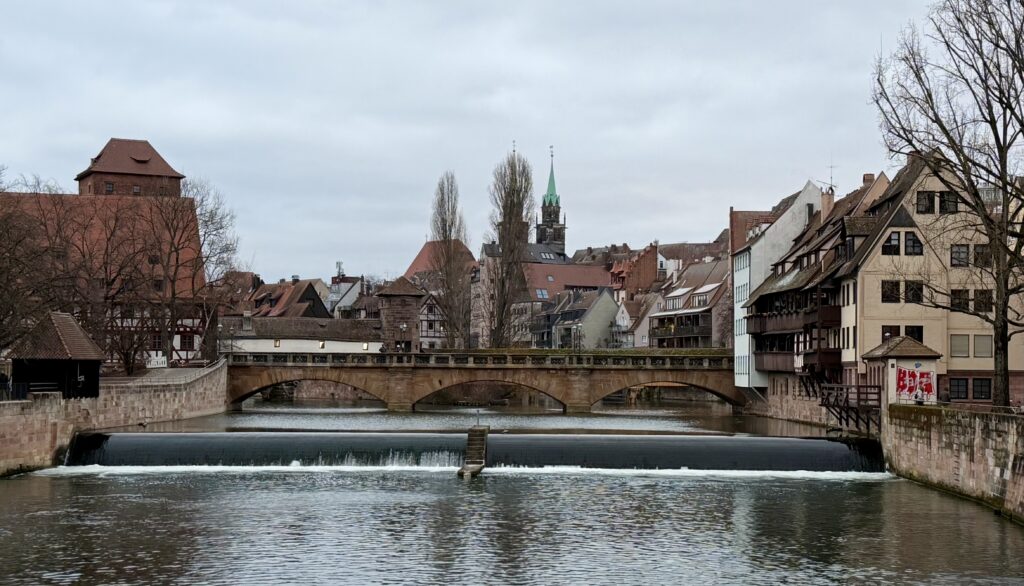
The there’s the Kettensteg (a chained suspension bridge), located in front of the city wall as the river flows west out of the town. It is 68 meters (223 feet) long and is the oldest surviving iron suspension bridge in continental Europe.
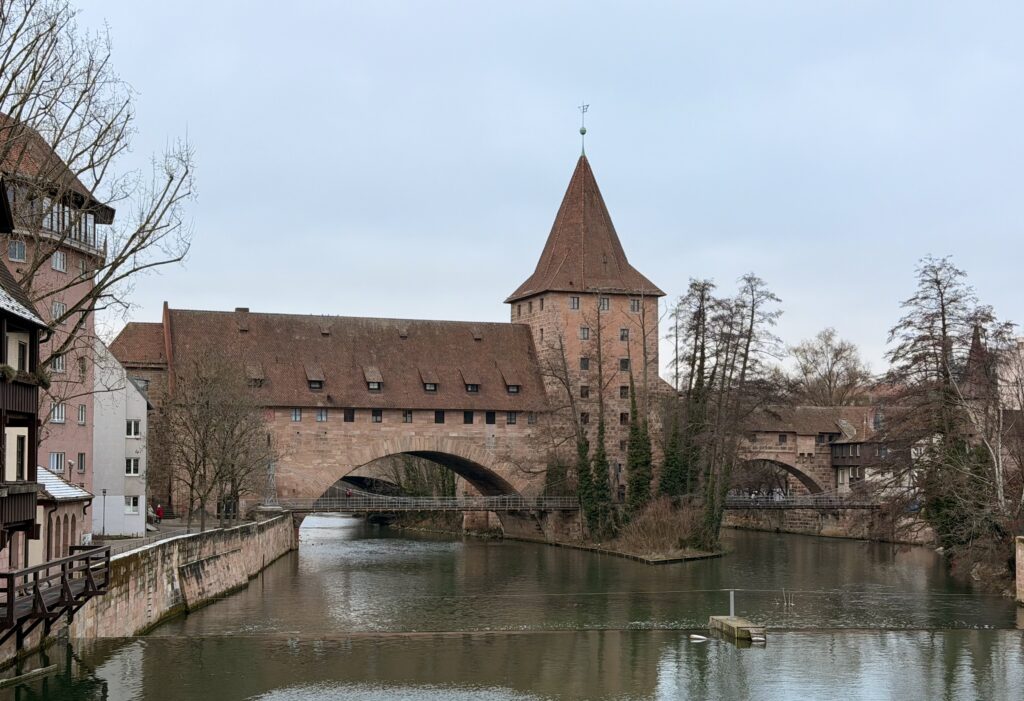
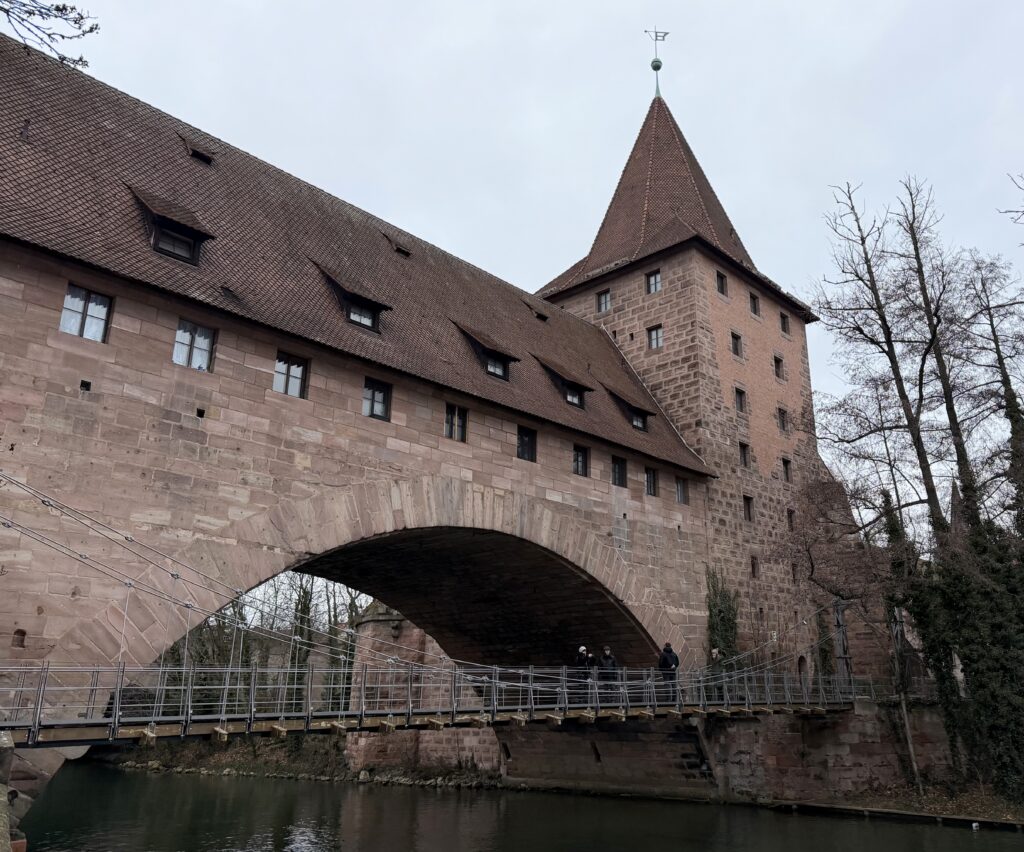
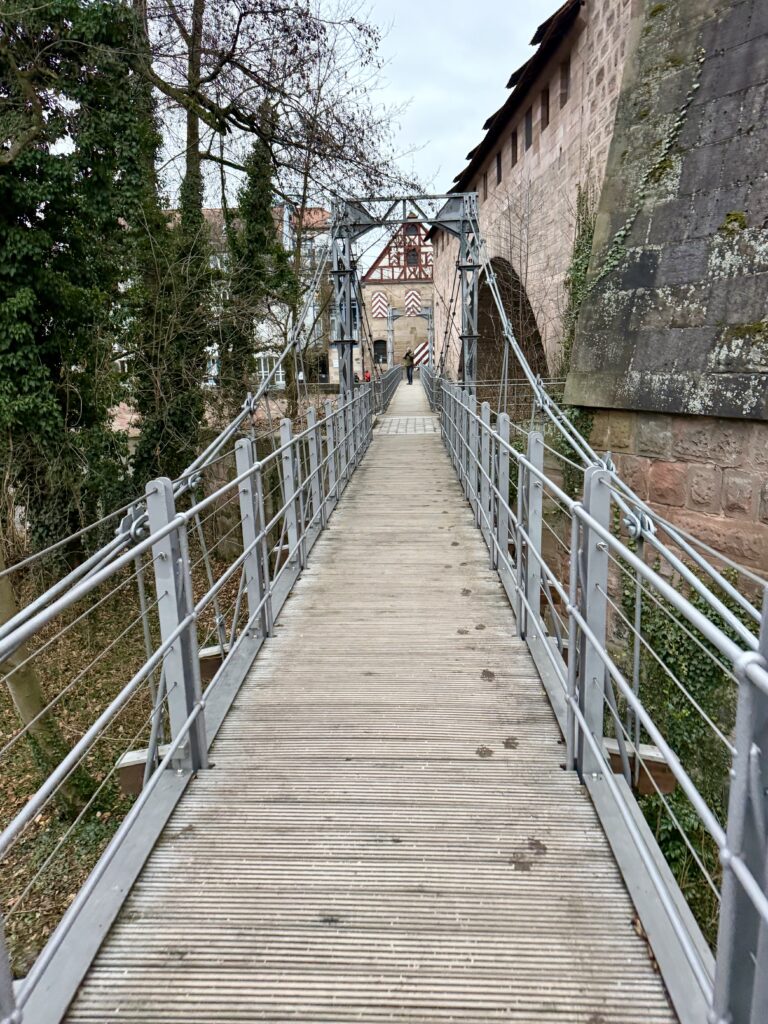
And of course there’s the Henkersteg (Hangman’s Bridge). The Henker (executioner) lived in an isolated house on the island in the river and it was right by this bridge so that’s where the name Hangman’s Bridge comes from. This bridge was built after a flood in 1595 destroyed the prior bridge.
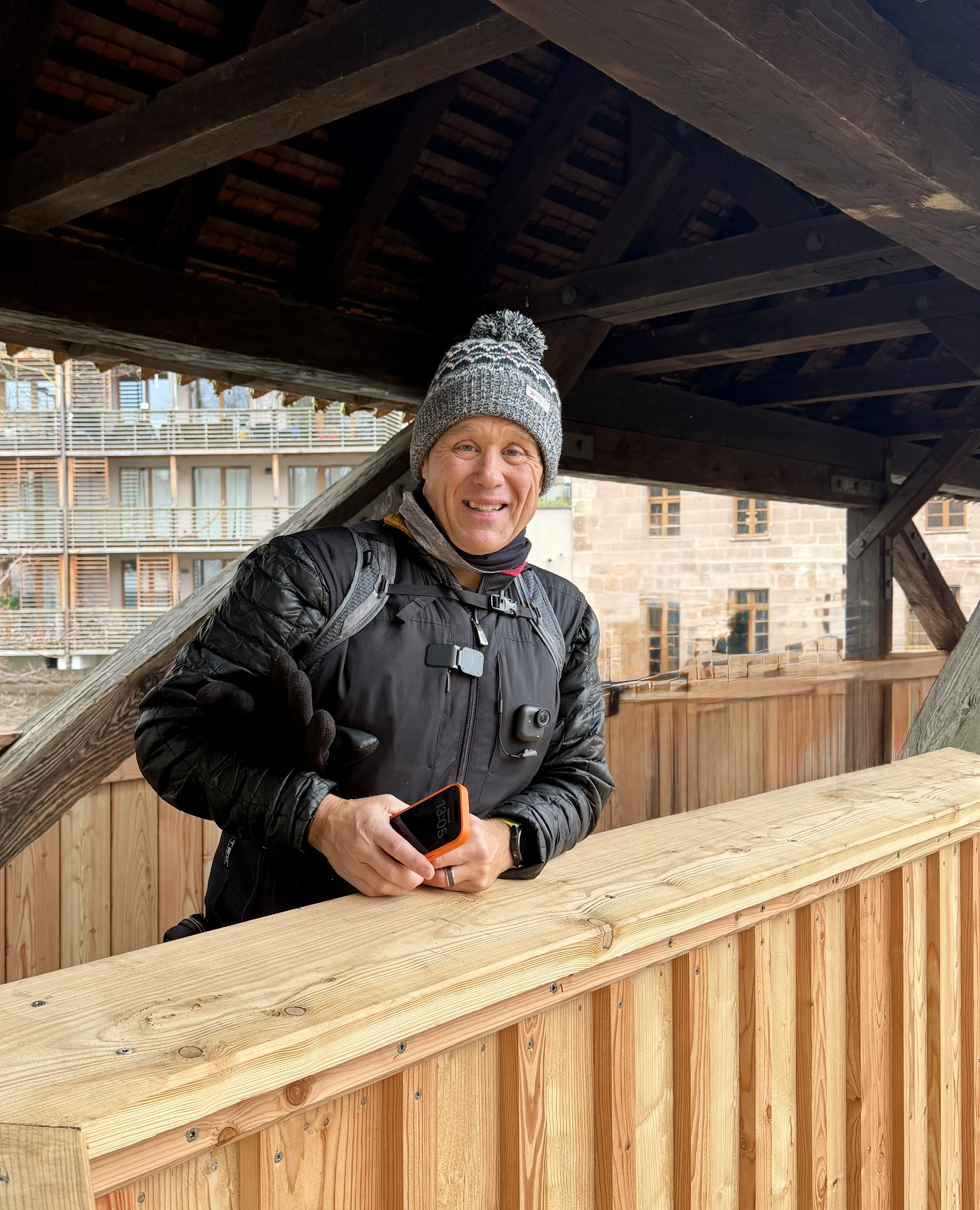
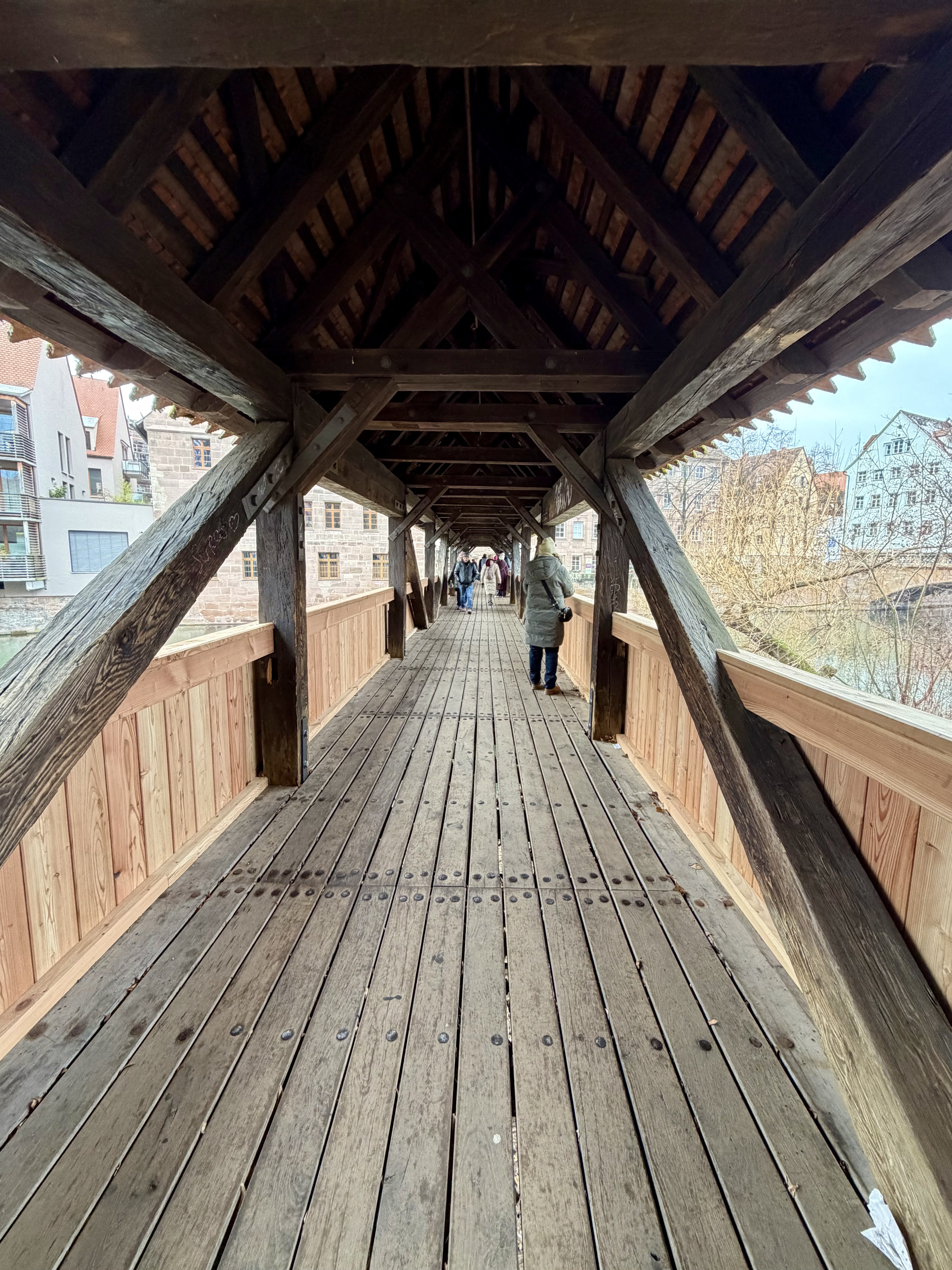
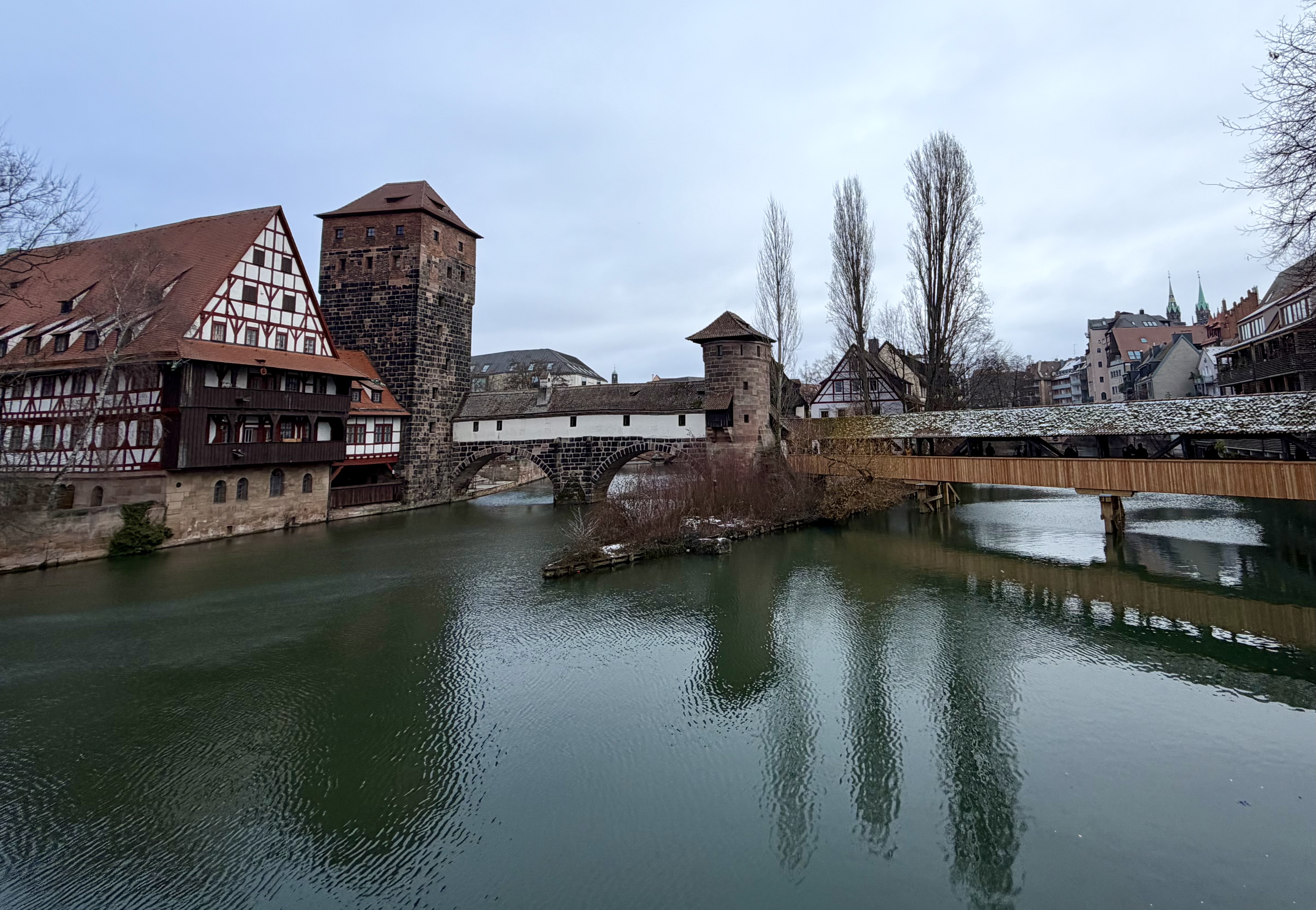
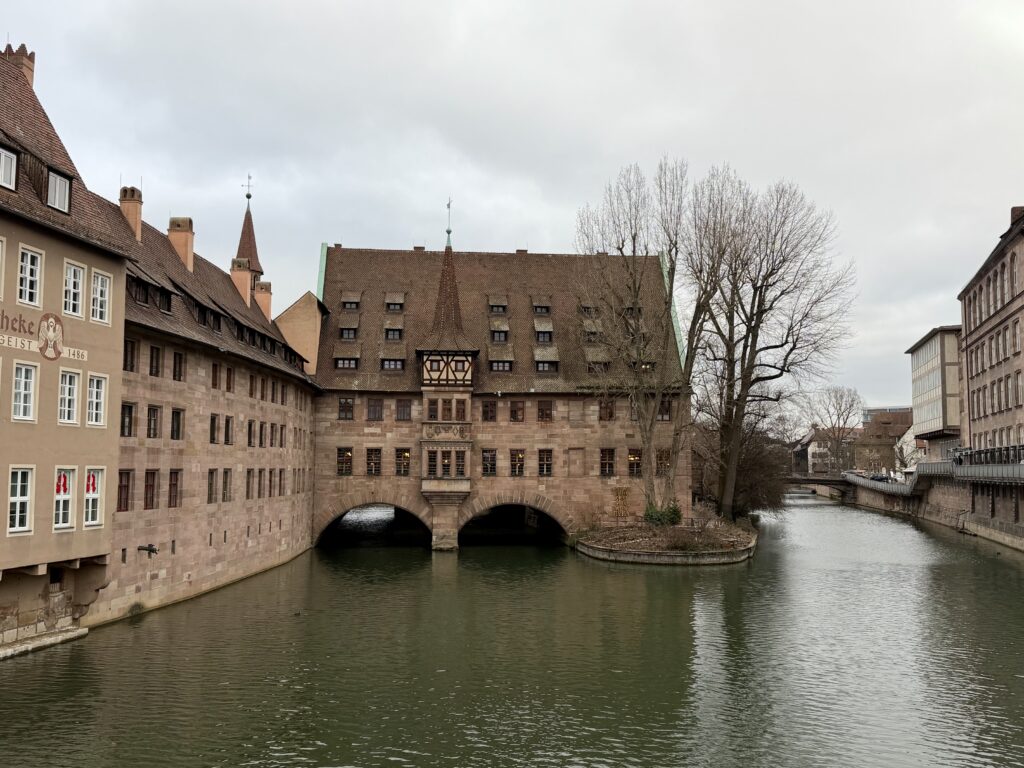
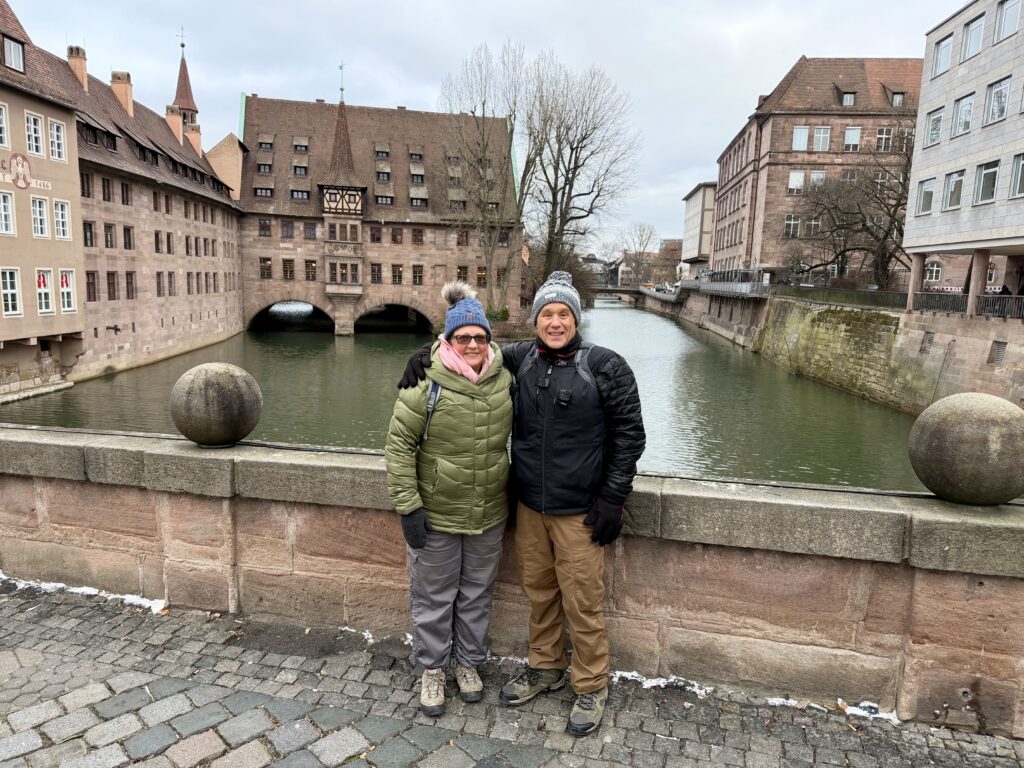
There’s also this Museum Bridge – the original one was wooden and built in 1484 but that was destroyed by a flood in 1603. It was temporarily replaced by another wooden bridge before this stone bridge was built in 1700 (it has gone by several names – the name Museumsbrüke/Museum Bridge dates from the 19th century because of a museum located nearby). This bridge was also destroyed in WW2 bombing and was rebuilt and widened. (https://placesofgermany.de/en/places/nuremberg-museum-bridge/)
As you can tell, Nuremberg is definitely worth a visit! More to come on a couple of day trips we took from Nuremberg – to Bamberg and Regensburg – and also on the WW2 history related to Nuremberg and other European cities.