
We got into Munich on 20 December and spent a week there. It was a great place to spend Christmas! We even had a dusting of snow on Christmas Eve so we sort of had a White Christmas! We stayed at a VRBO out in the suburbs southwest of the city center – it was a cute detached cottage on the owner’s property (https://www.vrbo.com/2013902ha?SocialSharePropertyDialog=share-this-page-dialog). The host, Andreas, even helped us learn how to say Merry Christmas in German (Frohe Weihnachten). It was about a 20 min walk to the UBahn (metro) then 15 min into the center of Munich so it was convenient to town but also a nice quiet area. It was also just inside of the center zone 1 for the metro in Munich. The furthest sites we went to – the BMW Museum and Olympic Park- were also just inside the same zone on the other end, so we didn’t have to pay for an extra zone on our metro ticket.
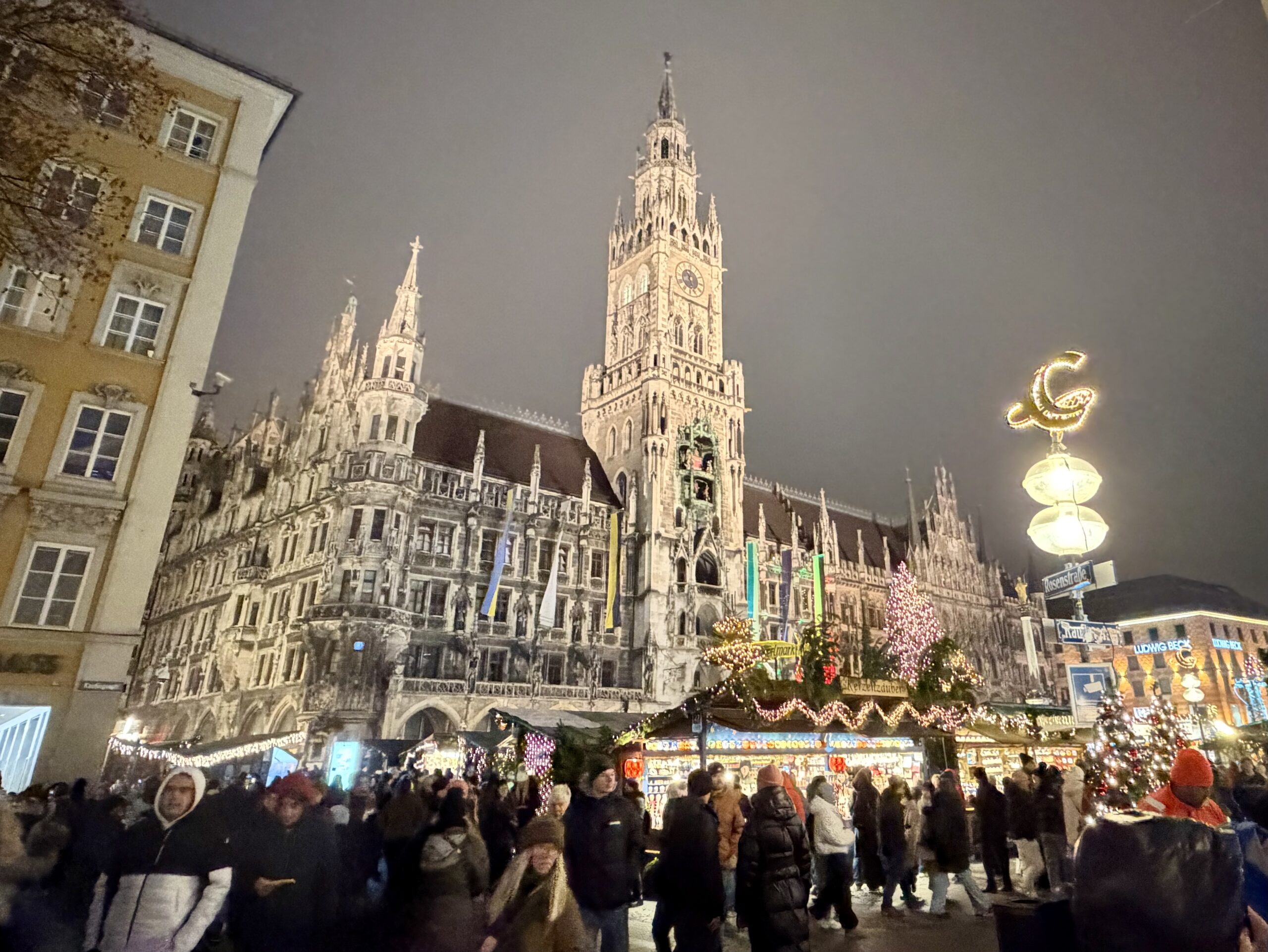
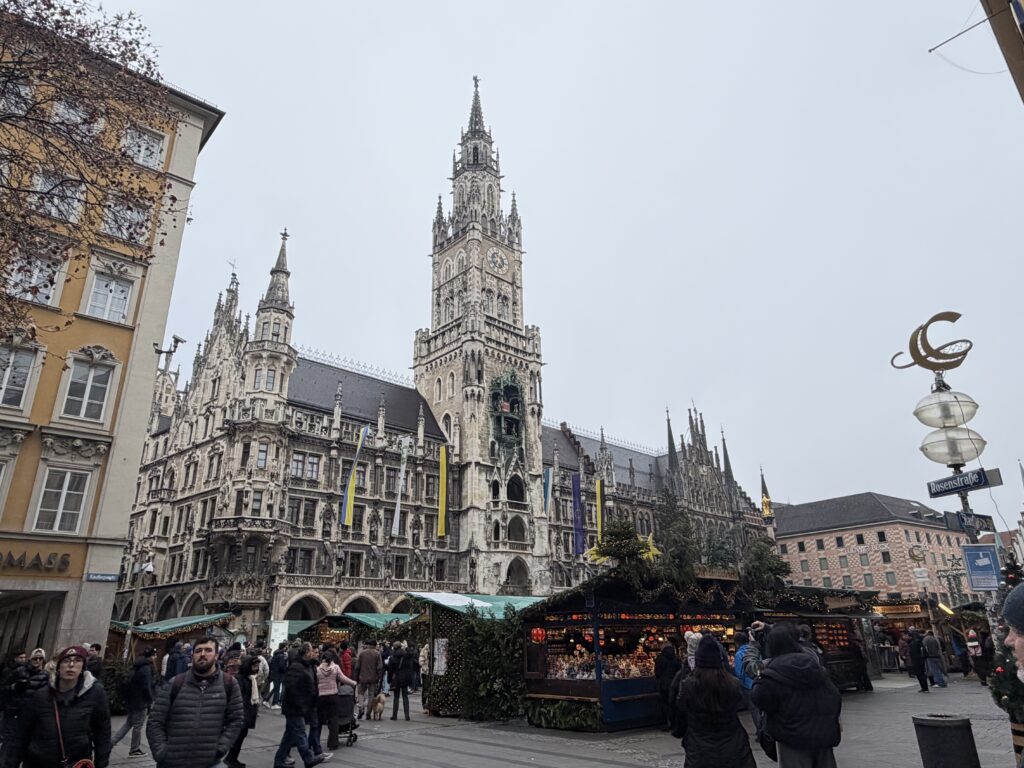
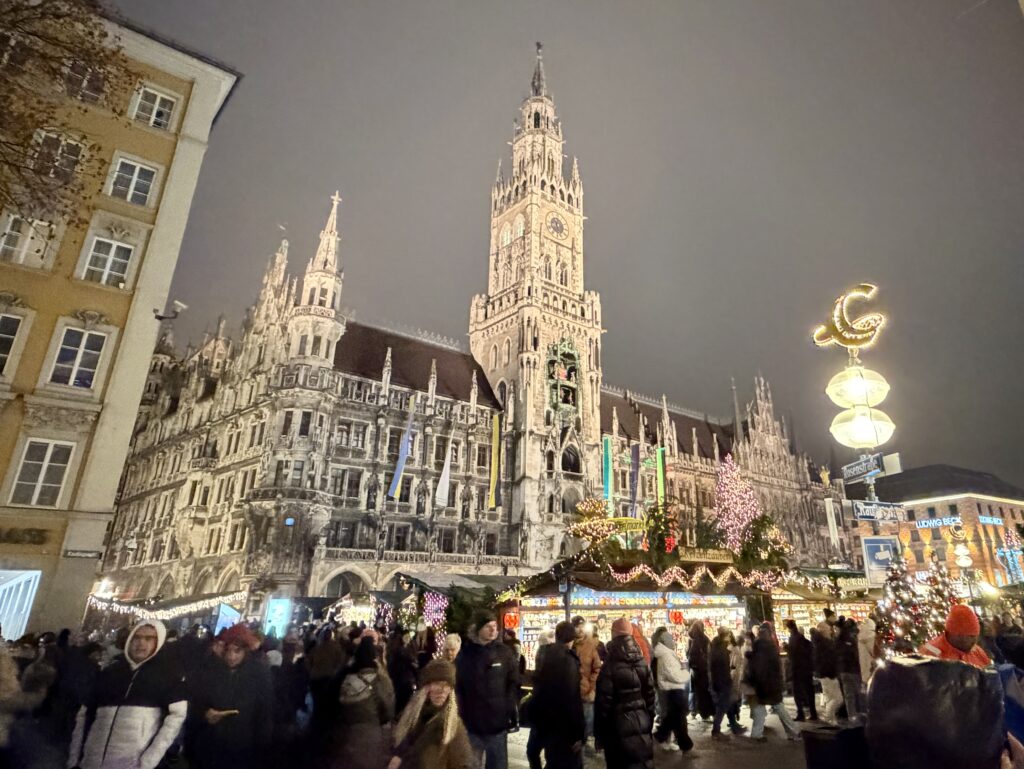
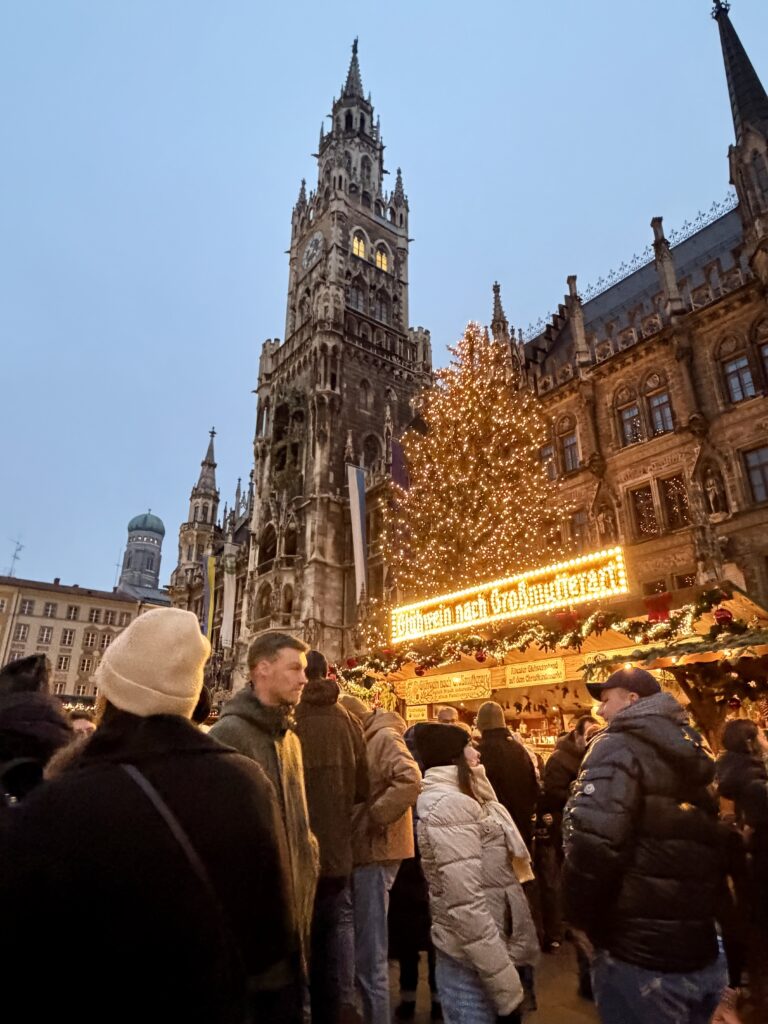
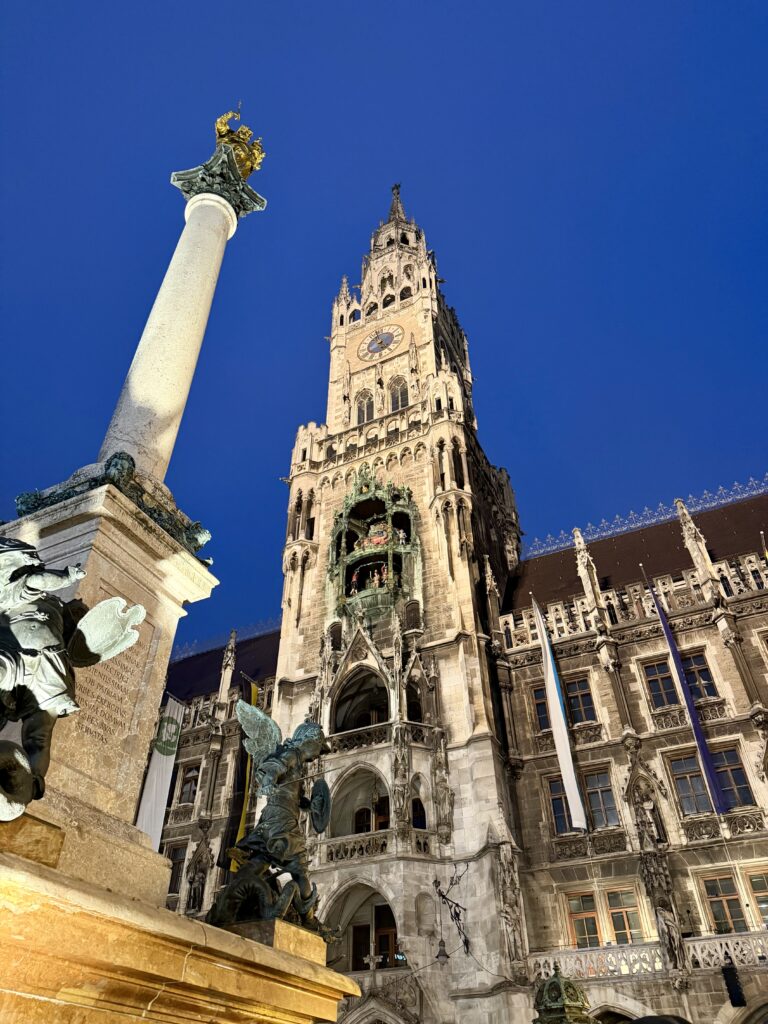
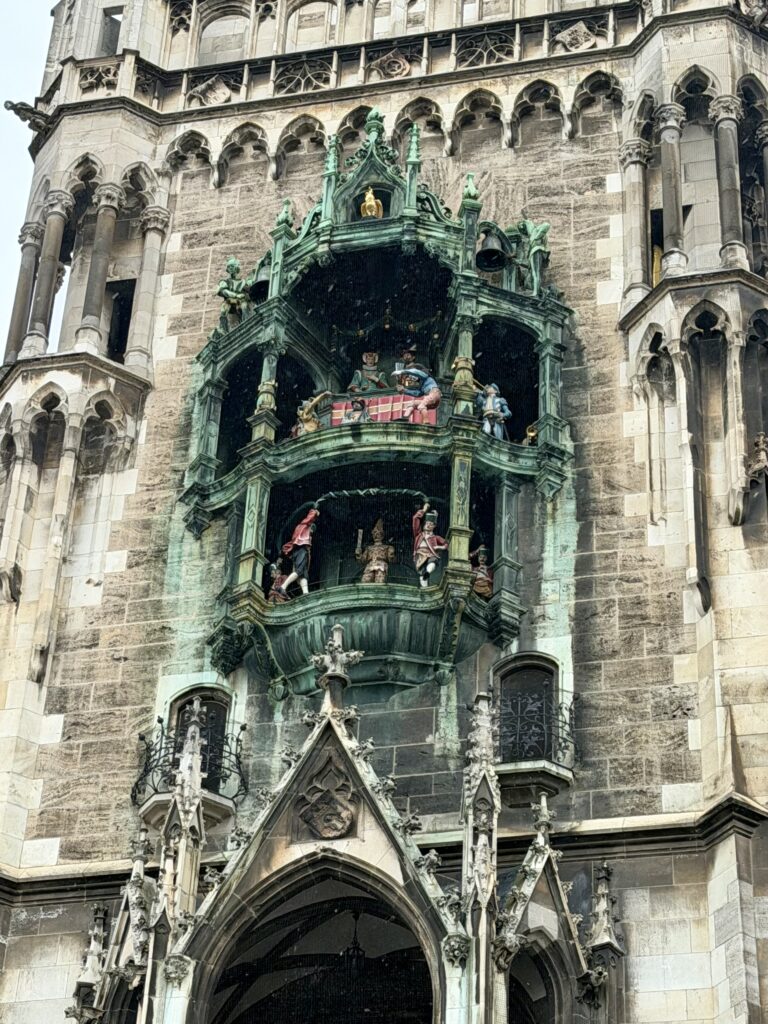
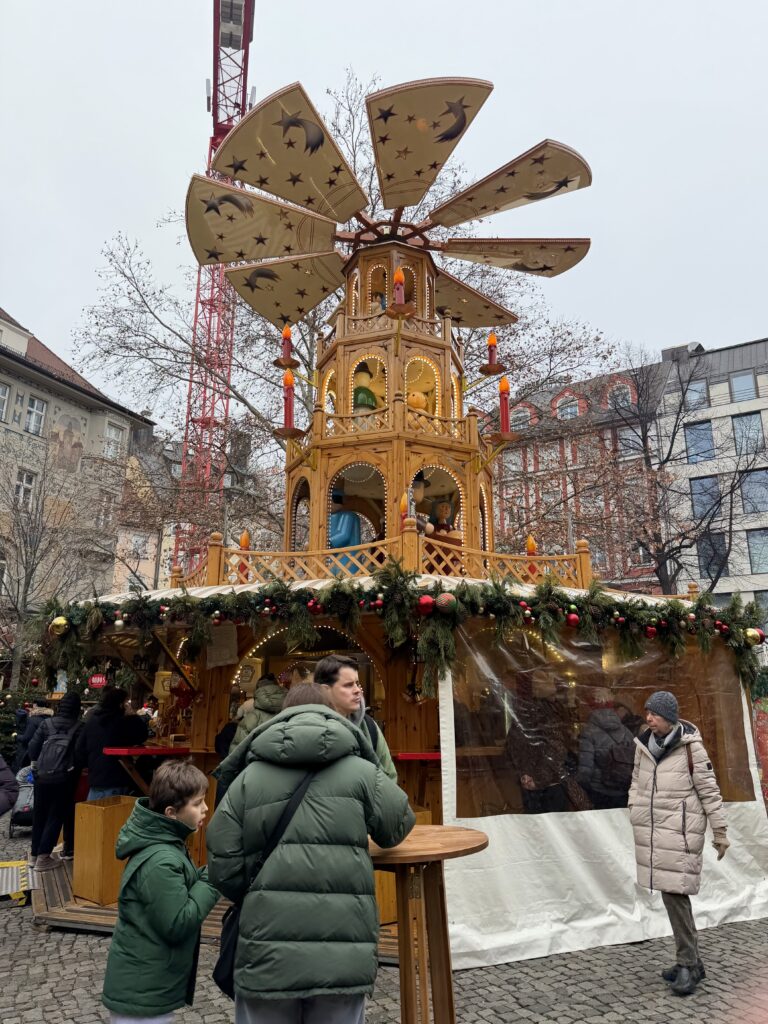
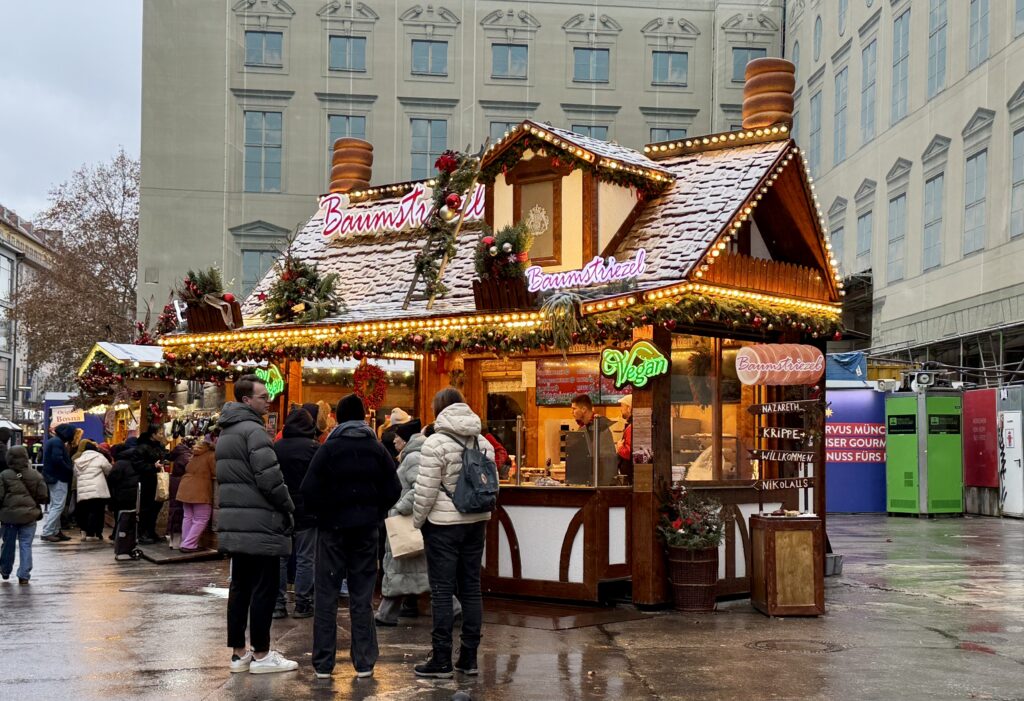
On our first full day there, we headed into town to explore the Christmas Markets. As with other cities, Munich actually had several markets spread around the city. The main and largest market was in the main square, Marienplatz. This one had spokes that went out around the surrounding streets too. The tower of city hall in Marienplatz has a famous Glockenspiel that plays at 1100 and 1200 every day. It tells a story – you can read it here: https://www.muenchen.de/en/sights/munich-glockenspiel. We stopped in the square on Christmas Eve to see the Glockenspiel and were treated to a brass quartet concert too! In the video, you can tell it was also snowing (the Glockenspiel part is sped up by 50% because it actually was pretty slow – so if the background noise sounds like the Chipmunks, that’s why)
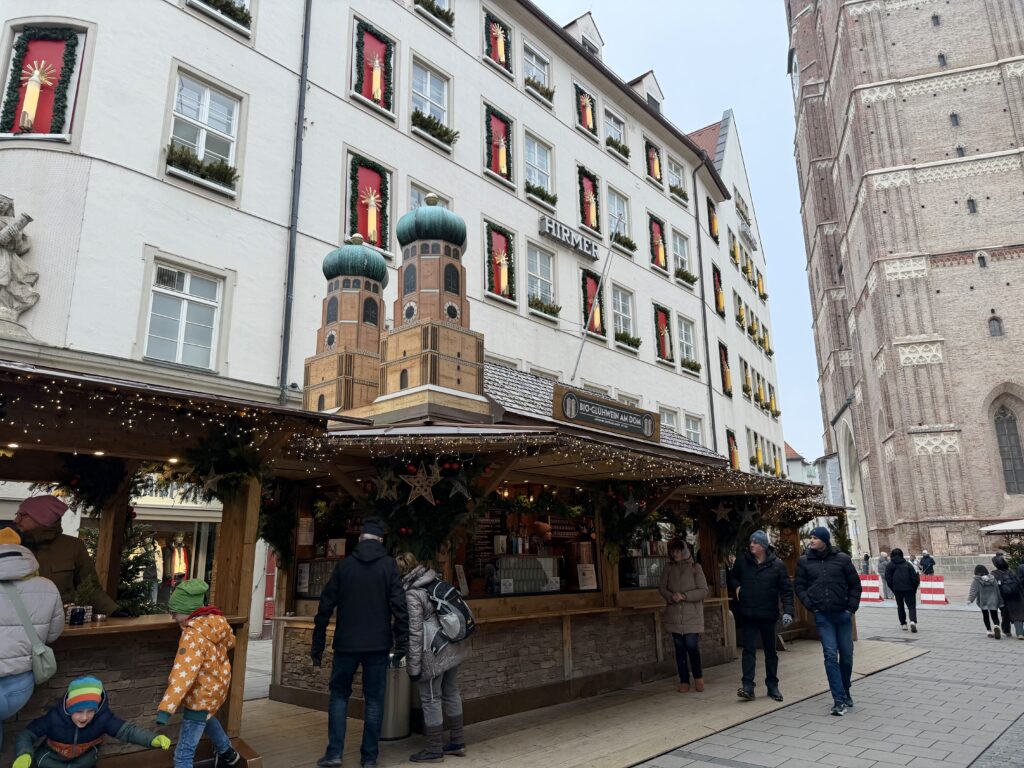
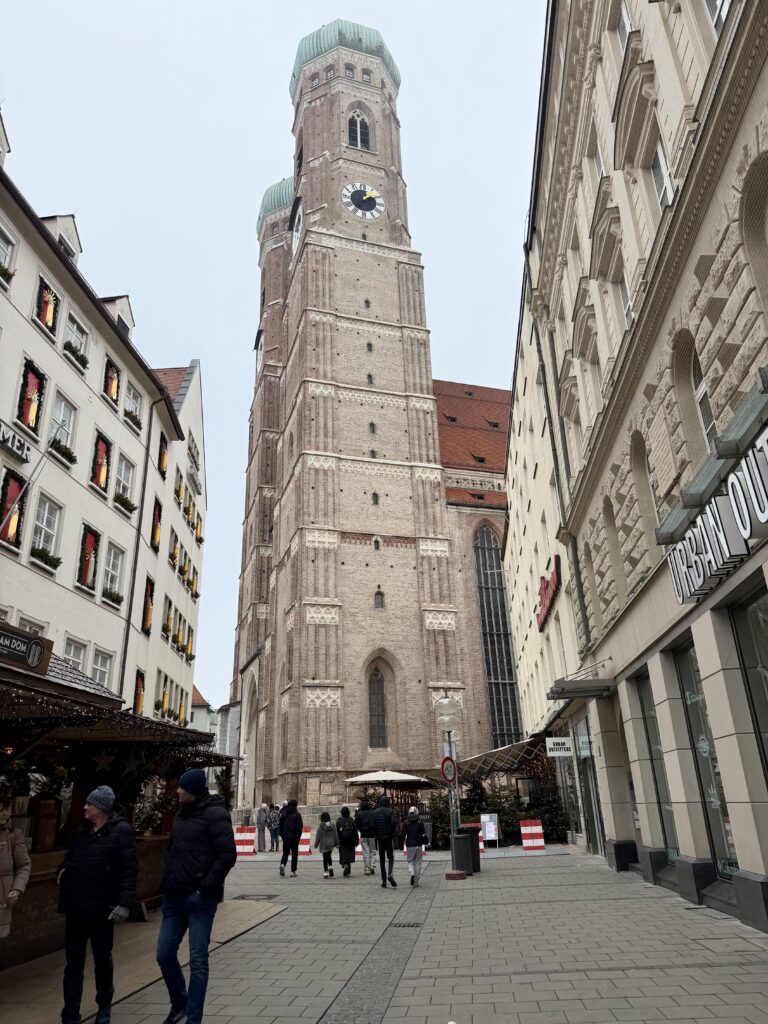
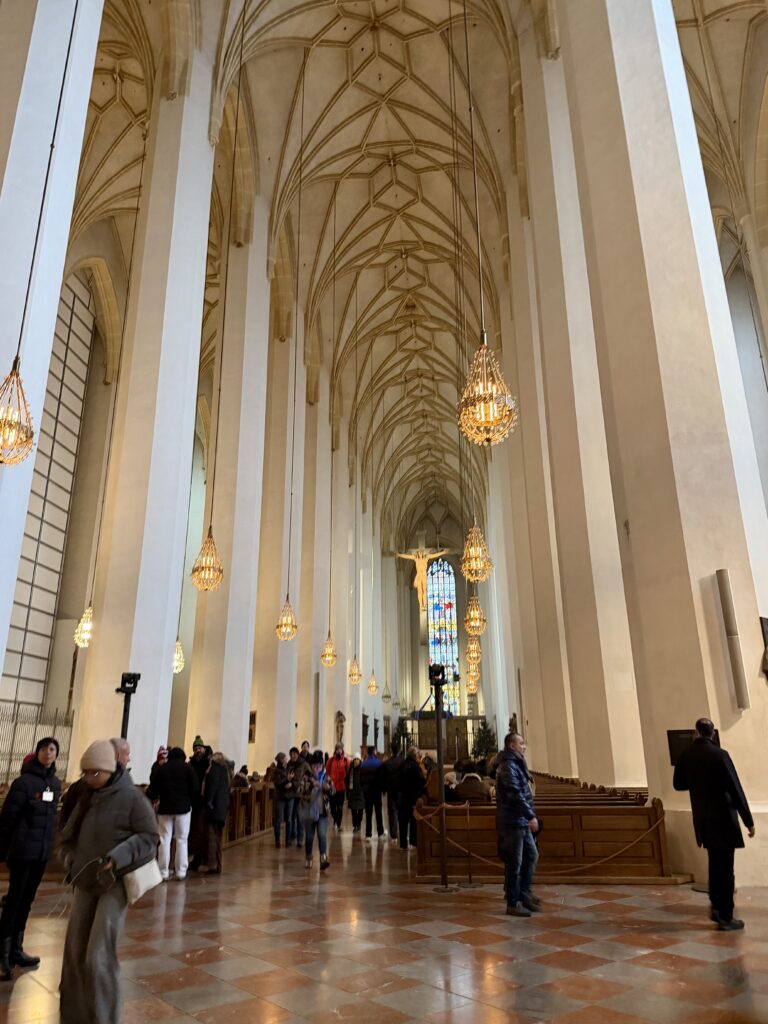
One of the other famous sights in Munich is the Frauenkirche (Church of our Dear Lady). The 2 green onion domes are easily recognizable. We were able to stop in and see it and learn about some of the interesting history.
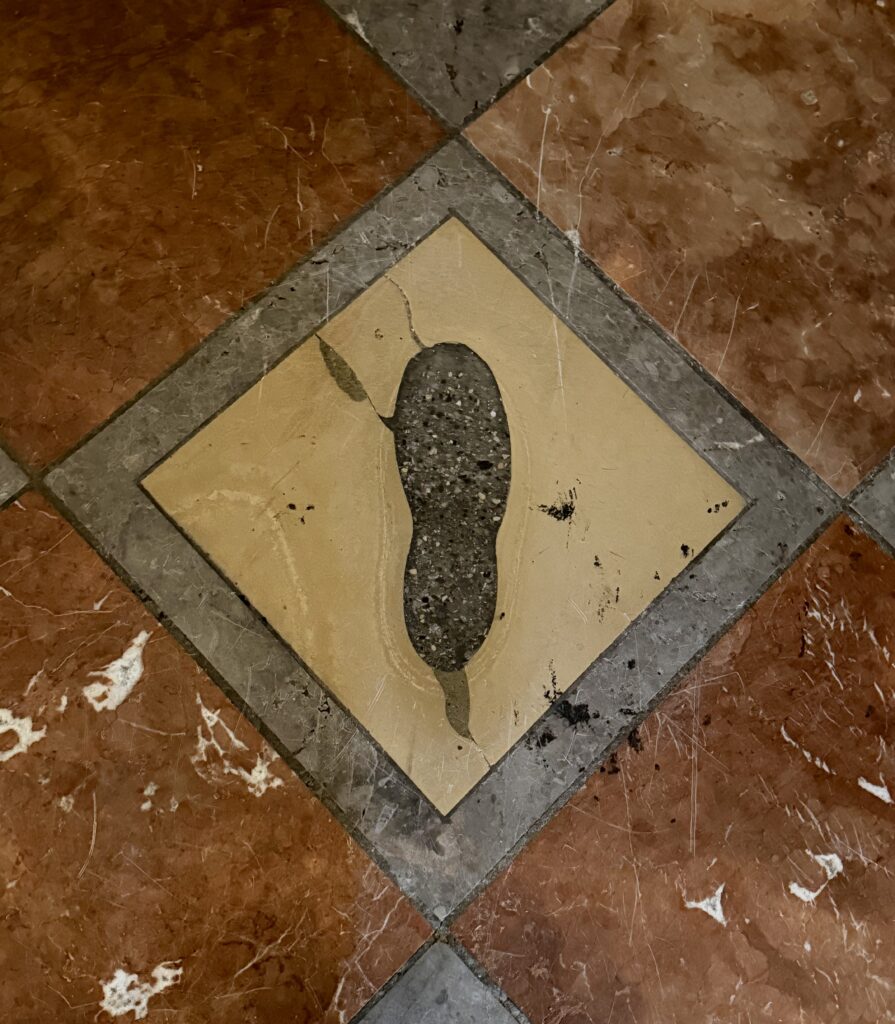
Legend has it that the footprint in the floor is the devil’s footprint:
“According to legend, the famous footprint in the entrance hall was made by the devil himself. He made a bet with the master builder for his soul, that there would be no windows in the church. Upon return to the aforementioned place, he could not see any windows at first, as they were covered by the columns. Out of joy at the supposed ignorance of the people, he stamped up and left his footprint in the ground.
But when the devil took another step forward, he discovered the windows and felt that he has been deceived. Angrily, he turned into wind in order to destroy the building. It’s probably the devil is still trying, because near the cathedral or at the entrance, you tend to feel a slight breeze.” (https://www.muenchen.de/en/sights/cathedral-church-our-lady-all-about-frauenkirche-munich)
Given how cold it was that week in Munich, I’m not sure we could vouch for the slight breeze part – it was warmer in there than it was outside!
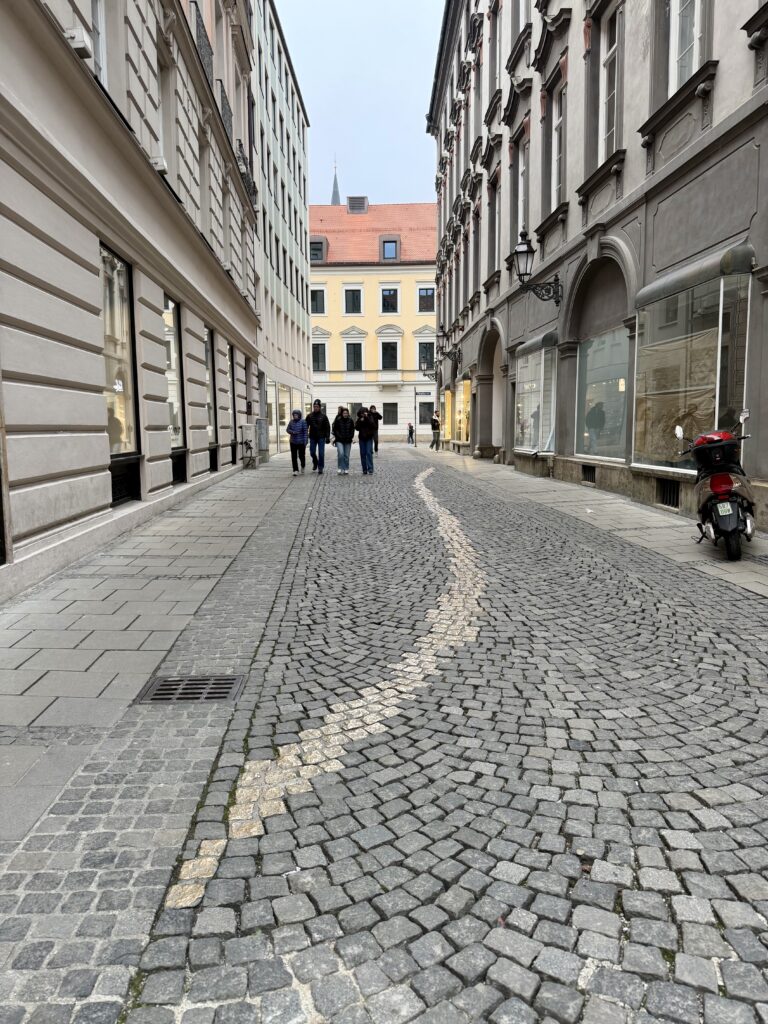
There is a lot of history in Munich, including some not so great history surrounding WWII and the Nazis. I’m actually going to do a separate post about that history because we have seen so much of it all over Europe. One interesting sight we passed on our way to the Medieval Christmas market was the Viscardigasse, also referred to as Drückebergergasse (“Shirker’s Alley”). It’s a cobblestone pedestrian road that has a row of bronze stones. Munich was the Bavarian capital of the National Socialist Party (known more commonly as the Nazi Party). The next block over from this is a square that had a memorial to the Nazi’s who died in a failed coup led by Hitler in 1923 (the memorial was erected in 1933 when the Nazi’s took power – that memorial was subsequently smashed by locals on 03 June 1945). During the Nazi era (1933-1945), passersby were required to render a Nazi salute to the guards. To avoid this, many pedestrians bypassed the square by cutting through Viscardigasse. This bronze monument to that quiet resistance was placed on the street in 1995.
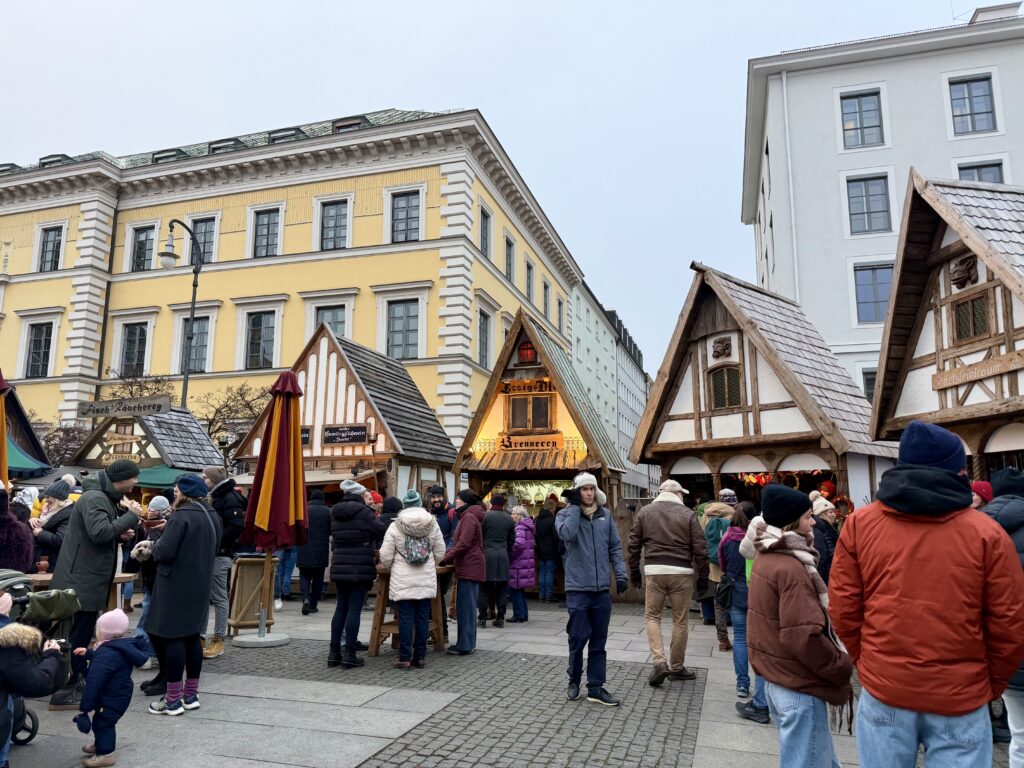
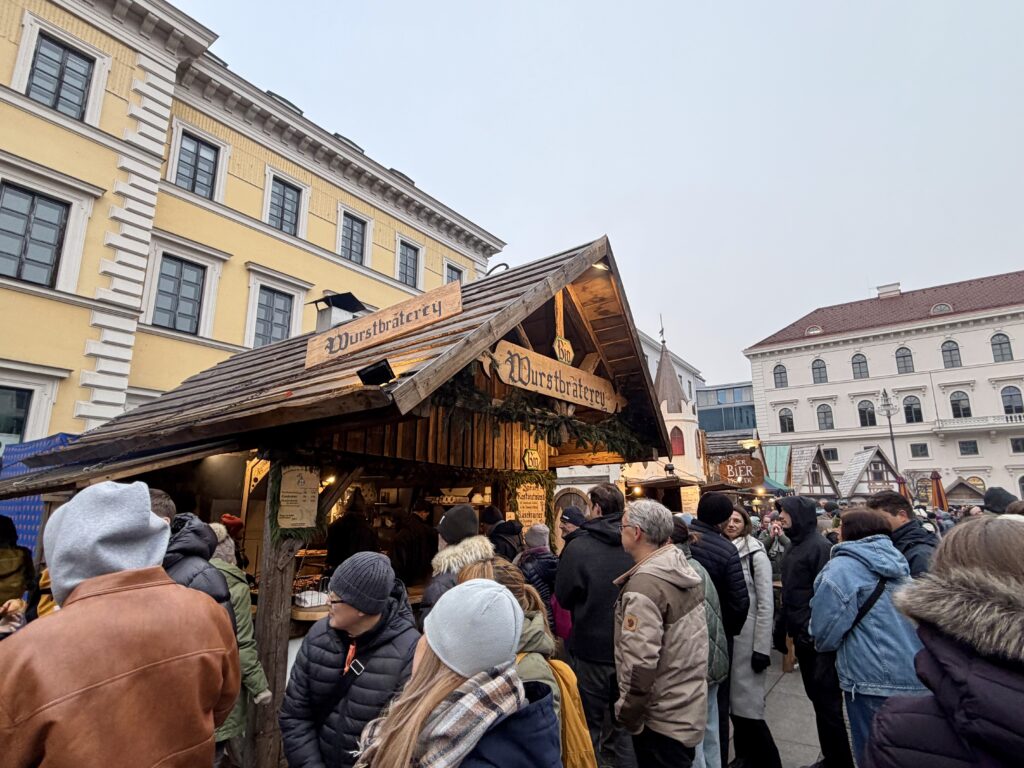
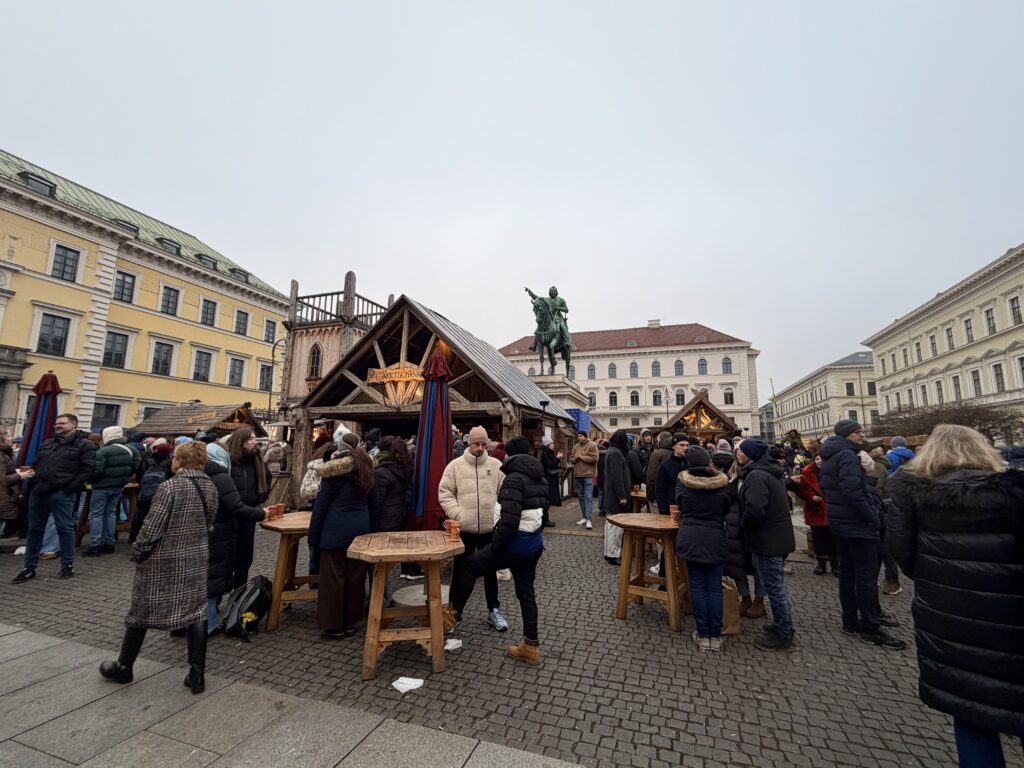
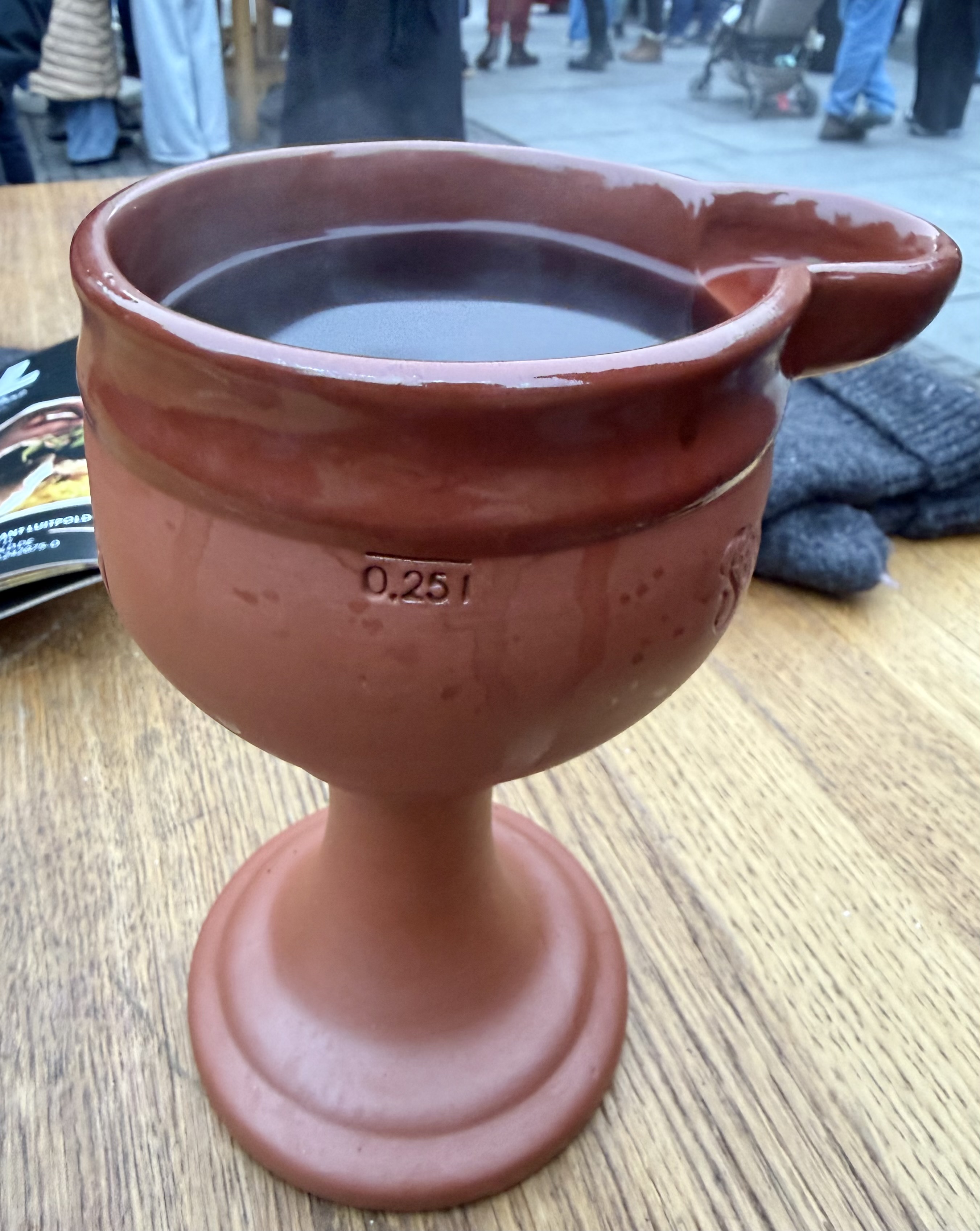
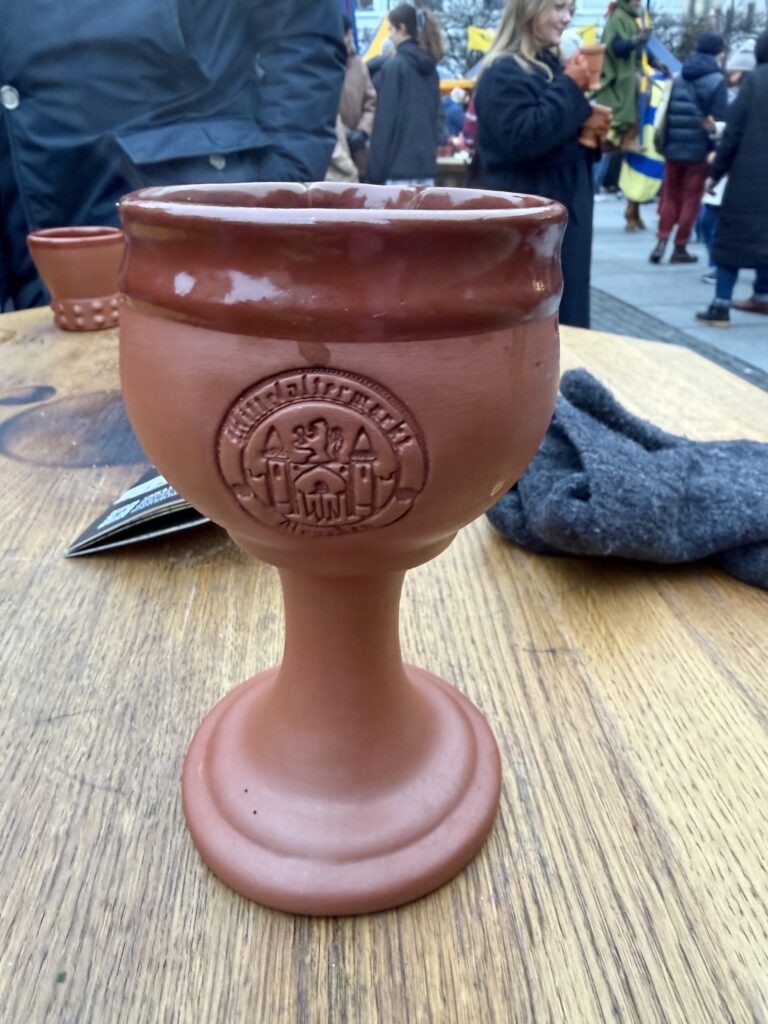
After seeing the Viscarigasse, we continued on to the Medieval Market. This was a really neat market and all of the cups and plates were made of clay. They had a glüwein in this cool clay goblet. It has a spot for a sugar cube – they pour rum over the sugar cube so it forms a float on top of the wine. Then they light it. Check out the video – I had to try it!
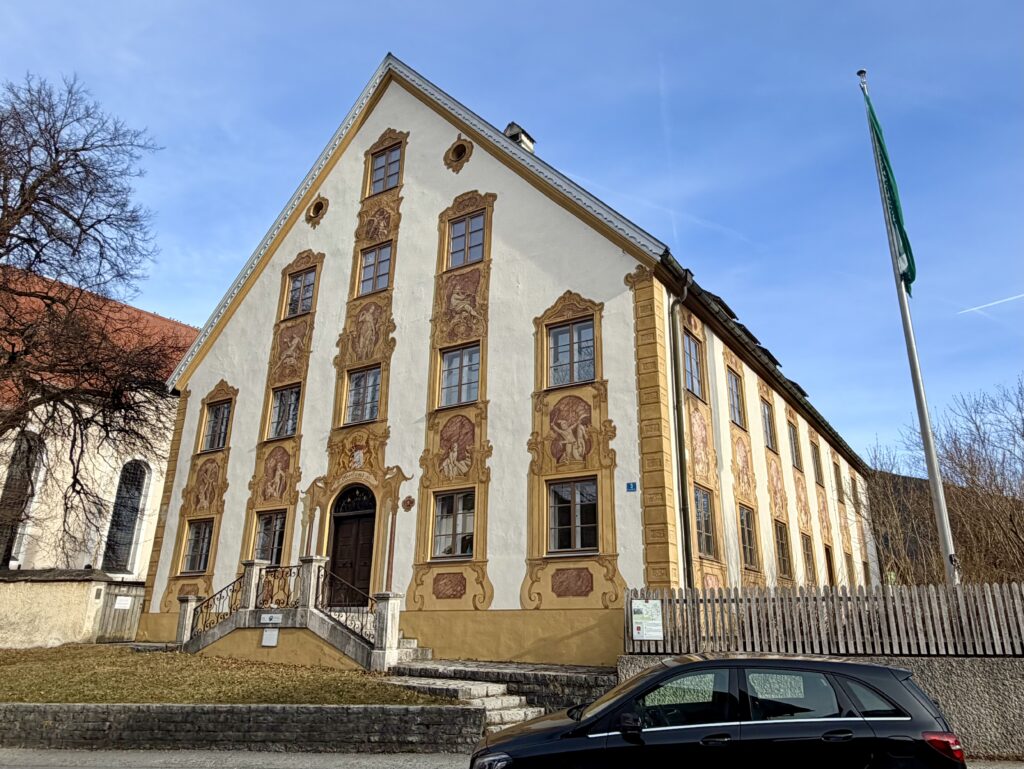
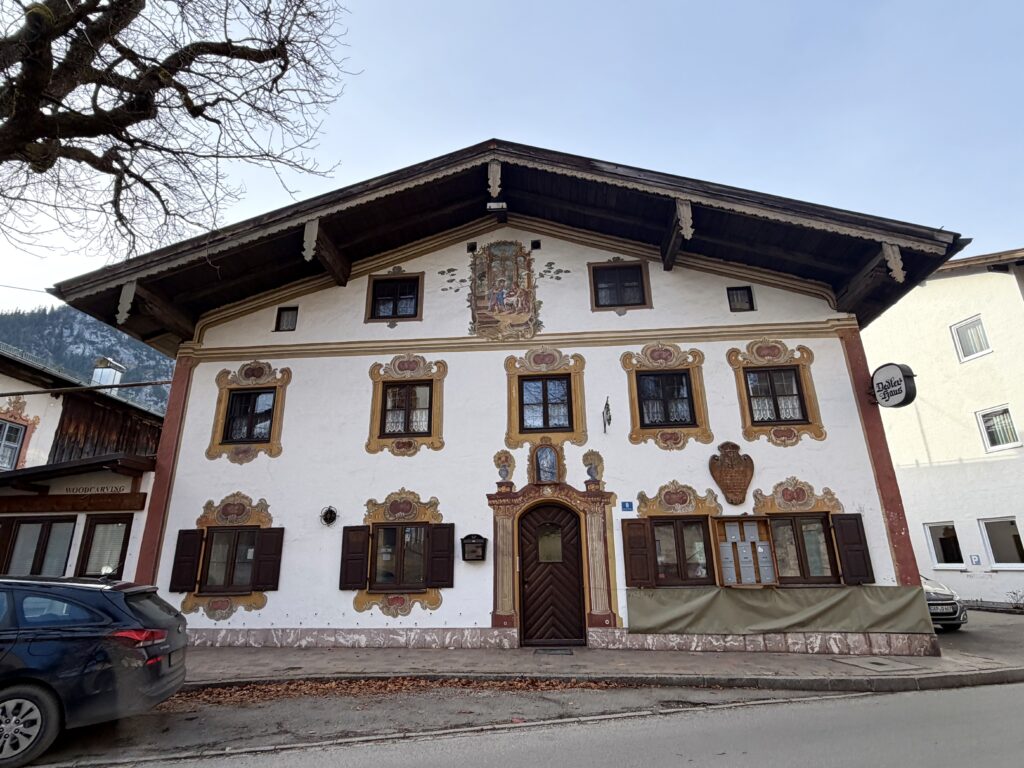
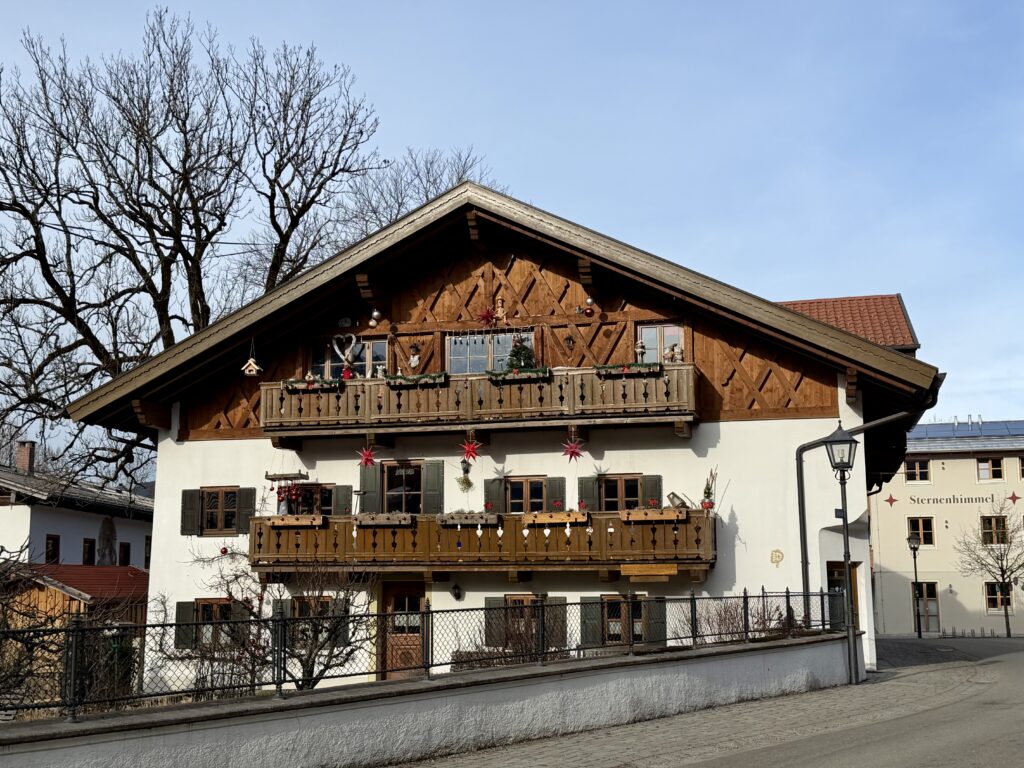
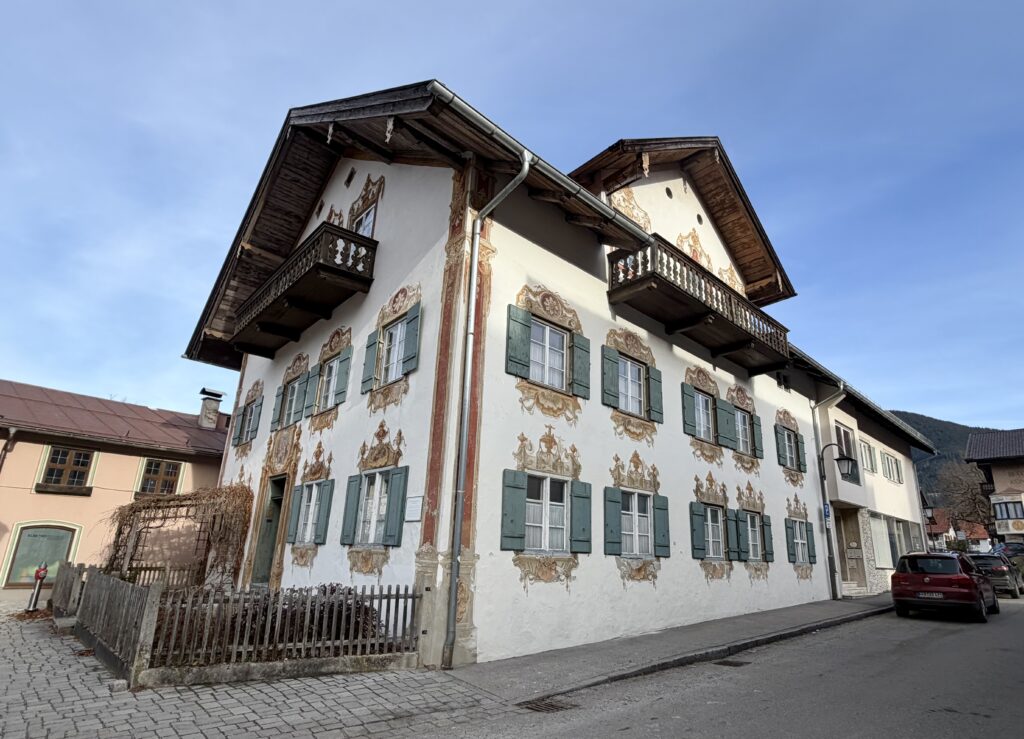
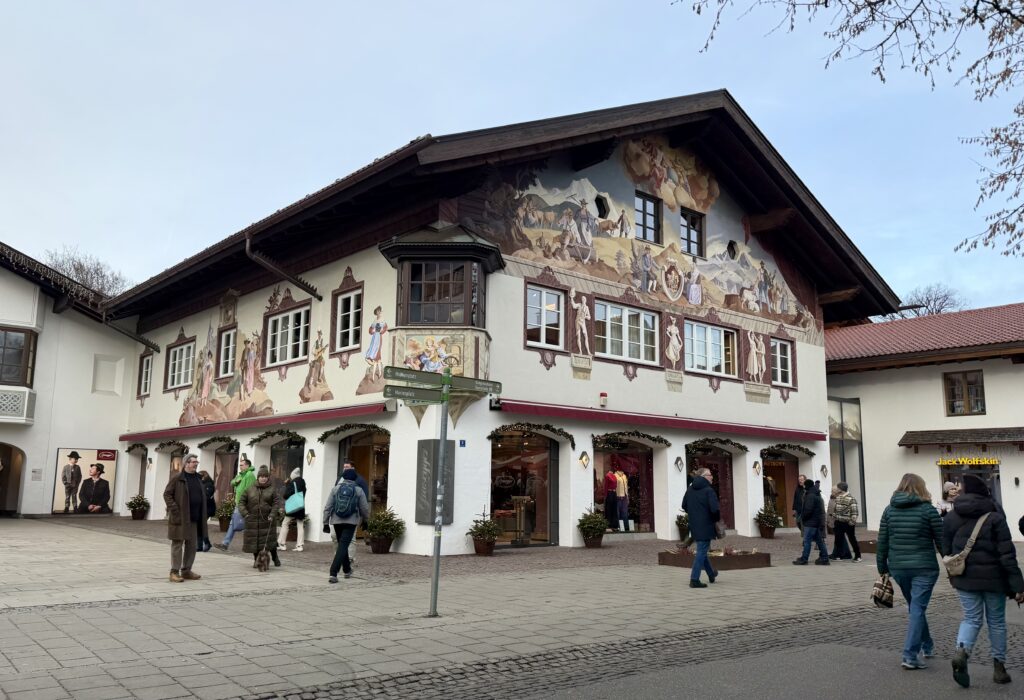
While in Munich, we did take a day trip out of town to check out Garmisch, about an hour away by car. On the way there we stopped in a small town called Oberammergau. It’s known for its woodcarvers (I actually have some wooden Christmas tree ornaments from here when I came in 2015) as well as buildings with beautifully painted murals (called Lüftlmalerei). It’s also famous for its Passion Play – performed every 10 years (it was last performed in 2022 – delayed from 2020 due to the COVID-19 pandemic; the next one will be in 2030). (https://www.eva-darling.com/oberammergau-things-to-do/)
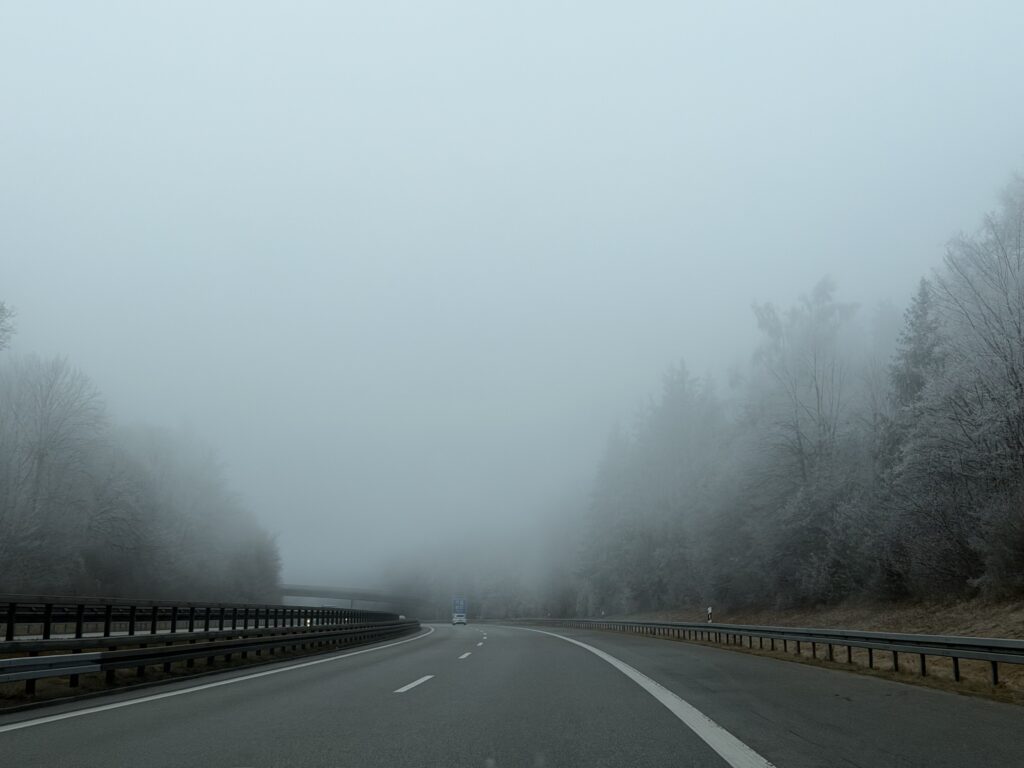
On the way, we passed through some serious fog! It was pretty to see but definitely limited being able to see the surrounding area from the road. It did thankfully clear up some as we got closer to Garmisch.
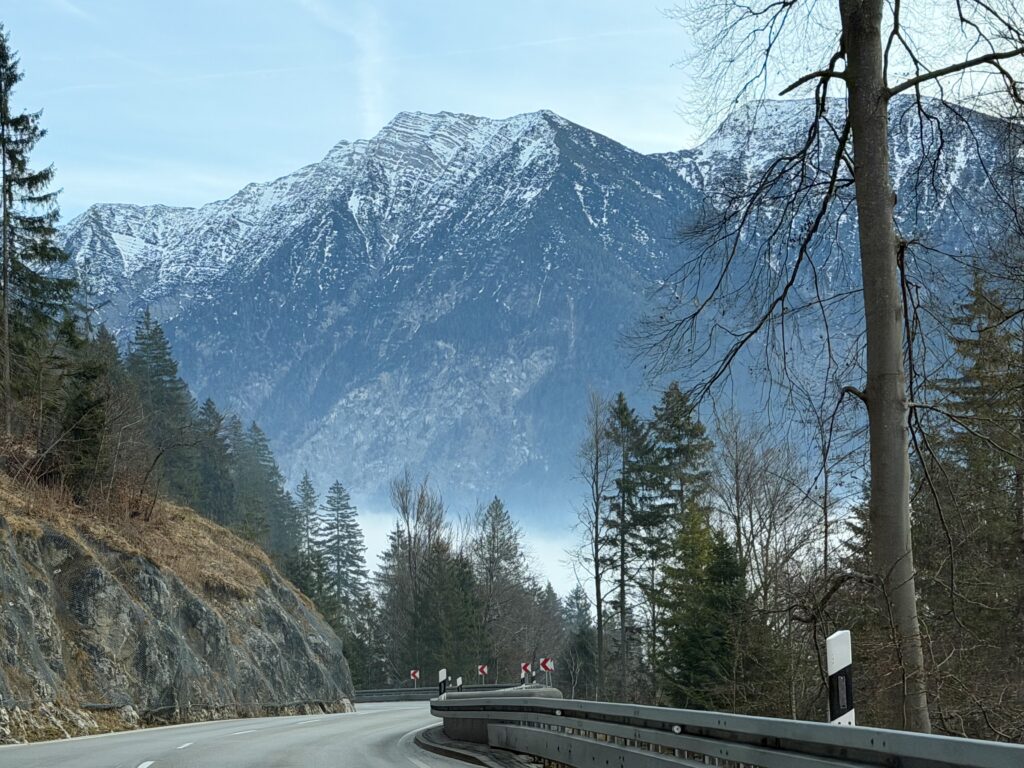
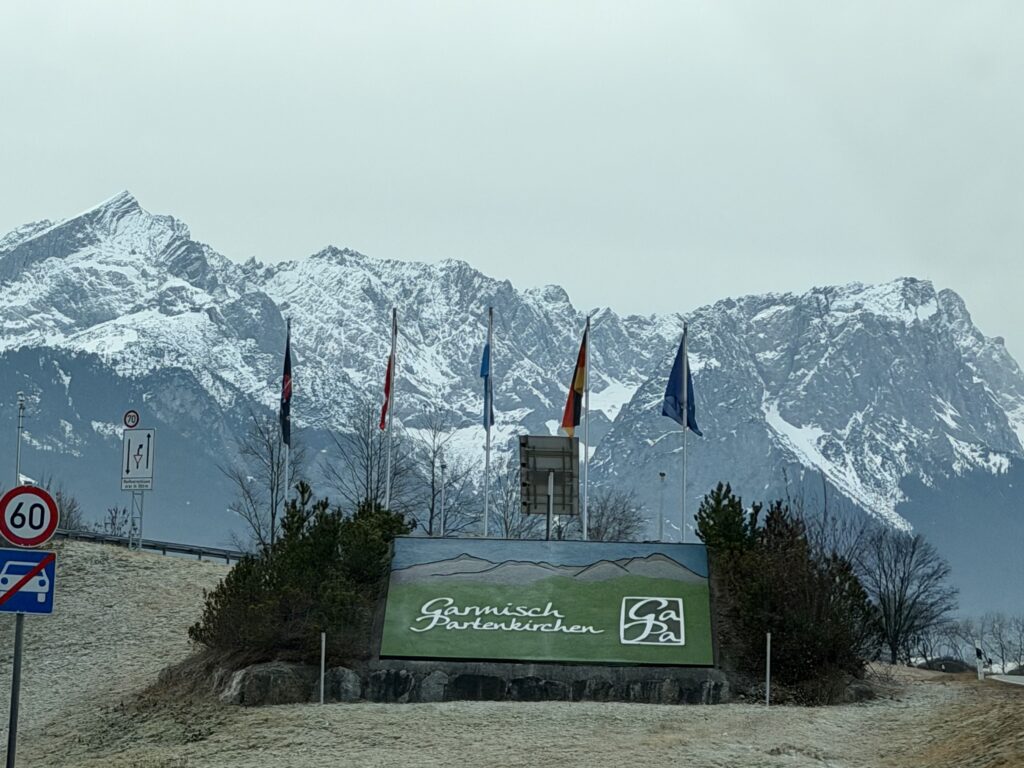
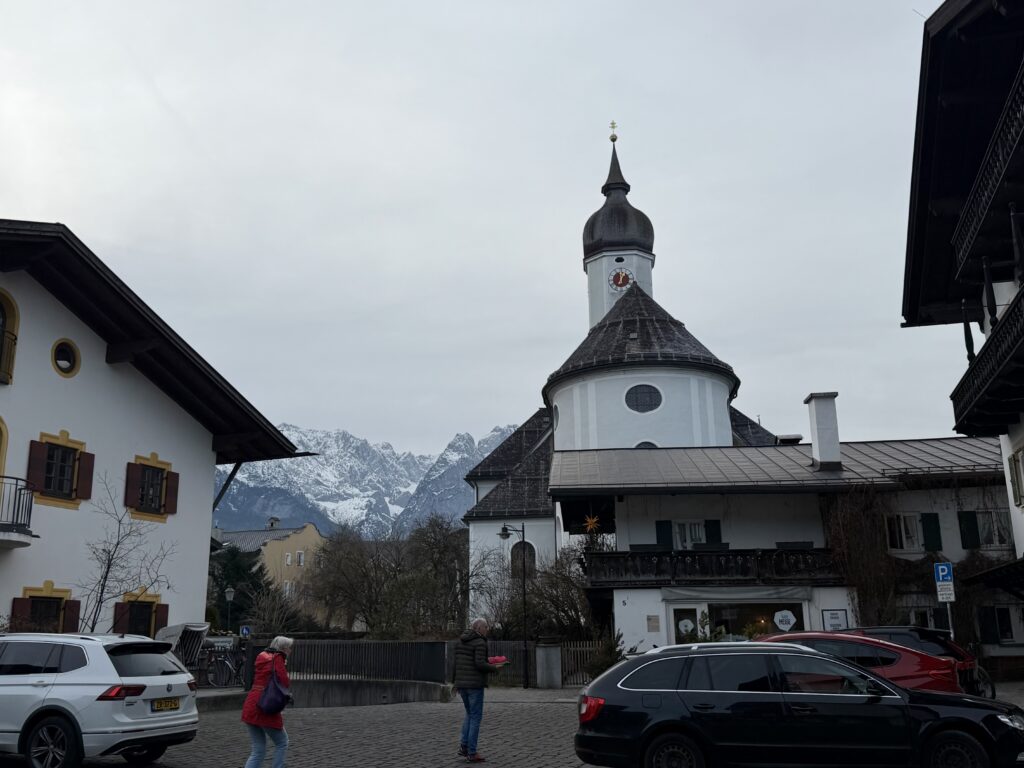
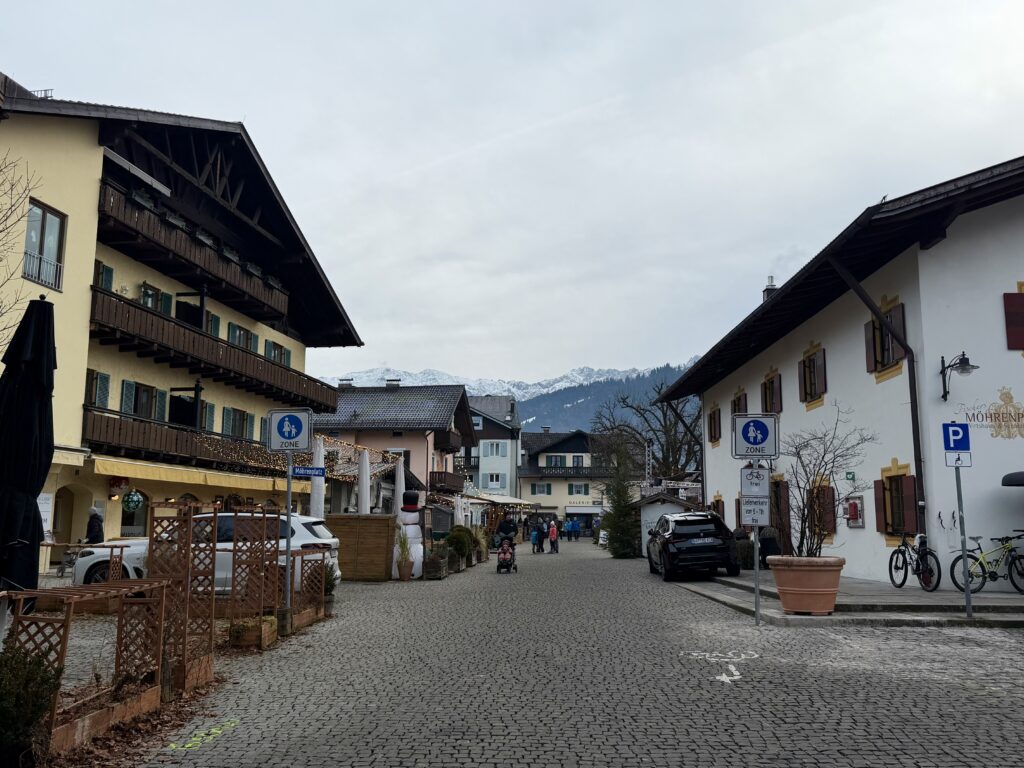
We initially planned to take the cogwheel train up into the mountain to check out the view, but it was so foggy that we wouldn’t have seen anything (and it was pretty pricey!). So we checked out the town and realized they also had a small Christmas market! The main street had a bunch of shops and we found some pretty good deals – we each got fleece sweatshirts for €15 a piece! As I’m writing this (in mid-February), I’ve worn mine nearly every day since then!
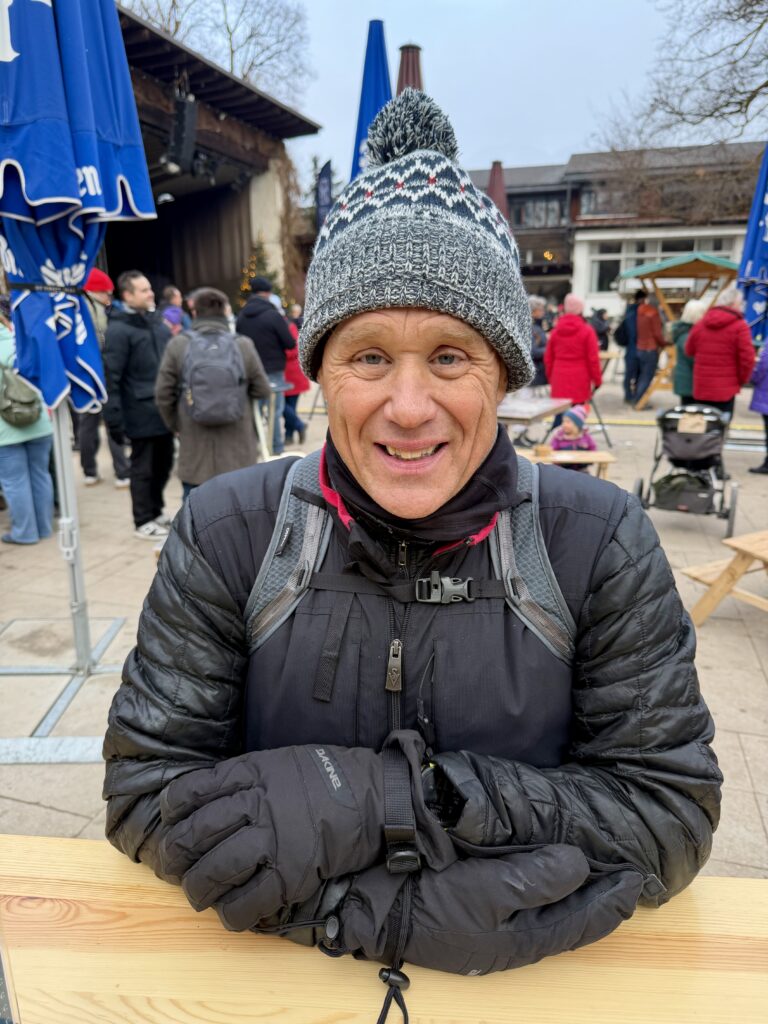
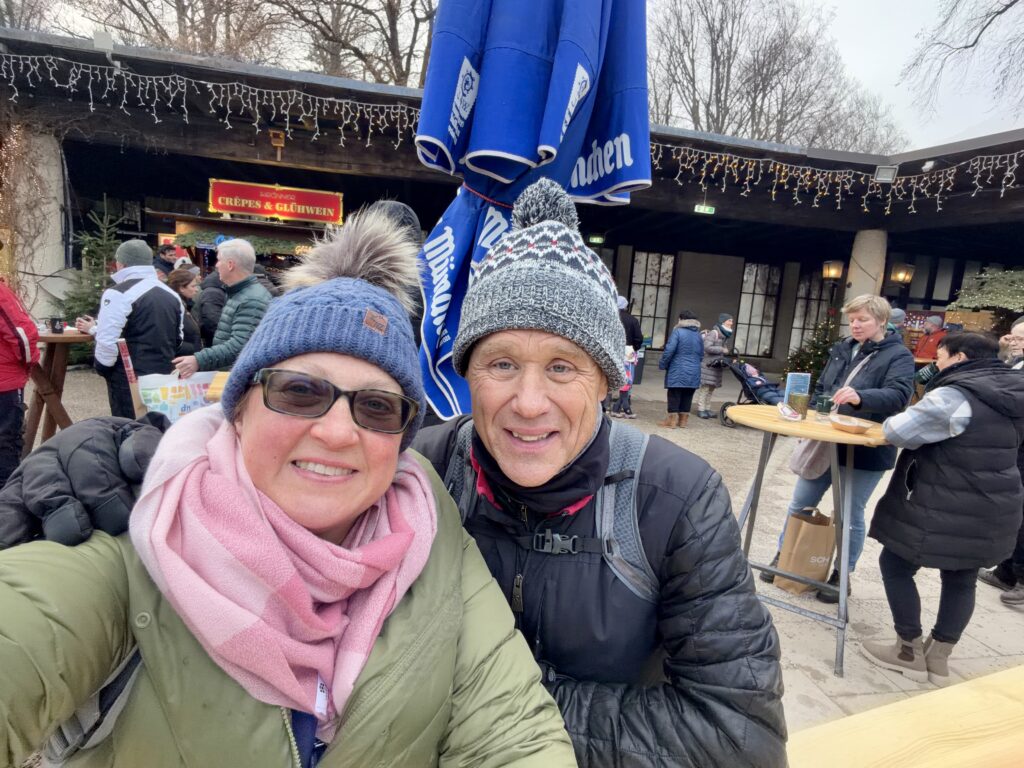
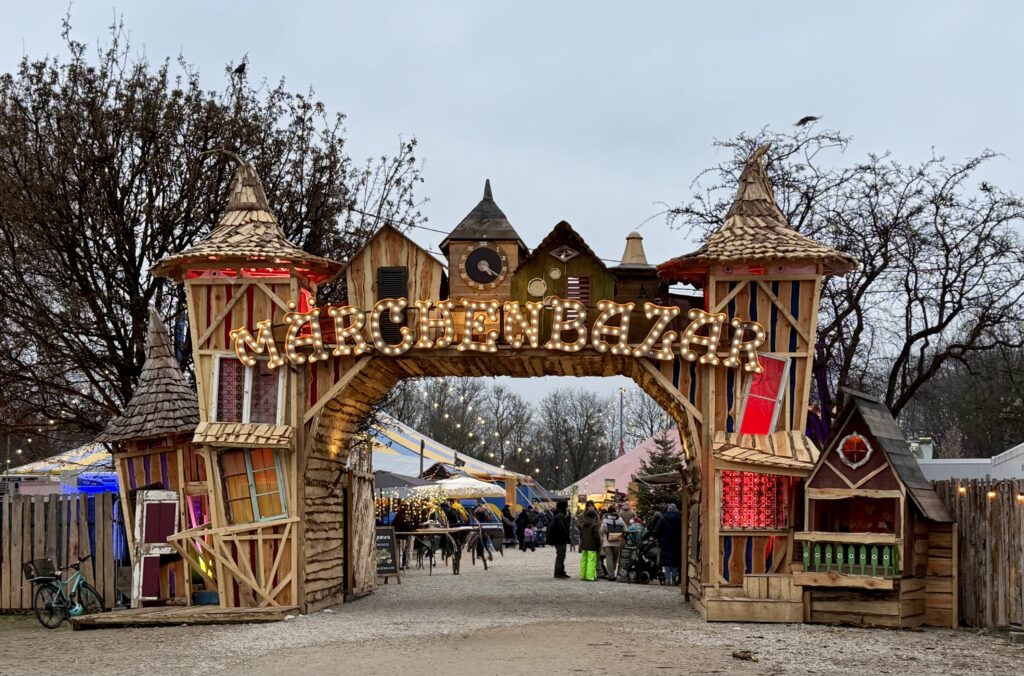
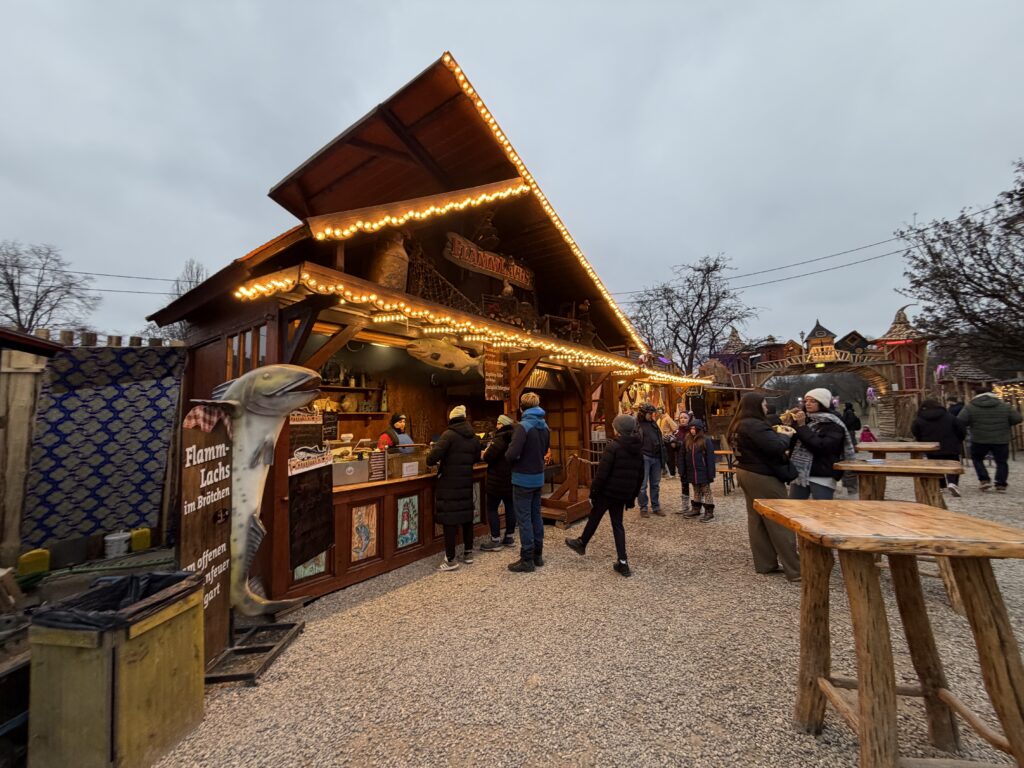
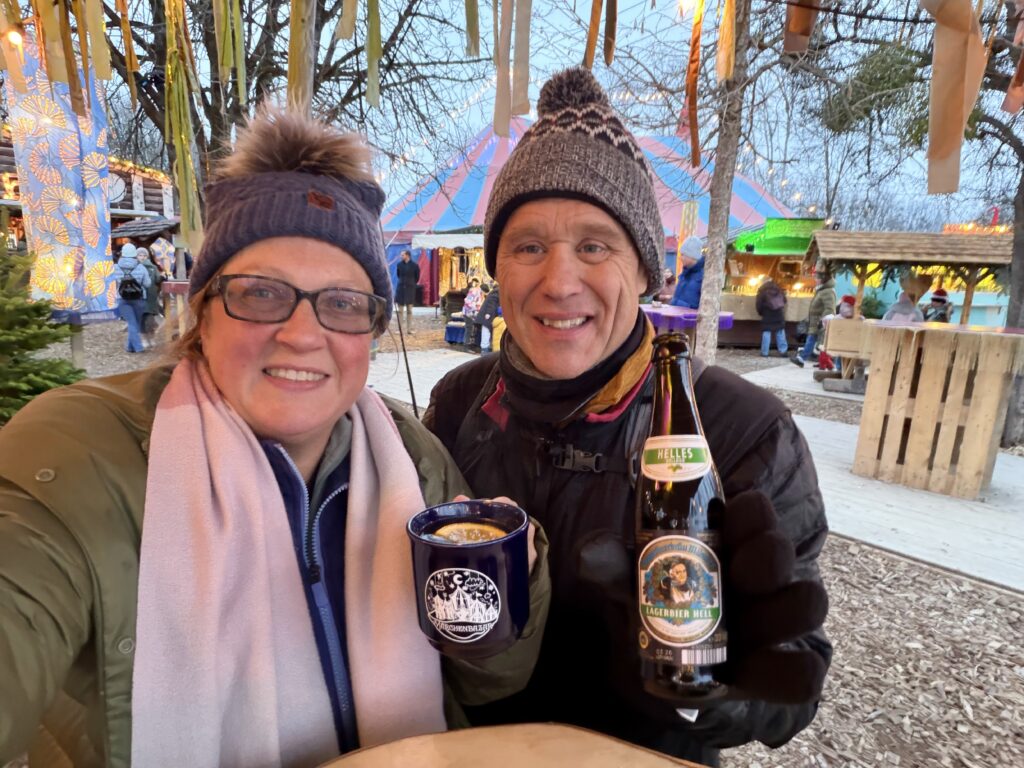
The next day we headed up to the BMW Museum and Olympic Park and also checked out another Christmas Market, called the Märchenbazar, inside the park. It was a small market with a lot of artisan booths (and food and drinks, of course!). There were also kids rides and a small fire pit to sit around and warm up (that came in handy – it was pretty cold out!).
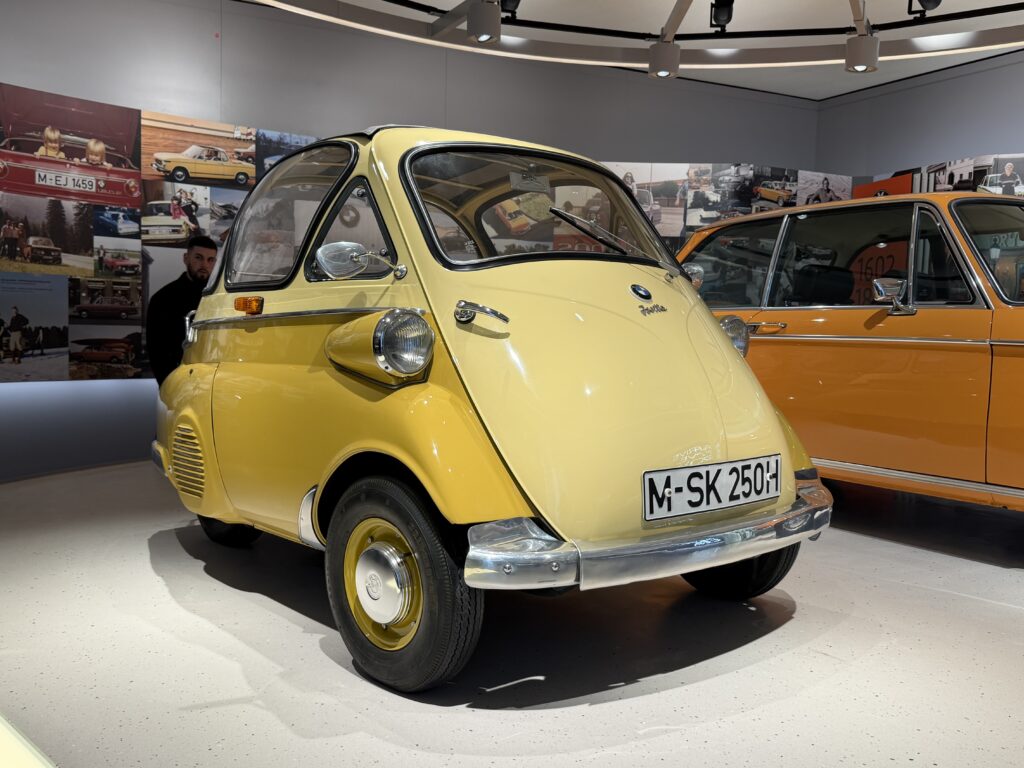
We started the day at the BMW Museum – they have a ton of history about BMW but also have (as expected) a ton of cars. We got timed-entry tickets for about an hour after we arrived (we bought them when we got there) so we also went across the street to see the Welt (pronounced “velt”), which was a free portion with some neat cars. The museum included a longitudinal display of their cars over time but the old ones were my favorite! They also had a well-done display about their history as a company in WW2 (acknowledging their reliance of forced labor/prisoners). It’s something very common in Germany – they make a point to talk about their history, however uncomfortable it is, to ensure that it doesn’t happen again. I’ll touch on that more in a different post.
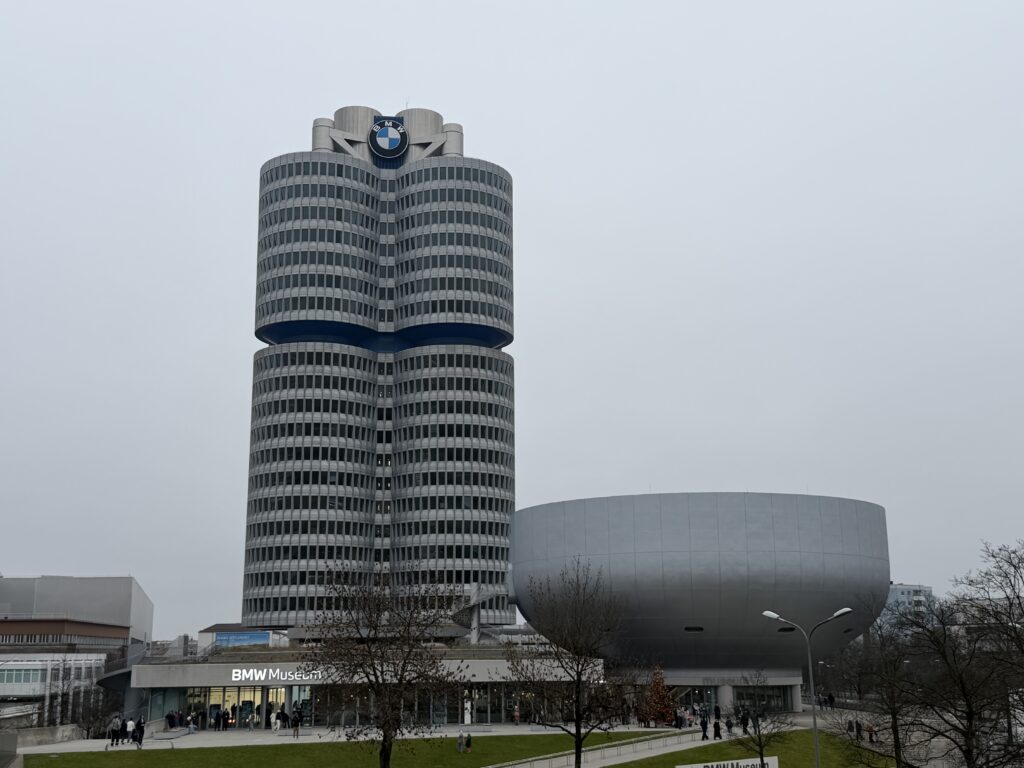
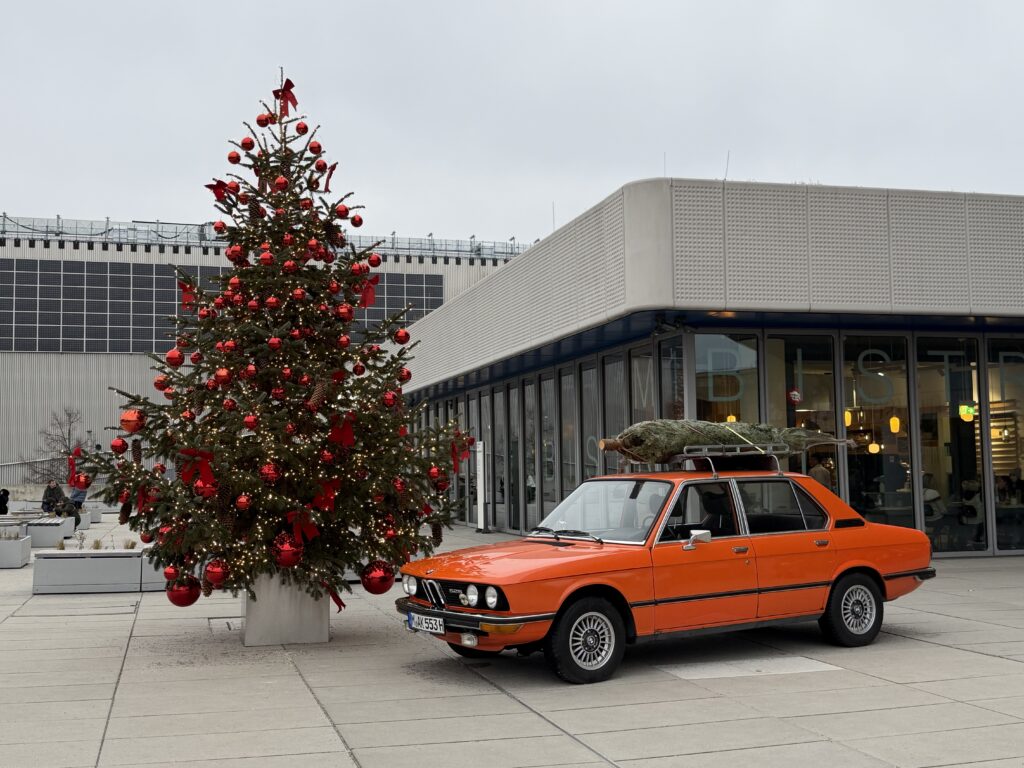
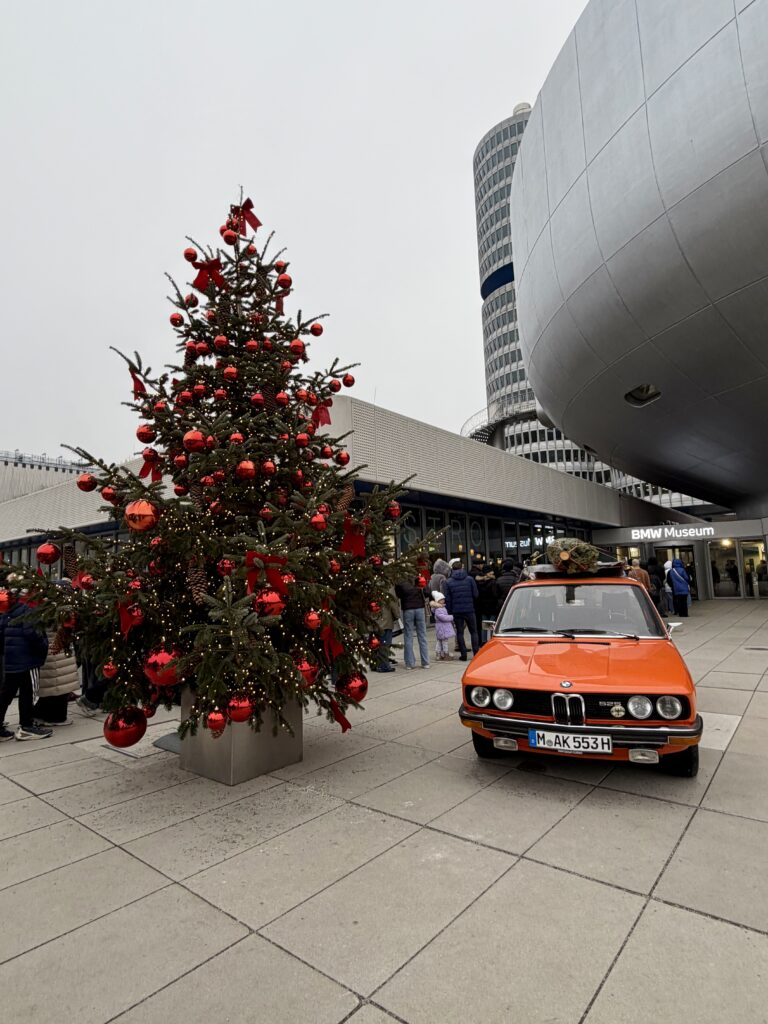
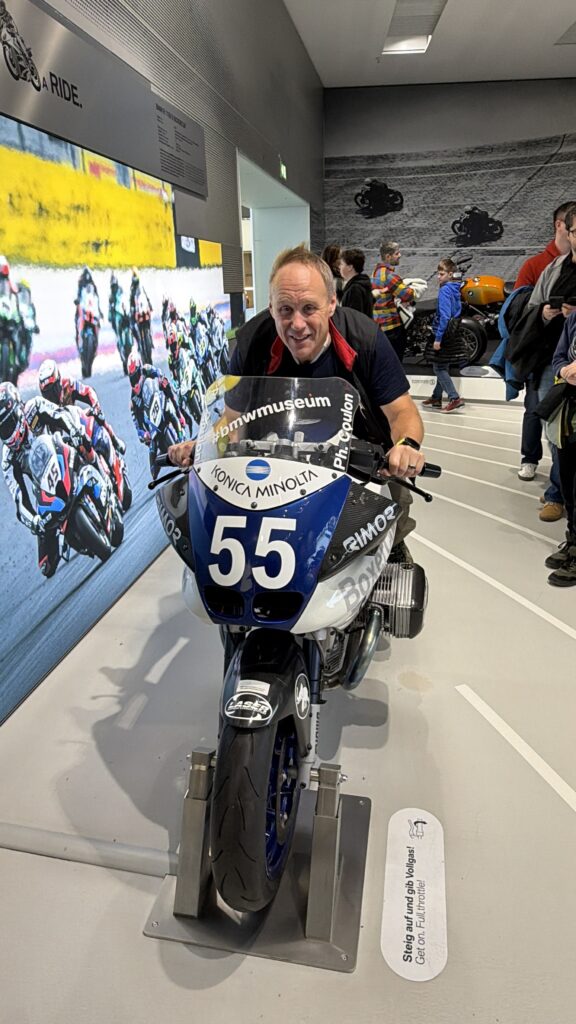
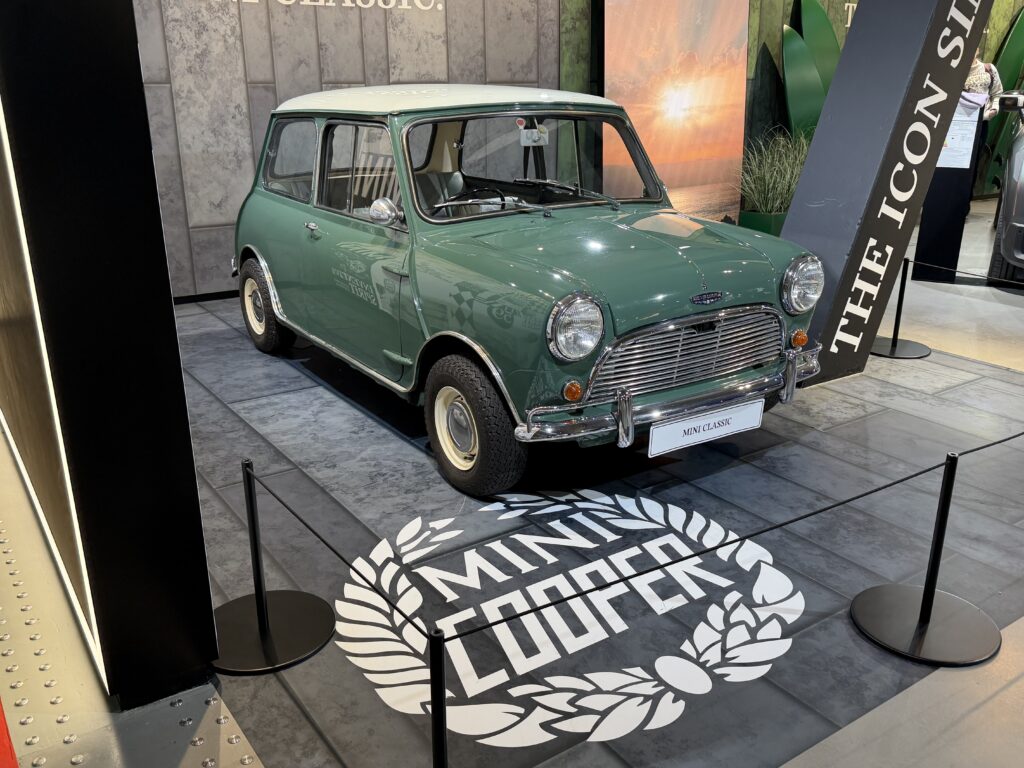
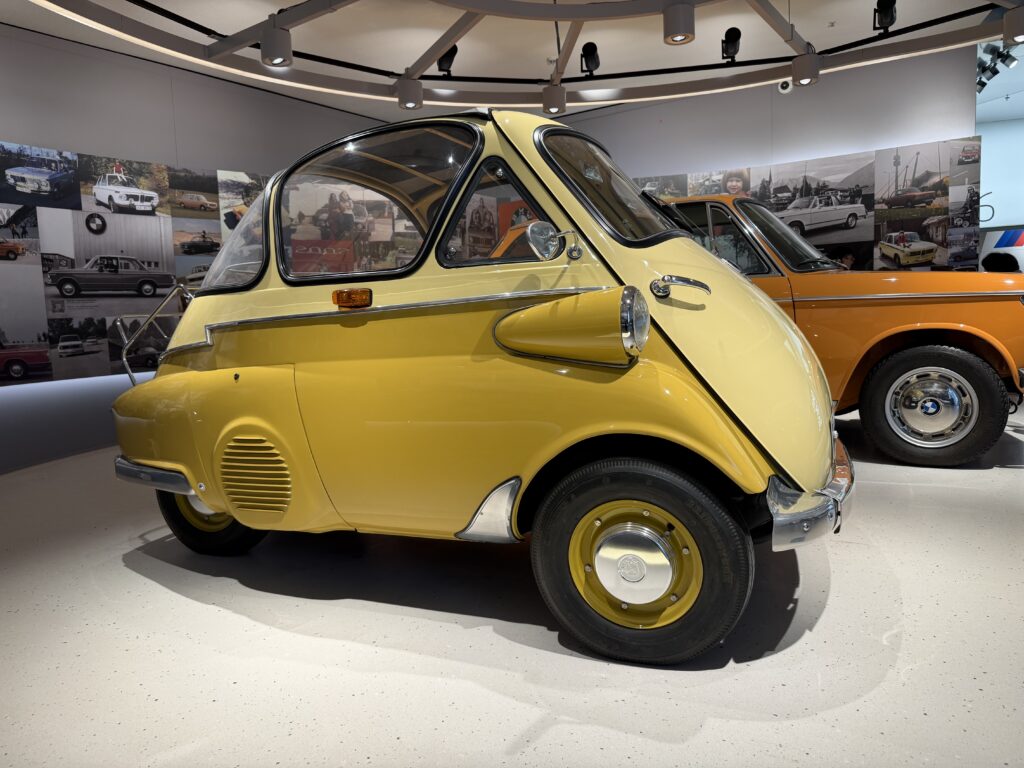
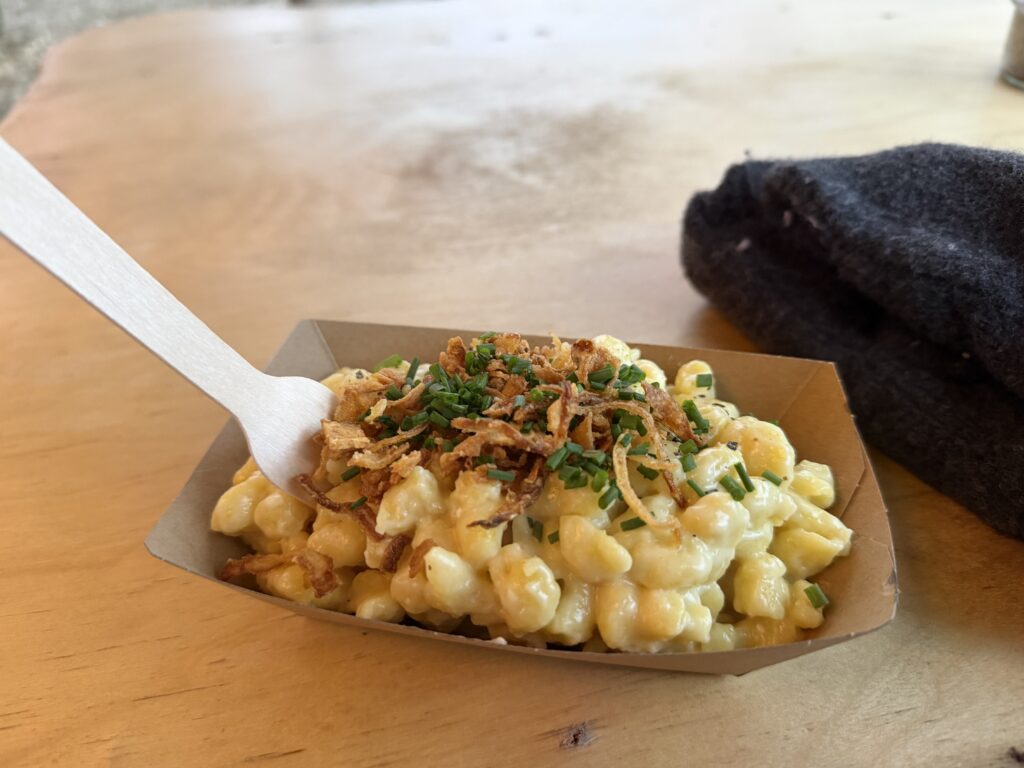
After we left the museum, we made our way over to the market, where we had some good food and wine/beer and enjoyed a relaxing market. This one was much less crowded because it’s a bit out of the way. It was a small market but it was cozy and relaxing.
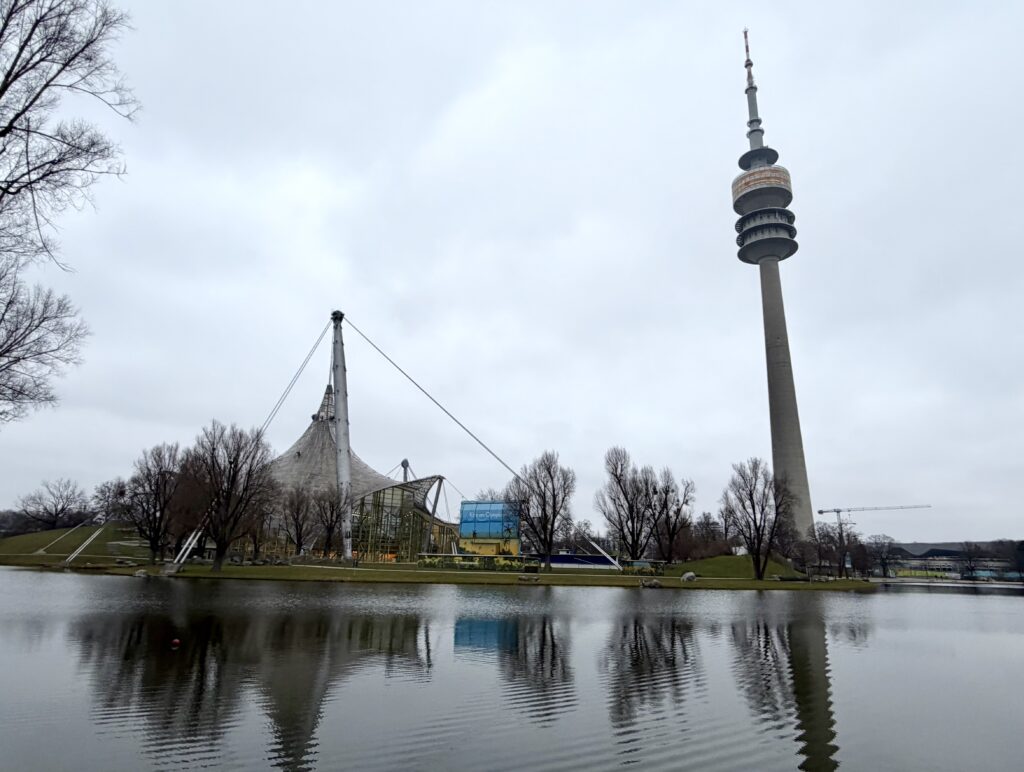
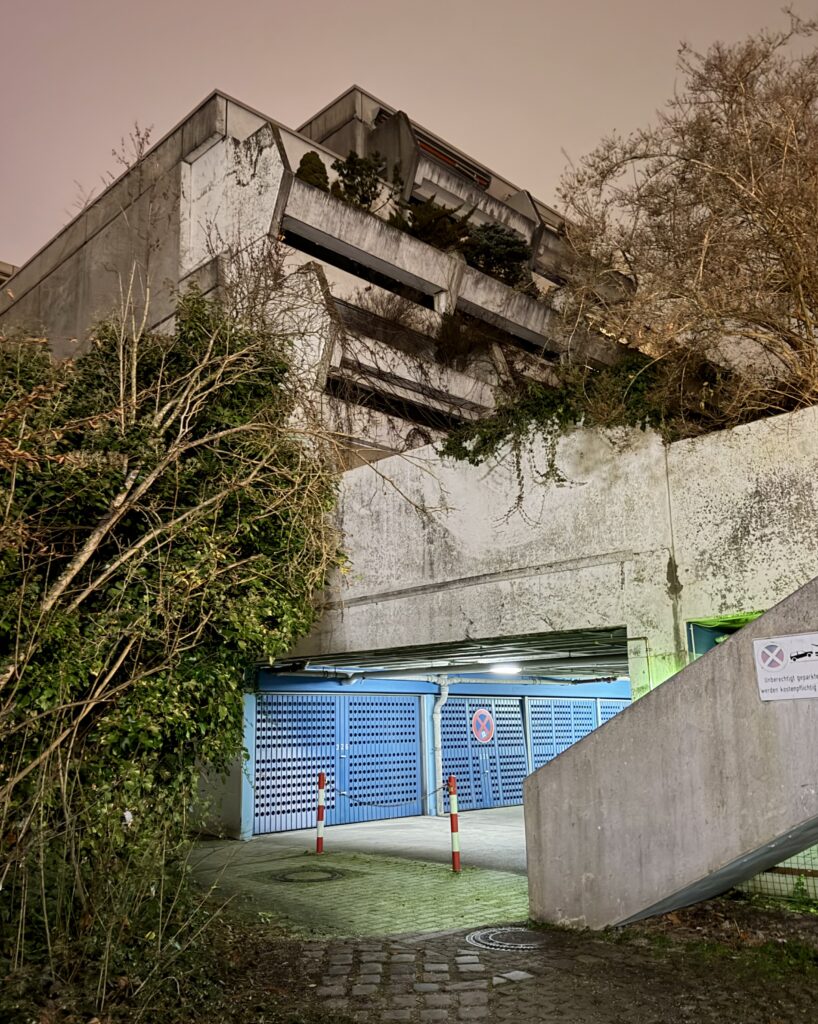
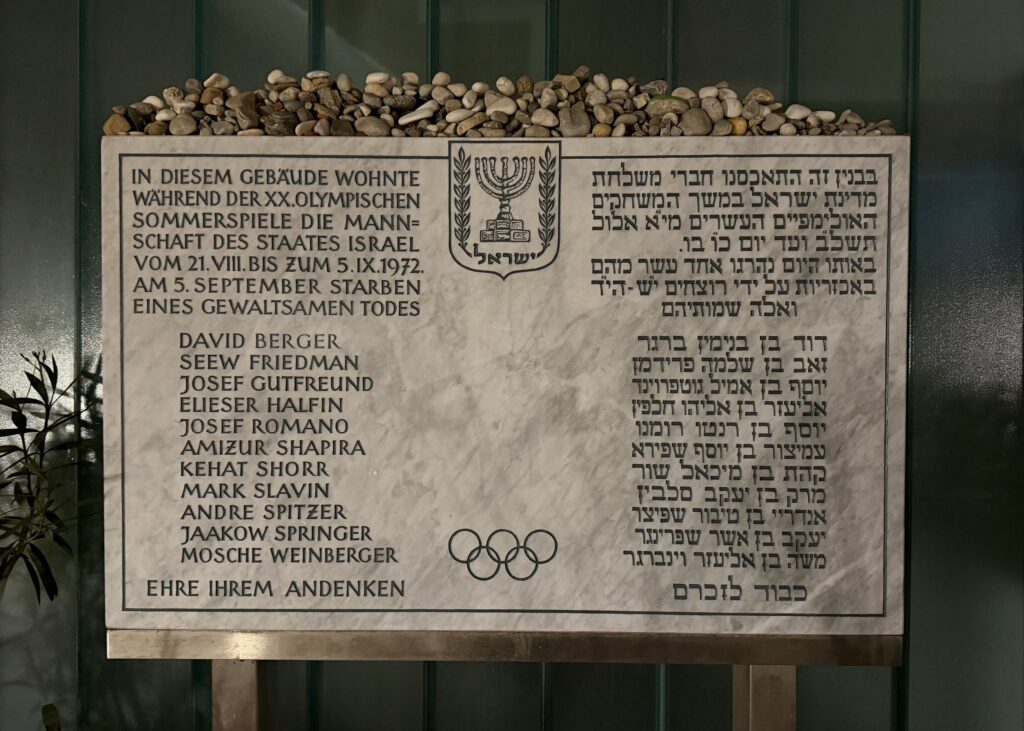
We also went through Olympic Park. The Munich (Summer) Olympics in 1972 are particularly remembered because of the Munich Massacre – a Palestinian terrorist group (Black September) took Israeli athletes hostage for their rooms in the Athlete’s Village. Two were killed in the Athlete’s Village (a wrestler and a wrestling coach) and another 9 died at the airport (along with 5 of the terrorists) in a failed rescue attempt. A memorial was opened in the park in 2017 and we were able to walk through it and read about the story and about the athletes who were killed (https://www.juedisches-museum-muenchen.de/en/offer/details/memorial-to-the-1972-munich-massacre-38). Then Chris looked it up and we realized the Athlete’s Village was nearby – it’s a current apartment complex (they repurposed a lot of the structures used for the Olympics so that they didn’t go to waste). The units where the Israeli athletes were staying don’t appear to be in use and there is a memorial at the complex to those killed.
The memorial plaque is in German and in Hebrew and reads “This building housed the Israeli national team during the 20th Summer Olympic Games from August 21st to September 5th, 1972. On September 5th, the following died a violent death:” and the names of the athletes are listed then at the bottom it says “in honor to their memory” (caveat – I don’t speak German or Hebrew so I used Google Translate on the German words; if you speak German or Hebrew and I have that translation wrong, please let me know and I’ll fix it)
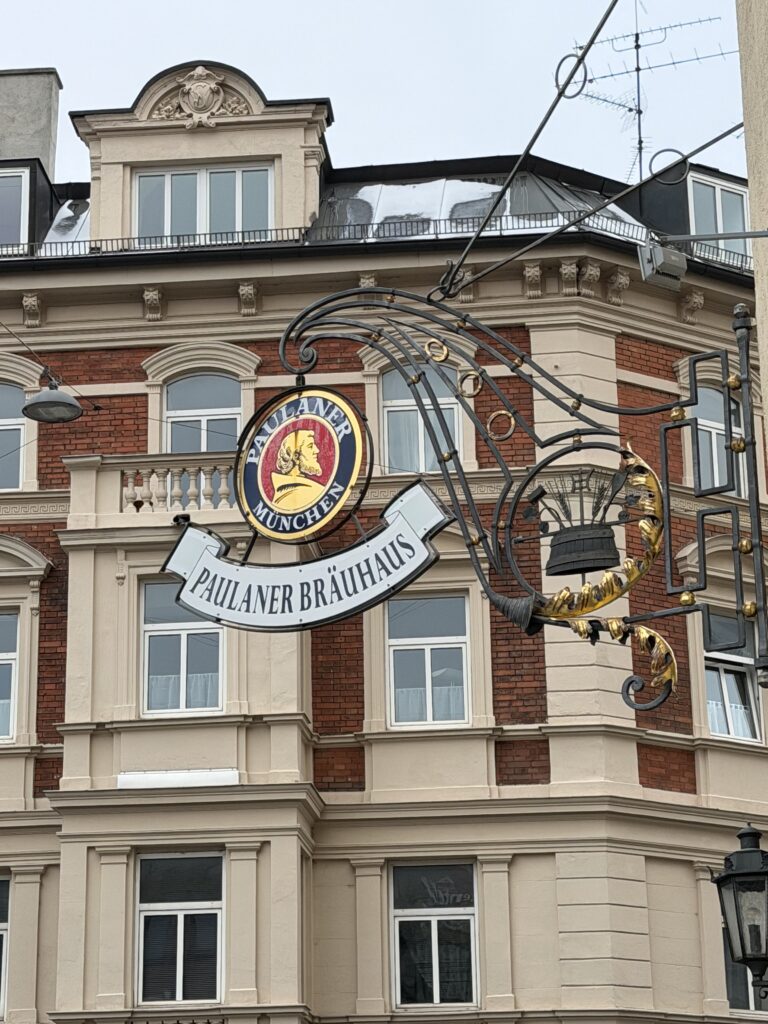
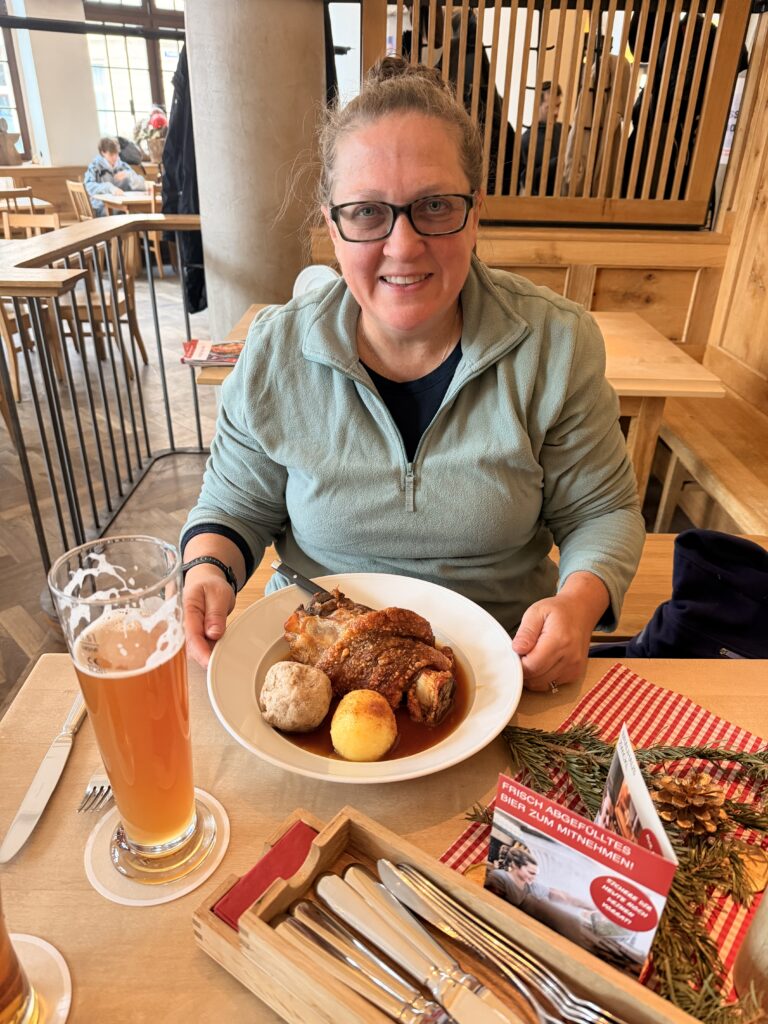
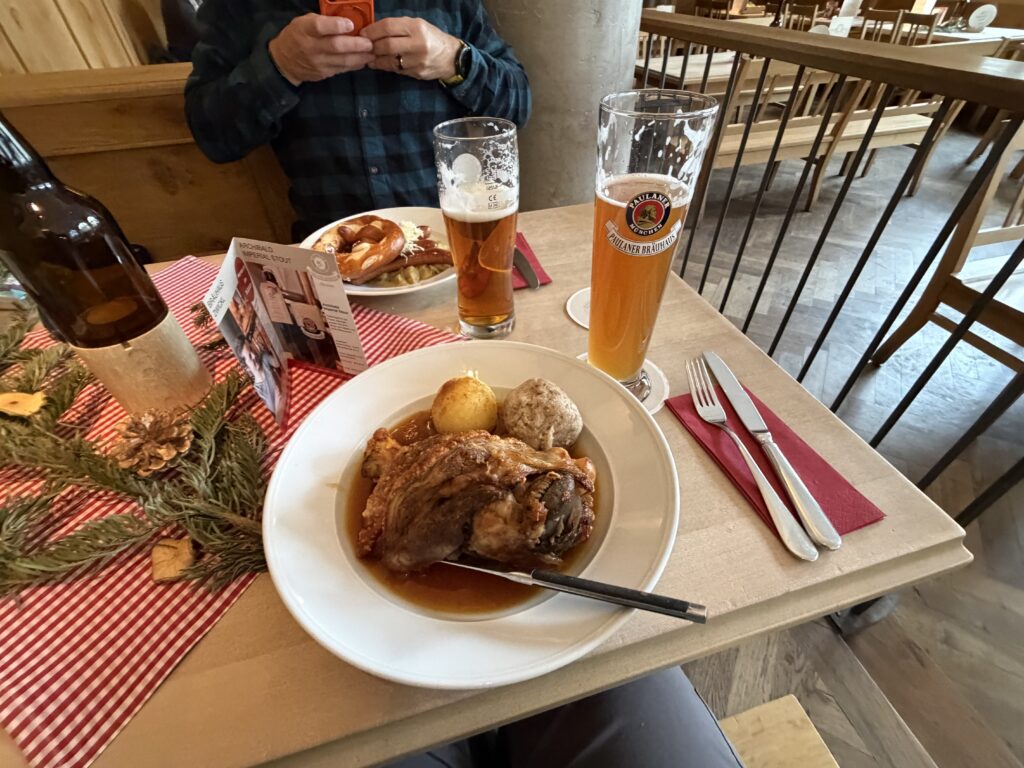
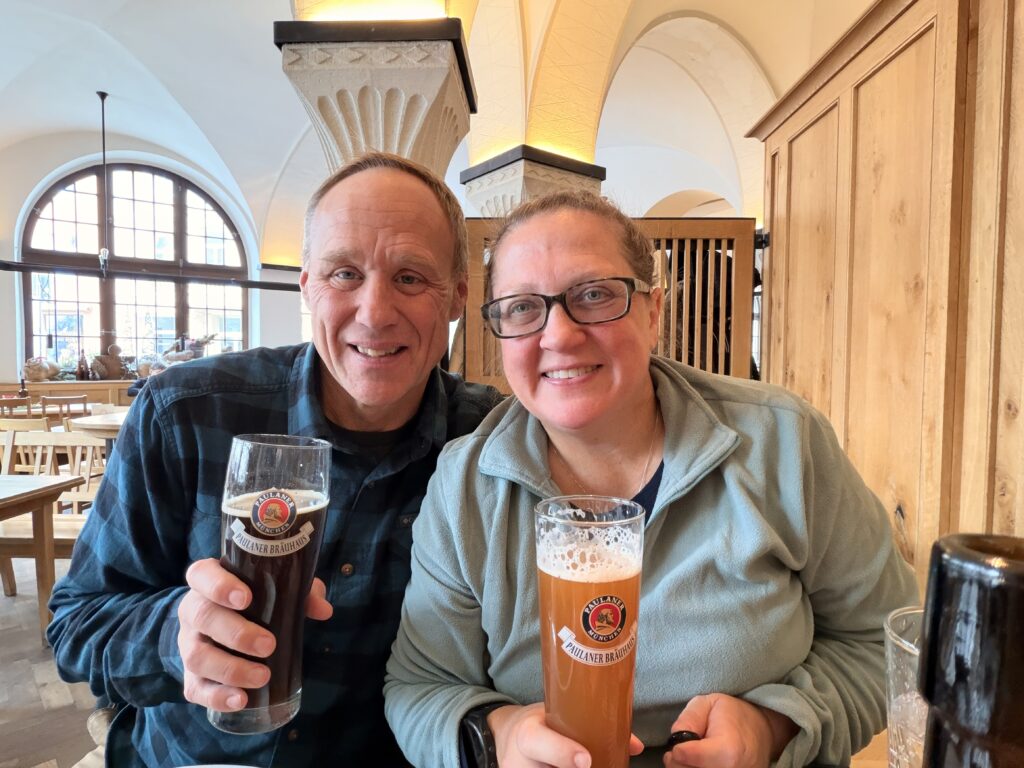
On our last day in Munich (Christmas Day), we had reservations at 2 different beer halls. When I initially started looking up things to do in Munich on Christmas Day, I assumed we’d be having a quiet day at our VRBO and cooking a meal. But it turns out that going out to lunch/dinner at the beer halls is a popular things to do on Christmas Day! We had a reservation at Paulaner at noon then another one later (at 1530) at Augustiner-Keller. I was so full after Paulaner that I didn’t eat much at Augustiner later but it was a lot of fun! I had a pork knuckle and Chris got a bratwurst platter.
The next day we returned our rental car and took the train up to Nuremberg to spend a week there. Stay tuned for more about that week!