
After our stay in Florence, we stopped for 2 nights in Siena. Once we got into town we dropped our bags in a locker and started exploring the city until we could check into our hotel. Siena is a hill town – which is exactly what it sounds like. It’s up on a hill in Tuscany.
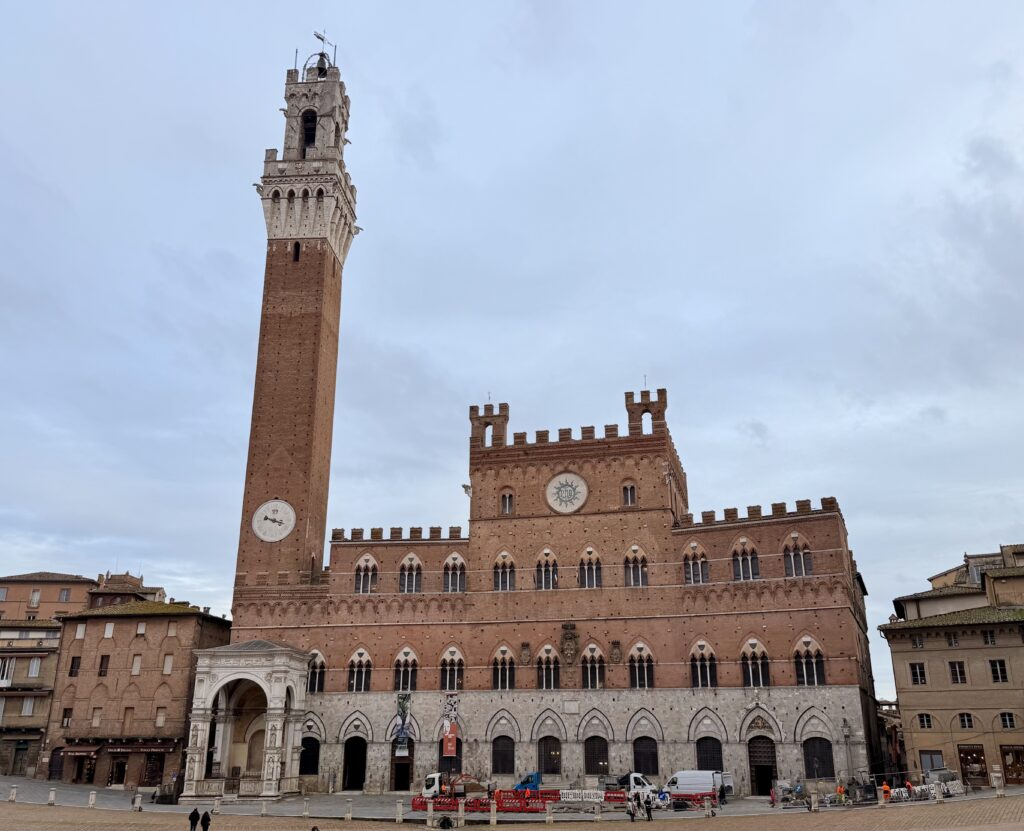
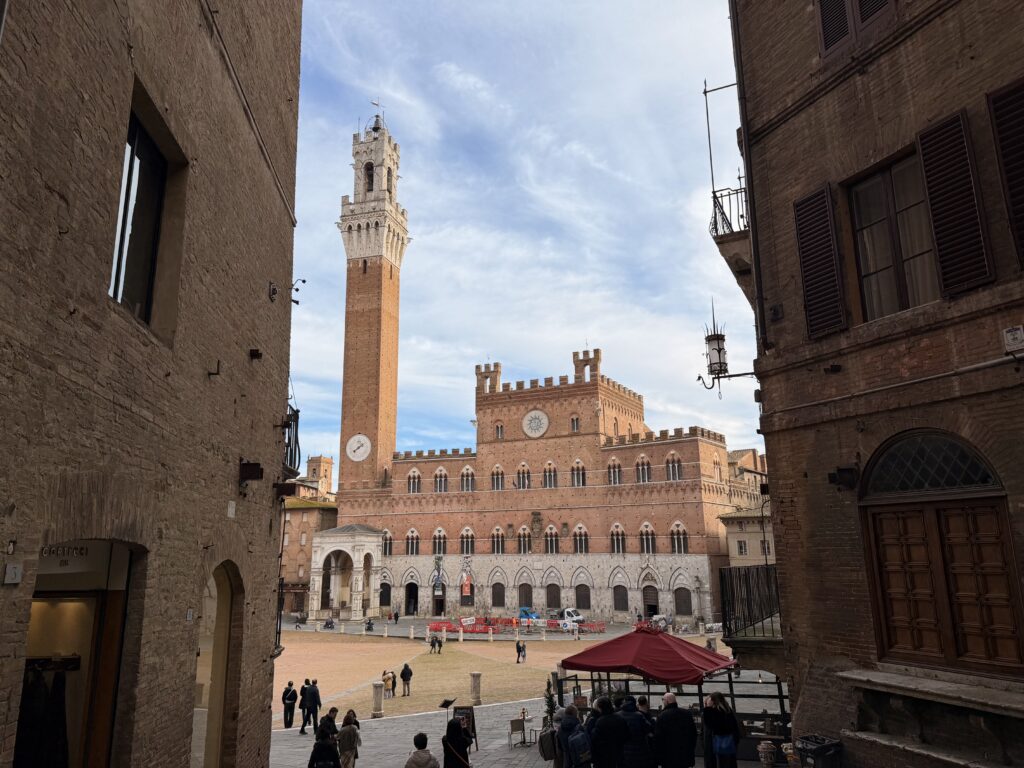
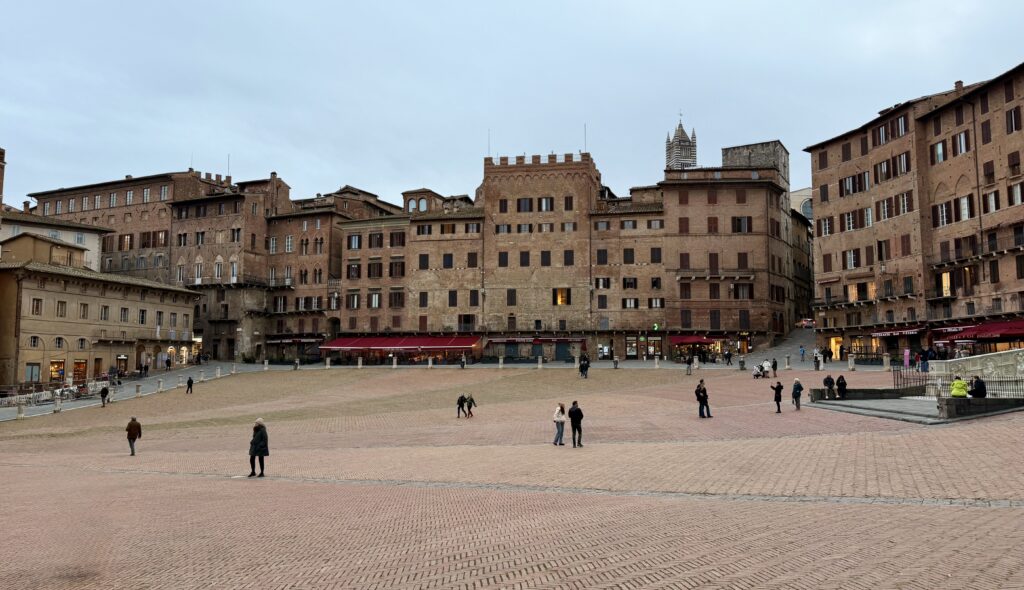
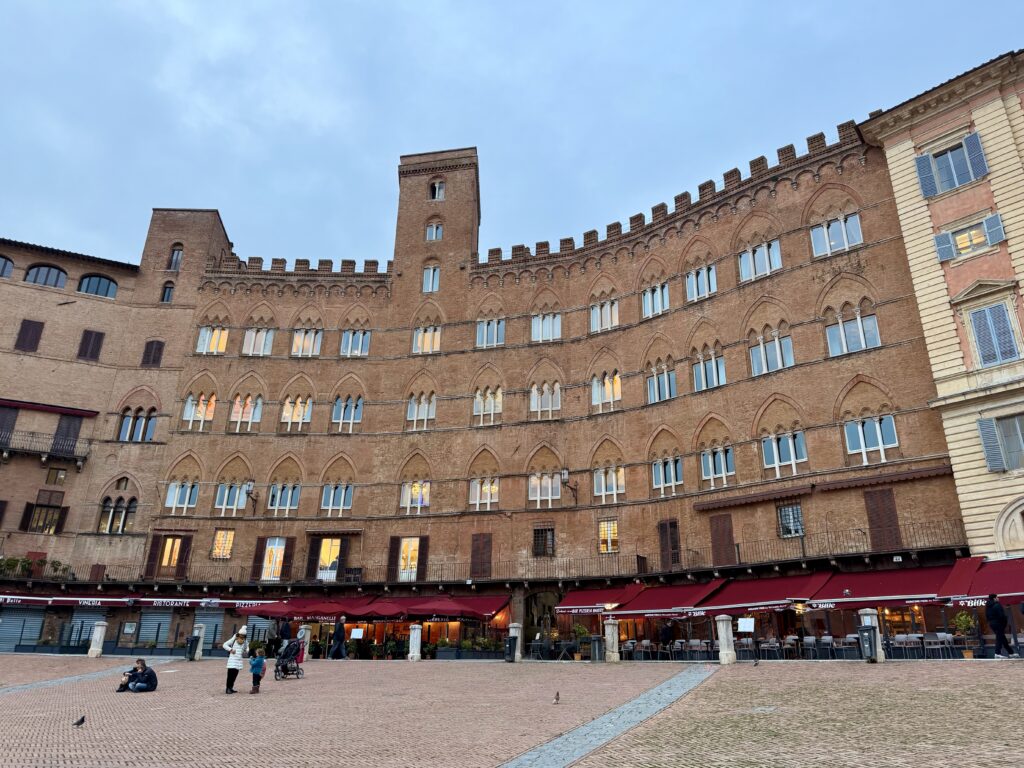
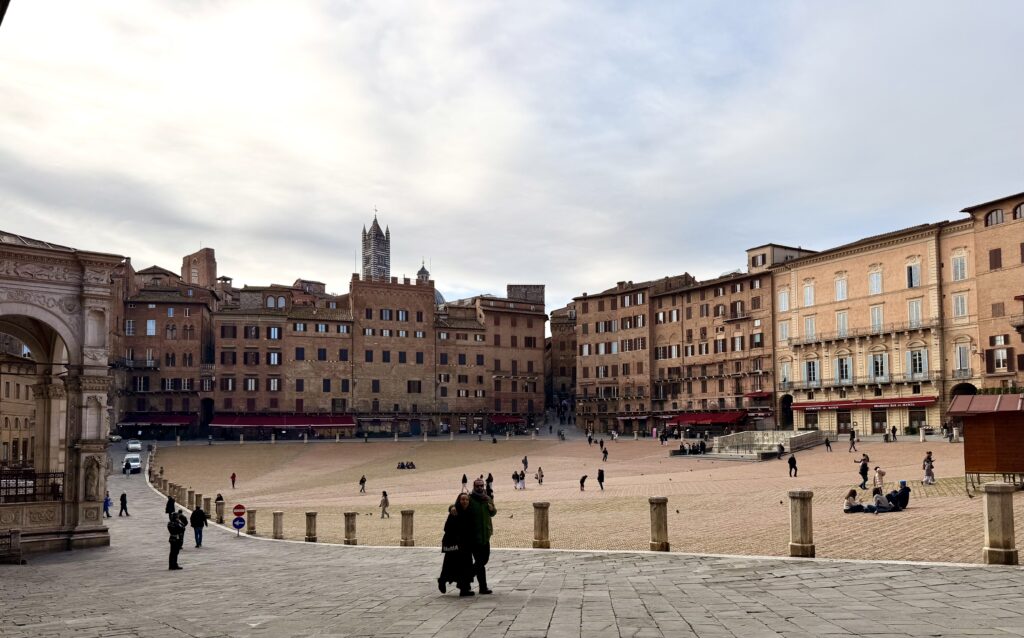
One of the main sights is the Piazza del Campo / Il Campo square. The Piazza Pubblico (city hall) and the Fountain of Happiness are on the square and it’s also famous for the annual Palio horse race (the first 3 minutes of this video show the Palio – https://youtu.be/pzkQC2zYmGU?si=JCo8GqUOv-XldWn7). It’s held twice every summer (July 2 and August 16) in the Piazza. Look at these pictures and imagine around 60,000 people in this square! They put clay over the cobblestones for the track around the perimeter and padding on the walls (to protect the horse and rider and the walls). There’s a horse and rider pair from 10 of the 17 Siena districts (called contrade; https://www.terredisiena.it/en/siena-en/the-contrade-of-siena/) and they do 3 laps around the track (it lasts about 90 seconds total). It was obviously a good bit less crowded when we went! There are also a bunch of restaurants lining the square – it was a nice place to sit and enjoy the view and people watching but not the cheapest or best food (pretty touristy).
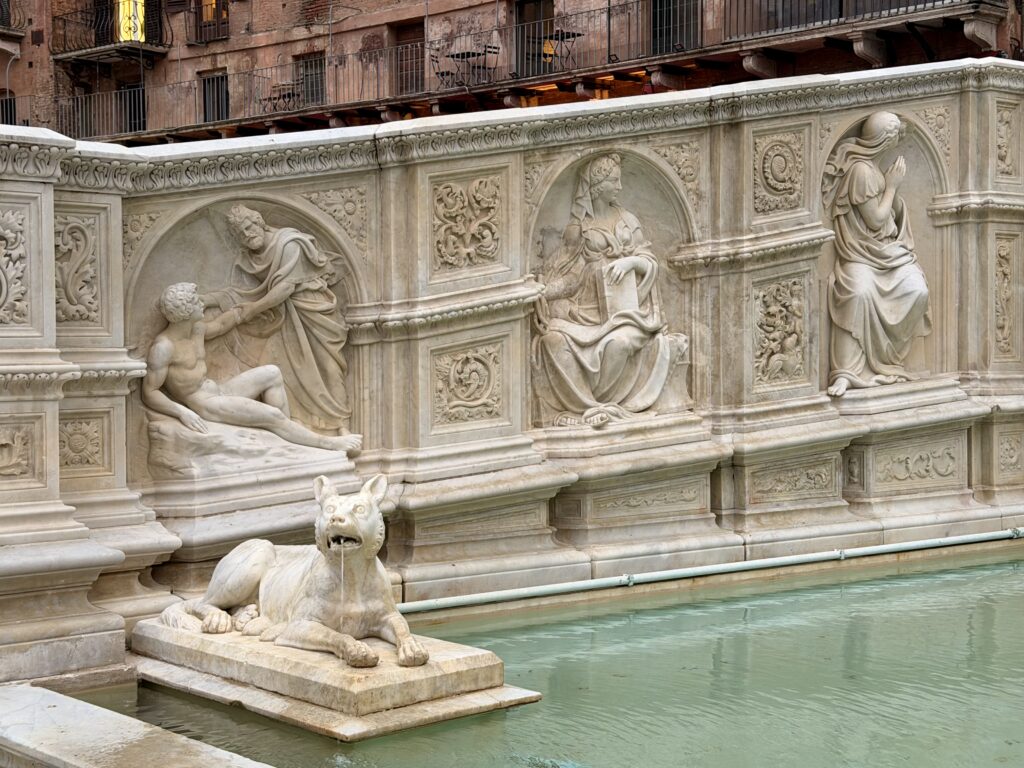
Inside the square is the Fonte Gaia (the Fountain of Happiness). The original was completed in 1419 but this one is actually a 19th century copy – completed in 1858 (the original is in the Santa Maria della Scala museum on the square). The she-wolf theme is seen throughout Siena, representing Romulus and Remus – the two twins who were Rome’s founders and fed by a she-wolf. (https://guidaturistica-michelebusillo.com/the-fountain-of-piazza-del-campo-in-siena/)
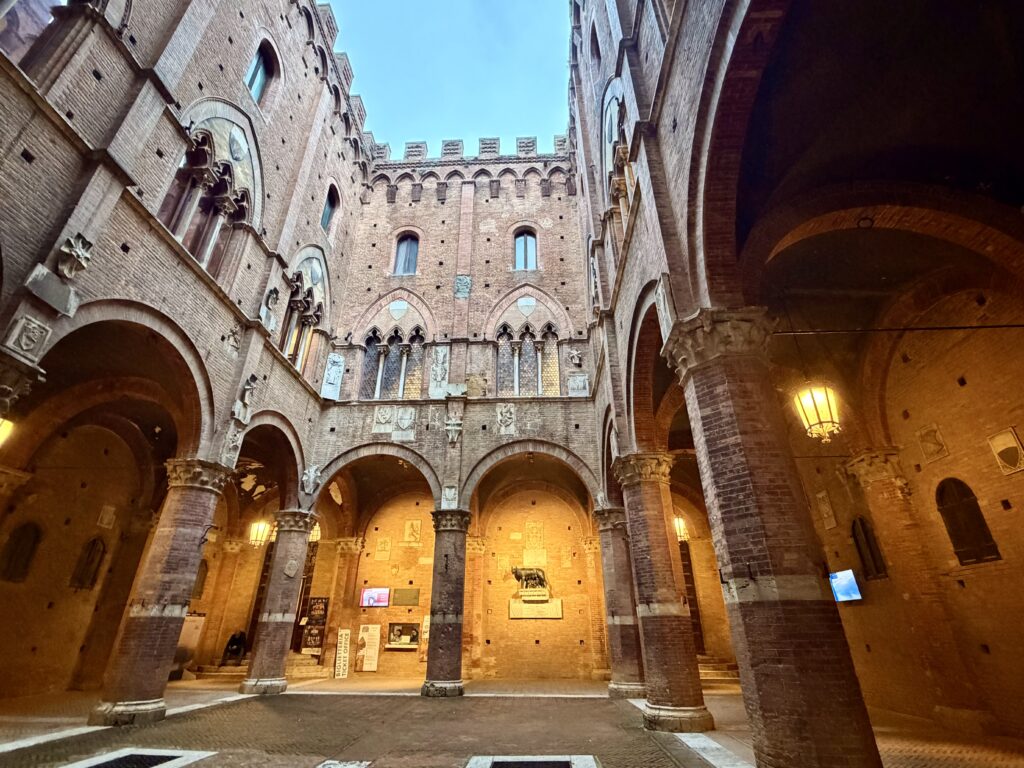
The Palazza Pubblico (the old government building) now houses a Civic Museum. You can walk into the courtyard without going in the museum itself – the courtyard itself was pretty impressive! Hard to capture in a picture because its ground footprint is relatively small compared to its height so I did a short video to capture it better.
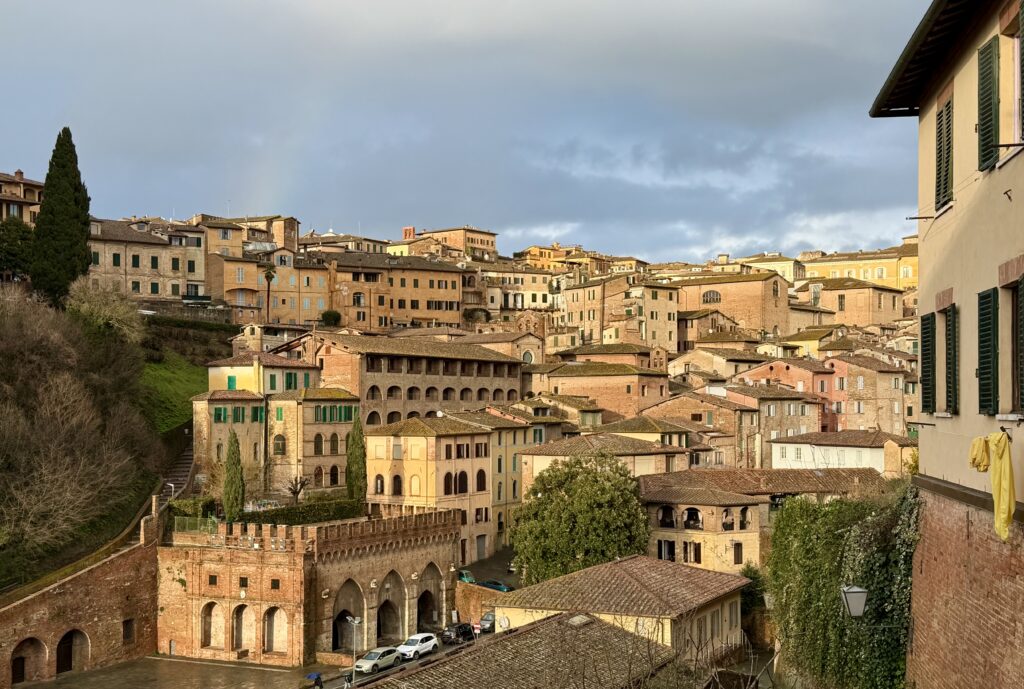
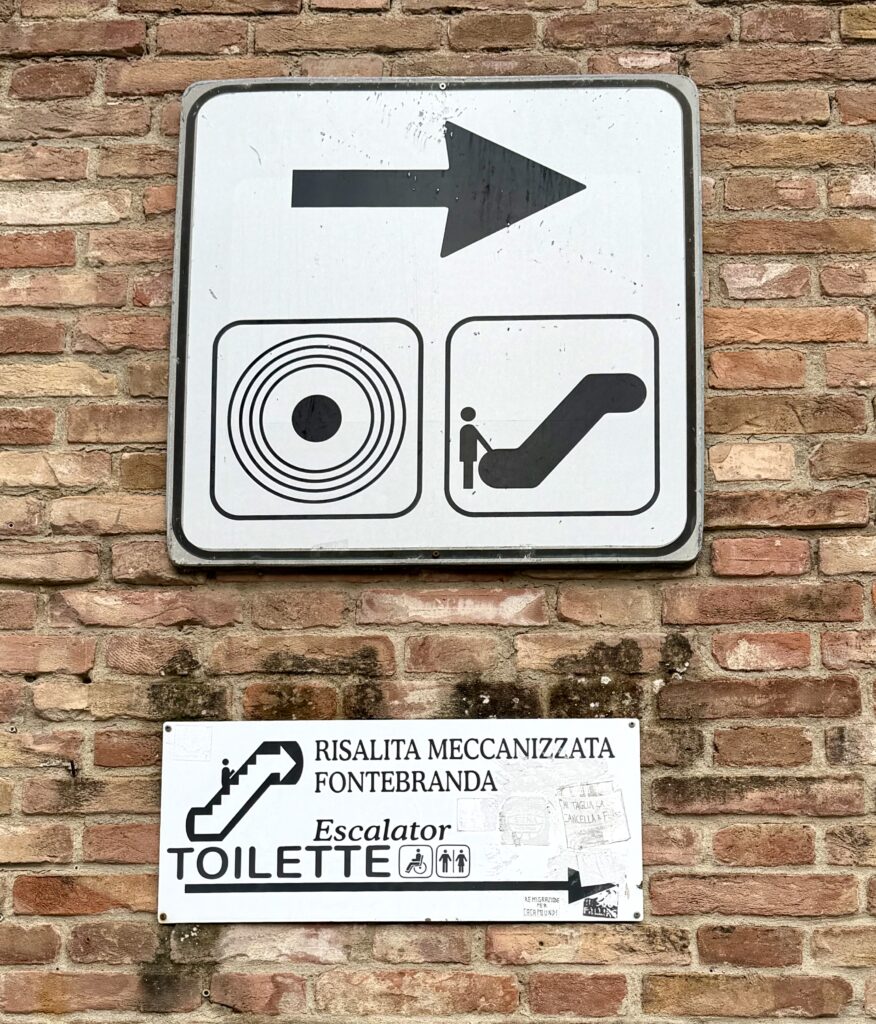
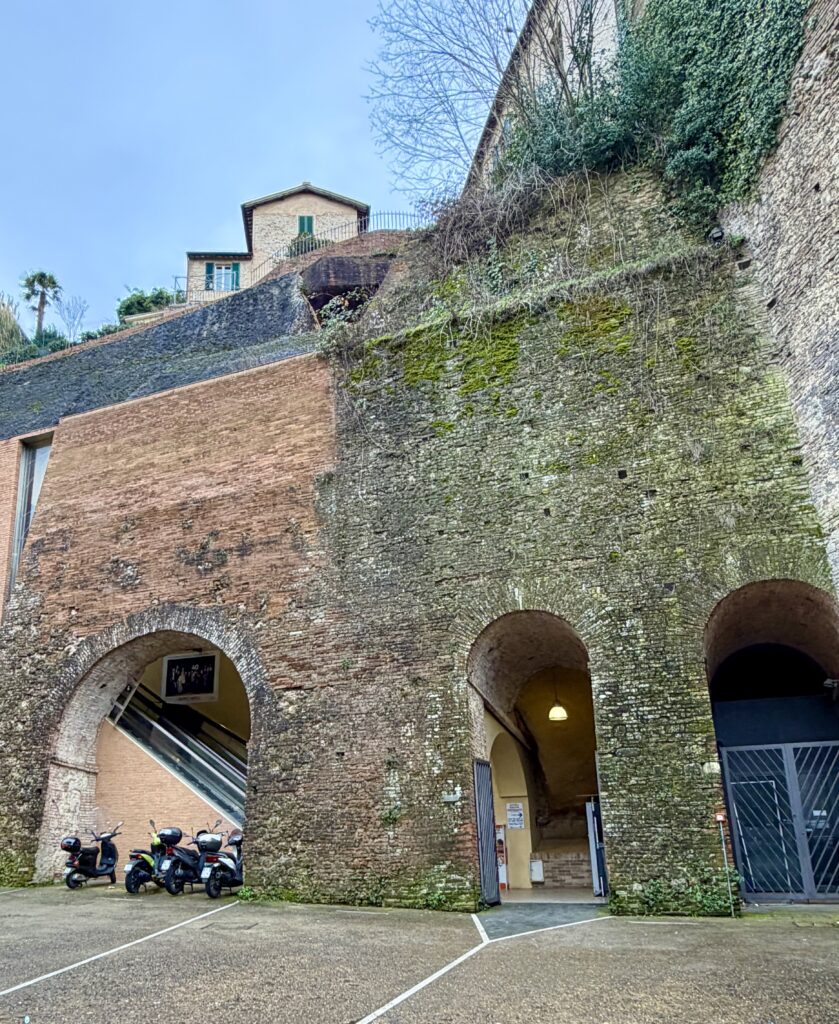
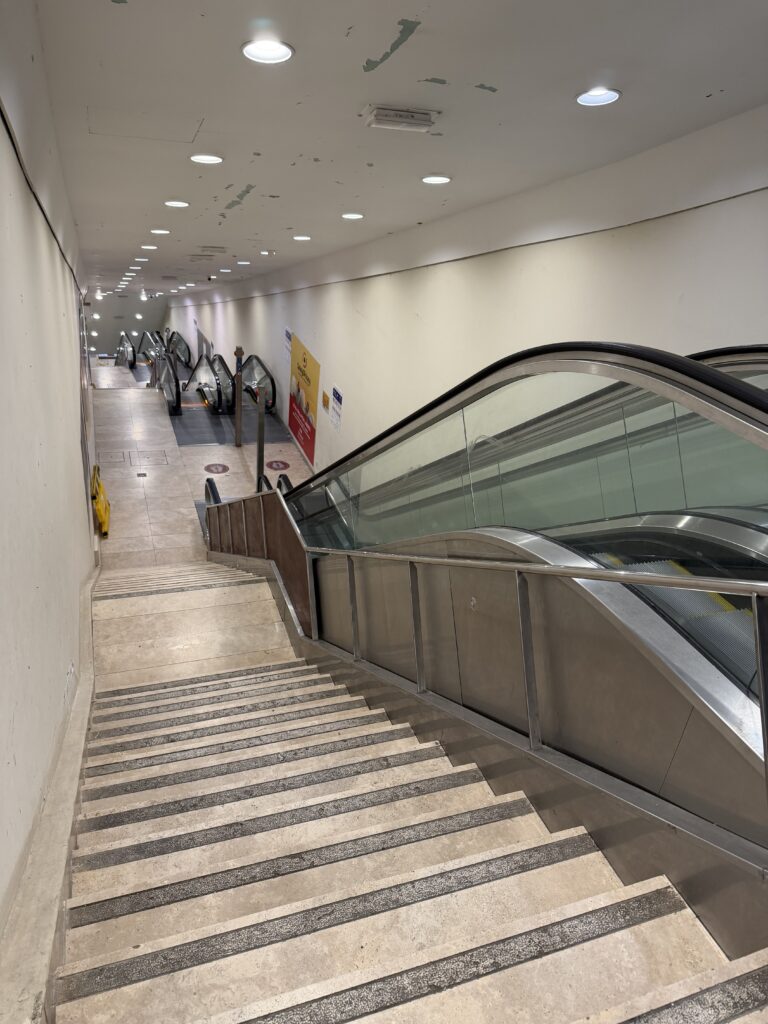
I mentioned that Siena is a hill town. To get into it you have to go up! The train station is down at the bottom as was our hotel (Siena VIP – https://expe.onelink.me/hnLd/zsmu2ayk). But there are a few sets of escalators to get you to the top! When we got to town we took one set of escalators from the train station up to a bus stop and then took the bus into town. Right next to our hotel there was another set of escalators so it was pretty easy to get up into town without walking up the steep roads.
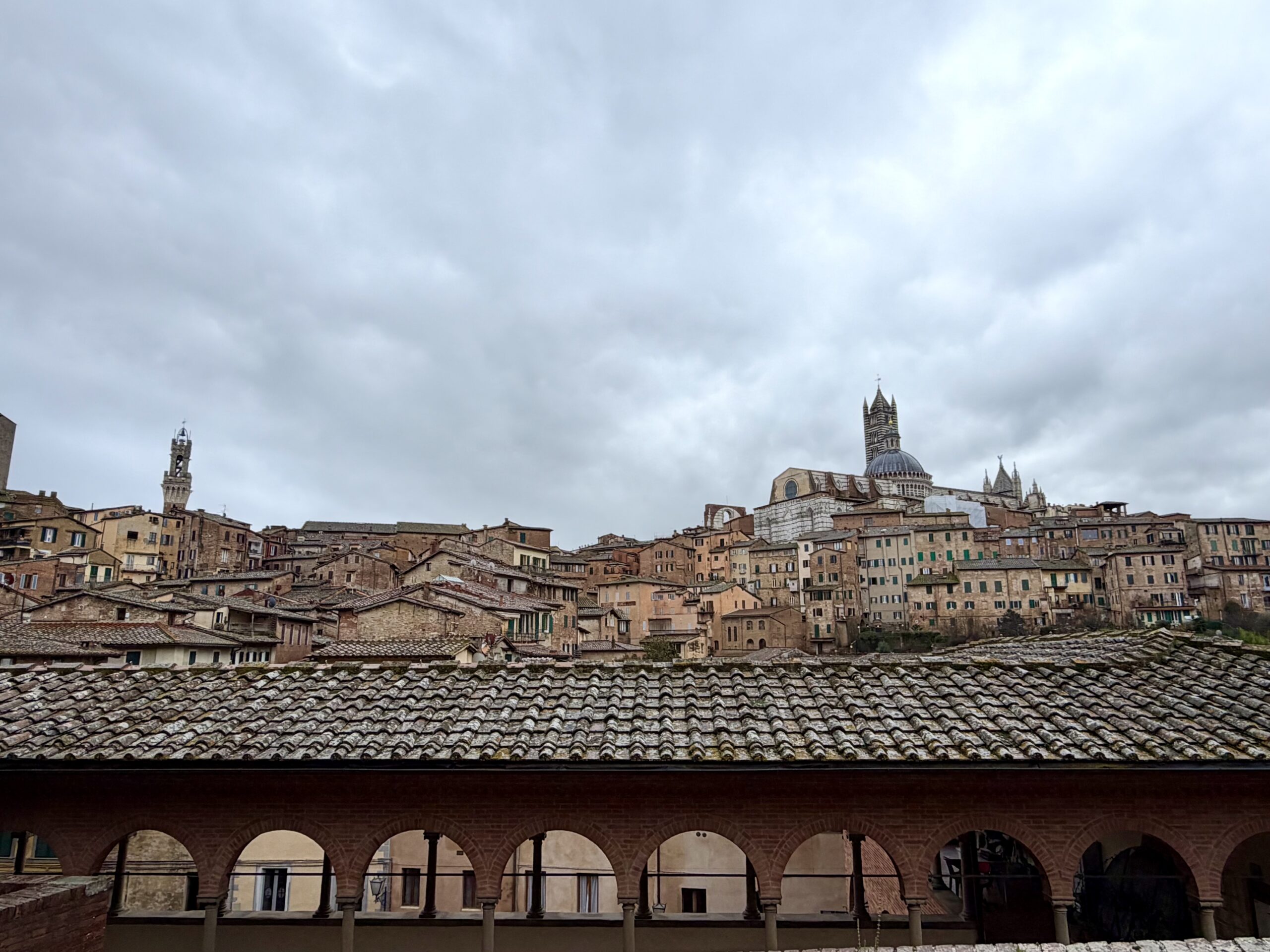
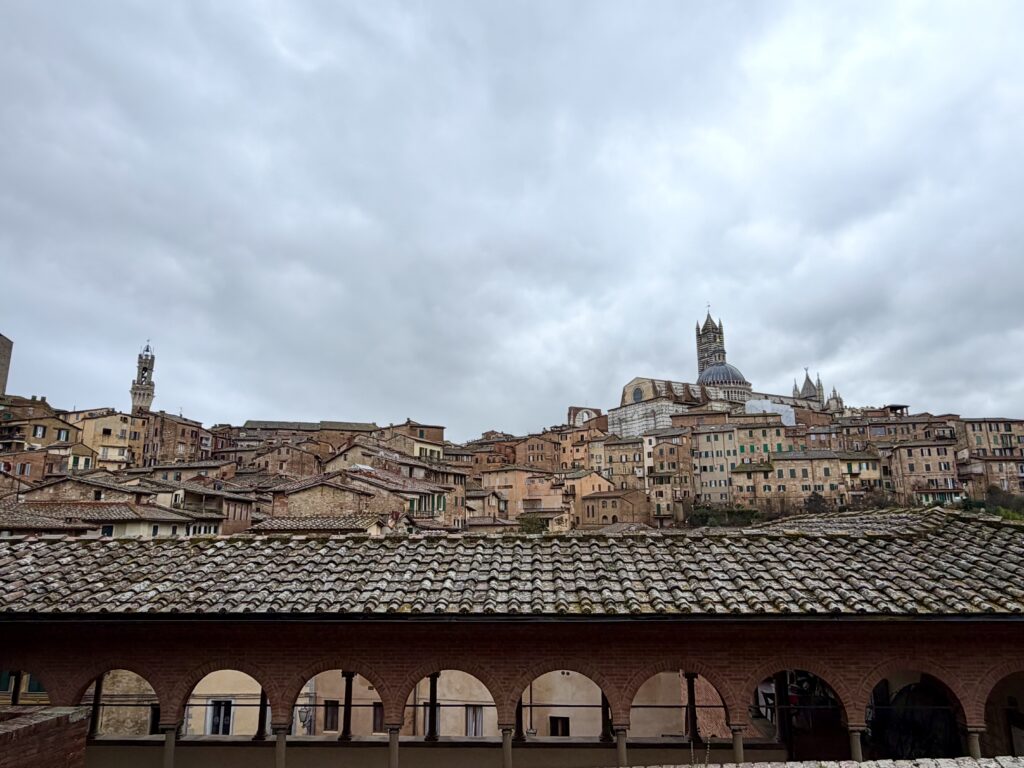
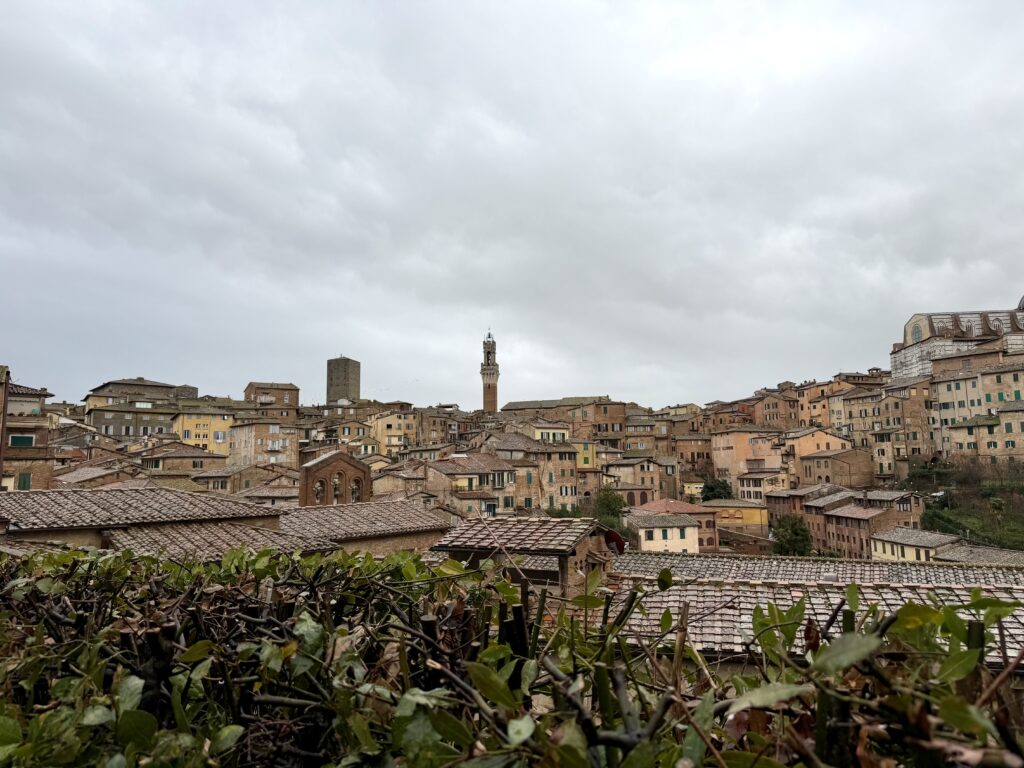
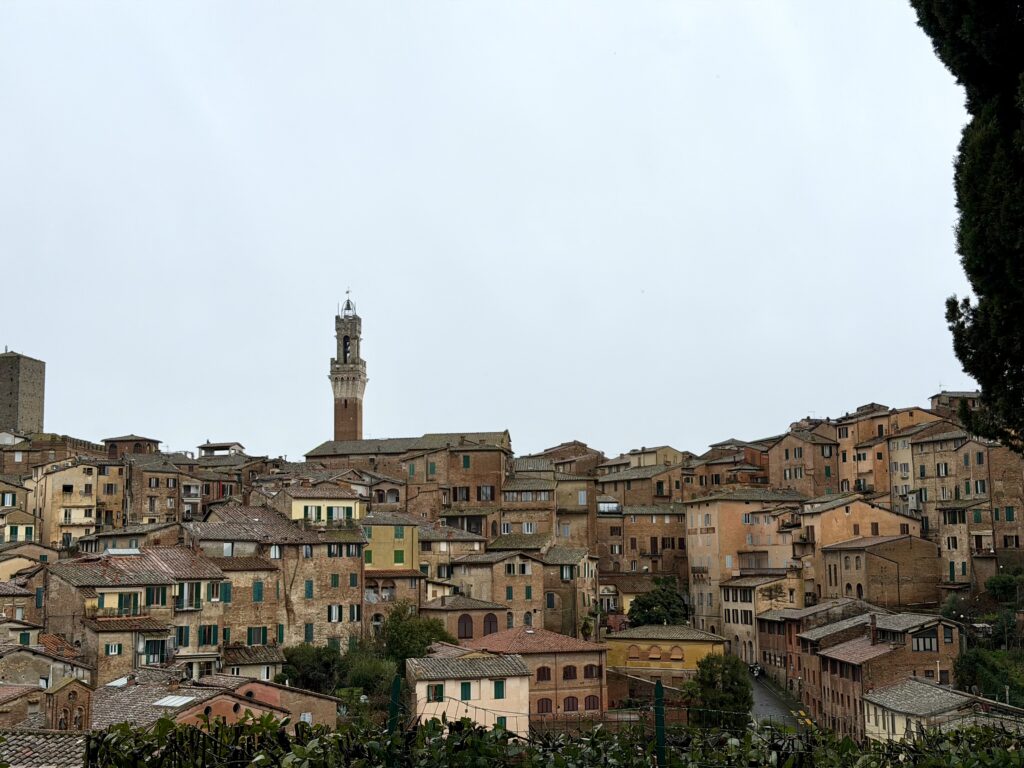
It’s not completely flat at the top of the hill so the view of the rooftops from various points in town was pretty amazing too (you can see the tower in Piazza del Campo as well as the Siena Cathedral poking up above the rooftops).
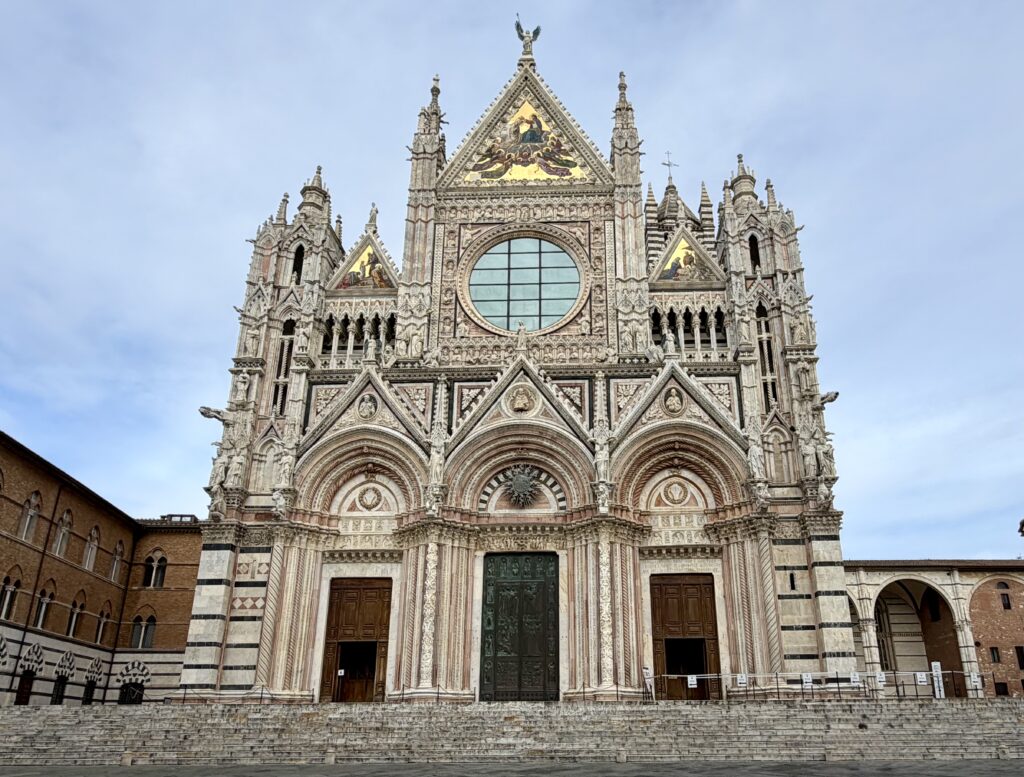
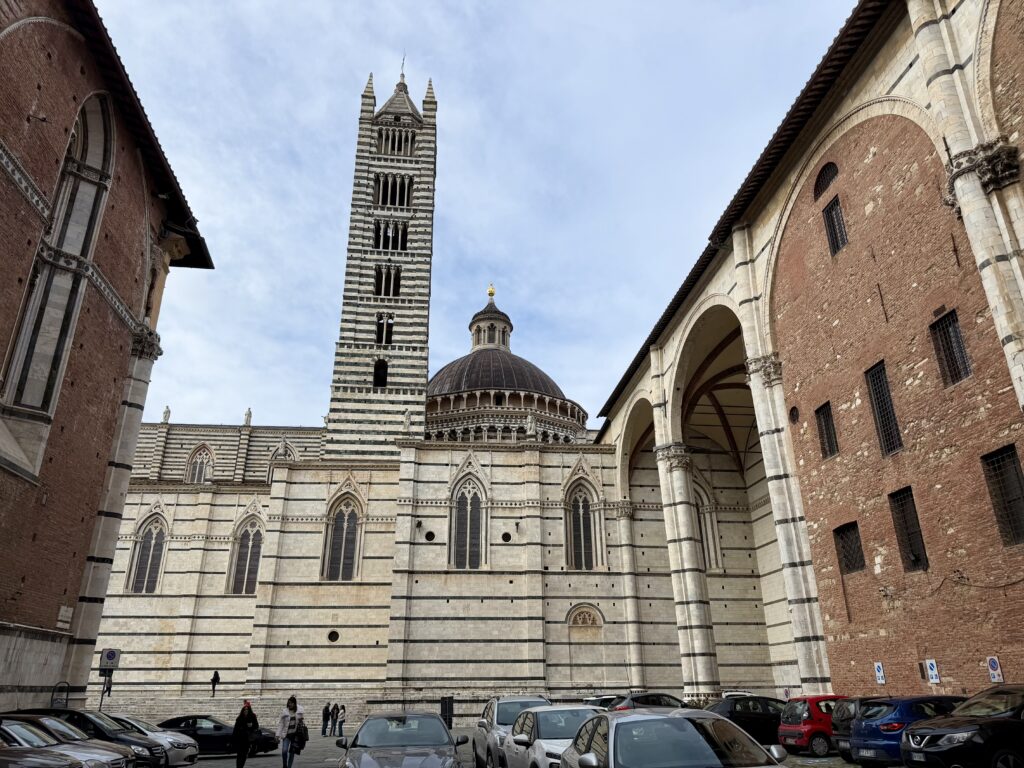
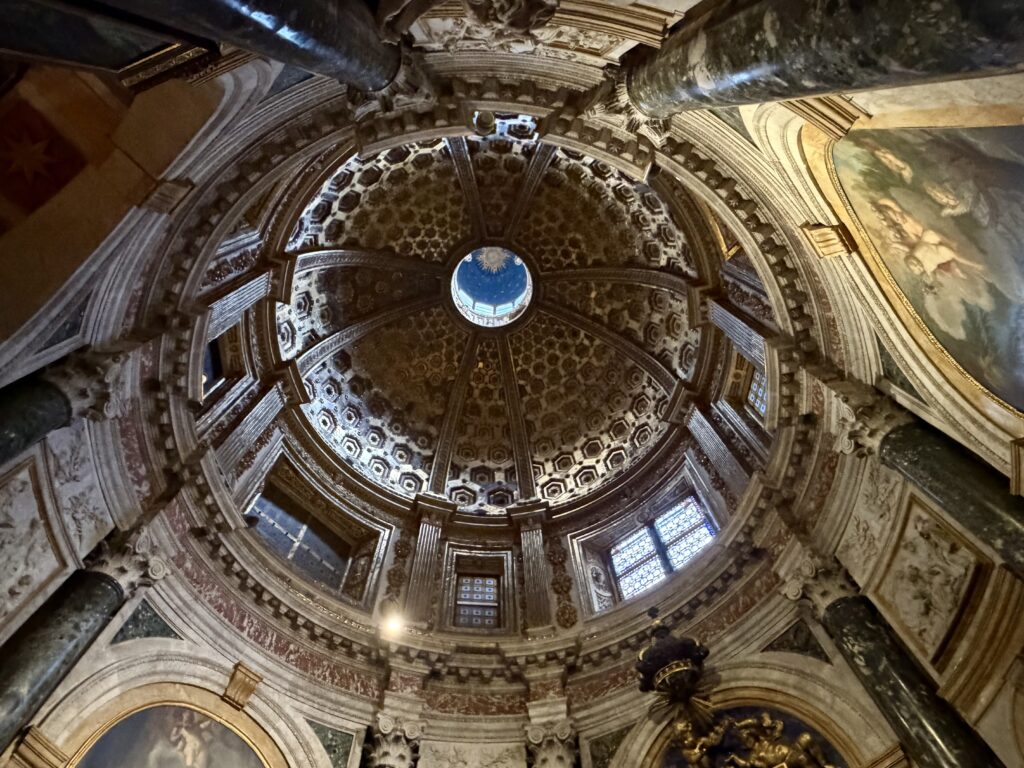
Another highlight of Siena is the duomo (cathedral). It dates back to the 13th century – the main structure was built in 1215 but the decorations were added between 1250-1350. (https://operaduomo.siena.it/en/the-cathedral/). We noticed several of the cathedrals in the area have this striped appearance due to the alternating white and greenish-black marble material used. If you look closely, you can see that the stripes get closer together as you move up the building which creates an illusion of it being taller.
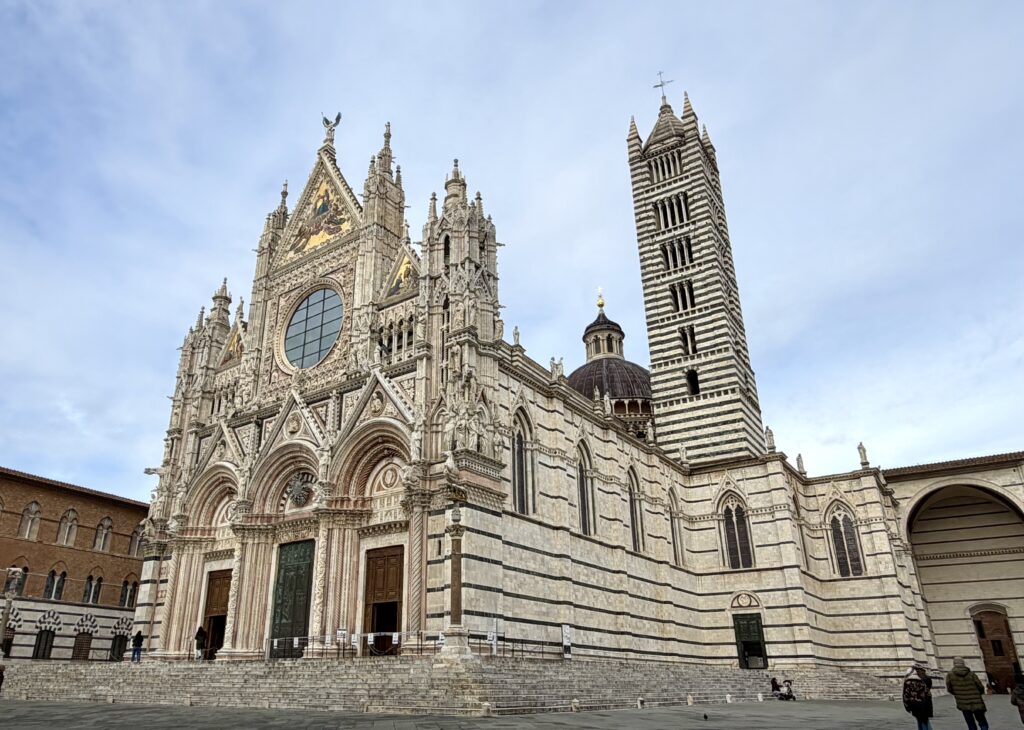
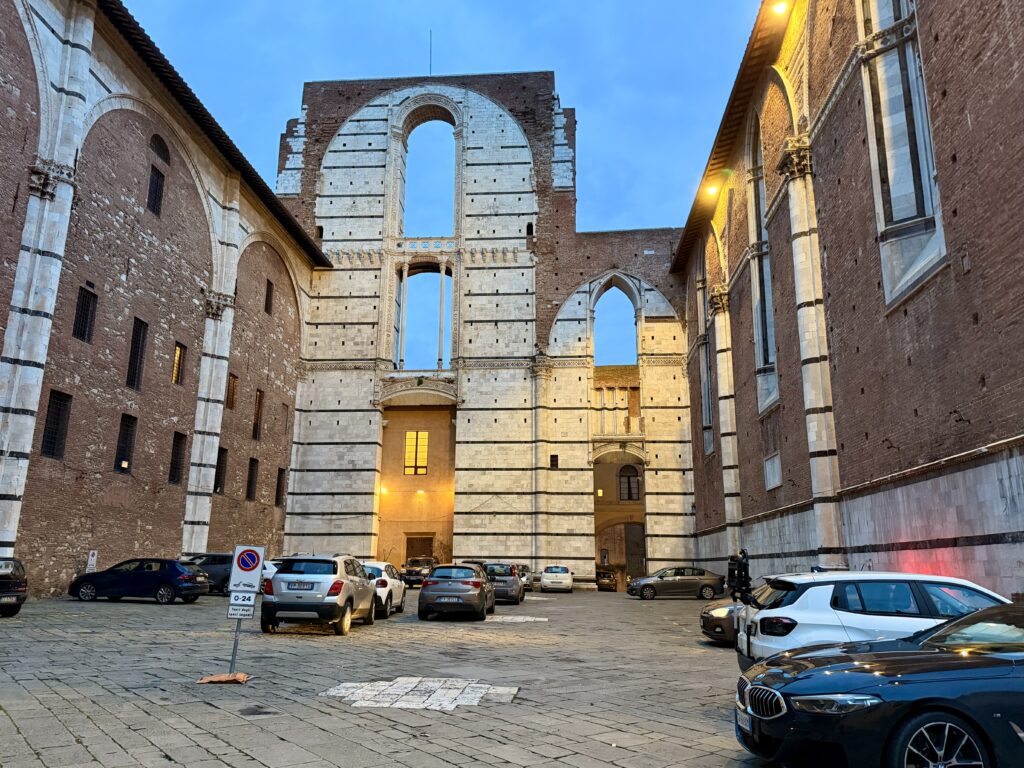
This whole area where we were standing in a parking lot aside the cathedral was actually supposed to be part of the cathedral. You can see the wall at the back with the arched windows as well as the striped marble walls. It would have created a much bigger church and this would have been the nave (oriented perpendicular to the current nave). This expansion never happened though. The Black Death (the bubonic plague) in 1348 decimated Siena’s population (from 70,000 down to 45,000) and the expansion was abandoned.
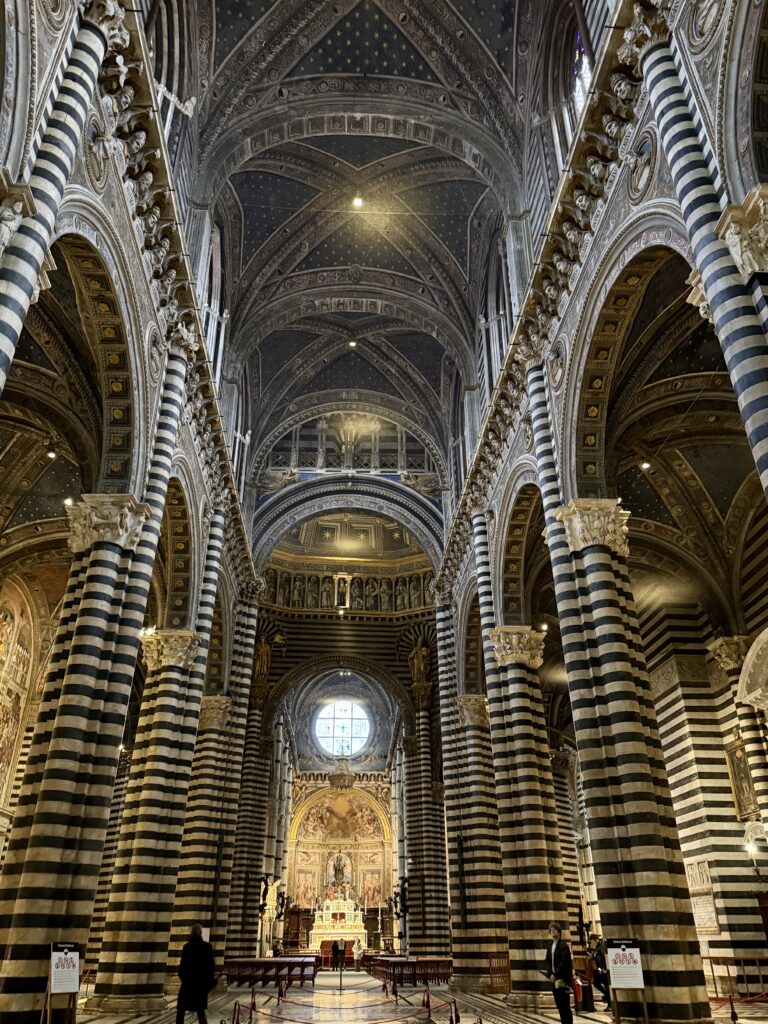
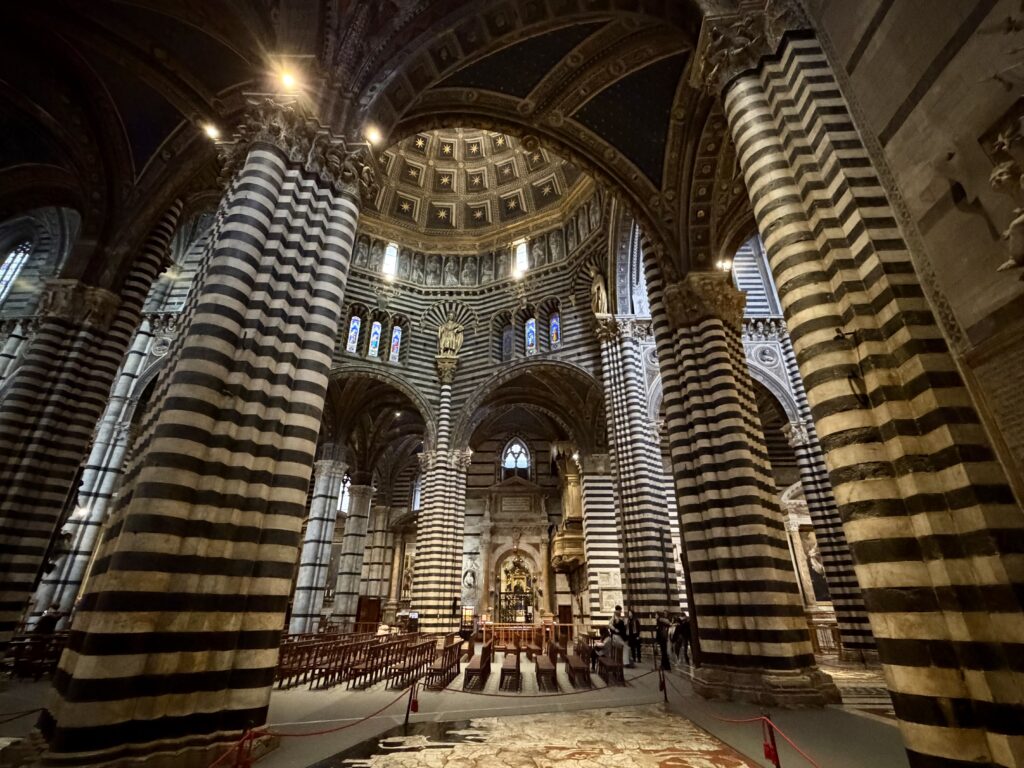
The inside is also made of striped marble and was pretty impressive to see, with alternating black and white marble.
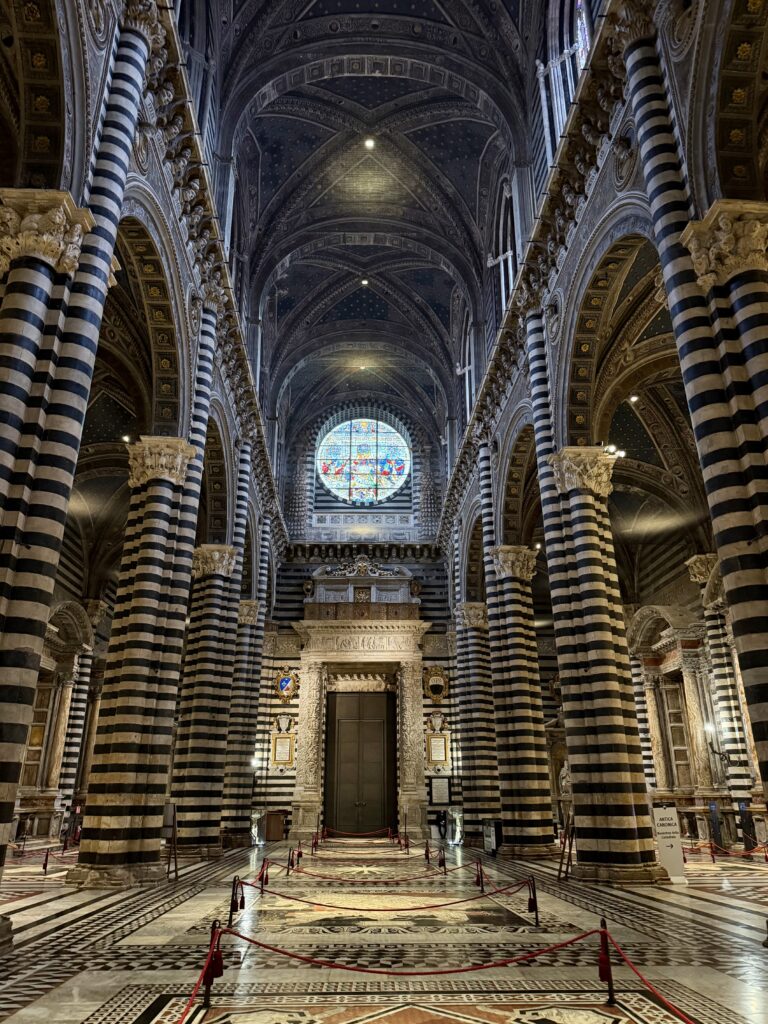
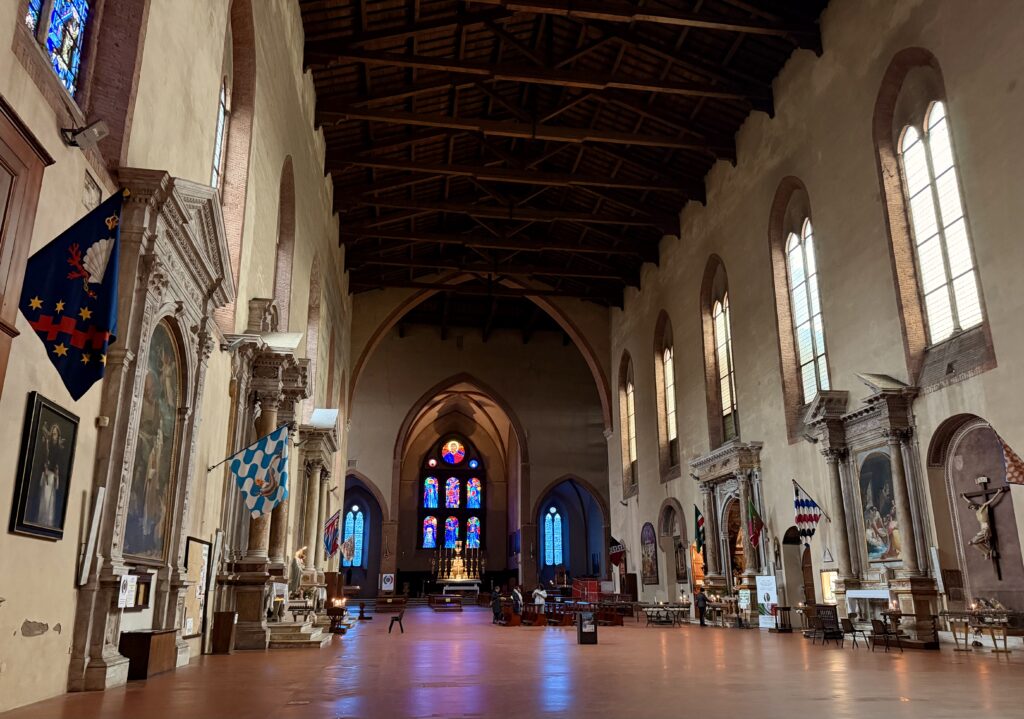
Some of the highlights inside are the mosaic floors, the pulpit, and the Piccolomini library.
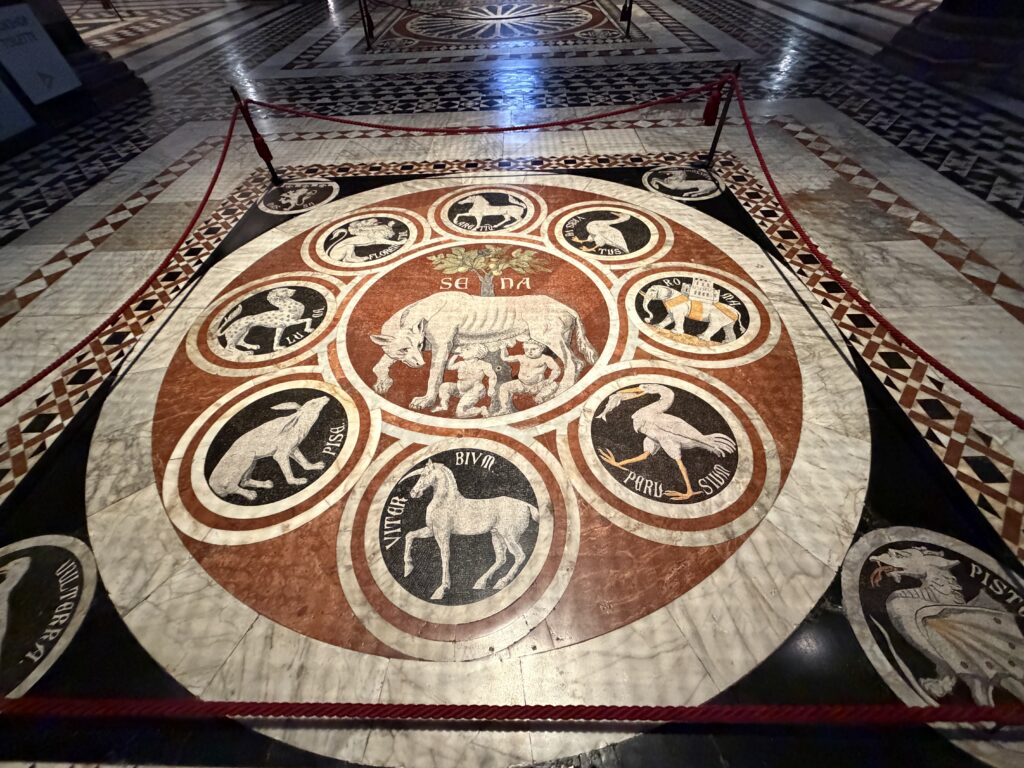
The mosaic floor was completed over about 200 years (1300s-1500s) by many different artists. The circular mosaic below has the she-wolf with the twins in the center. Surrounding it are the other various Italian cities (Rome is an elephant, Florence a lion, etc). The official site details more about the famous mosaic floor: https://operaduomo.siena.it/en/floor/.
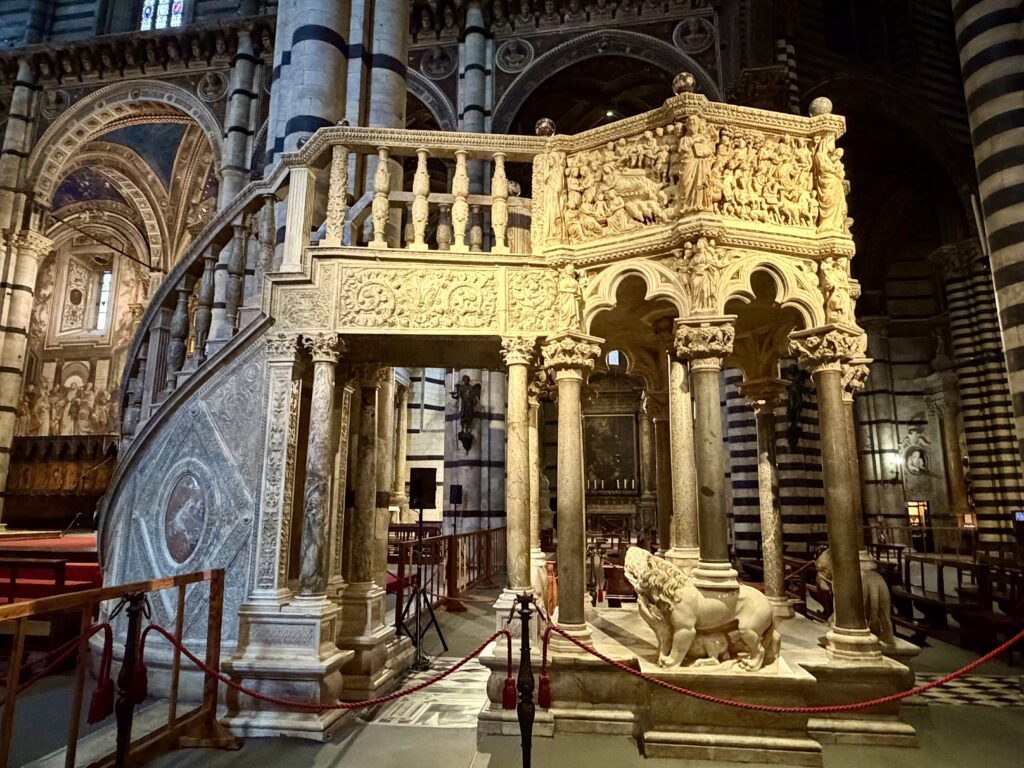
The pulpit (Pisano’s Pulpit) was made in 1268 by Nicola Pisano and is carved out of marble. The panels show the life of Christ in incredibly detailed carvings.
This mosaic tells the story of the Slaughter of the Innocents. I couldn’t capture it in a single photo (it’s long) so I did a video instead. As described in Matthew 2:16, this depicts when King Herod (king of Judea) ordered the slaughter of all male children under age 2 in Bethlehem in response to the message from the magis about Jesus’ birth because he saw Jesus as a threat to his throne.
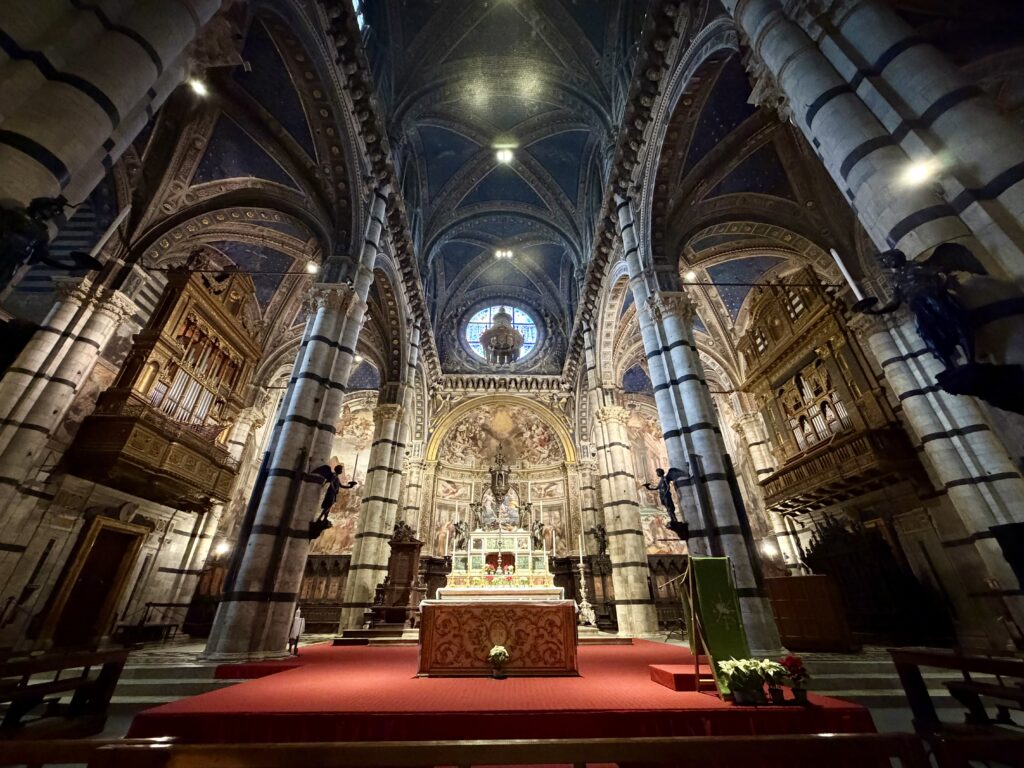
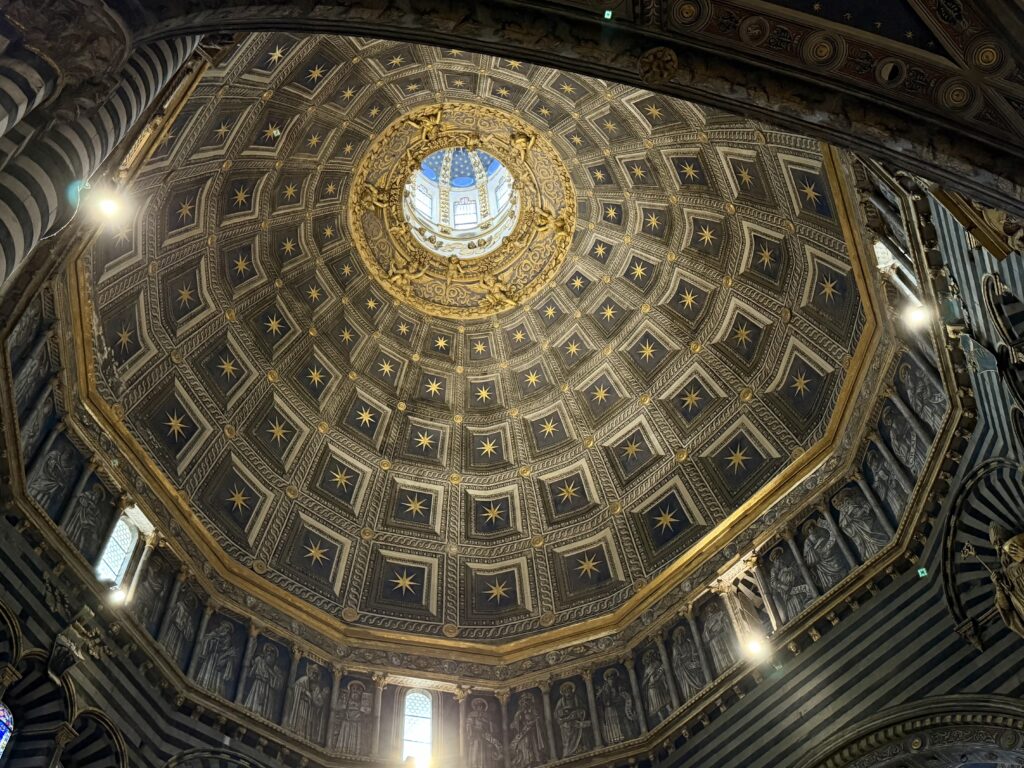
From inside, the dome has what appears to be a coffered ceiling – but it’s actually a painted illusion on a smooth surface. I stared at that for a while and still couldn’t make myself see a flat surface. Pretty impressive illusion! The “coffers” also narrow as they rise to make the dome look taller (similar to the stripes on the outside narrowing).
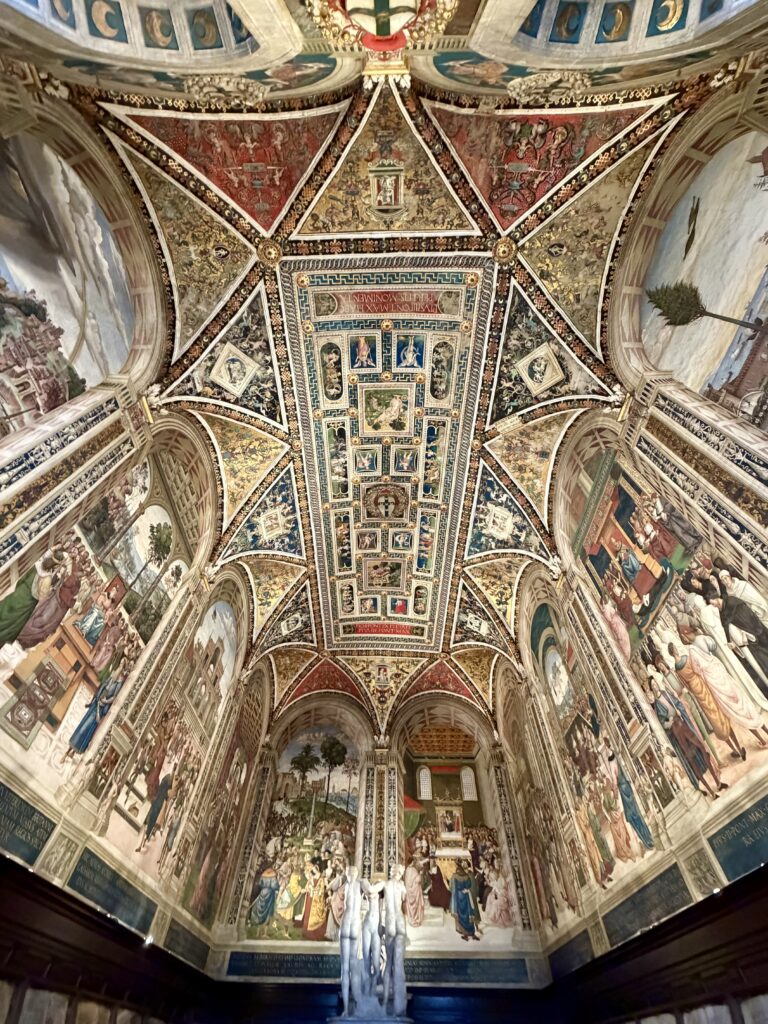
Off the nave is a room called the Piccolomini Library (built to honor the Piccolomini family from Siena – Aeneas Piccolomini became Pope Pius II from 1458 until his death in 1464). Along the walls are beautiful and vibrant frescoes detailing the pope’s life. These were painted around 1500.
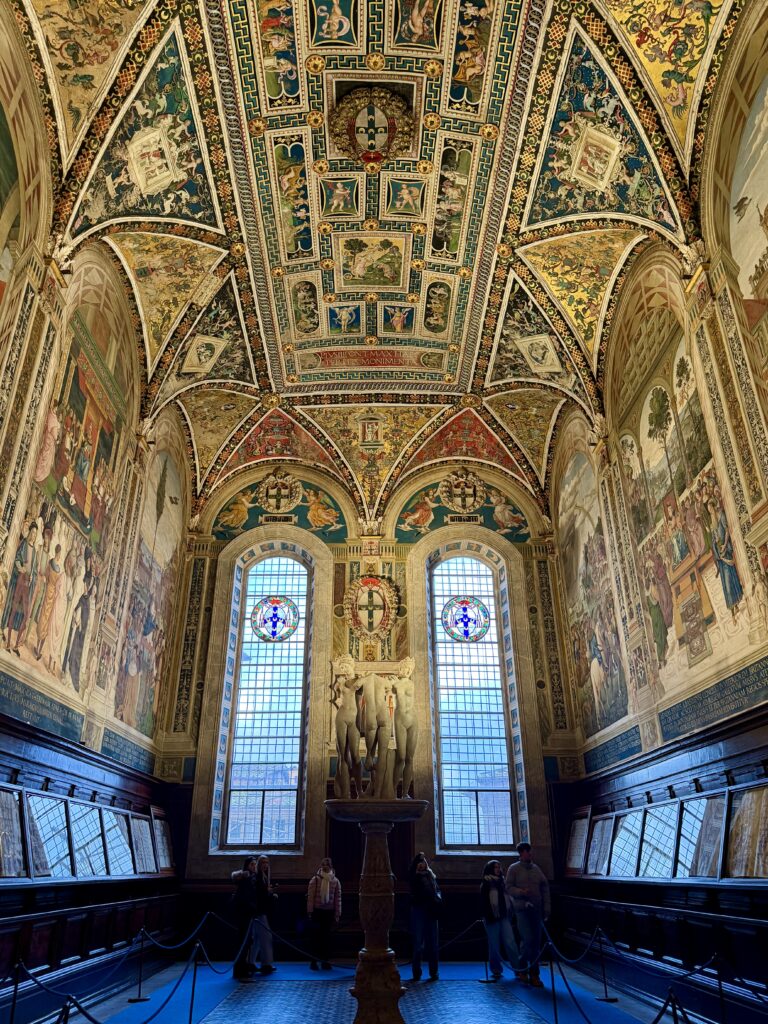
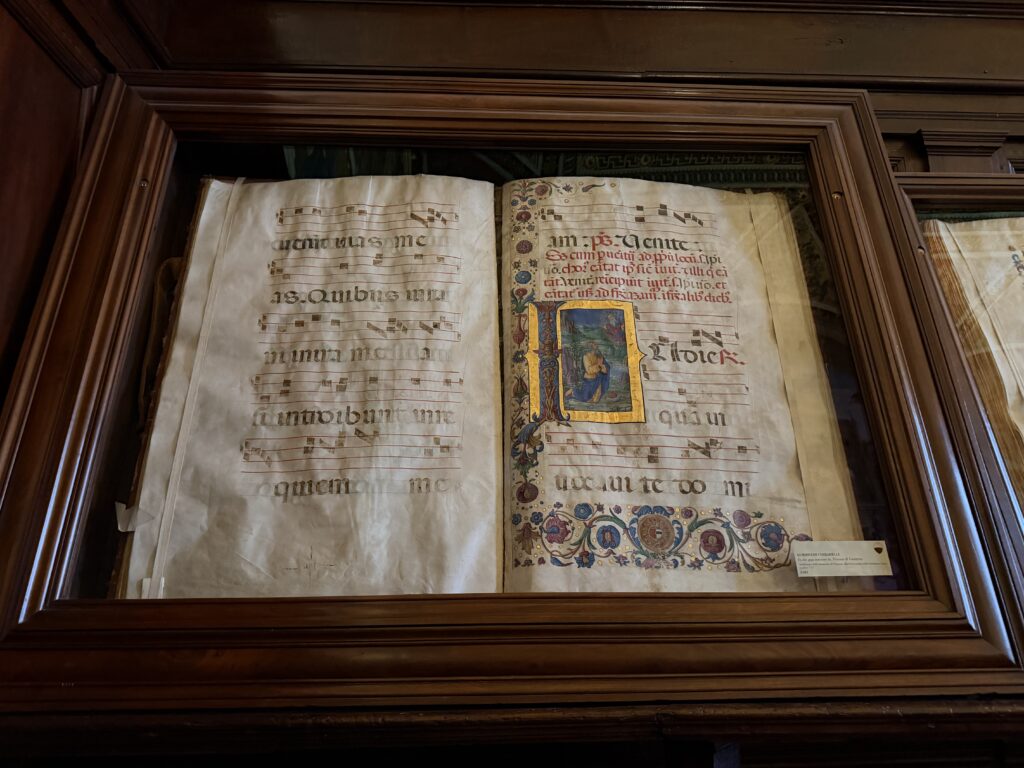
In glass cases along the walls of the Piccolomini library are a collection of musical manuscripts. They’re made of sheepskin and are quite large – this was so several singers could read off of a single sheet of music. Given the work it took to paint these, I can see why they didn’t want to make one for every singer!
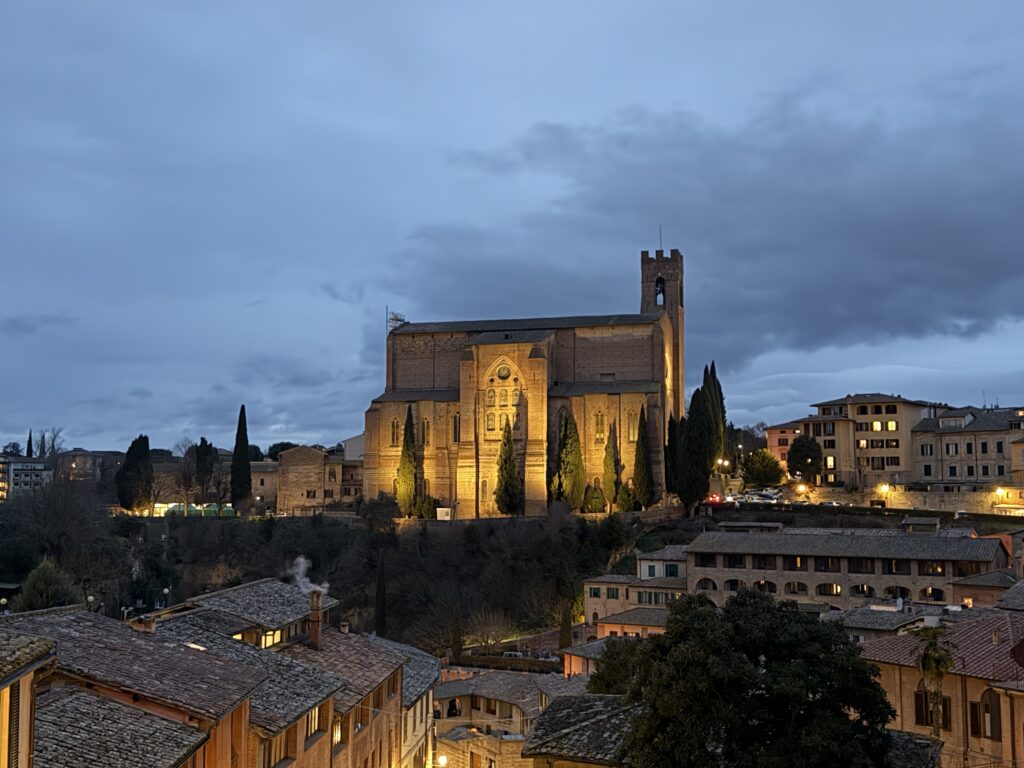
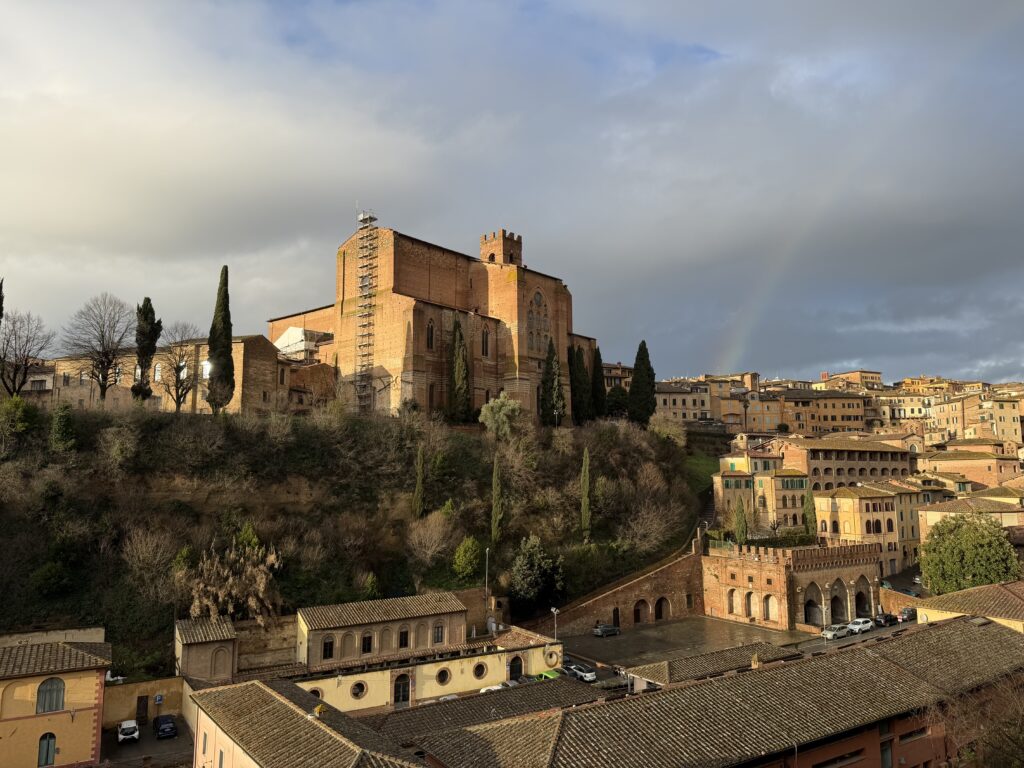
There’s another interesting church in Siena – the Basilica di San Domenico, the spiritual home of St. Catherine of Siena. It’s also home to St. Catherine’s head and her thumb plus she other relics in the St. Catherine Chapel just off the nave (https://viafrancigena.visittuscany.com/site/en/points-of-interest/the-head-and-finger-of-saint-catherine/). You can read more about this church here: https://santacaterina.siena.it/the-basilica-of-san-domenico/?lang=en. We could actually see it from right outside our hotel since it sits up on a hill. It was also really cool to see a rainbow come out near it after a rainy day.
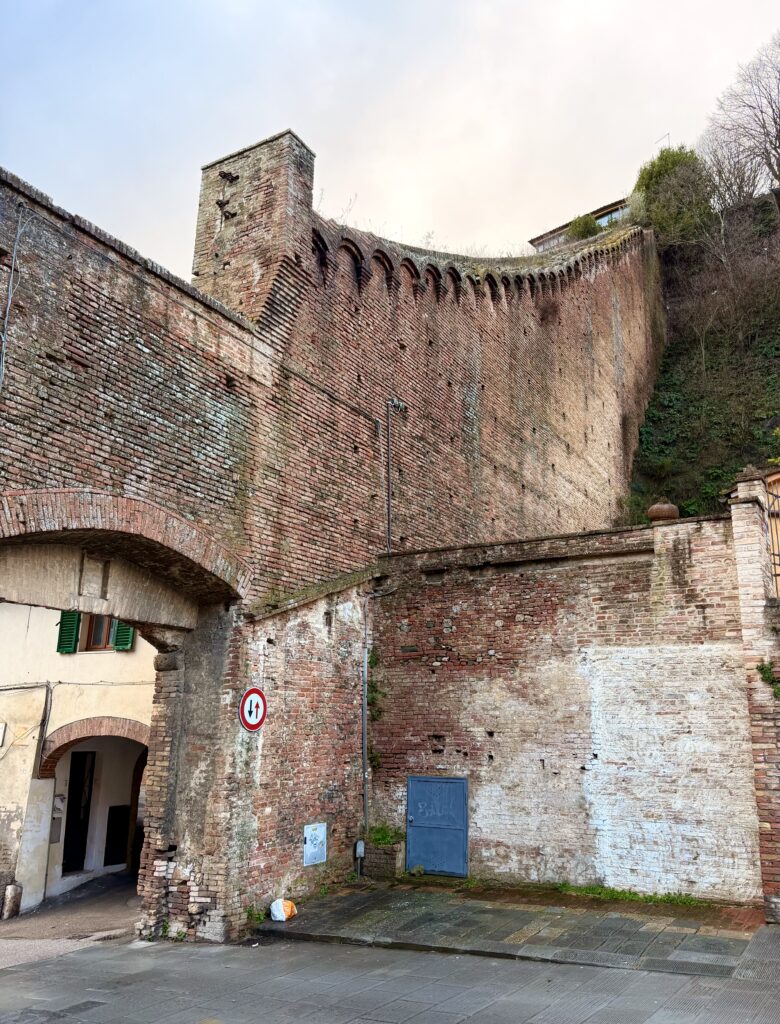
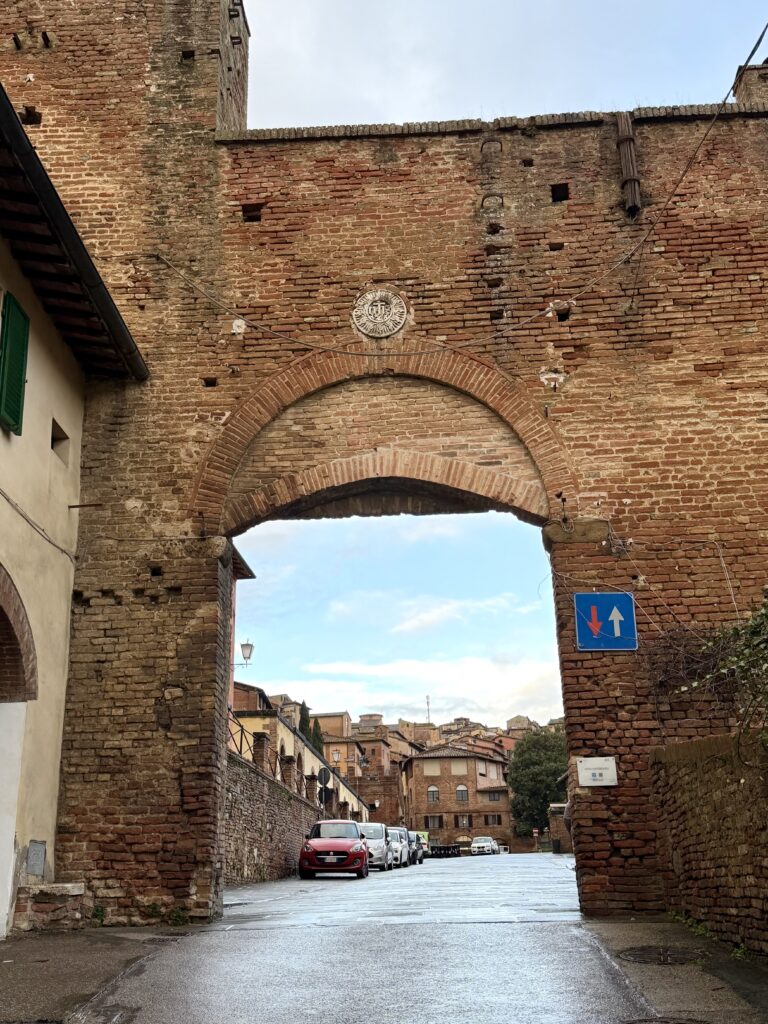
Another cool sight right by our hotel was the Porta Fontebranda, the oldest of Siena’s gates. It was built in the 13th century and was part of the fourth circle of walls around Siena.
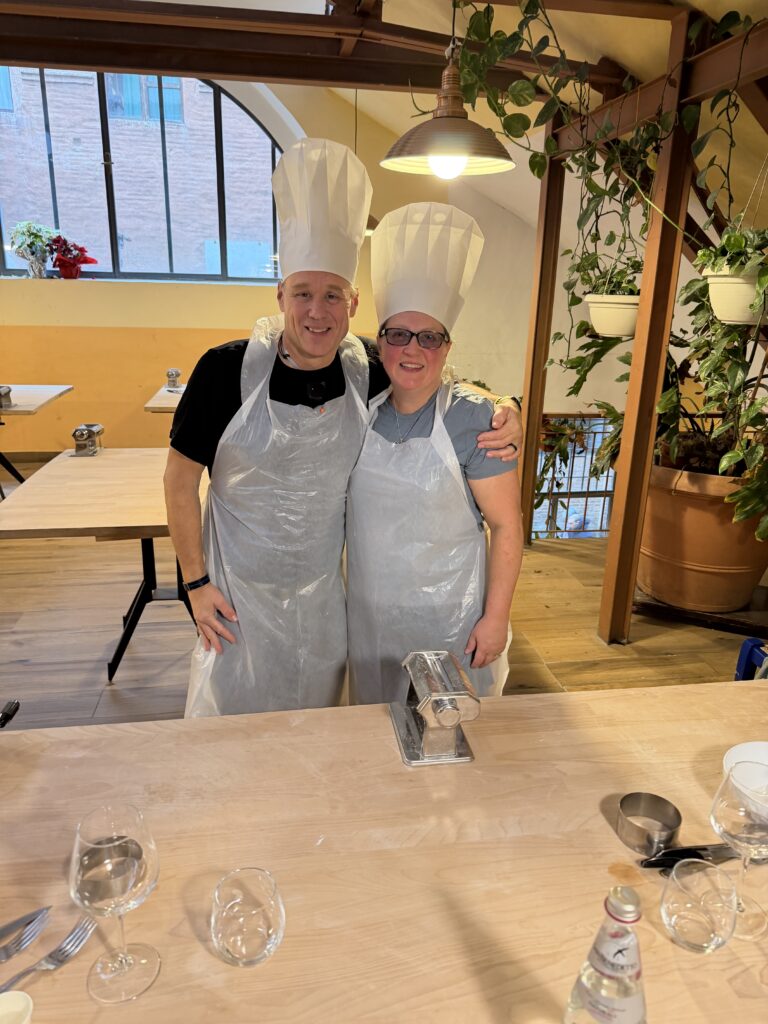
One of our favorite activities was a cooking class in Siena at Trattoria Fonte Giusta (https://www.scuoladicucinafontegiusta.com/en/). We booked a 10 am class because we figured we’d then eat the food we made for lunch rather than dinner (they eat dinner late). We ended up being the only people in the class so we basically had a private cooking class! I’m so glad we did the morning one because we were so full after that – I wasn’t even hungry for dinner later. But it was so good! I’m going to do a separate post on Italian food so stay tuned for more on the cooking class.
Siena was a great stop and definitely worth a visit!