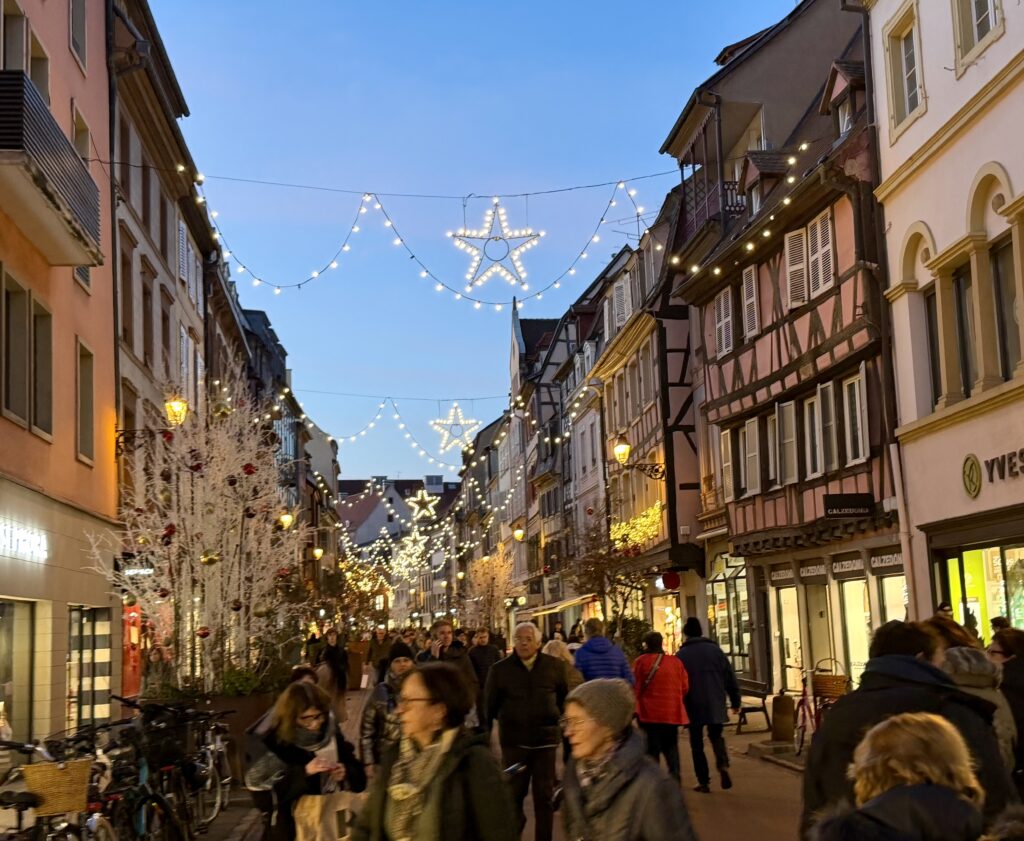

We got into Colmar in the evening and got into our Airbnb – after a little bit of a frustrating experience to get the last few blocks (the perils of staying right in town and arriving on a Saturday night during the Christmas markets!). Our Airbnb was right near Place Rapp and super easy to walk everywhere in Colmar. It also came with free parking in the Place Rapp underground garage – which came in very handy! (the lot was full when we came around but still open to “subscribers” – which applied to us since we had the parking tag from our apartment).
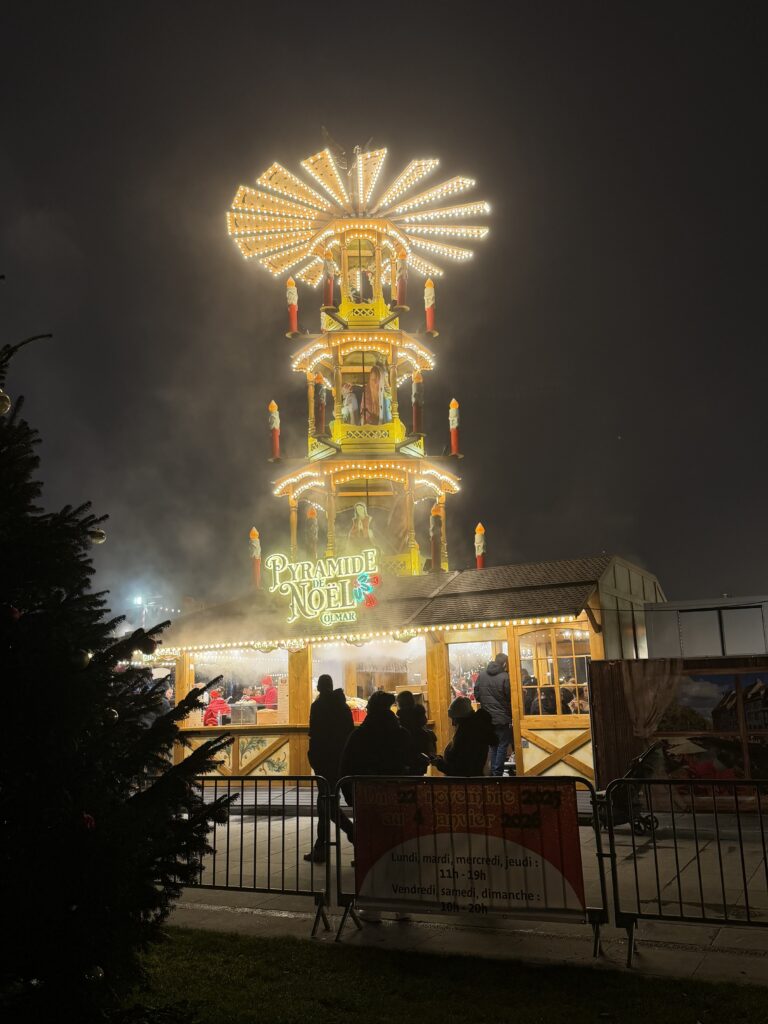
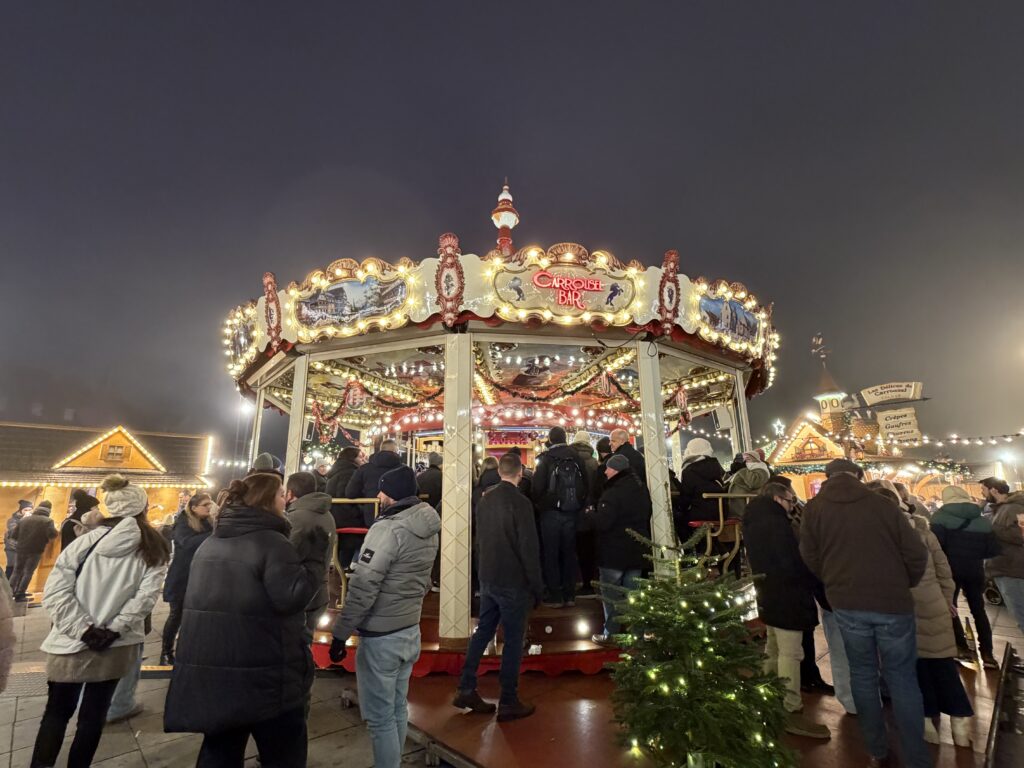
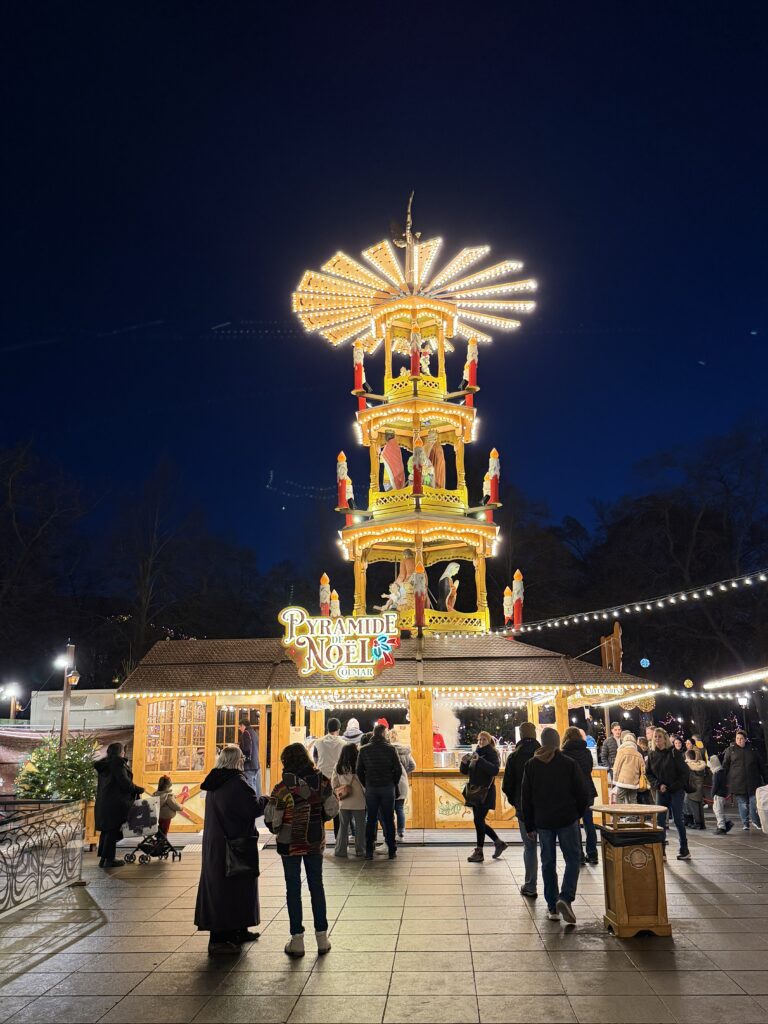
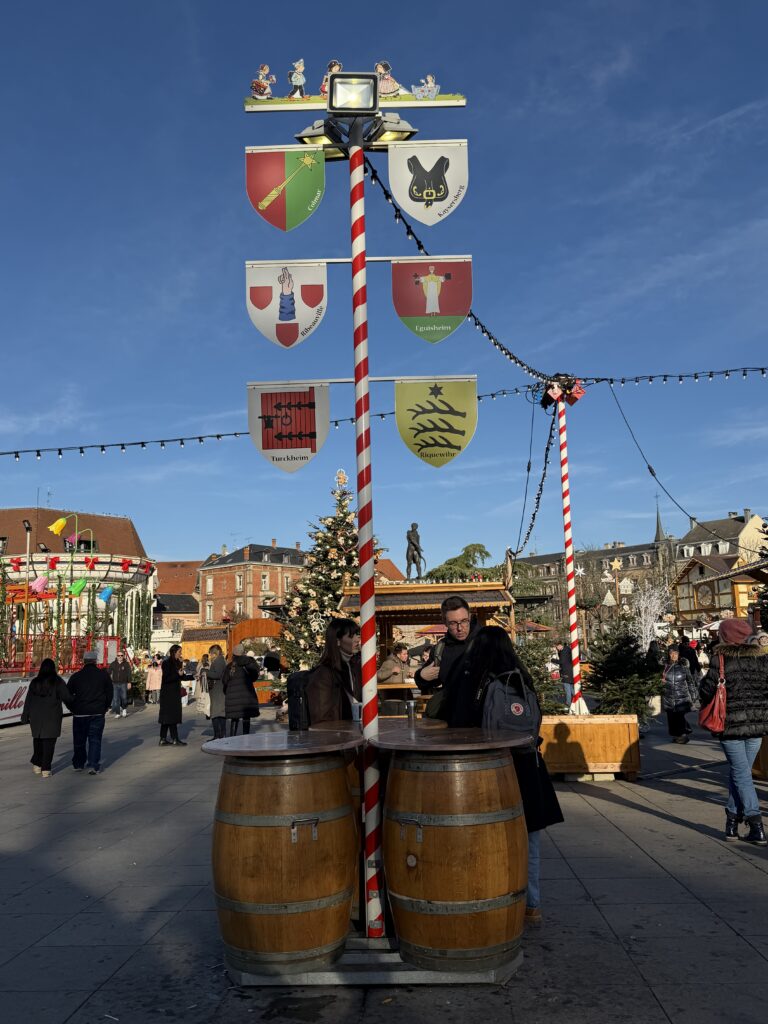
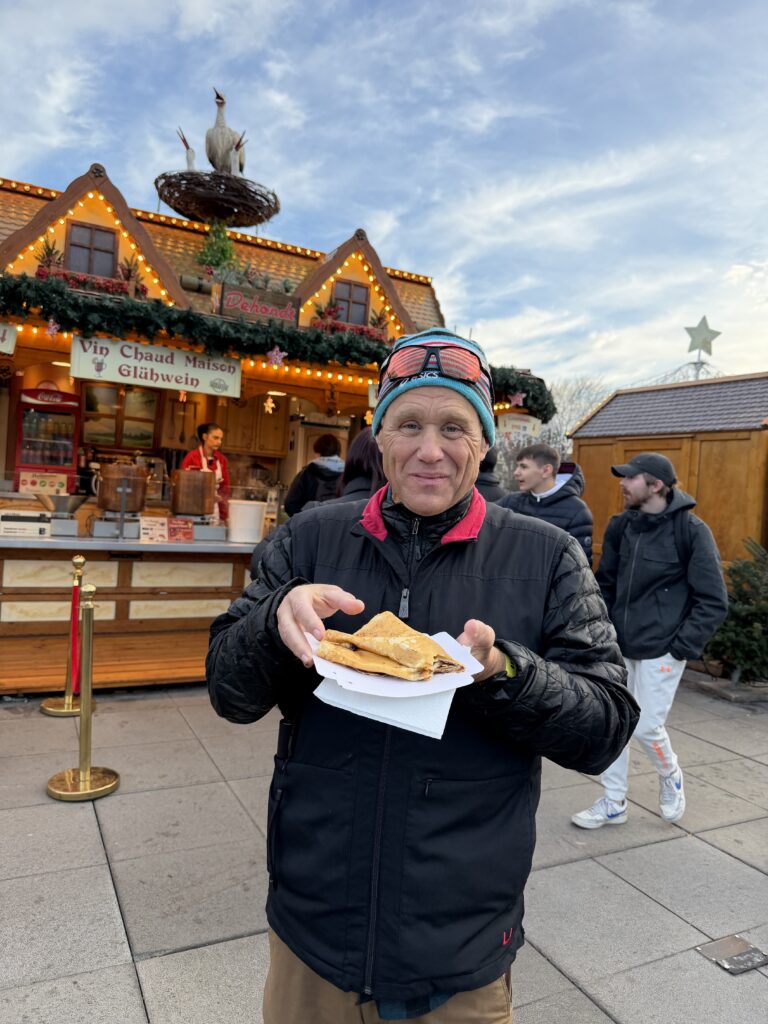
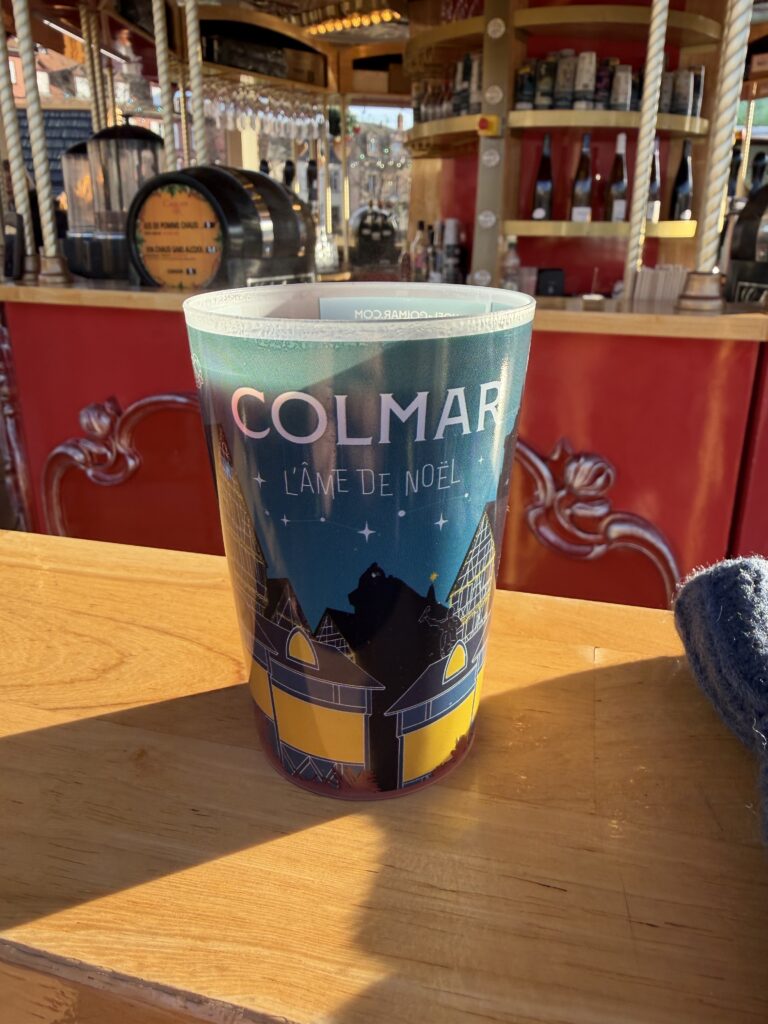
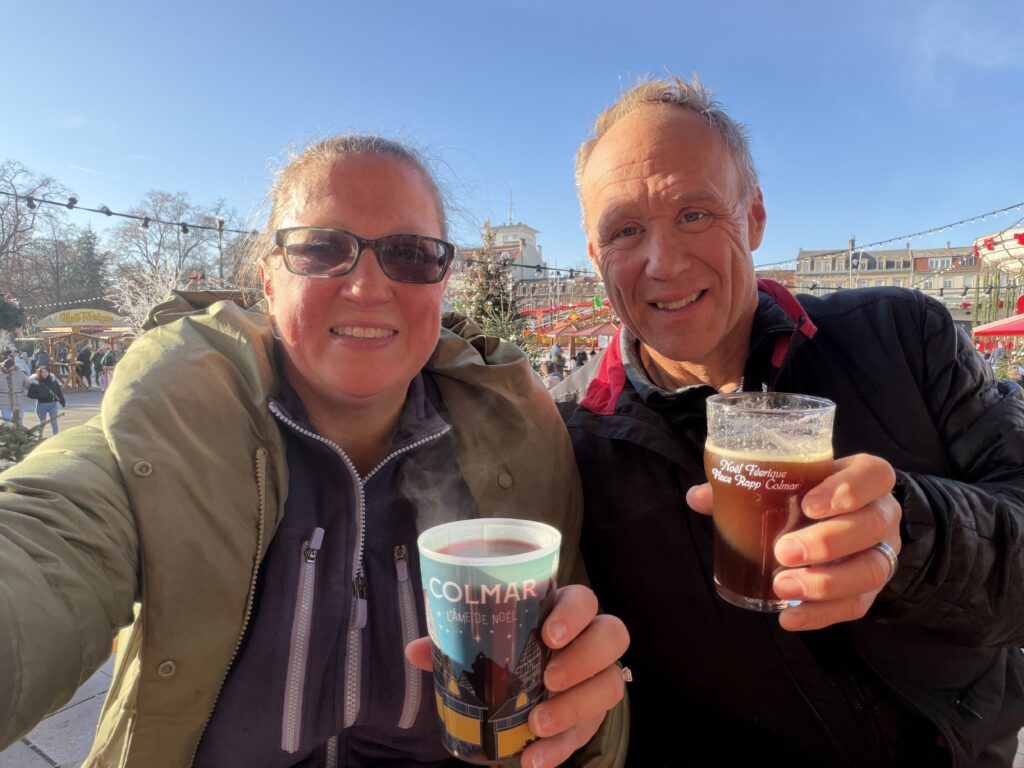
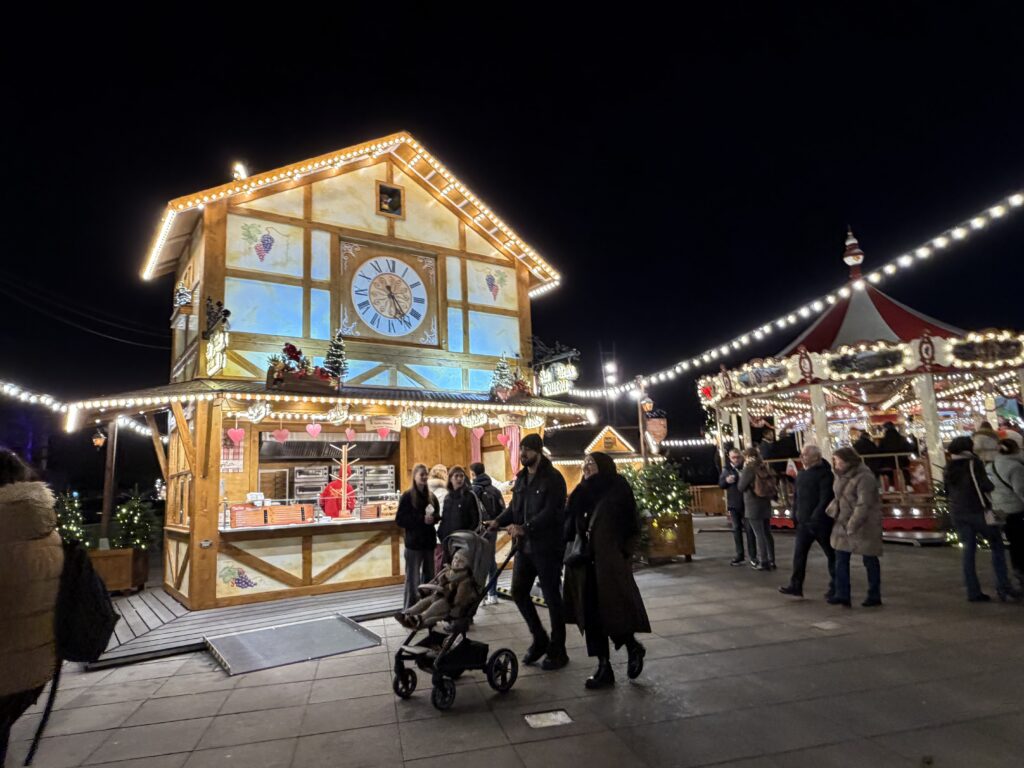
We checked out Place Rapp where there was a market. It was pretty foggy here in Colmar that night (similar to Heidelberg from earlier in the day). I loved that they had a Carousel Bar in the market! (if you haven’t been to the Carousel Bar in New Orleans – check it out!). It was pretty packed Saturday night but we were able to get a seat at it later in the week during the daytime. We came back to the markets in Colmar (including this one) several times throughout the week since we were staying here. Of course we had some great food (crepes!) and mulled wine (called “vin chaud” here – French for hot wine). The vin chaud mostly came in plastic cups specific to the city and/or market (as opposed to ceramic mugs elsewhere).
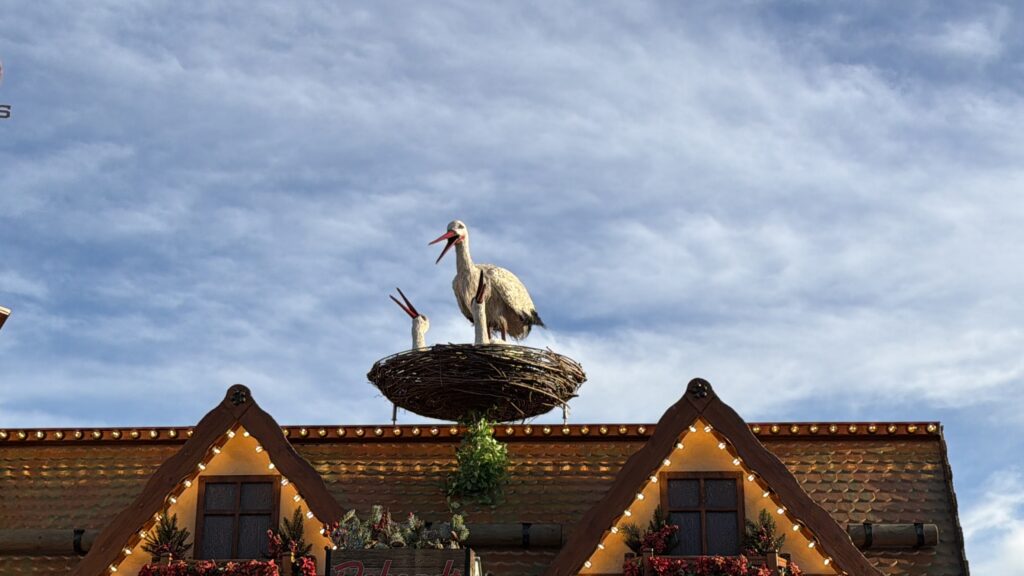
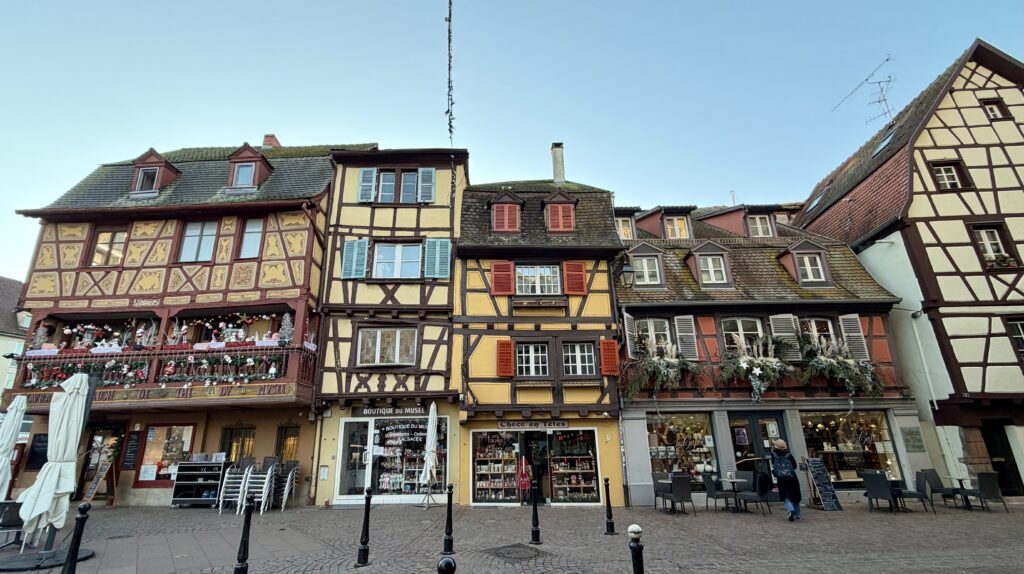
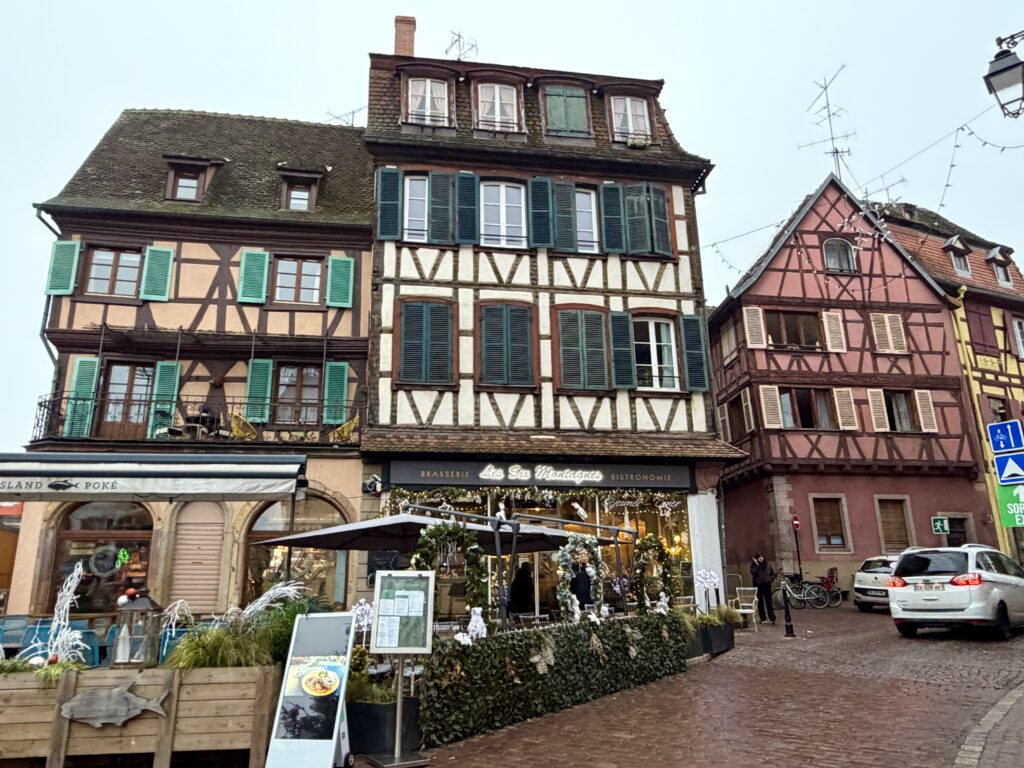
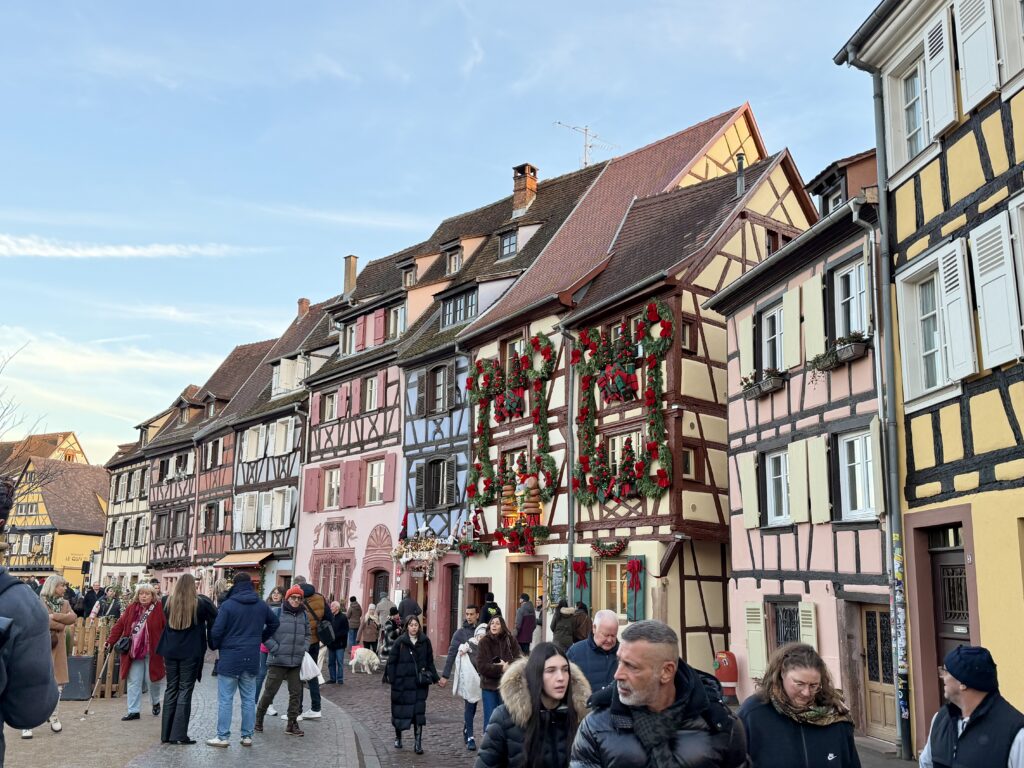
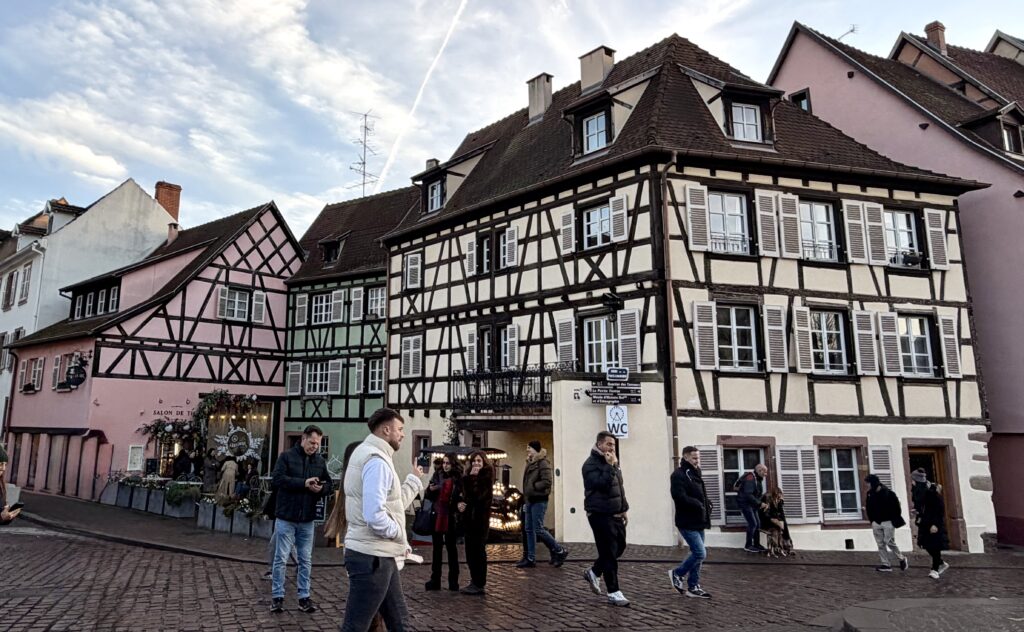
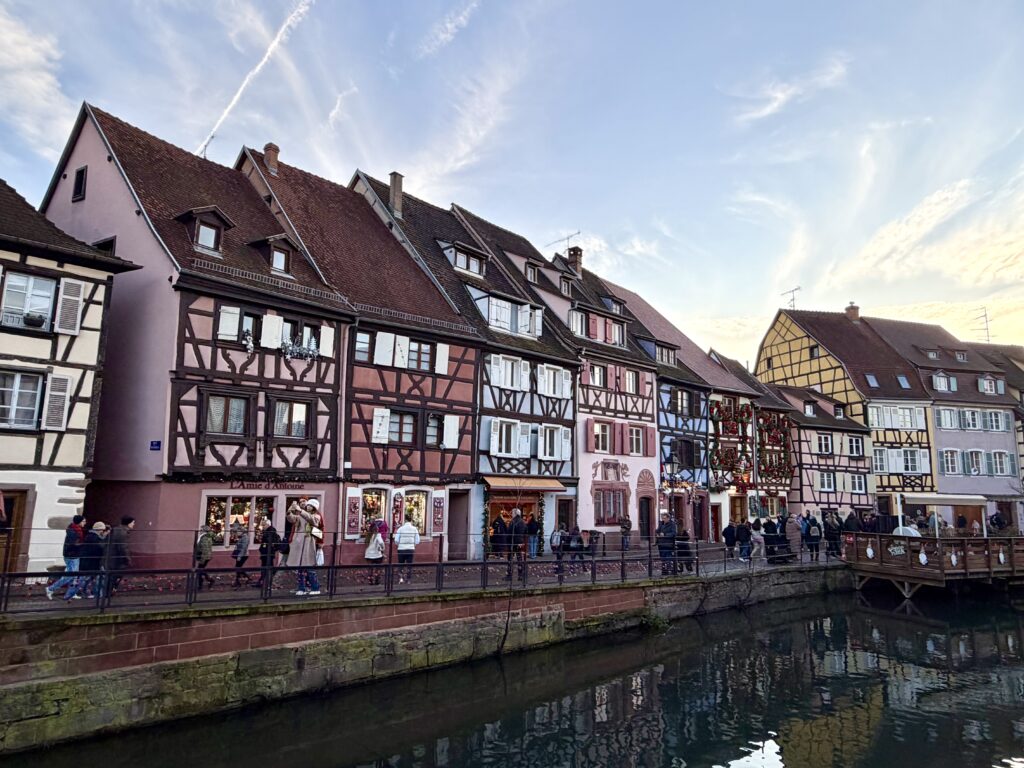
Colmar is in the Alsace region of France – in the eastern part of France just across the German border. It has changed hands between the French and Germans many times over the years and has a notably different culture, architecture, and cuisine than other parts of France because of that. In particular, there are a ton of old half-timbered houses that give it a unique charm.
We chose Colmar as a base for a couple reasons. We initially planned to split the time between Strasbourg and Colmar but Strasbourg is a low emissions zone so you have to have a French emissions sticker to drive in the city (and our German rental car would have a German emissions sticker – they are not reciprocal stickers). So we decided it might be easier to just to spend the entire week in Colmar – then we didn’t have to worry about the emissions sticker and we could also avoid packing up everything one extra time. From Colmar, it was an easy train ride to Strasbourg for the day (about 30 min) and Basel for the day (about 45 minutes by train). From Colmar there is also a Christmas market shuttle (called Navettes de Nöel) to get to some of the other small Alsatian towns. We did that the day after we got to Colmar (some of those markets are only open on weekends) – I’ll do a separate post for each of these day trips from Colmar. In short, Colmar was a great base to see the area!
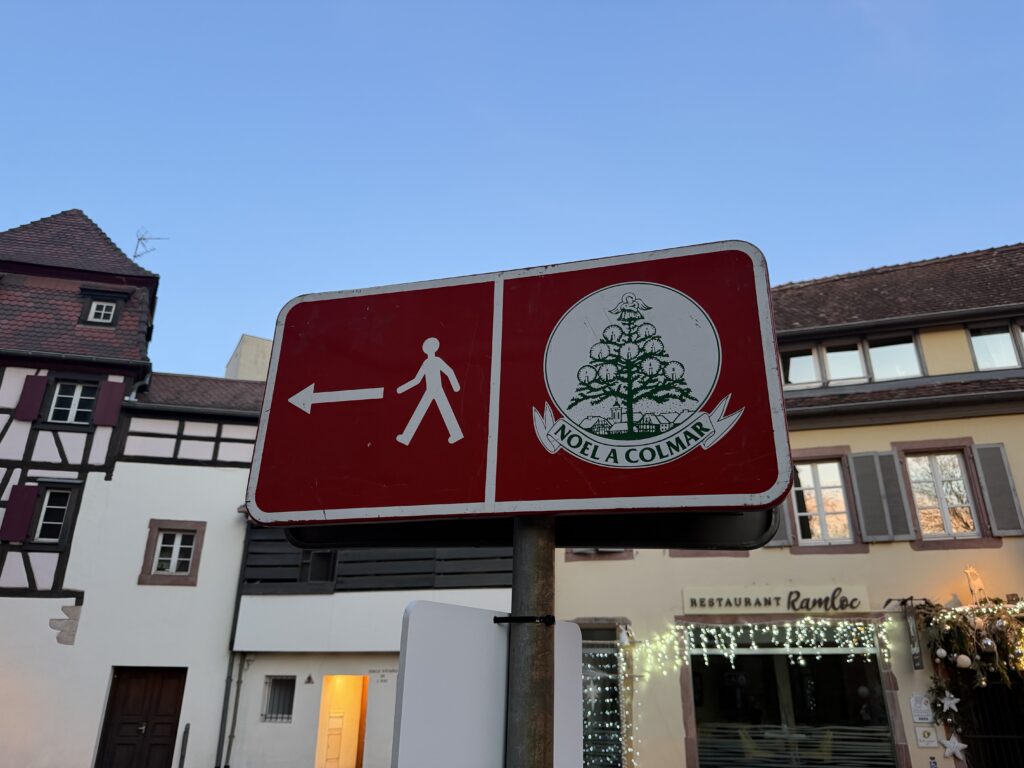
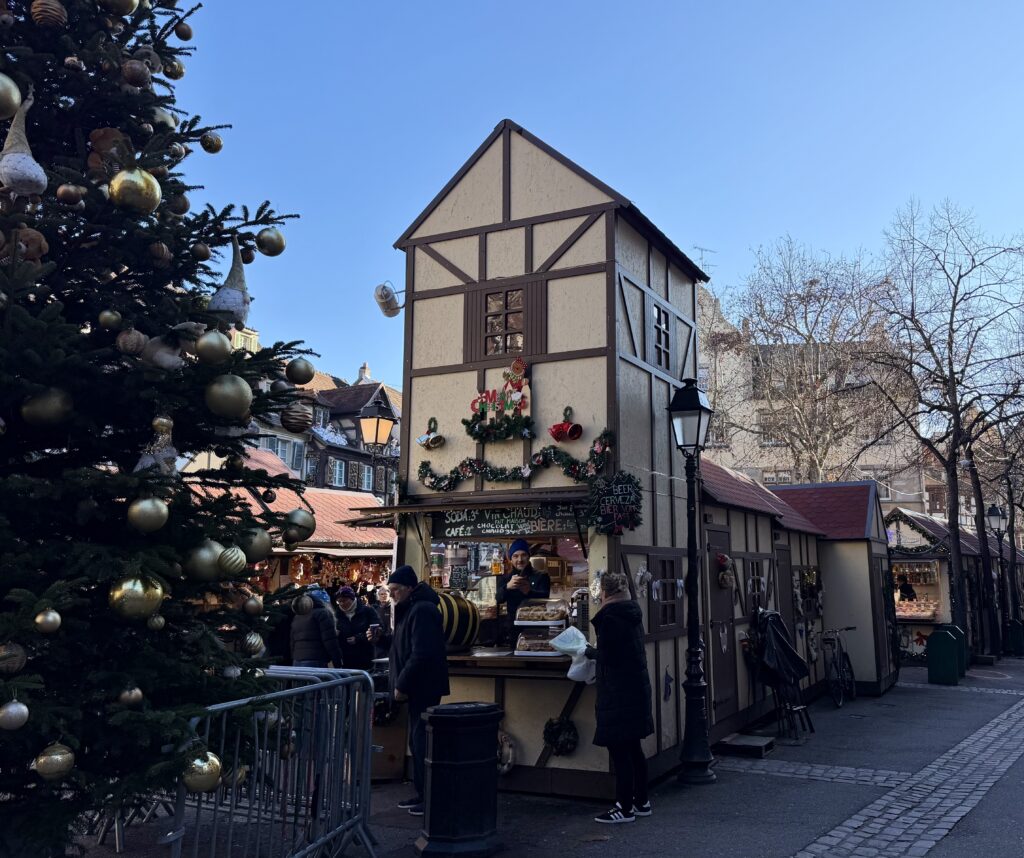
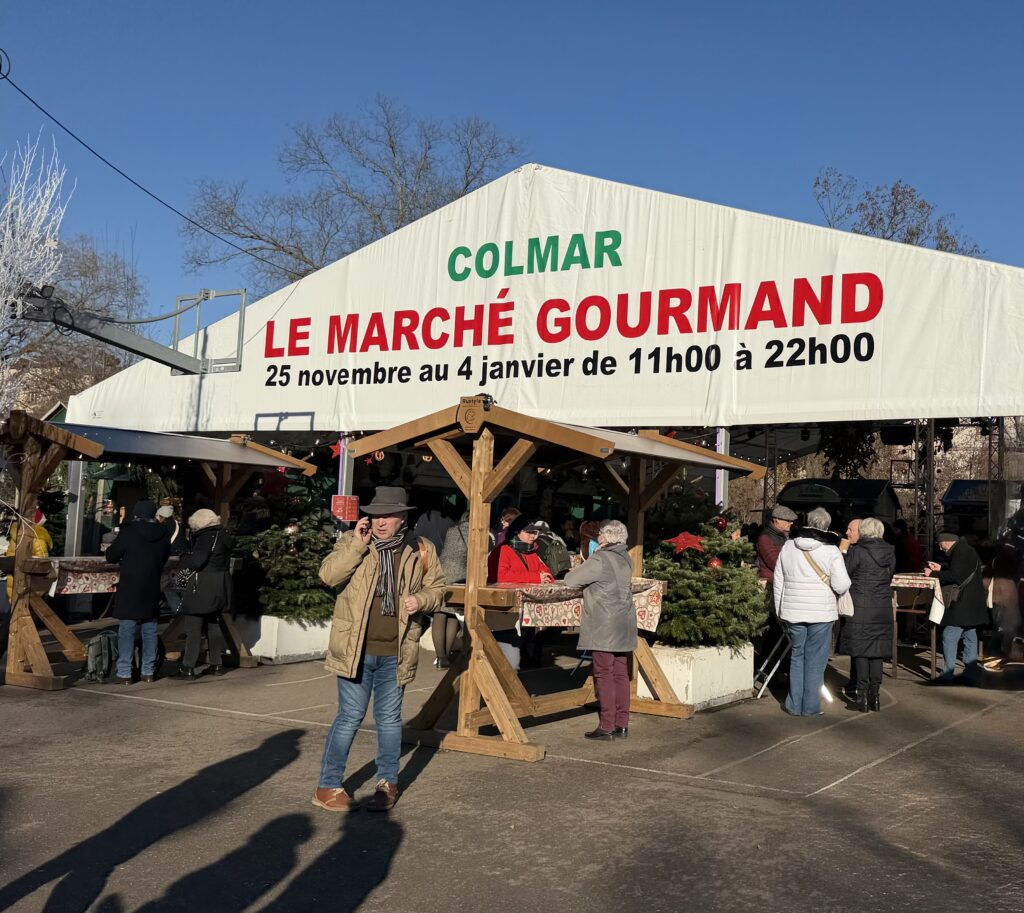
Within Colmar, there are actually 6 main markets (not including Place Rapp) – Place des Dominicains (by the Dominican church), Place de l’Ancienne Douane, Koïfhus, Petite Venise, Place Jeanne d’Arc, and Place de la Cathédrale. There is also a gourmet market at Place de la Cathédrale – yum! (https://www.christmas.alsace/colmar-christmas-market/). It was easy to find the markets due to nice signage around town (and they were all pretty central and within easy walking distance of our Airbnb and from each other).
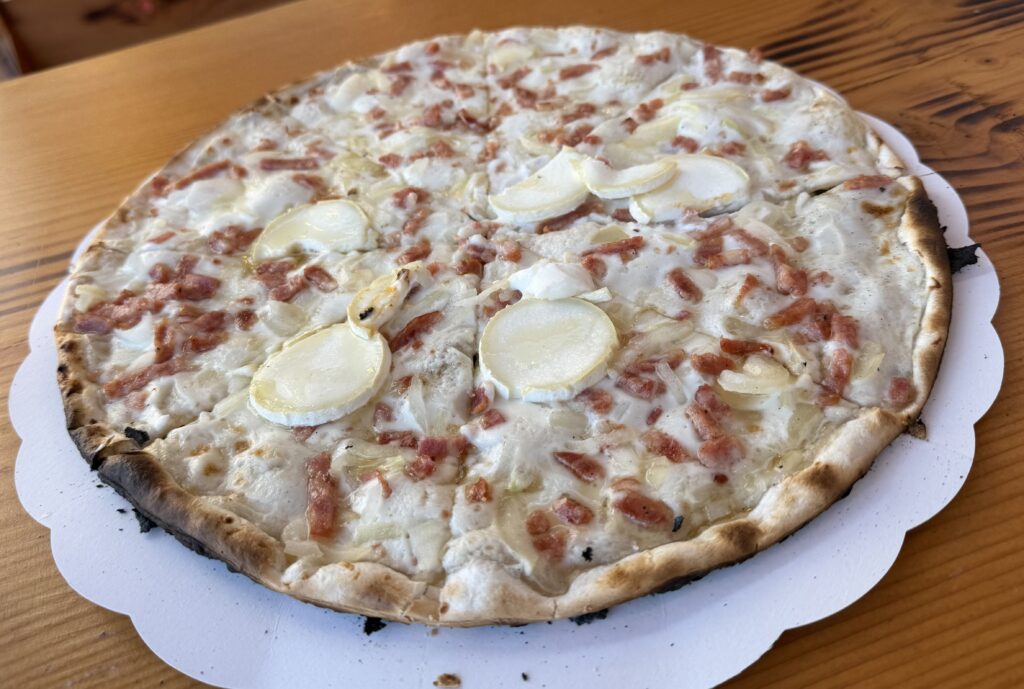
Among other foods (and beverages) to try, there is a one called a tarte flambée (or flammkuchen in German) specific to these Alsace markets plus some on the German side just across the border. It’s basically a wood-fired pizza with a thin crust, white cheese or creme fracihe, sliced onions, and lardon (basically cubed bacon). We got one that also had goat cheese on top and it was sooooo good! (https://www.thekitchn.com/recipe-flammenkeuche-from-alsace-tarte-flambee-246241)
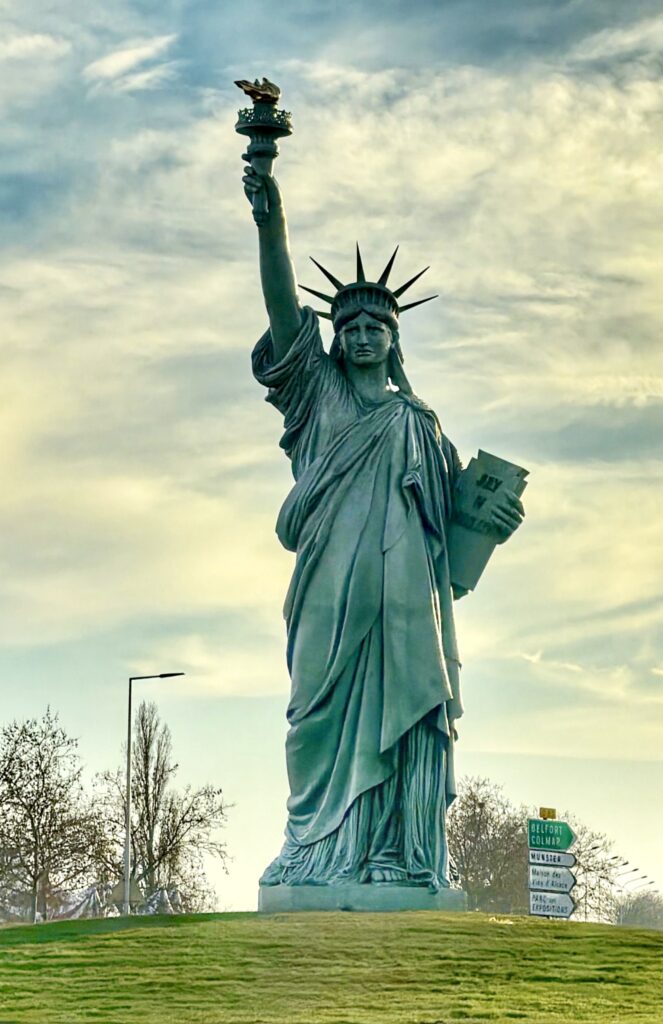
Among other things, one thing Colmar is famous for is being the birthplace of Auguste Bartholdi (https://www.tourisme-colmar.com/en/visit/presentation/history/famous-people-from-colmar/176-auguste-bartholdi-father-of-the-statue-of-liberty)- the artist who designed the Statue of Liberty that France presented to the United States. Colmar put up a replica in his honor on the centennial of his death. It’s in a traffic circle on the way into town (we saw it when we took the car to go see a castle – you otherwise would not see it if arriving by train).
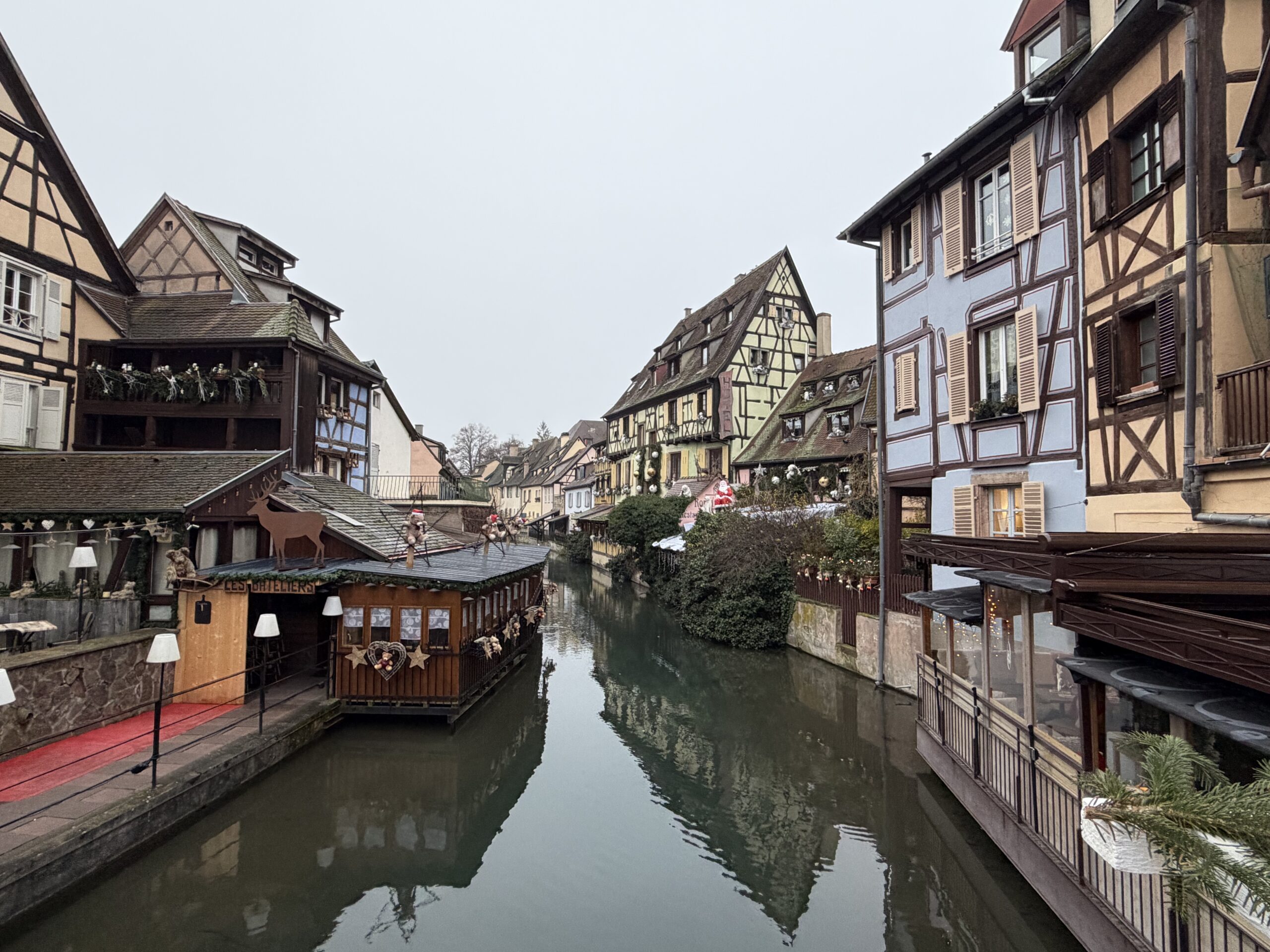
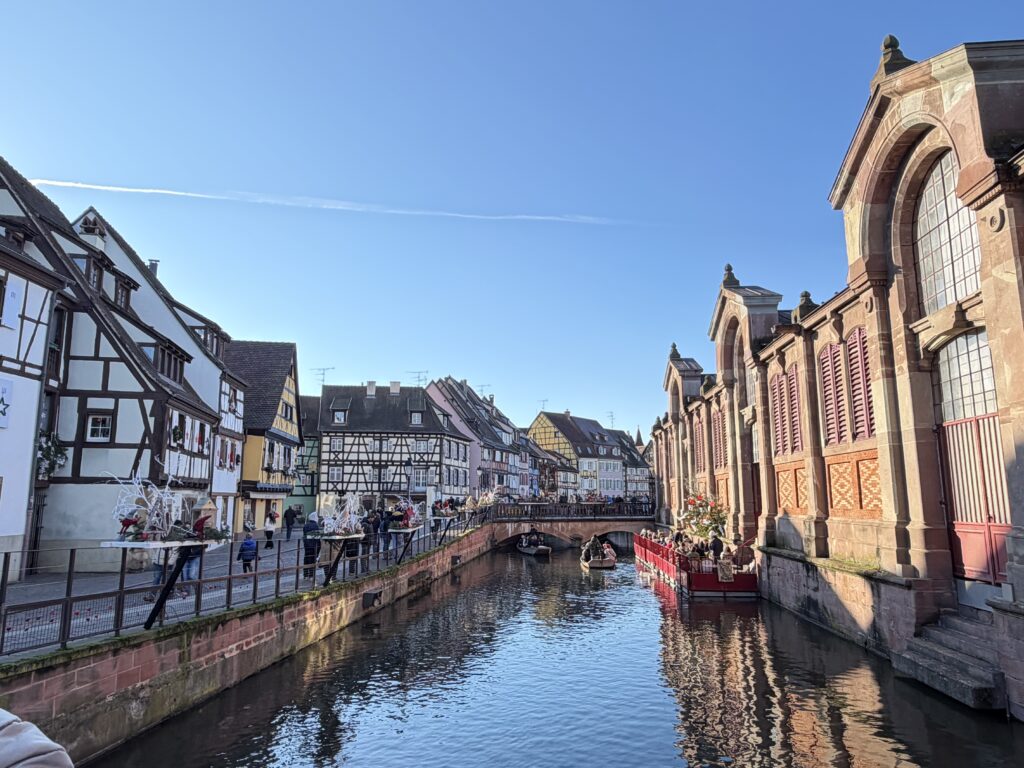
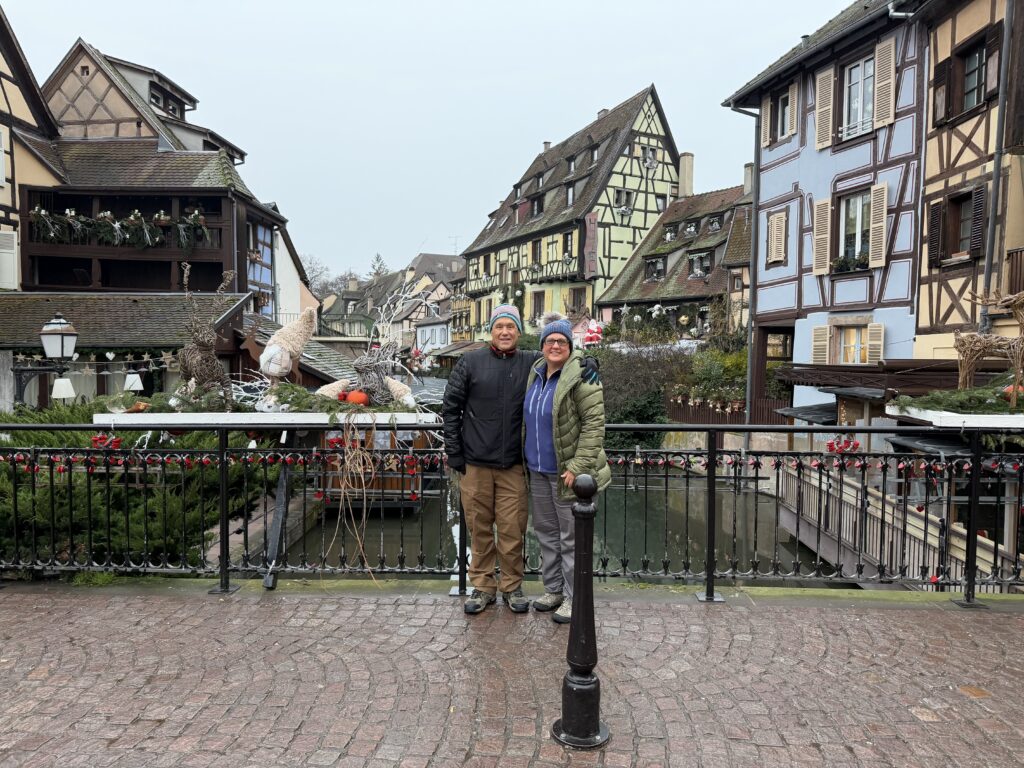
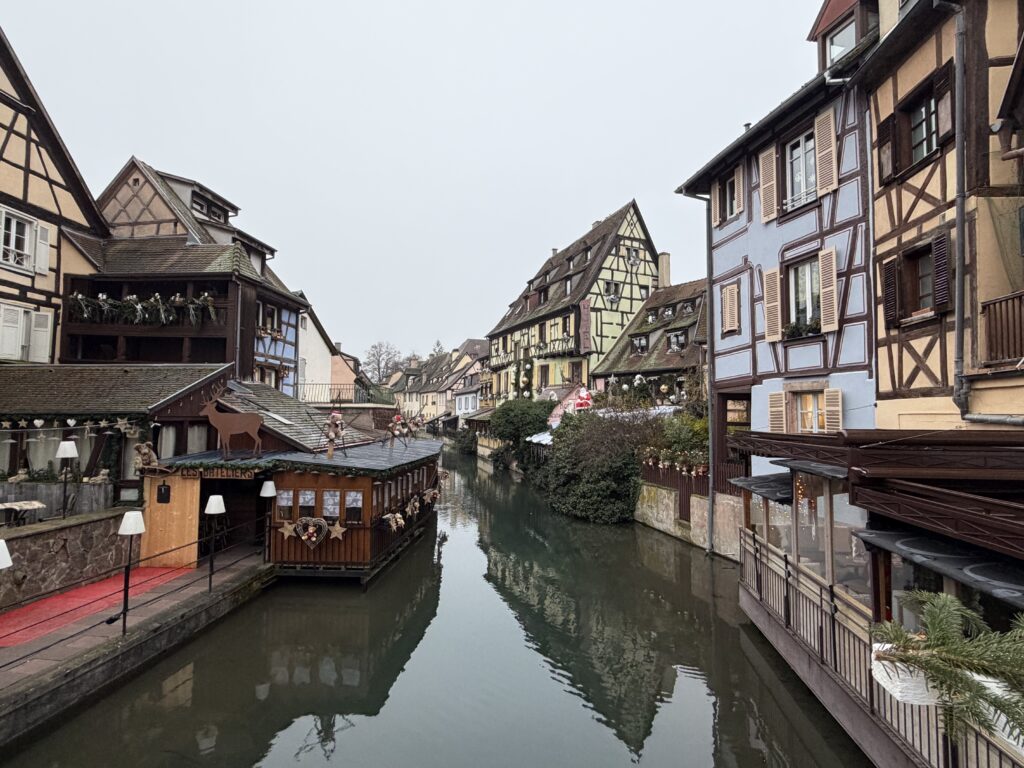
We walked through Petite Venise several times – so named because of its canals. If you’ve seen pictures of this bridge elsewhere, you may have noticed a lot more people in those photos. It’s a popular spot for those perfect instagram photos! We went through in the morning (before the markets were open) on our way to the train station to catch the Navette de Nöel bus, so we got a relatively crowd-free view! You can see why it’s such a popular photo spot – canals with colorful half-timber houses reflecting back in the water.
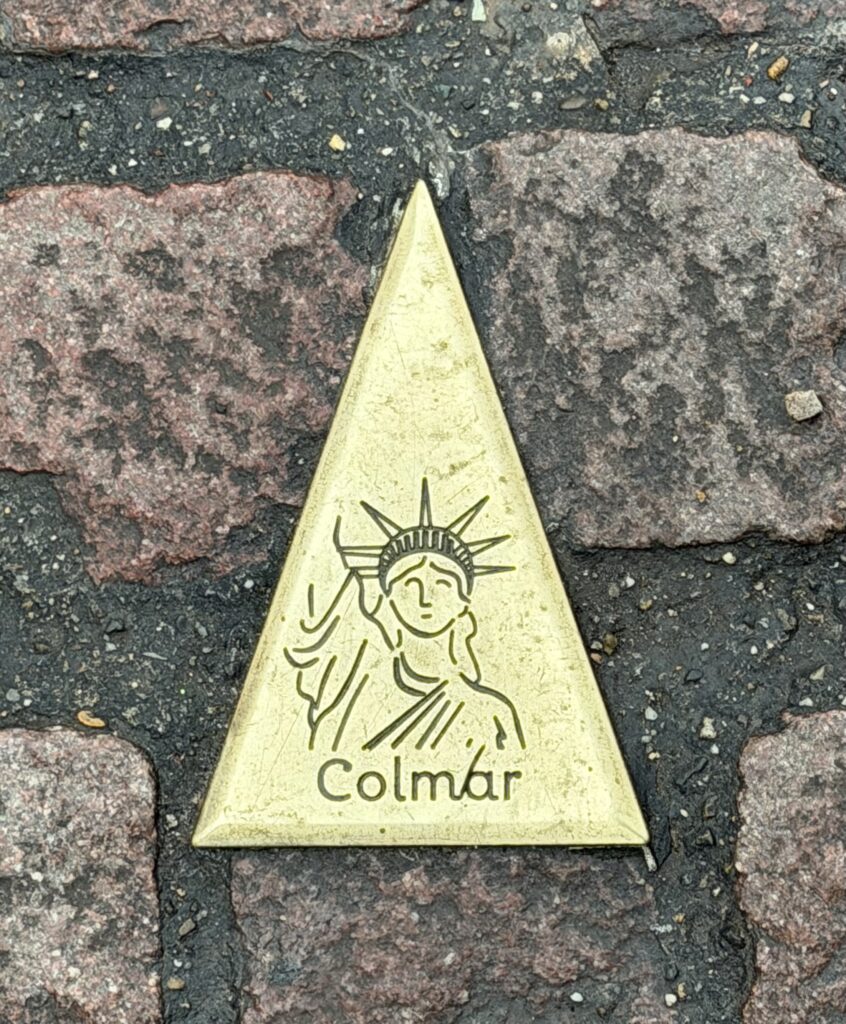
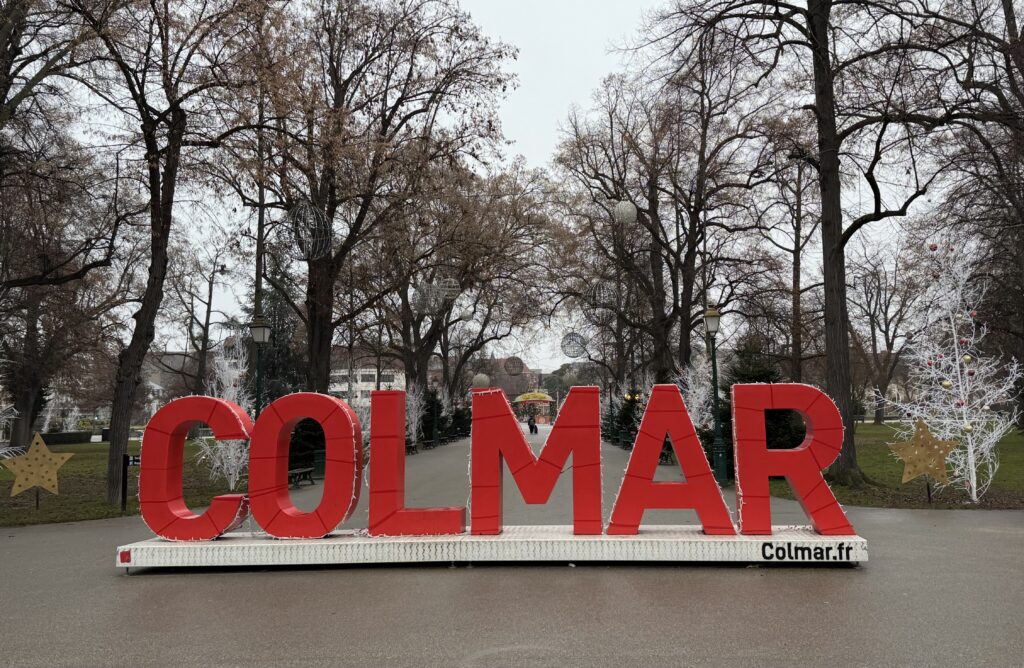
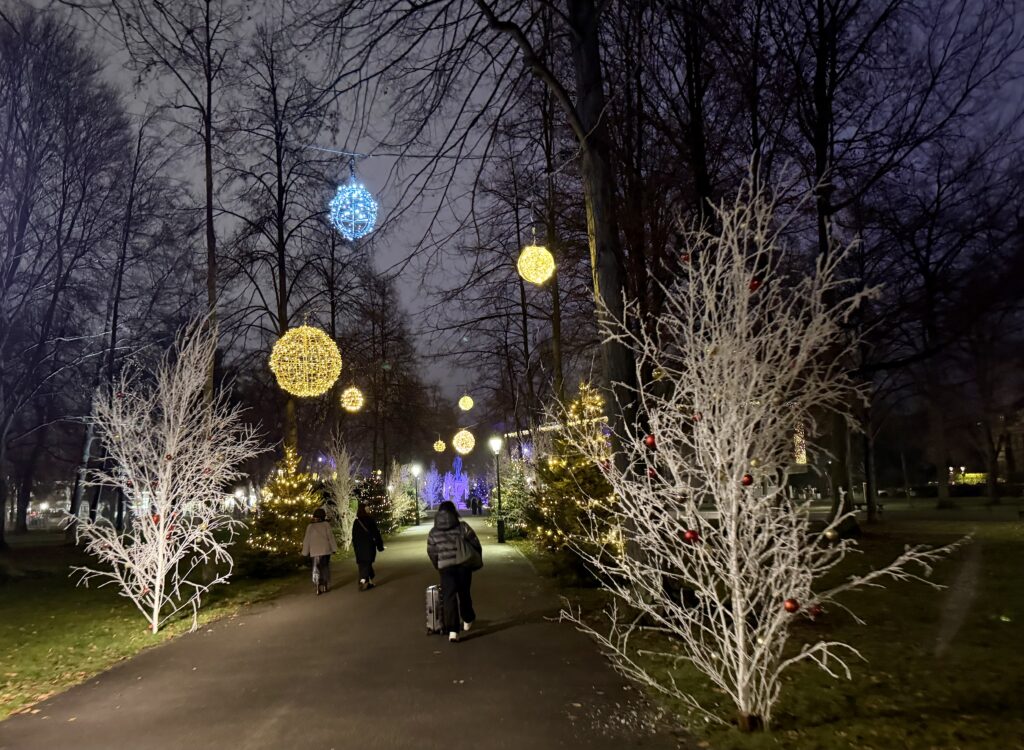
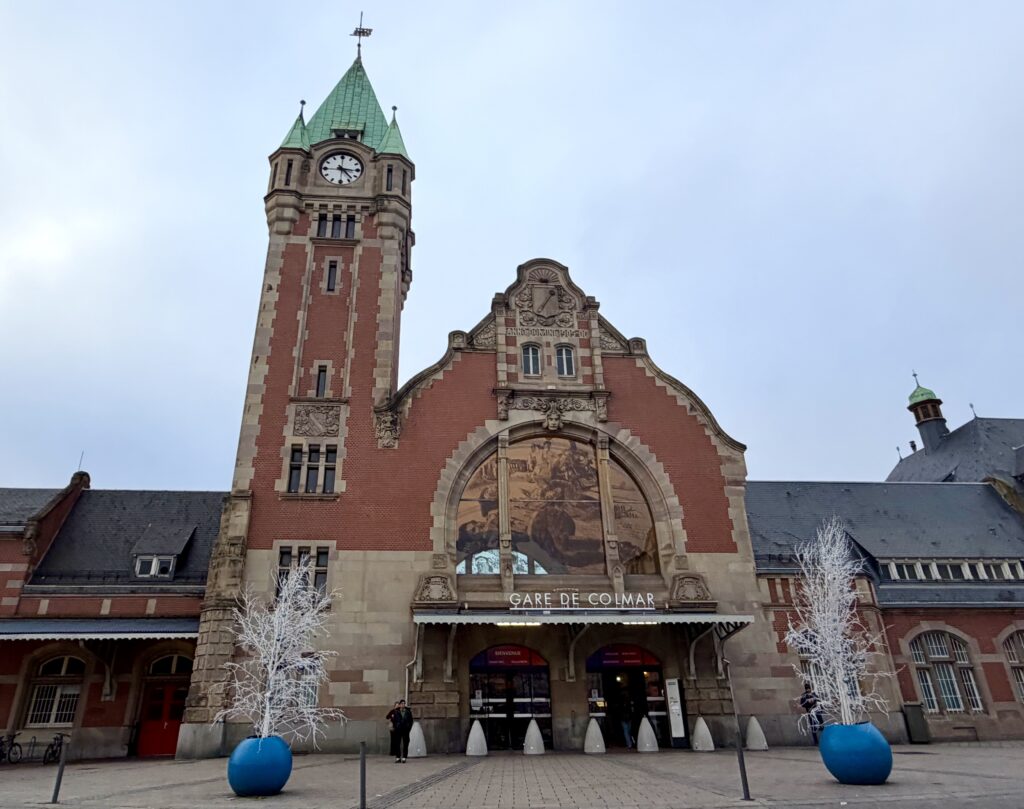
On the way to the train station (which was only about a 15 in walk from our apartment), we passed through a park right next to Place Rapp called Parc du Champ-de-Mars. It was lit up nicely at night (which started around 4:30 pm this time of year, so we got to see lots of pretty lights on this trip!) and also had this fun Colmar sign. The train station itself was also beautiful!
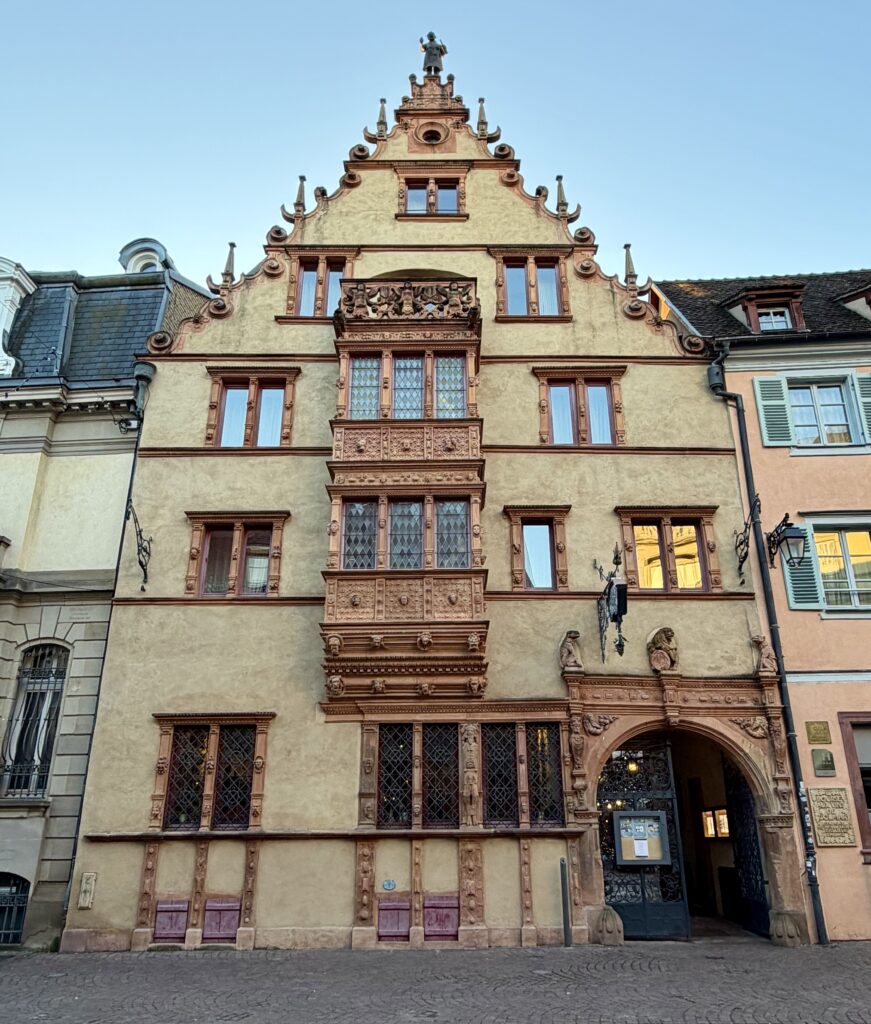
Some of the other cool buildings we came across were the La Maison des Têtes, the Adolph House, the Former Guard House, and St. Martin’s Cathedral.
La Maison des Têtes (translates to house of the heads) was built in 1609 and got its name due to the 106 sculpted heads adorning the facade. It’s now a 5-star luxury hotel and also has 2 restaurants (one of which is a Michelin-starred restaurant).
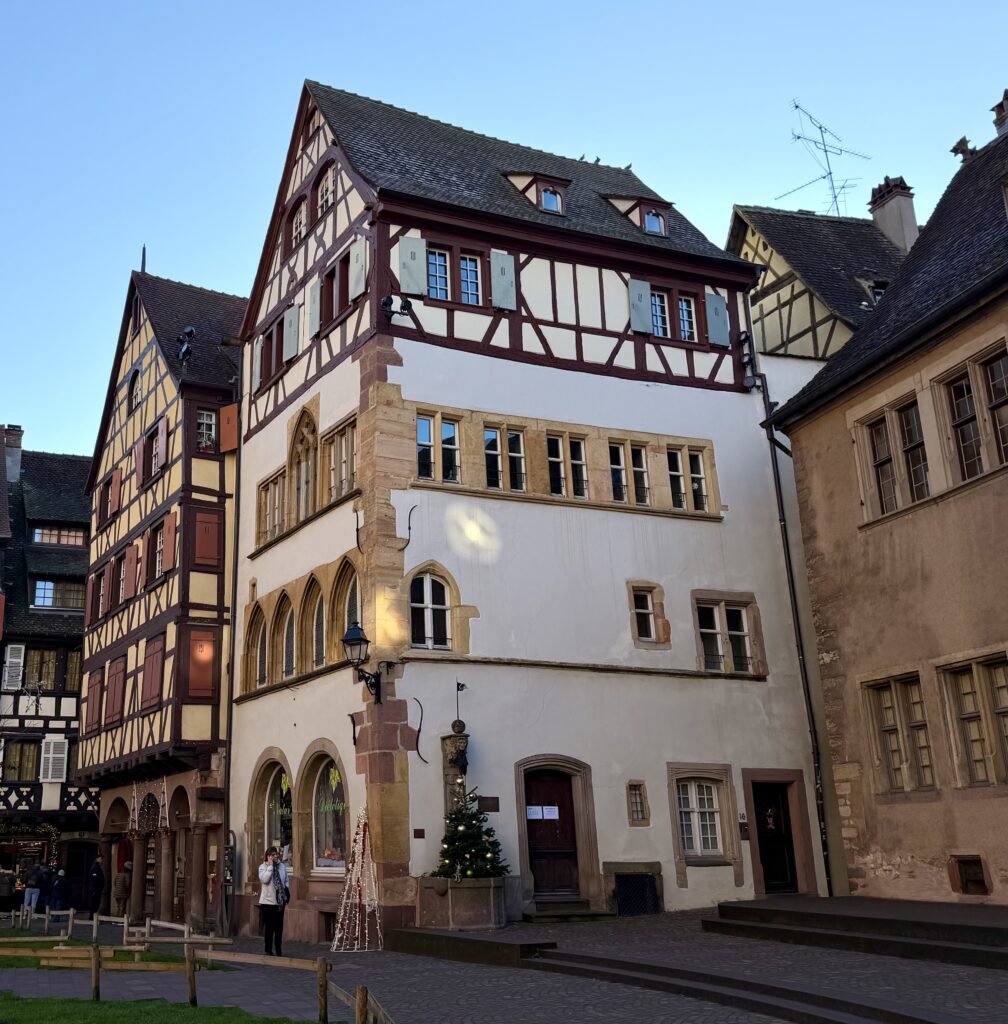
The Adolph House (Maison Adolph) is one of the oldest residences in Colmar, built in the mid-14th century (it’s the building in the middle of that first photo; the building to the left is the Former Guard House).
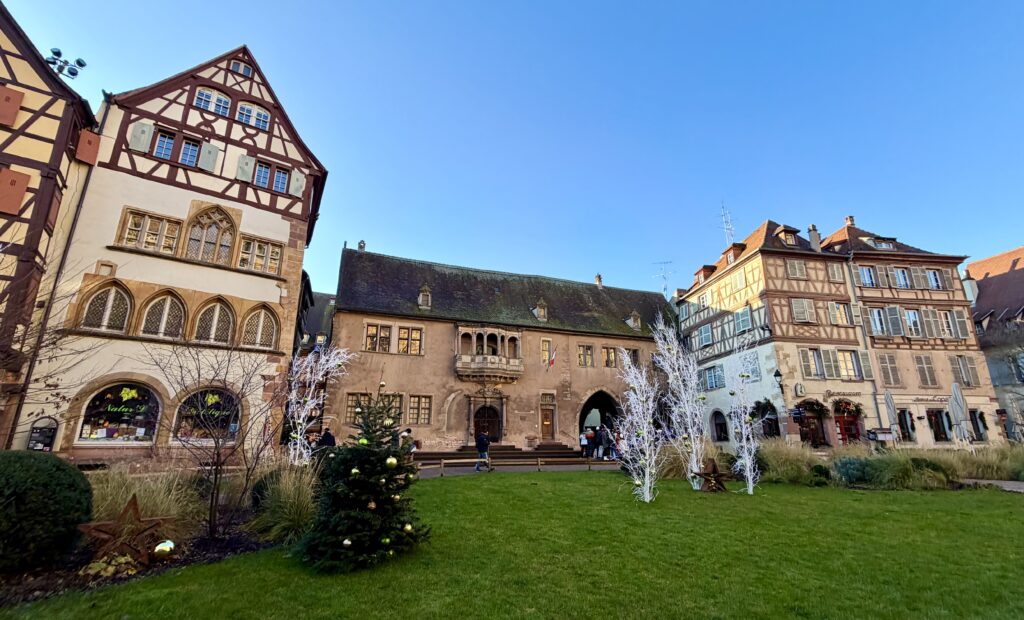
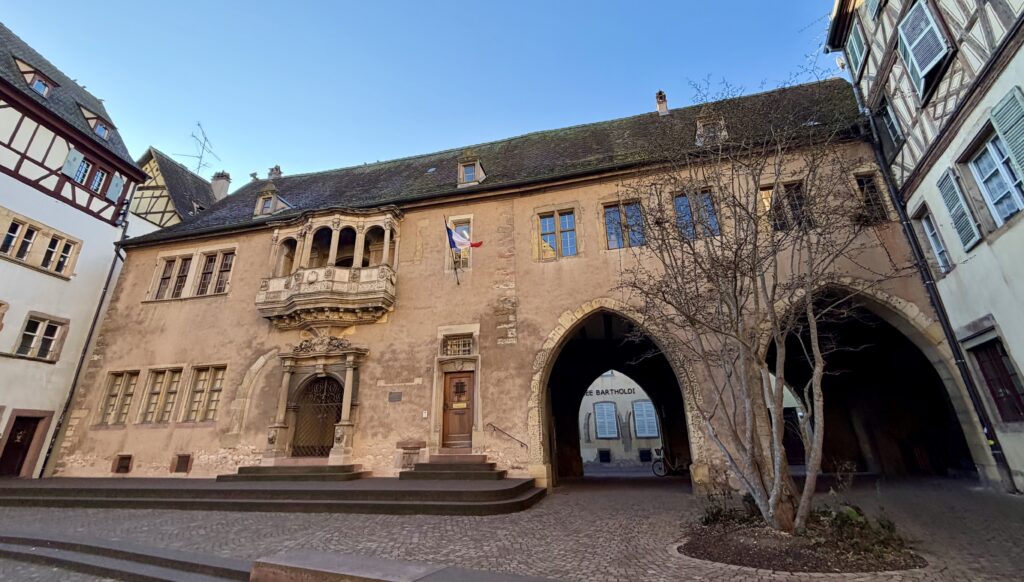
The Former Guard House dates back to the 13th century and has served a variety of purposes over the years (including a military housing office and a police station) (https://www.visit.alsace/en/235008790-the-former-guard-house/).
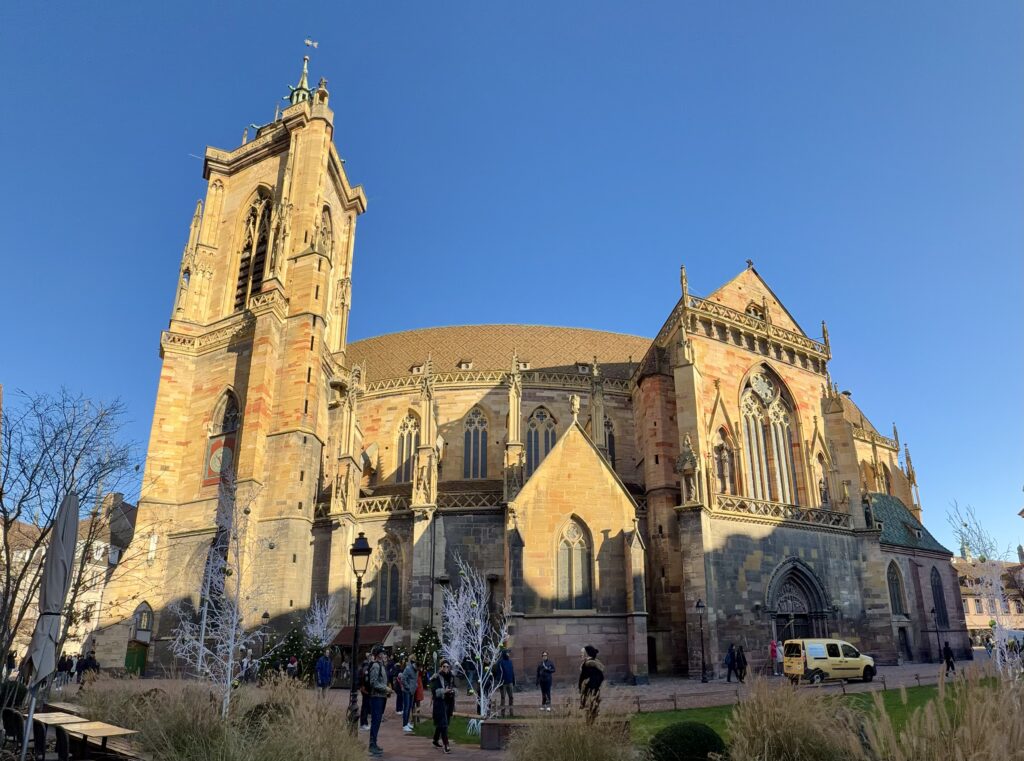
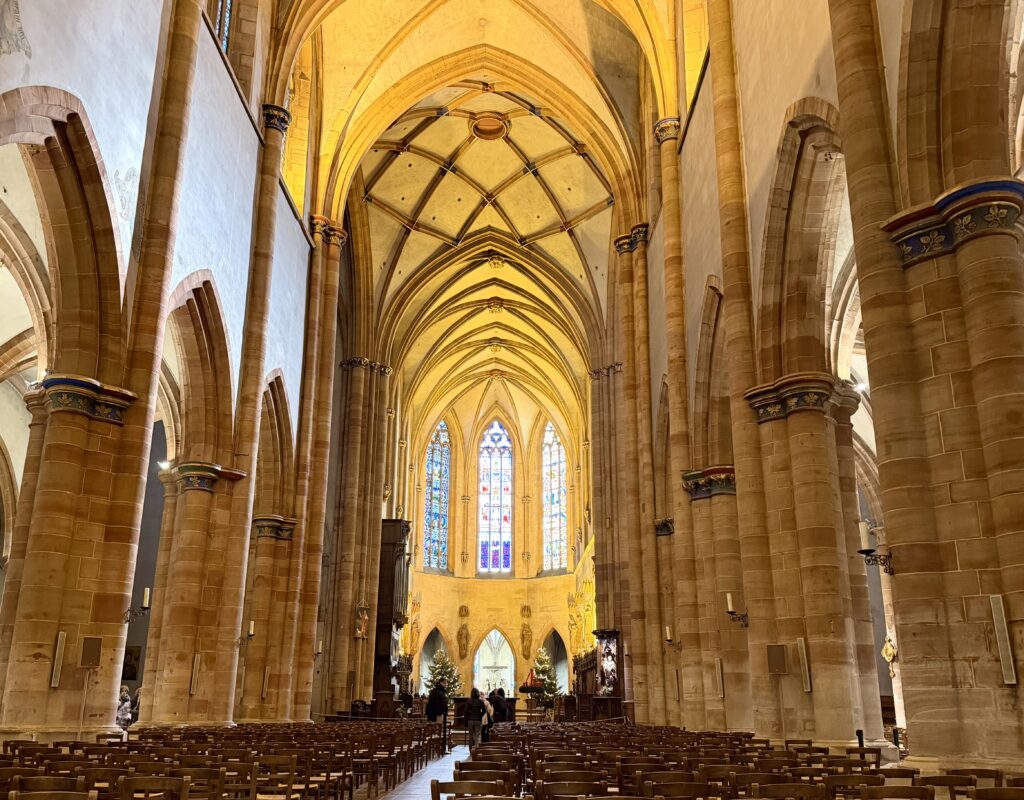
St. Martin’s Cathedral was built between 1235 and 1365 and appears to have been built on the site of an older church dating back to the 11th-12th century (this was a common theme with many of the old churches we have seen on our travels). (https://www.visit.alsace/en/235007704-saint-martin-church/)
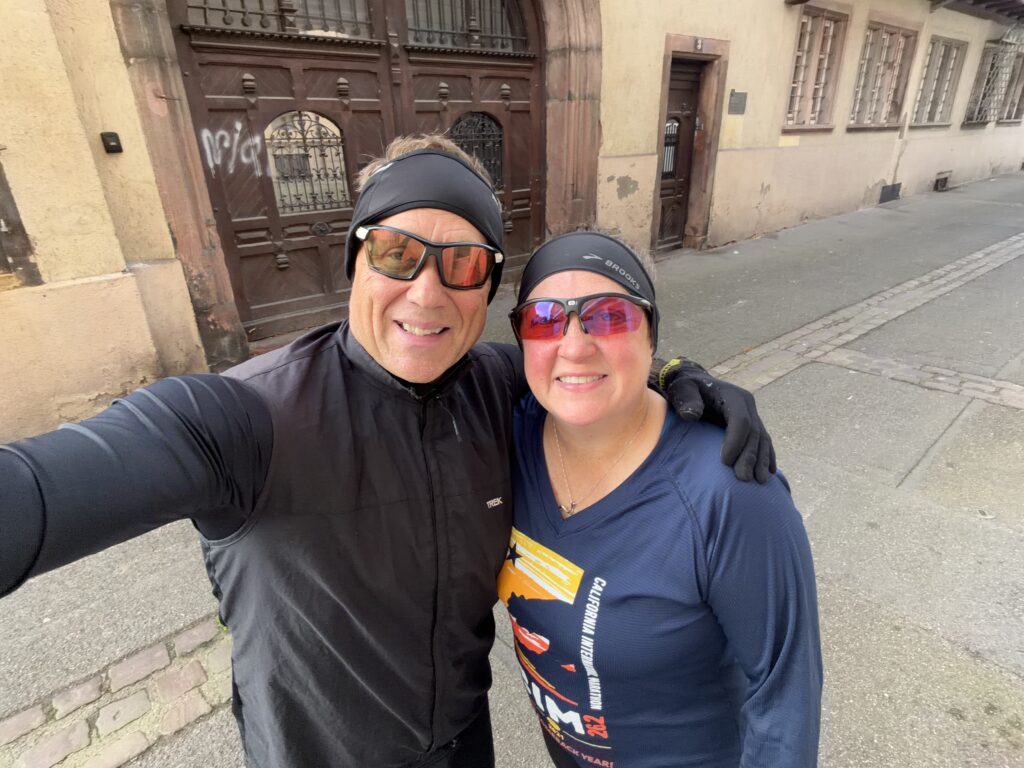
During our week in Colmar, we managed to get out one morning for a run. It was chilly but sunny and is always a nice way to see any city – especially when the streets are pretty empty in the morning.
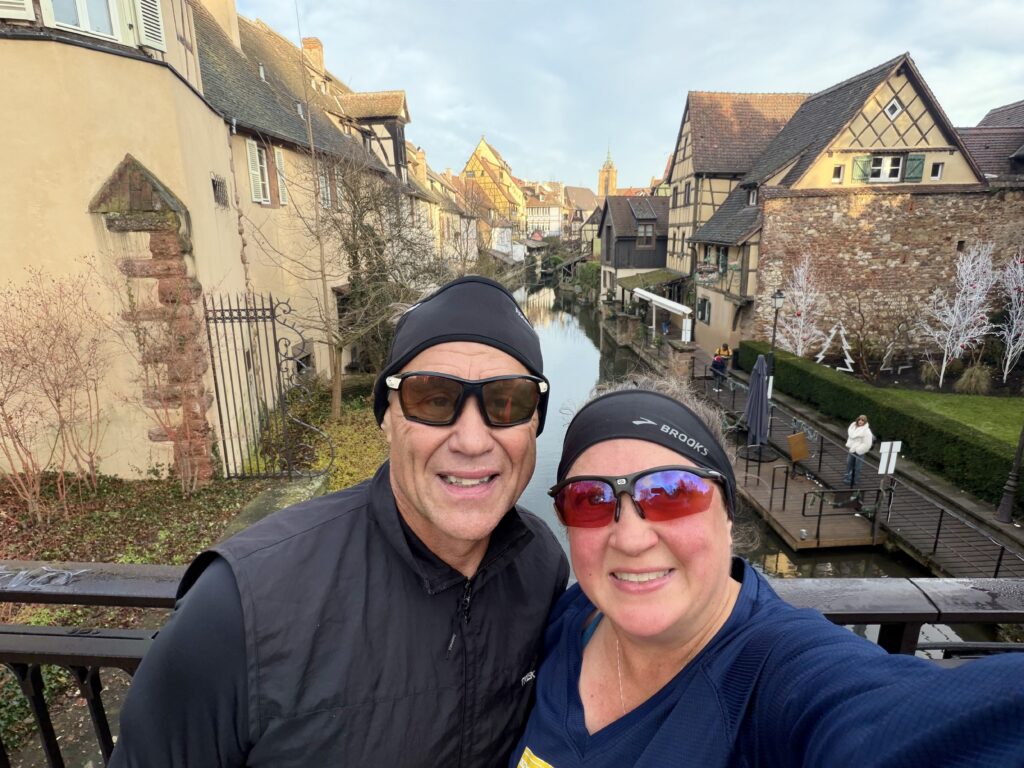
I couldn’t get enough of the half-timbered houses so I’ll leave you with a few more pictures of those. A bit more on the German and French history of the region …. because of its location on the border, it has changed hands many times. It was originally inhabited by Celtic and German tribes, was part of the Roman Empire, and later the Germanic Holy Roman Empire. It was annexed by France in the 17th century following the Thirty Years’ War. Then after France was defeated in the Franco-Prussian War in the 1870s, it was annexed back into the German Empire. After Germany’s defeat in WWI, Alsace was returned to France as part of the Treaty of Versailles. It was annexed by Germany during WW2 (it was annexed and not just occupied due to its prior history as part of Germany) then finally returned back to France in 1944. Dizzy yet? You can see why there is such a mix of French and German architecture, names, and food. (https://www.ricksteves.com/watch-read-listen/read/articles/alsace-europes-cultural-hybrid; https://www.erinhendersonmedia.com/blog/alsace-france-a-day-trip-through-fairytale-villages).