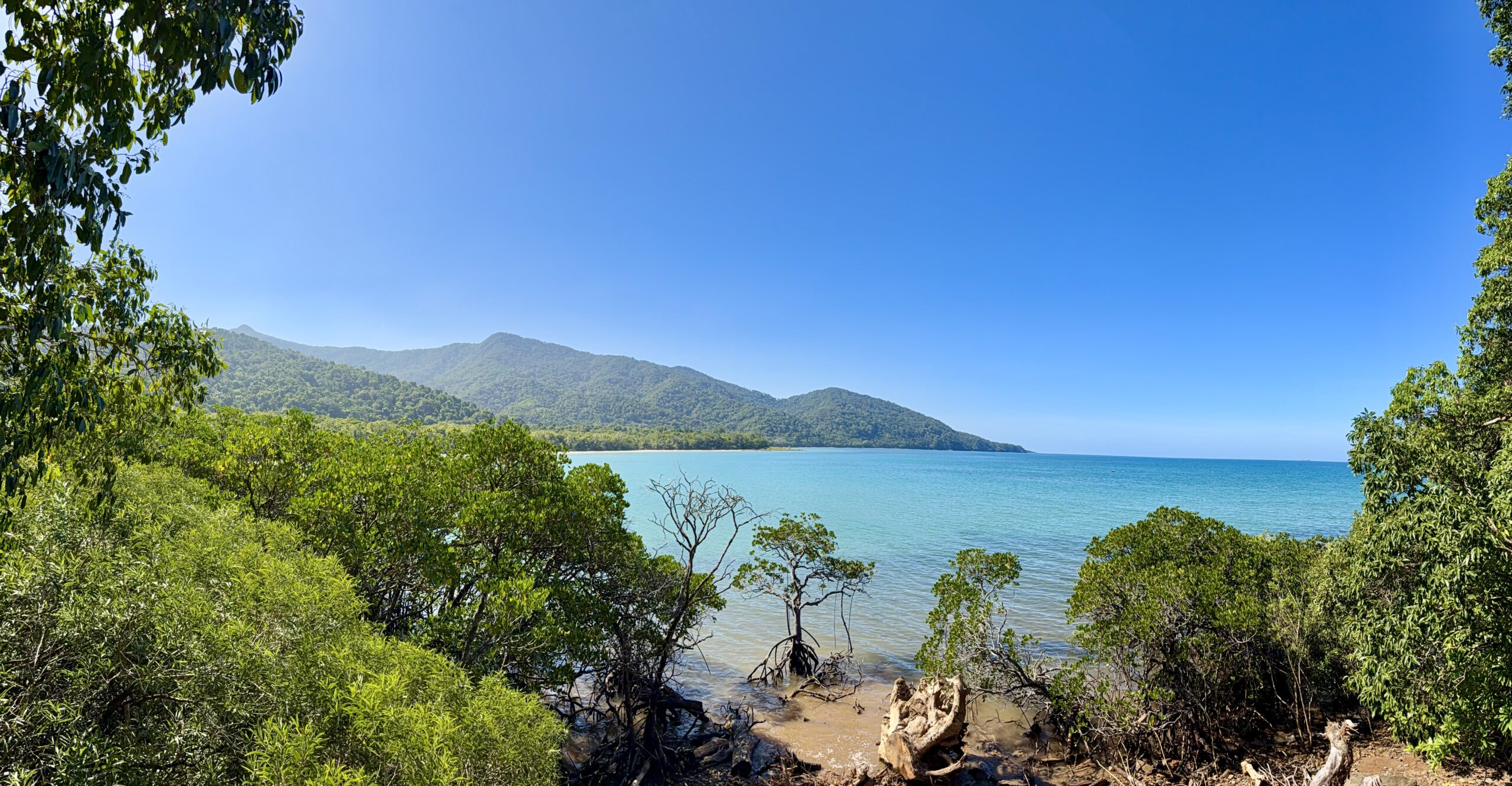

On our last day in Cairns, we booked a day trip to the Daintree Rainforest. There wasn’t an easy way to do this trip without a car so we booked a small group trip through Viator (in hindsight – even with a car, I think we would have had a hard time seeing all the things we did on our own so would definitely do the tour route again).
We booked it through Viator with Discovery Tours Australia (https://www.viator.com/tours/Cairns-and-the-Tropical-North/Cape-Tribulation-Mossman-Gorge-and-Daintree-Rainforest-Premium-Day-Tour/d754-10986P1?medium=social-share-copy; Discovery Tours Australia. https://cairns-tours.com/tour/daintree-and-cape-trib-premium-small-group-tour-discovery-tours)
I particularly liked that they always keep their groups small – so they had 2 groups doing a similar tour that day to keep it small (we were all on the river cruise and at lunch together but otherwise were slightly offset on the timing so it wasn’t crowded and they do this on purpose). Our guide (and driver) Sean was very knowledgable and a lot of fun.
He picked us and a few other couples up in Cairns at our respective hotels and then we picked up a few more people in Port Douglas. The first stop of our trip was a beautiful overlook on Flagship Hill in Port Douglas.
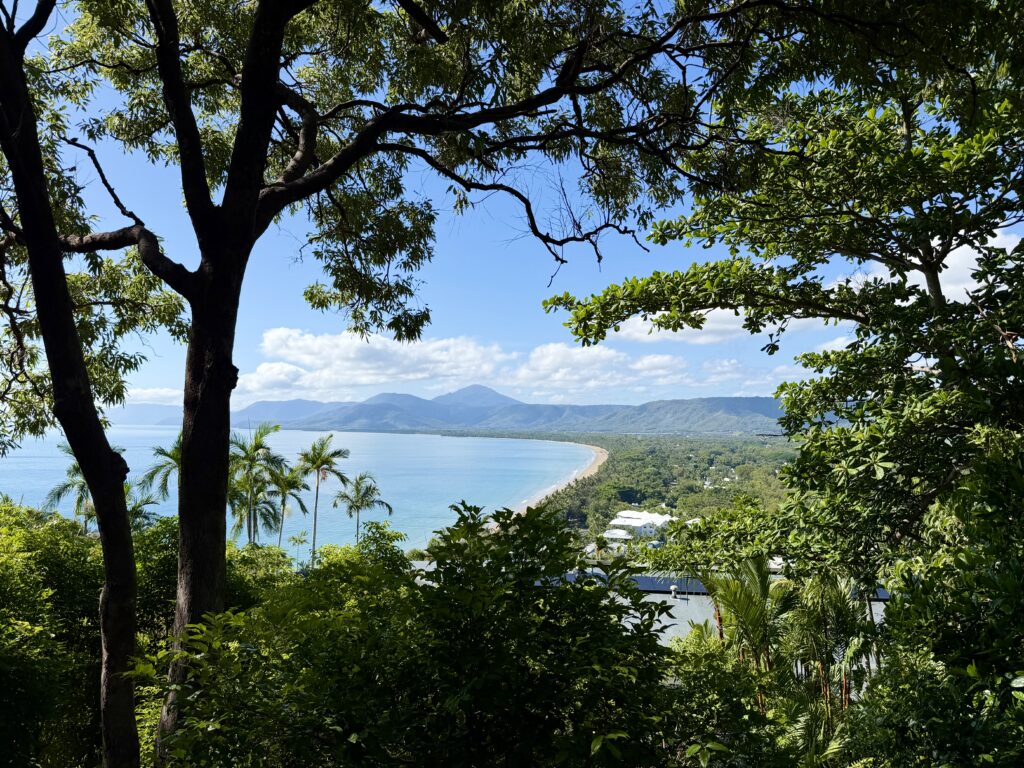
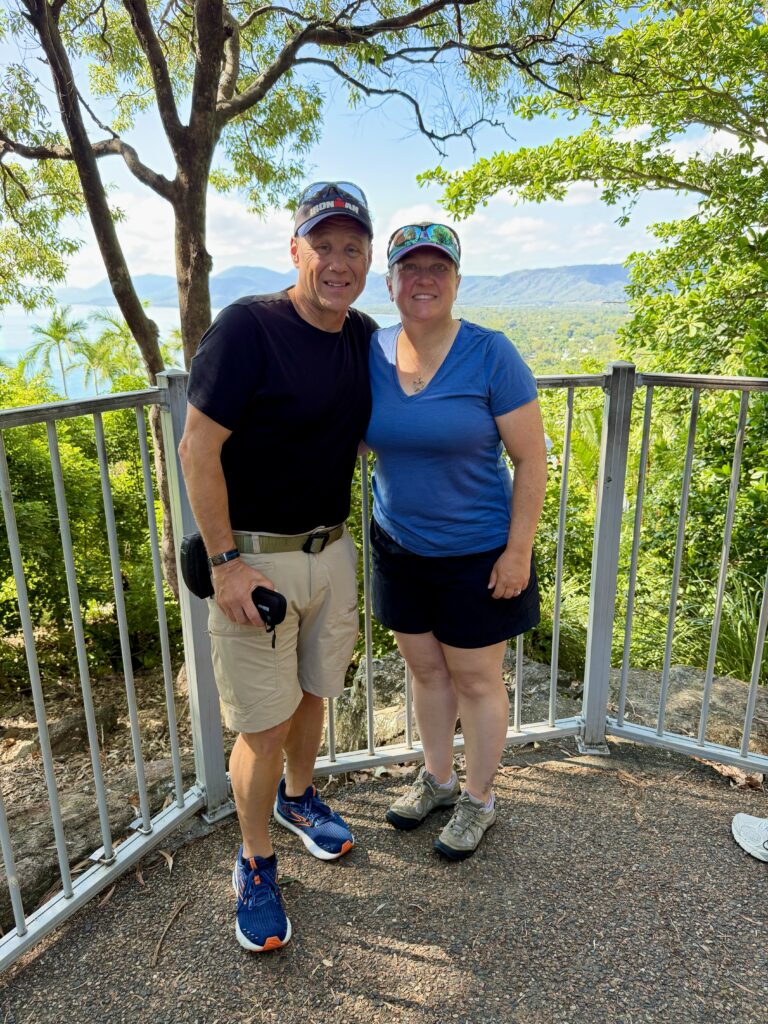
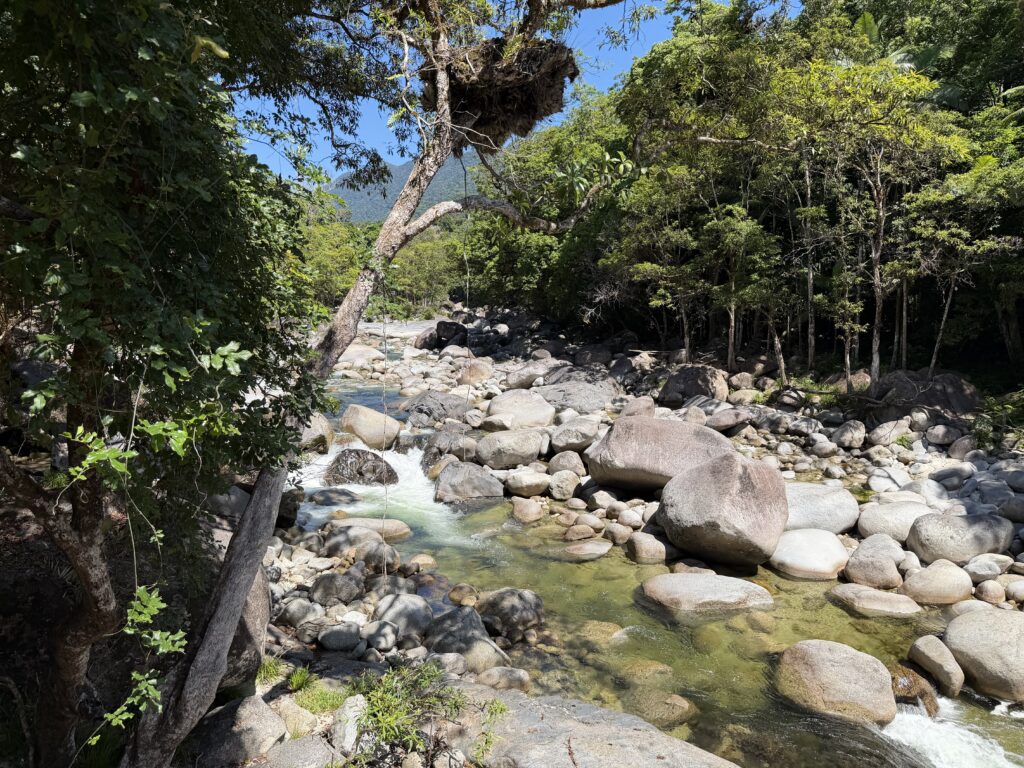
Then we headed to Mossman Gorge (the southern end of the Daintree National Park) – we had tea at the Mossman Gorge Cultural Center then went for a short walk to the Mossman River.
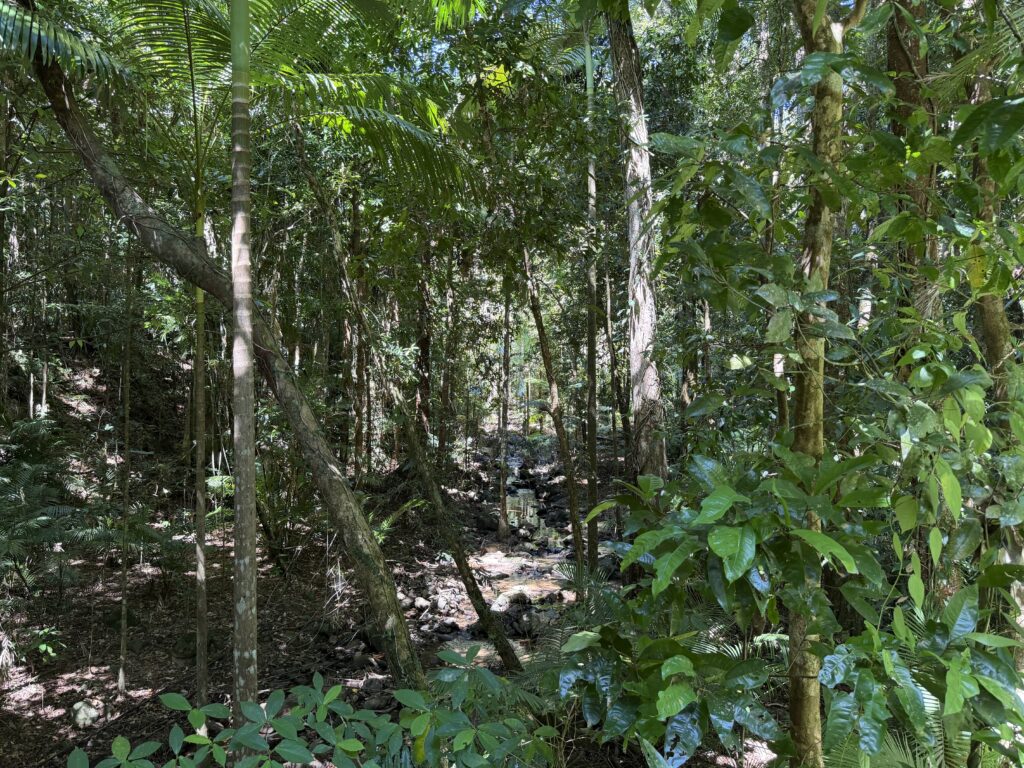
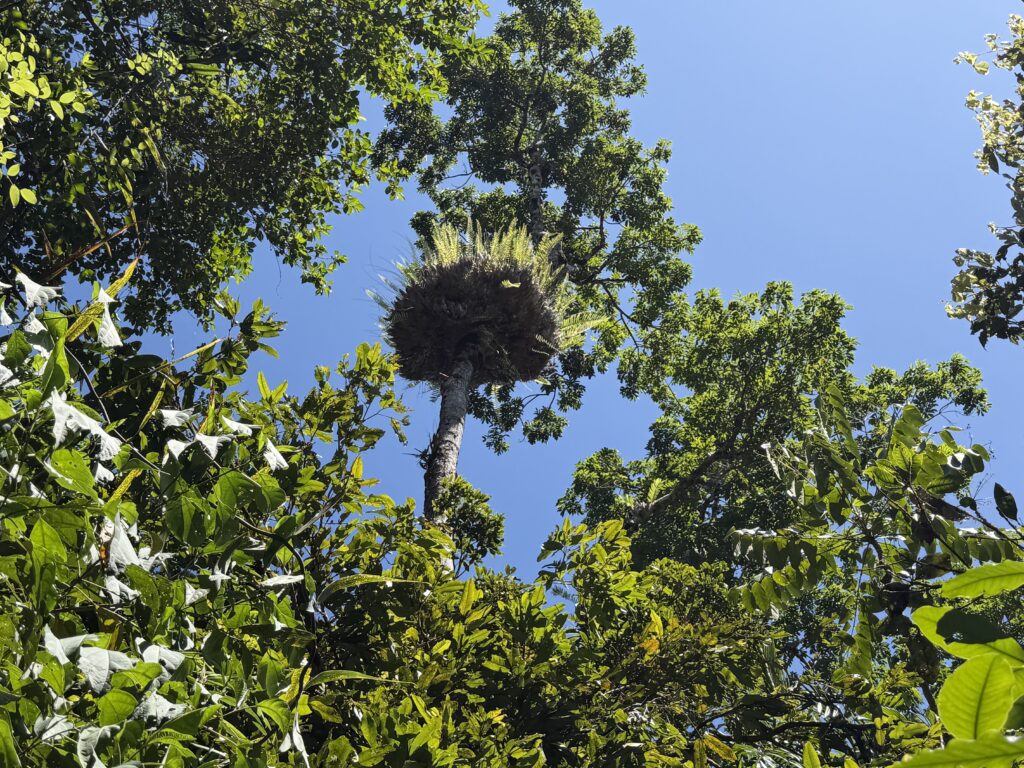
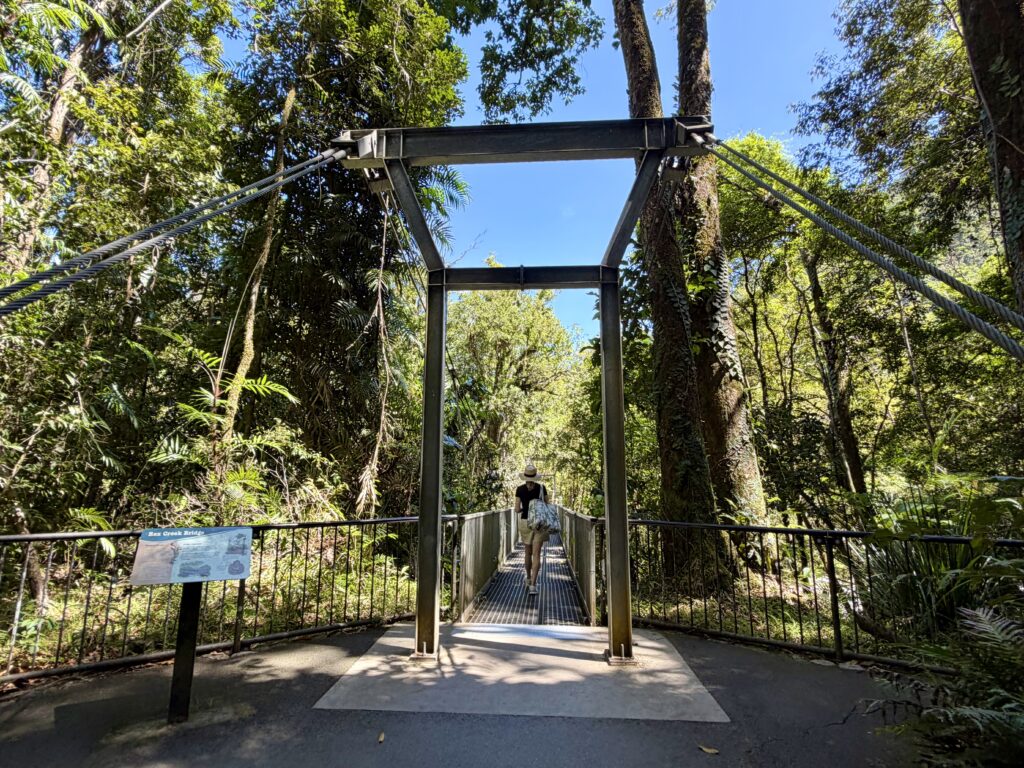
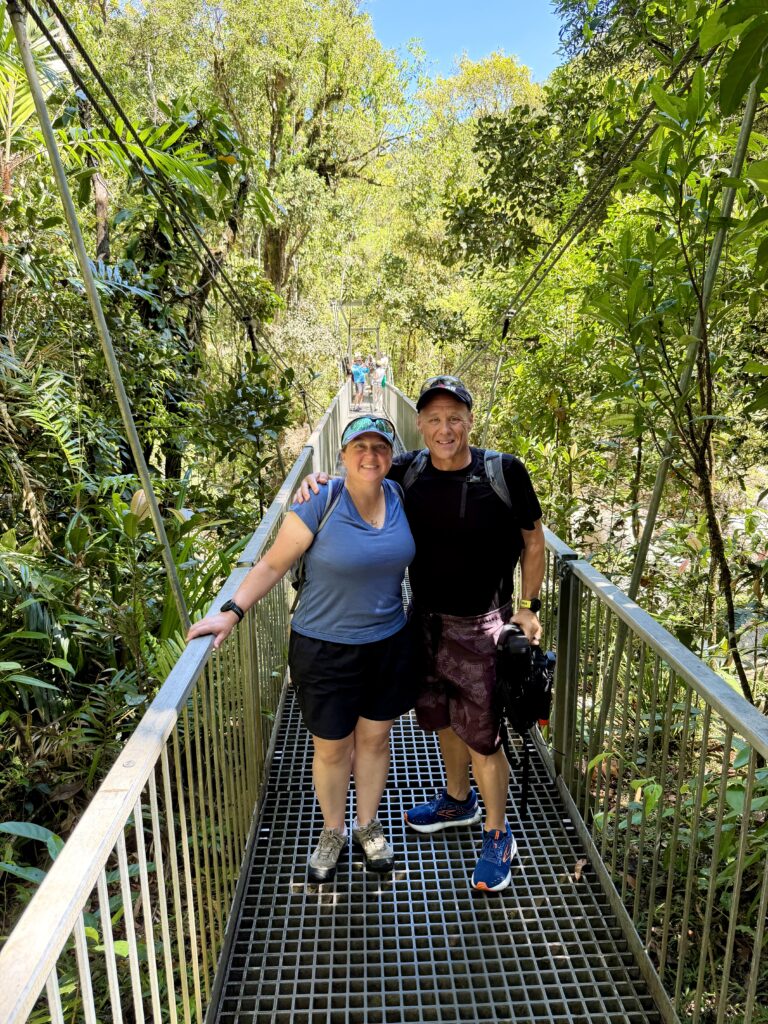
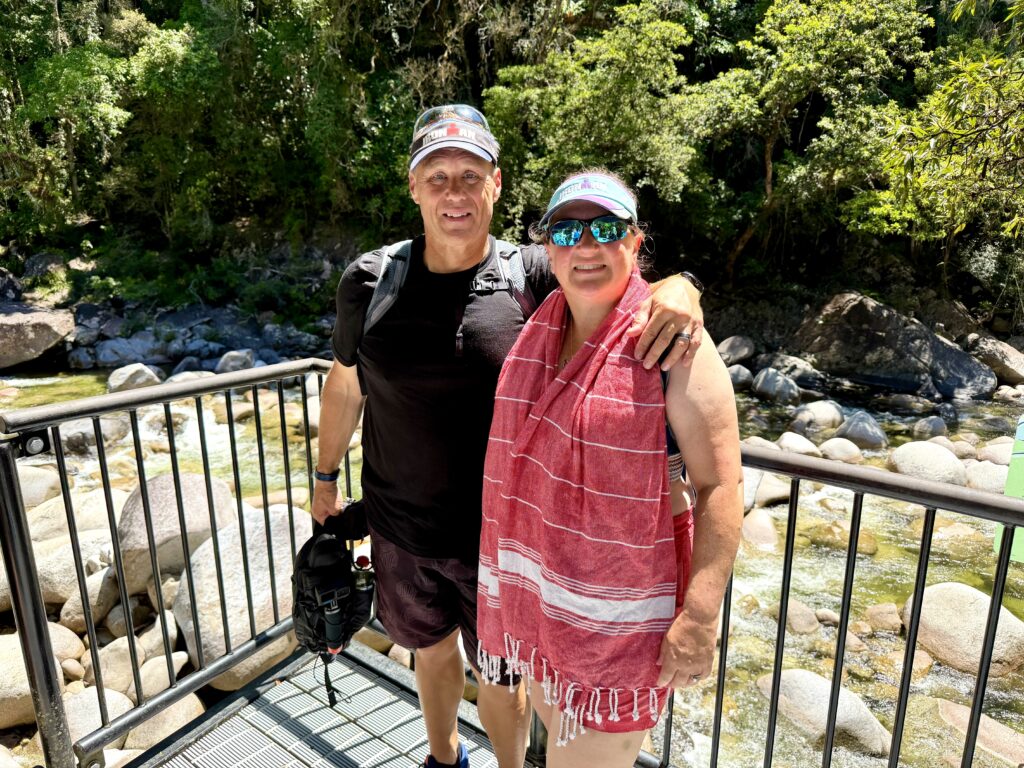
We stopped for a picture on the Rex Creek Bridge (built in the 1980s).
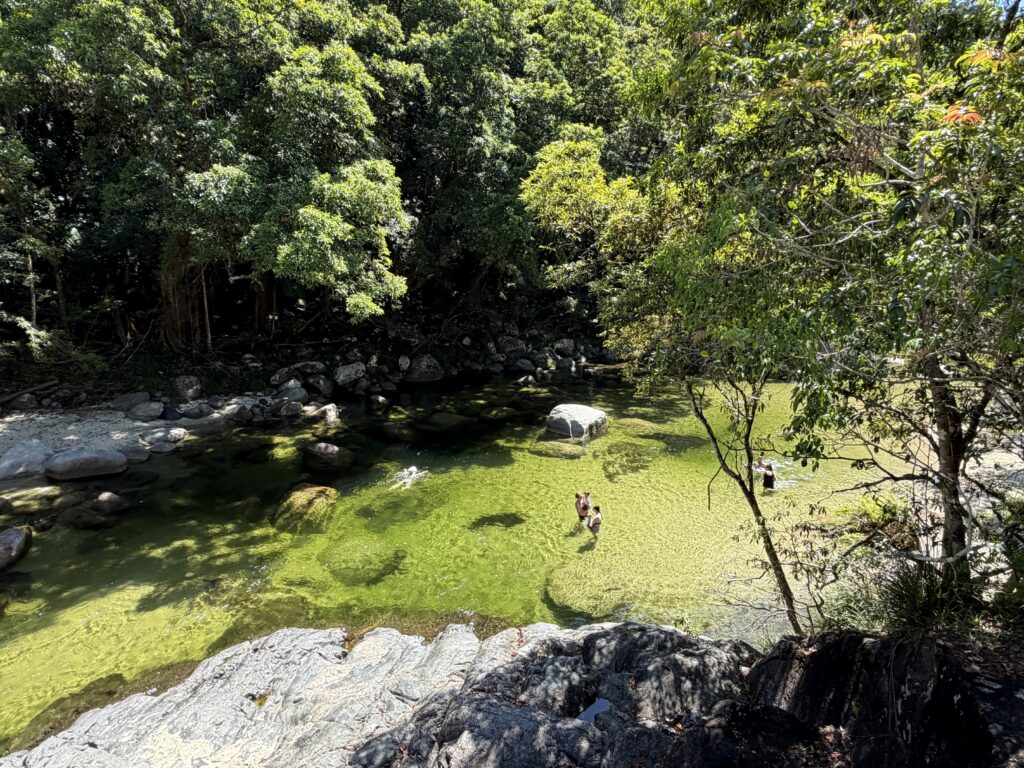
Once we got to the river, we got to go for a short refreshing swim in the Mossman River. We knew that might be a possibility so we brought bathing suits and a towel with us. It was so beautiful! The water was cold – which felt great on a nearly 90-degree day.
After that stop, we headed further up the road to the Daintree Tea House – the longest-established restaurant in the Daintree area. They serve locally sourced food – Chris and I both had the Barramundi but we all also had a variety of local fruits and even got to have an expert on them tell us about what we were eating.
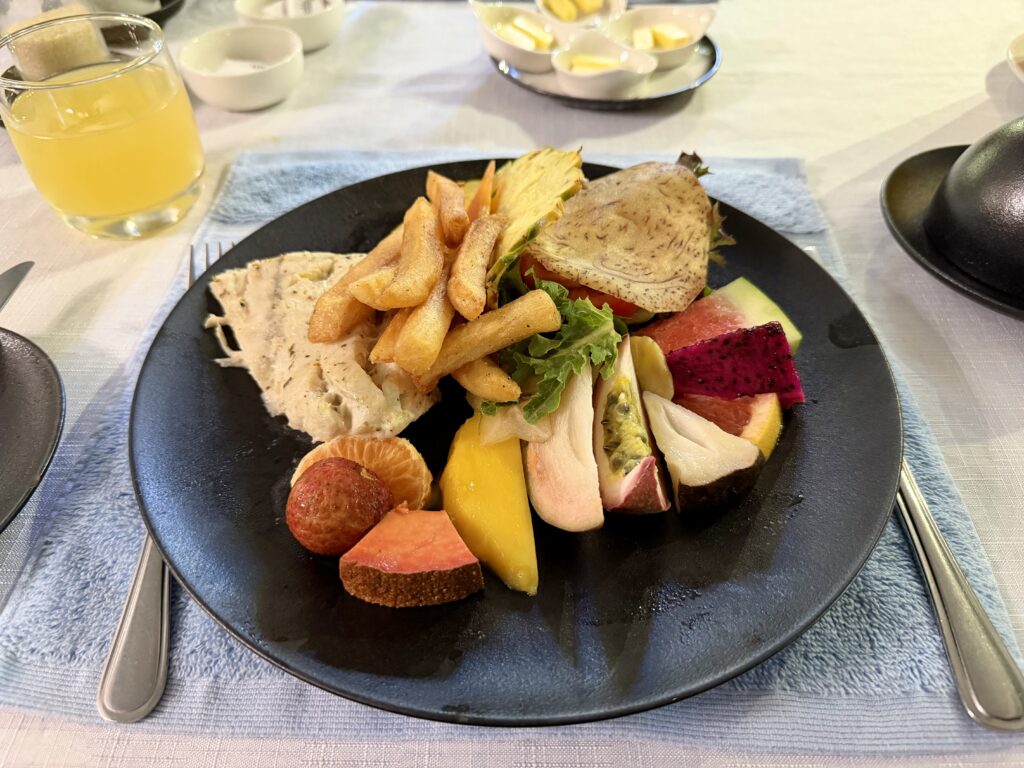
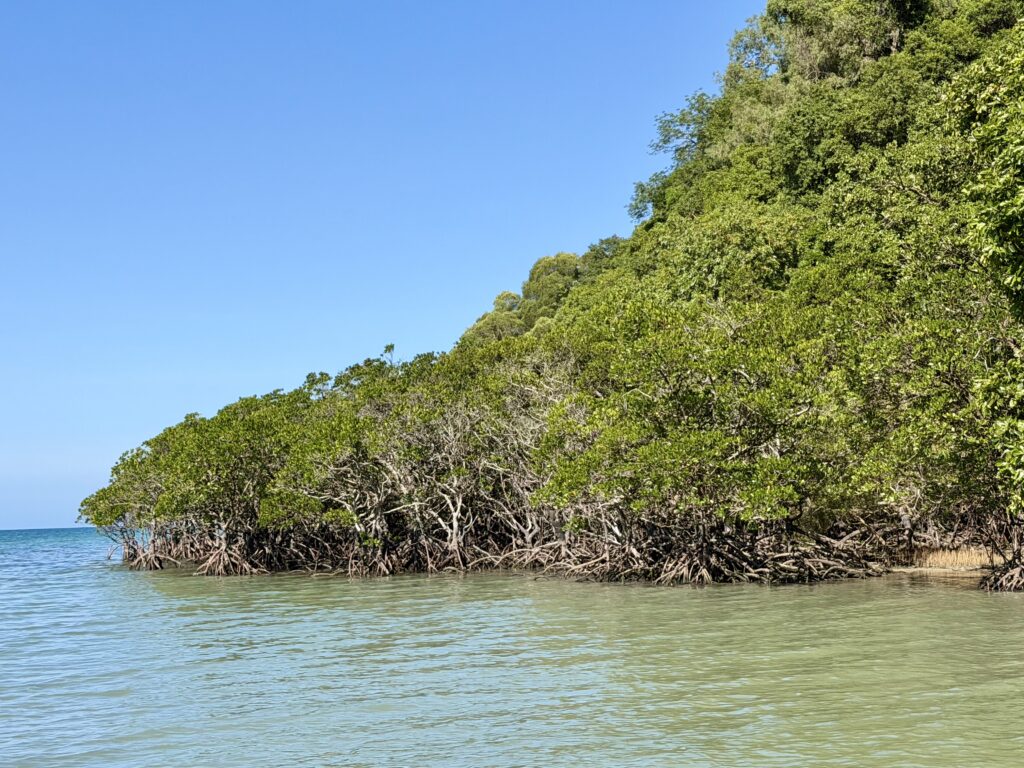
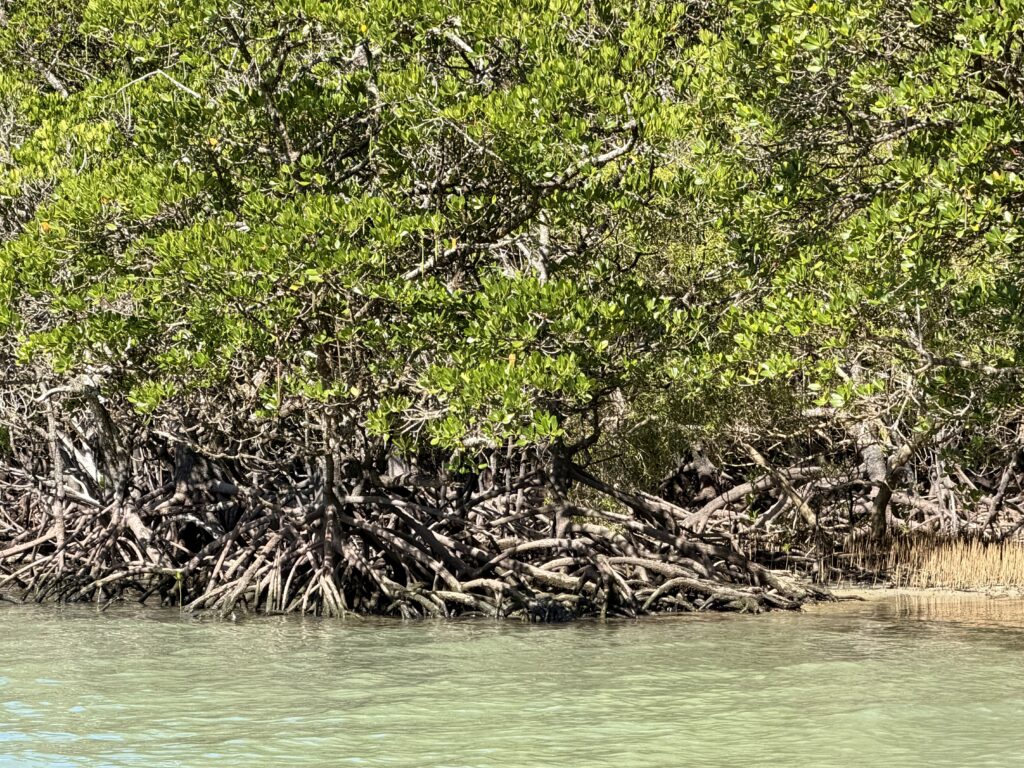
We were joined for lunch with the other group from Discovery Tours Australia and after lunch we all headed to the Daintree River for a river cruise. For lunch and the cruise, our 2 groups were the only ones there so it still felt like a small-ish group even with the 2 combined groups. As you can see in the following pictures, there are a lot of mangrove trees here. It was pretty cool to see similar trees that we’ve seen in Florida all the way on the other side of the world.
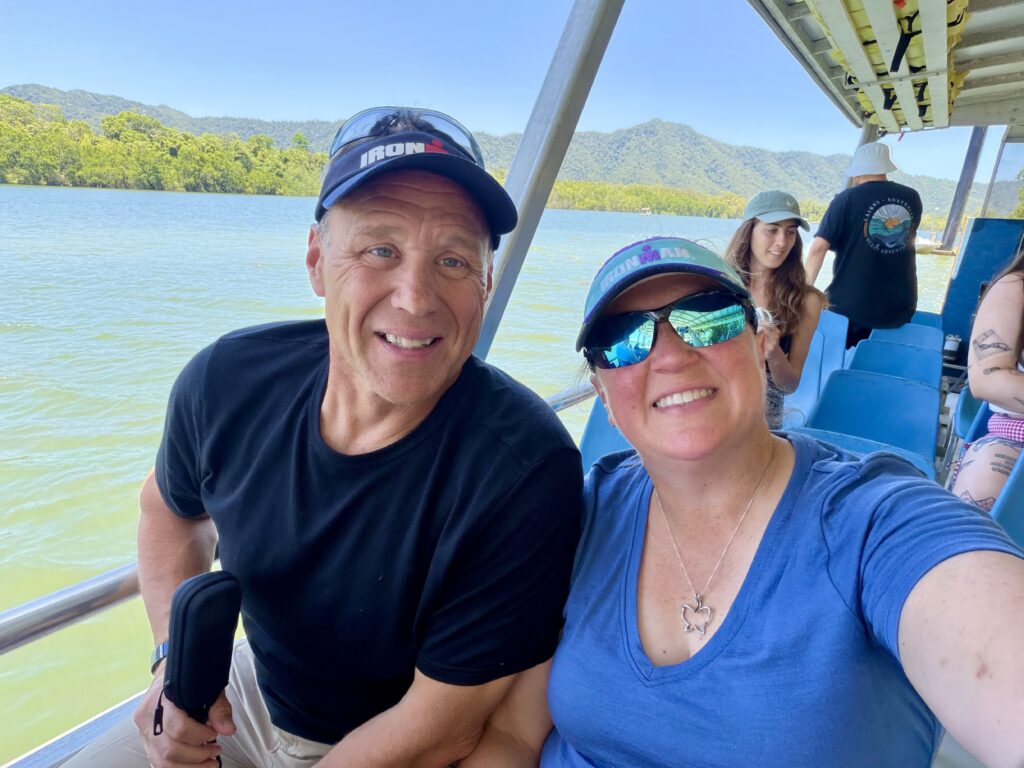
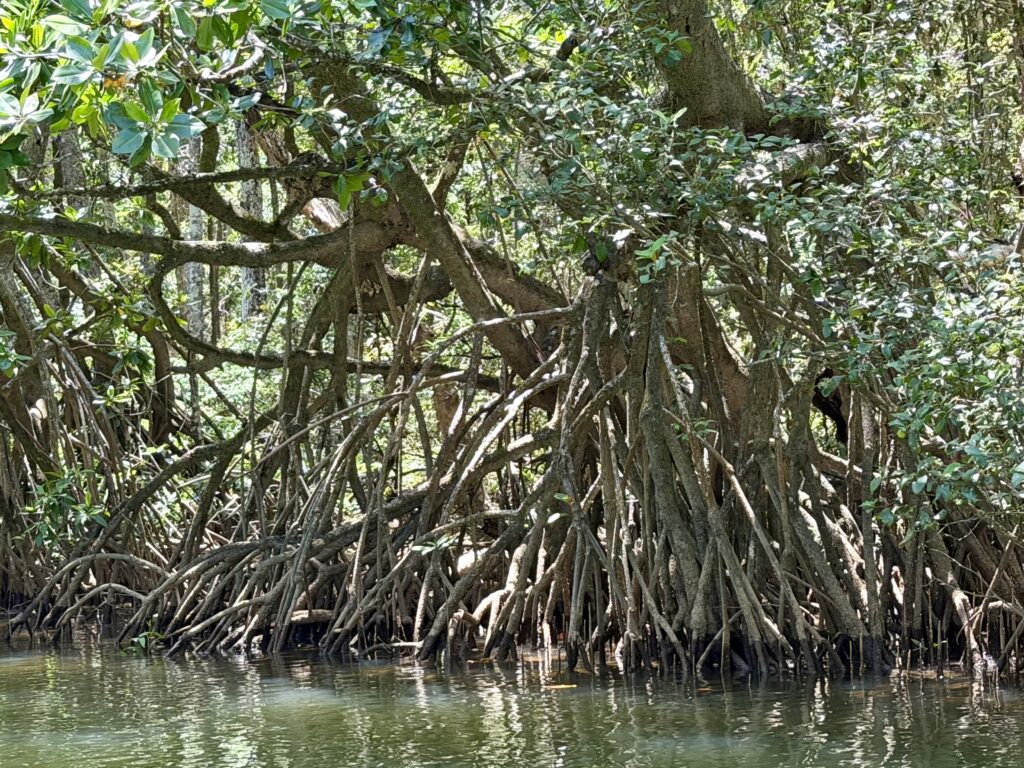
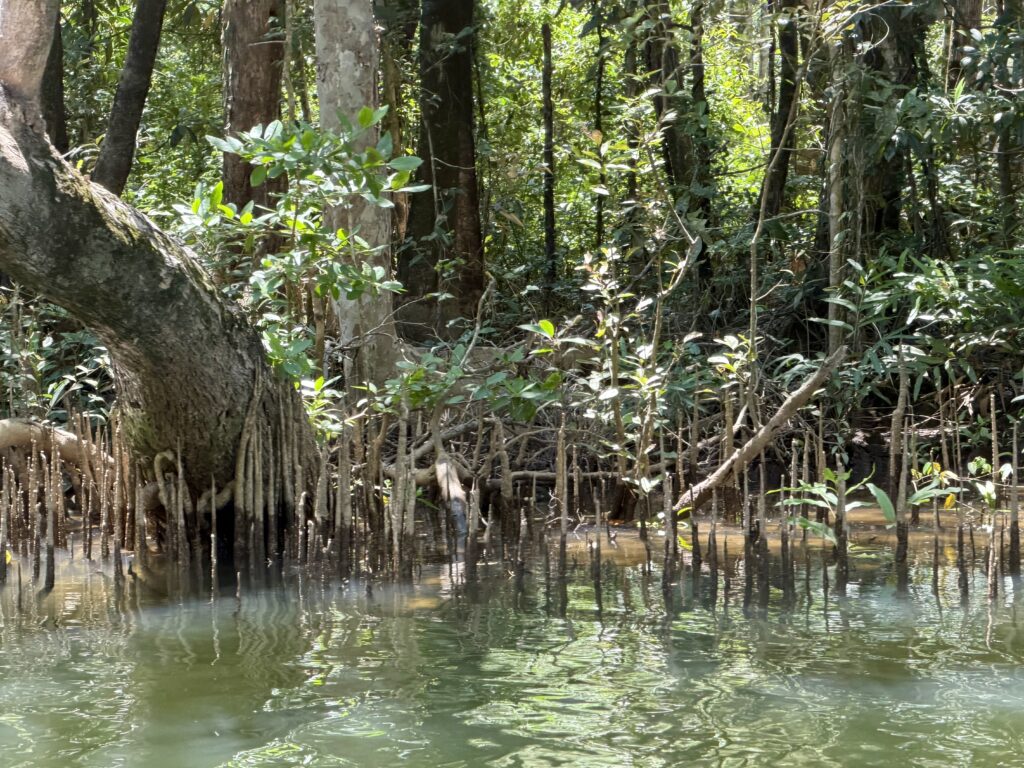
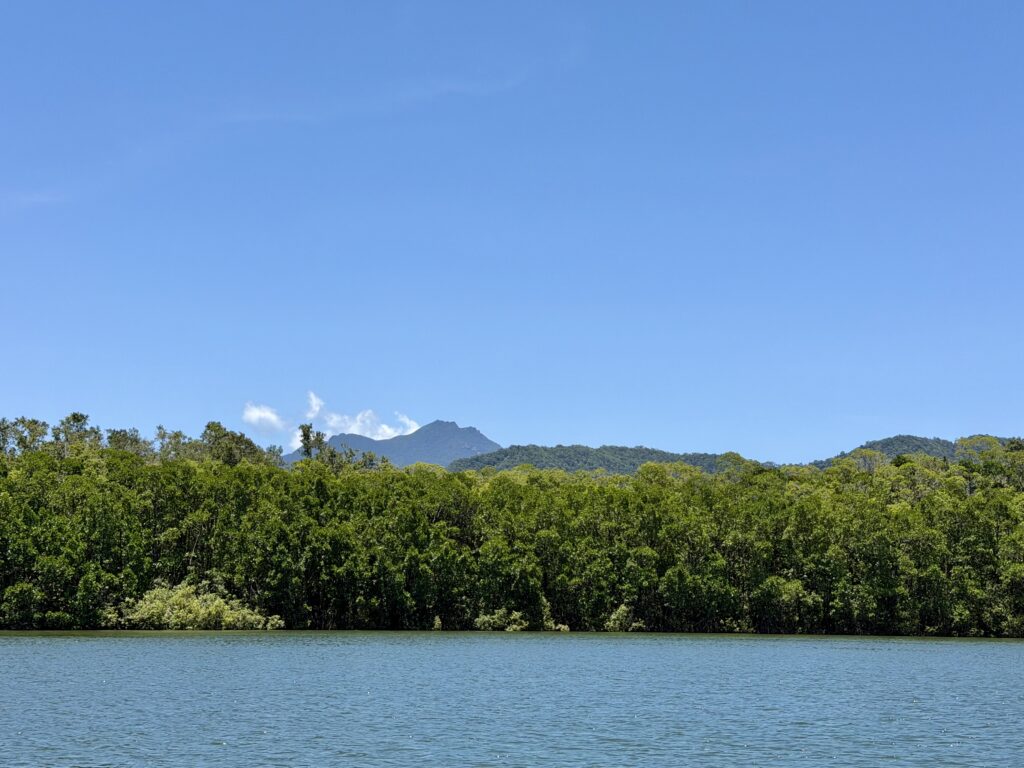
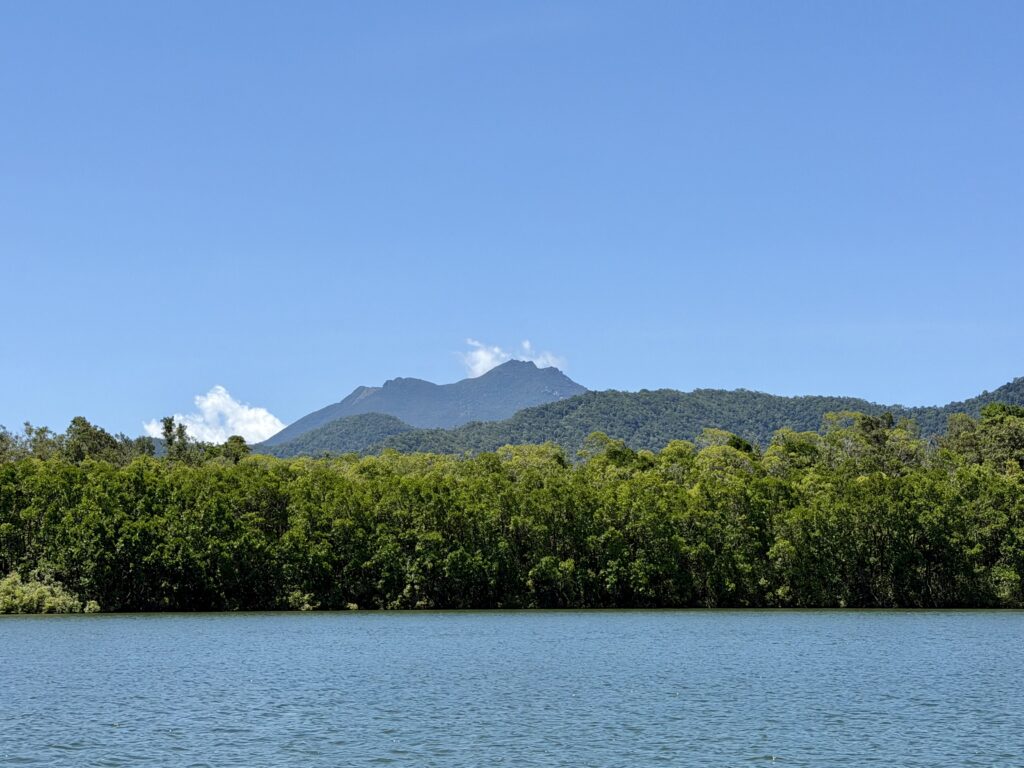
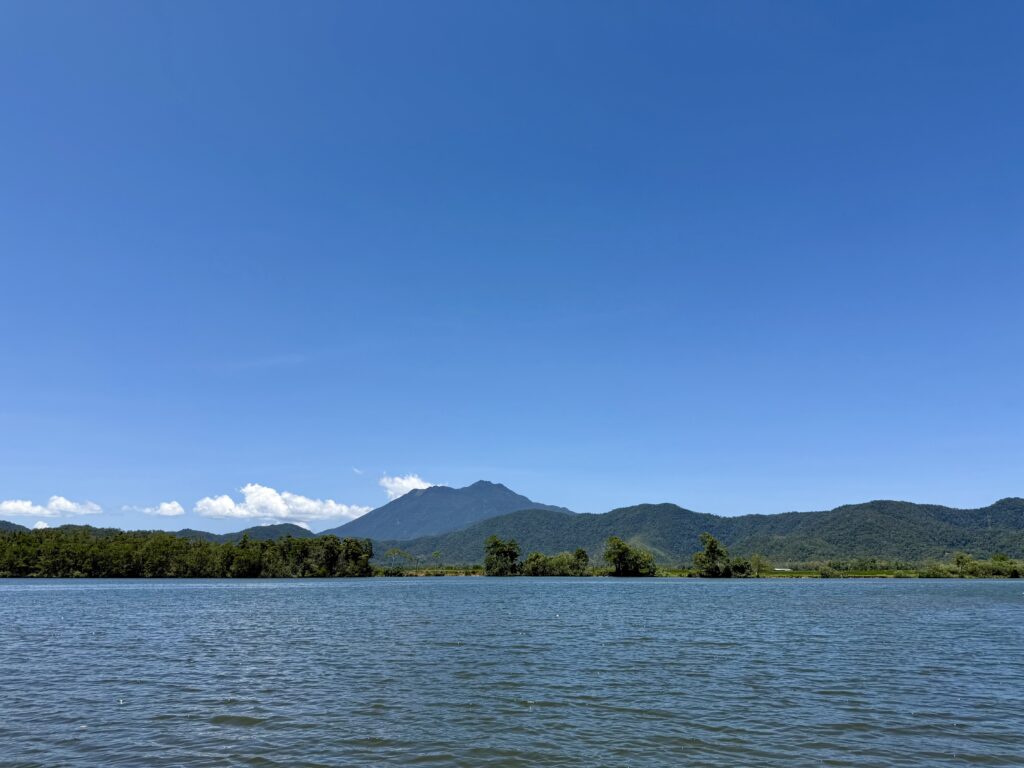
The highlight of this river cruise is generally to see crocodiles – we briefly saw one on the way out and then got to see him again on the way back. He was huge! (I may have had a little too much fun with iMovie on this one! lol)
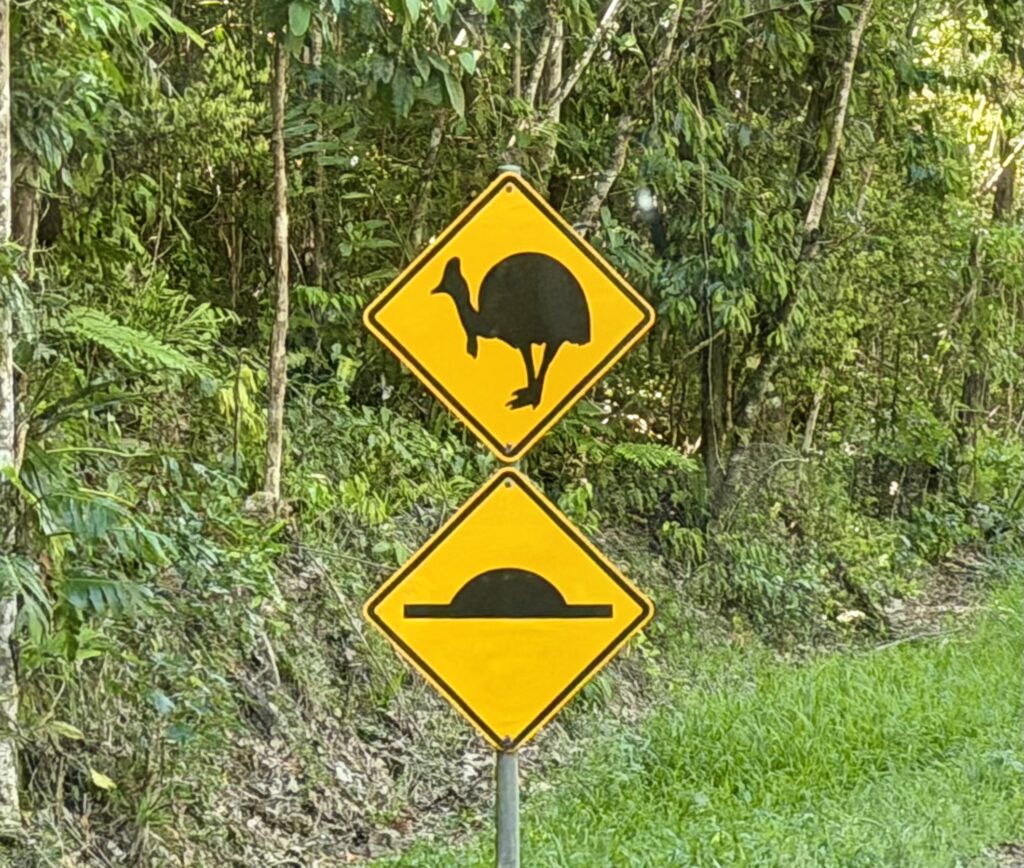
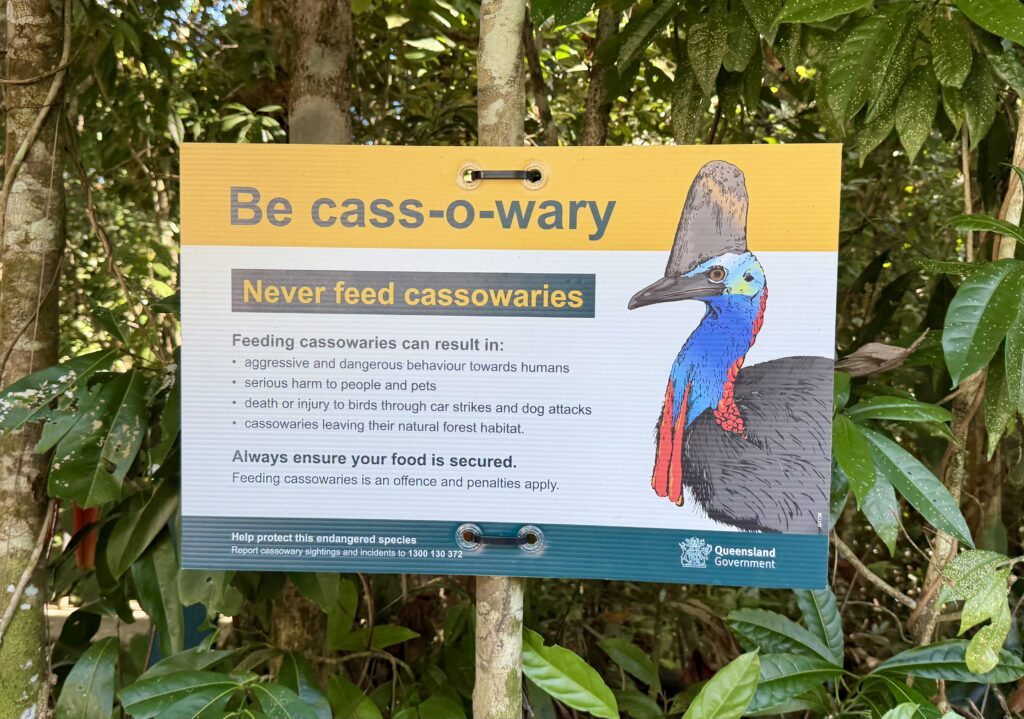
There was a lot of wildlife to see throughout the tour (as expected!) but also loved the warning signs about the Cassowaries. They are pretty cool birds! We did not get to see one but saw plenty of signs about them.
https://tropicalnorthqueensland.org.au/things-to-do/rainforest-wildlife/cassowary-spotting/
“The cassowary is remarkable in a number of ways. For one thing, the males hatch the eggs and raise the chicks rather than the females. The cassowary also plays a key role in the survival of the rainforest. By eating rainforest fruits and excreting their seeds, it helps ensure diversity. More than 70 species of trees rely on the cassowary for survival.”
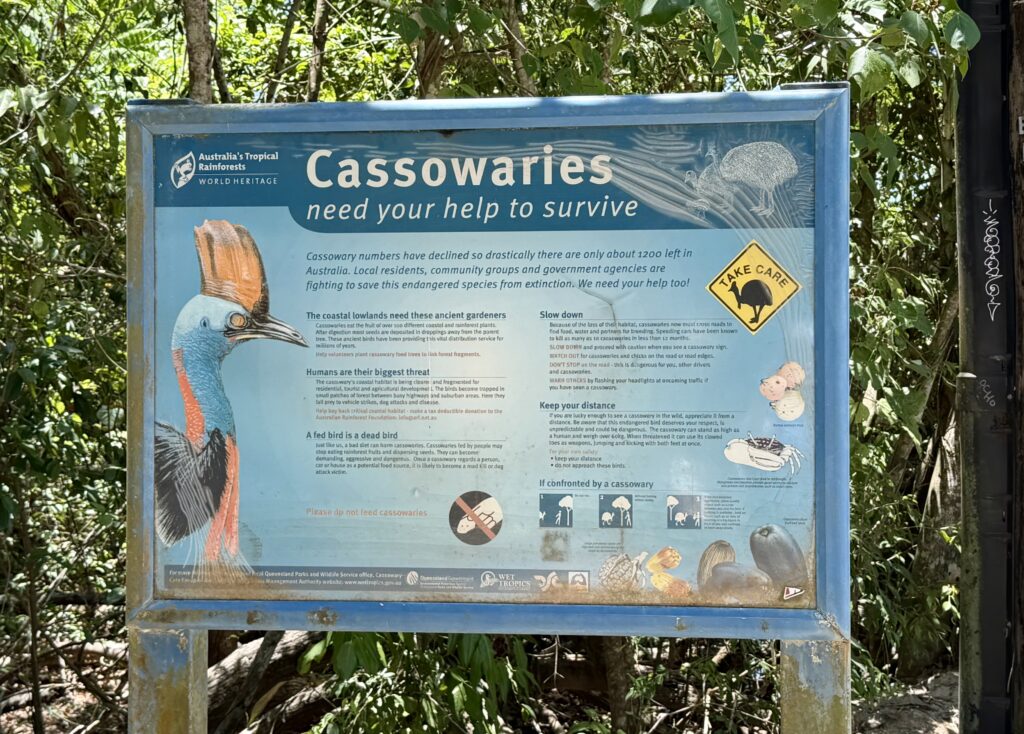
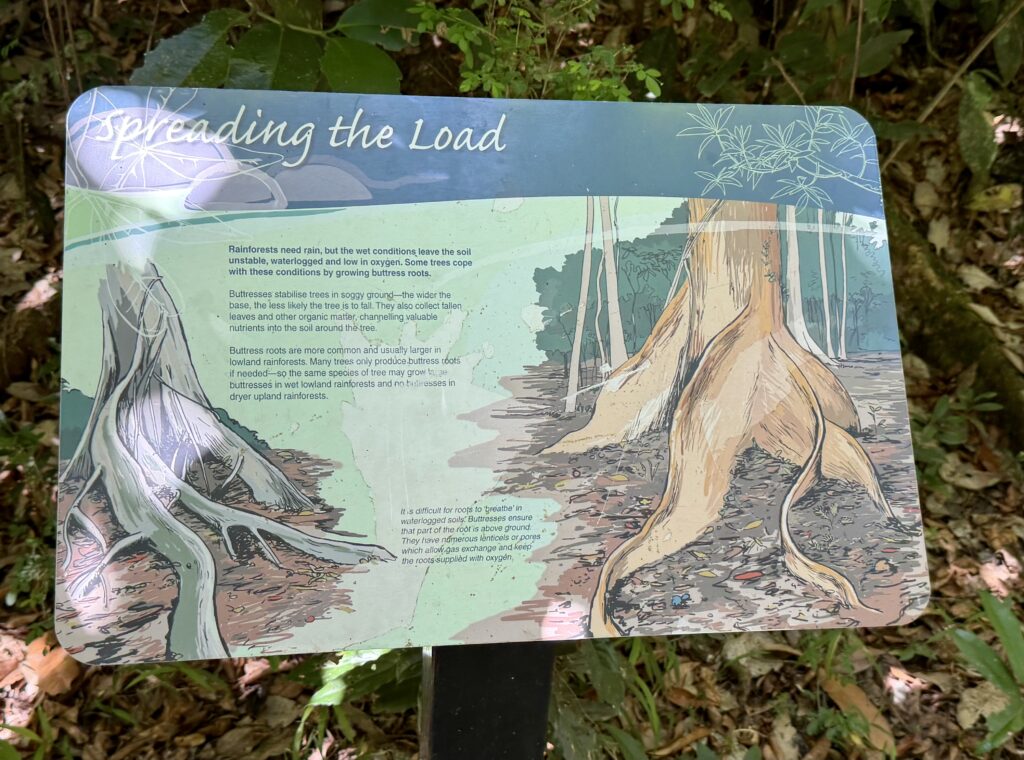
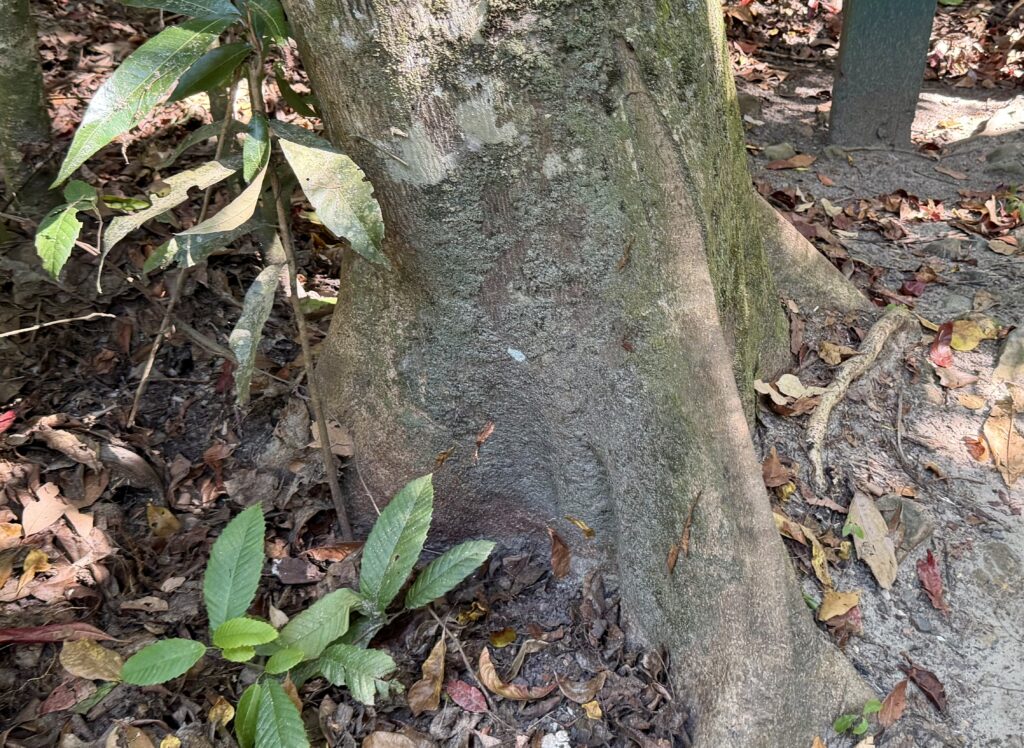
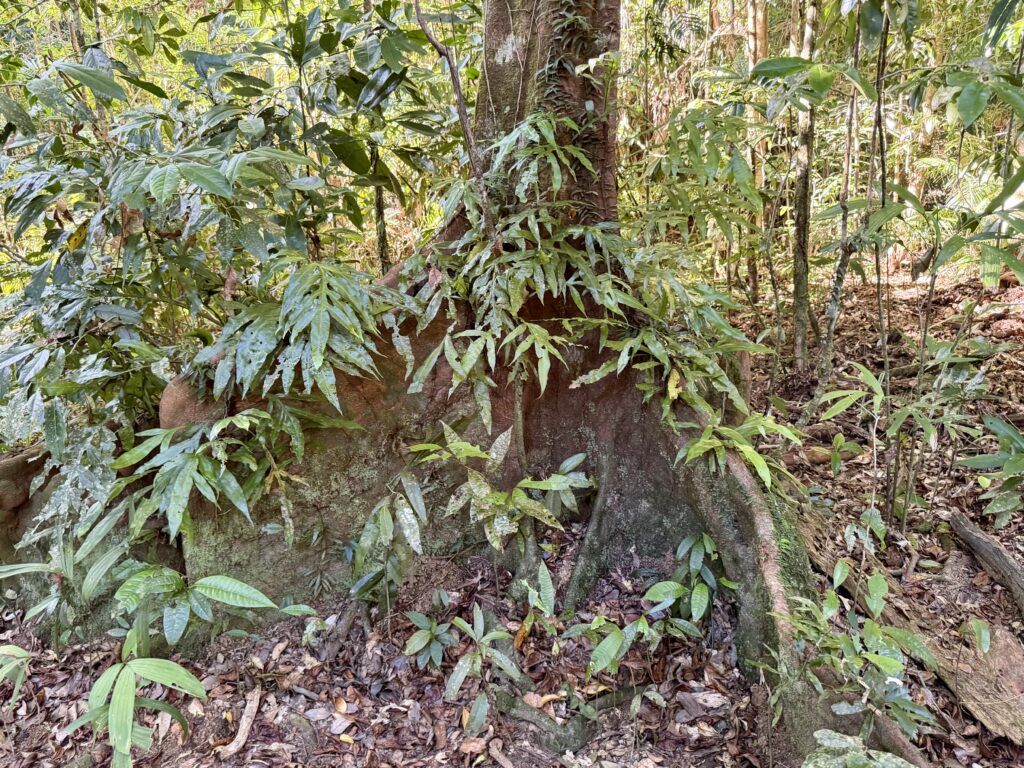
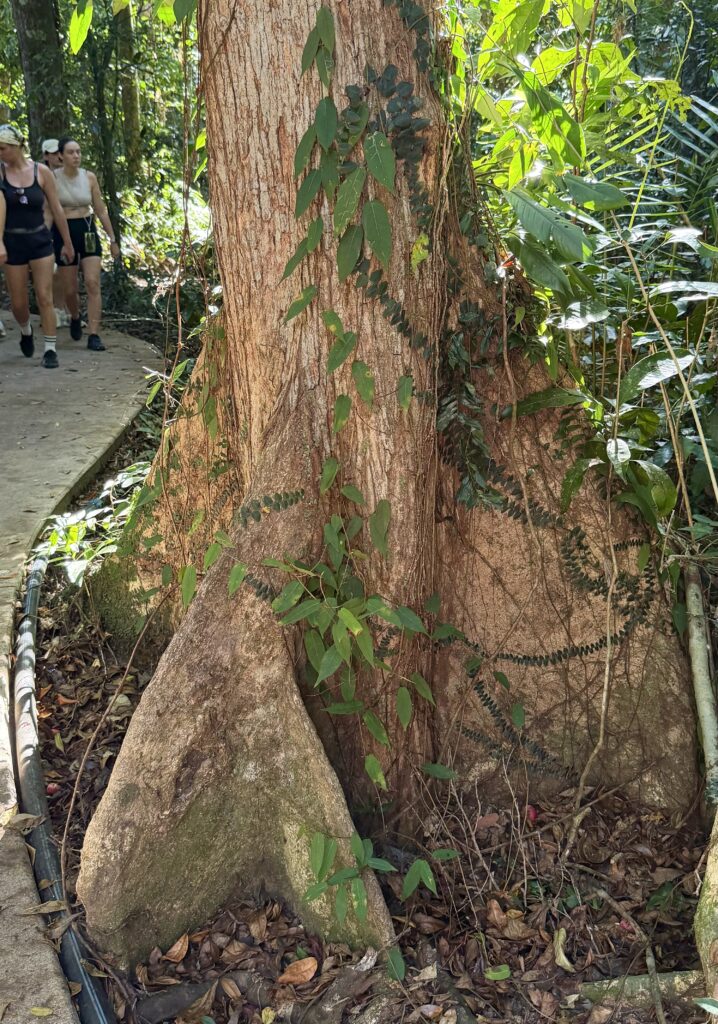
One neat thing we saw on the trees was some with buttressing roots. The sign explains the reason for this (sorry – not the greatest picture of the sign) – basically the wet conditions leave the soil waterlogged and low in oxygen. These roots stabilize the tree and also leaves some of the root above ground so the tree can “breathe”.
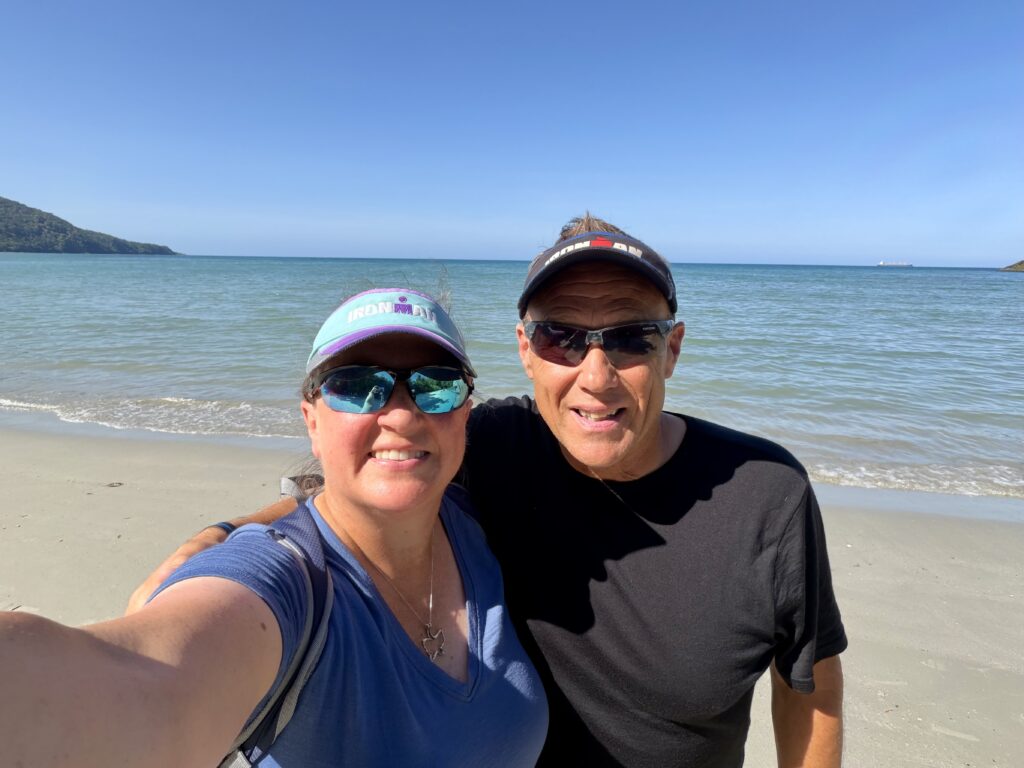
After the cruise, we continued heading north, crossing the Daintree River on a short ferry ride, toward Cape Tribulation. Cape Tribulation is described as “where the forest meets the reef” – the Great Barrier Reef is closer to the shore here and you could see the Reef (darker areas in the water) from the overlooks. We stopped at the Kulki boardwalk first then got to walk on the beach to get a different perspective.
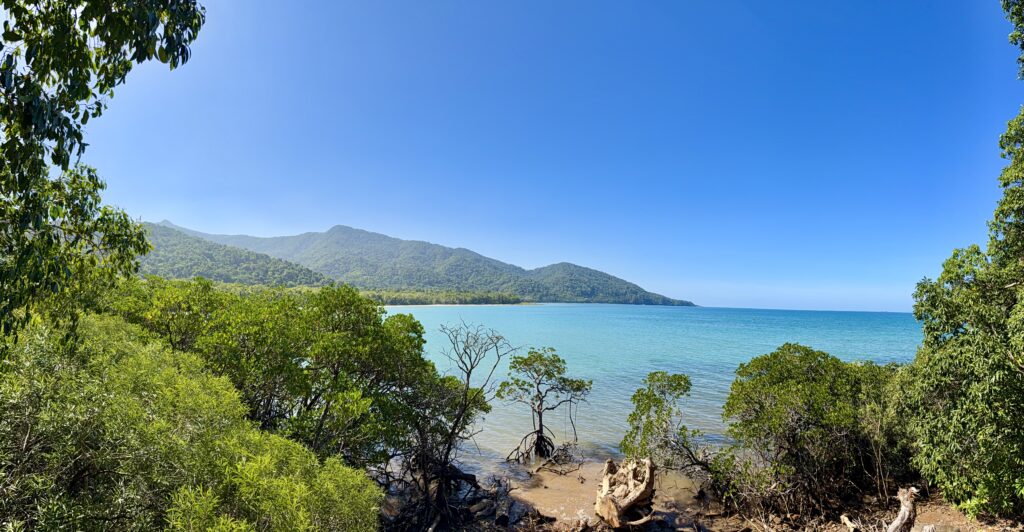
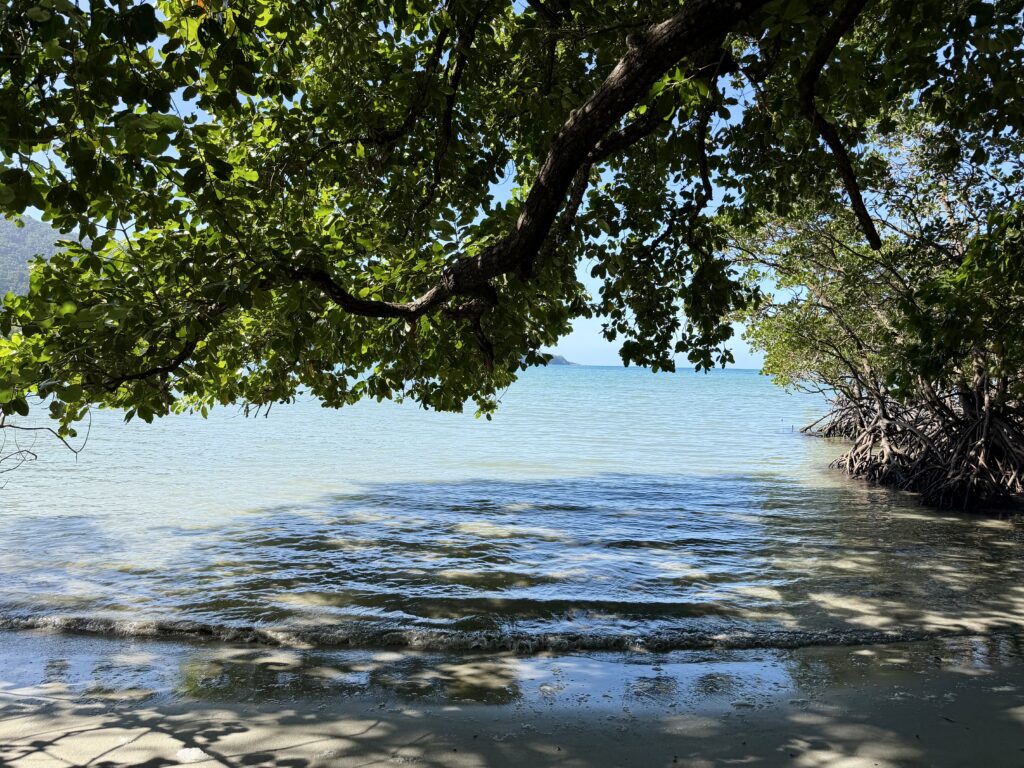
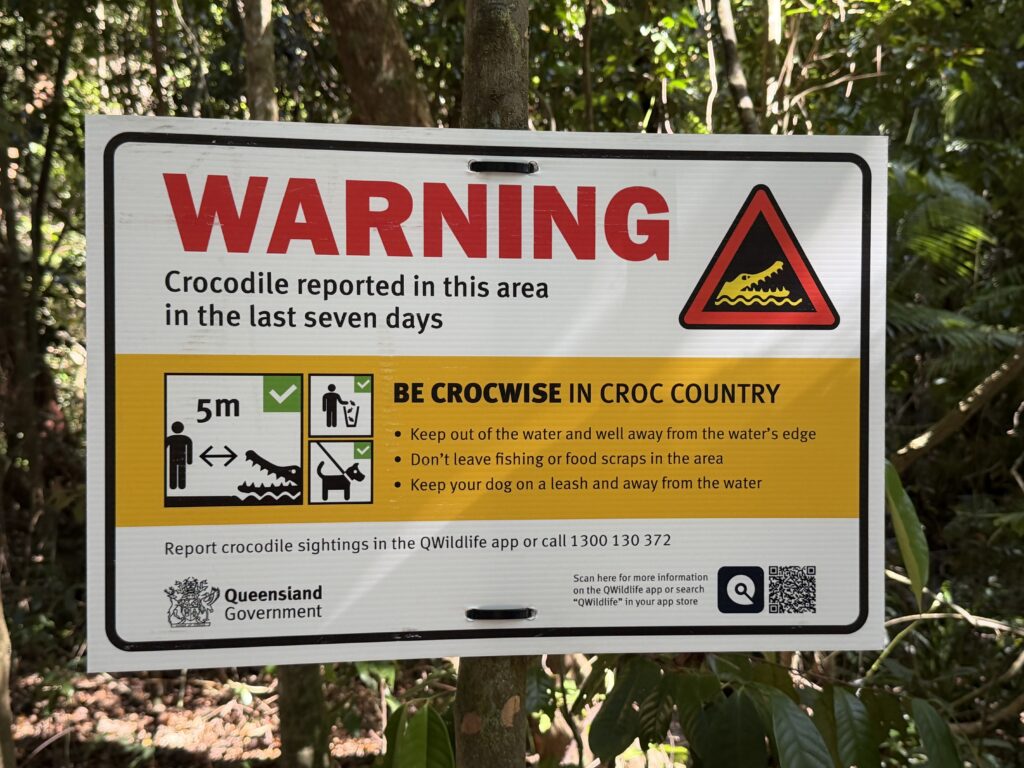
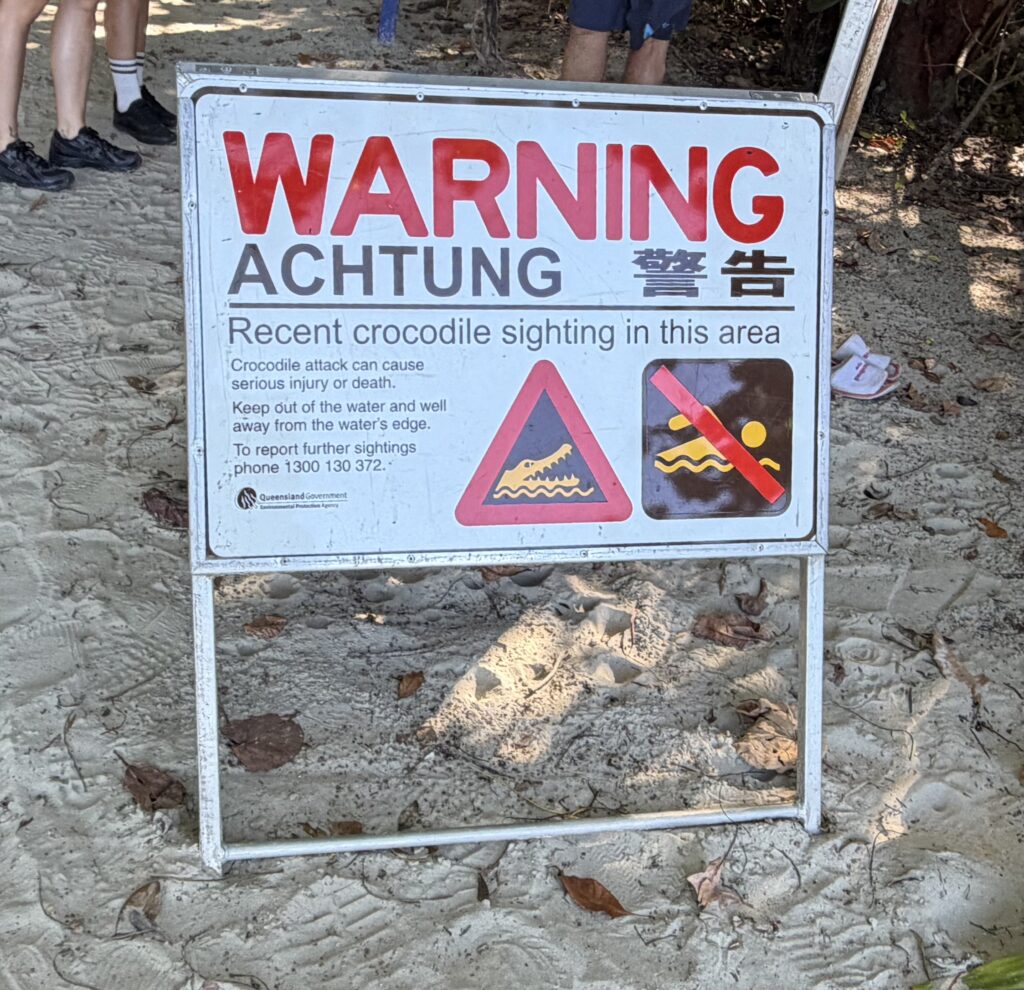
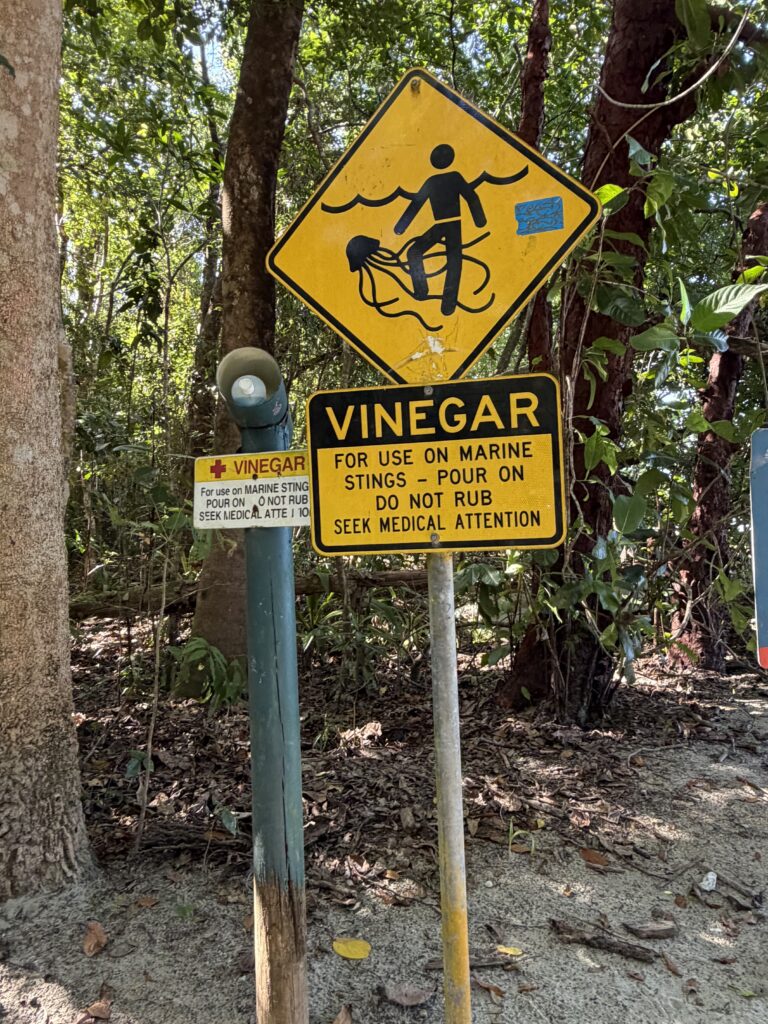
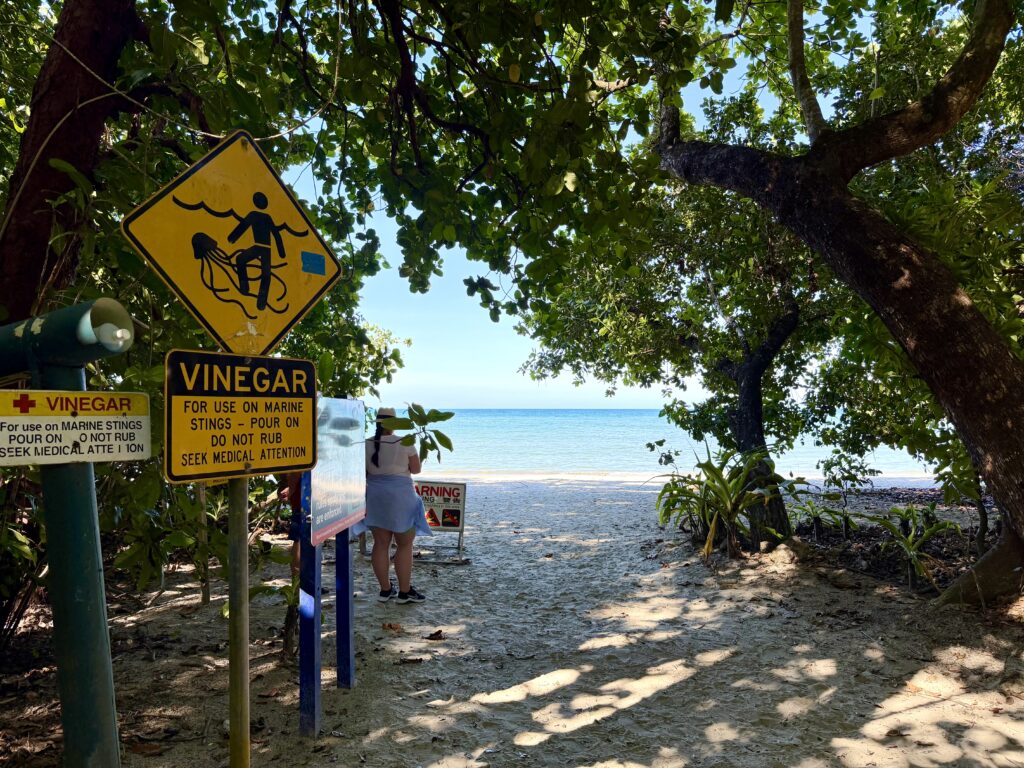
There was no shortage of warning signs for all of the random animals nearby that might want to kill you! In addition to crocodiles, it was “stinger” (jellyfish) season and there are some deadly jellyfish nearby. It’s not safe to swim near the shore this time of year unless it’s in a roped off area that has nets to keep the box jellyfish out. They even had vinegar spray stations near the beach. A box jellyfish sting can kill you in under 5 minutes!(https://www.barrierreefaustralia.com/info/reef-dangers/box-jellyfish/; https://lifesaving.com.au/safety-info/marine-stingers). They are the infamous ones but the Irukandji are smaller and can be just as lethal (our guide told us they think some of the fatal stings attributed to box jellyfish may have actually been Irukandji). They even had vinegar spray stations near the beach. So yeah – we stayed out of the water!!
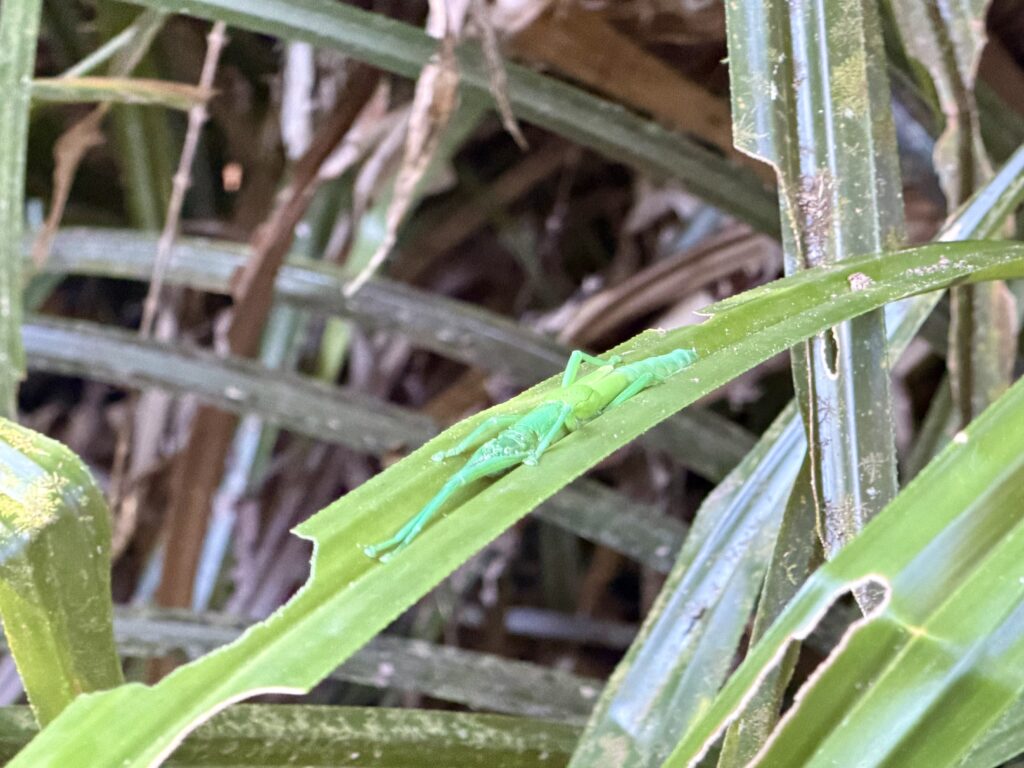
After walking along the coast, we went back through the boardwalk area to get to the van. We saw a cool “mantis”peppermint stick insect” that blended in with the leaves (honestly I would never have seen this – one of the many advantages to going on a guided tour).
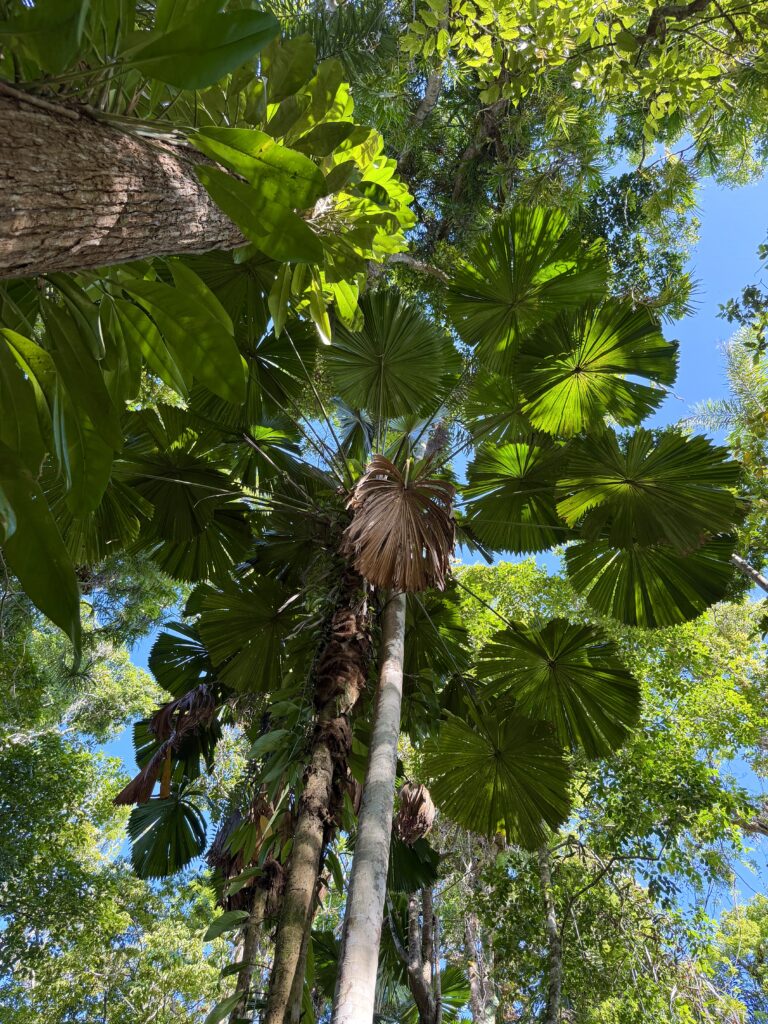
We also saw these really cool trees called “fan palms” (https://www.bushheritage.org.au/species/fan-palms) – they look like giant umbrellas.
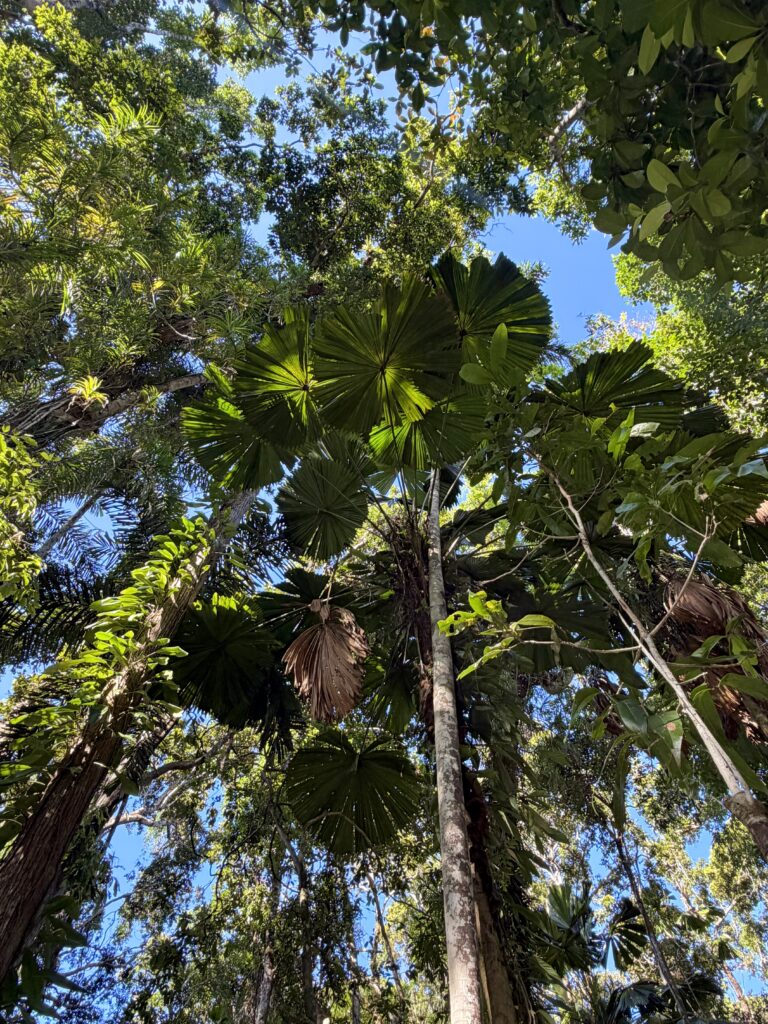
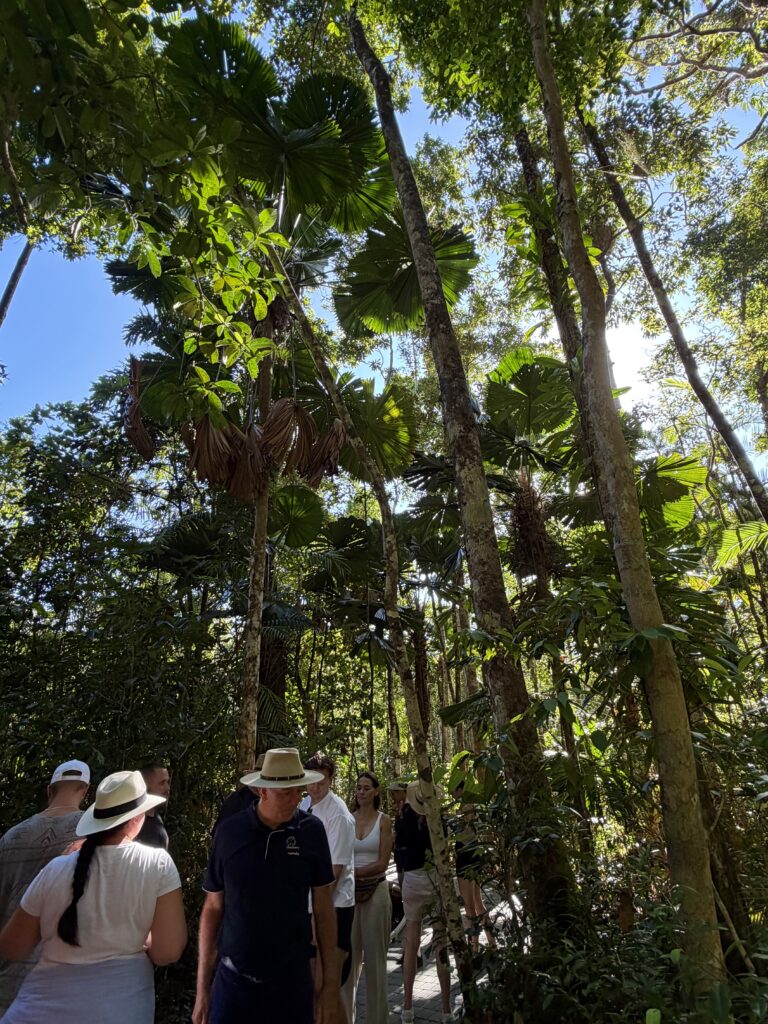
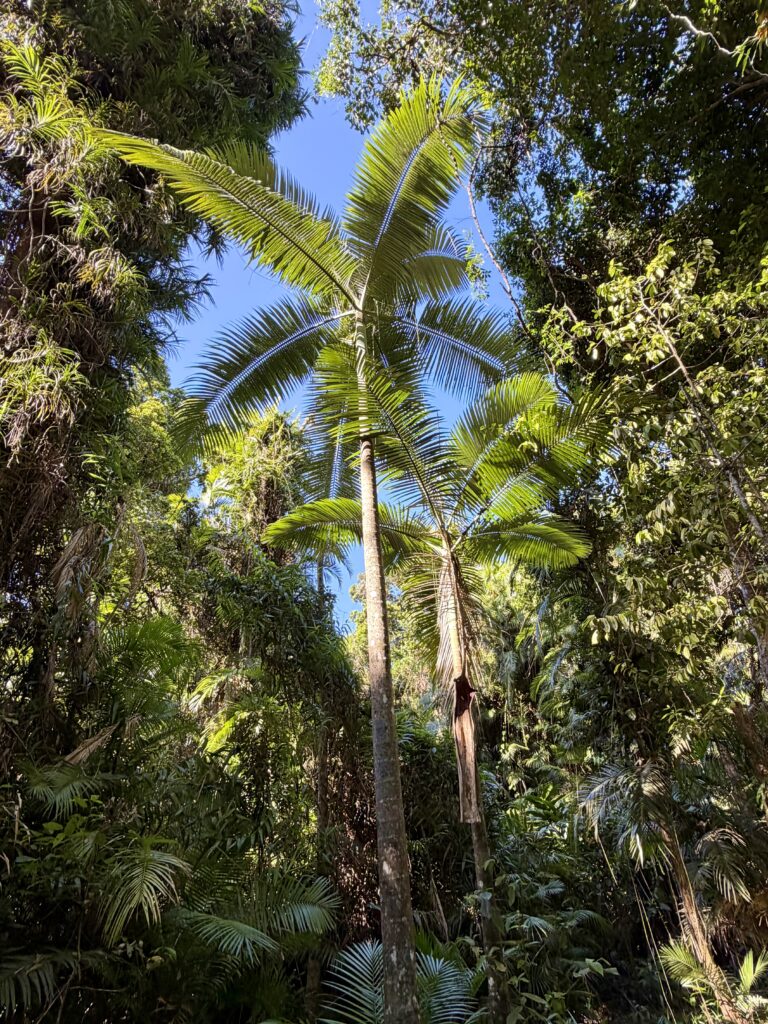
Lots of other palm trees and other trees too. It was nice and shady!
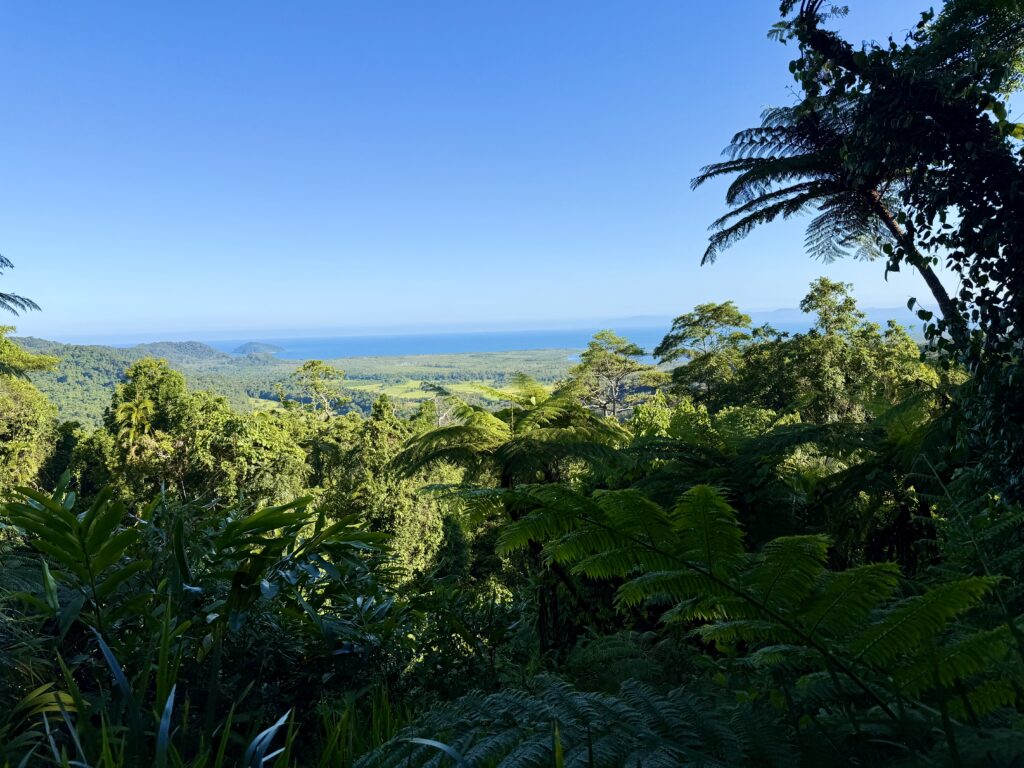
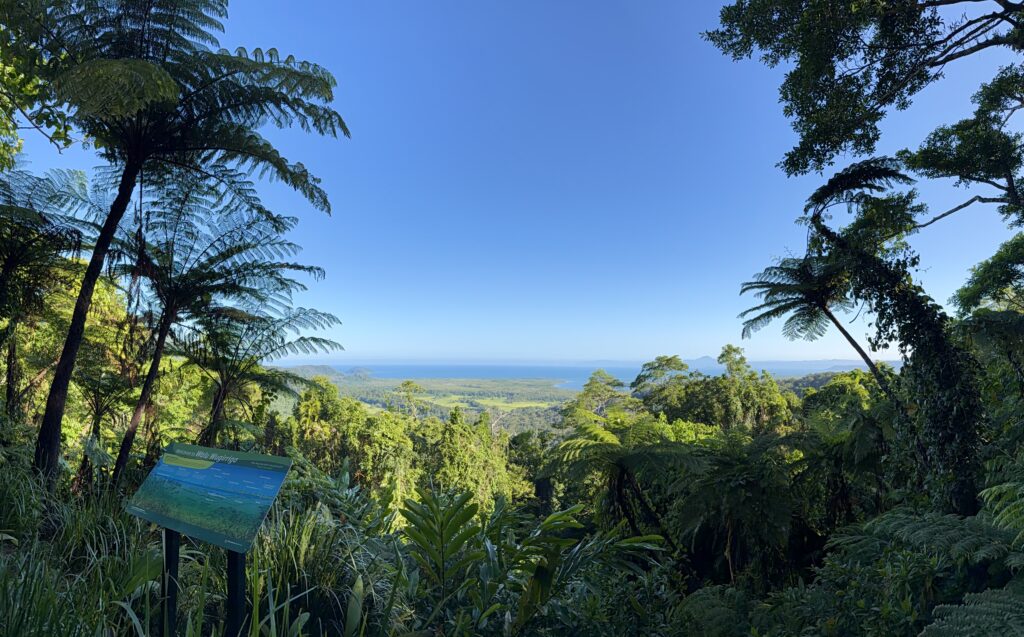
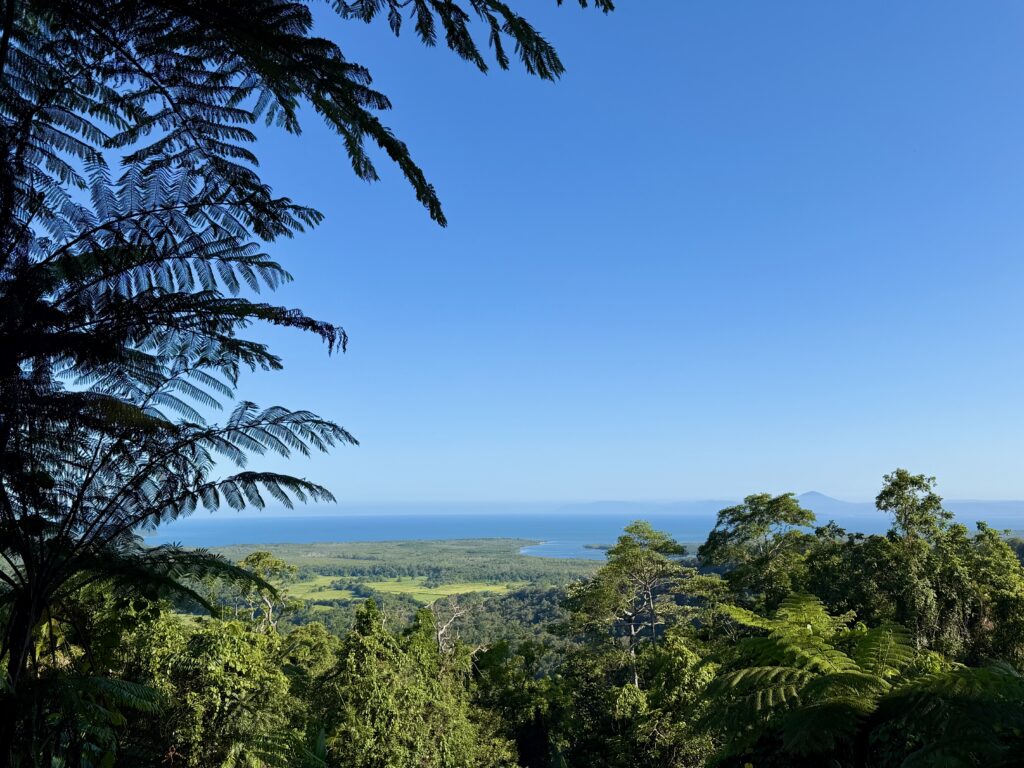
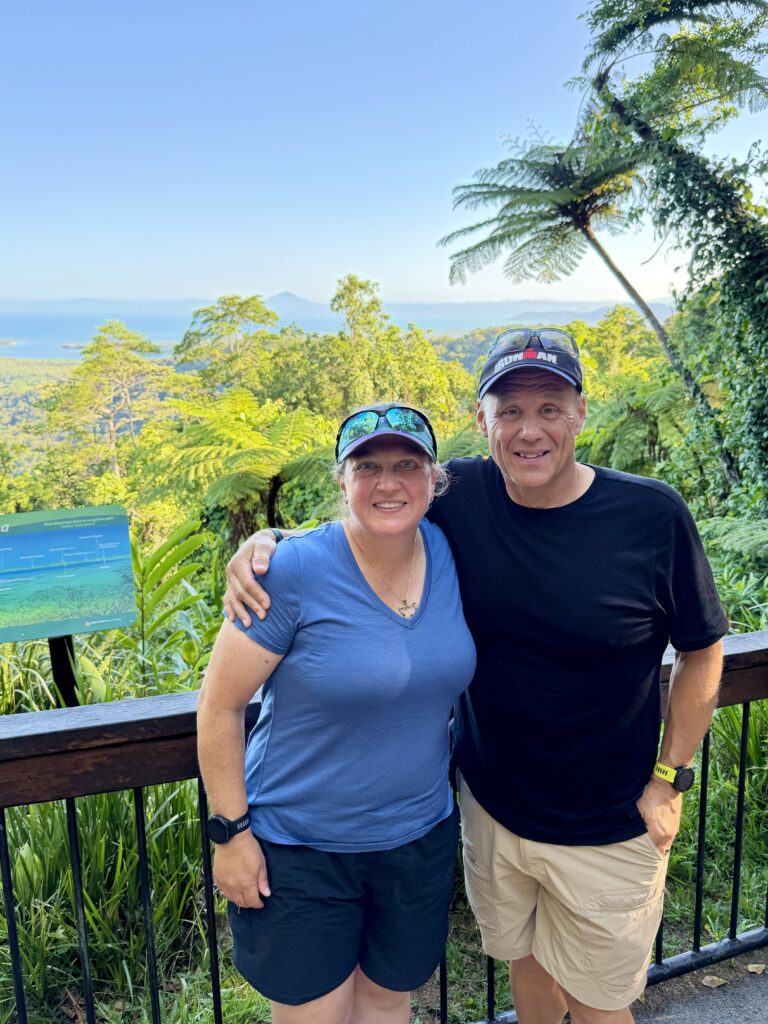
On the way back home, we stopped a Walu Wugirriga Lookout (Mount Alexandra Lookout) for some amazing views.
We were treated to a gorgeous sunset on the way back (sorry – didn’t get great pictures from the moving van). We got back to our hotel around 7pm so it was a long 12 hour day but absolutely worth it!